Introduction
Chronic rhinosinusitis with or without nasal polyps is defined as the presence of two or more symptoms of nasal obstruction, nasal discharge, congestion, facial pain or reduction of smell that lasts for equal to or more than 12 weeks.Reference Fokkens, Lund, Hopkins, Hellings, Kern and Reitsma1 There should be confirmed evidence of inflammation on endoscopy or imaging. Although symptoms can be mild, chronic rhinosinusitis can have a significant negative impact on a person's quality of life, sleep and productivity. Chronic rhinosinusitis also has a large economic burden on the healthcare system and society overall. In Australia, chronic rhinosinusitis has been estimated to cost an overall annual productivity of AUD $10 893.84 per patient.Reference Liu, Cooper, Earnshaw and Cervin2 In the USA, the overall direct healthcare cost related to chronic rhinosinusitis is estimated to range between US $10 and $13 billion per year, and the indirect cost related to loss of work productivity is estimated to be more than US $20 billion.Reference Rudmik3
There are an array of different medical therapies for chronic rhinosinusitis. Several guidelines recommend saline sprays or rinses, intranasal or oral corticosteroids, and short or prolonged courses of antibiotics for the treatment of chronic rhinosinusitis depending on the clinical context.Reference Fokkens, Lund, Hopkins, Hellings, Kern and Reitsma1,Reference Desrosiers, Evans, Keith, Wright, Kaplan and Bouchard4,Reference Sedaghat5 The effectiveness and choice of antibiotics has been controversial. A 2016 Cochrane review of 5 randomised, controlled trials (293 participants) found very little evidence that systemic antibiotics are effective in the treatment of patients with chronic rhinosinusitis.Reference Head, Chong, Piromchai, Hopkins, Philpott and Schilder6 However, in that review, there was only one trial that investigated the effects of doxycycline in chronic rhinosinusitis (Van Zele et al.Reference Van Zele, Gevaert, Holtappels, Beule, Wormald and Mayr7) in 2010. This randomised, placebo-controlled, multicentre trial found that a 20-day course of doxycycline had a moderate effect in reducing polyp size with persistent effects for 12 weeks.Reference Van Zele, Gevaert, Holtappels, Beule, Wormald and Mayr7
Doxycycline is a tetracycline that targets the 30S ribosomal subunit and thereby blocks protein synthesis. It is used to treat a variety of infections, but it also has several anti-inflammatory properties that make it suitable for non-infectious conditions as well. It has been found to inhibit matrix metalloproteinase, neutrophil migration and activation, mast cell activation, interleukin 8, and T-cell proliferation.Reference Patel, Khande, Periasamy and Mokale8,Reference Pradhan, Madke, Kabra and Singh9 Doxycycline's role in chronic rhinosinusitis may therefore be through its anti-inflammatory effect, rather than as an antibiotic, because chronic rhinosinusitis is more an inflammatory process of the sinuses and upper airways rather than an infection.Reference Rudmik and Soler10
The objective of this current study was to perform an updated systematic review and meta-analysis to investigate the highest-quality evidence on the role of doxycycline in the management of chronic rhinosinusitis with or without nasal polyps.
Materials and methods
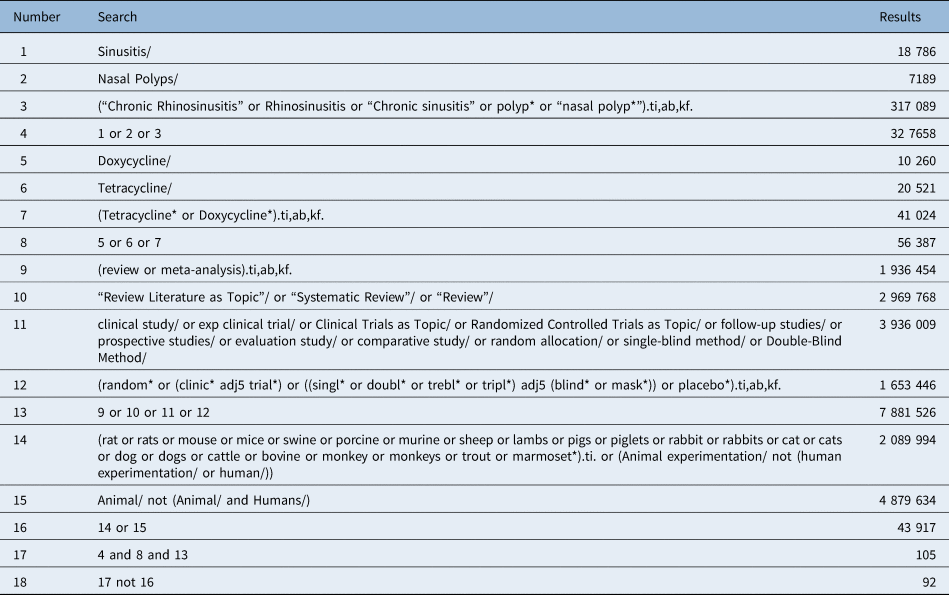
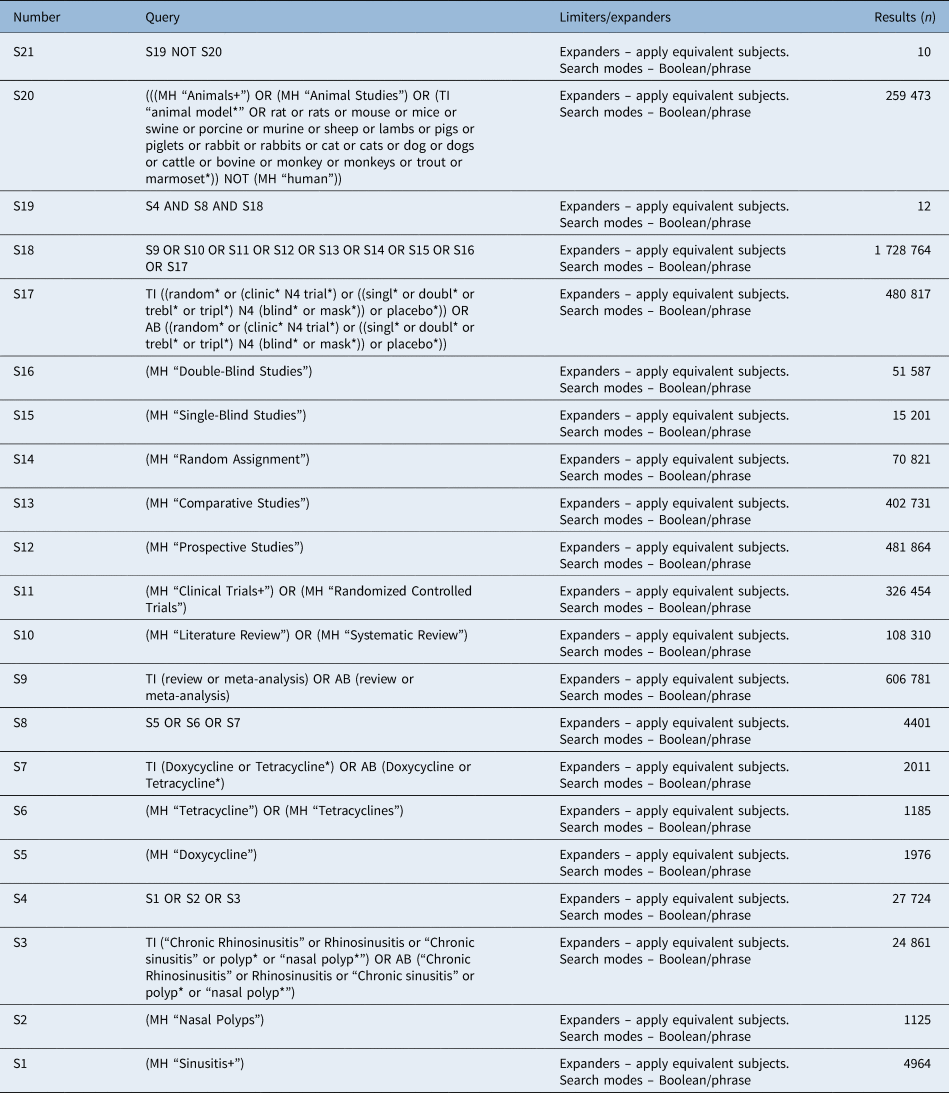
Relevant articles were identified through a literature search of the following databases: Ovid Medline, Cinahl, Scopus and Web of Science. In order to identify relevant literature, a combination of the following search terms was used: ‘sinusitis’, ‘nasal polyps’, ‘doxycycline’ and ‘tetracycline’. The search was combined to limit manuscripts to randomised, controlled trials, systematic reviews and meta-analyses. Animal studies were excluded. References from the identified studies were reviewed for additional relevant articles. The search strategy was developed by a medical research librarian at Flinders University, Adelaide, Australia.
Article selection
Only randomised, clinical trials, systematic reviews and meta-analyses were accepted. Inclusion criteria were: studies that were conducted on adults above the age of 16 years who were considered to have chronic rhinosinusitis with or without nasal polyps and had been treated with a course of doxycycline.
Selected studies were chosen only if there were clinical and/or radiological outcomes. Diagnostic criteria for chronic rhinosinusitis were allowed to vary across individual studies. Any studies involving children, acute sinusitis, allergic fungal sinusitis, cystic fibrosis, primary ciliary dyskinesia, aspirin-exacerbated respiratory disease, sarcoidosis, immunodeficiency or rheumatological diagnoses were excluded.
Article review
Our review process involved two stages. In stage one, two of the authors (DSC and OHK) screened the titles and abstracts of each article independently. If there were any disagreements between the reviewers, there was a discussion among them. If there was still a disagreement at that point, then the article was included in stage two of the review process.
In the second stage, the complete manuscripts of the selected studies were independently reviewed by the two authors using standardised critical appraisal instruments from the Joanna Briggs Institute Meta-Analysis of Statistics Assessment and Review Instrument (Appendix 1). If there were disagreements between them for a given article, a third senior author (EO) arbitrated for further inclusion. We also reviewed the bibliographies from all the included studies to incorporate additional relevant articles. There was no blinding to authors, affiliations or publishing journal.
Data extraction and analysis
Raw means and standard deviations were extracted from the included studies. Because of the gross heterogeneity of the data, we decided to perform the meta-analysis using mean differences of pre- versus post-doxycycline treatment that were recorded using the same measurement tool pre- and post-treatment to report the effects.
The Comprehensive Meta-Analysis software (Biostat, Englewood, USA) was used to compute the data and generate the result using the random effects model. In situations wherein statistical pooling was impractical, the findings were represented in a narrative format with relevant tables to assist in representation of data.
Risk of bias
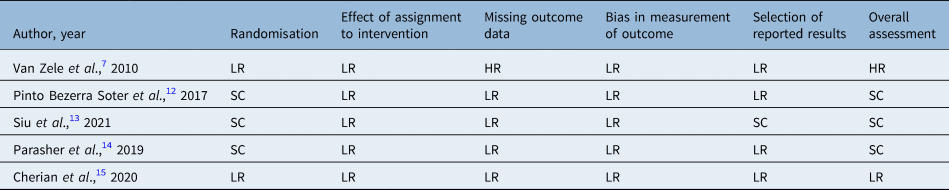
Each included randomised, clinical trial was assessed for potential risk of bias using the revised Cochrane risk-of-bias tool for randomised trials (RoB 2.0 tool) by the two authors.Reference Sterne, Savovic, Page, Elbers, Blencowe and Boutron11 The assessment was made on the randomisation processes, deviation from the intended intervention arising from effect to intervention and effect of adhering to intervention (if adherence was studied), missing outcomes, measurement in outcome, and selection of reported results. Results were classified to be low potential, some potential or high potential for risk of bias. The final risk of bias assessment for each study was equated as a combination of assessment in each domain as per instructions given in the tool. Discrepancies were resolved through discussion (Table 1).
Assessment of risk of bias

LR = low risk of bias; HR = high risk of bias; SC = some concern
The overall risk of bias assessment reported one study as a high risk of bias,Reference Van Zele, Gevaert, Holtappels, Beule, Wormald and Mayr7 three studies with some concern related to risk of bias (Pinto Bezerra Soter et al., 2017Reference Pinto Bezerra Soter, Bezerra, Pezato, Teles Abdo, Pilan and Pinna12; Siu et al., 2021Reference Siu, Mackenzie, Klingler, Biswas, Wang and Hung13; Parasher et al., 2019Reference Parasher, Kidwai, Konuthula, Goljo, Pan and Saini14), and only one study that had a low risk of bias (Cherian et al., 2020Reference Cherian, Bassiouni, Cooksley, Vreugde, Wormald and Psaltis15). Across all five domains of assessment, all studies had low risk of bias on measurement of outcome as these were measured objectively using validated tools. There was some concern in three studies related to randomisation as there was no random sequence generation or allocation concealment (Pinto Bezerra Soter et al.Reference Pinto Bezerra Soter, Bezerra, Pezato, Teles Abdo, Pilan and Pinna12; Siu et al.Reference Siu, Mackenzie, Klingler, Biswas, Wang and Hung13; Parasher et al.Reference Parasher, Kidwai, Konuthula, Goljo, Pan and Saini14). In the study conducted by Van Zele et al.,Reference Van Zele, Gevaert, Holtappels, Beule, Wormald and Mayr7 many of the patients in the placebo group dropped out as there was no progress in the outcome associated with the disease. This was not accounted for and was therefore graded as high risk of bias in missing outcome data.
Results
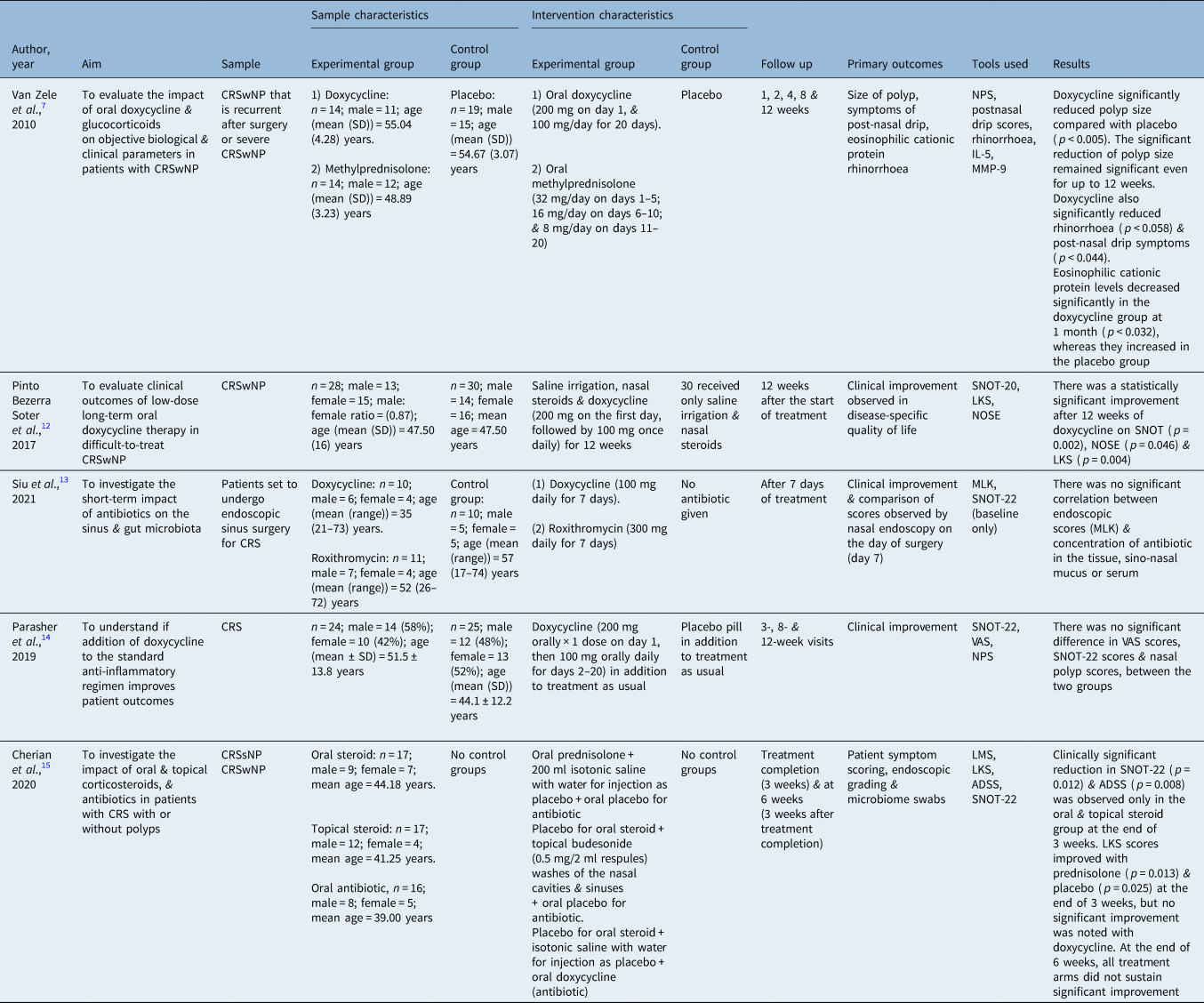
A total of 279 studies were screened, of which 5 studies met our inclusion and exclusion criteria. All the five included studies were randomised, controlled trials (Table 2).
Study characteristics

CRSwNP = chronic rhinosinusitis with nasal polyps; SD = standard deviation; NPS = nasal polyps score; IL = interleukin; MMP = matrix metalloproteinases; SNOT-22 = Sinonasal Outcome Test-22; LKS = Lund–Kennedy Score; NOSE = Nasal Obstruction Symptom Evaluation; CRS = chronic rhinosinusitis; MLK = Modified Lund–Kennedy score; VAS = visual analogue scale; CRSsNP = chronic rhinosinusitis without nasal polyps; LMS = Lund–Mackay score; ADSS = Adelaide Disease Severity Score
Sample characteristics
The sample size of the included studies ranged from 31 to 60 participants. The total sample size of all the included studies combined was 235 participants. The inclusion criteria for three studies were that the patients had a primary diagnosis of chronic rhinosinusitis (Cherian et al.Reference Cherian, Bassiouni, Cooksley, Vreugde, Wormald and Psaltis15; Parasher et al.Reference Parasher, Kidwai, Konuthula, Goljo, Pan and Saini14; Pinto Bezerra Soter et al.Reference Pinto Bezerra Soter, Bezerra, Pezato, Teles Abdo, Pilan and Pinna12). Among these, the study by Pinto Bezerra Soter et al.Reference Pinto Bezerra Soter, Bezerra, Pezato, Teles Abdo, Pilan and Pinna12 included only those patients who had nasal polyps, whereas Cherian et al.Reference Cherian, Bassiouni, Cooksley, Vreugde, Wormald and Psaltis15 and Parasher et al.Reference Parasher, Kidwai, Konuthula, Goljo, Pan and Saini14 included participants either with or without nasal polyps. Two studies included only those participants who had been or were about to undergo surgery for chronic rhinosinusitis with nasal polyps (Siu et al.Reference Siu, Mackenzie, Klingler, Biswas, Wang and Hung13; Van Zele et al.Reference Van Zele, Gevaert, Holtappels, Beule, Wormald and Mayr7). In all the included studies, the ratio of men to women was almost equal except for one study in which the number of men was significantly greater (Van Zele et al.Reference Van Zele, Gevaert, Holtappels, Beule, Wormald and Mayr7). The age in the included studies ranged from 35–57 years.
Intervention characteristics
All the included studies had unique study designs with different doxycycline doses, comparators, length of follow up and outcome measures. Pinto Bezerra Soter et al.Reference Pinto Bezerra Soter, Bezerra, Pezato, Teles Abdo, Pilan and Pinna12 and Parasher et al.Reference Parasher, Kidwai, Konuthula, Goljo, Pan and Saini14 compared two study arms. The former study consisted of one arm that was treated with saline nasal irrigations, nasal steroids and doxycycline versus a control arm that was treated with only saline irrigations and topical nasal steroids. The latter study compared a study arm with topical steroids, saline nasal sprays and doxycycline to a control arm that was treated with a similar regimen where doxycycline was replaced with a placebo.
Van Zele et al.Reference Van Zele, Gevaert, Holtappels, Beule, Wormald and Mayr7 and Siu et al.Reference Siu, Mackenzie, Klingler, Biswas, Wang and Hung13 had a study design with three arms each. Van Zele et al.Reference Van Zele, Gevaert, Holtappels, Beule, Wormald and Mayr7 compared the effects of doxycycline, methylprednisolone and placebo separately in different arms. Similarly, Siu et al. compared the effects of doxycycline and roxithromycin in different arms to another arm that was not treated with any antibiotics.
Cherian et al. compared treatment arms in a significantly robust manner wherein treatment arm ‘A’ received oral steroids in addition to placebo saline irrigation and placebo antibiotics, treatment arm ‘B’ received topical steroids in addition to placebo saline irrigation and placebo antibiotics, and treatment arm ‘C’ received oral doxycycline in addition to placebo saline irrigations and placebo for oral steroids.
All the studies used doxycycline for a minimum of 20 days except for Siu et al.Reference Siu, Mackenzie, Klingler, Biswas, Wang and Hung13 who used it for only 7 days. A detailed description of the antibiotic dosages is outlined in Table 2.
End points
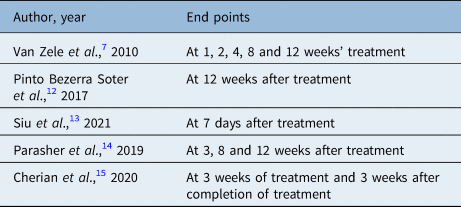
The pre-treatment scores were recorded in a clinical setting across all the five studies. Siu et al.Reference Siu, Mackenzie, Klingler, Biswas, Wang and Hung13 had the shortest treatment span of 7 days prior to sinus surgery with post-treatment scores being measured on the 7th day intra-operatively after the final dose of doxycycline. On the contrary, Pinto Bezerra Soter et al.Reference Pinto Bezerra Soter, Bezerra, Pezato, Teles Abdo, Pilan and Pinna12 measured their outcomes directly at the end of 12 weeks of treatment. Van Zele et al.Reference Van Zele, Gevaert, Holtappels, Beule, Wormald and Mayr7 measured their outcomes at 1, 2, 4, 8 and 12 weeks, and Parasher et al.Reference Parasher, Kidwai, Konuthula, Goljo, Pan and Saini14 measured their outcomes at 3, 8 and 12 weeks. The only study to measure the outcomes after a significant period following the end of treatment was the study by Cherian et al.,Reference Cherian, Bassiouni, Cooksley, Vreugde, Wormald and Psaltis15 who measured it at the cessation of therapy (three weeks) and then again three weeks after the cessation of therapy. For the purpose of our analysis, we considered their scores from the three-week time point (Table 3).
Follow-up periods

Outcomes
The measured outcomes used to record pre-treatment and post-doxycycline treatment scores varied across all the included studies. Pinto Bezerra Soter et al.Reference Pinto Bezerra Soter, Bezerra, Pezato, Teles Abdo, Pilan and Pinna12 used the Sino-Nasal Outcome Test-20 (SNOT-20), Nasal Obstruction Symptom Evaluation Scale and Lund–Kennedy endoscopic scores. Similarly, Parasher et al.Reference Parasher, Kidwai, Konuthula, Goljo, Pan and Saini14 used the SNOT-22, endoscopic nasal polyp score, a visual analogue scale and a subjective symptom score that reported a summative mean score for nasal congestion, rhinorrhoea and post-nasal discharge. The other study that used nasal polyp scores to report outcomes was Van Zele et al.Reference Van Zele, Gevaert, Holtappels, Beule, Wormald and Mayr7 However, they also reported symptoms such as anosmia, nasal congestion, rhinorrhoea and post-nasal discharge in the form of a separate mean and standard deviation for each symptom. The only other study to report outcomes using SNOT-22 scores was Cherian et al.Reference Cherian, Bassiouni, Cooksley, Vreugde, Wormald and Psaltis15 They also reported outcomes using Lund–Kennedy, Lund–Mackay (pre-treatment only) and Adelaide Disease Severity score. Lastly, Siu et al.Reference Siu, Mackenzie, Klingler, Biswas, Wang and Hung13 used median Lund–Kennedy scores to report their pre-treatment and post-treatment outcomes (Table 2). Because of the vast variety of tools used to report the outcomes, we decided to compute the data of studies that used similar tools to record pre- and post-doxycycline treatment scores, namely SNOT-22, nasal polyp score and symptom score.
Sino-Nasal Outcome Test-22
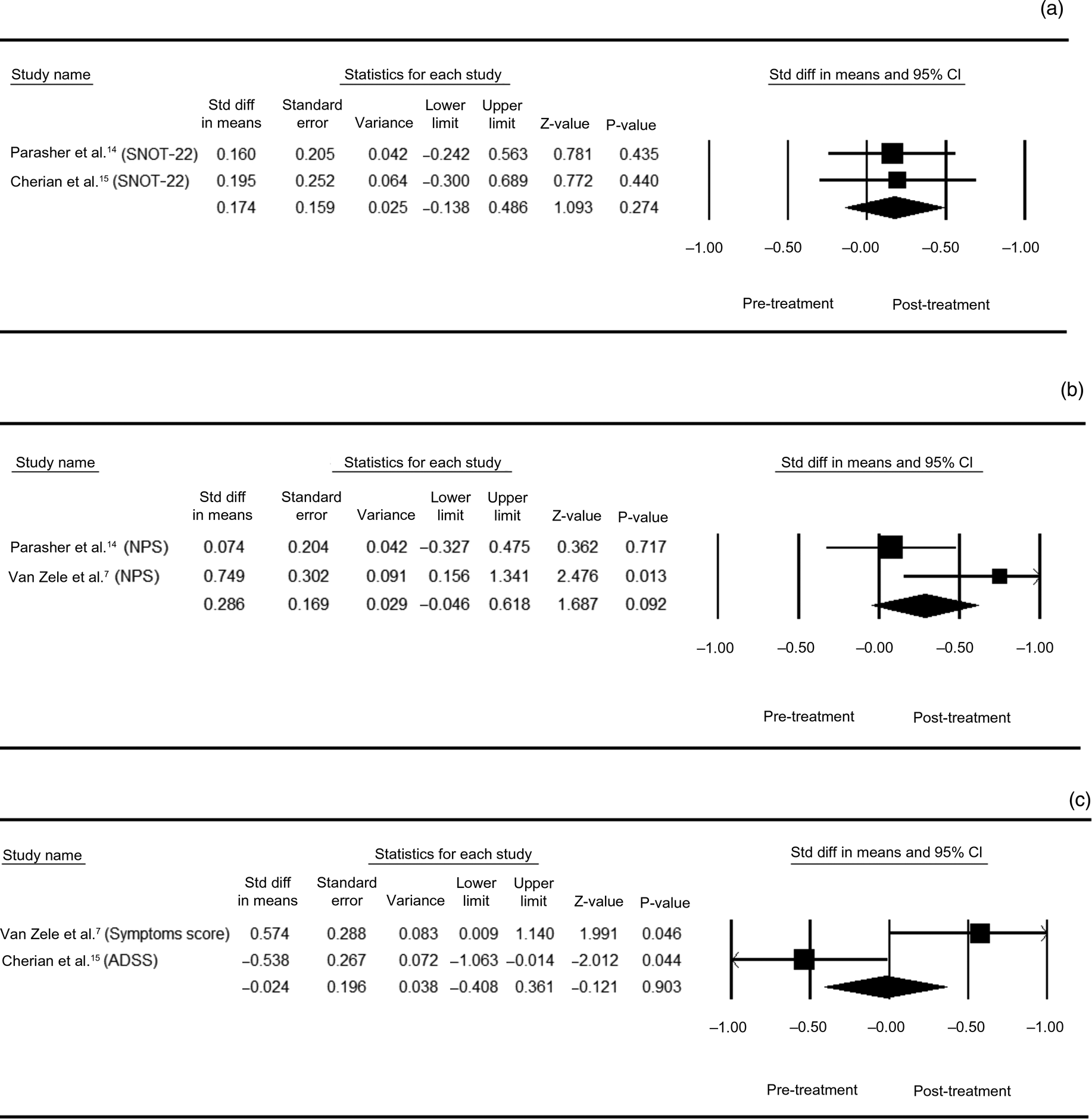
The SNOT-22 is a validated health-related quality-of-life outcome measure that was developed to assess symptoms pertaining to chronic rhinosinusitis. It consists of 22 patient-reported signs and symptoms, each of which range from 0 to 5 (0 equates to no symptoms and 5 equates to an intolerable state). Only two studies used pre- and post-treatment means to report the outcomes (Cherian et al.Reference Cherian, Bassiouni, Cooksley, Vreugde, Wormald and Psaltis15 (standardised mean difference, 0.195; standard error of the mean (SEM), 0.252; p-value, 0.440) and Parasher et al.Reference Parasher, Kidwai, Konuthula, Goljo, Pan and Saini14 (standardised mean difference, 0.160; SEM, 0.205; p-value, 0.435) (Figure 1a).
(a) Forest plot for Sino-Nasal Outcome Test (SNOT)-22 scores, (b) forest plot for nasal polyp scores (NPS) and (c) forest plot for symptom scores. Std diff = ; CI = confidence interval; ADSS = Adelaide Disease Severity Score.

Nasal polyp scores
Nasal polyp score is a validated endoscopic score that was developed to assess the size of the nasal polyps. It is scored from 0 to 4 (0 equates to no polyps and 4 equates to large polyps causing complete obstruction until the level of the inferior meatus). Total endoscopic nasal polyp score is the sum of both unilateral scores.Reference Gevaert, Van Bruaene, Cattaert, Van Steen, Van Zele and Acke16 Only two studies used pre- and post-treatment means to report the outcomes of nasal polyp scores: Parasher et al.Reference Parasher, Kidwai, Konuthula, Goljo, Pan and Saini14 (standardised mean difference, 0.074; SEM, 0.204; p-value, 0.717) and Van Zele et al.Reference Van Zele, Gevaert, Holtappels, Beule, Wormald and Mayr7 (standardised mean difference, 0.749; SEM, 0.302; p-value, 0.013) (Figure 1b).
Symptom scores
Although all the studies briefly mentioned the symptoms of chronic rhinosinusitis, such as congestion, nasal discharge, post-nasal drip and anosmia, only 2 studies reported both pre- and post-treatment scores for these symptoms and were compared accordingly: Van Zele et al.Reference Van Zele, Gevaert, Holtappels, Beule, Wormald and Mayr7 (standardised mean difference, 0.574; SEM, 0.288; p-value, 0.046) and Cherian et al.Reference Cherian, Bassiouni, Cooksley, Vreugde, Wormald and Psaltis15 (standardised mean difference, −0.538; SEM, 0.267; p-value, 0.044) (Figure 1c). It is worth mentioning that the Adelaide Disease Severity Score tool, a simple validated tool that assesses symptoms such as nasal obstruction, rhinorrhoea and post-nasal drip in chronic rhinosinusitis, was used for the latter study.Reference Naidoo, Tan, Singhal and Wormald17
Discussion
This systematic review identified five randomised, controlled trials that met our inclusion criteria. The selected studies were heterogeneous and used different controls, length of treatment with doxycycline, outcome measures and length of follow up.
From our systematic review and meta-analysis of the mean change in SNOT-22, symptom scores and nasal polyp scores, it appears that doxycycline has some initial positive effects in reducing the symptoms of chronic rhinosinusitis after three weeks of treatment when compared with baseline pre-treatment scores. However, a deeper look into the data suggests that the overall size of the effect appears insignificant.
Firstly, all the studies included in the review were underpowered except for the study by Pinto Bezerra Soter et al.,Reference Pinto Bezerra Soter, Bezerra, Pezato, Teles Abdo, Pilan and Pinna12 who had the largest study of 60 participants, 28 of whom received doxycycline. In recent years, research looking at the diagnostic investigation and management of chronic rhinosinusitis has become focused on phenotypes and endotypes of chronic rhinosinusitis. Phenotyping classifies types of chronic rhinosinusitis based on endoscopic findings, imaging, patients’ co-morbid medical conditions, age of onset, triggers and so on. Chronic rhinosinusitis endotypes are based on specific pathogenetic mechanisms or molecular biomarkers.Reference Cardell, Stjarne, Jonstam and Bachert18 Pinto Bezerra Soter et al.Reference Pinto Bezerra Soter, Bezerra, Pezato, Teles Abdo, Pilan and Pinna12 did identify that the patients who improved their SNOT-22 scores on doxycycline were less likely to have asthma, aspirin exacerbated respiratory disease and elevated immunoglobulin E levels prior to treatment. Van Zele et al.Reference Van Zele, Gevaert, Holtappels, Beule, Wormald and Mayr7 evaluated specific inflammatory markers and found that the doxycycline group had significantly decreased matrix metallopeptidase-9, myeloperoxidase and eosinophilic cationic protein levels in nasal secretions. Larger sample sizes would have likely depicted more precise outcomesReference Ranganathan, Pramesh and Buyse19 and would possibly allow for stronger conclusions regarding which phenotypes or endotypes respond to the use of doxycycline.
Although our data compared the same outcome instruments, the dosage, drug combinations and end points in the comparison were different. For example, Parasher et al.Reference Parasher, Kidwai, Konuthula, Goljo, Pan and Saini14 and Van Zele et al.Reference Van Zele, Gevaert, Holtappels, Beule, Wormald and Mayr7 used nasal polyp scores at 12 weeks to compare their outcomes. However, although Van Zele et al.Reference Van Zele, Gevaert, Holtappels, Beule, Wormald and Mayr7 used doxycycline alone, Parasher et al.Reference Parasher, Kidwai, Konuthula, Goljo, Pan and Saini14 used doxycycline in combination with methylprednisolone daily in a tapering dose along with saline nasal sprays.
The length of treatment with doxycycline was variable; Siu et al.Reference Siu, Mackenzie, Klingler, Biswas, Wang and Hung13 report insignificant results with doxycycline when participants with chronic rhinosinusitis were only prescribed a short 7-day course of antibiotics one week prior to surgery. A common consensus in the current medical literature is that antibiotics are generally prescribed to regress bacterial growth and decrease inflammation in chronic rhinosinusitis.Reference Smith, Evans, Tan, Chandra, Smith and Kern20 However, it appears that studies in the literature suggest better outcomes in chronic rhinosinusitis when doxycycline is used for longer terms.Reference Van Zele, Gevaert, Holtappels, Beule, Wormald and Mayr7,Reference Rudmik and Soler10,Reference Barshak and Durand21–Reference Lees, Orlandi, Oakley and Alt23 A common finding across all studies that used doxycycline for two weeks or more is the objective reduction in symptoms and/or a reduction in polyp size. However, it is important to follow up these cases and understand the trend following treatment cessation. Cherian et al.,Reference Cherian, Bassiouni, Cooksley, Vreugde, Wormald and Psaltis15 in their randomised, clinical trial, reported that the changes in the symptoms scores after a 21-day treatment of doxycycline were not sustainable beyond 3 weeks following cessation of treatment. This is in contrast to the study by Van Zele et al.,Reference Van Zele, Gevaert, Holtappels, Beule, Wormald and Mayr7 who did identify a persistent improvement in polyp size at the 12-week follow up after treatment with a 20-day course of 100 mg doxycycline daily. Interestingly, there was no improvement in any reported symptoms with doxycycline except for post-nasal drip. Pinto Bezerra Soter et al.Reference Pinto Bezerra Soter, Bezerra, Pezato, Teles Abdo, Pilan and Pinna12 had the largest study but also the longest course of doxycycline (12 weeks of 100 mg daily). They did show positive results with statistically significant improvement of SNOT-20, Nasal Obstruction Symptom Evaluation and Lund–Mackay computed tomography scan scores. Perhaps an extended course may have had superior results; however, they did not evaluate whether there was a sustained effect with their treatment regimen.
Doxycycline appears to be well tolerated by patients with chronic rhinosinusitis, and there seem to be few reported adverse events with its use. A list of adverse events was reported by Van Zele et al.,Reference Van Zele, Gevaert, Holtappels, Beule, Wormald and Mayr7 but none of the participants randomised to the doxycycline group withdrew from the study because of adverse events. They also reported no significant differences in the number or type of adverse events between groups (methylprednisolone vs doxycycline vs placebo). Similarly, Pinto Bezerra Soter et al.Reference Pinto Bezerra Soter, Bezerra, Pezato, Teles Abdo, Pilan and Pinna12 did not report any adverse events in their trial with the prolonged 12-week course of doxycycline.
This review has limitations. Only level 1 evidence studies were included to try to provide adequate conclusions on the practical use of doxycycline in chronic rhinosinusitis. The inclusion and exclusion criteria restricted the authors from analysing data from other studies in the literature including case controls, case series and in vivo studies. In doing so, only five studies were identified, one of which had a high risk of bias. In addition, the studies may have used different diagnostic criteria for chronic rhinosinusitis, and some included mixed cohorts of chronic rhinosinusitis patients (with and without nasal polyposis). It was therefore difficult to make specific conclusions regarding the use of doxycycline in the management of chronic rhinosinusitis.
Conclusion
Doxycycline appears safe to use in patients with chronic rhinosinusitis; however, the literature is mixed regarding its efficacy. Most of the studies are underpowered, and interpretation of results must be taken with precaution. Our meta-analysis is limited by the small number of high-quality studies, the different durations of treatment, outcome measures used and follow-up periods. Based on the evidence of this review, there continues to be clinical equipoise concerning the use of doxycycline in the treatment of chronic rhinosinusitis.
There is scope for future studies to recruit a larger number of patients based on European Position Paper on Rhinosinusitis and Nasal Polyps 2020 criteria (Fokkens et al.Reference Fokkens, Lund, Hopkins, Hellings, Kern and Reitsma1) for chronic rhinosinusitis and to investigate the effects of long-term doxycycline in double-blind randomised, clinical trials using placebo, saline irrigation and corticosteroids separately or in combination as comparators. Lastly, over 13 different tools have been used to report the outcomes in 5 studies alone, which made them difficult to compare. Over the last few years, patient-reported outcomes have become one of the mainstays of evaluating the effectiveness of a particular intervention. Of all the validated tools mentioned in this review, we believe that changes in SNOT-22, Lund–Mackay Score and modified Lund–Kennedy scores would give a comprehensive picture and should be used in future studies. In addition, the ability to investigate the use of doxycycline with different chronic rhinosinusitis phenotypes and endotypes with large-scale studies may allow clinicians to provide targeted therapy to those who will benefit.
Acknowledgements
The authors thank the librarians at the Flinders University Library, Adelaide, Australia for their contribution to the systematic review search, notably Mary Filsell, Josephine McGill and Rachael Elliot.
Competing interests
None declared
Appendix 1. Medline database
Database(s): Ovid Medline(R) and Epub Ahead of Print, In-Process, In-Data-Review & Other Non-Indexed Citations, Daily and Versions(R) 1946 to November 10, 2021
Search strategy

Cinahl database search

Web of Science search
(TS=((“Chronic Rhinosinusitis” OR rhinosinusitis OR “Chronic sinusitis” OR polyp* OR “nasal polyp*”) AND (doxycycline OR tetracycline*) AND ((review OR “meta-analysis” OR placebo* OR random* OR (clinic* NEAR/4 trial*)) OR ((singl* OR doubl* OR trebl* OR tripl*) NEAR/4 (blind* OR mask*))))) NOT TI=(rat* OR mouse OR mice OR swine OR porcine OR murine OR sheep OR lambs OR pigs OR piglets OR rabbit OR rabbits OR cat OR cats OR dog OR dogs OR cattle OR bovine OR monkey OR monkeys OR trout OR marmoset*)
Screenshot below:

Scopus search
((TITLE-ABS ((“Chronic Rhinosinusitis” OR rhinosinusitis OR “Chronic sinusitis” OR polyp* OR “nasal polyp*”)) AND TITLE-ABS-KEY ((doxycycline OR tetracycline*)) AND TITLE-ABS-KEY ((review OR “meta-analysis” OR placebo* OR random* OR (clinic*W/4trial*))))) AND NOT (TITLE-ABS (rat OR rats OR mouse OR mice OR swine OR porcine OR murine OR sheep OR lambs OR pigs OR piglets OR rabbit OR rabbits OR cat OR cats OR dog OR dogs OR cattle OR bovine OR monkey OR monkeys OR trout OR marmoset*))