


Introduction
Polycentricity refers to a governance structure characterized by the presence of multiple overlapping decision-making centres, authorities, or jurisdictions, each operating at different scales and within specific subsystems, with a certain degree of autonomy, yet collectively functioning within an overarching framework of rules and norms (Aligica and Tarko, Reference Aligica and Tarko2012; Aligica, Reference Aligica2015; McGinnis, Reference McGinnis2015; Ostrom et al., Reference Ostrom, Tiebout and Warren1961; Ostrom, Reference Ostrom and McGinnis1972, Reference Ostrom1991; Ostrom, Reference Ostrom1999, Reference Ostrom2010a; Schaefer, Reference Schaefer2023; Tarko, Reference Tarko and Melenovsky2022). These jurisdictions, which are essentially subsystems within the larger governance framework, enjoy relative independence but are interconnected. They cooperate in some contexts and compete in others. They cover a broad spectrum of scales, from the micro-level of local communities to broader regional and national levels, addressing diverse sectors or domains such as water management, policing, education, environmental protection, etc.. Each jurisdiction operates its own subsystem, tailored to address specific local needs and challenges, yet at the same time, their cooperative and competitive interactions induce a pattern of emergent order at the level of the overall system.
The research programme exploring polycentricity and polycentric governance systems has grown steadily in recent decades, advancing an increasingly robust theoretical apparatus and a nuanced perspective to the analysis of complex social, political and economic phenomena (Aligica and Tarko, Reference Aligica and Tarko2012; McGinnis, Reference McGinnis2000; Muller, Reference Muller2019). The approach has also been recognized for its potential to enhance democratic participation, innovation, and problem-solving capabilities (Gaus, Reference Gaus2021; McGinnis, Reference McGinnis1999a, Reference McGinnis1999b; Thiel et al., Reference Thiel, Blomquist and Garrick2019; Thunder and Paniagua, Reference Thunder and Paniagua2024). This research programme has predominantly centred on the structural aspects of polycentric systems, emphasizing the benefits of decentralized decision-making and the conditions under which such systems can thrive.
The typical approach is embracing, usually explicitly and sometimes implicitly, the conjecture that a common set of overarching rules and/or norms is necessary for the effective functioning of polycentric systems. The success or failure of a polycentric system is also typically analysed in terms of the incentives created by these overarching rules and/or norms (a) for discovering and using relevant information, and (b) for curtailing abuses of power and setting up an inclusive governance order. Also left typically unexamined is the assumption that some form of consensus must underpin the establishment of these overarching rules/norms (Ostrom, Reference Ostrom1997 explores this point). This conjecture is left largely unexamined. Also unexamined are the possible alternatives, substitutes, or complements for this pivotal feature of polycentric systems.
Indeed, the presence of an overarching system of rules plays a major role in the architecture of polycentric systems and is by default utilized as an explanation of their basic functioning logic. Yet taking it for granted leaves a lot under-conceptualized and unexplained regarding the operations and principles behind polycentric orders. Our paper opens up a new line of research in polycentricity studies by identifying and discussing an additional (complementary or alternative) principle that is at work in polycentric systems: the principle of interoperability (Palfrey and Gasser, Reference Palfrey and Gasser2012).
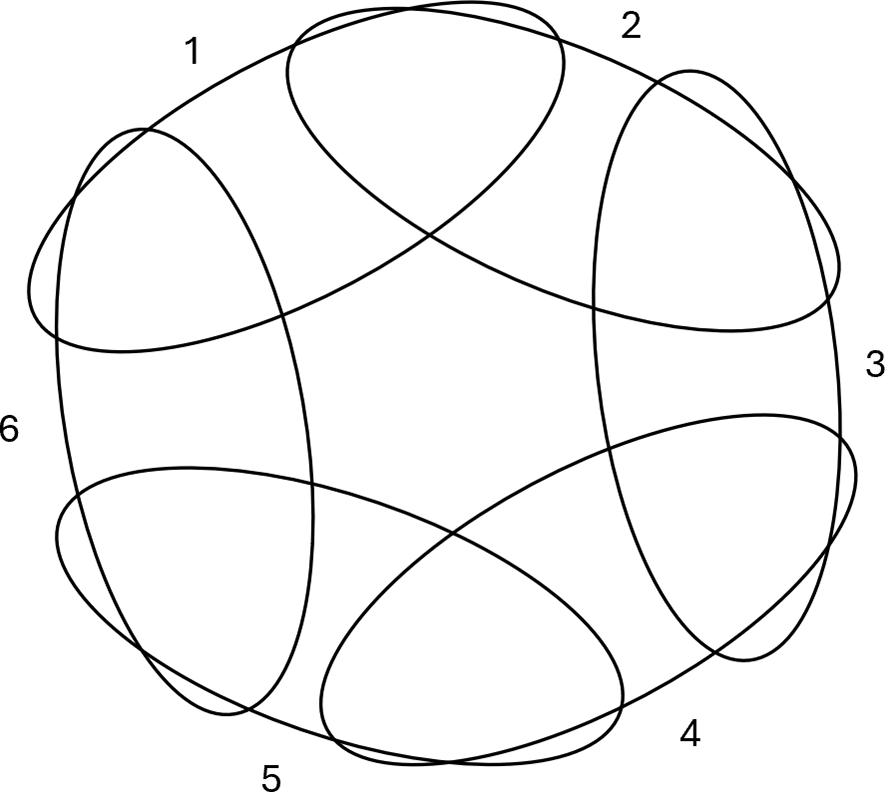
Figure 1 illustrates a governance system built on interoperability but without over-arching rules. Interoperability refers to the ability of a system to provide either complements or substitutes to another system. Complements enhance the other system, while substitutes provide resilience to the broader polycentric arrangement. In the context of governance, the ability to provide complements or substitutes depends on the presence of institutions that enable cooperation and keep competition within non-violent and broadly speaking ‘fair play’ parameters.
Interoperability without overarching rules.

The diagram in Figure 1 shows six governance units that work together through direct connections with their neighbours. Even though all six never overlap at once, the network stays connected through intermediate links. In a network of interoperable systems, if System 1 can interoperate with System 2, and System 2 with System 3, then there’s a potential pathway for interoperability between 1 and 3. This allows for the development of extensive networks of cooperative relationships, spanning entire polycentric systems. Interoperability allows different systems, despite their heterogeneity, to work together efficiently. At the same time, it does not necessarily require an overarching general rule followed by all participants. The scope of the polycentric system is defined, in this perspective, by the availability of pathways for interoperability. Complex patterns of division of labour in markets (which often span internationally) are an example, but complex emergent orders also exist in non-market settings. A unit is outside of the polycentric system if it lacks interoperability with any of the system’s units (or the costs of interoperability are higher than some threshold). The units that make up the system are all connected, either directly or indirectly, but they may not all share the same method of interoperability. Figure 2 illustrates the idea, with 6 total units having areas of overlap but no common overlap.
Institutional complexity.

In some cases, a general agreement may exist, but no general agreement is necessary for interoperability as long as bilateral transition points are created and effectively managed. Each transition point, established at the interface between two systems, allows for smooth handoffs of goods or services. The key is that each pair of systems cooperates directly, ensuring compatibility at that specific border or transition. By focusing on these localized agreements and solutions, seamless operations can be achieved without the need for a broad, overarching consensus across all systems. This method allows diverse entities to function together efficiently, without requiring uniformity or full system integration.
Our claim is that the presence of interoperability is a very important property of polycentric systems. It is in fact interoperability and less so overarching rules that make these systems amenable to generating governance arrangements able to respond to the challenge of deep heterogeneity and complex, multilevel coordination. Interoperability alleviates in many instances the huge pressure put on governance systems to align with consensus principles. At the same time, it introduces the modularity required for dealing with value pluralism and social diversity. Our argument is that the presence of interoperability within polycentric systems allows for a flexible and dynamic approach to governance, where different elements of the system can engage in cooperative endeavours, share resources, and align strategies in response to shared challenges, all while maintaining their distinct identities and autonomy. In brief, this capacity to combine fluidity of process with diversity of structures is what makes interoperability particularly effective in managing the complexities of heterogeneity in polycentric systems.
Interoperability, due to its modular and basic dyadic nature, reduces the challenges of coordination and collective action, which require achieving multiple-faceted consensus on substantive values and objectives or on procedures. Instead of requiring comprehensive agreement, interoperability emphasizes the importance of agreements and mechanisms for managing interaction, collaboration, and competition. This pragmatic focus on functional compatibility opens up new possibilities for governance in diverse and rapidly changing environments, reducing the dilemmas of collective action in such circumstances.
Our emphasis on interoperability should not be misunderstood as claiming polycentric systems operate without rules. Rather, the concept of ‘overarching rules’ has been treated as a taken-for-granted analytical foundation in the polycentricity literature, leaving underexplored how rules emerge, coordinate action, and evolve across heterogeneous units. The literature, from the Ostroms onward, notes that such rules often emerge bottom-up, yet focuses on whether they exist and how to characterize their content, rather than on how they are generated and scaled.
Interoperability provides a more granular lens. Coordination emerges through layered compatibility at dyadic interfaces, mixing formal rules and informal norms; what appears as ‘overarching rules’ at the system level may consist of networks of bilateral and multilateral interoperability relationships. Overarching rules are thus better understood as a limit case of interoperability – mechanisms so standardized and universally adopted that they function as system-wide rules. But such convergence is neither automatic nor the only path to effective coordination.
This reconceptualization explains how polycentric systems can coordinate effectively even when full convergence appears absent, directs attention to the costs and processes of achieving different forms of coordination, and provides a theoretical frame for analysing dynamic evolution of polycentric orders. Similar to the case of global markets, which generate a productive global economic order despite a lack of international consensus on how to regulate various markets, productive emergent orders in non-market settings also do not require full consensus on either values or procedures. Interoperability allows us to model how such a complex reality is possible.
This paper sets up the conceptual stage for this research agenda, exploring all of the above and other related aspects. With this in mind, the paper will be organized as follows: First, we review the issue of polycentric governance in connection to the problem of an overarching system of rules. Next, we introduce and conceptualize interoperability within the context of polycentric governance, examining its significance. We then take a closer look at interoperability, noting the benefits and drawbacks. The second part of the paper is dedicated to three analytical frameworks for conceptualizing and managing polycentric systems. First, cost-based analysis focuses on the economic implications and trade-offs associated with establishing and maintaining interoperability. Second, network analysis, including critical path graph theory, is used to chart and assess the interdependencies and pathways within these systems, pinpointing key nodes and potential bottlenecks. Third, catallaxy as a means-ends analysis with normative dimensions and implications explores how cooperation can be fostered in the absence of a consensus on objectives in catallactic systems. We conclude by revisiting the ‘overarching rules’ or ‘interoperability’ question and its implications for the theory and practice of polycentric governance.
The problem of institutional complexity
The problem of institutional complexity can be understood in the most general terms as follows.
Complexity is necessary for generating high degrees of wealth. For instance, a simple autarkic society cannot generate as much wealth as a society involving complex networks of division of labour. However, higher complexity also increases the variance of outcomes. Simple societies are poor but with low variance. Complex societies can oscillate much wider, and, in fact, all historical complex societies have eventually collapsed (Diamond, Reference Diamond2005; Tainter, Reference Tainter1988). It is an open question whether our current complex global system is indefinitely sustainable. There is an active debate if the current complexity of, e.g. global markets (with complex supply chains) makes them more resilient or more fragile.
In terms of desirability, we want as much wealth as possible (measured along a multiplicity of inter-correlated outcomes) with as little uncertainty (as few unexpected shocks) as possible. This is a classic means-variance trade-off, illustrated by a utility function that grows along the mean outcome coordinate, and decreases with the variance.
Figure 2 illustrates this logic. A given institutional framework creates a constraint regarding how much we can increase welfare without blowing up the variance. The intersection between this constraint and the utility function (or social welfare function) gives the optimum amount of complexity that can be achieved within that institutional framework (i.e. with those institutional tools).Footnote 1 A different institutional framework, i.e. I 2 instead of I 1 in Figure 2, allows society to increase both its wealth and reduce the variance, hence raising the optimum amount of complexity. The graph shows how different institutional systems allow societies to achieve different levels of beneficial complexity. Better institutions (like I 2 versus I 1) let societies have both higher prosperity and more stability.
We have two critical points here.
First, higher wealth can be achieved only with greater complexity. This follows from two institutionally agnostic assumptions: (a) social welfare increases with the mean and decreases with the variance; and (b) complexity raises both. Hence, there is no way to increase the mean without increasing complexity; two institutional frameworks pushed to the same complexity will simply deliver different means and variances (in Figure 2, I 1 at I 2’s optimal complexity yields lower mean and higher variance). This counters the intuition that we can obtain more while sticking with simple institutional forms.
The institutional reality considered here encompasses both societal rules and norms, and organizational forms developed within those rules and norms. For example, Epstein (Reference Epstein1995) has argued that it is possible to have ‘simple rules for a complex world’. His ‘simple rules’ refer to broad state-enforced rules of property and contract. But, within those general rules, a highly complex array of organizations and common law decisions are supposed to flourish. In other words, the full institutional order envisioned by Epstein (Reference Epstein1995) is anything but simple. His point is that complex privately produced institutions and tort law structures can better flourish and evolve if the top-down state-enforced legal framework is kept relatively simple.
Second, institutional evolution involves the creation of new institutional forms that enable higher means with lower variance. In other words, the possibility of better outcomes is grasped within the institutional system I 1, but I 1 cannot actually deliver those outcomes safely, and, hence, a transition to a new system, I 1 → I 2, is necessary. This type of institutional evolution is unavoidable if we are to actually obtain the higher mean, lower variance state of affairs.
This abstract perspective raises the practical question: How do we analyse and evaluate alternative complex institutional forms? One of the Ostroms’ guiding lights has been Hamilton’s question from Federalist 1 of ‘whether societies of men are really capable or not of establishing good government from reflection and choice, or whether they are forever destined to depend for their political constitutions on accident and force’. In other words, we can’t be satisfied with just the operation of a blind system of evolution by natural selection, but instead we want to use reason to constrain the directions in which institutions could change (E. Ostrom, Reference Ostrom2014; see also Hodgson, Reference Hodgson2002a, Reference Hodgson2002b).
The concept of polycentricity is designed to help us in this task, and, judging by the large literature that has used it for various practical applications, it has been fairly successful. However, in this paper we argue that the usefulness of the concept is limited by a particular assumption – the assumption that the variety of decision centres belonging to the polycentric system operate within a single overarching system of rules and/or norms. We propose to replace this assumption by an account of interoperability, which is a looser, but more realistic, foundation for coordination.
From a complexity and robust political economy perspective (Pennington, Reference Pennington2017), the overarching rules assumption is unsatisfactory because it doesn’t provide a realistic explanation of how institutional complexity can increase productively and without collapse. If we’re assuming a single system of overarching governing rules, the bigger the scale and complexity of a system, the more difficult the information and incentives problems become, and the more difficult reaching consensus becomes. But we can drop the assumption of overarching rules. Complexity can increase, without being overwhelmed by informational and incentive failures, because the system gets fragmented into a network of governing bodies, each with a manageable task, each with a reasonable capacity for reaching internal consensus; but the cohesion of the overall system is maintained, assuring the welfare benefits of complexity, thanks to the interoperability between these governing bodies. This line of thinking relates to ideas in network theory that suggest that the strength of a network lies not in its uniformity but in its nodes’ ability to connect and interact in various, sometimes unpredictable, ways.
The distinction between a merely fragmented (anarchic) system and a polycentric system is important (Pahl-Wostl and Knieper, Reference Pahl-Wostl and Knieper2014; Tarko, Reference Tarko2017, p. 43), but needs to be reinterpreted. A collection of decision centres is anarchic not because it lacks overarching rules, but because its members lack interoperability, i.e. they lack effective methods of exchanging goods, services and information. Similarly, the ability to tell whether a particular decision centre is in or out of a polycentric system is indeed crucial – as the ability to exclude free riders is a key element in the successful solution to public goods and common pool resources problems. But membership to a polycentric system should not be defined theoretically by whether the decision centre is subject to the system’s overarching rules (which may not exist!), but by whether it is interoperable with other members of the system. A polycentric system is a network of interoperable units, but this interoperability need not be fully transitive, i.e. it need not go as far as establishing a single set of overarching rules.
The limits of consensus
The ‘overarching system of rules’ part of the definition of polycentricity has a curious position in the polycentricity literature (Aligica and Tarko, Reference Aligica and Tarko2012; Ostrom, Reference Ostrom1999; Reference Ostrom2010a; Tarko, Reference Tarko2017, ch. 2; Reference Tarko and Melenovsky2022). On the one hand, its crucial role is taken for granted, in a literature that focuses primarily on the applied level. On the other hand, the critical analysis of this pre-eminent role is mostly neglected. This stands in contrast to the more philosophical literature, where the question of consensus is widely discussed (e.g. see Gaus, Reference Gaus2021; Muller, Reference Muller2019; Paniagua and Pourvand, Reference Paniagua and Pourvand2025; Thrasher and Vallier, Reference Thrasher and Vallier2018; Thrasher, Reference Thrasher2020).
The literature on polycentricity faces a glaring asymmetry between, on the one hand, the focus on issues related to the distribution and exercise of authority and decision-making across multiple (overlapping, cooperating, and competing) jurisdictions, which are explicitly identified and discussed in great depth, and, on the other hand, the system of overarching rules, assumed to be a foundational element of polycentricity, but which receives less critical attention. Yet, at a closer look, the assumption of overarching rules plays a crucial and active role in shaping the analysis and normative evaluations of polycentric systems.
For example, Tarko (Reference Tarko and Melenovsky2022, p. 186) defines polycentricity and highlights the importance of the ‘over-arching set of rules or norms’ in the following way:
Polycentricity is a system of many interdependent but autonomous decision centers operating under an over-arching set of rules and norms that they themselves set up, monitor, and enforce … . A decision center is part of the polycentric system (rather than an outsider that may be affected by the system’s actions) if they are not only subjected to those over-arching rules and norms, but also have some say in their creation, monitoring, enforcement, and change. Polycentricity is an alternative both to hierarchical governance, where lower level decision-makers have to obey commands from higher level centers and have little say about the rules imposed upon them from the top-down, and to anarchic (fragmented) governance, where no commonly accepted over-arching rules and norms exist. In the case of fragmented governance we cannot really speak of a ‘system’ as there is no clear delineation between insiders and outsiders of the system.
The overarching rules and norms are assumed to work as an ultimate coordinating device, essential for the coherence and integration of polycentric systems, serving as the coordinator of last resort and the unifying principle. It is implied that without these rules, polycentric systems might struggle to operate effectively or achieve their intended outcomes. One key challenge for any perspective on polycentricity that rejects the over-arching rules/norms view is to show that (a) the borders of the system can still be defined, and (b) polycentricity can still be distinguished from mere fragmentation, even in the absence of a single set of overarching rules. The concept of interoperability can be used to achieve this.
Furthermore, the focus on interoperability increases the realism and practical utility of polycentricity. Typically, the practical applications of polycentricity are based on ‘the claim that the key for understanding the success or failures of emergent orders rests in the study of the overarching rules’ and that ‘the efficiency of an emergent social-institutional-political order depends on the overarching rules and norms of the underlining polycentric system’ (Tarko, Reference Tarko and Melenovsky2022, 193). This connects the topic of polycentricity to Ostrom’s ‘design principles’ (Ostrom, Reference Ostrom1990, Reference Ostrom2005; Tarko, Reference Tarko2017, ch. 4), as the design principles are applied to the overarching rules. A long-standing question about the Ostrom’s design principles is how general they are (Cox et al., Reference Cox, Arnold and Villamayor-Tomás2010). Elinor Ostrom herself has often warned against using the design principles as ‘panacea’ or as mechanical normative check-boxes, but, if the design principles are correct, it was never clear why not. The conceptual shift to interoperability should potentially help address this long-standing question, and make better sense of Ostrom’s warning against using the design principles as panacea.
We can consider two types of consensus (Table 1): (a) consensus on values or an overlapping consensus on core principles, or (b) agreement on the processes or operational rules. Polycentricity, even under the strong assumption of overarching rules, can still account for heterogeneity of values by adopting a modus vivendi perspective, which shifts the focus from consensus over values or principles to a weaker agreement on procedural rules. The difference continues to exist between (a) substantive values and objectives-based consensus and (b) consensus on rules of operation and process.
Types of disagreement

Table 1. Long description
A table categorizing types of consensus and disagreement based on values and procedures. The table has two rows and two columns. The row labels are ‘Consensus regarding values’ with sub-labels ‘Yes’ and ‘No’. The column headers are ‘Consensus regarding procedures’ with sub-headers ‘Yes’ and ‘No’. Row 1: Yes, Full agreement; Disagreement over implementation. Row 2: No, Modus vivendi; Deep disagreement.
Polycentric systems often require agreement only on how decisions are made, conflicts resolved, and operations conducted, not on substantive values. Yet the problem of consensus continues to loom large: procedural consensus, while arguably easier to achieve than consensus on values, still requires participants to converge on how decisions are made, how conflicts are resolved, and how collective action is coordinated.
What about cases in which we lack agreement on rules? As shown in Table 1, this covers two distinct situations: (a) Cases when people agree at the conceptual level – they pursue the same values, but they disagree on how to implement these values in practice. (b) Cases of deep disagreement in which people disagree on values and fail to find a mutually acceptable set of rules that can be justified from multiple normative perspectives.
Our claim is that polycentric systems often persist, and may even prosper, even under such adverse circumstances. A polycentric system can be more than a particular version of an ‘overlapping consensus’ type arrangement. The importance of polycentric systems comes from the fact that they are able to operate and be relatively successful in conditions of deep heterogeneity of beliefs, values, preferences, and social structures. The structural and operational flexibility of these systems allows for multiple, autonomous centres of decision-making to coexist and collaborate effectively, even when there is no shared agreement on specific goals or values and limited consensus of the rules in place.
The consensus approach is limited both in theoretical ambition and empirical applicability. Interoperability expands our understanding of how autonomously governed jurisdictions and subsystems communicate, collaborate, and coordinate bottom-up activities, aligning objectives, sharing information and resources, and harmonizing operational procedures while respecting autonomy. It shifts the focus from comprehensive agreement to functional compatibility, expanding the scope of modus vivendi and opening new possibilities for governance in diverse and rapidly changing environments.
The philosophical debate over consensus and legitimacy
Consensus-based approaches to political legitimacy, exemplified by Rawls’ (Reference Rawls1993) overlapping consensus and Habermas’ (Reference Habermas1996) discourse theory, have been influential but face serious challenges in accommodating deep diversity and persistent disagreement (Galston, Reference Galston2002; Gaus, Reference Gaus2016; Gray, Reference Gray2000; Mouffe, Reference Mouffe2000; Muller, Reference Muller2019; Paniagua and Pourvand, Reference Paniagua and Pourvand2025; Thrasher and Vallier, Reference Thrasher and Vallier2018; Thrasher, Reference Thrasher2020). Vincent Ostrom (Reference Ostrom1997) similarly argued that ‘shared communities of understanding’ are necessary for democracy’s survival, a view that may be too pessimistic. Empirical research on polarization and cultural divides further questions the feasibility of consensus in diverse societies (Sunstein, Reference Sunstein2002). The concept of polycentricity, and particularly interoperability, offers a more realistic alternative for managing deep pluralism without requiring its elimination.
The empirical case against overarching rules
Table 2 illustrates the issue with the assumption of overarching rules/norms in many examples of polycentric systems, including the classic cases widely discussed in the literature. While one can try to model these systems as having an overarching system of rules/norms, and argue that their successful operation depends on these rules, this argument has a strong ideal-theory flavour. Consider a few of the classic examples of polycentric systems:
Examples of polycentric systems

Table 2. Long description
A table with 12 rows and 4 columns comparing polycentric systems, presumed overarching rules or norms, empirical difficulties for the overarching rules perspective, and interoperability between units. Column headers are Polycentric system, Presumed overarching rules or norms, Empirical difficulties for the overarching rules perspective, and Interoperability between units. Row 1: Polycentric system: Markets; Presumed overarching rules or norms: Property and contracts protections, some public goods provision; Empirical difficulties for the overarching rules perspective: Development under weak institutions. Firms operating internationally, across multiple country systems.; Interoperability between units: Cooperative and competitive (firms). Row 2: Polycentric system: Constitutional democracy; Presumed overarching rules or norms: Constitutional constraints, amendments are done by specified rules; Empirical difficulties for the overarching rules perspective: Living constitution, judicial re-interpretation plays an important role; Interoperability between units: Competitive (political parties) and cooperative (parties forming coalitions). Row 3: Polycentric system: Federalism; Presumed overarching rules or norms: Hierarchical federalism, market-preserving federalism; Empirical difficulties for the overarching rules perspective: American and EU federalism are not hierarchical; Interoperability between units: Cooperative and competitive (administrative units). Row 4: Polycentric system: Metropolitan governance; Presumed overarching rules or norms: Consolidation under a single system of metropolitan governance rules; Empirical difficulties for the overarching rules perspective: Ad hoc relations between different units, no consolidation; Interoperability between units: Cooperative (administrative units, e.g. police departments). Row 5: Polycentric system: Environmental governance; Presumed overarching rules or norms: E. Ostrom’s design principles; Empirical difficulties for the overarching rules perspective: E. Ostrom’s warning of using the design principles as panacea; Interoperability between units: Cooperative (users of resource). Row 6: Polycentric system: Common law and customary law; Presumed overarching rules or norms: Emergent body of law thanks to reliance on precedents; Empirical difficulties for the overarching rules perspective: Tullock’s critique of common law; Hasnas account of customary law; Interoperability between units: Cooperative (judges). Row 7: Polycentric system: Independent regulatory agencies; Presumed overarching rules or norms: Coherent system of administrative law; Empirical difficulties for the overarching rules perspective: Incoherent system enabling regulatory arbitrage; Interoperability between units: Cooperative and competitive (regulatory agencies). Row 8: Polycentric system: International relations; Presumed overarching rules or norms: International law; Empirical difficulties for the overarching rules perspective: International anarchy, international relations realism; Interoperability between units: Cooperative and competitive (countries). Row 9: Polycentric system: Scientific; Presumed overarching rules or norms: communities; Empirical difficulties for the overarching rules perspective: Scientific method; Interoperability between units: Feyerabend’s critique, Polanyi-Tullock institutional analysis. Row 10: Polycentric system: Cooperative and competitive (research centres); Presumed overarching rules or norms: communities; Empirical difficulties for the overarching rules perspective: ; Interoperability between units: . Row 11: Polycentric system: Religious; Presumed overarching rules or norms: communities; Empirical difficulties for the overarching rules perspective: Top-down religious norms and rules; Interoperability between units: Diversity and bottom-up organizations, Hume’s account of the evolution of conventions. Row 12: Polycentric system: Competitive (religious); Presumed overarching rules or norms: communities; Empirical difficulties for the overarching rules perspective: ; Interoperability between units: .
The idea that markets work because they are embedded into property and contract rules ignores the many cases of markets still working under weak institutions, as is the case in many developing countries or transition economies (Aligica and Tarko, Reference Aligica and Tarko2016). Furthermore, international firms operate across multiple institutional systems within different countries. Foreign investors don’t necessarily push for the same rules everywhere, but instead simply aim at establishing interoperability with local suppliers and adapt to local institutions (for a clear example see the case of motorcycle investors in Vietnam, Ngo, Reference Ngo2017; Ngo and Tarko, Reference Ngo and Tarko2018).
Idealized concepts of hierarchical federalism, such as the idea of market-preserving federalism (Weingast, Reference Weingast1995), which assumes certain overarching rules constraining the behaviour of individual states, are at odds with the reality of both American federalism (where states can adopt rules at odds with federal-level rules) and the European Union confederation (where state-level constitutional courts can annul rules passed by the European Parliament) (Ostrom, Reference Ostrom1991). The principle of subsidiarity, which argues for decisions to be made as closely as possible to the citizens affected by those decisions, supports the relevance of the notion of interoperability (see also Thunder and Paniagua Reference Thunder and Paniagua2024; Thunder, Reference Thunder2025).
Classic examples of polycentricity like governance in metropolitan areas have never fit well the idea of overarching rules, as the whole point made by E. Ostrom and her collaborators was that such areas worked well with an ad hoc network of cooperation across different issues at different scales (Boettke et al., Reference Boettke, Palagashvili and Lemke2013; McGinnis, Reference McGinnis1999b; Tarko, Reference Tarko2017, ch. 1). For example, they have documented how police departments coordinated tasks based on economies of scale. Patrolling is kept decentralized, while crime labs and jails are shared among multiple departments, and police training and education is done at an even larger scale. Importantly, the centralization of some tasks is decided in a cooperative bottom-up fashion, and the details vary across the United States.
In environmental governance, the ability of local, national, and international bodies to share data and coordinate actions has been essential for addressing transboundary environmental issues. These practical successes underscore the value of interoperability in fostering effective, scalable governance. Conversely, as argued by Cole (Reference Cole2015) and E. Ostrom (Reference Ostrom2010b), failures to address environmental issues are partly a result of seeking an unrealistic degree of international consensus, instead of seeking a diversity of smaller-scale policies, which would aggregate into more successful global outcomes (see also Paniagua and Rayamajhee, Reference Paniagua and Rayamajhee2024b).
V. Ostrom (Reference Ostrom1991) argues that common law is polycentric. The rule or norm of recognizing and relying on precedents may be seen as overarching and essential for the proper functioning of common law. But Tullock has argued that common law is actually more chaotic than it seems (see Tarko and Farrant, Reference Tarko and Farrant2019 for an overview), and Hasnas (Reference Hasnas2005) has argued that customary law (which was similar to common law but relied less on precedents) still worked well, maybe even better than common law. In other words, the interactions between courts in the common law system are better understood in terms of interoperability than over-arching rules. Interoperability also better accounts for the ideological divisions between judges.
The naïve model of how the scientific community works assumes the existence of a universally accepted scientific method, which could be understood as providing the overarching norms. More realistic accounts of how science actually works point, instead, in the direction of a particular institutional structure. Interoperability provides a more natural account of science as a competitive process between different schools of thought that don’t fully agree on methods. Tarko (Reference Tarko2015) offers such an analysis of the scientific community using polycentricity, built upon the previous institutional work of Polanyi (Reference Polanyi1951), Feyerabend (Reference Feyerabend1993) and Tullock (Reference Tullock1966). Further evidence that the scientific method does not function as a genuinely binding overarching norm comes from Koppl et al. (Reference Koppl, Pronin, Cowen, Podemska-Mikluch and Paniagua2025), who show that governments routinely formed ad hoc scientific advisory committees during the Covid-19 pandemic precisely in order to shape and control scientific advice for political purposes. A pattern only possible because no universally enforced methodological rules actually constrain how scientific inquiry is organized.
In the case of disaster management, Hurricane Katrina operated under formal emergency frameworks specifying jurisdictional rules and coordination protocols, paradigmatic ‘overarching rules’. Yet these inadequately captured actual coordination. Federal, state, and local agencies struggled while substantial coordination emerged through spontaneous volunteer networks with ad hoc radio protocols, community liaison roles, and volunteer reception centres matching capabilities with needs. Coordination relied less on comprehensive rule frameworks than on emergent interoperability at operational interfaces. Katrina response is an example of a common pattern (for an overview see Twigg and Mosel, Reference Twigg and Mosel2017).
Religious communities similarly challenge the overarching rules assumption. Baptist, Presbyterian, and Methodist congregations maintain theological autonomy and divergent interpretive traditions, yet coordinate through shared seminary training networks, publication systems, and mission partnerships (Ammerman, Reference Ammerman2005). Coordination operates through interoperability at functional interfaces rather than convergence on uniform theological principles, revealing modular compatibility mechanisms connecting otherwise divergent communities.
Table 2 points to other examples as well, the bottom line being that in many cases of polycentricity the claim about the operation of an overarching system is at least contestable if not downright dubious.
Interoperability networks
Competition and cooperation within polycentric systems
The concept of interoperability has been traditionally associated with technological systems. Palfrey and Gasser define interoperability as ‘the ability to transfer and render useful data and other information across systems, applications, or components’ (Reference Aligica and Tarko2012, p. 5). They propose a layered model of interoperability consisting of technological, data, human, and institutional components. However, the model possesses a robust external validity, allowing for its general application to governance systems. The underlying logic of the model emphasizes that successful interoperability is not just a technical challenge but a multifaceted effort involving human, social, and institutional factors.
Generally speaking, what makes two or more units interoperable is the fact that they operate in the same area of activity, and the overall outcome of the system depends on the actions of all of them (this is how we know whether a unit is part of the polycentric system or not). We can differentiate between two types of interoperability: cooperative or competitive, corresponding to whether the units are complements or substitutes in an area of activity. Either form can create a polycentric network that will generate an emergent order (a key feature of polycentricity, Aligica and Tarko, Reference Aligica and Tarko2012). A polycentric network can include some nodes connected via cooperative connections while others via competitive connections. Table 2 identifies the forms of interoperability in several cases. For example, a market system will include complementary firms (e.g. firms that provide inputs to others) as well as firms that compete with each other providing substitutes. The same kind of complex structure can also exist in non-market settings. Such interactions can be understood as ‘complex externalities’ (e.g. see Cowen and Schliesser, Reference Cowen and Schliesser2024; Paniagua and Rayamajhee, Reference Paniagua and Rayamajhee2024a; Rayamajhee and Paniagua, Reference Rayamajhee and Paniagua2021).
As a non-market example, consider the US regulatory system (Tarko and Farrant, Reference Tarko and Farrant2019). The system is made up of many regulatory agencies, each of which issues rules for various areas of the economy. Each agency typically regulates more than one area of the economy (often many), and each area is simultaneously regulated by multiple agencies (agencies’ activities overlap). Importantly, there is no single overarching set of rules governing the entire regulatory system, as each agency has been created by Congress by a different law at a different moment in time and for different reasons. The outcome of the regulatory system is an emergent property resulting from the independent (and not deliberately coordinated) actions of all agencies. The agencies sometimes expand their areas of activity beyond their original scope, also in a non-coordinated fashion, further increasing their overlap. The effect on the economy is complex. The fact that multiple agencies regulate the same area sometimes leads to a tragedy of the anti-commons (with multiple veto points for allowing a certain activity), while some other times it leads to regulatory arbitrage and a de facto reduction in the regulations (firms choosing their favourite regulator). In other words, agencies sometimes act as complements to one another, while in other contexts they are substitutes (and competitors).
Competitive interoperability involves two or more units having the same (or similar) area of activity, i.e. from the point of view of those affected by the units’ activities, the units are potential substitutes to each other. Regulatory arbitrage across different regulatory agencies is an example. Table 2 provides several others.
Cooperative interoperability in governance systems refers to the ability of multiple, autonomous, yet interdependent centres of decision-making (governments, organizations, or other entities) to work together effectively, despite differences in their structures, policies, and priorities. This concept involves creating and maintaining mechanisms, processes, and norms that facilitate communication, coordination, and collaboration among diverse actors while respecting their autonomy.
Interoperability consolidates existing polycentric governance systems by transforming potential fragmentation into cohesive functionality. By creating functional linkages through transition points rather than full-scale integration, entities work together without homogenization or an overarching authority. Its transitive property turns bilateral relationships into broader cooperative networks, converting the complexity and diversity of polycentric systems into strengths. Interoperability acts as a catalyst for the creation of polycentric governance systems. It transforms isolated entities into interdependent nodes of a cohesive system. It offers a scalable and flexible approach to building polycentric governance.
The idea of cooperative interoperability can be used to offer a tentative answer to V. Ostrom’s concern about the necessity of ‘shared communities of understanding’ for the survival of democracy. Consider again the illustration in Figure 1, and let us assume that it describes six groups in society with six distinct sets of moral values. There is no agreement between any of the groups, but there are overlaps between how these values are applied to certain areas of activity. The fact that divergent moral systems often give similar recommendations in practical terms is well known, e.g. utilitarianism and deontology often agreeing on numerous practical matters despite fundamental philosophical disagreements. The areas of practical overlap between the six groups create the possibility of interoperability. And while some groups will not interact directly with others, e.g. 1 and 4, they are still part of the same polycentric system via their interactions with other groups. In this system, groups 1 and 4 may still choose to peacefully coexist because of their indirect benefits via the groups 2, 3, 5.
Last but not least, interoperability offers a better way of thinking about the evolution of norms. Evolutionary models are based on variation, transmission, and selection (Hodgson, Reference Hodgson2002a, Reference Hodgson2002b; Hodgson and Knudsen, Reference Hodgson and Knudsen2010; E. Ostrom, Reference Ostrom2014). Variation within a polycentric system cannot happen (or is significantly limited) if we’re assuming over-arching rules/norms. The evolution of norms does not happen solely between different polycentric systems. The internal capacity to learn and adapt is in fact one of the great benefits of polycentricity.
Interoperability and transaction costs
The problem of interoperability’s organizational and implementation details becomes a critical issue. Yet the problem is not entirely new or unexplored. We can view interoperability through the lens of transaction cost economics (Williamson, Reference Williamson1981, Reference Williamson1996). This framework views interoperability investments as attempts to lower transaction costs among various governance units. By establishing different standards, protocols, and practices, interoperability can significantly reduce these costs, facilitating more efficient and effective cooperation. In brief, interoperability costs may be seen as the equivalent in the context of governance systems of what is known as transaction cost in economic systems.
The concept of polycentricity was created as an attempt to model emergent orders outside the case of markets (Tarko, Reference Tarko and Melenovsky2022). While in the case of markets the emergent order is the result of the operation of the price system (providing incentives and information to economic agents), the Ostroms have asked what happens when nothing similar to price signals exists. Furthermore, in the case of markets, questions of efficiency can be addressed by analysing the extent to which prices properly embed all the relevant information about scarcity and opportunity costs. How can we evaluate non-market emergent orders that lack a price-like mechanism? The concept of polycentricity, and the associated research into ‘design principles’ (Ostrom, Reference Ostrom1990, Reference Ostrom2005), provides a framework for trying to describe and evaluate such non-market complex orders. However, as argued above, the current account of polycentricity needs to move beyond the assumption of overarching rules/norms. Transaction cost economics provides a well-established guide.
This approach builds on the application of transaction cost economics to institutionalism (Vatiero, Reference Vatiero2020). Most of the methods, theoretical insights, and approaches developed by transaction cost economics seem to be easily applicable, under specific calibration, to interoperability cost analysis. By addressing these costs through both efficiency-focused and resilience-focused approaches, one could take a step further in understanding the nature and functioning of polycentric orders. The cases in Table 2 discussed earlier illustrate this logic: where standardization costs are high relative to coordination benefits, systems rely on flexible interoperability mechanisms rather than uniform overarching rules.
A key question in transaction cost economics is why firms form and change size (Alchian and Demsetz, Reference Alchian and Demsetz1972; Coase, Reference Coase1937; Williamson, Reference Williamson1996, Reference Williamson2010). The answer hinges on the comparison between internal managerial costs (free-riding, shirking) and the transaction costs of outsourcing (search costs, uncertainty). Beyond such cost comparisons, some theories point to additional benefits of organization which challenge the Coasean assumption that anything produced inside a firm could be bought on the market. Firms create social and knowledge spaces without which production and innovation would be impossible (Penrose, Reference Penrose1959). Similar concerns have been developed more recently in the entrepreneurial theory of the firm (Foss and Klein, Reference Foss and Klein2012).
All these concerns from the theory of the firm can be translated into the more general context of polycentricity. The concept of interoperability makes this fairly straightforward, unlike the concept of overarching rules/norms. The costs of cooperative interoperability are analogous to the managerial costs inside a firm, while the costs of competitive interoperability are analogous to the transaction costs of outsourcing on a market. Furthermore, the concern with social and knowledge spaces is commonly encountered in the literature on polycentricity, thanks to Tocquevillian concerns (Aligica and Boettke, Reference Aligica and Boettke2009; Aligica, Reference Aligica2018; Ostrom, Reference Ostrom1997). Finally, entrepreneurship can also be generalized from market to non-market settings (Aligica, Reference Aligica2015, Reference Aligica2018; Gaus, Reference Gaus2021).
Analytically, viewing polycentric governance systems as networks of interoperable nodes allows us to apply tools not only from institutional theory and transaction cost economics but also from network theory and critical path analysis. Network analysis can reveal the typology of the polycentric order, helping to identify central nodes, clustering coefficients, and path lengths. These metrics can highlight pivotal governance units, functional sub-networks, and the efficiency of flow between units. Critical path analysis can help to pinpoint governance bottlenecks and opportunities for improving the overall performance of the system.
The concept of interoperability also offers a new perspective on the role of overarching rules in polycentric governance systems. Stable and uniform overarching rules can be conceptualized as a specific, highly standardized, generalized arrangement on one uniform, across the system, interoperability formula. Yet the reality is that we should not limit our understanding of the operations of polycentricity to such extreme cases of interoperability, in which one principle becomes the overarching mechanism of uniting the operations of all subunits, jurisdictions, and decision centres of the system. The variety of partial, bilateral, and multilateral multifaceted and multilevel interoperational relationships between units at different levels and in different capacities and aspects of their interfaces is very large.
To sum up, polycentric governance systems may still be able to operate in conditions of deep heterogeneity due to interoperability, as it doesn’t rely on consensus-based values or, for that matter, on consensus over overarching rules. Different governance units may require varying degrees and types of interoperability based on their specific contexts and needs, and that might be sufficient to generate integrative systems effects, pulling functionally together a polycentric system.
While increased interoperability offers significant benefits, it’s important to consider the tradeoffs involved. As systems become more complex and tightly coupled, new risks emerge: minor failures can propagate and amplify into system-wide crises (Perrow, Reference Perrow1999; see section Conceptualizing vulnerabilities). High interoperability also makes systems harder to understand, control, and assign accountability. Increased interoperability can also lead to a form of de facto centralization, where the need for standardization and coordination inadvertently creates new power centres or reinforces existing ones.
Instead of the overarching rules perspective, the interoperability approach seems to be more in line with the ethos and analytical method of the Bloomington school. Instead of a top-down angle invited by the overarching system of rules approach, we view the polycentric order from the bottom up. This perspective encourages us to study and understand how people can find diverse modes of interoperability in governance that benefit them. It emphasizes the importance of local knowledge, contextual understanding, and the emergent properties of complex social systems.
Catallaxy
One of the most interesting and insightful approaches to the problem of interoperability is given by a perspective built around the concept of catallaxy, rooted in F. A. Hayek’s social philosophy. This concept is useful for conceptualizing polycentricity and interoperability not as static structures, but as ever-evolving structures. Catallaxy offers a way of thinking about the evolution of complex institutional structures in terms of both information and incentives.
Hayek’s concept of catallaxy, a decentralized, spontaneous social order where individual exchanges achieve mutually beneficial resource allocation without requiring agreement on ultimate purposes, plays a major role in his work (Hayek, Reference Hayek2022, vol. II, 112). Traditionally linked to modern economics and the economic calculation debate, catallaxy is often interpreted through market equilibrium, price signals, resource allocation, and efficiency (Boettke, Reference Boettke2018; Bornstein, Reference Bornstein1994; Caldwell, Reference Caldwell2019; Hayek, Reference Hayek1945, Reference Hayek2014; Lewis, Reference Lewis2012). However, beyond this economic lens, catallaxy addresses a profound challenge in political philosophy and governance: managing pluralism and social heterogeneity. It suggests a framework for creating and maintaining a social order that accommodates diverse and conflicting values, preferences, and belief systems, enabling peaceful and productive coexistence without imposing a single overarching vision or social end. Seen in this light, it offers an additional analytical framework for understanding interoperability in polycentric systems.
In this context, interoperability may be regarded as an illustration of what Hayek calls the means-coordination approach as opposed to coordination around substantive ends. Both Hayek’s approach and interoperability focus on the problem of coordination without requiring a general, systemic consensus on specific ends. In Hayek’s analysis, barter and exchange enable individuals to collaborate despite differing aims. In interoperability, systems coordinate their functions based on agreed-upon standards and procedures on a function- and issue-specific, bilateral, and multilateral contextual basis, facilitating cooperation among diverse entities without necessitating uniformity in their ultimate objectives. At a deeper level, Hayek’s approach illuminates the nuances of the relationship between rules and functional interoperability. One may imagine different scenarios in which interoperability plays different roles. For instance, a system of exchange starting with bilateral exchange based on a tacit acceptance of the principles of property rights, which by default becomes a sort of overarching system of rules. At the same time, one may imagine a system operating within a patchwork of specific property rights rules, but that overall generates, via transitivity, a polycentric pattern of order.
For Hayek, bilateral exchange and means-focused coordination are pivotal: societies maintain order through abstract rules of conduct rather than consensus on goals. Exchange requires only recognized rules determining property rights and transfer by consent; the result is an interoperational chain or network of exchanges that supports a multitude of individual ends, within rules that may be ‘overarching’ or not. The system is connected through means rather than ends: while individuals pursue various purposes, they coordinate on the means used, allowing diverse goals to be pursued simultaneously within a shared framework.
The tools, resources, and methods employed by individuals are harmonized through their shared use within the economy. This creates a spontaneously structured interdependence. This means that while people may have different objectives, their actions are interdependent because they coordinate on the use of the same set of means within the economic system. By emphasizing the shared use of means, a catallactic system alleviates the pressure of focusing solely on ends. This allows for the pursuit of varied and individualized goals while maintaining interdependence among participants. By providing a legal and institutional framework that supports voluntary interactions and exchanges, a catallactic system enables diverse individuals to coexist and collaborate without requiring uniformity in their ultimate objectives, allowing society to accommodate a wide array of values and preferences.
To sum up, the notion of catallaxy opens up an interesting perspective on polycentric systems and interoperability as one of their key functional features. At the same time, it illustrates how intrinsically connected the two principles are. Overarching rules and interoperability seem to have an underlying connection in the context of complex polycentric systems: (a) Interoperability is a specific form of rule-based mechanism, offering a granular perspective on the applicability of rules in dyadic and transitive structures and their extension to entire systems. (b) The case of a single set of overarching rules can be understood as the limit case of interoperability.
The Hayekian analysis based on the focus on means-coordination and the notion of catallaxy is a step pointing in the direction of analysis of polycentricity and interoperability which integrates but goes beyond the cost-based and network-based analyses. The basic point here is to draw attention to the problem of interoperability and place it in a broader perspective, alongside the better-known observations regarding the overarching system of rules as pivotal principles of polycentric systems.
Conceptualizing vulnerabilities
The interoperability perspective on polycentricity also provides a new lens on some of its drawbacks. Interoperability means functional interdependence and that brings to the fore the problem of vulnerabilities and systemic risks of interconnectivity. Charles Perrow’s seminal work on complex systems and ‘normal accidents’ provides a critical lens through which to examine the problem of the vulnerabilities and risks introduced by interoperability in polycentric governance (Perrow, Reference Perrow1999).
Perrow emphasized that in complex systems, the interactions between various components are often nonlinear and unpredictable. When different systems or entities in a polycentric governance structure attempt to interoperate, their complex interactions can lead to unforeseen consequences. The unpredictability is heightened due to the diverse nature of the systems involved, each with its own set of rules, procedures, and cultural norms. This complexity can make it difficult to foresee how changes or issues in one area might ripple through the entire system, potentially leading to systemic failures or crises.
In this context, Perrow also discussed the concept of ‘tight coupling’, referring to situations where processes are closely linked with one another in a sequence that leaves little room for error or delay. In the context of interoperability, tight coupling between polycentric systems means that a failure in one part can quickly cascade to others. For example, in a tightly coupled economic system, a financial crisis in one country can rapidly spread to others, as seen in the global financial crisis of 2008. Similarly, in environmental management, a policy failure in one region can have immediate and significant impacts on neighbouring regions. The work on institutional resilience, by E. Ostrom and others (Janssen et al, Reference Janssen, Anderies and Ostrom2004, Reference Janssen, Anderies and Ostrom2007; Janssen and Anderies, Reference Janssen and Anderies2013; Tarko, Reference Tarko2017, ch. 4), already provides an important entry into this topic, including in finance (Salter and Tarko, Reference Salter and Tarko2017). This work typically refers back to Ostrom’s design principles, and we suggest here that this work may need to be revisited using interoperability explicitly, and, perhaps, important new insights are available.
Perrow’s theory suggests that in highly complex and interlinked systems, it may become increasingly challenging to maintain effective coordination and control (Perrow, Reference Perrow1999). In a polycentric governance scenario, achieving interoperability among multiple autonomous entities requires a high level of coordination. However, the more complex the system, the harder it is to coordinate actions and manage interdependencies effectively. This difficulty is compounded by differing priorities, values, and interests of the various stakeholders involved.
Even more challenging, Perrow argues that in complex, tightly coupled systems, accidents are not only inevitable but are also ‘normal’. In the context of interoperability in polycentric governance, the complexity and tight coupling of systems can lead to situations where ‘normal accidents’ or systemic failures are more likely to occur. These accidents are not the result of any specific error or failure but rather emergent properties of the system’s complexity and interdependence (Perrow, Reference Perrow1999).
Perrow argues that in highly complex and tightly coupled systems, accidents are inevitable due to the unforeseeable interaction of failures. This concept is particularly relevant when considering the complicated networks of decision-making centres in polycentric governance. Interoperability, by design, increases the complexity and interdependence of these centres, potentially escalating the risk of systemic failures. Perrow’s analysis suggests that as systems become more complex, the probability of component failures leading to significant and unforeseen consequences increases. This is because tightly coupled systems leave little room for error without cascading effects. Applying this to polycentric governance, the interoperability intended to enhance collaboration and efficiency also creates vulnerabilities. The dense interconnections meant to facilitate fluid cooperation across governance entities can, paradoxically, lead to fragilities where failures in one part of the system can quickly propagate.
Once again, this perspective complements Ostrom’s perspective, which was built on the idea of ‘highly optimized tolerance’, according to which the very process of optimizing systems to known vulnerabilities makes them more vulnerable to new issues (for an overview see Tarko, Reference Tarko2017, ch. 4). The shift towards interoperability may be helpful for reimagining risk management strategies to account for the distributed nature of decision-making and authority in polycentric systems. This includes developing protocols for risk assessment, communication, and response that can operate differently across different governance entities.
Similar concerns regarding vulnerabilities due to interdependence are raised by the more recent literature on weaponized interdependence. The literature on weaponized interdependence explores how the global network of economic and communication systems creates points of strategic vulnerability and control, emphasizing the centrality of these networks in maintaining international economic and political stability (Farrell and Newman, Reference Farrell and Newman2019; Klimburg, Reference Klimburg2017). It investigates how states can exploit interdependence to exert influence or coerce other states through mechanisms such as sanctions, trade restrictions, and access to critical technologies or financial networks. This research highlights the unequal nature of interdependence, where some states or actors are more dependent on the network than others, giving the less dependent actors significant leverage. Additionally, it examines how states craft policies to utilize or counteract weaponized interdependence, developing strategies to enhance control over key nodes of interdependence or mitigate associated risks (Nye, Reference Nye2017).
In summary, interoperability presents a promising path toward more dynamic and responsive governance, as well as a new way of thinking about how to manage complexities and assess vulnerabilities. The insights from Perrow’s classical work in the field or from the weaponized interdependence literature highlight the need for a nuanced understanding of the risks associated with increased system complexity and interdependence. Once identified and conceptualized, the issue of interoperability emerges naturally at the forefront of our approaches. As we have seen, there are compelling arguments both on the analytical side and on the normative side to concentrate and elaborate on a systematic approach to the problem of interoperability and structures of transitivity in such systems.
Conclusions
The shift from consensus-based approaches to an interoperability framework represents a fundamental reimagining of how we conceptualize political order in deeply diverse societies. By prioritizing functional compatibility over agreement on fundamental principles, this perspective offers a more realistic and adaptive approach to the challenges of governance in our increasingly complex world. The conceptual framework of polycentric governance, characterized by multiple, overlapping centres of decision-making, represents a significant advancement in our understanding of complex governance systems, and the concept of interoperability opens the door for new ways into the study of polycentricity.
One approach to polycentric governance contrasts it with ideal theory and overlapping consensus-based political visions. In this view, polycentricity is seen as prioritizing coordination on common procedures over substantive values, with the overarching system of rules playing a crucial role in maintaining order. However, this interpretation faces challenges, including the difficulty of clearly distinguishing between substance and procedure – a distinction critiqued within liberalism for concepts like impartiality and procedural neutrality. Furthermore, the feasibility and desirability of achieving consensus on a common set of rules are questionable. The diversity in procedural preferences, due to deep-seated heterogeneity, complicates consensus, suggesting that convergence on shared rules may not be achievable except at very high costs.
This paper has challenged the primacy of consensus in such contexts, advocating instead for a focus on interoperability. The insistence on consensus and a single set of overarching rules is often impractical. Exploring conditions for interoperability presents a pragmatic alternative. This approach illustrates the potential for integrating diverse units into a polycentric system under much weaker assumptions about the capacity to reach agreement.
Interoperability, we propose, is a foundational principle that should take precedence over the search for an elusive consensus on overarching rules. This offers both a broader framework, centred on the practicalities of enabling diverse governance entities to cooperate and coordinate effectively via different complementary or competing mechanisms, and a deeper perspective on the process by which overarching rules can sometimes be achieved. This shift in perspective lays the groundwork for a nuanced reevaluation of polycentricity, one that prioritizes functional compatibility over consensus, offering insights into the design and implementation of more adaptable and resilient governance frameworks.




 Open access

