


INTRODUCTION
In an era of elite polarization on foreign policy (Jeong and Quirk Reference Jeong and Quirk2019; Myrick Reference Myrick2021; Schultz Reference Schultz2017), it is increasingly likely that political parties will disagree about whether to deploy the military (Milner and Tingley Reference Milner and Tingley2015; Schultz Reference Schultz1999). Scholars have explored the domestic implications of partisan disagreement for civilian control (Desch Reference Desch2001; Feaver Reference Feaver2011; Huntington Reference Huntington1957), and public opinion about foreign policy (e.g., Baum and Groeling Reference Baum and Groeling2009; Cavari and Freedman Reference Cavari and Freedman2017; Guisinger and Saunders Reference Guisinger and Saunders2017; Kertzer and Zeitzoff Reference Kertzer and Zeitzoff2017; Kertzer, Brooks, and Brooks Reference Kertzer, Brooks and Brooks2021; Koch and Sullivan Reference Koch and Sullivan2010). However, policymakers are just as concerned about the international security implications: partisan disagreements may affect how soldiers fight, which, in turn, will impact how likely states are to win wars. In the U.S. context, a recent CRS (2020) report concluded that these trends encumber us to understand, “whether actions by members of Congress or the executive branch that inject military leaders into partisan disagreements affect military advice, effectiveness, or unit cohesion.” These questions extend to the militaries of other countries. The U.S. government has recently commissioned policy analyses to explain, for example, why the Iraqi army collapsed following ISIS advances, but Ukraine held an intense will to fight, among other cases (Connable Reference Connable2022; McNerney et al. Reference McNerney, Connable, Zimmerman, Lander, Posard, Castillo and Madden2018; Jenkins Reference Jenkins2022).
There are large academic literatures on both the consequences of partisan disagreement (e.g., Bisgaard and Slothuus Reference Bisgaard and Slothuus2018; Fowler and Howell Reference Fowler and Howell2023) and the determinants of military effectiveness (e.g., Lyall Reference Lyall2020; Reiter Reference Reiter2017).Footnote 1 But there is no research that connects them. In this article, we address the most basic question with the largest theoretical and policy relevance: how does partisan disagreement (versus agreement) during a crisis impact military cohesion? We use military cohesion (defined below) as a catchall concept that loosely refers to the extent to which field officer and soldier are willing to do what they are supposed to do during battle to advance the military mission (Castillo Reference Castillo2020; Lyall Reference Lyall2020). It is partly determined by unit cohesion (Shils and Janowitz Reference Shils and Janowitz1948), combat motivation (Cancian Reference Cancian2022), skill (Talmadge Reference Talmadge2015, 4), and combat effectiveness (Grauer and Horowitz Reference Grauer and Horowitz2012).Footnote 2 Scholars have already found a robust relationship between these different determinants of military cohesion and the probability of victory in war (Biddle Reference Biddle2004; Lyall Reference Lyall2020; Narang and Talmadge Reference Narang and Talmadge2018; Rotte and Schmidt Reference Rotte and Schmidt2003). But we explore whether military cohesion is moderated by domestic political choices during a crisis. To be clear, material factors, such as force size, resource endowments, technology, and terrain, undoubtedly matter for the probability of victory in war (e.g., Brooks Reference Brooks2003; Carroll and Kenkel Reference Carroll and Kenkel2019). But these factors are largely fixed when a crisis starts. We conjecture that how well soldiers employ their doctrine, how much effort they put into fighting, and how willing they are to risk their lives to advance a mission could be contingent on political choices during a crisis. This better establishes the causal link between military effectiveness and war onset because war causing commitment problems emerge when crisis decision-makers’ expectations of victory are volatile (Fearon Reference Fearon1995; Powell Reference Powell2006).
We develop two main hypotheses. First, military cohesion diminishes when soldiers observe partisan disagreements about whether the state should deploy them in war. Second, the effect of partisan differences is strongest for soldiers who are affiliated with the dissenting opposition party. We present two mechanisms that we believe present the strongest affirmative case, and follow naturally from connecting the literatures on partisanship and military effectiveness together. First, when soldiers observe partisan disagreement, they are less likely to perceive that fighting serves the national interest (Carter and Goemans Reference Carter and Goemans2025; Reiter Reference Reiter, Brooks and Stanley2007). Second, when soldiers observe partisan disagreement, they are less likely to trust other soldiers (we defined soldier-to-soldier trust below). This will negatively impact unit cohesion, interunit trust in combined arms operations, and the capacity to command (Biddle Reference Biddle2004; Reference Biddle2021; Janowitz Reference Janowitz1959; Shils and Janowitz Reference Shils and Janowitz1948).Footnote 3 We also detail extant work that would question the affirmative case and develop exploratory tests to explore these theoretical positions.
In our registered report, we detailed tests of these hypotheses across two novel survey experiments, which we eventually administered to 705 South Korean Army cadets,Footnote 4 112 active duty Army officers, and 107 rank-and-file conscripted soldiers. We selected South Korea because it faces an outsized risk of high cost land battles, carries a partisan divide, employs military doctrine and training that are reasonably representative of other democracies, and recruits both volunteer and conscripted soldiers, among other important features. We deliberately fielded our experiments with enlisted soldiers, junior officers, and cadets who are training to become junior officers, because this is the population for which theories of the determinants of military cohesion directly apply (see Talmadge Reference Talmadge2015, 35). We present participants with a vignette where the South Korean president deploys them to war. We randomly vary whether the opposition party agrees or disagrees with the ruling party’s decision to fight. We also vary whether the soldier-subject supports the ruling party or the opposition party. While others have recruited military personnel for survey experiments to estimate intelligence assessment, human rights concerns, hawkishness, etc. (e.g., Bell Reference Bell2014; Joseph Reference Joseph2026; Jost, Meshkin, and Schub Reference Jost, Meshkin and Schub2022; Reddie and Goldblum Reference Reddie and Goldblum2023), our experiments are the first to estimate military cohesion.Footnote 5 This outcome variable is crucial because a soldier’s primary function is warfighting, and their performance during war partly determines one of the most theoretically salient variables: the probability of victory in war (Brooks Reference Brooks2003).
To our knowledge, past experimentalists have not estimated military cohesion in a survey experiment. A likely reason is that the concept is not amenable to direct questions (i.e., how effective/cohesive will you be?) and that how one defines cohesion, depends on military structure and force employment. Given any particular definition, there are many tasks a soldier must perform well to contribute to cohesion, and many individual-level characteristics a soldier must display to effectively complete these tasks, and soldiers often face trade-offs across them (Rozenas, Talibova, and Zhukov Reference Rozenas, Talibova and Zhukov2024). It is hard to condense these dimensions into a single measure. We leverage a novel experimental design that tests the net effect of partisanship over a soldier’s will to complete six tasks that are important for military cohesion according to South Korean military officers in charge of doctrine and training that we surveyed. These tasks are also theoretically important for effectively executing force employment given the doctrine most commonly employed in democratic armies: the modern system (Biddle Reference Biddle2004). Evidence also suggests that successfully executing these tasks is important for achieving victory in war (e.g., Cancian Reference Cancian2022; Grauer and Horowitz Reference Grauer and Horowitz2012).Footnote 6 To examine if our results are reliable across contexts (what Egami and Hartman Reference Egami and Hartman2023 call C-validity), we administer two studies which describe two distinct battle scenarios but measure the same outcomes (Findley, Kikuta, and Denly Reference Findley, Kikuta and Denly2021).Footnote 7 We preregistered some estimators that pooled across contexts (the global model) and dimensions of military cohesion and others that disaggregated different dimensions of military cohesion and context.Footnote 8 We preregistered strong, regular, and moderate inferences in support of our main hypotheses using p-values of 0.01, 0.05, and 0.10, respectively.
We found moderate support for hypothesis 1 in the global model and consistent but not significant effects in the study-specific models.Footnote 9 These preregistered findings were complemented by observational findings: 61% of open-ended survey responses reported that partisan disagreement would negatively impact warfighting. A subset of 279 participants participated in a shooting exercise right after the first study. The average subject who observed partisan differences scored on average 0.5 point worse, but the effects are not significant. Turning to hypothesis 2, a visual inspection of marginal effects plots reveals a reduction in mean levels of military cohesion for those that observing partisan disagreement (relative to agreement) regardless of whether they supported the incumbent or opposition. But, consistent with hypothesis 2, the effect is not equal. We find degraded cohesion for those assigned to support the opposition with significance in the global model and moderate significance in study 2 (but not study 1). We cannot support a statistical difference in those who support the incumbent. These effects were also complemented by exploratory open-ended responses and the direction of changes in shooting scores. Overall, we conclude that partisan disagreement reduces military cohesion and that the effect is concentrated more on those who support the opposition.
Turning to causal mechanisms, our preregistered tests found that partisan disagreement had strong effects on soldier-to-soldier trust and perceptions of whether conflict served the national interest. However, in contrast to many existing theories of military effectiveness, a causal mediation analysis suggests neither mechanism significantly affected military cohesion. A closer look at open-ended text responses suggests that only 27% of respondents described degraded trust or national interest as a reason that military cohesion would diminish and about the same suggested that appealing to trust in unit members or devotion to either soldiers or the national interest would motivate them. Instead, soldiers thought that partisan differences mattered because they degraded military command, rendering orders confusing or contradictory. They also reported that the most effective methods for motivating them to fight were individualistic—promotion, compensation, or protecting their immediate family. Overall, these results suggest that there is more to learn about how nationalist motivations and trust impact soldier motivation and performance and that Korean soldiers today may prioritize individualistic motivations to fight, exposing new avenues for combat motivation research.
Motivated by recent advances in research on foreign policy, military effectiveness, social identity, and partisanship, we committed to report several other exploratory analyses. First, we examine whether the following not-randomly-assigned attributes moderate our treatment effects: anger, risk propensity, strength of partisanship, exposure to military bureaucracy, hawkishness, moral attitudes, and gender (Jost Reference Jost2024; Kertzer et al. Reference Kertzer, Powers, Rathbun and Iyer2014). Second, and of particular interest to South Korean specialists, we determine if soldiers from Gyeongsang or Jeolla provinces, known for strong regional identities with distinct partisan preferences, respond distinctly to our treatment. Finally, we examine if partisan differences increase within-party unit cohesion, degrade out-party unit cohesion, or elevate partisan identity relative to other salient cleavages. A holistic analysis suggests three cautious patterns that we encourage others to explore further. First, even though we could not ask about party identification directly, it is more likely that the effects transcend both conservative and liberal supporters than not. Specifically, less than 10% of participants reported strong partisan views and partisan strength did not moderate the treatment effect. We also observe equal effect sizes from regions known to support both left and right parties. Second, we found little evidence of effect heterogeneity, suggesting that partisan disagreement nearly equally affects all. Finally, weak heterogeneity suggests that institutional account about socialization through training and education once in the military (Huntington Reference Huntington1957; Janowitz Reference Janowitz1959; Joseph and Poznansky Reference Joseph and Poznansky2024; Jost Reference Jost2024; Schub Reference Schub2022; Stam Reference Stam1996) better fits the data than both selection accounts based on the premise that psychological and dispositional attributes moderate treatment and theories of out-party hostility or elevated partisan identity.
Our findings advance three areas of research. First, we forge a new path for research into the causes of war by explicitly connecting domestic disagreement in a crisis to the probability of victory in war. Most existing research into the causes of war holds expectations of victory in war during a crisis as fixed. Some explore divergent beliefs about power (Fey and Ramsay Reference Fey and Ramsay2007; Lindsey Reference Lindsey2019) or variation based on how the war will be fought after the crisis (Debs Reference Debs2022). Perhaps the closest to our study are works on in-crisis arming (Frendem, Joseph, and Spaniel Reference Frendem, Joseph and Spaniel2025; Joseph Reference Joseph2023; Slantchev Reference Slantchev2010). But none of this research allows the actual probability of victory to depend on political statements or domestic disagreements during a crisis. We establish empirically that the probability of victory in war is endogenous to partisan political choices during a crisis. This finding is especially important for those who explore the domestic political causes of war (Fordham Reference Fordham1998; Goldfien and Joseph Reference Goldfien and Joseph2023; Goldfien, Joseph, and McManus Reference Goldfien, Joseph and McManus2023; Schultz Reference Schultz1999; Reference Schultz2001). This strand of research assumes that expectations of victory in war are fixed and then varies partisan incentives for war, strategic incentives to disagree, and/or the knowledge parties hold about expectations of victory in war to explain how crises unfold. But it does not account for the possibility that disagreement itself could diminish the chance that a state wins. All this research can be enriched by exploring a two-way causal process where partisans have incentives to behave differently given their expectations and, in turn, their decision to disagree impacts their expectations of victory. Second, we contribute to research into military effectiveness. Theoretically, we link this literature to broader research on the causes of war and supply evidence to spawn more theoretical research on individualistic motivations for warfighting. Empirically, we develop a new way to measure the motivational aspects of military cohesion, calibrated with pilot studies, and propose shooting tasks as a skill-based measure. In Appendix C of the Supplementary Material, we explain how future researchers can select an appropriate sample size to recover their experimental effects on shooting tasks. Third, we broaden research on partisanship and polarization, especially as it relates to foreign policy. Most relevant to our study, Berinsky (Reference Berinsky2007) finds that public support for military intervention is divided if elites are divided. Guisinger and Saunders (Reference Guisinger and Saunders2017) similarly note that partisan elite cues are effective when it comes to the military and security issues about which the public has already exhibited partisan polarization. Others find that the effects of partisan cues on public foreign policy attitudes are amplified by the media (Groeling and Baum Reference Groeling and Baum2008) or polarization (Burbach Reference Burbach2018; Myrick Reference Myrick2021; Robinson Reference Robinson2018). We demonstrate that these effects generally translate to an essential but unstudied population: those who fight wars on our behalf.
Our findings have several policy implications. First, policymakers face a trade-off between political benefits from disagreement (Schultz Reference Schultz1999) and warfighting effectiveness. This should make them think twice about raising dissent for political reasons (Downs and Rocke Reference Downs and Rocke1994). It should also cause society to think about the extent that they reward or punish wartime performance conditional on partisan dissent. Second, military leaders face tension in allowing partisan expression. On the one hand, our exploratory findings show that current institutionalization practices—including those that prohibit discussion of political views—may weakly reduce the loss of cohesion given partisan disagreement. However, we also find that, if political elites disagree, the military must be most concerned that those who support the opposition, regardless of partisan strength, might shirk on their responsibilities. Thus, while the military should depoliticize, it will also be helpful to prepare measures to manage the cohesion of opposition-party supporters during a war.
THEORETICAL FRAMEWORK
Our theoretical framework, summarized in Figure 1, connects existing research on partisan differences and military effectiveness together. We argue that these literatures are connectable because they share a common moderating variable: partisanship affects the perceptions, beliefs, and identities of voters (which in turn impacts their behavior), and the perceptions, beliefs, and identities of soldiers impact how well they fight on the battlefield. However, there are two key differences between these literatures that require a nuanced theory.
Visual Presentation of Theoretical Framework and Experimental Design
Note: The arrow diagram outside the braces summarizes our theoretical framework. Note that we have a main explanatory variable (Partisan Agreement) and a moderator (Incumbent Support). Within the braces, we summarize existing findings that explain how soldier-level skill and will interact to aggregate up, through soldier-level effectiveness, to military cohesion. While we cannot fully detail these extant findings, we argue that partisan disagreements either degrade or do not affect these variables, causing an overall degradation to military cohesion. We focus on two broad mechanisms we believe to be the strongest (H3 and H4). But, as the text makes clear, we accept that these mechanisms bundle more nuanced effects. H refers to hypothesis in the theory section, and M/SLE denotes mechanism/soldier-level effectiveness questions in the experiment.

Figure 1. Long description
The flowchart is organized into four vertical columns.
Column 1: I V s: Manipulated in Experiment. In theory, degrade each mechanism component. Two labels, Partisan Agreement? (Y/N) and Support Incumbent? (Y/N), have arrows pointing toward a central bracket in the next column.
Column 2: Mechanisms (I V s in extant military effectiveness literature). Inside a large bracket are four vertically stacked items connected by double-headed vertical arrows: Will to Fight (S L E 1-6), Battlefield Skill (post-hoc measures), Perceived National Interest (H 3 and M 1), and Soldier-to-Soldier Trust (H 4 and M 2).
Column 3: D V: Impact on Military Cohesion (H 1, H 2). An arrow from the previous bracket points to the text: Composite Measure of 6 Critical Tasks (S L E 1-6).
Column 4: Broader Implication (established by extant work). An arrow from the previous column points to the final outcome: Victory in War.
First, findings on the effects of partisanship rely on evidence from the general public (Bartels Reference Bartels2002; Campbell et al. Reference Campbell, Converse, Miller and Stokes1960; Druckman, Peterson, and Slothuus Reference Druckman, Peterson and Slothuus2013). But soldiers are different from the general public. They typically have stronger national identities, stronger public service motivations, less compassion, and are more prone to take risks (Breivik, Sand, and Sookermany Reference Breivik, Sand and Sookermany2019; Brœnder and Andersen Reference Brœnder and Andersen2014). This is true for volunteer armies and military officers who are taught to internalize the norms of military professionalism (Huntington Reference Huntington1957; Janowitz Reference Janowitz1960; but cf. Bacevich Reference Bacevich1997; Brooks Reference Brooks2020; Feaver Reference Feaver2003). But even conscripted soldiers, who are more representative of early adults, undertake intensive training designed to create military and unit identity and minimize political discussion while in service.Footnote 10 Relatedly, the decision to fight in battle is different from the decision to vote. Thus, even if we can establish that soldiers and the general public react similarly to partisan differences at a perceptual level, it is not clear if these perceptions will translate to military behaviors. Because of these differences, we must be careful in how we translate findings across these areas of study.
Second, while both literatures develop theoretical mechanisms that include perceptions, beliefs, and identities, the particular perceptions, beliefs, and identities that each emphasizes are different. For example, both literatures explore the role of common identity. However, scholars of partisanship usually emphasize partisan identities and in-group/out-group dynamics (e.g., Green, Palmquist, and Schickler Reference Green, Palmquist and Schickler2004; Mason Reference Mason2018). In contrast, scholars of military effectiveness are mostly interested in how shared experiences or institutional practices create unit, military, or national identities (Cancian Reference Cancian2022; Janowitz Reference Janowitz1959; Posen Reference Posen1993). Our task is to identify the commonalities across these mechanisms to explain the complete causal chain from partisan differences to how well soldiers fight on the battlefield.
We preregistered two main hypotheses that could reasonably follow from connecting these literatures:
H1: If soldiers observe partisan disagreement (rather than agreement) about the decision to initiate a war, they will exhibit fewer attributes important for military cohesion.
Then, given that war can only arise when the incumbent decides to declare it,
H2: The effect of H1 is stronger when soldiers are affiliated with the opposition party.
We proceed as follows. First, we develop our core independent and dependent variables. Second, we detail the strongest affirmative case for H1 and H2 by developing two broad mechanisms that we believe lead to these two hypotheses. We also generate additional predictions to test these mechanisms independently. To be clear, we do not think that these are the only plausible mechanisms,Footnote 11 and we fully accept that political disagreement is a bundled treatment from a soldier’s perspective. But our review of the literature suggests that they are, perhaps, the strongest candidates. Finally, we address four sources of skepticism that suggest we may fail to find support for H1 and H2. We explain how we use this skepticism to motivate our supplementary questions.
Before we begin, a caveat is important. Readers who are steeped in research into either partisanship or military effectiveness will notice that we aggregate key concepts that their research has recently parsed. We do this only as a first cut. Ultimately, we emphasize mechanisms and predictions that we believe summarize the general implications of partisanship. We fully accept that parsing these concepts and mechanisms will lead to more nuanced predictions. We highlight potential concerns through the theory. When we believe that the body of existing research does not make a clear, uni-directional prediction that connects our independent and dependent variables, we develop survey questions to parse these differences through exploratory analysis.
Partisan Disagreement in a Militarized Crisis (IV)
The literature on partisan differences emphasizes two core independent variables: whether two major political parties agree or not, and whether a subject self-identify with the party that promotes or rejects a policy (Aaroe Reference Aaroe2012; Fowler and Howell Reference Fowler and Howell2023; Nicholson Reference Nicholson2012; Zaller Reference Zaller1992). These dimensions of variation have been measured in general (e.g., whether there is a long history of disagreement) or in response to a highly salient policy concern.
We emphasize partisan disagreement that can emerge during a militarized crisis for two reasons.Footnote 12 First, it is likely highly salient to soldiers. While soldiers might not follow domestic politics day to day, they are keenly focused on crises that have a reasonable chance of placing them in battle. Thus, they are most likely to notice and react to any partisan disagreement that arises at this moment. The decision to fight is directly connected to the war that the soldier will fight in and is the most proximate opportunity for partisan disagreement right before soldiers actually do fight. Thus, to the extent a single disagreement is impactful, this is the one that matters the most.
Second, the existing literature has established that opposition parties can choose to support war or not (Croco Reference Croco2011; Schultz Reference Schultz2001). In cases where the opposition party supports war, it is common for them to offer bipartisan support to the ruling party and even usher through legislation to facilitate the warfighting effort. In cases where they disagree, the opposition party can voice their opposition and explain why. They may dispute the ruling party’s claim that war serves the national interest given the lives of soldiers, resources, and attention it will cost (Schultz Reference Schultz2001). They may also pretend to disagree because they are politically motivated to stop the ruling party from winning a war and enjoy great political advantage after the war (Levy and Mabe Reference Levy and Mabe2004). Either way, soldiers will observe partisan disagreement regarding the crisis at hand.
Putting it altogether for our experiment, we shall assume that the ruling party declares war and gives a speech explaining that the war is in the national interest (trivially, if they did not support war, then the soldier would not fight). We then randomly vary these two partisan dimensions independently (a 2 × 2 fully-crossed design). The opposition party issues a statement that either does or does not support the leader’s decision to deploy force. We also explain to participants whether the incumbent is or is not from the party that they typically support.
To be clear on terminology, when we discuss soldier-to-soldier trust, we refer to in-party soldiers as two soldiers who share an affiliation with (or a preference for) a particular political party and out-party soldiers as two soldiers who hold different partisan preferences. We refer to incumbent/opposition support when a soldier supports the incumbent/opposition party. We treat incumbent support as a moderator (H2), and in-party/out-party as an important component of one mechanism (soldier-to-soldier trust).
Military Cohesion (DVs)
Our theoretical outcome of interest is military cohesion, which Castillo (Reference Castillo2020, 18) defines as “the capacity of a country’s armed forces to fight with determination and flexibility on the battlefield, while also resisting the internal pressure to collapse when the likelihood of winning a war diminishes.”Footnote 13 The way that units and field soldiers contribute to military cohesion is by completing the tasks assigned to them. Ultimately, the tasks that matter the most (and thus the individual-level determinants of military cohesion) depend on the context of battle and the doctrine and tactics that the military employs. Focusing only on land warfare, for example, if the military demands that soldiers march onto trenches, it matters a lot if they will follow orders unquestionably but not if they can exercise discretion. If the military is executing a counterinsurgency, soldiers must effectively engage and protect local communities. Thus, the best soldiers will display different interests and abilities depending on the context.
In our survey experiment, the outcomes we measure simulate important tasks for land warfare given the doctrine and structure of the militaries of most advanced democracies, including the U.S. and South Korean militaries.Footnote 14 Specifically, we presuppose armies with a hierarchical command structure. Commanding officers develop tactics and deploy units to the battlefield to achieve specific tasks that contribute to an overall mission. At the unit level, different unit members are specialized or are otherwise tasked to complete different tasks by field officers during battle. On the battlefield, members within units work together to meet the unit’s objectives, cognizant of changing conditions and the overall battlefield objectives (Kober Reference Kober2001).
At the level of force employment, we emphasize tasks that are integral to successfully employing variants of the modern system of battle (Biddle Reference Biddle2004). While battle doctrine has developed in recent years to account for changes in technology, the basic contours of the modern system still underpin the conventional land battle doctrines of the militaries of advanced democracies (Biddle Reference Biddle2004, 53–7), including the U.S. and South Korean militaries. Important for our study, the modern system requires specialized units to coordinate their actions. This allows for conceal-and-cover maneuvers, coordinated strikes, and defense in depth. It also appreciates that soldiers must react to their environment by delegating significant authority to field commanders to use their discretion during battle to advance the mission objective given unanticipated events, their knowledge of the doctrine, and what other units are doing at the time.
This approach to modern land warfare entails significant risk if individual soldiers execute their assigned tasks poorly. If troops are not up to the task, it can cause worse military performance overall than other methods of force employment. Since the land battle context we emphasize relies so heavily on coordination, if one unit fails at their task, it can expose others to extreme danger. For example, if an artillery unit mistimes or mislocates its cover fire, the advancing infantry unit is exposed to the defense’s onslaught. Further, field commanders often face a trade-off between their personal safety and advancing mission objectives. If they exploit discretion to maximize their risk reduction, they are more likely to fail in their specific objectives. Given that units rely on each other, this impacts the safety and performance of other units and reduces the chance of mission success overall. A different issue is that units must perform their tasks quickly. If individuals argue with their field officers or somehow slow down task accomplishment, they degrade their unit’s performance as a whole.
Indeed, important strands of the military effectiveness literature argue that soldiers vary in how well they perform important tasks, and this variation impacts unit performance, which, in turn, impacts battlefield performance.Footnote 15 Brathwaite (Reference Brathwaite2018) argues that it is analytically useful to divide the determinants of soldier performance into two categories: skill and will. Will loosely refers to a soldier’s desire to perform important tasks.Footnote 16 In the land-battle context that interests us, soldiers are more effective fighters if they display the following will-based attributes:
-
1. Follow time-sensitive orders unquestionably and accurately.
-
2. Use permitted discretion to advance battlefield objectives given facts on the ground.
-
3. Accept reasonable risk to (a) one’s life or (b) the life of subordinates in so far as it advances mission objectives.
-
4. Integrate and cooperate with (a) other units for combined arms operations and (b) others within your unit to engage in specialized tasks.
Skill refers to a soldier’s ability to complete important tasks. In the context that interests us, soldiers are more effective fighters if they display the following skills on the battlefield:Footnote 17
-
1. Physical tasks, including marksmanship, strength, and speed.
-
2. Cognitive processing tasks, such as internalizing battlefield events to make optimal decisions about where to maneuver or when to lay ground fire.
-
3. Communicative tasks, including clearly and regularly communicating one’s decisions to other units so that they can adjust.
We make two caveats. First, these are not the only dimensions that soldiers should exhibit to contribute to military cohesion according to modern land battle doctrines. But our focus builds on previous work that theorizes and empirically substantiates that increasing these individual-level dimensions contributes to either unit-level or battlefield-level success (Brathwaite Reference Brathwaite2018; King Reference King2006; MacCoun, Kier, and Belkin Reference MacCoun, Kier and Belkin2006). Our study moves one step back along the causal chain to explore one substantively salient source of variation (partisan disagreement) in these individual-level attributes. Similarly, these dimensions are not exclusively important for army soldiers in modern democracies who are trained to execute specific land battle doctrines. Many of our dimensions are important for other land battle scenarios and even air and sea battles. This is a good thing. To the extent that a dimension contributes in other contexts, it speaks to the generalizability of our findings to other domains. However, other methods of fighting rely more on soldiers who display other attributes. Thus, we encourage future researchers who use our estimation approach to begin with a theoretical analysis of the soldier-level dimensions that matter the most for military cohesion in the context they study.
Second, we accept that sub-debates within the military effectiveness literature—such as combat motivation, unit cohesion, and combat effectiveness—parse or group these specific dimensions differently. We similarly accept that these dimensions interact. Indeed, there are many findings that dimensions of will affect skill (Castillo Reference Castillo2020; Kirke Reference Kirke2010) and vice versa (Cancian Reference Cancian2022). We theorize about all these dimensions jointly because (a) past findings demonstrate that, despite these dependencies, all these dimensions influence how soldiers fight, which, in turn, determines whether states win wars (e.g., Biddle Reference Biddle2004; Castillo Reference Castillo2020; Reiter and Stam Reference Reiter and Stam2002, 60–6) and (b) as we explain next, all could plausibly be influenced by partisan disagreements.Footnote 18
In what follows, we detail two categories of causal mechanisms through which partisan disagreements about war initiation could degrade several of these dimensions. We do not exhaust all plausible mechanisms. We selected the two because they are well supported in the partisanship literature, they cover both rationalist and psychological perspectives from the military effectiveness literature, and they collectively link partisan disagreements to many dimensions of skill and will.
Mechanism 1: Perceptions of the National Interest
Scholars have long argued that soldiers fight more effectively if they believe conflict serves the national interest versus narrow domestic political interests or other peripheral interests of the elites (Cancian Reference Cancian2022; Posen Reference Posen1993; Reiter and Stam Reference Reiter and Stam2002; Reiter Reference Reiter2017; cf. Desch Reference Desch2002). The effects are large enough to impact the average correlation between regime type and war (Reiter and Stam Reference Reiter and Stam1998).
Many of these scholars micro-found their arguments in different soldier-level causal mechanisms that may invoke our dimensions of skill and will. Feaver and Gelpi (Reference Feaver and Gelpi2005) show that military officers support wars that serve core national security objectives more than human rights or interventionist objectives. Horowitz, Simpson, and Stam (Reference Horowitz, Simpson and Stam2011) argue that soldiers who believe that they are fighting for a good cause are more willing to risk their lives, follow orders, and increase attention in battle (which, in turn, increases their skill). By contrast, when militaries fight to serve the narrow interests of elites, soldiers are more likely to abandon their post or shirk on their riskier duties (see Castillo Reference Castillo2020; Posen Reference Posen1993 for similar claims). While each mechanism is different, they all assert that soldiers choose how much effort to exert. That calculation is partly determined by how they weigh the personal risks and stress entailed in fighting effectively, against their personal drive to fight because they believe the mission is important. Holding personal risk tolerance and other factors constant, reducing the belief that a conflict serves the national interest reduces their motivation to fight in the conflict (Posen Reference Posen1993). This, most directly, impacts the will-based dimensions we emphasize, such as a soldier’s desire to volunteer for risky missions or follow time-sensitive orders unquestionably and accurately.
Other mechanisms are emotional. When a soldier is ordered to fight and kill to accomplish a contentious policy objective, they likely experience greater anxiety than when war certainly served a national objective (Almedom Reference Almedom2004). Heightened anxiety increases the time it takes to process information and react (Beck and Clark Reference Beck and Clark1997; McKeachie Reference McKeachie1984). Adler and Gutierrez (Reference Adler and Gutierrez2022) demonstrate that heightened stress and anxiety cause soldiers to freeze up, which reduces the skill soldiers display on the battlefield. These effects can arise from acute stimuli (an attack) or accumulate slowly following months of moderately stressful stimuli (Adler et al. Reference Adler, Gutierrez, McCuaig Edge, Nordstrand, Simms and Willmund2024). But stress does not seem to accumulate equally (Prontenko et al. Reference Prontenko, Okhrimenko, Yevdokimova, Mannapova, Filonenko, Tverdokhvalova and Bondarenko2023). We provide one reason—the context of battle—for this variation.
While existing observational work has shown that perceptions of national interest impact military cohesion, it does not fully explain why soldiers believe that the war they have been ordered to fight in serves the national interest. The American politics literature suggests that partisan disagreements could cause soldiers to worry that the conflict does not serve the national interest for two reasons. First, when a soldier observes partisan disagreements, they must infer that a non-negligible portion of political elites do not believe that the issue at stake serves the national interest. Second, partisan disagreement may make partisans perceive national interest through their own partisan lens that screens out information that is inconsistent with what their in-party elites say (Bartels Reference Bartels2002; Bullock and Lenz Reference Bullock and Lenz2019; Bullock et al. Reference Bullock, Gerber, Hill and Huber2015; Campbell et al. Reference Campbell, Converse, Miller and Stokes1960; Jerit and Barabas Reference Jerit and Barabas2012; Prior, Sood, and Khanna Reference Prior, Sood and Khanna2015; Slothuus and Bisgaard Reference Slothuus and Bisgaard2018). These cost–benefit calculations point to a mechanism-specific hypothesis:
H3: Soldiers are less likely to believe that conflict serves the national interest if political parties disagree about whether conflict serves the national interest.
Mechanism 2: Perceptions of Soldier-to-Soldier Trust
We use soldier-to-soldier trust as a catchall category that refers to one soldier’s perceptions of the abilities and intentions of other soldiers to do what they are supposed to do in war. Scholars of unit cohesion have argued that individuals are more focused on their task if they trust the person standing beside them (MacCoun, Kier, and Belkin Reference MacCoun, Kier and Belkin2006; Spindel and Ralston Reference Spindel and Ralston2020). One reason is that a soldier can focus on core skills—for example, running fast and shooting accurately—if they do not have to think about whether others are doing the same. The loss of attention is amplified because task switching degrades both physical and reasoning skills (see Egner Reference Egner2023 for review).
Second, trust facilitates unit cohesion and unit cohesion, in turn, motivates soldiers to fight for the lives of those standing next to them (Castillo Reference Castillo2020). Third, soldiers are more willing to accept personal risks for the accomplishment of common goals of the unit if they share bonds (Biddle Reference Biddle2004; Castillo Reference Castillo2020). Trust is also essential for the command to function. Soldiers are only willing to place their lives in commanders’ hands if they believe that orders are competent and free of discrimination. Officers may avoid difficult but important missions if they believe soldiers are not up to the task. Trust across units is also essential (Castillo Reference Castillo2020; Mackenzie Reference Mackenzie2015). This is especially true when doctrine relies on combined arms because units place their lives in the hands of others that they do not know personally. For example, if an infantry commander does not trust that an artillery unit will cover their advance well, they may delay their order to advance until they can verify that artillery is hitting the right targets. Even though this may only delay an advance by 10 minutes, it also shortens the time that the unit can advance for by 10 minutes, which ultimately reduces how far they can move.
We posit that:
H4: Partisan disagreement lowers soldier-to-soldier trust.
There are several reasons. First, trust is partly mediated through perceptions of the national interest. If soldiers observe partisan disagreement, they are likely to understand that the dissatisfaction they feel is felt more widely across the military. This will cause them to infer that others may be less likely to fully contribute to the war effort. In the standard rationalist framework, the belief that others are less motivated should reduce a soldier’s willingness to take risky actions that rely on others performing effectively (Castillo Reference Castillo2020). Thus, the fear that others will perform poorly degrades a soldier’s incentives to perform well. Like the tragedy of the commons, common knowledge among soldiers of degraded trust has chilling effects on all. Similarly, the more a soldier worries that those tasked to guard their flank or lay cover fire may desert in battle, the more that soldier will check if those in the unit are still there. There are potentially other sociological and psychological mechanisms as well. In practice, soldiers gather together in the mass hall to watch major political speeches before they deploy. If they observe rousing bipartisan support for war, they are likely to observe the collective energy of the group and know that all share a common purpose. If partisan disagreements emerge, the mood is likely more somber. This may cause them to question how well their compatriots will perform.
Second, trust is positively correlated with common identity (Burke and Stets Reference Burke and Stets1999; Tanis and Postmes Reference Tanis and Postmes2005; Voci Reference Voci2006). Soldiers are trained to adopt national, military, and unit identities. Partisan disagreement activates partisan identity cleavages, creating divisions between soldiers. When soldiers observe that their political masters disagree as to whether it is worth risking their lives, it is plausible that partisan identities hold to a greater degree.
However, this mechanism is complicated because soldiers are not allowed to publicly share their partisan affiliations. When soldiers are asked to trust other units, it is unlikely that they will be able to tell the affiliation of the members of those units. Still, this could lower trust overall because they know that some members of those units support the other party and they do not know whom to trust. In practice, soldiers can often infer the partisan affiliation of others in their units. Thus, we might expect partisan disagreement to make within-unit cleavages salient when the partisan affiliation of others is known and diminish unit trust in general when partisan identity is activated but the affiliation of others is unknown. Both support H4.
Theoretical Concerns
We now detail five arguments from related literatures that make us question whether we would find effects for our main predictions (H1 and H2) or for either of the mechanisms (H3 or H4). First, the opposition party holds electoral incentives to dissent (Croco Reference Croco2011; Levy and Mabe Reference Levy and Mabe2004; Schultz Reference Schultz2001). To the extent that soldiers believe that domestic incentives drive political rhetoric, they will believe that out-party support/dissent has little to do with whether the conflict serves the national interest. To the extent that soldiers believe domestic incentives are understood across the military, support/dissent may not even impact trust.
Second, some argue that, during war, the public and political elites rally around the executive (Gooch Reference Gooch2020; Schubert, Stewart, and Curran Reference Schubert, Stewart and Curran2002). To the extent that this effect holds (see Howell Reference Howell2011 for a review of contrasting evidence), we might expect that partisan differences fade away once conflict starts. As we noted above, soldiers have stronger national and public service motivations than civilians. Thus, they may be especially likely to rally around the flag. If true, we may not observe an effect because soldiers will ignore partisan differences. Notably, research on national cohesion takes as given that war serves the national interest and studies how the executive conducts war. In contrast, we examine the prior question: what explains variation in how much individuals believe that the war is worth fighting in the first place? These beliefs about the underlying worth of war likely moderate the desire to rally around the flag (Berinsky Reference Berinsky2007; Groeling and Baum Reference Groeling and Baum2008). Although this concern has not been explored in our specific context, the situations are sufficiently similar that it is plausible that the concern transfers.
Third, and as we argue above, soldiers are likely to form military-specific and unit-specific identities (Bacevich Reference Bacevich1997; Brooks Reference Brooks2020; Feaver Reference Feaver2003; Huntington Reference Huntington1957; Janowitz Reference Janowitz1960). The fact that these identities can be degraded is essential to our soldier-to-soldier trust mechanism. However, taken to the extreme, these arguments could mean that soldiers are entirely insensitive to partisan disagreements. If these identities are entirely dominant and immutable, we will find no effect in our experiment. We do not think that past scholars presented any evidence for this extreme case. Yet the broader concern could dampen our effects, making them too negligible to recover in a statistical analysis. We are reassured by recent surveys that suggest military officers, at least in the U.S. context, hold partisan identities. However, the results are nuanced. In a 2004 preelection survey, Dempsey (Reference Dempsey2009) finds that West Point Cadets (
$ n=855 $
 ) hold partisan affiliations and are more right leaning. However, he also finds that army personnel are less partisan and politically engaged than most civilians, and that lower-ranked soldiers hold political views that mirror those of the American public as a whole. Relying on recent studies may cause one to worry that our findings could be limited to a period of extreme polarization. However, Urben (Reference Urben2017) finds that senior military officers have become increasingly partisan since the 1970s and that a significant portion of them think it is not only allowed but also desirable to criticize civilian politicians when they make absurd decisions or claims. This suggests that partisan identity has been important for a long period of time for at least some soldiers.
In the Korean context, we recently witnessed soldiers fail to comply with a presidential decree to implement martial law even before other politicians faced the opportunity to dissent. On the one hand, this suggests that soldiers exercise discretion and contextualize orders within a broader political context. On the other hand, it suggests that they do not follow orders unquestionably (to the extent that the order was unlawful, this would be supportive). While this episode was different from land battle and, thus, we are reluctant to extrapolate from it too far, it does suggest that Korean soldiers’ beliefs about the political context can differently impact important dimensions of military cohesion.
Fourth, our theory presupposes that a soldier holds enough soldier-to-soldier trust and patriotism such that they are willing to fight when elites agree. Evidence suggests that conscripted soldiers have lower levels of trust and patriotism (Johnson and Margulies Reference Johnson and Margulies2025; De Juan et al. Reference De Juan, Haass, Koos, Riaz and Tichelbaecker2024; Krebs Reference Krebs2004). Thus, one might worry that the baseline levels for conscripted soldiers are so low that introducing partisan differences does not degrade their effort further. Because Korea conscripts rank-and-file soldiers, we can test whether we can recover an effect in the conscripted population and to what extent any differences in this sub-population damage our capacity to find the treatment effect across the entire population.
Finally, if it is true that soldiers are partisan, the extremity of partisan beliefs could complicate our argument (Amira, Wright, and Goya-Tocchetto Reference Amira, Wright and Goya-Tocchetto2021; Yu, Wojcieszak, and Casas Reference Yu, Wojcieszak and Casas2024). Extending the logic of negative partisanship (e.g., Abramowitz and Webster Reference Abramowitz and Webster2018), one might worry that we will not recover an effect because those who hate the incumbent party will oppose the incumbent’s plan regardless of the existence of partisan disagreement. However, negative partisanship could also cause those who hate the opposition party to support the incumbent party’s plan when they observe the disagreement, which could dampen the effect.
We cannot fully rule out these concerns theoretically. They motivate us to record additional data on the strength of partisanship, national and regional identity, beliefs about the domestic and international motives of out-party rhetoric, time spent in the military, public service motivation, etc. As we further noted in our pre-analysis plan, if we find no effects, we can use these additional questions to potentially explain why. If we find effects, we can still explore the extent to which these variables moderate the treatment effect to offer preliminary findings that require further scrutiny.
EVIDENCE FROM SOUTH KOREA
We fielded our experiment with the South Korean Army.Footnote 19 South Korea is an excellent case to study for many reasons. First, it is a democracy. Second, it developed conventional battlefield manuals from modern system theory. Third, South Korean soldiers are seriously concerned about war because of several ongoing territorial disputes and active flashpoints with neighboring states. South Korea contests territory with China and Japan, and contests sovereign control with North Korea (e.g., Jung and Jeong Reference Jung and Jeong2016; Tamaki Reference Tamaki2020). Fourth, domestic politics in South Korea falls along a left–right design, but partisan differences are sufficiently nuanced so that it is plausible that either party could support or oppose war in the scenarios we provide. Finally, South Korea has both volunteer and conscripted forces. We mainly emphasize the volunteer army because we are interested in questions of the national interest. But the difference between the two allows us to better investigate our mechanisms.
Because our theory emphasizes the effects on how soldiers behave in the battlefield and exercise discretion, we deliberately recruited junior officers, cadets, and enlisted soldiers who are in a position to exercise that discretion. In line with our preregistered targets, we recruited 705 cadets across both classes (junior and senior) through the partnership with the Chungseongdae Institute of South Korea Army Academy at Yeongcheon, 112 commissioned Army officers, and 107 rank-and-file (conscripted) soldiers. See Appendix F of the Supplementary Material for more information about how we preregister recruitment scope and methods.
The following presentation of the design and results closely matches our registered report. Notably, we ran the full statistical analysis, preregistered tests of our hypotheses, and present the results. But we have included some exploratory findings also that we will flag as we go. Also, our pre-analysis included a power analysis (see Appendix E of the Supplementary Material) and a discussion of potential contingencies (see the Sections “Partisan Differences, Identity Hierarchy, and Unit Cohesion” and “Dealing with Null Results” of the pre-analysis plan) that we now omit, given they are not relevant for the results we found. We considered our study well powered if we recruited at least 1,000 responses across the two waves. For a full description of differences, see Appendix B of the Supplementary Material.
Vignettes
We deployed two vignettes five weeks apart in August and September 2025.Footnote 20 They are similar in structure, but simulate different kinds of calls to battle. We chose these scenarios after having conversation with several South Korean Army officers. In one, the United States and China fight a war over Taiwan, and South Korea answers a call to fight alongside the United States.Footnote 21 In the other, North Korea collapses and China occupies it, leading to a Sino-South Korean war (à la Bennett Reference Bennett2013, chap. 9). According to our interviews with South Korean military elites, both scenarios are highly plausible and known to war planners within the South Korean military. Furthermore, it is plausible that partisan disagreements could emerge in different directions.Footnote 22 This makes Korea especially attractive for our design. A pre-analysis pilot study confirmed that those in our sample found both scenarios, and the possibility that the conservative party could object to war, plausible and would take the simulation seriously (see Appendix H of the Supplementary Material).Footnote 23 In the experiment, we asked participants whether they agree with “The scenario presented here was realistic.” As we discuss more later, only 7.6% of participants in experiment 1 and 3.6% in experiment 2 did not, and we report their answers in Appendix H.2 of the Supplementary Material.
We use two vignettes to explore the reliability of our findings across contexts (Findley, Kikuta, and Denly Reference Findley, Kikuta and Denly2021).Footnote 24 This is especially important because the latter half of our analysis is exploratory. To the extent that we arrive at similar results across the two vignettes, we can increase our confidence in more nuanced findings. The English translations of the instruments are reported in Appendices A.1 and A.2 of the Supplementary Material. To illustrate the common structure, we present the North Korea collapse scenario in Figure 2. Here, we note two points. First, we do not explicitly state which party is in power. Rather, we tell participants it is the party they most commonly align with. As discussed above, the South Korean military, like other democratic militaries, prevents officers from revealing their partisan affiliations. Thus, we cannot ask to what party they belong. We carefully worded the treatments so as not to presuppose their level of partisanship, only that they are not exactly indifferent between the two parties. We ask post-treatment questions to explore how partisan strength, among other partisan attributes, moderates the treatment.
Text of Scenario and Treatment Manipulations

Figure 2. Long description
The text presents a research scenario set in 2030.
Paragraph 1: Sets the stage in South Korea where political conditions mirror 2024. It introduces variable T 2 regarding whether the party the reader aligns with is or is not in power. It ends with the president declaring war.
Paragraph 2: Details a backstory from five days prior, stating Jong Un Kim died, the North Korean regime collapsed, and riots broke out.
Paragraph 3: Describes events from three days prior, where China deployed forces to Pyongyang, claiming a stabilization mission while analysts debate if it is a pretext for permanent occupation.
Paragraph 4: Describes the current morning where the South Korean president, with variable T 2 indicating their affiliation, declares war against China to prevent consolidation of power and achieve unification.
Paragraph 5: Contains variable T 1 with two conflicting options. The first option shows the opposition party offering full support for the war to serve national interests. The second option, separated by a forward slash and brackets, shows the opposition party opposing the war, arguing it damages national interest and that China is best equipped to secure nuclear stockpiles.
Second, we present a bundled treatment. That is, we tell participants that the opposition party always provides both a position (support/oppose); and a justification for that position. There are three reasons that we did not simply state whether the opposition party supports or opposes without a justification. First, we cannot find a historical case, nor can we imagine a scenario where it would be the case. Second, omitting a justification is a bundled treatment of its own. But it is worse because it differently impacts the decision to support or oppose. Consider that if the opposition party supports the incumbent but provides no justification, participants will infer that the reasoning is the same. But if the opposition party rejects the incumbent position and provides no justification, it is unclear why they are doing it. Third, bundled treatments present a theoretical problem when a researcher posits a specific mechanism (Egami and Hartman Reference Egami and Hartman2023; Sen and Wasow Reference Sen and Wasow2016). However, our theory explicitly acknowledges that partisan disagreement over support for war is a bundled treatment that could activate many mechanisms. We then review several mechanisms that all point in the same direction.
We also designed the vignette to offset the concern that the bundled treatment provides additional information about the conflict (see Dafoe, Zhang, and Caughey Reference Dafoe, Zhang and Caughey2016 for description of the issue). Notice that before the parties state and justify their position, we detail the different potential arguments for or against war as background information. Thus, whether the participants observe the opposition support or opposition, they are aware of the issue surrounding both security and China’s occupation. Because of this background information, no treatment provides a “new” justification, it only informs participants of the position that the opposition party takes.
Measuring the Will-Based Determinants of Military Cohesion
Our main outcome of interest is military cohesion. As our theory states, this is a multi-dimensional concept. We preregistered six different combat scenarios that field officers and enlisted soldiers may confront in battle. These scenarios speak to practical concerns that South Korean soldiers will likely face given the operational code presented in the South Korean Army field manual (3-0). The exact scenario questions (which are identical across studies except for four words in scenario 1 on the Appendix, page 13, of the Supplementary Material) are reported in Appendix A.1, pages 12–6, of the Supplementary Material for study 1 and Appendix A.2, pages 12–6, of the Supplementary Material for study 2. A sample is presented in Figure 3.
Sample Scenario and Questions for Measuring Military Cohesion

Figure 3. Long description
The document begins with a scenario description: The initial assault into North Korea must go well for R O K to prevail. This mission is risky. Command predicts 25 percent casualty rate. If we fail, it is unlikely that we will win the war. Command is asking for field officers, including you, to volunteer for this historic mission noting that the chance of victory is much higher if officers volunteer and give it their all. But they are soliciting volunteers because they acknowledge the mission is especially risky.
Question 3, labeled Risk Acceptance, asks: To what extent are you willing or reluctant to volunteer to serve in this mission?
Question 4, labeled Willingness to Exercise Discretion, is preceded by the text: Command is also asking you as a field officer to send enlisted troops under your command. The question asks: To what extent are you willing or reluctant to order at your discretion troops in your command to join this mission?
Both questions provide the same seven bulleted options:
* a Strongly willing to
* b Willing to
* c Somewhat willing to
* d Neither willing nor reluctant to
* e Somewhat reluctant to
* f Reluctant to
* g Strongly reluctant to
We could have directly asked questions to isolate each latent theoretical dimension, such as “Would you fight to your full potential?” or “Would you instantly follow direct orders in battle?” We chose not to for two reasons. First, while our theoretical mechanisms work through individual-level dimensions, whether soldiers win battles is largely determined by how they perform at critical tasks like the ones we test (Reiter and Stam Reference Reiter and Stam2002, 60–6). Thus, estimating the causal effect of partisanship on will to perform core tasks is appropriate.
Second, we worried that soldiers would not report real answers because of both demand effects and unappreciated trade-offs. For example, we fully expect that soldiers will claim, and genuinely believe, that they will follow orders fully in the abstract. But battle is messy. The challenge comes when soldiers are faced with complex scenarios where following orders risks their lives and where they may perceive that the orders are unfair or wrong. It is in these scenarios that they may push back against orders or use their discretion to minimize their personal risk at an unreasonable cost to mission effectiveness. Any soldier can maintain discipline when there are no trade-offs. Truly effective soldiers maintain discipline during these stressful situations, which appear frequently in battle. Our outcome questions are designed to capture different trade-offs.
We offset concerns that our scenario-based questions are too specific, or not pertinent to fighting effectively in the context we study, in three ways. First, we chose battlefield scenarios that we believed differently activate the six important will-based dimensions of military cohesion described in the theory section. To make sure we correctly calibrated these tasks, we administered a pilot to 55 Korean cadets. We explained to them that we are developing a battlefield simulation task that will be used in future training. We then presented them with one of the six battlefield tasks that make-up our outcome measure and asked them the following question: “To what extent do you believe how a soldier responds in this scenario will vary depending on how much that soldier
$ \dots $
 [accepts risk to their life, follows orders unquestionably and accurately, cooperates with others within their unit
$ \dots $
 ]” We repeated this procedure three times per soldier. Their responses are plotted in Figure 4. Each column represents one of the six tasks that will make up our outcome measure. Each row reflects a dimension of will that we argue is theoretically salient. Consistent with our theory, we observe that each scenario activates different dimensions, and all our dimensions are activated across the six scenarios. This is good for us because our main tests estimate their joint effects across all scenarios, giving as a comprehensive picture of the average effect of partisanship across diverse tasks that activate theoretically salient will-based dimensions. Consistent with our expectations when we crafted the scenarios, the results show that each scenario tends to activate some dimensions more than others. In our preregistered supplementary analysis, we use this cross-scenario variation to explore the dimensions of will through which the effects of partisanship are strongest.
Measurement Validity of the Scenario-Based Questions Representing Six Dimensions of Military Cohesion
Note: Each column represents one of our outcome battlefield tasks. Each row represents a latent soldier-level dimension of will that we argue is theoretically important for military cohesion. The box plots represent the extent to which Korean cadets believed that the task (column) activated the particular will-based dimension (row).

Figure 4. Long description
A multi-panel grid of box plots organized into six columns and six rows.
Vertical Y-Axis: Labeled Dimensions of Military Cohesion. The rows from top to bottom are Unit cohesion, Risk Subordinates, Risk Life, Order Compliance, Interunit Coordination, and Discretion.
Horizontal X-Axis: Labeled Question for Measuring Each Dimension. The columns from left to right are Unit Cohesion, Risk Subordin, Risk Life, Compliance, Coordination, and Discretion. Each plot uses a scale from negative 2 (Highly irrelevant) to 2 (Highly relevant), with 0 as the center point.
Data Trends:
* The diagonal plots (where the row dimension matches the column task) generally show the highest relevance, with medians typically positioned between 0 and 1.
* The Unit Cohesion task column shows consistent relevance across all six dimensions, with most box plots centered near or slightly above 0.
* The Discretion task column shows the narrowest distribution of responses, with medians tightly clustered around 0 for most dimensions.
* The Order Compliance row shows higher variance in the Risk Subordin and Coordination tasks compared to other rows.
* Individual data points are overlaid on each box plot as small grey circles, indicating the spread of cadet responses around the median and interquartile ranges.
Second, we reviewed the South Korean field manuals, and historical accounts of warfighting from South Korean soldiers to make sure our outcome measures well reflected scenarios that fit historical cases and current South Korean doctrine. See Appendix G of the Supplementary Material for a summary of our historical review.
Third, after we crafted our task-based outcomes but before we administered our study, we surveyed senior South Korean military officers currently stationed in roles where they must read doctrine and teach junior officers. For each task, we asked them if they believed that the specific scenarios reflected the basic skills and attributes of effective South Korean soldiers. To control for demand and attention effects, we also asked two benchmarking questions: how important is it for soldiers to be (a) physically fit or (b) skilled at shooting and related skills to do with battle. We plot our results in Figure 5. Across six measures, the percentage of positive support from survey respondents ranged from 82% to 100%. We found that these response distributions resemble those for our benchmarking questions. This means that, in the view of our elite sample who are expert in South Korean military practice, our outcome measures well reflect important dimensions of military cohesion, and are just as important as skill-based outcomes for raising the chance that the military succeeds in battle.
Construct Validity for the Indicators of Military Cohesion based on an Expert Survey
Note: The survey asked senior military officers, ranging from majors and lieutenant colonels, whether they think the indicators of military cohesion that we use in our main analysis are important or unimportant for ensuring military cohesion (7-point Likert scale). For constructing the cooperation variable, the average of the responses for two questions, one about inter-unit cooperation and the other about cooperation with subordinates, is used. Similarly, the risk variable is constructed by averaging responses for two questions, one about risking one’s own life and the other about risking the subordinates’ lives. Military officers predominantly think that the indicators we use are valid or important measures of military cohesion.

Figure 5. Long description
The ridge plot displays five indicators on the vertical axis and response distribution on the horizontal axis, ranging from Invalid on the left to Valid on the right.
* Risk (top, blue): Shows a primary peak near the Valid end with a smaller secondary peak slightly to its left.
* Physical_Fitness (red): Features a dominant peak near the Valid end and a very small, isolated bump near the Invalid end.
* Order_Compliance (purple): Displays a broad distribution with a primary peak near the Valid end and a distinct smaller peak toward the Invalid end.
* Discretion (yellow): Shows a bimodal distribution concentrated entirely on the right half of the scale, with two peaks near the Valid end.
* Cooperation (bottom, teal): Features a single, smooth, high-density peak concentrated heavily toward the Valid end of the scale.
Overall, all five indicators show a high density of responses clustered toward the Valid side of the horizontal axis.
Do Soldiers Think of the Battlefield When They Answer a Survey?
The advantage of a survey experiment is that it gives us precise control, allowing for robust causal inferences. But one might worry that our survey experiment is too artificial to induce emotional reactions that undergird some of our mechanisms, or that soldiers may not properly appreciate the trade-offs they will face in battle during a hypothetical survey. If true, then, even if treatment degrades either their trust or perceptions of the national interest in real life, it may not alter their survey answers.
We addressed this concern before the analysis in four ways. First, we reviewed past studies that vary the extent to which soldiers are placed in hypothetical or realistic scenarios. At the stylistic end, recent studies have shown that soldiers do produce emotional reactions in the settings that hypothesize their survival. Specifically, Macdonald and Schneider (Reference Macdonald and Schneider2019) theorize that distrust causes soldiers to prefer human-piloted air support over drones when their lives are in danger. They present soldiers with short hypothetical vignettes that ask soldiers to imagine they are in battle and their lives are in real danger and randomly vary descriptions of air support. They recover statistical and qualitative support for their theory. Similarly, shorter war game simulations with elites have found a nuclear aversion that is hard to explain in rational theory, and the similar result was found in a declassified fully immersive (multi-day) war game simulation (Pauly Reference Pauly2018). Interestingly, Schneider, Schechter, and Shaffer (Reference Schneider, Schechter and Shaffer2023) administer a shorter nuclear simulation to both in-person groups and online groups, and did not report a statistical difference between them. This suggests that elites placed in shorter and longer simulations, or in-person or online produce similar emotive reactions even in scenarios with which they have no real-life experience and which are hard to fully imagine (i.e., nuclear use). At the realistic end, Stouffer et al. (Reference Stouffer, Suchman, DeVinney, Star and Williams1949, 440) asked World War 2 soldiers, “Do you ever get the feeling that this war is not worth fighting?” on a 4-point scale from “very often” (1) to “never” (4). While the mean respondent for those who had fought overseas was lower than those who had not yet been deployed overseas, the difference was not especially large. The median response for both groups was “once in a while” (3) and both groups were distributed across all four outcomes. This suggests that even in a world where news media were more rudimentary, those with no direct knowledge of battle could imagine the trade-offs similarly (although attenuated) to those who had just returned from active battle.
Second, we considered the extent to which the Korean military believes that stylistic surveys provide useful information. Cadets are placed in hypothetical battle scenarios that represent extreme but unlikely scenarios during basic training. Then over the course of their career, soldiers participate in battle simulations where they fight against others from their own brigades as if they are fighting the enemy. Internal testing suggests that Korean soldiers take these scenarios seriously, as if they are fighting the enemy, because they understand that they are training for real-life battle. The Korean military is sufficiently confident that vignettes reflect battlefield performance that it uses these scenarios to grade soldiers for promotion. This is consistent with a wide body of research that finds soldier-participants understand their lives are at risk in battle, and thus take hypotheticals seriously. What is more, our theory posits both rationalist (i.e., soldiers altering their responses because they rationally expect others will behave differently) and emotional mechanisms. Thus, even if we cannot fully induce the fear of battle, we would still expect to recover an effect.
Third, we designed the implementation procedure to prime participants for battlefield conditions to the extent possible. In one wave of our experiment, we administered the survey to the cadet-participants at a firing range and in earshot of live fire. In both waves, we organized a drill Sergeant to tell participants that they are training for battle and that the survey they are about to complete will teach them essential skills that may contribute to their survival on the battlefield.
Finally, we administered a pilot study with 124 Korean cadets to determine if contextual variations in hypothetical scenarios would induce soldiers to weigh these trade-offs differently. Each subject was presented with one of the six scenarios that they will receive in the actual study, adjusted to omit any contextual information (i.e., we removed descriptions of what they were fighting over, who they were fighting and partisan disagreements, etc.). We recorded their responses. Then, we asked them to what extent their answer to the scenario-based questions would vary if we varied what the national objective was, who the enemy was, how much risk to one’s own life was expected, and how close one was to the fellow unit members. We then assigned participants into a second outcome scenario and repeated the task.Footnote 25
We plot their responses in Figure 6. Each column represents a different scenario. The top row represents the distribution of responses to the scenario tasks (i.e., our outcome measures). One concern is that all participants will register extreme responses to these task-based scenarios either because the scenario is unrealistic, demand effects, or because they all weigh the trade-offs in an extreme way. This is not the case. There is variation in responses and many participants record moderate views, suggesting that they can be moved.
Variation in Responses to the Main DV Task by Changing Contextual Factors
Note: Each column reflects a combat task that makes up one task in our outcome variable. Korean cadets are first presented with a combat task (stripped of contextual detail). The top row plots the distribution of responses to this task. Cadets are then told that in battle, the context of war and politics can vary. Next, cadets are asked to what extent their answer to that combat task would change based on four kinds of contextual variation. Rows 2–5 plot the distribution of answers.

Figure 6. Long description
The image consists of 30 histograms arranged in a 5 by 6 grid.
Top Row: Baseline Response to D V Tasks. The y-axis is count (0 to 20) and the x-axis ranges from -2 (Highly Reluctant) to 2 (Highly Willing).
- Compliance: Peaks at -1 and 0.
- Coordination: Bimodal peaks at -1 and 2.
- Discretion: Skewed right, peaking at 1 and 2.
- Risk Life: Heavily skewed right, peaking at 2.
- Risk Subordin: Skewed right, peaking at 1.
- Unit Cohesion: Skewed right, peaking at 1 and 2.
Rows 2 through 5: How subjects would alter their responses (1 = Not at all to 5 = A great deal). The y-axis is count (0 to 15) and the x-axis is 1 to 5.
Row 2: Varying National Objectives. Most tasks show a central peak at 3, indicating moderate change, with Coordination showing the highest peak at 3.
Row 3: Varying Who the Enemy Is. Distributions are generally flatter or slightly skewed toward 3. Risk Life shows a high count at 1, indicating less change for that specific factor.
Row 4: Varying Degrees of Personal Risk. Coordination and Risk Subordin show prominent peaks at 3. Unit Cohesion shows a slight right skew toward 4.
Row 5: Varying Degrees of Within-Unit Tie. Risk Subordin and Risk Life show high counts at 1 (Not at all), while Unit Cohesion shows a peak at 3.
The remaining four rows plot whether participants believe that they would alter their responses to the scenario-based question based on variation in contextual factors. If participants could not mentally place themselves in battle, their answers should not change if they were told that the context varied. If, instead, they acknowledge that their answers will change in these abstract cases, we can be more confident that they will respond to treatment that altered the context. The results confirm that participants would differently respond to a survey that provided different contextual details. We found only 9% of participants could not be moved by any contextual variation.Footnote 26 And 55% could be moved a great deal from at least one source of contextual variation.
Variation in the results increases our confidence that participants are thinking about the context of battle when they respond to the survey. For example, participants who were asked to volunteer themselves or their subordinates for battle were more sensitive to variation in the actual risk of death than participants responding to other questions.
Main Analysis: Partisan Disagreement and Military Cohesion
For our two main hypotheses (H1 and H2), we preregistered pooled (across six outcomes and two studies) tests clustered on subject ID. Our pooled test answers the question with the greatest policy and theoretical importance. What we care about the most is how likely we are to win wars overall. Because all dimensions of soldier-level effectiveness are important, the first-order question is whether partisan differences have a “net effect” on partisan disagreement and affiliation across all dimensions we measure.
Examining the net effect first is especially important in our case because our theoretical mechanisms suggest that partisan treatments may impact different dimensions of military cohesion differently, and for different reasons. As a result, it is plausible that partisan disagreements have a stronger impact on some tasks than others, but we cannot be sure ex-ante which tasks or dimensions will be most affected because we do not have a theory about the relative differences. What is more, our theory likely only explains some variance. It is possible that there are countervailing effects described in the “Theoretical Concerns” section or others we have not thought of. As a result, if we focused on only one outcome questions (i.e., if we pick a dimension where the treatment effect is very strong and as expected but ignore other dimensions where it has a countervailing effect), we run the risk of both false positives and false null findings (if we pick dimensions that are weakest).
Of course, examining the pooled effect across outcomes raises statistical issues. We use an estimation strategy that leverages the fact that our predicted effects point in a single direction across all dimensions and at the same time accounts for the facts that the data have a subject-level panel structure with partly correlated outcomes and that the treatment is assigned commonly within a unit (i.e., each subject has one treatment) (Fokkema et al. Reference Fokkema, Smits, Zeileis, Hothorn and Kelderman2018; Galbraith, Daniel, and Vissel Reference Galbraith, Daniel and Vissel2010).Footnote
27 More specifically, let
$ b\in \{1,2,3\dots 6\} $
 represent a particular military cohesion question and
$ s\in \{1,2\} $
 represent a particular study. Let
$ {y}_{bi} $
 represent soldier i’s response to question b.
Footnote
28 We order all responses
$ {y}_b $
 such that higher numbers are desirable given theories of modern system warfare. Let
$ {T}_{1i}=0 $
 represent the subject i assigned to the partisan differences treatment and
$ {T}_{1i}=1 $
 reflect that subject i was assigned to the partisan agreement treatment. Let
$ {T}_{2i}=1 $
 represent the treatment where subject i supported the incumbent and
$ {T}_{2i}=0 $
 represent the case where they did not.
To test hypothesis 1, we estimate the following with standard error pooled at the soldier level (
$ {\epsilon}_i $
 ):

This yields a single coefficient of interest
$ {\beta}_1 $
 . When it is positive, it means that partisan differences degrades military cohesion, averaging the effect across both studies and six different dimensions of military cohesion that we measure. We preregister strong support at 99% confidence, support at 95% confidence, and moderate support at 90% confidence.
Table 1 (column 1) summarizes the results for this global test. Based on the standards of inference we set in our preregistration, we find support for hypothesis 1 at moderate levels in the global sample.
Stacked Regression Results for the Global Model

Table 1. Long description
The table presents results for two regression models. The dependent variable is Military cohesion.
Independent variables and coefficients:
* Partisan agreement: 0.062 with a standard error of 0.034 in model 1, and 0.097 with a standard error of 0.049 in model 2. Both are statistically significant at the p < 0.1 level.
* Incumbent support: Not included in model 1; 0.053 with a standard error of 0.047 in model 2.
* Partisan agreement multiplied by incumbent support: Not included in model 1; minus 0.069 with a standard error of 0.068 in model 2.
* Constant: 2.111 in model 1 and 2.084 in model 2, both significant at p < 0.01.
Control indicators (all marked with checkmarks for both models):
* Stacked military cohesion indicators.
* Experiment wave dummy.
* Robust standard error.
Model statistics:
* Number of observations: 8,856 for both models.
* R-squared: 0.212 for both models.
* Adjusted R-squared: 0.211 for both models.
* Residual Standard Error: 1.596 for both models, with 8,848 degrees of freedom in model 1 and 8,846 in model 2.
* F statistic: 339.673 for model 1 and 264.320 for model 2, both significant at p < 0.01.
Note: * p < 0.1; ** p < 0.05; *** p < 0.01.
Note:
$ {}^{*}p<0.1 $
 ;
$ {}^{**}p<0.05 $
 ;
$ {}^{***}p<0.01 $

We chose different scenarios that varied along key dimensions. The North Korean scenario more directly impacts national interest but also runs a larger risk because it pits South Korean soldiers directly in land battles with China. The Taiwan scenario is important for the national interest, but less so because it related more to alliance politics than South Korean identity. On the other hand, there is likely lower risk because South Korean forces are sent to support a U.S. war effort. The test we report considers all the data we have. But we also want to know if the effects are isolated to a single kind of conflict, or if they apply across different battlefield contexts. To wit, we also preregistered tests where we re-estimate the above model for each study (less the study fixed effects s). Consistent with the global model, the coefficient estimates of partisan agreement in study-specific tests have positive signs. But they did not reach our preregistered levels of statistical significance (
$ p=0.21 $
 and
$ p=0.24 $
 , respectively).
To test hypothesis 2, we estimate the following with standard error pooled at the soldier level:

We report the estimates of the global model in Table 1 (column 2). In our preregistration, we stated that we would initially seek support from a visual inspection of the marginal effects plots for the global model and the individual studies. However, if we could not determine statistical significance on the basis of visual inspection, we asserted that we would use analytical tests to determine the statistical significance of the difference in means.Footnote 29 In line with our preregistered commitments, we plot the results with 95% confidence intervals in Figure 7 for the global sample and each wave individually. We annotate the difference in means and p-values for the effect of treatment 1, conditional on assignment into treatment 2. A visual inspection notes some reliable patterns. The mean of the partisan opposition group is lower than the mean of the partisan support group. However, across all three plots, the difference is reliably greater for those who support the opposition. Unable to determine significance from visual inspection, we turn to the t-tests. Consistent with hypothesis 2, we find support that those assigned to support the opposition have a statistically significant reduction in their military cohesion, but we did not find a significant reduction in those assigned to support the incumbent in both the global model and study 2.
Marginal Effects of Partisan Disagreement on Military Cohesion by Partisan Affiliation in Each Experiment
Note: Marginal effects of partisan disagreement on military cohesion by partisan affiliation in each experiment and combined (global model). The red-colored p-values denote t-test results that are statistically significant at least at the 0.10 level.

Figure 7. Long description
The multi-panel graph consists of three vertical plots. A legend at the top indicates that circles represent Elite Agree and triangles represent Elite Disagree. Each plot has an x-axis labeled Partisanship with categories Incumbent and Opposition, and a y-axis labeled Military Cohesion.
* Global Model (Left Panel): For Incumbents, the difference is .051 with a p-value of .346. For Opposition, the difference is .111 with a significant p-value of .042 in red. The Military Cohesion scale ranges from 3.9 to 4.2.
* Experiment 1 (Middle Panel): For Incumbents, the difference is .029 with a p-value of .712. For Opposition, the difference is .076 with a p-value of .339. The Military Cohesion scale ranges from 3.2 to 3.5.
* Experiment 2 (Right Panel): For Incumbents, the difference is .025 with a p-value of .694. For Opposition, the difference is .118 with a significant p-value of .072 in red. The Military Cohesion scale ranges from 4.5 to 4.9.
In all panels, the Elite Agree (circle) point estimates are consistently higher on the Military Cohesion scale than the Elite Disagree (triangle) point estimates, though the vertical error bars overlap significantly in most cases except for the Opposition groups in the Global Model and Experiment 2.
The Skill-Based Determinants: Shooting Tasks
Our theory identified skill-based dimensions that are important for military cohesion. We also theorized that partisan differences could plausibly degrade these dimensions. In our pre-analysis, we deliberately did not preregister skill-based test but described several skill-based measures we hoped to collect, and committed to report any results as exploratory analysis.Footnote 30 This plan balanced two concerns. On the one hand, we deliberately did not preregister skill-based measures for both practical reasons (we were not exactly sure what we could collect) and theoretical reasons. Our theoretical mechanisms suggested that an effect exists, it is likely weaker for skill than will dimensions. We also could not easily compare skill-based and survey measures and worried more about the generalizability of skill-based measures. On the other hand, it is useful to collect some skill-based measures because our main outcome measure is not a comprehensive test of our theoretical expectations. We note that it is not necessary to show that partisan disagreement impacts every dimension of military cohesion to show that partisan differences affect military cohesion. As Reiter and Stam (Reference Reiter and Stam2002, 60) remind us, “In large part, winning wars is about winning battles,” and altering individual morale and motivation influences whether soldiers can complete tasks that contribute to whether they win battles (61–6). Thus, if partisan disagreements only degrade will they still reduce military cohesion. In the conclusion, we return to this point when we discuss future work that could seek to identify the real-life effect sizes using observational data.
We recovered shooting scores for the entire senior cadet class.Footnote 31 See Appendix C of the Supplementary Material for details of administration and analysis. In summary, we administered the first study to all cadets to coincide with their shooting qualification, which is part of their standard military training (i.e., they were highly motivated to perform well). We administered the test at the rifle range while participants were waiting to shoot, and recorded their target scores (out of 20). The distributions of shooting scores broken by the partisan (dis)agreement treatment for the whole sample and those assigned to support the opposition party are presented in Figure 8a and 8b, respectively. None of these differences are significant. However, we note that the direction of group means is consistent with our preregistered tests for our main hypotheses. That is, the mean score for those who observed partisan disagreement was lower than agreement, and of those who observed disagreement, the mean score for those who supported the opposition party was also lower.
Distribution of Shooting Scores by Partisan Disagreement Treatment
Note: The dotted lines represent the mean value of shooting scores for the partisan agreement group (blue) and the partisan disagreement group (red), respectively.

Figure 8. Long description
A two-panel density plot. Both panels share a y-axis labeled Density ranging from 0.00 to 0.15 and an x-axis labeled Shooting Score ranging from approximately 5 to 20. A legend to the right of each plot identifies Elite Agree as light blue and Elite Disagree as light red.
Panel a, titled For all Respondents, shows two overlapping density curves. The blue Agree curve peaks slightly higher and further to the right than the red Disagree curve. A vertical blue dotted line marks the mean for the Agree group at approximately 16, while a vertical red dotted line marks the mean for the Disagree group at approximately 15.5.
Panel b, titled For those assigned to the opposition party treatment, shows a similar distribution. The x-axis is specifically labeled Shooting Score among the opposition party identifiers. In this panel, the blue Agree curve has a more pronounced peak around 16, while the red Disagree curve is broader with a peak shifted further to the right near 18. The vertical mean lines are positioned similarly to panel a, with the red mean line slightly to the left of the blue mean line.
More generally, we argue that shooting is a critical skill for warfighting that is relatively easy to collect data on. To encourage future scholars to use it, Appendix C of the Supplementary Material reports a postsurvey power analysis, which suggests that if the data we gathered reflect the data-generating process, that we needed a sample size of 1,310 for our treatment to induce a statistically significant difference with 95% confidence. Scholars can benchmark their sample size based on their beliefs about how much stronger or weaker they believe their treatment effect will be on shooting scores relative to ours.
Dimension-Specific Analysis
Our second-order question is which dimensions of soldier-level effectiveness are impacted by partisan differences. This question has important policy implications. If partisan disagreements reduce a soldier’s personal motivation to risk their lives, but do not ruin how much they are willing to question orders, then we learn something about the kinds of problems commanders can expect to face when wars are started with partisan disagreement. We can use this information to either adjust operational plans or to target training to offset the specific costs of partisan disagreements.
To wit, we estimate the following model for each study and each outcome of interest separately (totaling 12 models):

In line with our preregistered commitment, we plot the results with 95% confidence intervals in Figure 9. We find the effects of all six dimensions in the global model and 10 out of 12 in the study-specific models point in the expected direction. However, no individual effect is significant.Footnote 32 This is not especially surprising. We did not have sufficiently strong prior beliefs in any one dimension, and thus did not believe we were sufficiently powered to meet dimension-specific effects. Overall, we conclude that no specific dimension stands out as affected or unaffected by partisan differences. Rather, the significant effect in our main test is driven by a small change in performance over a wide variety of tasks critical for combat motivation.
Dimension-Specific Analysis of the Effect of Partisan Disagreement on Military Cohesion in the Global Model and Each Experiment
Note: Coefficient estimates of partisan agreement in the multiple regression models are plotted with 95% confidence intervals. In the simulated plots, Obeyorders–Risklife represent different dimensions of military cohesion.

Figure 9. Long description
A multi-panel coefficient plot with three vertical panels labeled Global Model, Experiment 1, and Experiment 2 from left to right.
At the top, a shared legend for Military Cohesion identifies six dimensions with unique symbols:
* Obeyorders: circle
* Unitcohesion: triangle
* Interunit: vertical tick
* Discretion: X symbol
* Risksubordin: diamond
* Risklife: inverted triangle
Each panel features a horizontal X-axis representing coefficient estimates ranging from approximately negative 0.2 to 0.5, with a dashed vertical reference line at 0.0. The Y-axis is categorical, stacking the six dimensions vertically.
In the Global Model (left panel), all six estimates are positive, with point estimates ranging between 0.05 and 0.2. All 95% confidence interval bars cross the zero line.
In Experiment 1 (middle panel), Unitcohesion (triangle) shows a slightly negative point estimate, while the other five dimensions are positive. All confidence intervals cross the zero line.
In Experiment 2 (right panel), Obeyorders (circle) is centered exactly on 0.0. The remaining five dimensions show positive point estimates. Similar to the other panels, all 95% confidence intervals are wide and overlap the zero line, indicating statistically non-significant effects across all dimensions and models.
Analysis of Our Mechanisms
We theorized two potential mechanisms that could drive this result: soldier-to-soldier trust and perceptions of the national interest. We measure these mechanisms using standard 7-point agree/disagree Likert scales:
To what extent do you agree/disagree with the following statements?
-
1. It serves South Korea’s national interest to fight in this war.
-
2. If this was the issue at stake, I trust that other soldiers would fight to their full potential.
We label these mechanistic questions
$ m=1,m=2, $
 respectively, with answers to them
$ {y}_m $
 .
While these are mechanisms for our theory, they are causal variables for military effectiveness scholars. These scholars have shown in particular cases that perceptions of the national interest and trust matter for soldier-level effectiveness. Thus, to the extent we can take those findings as correct, demonstrating partisan effects on these beliefs is meaningful. Thus, we analyze each
$ {y}_m $
 as an outcome. We initially estimate for each outcome question separately. For example, for the national interest question, we estimate

We find strong support that observing partisan differences degrade both trust (
$ p<0.001 $
 ) and perceptions that a conflict serves the national interest (
$ p=0.016 $
 ). On the basis of these strong findings, and in-line with our pre-analysis plan, we proceed to estimate a selection model that gives the effect of treatment through these mechanisms. As we argued in the pre-analysis plan, there are two ways to think about these selection models. One way to think about this selection test is as a comprehensive test of partisanship on military effectiveness through each individual mechanism. A different way to think about them is as providing causal identification for existing work into military effectiveness. For example, there are observational studies that seek to explore how the perception of national interest impacts how well soldiers fight. But perception of national interest is never randomly assigned. Thus, we cannot know if the perception of national interest truly impacts the outcomes that interest us, or if there is a latent variable, such as honor orientation, that is affecting both responses to the perception of national interest and warfighting in these cases. Because our partisan treatments are randomly assigned, and if the prior analysis confirms that partisan differences induce different answers to the perception of national interest question (
$ {y}_{m=1} $
 ), then we can estimate the causal effect of the perception of national interest on responses to the soldier-level effectiveness scale.
We do not find support for either mechanism using the preregistered models. To make sure this was not an artifact of model dependencies, we ran several alternative specifications, and similarly could not recover support. Thus, we conclude that while partisan differences do affect military cohesion overall and the perceptions of nationalism and soldier-to-soldier trust, they do not affect military cohesion through these mechanisms. We also cannot recover causal or observational evidence that these mechanisms affect combat motivation for the participants in our study. We will return to these puzzling results in our content analysis.Footnote 33
Heterogeneous Treatment Effects
Much of the literature on partisanship and military effectiveness draws from psychological and experiential mechanisms. From this existing work, we conjectured in our pre-analysis plan that it is likely that partisan differences interact with experiences and attributes. Learning about these moderators is essential if military commanders hope to identify those most at risk of poor performance when parties disagree. To direct future work, which could find clever ways to causally identify these attributes, we collected survey measures of these biographical attributes and examined how they moderate treatment. Our pre-analysis plan explicitly states that all of our inferences are exploratory and tentative.
We committed to estimate the effects of a subset of preselected and theoretically interesting moderators as follows. Let
$ {x}_{ni} $
 represent subject i’s response to the moderator question n. Let
$ {X}_i $
 represent i’s response to the set of pretreatment moderator questions omitting
$ {x}_n $
 . Then, for each of the questions we ask, we estimate the following model with standard errors pooled at the individual level:

For each model, we interpret the marginal effects of
$ {x}_n $
 on
$ T1 $
 . Because of attention constraints we believed we would face in gathering information on study 2, we committed to present the self-reported moderators from study 1. Because of recruitment constraints on study 1, we committed to report differences between active duty, cadets, and conscripted soldiers from study 2. In line with our commitments, Figure 10 plots these comparisons. We note that there is no significant difference in treatment effect within any subgroup or difference in effect sizes across any two subgroups.
Plots of Heterogeneous Treatment Effects by the Demographic and Psychological Traits of Respondents
Note: The plots represent the marginal effects of partisan (dis)agreement on military cohesion by the selected demographic and psychological traits.

Figure 10. Long description
A multi-panel figure containing nine coefficient plots. A legend at the top indicates that circles represent Partisan Agreement and triangles represent Partisan Disagreement.
Row 1:
* Party I D Strength (Exp 1): Five categories from Independent to Very Strong. Partisan agreement consistently results in higher military cohesion scores than disagreement, though the gap narrows at the Very Strong level.
* Region (Exp 1): Others, Gyeongsang, and Jeolla. Agreement leads to higher cohesion in all regions, with Jeolla showing the highest overall scores.
* Gender (Exp 1): Male and Female. Both genders show higher cohesion with partisan agreement, with females having slightly higher baseline scores.
Row 2:
* School Year (Exp 1): Junior and Senior. Juniors show a larger gap between agreement and disagreement than Seniors.
* Anger (Exp 1): Low, Moderate, and High. Cohesion scores remain relatively stable across levels, with agreement consistently higher.
* Risk Propensity (Exp 1): Risk-Averse, Risk-Neutral, and Risk-Taking. Cohesion scores for both agreement and disagreement increase slightly as risk-taking increases.
Row 3:
* Moral Sense (Exp 1): Low, Neutral, and High. Cohesion scores for both groups decrease as moral sense increases.
* Militant Assertiveness (Exp 1): Dove, Neutral, and Hawk. Doves show the largest gap between agreement and disagreement, while Hawks show the lowest overall cohesion scores.
* Military Class (Exp 2): Active Duty Officer, Conscripted Soldier, and Cadet. Active Duty Officers show the highest cohesion with no visible difference between agreement and disagreement. Conscripted Soldiers show the lowest cohesion, and Cadets show a small gap with agreement being higher.
On the basis of observing the results, we use annotations to identify the two comparisons that were the closest to significant effects. Consistent with arguments that training indoctrinates soldiers to focus on the military and not the political context, the strongest effects were found in junior cadets, while senior cadets registered nearly identical means. The next closest effect suggests that the treatment effect could moderate the response of dovish individuals. However, we are especially cautious to interpret this finding because, in defiance of the institutional account that finds militant assertiveness has a monotonic effect, the trend in general combat motivation is non-monotonic: doves and hawks both report relatively low combat motivation, whereas neutral parties have the strongest. We also note that we asked a wide range of previously studied psychological and emotional questions and could not support any of them.
Text Responses
In study 2, we randomly assigned respondents into one of the three open-ended post-treatment questions to illuminate the causal mechanisms.Footnote 34 Presented in Figures 11 and 12 are the distribution of responses to two of those. The former focuses on beliefs about others, while the latter focuses on personal issues that would arise given observed partisan disagreement. Consistent with hypothesis 1, we found that 61% of respondents thought that partisan disagreement over support for war created a concern about how well other soldiers would fight. Consistent with our main hypotheses, the majority of participants would be concerned about partisan disagreement or believe that agreement is important.
Distribution of Responses to the Open-Ended Question 1

Figure 11. Long description
Panel 1 is a horizontal bar chart titled Is Partisan Disagreement over War a Concern? The x-axis is labeled Number of Responses (n = 168; D K responses omitted) with a scale from 0 to 100. The y-axis has two categories. The top bar, Not a Concern, is light blue and extends to approximately 65. The bottom bar, Is a Concern, is red and extends to approximately 103.
Panel 2 is a horizontal stacked bar chart titled Why Is Partisan Disagreement over War Troublesome? The x-axis is labeled Portion of Responses (n = 77; D K responses omitted) with a scale from 0.00 to 1.00. The y-axis is unlabeled. The single bar is divided into three segments from left to right. The first segment is pale yellow, representing Unclear National Interest, and covers approximately 0.00 to 0.18. The second segment is gold, representing Damages Unity and Trust, and covers approximately 0.18 to 0.35. The third segment is maroon, representing Others, and covers approximately 0.35 to 1.00.
Distribution of Responses to the Open-Ended Question 2

Figure 12. Long description
Panel 1 is titled Is Bipartisan Agreement over War Important? The x-axis is Number of Responses n = 166 with D K responses omitted, ranging from 0 to 100. The y-axis has two categories. The top bar, Not Important, is light blue and extends to approximately 40. The bottom bar, Is Important, is red and extends to approximately 125.
Panel 2 is titled Why Is Bipartisan Agreement over War Important? The x-axis is Portion of Responses n = 97 with D K responses omitted, ranging from 0.00 to 1.00. A single horizontal stacked bar represents the data. From left to right, the segments are: Clear National Interest in light green (approximately 0.00 to 0.12), Cohesion and Trust in medium green (approximately 0.12 to 0.20), and Others in dark green (approximately 0.20 to 1.00). A legend to the right of the second panel identifies these three color-coded categories.
Consistent with our inability to support classic mechanisms about trust and the national interest, we found that only 27% of participants across both question sets reported that disagreement was a concern for warfighting effectiveness because it eroded trust or perceptions of the national interest. A review of the other answers suggests that the most common concern soldiers raised was that it would affect the will of politicians to offer support to the war effort or create disagreement among military elites, which could produce conflicting or otherwise sub-optimal orders.
While we do not have evidence for it, we inductively theorize two potential mechanisms that could holistically explain our statistical findings. First, soldiers believe that, if they are sent to fight a war with divided political opinion, the nation will lose interest in war quickly. Either because this reduces the probability of victory or because the war will likely end quickly (which could mean that soldiers possibly avoid dangerous situations if they stay back), there is no incentive to put oneself in harms way. Second, soldiers worry that political disagreements will manifest as poorly executed operational plans, which, in turn, produce unnecessary risks for them.
Figure 13 plots the results from directly asking participants what would motivate them to fight in earnest. We find about 37% report answers that are consistent with unit cohesion or the national interest. We found that the overwhelming number of soldiers fought for one of three kinds of personal incentives: promotion/recognition, financial compensation, or protecting one’s family. We are cautious to infer too much from these results because this is a small sample of Korean soldiers. But we note that many recent studies have demonstrated pecuniary motivations for combat, and both Russia and Ukraine have found that financial and personal motivations are successful mechanisms for recruiting young males into service. What’s more, we note that steep polarization common in the United States and strong political and individual identities that have arisen in modern times would be consistent with this finding. Finally, the most successful recruitment campaigns for the U.S. military in recent years were those that emphasize personal benefits. At least, these results should cause researchers to consider individualistic motives for fighting just as much as unit or national motives.
Distribution of Responses to the Open-Ended Question 3

Data Quality
Our pre-analysis plan detailed supplementary tests we would run in the even we could not reject the null for our two main hypotheses. Some of these tests considered localized effects or countervailing mechanisms. Others considered the possibility that the instrument was poorly designed. Since we found broadly consistent moderate effects for our main hypotheses, supported by text responses, we now re-purpose tests relating to poor design to consider potential threats to inference given that we have recovered effects.
Two concerns stem from the insight that participants who do not find the scenario realistic will respond differently than those that do. We note that 7.6% of participants in experiment 1 and 3.6% in experiment 2 disagreed with the statement “The scenario is realistic,” and 5.3% of participants in experiment 1 and 3% in experiment rejected the statement “My party will behave this way.” Still, consistent with this concern, we find that the treatment effect is strongest for those who respond with higher levels of agreement to both statements. This is not a threat to inference on its own because the treatment is randomly assigned. To the extent that perceptions of realism are dispositional, this only widens our confidence intervals without biasing our effects. The first concern arises from an interaction between the agreement/disagreement treatment and perceptions of realism. Indeed, we do find moderate confidence (i.e., at the 0.10 level of significance) that participants who observe partisan opposition are less likely to find the scenario realistic. Yet, as we argue in our pre-analysis plan, this concern would cause us to question the validity of null findings, not positive effects. There are two reasons. The first is statistical. To the extent that soldiers do not find the scenario realistic, we would expect more variance in responses, weakening our ability to find treatment effects. Thus, to the extent that treatment influenced realism, it will be harder for us to recover a statistically significant effect. The second is theoretical. The fact that participants simply do not find it plausible that their political parties will disagree on questions of war, does not alter the basic fact that the likelihood of elite partisan disagreement increases as partisan divides widen. Given that soldiers hold firm beliefs that parties are unlikely to agree with, observing disagreement should be shocking, in line with our understanding of the national interest mechanism.
The second concern arises because some participants may not find it realistic that either their party disagrees or that the liberal party supports force and the conservative party does not (treatment 2).Footnote 35 Our post-treatment analysis finds that this is actually not the case. Whether the participants are told that they support the incumbent party or the opposition party is not statistically correlated with agreement to either “The scenario is realistic” or “My party will behave this way.” The differences in patterns across the responses to these concerns increase our confidence that our results are not a function of demand effects. If soldiers wrote that they found the scenario realistic due to some considerations of the experimenters, we would have found reliable patterns through this section. We did not.
Out-of-Sample Generalizability
Out-of-sample generalizability is most concerning when the sample systematically excludes the target population (e.g., experimenting with M-Turk workers to explain elites or with low-level elites for a theory about the president; Huang and Pimentel Reference Huang and Pimentel2024; McDermott Reference McDermott, Druckman, Green, Kuklinski and Lupia2011). We directly recruit from the target population that our theory applies to (soldiers and field officers who will fight in battle). Thus, we can make robust claims within the Korean context. Knowing how the Korean army will fight in conventional battles is intrinsically valuable because Korea faces a serious risk of land warfare against North Korea and several neighboring rivals with which it shares territorial disputes and rising tensions. Since these regional armies are all large, and Korean cities are near its borders, the tragic cost of war would be enormous (McNerney et al. Reference McNerney, Connable, Zimmerman, Lander, Posard, Castillo and Madden2018, 74). As stated above, the various flashpoints in the Korean geopolitical context provide the best case to implement our design.
Still, one might wonder: do we expect the results to generalize to other democracies, especially the United States? There are always reasons to be cautious in making such claims, especially across cultural contexts (Findley, Kikuta, and Denly Reference Findley, Kikuta and Denly2021; Slough and Tyson Reference Slough and Tyson2023). Here, we note that the Korean volunteer officer corps employs similar recruitment methods as the U.S. army, and West Point cadets are demographically similar to the Korean cadets.Footnote 36 Further, the Korean army training program (as well as doctrines) is modeled on the U.S. army. As stated above, a unique feature of these intensive training programs that partly offsets concerns about cultural context, is that they are designed to reshape attitudes and partly minimize cultural differences across soldiers to form a common military bond. Finally, there are clear parallels between Korean and American political discourse. For example, Korea is a de facto bipartisan system and has recently been ideologically polarized to leftists and rightists (Shin Reference Shin2020). Many Korean populist politicians have also aspired to imitate U.S. President Trump (Son 2024).
CONCLUSION
We theorize that partisan differences during a crisis impact how effective soldiers are in war. We have been granted access to a sample of South Korean soldiers at ranks appropriate for theories of military effectiveness. We preregistered a novel survey design applied across two distinct studies to test this possibility. Our novel design is sensitive to questions of generalizability across contexts, is well powered, and overcomes measurement issues that arise because our outcome of interest cannot be measured directly in a survey and because it is a composite of many independent dimensions that are hard to collapse onto a single scale.
Although our findings were nuanced, our main conclusions can be summarized as follows: partisan disagreement about declaring war in a crisis degrades military cohesion of those who are sent to fight, especially for those who support the opposition.
We conclude with three reasons that we selected the registered report format, drawing from other fields that have been using it for almost a decade. First, registered reports are important when the experiment is an early intervention on a new topic, or otherwise intended to open up new areas of research when little data are available, rather than only to test mechanisms or moderators of well-studied question (Chambers and Tzavella Reference Chambers and Tzavella2021). Early experiments consider the general effects that could follow from many competing mechanisms, rather than emphasizing a few specific mechanisms. If the published results are incorrect, they set the incorrect benchmark for all future work on the topic that seeks to establish more nuanced causal processes. Soderberg et al. (Reference Soderberg, Errington, Schiavone, Bottesini, Thorn, Vazire and Esterling2021) show that standard publication formats report results in favor of the author’s initial hypothesis in 98% of published papers. In contrast, registered reports only support the author’s hypothesis in 44% of cases.Footnote 37 They argue that this difference arises because results are more likely to be published if those results support the stated theory (the phenomenon known as “publication bias”), and registered reports can offset this risk (see also Scheel, Schijen, and Lakens Reference Scheel, Schijen and Lakens2021).Footnote 38 As stated, while there is important research on partisanship and military effectiveness, we are the first to explore how partisan political differences during a crisis impact battlefield effectiveness specifically and the probability of victory in war more broadly. Thus, our first-order question is whether there is a relationship at all and our main hypotheses seek to test that question. To aid future work, we also theorize and provide exploratory evidence of many potential mechanisms and moderator effects. Surprisingly, our results-blind study did neither support what we thought were the most likely mechanisms nor found that well-studied dispositional and psychological traits moderated the findings. This suggests that more work is needed, possibly into pecuniary and rationalist motivations, institutions, or concerns about command, to understand what causes soldiers to exert less effort in the face of partisan disagreement.
Second, registered reports are most important when different results will differently impact policymakers and/or theoretical communities (Chambers and Tzavella Reference Chambers and Tzavella2021). Our study was partly motivated by growing partisanship across many democracies, where different parties are likely to disagree about when force serves the national interest. Our findings are impactful because they tell us how concerned we should be about political infighting on the eve of war, and how much we should restrict the freedom of expression in the military. Both are intensely debated questions in the current political environment.
Finally, preregistration is appropriate because our results would have been theoretically important no matter what they turn out to be. Consider the extremes. If we had found that partisanship holds no effect on how soldiers fight, it would have boded well for scholars who believe in military institutionalization overshadows other cleavages, as well as those who believe individuals coalesce around national identities at times of war. On the policy front, it would have implied that political elites don’t need to worry that their disagreements hinder the nation in war and they can raise dissent unencumbered by unintentional effects. Furthermore, military officers don’t need to consider partisan differences when they assign soldiers to missions or units because the evidence does not support that it impacts warfighting. By contrast, we did find a reasonably reliable effect. This means that theories of partisan identity politics do translate to the critical case of soldiers fighting in conflict.
This discussion suggests that a preregistered survey experiment with broad-based outcome measures is the best place to start in exploring the relationship between partisan disagreement and military cohesion. While our design assures precise control and broad coverage over many tasks, it comes at the expense of realism. Thus, although we view our results as exploring whether an effect likely exists on average across many tasks, we caution that more must be done to appreciate the magnitude of effects. We encourage future scholars to take our results to identify the most likely battlefield tasks that are impacted by partisan differences and develop more realistic battlefield simulations, where they can better understand the magnitude of effects within a particular battlefield context or otherwise develop clever observational studies. Others could use our novel survey instrument to explore other crisis-specific determinants of military cohesion. Finally, we note that research into the effects of elite fragmentation in American and comparative politics is nuanced. While partisanship is an important first study, we believe much can be gained by integrating research on elite political fragmentation and military effectiveness.
SUPPLEMENTARY MATERIAL
To view supplementary material for this article, please visit https://doi.org/10.1017/S0003055426101543.
DATA AVAILABILITY STATEMENT
Research documentation and data that support the findings of this study are openly available at the American Political Science Review Dataverse: https://doi.org/10.7910/DVN/R9DWGH.
ACKNOWLEDGEMENTS
We thank editor Andrew Eggers, the anonymous reviewers, Ryan Baker, Jamie Druckman, Bryce Loidolt, Gareth Nellis, Jesse Driscoll, Umberto Mignozzetti, Ben Noble, Stephen Saideman, and Evan Haglund, and participants at the 2025 American Political Science Association Annual Conference for constructive comments that improved the article. We are especially grateful to members of the U.S. and Korean national security communities for their essential insights, and the Korean service members who participated in this study.
CONFLICT OF INTEREST
The authors declare no ethical issues or conflicts of interest in this research.
ETHICAL STANDARDS
The authors declare that the human subjects research in this article was reviewed and approved by the Korea Army Academy at Yeongcheon and certificate numbers are provided in the article, and reviewed and deemed exempt by the University of California, San Diego. The authors affirm that this article adheres to the principles concerning research with human participants laid out in APSA’s Principles and Guidance on Human Subject Research (2020).


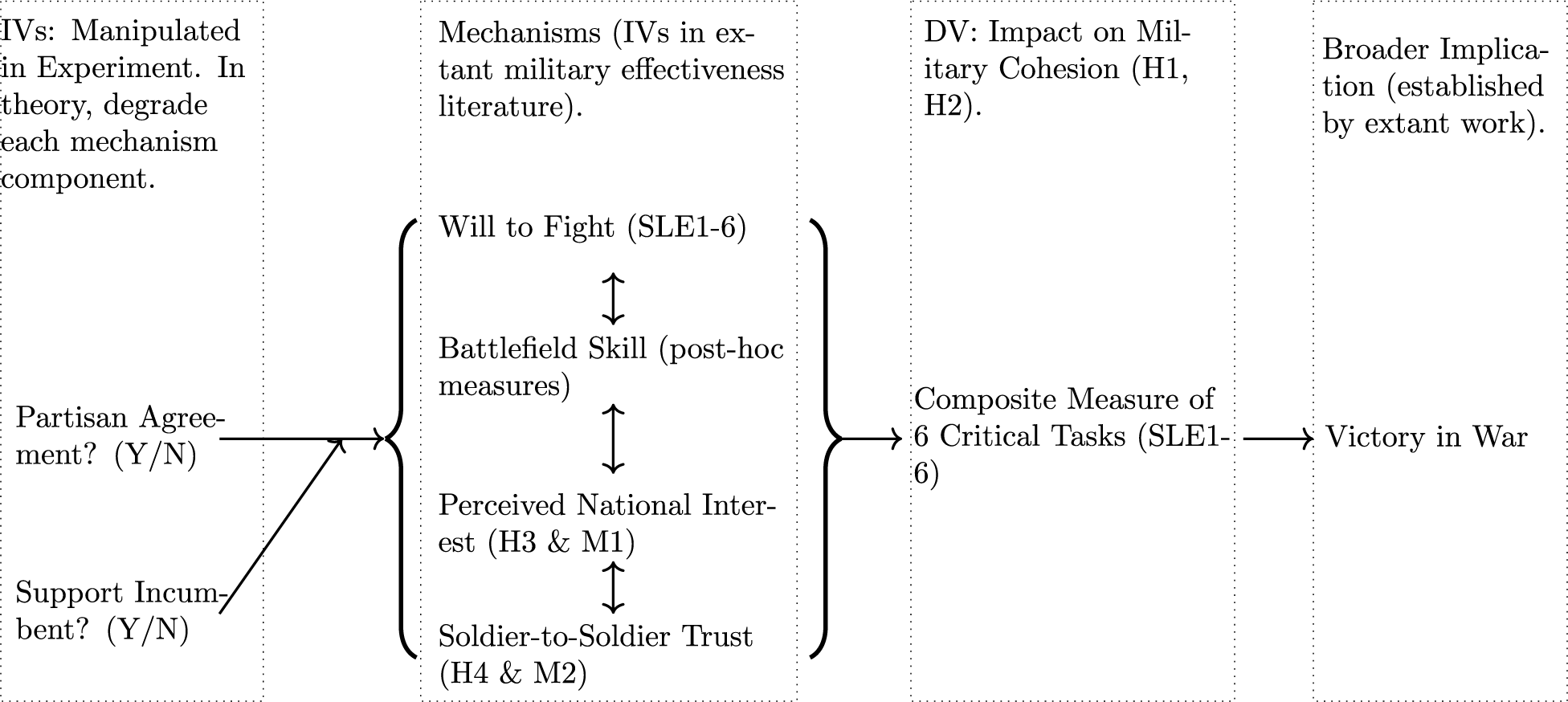
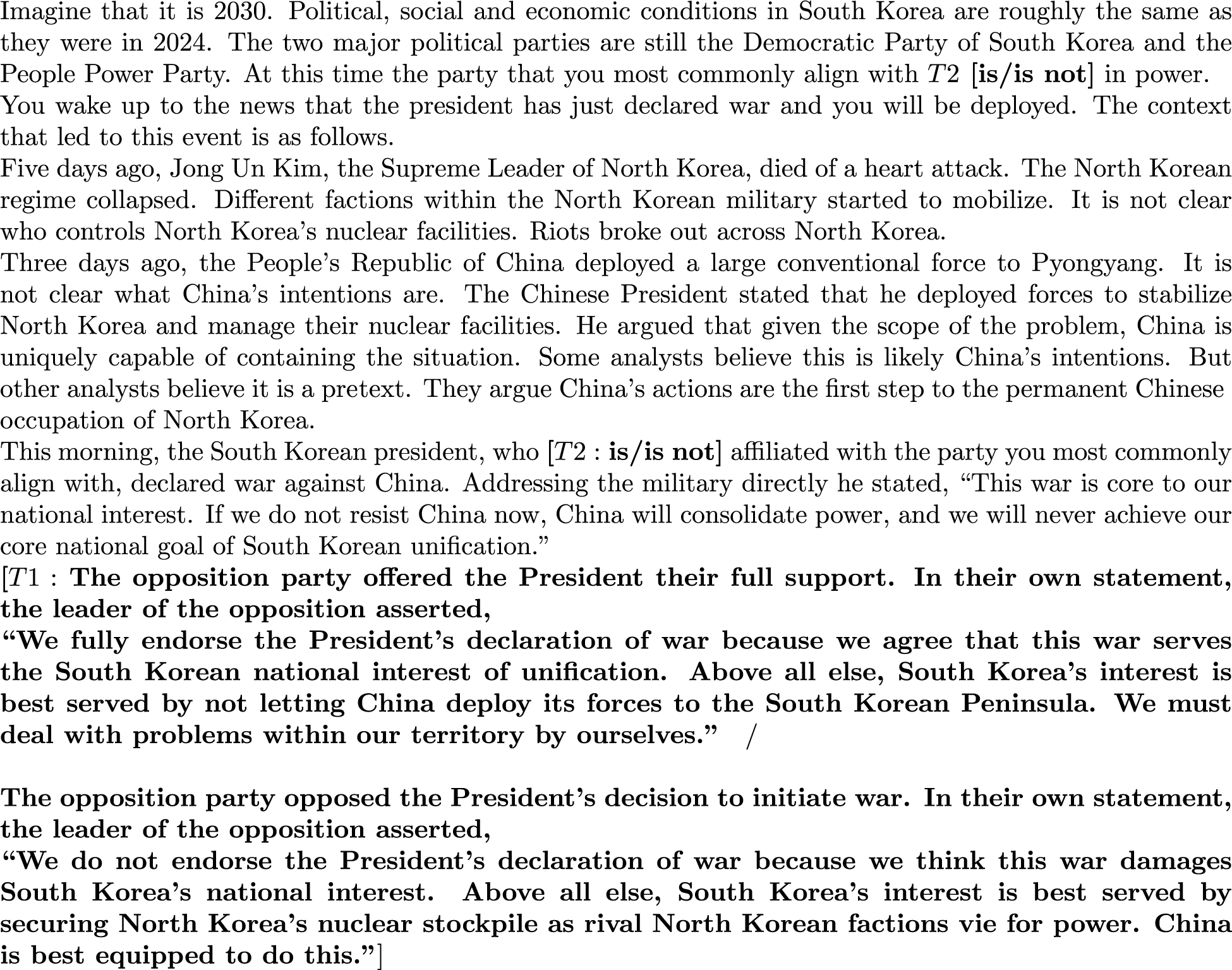
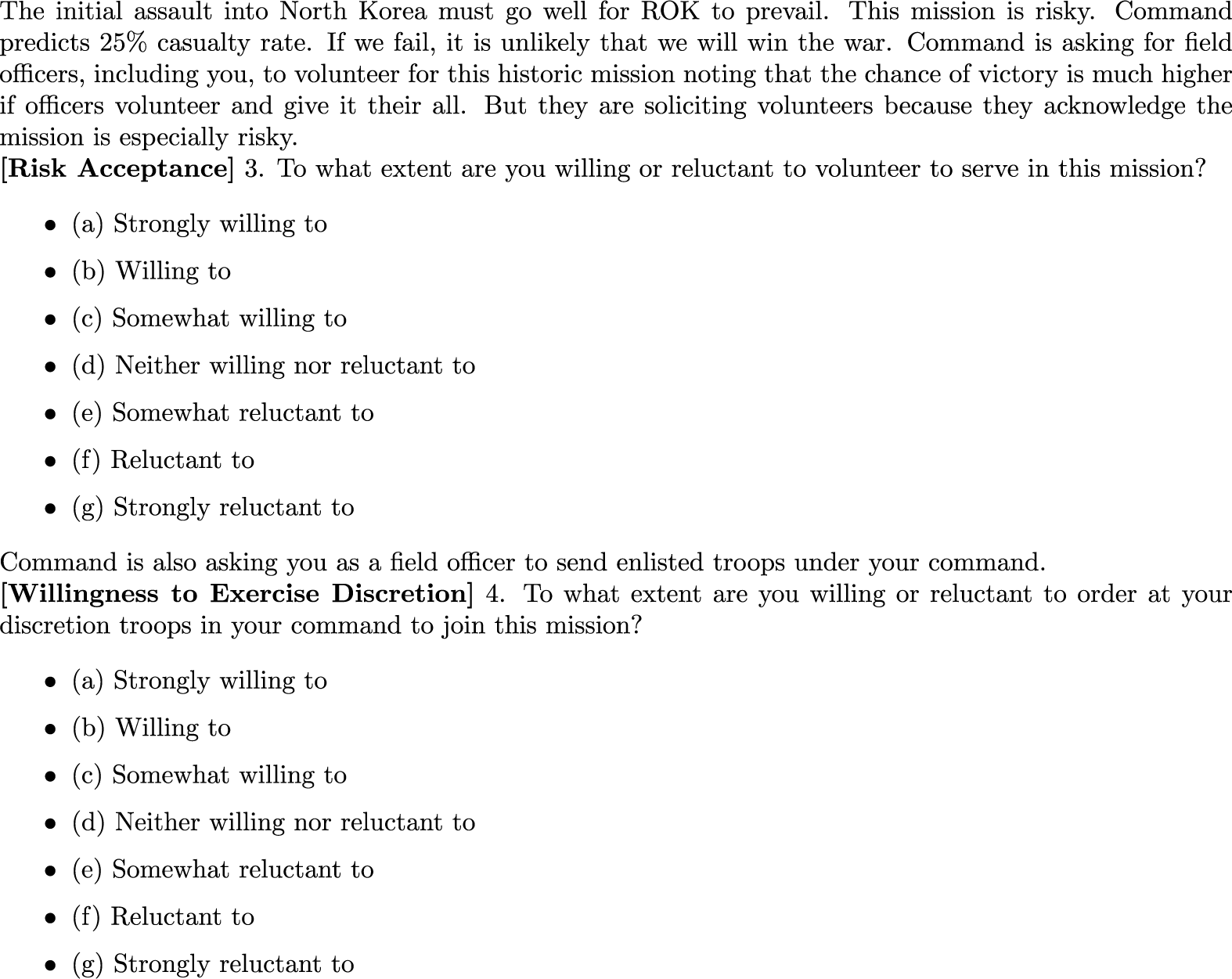
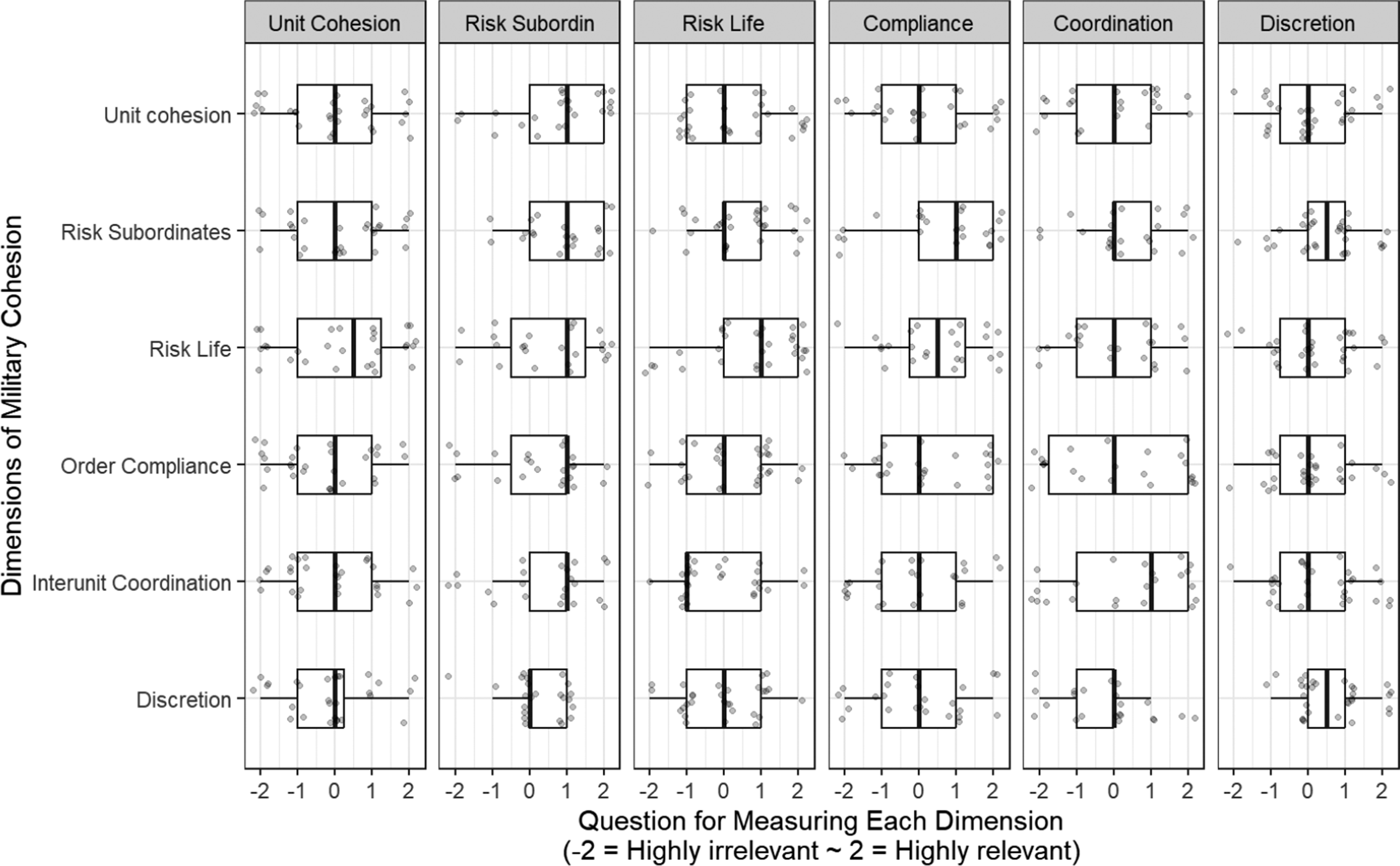
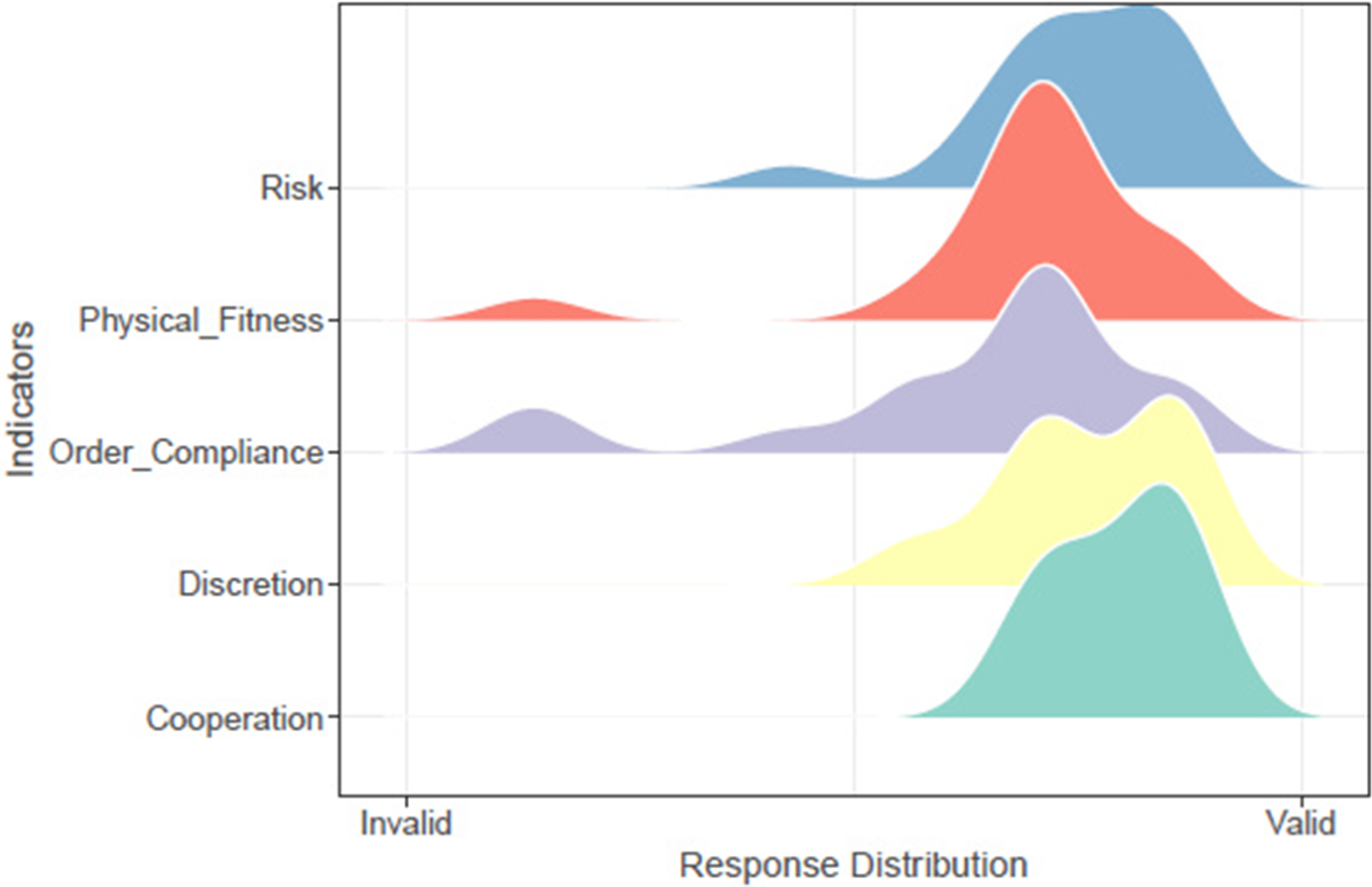
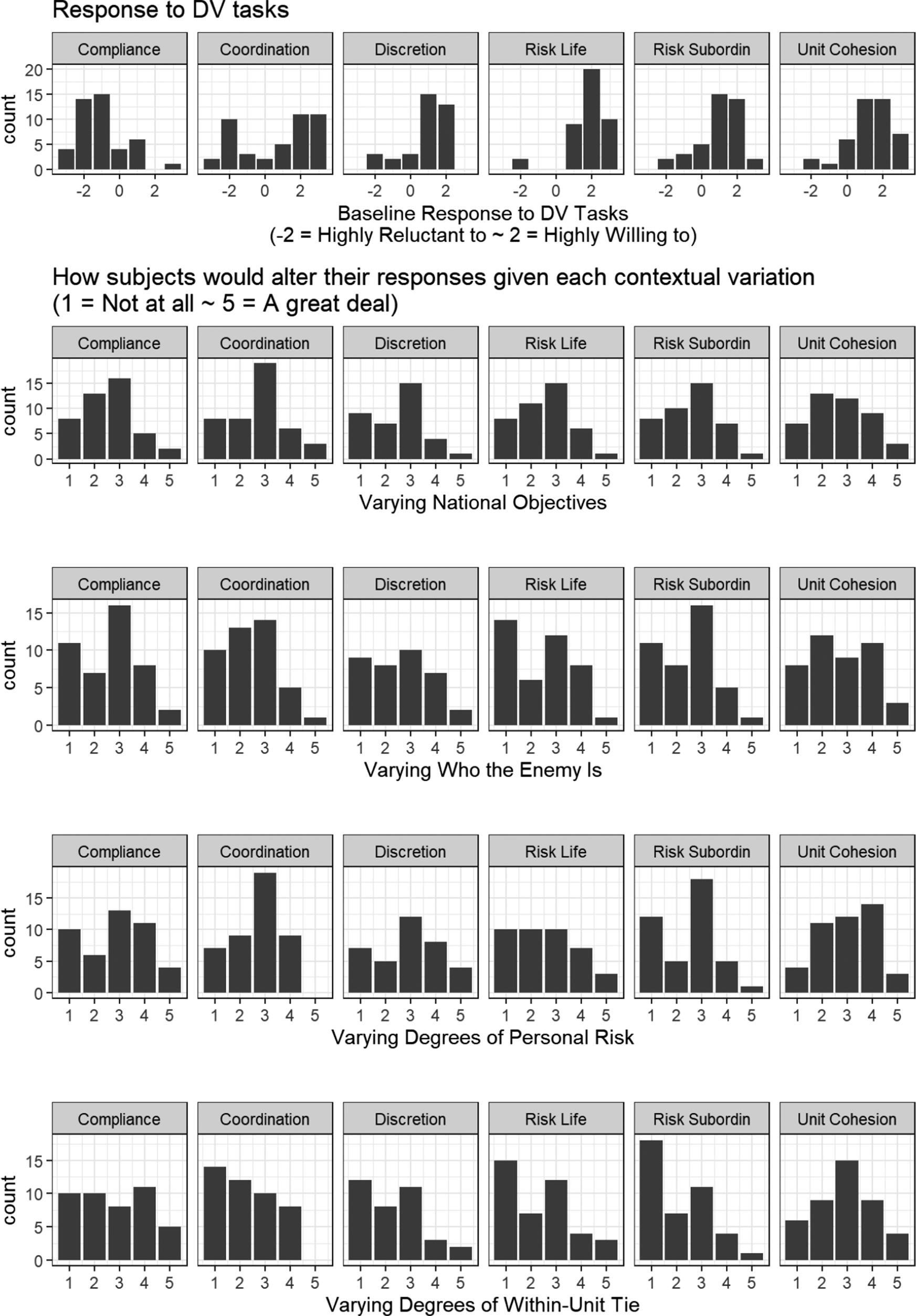
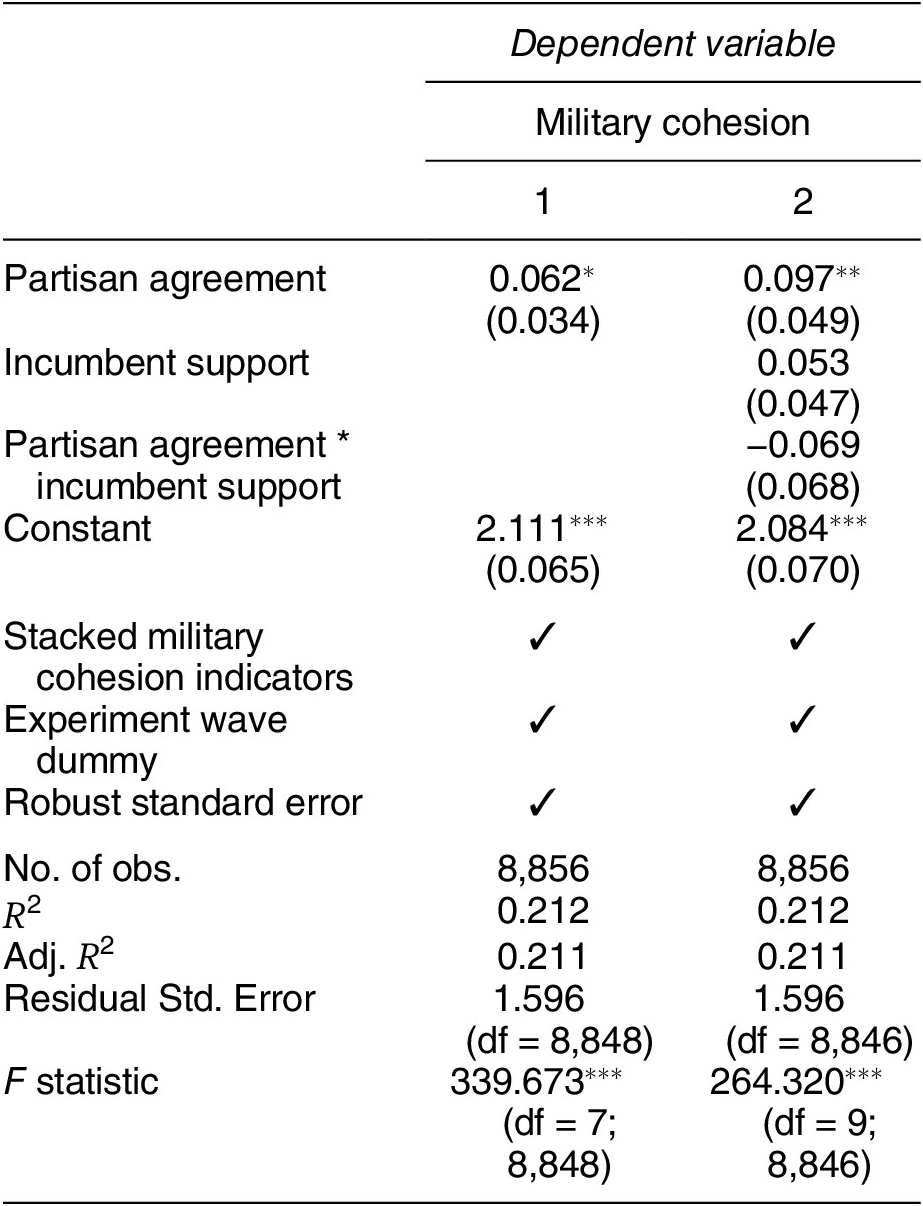
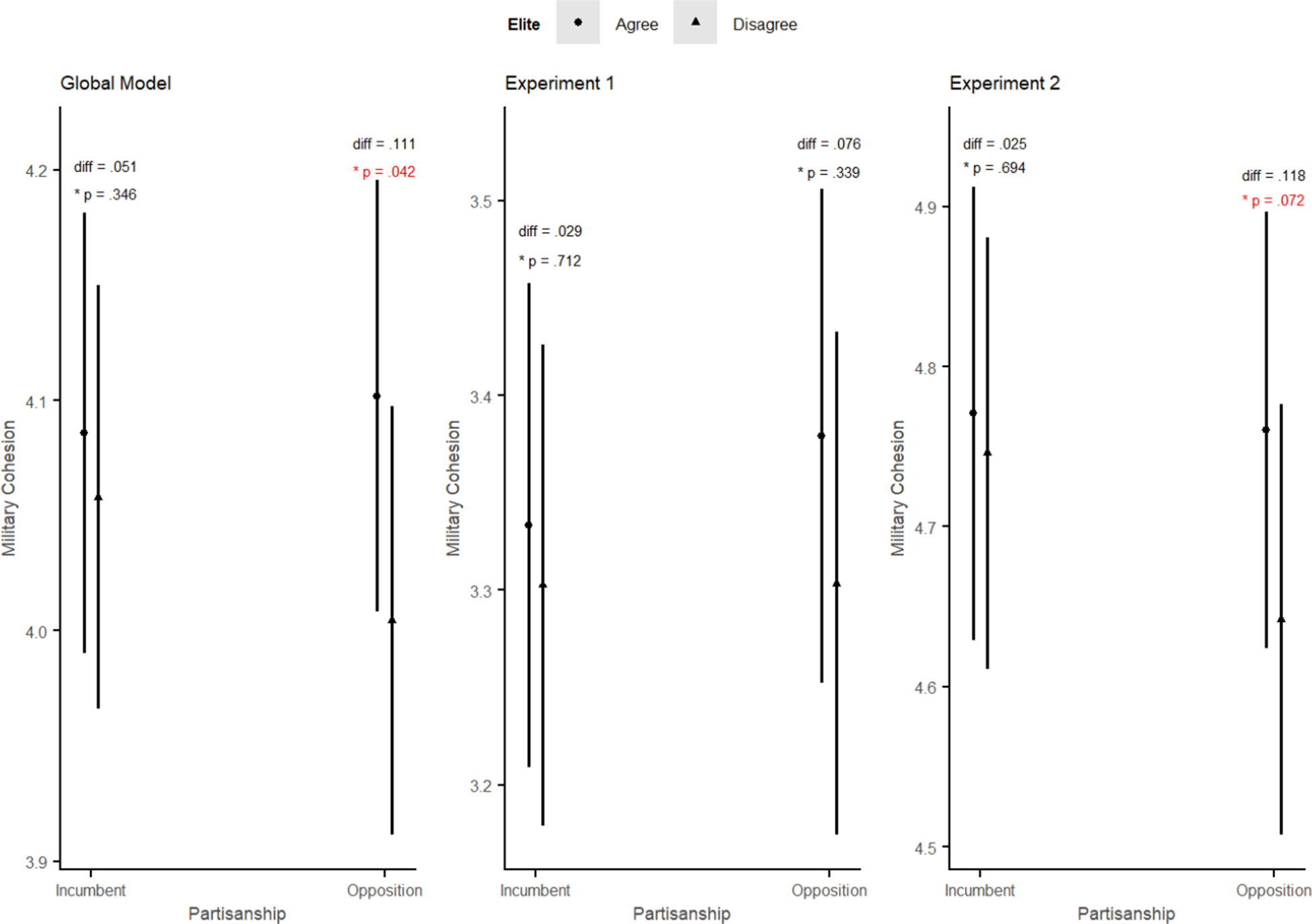
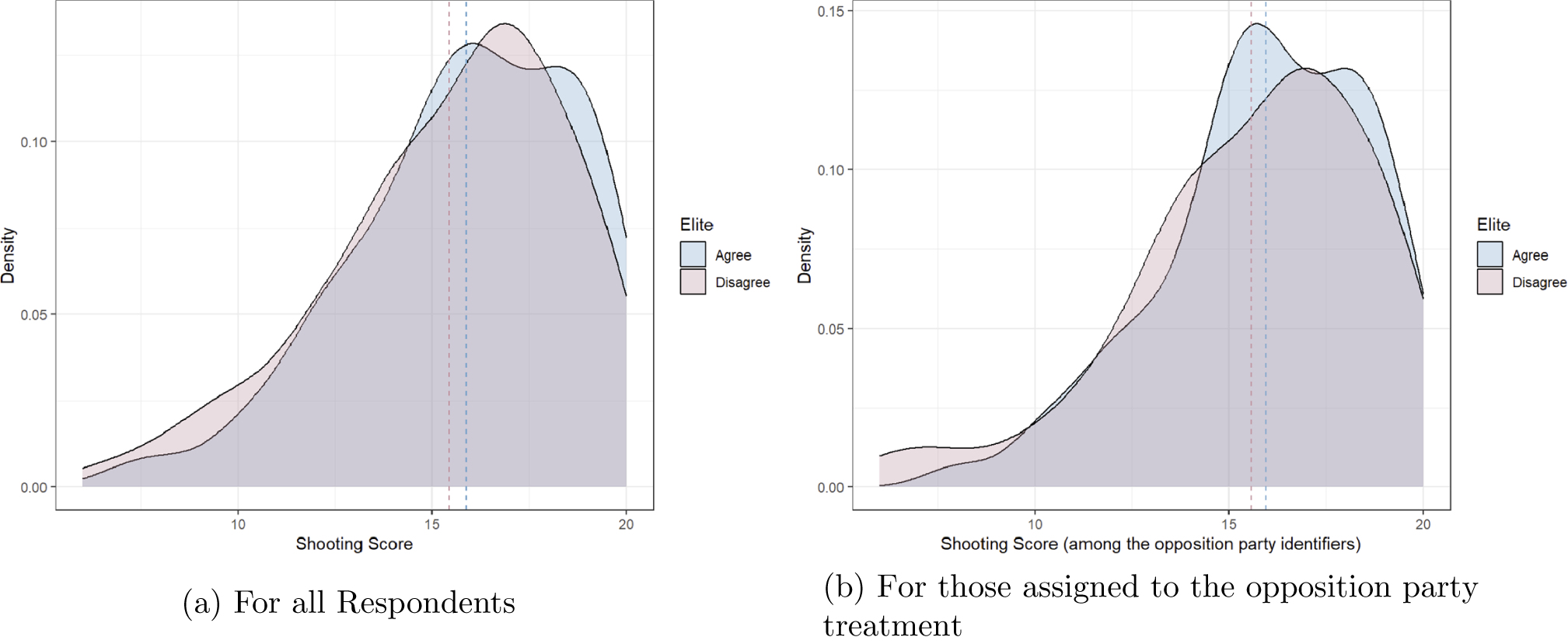
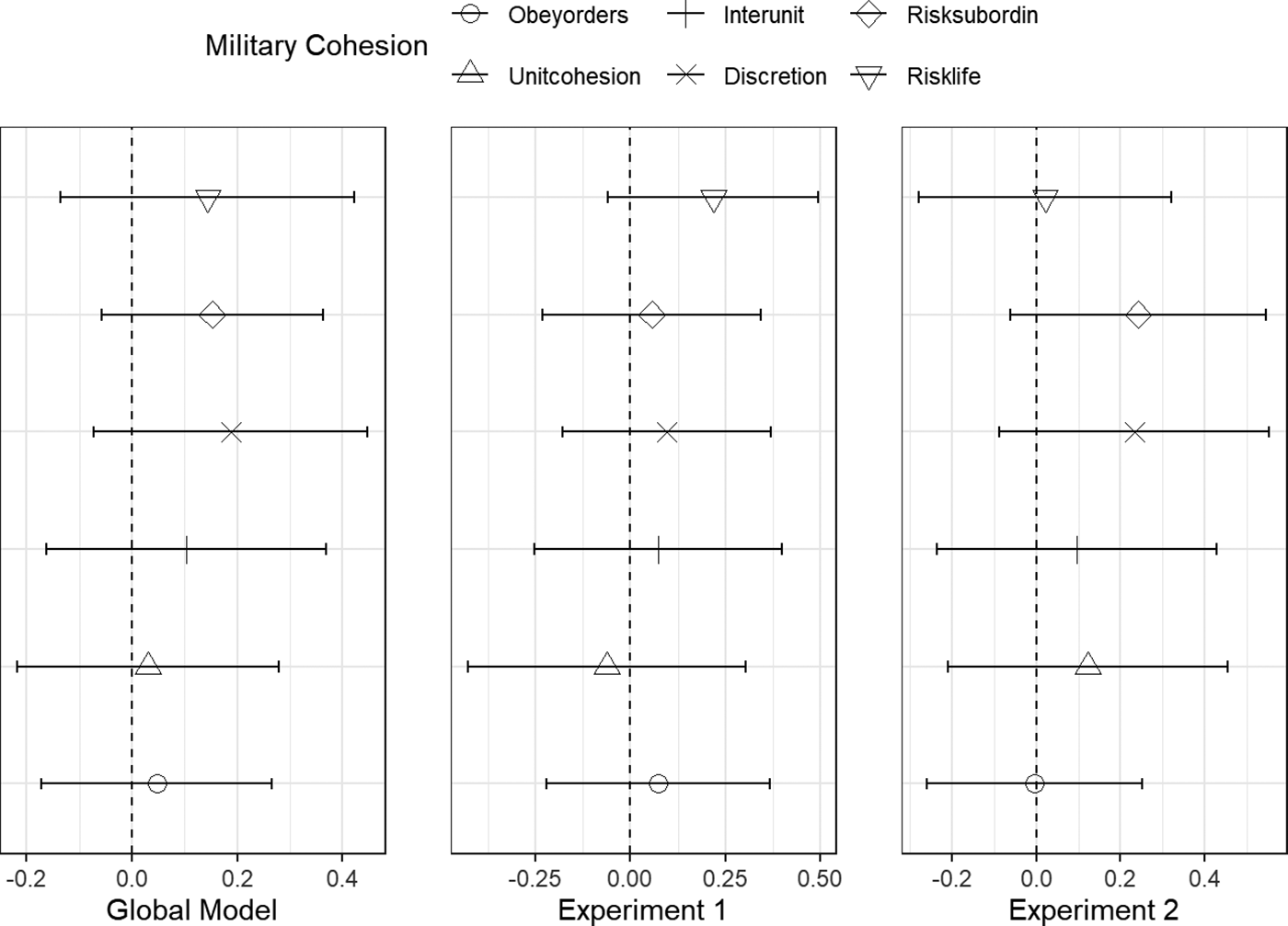
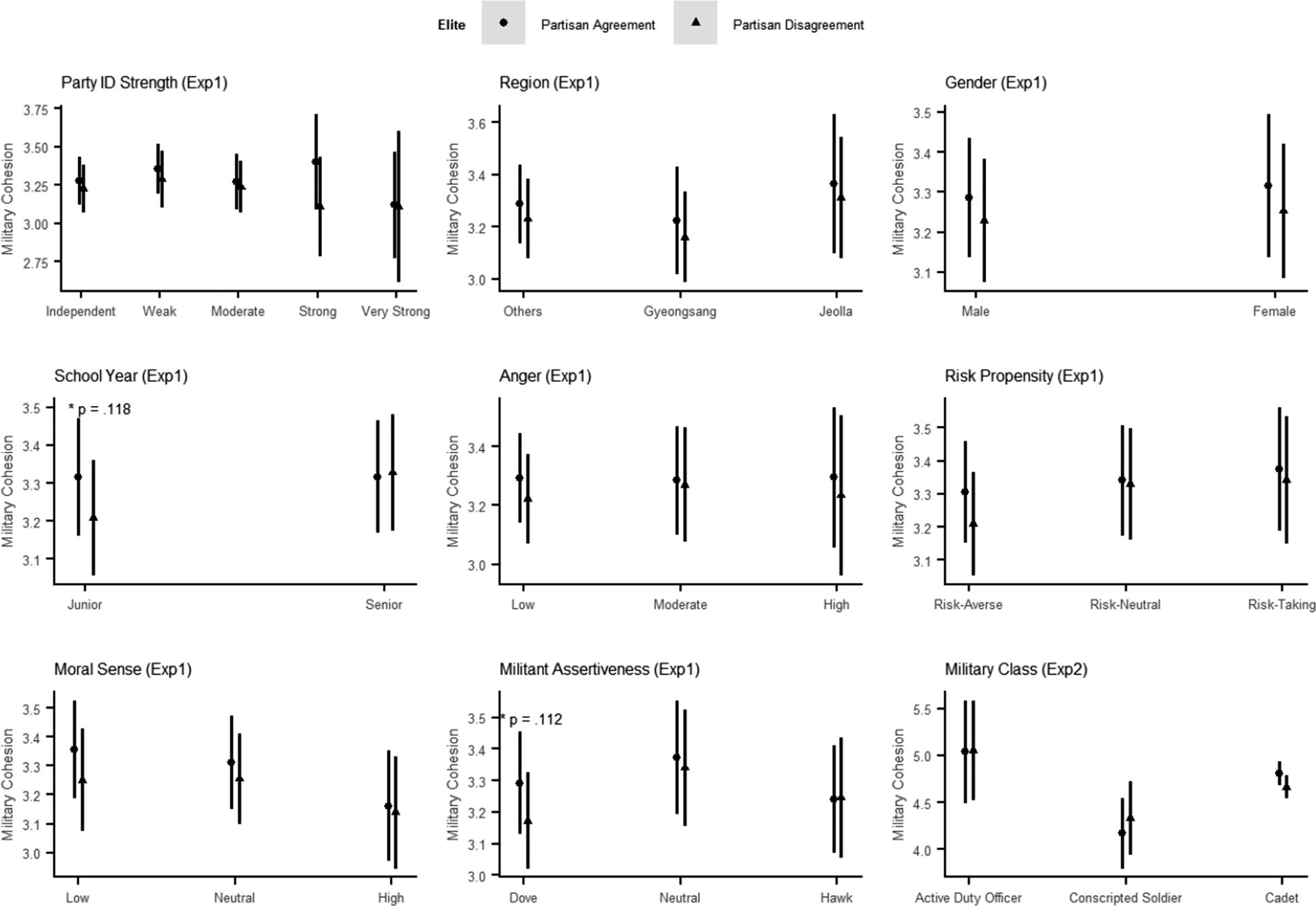
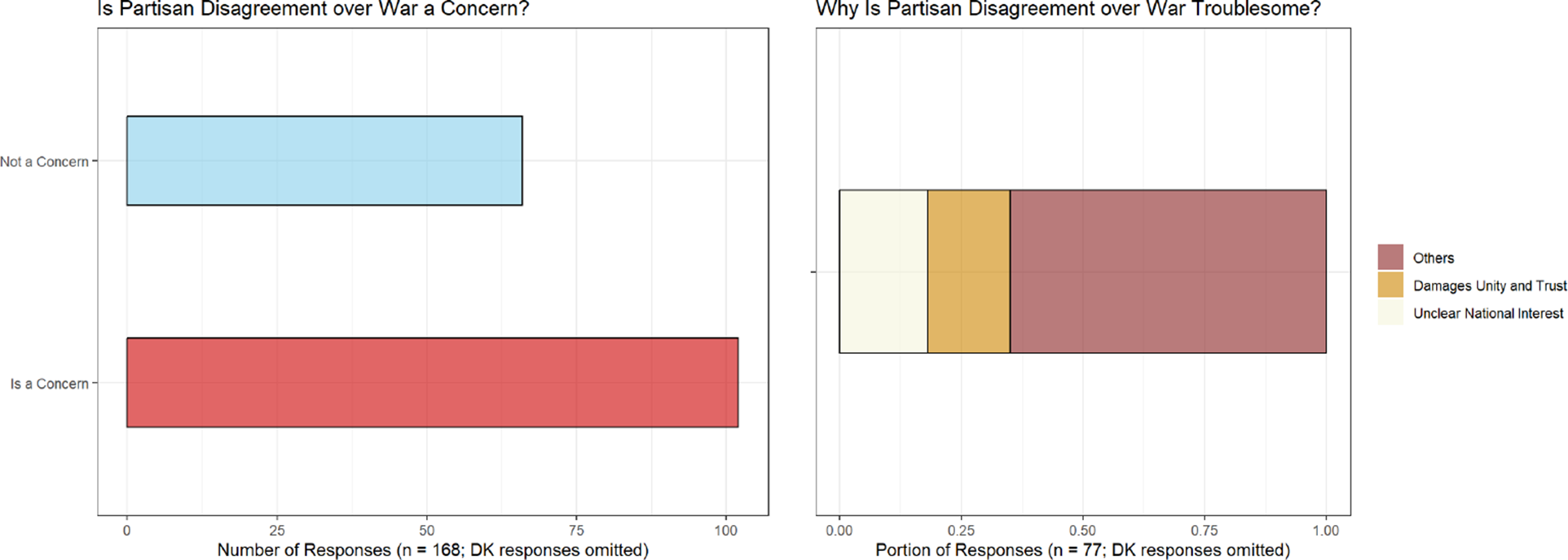
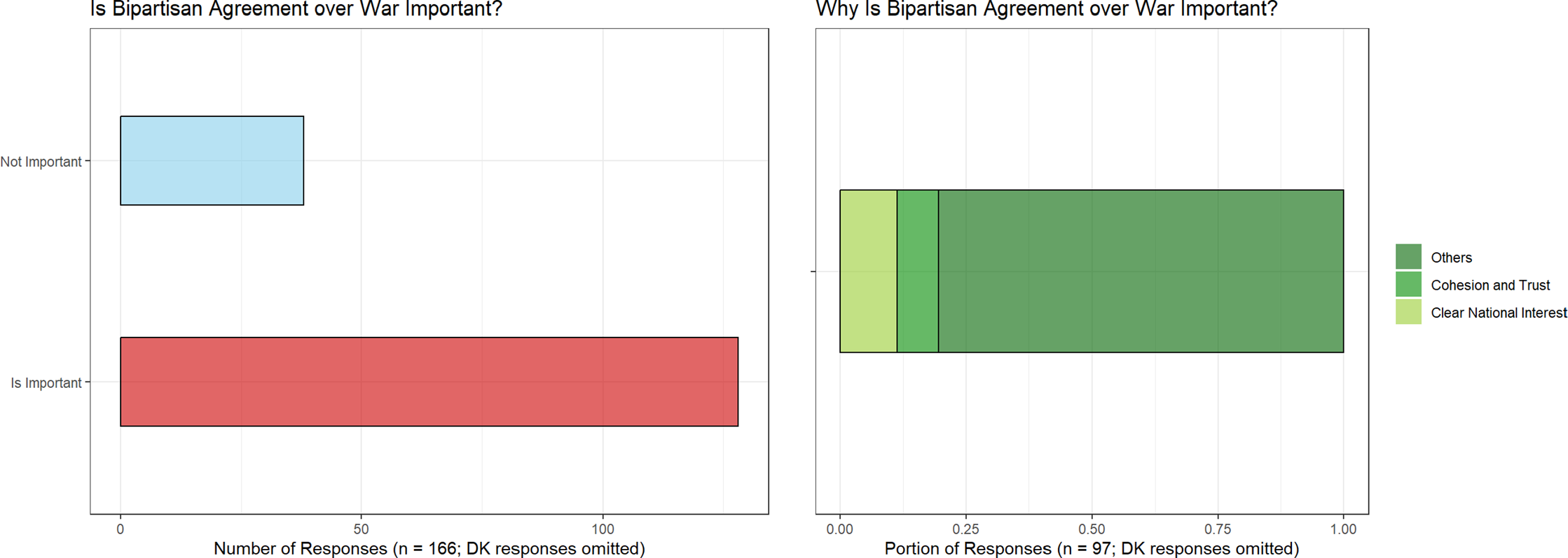
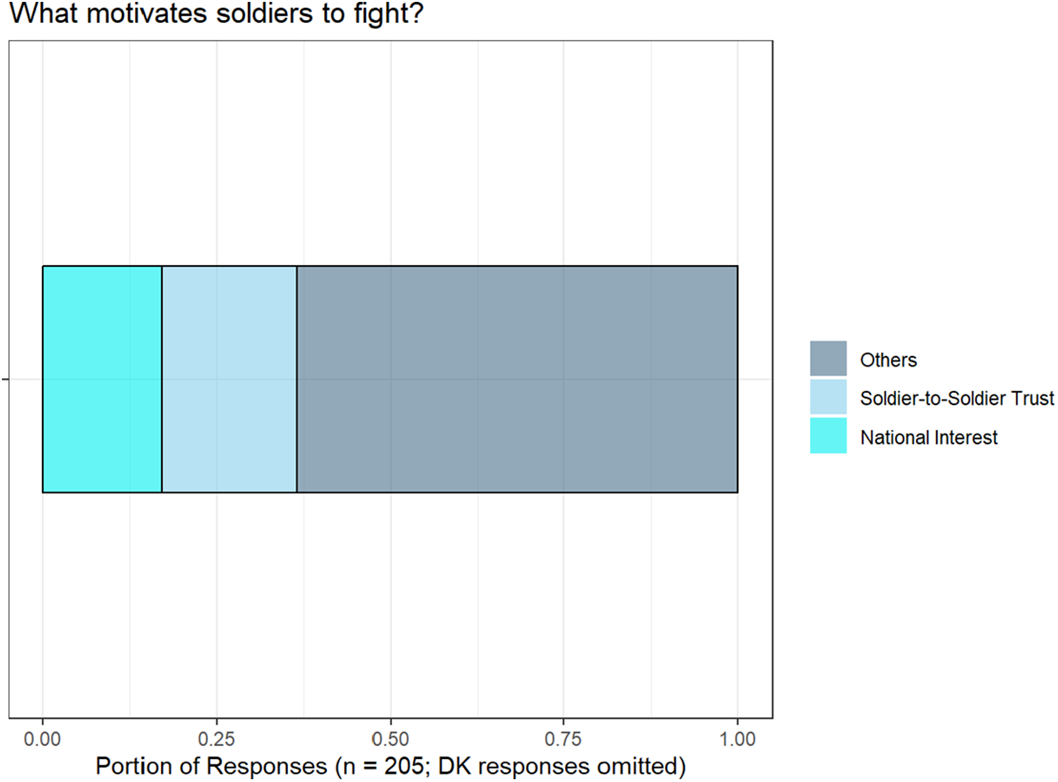


 Open access


Comments
No Comments have been published for this article.