Introduction
The Care Quality Commission highlights ‘good governance’ as a fundamental standard of care. Hence, this clinical audit seeks to assess the quality and safety of this care. Whilst local audit is well established in otorhinolaryngology, there has been a paucity of national centrally delivered audits within our specialty since the National Prospective Tonsillectomy AuditReference Lowe, van der Meulen, Cromwell, Lewsey, Copley and Browne 1 and the National Audit of Sino-nasal Surgery,Reference Hopkins, Browne, Slack, Lund, Topham and Reeves 2 published in 2007 and 2006 respectively. ENT-UK and the British Rhinological Society sought to address this deficiency by challenging INTEGRATE (the National ENT Trainee Research Network) to design and deliver a national audit of management for the hospital treatment of epistaxis.
Epistaxis is the most common acute disorder managed by ENT services in the UK, with around 25 000 acute presentations to National Health Service (NHS) hospitals each year. 3 Despite this high incidence, prior to this initiative there were no nationally accepted guidelines for its management. A pilot audit led by INTEGRATE has confirmed significant variation in existing treatment between hospital trusts.Reference Mehta, Williams, Smith, Hall, Hardman and Cheung 4
This audit aimed to: compare current management against agreed consensus management guidelines, 5 identify variation in practice, and perform exploratory analysis of the dataset to expand our current understanding of this common condition. We ultimately seek to generate a programme of change, in order to deliver improved and standardised evidence-based hospital care of epistaxis across the UK.
Materials and methods
Organisation and design
This audit was designed and delivered by Integrate, following the creation of a project steering committee consisting of six trainees and two consultant executive members. One trainee was nominated to chair the steering committee and co-ordinate the audit.
Audit standards
Following a comprehensive and systematic review of the literature,Reference Khan, Conroy, Ubayasiri, Constable, Smith and Williams 6 – Reference Swords, Patel, Smith, Williams, Kuhn and Hopkins 10 national consensus recommendations for the hospital management of epistaxis were developed. 5 These recommendations were utilised to generate a draft data collection tool for the audit including 30-day outcome data. The draft data collection tool was adapted in line with lessons learnt from a multicentre pilot audit,Reference Mehta, Williams, Smith, Hall, Hardman and Cheung 4 before undergoing multilevel scrutiny, initially by the audit steering committee and subsequently by the ENT-UK executive committee. The agreed data collection tool was then optimised by commissioned statisticians at the Peninsula Clinical Trials Unit (Plymouth University) for ease of subsequent analysis following data collection.
Audit period
A 30-day data audit window was identified, starting from midnight on the 7 November 2016.
Inclusion and exclusion criteria
During the audit window, patients aged 16 years or more, presenting emergently, as an unscheduled event, with a diagnosis of epistaxis, who were subsequently managed by ENT services, were included in the audit. This included patients referred from the emergency department, primary care or other specialties within participating units. Patients attending pre-arranged appointments for the management of chronic self-limiting epistaxis were excluded, as were patients seen and treated by emergency department staff without referral to ENT services. Telephone encounters were not included.
Collaborator engagement
Site leads were recruited from ENT departments throughout the UK via a network of regional trainee representatives, through engagement with the Specialist Advisory Committee and through open advertisement via the Association of Otolaryngologists in Training. Site leads were given online supporting material to aid in the local delivery of the audit, and were invited to attend a launch event prior to the audit window to further clarify the audit process. Throughout local preparation, site leads were requested to complete an online task list detailing their progress, to allow the steering committee to maintain a strategic overview of the project.
Data collection
Patients who met the inclusion and exclusion criteria were identified prospectively at the point of presentation. Throughout the audit window, emergency department and ENT practitioners were encouraged to make detailed clinical notes following all epistaxis-related clinical encounters, in line with good medical practice guidance. 11 Audit proformas were not utilised by treating clinicians to prospectively record clinical information because of concerns regarding their impact on pre-existing standard practice.
At the point of discharge, audit data were gathered by collaborators from hospital notes, uploaded via a web-based portal, and stored in the Data Safe Haven on a secure server hosted at the University College London. The server was certificated to the ISO27001 information security standard and conforms to the NHS Information Governance Toolkit. All connections to the Data Safe Haven server via the web portal were secured with 256-bit Secure Hash Algorithm encryption.
Following closure of the 30-day window, a clinical coding search was conducted in all participating units. This search highlighted all epistaxis presentations during the audit period to establish whether any cases had been missed. All cases were examined against inclusion and exclusion criteria, and then cross-referenced with the case data uploaded to the database. Where cases were missed, hospital notes were requested and, if possible, added retrospectively to the database. Any cases identified retrospectively were highlighted as such for the purposes of data analysis.
Thirty-day outcome data were gathered for all uploaded cases via note retrieval through local audit departments. Units were also asked to provide trust-quoted population-at-risk data. No identifiable patient data were uploaded to the server. All submissions were anonymised using an audit-specific key for each patient and stored locally at each site, in line with the clinical governance policy at each site.
Management of data submission and quality
The audit steering committee utilised a dedicated online platform (www.entintegrate.org) to: facilitate communication between collaborators, rapidly respond to potential problems, and support timely and high-quality data submission. On completion of data submission, steering committee members inspected submitted data for errors, duplications or omissions. Where necessary, site leads were contacted to remedy identified discrepancies.
Audit and ethical approval
Prior to data collection, an audit proposal was submitted for approval to the audit departments of all participating units, in line with local policy. Caldicott Guardians were contacted at all sites and approval was sought for the method of data collection. Although formal patient consent was neither sought nor required, patient information regarding the audit was displayed at all participating sites, and individuals could exclude themselves from the audit if they desired.
Many evidence gaps were identified during the process of developing consensus recommendations for epistaxis management. 5 Therefore, we sought NHS Research Ethics Committee guidance regarding the use of the dataset beyond comparison against identified audit standards. Completion of the Health Research Authority Guidance Tool confirmed that formal NHS Research Ethics Committee approval was not required for this purpose.
Statistical analysis strategy
When presenting our analysis, we define length of stay as the time from hospital presentation to discharge, which reflects the entire treatment process. We define time to ENT as the time from presentation through to the first ENT review. Haemostasis time is the time from the first ENT review to when final haemostasis is achieved prior to discharge. A limitation of the data set is that it is unknown whether the patient was actively bleeding on arrival to ENT; however, all patients had been referred for emergency ENT input. We define discharge time as the time from final haemostasis to discharge. Each interval was calculated by gathering data on the absolute date and time of each event. Additionally, we discuss 30-day recurrent presentation rates, defined as re-presentations to hospital with epistaxis in the 30 days following the point of initial presentation.
The objective of the statistical analysis was primarily to assess compliance with national consensus recommendations that formed our audit standards, and, thereafter, to identify which patient factors and treatments (both prior to ENT and at the first ENT review) were associated with variations in outcome in terms of haemostasis time and recurrent presentation.
During the exploratory analysis, it was determined that haemostasis time was positively skewed and multimodal as there were two modes (i.e. peaks in the data). In order to compensate for the skewed distribution of the data, a log transformation was applied to haemostasis time. Plots of haemostasis time are presented in log hours, but summary statistics are given in hours unless otherwise stated. Although this provides visual representation of observed differences in treatment, it was unable to account for all potential confounding factors. A future study will conduct inferential analysis of the dataset via regression modelling, which will provide us with the tools to account for associations with multiple treatments and potential confounders.
Results
The audit was conducted simultaneously in 113 hospitals, in all regions of the UK, serving a combined population at risk of 51 million people. Data for 1826 cases were uploaded. The data for 1358 of these cases were gathered prospectively, representing 94 per cent of all cases presenting to involved units that met the inclusion criteria. The median number of cases uploaded per unit was 14 (range, 1–50). Scrutiny of the dataset revealed that 89 cases did not meet the inclusion criteria, and in 157 cases haemostasis time was not reported, hence these data were excluded from analysis. Follow-up data were available for 1469 patients who could be matched with the audit data.
Once those cases not within the audit period had been excluded and relevant data manipulation had been undertaken, we were left with 1152 patients. Thirty patients had a haemostasis time of 0 hours, suggesting that the emergency department had successfully treated patients without ENT input. Consequently, these patients were excluded, leaving 1122 patients for analysis. The recurrent presentation rate for these 30 patients was 24.1 per cent, compared with 13.9 per cent for the larger group of 1122 patients. Whilst the difference appears substantial, any conclusions drawn from only 30 patients should be treated cautiously.
The median age of included patients was 73 years (interquartile range = 62–82 years, range = 16–100 years), with a larger proportion of males versus females (56 per cent vs 44 per cent). The median length of hospital stay was 29.5 hours (interquartile range = 11.1–51.0 hours). This was divided into time to the first ENT review (median = 2.4 hours, interquartile range = 1.1–4.6), haemostasis time (median 18.5 hours, interquartile range = 1.0–33.7) and discharge time (median 3.5 hours, interquartile range = 1.1–17.0).
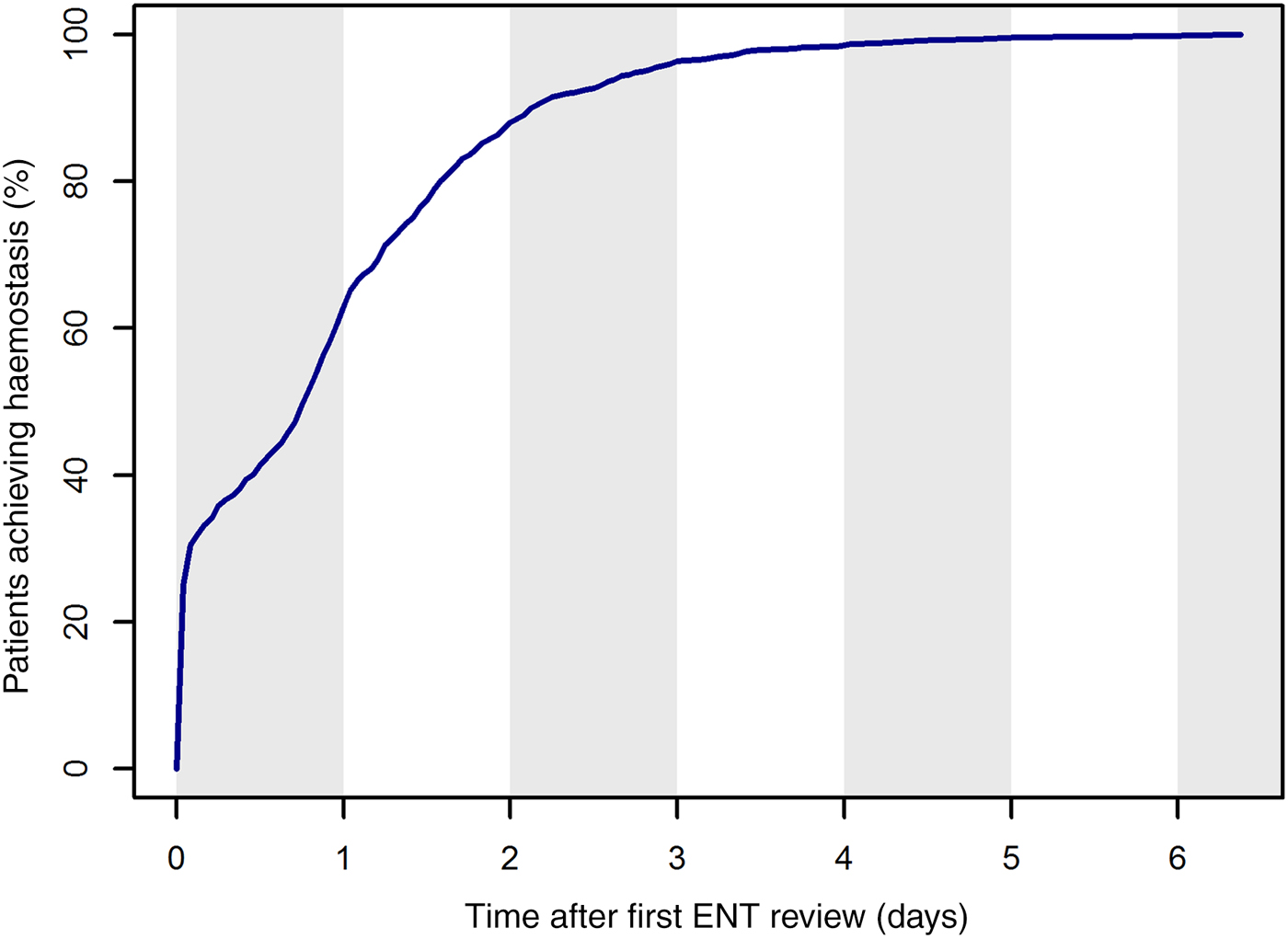
Twenty-five per cent of patients achieved final haemostasis within 1 hour of their ENT review. Approximately 62 per cent of cases were successfully treated by the ENT department within 24 hours of their first review. The longest time taken for any case to achieve haemostasis was just over 6 days, with less than 1.5 per cent of patients requiring treatment for more than 4 days (Figure 1).
Patients achieving final haemostasis over time.

The 30-day recurrent presentation rate across the data set was 13.9 per cent. Thirty-day serious adverse event analysis revealed specific events occurred at the following rates: all-cause mortality, 3.4 per cent; myocardial infarction, 0.7 per cent; cerebrovascular accident, 0.5 per cent; pulmonary embolism, 0.2 per cent; and deep vein thrombosis, 0.1 per cent.
Initial assessment
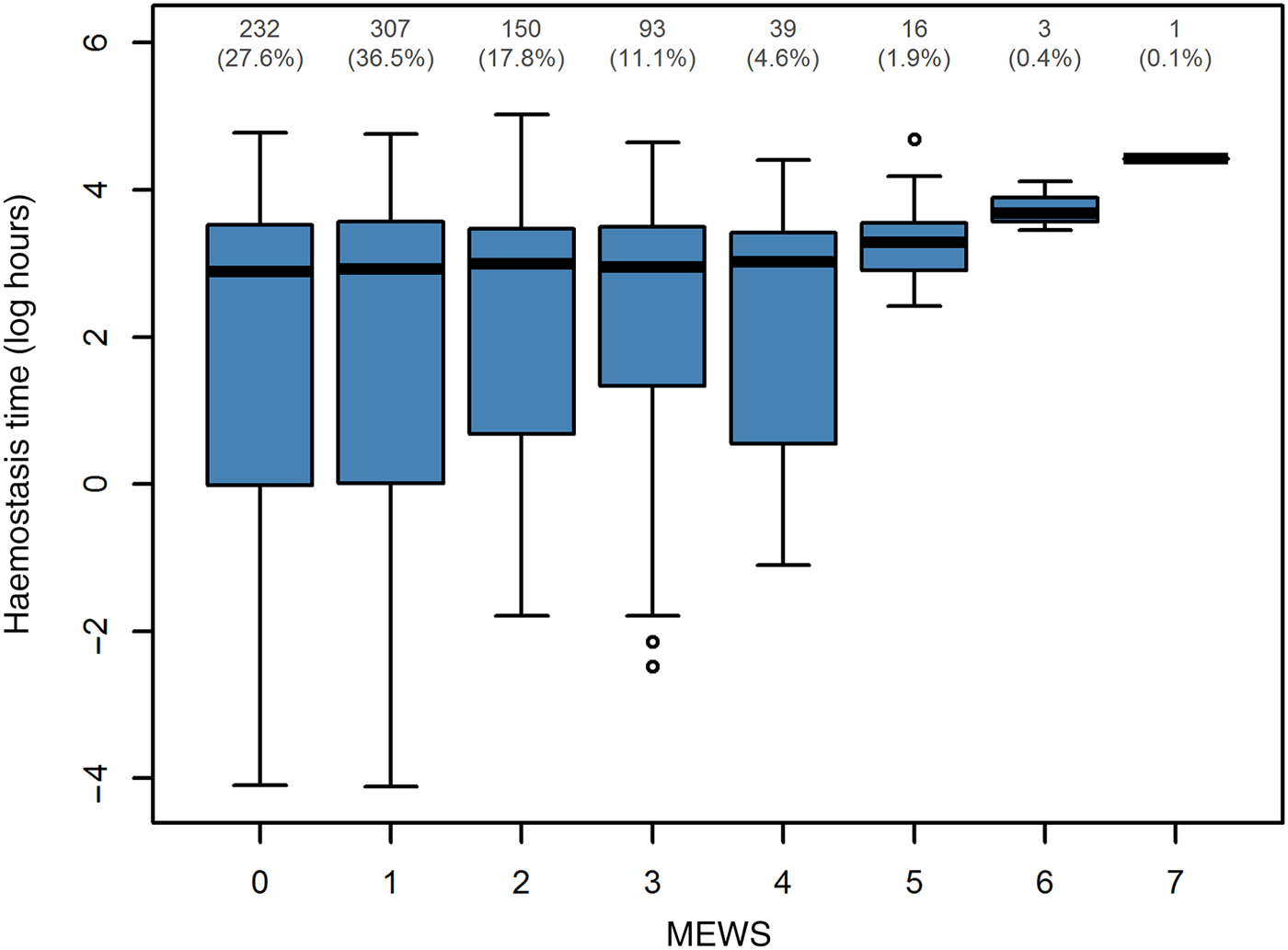
The Modified Early Warning Score is a nationally recognised and validated method of patient assessment that combines physiological parameters and observations to rapidly grade a patient's degree of illness.Reference Subbe, Kruger, Rutherford and Gemmel 12 The Modified Early Warning Score was reported in 841 cases (75.0 per cent). Higher Modified Early Warning Scores were associated with increased haemostasis time; this was evident in the 7.0 per cent of patients with a Modified Early Warning Score of 4 or more versus a Modified Early Warning Score of less than 4 (23.0 (interquartile range = 12.7–36.0) versus 18.8 (interquartile range = 1.1–34.3)) (Figure 2). Patients with a Modified Early Warning Score 4 or more seemed associated with a lower risk of recurrent presentation compared to patients with Modified Early Warning Score of less than 4 (0.0 per cent vs 14.6 per cent); however, the numbers for analysis were small.
Haemostasis time by Modified Early Warning Score (MEWS).

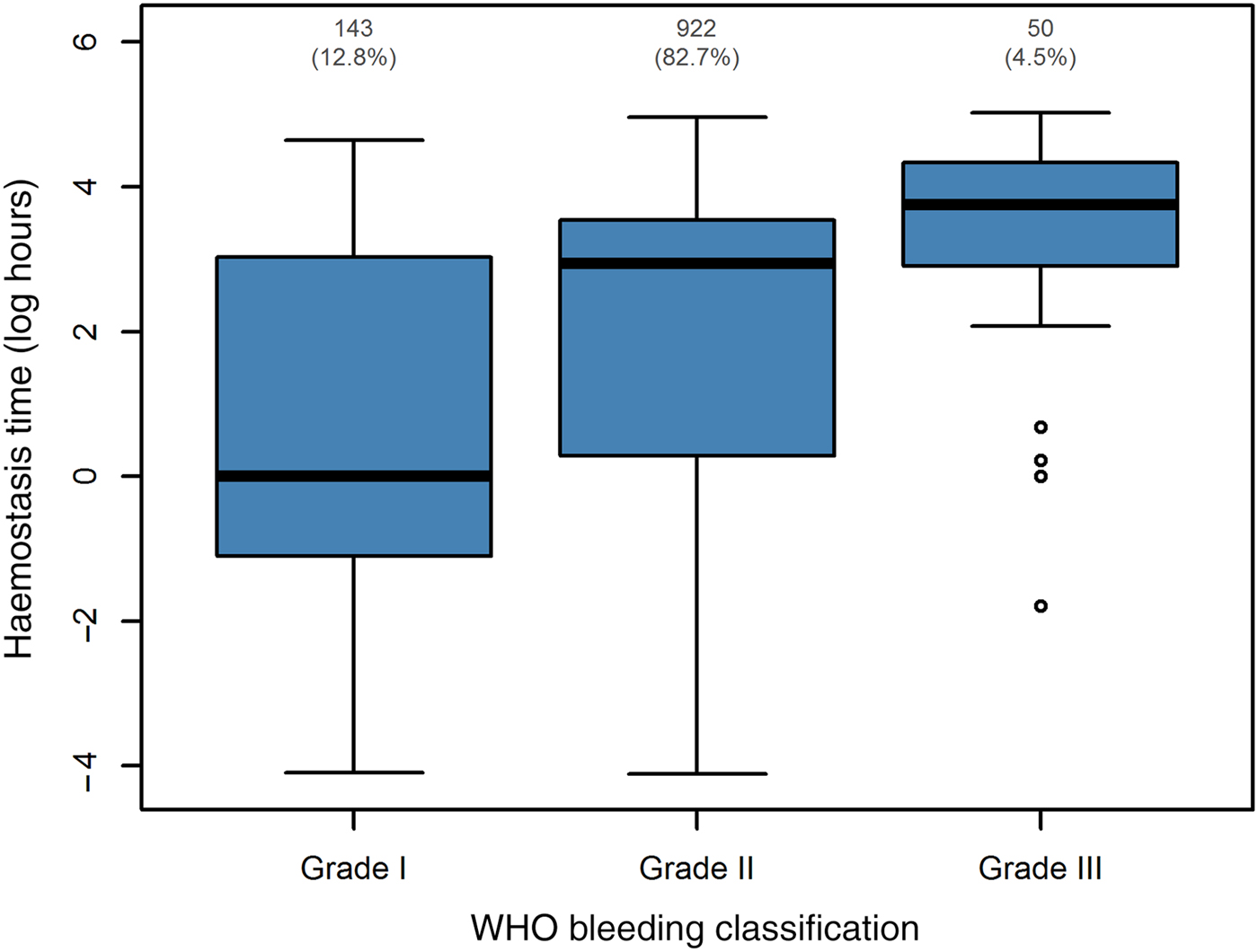
The World Health Organization (WHO) bleeding classification, initially developed for oncology patients, is an internationally accepted method for categorising bleeding severity.Reference Miller, Hoogstraten, Staquet and Winkler 13 There are various condition-specific subclassifications, including a three-grade score for epistaxis severity. This score is calculated according to the total duration of bleeding in the previous 24 hours (less than 30 minutes = grade I; more than 30 minutes = grade II) and the requirement for red blood cell transfusion (grade III). This is the only accepted classification for the severity and duration of epistaxis. Within our dataset, a WHO grade could be calculated in 1115 cases (99.4 per cent), with 12.8 per cent of cases classified as grade I, 82.7 per cent as grade II and 4.5 per cent as grade III. Patients with a higher WHO grade had a longer median haemostasis time. The largest difference in the median was between patients with grade I and III bleeds (1.0 hours (interquartile range = 0.3–20.7) versus 42.6 hours (interquartile range = 19.1–75.8)) (Figure 3). Of patients with grade III bleeds, 25.0 per cent re-presented within 30 days, compared with 13.5 per cent of patients with grade II bleeds and 12.3 per cent of those with grade I bleeds.
Haemostasis time by World Health Organization (WHO) bleeding grade. The score is calculated according to the total duration of bleeding in the previous 24 hours: grade I = less than 30 minutes, grade II = more than 30 minutes, and grade III = requirement for red blood cell transfusion.

The initial ENT assessment was predominantly performed by junior grade doctors (n = 950, 86.6 per cent), followed by middle grade doctors (n = 107, 9.2 per cent), nurse practitioners (n = 38, 3.5 per cent) and consultants (n = 8, 0.7 per cent). For each WHO bleed grade (Table I), specialist nurses had the lowest median haemostasis time. However, the number of patients seen by specialist nurses and consultants was very small. Therefore, it is unlikely that the estimates for median haemostasis time are representative or reliable. No nurse specialist or consultant saw a patient with a Modified Early Warning Score of more than 4; 95 per cent of these patients were attended to by junior grade doctors. Although the evidence suggested that nurses tended to have a lower haemostasis time, the 30-day recurrent rates were notably higher. The recurrent presentation rate for patients seen by nurse practitioners was 21.6 per cent, compared to junior grade doctors with 13.6 per cent, middle grade doctors with 14.6 per cent and consultants with 14.3 per cent.
Homeostasis time grouped by bleeding severity and practitioner seniority

The World Health Organization (WHO) bleeding classification score is calculated according to the total duration of bleeding in the previous 24 hours: grade I = less than 30 minutes, grade II = more than 30 minutes, and grade III = requirement for red blood cell transfusion. IQR = interquartile range
Regarding co-morbidities, a past medical history of hypertension (formally diagnosed through sustained ambulatory blood pressure monitoring) was reported in 55 per cent of cases. The median haemostasis time in these patients was 20.3 hours (interquartile range = 1.5–36.0) compared with 15.2 hours in those without a history of hypertension (interquartile range = 0.6–29.7), and recurrent presentation rates were 14.0 per cent versus 13.8 per cent respectively.
Of the cases, 156 (14.4 per cent) had a past medical history of diabetes mellitus, and 333 (30.4 per cent) had ischaemic heart disease. However, neither condition demonstrated a potential association with haemostasis time. The recurrent presentation rate was greater in those with a history of diabetes mellitus (21.4 per cent vs 12.3 per cent) and in those with a history of ischaemic heart disease (14.9 per cent vs 13.0 per cent).
A history of previous epistaxis presentation within the preceding year was reported in 26.0 per cent of cases. Patients declaring previous bleeds had a longer median haemostasis time, of 21.3 hours (interquartile range = 1.3–37.2) compared to 17.7 hours (interquartile range = 0.9–31.3) for those who did not. The recurrent presentation rate was also greater in these patients, with rates of 20.2 per cent versus 12.1 per cent. In the subset of patients who re-presented with a second episode of epistaxis within 30 days of their primary presentation, the subsequent median haemostasis time was found to be longer (16.5 hours vs 18.6 hours).
Data were collected regarding time of presentation to investigate any associations with out-of-hours treatment. Working hours was defined as 0800–1700 and out-of-hours was defined as 1700–0800, 7 days a week. There were no potential associations between median haemostasis time and day of presentation or in-hours or out-of-hours presentation.
Anterior rhinoscopy was performed at the initial assessment in 71.9 per cent of cases. Analysis of the outcome of these patients demonstrated no difference in median haemostasis time or recurrent presentation (of 13.6 per cent) when compared to patients who did not undergo this examination.
A full blood count was performed in 84.0 per cent of cases and a coagulation screen in 65.4 per cent. Patients who underwent these investigations had longer median haemostasis times when compared to patients who did not have the specific tests (full blood count, 20.4 hours vs 0.8 hours; coagulation screen, 20.5 hours vs 9.4 hours).
Cautery
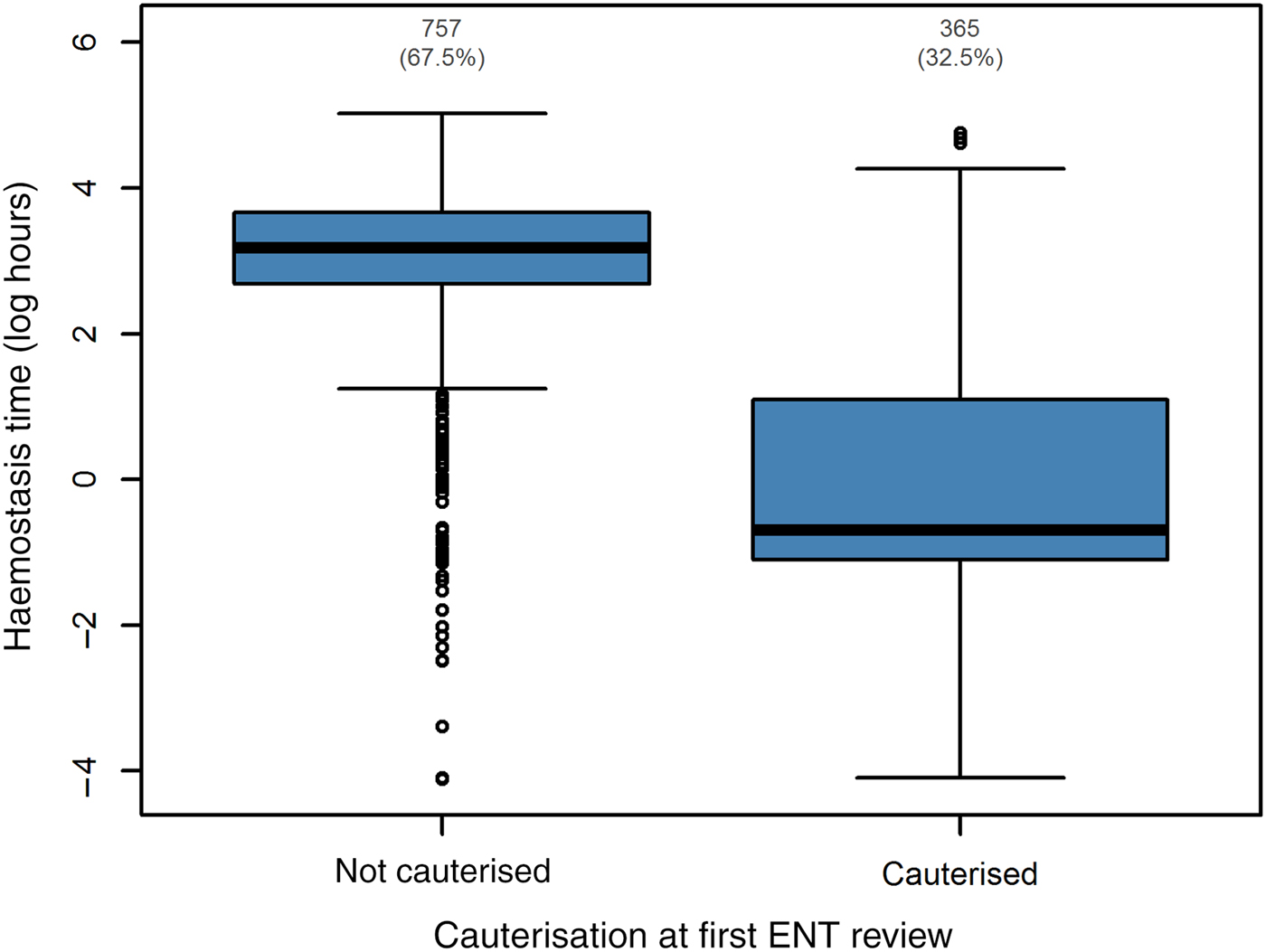
Cautery was performed in 365 cases (32.5 per cent) during the initial ENT review, with a topical vasoconstrictor used in 116 cases (31.8 per cent). Silver nitrate was utilised in most cases (97.5 per cent), with only nine patients treated with bipolar cautery. Median haemostasis time was 0.5 hours in the silver nitrate group (interquartile range = 0.3–2.9); however, low numbers in the bipolar group made meaningful comparison impossible. Patients who received cautery at their first ENT review had a substantially shorter median haemostasis time (Figure 4). Thirty-day outcome data demonstrated a higher recurrent presentation rate in patients who underwent cautery during their first ENT review (17.3 per cent vs 12.3 per cent). Rigid endoscopy or microscopy was utilised during cautery at the initial ENT review in 17 cases (4.7 per cent).
Haemostasis time by cautery status.

Intranasal devices and haemostatic agents
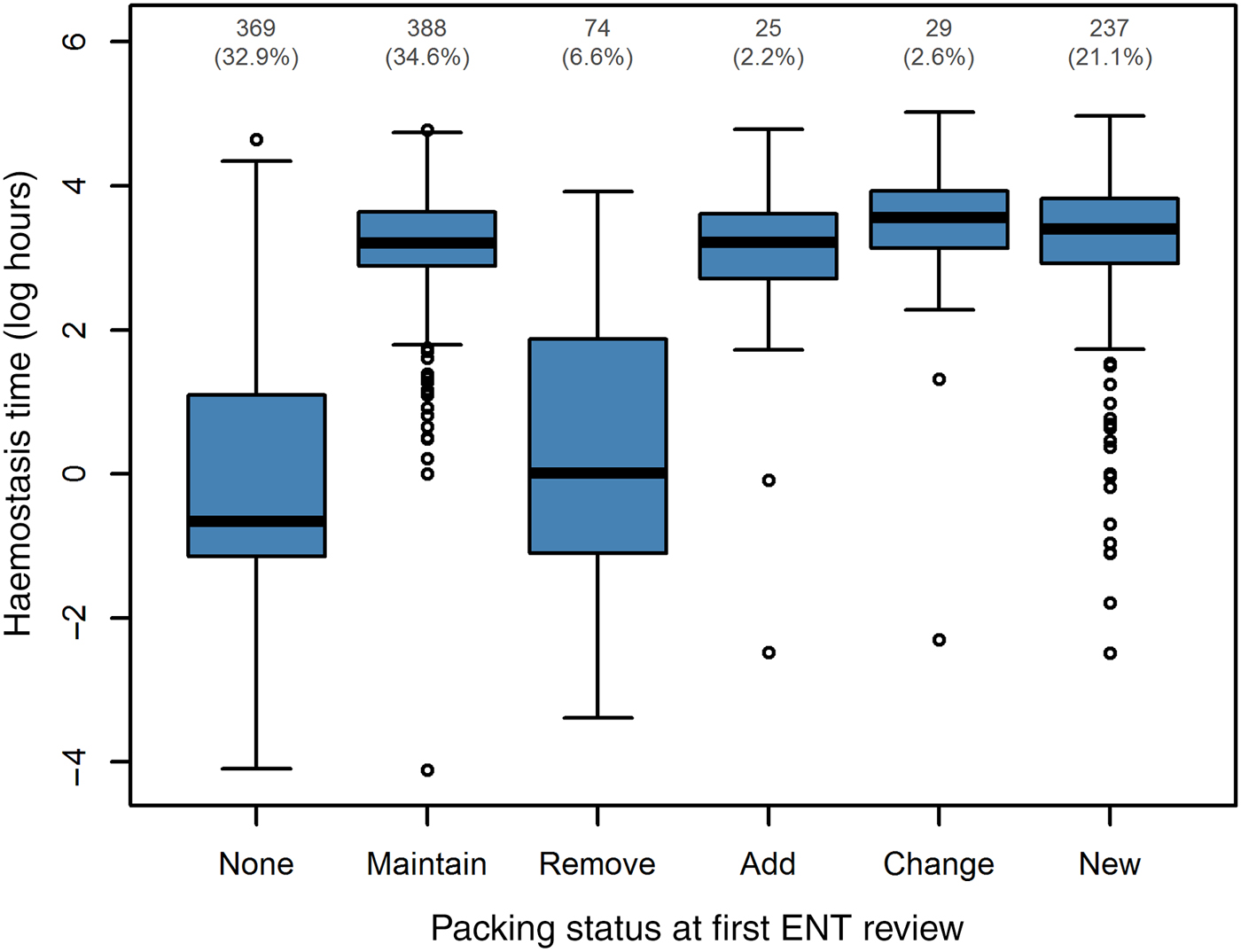
In total, 517 patients (46.1 per cent) were packed prior to ENT review. Packing prior to ENT review appeared to be associated with a longer median haemostasis time; however, if this pre-ENT pack was removed during the initial ENT assessment, haemostasis time was reduced substantially. In fact, there was minimal difference in haemostasis time between those who were never packed and those who had their pre-ENT pack removed at the initial ENT assessment with no subsequent replacement packing (Figure 5). Patients packed prior to ENT review and those packed at the initial ENT review had a lower recurrent presentation rate when compared with patients who were never packed (packed prior to ENT = 12.8 per cent vs 14.9 per cent; packed by ENT = 9.4 per cent vs 15.5 per cent). Forty-nine patients who were packed (6.4 per cent) received antibiotics upon discharge.
Haemostasis time by packing status.

The type of packing used was classified into one of five categories: inflatable (e.g. Rapid Rhino®), non-dissolvable (e.g. Merocel®), dissolvable (e.g. Nasopore®), urinary catheter or haemostatic agent (e.g. Kaltostat®). Of the patients packed prior to ENT review, 74.7 per cent received inflatable packing (Table II). The medians and interquartile ranges for haemostasis time by pack type show no difference between inflatable and non-dissolvable packs used prior to and during ENT review. The numbers of patients who received dissolvable, catheter and haemostatic packs were too small to provide useful insight.
Type of packs used and haemostasis time

Prior to the first ENT review, there were additional cases with dissolvable packs (n = 2), catheter (n = 1) and haemostatic agent (n = 1). IQR = interquartile range
Of those packed with inflatable or non-dissolvable packs, the median number of packs placed per patient was 1 (interquartile range = 1–2, range 1–6). The median haemostasis time was 32.3 hours (interquartile range = 20.3–48.5) for patients requiring multiple packs versus 21.5 hours (interquartile range = 12.5–34.5) for those who required a single pack, with recurrent presentation rates of 9.7 per cent versus 13.8 per cent respectively.
Cautery was performed in 295 (38.8 per cent) of packed patients following removal of their final pack. The recurrent presentation rate was lower in this cautery group, at 10.9 per cent, versus 12.9 per cent amongst those packed but not cauterised following removal. The median time to discharge from removal of the final pack was 4.1 hours (interquartile range = 1.5–16.0).
Haematological factors
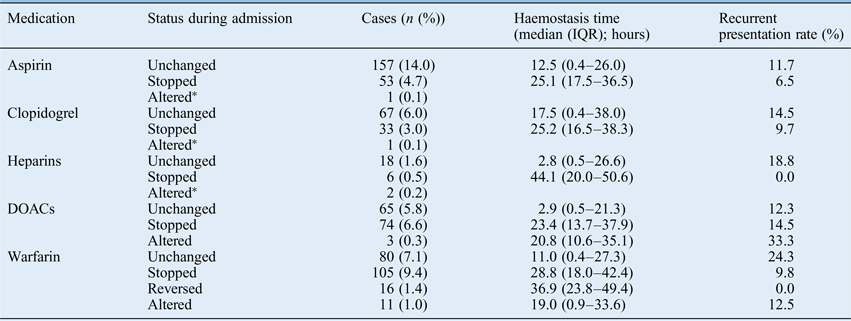
In total, 572 patients (51.0 per cent) were on some form of antithrombotic medication (Table III). Patients not on antithrombotic medication had a shorter median haemostasis time than those on antithrombotic medication (17.0 hours (interquartile range = 0.9–32.9) vs 19.3 hours (interquartile range = 1.3–34.7)). Patients whose medication was stopped or reversed had a prolonged median haemostasis time compared to those who continued some form of treatment; this was the case across all medication types.
Modifications to antithrombotic medications against haemostasis time and recurrent presentation

*Insufficient number of observations to calculate summary statistics. IQR = interquartile range; DOACs = direct oral anticoagulant
The cessation of antiplatelet agents corresponded with a lower recurrent presentation rate, as was the cessation or reversal of warfarin; however, this implied association was not found when direct oral anticoagulants were withheld.
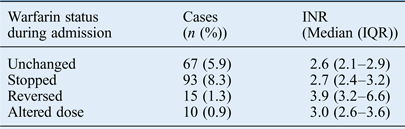
The international normalised ratio of patients who had their warfarin reversed was higher than that for any other group of patients (Table IV). Median haemostasis time for patients taking warfarin was longer than that for patients taking direct oral anticoagulants. The median haemostasis time for patients on warfarin was 23.3 hours (interquartile range = 4.9–39.0) versus 18.4 hours (interquartile range = 1.6–29.0) for patients on oral anticoagulants. The recurrent presentation rate for all patients taking warfarin compared with oral anticoagulants was similar, at 14.9 per cent versus 14.3 per cent.
International normalised ratio grouped by warfarin status

INR = international normalised ratio; IQR = interquartile range
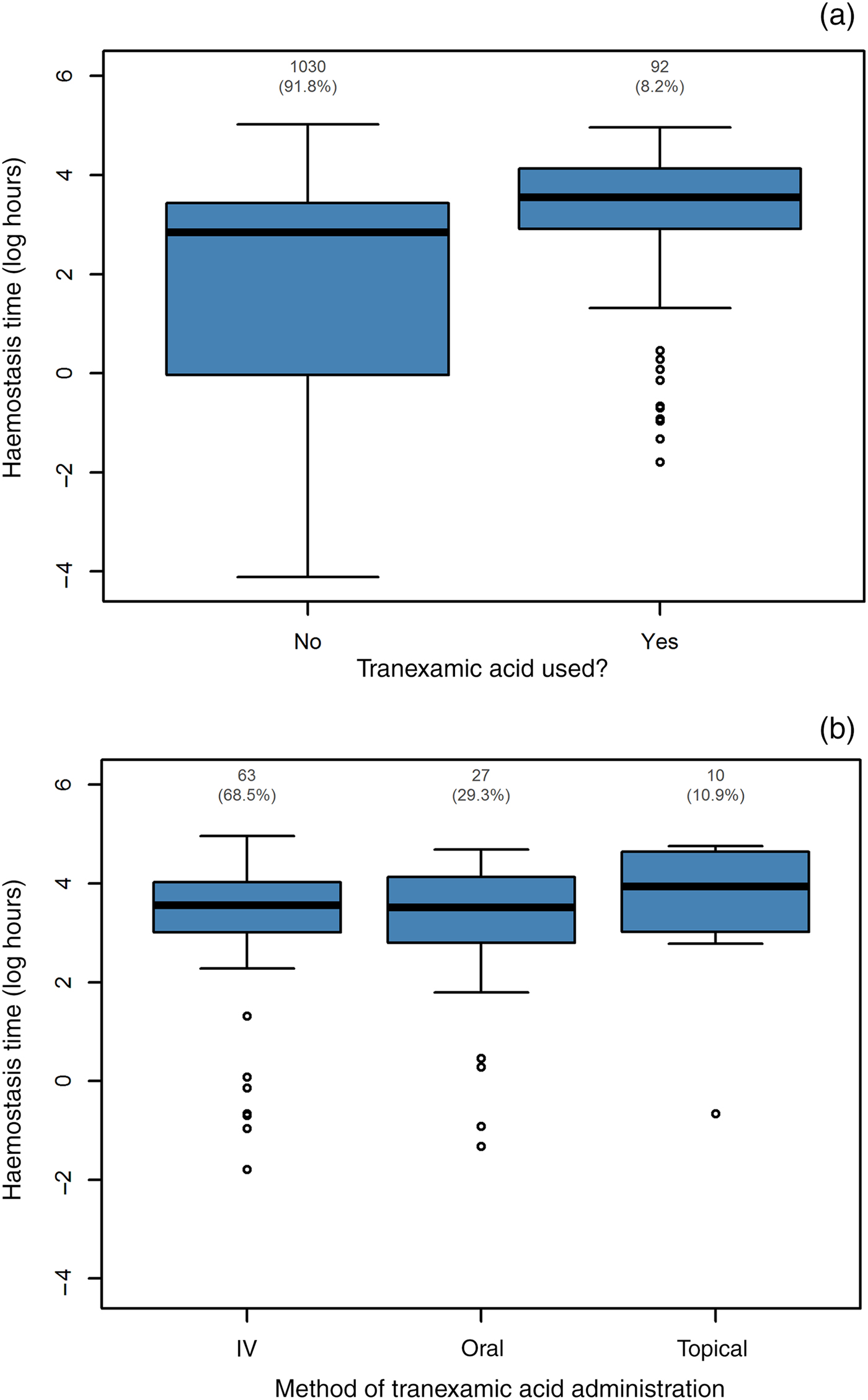
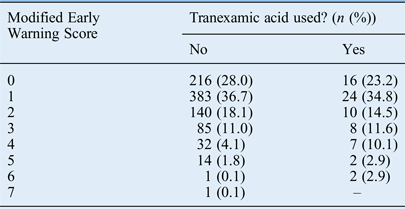
Tranexamic acid was administered to 92 patients (8.2 per cent). The box plot suggests a marginally longer median haemostasis time for patients receiving tranexamic acid (Figure 6a). Recurrent presentation rates were also higher in patients who received tranexamic acid during their treatment (18.1 per cent vs 13.5 per cent). Modified Early Warning Score data indicate that patients receiving tranexamic acid had a higher degree of illness (Table V). The data suggest a slight increase in the time taken to achieve haemostasis in those receiving tranexamic acid via intravenous (IV) versus oral routes, and a slight increase in haemostasis time for topical versus IV routes (Figure 6b). However, these differences are relatively small. Furthermore, the amount of data available when split by mode of administration is small. Hence, any results should be interpreted with caution.
Haemostasis time by (a) tranexamic acid use and (b) method of tranexamic acid administration. IV = intravenous

Tranexamic acid use grouped by modified early warning score

The transfusion of blood products was performed in 50 cases (4.5 per cent). Those who received a transfusion had a median pre-transfusion haemoglobin level of 91 g/l (interquartile range = 70–103) and a median Modified Early Warning Score of 1 (interquartile range = 1–2).
Surgery and radiological intervention
Thirty-six patients (3.2 per cent) underwent surgery for epistaxis during the audit period. The median time between the first ENT review and surgery was 24.7 hours (interquartile range = 8.9–54.2). Prior to surgery, these patients had a median of one pre-operative (inflatable plus non-dissolvable) pack placement (interquartile range = 1–2; range = 0–6). Patients undergoing surgery had a median Modified Early Warning Score of 1 and a WHO grade of 2, which was the same as for patients in the non-surgery group. Principal surgeon grade data were available for 34 of the 36 patients, with consultants operating most commonly (52.9 per cent), followed by registrars (44.1 per cent).
The operations performed were: sphenopalatine artery ligation (n = 19), sphenopalatine artery cautery (n = 10), electrocautery of the bleeding point (n = 8), septoplasty (n = 4), anterior ethmoid artery ligation (n = 3) and antrostomy (n = 1), with multiple operations being performed in some cases.
The number of patients achieving final haemostasis at the time of surgery was 17 (47.2 per cent), and the recurrent presentation rate of surgical patients was 22.6 per cent. Three patients underwent radiological intervention, but low numbers prevented detailed analysis. All underwent intervention 2 days following the first ENT review. Maxillary artery embolisation was performed in two cases and isolated sphenopalatine artery embolisation in one case.
Discussion and limitations
This large multicentre audit sought to benchmark current epistaxis management, enhance the evidence base and showcase trainee collaborative research as a strategy for large-volume data collection. The dataset successfully captured the vast majority of epistaxis presentations within involved units. Data quality in general was high; however, it was limited by reliance on the detailed note-taking of clinicians. It remains unclear whether missing data were a result of deficiencies in management, note-taking or data collection. Incomplete data necessitated the exclusion of a number of cases from analysis, which had otherwise met the audit inclusion criteria. This explorative analysis was able to identify potential associations between patient factors, treatment factors and outcomes. Further inferential statistical analysis is planned, in a subsequent paper, to correct for confounding variables and modelling, and to identify optimal treatment strategies. The suggested associations reported within the dataset thus far should be interpreted with caution.
The large number of cases identified in this study highlights the considerable burden epistaxis places on our healthcare system, both at initial presentation and at re-presentation (13.9 per cent of cases re-presented to hospital). The majority of cases were successfully treated within 24 hours, suggesting that epistaxis had a limited impact in these individuals. However, a significant event analysis revealed a 3.4 per cent 30-day all-cause mortality rate within our dataset. In context, the equivalent 30-day all-cause mortality rate for hip fracture in the UK is 7.1 per cent, 14 a figure that has reduced from 10.9 per cent over 8 years since the introduction of an ongoing national audit programme. Whilst such figures should be interpreted with caution, and it is acknowledged that epistaxis may not be the condition directly leading to death in these cases, it highlights the level of morbidity amongst the population of patients we treat.
Assessment of auditable standards within the domain of initial assessment demonstrated high levels of adherence for the recording of key elements of the patients’ history (those evidenced to affect outcome) within the medical notes. Interestingly, our dataset supported a marked impact of some of these factors on outcome (epistaxis duration, previous epistaxis, diabetes mellitus), whereas conditions such as ischaemic heart disease and known hypertension seemed to have a minimal effect.
Initial ENT assessment was most frequently performed by junior doctors; however, reassuringly, outcomes associated with these assessments were similar to those performed by senior colleagues when cases were analysed in terms of bleeding severity.
Anterior rhinoscopy was commonly performed, and the majority of patients were investigated with a full blood count and coagulation screen. Cases where no blood tests were performed had a much shorter median haemostasis time. This may suggest a lower complexity of presentation, indicating that investigations were ordered selectively on the basis of clinical concern, as recommended by the consensus statement. 5 Audit data allowed us to classify WHO bleeding severity in nearly all cases; however, the utility of this relatively crude grading system is questionable.
At the time of the initial ENT assessment, less than a third of patients had intranasal cautery performed and, similarly, only a third of patients had a topical vasoconstrictor applied. Both of these techniques have been recommended as first-line treatment strategies in the consensus document. 5 The use of electrocautery as a first-line treatment was rare, despite its potentially superior outcomes.Reference Soyka, Nikolaou, Rufibach and Holzmann 15 Surprisingly, despite the dataset showing a lower median haemostasis time for those undergoing cautery, the recurrent bleed rate was nearly 50 per cent higher, contrary to evidence previously published.Reference Henderson, Larkins and Repanos 16 The majority of cautery procedures were performed by junior doctors, though there was little to suggest that outcomes differed between clinician groups.
Nearly half of all patients referred to ENT were packed by other specialties prior to assessment, with the indication for such packs unclear from the dataset. Packing was associated with a longer median haemostasis time, but, interestingly, the small population who had their packs removed at the initial assessment had a median haemostasis time equivalent to that of the unpacked cases. This supports the treatment strategy of pack removal at the point of the initial ENT review, to enable a more definitive assessment. The lower recurrent presentation rate in patients who were packed during their treatment suggests that packing is effective at achieving temporary haemostasis and may also have a favourable effect on longer-term outcomes. Over three-quarters of patients with intranasal packs had an inflatable device, as favoured in the consensus recommendations. 5 The median haemostasis times were similar for those with inflatable and non-dissolvable packs; however, the recurrent presentation rate was lower for the latter group. Following final pack removal, the median discharge time was in line with the consensus recommendations, although less than half of these patients underwent the recommended post-packing cautery. Cautery following final pack removal was associated with a modestly lower recurrent presentation rate.
Over half of all patients were taking antithrombotic medication at the initial presentation. As per the consensus recommendations, 5 the majority of patients continued to take antiplatelet medication throughout their treatment. Those who stopped the medication had a lengthier haemostasis time, which may suggest a greater burden of disease, although this group had a recurrent presentation rate that was nearly half that of patients continuing antiplatelet therapy. However, the number of re-presentations was small, and a more detailed consideration of the risks and benefits of halting antiplatelet therapy for short periods is needed.
Warfarin and direct oral anticoagulants were the most common anticoagulants taken by epistaxis patients. This treatment was stopped or reversed more commonly than it was maintained. Contrary to consensus recommendations, 5 the groups of patients who had warfarin therapy stopped or maintained had similar median international normalised ratio values, both within the most common therapeutic window of 2.0–3.0 hours. However, the dataset shows a much lower recurrent presentation rate in patients who had warfarin stopped during their admission, suggesting that such practice has a beneficial effect on the epistaxis-specific outcome. Patients who had warfarin reversed had a notably higher median international normalised ratio, suggesting an element of patient selection in these cases. Epistaxis-specific outcomes between the warfarin and direct oral anticoagulant groups were similar, which reassures us of the relative safety of these novel agents, despite current fears relating to the inability to reverse them.
-
• A 113-site national audit of practice was conducted, with data for 1826 cases
-
• Epistaxis representation rate was 13.9 per cent and all-cause 30-day mortality rate was 3.4 per cent
-
• Data demonstrate varying alignment with new national consensus management recommendations
Patients who received tranexamic acid had a longer median haemostasis time and higher recurrent presentation rate. However, the severity of illness differed notably in those receiving tranexamic acid, and use of this medication may represent a confounding factor. Consequently, conclusions regarding the efficacy of tranexamic acid are unclear from this dataset. Current practice appears to be in line with the consensus recommendation supporting the use of tranexamic acid in selected patients. 5
The transfusion of blood products was more common than reported in previous literature,Reference Murer, Ahmad, Roth, Holzmann and Soyka 17 , Reference Pollice and Yoder 18 with a median haemoglobin level at the point of transfusion of 91 g/l. This is above the 70–90 g/l target haemoglobin level recommended in the management of major trauma.Reference Murer, Ahmad, Roth, Holzmann and Soyka 17 , Reference Pollice and Yoder 18 With 25 per cent of transfused patients receiving blood products, with a triggering haemoglobin level of more than 103 g/l, it appears at present that the threshold to transfuse may be too low in some units.
Surgery for epistaxis was performed infrequently; however, with a median time to intervention of just over 24 hours and, on average, just one pre-operative pack inserted, escalation to the operating theatre appeared expeditious. Despite this, there were still cases where patients received up to six pre-operative packs prior to surgical intervention. Small numbers limit the ability to draw conclusions regarding the efficacy of such procedures. Nevertheless, given that there was no difference between bleed severity and patient illness level between the surgical and non-surgical groups, the recurrent presentation rate of surgical patients of 22.6 per cent appears high. It is unclear from the dataset what the specific indications for surgical escalation were, especially in the context of just one pre-operative pack requirement, and similar Modified Early Warning Scores and WHO grades when comparing surgery and non-surgery groups. The use of interventional radiology was rare.
Conclusion
This large multicentre audit of epistaxis management further demonstrates the ability of trainee collaboratives to co-ordinate national projects involving the large-scale collection of data. The dataset demonstrates management practices that variably adhere to the newly formed consensus recommendations. 5 Elements of this explorative analysis question our current understanding of previously well-established tenets of management for this common condition. The observational nature of this study limits the strength of conclusions made; however, these findings highlight a number of areas where further research should be directed.
Acknowledgement
This national audit was funded by ENT-UK. The funding body had no influence over content.
Authorship and participation
The steering committee consists of: MP Ellis, A Hall, J Hardman, N Mehta, M E Smith and R J Williams (lead author and steering committee chair).
The executive committee consists of: S Carrie and C Hopkins.
The statisticians were: J Chynoweth, B G Jones and K Stevens.
The site leads were: Y Abbas, Southend Hospital; M Adams, Altnagelvin Area Hospital; A Addison, James Paget Hospital, Great Yarmouth; R Advani, North Manchester General Hospital; T S Ahmed, Dorset County Hospital, Dorchester; V Alexander, Brighton General Hospital; V Alexander, Royal Sussex County Hospital, Brighton; B Alli, Bradford Royal Infirmary; S Alvi, Leighton Hospital, Crewe; N Amiraraghi, University Hospital Crosshouse, Kilmarnock; A Ashman, Great Western Hospital, Swindon; H Babar-Craig, East Surrey Hospital; R Balakumar, Gloucestershire Royal Hospital, Gloucester; J Bewick, Addenbrooke's Hospital, Cambridge; D Bhasker, Pinderfields General Hospital, Wakefield; S Bola, Wexham Park Hospital, Slough; P Bowles, Worthing Hospital; N Campbell, Chesterfield Royal Hospital; N Can Guru Naidu, Barnet Hospital; N L Caton, East Surrey Hospital, Redhill; J Chapman, Salisbury District Hospital; G Chawdhary, Milton Keynes General Hospital; M Cherko, John Radcliffe Hospital, Oxford; M Coates, Sunderland Royal Hospital; K Conroy, Wythenshawe Hospital, Manchester, and Macclesfield District General Hospital; P Coyle, Peterborough City Hospital; O I Cozar, University Hospital of North Midlands, Stoke on Trent; M Cresswell, Derriford Hospital, Plymouth; L Dalton, Arrowe Park Hospital, Wirral; J Danino, New Cross Hospital, Wolverhampton; C Daultrey, Worcester Royal Hospital; K Davies, Morriston Hospital, Swansea; K Davies, Royal Liverpool University Hospital; D Dick, Royal Victoria Hospital, Belfast; P A Dimitriadis, Royal Hallamshire Hospital, Sheffield; N Doddi, Princess of Wales Hospital, Bridgend; M Dowling, Stepping Hill Hospital, Stockport; R Easto, Monklands Hospital, Airdrie; R Edmiston, Royal Albert Edward Infirmary, Wigan; D Ellul, Western General Hospital, Edinburgh; S Erskine, West Suffolk Hospital, Bury St Edmunds; A Evans, Barnsley District General Hospital; A Farboud, University Hospital of Wales, Cardiff; C T Forde, King George Hospital, London; J Fussey, Walsall Manor Hospital; A Gaunt, Queens Medical Centre, Nottingham; J Gilchrist, Royal Bolton Hospital; R Gohil, New Royal Infirmary of Edinburgh; E Gosnell, Royal Blackburn Hospital; D Grech Marguerat, Royal Cornwall Hospital, Truro; R Green, Ninewells Hospital, Dundee; R Grounds, Medway Maritime Hospital, Gillingham; A Hall, Royal National Throat, Nose and Ear Hospital, London; J Hardman, St Mary's Hospital, London; A Harris, Royal Gwent Hospital, Newport; L Harrison, Northampton General Hospital; R W A Hone, Royal Surrey County Hospital, Guildford; E Hoskison, University Hospitals Coventry and Warwickshire NHS Trust; J Howard, Wrexham Maelor Hospital; D Ioannidis, Royal Hampshire County Hospital, Winchester; I Iqbal, Freeman Hospital, Newcastle upon Tyne; N Janjua, Queen Alexandra Hospital, Portsmouth; K Jolly, Russells Hall Hospital, Dudley; S Kamal, Poole Hospital; T Kanzara, Countess of Chester Hospital; N Keates, Torbay Hospital, Torquay; A Kelly, Antrim Area Hospital; H Khan, Fairfield General Hospital, Bury; T Korampalli, Rotherham District General Hospital; M Kuet, Colchester General Hospital; P Kulloo, Royal London Hospitals; R Lakhani, St George's Hospital, London; A Lambert, Charing Cross Hospital, London; H Lancer, St Thomas Hospital, London; C Leonard, Royal Belfast Hospital for Sick Children; G Lloyd, Guy's Hospital, London; E Lowe, Southampton General Hospital; J Mair, Birmingham Heartlands Hospital; E Maughan, University College Hospital, London; T Mayberry, Queen Elizabeth Hospital – University Hospitals Birmingham NHS Foundation Trust; L McCadden, Craigavon Area Hospital; F McClenaghan, West Middlesex University Hospital, London; G McKenzie, Hull Royal Infirmary and Castle Hill Hospital, Cottingham; R Mcleod, Glangwili General Hospital, Carmarthen; S Meghji, Norfolk and Norwich University Hospital; M Mian, Furness General Hospital, Barrow-in-Furness; A Millington, Ipswich Hospital NHS Trust; O Mirza, Royal Preston Hospital; S Mistry, Calderdale Royal Hospital, Halifax; A Mitchell-Innes, Birmingham Children's Hospital; E Molena, Frimley Park Hospital; J Morris, Royal United Hospital, Bath; T Myuran, Basildon and Thurrock University Hospital and Princess Alexandra Hospital, Harlow; A Navaratnam, Northwick Park Hospital, Harrow; E Noon, Blackpool Victoria Hospital; O Okonkwo, Salford Royal Hospital; B Oremule, Royal Lancaster Hospital; L Pabla, James Cook University Hospital, Middlesborough; E Papesch, Broomfield Hospital, Chelmsford; V Pattni, Bristol Royal Infirmary; V Puranik, Ysbyty Gwynedd, Bangor; R Roplekar, Raigmore Hospital, Inverness; E Ross, Birmingham City Hospital; M Rouhani, Hammersmith Hospital; J Rudd, William Harvey Hospital, Kent; E Schechter, Luton and Dunstable Hospital; A Senior, Midlands NHS Treatment Centre, Burton-on-Trent; N Sethi, Leeds General Infirmary; S Sharma, Central Middlesex Hospital, London; R Sharma, St John's Hospital, Bath; F Shelton, Musgrove Park Hospital; Z Sherazi, Tameside General Hospital, Ashton-under-Lyne; A Tahir, Cumberland Infirmary; T Tikka, Queen Elizabeth University Hospital, Glasgow; O Tkachuk Hlinicanova, Glan Clwyd Hospital, Rhyl; K To, Royal Hospital for Sick Children, Edinburgh; E Toll, Royal Devon and Exeter Hospital; A Tse, Royal Oldham Hospital; K Ubayasiri, Royal Derby Hospital; S Unadkat, Whipps Cross University Hospital, London; N Upile, Aintree University Hospital, Liverpool; A Vijendren, Lister Hospital, Stevenage; H Walijee, Alder Hey Children's Hospital, Liverpool; M Wilkie, Warrington Hospital; M Williams, Darlington Memorial Hospital; G Wilson, Leicester Royal Infirmary; W Wong, York District Hospital; G Wong, North Hampshire Hospital, Basingstoke; C Xie, Princess Royal University Hospital, Orpington; A Yao, Manchester Royal Infirmary; H Zhang, Queen's Hospital, Romford. Regional Collaborator Co-ordination: M Cherko, M P Ellis, M Farr, R Hone, M Khan, A Lau, C Leonard, R McLeod,N Mehta, R Nash, N Sethi, N Sharma, M E Smith, R J Williams, G Wilson.