The establishment of sufficient and reliable pulmonary blood flow is vital in infants with ductal-dependent pulmonary circulation. A surgical systemic-pulmonary shunt is a well-established palliation method, but it is associated with a significant risk of mortality and morbidity in the neonatal period because the risk of pulmonary overflow and rate of shunt failure are high. Reference Sivakumar, Shivaprakasha, Rao and Krisha Kumar1–Reference Erek, Yalcinbas and Mamur3 Diastolic run-off may cause coronary ischaemia. Additionally, systemic-pulmonary shunts may cause surgical adhesions, phrenic or recurrent nerve paralysis, chylothorax, or pulmonary artery distortion. Reference Santoro, Gaio and Palladino4
Gibbs et al. first described the ductal stent technique as an alternative to systemic-pulmonary shunt placement for the palliation of high-risk infants with cyanotic CHD in 1992. Reference Gibbs, Uzun, Blackburn, Wren, Hamilton and Watterson5 Ductal stenting has gained popularity because of several of its advantages, including reduced procedure-related complications, hospital stay, and number of reoperations. Reference Coe and Olley6,Reference Alwi7 However, some concerns still exist, such as the safety and durability of stent patency, pulmonary artery growth, and even the distribution of pulmonary blood flow. Reference Sivakumar, Bhagyavathy, Coelho, Satish and Krishnan8 In this study, we aimed to analyse the early and midterm results of ductal stent implantation in neonates with ductus-dependent pulmonary blood flow. To our knowledge, our cohort includes the largest series of neonates in a single centre.
Materials and methods
The medical records of 102 patients who underwent 115 cardiac catheterisation procedures with a ductal stent in our department between January, 2014 and July, 2018 were retrospectively reviewed. Our study received ATADEK-2019/3 (numbered 2019-3/3) Ethics Committee approval on 7 February, 2019. Standard echocardiography was used for the diagnosis of all patients. Their ductal anatomy was examined in detail. The inclusion criteria were hypoxia (transcutaneous arterial oxygen saturation (SpO2) < 80%) and duct-dependent pulmonary circulation; the exclusion criteria were nonconfluent pulmonary artery branches and previous systemic-pulmonary shunt surgery.
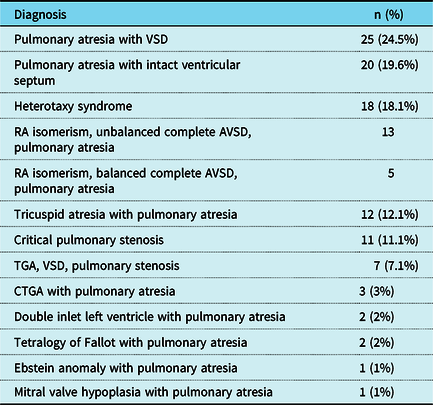
The age of the neonates ranged from 3 to 30 days (median 11 days) and their weight ranged from 1.8 to 4.8 kg (mean, 2.8 ± 0.53 kg). Thirty-one patients’ weights were <2,500 g (31%). Their preprocedural oxygen saturation ranged from 55 to 80% (mean 73.1 ± 6.2%). Of these 102 patients, 52 had functional single ventricle, and the patients’ diagnoses are listed in Table 1.
Diagnoses of the patients

AVSD, atrioventricular septal defect; CTGA, congenitally corrected transposition of the great arteries; RA, right atrial; TGA, transposition of the great arteries; VSD, ventricular septal defect.
Prostaglandin E1 infusions were discontinued 24 hours before catheter interventions with close follow-up of SpO2 levels to provide some ductal narrowing for safe stent implantation. However, in the case of desaturation (SpO2 < 75%), prostaglandin E1 infusion was resumed until the ductus was traversed with a wire.
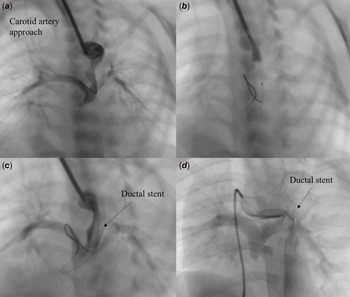
The procedure was performed in 12 patients under the conditions of spontaneous breathing and sedation. Ninety patients needed endotracheal intubation and general anaesthesia. In all patients, vascular access was first attempted by the percutaneous femoral approach. Ductal stent was successfully implanted in 87 of 102 patients. In 72 (82.8%) of 87 patients, a retrograde or antegrade transcatheter approach was used through the femoral artery or vein, and 15 (17.3%) patients with vertical patent ductus arteriosus needed a carotid artery approach in addition to the femoral approach. The carotid artery was prepared by surgical cut down and was surgically repaired after removal of the sheath (Figure 1a–d). The carotid artery approach was significantly higher in patients who had a vertical patent ductus arteriosus (p = 0.0002). A total of 96 stents were implanted in 87 patients. Although a single stent was implanted in 80 of 87 patients, two stents were required in five patients and three stents were required in two patients. All patients received heparin after arterial cannulation, which was continued for 24 hours after stent placement to maintain an activated clotting time level of 180–220. Antibiotic prophylaxis was performed with cefazolin for 24 hours.
Angiographic image of ductal stent implantation by carotid artery approach (a–c). Angiographic image of pulmonary arterial growth before Glenn operation in the same patient (d).

Additionally, palliative pulmonary balloon valvuloplasty in seven patients and pulmonary valve perforation in two patients were performed in the same setting in patients with critical pulmonary stenosis and functional single ventricle. Balloon atrial septostomy was required in three patients with a restrictive interatrial septum; two of them had pulmonary stenosis with transposition of great arteries, and one had pulmonary atresia with an intact ventricular septum.
We visualised the duct from different angles before stent implantation. Initially, left side view and right or left anterior oblique images were obtained according to the ductus morphology. If the ductus has classical and horizontal morphology, we first measured the ductal diameters since the ductus diameter should not change after the wire. On the other hand, if the duct was vertical and had tortuous morphology, we checked the measurements after placing the wire in the duct because the duct could become straight after the wire.
The width of the stent was estimated according to body weight, the smallest ductal diameter, and the diameter and distribution of the pulmonary artery. For patients weighing 3–4 kg, we chose a 4-mm-diameter stent, and for those weighing 4–5 kg, we used a 4.5-mm-diameter stent. For patients weighing less than 3 kg, we chose a 3.5-mm-diameter stent. The length of the stent was 1–2 mm longer than the ductal length between the aortic and pulmonary ends with the guidewire across.
All patients were given an antiplatelet dose of aspirin after cessation of the heparin infusion. After stent implantation, the patients were evaluated by clinical examination; additionally, SpO2 level, chest X-ray, and echocardiography were assessed. The stent position and patency were reassessed by echocardiography before discharge, 7 days after discharge, and monthly thereafter. The need for further interventions or surgery was determined according to the patients’ SpO2 level, growth rate, and primary pathology. Cardiac catheterisation was scheduled before surgery. Post-operative two-dimensional echocardiograms, angiographic fluoroscopy, and lung scans (in case of suspicion) were reviewed.
Statistical analysis
Normality for continuous variables was tested using the Shapiro–Wilk test. The Mann–Whitney U test was used to compare groups in terms of a continuous outcome. A chi-square test of independence was used to compare subcategories of a categorical variable in terms of a categorical outcome. Fisher’s exact test was used when the assumption of expected counts being at least five for the chi-square test of independence was not satisfied. Logistic regression was used to understand the relationship between explanatory variables and binary outcomes. Kaplan–Meier survival probabilities were computed and plotted to compare treatment groups in terms of the risk of death. Survival curves were compared using the log-rank test. The significance level for all methods was set at 0.05. All analyses were performed using R Version 3.5.2 (R Core Development).
Results
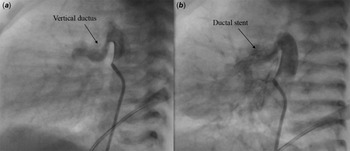
The arterial duct was vertical in 60 patients (Figure 2a and b). The mean ductal length was 12.4 ± 4.1 mm (range, 7.8–23 mm), the mean narrowest ductal diameter was 2.1 ± 0.7 mm (range, 1.2–3.4 mm), and the mean stent length was 14.5 ± 3.5 mm (range, 7–25 mm).
Angiographic image of a vertical ductus before (a) and after (b) the ductal stent implantation procedure.

The technical success rate of the interventions was 85.2% (87 of 102 patients). Most failures occurred during the early period of our experience. The success rate in patients with a vertical ductus was 79%, the success rate in those with a straight ductus was 90%, and there was no statistical relationship between the success of stent implantation and a vertical ductus (p = 0.23). Moreover, there was no statistically significant difference between the functional single ventricle and biventricular physiology in terms of the success of the stent implantation (87.2% with functional single ventricle and 82.6% with biventricular physiology) (p = 1). Among the 15 patients in whom stent implantation failed, a systemic-pulmonary shunt operation was performed in 13 patients. Of the remaining two patients, one died in the catheterisation room due to cardiac arrest and the other died in the ICU because of sepsis while waiting for further intervention.
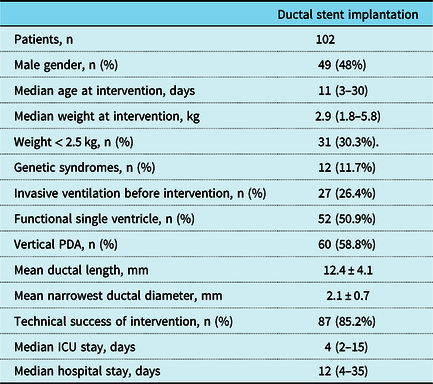
The median ICU and hospital lengths of stay were 4 days (range, 2–15 days) and 12 days (range, 4–35 days), respectively. After the procedures, oxygen saturation increased from a mean of 73.1 ± 6.2% to a mean of 90.4 ± 4.3% (p < 0.001) and ductus diameters increased from a mean of 2.1 ± 0.7 mm to a mean of 4.2 ± 0.9 mm (p < 0.001). The mean fluoroscopy time was 44.4 ± 25.5 min (range: 20–120 min). The characteristics of the patients and the outcomes of the interventions are listed in Table 2.
Patients’ characteristics and outcomes

PDA, patent ductus arteriosus.
Complications
Femoral arterial access complications did not occur, but unilateral femoral and iliac vein thrombosis was observed in one patient (1%). Stent dislocation to the left pulmonary artery was observed in five patients, and dislocation to the right pulmonary artery was observed in two patients. Right ventricular thrombosis was detected in two patients by control echocardiography after the intervention, and they were treated medically by IV heparin infusion. These patients were discharged from the hospital with oral antiaggregant therapy and were followed up closely with echocardiography. Cardiac arrest occurred in four patients during the procedure, and one of these patients died in the catheterisation laboratory despite resuscitation. The other three patients underwent urgent shunt surgery after resuscitation; however, two of them died due to failure to wean from cardiopulmonary bypass (CPB) and due to mediastinitis in the postoperative period. The only patient who underwent an urgent systemic-pulmonary shunt after resuscitation was discharged from the hospital. Thus, procedure-related mortality occurred in three patients (2.9%). Despite successful stent implantation, three patients died of sepsis and two patients died of pneumonia before discharge from the hospital. Two neonates who underwent systemic-pulmonary shunt reintervention before discharge from the hospital because of worsening stent stenosis died in the early post-operative period despite extracorporeal membrane oxygenation support because of heart failure. One patient died of sepsis while awaiting further intervention in the ICU after a failed procedure. Three neonates whose procedure had failed died after the systemic-pulmonary shunt operation due to low cardiac output. Overall, in-hospital mortality occurred in 14 patients (13.7%).
Follow-up
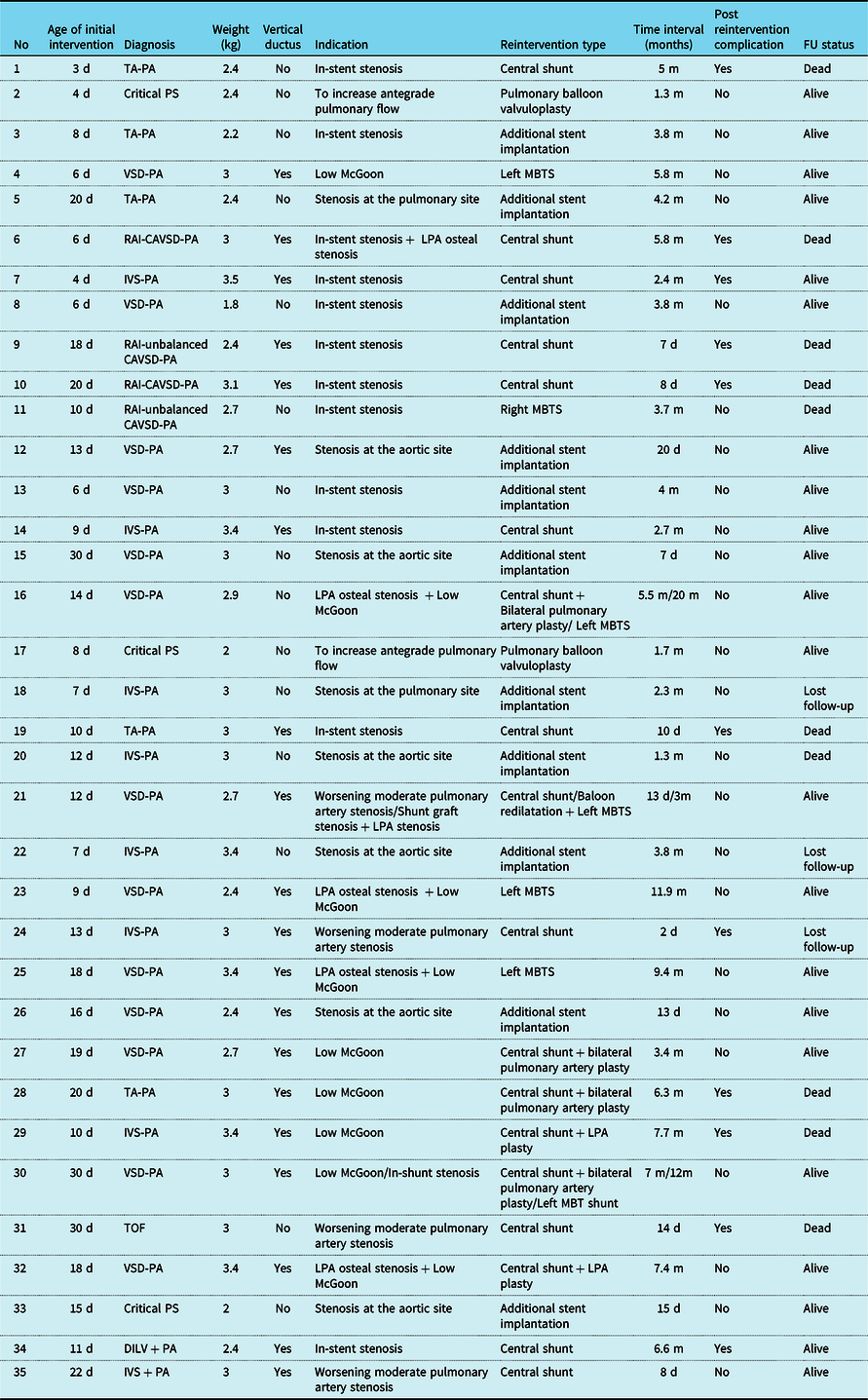
Reintervention was required in 35 patients (34.3%) despite successful stent implantation: a systemic-pulmonary shunt intervention was performed in 22 patients, transcatheter reintervention was performed in 11 patients, and pulmonary balloon valvuloplasty was performed in two patients. In vertical patent ductus arteriosus, systemic-pulmonary shunts are usually selected because the transcatheter approach to the vertically implanted stent is quite difficult. The mean reintervention time was 105.1 ± 15.2 days (2–356 days). There was no association between reintervention requirement and vertical patent ductus arteriosus morphology (p = 0.06), more than one stent usage (p = 1), or the carotid cut-down approach (p = 0.34).
Eleven patients needed early reintervention within the first month after the procedure. Early transcatheter reinterventions were performed in four patients, and a systemic-pulmonary shunt intervention was performed in seven patients. Transcatheter reinterventions were necessary due to constriction of the uncovered segment of the ductus on the aortic side of the stent. In all cases, an additional stent was successfully implanted to cover the entire ductus. Among the seven patients in whom an early systemic-pulmonary shunt was required, urgent surgery was performed in three patients because of acute deteriorating oxygen saturation, and the remaining four patients required an elective systemic-pulmonary shunt procedure due to worsening moderate branch pulmonary artery stenosis.
The median duration of follow-up was 690 days (range, 2–1,520 days). Six patients were lost to follow-up in the study. The median duration of palliation with ductal stent was 210 days (range, 2–525 days).
Seven patients required additional stent implantation, 15 patients required a systemic-pulmonary shunt, and two patients underwent pulmonary balloon valvuloplasty during the late interstage period (>1 month) because of deteriorating cyanosis. Of the seven patients who required additional stent implantation, three required in-stent stenosis, two required covering of the aortic site, and two required covering of the pulmonary site. Pulmonary balloon valvuloplasty was performed in two patients who had a critical pulmonary stenosis to increase antegrade pulmonary flow.
Among the 15 patients in whom a systemic-pulmonary shunt was required after the 1-month follow-up period, two underwent urgent systemic-pulmonary shunt surgery, and four underwent elective systemic-pulmonary shunt surgery because of worsening stent stenosis. The remaining nine patients underwent systemic-pulmonary shunt surgery due to inadequate pulmonary arterial growth because of the protrusion of the stent towards one branch of the pulmonary artery, and the pulmonary artery was reconstructed with an autologous pericardial patch during the operation. The rate of bridging to surgical repair without a systemic-pulmonary shunt requirement was significantly higher in patients without a vertical patent ductus arteriosus (94.4%) than in those with a vertical patent ductus arteriosus (60%) (p = 0.03). Three patients required more than one intervention during the interstage period (Table 3).
Reintervention characteristics of patients after ductal stent implantation

CAVSD, complete atrioventricular septal defect; DILV, double inlet left ventricle; IVS, intact ventricular septum; LPA, left pulmonary artery; MBTS, modified Blalock–Taussig shunt; PA, pulmonary atresia; PS, pulmonary stenosis; RAI, right atrial isomerism; TA, tricuspid atresia; TOF, tetratology of Fallot; VSD, ventricular septal defect.
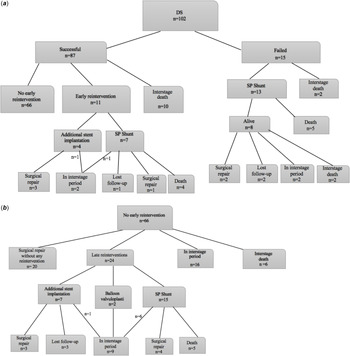
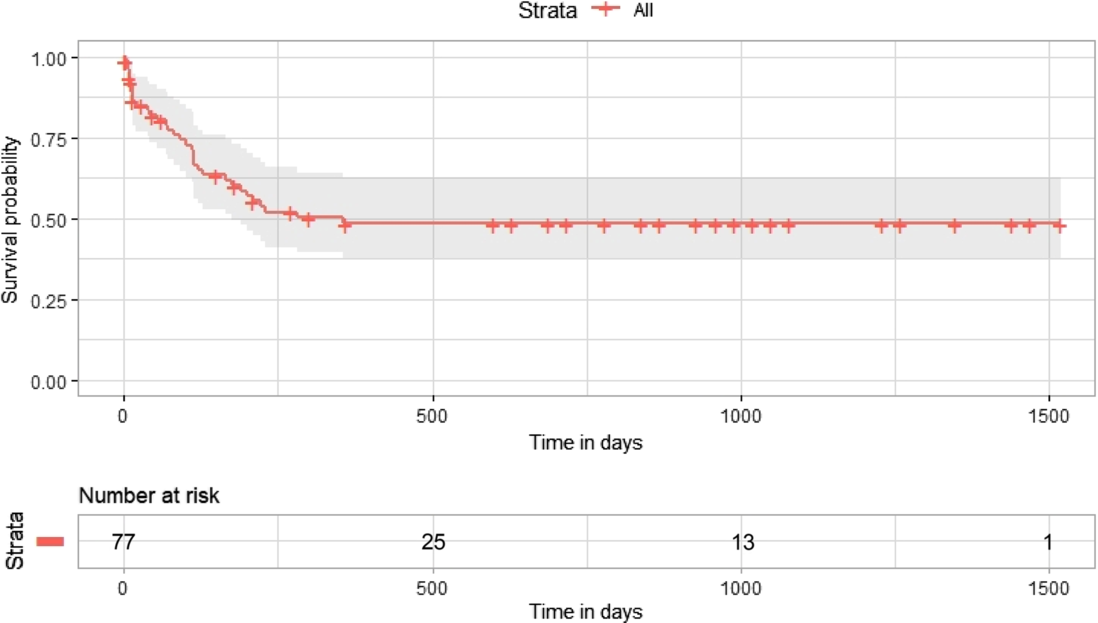
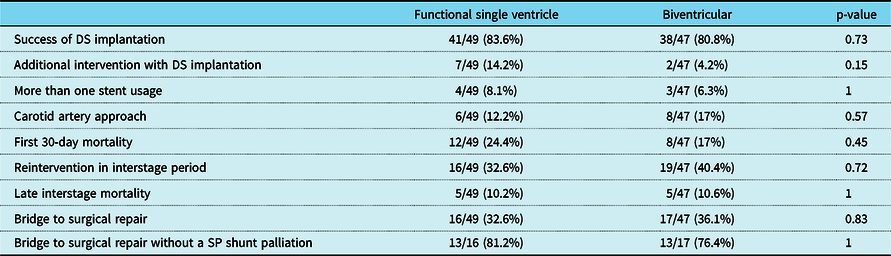
Interstage mortality occurred in 20 patients (19.6%) (Figure 3a and b). Among these 20 patients, nine died within 1 month of the procedure and 11 died in the late interstage period. We found that the 30-day mortality rate in patients undergoing ductal stent implantation was significantly higher in patients with a vertical patent ductus arteriosus (p = 0.02) and patients with echocardiographic diagnosis of heterotaxy syndrome (p = 0.01). On the other hand, there was no statistically significant difference between functional single ventricle and biventricular physiology in terms of 30-day mortality (p = 0.45) and late interstage mortality (p = 1). Twelve of the 20 patients experienced sudden cardiac arrest at home, 10 of these patients did not survive despite resuscitation, and the remaining two patients who underwent urgent systemic-pulmonary shunt implantation could not be weaned from Cardiopulmonary bypass (CPB) and died on extracorporeal membrane oxygenation because of low cardiac output. An autopsy could not be performed on patients who experienced home arrest, so ductal stent status could not be determined. Of the remaining eight patients who died during the interstage period, four died due to cardiac failure after an urgent systemic-pulmonary shunt, two died because of Klebsiella pneumonia, one died due to necrotising enterocolitis, and one had pyelonephritis and died as a result of Candida sepsis. The Kaplan–Meier curve of the survival probability is shown in Figure 4.
(a) Flow chart of either transcatheter or surgical reinterventions and outcomes of patients in the early postprocedural period. (b) Flow chart of either transcatheter or surgical reinterventions and outcomes of patients in the late postprocedural period.

Kaplan–Meier curve showing the survival probability with the 95% CI at follow-up.

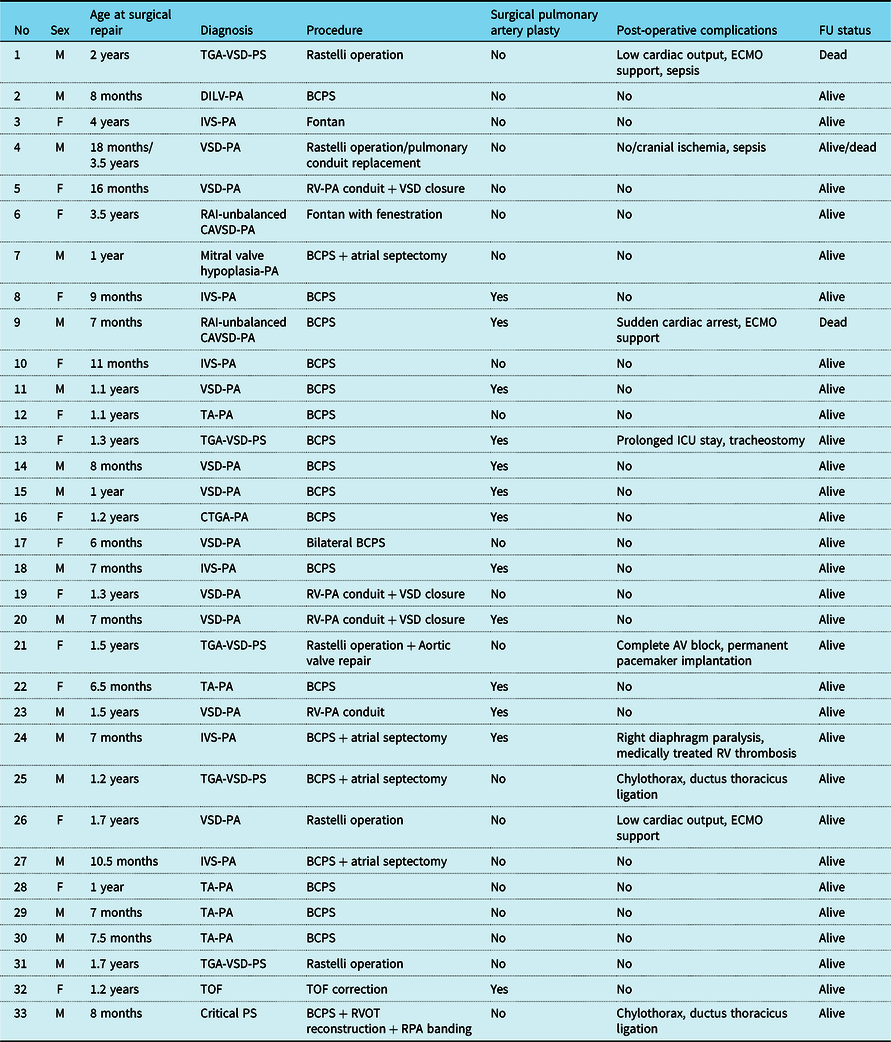
Among patients in whom the ductal stent procedure was successful, 31 were bridged to surgical repair after a median of 288 days (163–650 days). Moreover, two patients underwent surgical repair with a systemic-pulmonary shunt after unsuccessful stent implantation. During diagnostic angiography performed before definitive surgery, the median McGoon ratio significantly increased from 1.2 (0.5–1.7) to 1.87 (1.55–2.3) (p < 0.01), and the left-to-right pulmonary artery diameter ratio was 0.87 (0.82–1.15). Of these 33 patients, 22 underwent a Glenn operation, 10 underwent biventricular total repair, and one underwent one and one-half ventricle repair. Pulmonary artery reconstruction was required in 13 patients (10 with the Glenn operation, three with total correction) (39%) during surgical repair. The left pulmonary artery was reconstructed during surgical repair in eight patients, and the bilateral pulmonary artery was reconstructed in five patients. The surgical repair characteristics and outcomes of patients are summarised in Table 4. In pulmonary artery reconstruction, there was no significant difference between those who had palliation only with transcatheter interventions and those who required a systemic-pulmonary shunt as a reintervention (p = 0.67). Of these 31 patients who were bridged to surgical repair after successful ductal stent procedure, 20 (64.5%) were bridged to surgical repair without any reintervention, six (19.3%) required transcatheter reintervention, and five (16.1%) required a systemic-pulmonary shunt in the interstage period. Twenty-six (29.8%) of 87 patients were bridged to surgical repair without any surgical intervention. The rate of palliation from the first ductal stent procedure without any reintervention was significantly higher in patients without a vertical patent ductus arteriosus than in those with a vertical patent ductus arteriosus (p = 0.03). Twenty-three (26.4%) of 87 patients were in the interstage period after successful stent implantation, and follow-up is ongoing. The observed differences in outcomes between the functional single ventricle and biventricular patients are summarised in Table 5.
Surgical repair characteristics and outcomes of patients

AV, atrioventricular; BCPS, bidirectional cavopulmonary shunt; CAVSD, complete atrioventricular septal defect; CTGA, congenitally corrected transposition of the great arteries; DILV, double inlet left ventricle; ECMO, extracorporeal membrane oxygenation; FU, follow-up; IVS, intact ventricular septum; PA, pulmonary atresia; PS, pulmonary stenosis; RAI, right atrial isomerism; RPA, right pulmonary artery; RV, right ventricle; RVOT, right ventricle outflow tract; RV-PA, right ventricle-pulmonary artery; TA, tricuspid atresia; TGA, transposition of the great arteries; TOF, tetratology of Fallot; VSD, ventricular septal defect
Observed differences in outcomes between the functional single ventricle and biventricular

DS, ductal stent; SP, systemic-pulmonary.
Discussion
The ductal stent procedure has been reported as a reasonable and less invasive alternative to the conventional systemic-pulmonary shunt procedure for patients with ductal-dependent pulmonary circulation. Reference Odemis, Haydin, Guzeltas, Ozyilmaz, Bilici and Bakir9 In our study, we demonstrated that a ductal stent might be a reasonable and practical option for neonates with ductal-dependent pulmonary circulation, whether they have functional single ventricle or biventricular physiology, with an acceptable technical success rate (85.2%). To our knowledge, our study includes the largest series of neonates with ductal-dependent pulmonary circulation who underwent ductal stent and assessed early and midterm outcomes in a single centre.
The conventional systemic-pulmonary shunt procedure results in a high incidence of complete occlusion requiring an additional palliative operation, distortion, and/or stenosis of the shunted pulmonary artery. In a significant multicentre report from the Society of Thoracic Surgeons Congenital Heart Surgery Database, a cohort of neonates who underwent a modified Blalock–Taussig shunt operation without accompanying procedures experienced in-hospital mortality at a rate of 7.2%, and the rate of severe morbidity was 13.1%. Reference Petrucci, O’Brien, Jacobs, Jacobs, Manning and Eghtesady2 Erek et al. conducted a study on 25 neonates who were palliated with systemic-pulmonary shunts, and they reported a 24% in-hospital mortality rate with a 20% rate of shunt-related complications. Reference Erek, Yalcinbas and Mamur3 Ductal stent implantation appears to be an alternative to surgical palliation for patients with duct-dependent pulmonary circulation. Reference Odemis, Haydin, Guzeltas, Ozyilmaz, Bilici and Bakir9 This technique will avoid the surgical complications of the initial palliative operation and allows the patient to undergo a corrective type of operation as the first surgical intervention.
The different morphology of the ductus in neonates with right heart obstructive pathologies requires attention when ductal stenting is attempted, particularly in the subgroup of patients without any other source of pulmonary blood flow. Reference Odemis, Haydin, Guzeltas, Ozyilmaz, Bilici and Bakir9 In our study, 58.8% of patients had a vertical ductus and 41.2% had a straight ductus. We performed additional interventions (seven pulmonary balloon valvuloplasties and two pulmonary valve perforations) in nine patients who had critical pulmonary stenosis, functional single ventricle, and a straight ductus in the same setting. Ductal stenting timing remains a real challenge in the context of additional interventions. Most of the ductal stents were implanted after balloon pulmonary valvuloplasty as a staged procedure to obtain optimal ductal construction and reduce problems associated with over circulation. In contrast, ductal stenting immediately after balloon pulmonary valvuloplasty exhibited several advantages: repetitive transfers to the catheterisation laboratory as well as recurrent vascular access were avoided. Reference Haddad, Hanna, Charbel, Daou, Chehab and Saliba10 In our cohort, we preferred to perform additional interventions in the same setting, and we believe that it decreased our vascular complication rates (1%). Axillary or carotid artery access can be used in patients with a vertical ductus that originates proximally from the underside of the aortic arch. Reference Kenny, Berman, Zahn and Amin11,Reference Glatz, Petit and Goldstein12 These approaches allow more direct access for the passage of a wire or balloon catheter through the ductus, thus increasing the likelihood of successfully navigating a tortuous ductus while decreasing procedure time and X-ray exposure. Reference Celebi, Yucel, Bulut, Kucuk and Balli13 Although we routinely applied the femoral artery or the femoral vein approach in the vertical ductus, carotid artery access via carotid artery cut down was required in 15 neonates who had a vertical ductus.
Several studies have demonstrated that ductal stent effectively promotes pulmonary arterial growth. Reference Odemis, Haydin, Guzeltas, Ozyilmaz, Bilici and Bakir9,Reference Santoro, Capozzi and Caianiello14 The McGoon index significantly increased as a result of ductal stent procedure in patients with ductal-dependent pulmonary blood flow. Celebi et al. conducted a study on 68 infants who underwent ductal stent implantation for functionally univentricular hearts with ductal-dependent pulmonary blood flow. In this study, only two patients were referred for systemic-pulmonary shunt operations due to insufficient pulmonary artery growth, and the pulmonary artery diameter ratio was 0.92 ± 0.07 at the time of the Glenn procedure. Reference Celebi, Yucel, Bulut, Kucuk and Balli13 In our study, the McGoon ratio ranged from 1.55 to 2.3 before the surgical intervention, and nine patients were referred for systemic-pulmonary shunt operations before surgical repair because of inadequate pulmonary artery growth.
Alwi et al. Reference Alwi, Choo, Latiff, Kandavello, Samion and Mulyadi15 reported that the existence of a ductal stent increases preexisting stenosis of the PAs, typically in the left pulmonary artery, and concluded that the metal grid of the stent causes intense neointimal proliferation and fibrosis in the ductal tissue surrounding the PAs. Since the ductus arteriosus implants at the left pulmonary artery origin, the higher incidence of stenosis in this branch can be clarified by the accompanying effect of “pulmonary coarctation” and neointimal hyperplasia. Reference Coe and Olley6,Reference Alwi7 In our study, 12 of the 33 patients required pulmonary artery patch plasty during the surgical repair, and six (50%) of them had no reintervention during the interstage period. We believe that ductal stent implantation may adversely affect pulmonary artery growth in patients with severe left pulmonary artery stenosis and may require additional interventions.
The ductal patency obtained with the ductal stent lasted for a shorter time than that obtained with systemic-pulmonary shunt surgery. Reference Alwi7,Reference Glatz, Petit and Goldstein12,Reference Bentham, Zava and Harrison16 Among several studies, stent durability varied from 1 to 1,130 days. Reference Odemis, Haydin, Guzeltas, Ozyilmaz, Bilici and Bakir9,Reference Celebi, Yucel, Bulut, Kucuk and Balli13,Reference Vida, Speggiorin and Maschietto18 In our study, the median palliation time was 210 days (range, 2–525 days). The palliation time obtained from the ductal stent procedure is primarily limited by neointimal proliferation. Reference Celebi, Yucel, Bulut, Kucuk and Balli13 On the other hand, other studies have found that the stent durability is sufficient and allows adequate pulmonary artery growth before Glenn operation in patients with functional single ventricle. Reference Alwi, Choo, Latiff, Kandavello, Samion and Mulyadi15,Reference Schranz, Michel-Behnke and Heyer17 The desired duration of ductal patency in patients with ductus-dependent pulmonary circulation is approximately 4–6 months in functional single ventricle patients because a bidirectional Glenn operation can be performed safely in infants older than 4 months. Reference Gibbs, Uzun, Blackburn, Wren, Hamilton and Watterson5,Reference Alwi, Choo, Latiff, Kandavello, Samion and Mulyadi15 In biventricular patients, the expected palliation time may vary depending on the type of anomaly but usually requires longer palliation time than functional univentricular hearts. Therefore, surgical or nonsurgical reintervention rates may be higher than those for functional univentricular hearts in the interstage period. In our cohort, reintervention rates, late interstage mortality, bridging to surgical repair without systemic-pulmonary shunt, and bridging to surgical repair rates were statistically similar between functional single ventricular and biventricular patients. Furthermore, half of the patients who were bridged to total correction repair did not require any reintervention. If ductal stenosis occurs within the surgical repair time, stent redilation or additional stent implantation can be performed. These reinterventions are associated with high success rates and are safe in almost all patients.
At the time of surgical repair, there is usually no need for complete stent removal. The stented patent ductus arteriosus were ligated or divided as CPB was established, and the pulmonary site was removed together with the ductus wall. A residual stent grid needed to be left in place at the aortic site. Reference Vida, Speggiorin and Maschietto18 In our study, we only ligated stented patent ductus arteriosus after CPB was performed, and we excised the pulmonary site of the stent in patients who underwent pulmonary artery patch plasty.
An additional marker of long-term pulmonary artery size and function that can be measured is the need for additional pulmonary artery interventions (either surgical or transcatheter). This issue, as it relates to ductal stent placement, was highlighted by Vida et al. in a cohort of 13 patients treated with ductal stent, of whom nearly half required additional pulmonary arterioplasty at the time of complete surgical repair and four needed additional pulmonary artery interventions. Reference Vida, Speggiorin and Maschietto18 The rate of the use of pulmonary arterioplasty for subsequent surgical repair exceeded 40% in Glatz’s study, and there was no difference in this rate between the ductal stent and Blalock–Taussig shunt groups. Reference Glatz, Petit and Goldstein12 In our study, the rate of the use of pulmonary arterioplasty for surgical repair was 36%, and there was no significant difference between patients who were palliated by transcatheter interventions and those who required an additional systemic-pulmonary shunt in the interstage period.
Reintervention in the interstage period is another critical issue. In the United Kingdom, Bentham et al. conducted a multicentre cohort study over a period of 4 years of neonates with a diagnosis of duct-dependent pulmonary blood flow undergoing either an Blalock–Taussig shunt or an arterial ductal stent procedure as their first procedure. Reference Bentham, Zava and Harrison16 In this study, 39.8% of the ductal stent group required additional reintervention procedures before next-stage surgery, as opposed to only 24.0% in the Blalock–Taussig shunt group, and the median duration of palliation was 243 days for Blalock–Taussig shunt and 231 days for ductal stent. Reference Bentham, Zava and Harrison16 In our study, the reintervention rate was 41.6%, 35 patients required transcatheter or surgical reintervention, and the mean reintervention time was 105.1 ± 15.2 days.
According to previous studies, the risk of procedural complications was significantly higher after the Blalock–Taussig shunt procedure after adjustment for patient factors. Reference Glatz, Petit and Goldstein12,Reference Bentham, Zava and Harrison16 Additionally, the complications observed in patients undergoing the Blalock–Taussig shunt procedure tended to be more serious, including the need for extracorporeal membrane oxygenation, cardiac arrest, stroke, and wound infection requiring additional surgery. In contrast, most complications related to ductal stent procedures were vascular, most commonly occlusion of the femoral artery at the site of cannulation. The approach to ductal stent implantation may also require alternative access strategies, including the use of the common carotid artery or axillary artery for the more vertically oriented ductus. Reference Glatz, Petit and Goldstein12 In our study, femoral arterial access complications did not occur, but unilateral femoral and iliac vein thrombosis was observed in 1 patient.
Several studies have demonstrated that the axillary artery and carotid arteries could be used to obtain sufficiently stable access for ductal stent implantation, especially in patients with a highly tortuous vertical ductus. Reference Roggen, Cools and Brown19–Reference Schranz and Michel-Behnke21 Roggen et al. conducted a study on 98 patients who underwent ductal stent implantation. They used the axillary artery and carotid artery route in 14 patients (14.2%) who had a tortuous ductus after unsuccessful ductal stent implantation via the femoral vein and artery. Reference Roggen, Cools and Brown19 Alwi et al. reported that the axillary route provides direct access to the patent ductus arteriosus and does not require a long introduction sheath for stent delivery. Reference Alwi and Mood20 Schranz and Michel-Behnke demonstrated percutaneous axillary artery access in neonates who underwent ductal stent implantation, and they rarely needed surgical cut-down of the axillary artery. Reference Schranz and Michel-Behnke21 In our cohort, the carotid artery route was used in 15 patients (14.7%) who had a vertical ductus with carotid artery cut down. The carotid route was closely monitored neurologically, carotid Doppler ultrasonography showed patent carotid arteries in all patients, and none of them had neurological complications after the procedure.
Interstage mortality, especially sudden cardiac arrest at home, is another important topic in terms of follow-up. In our cohort, 10 patients (9.8%) died in the interstage period because of sudden cardiac arrest despite monthly echocardiographic stent patency control. Most of these deaths occurred in our early stage of follow-up, and although most of the patients who were followed were from outside the city, of the last 56 patients, two patients died due to home arrest. Celebi et al. reported one home death in the late interstage period among 65 patients, Reference Santoro, Capozzi and Caianiello14 and the rate in the late period of our study was close to this rate.
The retrospective and single-centre study design aspects are the main limitations of this study. Studies in multiple centres that include patients with various types of CHD and long-term outcomes are needed to demonstrate the efficacy of percutaneous stenting of the ductus.
Conclusion
Ductus arteriosus stenting can be a reasonable and effective alternative to surgery for the initial palliation procedure in patients with ductus-dependent pulmonary blood flow. Although it is associated with complications, it can provide results comparable to or even better than those associated with the systemic-pulmonary shunt procedure and can reduce early mortality, especially during the newborn period. With increasing experience, ductal stent implantation may provide enough palliation not only in single ventricular patients but also in biventricular patients. We found that mortality rates, reintervention rates, and bridging to surgical repair rates were similar between functional single ventricular and biventricular patients. On the other hand, ductal stenting requires further surgical manoeuvres in the pulmonary artery in nearly one-third of the patients, especially on the left pulmonary artery, but surgical repairs can produce good results in enlarging pulmonary arteries. Finally, we believe that active cooperation between cardiac surgeons and interventional paediatric cardiologists is needed to achieve improved results in this group of patients.
Acknowledgements
None.
Financial support
This research received no specific grant from any funding agency in commercial or not-for-profit sectors.
Conflict of interest
The authors declare no conflicts of interest concerning the authorship or publication of this article.
Ethical standards
The authors assert that all procedures contributing to this work comply with the ethical standards of the relevant national guidelines on human experimentation and with the Helsinki Declaration of 1975, as revised in 2008, and has been approved by the institutional committees (ATADEK ethics commitee approval N° :2019-3/3). The authors assert that all procedures contributing to this work comply with the ethical standards of the relevant national guides on the care and has been approved by the institutional committee (ATADEK ethics committee approval N° :2019-3/3).