




No CrossRef data available.
Article contents
Pollution toxicity to the transmission of larval digeneans through their molluscan hosts
Published online by Cambridge University Press: 10 November 2003
Abstract
The increased occurrence of pollutants in ecosystems is a continuing area of concern. It is known that numerous diseases of wild aquatic animals can occur with decreased or increased prevalences in areas associated with high or chronic levels of pollution. This may have serious implications for environmental health. There has consequently been an increasing number of laboratory and field studies on disease transmission under polluted conditions, especially focusing on digeneans of medical or economic importance. The effect of pollutants to the transmission of larval digeneans (miracidia, cercariae, metacercariae) and snail-digenean interactions is therefore considered. An overview and interpretation of the published literature on laboratory and field studies is provided. It is apparent from these studies that the influence of pollutants on digenean transmission is highly complex with much of the observed effects in the laboratory often masked by a complexity of other factors in the field. Future studies would benefit from a standardisation of experimental procedures, increasing the number of combined laboratory and field studies, and increasing the complexity of the experiments undertaken.
Information
- Type
- Research Article
- Information
- Copyright
- © 2003 Cambridge University Press
INTRODUCTION
In areas associated with high levels of pollution it is apparent that numerous diseases occur with decreased or increased prevalence in wild aquatic animal populations (Khan & Thulin, 1991). The majority of investigations of these parasite–pollution associations have focused on fish diseases, in some cases with the intention of establishing the potential of parasites as bioindicators of pollution. However, larval stages of parasites are, in fact, more vulnerable to biotic and abiotic effects during their short duration free-living stages and whilst residing in invertebrate hosts (Poulin, 1992). Indeed, although it has proved difficult to relate concentrations of specific pollutants in water and sediments directly to diseases in fish, which may migrate into and out of polluted areas, there are indications of such a connection existing in molluscan–digenean systems (Siddall, Pike & McVicar, 1993). The fact that snails may prove to be superior models for examining direct and indirect effects of pollution on populations is probably because they are relatively immobile, are in contact with polluted bottom sediments and have quick generation times that allow for the measurement of fitness (Lefcort et al. 2002).
Aquatic animals generally harbour a wide range of parasites which, as well as their hosts, might be affected by contaminants in a number of different ways. Thus pollutants may influence, directly or indirectly, the prevalence, intensity and pathogenicity of a parasite, as free-living stages or within the host, and the host may, as a consequence of parasitisation, show increased susceptibility to pollution. Conversely pollution may cause immunodepression in the host leading to greater parasite acquisition (Fig. 1).

Fig. 1. Possible effects of a toxicant on an aquatic host–parasite system. () – Effects that may be ultimately beneficial to the host. () – Effects that may be detrimental to the host (e.g. immunodepression) leading to a greater infection susceptibility. (Modified from Poulin, 1992.)
The increased susceptibility of larval parasites and their invertebrate hosts compared to vertebrates may make them more sensitive bioindicators of pollution. Molluscan–digenean systems have the added advantage that not only do digeneans have a single genome which can supply replicate tests, due to the intramolluscan stages producing large numbers of cercariae asexually (Lafferty, 1997), but also in some parasite species molluscs act as both first and second intermediate hosts, making the study of pollution effects through more than one host easier.
The successful transmission of a parasite from one host to another is one of the most fundamentally important aspects of parasite biology. For many species this involves time spent free living either passively waiting for host contact or actively seeking out a host or its associated habitats. The aim of the present paper is to review those studies which have utilised molluscan–digenean systems to study the effects of pollution and to interpret the significance of some of these results.
Digeneans encompass species of both medical and economic importance and have been the subject of extensive toxicity studies which have focused on the eradication and control of prominent species such as Schistosoma mansoni and their snail hosts. Most substances found to be toxic to digeneans are not regarded as pollutant risks. As such, the present study has reports on the toxicity of only a limited number of toxicants which are of ecotoxicological importance or have been introduced into the environment in large quantities. Some additional useful references may also be found in previous reviews by Khan & Thulin (1991), Mackenzie et al. (1995), Lafferty (1997), Lafferty & Kuris (1999) and Mackenzie (1999).
The present paper is divided into two main sections: (1) an overview of laboratory studies undertaken on toxicity to the transmission of larval digeneans through their snail hosts; and (2) an assessment of the increasing number of field studies of molluscan–digenean systems in polluted sites.
LABORATORY STUDIES
Survival
Miracidial survival.
Studies on the toxic action of pollutants to miracidia have, in comparison to studies on cercariae, been limited. Principally species of Schistosoma and Fasciola1
Schistosoma spp. – e.g. Chaia & Paulini (1957), Ramajo-Martin & Martin (1979), Sharifi & Nollen (1981), Viyanant, Thirachantra & Sornmani (1982 a), El-Ridi et al. (1983), Wolmarans, Yssel & Hamilton-Attwell (1988), Tchounwou et al. (1991 a,b, 1992 a), Wanas, Thompson & Abd Allah (1998), Morley, Crane & Lewis (2001 a); Fasciola spp. – Guttowa (1975), Smith & Grenfell (1984), Christian, Tesfamichael & Tate (1985 a), Okafor & Igbinosa (1988).
Pesticides – Guttowa (1975), Sharifi & Nollen (1981), Viyanant et al. (1982 a), Christian et al. (1985 a), Tchounwou et al. (1991 a, 1992 a), Okafor & Igbinosa (1988); metals – Viyanant et al. (1982 a), Wolmarans et al. (1988), Wanas et al. (1998), Morley et al. (2001 a); acidification – Ramajo-Martin & Martin (1979), Nollen, Samizadeh-Yazel & Snyder (1979), Fagbemi (1984), Smith & Grenfell (1984); fertilizers – Tchounwou et al. (1991 b).
However, miracidia possess a period of maximum infectivity upon hatching which is only a fraction of their total lifespan. For S. mansoni this is approximately up to 4 h post hatching at 25 °C, dependent on a number of environmental parameters (Sturrock, 1993). It is unfortunate that few studies have attempted to analyse survival statistically during this period, as this would provide a more accurate assessment of any effective toxicity on miracidial transmission to their snail host. For instance, Morley et al. (2001 a) found that the survival of S. mansoni exposed to Cd/Zn mixtures was significantly reduced at concentrations of 10 μg/l or higher. However, after 4 h post-hatching, only a toxic concentration of 10000 μg/l significantly reduced survival.
The mechanisms of toxicity to miracidial survival are not really understood but are likely to be similar to those described for cercariae below. Nevertheless work by Moczon (1976 a,b) suggests that pesticide toxicity is associated with a wide-ranging inhibition of enzymatic function of miracidia which appears to influence respiration and the associated utilisation of glycogen (Bonieka & Guttowa, 1975) leading to an altered life span.
Cercarial survival.
There have been extensive studies on survival of cercariae exposed to toxic pollutants. Most previous investigations, however, have been confined to either Schistosoma or Diplostomum3
Schistosoma spp. – e.g. Kuntz & Stirewalt (1946), Bruaux & Gillet (1961), Mecham & Holliman (1975), Holliman & Esham (1977), Viyanant et al. (1982 b), Tchounwou et al. (1992 b), Abd Allah, Wanas & Thompson (1996). Diplostomum spp. – Chernogorenko (1975, 1978), Soucek & Noblet (1998), Morley et al. (2001 c, 2002 b), Pietrock et al. (2001, 2002 a,b).
The majority of survival studies have utilised heavy metals as the selected toxicant and it can be tentatively interpreted from those investigations that have utilised two or more metals4
Soh et al. (1980), Evans (1982 a), Abd Allah et al. (1996), Wanas et al. (1998), Morley et al. (2001 c), Cross et al. (2001), Pietrock et al. (2002 a,b).
Although it is difficult to accurately compare data on toxicant-affected cercarial survival from the published literature, due to most studies having utilised different species exposed to the same toxicant under different environmental and experimental conditions, we have attempted to highlight species-specific differences using our own standard experimental protocols (Morley et al. 2001 c). Fig. 2 shows the effects of cadmium exposure to a furcocercaria (D. spathaceum) and an echinostome cercaria (E. recurvatum). At 100 μg/l D. spathaceum survival is significantly affected by cadmium (Lee-Desu test P<0·0001) but at this concentration there is no difference in the survival of E. recurvatum between control and toxicant-exposed cercariae (Lee-Desu test P=0·1780). Using a simple survival index (see figure legend for details) this difference can be graphically presented (Fig. 2b). Diplostomum spathaceum shows an increased vulnerability to cadmium compared with E. recurvatum at both exposure concentrations. It has been suggested that inhibition of the enzymes involved in glycogen utilisation is responsible for changes in survival of metal-exposed cercariae (Siddall & des Clers, 1994; Morley et al. 2001 c, 2002 b). The metal-exposed survival shown in this study may therefore be related to differences in the glycogen distribution within the cercariae of each species and the way such glycogen is utilised.

Fig. 2. Comparison of the toxicity of cadmium to a furcocercaria (Diplostomum spathaceum) and an echinostome cercaria (Echinoparyphium recurvatum). Cercariae were exposed using protocols devised by Morley et al. (2001 c) at 20 °C in soft water (25 mg/l CaCO3, pH 7·85) (HMSO, 1969). a. Toxicity over time. ([bull ] – Control D. spathaceum, [utrif ] – 100 μg/l Cd exposure of D. spathaceum, [squf ] – 10000 μg/l Cd exposure of D. spathaceum, ○ – Control E. recurvatum, [utri ] – 100 μg/l Cd exposure of E. recurvatum, □ – 10000 μg/l Cd exposure of E. recurvatum.) b. Comparison of the relative susceptibility of D. spathaceum ([bull ]) and E. recurvatum (○) using a survival index – Survival index<1 (-----) is reduced survival compared to control.
It is well known that cercariae possess a period of maximum infectivity which is much shorter than their life span, but there have been few attempts to analyse toxicity over this period. Morley et al. (2001 c) found that D. spathaceum cercariae, with maximum infectivity extending up to 5 h post emergence and declining to zero by 23 h (Whyte, Secombes & Chappell, 1991), had only a limited susceptibility to cadmium and zinc during this period. The available literature indicates that only acute concentrations can induce any effect on cercariae during this initial crucial period. Indeed when the infectivity of a cercarial population is in decline, following the period of maximum infectivity, it is difficult to interpret the impact of pollution toxicity on transmission due to the fluctuations in the degree of infectivity experienced in experimental studies conducted under unpolluted conditions. Therefore, in isolation, survival studies are of limited value in assessing pollutant toxicity and this led Morley and co-workers to investigate not only the survival of cercariae of D. spathaceum exposed to cadmium and zinc over a range of environmental conditions (Morley et al. 2001 c), but also the concurrent effects on cercarial tail loss (Morley et al. 2002 c) and decaudised cercarial life span (Morley, unpublished observations). Tail loss increased in parallel with a decrease in survival in controls but cadmium and zinc exposure, at high concentrations especially, induced stimulation or inhibition depending upon individual toxicant exposure. Although during the period of maximum cercarial infectivity metal exposure had only a limited influence on tail loss, this was of greater toxic effect than that induced by metals on cercarial survival (Morley et al. 2002 c). Therefore tail loss, which has been previously studied by Asch & Dresden (1977), Oshima et al. (1992) and Hara et al. (1993 a), may prove to be an important measurable parameter for ecotoxicological assessment. Nevertheless, some cercariae such as the echinostome E. recurvatum show no pattern of tail loss, with the majority of cercariae appearing to die with their tails still attached (Morley, unpublished observations).
In contrast, under many environmental conditions the life span of decaudised cercariae is independent of both survival and tail loss, increasing above and decreasing below control levels dependent on specific metal concentrations and environmental parameters (Morley, unpublished observations). This may prove to be an important feature, as the life span of decaudised cercariae is related to glycogen utilisation and, after shedding their tails, cercariae will use between 24% and 35% of their glycogen reserves whilst penetrating their target host (Lawson & Wilson, 1983).
The overall mechanisms of toxicity to survival of cercariae have been poorly studied with most interpretations being highly speculative and based on the actions of specific named toxicants, although it is likely that toxicant uptake occurs across the tegument. As in most aquatic invertebrates, diffusion has been suggested as the route of uptake of metal ions (Cross et al. 2001). Although this possibility cannot be entirely discounted, other studies suggest the uptake of ions occurs via active transport using specialised ‘channels’ (Fusco et al. 1991), with more complex molecules such as glucose taken up via facilitated diffusion (Arme, 1988). Indeed Morley and co-workers studied the toxicity of cadmium to the survival of E. recurvatum in a 1% glucose solution and found clear differences occurred (Fig. 3). Under normal conditions 1 μg/l Cd shows no difference in survival compared to controls (Lee-Desu test P=0·6402). In the glucose solution control survival increases whilst exposure to cadmium causes a significantly reduced survival compared not only to glucose control but also to cercarial survival in non-glucose solutions (Lee-Desu test P<0·0001) (Fig. 3). As cercariae are known to use external glucose in preference to their own glycogen reserves (Uglem, 1980), under the glucose conditions of this study, the free cadmium ions present in the water would be highly attracted to bond with the glucose molecules, leading to a more efficient and rapid uptake and availability of cadmium into the cercariae to inhibit metabolic enzyme function associated with glucose utilisation. The relatively inefficient uptake of low concentrations of metal ions across specialised channels may be associated with other aspects of cercarial functional biology. Calcium channels have been suggested to increase the uptake of calcium mainly during host penetration (Fusco et al. 1991; Hara et al. 1993 b). As cadmium is known to enter a variety of aquatic animals via calcium channels (Depledge, Weeks & Bjerregaard, 1994), this suggests that cercariae may be more vulnerable to toxic metals during penetration of the target host, but this requires further investigation. The present results (Fig. 3) also suggest that survival in metal-polluted environments is likely to be associated with enzymatic function of glycogen utilisation as previously proposed by Siddall & des Clers (1994) and Morley et al. (2001 a, c, 2002 b).

Fig. 3. Comparison of the survival of Echinoparyphium recurvatum cercariae exposed to cadmium in either soft water (25 mg/l CaCO3, pH 7·85)(HMSO, 1969) or soft water and 1% glucose at 20 °C. Cercariae were exposed using protocols devised by Morley et al. (2001 c). a. Survival over time ([bull ] – Control, [squf ] – 1 μg/l Cd, ○ – Glucose control, [utri ] – Glucose+1 μg/l Cd). b. Comparison of the relative survival of cadmium exposed cercariae in control and 1% glucose conditions using a survival index (see Fig. 2 for details). Note Survival index<1 (-----) is reduced survival compared to control.
Metacercarial survival.
Studies on metacercarial survival have been limited and have exclusively focused on metacercariae residing in protective multi-layered cysts in invertebrate intermediate hosts.
Experimental studies undertaken by Morley and co-workers with Echinoparyphium recurvatum within the second intermediate host Lymnaea peregra have shown that a five-day exposure to 100 μg/l of either cadmium or zinc did not significantly influence metacercarial viability and only an exposure of 100 μg/l Cd/Zn mixture (Fig. 4) induced a reduction of mean survival from 100% in controls to 74·3% (Mann–Whitney test P=0·047).

Fig. 4. Viability of Echinoparyphium recurvatum metacercarial cysts exposed to 100 μg/l Cd/Zn mixture for 5 days in laboratory-bred Lymnaea peregra. Snails were exposed to 50 cercariae for 1 hour in soft water (25 mg/l CaCO3, pH 7·85) (HMSO, 1969). After 72 h acclimation period, to ensure full cyst development, snails were exposed to toxicant in 500 ml of soft water for five days at 20 °C with daily water changes. Unviable cysts were identified by their granular and opaque appearance. A – viable cysts, D – dead cyst (Bar=125 μm).
A high tolerance to toxic substances by metacercariae within a protective cyst in an exposed host is not unexpected. Siddall (1992) found that the survival of metacercarial cysts of the marine digenean Zoogonoides viviparus in its second intermediate host Ophiocomina nigra was not affected after exposure to sewage sludge for 6 weeks. Brown & Pascoe (1989) noted no mortalities of the cystacanth of the acanthocephalan Pomphorhynchus laevis in Gammarus pulex exposed to cadmium.
Mixtures of cadmium and zinc in the present study (Fig. 4) are synergistic to each other, generating significant deaths of E. recurvatum cysts compared to the negligible toxicity of single metals, although the mechanism of toxicity to the parasite is unknown. Siddall (1992) suggested that metacercariae are not exposed directly to the toxicant but only to those contaminants that accumulate in adjacent tissue. However, if cysts are only likely to suffer exposure to toxicants in adjacent tissues the ability of E. recurvatum to encyst in a number of sites within the snail second intermediate host (Adam & Lewis, 1992) may prove influential in the overall viability of the parasite population, as differing levels of toxicant accumulation can occur within the body of the snail (Presing, Balogh & Salanki, 1993). Siddall (1992) also suggested that the complex, multilayered cyst wall acted as an effective barrier against the uptake of toxic chemicals by metacercariae. The effective nature of the cyst wall in protecting larval stages of parasites from heavy metal toxicity has been demonstrated with the cystacanth of acanthocephalans in crustaceans. Cadmium levels (Sures & Taraschewski, 1995) and lead levels (Siddall & Sures, 1998) were shown to be up to 16 times lower in the parasites than in the exposed host tissues (Sures & Taraschewski, 1995). However, metacercariae of more ‘advanced’ digenean families which use their host as a nutrient source for morphogenesis e.g. Microphallidae, may be more vulnerable to toxicant effects as the cyst wall, by definition, will not be impervious to the absorption of various substances.
Functional Biology
Miracidia.
A range of pollution conditions has been demonstrated to have a toxic effect on the embryonation and hatching of miracidia from the egg. These have included heavy metals, pesticides, fertilisers, and acidification.5
Heavy metals – Morley et al. (2001 a); pesticides – Halawani, Latif & Taha (1951), Guttowa & Boniecka (1975, 1977), Christian & Tate (1982), Christian et al. (1985 a,b), Igbinosa & Okafor (1988); fertilizers – Tchounwou et al. (1991 b); acidification – Upatham (1972), Nollen, Samizadeh-Yazd & Snyder (1979), Fagbemi (1984).
Moczon (1976 a,b) undertook extensive histochemical tests on F. hepatica miracidia to elucidate the mechanisms of pesticide toxicity on enzyme activity. A wide range of oxidoreductases were inhibited by a number of pesticides suggesting that the toxic action damages the biocatalytic structures of the mitochondria and endoplasmic reticulum of the cell (Moczon, 1976 a). Additional studies on pesticide toxicity to phosphatase, glucosidase and acetylcholinesterase activity in the miracidia of F. hepatica found that inhibition and activation of enzymes could occur, which may be a product of pesticide damage to the lysosmes and disturbance of cellular energetic metabolism (Moczon, 1976 b).
Extensive morphological damage at the ultrastructural level has been reported in Schistosoma haematobium miracidia following exposure to chromium (Wolmarans et al. 1988). Chromium induced widespread internal morphological damage leading to degeneration of much of the tissue. External morphological damage included substantial deformation of shape, due to contraction of the underlying longitudinal muscle tissue, and aggregates of chromium attached to the outer surface. Selective binding of metals to the surface of miracidia has also been found for cadmium and zinc by Morley and co-workers using the histochemical staining method (autometallography) of Danscher (1984) and Danscher et al. (1987). Schistosoma mansoni miracidia demonstrated two distinct types of metal accumulation (Fig. 5d). Large ‘aggregates’ of metals and smaller ‘pin-point’ accumulations occurred on the tegument which were associated mainly with the anterior and posterior extremities of the parasite. This accumulation pattern may be associated with areas containing sensory structures as they correlate with some of the specific receptor sites mapped out by Albaret (1984) using silver nitrate stain. In addition, metal accumulation appears to be associated with glandular openings and excretory pores on the tegumental surface. This selective tegumental binding could have important consequences for sensory-assisted host location and infection using penetration glands.

Fig. 5. Autometallographic localisation of zinc on free-living digeneans using protocols devised by Danscher et al. (1987) and modified by Morley et al. (2003 c). Parasites were exposed to 10000 μg/l Zn for 30 min. Zinc is visualised as black deposits. a. Diplostomum spathaceum cercariae showing accumulation of zinc in the cephalic region (arrow) (bar=50 μm). b. D. spathaceum cercariae showing accumulation of zinc in areas associated with sensory receptors on the body (arrows) (bar=50 μm). c. D. spathaceum cercariae showing accumulation of zinc within the ducts of the penetration glands (arrow) (bar=50 μm). d. Schistosoma mansoni miracidia showing accumulation of zinc on the tegumental surface as large deposits (big arrow) or smaller ‘pin-point’ deposits (small arrows) (bar=50 μm).
Cercariae.
A range of pollutants, in particular heavy metals, has been shown to have an effect on the functional biology of cercariae. Cross et al. (2001) demonstrated that the mean horizontal swimming rate of C. lingua is reduced in the presence of a number of heavy metals. A decrease in cercarial mobility with exposure to the pesticide tributyltin was also reported by Ritchie et al. (1974) for S. mansoni. Cercariae that had emerged from snails collected from a field site polluted with heavy metals also had a reduced swimming rate compared to unpolluted controls (Cross et al. 2001). Cercariae of Gigantobilharzia sturniae exposed to Cartap hydrochloride (an insecticide) (Oshima et al. 1992) and Diplostomum spathaceum exposed to cadmium and zinc (Morley et al. 2003 b) showed a reduced activity over time. Morley et al. (2003 b) found that heavy metals at concentrations as low as 0·1 μg/l inhibited activity of D. spathaceum over 24 h. Indeed both Oshima et al. (1992) and Morley et al. (2003 b) found cercarial activity was significantly reduced after only 3 h exposure, and this may have implications for successful transmission as this falls within the crucial period of maximum cercarial infectivity. Consequently cercarial activity may be just as important a parameter as infectivity for interpreting digenean transmission in polluted environments.
Free encystment of cercariae is impaired in the presence of toxic pollutants for both Notocotylus attenuatus (Evans, 1982 b; Morley et al. 2002 d) and Parorchis acanthus (Morley et al. 2001 b, 2003 d). Both metals (Evans, 1982 b; Morley et al. 2001 b, 2002 d, 2003 d) and pesticides (Morley et al. 2003 d) reduced the successful encystment of cercariae, with water hardness significantly influencing metal toxicity (Evans, 1982 b). Morley et al. (2003 d) found that the rate of encystment of P. acanthus was influenced by toxic exposure. Tributyltin, Irgarol 1051 (irgarol) and copper inhibited the encystment rate, but irgarol and copper were only effective at high concentrations (>1000 μg/l). In addition exposure of the host snail, Nucella lapillus, to 10 μg/l for seven days was found to have no effect on subsequent encystment of emerged cercariae by tributlytin and copper, although emergence of cercariae was inhibited by irgarol (Morley et al. 2003 d). Morley et al. (2002 d) found that associated encystment behaviour (cyst associations, floating metacercariae) of N. attenuatus was influenced by exposure to cadmium and zinc. The number of metacercariae forming cyst associations was reduced and, at low concentrations, an increase in the number of floating metacercarial cysts occurred. Such changes in encystment strategy are likely to be related to either behavioural changes by the parasite in response to the toxic environment or a product of metal toxicity on cercarial physiology and thus having a detrimental effect on parasite transmission (Morley et al. 2002 d). Evans (1982 b) studied the ultrastructural effects of copper and zinc exposure on cyst formation of N. attenuatus and found that the metals inhibited the complete extrusion and unrolling of the ‘keratin-like’ granules from the cystogenous glands, with mortalities occurring frequently during the latter stage of encystment. This may have been the product of an increase in tegumental permeability during this period thereby enhancing the metal uptake (Evans, 1982 b). Indeed, Hsu (1986) investigated the uptake of foreign substances (radioactive isotopes) and their distribution in freeliving metacercarial cysts of F. hepatica using radioselenium (75Se-M). In vivo uptake via exposure of the host snail showed that only 5% of 75Se-M was incorporated into the metacercariae, the remainder being incorporated into the inner and outer cyst wall, suggesting that most of the isotope was incorporated into the cystogenic cells of the cercariae. In contrast, in vitro exposure of fully formed metacercarial cysts resulted in 92% and 7·6% uptake by the outer and inner cyst wall with only 0·4% uptake by the metacercariae, although metacercarial uptake increased over longer incubation times. Interestingly, additional infectivity studies on in vitro labelled metacercariae found that all radioactivity was lost upon entry to the host, suggesting that 75Se-M was attached to, or had diffused into, the outer periphery of the tegument and was subsequently lost as a product of tegumental turnover after the metacercariae entered the liver (Hsu, 1986). The incorporation of radioselenium may have implications for the mechanisms of uptake of toxic substances, in particular heavy metals. Indeed, comparable findings by Morley (unpublished observations) noted that autometallography staining of P. acanthus metacercariae excysted from cysts exposed to cadmium or zinc had no visible accumulation of metals on the tegument compared to controls.
Host location behaviour of cercariae is influenced by heavy metals. Korner & Haas (1998) found that silver nitrate changed the chemo-orientation of Pseudechinoparyphium echinatum and Echinostoma revolutum. However, on extensive washing in dechlorinated tap water, cercariae largely regained their chemo-orientation abilities, suggesting that metal toxicity did not permanently inhibit cercarial behaviour. Morley et al. (2003 c) found that cadmium and zinc exposure changed the pattern of phototactic and geotactic behaviour of Echinoparyphium recurvatum over time. Under control conditions cercariae initially show positive phototactic and negative geotactic behaviour which changes after 2–3 h to a negative phototactic and positive geotactic behavioural responses. This is correlated with changes in the infectivity of cercariae to prevent superinfection of the first intermediate host. At concentrations as low as 10 μg/l the metals induced a more rapid change to negative phototaxis and positive geotaxis than controls, which was considered to be either a reflex response to the toxic environment or a by-product of the toxic action of the metals (Morley et al. 2003 c). These changes in behaviour have been attributed to the binding of metals to areas associated with sensory receptors (Korner & Haas, 1998; Morley et al. 2003 c), and histochemical studies on E. recurvatum appear to support this (Morley et al. 2003 c). Furthermore, metals may also bind to other structures on the tegumental surface including glandular openings in the cephalic region, excretory pores and the mouth opening. Fig. 5a,b shows some of the tegumental areas where selective binding of zinc occurred on D. spathaceum cercariae. Indeed on rare occasions dense internal metal accumulation within the ducts of the penetration glands occurs (Fig. 5c).
Infectivity
Miracidial infectivity.
The relatively few studies on the effects of toxicants on miracidial infectivity to date have focused on the effects of short duration acute concentrations. Most toxicants, including pesticides, heavy metals, sewage water and acidification,6
Pesticides – Ritchie et al. (1974), Stpiczynska, Rzeczkowska & Guttowa (1978), Mohamed et al. (1981), Viyanant et al. (1982 a); heavy metals – Viyanant et al. (1982 a), Wolmarans et al. (1988), Rondelaud (1995); sewage water – Bunnag, Freitas & Scott (1978); acidification – Upatham (1972).
Cercarial infectivity.
The effects of toxicants on cercarial infectivity have been extensively studied. Most studies have focused on the toxicity of acute short-duration exposure on cercariae with S. mansoni being the preferred species of choice. Heavy metals, pesticides, acidification and inorganic fertilisers7
Heavy metals – Lewert, Hopkins & Mandlowitz (1966), Mousa, Yousif & Ghayeb (1970), Asch & Dresden (1977), Holliman & Esham (1977), Viyanant et al. (1982 b), Evans (1982 a), King & Higashi (1992), Wanas et al. (1998), Morley et al. (2002 a); pesticides – Mousa et al. (1970), Ritchie et al. (1974), Ghandour & Webbe (1975), Viyanant et al. (1982 b), Tchounwou et al. (1992 b); acidification – Lwambo et al. (1987); inorganic fertilizers–Dakul et al. (2000).
Morley et al. (2002 a) reported that different species of target hosts may have differing susceptibilities to toxicant-exposed cercariae. In addition, the exposure of the target host to toxicants can induce an increase or decrease in susceptibility to cercariae, probably via immunosuppression or immunostimulation, and dependent on the host species being exposed. Recent work by Kiesecher (2002) found reduced immunocompetency as a factor in the increased susceptibility of Rana sylvatica tadpoles exposed to cercariae of Ribeiroia sp. and Telorchis sp. after prior host exposure to pesticides. This increase in prevalence was correlated with a decrease in the number of circulating eosinophils and such a reduced immunocompetency may be linked with increased amphibian limb deformities found under field conditions (Kiesecher, 2002). Morley et al. (2002 a) contrasted their study on E. recurvatum transmission with the earlier study of Evans (1982 a), undertaken with the same species using the same synthetic water medium. It was found that the cercariae in the two studies showed different susceptibility to zinc. This may be due to differences in the host/parasite strains used (Fig. 6), which in turn may have a wide reaching impact on predicting and interpreting the effects of pollution on host/parasite systems. Indeed Salice & Roesijadi (2002) demonstrated that cadmium toxicity in Biomphalaria glabrata was more rapid in a parasite-resistant snail strain than in a parasite-susceptible strain. The authors considered that increased cadmium sensitivity was the cost of being able to resist parasitic infection. These results suggest that when environments are contaminated with toxic chemicals, this may lead to an increase in the survival of potential hosts which are more likely to propagate disease.

Fig. 6. Comparison of the infectivity of Echinoparyphium recurvatum cercariae to Lymnaea peregra from two distinct parasite/host strains (Bushy Park and Kelsey Park/Great Ouse strains) after exposure to zinc in the same synthetic hard water medium (250 mg/l CaCO3, pH 8·00) (HMSO, 1969). a. Mean number of metacercarial cysts per snail (□ – Bushy Park strain, [squf ] – Kelsey Park/Great Ouse strain). Direct comparison of differing effects using a transmission index (T.I.), ○ – Bushy Park strain, [bull ] – Kelsey Park/Great Ouse strain. T.I.>1=increased transmission, T.I.<1=reduced transmission. Transmission index calculated according to Morley et al. (2002 a). * – Significantly reduced transmission compared to controls. Error bars are standard error. Data derived from Evans (1982 a) (Kelsey Park/Great Ouse strain) and Morley et al. (2002 a) (Bushy Park strain).
There is limited evidence to relate some of the mechanisms of heavy metal toxicity with infectivity of cercariae. King & Higashi (1992) demonstrated that silver nitrate binding to cercarial sensory receptors significantly inhibited lipid induced penetration of S. mansoni, but inhibition was reversed after extensive washing of the cercariae. Also calcium uptake by S. mansoni cercariae is critical for the release of proteolytic enzymes from the preacetabular glands (Fusco et al. 1991), and for muscular contractions and tail loss (Matsumura et al. 1991). As previously mentioned, heavy metals, especially cadmium, can utilise calcium channels for uptake across the tegument. Therefore, if active uptake of toxic metals by cercariae into the preacetabular glands occurs during penetration, it is likely to inhibit proteolytic enzyme function as metals are known to be inhibitory to enzymatic function even at low concentrations (Lewert & Lee, 1956; Dresdin & Edlin, 1974). Cercariae may therefore be at their most vulnerable to toxic metals shortly before and during penetration of their target hosts.
Metacercarial infectivity.
Data on the infectivity of toxicant-exposed metacercariae is limited to species that form free-living cysts. Evans (1982 b), who investigated the toxicity of copper and zinc to the infectivity of exposed N. attenuatus metacercariae, found no significant difference in the recovery of adult worms from control or toxicant-exposed metacercariae. In contrast, Krupicer, Velebny & Legath (1996) found that lambs experimentally exposed to emissions from a mercury-treating metallurgical works and subsequently infected with F. hepatica metacercariae show an increase in parasite prevalence, which was attributed to a metal-impaired host immune system. Exposure of F. gigantica metacercarial cysts to silage waste (Buffalo sewage, paddy straw and molasses) for 20 days resulted in a complete inhibition of infectivity to guinea pigs (Gupta & Kamra, 1987) although other factors such as the pH (pH 4·5) and fermentation temperature (35·2–38·4 °C) may also be involved. Exposure of either cercariae or encysted metacercariae of F. hepatica to fertilizers or copper caused a reduction in worm establishment in guinea pigs (Brglez & Wikerhauser, 1968). It was concluded that this was due to an increase in the mortalities of the cercarial and metacercarial stages, which occurred with more frequency with increasing exposure to the toxicants. Morley et al. (2001 b), on the other hand, studied in vitro excystment of Parorchis acanthus metacercariae prior exposed to cadmium or zinc either as encysting cercariae or as metacercariae in fully formed cysts. Although only exposure of encysting cercariae to 25 mg/l Cd/Zn mixture significantly reduced in vitro excystment, a wide fluctuation in the rate of excystment was recorded in both types of experimental exposure. This was attributed to metal inhibition of either the formation of some of the cyst layers from exposed cercariae or an alteration in the structural integrity of the same layers in exposed cysts. Impairment of the protective function of the cyst may therefore influence the viability of metacercariae over more long-term and chronically exposed pollution incidents.
Snail–digenean interactions
Toxicity to the snail host.
The toxicity of heavy metals to parasitised snails has been investigated in a number of studies. The reduced survival of infected snails compared to controls has been recorded by Massoud, Arfaa & Chu (1973), Yescott & Hansen (1976), Guth, Blankespoor & Cairns (1977) – who noted that naturally infected snails demonstrated a much higher degree of susceptibility to zinc than those that were laboratory infected, Sullivan & Palmieri (1979), Evans (1982 b), Misechko & Stadnichenko (1988) – who found that snails collected from polluted sites were less susceptible to copper than those collected from unpolluted sites, Stadnichenko & Golovacheva (1990), Stadnichenko et al. (1987, 1988, 1991, 1996 a, 1998), Siddall (1992), Abd Allah et al. (1997) – who found that snail growth as well as survival was affected and Morley et al. (2003 a) – who found a correlation between host survival and size for naturally infected Lymnaea spp. and reduced survival for overwintered compared to seasonally infected L. peregra. Most studies on the survival of snail populations infected by a range of digeneans have found a differential survival between specific parasite species infections (e.g. Guth et al. 1977; Siddall, 1992; Morley et al. 2003 a). However, little is known about the tolerance of parasitised bivalve molluscs to polluted conditions. Heinonen, Kukkonen & Holopainen (1999, 2000, 2001) and Heinonen et al. (2003) showed how trematode infections could affect the susceptibility of Pisidium amnicum to toxic exposure under different temperature conditions. Heinonen et al. (2001) found that parasitised P. amnicum had a greater tolerance to PCP than uninfected bivalves and suggested that the high lipid content of the parasites changed the internal distribution of PCP in the host. Additional studies have found that parasitised bivalves bioaccumulate organic chemicals less quickly than unparasitised individuals (Heinonen et al. 1999). Kraak & Davids (1991) found, in contrast, an increased accumulation of heavy metals in parasitised Dreissena polymorpha compared to unparasitised individuals.
Detailed studies of the response of parasite infected snails to acute concentrations of toxic pollutants have been undertaken by Stadnichenko and co-workers. Stadnichenko et al. (1985, 1986, 1987, 1993, 1995, 1996 a, 1999 b, 2001), Misechko & Stadnichenko (1988), Stadnichenko & Golovacheva (1990) and Stadnichenko & Kirichuk (2000) found that changes in the physiological parameters of the host haemolymph during toxicant exposure were often more quickly and significantly effected in parasitised than unparasitised snails. Respiration of parasitised snails was affected with a more rapid lengthening and shortening of each air intake occurring on exposure to toxicants (Stadnichenko et al. 1992, 1996 b,c). Stadnichenko & Kotsyuk (1990) also found that exposure to detergent affected the feeding of Lymnaea stagnalis infected with Echinostoma revolutum with a decrease in food consumption accompanied by an increase in digestion time. It was concluded that the presence of the parasite inhibits the adaptability of the snail to unfavourable conditions. Exposure to a fertiliser (nitroammophoska) resulted in a rise in aldolase activity in parasitised compared to uninfected snails (Stadnichenko et al. 1988). This high rate of carbohydrate expenditure led to an increase in the mortality of parasitised snails. In contrast, potassium chloride and ‘natrium’ were found to slow the physiological and behavioural reactions of infected L. stagnalis compared to uninfected controls (Stadnichenko et al. 1999 a). Cardiac activity has been demonstrated to be detrimentally effected in parasitised bivalve and gastropod molluscs compared to controls (Stadnichenko et al. 1994; Vyskushenko, 2001), and this may be due to the defensive and adaptive reactions of parasitised molluscs being insufficient to overcome the toxic conditions (Stadnichenko et al. 1994).
Intramolluscan stages.
Little is known about the effect of toxic substances on cercarial maturation and emergence into the snail host. Yescott & Hansen (1976) exposed Biomphalaria glabrata infected with S. mansoni to manganese and found that the sporocysts contained mature cercariae which appeared sluggish or immobile, while 83% of snails contained no emerged cercariae within haemolymph samples.
Both Ibrahim et al. (1992) and Morley et al. (2003 d) have shown that pesticides (chlorpyifos and irgarol respectively) may completely inhibit the emergence of cercariae from exposed snail hosts but, when chlorpyifos exposure ended emergence begins again. Ibrahim et al. (1992) considered that this was because the pesticide specifically targets the nearly mature cercariae, leaving the sporocyst unharmed. In contrast, Stpiczynska et al. (1978) found that certain pesticides actually stimulated asexual reproduction of the intramolluscan stages of F. hepatica whilst the miracidia were developing within the egg. However, Wolmarans et al. (1988) found that a 1 h exposure to chromium reduced the ability of S. haematobium miracidia to form sporocysts in vitro over a range of concentrations.
Morley (unpublished observations) found that a 72 h cadmium exposure of L. peregra containing a mature infection of Echinoparyphium recurvatum caused selective binding of metals to the tegumental surface of daughter rediae. In addition, daughter rediae fed on metal-contaminated host tissue which was absorbed into the parasite body, thereby exposing developing cercariae to the metal. In addition, the incidence of first host encystment by cercariae increased in the metal exposed snails compared to controls, and this was considered to be a reaction to unfavourable environmental conditions.
Cercarial emergence.
Little is known about the effects of pollutant toxicity on cercarial emergence. An early study by Yescott & Hansen (1976) found that manganese treatment of Biomphalaria glabrata infected with S. mansoni resulted in the termination of cercarial emergence when snails were exposed to only a short pulse (0·5 h) of light. However, with a 6 h light period a large number of cercariae emerged, suggesting that a long photoperiod can override manganese inhibition.
Additional studies using both acute and chronic toxicant concentrations have reported a reduction in cercarial emergence following exposure to metals, pesticides, and acidification.8
Metals – Evans (1982 b), Abd Allah et al. (1997), Morley et al. (2003 a); pesticides – Hira & Webbe (1972), Massoud et al. (1973), Chernogorenko (1982), Ibrahim et al. (1992); acidification – Sous (1992).

Fig. 7. Cercarial emergence of Diplostomum spathaceum from Lymnaea stagnalis exposed to zinc in soft water (25 mg/l CaCO3, pH 7·85) (HMSO, 1969) at 20 °C. ([bull ] – Control, [utrif ] – 1000 μg/l Zn, [squf ] – 100 μg/l Zn.) Exposure was undertaken using protocols devised by Morley et al. (2003 a). Error bars are standard error.
The functional biology of cercariae emerged from exposed hosts has been only briefly investigated. Cross et al. (2001) found that cercariae had a reduced swimming rate and survival compared to cercariae collected from unpolluted sites. In contrast, Morley (unpublished observations) found that D. spathaceum cercariae emerged from a L. stagnalis exposed to 100 μg/l cadmium for 7 days showed an increase in survival and a decrease rate of tail loss compared to controls. Interestingly, Knight et al. (1968) found that the uptake of radioselenium by S. mansoni cercariae from exposed snail hosts accumulated in areas in the cercariae associated with penetration glands. If a similar uptake is demonstrated by toxic substances, and in particular heavy metal ions, which inhibit enzymatic activity of these glandular secretions (Dresden & Edlin, 1974), this may have implications for the successful penetration of target hosts. However, no effect on the functional biology of cercariae was found by either Massoud & Webbe (1969), who reported no difference between the infectivity of S. mansoni cercariae from N-tritylmorpholine exposed snails and controls, or Morley et al. (2003 d), who found no difference in the encystment of Parorchis acanthus cercariae from copper and tributyltin exposed snails and controls. Chernogorenko (1982) considered that cercariae retain their ability to accumulate glycogen whilst developing within the snail host regardless of the detrimental conditions in the snails habitat. Consequently changes in the functional biology of cercariae from pollutant exposed hosts may be due to absorption of toxicants into their bodies whilst resident within the host, which directly effects their metabolism independent of normal glycogen accumulation.
FIELD STUDIES
It is quite clear from laboratory experiments that larval stages of many parasites are subject to the harmful effects of a wide range of common pollutants. Some field-based work supports this contention. Cross et al. (2001) compared cercariae of Cryptocotyle lingua released by Littorina littorea (L.) collected from polluted and unpolluted sites. Both the horizontal swimming rate and longevity were significantly reduced in those from the polluted environment. Cercarial quality was therefore reduced, which must ultimately decrease the likelihood of successful parasite transmission. It would therefore seem reasonable to assume that the prevalence of larval digeneans in polluted environments should be diminished. This, in fact, was found to be the case by Siddall et al. (1993) who carried out a major study on the prevalence of larval digeneans in the common whelk (Buccinum undatum L.) around an ‘accumulating’ sewage-sludge dump-site in the Firth of Clyde, Scotland. Here the prevalence of the digeneans increased significantly with the distance from the dump-site. From a level of approximately 2% on its periphery it increased to 15·1% at a reference site 3 km from the centre. At a second reference site, 13 km from the pumping area, 19·7% of the B. undatum were parasitised. These researchers concluded that the gradient in parasitism in these molluscs principally resulted from the toxic effects of trace metals on the miracidia, reducing parasite transmission to the hosts. Similar results of a parasite gradient have also been found in polluted freshwater environments, e.g. Lefcort et al. (2002).
Larval digenean prevalence is not always decreased in polluted environments. Many studies and observations of marine environments have indicated that the opposite is true. In many areas of the world the littorinids (periwinkles), the hydrobids (mud snails) and the dog-whelk, Nucella lapillus, are among the most common marine molluscan hosts of larval digeneans. Each of these gastropods provides evidence that digenean prevalence is higher in polluted habitats than in less polluted habitats.
Many of the trematodes that use the littorinids as secondary hosts are found as adults in gulls (Larus spp.). Gulls are strongly attracted to industrial developments, rubbish dumps and harbours. These are the sites that are most likely to be polluted and there is evidence that digenean prevalence in littorinids is high around such sites. This is consistent with the observations of Lauckner (1980, 1985) and Galaktionov (1996), who stated that final host distribution is an important factor in the distribution of trematodes in intertidal zones. It is also supported by the work of Bustnes & Galaktionov (1999) on the relatively unpolluted coast of the subarctic Barents Sea of northern Norway. They showed that in Littorina saxatilis the prevalences of Microphallus piriformes, M. similis and Cryptocotyle lingua, all of which have gulls as their predominant final hosts, were higher at sites influenced by human activities. The same applied to M. similis in L. obtusata. Other studies showing that trematode prevalence is higher around fishing ports than at ‘control’ sites include those of Hoff (1941), Matthews, Montgomery & Hanna (1985) and Galaktionov & Bustnes (1995). Our own experience, gained over many years of collecting naturally infected littorinids for class use and research at the University of Ulster, directs us to Whitehouse Lagoon which is one of the most polluted sites on the shores of Belfast Lough. Littorina littorea from this site were shown by Evans, Irwin & Fitzpatrick (2001) to have 1265·6 ppm iron, 119·1 ppm copper and 6·46 ppm nickel. For comparison, levels of these metals in L. littorina taken from 59 unpolluted UK sites by Bryan et al. (1983) were 400, 100 and 4 respectively. Results of kick sampling the only freshwater input to the lagoon provided a Trent River Board Biotic Index that translated as being ‘grossly/seriously’ polluted (Evans, 1995). D. H. Saville (unpublished observations) carried out a monthly sampling programme of Littorina saxatilis from this and two other sites from June 1999 until May 2000. He found that the average digenean prevalence in L. saxatilis from Whitehouse Lagoon was 35·8%. This compared with a prevalence of 1·6% at a rocky shore site on the Irish Sea coast (Gobbins) and 26·6% at the site of a large gull colony (Muck Island), where an extremely high digenean prevalence could have been anticipated (Fig. 8).

Fig. 8. Location of Littorina saxatilis sampling sites in Northern Ireland. Prevalence of digeneans was 35·8% at Whitehouse Lagoon, 1·6% at Gobbins, and 26·6% at Muck Island (Gull colony). Data from Saville (unpublished). Scale bar=10 km.
The mud snail Hydrobia ulvae taken from Belfast Lough acts as a secondary host for 13 species of digenean parasite (Field & Irwin, 1999). Even though many of the parasite species concerned are thought to use wading birds rather than gulls as their favoured final hosts, it was shown that their prevalence was greatest at the most polluted site investigated (Strain, 1995). The latter author carried out a three-year study of trematode prevalence in H. ulvae from two sites on Strangford Lough and three sites on Belfast Lough, Northern Ireland. The results showed that digenean prevalence averaged 3·5% on the two sites on Strangford Lough, which is relatively free from anthropogenic influences. This compared with an average of 14·0% from the three sites on the much more industrialised Belfast Lough, while a site known as Tiphead close to Belfast municipal dump showed an average prevalence of 23·6% (Fig. 9). It was observed that, after feeding on the dump, gulls spent fairly long periods preening and feeding on the adjacent mud flats. During this time they fed on invertebrates that carried the infective stages of parasites normally found in the numerous waders in the area. In this way the gulls added to the turnover of digeneans and thereby raised the prevalence to levels that were higher than at sites where gulls had no reason to aggregate.

Fig. 9. Location of Hydrobia ulvae sampling sites in Northern Ireland. Prevalence of digeneans was 2·9% at Greyabbey, 4·1% at Ards, 6·3% at Macedon Point, 11·9% at Hollywood, and 23·6% at Tiphead (Belfast municipal dump). Data from Strain (1995). Scale bar=5 km.
The dog-whelk, N. lapillus, is a useful indicator for tributyltin pollution. Exposure to tributyltin results in this mollusc suffering from imposex (Bryan et al. 1987), although Evans, Kerrigan & Palmer (2000) warn that there may be other causes of this condition. Imposex is expressed in N. lapillus as progressive development of male sexual anatomy on female organisms. It can be quantified from stages one to six using a vas deferens index sequence, and these stages correlate roughly with the extent of exposure to the pollutant (Gibbs et al. 1987). Student projects carried out on the coast of County Down, N. Ireland, have investigated the stages of imposex in N. lapillus and the prevalence of Parorchis acanthus in these gastropods. Two harbours, Warrenpoint and Rostrevor, which are approximately 5 km apart, were chosen and results from these were compared to those from a site midway between the ports. Average imposex stages at the ports were 4·4 and 4·0 respectively but 3·2 at the midpoint. The prevalence of P. acanthus was 22% and 14% respectively at the ports compared to 2% at the midpoint (Fig. 10). These results were averaged from collections in November, December 2001 and February 2002. The imposex investigation took place at the same time. The results indicate that the levels of the pollutants that cause imposex are greatest at the ports and the prevalence of the parasite P. acanthus reflects the same trend.

Fig. 10. Comparison of the (a) prevalence of Parorchis acanthus and (b) the occurrence of imposex in Nucella lapillus between two harbours (Warrenpoint and Rostrevor) and a mid-point in Northern Ireland.
It would thus appear that, even though digenean larvae are detrimentally affected by pollutants, these parasites are often more prevalent in the littoral environment at polluted sites than at comparatively unpolluted sites. This is probably due to the fact that gulls are attracted by the potential food made available by the profligate discarding of edible waste by man. When feeding on the shore gulls partake of a very broad diet and therefore carry a wide range of seabird parasites. These parasites then appear in the gastropods at the sites to which the gulls are attracted.
Birds may not be the only mobile final hosts that can mask the effects of pollution on larval digenean prevalence. Siddall et al. (1994) found that pollution-induced absence of the intermediate hosts of particular parasites at sewage sludge dumping sites was not reflected in the parasite fauna of the long rough dab, Hippoglossoides platessoides. This fish is considered to be highly mobile and it was thought that intermixing within its population masked the effects of the dumping on its intermediate hosts. This is further evidence that mobile final hosts are likely to represent a major factor in transmission-stage prevalence. Certainly where highly mobile final hosts such as birds are concerned, prevalence of parasite larval stages cannot be assumed to be inversely related to the level of pollution.
Another factor that could bring about increased larval digenean prevalence in polluted sites is the possible increased susceptibility of snails to miracidial attack. Dreyfuss et al. (2000) carried out bimiracidial infections of Lymnaea ovata with Fasciola hepatica under laboratory conditions. They compared the susceptibility of snails from 6 sites to trematode infection. The snails from one location, which was subjected to periodic pollution with household refuse and herbicides, had an increased susceptibility to laboratory infections of F. hepatica miracidia.
CONCLUDING REMARKS
It is apparent from the literature presented here that there is a large amount of conflicting evidence from both laboratory and field studies regarding the effects of pollutants on the transmission of larval digeneans. It is to be hoped that most of these discrepancies may be accounted for by standardising the experimental procedures used to expose parasites, along similar lines to the ASTM and OECD standard guides used in mainstream ecotoxicology, by increasing the number of combined field and laboratory studies (e.g. Kiesecker, 2002), and increasing the complexity of the studies undertaken. Most of the previous work has, by necessity to gain some basic understanding of pollutant toxicity to parasites, followed a simplistic approach. In particular this has manifested itself in studying parasites and their hosts in isolation from the ecosystems where they occur. The prevalence and intensity of parasite populations may be regulated by a range of biotic and abiotic factors that are not directly related to the parasite or the host. For example, it is known that a range of aquatic invertebrates predates on free-living cercariae and miracidia and that a number of plant species may interfere with cercarial host-finding (Christensen, 1979). Beer, Strugova & German (1994) found that a range of predators fed on the eggs and free-living stages of Opisthoris felineus which significantly influenced the prevalence of infection. Pollution effects on such predatory invertebrates which could either increase or decrease their occurrence within an ecosystem may have implications for parasite transmission. Sankurathri & Holmes (1976) found that thermal effluents affected the occurrence of the oligochaete commensal Chaetogaster limnaei limnaei living on the snail Physa gyrina. Increasing the temperature led to a decrease in the prevalence and intensity of C. l. limnaei which, in laboratory studies, lead to an increase in the number of Echinoparyphium recurvatum metacercarial cysts within the snail. Additional studies by Beer & German (1993, 1994) found that an increase in the occurrence of swimmers' itch (cercariasis) in the Moscow region was associated with both eutrophication and human disturbance which had improved conditions for the snail host, and this coupled with a thriving population of urban-adapted mallards, had stimulated the prevalence of a number of digeneans including Trichobilharzia ocellata.
In addition, the influence of hyperparasites could affect parasite transmission. Digenean intramolluscan stages are common hosts to microsporidia becoming infected when the snail ingests the spores (Canning, 1982). Both cercariae and metacercariae derived from hyperparasitised rediae may be infected with microsporidia, which can in turn affect their viability and depress cercarial output (Canning, 1982). The presence of microsporidia in a digenean population may be susceptible to environmental factors. Canning et al. (1983) found that 19 out of 20 L. peregra infected with E. recurvatum carried microsporidian infections. These snails were collected from Slapton Ley, a large freshwater lake that lies just inland of the sea in southwest England. During severe winter storms, which occurred after the initial snail collection, the sea washed over into the freshwater Ley for several days and no microsporidia were thereafter found. Indeed, Michajlow & Wita (1976) found that the hyperparasite Paradistigma triangulatum on Ergasilus sieboldi was more susceptible to the pesticide, Vapam, than the copepod host, and that under low contamination of water this may result in enhanced ergasiliasis.
A further factor to consider is the effect of long-term pollution exposure on the transmission of parasites. Wawrzyniak (1992) found that cadmium exposure to mice experimentally infected with the nematode Trichinella spiralis over a number of parasite generations had an initial reduction in parasite occurrence in the first generation, but by the second generation there was no difference between the occurrence of cadmium exposed and control individuals, and cadmium-exposed parasites had a slight increased prevalence. Wawrzyniak (1992) suggested that cadmium-resistant mutants had appeared in the second generation, and the more sensitive individuals were eliminated by the first generation. This, in conjunction with the ability of some adult digeneans to accumulate certain metals in excess of host levels, e.g. zinc (Booth & Schulbert, 1968), may therefore, during long-term pollution events, induce during the initial period of toxicity reduced parasite prevalence. However, over prolonged periods of time, in which the parasite population may adapt to the polluted conditions, this may result in either no difference between natural and pollution exposed parasite systems or possibly even stimulated levels of parasite occurrence in pollution zones.
It is thus apparent that complex interactions influence parasite populations under extreme environmental conditions and only by extensive and detailed investigations will any pattern of pollution-induced effects on digenean transmission be clarified. Laboratory experiments carried out to date have, to a large extent, only demonstrated toxic effects that would occur as episodic pollution events in natural systems. Field studies would suggest the effects observed in the laboratory are often masked by a complexity of other factors in natural systems. The main problem for the parasitologist is to identify all the factors involved and to ascertain the relative importance of each one. Indeed, the increasing impact of climate change on the transmission of parasitic diseases (Marcogliese, 2001; Harvell et al. 2002; Mouritsen & Poulin, 2002) adds a further dimension of complexity as different environmental parameters can have wide-ranging effects on pollutant toxicity to digeneans and their molluscan hosts, e.g. Tchounwou et al. 1992 a; Heinonen et al. 2001; Morley et al. 2001 c, 2002 c. Consequently it may become necessary to rely on mathematical modelling (e.g. Lavrik, Davidov & Braginskiy, 2000) to determine host–parasite interactions in polluted conditions, especially when one considers that most investigators are dispersed in a range of countries which demonstrate diverse ecological systems and therefore any information obtained may be reasonably heterogeneous with only a limited scope to be generalised (Lavrik et al. 2000).
References
REFERENCES
ABD ALLAH, A. T.,
WANAS, M. Q. &
THOMPSON, S. N.
(1996).
The effects of lead, cadmium, and mercury on the mortality and infectivity of Schistosoma mansoni cercariae. Journal of Parasitology 82, 1024–1026.CrossRefGoogle Scholar
ABD ALLAH, A. T.,
WANAS, M. Q. S. &
THOMPSON, S. N. (1997). Effects of heavy metals on survival and growth of Biomphalaria glabrata Say (Gastropoda: Pulmonata) and interaction with Schistosome infection. Journal of Molluscan Studies 63, 79–86.CrossRefGoogle Scholar
ABROUS, M.,
RONDELAUD, D. &
DREYFUS, G. (2001).
The stress of Lymnaea truncatula just before miracidial exposure with Fasciola hepatica increased the prevalence of infection.
Experimental Parasitology 99, 49–51.CrossRefGoogle Scholar
ADAM, M. E. &
LEWIS, J. W.
(1992). Sites of encystment by the metacercariae of Echinoparyphium recurvatum in Lymnaea peregra.
Journal of Helminthology 66, 96–99.CrossRefGoogle Scholar
ALBARET, J.-L.
(1984). Comparaison des structures argyrophiles superficielles des miracidiums d'une douzaine d'especes du genre Schistosoma. Annales de Parasitologie Humaine et Comparee 59, 63–77.CrossRefGoogle Scholar
ARME, C.
(1988).
Ontogenetic changes in helminth membrane function.
Parasitology 96 (Suppl.), S83–S104.CrossRefGoogle Scholar
ASCH, H. L. &
DRESDEN, M. H. (1977). Schistosoma mansoni: Effect of zinc on cercarial and schistosomule viability. Journal of Parasitology 63, 80–86.CrossRefGoogle Scholar
BEER, S. A. &
GERMAN, S. M.
(1993).
[Ecological prerequisite for the worsening of the status of cercarioses in Russian towns (using the situation in the Moscow region as an example).] Parazitologiya 27, 441–449. [IN RUSSIAN]Google Scholar
BEER, S. A. &
GERMAN, S. M.
(1994).
[Ecological prerequisites for the distribution of schistosomatid dermatitis (cercariosis) in Moscow and its suburbs.] Meditsinskaya Parazitologiya i Parazitarnye Bolezni
1, 16–19. [IN RUSSIAN]Google Scholar
BEER, S. A.,
STRUGOVA, A. S. &
GERMAN, S. M.
(1994).
[Evaluation of the potential of aquatic biocoenoses for eliminating free-living forms of Opisthorchis felineus.]
Parazitologiya
28, 458–464. [IN RUSSIAN]Google Scholar
BONIECKA, B. &
GUTTOWA, A.
(1975).
The influence of pesticides on the oxygen uptake by miracidia of Fasciola hepatica (Trematoda).
Bulletin de L'Academie Polonaise des Sciences Biologiques
23, 463–467.Google Scholar
BOOTH, G. H., Jr. &
SCHULBERT, A. R.
(1968).
Zinc metabolism in schistosomes.
Proceedings of the Society for Experimental Biology and Medicine
127, 700–704.CrossRefGoogle Scholar
BRGLEZ, J. &
WIKERHAUSER, T.
(1968).
On the effect of some fertilizers and copper sulphate upon the survival of cercariae and metacercariae of Fasciola hepatica.
Wiadomosci Parazytologiczne
14, 675–677.Google Scholar
BROWN, A. P. &
PASCOE, D. (
1989).
Parasitism and host sensitivity to cadmium: an acanthocephalan infection of the freshwater amphipod Gammarus pulex. Journal of Applied Ecology
26, 473–487.CrossRefGoogle Scholar
BRUAUX, P. &
GILLET, J.
(1961).
Comparaison de l'activite de divers molluscicides en laboratoire.
Bulletin of the World Health Organization 25, 519–523.Google Scholar
BRYAN, G. W.,
GIBBS, P. E.,
BURT, G. R. &
HUMMERSTONE, L. G.
(1987).
The effects of tributyltin (TBT) accumulation on adult dog-whelks, Nucella lapillus: long-term field and laboratory experiments.
Journal of the Marine Biological Association of the United Kingdom
67, 525–544.CrossRefGoogle Scholar
BRYAN, G. W.,
LANGSTON, W. J.,
HUMMERSTONE, L. G.,
BURT, G. R. &
HO, Y. B.
(1983).
An assessment of the gastropod, Littorina littorea, as an indicator of heavy-metal contamination in United Kingdom estuaries.
Journal of the Marine Biological Association of the United Kingdom
63, 327–345.CrossRefGoogle Scholar
BUNNAG, T.,
DE FREITAS, J. R. &
SCOTT, H. G.
(1978).
Sewage stabilization pond: the effects on Schistosoma mansoni transmission.
Southeast Asian Journal of Tropical Medicine and Public Health
9, 41–47.Google Scholar
BUSTNES, J. O. &
GALAKTIONOV, K. V.
(1999).
Anthropogenic influences on the infestation of intertidal gastropods by seabird trematode larvae on the southern Barents Sea coast.
Marine Biology 133, 449–453.CrossRefGoogle Scholar
CANNING, E. U.
(1982).
An evaluation of protozoal characteristics in relation to biological control of pests. In Parasites as Biological Control Agents (ed. Anderson, R. M. & Canning, E. U.). Parasitology
84, 119–149.CrossRef
CANNING, E. U.,
BARKER, R. J.,
HAMMOND, J. C. &
NICHOLAS, J. P.
(1983).
Unikaryon slaptonleyi sp. nov. (Microspora: Unikaryonidae) isolated from echinostome and strigeid larvae from Lymnaea peregra: observations on its morphology, transmission and pathogenicity.
Parasitology
87, 175–184.Google Scholar
CHAIA, G. &
PAULINI, E.
(1957).
Da acao do pentaclorofenato de sodio e do sulfato de cobre sobre ovos e miracidios se Schistosoma mansoni.
Revista Brasileira de Malariologia e Doencas Tropicais 9, 511–514.Google Scholar
CHERNOGORENKO, M. I.
(1975). [On the life-span of free-living cercariae.] Parazity i parazitozy zhivotnykh i cheloveka. Kiev, USSR; 206–211. [IN RUSSIAN]Google Scholar
CHERNOGORENKO, M. I.
(1978).
[The effect of “silver water” on the survival of Diplostomum spathaceum cercariae.]
Problemy gidro-parazitologii. Kiev, USSR; 163–165. [IN RUSSIAN]Google Scholar
CHERNOGORENKO, M. I.
(1982).
Periodicity, diurnal rhythm and ecologic factors influencing the rate of issuance of cercariae from mollusc hosts.
Hydrobiological Journal 18(3), 64–72.Google Scholar
CHRISTENSEN, N. O.
(1979).
Schistosoma mansoni: interference with cercarial host-finding by various aquatic organisms.
Journal of Helminthology
53, 7–14.CrossRefGoogle Scholar
CHRISTIAN, F. A. &
TATE, T. M.
(1982).
Effects of fluometuron on embryonic development and hatching of Fasciola hepatica's miracidia.
Bulletin of Environmental Contamination and Toxicology
28, 353–357.CrossRefGoogle Scholar
CHRISTIAN, F. A.,
TESFAMICHAEL, T. &
TATE, T.
(1985 a).
Long-term effects of dinoseb and paraquat, both individually and combined, on embryonic development and hatching success of Fasciola hepatica miracidia.
Archives of Environmental Contamination and Toxicology
14, 149–152.Google Scholar
CHRISTIAN, F. A.,
TATE, T. M.,
TESFAMICHAEL, T. &
LEBLANC, C.
(1985 b).
Effects of MSMA (Monosodium Methanearsonate) and Diuron on embryo development and hatching of Fasciola hepatica miracidia.
Environmental Pollution
38, 1–7.Google Scholar
CROSS, M. A.,
IRWIN, S. W. B. &
FITZPATRICK, S. M.
(2001).
Effects of heavy metal pollution on swimming and longevity in cercariae of Cryptocotyle lingua (Digenea: Heterophyidae).
Parasitology
123, 499–507.CrossRefGoogle Scholar
DAKUL, D. A.,
IYAGBA, A. O.,
AKUFONGWE, P. F. &
OMOREGIE, E.
(2000).
Effects of inorganic fertilizers on the mortality of Schistosoma mansoni cercariae and their infectivity in the albino mice.
Journal of Aquatic Sciences
15, 27–29.CrossRefGoogle Scholar
DANSCHER, G.
(1984).
Autometallography. A new technique for light and electron microscopic visulization of metals in biological tissues (gold, silver, metal sulphides and metal selenides).
Histochemistry
81, 331–335.CrossRefGoogle Scholar
DANSCHER, G.,
RYTTER NORGAARD, J. O. &
BAATRUP, E.
(1987).
Autometallography: Tissue metals demonstrated by a silver enhancement kit.
Histochemistry
86, 465–469.CrossRefGoogle Scholar
DEPLEDGE, M. H.,
WEEKS, J. M. &
BJERREGAARD, P.
(1994). Heavy Metals. In Handbook of Ecotoxicology (2 volumes) (ed. Callow, P.), pp. 79–104. Oxford, Blackwell Scientific.
DRESDEN, M. H. &
EDLIN, E. M.
(1974).
Schistosoma mansoni: Effect of some cations on the proteolytic enzymes of cercariae.
Experimental Parasitology
35, 299–303.CrossRefGoogle Scholar
DREYFUSS, G.,
VIGNOLES, P. &
RONDELAUD, D.
(2000).
Variability of Fasciola hepatica infection in Lymnaea ovata in relation to snail population and snail age.
Parasitology Research
86, 69–73.CrossRefGoogle Scholar
EL-RIDI, A. M. S.,
EL-GINDY, M. S.,
ARAFA, M. S. &
FARGHLY, A. M.
(1983).
Some factors affecting the hatchability of Schistosoma ova and miracidial activity.
Journal of the Egyptian Society of Parasitology 13, 155–159.Google Scholar
EVANS, D. W.
(1995).
The effect of trematode parasite larvae on the invertebrate fauna of Whitehouse Lagoon. D. Phil. thesis, University of Ulster, Northern Ireland.
EVANS, D. W.,
IRWIN, S. W. B. &
FITZPATRICK, S.
(2001).
The effect of digenean (Platyhelminthes) infections on heavy metal concentrations in Littorina littorea.
Journal of the Marine Biological Association of the United Kingdom
81, 349–350.CrossRefGoogle Scholar
EVANS, N. A.
(1982 a).
Effect of copper and zinc upon the survival and infectivity of Echinoparyphium recurvatum cercariae.
Parasitology
85, 295–303.Google Scholar
EVANS, N. A.
(1982 b).
Effects of copper and zinc on the life cycle of Notocotylus attenuatus (Digenea: Notocotylidae).
International Journal for Parasitology
12, 363–369.Google Scholar
EVANS, S. M.,
KERRIGAN, E. &
PALMER, N.
(2000).
Causes of imposex in the dogwelk, Nucella lapillus (L.) and its use as a biological indicator of tributyltin contamination.
Marine Pollution Bulletin
40, 212–219.Google Scholar
FAGBEMI, B. O.
(1984).
The effects of environmental factors on the development, behaviour and survival of Paramphistomum microbothrium miracidia.
Veterinary Parasitology
16, 71–81.CrossRefGoogle Scholar
FIELD, L. C. &
IRWIN, S. W. B.
(1999).
Digenean larvae in Hydrobia ulvae from Belfast Lough (Northern Ireland) and the Ythan Estuary (north-east Scotland).
Journal of the Marine Biological Association of the United Kingdom 79, 431–435.CrossRefGoogle Scholar
FUSCO, A. C.,
SALAFSKY, B.,
VANDERKOOI, G. &
SHIBUYA, T.
(1991).
Schistosoma mansoni: The role of calcium in the stimulation of cercarial proteinase release.
Journal of Parasitology
77, 649–657.CrossRefGoogle Scholar
GALAKTIONOV, K. V.
(1996).
Life cycles and distribution of seabird helminths in Arctic and sub-Arctic regions.
Bulletin of the Scandinavian Society of Parasitology
6, 31–49.Google Scholar
GALAKTIONOV, K. V. &
BUSTNES, J. O.
(1995).
Species composition and prevalence of seabird trematode larvae in periwinkles at two littoral sites in North-Norway.
Sarsia
80, 187–191.CrossRefGoogle Scholar
GHANDOUR, A. M. &
WEBBE, G.
(1975).
The effect of sublethal concentrations of the molluscide niclosamide on the infectivity of Schistosoma mansoni cercariae.
Journal of Helminthology
49, 245–250.CrossRefGoogle Scholar
GIBBS, P. E.,
BRYAN, G. W.,
PASCOE, P. L. &
BURT, G. R.
(1987). The use of the dog-whelk, Nucella lapillus, as an indicator of tributyltin (TBT) contamination.
Journal of the Marine Biological Association of the United Kingdom
67, 507–523.CrossRefGoogle Scholar
GUPTA, S. C. &
KAMRA, D. N.
(1987).
Influence of wastelage fermentation on viability of Fasciola gigantica metacercariae.
Biological Wastes
22, 311–313.CrossRefGoogle Scholar
GUTH, D. J.,
BLANKESPOOR, H. D. &
CAIRNS, Jr., J.
(1977).
Potentiation of zinc stress caused by parasitic infections of snails.
Hydrobiologia
55, 225–229.CrossRefGoogle Scholar
GUTTOWA, A.
(1975).
Toxicity of some pesticides to Helminth larvae.
Bulletin de L'Academie Polonaise des Sciences Biologiques
23, 399–404.Google Scholar
GUTTOWA, A.
(1976).
Effect of Methoxychlor on the embryonic development and respiratory metabolism of Fasciola hepatica (Trematoda) and Triaenophorous nodulosus (Cestoda) embryos.
Bulletin de L'Academie Polonaise des Sciences Biologiques
24, 759–764.Google Scholar
GUTTOWA, A. &
BONIECKA, B.
(1975).
The effects of Foschlor and MCPA upon the embryo development of Fasciola hepatica (Trematoda) and Trianophorus nodulosus.
Bulletin de L'Academie Polonaise des Sciences Biologiques
23, 391–397.Google Scholar
GUTTOWA, A. &
BONIECKA, B.
(1977).
The in vitro effects of organic phosphorus compounds and carbamates on development of Fasciola hepatica L. (Trematoda) and Triaenophorus nodulosus (pall.) (Cestoda) embryos.
Acta Parasitologica Polonica
24, 315–322.Google Scholar
GUTTOWA, A. &
GRABIEC, S.
(1974).
Effect of chronic action of sublethal pesticide concentrations (sodium methyldithiocarbamate – VAPAM) on the metabolic activity of Fasciola hepatica (Trematoda) and Triaenophorus nodulosus (Cestoda) embryos.
Bulletin de L'Academie Polonaise des Sciences Biologiques
22, 329–334.Google Scholar
HALAWANI, A.,
LATIF, N. &
TAHA, A.
(1951).
On pentabromophenol and pentachlorophenol as molluscicides in the prevention of bilharziasis.
Journal of the Royal Egyptian Medical Association 34, 163–170.Google Scholar
HARA, I.,
HARA, S.,
SALAFSKY, B. &
SHIBUYA, T.
(1993 a).
Schistosoma mansoni: fatty acid-induced cercarial tail loss does not involve eicosanoid production and chemoreceptors.
Experimental Parasitology
77, 484–488.Google Scholar
HARA, I.,
HARA, S.,
FUSCO, A. C.,
SALAFSKY, B. &
SHIBUYA, T.
(1993 b).
Role of calcium ion in Schistosoma mansoni cercarial tail loss induced by unsaturated fatty acids.
Journal of Parasitology
79, 504–509.Google Scholar
HARVELL, C. D.,
MITCHELL, C. E.,
WARD, J. R.,
ALTIZER, S.,
DOBSON, A. P.,
OSTFELD, R. S. &
SAMUEL, M. D.
(2002).
Climate warming and disease risks for terrestrial and marine biota.
Science
296, 2158–2162.CrossRefGoogle Scholar
HEINONEN, J.,
KUKKONEN, J. V. K. &
HOLOPAINEN, I. J.
(1999).
The effects of parasites and temperature on the accumulation of xenobiotics in a freshwater clam.
Ecological Applications
9, 475–481.CrossRefGoogle Scholar
HEINONEN, J.,
KUKKONEN, J. V. K. &
HOLOPAINEN, I. J.
(2000).
Toxiceokinetics of 2,4,5-trichlorophenol and benzo(a)pyrene in the clam Pisidium amnicum: Effects of seasonal temperatures and trematode parasites.
Archives of Environmental Contamination and Toxicology
39, 352–359.CrossRefGoogle Scholar
HEINONEN, J.,
KUKKONEN, J. V. K. &
HOLOPAINEN, I. J.
(2001).
Temperature- and parasite-induced changes in toxicity and lethal body burdens of pentachlorophenol in the freshwater clam Pisidium amnicum.
Environmental Toxicology and Chemistry
20, 2778–2784.CrossRefGoogle Scholar
HEINONEN, J.,
PENTTINEN, O.-P.,
HOLOPAINEN, I. J. &
KUKKONEN, J. V. K.
(2003).
Sublethal energetic responses by Pisidium amnicum (Bivalvia) exposed to Pentachlorophenol at two temperatures.
Environmental Toxicology and Chemistry
22, 433–438.CrossRefGoogle Scholar
HELLAWELL, J. M.
(1986).
Biological Indicators of Freshwater Pollution and Environmental Management. London, Elsevier Applied Science Publishers.CrossRef
HIRA, P. R. &
WEBBE, G.
(1972).
The effect of sublethal concentrations of the molluscide Triphenyl Lead Acetate on Biomphalaria glabrata (Say) and on the development of Schistosoma mansoni in the snail.
Journal of Helminthology
46, 11–26.Google Scholar
HMSO (1969).
Fish toxicity tests. Her Majesty's Stationary Office Leaflet, No. Dd. 139779 K36 12/69.
HOFF, C. C.
(1941). A case of correlation between infection of snail hosts with Cryptocotyle lingua and the habitats of gulls.
Journal of Parasitology 27, 539.CrossRefGoogle Scholar
HOLLIMAN, R. B. &
ESHAM, L. P.
(1977).
Toxicity of cadmium to Schistosoma mansoni cercariae: Effects on vitality and developmental ability in white mice.
Hydrobiologia
56, 81–88.CrossRefGoogle Scholar
HOWE, D. K. &
NOLLEN, P. M.
(1992).
The effects of pH and salinity on the behavior of Philophthalmus gralli (Trematoda) miracidia.
Transactions of the Illinois State Academy of Science 85, 73–77.Google Scholar
HSU, H. H.
(1986).
The uptake and distribution of radioselenium in the larvae of Fasciola hepatica and its snail host Lymnaea columella.
Veterinary Parasitology
21, 233–245.CrossRefGoogle Scholar
IBRAHIM, W. L. F.,
FURU, P.,
IBRAHIM, A. M. &
CHRISTENSEN, N. O.
(1992).
Effect of the organophosphorous insecticide, chlorpyrifos (Dursban), on growth, fecundity and mortality of Biomphalaria alexandrina and on the production of Schistosoma mansoni cercariae in the snail.
Journal of Helminthology
66, 79–88.CrossRefGoogle Scholar
IGBINOSA, I. B. &
OKAFOR, F. C.
(1988).
Environmental stress and parasitic infections: I. The effects of Gramoxone and Hexadrin on embryo and hatching of Fasciola gigantica miracidia.
Angewandte Parasitologie
29, 179–183.Google Scholar
KHAN, R. A. &
THULIN, J.
(1991).
Influence of pollution on parasites of aquatic animals.
Advances in Parasitology
30, 201–238.CrossRefGoogle Scholar
KIESECKER, J. M.
(2002).
Synergism between trematode infection and pesticide exposure: A link to amphibian limb deformities in nature?
Proceedings of the National Academy of Science, USA
99, 9900–9904.Google Scholar
KING, C. L. &
HIGASHI, G. I.
(1992).
Schistosoma mansoni: Silver ion (Ag+) stimulates and reversibly inhibits lipid-induced cercarial penetration.
Experimental Parasitology
75, 31–39.CrossRefGoogle Scholar
KNIGHT, W. B.,
LIARD, F.,
RITCHIE, L. S.,
PELLEGRINO, J. &
CHIRIBOGA, J.
(1968).
Labeling of Biomphalaria glabrata and cercariae of Schistosoma mansoni with radioselenium.
Experimental Parasitology
22, 309–315.CrossRefGoogle Scholar
KORNER, M. &
HAAS, W.
(1998).
Chemo-orientation of echinostome cercariae towards their snail hosts: amino acids signal a low host-specificity.
International Journal for Parasitology
28, 511–516.CrossRefGoogle Scholar
KRAAK, M. H. S. &
DAVIDS, C.
(1991).
The effect of the parasite Phyllodistomum macrocotyle (trematoda) on heavy metal concentrations in the freshwater mussel Dreissena polymorpha. Netherlands Journal of Zoology 41, 269–276.Google Scholar
KRUPICER, I.,
VELEBNY, S. &
LEGATH, J.
(1996). [Effect of emissions from a mercury treating metallurgical works on the intensity of experimental Fasciola hepatica infection in sheep.]
Veterinarni Medicina 41, 103–106. [IN SLOVAKIAN]Google Scholar
KUNTZ, R. E. &
STIREWALT, M. A.
(1946).
Effects of DDT on cercariae of Schistosoma mansoni.
Journal of Parasitology
32, 529–538.CrossRefGoogle Scholar
LAFFERTY, K. D.
(1997).
Environmental parasitology: what can parasites tell us about human impacts on the environment?
Parasitology Today
13, 251–255.Google Scholar
LAFFERTY, K. D. &
KURIS, A. M.
(1999).
How environmental stress affects the impacts of parasites.
Limnology and Oceanography
44, 925–931.CrossRefGoogle Scholar
LAUCKNER, G.
(1980).
Diseases of Mollusca: Gastropoda. In
Diseases of Marine Animals (ed. Kinne, O.), Vol. I, pp. 311–424.
Hamburg,
Biologishe Anstalt Helgoland.
LAUCKNER, G.
(1985).
Diseases of Aves (marine birds). In
Diseases of Marine Animals (ed. Kinne, O.), Vol. IV, pp. 627–643.
Hamburg, Biologishe Anstalt Helgoland.
LAVRIK, V. I.,
DAVIDOV, O. N. &
BRAGINSKIY, L. P.
(2000).
Some conceptual approaches to modeling the ‘Parasite-Host’ system under conditions of toxically contaminated aquatic environment.
Hydrobiological Journal
36(2), 121–128.CrossRefGoogle Scholar
LAWSON, J. R. &
WILSON, R. A.
(1983).
The relationship between the age of Schistosoma mansoni cercariae and their ability to penetrate and infect the mammalian host.
Parasitology
87, 481–492.CrossRefGoogle Scholar
LEFCORT, H.,
AGUON, M. Q.,
BOND, K. A.,
CHAPMAN, K. R.,
CHAQUETTE, R.,
CLARK, J.,
KORNACHUK, P.,
LANG, B. Z. &
MARTIN, J. C.
(2002).
Indirect effects of heavy metals on parasites may cause shifts in snail species compositions.
Archives of Environmental Contamination and Toxicology
43, 34–41.CrossRefGoogle Scholar
LEWERT, R. M.,
HOPKINS, D. R. &
MANDLOWITZ, S.
(1966). The role of calcium and magnesium ions in invasiveness of schistosome cercariae. American Journal of Tropical Medicine and Hygiene
15, 314–323.CrossRefGoogle Scholar
LEWERT, R. M. &
LEE, C.
(1956).
Quantitative studies of the collagnase-like enzymes of cercariae of Schistosoma mansoni and the larvae of Strongyloides ratti.
Journal of Infectious Diseases
99, 1–14.Google Scholar
LWAMBO, N. J. S.,
UPATHAM, E. S.,
KRUATRACHUE, M. &
VIYANANT, V.
(1987).
The host-parasite relationship between the Saudi Arabian Schistosoma mansoni and its intermediate and definitive hosts. 2. Effects of temperature, salinity and pH on the infection of mice by S. mansoni cercariae.
Southeast Asian Journal of Tropical Medicine and Public Health
18, 166–170.Google Scholar
MACKENZIE, K.
(1999).
Parasites as pollution indicators in marine ecosystems: a proposed early warning system.
Marine Pollution Bulletin
38, 955–959.CrossRefGoogle Scholar
MACKENZIE, K.,
WILLIAMS, H. H.,
WILLIAMS, B.,
McVICAR, A. H. &
SIDDALL, R.
(1995).
Parasites as indicators of water quality and the potential use of helminth transmission in marine pollution studies.
Advances in Parasitology
35, 85–144.CrossRefGoogle Scholar
MARCOGLIESE, D. J.
(2001).
Implications of climate change for parasitism of animals in the aquatic environment.
Canadian Journal of Zoology
79, 1331–1352.CrossRefGoogle Scholar
MASSOUD, J.,
ARFAA, F. &
CHU, K. Y.
(1973).
Effect of Bayluscide (Bayer-73) on the development of Schistosoma haematobium in Bulinus truncatus.
Bulletin de la Société de Pathologie Exotique
66, 544–547.Google Scholar
MASSOUD, J. &
WEBBE, G.
(1969).
The effect of sub-lethal doses of the molluscide (N-tritylmorpholine) on the development of Schistosoma mansoni in Biomphalaria glabrata (Say).
Journal of Helminthology
43, 99–110.CrossRefGoogle Scholar
MATTHEWS, P. M.,
MONTGOMERY, W. I. &
HANNA, R. E. B.
(1985).
Infestation of littorinids by larval Digenea around a small fishing port.
Parasitology
90, 277–287.CrossRefGoogle Scholar
MATSUMURA, K.,
MITSUI, Y.,
SATO, K.,
SAKAMOTO, M. &
AODI, Y.
(1991).
Schistosoma mansoni: Possible involvement of protein kinase C in linoleic acid-induced proteolytic enzyme release from cercariae.
Experimental Parasitology
72, 311–320.CrossRefGoogle Scholar
MECHAM, J. A. &
HOLLIMAN, R. B.
(1975).
Toxicity of zinc to Schistosoma mansoni cercariae in a chemically defined water medium. Hydrobiologia
46, 391–404.CrossRefGoogle Scholar
MICHAJLOW, W. &
WITA, I.
(1976).
Effect of VAPAM – a pesticide of the carbamate group – on Ergasilus sieboldi Nordmann (Copepoda) a parasite of the pike and on Paradistigma triangulatum Wita (Euglenoidina) a parasite of this Copepod.
Bulletin de L'Academie Polonaise des Sciences Biologiques
24, 113–116.Google Scholar
MIMPFOUNDI, R. &
DUPOUY, J.
(1983).
Action de certains detergents en usage au Cameroun sur la vitalite des cercaires de Schistosoma mansoni: influence du facteur durete de l'eau (dH).
Comptes Rendeus des Seances – Societe de Biologie et de ses Filiales
177, 338–347.Google Scholar
MISECHKO, L. E. &
STADNICHENKO, A. P.
(1988).
[Intoxication of Lymnaea stagnalis infected by trematode parthenits with copper sulphate.]
Parazitologiya
22, 96–99. [IN RUSSIAN]Google Scholar
MOCZON, T.
(1976 a).
Influence of pesticides on the activities of some oxidoreductases in the miracidia of Fasciola hepatica. Histochemical data.
Bulletin de L'Academie Polonaise des Sciences Biologiques
24, 227–231.Google Scholar
MOCZON, T.
(1976 b).
Inhibitory effect of pesticides on phosphatase, glucosidase and acetylcholinesterase activity in miracidia of Fasciola hepatica. Histochemical data.
Bulletin de L'Academie Polonaise des Sciences Biologiques
24, 289–292.Google Scholar
MOHAMED, A. M.,
EL FIKI, S. A.,
EL SAWY, M. F. &
EL WAKIL, H.
(1981).
Effect of prolonged exposure of Biomphalaria alexandrina to low concentrations of some molluscides. I. Effects on longevity, growth rate, fecundity and susceptability to schistosome infection.
Journal of the Egyptian Society of Parasitology
11, 295–311.Google Scholar
MORLEY, N. J.,
CRANE, M. &
LEWIS, J. W.
(2001 a).
Toxicity of cadmium and zinc to miracidia of Schistosoma mansoni.
Parasitology
122, 81–85.Google Scholar
MORLEY, N. J.,
CRANE, M. &
LEWIS, J. W.
(2001 b).
Toxicity of cadmium and zinc to encystment and in vitro excystment of Parorchis acanthus (Digenea: Philophthalmidae).
Parasitology
122, 75–79.Google Scholar
MORLEY, N. J.,
CRANE, M. &
LEWIS, J. W.
(2001 c).
Toxicity of cadmium and zinc to Diplostomum spathaceum (Trematoda: Diplostomidae) cercarial survival.
International Journal for Parasitology
31, 1211–1217.Google Scholar
MORLEY, N. J.,
CRANE, M. &
LEWIS, J. W.
(2002 a).
Toxic effects of cadmium and zinc on the transmission of Echinoparyphium recurvatum cercariae.
Journal of Helminthology
76, 157–163.Google Scholar
MORLEY, N. J.,
CRANE, M. &
LEWIS, J. W.
(2002 b).
Toxicity of cadmium and zinc mixtures to Diplostomum spathaceum (Trematoda: Diplostomidae) cercarial survival.
Archives of Environmental Contamination and Toxicology
43, 28–33.Google Scholar
MORLEY, N. J.,
CRANE, M. &
LEWIS, J. W.
(2002 c).
Toxicity of cadmium and zinc to cercarial tail loss in Diplostomum spathaceum (Trematoda: Diplostomidae).
Parasitology 125, 293–301.Google Scholar
MORLEY, N. J.,
CRANE, M. &
LEWIS, J. W.
(2002 d).
Toxicity of cadmium and zinc to encystment of Notocotylus attenuatus (Trematoda: Notocotylidae) cercariae.
Ecotoxicology and Environmental Safety
53, 129–133.Google Scholar
MORLEY, N. J.,
CRANE, M. &
LEWIS, J. W.
(2003 a).
Cadmium toxicity and snail-digenean interactions in a population of Lymnaea spp. (Gastropoda: Pulmonata).
Journal of Helminthology
77, 49–55.Google Scholar
MORLEY, N. J.,
CRANE, M. &
LEWIS, J. W.
(2003 b).
Toxicity of cadmium and zinc to the cercarial activity of Diplostomum spathaceum (Trematoda: Diplostomidae).
Folia Parasitologica
50, 57–60.Google Scholar
MORLEY, N. J.,
CRANE, M. &
LEWIS, J. W.
(2003 c).
Effects of cadmium and zinc toxicity on orientation behaviour of Echinoparyphium recurvatum (Digenea: Echinostomatidae) cercariae.
Diseases of Aquatic Organisms (in press).Google Scholar
MORLEY, N. J.,
LEUNG, K. M. Y.,
MORRITT, D. &
CRANE, M.
(2003 d).
Toxicity of anti-fouling biocides to Parorchis acanthus (Digenea: Philophthalmidae) cercarial encystment.
Diseases of Aquatic Organisms
54, 55–60.Google Scholar
MOURITSEN, K. N. &
POULIN, R.
(2002).
Parasitism, climate oscillations and the structure of natural communities.
Oikos
97, 462–468.CrossRefGoogle Scholar
MOUSA, A. H.,
YOUSIF, F. &
EL-GHAYEB, F. M.
(1970).
Studies on low concentrations of molluscides. II. Effect of low concentrations of molluscides on the survival and infectivity of Schistosoma mansoni cercariae.
Bulletin of the Zoological Society of Egypt
23, 65–73.Google Scholar
NOLLEN, P. M.,
SAMIZADEH-YAZD, A. &
SNYDER, D. E.
(1979).
The longevity and hatchability of Philophthalmus megalurus and P. gralli miracidia in different environmental conditions.
Journal of Parasitology
65, 772–776.Google Scholar
OKAFOR, F. C. &
IGBINOSA, I. B.
(1988).
Environmental stress and parasitic infections: II. Effects of Gramoxone and Hexadrin (pesticides) on the survival characteristics of Fasciola gigantica miracidia.
Angewandte Parasitologie
29, 221–225.Google Scholar
OSHIMA, T.,
KITAGUCHI, T.,
SAITO, K. &
KANAYAMA, A.
(1992).
[Studies on the epidemiology of avian schistosome dermatitis caused by the cercariae of Gigantobilharzia sturniae.] Japenese Journal of Parasitology
41, 194–201. [IN JAPANESE]Google Scholar
PIETROCK, M.,
MARCOGLIESE, D. J. &
McLAUGHLIN, J. D.
(2002 a).
Effect of cadmium upon longevity of Diplostomum sp. (Trematoda: Diplostomidae) cercariae.
Chemosphere
47, 29–33.Google Scholar
PIETROCK, M.,
MARCOGLIESE, D. J.,
MEINELT, T. &
McLAUGHLIN, J. D.
(2002 b).
Effects of mercury and chromium upon longevity of Diplostomum sp. (Trematoda: Diplostomidae) cercariae.
Parasitology Research
88, 225–229.Google Scholar
PIETROCK, M.,
MEINELT, T.,
MARCOGLIESE, D. J. &
STEINBERG, C. E. W.
(2001).
Influence of aqueous sediment extracts from the Oder River (Germany/Poland) on survival of Diplostomum sp. (Trematoda: Diplostomidae) cercariae.
Archives of Environmental Contamination and Toxicology
40, 327–332.Google Scholar
POULIN, R.
(1992).
Toxic pollution and parasitism in freshwater fish.
Parasitology Today
8, 58–61.CrossRefGoogle Scholar
PRESING, M.,
BALOGH, K. V. &
SALANKI, J.
(1993).
Cadmium uptake and depuration in different organs of Lymnaea stagnalis L. and the effect of cadmium on natural zinc levels.
Archives of Environmental Contamination and Toxicology
24, 28–34.CrossRefGoogle Scholar
RAMAJO-MARTIN, V. &
MARTIN, V. R.
(1979).
[Effect of temperature and pH on the survival and activity of Schistosoma bovis miracidia.]
Revista Iberica de Parasitologia
39, 251–260. [IN SPANISH]Google Scholar
RITCHIE, L. S.,
LOREZ, V. A. &
CORA, J. M.
(1974).
Prolonged application of an organotin against Biomphalaria glabrata and schistosomiasis control In Molluscides in Schistosomiasis Control (ed. Cheng, T. C.), pp. 77–88. New York, Academic Press.
RONDELAUD, R.
(1995).
The characteristics of redial generations in Lymnaea truncatula exposed to Fasciola hepatica miracidia after poisoning by sublethal doses of cupric chloride.
Veterinary Research
26, 21–26.Google Scholar
SALICE, C. J. &
ROESIJADI, G.
(2002).
Resistance to cadmium and parasite infection are inversely related in two strains of a freshwater gastropod.
Environmental Toxicology & Chemistry
21, 1398–1403.CrossRefGoogle Scholar
SANKURATHRI, C. S. &
HOLMES, J. C.
(1976).
Effects of thermal effluents on parasites and commensals of Physa gyrina Say (Mollusca: Gastropoda) and their interactions at Lake Wabamun, Alberta.
Canadian Journal of Zoology
54, 1742–1753.CrossRefGoogle Scholar
SHARIFI, I. &
NOLLEN, P. M.
(1981).
The effects of six herbicides on the longevity of Schistosoma mansoni miracidia.
Transactions of the Illinois State Academy of Science
74, 91–97.Google Scholar
SIDDALL, R.
(1992).
Parasites as biological indicators of sewage sludge dispersal. PhD thesis, University of Aberdeen.
SIDDALL, R. &
DES CLERS, S.
(1994).
Effects of sewage sludge on the miracidium and cercariae of Zoogonoides viviparus (Trematoda:Digenea).
Helminthologia
31, 143–153.Google Scholar
SIDDALL, R.,
PIKE, A. W. &
McVICAR, A. H.
(1993).
Parasites of Buccinum undatum (Mollusca: Prosobranchia) as biological indicators of sewage-sludge dispersal.
Journal of the Marine Biological Association of the United Kingdom
73, 931–948.CrossRefGoogle Scholar
SIDDALL, R.,
PIKE, A. W. &
McVICAR, A. H.
(1994).
Parasites of flatfish in relation to sewage sludge dumping.
Journal of Fish Biology
45, 193–209.CrossRefGoogle Scholar
SIDDALL, R. &
SURES, B.
(1998).
Uptake of lead by Pomphorhynchus laevis cystacanths in Gammarus pulex and immature worms in Chub (Leuciscus cephalus).
Parasitology Research
84, 573–577.CrossRefGoogle Scholar
SMITH, G. &
GRENFELL, B. T.
(1984).
The influence of water temperature and pH on the survival of Fasciola hepatica miracidia.
Parasitology
88, 97–104.CrossRefGoogle Scholar
SOH, C.-T.,
KIM, C.-W.,
AHN, Y.-K. &
CHUNG, Y.
(1980).
Environmental studies of the snail, Parafossarulus manchouricus, along Yeongsan River in Korea.
Yonsei Reports on Tropical Medicine
11(1), 1–13.Google Scholar
SOUCEK, D. J. &
NOBLET, G. P.
(1998).
Copper toxicity to the endoparasitic trematode (Posthodiplostomum minimum) relative to physid snail and bluegill sunfish intermediate hosts.
Environmental Toxicology and Chemistry
17, 2512–2516.CrossRefGoogle Scholar
SOUS, S. M.
(1992).
Influence of abiotic factors on emission and survival of cercariae of Diplostomum chromatophorum (Brown, 1931) (Trematoda, Diplostomidae).
Ecological Parasitology
1, 154–159.Google Scholar
STADNICHENKO, A. P.,
ANISTRATENKO, V. V.,
GRABINSKAYA, O. V.,
MARTYNYUK, O. V.,
MIROSHNICHENKO, O. A.,
OLEINIK, N. G.,
SERGEICHUK, S. A. &
FASOLYA, O. I.
(1994).
[Infection of unionids (Mollusca: Bivavia: Unionidae) with parthenitae of Bucephalus polymorphus (trematoda) and effect of the parasites on the cardiac rhythm of the host.] Parazitologiya 28, 124–130. [IN RUSSIAN]Google Scholar
STADNICHENKO, A. P. &
GOLOVACHEVA, L. D.
(1990).
[The influence of different concentrations of surfactants on the physical and chemical properties of the haemolymph of Planorbarius (Mollusca, Bulinidae) infected with trematodes and free from infection.] Parazitologiya 24, 238–242. [IN RUSSIAN]Google Scholar
STADNICHENKO, A. P.,
IVANENKO, L. D.,
DRASIK, I. A.,
KOVALCHUK, A. N.,
NIKITYUK, M. M. &
YAVORSKAYA, Z. M. (1996 a). [Influence of different magnesium sulphate concentrations on physical and chemical characteristics of Planorbarius haemolymph (Mollusca: Bulinidae) in a normal state and under trematode infection.] Parazitologiya 30, 244–249. [IN RUSSIAN]Google Scholar
STADNICHENKO, A. P.,
IVANENKO, L. D.,
GORCHENKO, I. S.,
GRABINSKAYA, O. V.,
OSADCHUK, L. A. &
SERGEJCHUK, S. A.
(1995).
[The effect of different concentrations of the sulphate nickel on the horn snail (Mollusca: Bulinidae) infected with the trematode Cotylurus cornutus (Strigeidae).] Parazitologiya 29, 112–116. [IN RUSSIAN]Google Scholar
STADNICHENKO, A. P.,
IVANENKO, L. D.,
GUSENKO, O. V.,
SVITEL'SKY, N. M. &
SYCHEVSKY, A. S.
(1996 b).
[Influence of joint affect of trematode infection, environmental temperature and lead nitrate on lung and skin transpirations in a pond snail (Pulmonata: Lymnaeidae).] Parazitologiya 30, 515–520. [IN RUSSIAN]Google Scholar
STADNICHENKO, A. P.,
IVANENKO, L. D.,
KURKCHI, L. N.,
VITKOVSKAYA, O. V.,
KALININA, N. N.,
VYSKUSHENKO, D. A. &
SHEVCHUK, A. V.
(1998).
[Influence of trematode infection on accumilation of metal ions by freshwater molluscs (Gastropoda: Pulmonata: Pectinibranchia).] Parazitologiya 32, 357–362. [IN RUSSIAN]Google Scholar
STADNICHENKO, A. P.,
IVANENKO, L. D.,
KURKCHI, L. N.,
VYSKUSHENKO, D. A.,
GRADOVSKAYA, R. P. &
ZIMOVETZ, I. A.
(1999 a).
[Influence of Natrium and potassium chlorides on fast behavioural and physiological reactions of pond snails (Mollusca: Gastropoda: Pulmonata) under infection with trematode parthenites.] Parazitologiya 33, 335–339.Google Scholar
STADNICHENKO, A. P.,
IVANENKO, L. D.,
KIRICHUK, G. E. &
YANOVICH, L. M.
(2001).
[Influence of ferric chloride (III) on haematological indices of Planorbarius corneus (Mollusca: Gastropoda: Bulinidae) in normal snails and ones infected with trematode parthenites.] Parazitologiya 35, 109–113. [IN RUSSIAN]Google Scholar
STADNICHENKO, A. P.,
IVANENKO, L. D. &
SITNYAKOVSKAYA, A. M.
(1987).
[The effect of phenol and pesticides on the physiochemical properties of the haemolymph of freshwater gastropods infected with trematode parthenitae.] Parazitologiya 21, 716–720. [IN RUSSIAN]Google Scholar
STADNICHENKO, A. P.,
IVANENKO, L. D.,
SLASTENKO, N. N.,
KIRICHUK, G. E.,
ANTONYUK, D. A.,
BARANYUK, R. S.,
KRIZSKAYA, E. V.,
MOSHKOVSKAYA, T. A. &
RADKEVICH, O. S.
(1999 b).
[Influence of ammonium nitrate on physical and chemical characteristics of haemolymph of the flat-coil Planorbarius corneus (Mollusca: Bulinidae) infected with trematodes (Echinostomatidae).] Parazitologiya 33, 26–31. [IN RUSSIAN]Google Scholar
STANICHENKO, A. P.,
IVANENKO, L. D.,
VASILENKO, O. F.,
VISHNEVSKAYA, A. YE.,
ZINICH, M. M.,
KIRICHUK, G. YE.,
MYSLINSKAYA, L. N. &
SEMENIJ, T. A.
(1993).
[Trematode invasion and zinc sulphate impact upon physics-chemical properties of haemolymph of coil-flats (Mollusca: Bulinidae).] Parazitologiya 27, 404–409. [IN RUSSIAN]Google Scholar
STADNICHENKO, A. P. &
KIRICHUK, G. E.
(2000).
[The effect of ammonium nitrate on residual nitrogen content in the haemolymph of Planorbarius purpura (Mollusca: Pulmonata: Bulinidae) in normal and trematode-infected individuals.] Parazitologiya 34, 402–407. [IN RUSSIAN]Google Scholar
STADNICHENKO, A. P. &
KOTSYUK, R. V.
(1990).
[Influence of different concentrations of surface-active substances on the daily food intake and duration of the digestive process in Lymnaea stagnalis infected with Echinostoma revolutum parthenitae.] Parazitologiya 24, 528–532. [IN RUSSIAN]Google Scholar
STADNICHENKO, A. P.,
MISECHKO, L. E. &
SHEPEL, A. N.
(1985).
[Effect of phenol poisoning on the cartinoid pigment contents in the haemolymph of freshwater molluscs (Pulmonata, Lymnaeidae and Bulinidae) infected or uninfected with trematode parthenitae.] Parazitologiya 19, 101–104. [IN RUSSIAN]Google Scholar
STADNICHENKO, A. P.,
POGORELOVA, N. S. &
RUDENKO, S. A.
(1991).
[Effect of different concentrations of hydroquinone on Planorbarius corneus (Gastropoda, Pulmonata, Bulinidae) infected with parthenites of Tylodelphis excavata (Trematoda: Diplostomatidae).] Parazitologiya 25, 462–467. [IN RUSSIAN]Google Scholar
STANICHENKO, A. P.,
SHABROVETS, T. I. &
KOZAKIEVITCH, N. N. (1986). [Effect of cuprous sulphate solutions on ascorbic acid content in haemolymph of freshwater molluscs (Gastropda, Pulmonata) in normal conditions and during trematode infection.] Parazitologiya 20, 221–224. [IN RUSSIAN]Google Scholar
STADNICHENKO, A. P.,
SLASTENKO, N. N.,
GUZENKO, O. V.,
SVITEL'SKY, N. M. &
SYCHEVSKII, A. S.
(1996 c).
[Effect of trematode invasion and of the action of lead nitrate on the pulmonary and cutaneous respiration of Lymnaea stagnalis (Mollusca: Lymnaeidae).] Parazitologiya 30, 76–80. [IN RUSSIAN]Google Scholar
STANICHENKO, A. P.,
SLASTENKO, N. N.,
KURKCHI, L. N.,
TOMASHEVSKAYA, I. A. &
YANAKI, YE. A. (1992). [Trematode invasion and lead nitrate impact upon lung and dermal breath of coil-flats.] Parazitologiya 26, 67–71. [IN RUSSIAN]Google Scholar
STADNICHENKO, A. P.,
ZELINSKAYA, A. YU.,
KRAVCHUK, A. D. &
DOROSHENKO, G. V.
(1988).
[Effect of nitroammophoska solutions on aldolase activity in the haemolymph of the mollusc Planorbarius banaticus in the presence and absence of trematode infection.] Parazitologiya 22, 394–397. [IN RUSSIAN]Google Scholar
STPICZYNSKA, R.,
RZECZKOWSKA, A. &
GUTTOWA, A.
(1978).
The influence of pesticides on the invasive activity of miracidia and the asexual reproduction of Fasciola hepatica (Trematoda) larvae in the host snails. Bulletin de L'Academie Polonaise des Sciences Biologiques 26, 405–410.Google Scholar
STRAIN, L. C.
(1995).
An investigation of the trematode parasites in the mud snail Hydrobia ulvae from sites of ornithological importance. D. Phil. thesis, University of Ulster, Northern Ireland.
STURROCK, R. F.
(1993).
The parasites and their life cycles. In
Human Schistosomiasis
(ed. Jordan, P.,
Webbe, G. &
Sturrock, R. F.), pp.
1–32. Wallingford, CAB International.
SULLIVAN, J. T. &
PALMIERI, J. R.
(1979).
Effect of duration and intensity of infection with Echinostoma audyi on survival of Lymnaea rubiginosa exposed to copper sulphate.
Journal of Parasitology
65, 50–54.CrossRefGoogle Scholar
SURES, B. &
TARASCHEWSKI, H.
(1995).
Cadmium concentrations of two adult acanthocephalans (Pomphorhynchus laevis, Acanthocephalus lucii) compared to their fish hosts and cadmium and lead levels in larvae of A. lucii compared to their crustacean host.
Parasitology Research
81, 494–497.Google Scholar
TCHOUNWOU, P. B.,
ENGLANDE, Jr., A. J.,
MALEK, E. A.,
ANDERSON, A. C. &
ABDELGHANI, A. A.
(1991 a).
The effects of Bayluscide and Malathion on the survival of Schistosoma mansoni miracidia.
Journal of Environmental Science and Health Part B – Pesticides, Food, Contaminants and Agricultural Health
26, 69–82.Google Scholar
TCHOUNWOU, P. B.,
ENGLANDE, Jr., A. J.,
MALEK, E. A.,
ANDERSON, A. C. &
ABDELGHANI, A. A.
(1991 b).
The effects of ammonium sulphate and urea upon egg hatching and miracidial survival of Schistosoma mansoni.
Journal of Environmental Science and Health Part B – Pesticides, Food, Contaminants and Agricultural Health
26, 241–257.Google Scholar
TCHOUNWOU, P. B.,
ENGLANDE, Jr., A. J. &
MALEK, E. A.
(1992 a).
The influence of selected environmental parameters on the toxicity of Bayluscide to Schistosoma mansoni miracidia.
Archives of Environmental Contamination and Toxicology
23, 223–229.Google Scholar
TCHOUNWOU, P. B.,
ENGLANDE, Jr., A. J. &
MALEK, E. A.,
GREER, G. J. &
ANDERSON, A. C.
(1992 b).
The effects of bayluscide and malathion on the mortality and infectivity of Schistosoma mansoni cercariae.
Environmental Toxicology and Water Quality
7, 107–117.Google Scholar
UGLEM, G.
(1980).
Sugar transport by larval and adult Proterometra macrostoma in relation to environmental factors.
Journal of Parasitology
66, 748–758.CrossRefGoogle Scholar
UPATHAM, E. S.
(1972).
Effects of some physio-chemical factors on the infection of Biomphalaria glabrata (Say) by miracidia of Schistosoma mansoni Sambon in St. Lucia, West Indies.
Journal of Helminthology
46, 307–315.Google Scholar
VIYANANT, V.,
THIRACHANTRA, S. &
SORNMANI, S.
(1982 a).
The effects of controlled release copper sulphate and tributyltin fluoride on the mortality and infectivity of Schistosoma mansoni miracidia.
Southeast Asian Journal of Tropical Medicine and Public Health 13, 225–230.Google Scholar
VIYANANT, V.,
THIRACHANTRA, S. &
SORNMANI, S.
(1982 b).
The effect of controlled release copper sulphate and tributyltin fluoride on the mortality and infectivity of Schistosoma mansoni cercariae.
Journal of Helminthology
56, 85–92.Google Scholar
VYSKUSHENKO, D. A.
(2001).
[Influence of copper sulphate on Lymnaea stagnalis heart rate (Mollusca: Gastropoda: Pulmonata) under infection with trematode parthenites.]
Parazitologiya
35, 320–324. [IN RUSSIAN]Google Scholar
WANAS, M. Q. A.,
THOMPSON, S. N. &
ABD ALLAH, A. T.
(1998).
Effects of lead, mercury and cadmium on the extramolluscan larval stages of Schistosoma mansoni (Sambon).
Journal of the Egyptian Society of Parasitology
28(2), 583–594.Google Scholar
WAWRZYNIAK, U.
(1992).
[Effect of cadmium on the intestinal and muscle phase of Trichinella spiralis in mice.] Wiadomosci Parazytologiczne
38, 109–115. [IN POLISH]Google Scholar
WHYTE, S. K.,
SECOMBES, C. J. &
CHAPPELL, L. H.
(1991).
Studies on the infectivity of Diplostomum spathaceum in rainbow trout (Oncorhynchus mykiss).
Journal of Helminthology
65, 169–178.CrossRefGoogle Scholar
WOLMARANS, C. T.,
YSSEL, E. &
HAMILTON-ATTWELL, V. L.
(1988).
Toxic effects of chromium on Schistosoma haematobium miracidia.
Bulletin of Environmental Contamination and Toxicology
41, 928–935.CrossRefGoogle Scholar
YESCOTT, R. E. &
HANSEN, E. L.
(1976).
Effect of manganese on Biomphalaria glabata infected with Schistosoma mansoni. Journal of Invertebrate Pathology
28, 315–320.CrossRefGoogle Scholar

Fig. 1. Possible effects of a toxicant on an aquatic host–parasite system. () – Effects that may be ultimately beneficial to the host. () – Effects that may be detrimental to the host (e.g. immunodepression) leading to a greater infection susceptibility. (Modified from Poulin, 1992.)
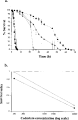
Fig. 2. Comparison of the toxicity of cadmium to a furcocercaria (Diplostomum spathaceum) and an echinostome cercaria (Echinoparyphium recurvatum). Cercariae were exposed using protocols devised by Morley et al. (2001 c) at 20 °C in soft water (25 mg/l CaCO3, pH 7·85) (HMSO, 1969). a. Toxicity over time. ([bull ] – Control D. spathaceum, [utrif ] – 100 μg/l Cd exposure of D. spathaceum, [squf ] – 10000 μg/l Cd exposure of D. spathaceum, ○ – Control E. recurvatum, [utri ] – 100 μg/l Cd exposure of E. recurvatum, □ – 10000 μg/l Cd exposure of E. recurvatum.) b. Comparison of the relative susceptibility of D. spathaceum ([bull ]) and E. recurvatum (○) using a survival index – Survival index<1 (-----) is reduced survival compared to control.
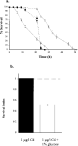
Fig. 3. Comparison of the survival of Echinoparyphium recurvatum cercariae exposed to cadmium in either soft water (25 mg/l CaCO3, pH 7·85)(HMSO, 1969) or soft water and 1% glucose at 20 °C. Cercariae were exposed using protocols devised by Morley et al. (2001 c). a. Survival over time ([bull ] – Control, [squf ] – 1 μg/l Cd, ○ – Glucose control, [utri ] – Glucose+1 μg/l Cd). b. Comparison of the relative survival of cadmium exposed cercariae in control and 1% glucose conditions using a survival index (see Fig. 2 for details). Note Survival index<1 (-----) is reduced survival compared to control.

Fig. 4. Viability of Echinoparyphium recurvatum metacercarial cysts exposed to 100 μg/l Cd/Zn mixture for 5 days in laboratory-bred Lymnaea peregra. Snails were exposed to 50 cercariae for 1 hour in soft water (25 mg/l CaCO3, pH 7·85) (HMSO, 1969). After 72 h acclimation period, to ensure full cyst development, snails were exposed to toxicant in 500 ml of soft water for five days at 20 °C with daily water changes. Unviable cysts were identified by their granular and opaque appearance. A – viable cysts, D – dead cyst (Bar=125 μm).

Fig. 5. Autometallographic localisation of zinc on free-living digeneans using protocols devised by Danscher et al. (1987) and modified by Morley et al. (2003 c). Parasites were exposed to 10000 μg/l Zn for 30 min. Zinc is visualised as black deposits. a. Diplostomum spathaceum cercariae showing accumulation of zinc in the cephalic region (arrow) (bar=50 μm). b. D. spathaceum cercariae showing accumulation of zinc in areas associated with sensory receptors on the body (arrows) (bar=50 μm). c. D. spathaceum cercariae showing accumulation of zinc within the ducts of the penetration glands (arrow) (bar=50 μm). d. Schistosoma mansoni miracidia showing accumulation of zinc on the tegumental surface as large deposits (big arrow) or smaller ‘pin-point’ deposits (small arrows) (bar=50 μm).
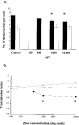
Fig. 6. Comparison of the infectivity of Echinoparyphium recurvatum cercariae to Lymnaea peregra from two distinct parasite/host strains (Bushy Park and Kelsey Park/Great Ouse strains) after exposure to zinc in the same synthetic hard water medium (250 mg/l CaCO3, pH 8·00) (HMSO, 1969). a. Mean number of metacercarial cysts per snail (□ – Bushy Park strain, [squf ] – Kelsey Park/Great Ouse strain). Direct comparison of differing effects using a transmission index (T.I.), ○ – Bushy Park strain, [bull ] – Kelsey Park/Great Ouse strain. T.I.>1=increased transmission, T.I.<1=reduced transmission. Transmission index calculated according to Morley et al. (2002 a). * – Significantly reduced transmission compared to controls. Error bars are standard error. Data derived from Evans (1982 a) (Kelsey Park/Great Ouse strain) and Morley et al. (2002 a) (Bushy Park strain).

Fig. 7. Cercarial emergence of Diplostomum spathaceum from Lymnaea stagnalis exposed to zinc in soft water (25 mg/l CaCO3, pH 7·85) (HMSO, 1969) at 20 °C. ([bull ] – Control, [utrif ] – 1000 μg/l Zn, [squf ] – 100 μg/l Zn.) Exposure was undertaken using protocols devised by Morley et al. (2003 a). Error bars are standard error.
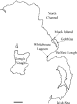
Fig. 8. Location of Littorina saxatilis sampling sites in Northern Ireland. Prevalence of digeneans was 35·8% at Whitehouse Lagoon, 1·6% at Gobbins, and 26·6% at Muck Island (Gull colony). Data from Saville (unpublished). Scale bar=10 km.

Fig. 9. Location of Hydrobia ulvae sampling sites in Northern Ireland. Prevalence of digeneans was 2·9% at Greyabbey, 4·1% at Ards, 6·3% at Macedon Point, 11·9% at Hollywood, and 23·6% at Tiphead (Belfast municipal dump). Data from Strain (1995). Scale bar=5 km.

Fig. 10. Comparison of the (a) prevalence of Parorchis acanthus and (b) the occurrence of imposex in Nucella lapillus between two harbours (Warrenpoint and Rostrevor) and a mid-point in Northern Ireland.
 You have
Access
- 80
- Cited by