Introduction
Brazil is experiencing the same increase in the proportion of elderly people (60 years and more) in its population as other countries (FIBGE, 2008). Projections indicate that by 2025 the Brazilian population will contain 31.2 million individuals who are at least 60 years of age (United Nations Organization, 1985). Data from 1992 in Brazil revealed an average life expectancy of 67.3 years, which is two times greater than that at the beginning of the century (Kalache et al., Reference Kalache, Veras and Ramos1987); in 2006, the average life expectancy was estimated at 72.3 years (FIBGE, 2008).
There is a growing interest in studying mental disorders in the elderly, among which depression is recognized as a serious public health problem because it is the most frequent cause of emotional suffering and reduced quality of life (Blazer, Reference Blazer2003). A review of prevalence studies of community-dwelling elderly revealed values of 1.8% for major depression, 9.8% for minor depression, and 13.5% for clinically significant depressive symptoms (CSDS), demonstrating the clinical importance of episodes with symptoms of less severity and intensity among the elderly (Beekman et al., Reference Beekman, Copeland and Prince1999). In addition, depression in clinical populations has been shown to range from 5% to 10% among outpatients and 9% to 16% among hospitalized patients, generating an increase in mortality and of treatment costs (Katon, Reference Katon2003).
Despite reports demonstrating a decrease in the rate of prevalence of major depression among the elderly in the community (Blazer, Reference Blazer and Schneider1994), the estimates for Brazil tend to vary. In large part, this variation depends on the diagnostic instruments used, on the cutoff points and on the severity of the evaluated symptoms (Blay et al., Reference Blay, Andreoli, Fillenbaum and Gastal2007). The findings reveal that CSDS and atypical depression are more frequent in the elderly because the conventional instruments for identifying depression in epidemiological studies tend to be less appropriate in this population (Barcelos-Ferreira et al., Reference Barcelos-Ferreira, Junior, Nakano, Steffens, Litvoc and Bottino2009). In addition, the coexistence of cognitive deficits and mood problems may mask signs of functional disorders, impairing the identification of subsyndromal symptoms (Ávila and Bottino, Reference Ávila and Bottino2006).
Regarding gender, the prevalence of depression in the elderly tends to be greater among women (Cole and Dendukuri, Reference Cole and Dendukuri2003). However, a systematic review and meta-analysis of the prevalence and of the factors associated with disorders and depressive symptoms among elderly Brazilians who reside in the community has not yet been published.
The present study has the following objectives: (i) perform a survey of studies from 1991 to 2009 of the prevalence of depressive disorders (major depression and dysthymia) and CSDS in elderly Brazilians residing in the community; (ii) determine depression prevalence (variation range and mean value) and identify associated factors (sociodemographic and clinical factors); and (iii) develop a meta-analysis to indicate the combined prevalence and the influence of gender (OR and CI) on the depressive morbidity among elderly Brazilians in the community.
Methods
Search for studies
By means of a systematic review, studies were identified that were published between January 1991 and July 2009 and extracted from the Medline, LILACS and SciELO databases. In the SciELO database, the terms “depression or dysthymia or depressive symptoms”, “prevalence or epidemiology” and “elderly” were used in “all indices”. For the search in LILACS, the terms “depression or dysthymia or depressive symptoms” were used as “subject descriptors”, and “epidemiology or prevalence” and “elderly” were used as “text words”. For the search in Medline, the terms “prevalence or epidemiology” and “community elderly” were used in “all fields”, while “1991 to 2009” was used as the “publication date”, and “depression or dysthymia [sic] or depressive symptoms” and “Brazil” were included as “text words”.
Another strategy utilized was a manual search of the bibliographic references of the identified and selected articles. The search was conducted through July 2009. The article selection was based on objectives defined a priori for this review; articles were disregarded if, in spite of appearing in the search results, they did not actually examine the epidemiology of depression in the elderly. To widen the search, chapters from books and postgraduate theses that were indexed in the LILACS database were analyzed. The survey and selection of studies were accomplished in two stages followed by the identification of studies that could be included in the meta-analysis. The study search was performed by one of the authors alone (Barcelos-Ferreira), though it was repeated three times on different days, in an attempt to ensure a proper search.
After searching on the above-mentioned terms, all population-based studies of adults aged 60 years and older were identified, and then those that were published in Portuguese, English or Spanish were selected. In the next stage, original studies were selected that reported prevalence of major depression, dysthymia or depressive symptoms in accordance with the diagnostic criteria of DSM-IV and/or ICD-10 and/or standardized questionnaires (for the first two) or depression screening scales (for CSDS).
For the meta-analysis, all those studies that provided sufficient information for data comparison and fulfilled the selection criteria were included. The sample size and composition were considered.
Data description
The studies were systematically selected, separated by diagnosis, and then included in the meta-analysis, consisting of three groups: major depression, dysthymia and CSDS. The authors, the geographic Brazilian origin of the samples (state), the sample size, the instruments used for data collection and for diagnosis, the factors associated with the diagnosis, and data on prevalence by gender, when available, were all identified. The prevalence rates were obtained directly from the articles and were requested from the authors of just two studies (Cupertino et al., Reference Cupertino2006; Roriz-Cruz et al., Reference Roriz-Cruz2007).
Statistical analysis
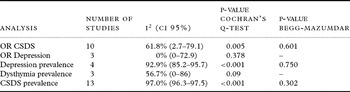
The meta-analysis was conducted using the program Stats Direct 2.7.2. The level of significance used was α = 5%. With the goal of verifying the homogeneity among the studies, p values were calculated by the Cochran's Q-test or by the I2 index (Table 1). Heterogeneity was verified among almost all of the studies, with the exception of the analysis of the odds ratio for depression. Therefore, we decided to use the random effects model for all meta-analyses. It is worth noting that the use of this model for the odds ratio of depression yielded values that were similar to those obtained with the fixed effects model in spite of a lack of heterogeneity related to the models we ran. When possible, publication biases were checked using a Begg-Mazumdar test (based on the Kendall Tau). It is known that at least four studies are necessary in order for this test to be conducted; thus, it was not possible to apply this test for the odds ratio analysis of depression or for the prevalence of dysthymia. In all the other cases (odds ratio of CSDS, prevalence of major depression and of CSDS), it was concluded that there was no publication bias.
Analysis of the homogeneity among the studies

OR = odds ratio; CSDS = clinically significant depressive symptoms
Results
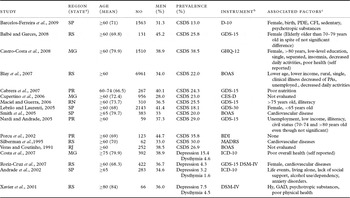
Initially, 129 studies were found (45 from Pubmed, 31 from SciELO, and 53 from LILACS). After excluding overlapping studies and articles that did not evaluate depressive morbidity, the initial set contained 28 studies, of which eight were excluded that used outpatient, hospital, or institutional samples (Almeida et al., Reference Almeida1997; Paradela et al., Reference Paradela, Lourenço and Veras2005; Leite et al., Reference Leite, Carvalho, Barreto and Falcão2006; Oliveira et al., Reference Oliveira, Gomes and Oliveira2006; Duarte and Rego, Reference Duarte and Rego2007; Borges et al., Reference Borges, Benedetti and Mazo2007; Irigaray and Schneider, Reference Irigaray and Schneider2007; Siqueira et al., Reference Siqueira2009) and one study in which the authors investigated depression symptoms alone, which did not give an average prevalence that would allow its conclusion in the data analysis (Gazalle et al., Reference Gazalle, Lima, Tavares and Hallal2004). Three studies that worked with the same sample group were analyzed together (Cupertino et al., Reference Cupertino2006; Batistoni et al., Reference Batistoni2007; Fortes-Burgos et al., Reference Fortes-Burgos, Neri and Cupertino2008), and only the study that yielded information that corresponded to the objective of this research was cited (Cupertino et al., Reference Cupertino2006). The final analysis included 17 studies (Table 2): 13 with CSDS, one with major depression alone and three with major depression and dysthymia incorporating a total of 15,491 evaluated elderly patients. The average age of subjects reported in the 13 studies varied from 66.5 years (Cabrera et al., Reference Cabrera2007) to 84 years old (Xavier et al., Reference Xavier, Ferraz, Bertollucci, Poyares and Moriguchi2001). The manual search for bibliographic references in the identified articles, in chapters of books and in postgraduate theses did not add any studies that fit the criteria for inclusion in the present review.
Studies of the prevalence of depression, dysthymia and CSDS in elderly Brazilians in the community

aMG = Minas Gerais; PR = Parana; RJ = Rio de Janeiro; RN = Rio Grande do Norte; RS = Rio Grande do Sul; SP = São Paulo.
bD-10 = Depression Scale; CES-D Scale = Center for Epidemiologic Studies Depression Scale; GDS = Geriatric Depression Screening Scale; MADRS = Montgomery Asberg Depression Scale; BDI = Beck Depression Inventory; BOAS = Brazilian version of the Older Americans Resources and Services (OARS); GHQ-12 = 12-item General Health Questionnaire in Community-Dwelling Older Adults; ICD-10 = International Classification of Diseases, 10th revision; DSM-IV = Diagnostic and Statistical Manual of Mental Disorders, 4th edition.
cPDE = Previous Depressive Episode; CFI = Cognitive and Functional Impairment; PAs = Physical Activities, Hy = hypertension; GAD = General Anxiety Disorder.
The geographic Brazilian origin of the samples were the states Minas Gerais (MG) (Cupertino et al., Reference Cupertino2006; Costa et al., Reference Costa, Barreto, Uchoa, Firmo, Lima-Costa and Prince2007; Castro-Costa et al., Reference Castro-Costa, Lima-Costa, Carvalhais, Firmo and Uchoa2008), Parana (PR) (Porcu et al., Reference Porcu, Fritzen, Cano, Bemvides and Colombari2002; Nardi and Andrade, Reference Nardi and Andrade2005; Cabrera et al., Reference Cabrera2007), Rio de Janeiro (RJ) (Veras and Coutinho, Reference Veras and Coutinho1991), Rio Grande do Norte (RN) (Maciel and Guerra, Reference Maciel and Guerra2006), Rio Grande do Sul (RS) (Silberman et al., Reference Silberman1995; Xavier et al., Reference Xavier, Ferraz, Bertollucci, Poyares and Moriguchi2001; Blay et al., Reference Blay, Andreoli, Fillenbaum and Gastal2007; Roriz-Cruz et al., Reference Roriz-Cruz2007; Balbé and Garces, Reference Balbé and Garces2008), and São Paulo (SP) (Andrade et al., Reference Andrade, Walters, Gentil and Laurenti2002; Lebrão and Laurenti, Reference Lebrão and Laurenti2005; Smith et al., Reference Smith2005; Barcelos-Ferreira et al., Reference Barcelos-Ferreira, Junior, Nakano, Steffens, Litvoc and Bottino2009). The MG state had higher prevalences of major depression (15.4%), dysthymia (4.6%) and CSDS (38.5%). All of the MG studies were carried out by Castro-Costa et al., Reference Costa, Barreto, Uchoa, Firmo, Lima-Costa and Prince2007.
After initial selection, all studies were read in full. Only two studies had samples of fewer than 100 individuals (Silberman et al., Reference Silberman1995; Nardi and Andrade, Reference Nardi and Andrade2005). The studies by Xavier et al. (Reference Xavier, Ferraz, Bertollucci, Poyares and Moriguchi2001) and Cabrera et al. (Reference Cabrera2007) were retained because they used samples of restricted age groups consisting of octogenarians and elderly between 60 and 74 years old, respectively. It was necessary to include two studies – Costa et al. (Reference Costa, Barreto, Uchoa, Firmo, Lima-Costa and Prince2007) and Castro-Costa et al. (Reference Castro-Costa, Lima-Costa, Carvalhais, Firmo and Uchoa2008) – because, in spite of referring to the same sample, they separately identified the prevalence of major depression/dysthymia and CSDS respectively.
For the diagnosis of CSDS, the selected studies utilized the following depression screening scales for the elderly: (a) the Brazilian version of the Center for Epidemiologic Studies Depression (CES-D) scale (Silveira and Jorge Reference Silveira, Jorge, Gorenstein, Andrade and Zuardi2000); (b) Montgomery-Asberg Depression Rating Scale (MADRS) (Montgomery and Asberg, Reference Montgomery and Asberg1979); (c) the 15 and 30 item versions of the Geriatric Depression Screening Scale (GDS) (Yesavage et al., Reference Yesavage1983; Shah et al., Reference Shah, Herber, Lewis, Mahendran, Platt and Bhattacharyya1997); and (d) the D-10 scale (Barcelos-Ferreira et al., Reference Barcelos-Ferreira, Junior, Nakano, Steffens, Litvoc and Bottino2009).
In some studies, the following instruments for diagnosis were used: (a) Composite International Diagnostic (CIDI) (Miranda et al., Reference Miranda, Mari, Ricciardi, Arruda, Stefanis, Rabavillas and Soldatos1990); (b) Structured Clinical Interview (SCID) (First et al., Reference First, Spitzer, Gibbon and Williams1998); (c) Schedules for Clinical Assessment in Neuropsychiatry (SCAN) (Brugha et al., Reference Brugha1999); and (d) Brazilian version of the Older Americans Resources and Services (OARS) mental health screening questionnaire (BOAS) (Blay et al., Reference Blay, Ramos and Mari1988). The studies that provided a diagnosis of major depression and dysthymia utilized interviews based on the criteria of the International Classification of Diseases, 10th revision (ICD-10) (World Health Organization, 1992), and the Diagnostic and Statistical Manual of Mental Disorders, 4th edition (DSM-IV) (American Psychiatric Association, 1994).
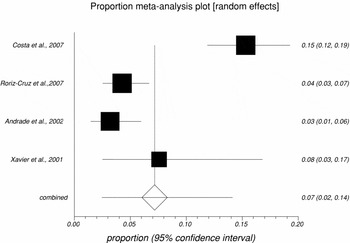
In relation to major depression, the four selected studies evaluated a total of 1,163 elderly people with a prevalence between 3.0% (Andrade et al., Reference Andrade, Silveira and Gentil2001) and 15.0% (Costa et al., Reference Costa, Barreto, Uchoa, Firmo, Lima-Costa and Prince2007) and a combined estimate of 7.0% (95%CI: 2.0–14.0) (Figure 1). In two studies, the prevalence was less than 5.0% (Andrade et al., Reference Andrade, Walters, Gentil and Laurenti2002; Roriz-Cruz et al., Reference Roriz-Cruz2007), and in the other two it was greater than 7.0% (Xavier et al., Reference Xavier, Ferraz, Bertollucci, Poyares and Moriguchi2001; Costa et al., Reference Costa, Barreto, Uchoa, Firmo, Lima-Costa and Prince2007). All studies reported cardiovascular and other medical diseases as factors associated with higher rates of major depression. Additionally, association with being female was observed in two studies (Roriz-Cruz et al., Reference Roriz-Cruz2007; Costa et al., Reference Costa, Barreto, Uchoa, Firmo, Lima-Costa and Prince2007).
Combined prevalence of major depression

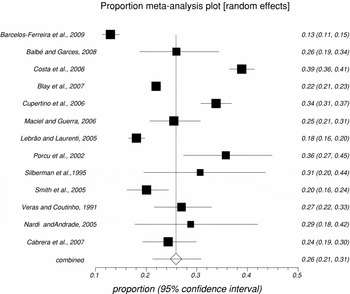
Grouping together the 13 studies that reported CSDS, 14,720 elderly people were evaluated with a prevalence that varied between 13% (Barcelos-Ferreira et al., Reference Barcelos-Ferreira, Junior, Nakano, Steffens, Litvoc and Bottino2009) and 39% (Castro-Costa et al., Reference Castro-Costa, Lima-Costa, Carvalhais, Firmo and Uchoa2008) with a combined estimate of 26% (95%CI: 21–32) (Figure 2). Just two of the 13 studies found a prevalence less than 20% (Lebrão and Laurenti, Reference Lebrão and Laurenti2005; Barcelos-Ferreira et al., Reference Barcelos-Ferreira, Junior, Nakano, Steffens, Litvoc and Bottino2009), and four studies yielded a prevalence greater than 30% (Silberman et al., Reference Silberman1995; Porcu et al., Reference Porcu, Fritzen, Cano, Bemvides and Colombari2002; Cupertino et al., Reference Cupertino2006; Castro-Costa et al., Reference Castro-Costa, Lima-Costa, Carvalhais, Firmo and Uchoa2008). In four studies, a significant association was observed between CSDS and cardiovascular diseases (Silberman et al., Reference Silberman1995; Smith et al., Reference Smith2005; Blay et al., Reference Blay, Andreoli, Fillenbaum and Gastal2007; Castro-Costa et al., Reference Castro-Costa, Lima-Costa, Carvalhais, Firmo and Uchoa2008) and between CSDS and female gender (Lebrão and Laurenti, Reference Lebrão and Laurenti2005; Costa et al., 2008; Balbé and Garces, Reference Balbé and Garces2008; Barcelos-Ferreira et al., Reference Barcelos-Ferreira, Junior, Nakano, Steffens, Litvoc and Bottino2009).
Combined prevalence of CSDS

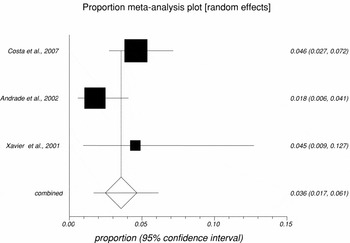
In relation to dysthymia, three studies were selected that evaluated a total of 741 elderly people with a prevalence of 1.6% (Andrade et al., Reference Andrade, Walters, Gentil and Laurenti2002), 3.9% (Xavier et al., Reference Xavier, Ferraz, Bertollucci, Poyares and Moriguchi2001) and 4.6% (Costa et al., Reference Costa, Barreto, Uchoa, Firmo, Lima-Costa and Prince2007) and a combined estimate of 3.5% (95%CI: 1.7–6.1) (Figure 3).
Combined prevalence of dysthymia

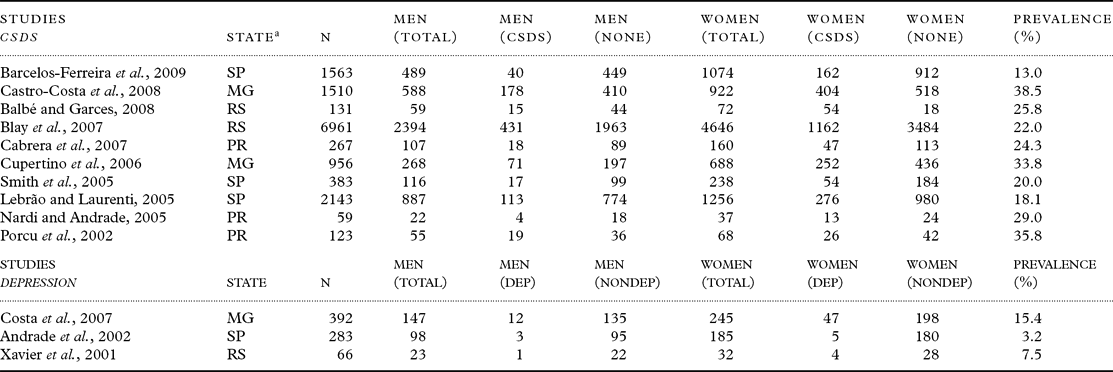
For the analysis of the influence of gender, the studies used were ones that provided the prevalence of depression in three studies (Xavier et al., Reference Xavier, Ferraz, Bertollucci, Poyares and Moriguchi2001; Andrade et al., Reference Andrade, Walters, Gentil and Laurenti2002; Costa et al., Reference Costa, Barreto, Uchoa, Firmo, Lima-Costa and Prince2007) and for case/non-case of CSDS in ten studies (Porcu et al., Reference Porcu, Fritzen, Cano, Bemvides and Colombari2002; Nardi and Andrade, Reference Nardi and Andrade2005; Lebrão and Laurenti, Reference Lebrão and Laurenti2005; Smith et al., Reference Smith2005; Cupertino et al., Reference Cupertino2006; Blay et al., Reference Blay, Andreoli, Fillenbaum and Gastal2007; Cabrera et al., Reference Cabrera2007; Castro-Costa et al., Reference Castro-Costa, Lima-Costa, Carvalhais, Firmo and Uchoa2008; Balbé and Garces, Reference Balbé and Garces2008; Barcelos-Ferreira et al., Reference Barcelos-Ferreira, Junior, Nakano, Steffens, Litvoc and Bottino2009).
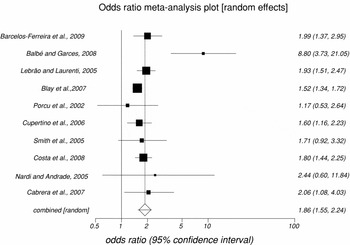
In relation to the CSDS for the calculation of the odds ratios, confidence intervals of 95% were used for each of the studies. Ten of the 13 selected studies were combined (Figure 4), estimating an odds ratio of 1.86 (95% CI: 1.55–2.24). Of the three remaining studies that did not provide a rate distribution by gender, two (Silberman et al., Reference Silberman1995; Maciel and Guerra, Reference Maciel and Guerra2006) reported a significant difference, and the other (Veras and Coutinho, Reference Veras and Coutinho1991) did not evaluate the influence of gender on the prevalence of depression among the elderly.
Odds ratio for gender prevalence of CSDS

Prevalence of depression and CSDS in women and men older community samples (to gender OR)
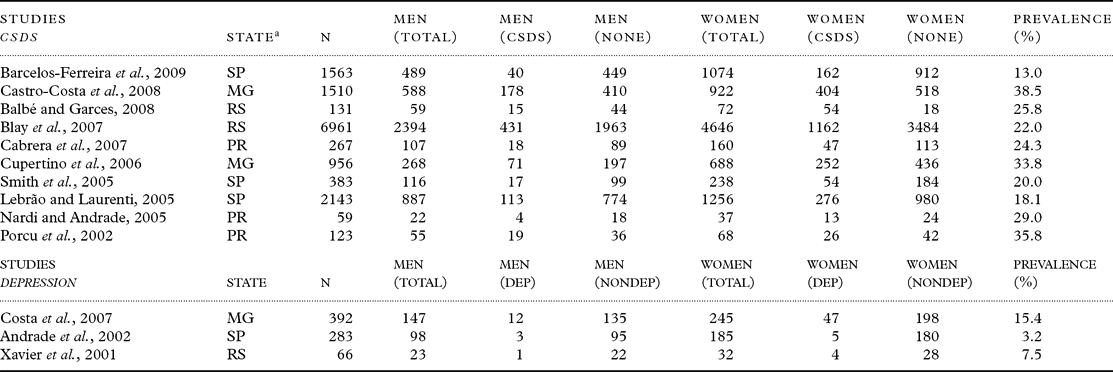
CSDS = clinically significant depressive symptoms; DEP = depression; NONDEP = not depressed.
aMG = Minas Gerais; PR = Parana; RS = Rio Grande de Sul; SP = São Paulo.
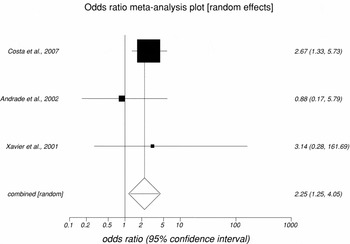
Three of the four studies (Figure 5) allowed for a calculation of an odds ratio for gender in major depression (Xavier et al., Reference Xavier, Ferraz, Bertollucci, Poyares and Moriguchi2001; Andrade et al., Reference Andrade, Walters, Gentil and Laurenti2002; Costa et al., Reference Costa, Barreto, Uchoa, Firmo, Lima-Costa and Prince2007), and the only study not included (Roriz-Cruz et al., Reference Roriz-Cruz2007) also reported a greater prevalence in the female gender. Only the study by Andrade et al. (Reference Andrade, Walters, Gentil and Laurenti2002) did not observe greater odds of depression in females. Odds ratios were obtained that were higher for a woman to have depression in relation to a man. The confidence intervals were 95% for each of the studies. The combined estimate of the odds ratios was 2.25 (95%CI: 1.25–4.05).
Odds ratio for gender prevalence of major depression

No articles were found among the reviewed studies that evaluated the odds ratio for dysthymia in relation to gender.
Discussion
In the present study, the prevalence of major depression (3.0%–15%) and CSDS (13%–39%) among elderly Brazilians in the community varied enormously, whereas the prevalence rates of dysthymia were found to be more similar (1.8%–4.6%) across studies. From a sociodemographic point of view, in all of the 17 selected studies the samples included a greater frequency of women, which is in agreement with current data in relation to the population of elderly Brazilians (FIBGE, 2007). Regarding age, in the 14 studies that provided the average sample age, a slightly higher frequency of depressive morbidity was observed for those people older than 70; the highest frequency of elderly Brazilians was found in the age group from 60 to 64 (FIBGE, 2007). The higher prevalence of depressive morbidity in Brazilian elderly was found by Castro-Costa et al. (Reference Costa, Barreto, Uchoa, Firmo, Lima-Costa and Prince2007).
CSDS screening
The majority of the selected studies evaluated CSDS, which were found to be more prevalent than major depression as reported in both international and Brazilian studies. The high prevalence of CSDS reinforces the importance of investigating subsyndromal depressive symptoms in the elderly, which have been associated with cardiovascular and other medical diseases (Barcelos et al., Reference Barcelos, Faria, Grossi, Moscoso and Bottino2007) and with the risk of developing major depression, which can reach 24% in just three months (Beekman et al., Reference Beekman, Deeg, Smit and van Tilburg1995). It is important to note that CSDS represents a broad category of individuals with depressive symptoms detected through screening scales, and may include those with syndromal depression, i.e. major or minor depression or dysthymia. The studies in the present review that evaluated these symptoms used depression screening scales for the elderly that were validated in the Brazilian population and applied by trained laymen interviewers. In this case, a possible explanation for the difference in prevalence found could be the psychometric differences among the scales, such as the use of various cutoff points that carry the sensitivity and specificity in each study. Among the scales used, D-10 (Barcelos-Ferreira et al., Reference Barcelos-Ferreira, Junior, Nakano, Steffens, Litvoc and Bottino2009) is the only one that has still not been validated; the other scales were applied using validated versions that were translated into Portuguese (Blay et al., Reference Blay, Ramos and Mari1988; Miranda et al., Reference Miranda, Mari, Ricciardi, Arruda, Stefanis, Rabavillas and Soldatos1990; Almeida and Almeida, Reference Almeida1999; Silveira and Jorge, Reference Silveira, Jorge, Gorenstein, Andrade and Zuardi2000; Wang et al., Reference Wang, Andrade and Gorenstein2005).
Major depression diagnoses
Among the selected studies on major depression, only two contained a diagnostic evaluation performed by a psychiatrist (Roriz-Cruz et al., Reference Roriz-Cruz2007; Costa et al., Reference Costa, Barreto, Uchoa, Firmo, Lima-Costa and Prince2007). In the study by Andrade et al. (Reference Andrade, Walters, Gentil and Laurenti2002), the diagnostic was obtained through the application of the Brazilian version of the Composite International Diagnostic Interview (CIDI) (Miranda et al., Reference Miranda, Mari, Ricciardi, Arruda, Stefanis, Rabavillas and Soldatos1990), which is a structured questionnaire that allows for the diagnosis of major depression according to the criteria of the DSM-IV. Xavier et al. (Reference Xavier, Ferraz, Bertollucci, Poyares and Moriguchi2001) also used a structured interview (the Structured Clinical Interview (SCID)) based on the DSM-IV criteria for the diagnosis of major depression.
Methodological divergences
Use of a variety of instruments across studies may have influenced the prevalence rates. Each instrument has its own validity and reliability may not be specific to the elderly population and may generate measurement biases. A study developed by Andrade et al. (Reference Andrade, Silveira and Gentil2001) found that with SCAN, CIDI had a higher specificity and a lower sensitivity for the diagnosis of depression, providing lower prevalences of depression. These characteristics of the instruments may explain the differences among the depression prevalence that were found in the studies by Costa et al. (Reference Costa, Barreto, Uchoa, Firmo, Lima-Costa and Prince2007) and the Brazilian (Blay et al., 2002) and international studies (Beekman et al., Reference Beekman, Copeland and Prince1999). The same argument can be used to interpret the lower prevalence of dysthymia observed by Andrade et al. (Reference Andrade, Walters, Gentil and Laurenti2002) compared with the study by Xavier et al. (Reference Xavier, Ferraz, Bertollucci, Poyares and Moriguchi2001).
Other methodological divergences that were found among the studies include the sampling method that was used (total population, randomized samples, and stratified samples), the response rates that vary significantly between 70% (Barcelos-Ferreira et al., Reference Barcelos-Ferreira, Junior, Nakano, Steffens, Litvoc and Bottino2009) and 99% (Blay et al., Reference Blay, Andreoli, Fillenbaum and Gastal2007), the evaluated age groups (average age over 70 years in 53% of the studies), and the heterogeneity of the associated factors that were researched. In addition, the greater prevalence of major depression and of depressive symptoms observed in the reviewed studies of elderly Brazilians, as with the international studies that include elderly people of Latin origin (Costa et al., Reference Costa, Barreto, Uchoa, Firmo, Lima-Costa and Prince2007; Castro-Costa et al., Reference Castro-Costa2007; Reference Castro-Costa, Lima-Costa, Carvalhais, Firmo and Uchoa2008; Steffens et al., Reference Steffens, Fisher, Langa, Potter and Plassman2009), could be explained in a sociocultural context where determined personality traits, for example, could justify a greater expression and/or communication of feelings and emotions as well as the search for medical treatment (Kempen et al., Reference Kempen, Jelicic and Ormel1997).
Risk factors for depressive morbidity
Depressive morbidity and age
The association between age and depression has received considerable attention, and in spite of having conflicting data in some studies (Newman, Reference Newman1989), the elderly tend to exhibit a lower prevalence of major depression and a greater prevalence of depressive symptoms in relation to young adults (Blazer, Reference Blazer and Schneider1994). Hasin and Link (Reference Hasin and Link1988) observed that the elderly have a greater difficulty recognizing symptoms than do young adults, which leads to lower detection of depression among the elderly. On the other hand, Gershon and Hamovit (Reference Gershon and Hamovit1987) proposed the influence of the period when people were born as a bias of the studies, considering that people who were born after World War II would have greater risk of depression. In addition, mortality and the risk of dementia increase with age, which can influence the prevalence of depression in the elderly because of the relation between depression and the risk of dementia and the greater probability of hospitalization and institutionalization, which would remove these patients from the community.
Among the studies evaluated in this review that examined CSDS, only two found a significant relationship between increased age (≥ 75 years) and a higher prevalence (Maciel and Guerra, Reference Maciel and Guerra2006; Castro-Costa et al., Reference Castro-Costa, Lima-Costa, Carvalhais, Firmo and Uchoa2008), while two other studies observed the contrary with younger elderly (≤ 65 years) observed to be more symptomatic (Lebrão and Laurenti, Reference Lebrão and Laurenti2005; Blay et al., Reference Blay, Andreoli, Fillenbaum and Gastal2007). In relation to major depression or dysthymia, the only study of octogenarians (Xavier et al., Reference Xavier, Ferraz, Bertollucci, Poyares and Moriguchi2001) found a high prevalence of depression and dysthymia; however, this study did not evaluate younger elderly in the same population. No adjustment was made for the age group variable in order to clarify the relationship between age and CSDS in elderly Brazilians in the community, and so this relationship remains unclear.
Depressive morbidity and cardiovascular disease
As far as the evaluated risk factors are concerned, a significant association was observed for major depression or CSDS with cardiovascular disease in eight of the 17 evaluated studies. In the remaining group of nine studies, three of them (Veras and Coutinho, Reference Veras and Coutinho1991; Porcu et al., Reference Porcu, Fritzen, Cano, Bemvides and Colombari2002; Cupertino et al., Reference Cupertino2006) did not assess the cardiovascular risk factor variable; in a further three studies this variable was not included on data analysis (Lebrão and Laurenti, Reference Lebrão and Laurenti2005; Nardi and Andrade, Reference Nardi and Andrade2005; Cabrera et al., Reference Cabrera2007); and finally, a negative finding was reported in three studies (Maciel and Guerra, Reference Maciel and Guerra2006; Balbé and Garces, Reference Balbé and Garces2008; Barcelos-Ferreira et al., Reference Barcelos-Ferreira, Junior, Nakano, Steffens, Litvoc and Bottino2009). This finding is in agreement with the international literature that observed depressive symptoms as an independent risk factor for increase in mortality (Krishnan et aI., Reference Krishnan, Hays and Blazer1997; Bottino, Reference Bottino2003; Steffens et al., Reference Steffens2006). In addition, the relationship between depression and cardiovascular risk factors has been termed “vascular depression” (Krishnan et aI., Reference Krishnan, Hays and Blazer1997), which is generally associated with an unsatisfactory response to medical treatment (Barcelos et al., Reference Barcelos, Faria, Grossi, Moscoso and Bottino2007).
Depressive morbidity and gender
In agreement with the current literature (Cole and Dendukuri, Reference Cole and Dendukuri2003), our study indicated a greater odds ratio among elderly women both for major depression and for CSDS. In addition, the present meta-analysis yielded evidence of a slightly higher influence of the female gender in the odds of major depression (OR = 2.25) when compared with the odds of CSDS (OR = 1.84) in the evaluated samples of the elderly.
Regarding the greater prevalence of CSDS and major depression among women, some authors have suggested possible explanations for this observation, such as sociocultural factors related to negative psychological experiences and a greater susceptibility to stressful events. In a recent study, Barry et al. (Reference Barry, Allore, Guo, Bruce and Gill2008) observed greater probability of depression, greater persistence of symptoms and lower rates of mortality among elderly American women compared to men. On the other hand, Weissman and Klerman (1997) suggested that the greater prevalence found in women could be explained by methodological (greater propensity to report symptoms), psychopathological (greater vulnerability to stressful events), and social (e.g. gender discrimination in the workplace) factors. According to Almeida (Reference Almeida1999), the rate of widowhood, social isolation and deprivation of estrogen could contribute to the higher prevalence of depression in women.
A Brazilian study showed that women possess a greater concern for their health and seek out health services more readily than men (Bertoldi et al., Reference Bertoldi, Barros, Hallal and Lima2004). In addition, various public health programs (prenatal and breast, colon and uterine cancer prevention) are directed at women, making them more subject to drug treatment and the adverse effects of medication. Among these medications, we can cite those that are used exclusively by women, such as oral contraceptives, hormone replacement and inter-uterine chemical devices.
Tuesca-Molina et al. (Reference Tuesca-Molina2003) suggested that the greater prevalence of depression in women could be the result of the higher number of responsibilities that they assume in society given their positions as wife, mother, teacher and caretaker of their families. According to data from FIBGE (2007), in Brazil these factors have a great impact on health because 5 million elderly women are head of their households, and this greater burden of responsibility is probably associated with higher stress and vulnerability to depression. Such factors could indicate possible reasons for the greater prevalence of CSDS and of major depression found in the present review.
Depressive morbidity, CFI and physical activity
In relation to other factors associated with depressive morbidity, Barcelos-Ferreira et al. (Reference Barcelos-Ferreira, Junior, Nakano, Steffens, Litvoc and Bottino2009) observed that greater cognitive and functional impairment and less physical exercise could be related to greater prevalence of CSDS in the elderly. The authors suggested risk factors that were potentially modifiable through public health programs, which could potentially lower the rates of depression among the elderly. The association between physical exercise and a lower prevalence of depression found in this study reproduces results observed in young adults (Harris et al., Reference Harris, Cronkite and Moos2006).
Brazilian and international data
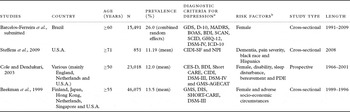
The present study found a greater prevalence of CSDS in relation to dysthymia and major depression, which has been observed in various studies. In a systematic review on the prevalence of depression among elderly people residing in the community, Beekman et al. (Reference Beekman, Copeland and Prince1999) grouped the prevalence for major and minor depression obtained from the selected studies into a category called “clinically significant depressive syndromes” and observed a prevalence of 13.5%. This finding is quite similar to the prevalence found by Barcelos-Ferreira et al. (Reference Barcelos-Ferreira, Junior, Nakano, Steffens, Litvoc and Bottino2009). Similar to the study by Beekman et al. (Reference Beekman, Copeland and Prince1999), the ten studies with CSDS that included OR calculations observed greater prevalence of CSDS among elderly women. In a recent study that evaluated 851 elderly Americans, Steffens et al. (Reference Steffens, Fisher, Langa, Potter and Plassman2009) found an average prevalence of 11.2% of “depressive syndrome”, whereas white and Hispanic elderly people had nearly three times the prevalence of depression found in African-Americans. As in the study by Beekman et al. (Reference Beekman, Copeland and Prince1999), Steffens et al. (Reference Steffens, Fisher, Langa, Potter and Plassman2009) grouped together major and minor symptoms of depression using the Composite International Diagnostic Interview-Short Form (CIDI-SF). A comparison among international and Brazilian studies is presented in Table 4.
Prevalence of depressive morbidity in community-dwelling elderly: a comparison of international and Brazilian studies

aGDS = Geriatric Depression Scale; CES-D Scale = Center for Epidemiologic Studies Depression Scale; D-10 = Depression Scale; RDC = Research Diagnostic Criteria; GMS-AGECAT = Geriatric Mental State Schedule Automated Geriatric Examination for Computer Assisted Taxonomy; Short CARE = shortened Comprehensive Assessment and Referral Evaluation; SCAN = Schedules for Clinical Assessment in Neuropsychiatry; SCID = Structured Clinical Interview; GHQ-12 = 12-item General Health Questionnaire in Community-Dwelling Older Adults; CIDI = Composite International Diagnostic Interview; BDI = Beck Depression Inventory; CIDI-SF = Composite International Diagnostic Interview–Short Form; NPI = Neuropsychiatric Inventory; DIS = Diagnostic Interview Schedule MADRS = Montgomery Asberg Depression Scale; BOAS = Brazilian version of the Older Americans Resources and Services (OARS) mental health screening questionnaire; ICD-10 = International Classification of Diseases, 10th revision; DSM-III = Diagnostic and statistical manual of mental disorders 3th edition; DSM-IV = Diagnostic and statistical manual of mental disorders 4th edition.
bPDE = Previous Depressive Episode; CFI = Cognitive and Functional Impairment.
Limitations of the study
The current review contains several limitations that deserve comment. The selected studies refer to very different time periods (1991–2009), which impeded adjustment to a reference group (e.g. taking the Brazilian population of elderly in 2000 as a reference could increase the representation of the evaluated population sample). In addition, the predominance of studies from the South and Southeast regions make the findings less generalizable to Brazilians who reside in other regions of Brazil. Another limitation was the methodological differences among the studies. Some studies evaluated relatively small sample sizes taken from primary care center settings that tend to increase the rates of depression (selection bias). The diversity of the diagnostic instruments used in the different studies makes it challenging to compare the results. The majority of studies found were cross-sectional, which does not permit investigation into any cause and effect relationship between the diagnostics and evaluated variables (design bias). Our review was restricted to studies of the community and did not investigate long-term-care residents, inpatients, or medical outpatients, where the prevalence of depressive morbidity tends to be much higher (Blazer and Hybels, Reference Blazer and Hybels2004). Finally, despite the variation in average ages (between 66.5 and 84 years) observed in the study, the odds ratio between depressive morbidity and age was not calculated due to the difficulty in obtaining data on this relationship from every reviewed study.
Conclusion
To summarize, the present review identified 17 studies with a total of 15,491 elderly participants, finding a prevalence greater than 7.0% for depression, 26.0% for CSDS, and 3.3% for dysthymia. The odds ratios for major depression and CSDS were greater among elderly women. The majority of the studies were carried out in the South and Southeast regions of Brazil. The high prevalence of CSDS and its significant association with cardiovascular disease reinforces the importance of evaluating the less intense depressive symptoms in elderly populations, particularly those with vascular risk factors. The fact that identification is likely by means of short questionnaires that are simple to apply makes the investigation of CSDS an important component in the evaluation of mental disorders in elderly populations in the community, which could also be used for primary care.
Longitudinal and transcultural studies are necessary to clarify the influence of factors such as medical illness (mainly cardiovascular disease) and socioeconomic class on the prevalence of depressive morbidity among elderly Brazilians as well as to explain the significant differences found between men and women and the magnitude of the impact of CSDS on people's health.
Conflict of interest
None.
Description of authors' roles
Ricardo Barcelos-Ferreira designed the study, formulated the search strategy, conducted the literature search, performed the meta-analysis, interpreted the findings and had primary responsibility for writing and revising the paper. Cássio Bottino and David Steffens assisted in revising and editing the paper. Finally, Rafael Izbicki undertook all the data analyses.
Acknowledgments
This work was supported by grants of the Conselho Nacional de Desenvolvimento Científico e Tecnológico (CNPq) and Ricardo Barcelos-Ferreira is supported by the Conselho Nacional de Desenvolvimento Científico e Tecnológico (CNPq). Processo: 143075/2009-8.