Basic Concepts:
1. Plasma levels and not doses are the best correlate of antipsychotic action due to variations in drug metabolism and in medication adherence.
2. As many patients are nonadherent with oral medication, the use of plasma antipsychotic levels can help quantify the current extent of antipsychotic exposure when levels are available. This information can facilitate the transition to the comparable long-acting injectable preparation.
Introduction
There is a lively debate in the recent literature focusing on whether psychotic patients who are in remission need be continued on long term antipsychotic medication.Reference Emsley 1 Central to this debate is the concept that not all first episode psychosis (FEP) patients have schizophrenia, and that mood disorders or substance exposure might underlie the initial psychotic presentation; however, when the data are examined for those with schizophrenia spectrum diagnoses, the outcomes are decidedly poor when antipsychotic treatment is withdrawn.Reference Karson, Duffy, Eramo, Nylander and Offord 2 Importantly, rates of treatment nonadherence are as high in FEP patients as in chronic patients,Reference Robinson, Woerner and Alvir 3 , Reference Agid, Foussias and Remington 4 with data from meta-analyses showing that long-acting injectable (LAI) antipsychotics reduce relapse risk compared to oral formulations in most long-term studies of 1 year duration or more,Reference Leucht, Heres, Kane, Kissling, Davis and Leucht 5 including those with FEP schizophrenia patients.Reference Karson, Duffy, Eramo, Nylander and Offord 2 , Reference Tiihonen, Haukka, Taylor, Haddad, Patel and Korhonen 6 The superiority of LAI treatment has not been seen in all studies, but a recent meta-analysis of 42 trials revealed that the illness severity and duration were significantly greater in patients prescribed LAI compared to oral antipsychotics across these studies, thereby moderating the potential robustness of the LAI antipsychotic effect.Reference Kishimoto, Hagi and Nitta 7
Although antipsychotic nonadherence rates in schizophrenia patients in all phases of the illness range from 44%–75%,Reference Robinson, Woerner and Alvir 3 2 factors contribute to underutilization of LAI preparations: (a) overestimation of the extent of oral medication adherenceReference Patel and David 8 , Reference Byerly, Thompson and Carmody 9 and (b) incorrect assumptions regarding the unacceptability of LAI antipsychotics in FEP patients.Reference Weiden, Schooler, Weedon, Elmouchtari and Sunakawa-McMillan 10 , Reference Subotnik, Casaus and Ventura 11 [For clinicians in private practice, regulations regarding medication storage and needle disposition can prove daunting, although it is worth noting that most states permit pharmacists to administer intramuscular injections, including gluteal injections if privacy provisions are in place (eg, screened or private areas).] While LAI trials focus primarily on relapse and rehospitalization as primary endpoints,Reference Leucht, Heres, Kane, Kissling, Davis and Leucht 5 clinicians must also be mindful that for many patients, including those with a history of oral medication adherence, an LAI preparation might be preferred for other reasons, such as the freedom from daily pill taking, which is an ongoing reminder of the illness.Reference Gray, Spilling, Burgess and Newey 12
Once a pattern of antipsychotic responsiveness has been established, the clinician must be prepared to prospectively offer an LAI option, to initiate an LAI when the opportunity arises, and to possess the knowledge to facilitate a smooth transition from oral to the corresponding LAI preparation. The purpose of this review is to provide a guide to the conversion from oral antipsychotics to their comparable LAI forms based on those LAI preparations available in the US.
Use of Plasma Antipsychotics Levels to Facilitate Oral to Depot Conversion
The decision to convert a patient from oral to LAI antipsychotics is based on 2 considerations: patient convenience or poor oral adherence. In either case, choosing the appropriate LAI dose is best accomplished by understanding the current extent of medication exposure. The prescribed oral dose is a poor indicator of medication exposure as the majority of schizophrenia patients are only partially adherent with their antipsychotic medication.Reference Remington, Teo, Mann, Hahn, Foussias and Agid 13 That clinicians grossly underestimate medication adherence has been shown in a number of studies using MEMS cap technology, an electronic method for recording each opening of a medication bottle.Reference Remington, Teo, Mann, Hahn, Foussias and Agid 13 Employing 70% as the adherence threshold, one study (n=61) demonstrated that 57% of chronic schizophrenia spectrum patients are nonadherent, while the patient self-report of nonadherence was only 5%, and the physician estimate of nonadherence was only 7%.Reference Byerly, Thompson and Carmody 9 A more recent MEMS cap study (n=52) found that only 48% of schizophrenia patients took 80% of their doses over 4 weeks, with 17.3% of patients taking ≤20% of their antipsychotic.Reference Remington, Teo, Mann, Hahn, Foussias and Agid 13 Importantly, this unappreciated pattern of partial adherence results in many patients being characterized as treatment-resistant who simply have subtherapeutic plasma levels. Among 99 outpatients identified as having treatment-resistant schizophrenia by their treating clinicians in the UK, 35% showed subtherapeutic levels, 34% of which were undetectable.Reference McCutcheon, Beck and D’Ambrosio 14 Plasma antipsychotic levels in the context of oral to LAI conversion thus serve 2 important functions: (a) determining whether lack of expected medication response is due to insufficient D2 antagonism for kinetic or adherence reasons and (b) providing a benchmark for LAI dosing.Reference Meyer 15
Therapeutic drug monitoring does have a cost, and in many practice settings administrative and reimbursement barriers may exist to obtaining plasma antipsychotic levels, as they are often deemed by many insurers to be “standard of care” only for clozapine-treated patients. Given the fact that the annual expense of certain LAIs will exceed the laboratory fee by a factor of 100 or more, a compelling argument can be made that denying routine plasma level monitoring may result in greater expense from a failed trial of the LAI agent. When drawn, these levels are often processed at a large central laboratory, so the waiting period for results can often be 1–2 weeks. Nonetheless, despite these hurdles, when obtainable, plasma levels can be very useful for the reasons noted above, especially due to the pervasive nature of medication nonadherence.
Plasma antipsychotic levels should be obtained as 12-hour morning trough values for medications at steady state (ie, after 5 half-lives). Table 1 provides the expected concentration:dose (C/D) relationships for oral antipsychotics that have existing LAI preparations. These data are drawn primarily from patients who are extensive metabolizers and are not receiving CYP enzyme inhibitors or inducers.Reference Meyer 15 Although ultrarapid metabolizer (UM) phenotypes exist for several CYP enzymes,Reference Zanger and Schwab 16 the prevalence is relatively low aside from CYP 2D6 (the 2D6 UM phenotype affects 5.5% of the population in Western Europe).Reference Ingelman-Sundberg 17 The determination of whether low plasma antipsychotic levels represent an adherence issue or a pharmacokinetic one is best resolved by repeating the trough plasma level: fluctuations of more than 30% typically represent poor adherence, assuming the levels were drawn at comparable times.Reference Velligan, Wang and Diamond 18 While genetic testing can identify CYP polymorphisms, the presence of heterozygosity among functional polymorphisms makes it difficult to predict the expected correlation between dose and plasma level, further emphasizing the value of directly measuring the plasma antipsychotic level.
Relationships between oral doses and plasma levels for antipsychotics with existing long-acting injectable formulations

Abbreviations: C/D=concentration/dose.
To Load or Not to Load
The basic kinetic parameters of LAI agents available in the US are described in Table 2. Not all LAIs can be loaded, so oral coverage is necessary during the initiation period, with the exception of the 3-month version of paliperidone palmitate (Trinza®), which is only intended for those on the monthly version of paliperidone palmitate (Sustenna®) for 4 months.Reference Ereshefsky and Mascarenas 19 For risperidone microspheres (Risperdal Consta®) oral coverage is needed for 21–28 days, for aripiprazole monohydrate (Maintena®) 14 days, and for aripiprazole lauroxil (Aristada®) 21 days. Haloperidol decanoate, fluphenazine decanoate, paliperidone palmitate monthly (Sustenna®), and olanzapine pamoate (Replrevv®) can all be loaded. The failure to adequately load these medications leads to one of two suboptimal outcomes: prolonged need for oral antipsychotic coverage or inadequate plasma antipsychotic levels when the oral regimen is withdrawn.Reference Ereshefsky and Mascarenas 19 Once on established LAI therapy, plasma levels are very useful during the first year of treatment in making dosing adjustments, especially if there are prior data on which plasma levels were tolerated and effective for the comparable oral preparation. For LAI antipsychotics, trough plasma levels are obtained the morning of, or up to 4 days prior to, the next injection.
Kinetic properties of depot antipsychotics

* Only for those on paliperidone palmitate monthly for 4 months. Cannot be converted from oral medication.
** See US FDA bulletin: (http://www.fda.gov/Drugs/DrugSafety/ucm356971.htm).
*** Dose adjustments may be necessary for CYP 2D6 poor metabolizers, or those on 2D6 or 3A4 inhibitors or 3A4 inducers.
Haloperidol decanoate
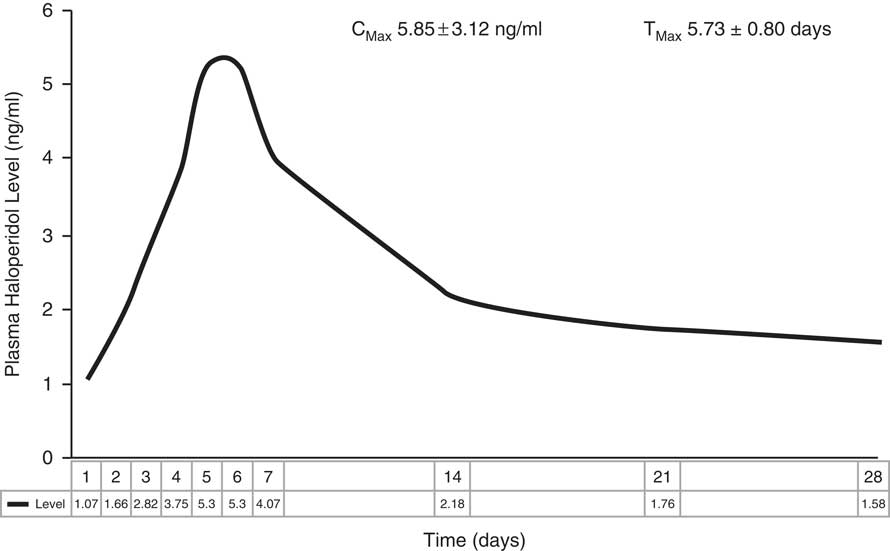
Haloperidol decanoate has become the most widely used typical depot antipsychotic due to its 4-week dosing schedule, reliable conversion formula from oral dosing, and established loading regimens.Reference Spanarello and La Ferla 20 Figure 1 provides the kinetic curve for a single 100 mg dose of haloperidol decanoate. As seen in Table 2, the mean Tmax for haloperidol decanoate is typically cited as 7 days, with a range of 3–9 days.Reference Jann, Ereshefsky and Saklad 21 Injection volumes greater than 300 mg (3 ml) are not tolerated due to the viscosity of the sesame oil vehicle, so patients who require higher doses must receive the monthly dose in split biweekly injections. Haloperidol decanoate is associated with local site reactions from the sesame oil vehicle.Reference Spanarello and La Ferla 20
Single dose kinetic profile of haloperidol decanoate 100 mg.Reference Chang, Juang and Lin 58

For patients who are currently on oral haloperidol, a plasma haloperidol level is helpful in adjusting the LAI dose after the oral is discontinued, assuming that the decanoate is appropriately loaded. As noted in Table 1, for 2D6 extensive metabolizers, the plasma haloperidol level (in ng/ml) is 0.8 times the daily oral dose (in mg). Repeating the haloperidol level is important if the result falls >30% above or below the expected value, as stable patients may not be 100% adherent.Reference Remington, Teo, Mann, Hahn, Foussias and Agid 13 Based on extensive conversion studies, a monthly haloperidol decanoate maintenance dose of 20 times the oral daily haloperidol dose provides the identical milligram equivalence to the oral preparation.Reference Jann, Ereshefsky and Saklad 21 This equivalence can be calculated as follows: oral haloperidol bioavailability is 65%, so a patient on 10 mg/d will have total drug exposure of 10 mg/d×30 days×65%=195 mg/month. Two conversion scenarios are outlined below, depending on whether it is possible to continue some oral haloperidol during the initiation phase.
a. Without oral overlap
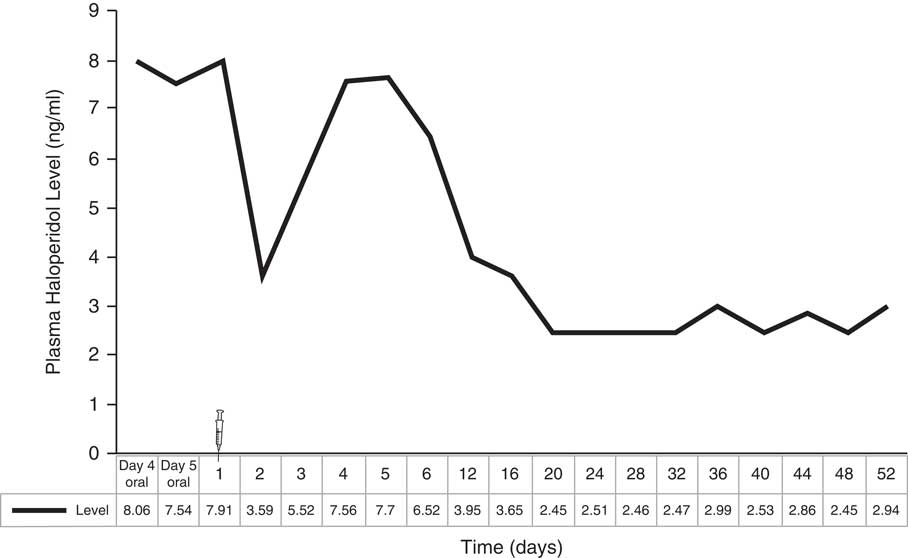
Figure 2 presents data from a conversion trial in which patients were stabilized on oral haloperidol 10 mg, and the oral medication was abruptly stopped when haloperidol decanoate 100 mg was started. The loading regimen was as follows: 4 weekly injections of 100 mg; 100 mg injections at weeks 6 and 8; monthly injections of 100 mg for weeks 12–52. As expected, plasma levels prior to depot loading were 0.78 times the oral dose (ie, 7.9 ng/ml). There are 2 important implications from this study:
a. When haloperidol decanoate 100 mg is administered weekly for 4 weeks, it provides coverage equal to 10 mg/d after the third week; however, one may need oral coverage of 5 mg/d during the first 1–2 weeks to maintain levels comparable to 10 mg/d before the first injection.
b. Based on the stable oral dose of 10 mg/d, the predicted maintenance dose should be 200 mg/4 weeks. In this study only 100 mg was used as the maintenance dose, and levels were <3 ng/ml rather than the expected >7 ng/ml. The maintenance dose of 20 times the oral dose should start at week 6 to achieve levels closer to that with the comparable oral dose.
Plasma haloperidol levels during 100 mg loading study without oral overlap.Reference Jann, Wei, Lin, Piao-Chien and Chang 59

b. With oral overlap
During the early phase of treatment, studies have shown that loading with 20 times the estimated oral dose for the first month, divided into 2 injections, was superior to lower depot doses, even with oral supplementation.Reference Ereshefsky, Toney, Saklad, Anderson and Seidel 22 Assuming the injections are administered 2 weeks apart, the oral may need to be continued for 2–4 weeks to provide adequate coverage. The maintenance dose should commence 2 weeks after the second loading injection.
Regardless of the initial loading strategy, once steady state is achieved the maintenance dose to keep plasma haloperidol levels stable is often less than the initial conversion formula, which is likely related to saturation of tissue compartments.Reference Jann, Ereshefsky and Saklad 21 Periodic monitoring of haloperidol plasma levels during the first year can facilitate dosing adjustments to prevent unnecessary plasma level creep.
Fluphenazine decanoate
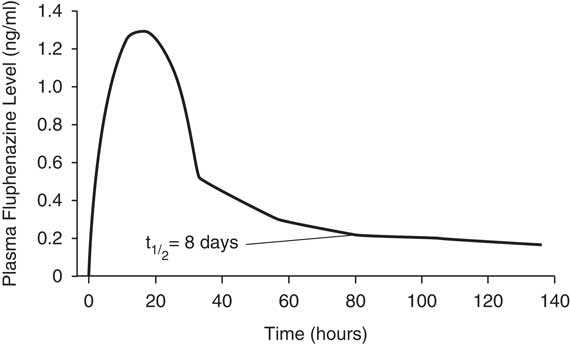
Many individuals with chronic psychoses require more dopamine blockade than can be provided with LAI atypical antipsychotics. Not uncommonly, patients may have had adverse experiences from haloperidol, often related to the acute administration of high doses that induced akathisia or dystonic reactions. Fluphenazine decanoate provides another source of potent D2 blockade for these patients as a biweekly injection, albeit in the same sesame oil vehicle. The kinetics of fluphenazine decanoate are quite different from haloperidol decanoate (Figure 3), with a mean TMax of 24 hours, as opposed to 7 days for haloperidol decanoate.Reference Meyer 23 Despite the widespread use of fluphenazine decanoate over the past 60 years, there is a paucity of information on the correlation between oral dose and plasma level, and between plasma levels and D2 occupancy. Table 1 provides the correlation between oral dose and expected plasma level, but this is based on a very small study.Reference Ereshefsky, Jann, Saklad, Davis, Richards and Burch 24
Single dose kinetic profile of fluphenazine decanoate.Reference Ereshefsky and Mascarenas 19

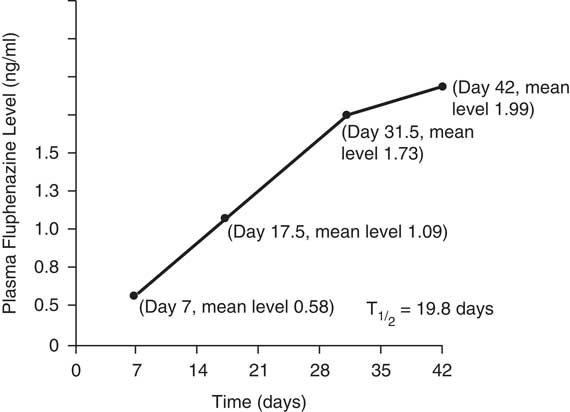
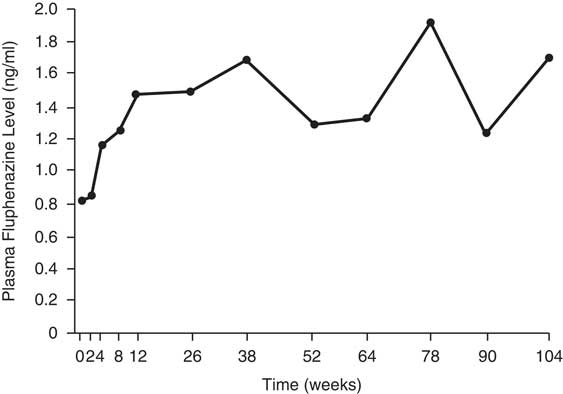
Unfortunately, there are also not well-established conversion formulas from the oral dose to the stable depot dose, so the initial approach before conversion is to obtain a plasma fluphenazine level. Based on the steady-state plasma level in fluphenazine decanoate trials, a good estimate of the necessary depot dose can be generated from the measured plasma fluphenazine level on oral therapy. As seen in Figure 4, the expected steady state plasma level in patients administered 50 mg weekly for 6 weeks should be approximately 2.0 ng/ml.Reference Jann, Ereshefsky and Saklad 21 This is consistent with data from patients on 25 mg every 2 weeks, where the steady-state trough plasma level during the first 6 months is approximately 1.0 ng/mL (Figure 5).Reference Meyer 23 As seen in Figure 5, over time the plasma fluphenazine level may drift as high as 1.6 ng/ml as tissue compartments are saturated further emphasizing the reason to periodically measure plasma levels and adjust the dose during the first year of treatment.Reference Marder, Midha and Van Putten 25
Plasma fluphenazine levels during weekly loading of fluphenazine decanoate 50 mg.Reference Jann, Ereshefsky and Saklad 21

Plasma fluphenazine levels during chronic dosing with fluphenazine decanoate 25 mg every 2 weeks.Reference Marder, Midha and Van Putten 25

Risperidone microspheres
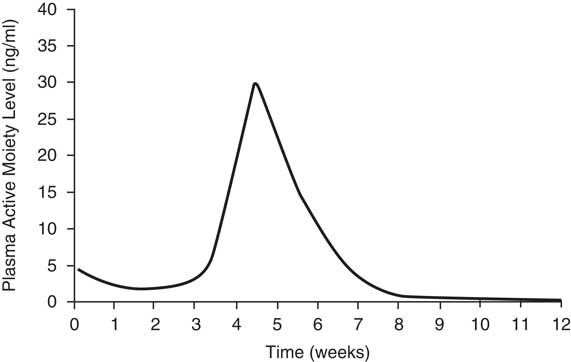
Long-acting injectable risperidone (Risperdal Consta®) uses a novel depot mechanism in the form of risperidone impregnated microspheres composed of cross-linked chains of lactide and polyglycolideReference Selmin, Blasi and DeLuca 26 available in 4 doses administered biweekly: 12.5 mg, 25 mg, 37.5 mg, and 50 mg.Reference Harrison and Goa 27 , 28 The rate-limiting step in systemic risperidone absorption is the elution of drug from the dissolution of the microspheres.Reference Selmin, Blasi and DeLuca 26 Figure 6 shows that the kinetics necessitate the use of oral medication overlap for the initial 3–4 weeks of LAI risperidone treatment.Reference Ereshefsky and Mascarenas 19
Single dose kinetics of long-acting injectable risperidone (25 mg).Reference Ereshefsky and Mascarenas 19

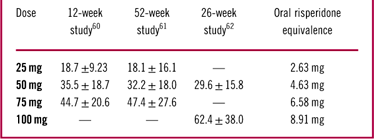
The initial target dose of LAI risperidone can be predicted from measured plasma levels, or plasma levels predicted from the oral risperidone dose. As seen in Table 1, the predicted active moiety plasma level for oral risperidone (ie, the sum of risperidone level plus 9-OH risperidone level) is almost exactly 7.0 times the oral dose.Reference de Leon, Sandson and Cozza 29 Extended release oral paliperidone is not commonly used, but there is also a conversion formula as noted in Table 1. For those on oral paliperidone ER, the only active agent is the drug itself, paliperidone (ie, 9-OH risperidone), and no risperidone will be measured in the patient’s system. Using the plasma active moiety level data from long-term LAI risperidone studies, one can match the depot dose to the desired plasma level derived from the oral paliperidone or risperidone dose (if not directly measured) (Table 3). While LAI risperidone doses up to 100 mg every 2 weeks have been studied, it should be noted that the maximum marketed dose is 50 mg, so higher biweekly doses (eg, 75 mg or 100 mg) may not be feasible from a cost perspective, since 2 biweekly injections would be needed.Reference Meyer 23
Long-acting injectable risperidone dose and active moiety (risperidone + 9-oh risperidone) plasma levels (ng/ml) (± SD)

Paliperidone palmitate
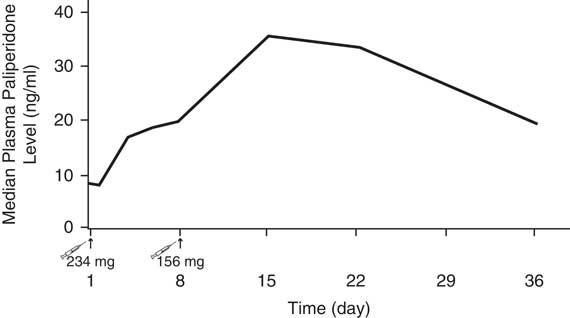
Risperidone’s active metabolite 9-OH risperidone (paliperidone) was converted into a LAI preparation by creating nanomolecular crystals of the ester paliperidone palmitate, generating a preparation with several advantages over LAI risperidone, including a 4-week dosing schedule, the ability to be loaded, and a 3-month injectable form for those on stable doses of the monthly paliperidone palmitate for at least 4 months.Reference Samtani, Vermeulen and Stuyckens 30 Moreover, paliperidone has limited susceptibility to clinically significant pharmacokinetic interactions, unlike fluphenazine, haloperidol, or risperidone, all of which are greatly influenced by 2D6 inhibitionReference Meyer 31 or p-glycoprotein induction.Reference Panagiotidis, Arthur, Lindh, Dahl and Sjöqvist 32 – Reference Hendset, Molden, Refsum and Hermann 34 To maximize plasma levels early in treatment, the first 2 loading injections of 234 mg and 156 mg are administered 1 week apart in the deltoid muscle, as gluteal absorption is approximately 28% lower.Reference Samtani, Vermeulen and Stuyckens 30 The plasma levels seen during the first 2 weeks are depicted in Figure 7. The failure to load paliperidone palmitate may result in unacceptably high nonresponse rates, a finding seen in an early maintenance study in which 78 mg monthly was started without a loading regimen leading to significant dropouts before the maintenance randomization phase.Reference Hough, Gopal, Vijapurkar, Lim, Morozova and Eerdekens 35 Maintenance doses are started 4 weeks after the second loading injection, with dosing based on prior medication requirements and tolerance.
Kinetics of paliperidone palmitate using standard loading regimen. 63

As seen in Table 4, during the pivotal 13-week fixed dose study the mean and median plasma paliperidone palmitate levels for those receiving the 234 mg maintenance dose were similar (28.4 ng/ml and 27.0 ng/ml, respectively), and the 75th percentile was 35.1 ng/ml, which corresponds to oral risperidone doses of approximately 4.0 mg and 5.0 mg, respectively.Reference Pandina, Lindenmayer and Lull 36 Naturalistic data from 217 patients treated with oral paliperidone ER show a dose correlation of 4.7 (±2.9) ng/ml per milligram.Reference Nazirizadeh, Vogel and Bader 37 However, this provides dosing guidance 2-fold higher than PK models of larger samples. The package insert thus recommends that paliperidone palmitate 117 month equals 6 mg of oral paliperidone. While the mean and median plasma levels for paliperidone palmitate are associated with modest drug exposure, population pharmacokinetic studies of paliperidone palmitate show wide variation, with at least 10% of individuals expected to have trough plasma levels ≥ 90 ng/ml, equivalent to nearly 13 mg/day of oral risperidone.Reference Samtani, Vermeulen and Stuyckens 30 For this reason, it is useful to obtain a trough plasma paliperidone level (ie, 9-OH risperidone level) at steady state to assess whether adjustments are needed, especially if there is lack of efficacy or unexpected tolerability problems. If loaded, steady state will generally be achieved after the third injection.Reference Samtani, Vermeulen and Stuyckens 30 As with all LAI antipsychotics, the trough level should be obtained on the morning of or within a few days prior to the next injection.
Paliperidone palmitate dose and plasma 9-OH risperidone levels in a 13-week trialReference Pandina, Lindenmayer and Lull 64

Olanzapine pamoate
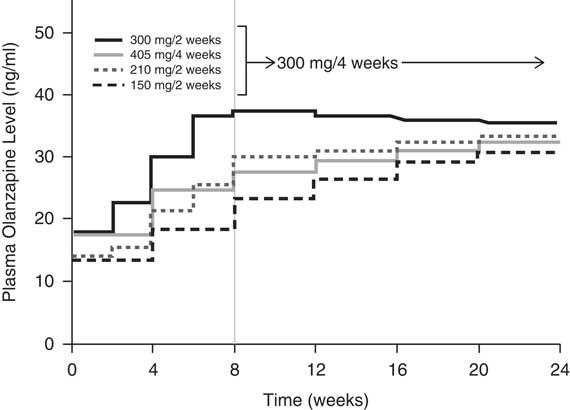
Olanzapine pamoate is a nearly insoluble salt designed for aqueous based injection, with multiple dosing options available.Reference Mamo, Kapur and Keshavan 38 , Reference Frampton 39 The kinetic profile of various approaches to achieve a steady state on a dose of 300 mg/4 weeks is illustrated in Figure 8.Reference Spanarello and La Ferla 20 The expected steady state plasma level for 300 mg/4 weeks is approximately 30 ng/ml, and for 205 mg/2 weeks or 410 mg/4 weeks is 45 ng/ml.Reference Detke, Zhao, Garhyan, Carlson and McDonnell 40 Severe sedation often requiring hospitalization occurred in approximately 2% of patients in the clinical trials with onset 30–300 minutes after injection.Reference Detke, McDonnell and Brunner 41 , Reference McDonnell, Detke and Bergstrom 42 While long-term inpatients may tolerate plasma olanzapine levels as high as 200 ng/ml after weeks of careful titration,Reference Meyer 15 an analysis of post-injection delirium/sedation syndrome cases with olanzapine pamoate revealed 10 instances of plasma olanzapine levels rising above 200 ng/ml within hours of injection, with 2 cases exceeding 600 ng/ml.Reference McDonnell, Detke and Bergstrom 42 For this reason there is FDA-mandated language in the package insert outlining a mandatory 3-hour observation period for post-injection sedation/delirium. 43
Kinetic profiles of different 8-week loading strategies of olanzapine pamoate.Reference Detke, Zhao, Garhyan, Carlson and McDonnell 40

Olanzapine pamoate should be loaded during the initial 8 weeks of treatment, with the manufacturer providing the following guidance: for those on 10 mg/d oral, load with 210 mg every 2 weeks or 405 mg every 4 weeks, while those on 15–20 mg/d of oral should be loaded with 300 mg every 2 weeks.Reference Frampton 39 , 43 As previously discussed, the problem with this approach is that patients might have unknown levels of medication adherence; moreover, smoking induces the activity of CYP 1A2, a major determinant of olanzapine clearance.Reference Meyer 31 For those on oral olanzapine, steady state plasma levels during a period of psychiatric stability are useful in deciding upon LAI olanzapine doses. In those whom levels cannot be obtained, the concentration:dose relationship between oral olanzapine and plasma levels is well-established (Table 1): for nonsmokers the expected level (in ng/ml) is 2.0 times the oral dose, and for smokers, 1.43 times the oral dose.Reference Bishara, Olofinjana, Sparshatt, Kapur, Taylor and Patel 44 , Reference Haslemo, Eikeseth, Tanum, Molden and Refsum 45 Thus, a nonsmoker on 10 mg/day would be expected to have a trough plasma level of 20.0 ng/ml, while a smoker on 20 mg/day would have a level of 28.6 ng/ml. Not surprisingly, in the clinical trials relapse rates were lowest in the group transitioning from 10 mg/d oral (estimated plasma level 20.0 ng/ml for nonsmokers) to an 8-week loading regimen of 300 mg every 2 weeks of olanzapine pamoate (1.5%) (estimated plasma level 37.0 ng/ml after the 8-week loading period), but relapse rates were 12-fold greater (18.8%) in those going from 20 mg/d oral (estimated plasma level 40.0 ng/ml for nonsmokers) to an 8-week loading regimen of 150 mg every 2 weeks of LAI olanzapine (estimated plasma level 20.0 ng/ml after 8 week loading period).Reference Detke, Zhao, Garhyan, Carlson and McDonnell 40 After 8 weeks, dosing options should be based on the prior stable plasma level, or the calculated plasma level derived from the oral dose and smoking status. The highest recommended dose is 300 mg every 2 weeks.Reference Frampton 39 , 43
Aripiprazole monohydrate
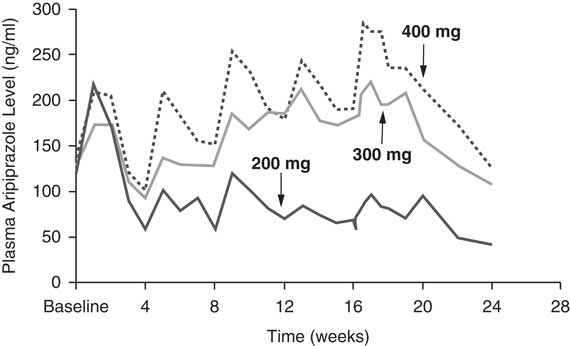
Approved in February 2013, Abilify Maintena® is a lyophilized powder of aripiprazole monohydrate crystals with mean particle size of 1–10 μm (primarily 2–4 μm).Reference Spanarello and La Ferla 20 The particles are poorly soluble, resulting in slow and prolonged dissolution and absorption. As with the other LAI atypicals the powder is mixed into an aqueous suspension at the time of administration.Reference Kane, Sanchez and Perry 46 , Reference Fleischhacker, Sanchez and Johnson 47 Based on data that show that 20 mg/d of oral aripiprazole achieves mean trough plasma levels of approximately 230 ng/ml, the 400 mg/month dose of aripiprazole monohydrate is modeled to provide similar exposure at steady state.Reference Mallikaarjun, Kane and Bricmont 48 The kinetic profile of aripiprazole monohydrate shown in Figure 9 demonstrates the need for oral coverage during the first 14 days of treatment. Even with oral supplementation for the first 14 days, plasma levels will drop to 100 ng/ml prior to the second injection, but these trough levels will rise with each subsequent injection (Figure 9).Reference Mallikaarjun, Kane and Bricmont 48 Due to the kinetics of aripiprazole monohydrate, the missed dose guidelines stipulate that 14-day oral supplementation should be resumed if the patient is more than 1 week late for his or her second or third injection, or more than 2 weeks late for the fourth or subsequent injections. 49
Kinetic profile of aripiprazole monohydrate with 2 weeks of oral aripiprazole 10 mg/day overlap.Reference Mallikaarjun, Kane and Bricmont 48

As with LAI risperidone, aripiprazole monohydrate cannot be loaded, but oral coverage is only needed for 14 days. 49 While the recommended starting dose is 400 mg with downward adjustment to 300 mg for intolerance, this is based on population averages. As noted previously, one can estimate the extent of current medication exposure based on conversion formulas provided in Table 1, or preferably by obtaining a plasma aripiprazole level. For example, a patient prescribed 20 mg/d of oral aripiprazole who is adherent should have a plasma level of approximately 230 ng/ml; however, this assumes that the patient is not only adherent, but is a CYP 2D6 extensive metabolizer and not taking medications that inhibit 2D6 or 3A4, or induce 3A4. If the result is much lower (eg, 160 ng/ml), and that plasma level is replicated, this information can serve as an excellent guide to dosing and would suggest that possibly the 300 mg/month dose might be appropriate.
Aripiprazole lauroxil
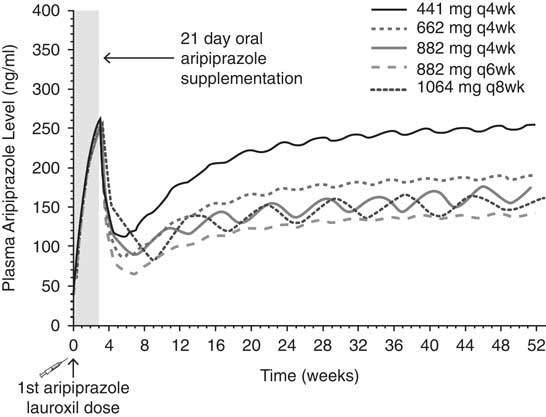
Approved in October 2015, Aristada® is a suspension of aripiprazole lauroxil that is slowly lysed to deliver systemic aripiprazole. 50 The highest dose (881 mg/4 weeks) is modeled to provide the equivalent of 20 mg/d oral (or slightly higher), while 662 mg/4 weeks, 882 mg/6 weeks, and 1064 mg/8weeks all equal 15 mg/d oral, and 441 mg/weeks equals 10 mg/d oral.Reference Hard, Mills, Sadler, Turncliff and Citrome 51 , Reference Hard, Mills, Sadler, Wehr, Weiden and von Moltke 52 Due to the long TMax (Figure 10), aripiprazole lauroxil cannot be loaded and oral supplementation is needed for 21 days; however, the long half-life of 53.9–57.2 days not only permits the 6- and 8-week dosing regimens as noted above, but significantly modifies the missed dose guidelines. For patients on 662 mg/4weeks, 882 mg/4 weeks, or 882 mg/6 weeks, no oral supplementation is needed until patients are over 1 month late for the injection (ie, >8 weeks since the last injection), and then only for 7 days. For those on 1064 mg/8 weeks, no oral supplementation is needed until patients are over 6 weeks late for the injection (ie, >10 weeks since the last injection), and then only for 7 days. For 441 mg/4 weeks, no oral supplementation is needed until they are over 2 weeks late for the injection, and then only for 7 days. If more than 2 months late (ie, >12 weeks since last injection) for any dose except 441 mg/4 weeks (>7 weeks since last injection), the full 21 days of oral supplementation is recommended.
Kinetic profile of aripiprazole lauroxil.Reference Hard, Mills, Sadler, Turncliff and Citrome 51

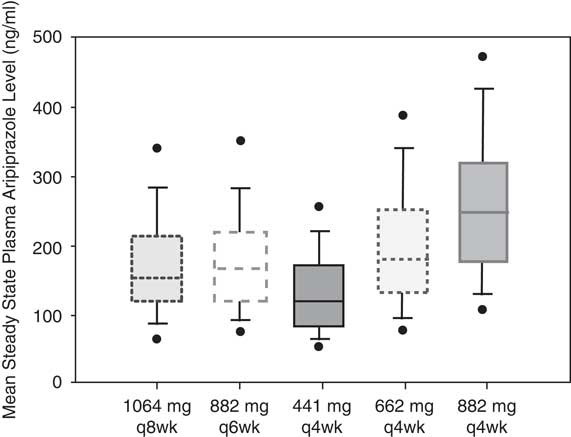
The recommended dose is based solely on the prior stable oral dose: 20 mg/d (or higher): 882 mg/4 weeks; 15 mg/d: 662 mg/4 weeks, 882 mg/6 weeks, or 1064 mg/8 weeks; 10 mg/d: 441 mg/4 weeks.Reference Hard, Mills, Sadler, Turncliff and Citrome 51 , Reference Hard, Mills, Sadler, Wehr, Weiden and von Moltke 52 One can estimate the extent of current oral aripiprazole exposure based on conversion formulas provided in Table 1, or preferably by obtaining a plasma aripiprazole level. Figure 11 provides the simulated average steady-state aripiprazole concentrations for aripiprazole lauroxil at the various doses. Utilizing the patient’s plasma level data, whether measured or calculated, one should be able to match the patient with the appropriate aripiprazole lauroxil dose.
Simulated average steady-state aripiprazole concentrations for aripiprazole lauroxil.Reference Hard, Mills, Sadler, Wehr, Weiden and von Moltke 52 Note: The median is indicated by the line within each box. The upper and lower box borders represent the 75th and 25th percentiles, the whiskers the 90th and 10th percentiles, and the dots the 95th and 5th percentiles, respectively.

Conclusions
Nonadherence is the norm among patients with schizophrenia and starts at the time of initial diagnosis. Given the availability of multiple LAI preparations, including several LAI atypical antipsychotics, clinicians have the opportunity to convert patients on oral medications to the comparable LAI formulation utilizing plasma antipsychotic levels as the guide. In an ideal world, plasma antipsychotic levels would be measured prior to conversion, since both adherence and kinetic issues may skew the expected oral dose:concentration relationship. In instances where this is not possible, the availability of known formulas that relate the oral dose to an expected plasma level can be extremely helpful in minimizing the guesswork when switching to an LAI antipsychotic. Importantly, clinicians should be mindful of not only the mean plasma levels for various depot doses, but the fact that many patients are not average, and that plasma level monitoring after converting to the LAI is very useful in making dosing adjustments during the first year of LAI therapy.
Optional Posttest and CME Certificate
CME Credit Expires: November 30, 2020
Posttest Study Guide
NOTE: The posttest can only be submitted online. The below posttest questions have been provided solely as a study tool to prepare for your online submission. Faxed/mailed copies of the posttest cannot be processed and will be returned to the sender. If you do not have access to a computer, contact NEI customer service at 888-535-5600.
1. A loading regimen of haloperidol decanoate 100 mg administered weekly for 4 weeks will provide plasma levels equivalent to what daily oral dose:
A. 5mg
B. 10mg
C. 15mg
D. 20mg
2. For long-acting injectable antipsychotics, plasma levels should be obtained:
A. The day after an injection
B. Mid-way ( + /- 4 days) between injections
C. Morning of or up to 4 days prior to the next injection
3. Which of the following depot antipsychotics has the longest half-life?
A. Aripiprazole lauroxil
B. Aripiprazole monohydrate
C. Haloperidol decanoate
D. Olanzapine pamoate
E. Risperidone microspheres
4. Which of the following long-acting injectable antipsychotics can be loaded?
A. Aripiprazole monohydrate
B. Fluphenazine decanoate
C. Risperidone microspheres
D. A and B
E. A, B, and C
Optional Online Posttest and CME Certificate Instructions
There is no posttest fee nor fee for CME credits.
1. Read the article.
2. Complete the posttest and evaluation, available only online at www.neiglobal.com/CME (under “CNS Spectrums”).
3. Print your certificate (passing score = 70% or higher).
Questions? call 888-535-5600, or email CustomerService@neiglobal.com