





Nomenclature
- AEMS
-
active energy management strategy
- B
-
battery
- UAV
-
unmanned aerial vehicle
- ESC
-
electronic speed controller
- FC
-
fuel cell
- FNNSCP
-
fuzzy neural network sequential convex optimisation
- GPOPS
-
general purpose optimal control software
- GA
-
genetic algorithm
- LVB
-
low velocity baseline
- MPC
-
model predictive control
- PID
-
proportional–integral–derivative controller
- PEMS
-
passive energy management strategy
- DC
-
direct current
- PEMFC
-
proton-exchange membrane fuel cell
- PWM
-
pulse-width modulation
- 2D
-
two-dimensional
- 3D
-
three-dimensional
-
 $ {A}_{a}$
-
fuel cell single cell active area (
$ \mathrm{c}{\mathrm{m}}^{2}$
) -
$ a$
-
linear coefficient (
$ \mathrm{r}\mathrm{a}{\mathrm{d}}^{-1}$
) -
$ {C}_{BD}$
-
body drag coefficient (
$ \mathrm{k}\mathrm{g}/\mathrm{m}$
) - C
-
fuel cell equivalent capacitance (F)
- c
-
the chord length (m)
-
$ {c}_{l}$
-
lift coefficient (
$ -$
) -
$ {c}_{d}$
-
drag coefficient (
$ -$
) - D
-
drag (N)
-
$ {E}_{d}$
-
fuel cell voltage drop (with the fuel cell delay effect) (V)
-
$ {E}_{r}$
-
fuel cell Nernst voltage (V)
- E
-
fuel cell theoretical voltage (V)
-
$ {F}_{ESC\mathrm{\%}}$
-
a nonlinear function relating PWM to the percentage of voltage transmitted
- F
-
faraday constant (
$ 96,487\mathrm{C}/\mathrm{m}\mathrm{o}\mathrm{l}$
) -
$ g$
-
gravitational acceleration (
$ \mathrm{m}/{\mathrm{s}}^{2}$
) -
$ {I}_{m}$
-
electric motor current (A)
-
$ {I}_{FC}$
-
fuel cell current (A)
-
$ {I}_{0}$
-
electric motor no-load current (A)
- I
-
fuel cell operating current (A)
- i
-
fuel cell current density (
$ \mathrm{A}/\mathrm{c}{\mathrm{m}}^{2}$
) -
$ {i}_{0}$
-
fuel cell exchange current density (
$ \mathrm{A}/\mathrm{c}{\mathrm{m}}^{2}$
) -
$ {i}_{loss}$
-
fuel cell open circuit current losses (
$ \mathrm{A}/\mathrm{c}{\mathrm{m}}^{2}$
) -
$ {J}_{y}$
-
moment of inertia about the pitch axis (
$ \mathrm{k}\mathrm{g}{\mathrm{m}}^{2}$
) -
$ {K}_{T}$
-
the motor torque constant (
$ \mathrm{N}\mathrm{m}/\mathrm{A}$
) -
$ {K}_{V}$
-
the motor velocity constant (
$ \mathrm{r}\mathrm{p}\mathrm{m}/\mathrm{V}$
) -
$ {L}_{arm}$
-
the arm length from the centre of mass to the rotor (m)
- L
-
lift (N)
-
$ m$
-
fuel cell concentration loss coefficient (V)
- m
-
mass (kg)
-
$ \,\dot{\!m}$
-
mass flow rate (kg/s)
- N
-
fuel cell number of cells (
$ -$
) -
$ n$
-
fuel cell concentration loss coefficient (
$ {\mathrm{m}}^{2}/\mathrm{A}$
) -
$ N$
-
number of blades (
$ -$
) - Q
-
torque (Nm)
- rpm
-
revolutions per minute
-
$ r$
-
radial distance from the motor hub along the blade (m)
-
$ {R}_{m}$
-
internal resistance of electric motor (ohm)
-
$ {R}_{i}$
-
fuel cell ohmic resistances per cell (
$ \mathrm{o}\mathrm{h}\mathrm{m}-\mathrm{c}{\mathrm{m}}^{2}$
) -
$ {R}_{act}$
-
fuel cell activation resistance (ohm)
-
$ {R}_{con}$
-
fuel cell concentration resistance (ohm)
-
$ {R}_{ohm}$
-
fuel cell ohmic resistance (ohm)
- R
-
universal gas constant (J/mol-K)
-
$ {S}_{0}$
-
initial state
-
$ {S}_{f}$
-
final state
-
$ {t}_{f}$
-
final time (s)
- T
-
temperature (K)
- T
-
total thrust (N)
-
$ {T}_{j}$
-
thrust produced by the j-th rotor (N)
-
$ {V}_{c}$
-
fuel cell capacitor voltage (V)
-
$ {V}_{out,FC}$
-
output voltage from fuel cell (V)
-
$ {V}_{m}$
-
electric motor voltage (V)
-
$ {V}_{in}$
-
input voltage for electric motor (V)
-
$ {v}_{x}$
-
planar airspeed component (m/s)
-
$ {v}_{i}$
-
induced velocity at the propeller disk (m/s)
-
$ {v}_{0}$
-
induced velocity at the stream outlet (m/s)
-
$ v$
-
total airspeed (m/s)
-
$ {v}_{z}$
-
perpendicular airspeed component (m/s)
-
$ \,\dot{\!X}$
-
horizontal velocity of the UAV (
$ \mathrm{m}/\mathrm{s}$
) -
$ \ddot{X}$
-
horizontal acceleration of the UAV (
$ \mathrm{m}/{\mathrm{s}}^{2}$
) -
$ {X}_{j}$
-
the x-position of the propeller relative to the vehicle’s centre of mass (
$ \mathrm{m}$
) - X
-
horizontal position (m)
-
$ {u}_{pr}$
-
perpendicular inflow velocity component (m/s)
-
$ {u}_{pl}$
-
planar inflow velocity component (m/s)
-
$ u$
-
inflow velocity magnitude (m/s)
- u
-
control input vector
-
$ \ddot{Z}$
-
vertical acceleration of the UAV (
$ \mathrm{m}/{\mathrm{s}}^{2}$
) -
$ \dot{Z}$
-
vertical velocity of the UAV (
$ \mathrm{m}/\mathrm{s}$
) - Z
-
vertical position (m)


Greek symbols
-
$ \alpha $
-
difference between the section zero-lift line angle
$ \theta $
and the inflow angle
$ \phi $
(rad) -
$ \alpha $
-
fuel cell anode electron transfer coefficient (
$ -$
) -
$ \phi $
-
inflow angle (relative to the rotor disk-rad)
-
$ \rho $
-
air density (
$ \mathrm{k}/{\mathrm{m}}^{3}$
) -
$ {\tau }_{e}$
-
fuel cell delay effect time constant (sec)
-
$ {\lambda }_{e}$
-
fuel cell delay effect gain constant (V/A)
-
$ \phi $
-
inflow angle (rad)
-
$ \omega $
-
angular velocity (rad/s)
-
$ {\eta }_{ESC}$
-
nonlinear ESC efficiency as a function of b and PWM (
$ -$
) -
$ \mathrm{\Theta }$
-
pitch angle (rad)
-
$ {\tau }_{\mathrm{\Theta }}$
-
the total pitch-axis torque on the vehicle (Nm)
-
$ {\eta }_{con}$
-
converter efficiency (
$ -$
) -
$ \psi $
-
blade azimuth angle (rad)


1.0 Introduction
Unmanned aerial vehicles (UAVs) that weigh less than 20 kg at take-off are referred to as small UAVs according to the North Atlantic Treaty Organization (NATO) [Reference Valavanis and Vachtsevanos3], which essentially classifies them into fixed-wing and rotary-wing based on the type of wing [Reference Cai, Dias and Seneviratne4]. Due to their superior manoeuvrability and vertical take-off, rotary-wing UAVs, also known as drones, can be handled more easily than fixed-wing UAVs and can be used in a variety of missions [Reference Hong, Lee, Cho, Baek, Kim and Chang5, Reference Hong, Lee, Cho, Baek, Kim and Chang6]. Rotary-wing UAVs are mainly chosen for applications such as monitoring, delivery, emergency rescue, next-generation transportation and photography [Reference Na, Li, Chen, Yao, Li, Liu and Wang7]. The UAV market is projected to grow from USD 30.2 billion in 2024 to USD 48.5 billion by 2029 [Reference Zhao, Jian and Yuan8]. However, drones need further research on energy-focused issues such as propulsion systems, limited flight time, energy management and energy-aware trajectory planning and control due to their relatively high-power consumption during hover, landing and take-off [Reference Fevgas, Lagkas, Argyriou and Sarigiannidis9–Reference Xu, Huangfu, Ma, Xie, Song, Zhao, Yang, Wang and Xu11].
Fuel cells play a crucial role in extending the flight time and endurance of small UAVs, as they have recently achieved a significant increase in specific energy density compared to other energy storage-converter systems, such as batteries and solar cells [Reference Çnar, Tunçel, Kandemir and Gözel12]. Proton exchange membrane fuel cells are the most widely used type in small UAVs due to their quick start-up time, high energy density, fast dynamic response and relatively low operating temperature [Reference Abdulrahman and Qasem13, Reference Bayrak and Kaya14]. In UAV applications, the main benefits of fuel cells are longer flight times, greater range and higher payload capacities. Compared to batteries, fuel cells require significantly less time to recharge because they are energy-conversion devices. In addition, even when indirect emissions are taken into account, fuel cells are more environmentally friendly than batteries. Consequently, fuel cell-powered UAVs have garnered substantial interest in the academic literature over the last decade. Since the Hornet, the first fuel cell UAV, was created in 2003, fuel cell-powered small UAVs are now commercially available [Reference Gong and Verstraete15]. However, some research gaps regarding energy management and energy-aware trajectory planning for hydrogen-powered UAVs still exist [Reference Çinar, Ignatyev and Zolotas16], despite improvements in fuel cell energy capacity and hydrogen storage technologies.
Although there are designs with only fuel cell-powered propulsion and real-flight studies, hybridisation with batteries is frequently chosen in fuel cell-powered propulsion systems to take advantage of the comparatively high power density of lithium-based batteries (examples of Refs [Reference Ward and Jenal17–Reference Apeland20]). Reference [Reference Wang, Zhao, Li, Wang, Huang, You and Becker21] presents a detailed evaluation of direct (uncontrolled) and indirect (controlled) hybrid propulsion for small UAVs. The present study considers direct (Setup B) and semi-active (Setup A) fuel cell (FC) and battery hybrid configurations in terms of energy-aware trajectory planning since they do not require sophisticated energy management techniques. While energy-aware trajectory planning for only battery-powered UAVs has been extensively studied in the literature, research on trajectory optimisation remains limited for fuel cell-powered UAVs. To address this research gap, this study proposes an energy-aware trajectory planning framework for fuel cell-powered rotary-wing UAVs that explicitly accounts for the dynamics of the propulsion components, including fuel cell behaviour and hybrid power source interactions.
Trajectory planning for UAVs has been widely studied in the literature, with approaches ranging from classical graph-based methods to optimisation-based and metaheuristic algorithms [Reference Ait Saadi, Soukane, Meraihi, Benmessaoud Gabis, Mirjalili and Ramdane-Cherif22]. Several studies have incorporated energy awareness into trajectory planning for battery-powered UAVs, accounting for aerodynamic drag, payload and propulsion parameters to minimise energy consumption [Reference Hong, Lee, Cho, Baek, Kim and Chang5, Reference Hong, Lee, Cho, Baek, Kim and Chang6, Reference Zeng, Xu and Zhang23]. However, these approaches are generally not directly transferable to fuel cell-powered systems, where propulsion dynamics, including fuel cell polarisation characteristics, hydrogen consumption rates and hybridisation with batteries, introduce distinct modelling and optimisation challenges.
Many studies in the literature have addressed energy management and conceptual design of hybrid-powered UAVs. However, few studies have considered energy-aware path, motion or trajectory planning in fuel cell-powered UAVs. Among the few existing studies, Ref. [Reference Tian, Liu, Zhang, Shao and Ge24] presents a coordinated optimisation approach that integrates a fuzzy neural network sequential convex optimisation method for trajectory control with a convex quadratic programming model predictive control (MPC) method for energy management in a photovoltaic-, fuel cell-, and battery-powered UAV. This approach enhances energy efficiency while ensuring excellent real-time performance. Similarly, Ref. [Reference Tian, Liu, Zhang and Shao25] proposes a double-layer fuzzy adaptive nonlinear model predictive control (DFNMPC) method, consisting of high-layer fuzzy adaptive nonlinear model predictive control (NMPC) for trajectory control and low-layer fuzzy adaptive NMPC for energy management. For hybrid systems comprising a battery and a fuel cell, Ref. [Reference Tian, Liu, Zhang, Shao and Ge26] introduces an adaptive sequential convex programming method that jointly optimises flight trajectory and energy management, achieving lower hydrogen consumption compared to NMPC, fuzzy logic state machine (FLSM) and passive energy management strategy (PEMS) methods. Additionally, for similar hybrid systems, an adaptive hierarchical method that further reduces hydrogen consumption is also proposed in Ref. [Reference Yao, Wang, Zhou, Li, Liu and Li27]. A reinforcement learning-based method that takes into account both the hydrogen economy and the lifetime of energy components is implemented in Ref. [Reference Gao, Lei, Yao, Zhang and Zhang28]. For fuel cell-only powered UAVs, Ref. [Reference Zhou and Prasad29] presents a trajectory optimisation study for small fixed-wing UAVs, conducted using a genetic algorithm, considering both minimum energy consumption and minimum flight time. Regarding rotary-wing UAVs, Ref. [Reference Liu, Yao, Wang, Qin and Li30] presents a control architecture that integrates energy management with trajectory tracking, leading to improved endurance for small UAVs powered by hybrid battery and fuel cell propulsion systems. A comparative overview of these studies and their primary contributions to energy-aware trajectory generation for hydrogen-powered UAVs is presented in Table 1. To the best of the authors’ knowledge, existing multi-physics trajectory generation studies mainly focus on battery-powered rotary-wing UAVs, while the integration of such dynamics for hybrid hydrogen fuel cell-battery rotary-wing UAVs remains limited.
Summary comparison of the present study and previous works

Table 1. Long description
A table comparing various studies on energy-aware trajectory generation for hydrogen-powered UAVs. The table has 10 rows and 5 columns. The columns are labeled Ref., UAV type, Propulsion, Algorithm type, and Multi-physics. The rows are as follows: Row 1: Ref., Fixed-wing, Only FC, GA, Included. Row 2: Ref., Fixed-wing, Only B, GPOPS-II, Included. Row 3: Ref., Rotary-wing, Active, MPC, Partly. Row 4: Ref., Fixed wing, Active, FNNSCP, Partly. Row 5: Ref., Rotary-wing, Active, NSGA-2, Partly. Row 6: Ref., Rotary-wing, Active, B-spline, Partly. Row 7: Ref., Rotary-wing, Active, A*, -. Row 8: Current study, Rotary-wing, Direct and semi-active, OptmTraj, Included. The table compares different UAV types, propulsion methods, algorithm types, and whether multi-physics are included in the studies.
Although energy-aware trajectory planning has been studied for small UAVs, most multi-physics approaches focus on battery-powered rotary-wing platforms, while fuel cell-based rotary-wing UAVs remain less explored in this context. Given that sub-components such as the fuel cell, propeller, motor and electronic speed controller (ESC) significantly impact UAV energy performance, it is essential to account for their dynamic effects in trajectory planning studies. Incorporating dynamic models into simulations can enable more realistic energy-aware path planning because oversimplifying these subsystems can result in incorrect conclusions. Notably, Ref. [Reference Michel, Wei, Kong, Sinha and Lin31] conducted a trajectory generation study that integrated a multi-physical model of power system elements for a small battery-powered hexacopter, contributing significantly to the literature by offering real-time verification. Similarly, the goal of the present study is to generate energy-optimal trajectories for a fuel cell-powered UAV system that includes both an octocopter and a hexacopter. For fixed-wing UAVs, energy-aware trajectory generation studies that take fuel cell dynamics into account have been published in Ref. [Reference Zhou and Prasad1]; however, no comparable studies exist for rotary-wing UAVs. Reference [Reference Zhou and Prasad1] modelled the power system of the Aerosonde, a small fixed-wing UAV powered by a fuel cell, incorporating multi-physics effects and conducting energy-focused trajectory optimisation. The interactions among the battery, fuel cell, ESC and propeller in the UAV’s power system directly influence its energy consumption, and these components do not operate independently but rather affect one another. Therefore, energy-aware trajectory planning should be based on a comprehensive model that integrates these interdependent subsystems within a multi-physics framework. In summary, the primary objective of this study is to develop a dynamic model that accounts for multi-physics in a small fuel cell-powered rotary-wing UAV. The second objective is to develop energy-aware trajectory planning using this dynamic model. To emphasise the study’s novelty, Table 1 provides a concise comparison of the present work to related studies in the literature. Unlike previous works by Refs [Reference Zhou and Prasad1, Reference Michel, Wei, Kong and Lin2], this study presents a unified framework for rotary-wing UAVs that compares direct and semi-active control strategies. Furthermore, the proposed approach incorporates multi-physics modelling, which includes fuel cell-powered propulsion for rotary-wing UAV applications. Furthermore, beyond extending existing frameworks, this study provides practical design insights into the trade-offs between semi-active and direct hybrid topologies, offering guidance for propulsion system selection in mission-based UAV applications.
Building on the motivations outlined in the previous section, this study develops a dynamic model of a fuel cell-powered rotary-wing UAV that incorporates multiphysics effects of propulsion components. By using this model to generate a trajectory, the energy consumption of the UAV is minimised. To the best of the authors’ knowledge, this study is among the first to investigate energy-aware path planning for a hybrid fuel cell–battery-powered rotary-wing UAV using an integrated multi-physical propulsion system model and to compare the performance of two different hybrid propulsion configurations. In this context, the UAV’s power system is dynamically modelled by integrating the electronic speed controller, motor and propeller, as described in Ref. [Reference Michel, Wei, Kong and Lin2], along with the fuel cell dynamics, as detailed in Ref. [Reference Zhou and Prasad1]. Additionally, the UAV is modelled as a rigid body, and its motion is analysed by incorporating it into the propulsion system model. The optimal energy-aware trajectory is then determined based on this model to minimise the UAV’s power consumption. To solve this optimal control problem,
 $ OptimTraj$
and
 $ CasADi$
are commonly used for nonlinear systems. The main contributions of this study are as follows:
-
This study develops a dynamic model of the propulsion system, integrating the fuel cell’s electrochemical dynamics, the electromechanical dynamics of the electric motors and ESCs and the aerodynamics of the propeller.
-
An energy-optimal trajectory is developed by coupling the UAV’s rigid-body model with the multiphysics propulsion system model.
-
This study compares
$ CasADi$
[Reference Andersson, Gillis, Horn, Rawlings and Diehl35–Reference Patterson and Rao38]
$ OptimTrajGPOPS-2$
algorithms for energy-aware trajectory generation of rotary-wing UAV. -
This study presents two propulsion configurations – Setup A (semi-active) and Setup B (direct) – and compares their performance in terms of hydrogen consumption and voltage and current response characteristics.


The remainder of this paper is organised as follows. Section 2 presents the development of the dynamic model, taking multiphysics effects into account. Section 3 describes the specifications of the fuel cell-powered rotary-wing UAV and details the integration of its subcomponents. Section 4 analyses the results of the energy-aware trajectory planning and discusses the limitations of this study. Finally, Section 5 concludes the paper by summarising the main findings and providing suggestions for future research.
2.0 Methodology
2.1 Definition of problem
Figure 1 illustrates the structure of the proposed energy-aware coordinated trajectory generation. The UAV propulsion system consists of a hydrogen tank, a fuel cell stack, ESCs, motors and propellers. The hydrogen stored in the tank is fed into the fuel cell stack, which produces the electrical power needed by the propulsion system. The DC/DC converter and ESCs then convert and regulate this power to drive the motors and propellers, respectively. The upper part of Fig. 1 depicts the path generation framework, which generates the energy-optimised reference path between the starting point
 $ {S}_{0}$
and the ending point
 $ {S}_{f}$
while taking into account the UAV’s fuel cell-driven propulsion system. This trajectory optimisation process is inextricably linked to the propulsion system model depicted in the lower part of Fig. 1, as the objective function is defined using fuel cell power consumption computed from the integrated multi-physics propulsion dynamics.
The structure of proposed coordinated energy-aware trajectory planning.

As illustrated in Fig. 1, the methodological process begins with the creation of a multi-physics propulsion system model, which is then integrated with the rigid-body rotary-wing UAV dynamic model. Based on this integrated model, an energy-aware trajectory generation problem is proposed, with the goal of minimising fuel cell power consumption over the flight duration. To simplify the problem, the UAV’s motion is analysed in a two-dimensional (2D) plane, focusing on control in the forward and vertical directions. To solve the optimisation problem formulated for path planning,
 $ OptimTraj$
and
 $ CasADi$
solvers are compared in terms of hydrogen consumption and fuel cell current fluctuations.
2.2 Fuel cell-powered propulsion models
This study proposes two propulsion systems for investigating trajectory generation. To account for multi-physics effects, each component of these propulsion systems is independently modelled before being integrated into a comprehensive dynamic model of the rotary-wing UAV. Fuel cell propulsion systems encompass a variety of topologies, which are reviewed in detail in Ref. [Reference Wang, Zhao, Li, Wang, Huang, You and Becker21]. Although active control configurations are generally more efficient, they also increase system complexity. Therefore, only topologies with simpler structures are examined, as the primary focus of this study is the development of energy-aware trajectories. In particular, the configurations depicted in Fig. 2 are chosen for analysis, along with their corresponding electric circuit diagrams. Accordingly, Setup A is actively controlled, whereas Setup B has a direct hybrid configuration. Therefore, Setup A includes a DC/DC converter. In addition, Setup A has six rotors, while Setup B has eight rotors. In addition to these fundamental structural differences, the masses and characteristics of the sub-components are discussed in Section 4.
Electrical circuit diagram of fuel cell-powered rotary-wing UAV propulsion systems examined in this study (adapted from Ref. [Reference Zhou and Prasad1]).

Figure 2. Long description
A diagram of two setups for fuel cell-powered rotary-wing UAV propulsion systems. Panel A: Setup A. The diagram shows a fuel cell model connected to a DC bus through a DC/DC converter. The fuel cell model includes components like a resistor, capacitor, and voltage sources. The DC bus supplies power to six electronic speed controllers (ESC), each connected to a motor propeller. Each ESC is labeled with PWM signals, motor resistance, motor inductance, and motor voltage. Panel B: Setup B. Similar to Setup A, this setup includes a fuel cell model connected to a DC bus. The DC bus supplies power to eight electronic speed controllers (ESC), each connected to a motor propeller. Each ESC is labeled with PWM signals, motor resistance, motor inductance, and motor voltage.
References [Reference Michel, Wei, Kong, Sinha and Lin31, Reference Gou, Na and Diong39–Reference Yacef, Rizoug, Degaa and Hamerlain42] are used for the dynamic modelling of the fuel cell, the electronic speed controller, the motor, the propeller and the rotary-wing UAV rigid body, respectively. This section describes the sub-dynamic models of the propulsion system, including the PEMFC, ESC, motor, propeller and the rotary-wing UAV rigid body.
2.2.1 Fuel cell
The dynamic model of PEMFC used in this study is based on Refs [Reference Zhou and Prasad1, Reference Gou, Na and Diong39, Reference Barbir43]. This model includes the transient behaviour of the fuel cell and is defined in Equations (1)–(9) [Reference Zhou and Prasad1]. The transient behaviours of the fuel cell include the double-layer charging effect, the fuel cell system delay effect, and the temperature effect [Reference Zhou and Prasad1]. In this study, the temperature is assumed to be constant, and an equivalent capacitor coupled with equivalent resistors is used to model the double-layer charging effect. Fuel cell capacitor voltage (V) is expressed in Equation (1), where
 $ C$
is fuel cell equivalent capacitance (F),
 $ {R}_{act}$
is fuel cell activation resistance (ohm),
 $ I$
is fuel cell operating current (A) and
 $ {R}_{con}$
is fuel cell concentration resistance (ohm). The fuel cell system delay effect is modeled by
 $ {E}_{d}$
(Equation 2), which is related to the change in current [Reference Zhou and Prasad1]. In this equation,
 $ {\tau }_{e}$
and
 $ {\lambda }_{e}$
indicate the fuel cell delay effect time constant (sec) and fuel cell delay effect gain constant (V/A). Equation (3) defines fuel cell theoretical voltage (V), where
 $ {E}_{r}$
is fuel cell Nernst voltage (V),
 $ R$
is the universal gas constant (
 $ 8.31\mathrm{J}/\mathrm{m}\mathrm{o}\mathrm{l}\mathrm{K}$
),
 $ T$
is temperature (K),
 $ \alpha $
is fuel cell anode electron transfer coefficient,
 $ F$
is Faraday constant,
 $ i$
is fuel cell current density (
 $ \mathrm{A}/\mathrm{c}{\mathrm{m}}^{2}$
),
 $ {i}_{0}$
is fuel cell exchange current density (
 $ \mathrm{A}/\mathrm{c}{\mathrm{m}}^{2}$
),
 $ {i}_{loss}$
is fuel cell open circuit current losses (
 $ \mathrm{A}/\mathrm{c}{\mathrm{m}}^{2}$
),
 $ m$
is fuel cell concentration loss coefficient (V) and
 $ n$
is fuel cell concentration loss coefficient (
 $ \mathrm{c}{\mathrm{m}}^{2}/\mathrm{A}$
) [Reference Zhou and Prasad1]. Also, Equation (3) gives the voltage of the fuel cell as a function of the current density variable stated by Equation (5), where
 $ {A}_{a}$
is the fuel cell’s single-cell active area (
 $ \mathrm{c}{\mathrm{m}}^{2}$
) [Reference Zhou and Prasad1].
 \begin{equation} \frac{d{V}_{c}}{dt}=-\frac{1}{({R}_{\mathrm{a}\mathrm{c}\mathrm{t}}+{R}_{\mathrm{c}\mathrm{o}\mathrm{n}})C}{V}_{c}+\frac{I}{C}\end{equation}
 \begin{equation} \frac{d{E}_{d}}{dt}=-\frac{1}{{\tau }_{e}}{E}_{d}\left(t\right)+{\lambda }_{e}\frac{dI}{dt}\end{equation}
 \begin{equation} E={E}_{r}-\frac{RT}{\alpha F}\,\mathrm{ln}\left(\frac{i+{i}_{\mathrm{l}\mathrm{o}\mathrm{s}\mathrm{s}}}{{i}_{0}}\right)-i{R}_{\mathrm{o}\mathrm{h}\mathrm{m}}-m{e}^{ni}\end{equation}
 \begin{equation} i=\frac{I}{{A}_{a}}\end{equation}
Equation (5) represents the output voltage of the fuel cell (
 $ {V}_{out,FC}$
), where
 $ N$
is the fuel cell number of cells [Reference Zhou and Prasad1]. Additionally, Equation (5) provides the link between the fuel cell and the ESC models in the study’s suggested propulsion system model. Equation (6) states fuel cell equivalent capacitance (F), which
 $ C$
is the capacitance of a single fuel cell [Reference Zhou and Prasad1]. Finally, the fuel cell ohmic, activation and concentration losses are modelled by Equations (7), (8) and (9), respectively. All parameters in this model are used as in the manufacturer’s datasheet [44] and Ref. [Reference Zhou and Prasad1].
 \begin{equation} {V}_{\mathrm{o}\mathrm{u}\mathrm{t},\mathrm{F}\mathrm{C}}=(E-{E}_{d})N-{V}_{c}-I{R}_{\mathrm{o}\mathrm{h}\mathrm{m}}\end{equation}
 \begin{equation} C={C}_{i}\left(\frac{{A}_{a}}{N}\right)\end{equation}
 \begin{equation} {R}_{\mathrm{o}\mathrm{h}\mathrm{m}}=\frac{{R}_{i}N}{{A}_{a}}\end{equation}
 \begin{equation} {R}_{\mathrm{a}\mathrm{c}\mathrm{t}}=\frac{RT}{\alpha F}\,\mathrm{ln}\left(\frac{i+{i}_{\mathrm{l}\mathrm{o}\mathrm{s}\mathrm{s}}}{{i}_{0}}\right)\cdot \frac{N}{i{A}_{a}}\end{equation}
 \begin{equation} {R}_{\mathrm{c}\mathrm{o}\mathrm{n}}=m{e}^{ni}\cdot \frac{N}{i{A}_{a}}\end{equation}
This study, inspired by Ref. [Reference Michel, Wei, Kong and Lin2], modified the propulsion system by integrating a fuel cell power source without changing the motor, ESC, or propeller models. The primary objective was to compare two different fuel cell-powered hybrid topologies: a direct configuration (Setup B) and a semi-active hybrid configuration (Setup A). As a result, two hybrid architectures were intentionally considered, with fuel cell selection performed separately for each setup. In both cases, the primary selection criteria were operating voltage compatibility with the UAV electrical bus (17–25 V) and the ability to provide approximately 1000 W of electrical power, which is compatible with the needed propulsion power demand.
The direct configuration (Setup B) requires the fuel cell to directly supply the propulsion system without an additional DC/DC converter, significantly limiting the available options. Based on a survey of commercially available fuel cell systems, the Spectronic PROTIUM-1000 was noticed as the only option capable of operating within the required voltage range (approximately 17–25 V) while delivering close to 1000 W and was therefore selected for Setup B. For the semi-active hybrid configuration (Setup A), in addition to satisfying voltage and power requirements, the selection also considered practical suitability for hybrid UAV applications, widespread use in aerial platforms, and relatively low mass. Therefore, the H3Dynamics A-1200 LV fuel cell model was selected for Setup A. In summary, while Setup A provided multiple feasible fuel cell options, Setup B was limited to a single viable choice due to its strict voltage compatibility requirement. Thus, the decision to use two different fuel cell models stemmed from a deliberate comparison of two different power system configurations rather than a change in the UAV platform itself. To the best of our knowledge, the PROTIUM-1000 is the only commercially available fuel cell that can operate between 17 and 25 V and provide approximately 1000 W of power.
2.2.2 ESC and motor
The connection between the fuel cell and motor-ESC pair is supplied with variables
 $ {I}_{m}$
(motor current) and
 $ {V}_{out,FC}$
(fuel cell output voltage). Equation (10) establishes the connection voltages of the fuel cell and motor input [Reference Zhou and Prasad1]. Here,
 $ {F}_{\mathrm{E}\mathrm{S}\mathrm{C}\mathrm{\%}}\left(\mathrm{P}\mathrm{W}\mathrm{M}\right)$
is a nonlinear function representing the connection between voltage transmission and PWM. Equation (11) states the motor’s current, which is obtained by dividing the motor torque by the motor torque constant
 $ \left({K}_{T}\right)$
or equivalently by multiplying the motor voltage constant (
 $ {K}_{V}$
). The difference between the motor input voltage (
 $ {V}_{in}$
) and the electric motor internal resistance (
 $ {R}_{m}$
) expresses the motor voltage (
 $ {V}_{m}$
) (Equation 12). The motor angular velocity (
 $ \omega $
) can be found by multiplying the motor voltage (
 $ {V}_{m}$
) and the motor velocity constant (
 $ {K}_{V}$
) in Equation (13). For
 $ {F}_{\mathrm{E}\mathrm{S}\mathrm{C}\mathrm{\%}}$
and ESC efficiency, those in Ref. [Reference Michel, Sinha, Kong and Lin45] are used without modification.
 \begin{equation} {V}_{\mathrm{i}\mathrm{n}}={V}_{\mathrm{F}\mathrm{C}}{F}_{\mathrm{E}\mathrm{S}\mathrm{C}\mathrm{\%}}\left(\mathrm{P}\mathrm{W}\mathrm{M}\right)\end{equation}
 \begin{equation} {I}_{m}=\frac{Q}{{K}_{T}}=Q{K}_{V}\end{equation}
 \begin{equation} {V}_{m}={V}_{\mathrm{i}\mathrm{n}}-{I}_{m}{R}_{m}\end{equation}
 \begin{equation} \omega ={V}_{m}{K}_{V}\end{equation}
In the fuel cell-powered propulsion system, the control signal determines the motor input voltage (
 $ {V}_{in}$
). An increase in the motor input voltage causes an increase in the motor current (
 $ {I}_{m}$
), which increases the motor torque (
 $ Q$
). The current that must be drawn from the fuel cell to drive the motor can be found from the power balance with Equations (14) and (15). Equation (14) represents the power balance between the fuel cell output and the motor input after the ESC, accounting for the ESC efficiency (
 $ {\eta }_{ESC}$
). Equation (15) is obtained by isolating
 $ {I}_{FC}$
in Equation (14) and substituting
 $ {I}_{in}={I}_{m}+{I}_{0}$
, where
 $ {I}_{in}$
is the ESC input current,
 $ {I}_{m}$
is the motor current, and
 $ {I}_{0}$
is the motor zero-load current [Reference Zhou and Prasad1].
 \begin{equation} {V}_{\mathrm{F}\mathrm{C}}{I}_{\mathrm{F}\mathrm{C}}{\eta }_{\mathrm{E}\mathrm{S}\mathrm{C}}={V}_{\mathrm{i}\mathrm{n}}{I}_{\mathrm{i}\mathrm{n}}\end{equation}
 \begin{equation} {I}_{\mathrm{F}\mathrm{C}}=\frac{{V}_{\mathrm{i}\mathrm{n}}({I}_{m}+{I}_{0})}{{V}_{\mathrm{F}\mathrm{C}}{\eta }_{\mathrm{E}\mathrm{S}\mathrm{C}}}\end{equation}
2.2.3 Propeller aerodynamics
The propeller aerodynamics used to calculate the torque and thrust generated in the rotary-wing UAV propulsion system consist of two main components: momentum theory and blade element theory [Reference Johnson41]. These components are modeled as closed systems, computing the output variables that define the quadcopter motion based on specific input variables. Blade element theory determines the torque (
 $ Q$
) and thrust (
 $ T$
) produced by the propeller using angular velocity (
 $ \omega $
), horizontal velocity (
 $ {v}_{x}$
), vertical velocity (
 $ {v}_{z}$
) and induced velocity (
 $ {v}_{i}$
), while momentum theory calculates the induced air velocity by considering horizontal velocity (
 $ {v}_{x}$
), vertical velocity (
 $ {v}_{z}$
) and thrust (
 $ T$
) as inputs. The connection between the motor-ESC model and the propeller, as described in the previous section, is established through angular velocity and torque variables.
According to the blade element theory, the lift (
 $ dL$
), drag (
 $ dD$
), thrust (
 $ dT$
) and torque (
 $ dQ$
) generated by an infinitesimally small section of the propeller are calculated using Equations (16)–(19) [Reference Michel, Wei, Kong and Lin2]. Equation (16) defines the differential lift force
 $ dL$
generated by an infinitesimal blade element as a function of air density
 $ \rho $
, inflow velocity
 $ u$
, blade chord length,
 $ c$
and lift coefficient
 $ {c}_{l}$
. Similarly, Equation (17) represents differential drag force; in here,
 $ {c}_{d}$
is the drag coefficient. Equations (18) and (19) calculate the differential torque
 $ dQ$
and differential thrust
 $ dT$
of an infinitesimal propeller blade element by resolving lift
 $ dL$
and drag
 $ dD$
forces parallel and perpendicular to the propeller plane of rotation, taking into account the inflow angle
 $ \phi $
and the number of blades
 $ N$
. In this context, lift and drag act perpendicular and parallel to the chord axis, respectively, with the chord axis forming an angle
 $ \theta $
with the horizontal axis (as can be seen in Ref. [Reference Michel, Sinha, Kong and Lin45]). Torque is applied along the bearing axis, while thrust acts along the vertical axis.
 \begin{equation} dL=0.5\rho {u}^{2}c{c}_{l}\,dr\end{equation}
 \begin{equation} dD=0.5\rho {u}^{2}c{c}_{d}\,dr\end{equation}
 \begin{equation} dQ=Nr(dL\,\mathrm{sin}\,\phi +dD\,\mathrm{cos}\,\phi )\end{equation}
 \begin{equation} dT=N(dL\,\mathrm{cos}\,\phi -dD\,\mathrm{sin}\,\phi )\end{equation}
The vertical and planar components of the inflow angle and velocity can be determined as functions of
 $ r$
and
 $ \psi $
using Equations (20)–(23) [Reference Michel, Wei, Kong and Lin2]. Equation (20) calculates the local in-plane inflow velocity at a blade element, in which
 $ \omega r$
is the rotational velocity and
 $ {v}_{x}$
is the azimuth-dependent contribution of the forward velocity. Equation (21) gives the out-of-plane (normal) inflow velocity component at the rotor disc as the sum of the induced flow velocity
 $ {v}_{i}$
and the vertical airspeed component
 $ {v}_{z}$
. Equations (22) and (23) calculate the resulting inflow speed
 $ u$
and the inflow angle
 $ \psi $
, respectively.
 \begin{equation} {u}_{\mathrm{p}\mathrm{l}}(r,\psi )=\omega r+{v}_{x}\,\mathrm{sin}\,(\psi )\end{equation}
 \begin{equation} {u}_{\mathrm{p}\mathrm{r}}(r)={v}_{i}+{v}_{z}\end{equation}
 \begin{equation} u(r,\psi )=\sqrt{{u}_{\mathrm{p}\mathrm{l}}^{2}+{u}_{\mathrm{p}\mathrm{r}}^{2}}\end{equation}
 \begin{equation} \phi (r,\psi )={\mathrm{tan}}^{-1}\left(\frac{{u}_{\mathrm{p}\mathrm{r}}}{{u}_{\mathrm{p}\mathrm{l}}}\right)\end{equation}
The torque and thrust generated by each propeller can be determined by integrating Equations (24) and (25). In this case, the second integral is evaluated up to
 $ 0.97R$
to account for losses [Reference Johnson41]. Additionally, using the small-angle approximation,
 $ u$
 $ \approx $
 $ {u}_{pl}$
,
 $ \mathrm{sin}(\theta)$
 $ \approx $
 $ \theta $
,
 $ \mathrm{cos}(\theta)$
 $ \approx $
 $ 1$
,
 $ \theta $
 $ \approx $
 $ {u}_{pr}/{u}_{pl}$
and
 $ dD{sin}(\theta)\lt \lt dL{cos}(\theta)$
is obtained. After these assumptions, the final form of the thrust and torque equations are expressed by Equations (24) and (25). Throughout the simulation, these equations are iteratively calculated to determine torque (
 $ Q$
) and thrust (
 $ T$
). The propeller geometry (blade pitch
 $ /$
twist distribution, chord distribution) remains constant throughout the simulations. The propeller aerodynamic model takes the propeller angular velocity (
 $ \omega $
), induced velocity (
 $ {v}_{i}$
), and the inflow velocity components (
 $ {v}_{x}$
and
 $ {v}_{z}$
) as inputs and computes thrust (
 $ T$
) and aerodynamic torque (
 $ Q$
) as outputs by integrating the blade element contributions along the blade span and over the azimuth angle. The computed torque (
 $ Q$
) is then fed back into the motor and rotary-wing UAV rigid models as the load torque (as illustrated in Fig. 3)
 \begin{equation} T={\int }_{{R}_{0}}^{0.97R} {\int }_{ 0}^{2\pi } \left(N\rho {u}_{\mathrm{p}\mathrm{l}}^{2}ca\left(\theta -\frac{{u}_{\mathrm{p}\mathrm{r}}}{{u}_{\mathrm{p}\mathrm{l}}}\right)\right)\frac{d\psi \,dr}{4\pi }\end{equation}
 \begin{equation} Q={\int}_{{R}_{0}}^{R} \,{\int }_{0}^{2\pi } \left(Nr\rho {u}_{\mathrm{p}\mathrm{l}}^{2}c\left(\phi a\left(\theta -\frac{{u}_{\mathrm{p}\mathrm{r}}}{{u}_{\mathrm{p}\mathrm{l}}}\right)+{c}_{d}\right)\right)\frac{d\psi \,dr}{4\pi }\end{equation}
Integration of subsystems (adapted from Ref. [Reference Michel, Kong and Lin46]).

Equations (26)–(28) establish the relationship between thrust and induced velocity depending on momentum theory. Equation (26) defines the mass flow rate (
 $ \dot{m}$
) through the propeller disc based on the disc area (
 $ \pi {R}^{2}$
) and the combined inflow velocity components. Equation (27) relates thrust to the momentum change of the airflow, assuming the outlet velocity is twice the induced velocity at the disc. Rearranging these expressions yields Equation (28), a fourth-order polynomial that can be solved for the induced velocity
 $ {v}_{i}$
under given flight conditions and thrust requirements.
 \begin{equation} \dot{m}=\rho \pi {R}^{2}\sqrt{{v}_{x}^{2}+({v}_{z}+{v}_{i}{)}^{2}}\end{equation}
 \begin{equation} T=\dot{m}{v}_{0}=\left(2\dot{m}\right){v}_{i}=2\rho \pi {R}^{2}{v}_{i}\sqrt{{v}_{x}^{2}+({v}_{z}+{v}_{i}{)}^{2}}\end{equation}
 \begin{equation} {v}_{i}^{4}+2{v}_{z}{v}_{i}^{3}+{v}^{2}{v}_{i}^{2}={\left(\frac{T}{2\rho \pi {R}^{2}}\right)}^{2}\end{equation}
2.3 Dynamic model of the rotary-wing UAV
This study considers only the two-axis movements of the UAV to enable comparison with the benchmark study and for simplification. These axes are defined as X for horizontal motion and Z for vertical motion. The inputs of the UAV model include torque (
 $ Q$
) and thrust (
 $ T$
), both derived from the propeller model. The model’s outputs are the horizontal (
 $ {v}_{x}$
) and vertical (
 $ {v}_{z}$
) velocities. By applying Newton’s Second Law to the quadcopter, treated as a particle, the horizontal and vertical accelerations, along with the angular acceleration, can be expressed using Equations (29)–(31) [Reference Michel, Wei, Kong, Sinha and Lin31]. Equations (29)–(31) describe the UAV planar rigid-body dynamics: Equation (29) gives the horizontal acceleration
 $ \ddot{X}$
from the summed thrusts
 $ {T}_{j}$
, pitch angle
 $ \mathrm{\Theta }$
, mass
 $ m$
and drag coefficient
 $ {C}_{BD}$
; Equation (30) defines the vertical acceleration
 $ \ddot{Z}$
including gravity
 $ g$
; and Equation (31) gives the pitch angular acceleration
 $ \ddot{\mathrm{\Theta }}$
using the arm length
 $ {L}_{\mathrm{a}\mathrm{r}\mathrm{m}}$
and pitch inertia
 $ {J}_{y}$
[Reference Michel, Wei, Kong, Sinha and Lin31]. The following equations are derived for Setup A (six rotors); analogous expressions apply to Setup B (eight rotors).
 \begin{equation} \ddot{X}=\frac{1}{m}\sum _{j=1}^{6} {T}_{j}\,\mathrm{sin}(\!-\mathrm{\Theta })-\frac{{C}_{BD}}{m}\parallel \dot{X}\parallel \dot{X}\end{equation}
 \begin{equation} \ddot{Z}=\frac{1}{m}\sum _{j=1}^{6} {T}_{j}\,\mathrm{cos}(\mathrm{\Theta })-g\end{equation}
 \begin{equation} \ddot{\mathrm{\Theta }}=\frac{{L}_{\mathrm{a}\mathrm{r}\mathrm{m}}}{{J}_{y}}\sum _{j=1}^{6} {T}_{j}\cdot \mathrm{sin}({\phi }_{j})\end{equation}
Although
 $ {v}_{x,j}$
, as calculated in Equation (32), is identical for each rotor, the value of
 $ {v}_{z,j}$
obtained from Equation (33) varies between the rotors due to their different positions (
 $ {x}_{j}$
) relative to the centre of the UAV. Equations (32) and (33) compute the planar (
 $ {v}_{x,j}$
) and perpendicular (
 $ {v}_{z,j}$
) inflow velocities at each rotor by transforming the UAV body velocities
 $ \,\dot{\!X}$
and
 $ \dot{Z}$
using the pitch angle
 $ \mathrm{\Theta }$
[Reference Michel, Wei, Kong and Lin2]. The term
 $ \dot{\mathrm{\Theta }}{x}_{j}$
in Equation (33) accounts for the additional velocity induced by the vehicle’s pitch rate at the rotor position
 $ {x}_{j}$
.
 \begin{equation} {v}_{x,j}=\dot{X}{\,\mathrm{cos}\,}\mathrm{\Theta }+\dot{Z}{\,\mathrm{sin}\,}\mathrm{\Theta }\end{equation}
 \begin{equation} {v}_{z,j}=-\dot{X}\,\mathrm{sin}\,\mathrm{\Theta }+\dot{Z}\,\mathrm{cos}\,\mathrm{\Theta }+\dot{\mathrm{\Theta }}{x}_{j}\end{equation}
2.4 Integration of subsystems
Figure 3 illustrates the integration of the subsystems described in the previous sections. As the system includes multiple closed-loop structures, it was implemented in MATLAB/Simulink using Unit Delay blocks to manage the feedback loops. The control input to the system is a pulse-width modulation (PWM) signal. Torque and thrust are calculated using momentum theory and blade element theory, and these values are used in the rigid body dynamics model to compute the UAV’s velocity in the X and Z directions. The same torque and thrust values are also used in the ESC-motor model to determine the motor’s angular velocity and the required current. This current is then input into the fuel cell model to calculate the corresponding fuel cell voltage. In this study, the PWM input range of 1200–1700 was examined, consistent with the reference study.
In this study, the fuel cell UAVs considered in Setup A are configured with six rotors, while those in Setup B have eight rotors. This difference arises from the selection of fuel cells, which results in varying total take-off masses and, consequently, different thrust requirements. It is important to note that, for a direct comparison between these systems, the UAVs would need to have equal take-off masses. However, the objective of this study is not restricted to only the design of the two configurations. Furthermore, the second primary focus is to develop and implement an energy-aware trajectory planning framework for each propulsion setup, as well as to conduct a comparative analysis of their power consumption models and fuel cell dynamic responses under various mass and load conditions.
2.5 Validation of the suggested propulsion model
Figure 4 illustrates the comparison between the dataset collected from the multi-physics-based propulsion model in this study and the dataset from Ref. [Reference Michel, Sinha, Kong and Lin45], showing thrust (N), torque (N.m) and angular velocity (rpm) for PWM values ranging from 1300 to 1700. In here, it should be noted that no dedicated experimental measurements to determine propeller performance were conducted within the scope of this study. However, the propeller-motor-ESC aerodynamic and electromechanical modelling approach adopted in this work is based on the experimentally validated framework reported in Ref. [Reference Michel, Sinha, Kong and Lin45], where thrust, torque and angular velocity predictions were verified using dynamometer measurements. Therefore, although the model proposed in this study has not been directly experimentally validated, an indirect validation through consistency with the benchmark study has been established.
Validation for the thrust, torque, current and angular velocity dataset at 25 V.

Figure 4. Long description
The image contains four line graphs comparing data from a current study and a reference study. Panel A: A line graph shows thrust (N) on the vertical axis and PWM on the horizontal axis. The graph compares thrust values from the current study and the reference study, with a maximum difference of 6.15 percent at 1300 PWM. Panel B: A line graph shows torque (Nm) on the vertical axis and PWM on the horizontal axis. The graph compares torque values from the current study and the reference study, with a maximum difference of 11.53 percent at 1300 PWM. Panel C: A line graph shows angular velocity (rpm) on the vertical axis and PWM on the horizontal axis. The graph compares angular velocity values from the current study and the reference study, with a maximum difference of 2 percent at 1300 PWM. Panel D: A line graph shows current (A) on the vertical axis and PWM on the horizontal axis. The graph displays current values from the current study only.
Unlike Ref. [Reference Michel, Sinha, Kong and Lin45], which considers a battery-only propulsion architecture, the present study extends the model by incorporating a hybrid propulsion system composed of both a fuel cell and a battery. Figure 4 reveals maximum differences of approximately 6.15%, 2% and 11.53% for thrust, angular velocity and torque, respectively, between this study and Ref. [Reference Michel, Sinha, Kong and Lin45] at 1300 PWM. These deviations are mainly caused by minor differences in the ESC voltage ratio function (
 $ {F}_{ESC\mathrm{\%}}$
) and ESC efficiency (
 $ {\eta }_{ESC}$
), as the exact efficiency values in Ref. [Reference Michel, Sinha, Kong and Lin45] are not explicitly available in numerical form and were thus approximated from the published efficiency graphs. Efficiency values that were experimentally verified in Ref. [Reference Michel, Sinha, Kong and Lin45] were taken from graphs and tabulated in this study without any modifications. It should also be noted that the maximum deviation occurs only at the extreme operating point (1300 PWM), with differences remaining below 10% for intermediate PWM values, indicating consistent model behaviour across the practical operating range. The slight variations seen in Fig. 4 resulted from cumulative effects introduced throughout the system by even small differences in efficiency values. Furthermore, some fixed coefficients not explicitly reported in Ref. [Reference Michel, Sinha, Kong and Lin45] are taken into account roughly in this study, which contributes to the observed variations in the collected data. Since this validation is based on the integrated motor, ESC and propeller combination, the same validation applies to both Setup A and Setup B. Moreover, although the maximum torque deviation reaches 11.53% at 1300 PWM, its impact on downstream calculations (e.g. trajectory optimisation) is expected to be limited, since the model preserves the correct trend and maintains relatively small deviations over the majority of the operating range.
Figure 5 presents the results of the validation studies conducted for the fuel cell models. Figure 5a shows the voltage–current characteristic of a single cell, modelled based on the assumptions outlined in Section 2.2.1. Figure 5b compares the output of this single-cell model with experimental data from Refs [Reference Zhou and Prasad1, Reference Kim, Lee, Srinivasan and Chamberlin47], serving as a validation benchmark. In this study, Setup A and Setup B employ H3Dynamics A-1200 LV and Spectronik PROTIUM-1000 fuel cells, respectively, for UAV propulsion. The performance characteristics of these fuel cells were obtained from Refs [48, 49]. The model parameters –
 $ {E}_{r}$
,
 $ {i}_{loss}$
,
 $ {i}_{0}$
,
 $ {R}_{ohm}$
and
 $ n$
– were identified using non-linear optimisation with
 $ fmincon$
solver and PSO in MATLAB. Using these optimised parameters, the developed fuel cell models were validated against manufacturer data from Refs [48, 49], as shown in Fig. 5c and d.
Validation for fuel cell models: (a) voltage-current curve for a single cell, (b) validation of a single cell against datasheet specifications, (c) fuel cell validation for Setup A and (d) for Setup B.

Figure 6 illustrates the comparison between this study and the benchmark study [Reference Michel, Wei, Kong and Lin2] for the low-velocity baseline (LVB) case. The LVB case involves reaching a final position (X = 50 m, Z = 20 m) at a fixed low baseline velocity of 12.5 m/s, optimised for energy consumption. The findings of this study and the benchmark are similar, as seen in Fig. 6.
Validation for the current study and Ref. [Reference Michel, Wei, Kong and Lin2] on the LVB case.

Figure 6. Long description
The image contains five line graphs comparing the performance metrics of a current study with a reference study. Each graph represents different aspects of the study over a time span of 0 to 8.5 seconds. Panel A: The first graph shows the forward position (X) in meters on the vertical axis and time in seconds on the horizontal axis. The red solid line represents the current study, while the blue dashed line represents the reference study. Both lines show an increasing trend, with the reference study generally showing higher values. Panel B: The second graph displays the forward velocity (Vx) in meters per second on the vertical axis and time in seconds on the horizontal axis. The red line peaks around 5 seconds and then declines, while the blue dashed line shows a more gradual increase and decrease. Panel C: The third graph illustrates the pitch angle (θ) in radians on the vertical axis and time in seconds on the horizontal axis. The red line shows a slight increase after an initial dip, while the blue dashed line shows a more pronounced increase. Panel D: The fourth graph presents the vertical position (Z) in meters on the vertical axis and time in seconds on the horizontal axis. Both lines show an increasing trend, with the reference study generally showing higher values. Panel E: The fifth graph depicts the cumulative energy in kilojoules on the vertical axis and time in seconds on the horizontal axis. Both lines show a steady increase, with the current study slightly ahead of the reference study.
3.0 Energy-aware trajectory planning and UAV rigid-body model
This study investigates energy-aware trajectory optimisation for rotary-wing UAVs across two distinct topologies, with the primary objective of minimising total energy consumption (
 $ {E}_{c}$
) throughout the simulation. For Setup A, which incorporates a DC/DC converter, Equation (34) serves as the objective function, directly accounting for the converter’s efficiency (
 $ {\eta }_{con}$
). Equation (34) defines the main objective function of the proposed energy-aware trajectory optimisation framework. In this formulation, the total electrical energy consumption
 $ {E}_{c}$
is computed by integrating the fuel cell output voltage
 $ {V}_{fc}$
and the total propulsion current demand over the flight duration. The summation term
 $ {\sum }_{j=1}^{6} {I}_{ESC,\,j}$
represents the total current drawn by all ESC-motor-propeller units while
 $ {\eta }_{con.}$
accounts for the conversion efficiency of the power electronics (e.g. DC/DC converter). Therefore, minimising
 $ {E}_{c}$
directly corresponds to minimising the overall energy drawn from the fuel cell system, which is also closely related to hydrogen consumption. This objective function enables the optimisation algorithm to generate trajectories that reduce propulsion power demand and enhance overall energy efficiency. In contrast, lacking a DC/DC converter,
 $ {\eta }_{con}$
is excluded from the objective function for Setup B. With Setup A having six rotors and Setup B having eight, the objective function defines the system power consumption as the product of the system voltage (
 $ {V}_{s}$
) and the electronic speed controller (ESC) input current (
 $ {I}_{s}$
). Equation (34) is iteratively computed from the start to the end of the simulation to determine the rotor current that minimises energy consumption (adapted from Ref. [Reference Michel, Wei, Kong and Lin2]). The fuel cell model outlined in Section 2 is simultaneously simulated with the objective function to produce voltage-current curves, supporting the analysis of energy-aware trajectory optimisation for rotary-wing UAVs.
 \begin{equation} {E}_{c}={\int }_{\kern-4pt{t}_{i}}^{{t}_{f}} {V}_{FC}\,\mathrm{*}\,{I}_{ESC,\,j}\,\mathrm{*}\,1/{\eta }_{con.}={\int }_{\kern-4pt{t}_{i}}^{{t}_{f}} {V}_{FC}\,\mathrm{*}\,1/{\eta }_{con.}\sum _{j=1}^{6} {I}_{ESC,\,j}\,dt\end{equation}
The UAV control variables are defined in state-space form using Equation (35), governing the forward (
 $ X$
) and vertical (
 $ Z$
) direction speed and position, as well as the pitch angle and its rate of change [Reference Michel, Wei, Kong and Lin2]. Equation (36) specifies the values of these variables at the initial time (
 $ t=0$
) and final time (
 $ t={t}_{f}$
) [Reference Michel, Wei, Kong and Lin2].
 \begin{equation} q={\left[\begin{array}{llllll}X {}\quad \dot{X}\quad Z\quad \dot{Z}\quad \mathrm{\Theta }\quad \dot{\mathrm{\Theta }}\end{array}\right]}^{{\rm T}}\end{equation}
 \begin{equation*} \quad\! X\left({t}_{f}\right)={X}_{f},\,\,\,\,Z\left({t}_{f}\right)={Z}_{f},\,\,\,\,\mathrm{\Theta }\left({t}_{f}\right)=0\end{equation*}
 \begin{equation} \dot{X}\left({t}_{f}\right)=0,\,\,\,\,\dot{Z}\left({t}_{f}\right)=0,\,\,\,\,\mathrm{\Theta }\left({t}_{f}\right)=0\end{equation}
The control inputs outlined for the 8-rotor UAV in Ref. [Reference Michel, Sinha, Kong and Lin45] are adapted in this study for a six-rotor UAV under Setup A, while the original eight-rotor formulation is retained for Setup B. Specifically,
 $ {u}_{1}$
represents the vertical acceleration derived from the total rotor thrust and
 $ {u}_{2}$
corresponds to the pitch angular acceleration. The inputs
 $ {u}_{3}$
and
 $ {u}_{4}$
are differential thrust terms (associated with the middle-front and middle-rear rotor groups) defined relative to the average rotor thrust and used to balance thrust distribution among the propellers.
 \begin{equation*} \kern3.4pc{u}_{1}=\ddot{Z}=\frac{1}{m}\sum _{j=1}^{6} {T}_{j}\,\mathrm{cos}\,(\theta)-g\end{equation*}
 \begin{equation*} \kern-2.7pc {u}_{2}=\ddot{\theta }=\frac{{\tau }_{\theta }}{{J}_{y}}\end{equation*}
 \begin{equation*} {u}_{3}={T}_{2/5}-\frac{1}{6}\sum _{j=1}^{6} {T}_{j}\end{equation*}
 \begin{equation} {u}_{4}={T}_{3/6}-\frac{1}{6}\sum _{j=1}^{6} {T}_{j}\end{equation}
As described in Ref. [Reference Michel, Wei, Kong and Lin2], for two-dimensional motion, the opposing rotor thrusts are paired and equalised as given in Equation (38). Under this symmetry assumption, the derivative of the state vector based on the rigid-body dynamics in Section 2 is expressed in Equation (39) [Reference Michel, Wei, Kong and Lin2].
 \begin{equation*} {T}_{1/4}={T}_{1}={T}_{4}\end{equation*}
 \begin{equation*} {T}_{2/5}={T}_{2}={T}_{5}\end{equation*}
 \begin{equation} {T}_{3/6}={T}_{3}={T}_{6}\end{equation}
 \begin{equation} \dot{\mathbf{q}}=\left[\begin{array}{l}\,\dot{\!X}\\ \left({u}_{1}+g\right)\mathrm{tan}(\mathrm{\Theta })-\frac{{C}_{BD}}{m}\,\dot{\!X}|\,\dot{\!X}|\\ \,\dot{\!Z}\\ {u}_{1}\\ \dot{\mathrm{\Theta }}\\ {u}_{2}\end{array}\right]\end{equation}
In the optimisation problem, current and torque tables were utilised to characterise each rotor. To this end, the model depicted in Fig. 4 was solved using PWM, voltage (
 $ V$
) and forward (
 $ {v}_{x}$
) and vertical (
 $ {v}_{z}$
) velocity inputs, generating thrust, current, angular velocity and torque tables as outputs. Equation (40) presents the relationship between the thrust generated by each rotor and the corresponding current drawn [Reference Michel, Wei, Kong and Lin2]. The total current used in the objective function is obtained by summing the individual currents calculated for each rotor using this equation. The forward velocity (
 $ {v}_{x}$
) is consistent across all rotors; however, due to the distinct centre positions of the rotors,
 $ {v}_{z}$
remains identical only for symmetric rotors.
 \begin{align} {T}_{j}&={T}_{\mathrm{t}\mathrm{a}\mathrm{b}\mathrm{l}\mathrm{e}}(\mathrm{P}\mathrm{W}{\mathrm{M}}_{j},{V}_{b},{v}_{x,\,j},{v}_{z,\,j})\nonumber\\{I}_{j}&={I}_{\mathrm{t}\mathrm{a}\mathrm{b}\mathrm{l}\mathrm{e}}(\mathrm{P}\mathrm{W}{\mathrm{M}}_{j},{V}_{b},{v}_{x,\,j},{v}_{z,\,j})\end{align}
4.0 Results and discussion
This section systematically presents (i) the output data derived from a multi-physics-based propulsion model, (ii) solver performance compared with [Reference Michel, Wei, Kong and Lin2] and (iii) a comparative analysis of dynamic responses from two fuel cell-powered propulsion configurations.
Figure 7 presents the thrust (N), angular velocity (rad/s), torque (Nm) and current (A) results collected from the model defined in Fig. 3. In this model, the inputs are PWM (ranging from 1250 to 1650 with a step size of 50),
 $ {v}_{x}$
(ranging from −0.5 to 0.5 with a step size of 0.25),
 $ {v}_{z}$
(ranging from 0 to 2 with a step size of 0.25) and
 $ {V}_{b}$
(ranging from 17 to 25 with a step size of 1). In light of these inputs, the output variables were gathered and used to generate response trajectories for every combination of thrust model input values. Figure 7 illustrates the variation of these four output variables with respect to PWM. The results indicate that the maximum thrust produced by the propellers is approximately 21 N, drawing a corresponding current of about 15 A.
Results of thrust, current, torque and angular velocity obtained from the multi-physical-based propulsion model.

In this study,
 $ CasADi$
and
 $ OptimTraj$
were adopted as open-access alternatives for
 $ GPOPS-II$
and implemented using the default solver settings reported in the corresponding references without additional tuning. The energy consumption was computed by integrating the instantaneous fuel cell power (product of fuel cell voltage and current) as defined in Equation (34). Figure 8 presents a comparative analysis of the nonlinear solvers
 $ CasADi$
,
 $ GPOPS-2$
[Reference Michel, Wei, Kong and Lin2], and
 $ OptimTraj$
, applied to the mission scenario described in Ref. [Reference Michel, Wei, Kong and Lin2], which involves reaching a terminal position of 50 m in the X direction and 20 m in the Z direction from the initial position at the origin. The
 $ GPOPS-2$
results are sourced directly from the reference. Since look-up tables cannot be directly called in
 $ CasADi$
, they were used outside the optimisation process for energy calculation. Therefore, the
 $ CasADi$
-based solution has been included only for comparison purposes and does not represent a fully energy-optimised solution since the lookup tables in the model could not be directly used at every iteration of the optimisation. Although the final time is not explicitly stated, graphical inspection indicates that the mission duration is approximately 7 s. Based on this estimation, the solvers reach the target position in 7.00 s (
 $ GPOPS-2$
), 6.9 s (
 $ CasADi$
) and 7.3 s (
 $ OptimTraj$
), respectively. The corresponding energy consumptions are approximately 6.7 kJ for
 $ CasADi$
and 8.4 kJ for
 $ OptimTraj$
, while
 $ GPOPS-2$
achieves 7.7 kJ at around 5.56 s. Additionally, the pitch angle trajectory produced by
 $ OptimTraj$
exhibits a notably smoother profile compared to those generated by
 $ CasADi$
and
 $ GPOPS-2$
. In this study, the trajectory optimisation was performed using the
 $ OptimTraj$
library with trapezoidal collocation over 50 grid points and solved using the
 $ fmincon$
interior-point algorithm in MATLAB with a maximum of 1000 iterations and optimality and constraint tolerances of
 $ 1{0}^{-6}$
.
Comparison of
 $ CasADi$
,
 $ Optimraj$
, and
 $ GPOPS-2$
algorithms for minimum energy consumption-based trajectory generation case.

Figure 8. Long description
The image contains five line graphs comparing the performance of different algorithms for minimum energy consumption-based trajectory generation. Each graph plots time in seconds on the x-axis against different metrics on the y-axis. Panel A shows the forward position in meters, with the x-axis ranging from 0 to 8.5 seconds. Panel B displays the forward velocity in meters per second, with the x-axis ranging from 0 to 8.5 seconds. Panel C illustrates the pitch angle in degrees, with the x-axis ranging from 0 to 8.5 seconds. Panel D presents the vertical position in meters, with the x-axis ranging from 0 to 8.5 seconds. Panel E depicts energy in joules, with the x-axis ranging from 0 to 8.5 seconds. Each graph includes three lines representing different algorithms: CasADi, GPOPS-2, and OptimTraj, with different final times (tf=6.9 s, tf=7 s, tf=7.3 s). The lines show how each algorithm performs over time, with variations in forward position, forward velocity, pitch angle, vertical position, and energy consumption.
Figure 9 illustrates the variations in the PWM signal, total thrust and total current throughout the mission trajectory from the initial position to the target coordinates at X = 50 m and Z = 20 m for
 $ OptimTraj$
algorithm. Based on the assumption defined in Equation (38), the PWM signals of the symmetric rotors are considered equal. Furthermore, as a result of the energy optimisation process, the PWM signals of all rotors converge to values that are very close to one another to ensure optimal energy efficiency. Therefore, for clarity, only the PWM signal corresponding to Rotor 4 is presented in Fig. 9. Similarly, the values of total thrust and total current values shown represent the cumulative sum across all eight rotors.
Following the comparative analyses discussed above, two propulsion system topologies were proposed based on their structural simplicity, as illustrated in Fig. 2. Subsequently, the corresponding energy consumption and fuel cell performance results for these configurations are presented. Table 2 compares the mass distribution of the hybrid topologies for trajectories optimised for minimum energy consumption. In Setup A, the fuel cell voltage is regulated using a buck DC/DC converter, whereas in Setup B, the connection between the battery and fuel cell is made without a converter. Both topologies operate within the same voltage range (17–25 V). For this study, the Spectronik fuel cell was selected for Setup B due to its direct-connection compatibility, eliminating the need for a DC/DC converter. Conversely, the H3Dynamic HV 1200 fuel cell was chosen for Setup A because of its superior energy-to-mass ratio. This selection enables a comparative analysis of the two topologies in terms of mass, focusing on the dynamic and operating performance of the fuel cells.
Hydrogen-powered UAV platform Setup A and B: component and mass-level comparison

Table 2. Long description
A table comparing the components and mass levels of two hydrogen-powered UAV platforms, Setup A and Setup B. The table has two columns: Component A (Total 8.34 kg) and Component B (Total 11.51 kg). Each column lists the components and their respective masses. Row 1: Fuel cell, H3D A-1200 LV, 2.15 kg; Protium-1000, 4 kg. Row 2: Tank, A9, 300 bar, 63 g H, 2.65 kg; A9, 300 bar, 63 g H, 2.65 kg. Row 3: Regulator, 300 bar to 0.5 bar, 0.15 kg; 300 bar to 0.5 bar (simple model), 0.15 kg. Row 4: Battery, 6S 22.2 V 3300 mAh LiPo, 0.4 kg; 6S4P 21.6 V 302.4 Wh LiPo, 1.4 kg. Row 5: Motor/ESC/propeller, Hexacopter, 1.56 kg; Octocopter, 2.08 kg. Row 6: Avionic cards, 0.25 kg; 0.25 kg. Row 7: DC/DC converter, Buck converter, 0.2 kg; not applicable. Row 8: Airframe, Carbon composite, 0.98 kg; Carbon composite, 0.98 kg. The table provides a detailed comparison of the mass distribution of various components in the two setups.
Thrust, PWM and current for
 $ OptimTraj$
based simulation.

The fuel cell was modelled in Simulink based on the methodology described in Ref. [Reference Zhou and Prasad1], and its parameters were identified using the data provided in Ref. [48] through a nonlinear optimisation approach. Within the energy-aware trajectory optimisation framework, the Simulink model was executed at each iteration to accurately capture the dynamic behaviour of the fuel cell. The maximum allowable current drawn from the fuel cell was limited to 50 A. Under these constraints, Figure 10 illustrates the results of the fuel cell-related variables for setup A. Accordingly, the fuel cell capacitor voltage ranged between 1400 and 2800 mV throughout the simulation, which lasted for a final time of 7.18 s. Furthermore, the voltage drop reflecting the fuel cell transient delay during the optimisation process remained within
 $ \pm $
0.05 V. Setup A is a semi-active topology that incorporates a DC/DC converter. Figure 11 illustrates the efficiency of the DC/DC converter as a function of the fuel cell voltage and current.
Results of fuel cell-related variables for Setup A: (a) operating current, (b) operating voltage, (c) capacitor voltage and (d) voltage drop.

Variation of the DC/DC converter efficiency with time (a) and power (b).

Figure 11. Long description
The image contains two graphs depicting the efficiency of a DC/DC converter. Panel A shows a line graph of DC/DC converter efficiency over time. The x-axis represents time in seconds, ranging from 0 to 7 seconds. The y-axis represents efficiency in percent, ranging from 0.84 to 0.94 percent. The line graph, labeled EtaDC, shows a step-like increase in efficiency, starting at around 0.84 percent, remaining constant until around 4 seconds, then increasing sharply to around 0.92 percent, and finally reaching approximately 0.94 percent at 7 seconds. Panel B shows a 3D scatter plot of DC/DC converter efficiency as a function of current and voltage. The x-axis represents current in amperes, ranging from 30 to 50 amperes. The y-axis represents voltage in volts, ranging from 32 to 36 volts. The z-axis represents efficiency in percent, ranging from 0.84 to 0.94 percent. The scatter plot shows a series of data points connected by a line, indicating an increase in efficiency with increasing current and voltage, reaching a peak efficiency of around 0.94 percent.
Figure 12 presents the current, voltage, capacitor voltage and voltage drop for Setup B. The fuel cell simulations were conducted based on the maximum current and voltage values provided by the manufacturer. In this setup, there is no DC/DC converter; the fuel cell and the battery are directly connected and the fuel cell is compatible with the system voltage. As shown in Fig. 12d, the fuel cell’s voltage response to load variations fluctuates within the range of −0.05 to 0.125 V.
Results of fuel cell-related variables for Setup B: (a) operating current, (b) operating voltage, (c) capacitor voltage and (d) voltage drop.

Results of hydrogen consumption and derivative of current for Setup A and B.

Figure 13. Long description
Two line graphs compare hydrogen consumption and derivative of current for two setups. Panel A: A line graph shows the derivative of fuel cell current over time for Setup A and Setup B. The x-axis represents time in seconds, ranging from 0 to 8 seconds. The y-axis represents the derivative of fuel cell current in amperes per second, ranging from -100 to 250 A/s. The graph includes two lines: a dashed line for Setup B and a solid red line for Setup A. Panel B: A line graph shows the hydrogen consumption rate over time for Setup A and Setup B. The x-axis represents time in seconds, ranging from 0 to 8 seconds. The y-axis represents the hydrogen consumption rate in moles per second, ranging from 0 to 0.000006 mol/s. The graph includes two lines: a black line for Setup B and a red line for Setup A.
Figure 13 illustrates the hydrogen consumption rate and the current derivative over time for both Setup A and Setup B. Throughout the simulation, the current derivative of the fuel cells remains within the range of about
 $ \pm 50\,\mathrm{A}/\mathrm{s}$
, except for abrupt spikes observed at the beginning and end of the simulation. While the behaviour of the two proposed topologies is analysed here, it is important to note that a direct comparison in terms of superiority cannot be made, as the operating conditions are not entirely equivalent. As shown in Fig. 13, Setup A maintains a relatively stable hydrogen consumption rate mostly within the range of
 $ 5.0$
–
 $ 5.5\times 1{0}^{-6}$
mol/s, while it stepwise decreases to approximately
 $ 3.0\times 1{0}^{-6}$
mol/s over the
 $ 4$
–
 $ 7$
s interval. In contrast, Setup B initially reaches about
 $ 5.5\times 1{0}^{-6}$
mol/s but then drops to around
 $ 2.5\times 1{0}^{-6}$
mol/s during the
 $ 5$
–
 $ 6$
s period and further decreases to nearly
 $ 0$
–
 $ 1\times 1{0}^{-6}$
mol/s during the
 $ 6.5$
–
 $ 7.2$
s interval.
Figure 14 compares the generated trajectory results for Setup A and Setup B in terms of velocity, position, pitch angle and cumulative energy. Both setups exhibit similar forward velocity profiles with a peak value of approximately
 $ 9$
m/s, while the pitch angle increases gradually and stabilises between
 $ -0.35$
and
 $ 0.4$
rad. Setup A reaches the desired vertical and forward positions earlier than Setup B, indicating a faster transient response. Furthermore, the total simulation time is slightly shorter for Setup A (
 $ 7.18$
s) compared to Setup B (
 $ 7.26$
s), indicating a faster completion of the manoeuvre. In addition, the cumulative energy consumption of Setup A remains significantly lower (approximately 10.7 kJ) compared to Setup B (around 15.5 kJ), indicating a more energy-efficient trajectory.
Results of generated trajectory for Setup A and B.

The comparison of Setup A and Setup B reveals distinct behavioural differences attributable to their propulsion architectures in terms of system voltage, cumulative energy consumption and hydrogen consumption. Setup A (semi-active, 8.34 kg hexacopter) runs at a higher and more stable fuel cell voltage (31–36 V) and benefits from a larger capacitor buffer, which reduces current fluctuations and results in a smoother hydrogen consumption rate throughout the trajectory. In contrast, Setup B (direct hybrid, 11.51 kg octocopter) has a lower system voltage (17–28 V) and more pronounced current transients, resulting in higher peak hydrogen consumption rates despite having a larger battery capacity. These differences highlight a fundamental trade-off: while Setup B’s direct topology is easier to implement, the lack of active power management causes the fuel cell to respond more aggressively to thrust demands, jeopardising voltage stability and raising hydrogen consumption. From an energy minimisation standpoint, the energy-aware trajectory optimisation framework developed in this study shows that trajectory shaping, through coordinated control of pitch angle, verticality and forward velocity profiles, directly reduces cumulative energy consumption, as evidenced by Setup A’s lower energy accumulation in Fig. 14. This finding is significant because it quantifies how propulsion topology and trajectory interact to determine hydrogen consumption in fuel cell-powered UAVs, providing actionable design guidance for extending flight endurance in hydrogen-powered rotary-wing platforms.
4.1 Limitations and future work recommendations
This study proposes an energy-aware trajectory optimisation for a fuel cell-driven rotary-wing UAV, motivated by Ref. [Reference Michel, Wei, Kong and Lin2], which considered only conventional battery-powered drones. The reliance on predetermined experimental data from Ref. [Reference Michel, Sinha, Kong and Lin45] for modelling the propeller, motor and ESC may restrict adaptability to various UAV platforms, such as those with larger take-off masses or different configurations, including VTOL aircraft or fixed-wing vehicles. Future studies may investigate data-driven modelling of propellers, ESCs and motors to enable scalability. In accordance with Ref. [Reference Michel, Wei, Kong and Lin2], this study only considers 2D trajectory optimisation while taking computational burden and simplicity into account. However, extending to 3D trajectory optimisation will improve the fidelity of energy-aware path planning in three-dimensional flight scenarios by accounting for wind disturbances. Although this study assesses the
 $ OptimTraj$
and
 $ CasADi$
algorithms for solving the optimal control problem due to their proven performance and repeatability, investigating alternative or hybrid algorithms may provide insights into further reducing energy consumption. In the current study, only two topologies are examined due to the focus on trajectory optimisation rather than energy management; however, future research will integrate trajectory formation with energy management across diverse hybrid topologies involving DC/DC converters to optimise total system efficiency. Furthermore, the coordinated real-time implementation of an energy management system that enables power distribution between the fuel cell and auxiliary energy sources, together with energy-aware trajectory planning, when implemented on UAVs’ onboard systems, will constitute a fully energy-aware approach. Lastly, improving the objective function for energy-aware path planning by accounting for component ageing and dynamic response time could enable longer flight endurance in UAVs.
5.0 Conclusion
This study presents an energy-aware path planning approach for a hybrid hydrogen-powered rotary-wing UAV by incorporating multi-physical propulsion system dynamics, thereby extending prior battery-based frameworks. The novelty of this study lies in extending the multi-physical energy-aware trajectory planning framework proposed in Refs [Reference Michel, Wei, Kong and Lin2, Reference Michel, Sinha, Kong and Lin45] to a hybrid fuel cell and battery-powered rotary-wing UAV and also in evaluating two different hybrid topologies, namely semi-active (Setup A) and direct (Setup B) configurations, which demonstrate differing power-sharing behaviour in terms of energy management. This approach aims to minimise energy consumption throughout the mission, thereby yielding energy-optimal trajectory performance. Following the validation of the UAV’s propulsion system model using a benchmark study, two fuel cell propulsion configurations, Setup A and Setup B, were proposed, and the energy-optimal trajectory problem was subsequently solved.
The results of the integrated model, which includes the propulsion system components (motor, ESC and propeller), were compared with the benchmark study in terms of thrust, angular velocity, and torque. The maximum deviations observed at 1300 PWM were 6.15%, 11.53% and 2% for thrust, torque and angular velocity, respectively. As shown in Fig. 4, these differences are generally smaller at other PWM values and represent acceptable deviations, since they arise solely from the absence of performance table data in the comparison study. Additionally, the current demand of a single UAV rotor was found to range between 1.5 and 15 A. The fuel cell model was validated using manufacturer-provided data from the specific fuel cells employed in this study.
To solve the optimal control problem aimed at minimising energy consumption, the solutions obtained from
 $ GPOPS-2$
,
 $ CasADi$
, and
 $ OptimTraj$
were compared; the times required to reach the final position were 7, 6.9 and 7.3 s, respectively. In the energy-optimal trajectory optimisation, the six-rotor UAV (8.34 kg) reached the target position (40 m, 20 m) in 7.18 s with an energy consumption of 10.7 kJ, while the eight-rotor UAV (11.51 kg) completed the same trajectory in 7.26 s, consuming 15.5 kJ. Furthermore, Setup A exhibits a higher but relatively more stable hydrogen consumption rate (approximately
 $ 3.0{-} 5.5\times 1{0}^{-6}$
mol/s), whereas Setup B shows a significant reduction, reaching nearly
 $ 0$
 $ -1\times 1{0}^{-6}$
mol/s around
 $ 6.5{-}7.2$
s before both setups sharply recover toward the end of the simulation. These findings indicate that semi-active topologies offer more stable power delivery, while direct configurations provide better hydrogen economy, offering practical design guidance for mission-based UAV propulsion selection.
Future research can extend this approach by integrating energy management algorithms within fully active propulsion topologies. While the objective function in this study focuses primarily on energy consumption, future work could incorporate additional factors such as fuel cell degradation (i.e. ageing) dynamics and mission-time constraints. Moreover, the proposed trajectory generation framework can be further explored using solver algorithms similar to those presented herein, which integrate coordinated energy management with control structures. Additionally, the proposed approach could be applied to various flight missions, including urban air mobility, long-endurance surveillance and cargo transport scenarios.
Acknowledgement
The first author would like to acknowledge support from the Scientific and Technological Research Council of Türkiye (TÜBITAK) for funding his research visit scheme to Cranfield University for the project work (Appl. no.: 1059B192301276; REF: 53325897-115.02-476393).
Competing interests
The authors declare that they have no known competing financial interests or personal relationships that could have appeared to influence the work reported in this paper.
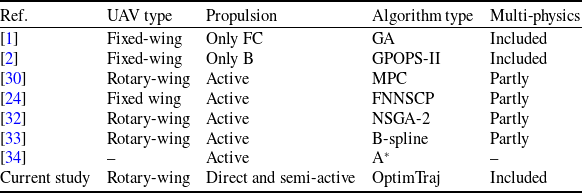
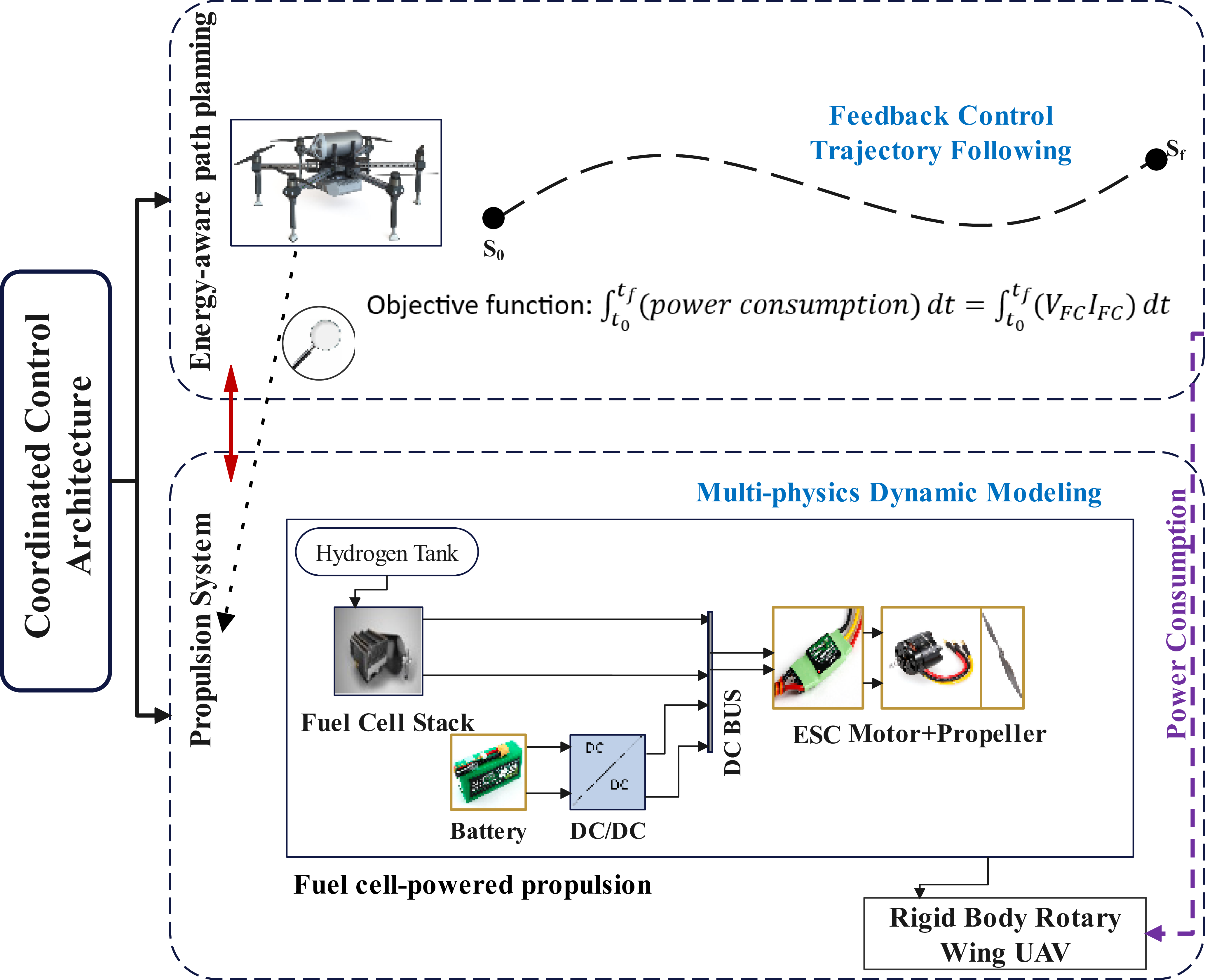
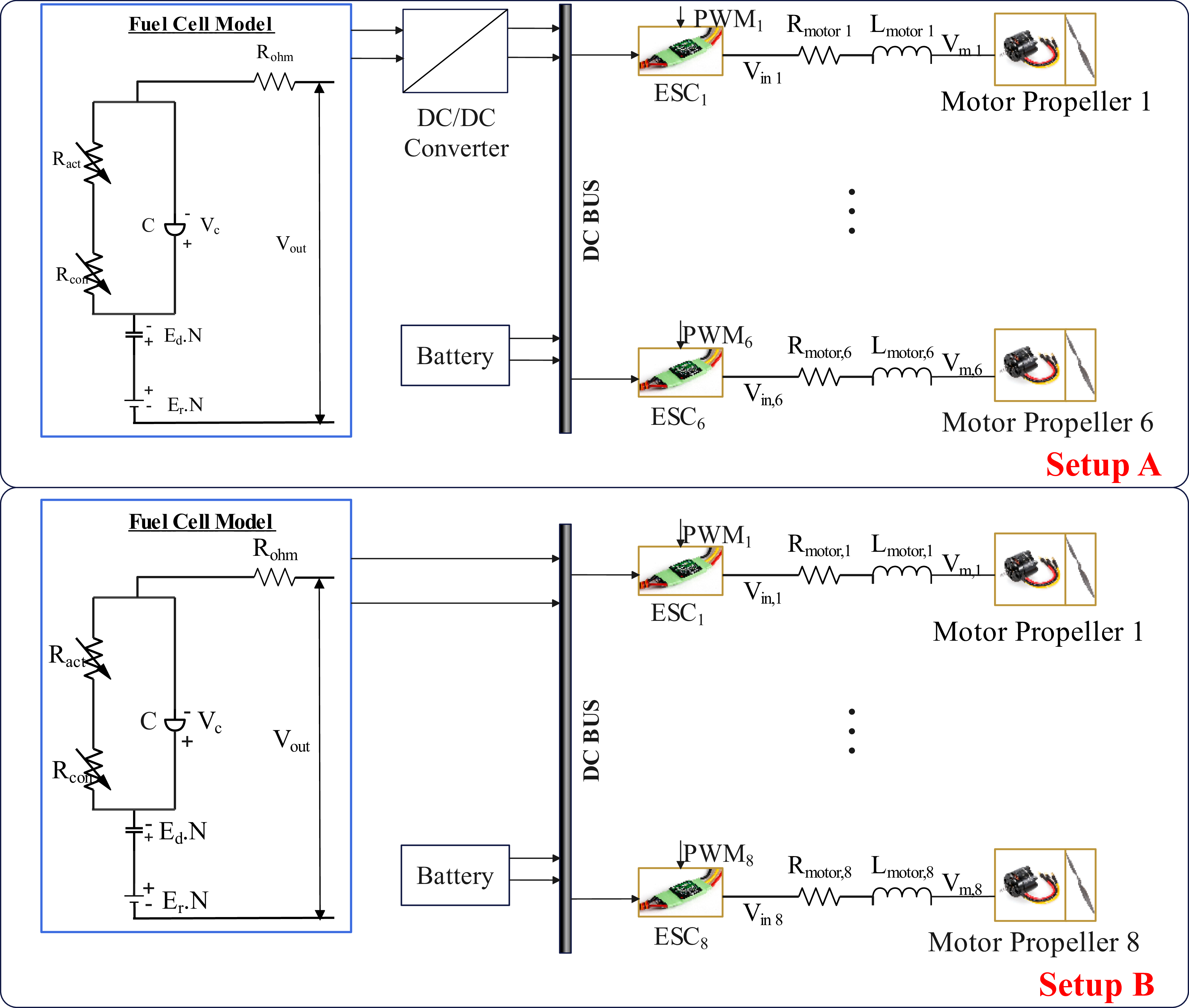
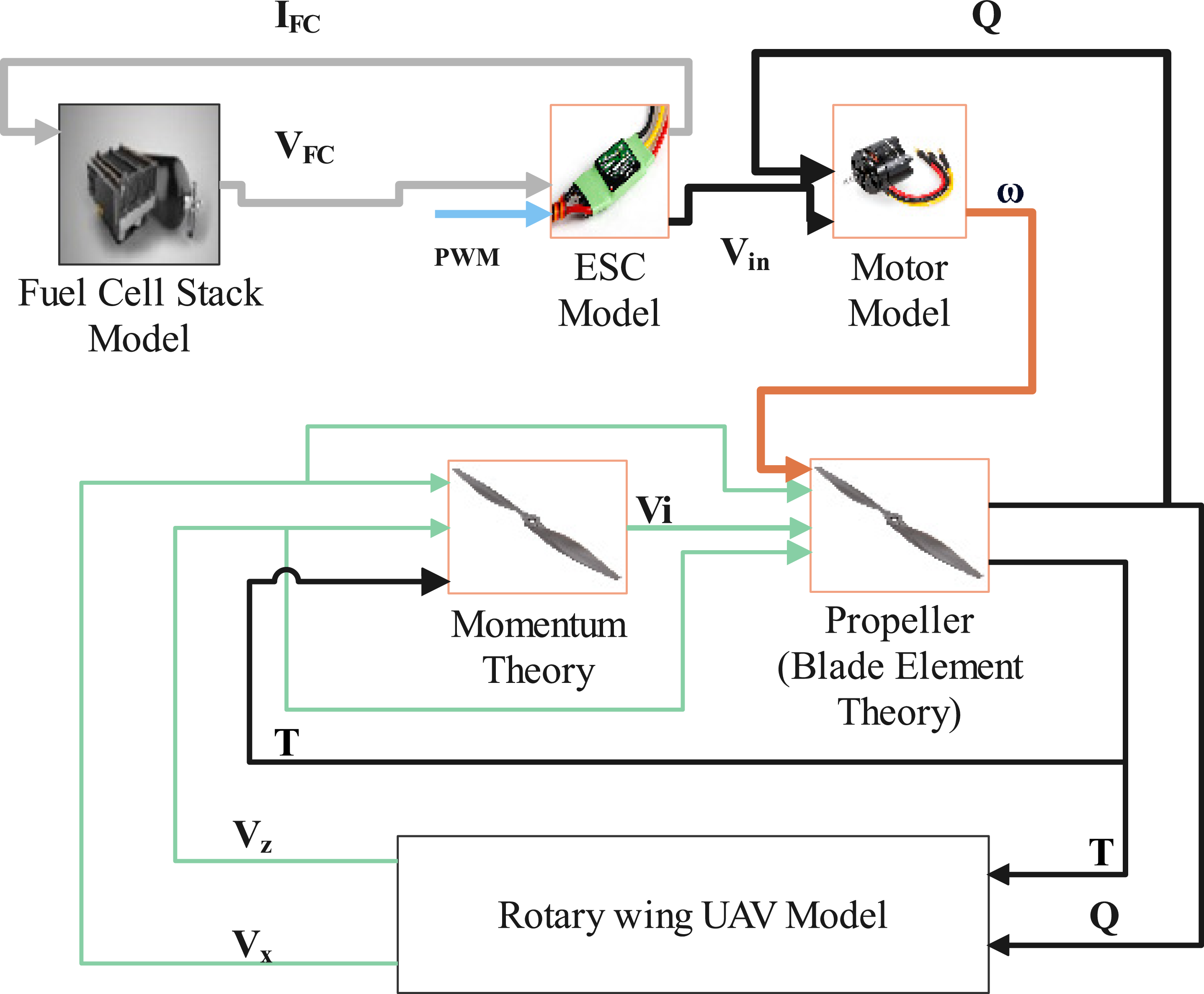
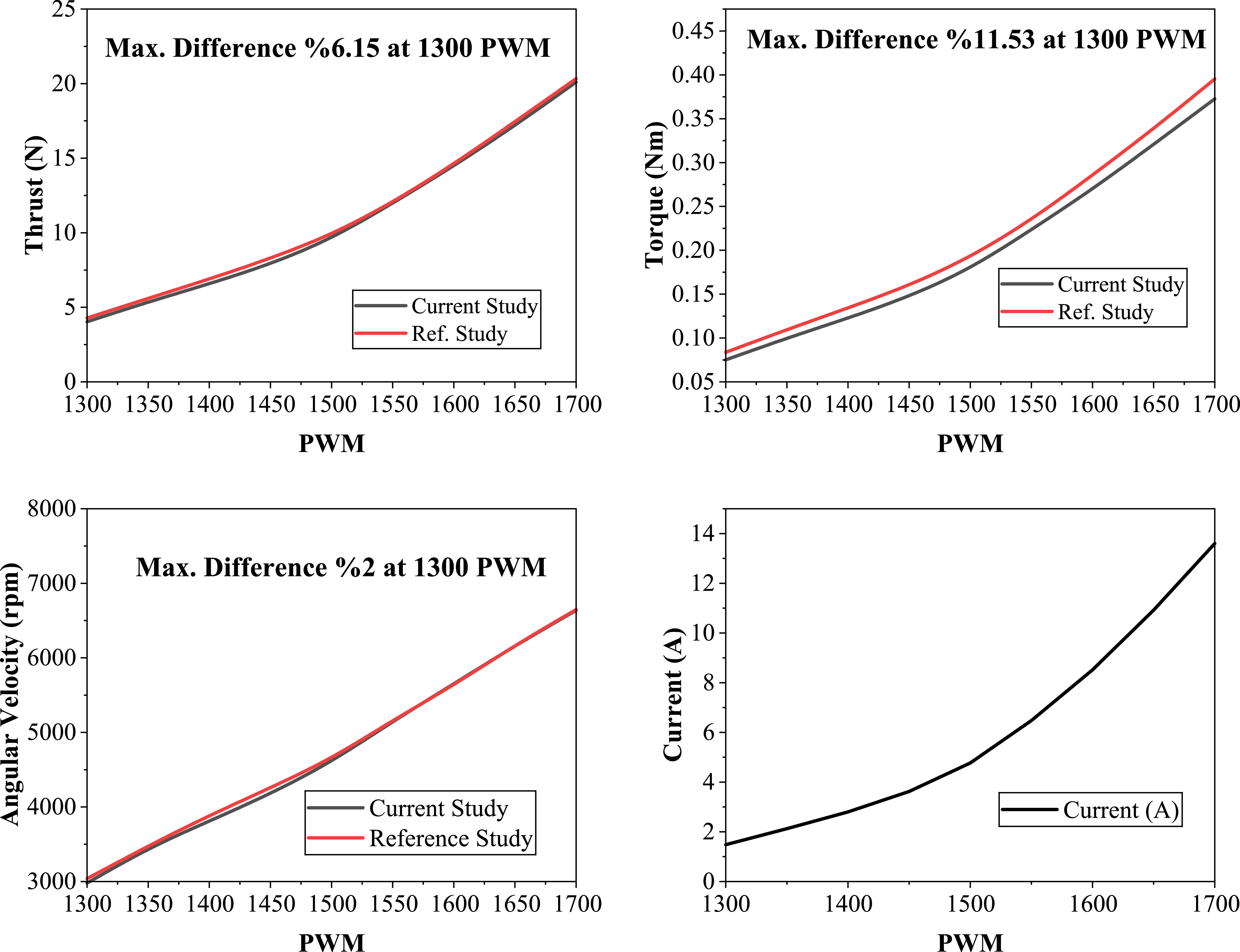
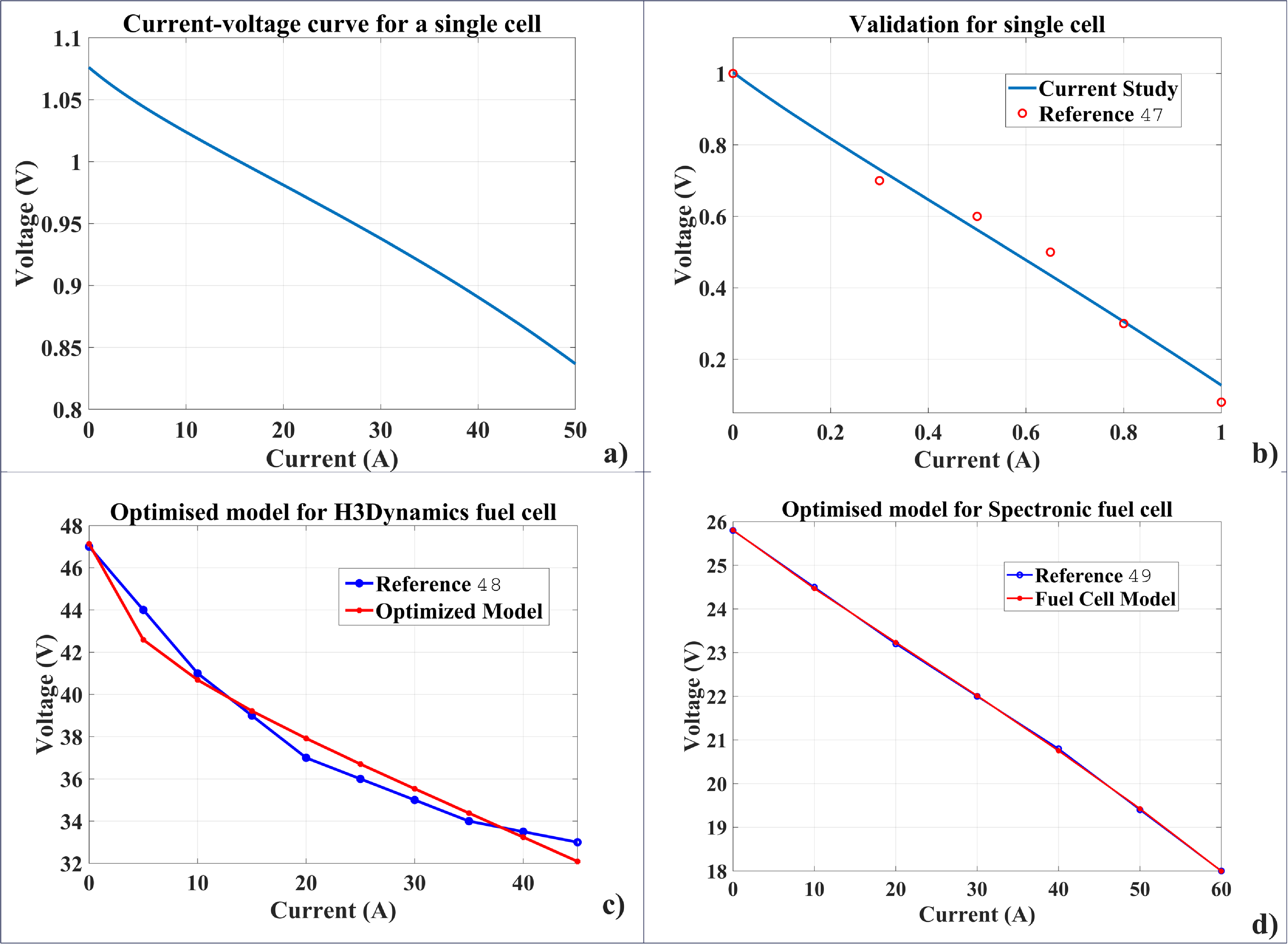
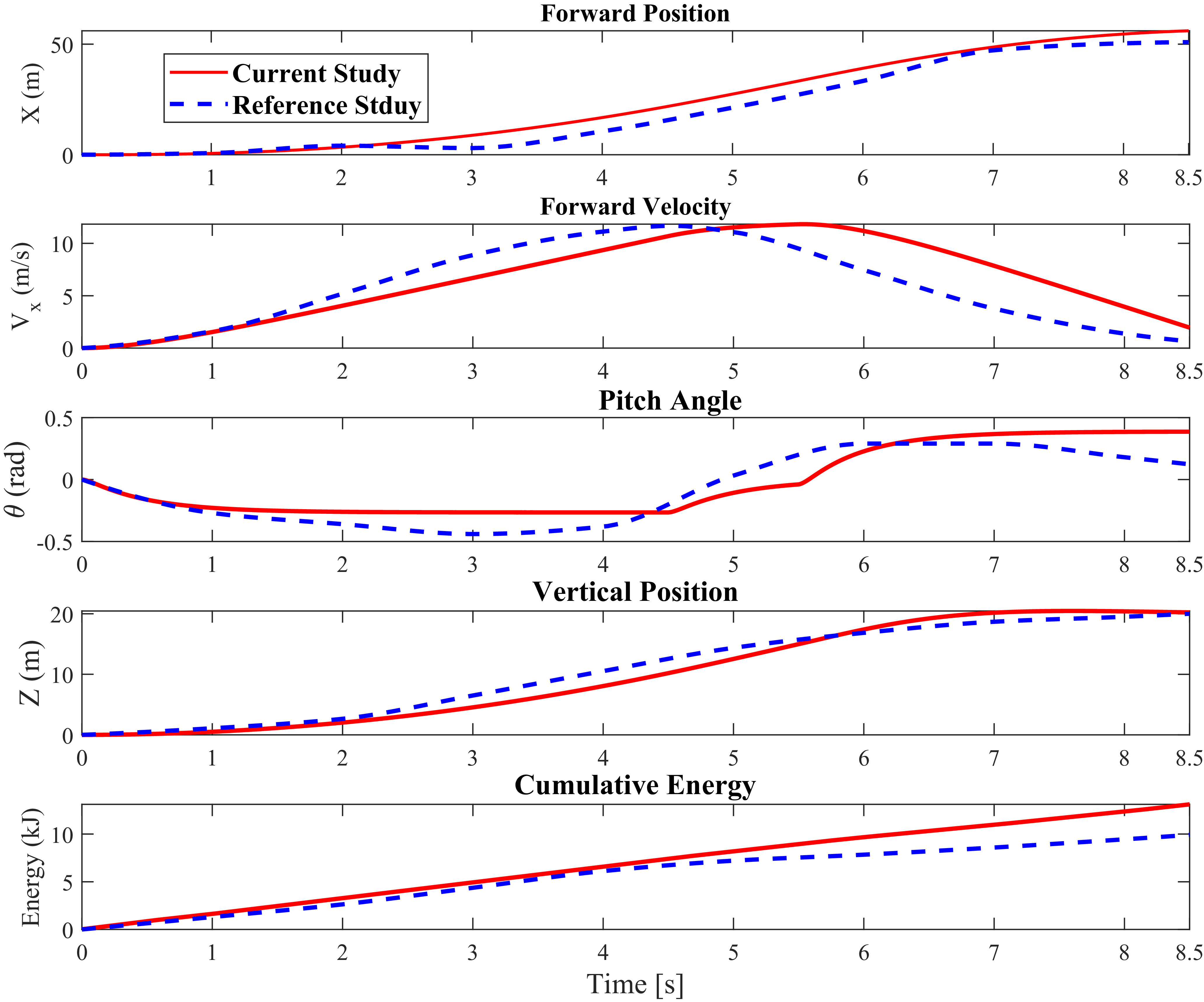
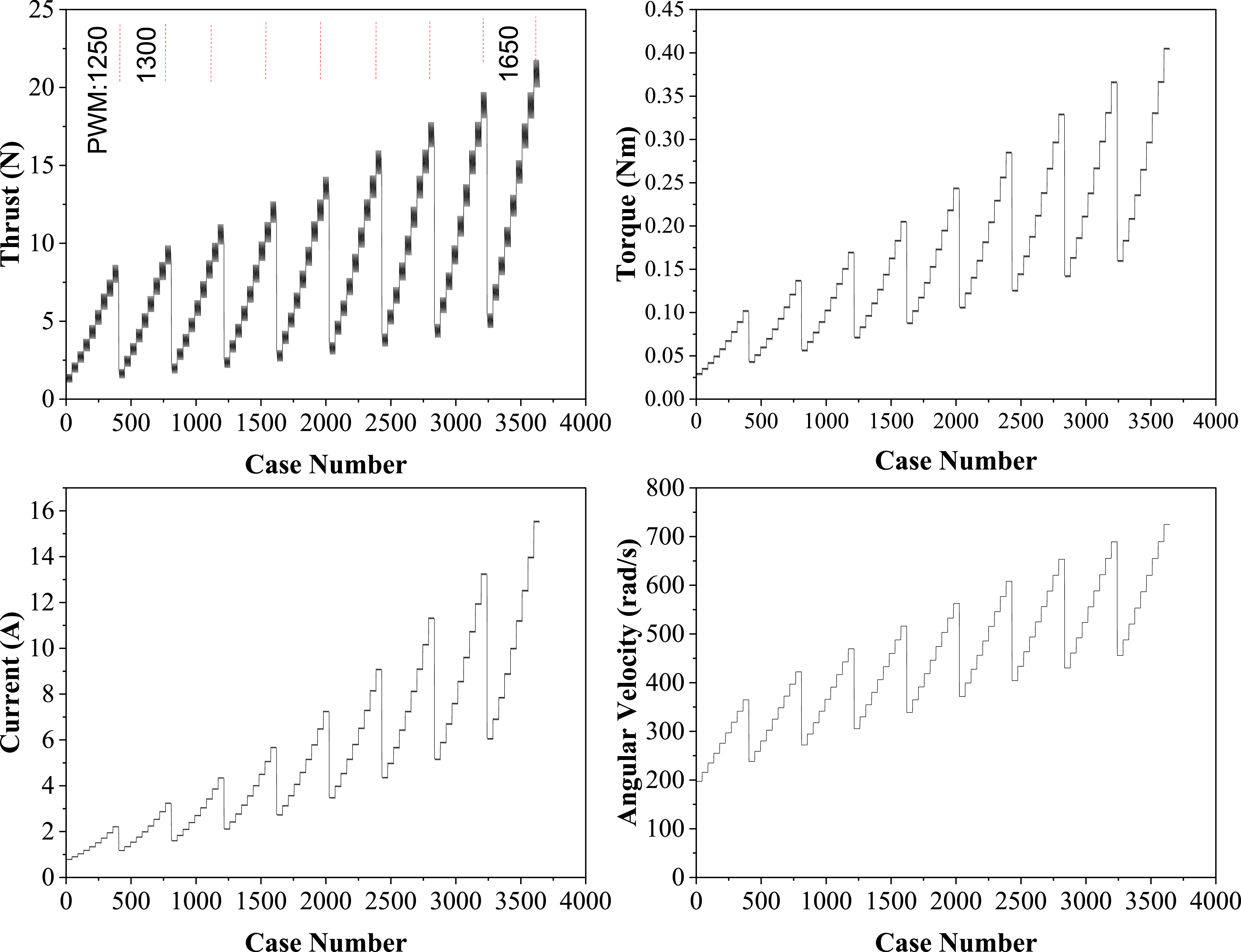
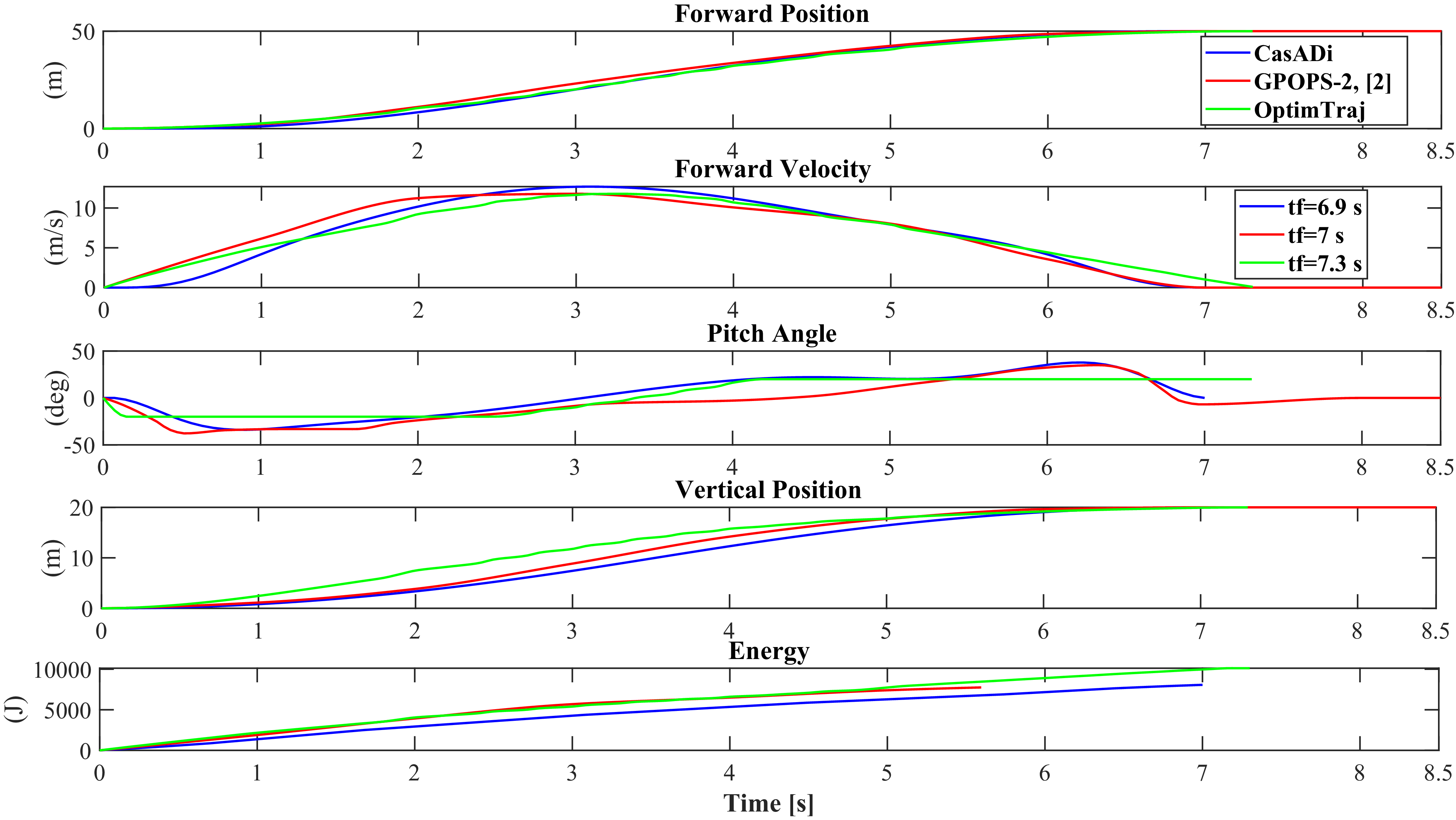
 CasADi
 Optimraj
 GPOPS−2
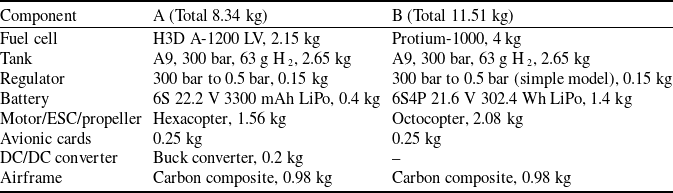
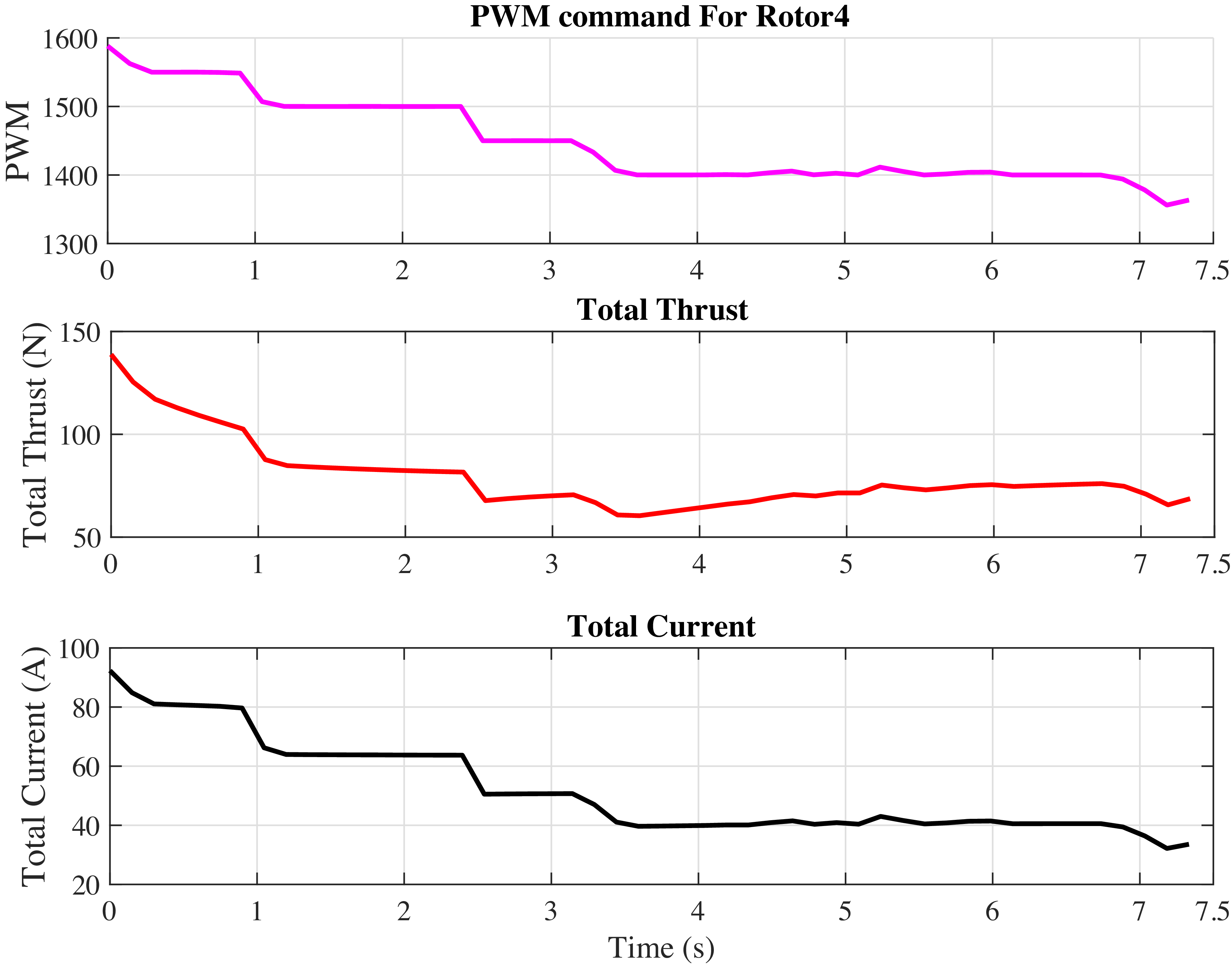
 OptimTraj
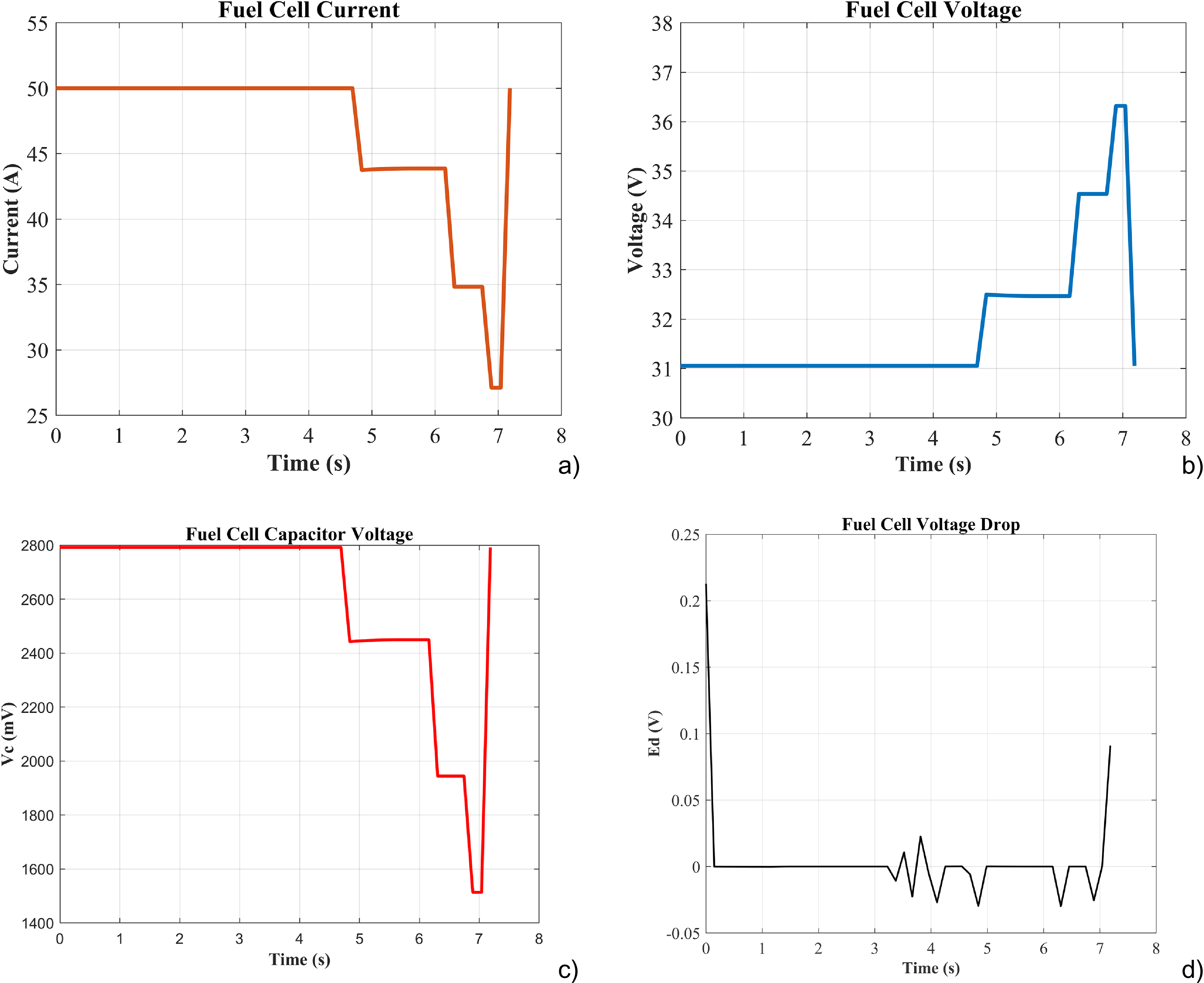
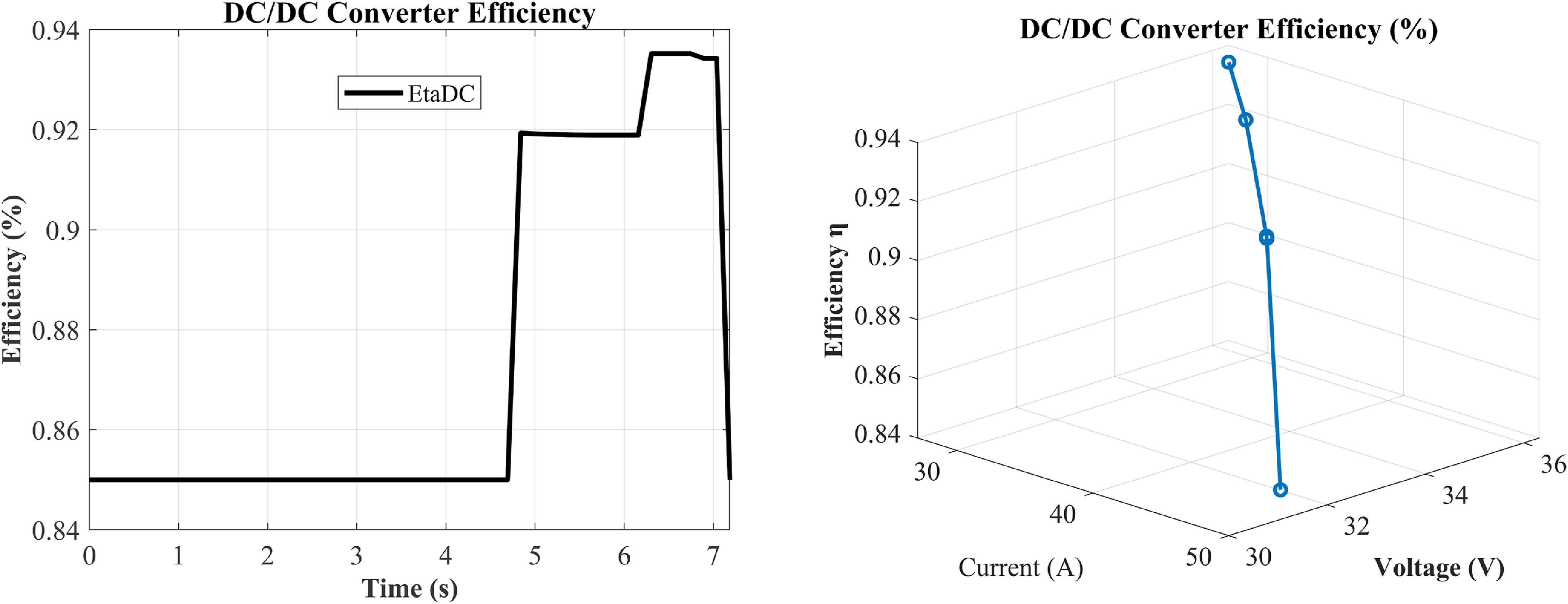
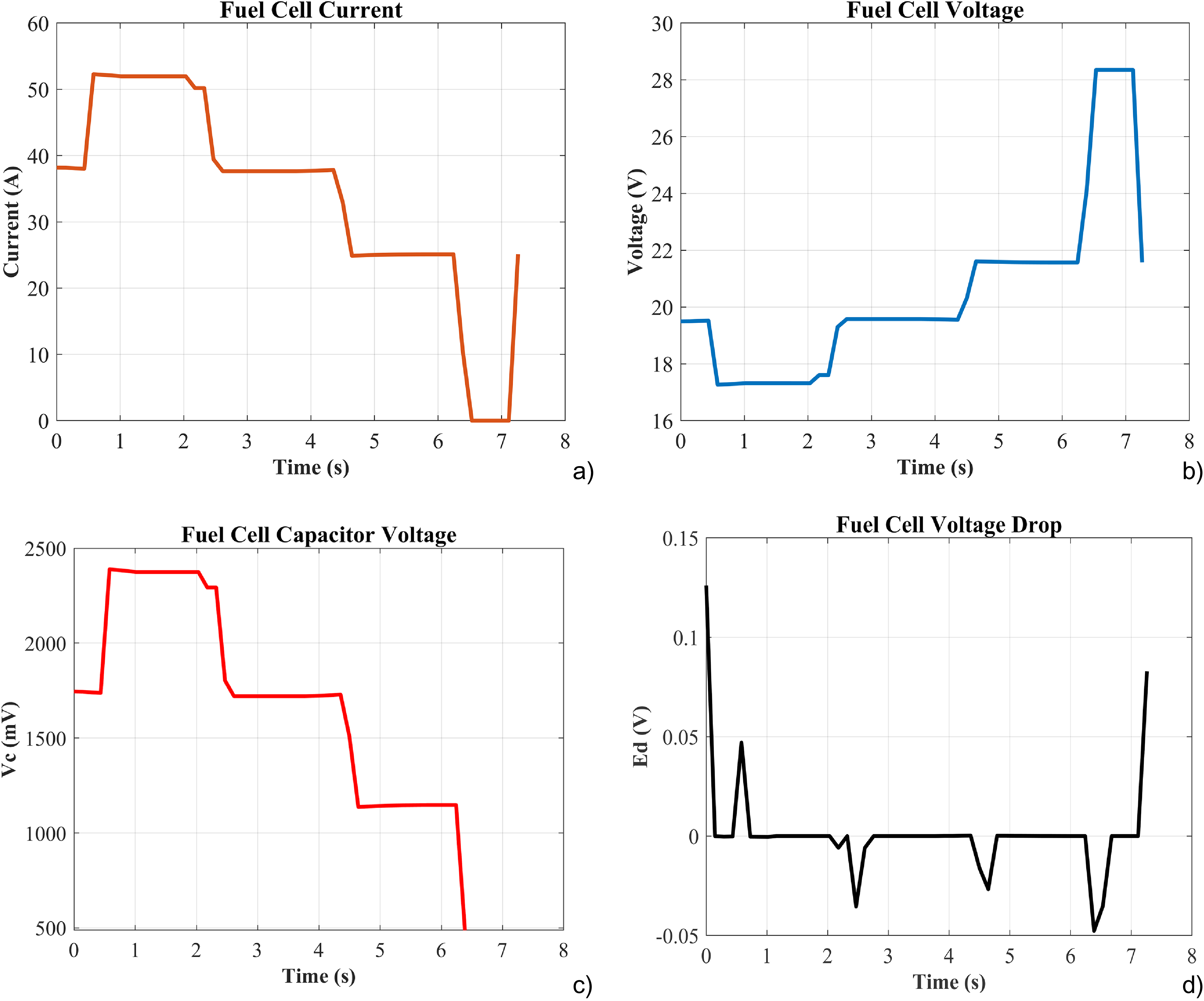
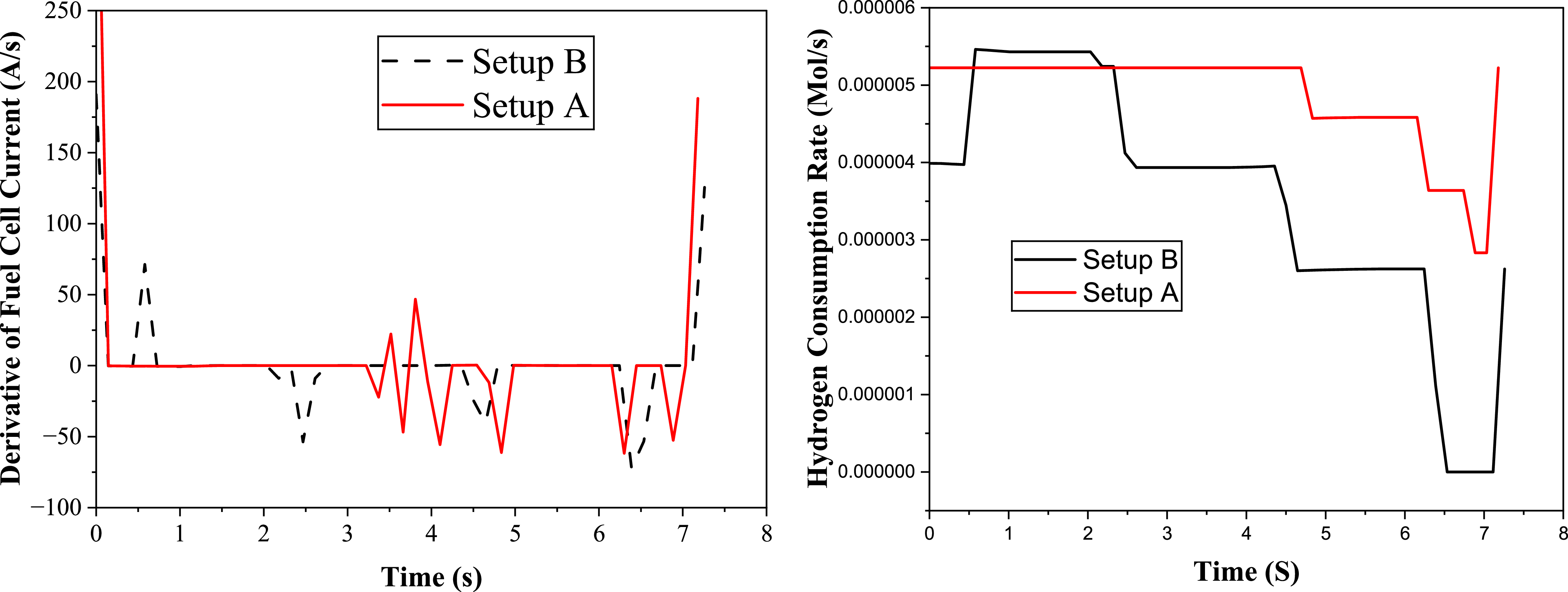
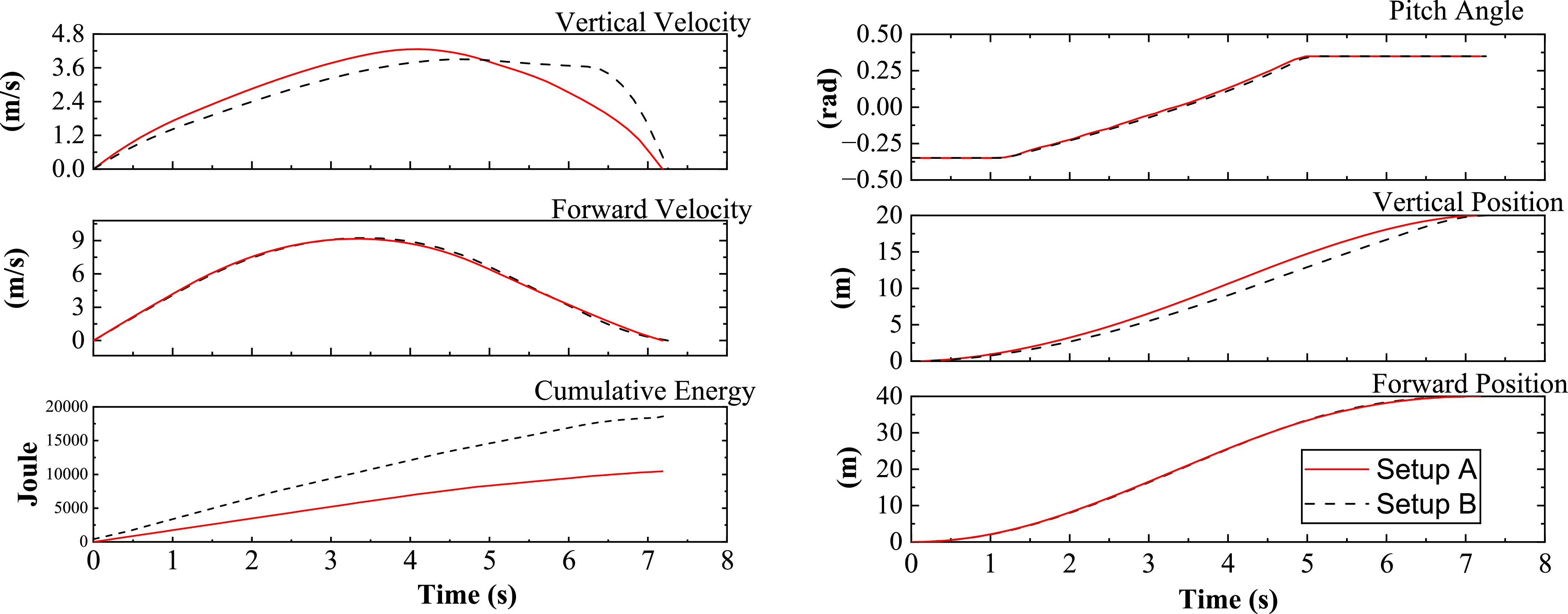

 Open access

