


Organic spintronics: Toward interface study
One of the first spintronic devices constructed using molecules was an organic spin-valve (OSV) consisting of a layered structure of two ferromagnetic (FM) electrodes separated by an organic spacer.Reference Xiong, Wu, Vardeny and Shi1 Among the large set of small and polymer-based molecules, OSVs—using the electroluminescent material, Alq3,Reference Xiong, Wu, Vardeny and Shi1,Reference Dediu, Hueso, Bergenti, Riminucci, Borgatti, Graziosi, Newby, Casoli, De Jong, Taliani and Zhan2 high mobility semiconductor rubrene,Reference Shim, Raman, Park, Santos, Miao, Satpati and Moodera3–Reference Yoo, Jang, Prigodin, Kao, Eom and Epstein5 and π-conjugated polymersReference Nguyen, Hukic-Markosian, Wang, Wojcik, Li, Ehrenfreund and Vardeny6—have been extensively studied to demonstrate the magnetoresistance (MR) effect, defined as the change in the resistance of the device with an applied magnetic field. The performance of these OSV devices depends on the efficiency of spin injection into, and spin transport throughout, the organic layer. Readers can find a detailed review on this topic in Reference 7.
In most of these studies, it was observed that the experimental reports of MR do not convincingly support the phenomena of spin-conserved diffusive transport.Reference Lin, Wang, Rybicki, Wohlgenannt and Hutchinson8–Reference Raman10 Rather, the low hopping-like mobility in the organic layer and the soft, porous nature of the organic films, causing a reduced effective spacer thickness,Reference Xiong, Wu, Vardeny and Shi1,Reference Vardeny7 suggested a significant contribution of spin-conserved tunneling to the MR response. Hence, reports of tunneling magnetoresistance (TMR) using thin films of organic molecules as tunnel barriers have gained wider acceptance and attention.Reference Santos, Lee, Migdal, Lekshmi, Satpati and Moodera11–Reference Barraud, Seneor, Mattana, Fusil, Bouzehouane, Deranlot, Graziosi, Hueso, Bergenti, Dediu, Petroff and Fert13 The phenomenon of TMR is an extremely interface-sensitive process that depends on the value of spin polarization at the FM-molecule interface (P).Reference Moodera, Miao and Santos14 To a first approximation, P can be represented by the normalized difference in the interface density of states (D) of the two electron-spin channels (↑- spin-up and ↓- spin-down) at a given energy (E) and can be expressed as (a detailed analysis of P may be found in References 14 and 15):
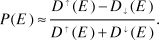 $$P(E) \approx {{{D^{_ \uparrow }}(E) - {D_{^ \downarrow }}(E)} \over {{D^{_ \uparrow }}(E) + {D^{_ \downarrow }}(E)}}$$.
The adsorption of organic molecules, a three-dimensional structural entity, on a magnetic surface to form a molecule-surface interface is a complex phenomenon. In 2009, using a combination of magnetotransport and inelastic tunneling spectroscopy measurements, Raman and co-authorsReference Raman, Watson, Shim, Borchers, Chang and Moodera4 showed that the values of P and TMR in a rubrene-based organic junction device depend on the molecular morphology and its associated interaction at the interface, strongly affecting the spin-dependent electronic coupling across the FM-rubrene interface.Reference Shim, Raman, Park, Santos, Miao, Satpati and Moodera3,Reference Raman, Watson, Shim, Borchers, Chang and Moodera4 Such an understanding is in agreement with reports of differences in the sign and magnitude of TMR in vertical organic junction devices fabricated by different research groups.Reference Vardeny7,Reference Santos, Lee, Migdal, Lekshmi, Satpati and Moodera11–Reference Barraud, Seneor, Mattana, Fusil, Bouzehouane, Deranlot, Graziosi, Hueso, Bergenti, Dediu, Petroff and Fert13
Subsequently, for the treatment of the organic-ferromagnet interface, Barraud and co-authorsReference Barraud, Seneor, Mattana, Fusil, Bouzehouane, Deranlot, Graziosi, Hueso, Bergenti, Dediu, Petroff and Fert13 formulated a tunneling transport model to include the effects of bonding-specific spin-dependent interface electronic coupling on P. This was done by proposing the formation of spin-hybridization-induced-polarized states at the interface (see the article by Galbiati et al. in this issue). The above semi-empirical approach suggested the influence of interface coupling energy on the sign and magnitude of P, and hence TMR. These earlier reports hinted at the need for fundamental direct exploration of the possible kinds of interface interactions between an organic molecule and a magnetic surface. In the following sections of this article, we provide fundamental insight on the above by discussing our recent understanding of the interface spin-chemistry and magnetism that has contributed to the emerging subfield of spinterface science.Reference Sanvito16
Bonding mechanisms of molecular adsorption
The adsorption of an organic molecule onto a metal surface can be described by two bonding mechanisms: (1) physisorption and (2) chemisorption. Figure 1 illustrates the basic aspects of the two bonding mechanisms, although, in real molecule-surface systems, complicated interface interactions can cause both processes to coexist. Additionally, charge transfer between the molecule and surface can take place, leading to an electrostatic component of the binding (in physisorption) or a strong polar covalent character of the binding (in chemisorption). The strength of the molecule-surface interaction may be quantitatively described using the adsorption energy, E ads. This may be defined as E ads = E system – (E surface + E molecule), where E system is the total energy of the molecule–surface system, while E surface and E molecule denote the total energy of the clean surface and that of the molecule in the gas phase, respectively.
A general scheme illustrating the energy level alignment due to the interaction between an organic molecule and a metallic surface. (a) Physisorption creates a weak molecule-metal interaction causing renormalization of the highest occupied molecular orbital (HOMO)-lowest unoccupied molecular orbital (LUMO) gap in the molecule due to polarization effects.Reference Neaton, Hybertsen and Louie18,Reference Garcia-Lastra and Thygesen19 (b) Chemisorption creates a strong molecule-metal interaction where the atomic-type orbitals that initially form the molecular orbitals hybridize with the metallic bands, leading to bonding and anti-bonding hybrid bands with mixed molecular-metallic character. Note: E F, Fermi energy level.

The two bonding interactions can change the electronic structure of the molecule and the metal surface at the interface. In the case of physisorption, with weak long-range attractive van der Waals (vdW) forces,Reference Langreth, Lundqvist, Chakarova-Kack, Cooper, Dion, Hyldgaard, Kelkkanen, Kleis, Kong, Li, Moses, Murray, Puzder, Rydberg, Schröder and Thonhauser17 the molecule-surface image potential interactions,Reference Neaton, Hybertsen and Louie18,Reference Garcia-Lastra and Thygesen19 which polarize the interface and cause a rearrangement of the molecular electron density, leads to a renormalization of the highest occupied molecular orbital (HOMO)-lowest unoccupied molecular orbital (LUMO) gap. Such interactions are characterized by a small adsorption energy <∼0.1 eV and a molecule–surface distance >∼3Å.Reference Langreth, Lundqvist, Chakarova-Kack, Cooper, Dion, Hyldgaard, Kelkkanen, Kleis, Kong, Li, Moses, Murray, Puzder, Rydberg, Schröder and Thonhauser17 On the contrary, in the case of chemisorption, the interaction leads to the creation of a new quantum mechanical system due to strong hybridization between atomic type orbitals that initially form the molecular orbitals (π-orbitals) and the metallic states (d-states). This π-d hybridization implies the formation of bonding and anti-bonding electronic states as a linear combination of atomic orbitals, similar to the formation of molecular orbitals described by the molecular orbital theory.Reference Fleming20 These new bonding and anti-bonding hybrid interface states (see Figure 1b) have a mixed molecule-metal character that may not resemble any of the features of either the free molecule or the free surface.Reference Brede, Atodiresei, Kuck, Lazic, Caciuc, Morikawa, Hoffmann, Blügel and Wiesendanger21, Reference Lennartz, Caciuc, Atodiresei, Karthäuser and Blügel22 Such interactions are characterized by large adsorption energies >∼0.5 eV and molecule–substrate distances <∼2.5 Å.
Theoretical tools
Density functional theory (DFT) provides a robust theoretical instrument to study the geometrical, electronic, and magnetic properties of materials containing hundreds and even thousands of atoms.Reference Hohenberg and Kohn23 Although DFT can, in principle, be exact for the ground-state properties of any system, the accuracy in practical simulations strongly depends on the approximation used to describe the exchange-correlation functional (i.e., local density approximation [LDA],Reference Ceperley and Alder24 generalized gradient approximation [GGA],Reference Perdew, Burke and Ernzerhof25 and van der Waals density functional [vdW-DF]26).
In the case of simulating a chemisorbed molecule, the system can be correctly described using GGA-type functionals. However, such functionals do not always calculate the adsorption energies accurately.Reference Lazic, Alaei, Atodiresei, Caciuc, Brako and Blügel27 In the case of a physisorbed molecular system, the semi-local GGA type exchange-correlation functionals have a significant limitation. They cannot describe the long-range attractive vdW interactions.Reference Langreth, Lundqvist, Chakarova-Kack, Cooper, Dion, Hyldgaard, Kelkkanen, Kleis, Kong, Li, Moses, Murray, Puzder, Rydberg, Schröder and Thonhauser17,Reference Dion, Rydberg, Schröder, Langreth and Lundqvist26 There are two possible ways to include the vdW effects in DFT: (1) using a combination of GGA and a semi-empirical vdW approach,Reference Grimme28 and (2) employing a functional that explicitly includes the non-local correlation effects.Reference Dion, Rydberg, Schröder, Langreth and Lundqvist26 Each of the two possibilities has its advantages and disadvantages.Reference Langreth, Lundqvist, Chakarova-Kack, Cooper, Dion, Hyldgaard, Kelkkanen, Kleis, Kong, Li, Moses, Murray, Puzder, Rydberg, Schröder and Thonhauser17,Reference Grimme28,Reference Klimes and Michaelides29 By using both of these methods, we can achieve a thorough understanding of the hybrid molecule–surface system.
Organic materials adsorbed on ferromagnetic surfaces
Using ab initio DFT studies, we can obtain direct insights on the complex interface interactions between an organic aromatic molecule and a magnetic surface forming the hybrid interface. As an example, we consider the adsorption of hydrogenated and fluorinated benzene molecules (C6X6, X = H, F) onto a FM surface formed by two monolayers of iron on W(110) (2 ML Fe/W(110)). Using chemical functionalization (i.e., substitution of the H in the benzene molecule with electronegative atoms of F), we modified the energy position of the sigma (σ-) and π-orbitals in the benzene molecule. This process of chemical functionalization allows fine adjustment of the molecule-surface binding.Reference Atodiresei, Caciuc, Lazic and Blügel30, Reference Atodiresei, Caciuc, Lazic and Blügel31 This happens due to modification of the hybridization of the σ- and π-molecular orbitals with the d-states of the magnetic surface. More specifically, in the case of the fluorinated benzene (C6F6), the p z-atomic orbitals that originally form the π-molecular orbitals are lowered in energy with respect to the hydrogenated molecule (C6H6), which in turn leads to a weaker molecule-surface interaction. Indeed, the adsorption energy of C6F6 on the FM 2ML Fe/W(110) substrate amounts to 0.362 eV, while benzene (C6H6) binds more strongly to the magnetic surface with an adsorption energy of 0.978 eV.
A detailed picture of the influence of the binding mechanism, between the two benzene molecules and the Fe surface, on the interface electronic properties can be inferred by analysis of spin-resolved projected local density of states (PDOS, on the atomic orbitals) of the hybrid molecular-metallic system. Figure 2 depicts the formation of spin-dependent hybridization occurring mostly between the p z-atomic-type orbitals that originally form the π-molecular orbitals and the out-of-plane d-states (i.e., the d xz, d yz, and  ${d_{{z^2}}}$ orbitals containing a z-component) of the FM Fe atoms. As shown schematically in Figure 2c, this hybridization leads to the formation of new molecule-metal hybrid bands with bonding and anti-bonding character specific to each spin-channel.Reference Brede, Atodiresei, Kuck, Lazic, Caciuc, Morikawa, Hoffmann, Blügel and Wiesendanger21,Reference Atodiresei, Brede, Lazic, Caciuc, Hoffmann, Wiesendanger and Blügel32 As depicted in Figure 2a and 2c, in the spin-up channel, the hybrid bonding states are situated at low energies, while the anti-bonding states appear in an energy window around the Fermi energy. In the case of an adsorbed benzene molecule, the hybrid anti-bonding states are located mostly below the Fermi level, while for the adsorbed fluorinated benzene, the anti-bonding states remain unoccupied (i.e., most of them are pushed above the Fermi energy). Furthermore, Figure 2b shows that as a result of the strong hybridization between Fe and C atoms, the shapes of the out-of-plane d-states are changed with respect to those of the clean Fe surface. In addition, the magnetic moment of the Fe atoms (e.g., +2.47 Bohr magneton (μB))binding directly to the C atoms is decreased compared to the moment of clean surface Fe atoms (e.g., +2.82 μB).Reference Atodiresei, Caciuc, Lazic and Blügel31
(a) Spin-resolved projected local density of states (PDOS) of C6X6 (X = H, F) molecules adsorbed on the 2 ML Fe/W(110) (ML = monolayer) surface showing broad molecular-metal hybrid states, as illustrated in Figure 1b. Strong hybridization occurs mostly between the out-of-plane orbitals (i.e., p z of C and d-orbitals of Fe, with a z-component of  ${d_{{z^2}}}$, d xz, and d yz), while the in-plane orbitals weakly interact (i.e., s, p x, and p y of C and Fe d-orbitals as
 ${d_{{x^2} - {y^2}}}$ and d xy). Inset shows a top view of the adsorption geometry for each molecule (color of the atoms C: gray, H: dark gray, F: green, and Fe: red). (b) Spin-resolved local PDOS of Fe atom of the clean surface (upper panel) and Fe atom below a C–C bond (lower panel) of the C6H6 molecule, indicating significant changes in the
 ${d_{{z^2}}}$ band caused by a strong interface hybridization. (c) Cartoon illustrating the difference in the interaction between two non-magnetic organic molecules and a ferromagnetic surface. The spin-dependent hybridization between the molecular orbitals (upper left panel) and the magnetic surface (lower left panel) leads to the formation of bonding and anti-bonding hybrid molecular-metallic states (right panel), showing differences in occupancy relative to the Fermi level (E F) affecting P. Reprinted with permission from Reference 31. © 2011 IOP Publishing Ltd. Note: E, electron energy.
Another important aspect of molecular adsorption on a magnetic surface is that hydrogenated benzene molecule acquires a very small magnetic moment (e.g., –0.076 μB), while in contrast, the adsorbed fluorinated benzene molecule is shown to acquire a large magnetic moment (e.g., –0.278 μB) oriented anti-ferromagnetically with respect to the moment of the Fe substrate. It is also interesting to note that the magnetic moment induced in the π-type orbitals at the molecular site correlates with the electron affinity of the substituent (i.e., with an increase in electronegativity of the substituent by moving from H to F atom, the molecular magnetic moment increases). These results confirm the strong influence of the molecular design-induced spin-interface chemistry on the electronic and magnetic properties of the hybrid molecule-surface states.
Recent advances in spinterface science
The earlier sections provided a fundamental picture of the complex bonding interactions that dominate the properties of the hybrid interface. In the last few years, extensive research in this area has been performed. This has contributed to the observation of new interesting phenomena with strong support from theory. Here, we highlight some of the interesting interface spin-response with the objective of identifying new molecular functionalities that can serve as building blocks for the construction of molecular spintronic devices.Reference Raman33 Additionally, we explore the possibility of identifying novel methods to control, tune, and engineer such functionalities for potential technological advancement and applications.
Interface spin filters
In certain cases of molecular adsorption, the PDOS of the spin-dependent interface hybrid states on the adsorbed molecule is shown to have a significant presence at the Fermi level, causing the molecule to have a metal-like character (see Figure 2). In such a scenario, the DOS mismatch between the spin-up and the spin-down channels leads to a non-zero value of P at the Fermi level. Furthermore, the value of P is observed to have strong energy dependence. Therefore, it is possible to tune the surface-molecule chemistry to design interfaces showing spin inversion or amplification of P with respect to the value of P in the bulk.Reference Barraud, Seneor, Mattana, Fusil, Bouzehouane, Deranlot, Graziosi, Hueso, Bergenti, Dediu, Petroff and Fert13, Reference Sanvito16 Such trends have been shown experimentally using spin-polarized scanning tunneling spectroscopy (SP-STS) studies (see the Brede and Wiesendanger article in this issue) for the case of a diamagnetic metal-free phthalocyanine molecule (H2Pc) adsorbed on a 2 ML Fe/W(110) surface with intramolecular spatial resolutionReference Atodiresei, Brede, Lazic, Caciuc, Hoffmann, Wiesendanger and Blügel32 (see Figure 3). This study of interface spin filters has important implications in engineering the TMR of an organic spintronic device.
Spin-polarized scanning tunneling spectroscopy (SP-STS) overview image (a) of a multi-domain (blue (spin-up)/yellow (spin-down)) 2 ML Fe/W(110) (ML = monolayer) surface containing phthalocynanine (H2Pc) molecules around the Fermi level (tip voltage (V tip) = 50 mV). Note that the black areas are W. The lower panel shows high-resolution SP-STS images of the box regions shown in (a) for both (b) spin-up and (c) spin-down channels and (d) the local spin polarization (P) for an adsorbed H2Pc molecule. Note: the molecule shows a high, locally varying P ranging from attenuation to inversion with respect to the Fe film. Reprinted with permission from Reference 32. © 2010 IOP Publishing Ltd.
Alternatively, in the case of weaker interactions between the adsorbed molecule and the surface, the interface states do not significantly broaden. This leads to unavailability of electronic states at the Fermi level. Thus the electrons face a barrier for injection into or tunneling through the molecule. However, due to the spin-dependent hybridization, the interface states are spin-split above and/or below the Fermi level, creating a spin-dependent barrier height (see Figure 4a).Reference Raman10,Reference Raman, Kamerbeek, Mukherjee, Atodiresei, Sen, Lazic, Caciuc, Michel, Stalke, Mandal, Blügel, Münzenberg and Moodera34 Since the injection current depends exponentially on the barrier height, only one spin channel is efficiently filtered through the molecule, giving a large spin polarization of the current.Reference Raman, Chang and Moodera35 The formation of such spin-filter molecules at the interface has been confirmed using SP-STS studies.Reference Schwöbel, Fu, Brede, Dilullo, Hoffmann, Klyatskaya, Ruben and Weisendanger36, Reference Kawahara, Lagoute, Repain, Chacon, Girard, Rousset, Smogunov and Barreteau37 Furthermore, these kinds of interface spin filters have given rise to reports of a new phenomenon of the interface magnetoresistance (IMR) effect, observed in vertical organic junction devices using only one magnetic electrodeReference Raman10,Reference Raman, Kamerbeek, Mukherjee, Atodiresei, Sen, Lazic, Caciuc, Michel, Stalke, Mandal, Blügel, Münzenberg and Moodera34 (see Figure 4b). Such processes are expected to simplify fabrication challenges for molecular spintronic devices.Reference Raman and Moodera38
(a) Projected density of states (PDOS) of the first and second layer zinc methyl phenalenyl (ZMP) molecule adsorbed on a surface of Co. PDOS of the first molecule is broadened showing metal-like character, while PDOS of the second layer ZMP molecule shows discrete molecular energy levels, but with a spin-split in the lowest unoccupied molecular orbital by 0.14 eV, leading to a difference in the injection/tunneling barrier height for the two spin channels. This process gives rise to a large spin-filtering response. Blue and red data points refer to spin-down and spin-up channels, respectively. (b) Magnetoresistance (MR) measurements of a device with a single ferromagnetic electrode (Co (8 nm)/ZMP (40 nm)/Cu (12 nm)), measured at 15 mV after cooling the device to 4.2 K in a magnetic field (about –550 Oe). MR loop corresponds to the switching of the Co magnetization, as shown in the two insets, with respect to the magnetically hard spin-filter interface layer (yellow), as described in (a). Blue and red data points refer to positive and negative field sweeps, respectively. Reprinted with permission from Reference 34. © 2013 Nature Publishing Group. Note: ϕ↓, barrier height for spin-down electrons; ϕ↑, barrier height for spin-up electrons; H c, coercive field.
Interface-induced molecular magnetism
The idea of stabilizing the magnetization of molecules to utilize the molecular spin for information storage, processing, and computing has been at the heart of intense research for more than a decade.Reference Verdaguer39, Reference Leuenberger and Loss40 In the previous section, we showed using DFT that the adsorption of a non-magnetic fluorinated benzene molecule on a magnetic surface could turn the molecule magnetic and induce magnetic coupling with the surface. Such results in carbon-based aromatic molecules were first shown experimentally in the study of a phenalenyl (or graphene fragment)-based molecule adsorbed on a Co surface.Reference Raman10,Reference Raman, Kamerbeek, Mukherjee, Atodiresei, Sen, Lazic, Caciuc, Michel, Stalke, Mandal, Blügel, Münzenberg and Moodera34 These results were confirmed using SP-STS in the study of a graphene sheet adsorbed on a 1 ML Co/Ir(111) surface.Reference Decker, Brede, Atodiresei, Caciuc, Blügel and Wiesendanger41 Furthermore, some of these reports confirmed that the induced magnetic moment in the molecule and the interface magnetic exchange coupling could be stable at temperatures as high as 250 K.Reference Raman, Kamerbeek, Mukherjee, Atodiresei, Sen, Lazic, Caciuc, Michel, Stalke, Mandal, Blügel, Münzenberg and Moodera34 Therefore, these results using carbon-based planar aromatic molecules support the feasibility of attaining molecular magnetism up to room temperature and above. Such an approach opens up the possibility of designing molecular storage devices with large densities exceeding 500 Tb/sq. inch.Reference Raman and Moodera38
The possibility of controllably switching the magnetic properties (moment and/or P) of the adsorbed aromatic molecule under external electrical or optical stimulusReference Raman, Kamerbeek, Mukherjee, Atodiresei, Sen, Lazic, Caciuc, Michel, Stalke, Mandal, Blügel, Münzenberg and Moodera34,Reference Raman and Moodera38 or by other alternate approachesReference Miguel, Hermanns, Bernien, Krüger and Kuch42 is also equally important in writing information on the molecule. In this regard, engineering the interface magnetic exchange coupling by tuning the interface spin-chemistry plays an important role. For example, using a phenalenyl-derived molecule, it was shown that the moment of the adsorbed magnetic supramolecule can be independently switched with respect to the bottom magnetic surface. This was electrically detected by the exchange-biased IMR responseReference Raman, Kamerbeek, Mukherjee, Atodiresei, Sen, Lazic, Caciuc, Michel, Stalke, Mandal, Blügel, Münzenberg and Moodera34 (see Figure 5). Understanding the origin of magnetic stability and spin switching in such interface systems is still an existing challenge and is expected to engage scientists in performing research in this direction.
Exchange-biased interface magnetoresistance (IMR) response at the bottom Co-Zinc methyl phenalenyl (ZMP) interface of the device Co (8 nm)/ZMP (35 nm)/Permalloy (Py) (12 nm) at 250 K, showing an IMR of 22%. The asymmetric IMR response arises due to the switching of the molecular magnetization with respect to the magnetization of the underneath surface Co, as shown in the left and right insets. AFM, antiferromagnetic; FM, ferromagnetic. Reprinted with permission from Reference 34. © 2013 Nature Publishing Group.
Magnetic hardening of surface
Chemisorption of a molecule on a magnetic surface influences the magnetic anisotropy (K sur) and the magnetic exchange coupling at the surface. The interface hybridization causes atomic rearrangements and electronic redistribution of spin density affecting the interface symmetry and the interatomic interactions.Reference Siegmann43,Reference Miller and Drillon44 As a result, the magnetic surface can attain interesting properties. In a recent experimental report involving an adsorbed graphene fragment molecule on the surface of Co,Reference Raman, Kamerbeek, Mukherjee, Atodiresei, Sen, Lazic, Caciuc, Michel, Stalke, Mandal, Blügel, Münzenberg and Moodera34 it was observed that the Co surface layer could magnetically decouple from the bulk and switch independently at higher magnetic fields (more than 10 times the coercivity of bulk Co film). This process of magnetic hardening of the surface was understood, using DFT, to arise due to weakening of interplanar magnetic exchange coupling by 83% and an enhancement in K sur by a factor of 10 compared to the value in the bulk (see Figure 6). Similar reports of magnetic hardening in other interface systems are being explored, both experimentallyReference Decker, Brede, Atodiresei, Caciuc, Blügel and Wiesendanger41 and theoretically.Reference Callsen, Caciuc, Kiselev, Atodiresei and Blügel45 This has important implications for characterizing and tuning the magnetic switching fields of molecular sensor devices.
Density functional theory calculation of magnetic anisotropy energy (MAE) due to surface magneto-crystalline anisotropy for an organometallic supramolecule comprising seven hybridized Co atoms (gold) with the zinc methyl phenalenyl molecular dimer (C: gray, O: red, Zn: purple, H: white) as a model system. The MAE of the supramolecule is calculated (table) for three different in-plane magnetization orientations, with the c-axis as a reference. The in-plane MAE is calculated to be 180 μeV/Co atom, an enhancement by a factor of 10 compared to the value of MAE in bulk Co (fcc) (18 μeV/Co atom). Reprinted with permission from Reference 34. © 2013 Nature Publishing Group.
Summary
The molecular route toward developing spin-based electronic devices is taking an interdisciplinary approach, made feasible by the involvement of chemists in designing molecules with tailored spin-functionalities, and physicists, who research these molecules as potential material candidates for carrying and processing spin information. Recent efforts in this direction are providing a new perspective to address the fundamental challenges in tuning and stabilizing molecular magnetism by utilizing the strong effect of interface π-d hybridization. They open up the possibility to template molecules on large-area surfaces with controlled magnetism and spin response, which serve as building blocks for the fabrication of integrated molecular-spintronic devices with technological applications in sensor, storage, and quantum computing.
Acknowledgments
N.A. thanks the computational support under the auspices of the VSR on the supercomputer JUROPA and the GCS on the high-performance computer JUQUEEN operated by the JSC at the Forschungszentrum Jülich, Germany. K.V.R. acknowledges the financial support from the Science and Education Research Board (SERB), Department of Science and Technology (DST), India (sanction no. SR/S2/RJN-66/2012).



