Implications
Reducing CP levels to around 140 g/kg DM in dairy cow diets increases the efficiency of N capture and reduces N excretion to the environment. Predicting milk yield responses, however, is complicated by the paucity of data for contemporary high-yielding cows. However, dietary strategies should aim to maximize the yield of microbial protein. Responses to additional essential amino acids such as methionine and lysine are variable and difficult to predict. No detrimental effects of low (i.e. 140 to 150 g CP/kg DM) CP diets on cow health and fertility are anticipated, but these require confirmation in contemporary high-yielding genotypes.
Introduction
The combined effects of an increased cost of dietary protein and legislation introduced in several countries on the storage and application of cattle manure and slurry has resulted in renewed interest to reduce protein levels in dairy cow diets. Most studies indicate that only around 25% to 35% of dietary protein is captured and secreted in milk, with the majority of the remaining N being lost in urine and faeces (e.g. Broderick, Reference Broderick2003). This not only represents a potential environmental hazard, but is costly in feed use. With respect to cost, although there is scope to use alternative less expensive vegetable sources of protein, or non-protein nitrogen (N) sources such as feed grade or slow-release urea formulations (Sinclair et al., Reference Sinclair, Blake, Griffin and Jones2012), real financial savings and reduced losses of dietary N to the environment necessitates lower protein levels in dairy cow diets. Indeed, it is recognised that the main factor influencing the excretion of N from dairy cows is protein intake, and there is a very strong and positive relationship between manure N output and dietary protein intake (r 2 of 0.9; Yan et al., Reference Yan, Mayne, Gordon, Porter, Agnew, Patterson, Ferris and Kilpatrick2010). Furthermore, a recent meta-analysis of the effects of dietary protein concentration and degradability on milk protein yield, and efficiency of utilisation of dietary N for milk protein synthesis, concluded that the CP concentration of the diet is the most important dietary factor influencing milk N efficiency, and that reducing dietary CP is the most significant means by which to increase efficiency of dietary protein utilisation (Huhtanen and Hristov, Reference Huhtanen and Hristov2009).
Studies have begun to assess the effects of feeding reduced levels of dietary CP on milk yield and composition, although there are only limited data on the effects of reduced CP on dairy cow health and fertility. Looking forward to an era of feeding low CP diets to high-yielding dairy cows it will be necessary to develop nutritional strategies that optimise N capture in the rumen, enhance N digestion and absorption in the lower gut, and improve post-absorption N utilisation and partition towards the mammary gland. The current review seeks to address these issues and to provide some guidance towards future research endeavours and nutritional advice offered to dairy producers.
Efficiency and dietary protein
Protein evaluation systems (e.g. Feed into Milk (FiM), Thomas, Reference Thomas2004) are based on metabolisable protein (MP) rather than CP because the CP content of a diet gives no information about the fate of the various protein fractions. MP is calculated from CP fractions that are degraded in the rumen, and incorporated into microbial N, and that by-pass rumen degradation.
The FiM MP model was evaluated against production data from five studies (Thomas, Reference Thomas2004). When diets were categorised according to MP supply as a percentage of requirements for observed performance into adequate (>102%), marginal (98% to 102%) and deficient (<98%), strong relationships (r 2=0.71 to 0.92) were observed between MP supply and yield of true protein (TP) in milk. The slopes of the regression lines indicated that for MP-deficient diets MP was used at maximum efficiency (0.70), and that when MP was oversupplied efficiency was lower (0.30).
A feature of the evaluation was that the majority of diets categorised as deficient were associated with greater outputs of milk protein than diets categorised as marginal or adequate. For example, at MP supply around 1500 g/day, MP-deficient diets produced 40% more milk TP than MP-adequate diets. Conceptually, a diet classified as deficient in MP would be expected to result in lower milk protein output if MP is truly the first-limiting factor.
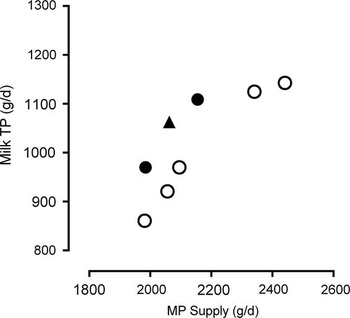
To examine whether this feature holds true for other datasets, data from two independent studies were used to evaluate the FiM MP model following the same methodology. In the first study, a low MP diet was compared with diets supplying more MP either from fishmeal or a vegetable blend at low and high levels (Allison and Garnsworthy, Reference Allison and Garnsworthy2002). In the second study, diets with low and high MP contents had low and high leucine concentrations in a factorial arrangement (Garnsworthy et al., Reference Garnsworthy, Gong, Armstrong, Newbold, Marsden, Richards, Mann, Sinclair and Webb2008). For both studies, milk TP yield and MP supply were higher than most of the values included in the FiM evaluation. Nevertheless, a relationship was observed for milk protein response to MP supply across the combined dataset (Figure 1). MP-deficient and MP-marginal diets produced more milk TP than MP-adequate diets at the same level of MP supply, indicating that efficiency of MP utilisation, was greater for deficient/marginal diets than for adequate diets, thus concurring with the FiM evaluation (Thomas, Reference Thomas2004). A misleading conclusion could be reached, therefore, that diets formulated to be deficient or marginal in MP will result in greater milk TP output than diets formulated to be adequate in MP.
Evaluation of metabolisable protein (MP) supply against milk true protein (TP) output for diets categorised as deficient (D, ▲), marginal (M, ●) or adequate (A, ○) according to MP balance (data from Alison and Garnsworthy, Reference Allison and Garnsworthy2002; Garnsworthy et al., Reference Garnsworthy, Gong, Armstrong, Newbold, Marsden, Richards, Mann, Sinclair and Webb2008).

The most likely explanation for this anomaly is not that the FiM MP model is flawed, but that the evaluation methodology has a high likelihood of producing this anomaly. In both FiM and the current evaluation, diets were classified a posteriori according to MP balance calculated from observed performance, not from targets used in diet formulation. Consequently, a diet that results in milk TP outputs higher than predicted from MP supply will be classified as deficient; a diet that results in milk TP outputs lower than predicted from MP supply will be classified as adequate. This does not mean, therefore, that formulating a diet to be deficient in MP will enhance milk protein yield; it means that responses were influenced by something other than MP supply.
Diets might influence milk TP output beyond that predicted by MP supply in several ways:
-
1. Apparent efficiency of MP utilisation for milk synthesis is greater for diets that are marginal or deficient in MP supply due to utilization of body protein, but FiM adopted a fixed efficiency of 0.68 for true efficiency of MP utilization when supply is adjusted for body protein changes.
-
2. Overall N efficiency is increased for low protein diets by increased N recycling.
-
3. Nitrogen efficiency is increased for low protein diets also by decreased catabolism of protein for energy (Metcalf et al., Reference Metcalf, Mansbridge, Blake, Oldham and Newbold2008) and for high protein diets by increased mobilisation of body fat reserves in cows that are fatter at calving (Garnsworthy and Jones, Reference Garnsworthy and Jones1987).
-
4. Amino acid profile of digestible undegradable protein (DUP) can affect response to MP supply. Lys and Met responses are discussed below, but leucine enhanced responses in both Allison and Garnsworthy (Reference Allison and Garnsworthy2002) and Garnsworthy et al. (Reference Garnsworthy, Gong, Armstrong, Newbold, Marsden, Richards, Mann, Sinclair and Webb2008). Leucine is one of the major amino acids found in microbial protein, so diets marginal for microbial CP (MCP) can enhance performance if they supply DUP with greater leucine content.
-
5. Diets supplying rumen degradable protein (RDP) above requirements are likely to incur an energy cost for detoxifying excess ammonia; this cost is estimated to be 0.8 MJ/100 g surplus protein (Twigge and van Gils, Reference Twigge and van Gils1984). Diets marginal or deficient in MP are likely to have lower RDP surpluses, thus sparing energy for milk synthesis.
-
6. There are many interactions between energy and protein supplies in determining milk TP output. Newbold (Reference Newbold1994) discussed the need for different optimal ratios of MP : ME at different levels of ME intake. Metcalf et al. (Reference Metcalf, Mansbridge, Blake, Oldham and Newbold2008) reported responses to MP above optimal MP : ME ratios, but with decreasing efficiency of MP utilization.
-
7. The FiM model to predict DMI includes a positive association between CP concentration of concentrates and DMI, although the effect is exaggerated when CP intake from concentrates exceeds 3.5 kg/day.
Milk yield responses to dietary protein
The following discussion is based on strategies that seek to reduce the level of dietary CP in dairy-cow rations, the consequences that this might have for milk yield and composition, and the means by which reductions in yield can be mitigated. It is recognised, however, that an alternative or perhaps complementary strategy to that of flat-rate reductions in dietary protein might be to oscillate daily CP levels thereby taking advantage of the ruminant animal’s ability to salvage and recycle urea-N to the rumen and/or gastro-intestinal tract (Cole and Todd, Reference Cole and Todd2008; Reynolds and Kristensen, Reference Reynolds and Kristensen2008). As acknowledged in the preceding section, this ability to recycle urea is particularly efficient when ruminants are fed low-protein diets. In low-producing ruminants, such as beef cattle and sheep, CP deficient forage-based diets can be supplemented with natural protein sources at intervals up to 72 h with no adverse effect on animal performance. In some instances N-retention has actually been increased (Cole, Reference Cole1999; Archibeque et al., Reference Archibeque, Freetly, Cole and Ferrell2007). While such a strategy may appear attractive, in terms of reducing dietary costs and also to reduce N excretion, the efficacy of such a feeding regimen in high-yielding dairy cows has not been properly investigated and therefore will not be considered further in this review. A further consideration pertains to recent interest in extended lactations for dairy cows. Some studies have considered calving intervals of up to two years (e.g. Kolver et al., Reference Kolver, Roche, Burke, Kay and Aspin2007; Butler et al., Reference Butler, Shalloo and Murphy2010). Intuitively, one might perceive greater scope to reduce dietary CP levels in such systems, as average dietary protein requirements of such animals would be lower. However, to the best of our knowledge, no such study has been conducted and given that there are doubts regarding the economic and environmental viability of such systems (e.g. Butler et al., Reference Butler, Shalloo and Murphy2010; Wall et al., Reference Wall, Coffey and Pollott2012), the effects of dietary CP reduction in such systems will not be considered further in this review.
CP and intake
There are well established positive responses in milk yield that accompany increases in dry matter intake (DMI) of dairy cows (Hristov et al., Reference Hristov, Price and Shafii2004) and, given that DMI responds positively to increased dietary CP concentration (Oldham, Reference Oldham1984; Newbold, Reference Newbold1994), it follows that a significant component of the milk yield response to dietary CP (Ipharraguerre and Clark, Reference Ipharraguerre and Clark2005) resides in improvements in voluntary intake. In turn, this arises in part through improvements to digestibility (in particular that of fibre) in the rumen (Faverdin, Reference Faverdin1999), but also due to direct and indirect effects on intermediary metabolism, nutrient partitioning to the mammary gland and metabolic signalling of intake regulation (Ingvartsen and Andersen, Reference Ingvartsen and Andersen2000; Huhtanen et al., Reference Huhtanen, Rinne and Nousiainen2008). It should be noted, however, that while such effects are quite well characterised in non-ruminants (particularly in rodents), this is not the case in ruminant species, and effects of dietary protein on intake regulation in dairy cows has not been a hot topic of investigation in recent years.
Faverdin (Reference Faverdin1999) usefully identified nitrogenous nutrients as having both putative short- and long-term effects on feed-intake regulation. The former has been ascribed to the actions of ammonia (NH4) which, when absorbed rapidly across the rumen wall at levels that exceed the liver’s capacity to detoxify can, as we have shown in cattle, act on central mechanisms to depress feed intake (Sinclair et al., Reference Sinclair, Sinclair and Robinson2000a). It is unlikely, however, that such levels of peripheral NH4 would be attained with contemporary total mixed ration (TMR) diets of 180 g CP/kg DM or less, although blood NH4 may come into play at higher levels of protein feeding particularly with high effective (E)RDP: fermentable metabolisable energy silages. Longer-term effects of CP on intake are equally difficult to characterise fully but are dependent on the digestibility and nature (i.e. grass v. grass silage v. maize silage) of the basal forage, as well as the level of concentrate supplementation. In general, intake responses to increased CP are greatest for diets of low digestibility, for maize rather than grass silages, and where high levels of concentrates are fed (Faverdin, Reference Faverdin1999). Newbold (Reference Newbold1994) proposed that intake response to MP for grass-based silages is probably due to MP supply whereas, for maize based silages, responses are because of the effects of both ERDP and MP supply. However, post-ruminal effects of amino acid supply on feed intake in dairy cows have been difficult to quantify, varying as it does by the proportion and source of ERDP and the degradability and amino acid content of DUP (Ipharraguerre and Clark, Reference Ipharraguerre and Clark2005). Furthermore, intake responses to increased MP are often greater when animals are deficient in ME (Newbold, Reference Newbold1994).
In an era of reducing dietary protein levels, and in order to minimise feed costs and N excretion to the environment, the challenge is how to mitigate effects associated with reduced DMI. Contemporary evidence for high-yielding dairy cows, however, indicates that reductions in intake are likely to be modest at CP levels at or above 140 g/kg DM (e.g. Broderick, Reference Broderick2003; Colmenero and Broderick, Reference Colmenero and Broderick2006; Law et al., Reference Law, Young, Patterson, Kilpatrick, Wylie and Mayne2009a; Lee et al., Reference Lee, Hristov, Heyler, Cassidy, Long, Corl and Karnati2011) and could be at least partially offset by either improving the digestibility of the UDP component of the diet (Noftsger and St-Pierre, Reference Noftsger and St-Pierre2003), by increasing fermentable metabolisable energy (FME) (Herrera-Saldana et al., Reference Herrera-Saldana, Gomez-Alarcon, Torabi and Huber1990), and/or by increasing the overall ME of the diet (thereby altering the ME : MP ratio).
Physiological status (stage of lactation)
Dietary requirements to support milk production vary during lactation reflecting changes in milk yield, appetite and endocrine regulation of nutrient partitioning between tissues and the mammary gland. Scope, therefore, may exist to modify dietary protein levels at different stages during lactation in order to increase the efficiency of N utilisation and to maximise milk yields. Working with contemporary high-yielding Holstein-Friesians, Law et al. (Reference Law, Young, Patterson, Kilpatrick, Wylie and Mayne2009a) investigated the effects of three different dietary CP concentrations on milk yield and N retention during either early or late lactation using a partial change-over design. The efficiency of N use for milk production (NUE; defined as kg of milk N output per kg dietary N intake) was 0.42, 0.39 and 0.35 for dietary CP concentrations of 114, 144 and 173 g/kg DM respectively during early (i.e. the first 150 days) lactation. The NUE for milk production was reduced when dietary CP increased during the latter 155 days lactation (i.e. from 144 to 173 g/kg DM; 0.37 to 0.30) and increased when dietary CP was reduced (i.e. from 173 to 144 g/kg; 0.30 to 0.36). Collectively, these results reveal that the efficiency of N capture for milk production is proportionately greater at lower CP concentrations. In this respect these results agree with earlier observations (Huhtanen and Hristov, Reference Huhtanen and Hristov2009). Whole lactation milk yields for cows on the lowest (i.e. 114 g CP/kg DM) level of protein were 30% below that for cows on the highest (i.e. 173 g CP/kg DM) level of protein. In contrast, whole-lactation milk yields were reduced by only 10% and 7% for cows on the 144/144 and 173/144 treatment groups, respectively, suggesting that there may be scope to mitigate losses associated with reduced dietary CP concentrations by manipulating diet composition (discussed later). This is important for strategies that aim to reduce dietary CP concentrations throughout lactation, as they offer the greatest potential to reduce feed costs and N excretion in the environment.
Diet composition and milk yield responses to CP
In a meta-analysis of the effects of dietary protein concentration on milk protein yield and milk N efficiency, Huhtanen and Hristov (Reference Huhtanen and Hristov2009) reported an improvement in efficiency of N use as dietary CP decreased or milk yield increased; the latter in the absence of an increase in dietary CP. In a survey of 372 dairy farms by Jonker et al. (Reference Jonker, Kohn and High2002), cows in protein balance had a NUE of 0.30, and NUE changed by 0.05 per 100 g N/day above or below requirements; at all levels of supply, however, NUE was highly variable among farms.
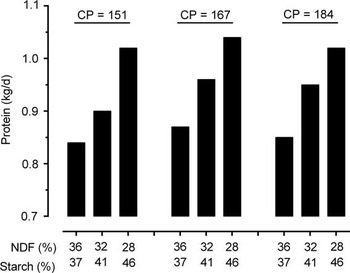
Broderick (Reference Broderick2003) demonstrated the importance of energy source in determining N efficiency in lactating dairy cows. Increasing dietary energy, by reducing proportion of forage (thereby NDF) and increasing the proportion of shelled corn (mostly starch), increased yields of total and true milk protein (Figure 2), and improved the efficiency of N use (defined earlier) from 0.25 to 0.30. In contrast, reducing dietary CP concentrations from 184 to 151 g/kg DM had little effect on total milk protein yield and no effect on true milk protein yield, although efficiency of N use was improved. The proportion of forage in the study was reduced from 0.75 to 0.50. It is uncertain by how much further efficiency of N use can be improved by altering concentrate carbohydrate source for levels of forage inclusion <0.50. Indeed, such responses are likely to vary with forage digestibility and DMI. However, level and balance of intestinally absorbable amino acids, in addition to energy-yielding metabolites, is central to sustaining milk yield and composition with minimal dietary protein.
Effect of dietary CP (g/kg DM) and NDF (NDF; % DM) on milk true-protein yield (data derived from Broderick, Reference Broderick2003; GA Broderick, personal communication). Non-fibre carbohydrates (CHO; % DM) would have consisted mainly starch and a small amount of sugars. Diets contained high levels of maize grain.

It is generally accepted that of the 10 essential amino acids, Met and Lys are normally the first two rate-limiting for growth and milk production. Diets high in NDF reduce the proportion of Met and Lys in duodenal proteins, perhaps as a consequence of reduced flow of microbial proteins (which are richer in Met and Lys) to the duodenum (Robinson, Reference Robinson2010). In general the amino acid composition of MCP is superior to that of DUP as it more closely resembles the amino acid composition of milk and lean tissues (National Research Council (NRC), 2001). In contrast, the amino acid composition of DUP more closely reflects that of the various vegetable feedstuffs from which it is derived. Consequently, dietary strategies that aim to maximise the intestinal delivery of MCP may go some way to mitigating the effects of reduced supply of dietary CP. Such strategies are inextricably linked to energy metabolism within the rumen. Increased MCP probably accounted for much of the positive milk protein yield responses to dietary energy observed by Broderick (Reference Broderick2003).
As the efficiency of conversion of MP and that of metabolisable amino acids into milk TP declines with both increasing supply of MP (Metcalf et al., Reference Metcalf, Mansbridge, Blake, Oldham and Newbold2008) and with Met and Lys (Vyas and Erdman, Reference Vyas and Erdman2009), it follows that production responses to rumen protected forms of specific amino acids may increase at lower dietary protein levels so long as dietary energy intake and other amino acids do not become rate limiting. Most major protein sources contain less Met and Lys than does MCP, so that the proportion of these limiting amino acids in duodenal digesta decline at higher levels of dietary CP (Robinson, Reference Robinson2010). Sometimes, however, responses to added Met and Lys are influenced by the supply of other potentially limiting amino acids (e.g. histidine) and energy (e.g. gluconeogenic) metabolites. In particular for grass-silage diets histidine, rather than Met or Lys, is often the first limiting amino acid (Vanhatalo et al., Reference Vanhatalo, Huhtanen, Toivonen and Varvikko1999).
In a systematic review and analysis of dietary protein sources and responses to metabolisable Lys and/or Met, Robinson (Reference Robinson2010) found that milk yield responses to Met and Met+Lys generally increased as CP level of the basal diet increased although, as previously stated, marginal efficiencies of metabolisable Met and Lys use for milk protein yield decreased (Vyas and Erdman, Reference Vyas and Erdman2009). Looking to the future, in an era of reduced dietary protein use, it will be important to establish precise responses to rate-limiting amino acids at low dietary CP levels. With this in mind a comprehensive systematic-review and meta-analysis of the pertinent literature relating to production responses to specific amino acids in lactating cows fed low-protein diets was conducted.
Meta-analysis of responses to rumen protected amino acids for low CP diets
This meta-analysis used peer-reviewed publications accessible via Thompson Reuters Web of Science and NCBI PubMed. For the latter database the following MeSH terms included ‘cattle’, ‘metabolism’, ‘lactation’, ‘milk’, ‘protein’, ‘methionine’, ‘lysine’. To be eligible only studies conducted since 1987 were considered with lactating Holstein cows offered diets with a CP content of ⩽150 g/kg DM during either early or mid lactation. Analysis was also limited to those studies and experiments within studies where a combination of rumen protected Met and Lys were incorporated into the diet, and measurements of milk yield and composition reported. This is because few studies have considered Lys alone, and it is widely recognised that a balance of around 7.2% Lys and 2.4% Met within MP favours milk production (NRC, 2001). Only one study was included in the final analysis where these two amino acids were infused directly into the abomasum (Robinson et al., Reference Robinson, Chalupa, Sniffen, Julien, Sato, Fujieda, Ueda and Suzuki2000).
Source and level of protected Met and Lys varied between studies, but this was ignored in the final analysis based on the premise that their use and level of incorporation was predicted by the reporting authors to be sufficient to evoke a metabolic and/or production response. In a systematic analysis of the literature, however, Robinson (Reference Robinson2010) noted that few studies made any attempt to actually measure or even predict delivery of absorbable amino acids to the duodenum. The final analysis, therefore, involved 13 peer-reviewed studies with 16 independent experiments (Supplementary Table S1). Responses analysed were fat-corrected milk yield (kg/day) and protein yield (kg/day). For protein yield it was not always clear whether studies reported crude or true milk protein, and so no attempt was made to adjust these values. Data were analysed using a fixed-effects model (Comprehensive Meta-Analysis software, Biostat, Englewood, NJ, USA; http://www.meta-analysis.com). Heterogeneity (i.e. variation in study outcomes between studies) was assessed using the χ 2 test on Cochran’s Q-statistic and by calculating I 2 (i.e. percentage of variation across studies that is due to heterogeneity rather than chance). As heterogeneity was present for both analysis of milk yield and milk protein yield, a random-effects meta-analysis was carried out for each. These analyses, however, agreed with that for the fixed model and so only outputs of fixed-model analyses are presented.
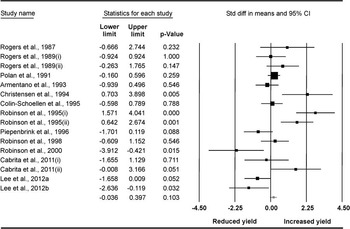
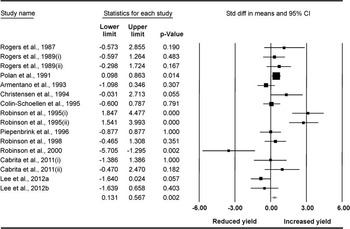
Results from these analyses revealed no overall response in FCM yield (Figure 3) but an overall increase (P=0.002), albeit small, in milk protein yield (Figure 4) when low CP diets were supplemented with rumen protected Met+Lys. Furthermore, in the absence of publication bias both sets of analyses revealed significant (P<0.001) heterogeneity between studies indicating that biological factors rather than sampling error accounted for variation in responses between studies. Also, the outcome of this meta-analysis matched the general responses of the largest study in this cohort (i.e. Polan et al., Reference Polan, Cummins, Sniffen, Muscato, Vicini, Crooker, Clark, Johnson, Otterby and Guillaume1991) which was replicated across several institutes and involved on average 55 cows per treatment.
Effect of rumen protected methionine plus lysine on fat-corrected milk yield (kg/day) for diets of ⩽150 g CP/kg DM. A meta-analysis of 13 studies, involving 16 experiments, where cows were fed either a ‘Control’ diet or a diet of similar composition but with added rumen protected methionine and lysine. The Forest plot presents standardized differences in means (s.d. in means) with 95% CI. Heterogeneity (Q-statistic, χ 2) between studies=62.1 (15 df), P<0.001 (I 2=75.8%). Mean values (■) proportional in size to each study’s weight. Overall treatment effect: Z=1.107 (P=0.103).

Effect of rumen protected methionine plus lysine on milk protein yield (kg/day) for diets of ⩽150 g CP/kg DM. A meta-analysis of 13 studies, involving 16 experiments, where cows were fed either a ‘Control’ diet or a diet of similar composition but with added rumen protected methionine and lysine. The Forest plot presents standardized differences in means (s.d. in means) with 95% CI. Heterogeneity (Q-statistic, χ 2) between studies=63.5 (15 df), P<0.001 (I 2=76.4%). Mean values (■) proportional in size to each study’s weight. Overall treatment effect: Z=3.141 (P=0.002).

The greatest positive response to supplemental rumen-protected Met+Lys was observed in the study of Robinson et al. (Reference Robinson, Fredeen, Chalupa, Julien, Sato, Fujieda and Suzuki1995), which was conducted at two sites with largely similar diets (based on a mixture of maize, lucerne and grass silages) offered to mid-lactation Holstein cows averaging around 31 kg/day FCM. Although CP content of the diets was around 140 to 150 g/kg DM they were calculated, based on chemical composition and measurements of intake, to meet but not exceed protein requirements for microbial growth and milk production. Under these conditions supplementation of 19 g/day ruminally protected l-Lys.HCl and 6.5 g/day ruminally protected dl-Met evoked a positive response but by different mechanisms at the two sites; at one site this was due to apparent increases in gross efficiency of utilisation of both protein and energy, whilst at the other site the response arose largely through improvements in DMI. In the other study that showed significant improvements to rumen protected AA, Christensen et al. (Reference Christensen, Cameron, Clark, Drackley, Lynch and Barbano1994) offered fat (ground high-oil shelled corn) to cows fed a diet containing 142 g CP/kg DM and reported increases in FCM yield and milk true-protein yield relative to non-fat supplemented cows fed a diet containing 175 g CP/kg DM. The feeding of ruminally protected AA and post-ruminal infusion of casein into cows fed fat-supplemented diets containing 160 to 170 g CP/kg DM was previously found to increase milk protein yields (Canale et al., Reference Canale, Muller, McCahon, Whitsel, Varga and Lormore1990; Chow et al., Reference Chow, DePeters and Baldwin1990; Cant et al., Reference Cant, Depeters and Baldwin1991).
In contrast, the greatest negative effect of supplemental Met+Lys in low (144 g/kg DM) CP diets was found in the study of Robinson et al. (Reference Robinson, Chalupa, Sniffen, Julien, Sato, Fujieda, Ueda and Suzuki2000), where these two AA were directly infused into the abomasum of mid/late-lactation cows receiving 140% of calculated intestinally absorbable requirements. Such was the magnitude of this effect that removal of this study from the meta-analysis led to a small but significant (P=0.05) positive increase in overall FCM yield. The reduction in performance in this study was due to inhibitory effects on DMI. In the two studies of Lee et al. (Reference Lee, Hristov, Heyler, Cassidy, Lapierre, Varga and Parys2012a and b), the CP content of Control diets was around 157 g/kg DM and calculated to be adequate in MP. In contrast the CP content of treatment diet was ⩽140 g/kg DM and deemed to be deficient in MP. The inclusion of rumen protected Met+Lys failed to increase FCM and milk protein yields to levels comparable to the MP-adequate Control groups in these studies but it did, in the study of Lee et al. (Reference Lee, Hristov, Cassidy, Heyler, Lapierre, Varga, de Veth, Patton and Parys2012b), lead to small but significant improvements in milk protein yield relative to a second CP and MP deficient group, where no rumen protected AA were added.
The variability in milk yield and compositional responses for diets of ⩽150 g CP/kg DM highlighted by these analyses agree with the general findings of previous systematic reviews which considered a wider range of dietary protein levels (Vyas and Erdman, Reference Vyas and Erdman2009; Patton, Reference Patton2010; Robinson, Reference Robinson2010). The general consensus is that it is possible to manipulate the proportions of Met and Lys in duodenal protein, but predicting this and production responses that may arise are difficult. There is also a consensus that responses to added Met and Lys are generally superior to either amino acid offered alone, particularly during early lactation, but that the response to one amino acid is not necessarily dependent on the addition of the other (Patton, Reference Patton2010). Responses to added amino acids do, however, depend on diet composition (e.g. level and nature of forage) and animal factors such as stage of lactation, body composition, negative energy balance and milk yield; all of which will determine nutrient priorities and partitioning to the mammary gland. Variability in responses also exists between commercially available sources of rumen-protected Met and Lys, which is beyond the scope of the current article but is the subject of related reviews (e.g. Robert, Reference Robert2005; Vyas and Erdman, Reference Vyas and Erdman2009); and it is evident from Robinson et al. (Reference Robinson, Chalupa, Sniffen, Julien, Sato, Fujieda, Ueda and Suzuki2000) that excessive levels of rumen-protected amino acids may be detrimental.
Dietary protein and cow health
Excess dietary protein has long been suggested as a contributory factor to lameness in dairy cattle with several possible modes of action proposed. These include high levels of ammonia emanating from excess RDP, free ammonia in silage (Bazeley and Pinsent, Reference Bazeley and Pinsent1984) or an allergic response to histamine (Nilsson, Reference Nilsson1963; Chew, Reference Chew1972). Evidence to support the relationship between dietary protein and lameness is however, somewhat limited. One of the main studies to find an association (Manson and Leaver, Reference Manson and Leaver1988) reported a decrease in locomotion score (lower scores indicating improved locomotion) and number of clinical cases of lameness, particularly solar ulcers, when dietary CP was decreased from 198 to 161 g/kg DM. Others have also reported a negative relationship between dietary CP level and lameness (Bazeley and Pinsent, Reference Bazeley and Pinsent1984). In contrast, protein was not identified as a risk factor for lameness in high producing dairy cows fed 175 g CP/kg DM (Espejo and Endres, Reference Espejo and Endres2007), nor was feeding 150 or 200 g CP/kg DM associated with any changes in hoof characteristics of dairy calves (Momcilovic et al., Reference Momcilovic, Herbein, Whittier and Polan2000). Spring grass is often high in RDP which in theory may present a particular risk to solar lesions. It is difficult, however, to differentiate the effects of protein from that of the rapid rate of ruminal fermentation of carbohydrate in grass, and as a consequence there is no conclusive evidence to suggest a direct negative effect of protein levels in grass on lameness (Westwood et al., Reference Westwood, Bramley and Lean2003). It is also increasingly likely that hormonal and physiological changes associated with the onset of calving and lactation are the primary factors associated with claw horn lesions rather than dietary stress (Tarlton et al., Reference Tarlton, Holah, Evans, Jones, Pearson and AJF2002).
Notwithstanding the possible negative effects of excess protein on lameness, S-containing amino acids have a key role in the proliferation and differentiation of horn-forming epidermal cells in the bovine hoof (Hepburn et al., Reference Hepburn, Knight, Wilde, Hendry and Galbraith2008), and for cyst(e)ine in particular are present at concentrations in the wall and sole horn well in excess of that found in microbial protein or DUP (Galbraith and Scaife, Reference Galbraith and Scaife2007). Given the oxidative instability of l-cysteine and the post-absorptive ability of animals to convert methionine to cysteine, most studies have focused on the effects of supplementation with Met or its analogues. Supplementation with L-Met in vitro has been demonstrated to increase protein synthesis in epidermal horn-forming cells (Hepburn et al., Reference Hepburn, Knight, Wilde, Hendry and Galbraith2008), although the response in vivo is less certain. For example, Laven and Livesey (Reference Laven and Livesey2004) reported no benefit to supplementary rumen protected Met (115% v. 95% of requirements) on solar haemorrhages or locomotion score in dairy cattle, while there was no significant effect on the rates of growth or wear of the hoof horn (Livesey and Laven, Reference Livesey and Laven2007). Similarly, feeding animal protein that is high in S-containing amino acids had no beneficial effect on lameness or the development of solar lesions in the study of Offer et al. (Reference Offer, Logue and Roberts1997). In contrast, others have reported an increase in hoof growth from amino acid supplementation, although this was not necessarily associated with an increase in hoof hardness (Clark and Rakes, Reference Clark and Rakes1982). The apparent inconsistency in response in vitro and in vivo may in part be explained by the relative requirements for S-containing amino acids (particularly Met) for milk production, with studies that have reported no benefit to supplementation generally being conducted with low-yielding cows (e.g. Offer et al., Reference Offer, Logue and Roberts1997; Laven and Livesey, Reference Laven and Livesey2004). It could therefore be envisaged that beneficial effects of supplementary Met on solar lesions and lameness may become more pronounced as genetic potential for milk production advances.
The onset of lactation reduces neutrophil and lymphocyte function (Kehrli and Shuster, Reference Kehrli and Shuster1994) with glutamine, in particular, being utilised at high rates by leucocytes for nucleotide biosynthesis (Goff, Reference Goff2003). It is well established that decreasing the protein supply to ewes in late gestation reduces their immune response and increases the periparturient rise in faecal egg counts (e.g. Donaldson et al., Reference Donaldson, van Houtert and Sykes2001), but the effects in dairy cows is less well proven. Some (e.g. Curtis et al., Reference Curtis, Erb, Sniffen, Smith and Kronfield1985; Rode et al., Reference Rode, Fujeieda, Sato, Suzuki, Julien and Sniffen1994) have reported an increased risk of retained placenta and metabolic disease with decreased dietary protein or amino acid supplementation, but in general there is a paucity of studies that have been specifically designed to investigate the effect of protein level on cow health. As a consequence, those that have are limited by the number of replicates, minimising the likelihood of detecting an effect of treatment. The general consensus across these studies however, is that neither pre- nor post-partum protein nutrition has a major effect on milk somatic cell count (SCC), incidence of mastitis or other disease (e.g. Garnsworthy and Jones, Reference Garnsworthy and Jones1987; Putnam et al., Reference Putnam, Varga and Dann1999; Wu and Satter, Reference Wu and Satter2000). Met has been implicated as having an important role in improving the immune system in dairy cattle, and supplying a rumen protected Met supplement at a comparatively high level (30 g/day) was shown to increase the proliferative response of peripheral T-lymphocytes in mid-lactation dairy cows, although milk SCC was not affected (Soder and Holden, Reference Soder and Holden1999). Other studies that have examined Met supplementation have found no beneficial effect on SCC (e.g. Piepenbrink et al., Reference Piepenbrink, Marr, Waldron, Butler, Overton, Vázquez-Añón and Holt2004; Robinson et al., Reference Robinson, Swanepoel and Evans2010).
Tissue, body fat/protein mobilisation
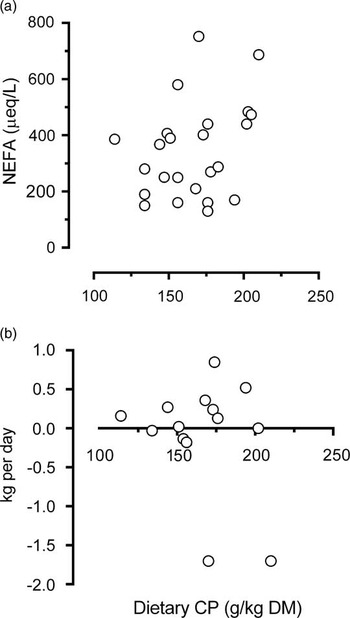
A decrease in dietary protein supply in early lactation is associated with an increase in the responsiveness of adipose tissue to anti-lipolytic stimuli such as insulin, and decrease in the responsiveness to lipolytic stimuli such as epinephrine (Cadórniga and López Díaz, Reference Cadórniga and López Díaz1995; Schor and Gagliostro, Reference Schor and Gagliostro2001). It would therefore be anticipated that decreasing tissue amino acid supply should be translated into a net decrease in body fat mobilisation. The relationship between dietary protein concentration and live weight change and body fat mobilisation (as represented by plasma non-esterified fatty acids (NEFA); Figure 5a and b), does not support this. An analysis of data from studies (i.e. Jones and Garnsworthy, Reference Jones and Garnsworthy1988; Cadórniga and López Díaz, Reference Cadórniga and López Díaz1995; Garcia-Bojalil et al., Reference Garcia-Bojalil, Staples, Risco, Savio and Thatcher1998; Hongerholt and Muller Reference Hongerholt and Muller1998; Bach et al., Reference Bach, Calsamiglia, Huntington and Stern2000; Westwood et al., Reference Westwood, Lean, Garvin and Wynn2000; Schor and Gagliostro, Reference Schor and Gagliostro2001; Davidson et al., Reference Davidson, Hopkins, Diaz, Bolt, Brownie, Fellner and Whitlow2003) that have examined the influence of DUP level within the same dietary protein concentration have also failed to find a consistent relationship (geometric means for plasma NEFA: 255 v. 310 µeq/l for Low v. High DUP respectively; P=0.158). The effects of protein supply on body tissue mobilisation are, however, confounded by dietary factors (e.g. amino acid profile, dietary energy concentration and source), and animal factors (e.g. body condition score (BCS), stage of lactation and DM intake). For example, Jones and Garnsworthy (Reference Jones and Garnsworthy1988) and Cadórniga and López Díaz, (Reference Cadórniga and López Díaz1995) demonstrated a greater negative energy balance in cows that had a high BCS when provided with diets with a high by-pass protein content, but not in cows with a low condition score. Additionally, increased dietary protein intake or DUP supply is often associated with an elevated DM intake, reducing the requirement for body tissue mobilisation.
Relationship between dietary CP concentration and plasma non-esterified fatty acids (a) and live weight change (b) in early lactation dairy cows (Data from Nachtomi et al., Reference Nachtomi, Halem, Bruckental and Amir1991; Hongerholt and Muller Reference Hongerholt and Muller1998; Bach et al., Reference Bach, Calsamiglia, Huntington and Stern2000; Wu and Satter Reference Wu and Satter2000; Kokkonen et al., Reference Kokkonen, Syrjälä-Qvist, Tsehai Tesfa, Tuori and Yrjänen2002; Davidson et al., Reference Davidson, Hopkins, Diaz, Bolt, Brownie, Fellner and Whitlow2003; Schei et al., Reference Schei, Volden and Baevre2005; Law et al., Reference Law, Young, Patterson, Kilpatrick, Wylie and Mayne2009a). R 2 for NEFA=0.10 and LWG=0.07.

Liver steatosis (or fatty liver; FLS), occurs during the periparturient period in dairy cows when excess body fat is mobilised, and it has been estimated that ~45% of dairy cows in early lactation have a moderate steatosis (Jorritsma et al., Reference Jorritsma, Jorritsma, Schukken and Wentink2000; Bobe et al., Reference Bobe, Young and Beitz2004). Dairy cows have been shown to have a particularly low rate of secretion of very low density lipoproteins (VLDL) from the liver (Grummer, Reference Grummer1995), and enhancing the rate of lipid transport from the liver offers one option to reduce the onset of FLS. Met serves as a methyl donor for the synthesis of apolipoprotein B100 and phosphotidyl choline in the liver. These metabolites are required for the hepatic production of VLDL, and are necessary for the synthesis of carnitine, required for the uptake of long-chain fatty acids across mitochondrial membranes (Grummer, Reference Grummer1995). It has therefore been suggested that a deficiency of Met may restrict hepatic VLDL synthesis, and surveys of dairy cows that have experienced severe liver steatosis in the periparturient period indicate a strong association with low plasma Met concentrations (Shibano and Kawamura, Reference Shibano and Kawamura2006). However, controlled studies that have investigated the response to supplementary Met have not produced a conclusive benefit (Durand et al., Reference Durand, Chilliard and Bauchart1992; Bertics and Grummer, Reference Bertics and Grummer1999; Piepenbrink et al., Reference Piepenbrink, Marr, Waldron, Butler, Overton, Vázquez-Añón and Holt2004). Indeed, some have reported an increase in hepatic lipid concentrations (Preynat et al., Reference Preynat, Lapierre, Thivierge, Palin, Cardinault, Matte, Desrochers and Girard2010), and therefore the practical role of Met on energy metabolism in early lactation is unclear.
An alternative source of amino acids for metabolism in early lactation is the mobilisation of body protein reserves, which can be equivalent to an extra daily dietary protein supply over the first 100 days of lactation of ~250 g, or 5% to 10% of protein intake (Paquay et al., Reference Paquay, DeBaere and Bull1972; Botts et al., Reference Botts, Hemken and Bull1979). The mobilised amino acids, particularly Met, may be used to enhance the rate of lipid transport from the liver and reduce the risk of FLS in early lactation, as described previously. Although some, but not all studies have shown a benefit to milk yield and protein output from feeding higher protein during the dry period (see review of Friggens et al., Reference Friggens, Andersen, Larsen, Aaes and Dewhurst2004), there is little benefit on reducing liver triglyceride concentration or the incidence of health disorders in early lactation (e.g. Huyler et al., Reference Huyler, Kincaid and Dostal1999; Vandehaar et al., Reference Vandehaar, Yousif, Sharma, Herdt, Emery, Allen and Liesman1999; Greenfield et al., Reference Greenfield, Cecava, Hohnson and Donkin2000). Interestingly, cows that are most susceptible to the development of metabolic disorders (i.e. above a BCS of 3.25 units) respond better to increased dietary protein supply in late gestation as evidenced by lower blood NEFA levels (Putnam and Varga, Reference Putnam and Varga1998), a situation similar to that found when supplying additional protein in early lactation. A confounding effect of feeding elevated protein levels in late gestation is the association with an increase in intake. This can lead to an increase in BCS, which in itself depresses intake in early lactation and promotes fat mobilisation, predisposing the cow to health issues such as downer cows (Grummer, Reference Grummer1995) and metabolic disease (Friggens et al., Reference Friggens, Andersen, Larsen, Aaes and Dewhurst2004).
Dietary protein and fertility in lactating cows
Lean et al. (Reference Lean, Celi, Raadsma, McNamara and Rabiee2012) conducted a meta-analysis on the effect of dietary CP on pregnancy rate and reported an overall 9% (P=0.019; 95% CI 2% to 16%) reduction in chance of conception in cows fed diets containing higher or more degradable CP within a dietary CP range of 111 to 230 g/kg. Although this study represents a comprehensive analysis, it should be noted that some of the studies included were conducted over 30 years ago and their relevance to the modern high-yielding Holstein cow with her reduced reproductive competence may be tenuous. However, what appears clear is that high dietary CP can be detrimental for fertility.
Few studies have directly addressed the influence of type of dietary protein on fertility parameters, but a recent study by Aboozar et al. (Reference Aboozar, Amanlou, Aghazadeh, Adl, Moeini and Tanha2012) reported improvements in a range of reproductive traits in cows fed high levels of rumen UDP. Earlier studies in dairy cows (Bruckental et al., Reference Bruckental, Droiri, Kaim, Lehrer and Folman1989) and twin-suckling beef cows (Sinclair et al., Reference Sinclair, Broadbent and Hutchinson1994) indicated that increasing the level of DUP in the diet can have a beneficial effect on fertility when associated with reduced plasma urea concentrations. Such benefits await further confirmation in contemporary high-yielding dairy cows. In the study of Garnsworthy et al. (Reference Garnsworthy, Gong, Armstrong, Newbold, Marsden, Richards, Mann, Sinclair and Webb2008), however, although manipulation of protein level and amino acid balance altered metabolic hormones and milk production, it did not affect ovarian function.
Reductions in dietary CP: effects on cow fertility
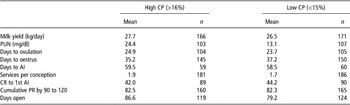
Although numerous studies have tested the hypothesis that high dietary CP is bad for fertility, far less emphasis has been placed on the effects of low CP diets on reproductive parameters. The results of six studies in which balanced groups of lactating dairy cows were fed either high or low levels of dietary CP are summarised in Table 1. Reductions in dietary protein can lead to a fall in milk yield. In some studies this has been associated with a reduction in calculated negative energy balance (e.g. Law et al., Reference Law, Young, Patterson, Kilpatrick, Wylie and Mayne2009b), a key factor driving poor fertility. In the Law et al. (Reference Law, Young, Patterson, Kilpatrick, Wylie and Mayne2009b) study there was no associated increase in either live weight or BCS, nor were there any changes in blood metabolites related to energy balance. In the results presented here, while milk yield was consistently reduced, low CP diets did not appear to have any major effects on reproductive performance. However, once again, it should be noted that most of these studies were carried out some time ago and the milk yields recorded bear little comparison to the much higher yields achieved in the modern dairy cow. Thus, although these studies suggest that a reduction in dietary protein may be possible without impacting on fertility traits, it is essential that the effects of such an approach are assessed in modern high-yielding cows where metabolic demands are far in excess of animals studied previously.
Mean (weighted for study size) milk yield and reproductive parameters measured in studies (n=6) in which balanced groups of lactating dairy cows (n=12 to 146 per study) were fed diets containing either high (mean 19.2%, range 16.9% to 20.0%; n=181 cows) or low (mean 13.8%, range 12.7% to 14.5%; n=186 cows) levels of CP (based on data from; Jordan and Swanson Reference Jordan and Swanson1979; Edwards et al.,Reference Edwards, Bartley and Dayton1980; Howard et al., Reference Howard, Aalseth, Adams and Bush1987; Carroll et al., Reference Carroll, Barton, Anderson and Smith1988; Barton et al., Reference Barton, Rosario, Anderson, Grindle and Carroll1996; Law et al., Reference Law, Young, Patterson, Kilpatrick, Wylie and Mayne2009b)

PUN=plasma urea nitrogen; AI=artificial insemination; CR=conception rate; PR=pregnancy rate.
Nitrogenous metabolites: urea and ammonia
Dietary CP intake can be reflected in concentrations of plasma or milk urea. Urea measurements have been used in a number of studies to assess the relationships between levels of the metabolite and fertility parameters. Plasma levels of urea in excess of 6.8 mmol/l have for many years been considered indicative of negative influences on reproduction (Butler et al., Reference Butler, Calaman and Beam1996). However, the numerous studies looking at the association between circulating urea levels and fertility within dairy herds have produced variable results. In the UK, studies have reported reduced conception rates in cows with elevated plasma urea levels (>7.5 mmol/l; Wathes et al., Reference Wathes, Bourne, Cheng, Mann, Taylor and Coffey2007) while others have failed to find any relationship (Cottrill et al., Reference Cottrill, Biggadike, Collins and Laven2002; Mann et al., Reference Mann, Mann, Blache and Webb2005). In a recent large study in Poland (Sawa et al., Reference Sawa, Bogucki and Krezel-Czopek2011), while significant relationships were reported between milk urea and a number of fertility parameters, the associated R values were low (typically 0.01 to 0.07) emphasising the tenuous nature of these associations. Indeed, in a recent and comprehensive meta-analysis on the topic, Lean et al. (Reference Lean, Celi, Raadsma, McNamara and Rabiee2012) found no influence of blood urea levels on the effects of dietary protein on conception rate.
That notwithstanding, various correlates of dietary protein, including ammonia and urea, have been shown to act at both the ovarian and uterine level to influence reproductive function (Butler, Reference Butler1998). In vitro studies have established the ability of high ammonia/urea to impair oocyte development (Sinclair et al., Reference Sinclair, Kuran, Gebbie, Webb and McEvoy2000b; De Wit et al., Reference De Wit, Cesar and Kruip2001) though, in parallel with the effects of feeding high protein diets, the effects are inconsistent. For example, Ocon and Hansen (Reference Ocon and Hansen2003) reported negative effects of 7.5 mM but not 10 mM urea during in vitro maturation on subsequent blastocyst formation. What does appear more consistent is that the oocyte/blastocyst is more susceptible than the developing embryo as Rhoads et al. (Reference Rhoads, Rhoads, Gilbert, Toole and Butler2006) reported adverse effects of high urea in donor but not recipient animals following day 7 embryo transfers in lactating dairy cows. It has been suggested that the main site of action of the elevated ammonia/urea associated with the feeding of high protein diets may be the uterus where elevated urea is associated with lowered uterine pH (Elrod and Butler, Reference Elrod and Butler1993). However, in vitro studies would suggest that the period of reproductive susceptibility may occur before the embryo reaches the uterus, suggesting the oviductal environment may be more important. Furthermore, Carroll et al. (Reference Carroll, Barton, Anderson and Smith1988) reported similar conception rates in cows fed low and high protein diets resulting in widely differing uterine urea levels. Thus while a number of potential sites of action through which dietary protein can directly influence reproductive function have been identified, no conclusive mechanism has been established.
Conclusions
Care is required when using contemporary dietary formulation programs to ensure that milk yield responses match predictions for cows fed low (i.e. ⩽150 g/kg DM) CP diets. Dietary strategies that aim to optimise microbial protein synthesis may go some way to mitigating expected reductions in intake and milk yield when feeding low CP diets. Consideration should also be given to the nature and level of fermentable and non-fermentable energy sources in such diets. FCM and protein yield responses to the first-limiting essential amino acids Met and Lys will depend on diet composition and MP supply. Responses may be greater in early lactation, but there are insufficient data to evaluate this for cows fed low CP diets. Finally, no detrimental effects of feeding low CP diets on either cow health or fertility is anticipated, but this requires confirmation in contemporary high-yielding cows.
Acknowledgements
Study supported by a DairyCo Research Partnership Agreement: Animal health, welfare and nutrition.