Introduction
An international trade of remarkable proportions grew to prominence in the nineteenth century. While the collecting and trading of natural history goods already had a long history in Europe, new and distinctive elements emerged in the nineteenth century. Zoology in many forms became the principal focus of a new collecting boom as curiosity about unfamiliar animals from distant lands was increasingly stimulated by publications and through news from settlers, traders, and travellers. Collecting examples of new species became a popular pastime as many individuals emulated the elite collectors of earlier centuries. Public organizations, particularly museums and universities, grew in number and broadened their educational and professional research activities in the field of natural history. Entrepreneurs saw new opportunities for profitable commerce arising from a larger market that could no longer be negotiated primarily through the personal connections and scholarly communications of early modern times.
However, the expansion of the trade in response to new and growing sources of demand faced many challenges. If the distinguishing characteristics of a species were poorly understood this created difficulties in agreeing on a sale price. Capture and preservation were far more significant problems in zoology than for other products of the natural world, because specimens could more easily deteriorate or be damaged on long journeys. The two problems reinforced each other to hamper the development of the trade: heterogeneity of quality on top of uncertainty of its species. A third source of uncertainty was the fact that buyers and sellers, who were variously scientists, traders, and collectors, came from social groups unaccustomed to interaction. While unfamiliarity and lack of trust were mitigated by the relatively small network of elite collectors in earlier times, by the nineteenth century the growth of large-scale popular collecting threatened to overwhelm these personal channels.
This article examines these challenges and explains how they were largely overcome. In summary, the coming together of science, business, and personal collecting, while initially a source of uncertainty, also provided most of the solutions. Important advances in science, collecting, and commerce generated mutual benefits. Clearer scientific classification of species enabled more nuanced collecting, accurate pricing, and a better understanding of relative values for exchange and long-term collection. Improvements in preservation techniques, as well as taxidermy methods, assisted business logistics, scientific research, and long-term collecting. Technological advances in transportation and communications enabled scientists and collectors to purchase in a much more extensive market. During the nineteenth century, the modernization of business in scale and practices ensured that emerging organizations could efficiently handle complex long-distance trading. Marketing and branding allowed for a greater reach to potential clientele, including scientists and popular collectors who were dependent on the same type of information sources. Specific expeditions of scientists, collectors, and commercial agents provided reach into remoter areas. The interaction of scientific knowledge, the technologies of transport and preservation, and the modernization of commercial practices thus lie at the heart of the article and our exploration of the nature of this trade.
The parameters of the natural history trade
Collecting natural history specimens for medicinal purposes or for simple curiosity has a long international history; for example, Roman legionaries returned home with specimens of seashells as keepsakes of their experiences of foreign places. It seems likely, though, that long-distance trade or exchange in these products, or in the useful knowledge associated with them, was relatively small until the early modern period. By then, interest in natural history had become part of the republic of letters movement, which involved the international exchange of scientific ideas facilitated through honorific gifts. Correspondence, in tandem with the introduction of illustrated encyclopaedias and informative repertories, enabled this exchange of ideas and aroused interest in collecting natural history specimens. Although some commercial exchanges took place in the early modern period, this did not overcome the underlying distrust between the code of reciprocity in the learned world and the code of profit in the commercial world.Footnote 1 Before the nineteenth century, the logistical challenges of acquisition and preservation had largely confined successful trade to botanical and mineralogical items, together with insects and, with limited success, some smaller animals.Footnote 2 Collecting in botany was a foundation of commercially led research, as governments and their chartered trading companies vied with each other for dyes, foodstuffs, and medicinal plants. The development of botanic gardens and herbaria in Europe from the sixteenth century demonstrates the relative age of this trade in comparison with zoology.Footnote 3 But these products tended not to enrich the new museums of the nineteenth century, since plants already had their place in botanical gardens and herbaria.
The spreading geographic reach of overseas trade, exploration, and colonization in the eighteenth century opened European eyes more widely to an apparently endless natural world of previously unknown zoological species, indicative of much greater biological diversity than hitherto appreciated. Highly descriptive, sometimes illustrated, publications of zoology reinforced this revelation. They included Maria Sibylla Merian’s Metamorphosis insectorum Surinamensium, the product of her own field work in Suriname, published in 1705; Louis Renard’s colourful work on fish, crayfish, and crabs (1718–19); and Georges-Louis Leclerc, Comte de Buffon’s Histoire naturelle, thirty-six volumes of which were published between 1749 and 1789. Trade was also stimulated by travelogues and memoirs, which, like Benjamin Barton’s Fragments of the natural history of Pennsylvania (1799), could be a mixture of purposeful observations and what Barton (quoting Donne) called ‘fragmentary rubbish’.Footnote 4 The development of methods of classification including Carl von Linné’s Systema naturae (1735 and 1758) offered ways of cataloguing the multiplicity of natural wonders that such books revealed.Footnote 5 At the same time, changing attitudes, inspired by the Enlightenment, forged a belief that the natural world was for the benefit of, and exploitation by, humans.
By the nineteenth century, these underlying factors had made the observation, collection, and scientific study of zoology both respectable and highly fashionable. The growing interest of private collectors and museum scientists drove increased demand for natural history specimens. Several major private collections had been built in the eighteenth century, including those of Carl von Linné (purchased via Joseph Banks by John Smith in 1783), Hans Sloane, whose 71,000 objects formed the basis of the British Museum’s establishment in 1753, and the Duchess of Portland. The last’s collection was so large that after her death it took thirty-eight days to sell at auction.Footnote 6 ‘Cabinets of curiosities’ had become emblems of social and cultural status for the wealthy for many decades, but by the nineteenth century the practice of collecting had extended to the industrial middle classes, facilitated by their growing wealth and leisure. ‘Mounts’, taxidermied animal skins preserved in a lifelike position, became a fashionable form of decor in the Victorian home. Some were purchased ready-made from dealers, but others were created in the home, where taxidermy was practised by many middle-class Victorian women, as an extension of the decorative arts of sewing, embroidery, and painting, which were considered suitably genteel female pastimes.Footnote 7
In a democratizing age, aspirational, low-status individuals emulated their social and economic ‘superiors’ by collecting natural history specimens, albeit on a more modest scale. From the 1830s, popular natural history field clubs began to flourish in the United Kingdom, with activities that included excursions, discussion groups, recording of their transactions, and the acquisition of relevant publications.Footnote 8 Similar societies or clubs were established in the United States after the Civil War, and in Canada the Ottawa Field Naturalists Club was founded in 1863. By the mid nineteenth century, the number of ‘collections’ of one sort or another in Europe was estimated to be in the region of 100,000.Footnote 9
Reflecting this growing interest and activity, the number of publications dealing with zoology increased dramatically. These included the works of travelling naturalists, such as François Péron, Charles Darwin, and Mary Kingsley. Journals produced by learned societies, such as the Zoological Society of London, kept their members informed about the discovery of new species, while popular science periodicals had the capacity to reach many more readers.Footnote 10 Pitched to a socially diverse set of consumers of both genders and a range of ages, these publications facilitated more informed popular collecting focused on new species, in contrast to the opportunistic acquisitions of the undiscerning eighteenth-century sailor, wont to collect almost any unfamiliar item. Whereas once people could merely wonder at the illustrations and descriptions of new species, the scientific, technological, and organizational advances of the natural history trade in the nineteenth century gradually made ownership of physical artefacts a reality for collectors.Footnote 11
While natural history museums had been established in the early modern period, a substantial expansion took place in their role and numbers in the nineteenth century. Accompanying a much broader interest in collecting, museums shed their elite, often royal, nature to become public spaces for people to enjoy and learn from viewing the specimens on display.Footnote 12 By the 1850s, many of the major European cities, including Berlin, Vienna, and Naples, had their own specialist natural history museums. Public interest in the field in the US can be gauged by the establishment of Harvard’s Museum of Comparative Zoology, a publicly funded natural history museum, in 1860. By 1900, Great Britain and the United States each boasted about 250 natural history museums, while France had 300, and Germany 150.Footnote 13 Colonies established their own museums, both to give their settlement visibility, and to collaborate in supporting the development of national collections of the European powers.Footnote 14 The Musée de Nouvelle Calédonie was established to create collections for the International Paris exhibition.Footnote 15 Museums in Calcutta (1814), Port Louis (1842), and Batavia (1862) were important ‘field stations’ for the variously connected empires.
In addition to their growing public role, the curators of these museums were responsible for advancing scientific research. By the mid nineteenth century, museum-sponsored collecting began to take a more rigorous, methodical, and scientific character, further contributing to the growth of international trade in order to fill collection gaps with items that were rare in some regions but common in others. Collections, appropriately realized, could be used to further science, by enhancing understanding of taxonomy and biodiversity and providing important knowledge about a species such as its normal geographic range. American zoological collection progressed from the eighteenth century’s descriptive catalogue towards systematic zoology under the influence of Louis Agassiz, whose 1848 publication Principles of zoology almost immediately became the standard text.Footnote 16
It was the huge increase in public and private collecting, therefore, that led to the growth of an extensive international commercial trade in zoological products. This was manifested in a vast geographical web of sales and exchanges, which involved field collectors, freight forwarders, natural history retailers, private collectors, and museum personnel, and was supplemented by auctions, exhibitions, and expeditions. This complex trade developed during what is generally considered the first era of globalization, in the second half of the nineteenth century.Footnote 17 The zoology trade benefited from the globalizing logistics of international trade – shipping lines, finance, and cargo handling – and in a number of respects can be regarded as a global trade. Zoology specimens from remote locations across most continents were supplied to consumers in the developed world, particularly North America and western Europe. In 1839 the French conchologist Jean de Grateloup remarked that, from the port of Bordeaux alone, he could acquaint himself with rare and interesting specimens from Oceania, the East Indies, and the Americas.Footnote 18 The 13th Earl of Derby, a major collector, maintained a remarkable network of professional collectors supplying him from many corners of the globe, including the ‘New World’, the Far East, Africa, and Australasia.Footnote 19 In order to connect the many remote capture locations to the major cities of Europe and North America, shipping passed through trading centres in Asia, South Africa, Australasia, and the Pacific.Footnote 20
The stamp of empire is clear along many of these trade routes, museum linkages, and collecting networks, particularly because of the use of well-established long-distance commercial and shipping connections. Nevertheless, the European metropoles sometimes ceded control to their trans-colonial connections and local procurement agents.Footnote 21 For example, within the British empire, in 1901, ‘specimens of natural history’ were exported from Australia to Hong Kong, the United Kingdom, and British Columbia, while similar imports came from Fiji, British New Guinea, the USA, and South Africa.Footnote 22 Major collectors and dealers also sometimes worked across imperial powers in the trade: in 1836–40 the Earl of Derby travelled to the Philippines with letters from Madrid guaranteeing his assistance and protection.Footnote 23
Alongside natural history collecting, the market for animal skins and feathers for fashion and decoration also grew. The passion for decorative animal parts would see both its greatest extravagances and its demise towards the end of the century with the rise of protectionist societies.Footnote 24 In addition, as Helen Cowie has demonstrated, a trade in live animals developed in the nineteenth century, particularly to serve the growing popularity of public zoos.Footnote 25 While not the central focus of this article, there was naturally commercial overlap between these different uses. Dealers such as Adolphe Boucard were closely entwined in the zoology trade, but some of his trade bird skins would have been repurposed for millinery.
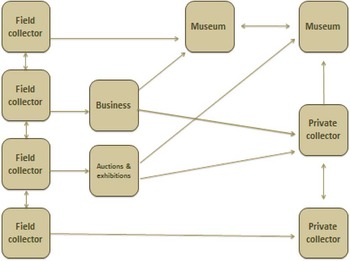
Figure 1 provides a visual, if stylized, depiction of the complex commercial supply chain of the trade in zoology specimens. There was no single pathway from sourcing to final consumer. Field collection involved a diverse set of actors and activities from indigenous populations, part-time hunters, missionaries, members of the army and navy, and locals, through to individual salaried and commercial collectors.Footnote 26 Some of this trade went directly to the end user, such as a private collector-owner or the cabinets and research areas of museums. Museums might also act as intermediaries by selling on or exchanging products with other museums looking to fill collection gaps. However, as the magnitude of the trade expanded beyond the grasp of many personal networks, the supply chain increasingly included a range of commercial intermediaries – consignors, wholesale traders, retailers, taxidermists, and the like. Some were non-specialists who combined natural history with other business opportunities: in at least one case, taxidermy with hairdressing!Footnote 27 Others, though, were vertically integrated – that is, combining sequential stages of activity such as collecting and taxidermy with wholesale and retail trading. Several operators were multinational enterprises of remarkable resource and reach. The Hamburg-based Godeffroy Company controlled its trade by funding collectors like Otto Finsch (colonial officer for Kaiser Wilhelm Land in New Guinea), who combined a knowledge of science with an understanding of the colonial context. This facilitated consistency in product quality and the provision of product knowledge from provenance to final sale. In the great majority of cases where transactions along the supply chain were not internalized within a single organization, a broad range of exchange methods occurred, from private sales to auctions, barter, exhibitions, and gifts. The manner in which these different types of transactions were completed among buyers and sellers, often unknown to each other, across business, science, and collecting is one of the remarkable achievements of the trade.
The supply chain of the natural history trade.

In Europe and North America, natural history dealers and retailers sprang up on streets across many major cities to serve collectors. By 1895 there were fifty-two in Berlin alone, and a further thirty-three in Vienna, twenty-six in London, and seventeen in Paris.Footnote 28 In the USA there were more than a hundred natural history dealers at the end of the nineteenth century.Footnote 29 The network of dealers was also geographically very dense in some countries: there appears to have been at least one small trader in most major towns in the United Kingdom.Footnote 30 While many of these businesses were localized in nature, there were several that had substantial establishments trading with many countries. The largest American dealer was Ward’s Natural History Establishment, of Rochester, New York, which boasted individual collectors, museums, and educational institutions as clients. Its founder, Henry Augustus Ward, had established a large international ‘collectors’ network.Footnote 31 Ward’s had sold more than US$730,000 worth of various natural history specimens to 100 American museums by the end of the nineteenth century. At the collecting end of the trade, in 1901 the British Museum received into its bird collection alone 19,358 items obtained from many individuals and firms from far and wide across the globe.Footnote 32
Another indication of the growth of the trade and the broad collector population was the participation by specimen dealers in the major international trade exhibitions that emerged in the second half of the nineteenth century. The Crystal Palace Exhibition in London in 1851 ‘seemed to offer an extraordinary insight into the possibility of scientific globalization’.Footnote 33 It provided the blueprint for many subsequent exhibitions such as the Exposição Internacional do Porto (1865), Dublin International (1865), the Colonial and Indian Exhibition in London (1886), and the Chicago Exposition (1886). As well as facilitating commercial transactions, the exhibitions further stimulated the growth of museums by offering opportunities to purchase significant collections.
From the last years of the nineteenth century, attitudes to nature and motivations for collecting began to change. While these were uncertain economic times and many of the major geographic explorations and discoveries had passed their peak years, it was the changing attitude towards the natural world, born of new perspectives in both science and philosophy, that shifted preferences and behaviours. Greater appreciation of the living natural world, including its observation and study, gradually predominated and gained momentum through activist organizations such as the Audubon Society, and from the romanticism of the Arts and Crafts movements. Maturing photographic technology also played a role; as Griffiths has noted, the gun was no longer the only intermediary with nature, which ‘could be captured with camera and field glass instead of with gun and trap’.Footnote 34 In May 1915 the Times Literary Supplement was drawn to conclude that ‘the time has come when the hunter must give way to the observer’.Footnote 35
Zoological study was extending beyond classification to embrace other disciplines, including an ecological focus, an approach that Martha Maxwell had pioneered in Colorado as early as the 1870s.Footnote 36 Novel specimens were no longer the principal objective of fieldwork; what was now sought was information on how animals lived and interrelated. The scientific interest was reflected in public exhibits that came to dominate museums of the twentieth century. By the end of the nineteenth century, both the British taxidermist Rowland Ward and the American Carl Akeley were experimenting with taxidermy methods that used life-study and sculptural techniques to emphasize musculature and expression in a given animal. Here a skin was stretched over a cast created for both the interior structure and features such as teeth. These ‘lifelike’ taxidermied specimens were often intended for museum dioramas that specifically emulated the specimens’ habitat, interrelations with other species, and movements for public edification.
The challenges of the trade
The previous section describes a trade of global reach, in which heterogeneous products were exchanged among groups from different backgrounds. However, this combination of characteristics, product heterogeneity, global reach, and participant diversity, which distinguished the trade, also hindered its expansion by creating uncertainty in sourcing, exchanging, and delivering a product. The discovery of many new zoological specimens threatened to overwhelm emergent and often competing taxonomies and classification systems that had been proposed in the eighteenth century.Footnote 37 Lack of an agreed specific identification of a specimen, and its relationship to others, made it difficult for distant buyers to be certain what they were purchasing and to know what was a fair price to pay. Indeed, the same problem might be faced by sellers, cautious about giving away cheaply a ‘bling’ item of great rarity. Nor were relative prices stable, because the demand and supply of particular species fluctuated over time and between regions. Heterogeneity existed even among specimens of the same animal species, for various reasons including the health of the animal, the manner in which it was killed, and the relative ineffectiveness of subsequent handling and preservation processes.
Just as long distances hindered the acquisition of timely and rich information on which to judge price and quality, the handling and transport of unstable zoological products demanded care and expertise. In contrast to commodity trades, such as coal or wool, specimens were often sourced from remote and dispersed locations. In the eighteenth century, the communications, logistics, and financial systems that supported commerce had been poorly equipped to deal with these challenges. Thus, a Quebec-based naturalist, Jean-François Gaultier, wrote in 1754 that ‘a stuffed seal skin has already arrived with its head [intact]. But the entire thing was in such bad condition that I could not imagine that I could send it to you.’Footnote 38 Whole collections of animal specimens shipped to Europe were frequently burned or destroyed because of their deteriorated condition, among them parts of the French Royal Collection and Sir Hans Sloane’s collection. Communication systems travelled at the speed of sailing ships.Footnote 39 Cargo handling, on-board stowage, and warehouse storage relied on centuries-old methods of manual transfer designed for relatively homogenous, stable, and sturdy bulk cargoes such as timber, coal, wool, and cotton rather than fragile, heterogeneous products. When Robert W. Stevens published his important work, On the stowage of ships and their cargoes in 1858, he noted in the preface, ‘this is the first attempt to compile, in a systematic form, instructions on the subject of stowage’.Footnote 40
A further issue concerned the financial systems that supported international commerce, which were a mix of trade credit provided by transactors, along with short- and long-term funds from intermediaries, who were either commercial bankers or sector specialists. None of these options were straightforward for the zoology trade. Banks relied on accurate trade valuations; specialist financial intermediaries were a function of larger, more regular trades such as wool and coal. Trade finance along the supply chain was difficult because of the participation of many different groups whose members were rarely known to each other.
The following section investigates the ways in which the complementary capabilities and interactions among business, science, and leisure served to mitigate many of these constraints on the development of a market in zoological collecting. Some of the more important aspects may be foreshadowed here. During the nineteenth century, more accurate relative price information was facilitated by the development of scientific classification, by the holding of exchange lists by museums, and through the wealth of exhibitions, displays, journals, and marketing information that revealed key sources of product knowledge and consumer preferences. A variety of alternatives to the price mechanism aided the development of a market, often through informal negotiated exchanges such as barter, swaps, and exhibits. The much improved practice of taxidermy boosted consumption by extending product life. It also fed back into hunting practices and stabilized products in long-distance transit by emphasizing the importance of cleaning and preparing skins adequately. New transport and communications technologies, improved international payments systems, and larger companies with international reach assisted the handling, financing, and organization of this long-distance trade.
Underlying these solutions were the factors which helped to foster trust and cooperation across the different groups. Building cooperative networks was facilitated by the growing importance of major firms and museums that provided networking space in trading rooms and at exhibitions. The fluidity of roles of several key figures connected different groups and overcame distance. The ‘branding’ of reputations of learned scientists, wealthy dealers, and socially esteemed gentlemen collectors reached out to a much wider public interest in zoology collections.
Trust-building networks
The foundation for addressing all of the sources of uncertainty in the natural history trade – product heterogeneity, global reach, participant diversity – was the development of trust among the different parties. Heightened trust reduces the ‘transaction costs’ of trading: that is, the time and effort spent negotiating, monitoring, and completing an exchange.Footnote 41 Where a trade contract is complex – for the sorts of reasons mentioned above – parties will need to expend more time ensuring that the terms are fulfilled and in the end may decide that the effort is not worth it. The exchange fails to take place due to high transaction costs. Where trust between the parties is high, they will more readily cooperate and spend less time verifying the transaction. Social scientists have extensively analysed how trust is built in trading relationships through the development of forms of social capital.Footnote 42 Social capital often flourishes where individuals share similar values that are regularly reinforced by interaction as part of an association or community.
The existence of meeting places provided opportunities for face-to-face interaction in the specimen trade. Despite the geographic distances involved and the participation of disparate social and economic groups, there were many points of contact and network-building. The retail shops of dealers, the field laboratories and galleries of museums and research centres, the meeting rooms of societies, the halls of international exhibitions, the inspection rooms of auction houses, and the shared experiences of expeditions all served as networking spaces. In London’s fashionable Piccadilly district, Rowland Ward’s shop, also known as ‘The Jungle’, gave sports shooters, museum curators, and collectors a place to congregate and see his most recent displays.Footnote 43 At the New York premises of the taxidermist John G. Bell, ‘a wide array of sportsmen, collectors, and naturalists gathered regularly to exchange stories, to pour [sic] over the latest acquisitions, and to purchase specimens’.Footnote 44 Bell was taxidermist to John Audubon, and also gave lessons in taxidermy to Theodore Roosevelt. William John Macleay funded and organized day trips in New South Wales, Australia, for Linnean Society members and his circle of collectors. Spending the day together while collecting, discussing, and examining species was similar to the interaction that occurred in the Society’s rooms, but with the advantage of potential discovery. A field station operating at Ralum, New Britain, in the 1890s illustrated the typical network needed for the international trade in natural history. Its staff included an academic scientist, a professional museum worker, a self-taught established field collector, and two men recruited from the local population who were trained in Naples for the work.Footnote 45
It has been found, however, that the social capital generated by regular personal interaction often wanes when distance and time intervene. In this case, the popularization of collecting in the nineteenth century at times overwhelmed the deep personal connections through which social capital often flourishes. Cultivating a positive reputation could be an effective way of communicating trustworthiness both among elites and, as a form of branding, to a wider audience of collectors. Leading traders therefore signalled their reliability through activities that reaffirmed their professional standing. Invaluable publicity was gained from impressive displays in the halls of national and international exhibitions that showcased the resources, industries, arts, and crafts of many nations. In the United States and Europe, companies such as Maison Verreaux and Ward’s Natural History Establishment staged extensive displays. At the Chicago Columbian Exhibition in 1893, Ward’s display, subsequently purchased to found the Chicago Field Museum, took up an area of more than 11,000 square feet.Footnote 46 Exhibitions provided the opportunity for further reputation-building through the written word. At the same exhibition, 10,000 visitors, impressed by the display of the American natural history dealer Frank H. Lattin, signed up to receive his catalogue.Footnote 47 Lattin was the editor and publisher of National Science News, a weekly journal containing information, advertisements, and listings of duplicate natural history material offered for exchange. In January 1896 he advertised for sale a black dolphin, a white shark, and a hammerhead shark, acquired through a ‘swap’ and ‘all nicely mounted and in A no. 1 condition’.Footnote 48 While ostensibly designed as a marketing and sales tool, such information in print heightened the company’s standing in the trade.
Newspaper publicity raised profiles too. Articles published about or by collectors in the field provided evidence of their skill, knowledge, and reliability, as did news items highlighting the achievements of particular retailers.Footnote 49 A local firm, Tost and Rohu, had their contribution to the Sydney Exhibition of 1879 described in detail by the Sydney Mail, a newspaper read across New South Wales, which also noted the proprietors’ success in winning medals at ‘two Sydney exhibitions and one at the London exhibition of 1862’.Footnote 50 Another frequent medallist, Rowland Ward, published in areas that capitalized on the crossover between sports and science. Such reputation development by leading traders impressed museums as well as individual collectors. Sir Frederick McCoy, a professor and the Director of the Victorian Museum in Melbourne (1857–99), exemplified the new era of professional collecting by museums. He relied heavily upon commercial exchanges with professional dealers and was disdainful of ‘ignorant amateurs’.Footnote 51
The development of trust among disparate groups worked best when it involved individuals who were well placed to forge connections and develop bridging forms of social capital. The term ‘boundary spanners’ is commonly used to describe those individuals able to link information and knowledge between different ‘systems’.Footnote 52 Some important figures in the nineteenth-century trade had not pursued specialized occupations; instead, they demonstrated flexibility in their roles as sometime collector, trader, or researcher. Their ability to traverse different groups proved valuable in fostering communication and trust. Many were wealthy individuals, whose involvement in the trade was not generated by the need to pursue monetary profit or embark on scientific achievement.
One such individual was Walter Rothschild, of the famous European merchant banking family, who, besides extraordinary wealth, had ability and purpose. After several years working in banking, he convinced his father that he was no use to the family business and was given a staggering £1 million to establish himself in the field of zoology. His was a scientific endeavour embedded in taxonomy, but combined with the aim of public education and public good. He developed a network of an estimated 400 collectors, and, drawing on business connections, also employed intermediaries such as the South Seas traders Burns-Philp & Co. in British New Guinea to set up and coordinate local collecting. Dealers such as Boucard sought to satisfy Rothschild’s desire for particular birds acquired with scientific aims in mind, rather than for beauty or millinery.Footnote 53
Dealings between the British ornithologist and publisher John Gould and the commercial collector Frederick Strange illustrate how a key figure could also function as a ‘boundary spanner’ by fostering trust among the social diversity of stakeholders. Strange, a poorly educated former seaman who collected in Australia and New Zealand during the 1840s and early 1850s, supplied some of the birds and quadrupeds required for Gould’s publications, and also sent other items that Gould endeavoured to sell on his behalf. As a member of London’s Zoological Society, as well as a man of business, Gould had an extensive scientific and commercial network. Thanks directly and indirectly to his relationship with Gould, Strange received orders from the Earl of Derby, supplied molluscs to Professor Richard Owen, and sold at least one small collection of specimens to the British Museum. He was also able to trade with such notable metropolitan natural history dealers as Hugh Cuming and George Sowerby in London, and Edouard Verreaux in Paris.Footnote 54
Prices and markets
By the beginning of the nineteenth century, the burgeoning range of natural history products and competing classification systems confounded the process of agreeing an exchange price. However, this was beginning to change as advances in scientific knowledge and practice lubricated the expansion of trade. Important developments in specimen classification and preservation eased the process of agreeing a price by creating a more homogenous and well-defined product. The system that Linné developed in the eighteenth century was binomial – the first word refers to the genus, the second to the species, so that the combination of genus and species is unique to that species. Daniel Solander and Johan Fabricius, along with other students of Linné, worked to refine the system after his death. Solander catalogued the collections of public institutions such as that of the British Museum, as well as those of private collectors like the Duchess of Portland and the public-private collection of Joseph Banks. There were mutual benefits to be had. Solander had unprecedented access to the great variety of novel species pouring into Europe, while his clients learned more about the Linnaean system of classification, enabling them to conduct exchange and increase the value of their personal collections.
As Solander and others worked to improve taxonomic knowledge, different interpretations of the Linnaean system, along with slow communication across the continent, led to a variety of names being applied to a single species, ironically the very outcome that Linné had attempted to prevent. A breakthrough came, but not until the 1830s and 1840s, with the recognition of the a priori status of specimens used for the first published description. This breakthrough was significant for the collecting trade. A given collection could be valued from its type specimens: the zoological object that had to be studied to understand the place of the specimen in relation to all others of its genus or family. The prestige of authoring a definitive account of a new species or family also gave impetus to collectors acquiring as many specimens as possible for comparative purposes.
Improvements in taxidermy practices went hand in hand with those of taxonomy in fostering a wide market. The science of classification required great numbers of suitably prepared specimens that accurately represented the animal for comparative study. From the beginning of the nineteenth century, collecting guides for natural history included taxidermy instructions with storage advice. At the point of field collection, little had changed in preparation methods from the eighteenth century, although specific collectors marketed their abilities by asserting that their recipes were the most effective. Field preparations were aimed at ensuring that the specimen was kept in the best possible condition until it became part of a domestic or museum collection. Some animals, post mortem, were simply plunged in alcohol for transport. This method occasionally resulted in ruffled plumage or fur, or discolouration. It also meant that field collectors had to carry with them hefty metal containers, or well-fitted wooden containers with compartments for glass bottles, and had to negotiate for access to raw alcohol in sufficient quantities.
Alternatively the animal could be immediately dissected to remove all wet matter (flesh, muscle, organs). During the nineteenth century, with subtle differences over time and between zoological orders, the principal active ingredients of alum (as a drying agent) and arsenic in the form of soap (as a pesticide) were applied to specimen skins before packing out the interior with cotton or flax. Although the techniques were known early in the century, ill-prepared collectors did not always have access to the necessary supplies of arsenic, alum, cotton, and boxes. A badly prepared skin could be more vulnerable to pests and mould or, in the case of birds, the whole body could be affected by ‘feather strike’, which damages the appearance of each feather. To counter this in tropical conditions, a bird collector needed to work quickly, often at the hottest point of the day, when the birds were dormant. However, removing a bird’s head to extract the brain and other wet material in the most expedient method might also affect the stability of the bird for subsequent taxidermy, as when the head was replaced it was only supported and connected to the body by a single wire.
Improvements in field preparation laid the basis for developments in taxidermy. Broadly speaking, the first half of the century was an era when animals were taxidermied to show their taxonomic features, and arrangements of similar animals emphasized the comparative zoological purpose. By the century’s end, two different kinds of preparations were employed, each depending on the final use of the specimen. Skins were softly stuffed or whole specimens placed in spirit, but both forms were minimally manipulated for study and exchange purposes. For exhibition, skins were manipulated and mounted in positions.Footnote 55
As part of an iterative process, the trade in turn contributed variously to advancing the scientific knowledge of species. Commercial collectors and dealers sourced, transported, exhibited, and sold a large proportion of the animal species that found their way into the collections of leading naturalists and museums. For enthusiasts and expert naturalists unable to secure a salaried scientific post, the natural history trade offered opportunities to contribute to scientific knowledge, while making a congenial living. The London dealer Samuel Stevens, a member of an auctioneering family and an expert entomologist in his own right, acted as agent for Alfred Russel Wallace, who collected in South America and in the Malay Archipelago. Wallace, well known for his contribution to the theory of evolution, relied on Stevens to process and preserve the specimens he sent home as part of his private collection. By arranging the sale of numerous other specimens from Wallace, Stevens financed the naturalist’s collecting expeditions. He also supplied Wallace with provisions and passed on to him the latest scientific information. According to Wallace’s biographer, this relationship with Stevens was ‘a major component of Wallace’s development as a scientist’.Footnote 56 Other scientists gained valuable experience in their youth by working for dealers and mixing with the naturalists who visited them. Barrow notes that the ‘graduates’ of Ward’s establishment included three college professors, three museum directors, and a director of New York’s aquarium.Footnote 57 The scientific and research community, in turn, rewarded the trade by disseminating information about new species classifications through individual publications and the journals and public lectures of their professional organizations and societies.
While the development of scientific knowledge of the species aided price determination, and improved preservation techniques reduced heterogeneity, the trust generated by personal connections was not easy to establish. There was still considerable uncertainty about buying and selling to unknown parties in distant locations without viewing the specimen beforehand. Alternative forms of exchange coordination were developed that overcame some of these remaining obstacles. Open cry auctions, where buyers shouted out their bids, were common in commodity trades, most famously in much of the wool trade by the nineteenth century, but also for more specialist commodities such as indigo.Footnote 58 They provided the opportunity to inspect the sale product beforehand and, as a centralized market, the ability to compare many offered items of varying quality. Observing the sales themselves revealed further relative price and quality information for heterogeneous products. It also brought together many buyers and sellers in a single saleroom and facilitated network-style interaction along the lines mentioned earlier. In the wool trade, the specialist brokers became highly knowledgeable, able to assist with storage, presentation, and the combined sale of similar small lots. Contemporaries were in little doubt about the benefits that the system could offer, especially for very diverse products.Footnote 59
While not on the same scale as wool, thousands of natural history specimens changed hands at auction.Footnote 60 A register of natural history auction sales in Britain compiled by J. M. Chalmers-Hunt (and acknowledged by the compiler as by no means complete) records nearly two and a half thousand separate lots of natural history specimens put up for auction between 1840 and 1910.Footnote 61 Items came from afar – Lapland, Norway, Sweden, Mauritius, Turkey, South America, Australia, Canada, Trinidad, South Africa, India − a further reminder of the geographic reach of the natural history trade. The register records the names of forty-five auctioneering firms that handled specimens in England and Scotland. They operated in English and Scottish provincial cities such as Birmingham, Manchester, Leeds, Edinburgh, and Glasgow, but also in such smaller centres as Ramsgate, Great Yarmouth, and the Isle of Wight. However, most auctions took place in London, the great majority of these going under the hammer at a Covent Garden auction house specializing in natural history which was owned by John Crace Stevens and his family and descendants from 1834 until the 1940s.Footnote 62
Much of what was sold by auction had been the property of cabinet collectors, erstwhile dealers, or learned societies, and may have been traded through several hands before coming up for auction. But some lots came directly from field collectors in distant places. A British officer sold animals amassed while on active service in India, former members of scientific expeditions sold their personal collections, and in 1888 Alfred Russel Wallace and Henry Walter Bates sold butterflies they had gathered during their scientific investigations along the Amazon.Footnote 63 Most items put up for auction in Britain had apparent scientific value, attracting as bidders not only commercial dealers but also buyers from private and public museums, as well as independent expert naturalists. Curators were frequently invited to pre-sale viewings, ostensibly allowing them time to raise the necessary finances for purchasing at auction (and sometimes beforehand).
Cash and credit were central to transactions in the zoology trade, but barter was important as well. In nineteenth-century Europe the exchange of information and objects of scientific interest between learned organizations was already a well-established custom; the many private and public museums founded in this period took up the practice to help swell their collections by trading unwanted or duplicate items.Footnote 64 A number of organizations, such as the Smithsonian Institution in Washington, DC, and the Natural History Museum in Leiden, produced catalogues of exchange lists providing bilateral values, to facilitate such transactions. In the late nineteenth century, an extensive set of exchanges occurred between Auckland Museum and Florence’s Natural History Museum over at least twenty-five years. In a series of regular consignments, some 150 New Zealand birds were conveyed to Florence, and more than 600 Italian and foreign birds, mammals, reptiles, and amphibians went to Auckland.Footnote 65 Multilateral exchanges were also common with reciprocal relationships among collecting institutions and learned societies in Britain, Cape Colony, New South Wales, and India.Footnote 66
Specimens were also bartered for unrelated ‘trade goods’ and non-material rewards, including labour. In one case, a lithographic press and some associated equipment were exchanged for bird skins.Footnote 67 Moreover, using natural history specimens, vendors could purchase patronage. In her study of the networks of influence crisscrossing the British empire in the first half of the nineteenth century, Zoe Laidlaw argues that one way in which colonial officials sought professional advancement was by establishing contacts among influential individuals in the metropole who were known to have an interest in natural history. Across the empire, local artefacts and specimens from the colonies flowed in one direction, while ‘Patronage, goodwill and money flowed back through the network in response.’Footnote 68
Supply-chain logistics
Alongside advances in scientific knowledge (classification), practice (preserving), and organizational developments in exchange methods, came the technological revolution in transport and communications that further stimulated the growing trade in zoological items. In particular, the switch from wood and sail to steel and steam in shipping, the introduction of railways, and the building of international telegraphic cable networks are well-known developments that, John MacKenzie notes, ‘were vital in the physical accumulation of collections, as well as in the exchange of ideas and people’.Footnote 69 Shorter and less variable travelling times reinforced the benefits of improved field-based preservation to assist the growth of long-distance trade in zoological specimens.Footnote 70 Instant communication facilitated the growth of timely information about sale products.
There was a business as well as an economic component to the development of global trade in the nineteenth century, with the growth of large-scale and international business. British trading companies and banks played a vital coordinating role in the growth of long-distance commodity trades by providing a network of company offices in many countries, or at least a network of trusted agents and brokers, to handle precious items.Footnote 71 International banking assisted payment between parties unknown to each other, as was often the case in the natural history trade. The growth of international monetary and exchange rate systems and payment mechanisms reinforced the work of these companies.Footnote 72
Important though these major infrastructural changes must have been to all trades, we currently lack detailed analyses of their impact on natural history trading. Greater speed of transport and information flows, along with careful product handling, obviously mattered, especially in the secondary market and final stages of the supply chain in Europe, North America, and some key Asian ports. From the mid nineteenth century, these seaborne routes were increasingly served by the liner trades, which operated regular services between specified destinations. With the benefits of publications on stowage advice, these vessels were able to safely carry a variety of different cargoes at the same time. Robert Stevens’ book, mentioned earlier, discusses in detail the stowage and safe carriage of many goods, including natural history products.
Natural history dealers also turned to specialist intermediaries from major commodity trades when shipping specimens by freight. Shipping and consigning agents arranged for their conveyance by sea along established trade routes. The detailed export lists published in nineteenth-century newspapers reveal that the shipment of zoological items was often managed by the same merchant firms that handled other commodity exports. The burgeoning wool export trade, for example, fostered specialist consigning agents who were prepared to arrange shipment of some specimens alongside their main wool cargo.
However, the geographic dispersion of animal specimens created greater challenges at the procurement stage than did commodities such as wool or wheat, which were more footloose and whose production locations were designed, where possible, to integrate with the emerging transport infrastructure. The more remote and irregular routes, often used in collecting, did not justify the required extensive capital investments, so the transport transitions, international payments mechanisms, and company networks came later. In such cases, the trade had to adapt in order to evolve.
Some of the larger natural history traders could draw on their own resources or well-established commercial contacts. Sales negotiations were conducted by mail where national and international telegraphic communication was unavailable. The same can be said for the management of payments. Most financial documents, such as invoices, letters of credit to banks in distant places, power of attorney documents, and the paperwork for sums drawn in advance, travelled by mail. Postal services also carried newspapers and magazines as providers of broad and specific commercial information, whose titles multiplied and whose circulations expanded in European countries and their colonies. In addition, specimens travelled this way: ‘send them to me by … the Messageries of France which is the most expeditious although a bit costly’, wrote Joseph Gené to John Gould in 1842, in regard to the bird skins that Gould had promised him.Footnote 73 To avoid the expense of sending goods by mail, dealers also entrusted specimens to friends and connections who happened to be travelling in the desired direction.Footnote 74 These included naval officers, ships’ captains, supercargoes, even merchant seamen, and missionaries. The Czech natural history dealer Václav Frič was able to source specimens from Africa, Asia, and South America through a range of contacts including the traveller Enrico Stanko Vráz, whose finds included a Japanese giant crab and an African lungfish, both highly prized.Footnote 75 By the final quarter of the nineteenth century, though, the network of parcel post had grown rapidly and the cost had fallen, assisting consignment to many parts of the world.Footnote 76
Sourcing original specimens from often remote and dispersed locations was perhaps the biggest logistical challenge, especially in areas not served by railways or regular steamship services.Footnote 77 The ocean cable, providing more instantaneous contact, had achieved significant coverage by the 1870s, but remained expensive and restricted to specific locations.Footnote 78 As mentioned earlier, facing such challenges were a diverse set of actors, ranging from part-time hunters, missionaries, and members of the army and navy to individual salaried and commercial collectors.Footnote 79 As the nineteenth century progressed, however, some substantial specimen-collecting expeditions were organized, often in remote areas, with major financial backers. While expeditions were not new, the growth of scientific and commercial interests in new species heightened interest and generated substantial enterprises. Examples included the global navigation of the Challenger expedition (1872–76), funded by the Royal Society and the Admiralty; the Horn Expedition to Central Australia (1894), supported by three universities; and the Hall and Trebilcock voyages to Siberia and the Arctic tundra (1903), which relied on the sale of captured birds.Footnote 80
Both individual field collectors and expeditions possessed of extensive financial, logistical, and scientific resources often drew upon networks of people from the point of source, who in many cases provided their indigenous knowledge of the area and its peoples. Sometimes hired for the journey, or engaged by collectors on the spot, indigenous people served as guides in unknown terrain, as diplomats, interpreters, carriers, and suppliers of food.Footnote 81 They also contributed to the acquisition of specimens by sharing their environmental knowledge and hunting skills. In the Seychelles, Robert Plant depended on his local helpers; William Wallace made extensive use of indigenous assistance in the area around modern-day Malaysia and Indonesia; and expeditions into remote inland regions of Australia usually drew upon the aid of Aboriginal people.Footnote 82
All of this suggests some degree of continuity with procurement practices prior to the nineteenth century, but the expansion thereafter of commerce and scientific research in natural history increased the importance of local cooperation. Hugh Cuming serves as an example of the extensive knowledge of supply-chain logistics needed by collectors in remote locations. Over a period of three years in the 1830s, this natural history dealer used government and royal intermediaries in the Philippines to access lands, moved labourers from one coastal site to another to collect shells, and warehoused collections ready for transit in key ports, while keeping a sharp eye on passing shipping to gradually move the thousands of animals collected to the United Kingdom. Recognizing the importance for his business in having specimens in the leading taxonomic institutions, he had developed his relationships with Joseph Hooker and Richard Owen, and so could request that they send specific specimens on to the Zoological Society and the British Museum on his behalf.Footnote 83
Conclusion
This article has investigated the trade in a broad range of zoology specimens during the nineteenth century, which extended to many parts of the globe. The scale of the collecting, though difficult to measure precisely, throws light on a natural resource commerce that has received very little attention from economists and economic historians, who have primarily focused on industrialization processes and core commodity trades such as coal, wool, and timber. That it existed at all is something of a miracle given the major constraints of remote distance, product complexity, and participant diversity that we have discussed.
In particular, major advances in scientific knowledge (taxonomy) and practice (taxidermy), technology (transport and communications), and organization (exchange and business) brought about the conditions for a successful trade to flourish. Specifically, the concurrent development of systems to name, transport, and stabilize zoology species helped establish long-distance sale by private contract. Nonetheless, trading often required alternative forms of exchange coordination to overcome price volatility and complexity. Such exchanges, including barter, swap, exhibition, and auction trading, drew on powerful relational elements among groups, who were otherwise largely unknown to each other and often separated by long distances. Meeting places helped to develop stocks of social capital and trust, although distance often intervened to deplete these stocks. The local, social, and clan networks that often served earlier eras no longer worked in this first epoch of globalization; instead, trust was generated by establishing a reputation that could register with a much larger and diverse population of collectors.
For all of this to work, however, necessitated not only trust but also a mutuality of needs. This seems to have been the case: scientists needed the organization and evidence provided by the trade to pursue their work in a rapidly evolving zoological environment. Traders sought scientific knowledge to transact their business effectively and profitably. Collectors relied on scientists to extend their understanding, and on business to build their collections. In turn, many collectors connected business with science.
We can take this one step further. It was not only a matter of trust and mutuality that lay at the root of this trade, but, ultimately, a shared view of the world. A long tradition exists in economic history that attributes modern economic development to the foundations laid by the Scientific Revolution, with its emphasis upon understanding facts about the physical world. From the latter evolved ‘useful knowledge’, which was applied to all manner of problem-solving technology, such as steam propulsion and innovations in industrial dyes.Footnote 84 This Eurocentric view of the world (all the key advances came from a more ‘mature’ Europe) has been challenged by those who question longer-term antecedents of different levels of economic development over several centuries.Footnote 85 More recent work on the relationship between scientific research and business, however, suggests that, rather than connection through cause and effect, the two spheres – science and business – went hand in hand. The scientific need to understand ‘matters of fact’ was equally sought after by entrepreneurs developing the commercial systems necessary for success in business, including those governing accounting, financial, organizational, and labour processes. In this light, our study of the zoology trade gives substance to a recent conclusion that ‘the modern economy and modern science … were co-produced and interdependent phenomena’.Footnote 86 We have emphasized some of the vehicles for such cooperation in the nineteenth century, including points of common interest, the building of trust through networks and reputation, and the contribution of boundary spanners. During this period, successful cooperation between science and commerce in difficult circumstances may therefore be worthy of reflection in the light of modern-day dilemmas about bringing the two sectors closer together.
Anne Coote is an adjunct associate lecturer at the University of New England, Armidale, NSW. Her publications on the natural history trade and early science publishing in Australia reflect her broader interests in the cultural history of colonial science.
Alison Haynes is a PhD candidate in biology at the University of Wollongong. She has degrees in English and French law, as well as in conservation biology, and has worked as an editor and writer in magazine and book publishing.
Jude Philp is Senior Curator of the Macleay Museum, University of Sydney. Her research, publications, and exhibitions centre on nineteenth-century natural history and material culture collecting in south-east coastal New Guinea and the Torres Strait, and the intersections between European interest and Indigenous purpose.
Simon Ville is Senior Professor of Economic and Business History at the University of Wollongong and a Fellow of the Academy of Social Sciences in Australia. His co-edited Cambridge economic history of Australia was published in 2015.