



Nomenclature
-
 $g$
-
gravitational acceleration (
$m.{s^{ - 2}}$
) -
$u,v,w$
-
linear velocity components along the body-fixed x, y and z axes (
${\rm{m}}.{{\rm{s}}^{ - 1}}$
) -
$p,q,r$
-
angular velocity components about the body-fixed x, y and z axes (
${\rm{rad}}.{{\rm{s}}^{ - 1}}$
) -
${X_u}$
,
${X_w}$
-
changes in axial forces with respect to
$u$
and
$w$
(
${{\rm{s}}^{ - 1}}$
) -
${Z_u}$
,
${Z_w}$
-
changes in normal forces with respect to
$u$
and
$w$
(
${{\rm{s}}^{ - 1}}$
) -
${M_u}$
,
${M_w}$
-
changes in pitching moments with respect to
$u$
and
$w\;$
(
${{\rm{m}}^{ - 1}}.{{\rm{s}}^{ - 1}}$
) -
${M_q}$
-
change in pitching moment with respect to
$\;q$
(
${{\rm{s}}^{ - 1}}$
) -
${M_{\dot w}}$
-
change in pitching moment with respect to
$\dot w$
(
${{\rm{m}}^{ - 1}}$
) -
${X_{{{\rm{\delta }}_e}}}$
,
${Z_{{{\rm{\delta }}_e}}}$
-
changes in axial and normal forces with respect to
${{\rm{\delta }}_e}$
(
${\rm{m}}.{{\rm{s}}^{ - 2}}$
) -
${M_{{{\rm{\delta }}_e}}}$
-
change in pitching moment with respect to
${{\rm{\delta }}_e}$
(
${{\rm{S}}^{ - 2}}$
) -
${Y_v}$
-
changes in side forces with respect to
$v$
(
${{\rm{s}}^{ - 1}}$
) -
${Y_p}$
,
${Y_r}$
-
changes in side forces with respect to
$p$
and
$r$
(
${{\rm{s}}^{ - 1}}$
) -
${L_v}$
-
changes in rolling moments with respect to
$v$
(
${{\rm{m}}^{ - 1}}.{{\rm{s}}^{ - 1}}$
) -
${L_p}$
,
${L_r}$
-
changes in rolling moments with respect to
$p$
and
$r$
(
${{\rm{s}}^{ - 1}}$
) -
${N_v}$
-
change in yawing moment with respect to
$v$
(
${{\rm{m}}^{ - 1}}.{{\rm{s}}^{ - 1}}$
) -
${N_p}$
,
${N_r}$
-
changes in yawing moments with respect to
$p$
and
$r$
(
${{\rm{s}}^{ - 1}}$
) -
${L_{{{\rm{\delta }}_a}}}$
,
${L_{{{\rm{\delta }}_r}}}$
-
changes in rolling moments with respect to
${{\rm{\delta }}_a}$
and
${{\rm{\delta }}_r}$
(
${{\rm{s}}^{ - 2}}$
) -
${N_{{{\rm{\delta }}_a}}}$
,
${N_{{{\rm{\delta }}_r}}}$
-
changes in yawing moments with respect to
${{\rm{\delta }}_a}$
and
${{\rm{\delta }}_r}$
(
${{\rm{s}}^{ - 2}}$
) -
${Y_{{{\rm{\delta }}_r}}}$
-
change in side force with respect to
${{\rm{\delta }}_r}$
(
${\rm{m}}.{{\rm{s}}^{ - 2}}$
) -
${I_{xx}}$
,
${I_{yy}}$
,
${I_{zz}}$
-
moments of inertia about the body-fixed x, y and z axes
$({\rm{kg}}.{{\rm{m}}^2})$
-
${I_{xz}}$
-
product of inertia with respect to the body-fixed x-z axes
$({\rm{kg}}.{{\rm{m}}^2})$


Greek symbol
-
$\alpha $
-
angle-of-attack (
$rad$
) -
$\beta $
-
sideslip angle (
$rad$
) -
$\theta $
-
pitch angle (
$rad$
) -
$\phi $
-
roll angle (
$rad$
) -
$\psi $
-
yaw angle (
$rad$
) -
${{\rm{\delta }}_e}$
-
elevator deflection (
$rad$
) -
${{\rm{\delta }}_a}$
-
aileron deflection (
$rad$
) -
${{\rm{\delta }}_r}$
-
rudder deflection (
$rad$
) -
$\zeta$
-
damping ratio
-
${\omega _n}$
-
undamped natural frequency (
$rad.{s^{ - 1}}$
)


Abbreviations
- CAT
-
category
- CFD
-
computational fluid dynamics
- LQR
-
linear quadratic regulator
- MPC
-
model predictive control
- PID
-
proportional integral derivative
- PSD
-
power spectral density
- RMSE
-
root mean square error
- SFC
-
state feedback control
- SOC
-
state observer-based control
- UAV
-
unmanned aerial vehicle
- UCAV
-
unmanned combat aerial vehicle
1.0 Introduction
Unmanned aerial vehicles (UAVs) originally developed for military applications during World War I [Reference Valavanis1] have since diversified into various applications [Reference Elmeseiry, Alshaer and Ismail2]. UAVs with combat capability are known as unmanned combat aerial vehicle (UCAVs) [Reference Adamski3]. These vehicles are rapidly being used in military applications [Reference Yuan, Xiwen, Rong, Shangqin, Huan and Wei4] due to their autonomy, advanced processing capabilities and lower cost as compared to manned aircraft [Reference Ure and Inalhan5]. UCAVs have emerged as pivotal assets in modern warfare [Reference Sepulveda Palacios and Smith6], offering enhanced operational capabilities and reduced risks to human personnel [Reference Sepulveda and Smith7]. Regarding UCAVs, unlike standard UAVs, the wings carry weaponry and other essential combat payloads in addition to equipment, fuel and engines [Reference Cummings and Schütte8]. Additionally, such aircraft are specifically designed to maintain a triangular, delta or lambda shape [Reference Aleisa, Kontis, Nikbay, Pirlepeli, Cakmak and Kara9]. Recent research has focused on the tailless lambda wing configurations [Reference Cummings, Liersch, Schütte and Huber10], where stability and control are crucial factors in ensuring their effectiveness and reliability in diverse operational scenarios [Reference Tomac, Tormalm and Rizzi11]. In particular, the longitudinal and lateral-directional dynamics exhibit a strong influence on stability, manoeuvrability and overall performance [Reference Shuo, Da-Li, Wei-Li and Wen-Qiang12].
Static stability is a necessary condition for an aircraft to achieve dynamic stability, as an aircraft cannot be dynamically stable without first being statically stable [Reference Phillips, Hunsaker, Alley and Niewoehner13]. Tailless configurations are inherently prone to directional instability due to the absence of a vertical tail, which presents significant challenges in maintaining yaw stability and achieving effective yaw control [Reference Zhu, Shi, Sun, Chen, Dong and Fu14]. At high angles of attack, these configurations may experience lateral instability, resulting in a phenomenon known as wing-rock, a self-induced oscillation that poses risks to flight safety [Reference Wang, Tang and Li15]. In such cases, swept-back wings play a crucial role in providing directional control while also contributing to roll stability [Reference Williams, Seidel, Osteroos and McLaughlin16]. Flight dynamics of tailless configurations are commonly derived from Newton’s second law, which provides the foundation for formulating the equations of motion [Reference Cook17, Reference Etkin18], and linearisation techniques with state-space representations have been employed to analyse stability and dynamic modes [Reference Park, Choi, Jo and Choi19]. Eigenvalue analysis has been widely used to identify the characteristic modes and assess dynamic stability [Reference Kwiek20, Reference Smith, Bixler, Babcock, Osteroos, McLaughlin and Tischler21]. The poor flying qualities associated with these modes can be improved through stability and control strategies [Reference Pan and Huang22, Reference Hanif and Sasongko23].
Flight stability and manoeuvrability are further enhanced through control laws designed using pole placement techniques based on state feedback control [Reference Barsaiyan and Purwar24] and state observer-based control methods [Reference Hall, Lawrence and Mohseni25]. Traditional control methods rely on feedback strategies that measure the control variable and respond to deviations from the desired reference [Reference Osman, Abdalla and Nawari26]. When direct measurement is not feasible, state observers estimate non-measurable states using a dynamic representation that converges to the system states through input–output observations [Reference Ogata27]. Model predictive control provides distinct advantages over both classical and modern control approaches, particularly in achieving robust command tracking while maintaining low control effort and minimal steady-state error, even in the presence of disturbances [Reference Erdogan, Kural and Ozsoy28]. Model predictive control (MPC) is also highly suitable for multivariable systems, effectively incorporates actuator limitations and enables operation closer to system constraints [Reference Ülker, Baykara and Özsoy29].
Classical approaches such as the linear quadratic regulator (LQR) and proportional-integral-derivative (PID) control methods have been applied for turbulence attenuation, primarily in fixed-wing UAVs [Reference Oktay, Konar, Onay, Aydin and Mohamed30, Reference Dul, Lichota and Rusowicz31] and rotorcrafts [Reference Ji, Chen and Li32, Reference Ji, Chen, Lu and White33]. These studies generally assume tail-aided configurations with favourable stability margins, where turbulence effects can be mitigated without significant coupling between longitudinal and lateral-directional modes. For unconventional aircraft, most research has focused on predicting turbulent flow fields through computational fluid dynamics (CFD) analyses, typically employing Reynolds-averaged Navier Stokes (RANS) methods such as k-ε, k-ω and Spalart-Allmaras [Reference van Rooij, Frink, Hiller, Ghoreyshi and Voskuijl34, Reference Liu, Luo and Zhang35]. While these works provide valuable insights into aerodynamic behaviour under disturbed flow, their direct application to flight dynamics and control is limited.
Atmospheric turbulence in flight dynamics is commonly modelled using the Von Karman and Dryden spectral models [Reference Wang and Frost36]. Among these, the Von Karman model, derived from isotropic turbulence theory, provides a closer match to measured atmospheric spectra compared to the simplified Dryden model [Reference Real37], making it widely used in high-fidelity flight dynamics and control studies despite its higher-order realisations. These models have been successfully integrated into flight simulations of conventional aircraft; however, their application to tailless UCAVs is limited. In such configurations, where stability margins are low, turbulence effects must be carefully examined across different intensity levels to ensure reliable flight performance.
Advanced control methods, including MPC,
 ${H_\infty }$
control and adaptive control have also been explored for disturbance rejection in manned and unmanned aircraft [Reference Giesseler, Kopf, Faulwasser, Varutti and Findeisen38, Reference Jafar, Fasih-Ur-Rehman, Fazal-Ur-Rehman, Ahmed and Shehzad39]. While these approaches demonstrate robustness to turbulence, most implementations are typically validated on conventional wing-tail layouts, which limits their applicability to tailless platforms. Comparative analyses of state-feedback, observer-based and predictive controllers for turbulence attenuation in tailless UCAVs remain scarce, and existing studies largely focus on single-axis turbulence disturbances, classified either as linear gusts (longitudinal, lateral or vertical) or angular gusts (roll, pitch or yaw), without considering the simultaneous influence of coupled multi-axis turbulence effects [Reference Jicheng40, Reference Gabriela and Irina-Carmen41]. This creates a gap in understanding the relative effectiveness and robustness of these controllers for realistic flight conditions.
To address this gap, the present study develops longitudinal and lateral-directional flight dynamics models, as well as control strategies, for an advanced UCAV in a tailless configuration with a highly swept lambda-wing planform. The Von Karman wind turbulence model is incorporated into the UCAV dynamics within a flight simulation environment to evaluate controller performance under stochastic atmospheric disturbances. A turbulence modelling framework tailored to the lambda-wing UCAV is established, and a comparative evaluation of state feedback control, state observer control and model predictive control is conducted for simultaneous pitch and roll attitude tracking under continuous turbulence of varying intensities.
1.1 Problem description
The tailless configuration of the UCAV makes it highly susceptible to atmospheric turbulence. Accurate turbulence modelling is essential for predicting the longitudinal and lateral-directional dynamic behaviour in flight simulations. This study focuses on rejecting continuous turbulence effects, including light, moderate and severe intensities in both pitch and roll attitude tracking. The evaluation is performed using three control strategies, such as state feedback control (SFC), state observer-based control (SOC) and MPC, specifically applied to a tailless UCAV with a lambda-wing planform. The goal is to assess the effectiveness of these controllers in mitigating turbulence-induced disturbances while maintaining accurate attitude tracking and ensuring overall flight stability.
1.2 Methodology
Schematic of the methodology for analysing the dynamics and control of a tailless UCAV under atmospheric turbulence.

Figure 1. Long description
The flowchart begins with flight initialization, which provides trimmed conditions for the longitudinal and lateral-directional dynamics analysis. This analysis involves variables such as linear velocity and angular rate. The process then moves to flight simulation, which incorporates controller inputs from various control strategies like SFC, SOC, and MPC. Atmospheric turbulence, modeled by Von Karman, is optionally included and updates random parameters affecting the simulation. The flight simulation outputs are used to track altitude, flight velocity, and the direction cosine matrix (DCM). If the iteration step exceeds the maximum step, the process ends; otherwise, it loops back to update random parameters. The pitch and roll attitude tracking are also monitored during the simulation.
Figure 1 presents the methodology for evaluating pitch and roll attitude tracking of a tailless UCAV under atmospheric turbulence. The longitudinal dynamics are modelled as a single-input–multiple-state (SIMS) system governed by elevator deflection
 $\left( {{{\rm{\delta }}_e}} \right)$
, whereas the lateral-directional dynamics are formulated as a multiple-input–multiple-output (MIMO) system controlled via aileron
 $\left( {{{\rm{\delta }}_a}} \right)$
and rudder
 $\left( {{{\rm{\delta }}_r}} \right)$
inputs, both represented in state-space form. Atmospheric turbulence is modelled using the Von Karman spectrum for light, moderate and severe intensity levels [Reference Moorhouse and Woodcock42]. These disturbances are incorporated into the simulation as time-varying inputs, with random turbulence parameters updated at each iteration step to ensure realistic stochastic disturbance modelling in both longitudinal and lateral-directional channels. Control strategies are then implemented within this framework. The SFC and SOC are designed using pole-placement techniques to achieve desired stability and dynamic response characteristics, while the MPC employs an optimisation-based cost function with constraint handling and predictive capabilities. A comparative analysis of the three controllers is performed under turbulence-free and disturbed conditions to assess pitch and roll attitude-tracking performance and compliance with MIL-F-8785C requirements.
This paper is organised as follows. Section 2 describes the dynamic modelling and analysis of the tailless UCAV, including the state-space formulation of the longitudinal and lateral-directional dynamics, as well as the evaluation of flight modes against military standards. Section 3 discusses the dynamic and performance analysis using SFC, SOC and MPC controllers, along with a discussion of the obtained results. Section 4 introduces the atmospheric turbulence modelling under varying intensity levels to evaluate controller performance and presents the corresponding results. Section 5 provides the conclusions, while Section 6 outlines future work, including the limitations of the present study.
2.0 UCAV dynamic modelling
The aircraft model considered for the dynamic investigation is a tailless UCAV configuration, which is developed using geometric and aerodynamic data from Ref. [Reference Sudhakar, Ramprasadh, Savarinathan and Avila43]. It features a lambda-wing planform with constrained geometry for low observability [Reference Tomac, Rizzi, Nangia, Mendenhall and Perkins44], as shown in Fig. 2, and its aerodynamic characteristics are given in Table 1. This tailless design incorporates geometry defined by a wing area (s) = 77
 ${{\rm{m}}^2}$
, a wingspan (b) = 15.38 m, reference chord (
 $\bar c)$
= 4.79 m, a root chord (
 ${C_r})$
= 10.60 m and an overall length (
 $\ell$
) = 13.12 m with a sweep angle (
 ${\Lambda _{LE}})$
is
 ${53^{\rm{o}}}$
.
Geometry of the tailless UCAV: (a) side view, (b) front view, (c) top view and (d) body-fixed coordinate system.

Figure 2. Long description
The diagram illustrates the geometry of a tailless unmanned combat aerial vehicle (UCAV) from multiple perspectives. The side view (a) shows the length of the aircraft as 13.12 meters. The front view (b) displays the wingspan of 15.38 meters. The top view (c) highlights the reference chord length of 4.79 meters, the total chord length of 10.60 meters, and the leading edge sweep angle of 53 degrees. The center of gravity is marked at 5.58 meters from the reference point. The body-fixed coordinate system (d) depicts the orientation of the aircraft with axes labeled x, y, z, and angles theta, alpha, beta, and gamma. The diagram also includes velocity components u, v, w, and angular rates p, q, r.
Aerodynamic coefficients of the tailless UCAV [Reference Sudhakar, Ramprasadh, Savarinathan and Avila43]

Table 1. Long description
The table presents aerodynamic coefficients of a tailless UCAV, featuring three columns labeled ‘Coefficients’, ‘Value’, and ‘Coefficients’, ‘Value’, ‘Coefficients’, ‘Value’. The table includes 20 rows, each listing specific aerodynamic coefficients and their corresponding values. Notable coefficients include C_Lα with a value of 2.36635, C_mα with a value of -1.4974, and C_nβ with a value of 0.0009352. The table provides a comprehensive overview of the aerodynamic characteristics of the UCAV, essential for dynamic investigation and analysis.
The dynamic model represents the mathematical formulation of the tailless UCAV, which is derived from Newton’s second law of motion [Reference Park, Choi, Jo and Choi19], and is typically expressed in terms of decoupled longitudinal and lateral-directional dynamics. The longitudinal dynamics are represented using the state variables pitch angle
 $\theta $
(rad), pitch rate
 $q$
(rad/s), longitudinal velocity
 $u$
(m/s) and vertical velocity
 $w$
(m/s), while the lateral-directional dynamics are characterised by roll angle
 $\phi $
(rad), roll rate
 $p$
(rad/s), yaw rate
 $q$
(rad/s) and lateral velocity
 $v$
(m/s), as represented in Equations (1)
 $ - $
(9). Figure 2(d) depicts the UCAV body-fixed coordinate system, showing the orientation of the x, y and z axes relative to the aerodynamic forces, moments and state variables employed in the mathematical formulation.
 \begin{align} \dot u &= \frac{{{F_x}}}{m} + rv - qw - g\sin \theta \end{align}
 \begin{align} \dot v &= \frac{{{F_y}}}{m} + pw - ru + g\cos \theta \sin \phi \end{align}
 \begin{align} \dot w &= \frac{{{F_z}}}{m} + qu - pv + g\cos \phi \sin \theta \end{align}
 \begin{align} \dot p &= \left( {{I_{xz}}\dot r + {I_{xz}}pq - \left( {{I_{zz}} - {I_{yy}}} \right)qr + L} \right)/{I_{xx}} \end{align}
 \begin{align} \dot q &= \left( { - {I_{xz}}\left( {{p^2} - {r^2}} \right) - \left( {{I_{xx}} - {I_{zz}}} \right)rp + M} \right)/{I_{yy}} \end{align}
 \begin{align} \dot r &= \left( {{I_{xz}}\dot p - {I_{xz}}qr - \left( {{I_{yy}} - {I_{xx}}} \right)pq + N} \right)/{I_{zz}} \end{align}
 \begin{align} \dot \phi &= p + \dot \psi sin\theta \end{align}
 \begin{align} \dot \theta &= q\,cos\phi - r\,sin\phi \end{align}
 \begin{align} \dot \psi &= \frac{{q\,sin\phi + r\,cos\phi }}{{\cos \theta }}\end{align}
where
 ${F_x},\;{F_y},{F_{}}$
represent the aerodynamic forces along the body axes (N) and
 $L,M,N$
denote the rolling, pitching and yawing moments about body axes (Nm). The mass of the UCAV is
 $m$
= 14,203
 ${\rm{kg}}$
, and its moments of inertia about the centre of gravity are
 ${I_{xx}}$
= 92,989.15
 ${\rm{kg}}.{{\rm{m}}^2}$
,
 ${I_{yy}}$
= 73,125.34
 ${\rm{kg}}.{{\rm{m}}^2}$
,
 ${I_{zz}}$
= 164,345.52
 ${\rm{kg}}.{{\rm{m}}^2}$
and
 ${I_{xz}}$
= −10.47
 ${\rm{kg}}.{{\rm{m}}^2}$
.
2.1 Linearised system model
The nonlinear equations of motion (1)
 $ - $
(9) are linearised using small-perturbation theory [Reference Cook17, Reference Nelson45]. This linearisation process yields state-space representations for the longitudinal and lateral-directional dynamics, as expressed by Equations (10) and (11).
 \begin{align}\dot x = Ax + B\eta \end{align}
 \begin{align}y = Cx + D\eta \end{align}
The state matrix
 $A$
and control input matrix
 $B$
are formulated corresponding to the longitudinal state vector
 $x = {\left[ {\begin{array}{*{20}{c}}{\rm{u}}\,\, {}w\,\, {}q\,\, {}{\rm{\theta }}\end{array}} \right]^T}$
with control vector
 $\eta = {\left[ {\begin{array}{*{20}{c}}{{{\rm{\delta }}_e}}\end{array}} \right]^T}$
, as well as the lateral-directional state vector
 $x = {\left[ {\begin{array}{*{20}{c}}{\rm{v}}\,\, {}p\,\, {}r\,\, {}\phi \end{array}} \right]^T}$
with control input
 $\eta = {\left[ {\begin{array}{*{20}{c}}{{{\rm{\delta }}_a}}\,\, {}{{{\rm{\delta }}_r}}\end{array}} \right]^T}$
. The output matrix is denoted by
 $C$
, while the direct feedforward matrix is
 $D = \left[ 0 \right]$
.
These matrices are computed in MATLAB for trimmed level flight conditions at an altitude of h = 1000 m, Mach number 0.298 and airspeed
 ${u_0}$
= 100 m/s. The corresponding trimmed values are
 $\theta $
= 0.1316 rad,
 $\alpha $
= 0.1316 rad,
 $u$
= 99.14 m/s,
 $v$
= 0 m/s and
 $w$
= 13.12 m/s.
In the longitudinal model, elevator deflection (
 ${{\rm{\delta }}_e}$
) serves as the primary control input, influencing the coupled responses of
 $u$
,
 $w,\;q$
and
 $\theta $
. The fourth-order equations are formulated in state-space form to analyse pitch attitude tracking performance, as shown in Equations (12) and (13).
 \begin{align}\left[ {\begin{array}{*{20}{c}}{\dot u}\\{\dot w}\\{\dot q}\\{\dot \theta }\end{array}} \right] = \left[ {\begin{array}{c@{\quad}c@{\quad}c@{\quad}c}{{X_u}} & {}{{X_w}} & 0& {}{ - g\cos \theta }\\{{Z_u}}& {}{{Z_w}}& {}{{u_0}}& {}0\\{{M_u} + {M_{\dot w}}{Z_u}}& {}{{M_w} + {M_{\dot w}}{Z_u}}& {}{{M_q} + {M_{\dot w}}{Z_u}}& {}0\\0& {}0& {}1& {}0\end{array}} \right]\left[ {\begin{array}{*{20}{c}}u\\w\\q\\\theta \end{array}} \right] + \left[ {\begin{array}{*{20}{c}}{{X_{{{\rm{\delta }}_e}}}}\\{{Z_{{{\rm{\delta }}_e}}}}\\{{M_{{{\rm{\delta }}_e}}} + {M_{\dot w}}{Z_{{{\rm{\delta }}_e}}}}\\0\end{array}} \right]\left[ {\begin{array}{*{20}{c}}{{{\rm{\delta }}_e}}\end{array}} \right]\end{align}
 \begin{align}\left[ {\begin{array}{*{20}{c}}{\dot u}\\{\dot w}\\{\dot q}\\{\dot \theta }\end{array}} \right] = \left[ {\begin{array}{c@{\quad}c@{\quad}c@{\quad}c}{ - 0.001145}& {}{ - 0.059319}& {}0& {}{ - 9.725175}\\{ - 0.007888}& {}{ - 0.713833}& {}{\ \ \, 100.0000}& {}0\\{ \,\ 0.000046}& {}{ - 0.006223}& {}{ - 1.227495}& {}0\\0& {}0& {}1& {}0\end{array}} \right]\left[ {\begin{array}{*{20}{c}}u\\w\\q\\\theta \end{array}} \right] + \left[ {\begin{array}{*{20}{c}}{ - 1.205717}\\{ - 8.210933}\\{ - 9.163251}\\0\end{array}} \right]\left[ {\begin{array}{*{20}{c}}{{{\rm{\delta }}_e}}\end{array}} \right]\end{align}
In the lateral-directional model, aileron (
 ${{\rm{\delta }}_a}$
) and rudder (
 ${{\rm{\delta }}_r}$
) deflections act as the primary control inputs, governing the coupled responses of
 $v$
,
 $p,\;r$
and
 $\phi $
. These dynamics are represented in state-space form to evaluate roll attitude tracking performance, as given in Equations (14) and (15).
 \begin{align}\left[ {\begin{array}{*{20}{c}}{\dot v}\\{\dot p}\\{\dot r}\\{\dot \phi }\end{array}} \right] = \left[ {\begin{array}{c@{\quad}c@{\quad}c@{\quad}c}{{Y_v}}& {}{{Y_p}}& {}{ - \left( {{u_0} - {Y_r}} \right)}& {}{g\cos \theta }\\{{L_v}}& {}{{L_p}}& {}{{L_r}}& {}0\\{{N_v}}& {}{{N_p}}& {}{{N_r}}& {}0\\0& {}1& {}0& {}0\end{array}} \right]\left[ {\begin{array}{*{20}{c}}v\\p\\r\\\phi \end{array}} \right] + \left[ {\begin{array}{c@{\quad}c}0& {}{{Y_{{{\rm{\delta }}_r}}}}\\{{L_{{{\rm{\delta }}_a}}}}& {}{{L_{{{\rm{\delta }}_r}}}}\\{{N_{{{\rm{\delta }}_a}}}}& {}{{N_{{{\rm{\delta }}_r}}}}\\0& {}0\end{array}} \right]\left[ {\begin{array}{*{20}{c}}{{{\rm{\delta }}_a}}\\{{{\rm{\delta }}_r}}\end{array}} \right]\end{align}
 \begin{align}\left[ {\begin{array}{*{20}{c}}{\dot v}\\{\dot p}\\{\dot r}\\{\dot \phi }\end{array}} \right] &= \left[ {\begin{array}{c@{\quad}c@{\quad}c@{\quad}c}{ - 0.003762}& {}{\ \ \ 0.069887}& {}{ - 100}& {}{9.725175}\\{ - 0.021689}& {}{ - 1.302498}& {}{\ \ \ 0.120557}& {}0\\{\ \ \ 0.002805}& {}{ - 0.032319}& {}{ - 0.002881}& {}0\\0& {}1& {}{0}& {}0\end{array}} \right]\left[ {\begin{array}{*{20}{c}}v\\p\\r\\\phi \end{array}} \right] \nonumber\\[4pt]&\quad + \left[ {\begin{array}{c@{\quad}c}0& {}{\ \ \ 0.353275}\\{\ 10.713435}& {}{\ \ \ 0.053957}\\{ - 0.050402}& {}{ - 1.772871}\\0& {}0\end{array}} \right]\left[ {\begin{array}{*{20}{c}}{{{\rm{\delta }}_a}}\\{{{\rm{\delta }}_r}}\end{array}} \right]\end{align}
This state-space framework provides a systematic basis for analysing the dynamic stability characteristics of both longitudinal and lateral-directional modes, which are subsequently assessed in accordance with flying-quality criteria.
2.2 Dynamic flight modes assessment
The characteristic equation of longitudinal motion reveals two distinct modes, which are the phugoid mode and the short-period mode [Reference Huang, Zhou, Zhang, Zheng, Zhang and Ren46], as presented in Table 2. The eigenvalues associated with the phugoid mode form a set of complex conjugate roots with negative real components, which signify stability, while the imaginary part represents oscillatory motion. In the phugoid mode, the UCAV is stable, as indicated by the small negative real part of −0.0003, which ensures that disturbances in this mode gradually decay over time. However, the low damping ratio
 $\left( \zeta \right)$
of about 0.0130 suggests slow decay and prolonged oscillations. The undamped natural frequency
 $\left( {{\omega _n}} \right)$
, approximately 0.0231 rad/s, indicates low-frequency oscillatory motion. This implies that the UCAV can maintain dynamic stability with appropriate control inputs, even before complete stability is regained. The short-period mode is characterised by a set of complex conjugate roots with negative real parts, indicating stable and oscillatory motion. This ensures that pitch disturbances decay quickly, resulting in small oscillations and providing reliable pitch stability for the tailless UCAV. The undamped natural frequency is
 ${\omega _n}$
= 1.2242 rad/s, with a damping ratio of
 $\zeta $
= 0.7931. The corresponding time to half amplitude is
 ${t_{1/2}}$
= 0.71 s. Since all the real components of the eigenvalues are negative, the UCAV remain stable and controllable in both modes.
UCAV dynamic modes characteristics

Table 2. Long description
The table presents the dynamic modes characteristics of a UCAV, focusing on longitudinal and lateral-directional dynamics. It includes two rows for longitudinal dynamics: short-period and phugoid modes, and four rows for lateral-directional dynamics: spiral, Dutch-roll, and roll modes. Each row lists the mode, eigenvalue, natural frequency in radians per second, and damping ratio. The short-period mode has eigenvalues of -0.9710 plus or minus 0.7456i, a natural frequency of 1.2242 radians per second, and a damping ratio of 0.7931. The phugoid mode has eigenvalues of -0.0003 plus or minus 0.0231i, a natural frequency of 0.0231 radians per second, and a damping ratio of 0.0130. The spiral mode has an eigenvalue of 0.0041. The Dutch-roll mode has eigenvalues of 0.0546 plus or minus 0.6726i, a natural frequency of 0.6748 radians per second, and a damping ratio of 0.0809. The roll mode has an eigenvalue of -1.4224.
(a) Distribution of eigenvalues with velocity at an altitude (h) of 1000 m, and (b) with altitude at a velocity (
 ${{\rm{u}}_0}$
) of 100 m/s.

Figure 3. Long description
Two scatter plots illustrate the distribution of eigenvalues. The first plot (a) shows eigenvalues with varying velocities at an altitude of 1000 meters. The second plot (b) displays eigenvalues with varying altitudes at a velocity of 100 meters per second. Each plot uses different symbols to represent various types of eigenvalues, such as short-period, phugoid, roll, spiral, and Dutch-roll. The x-axis represents the real part of the eigenvalues, while the y-axis represents the imaginary part. Different colors indicate different velocities in plot (a) and different altitudes in plot (b). The plots highlight how eigenvalues change with velocity and altitude, providing insights into the stability and control dynamics of unmanned aerial vehicles.
The lateral-directional modes are spiral, Dutch-roll and roll, as illustrated in Table 2. The eigenvalues of the spiral mode indicate instability. The time to double amplitude for this mode (
 ${t_2}$
= 169 s) represents the duration required for the amplitude to double, reflecting the divergence rate. A longer time to double amplitude implies slower divergence, allowing more time for correction. The Dutch roll mode is characterised by a natural frequency (ωn = 0.6748 rad/s), a damping ratio (ζ = 0.0809) and a time to double amplitude (
 ${t_2}$
= 12.7 s). The Dutch roll is unstable and relatively slow with a low damping ratio, suggesting it takes a significant amount of time for the oscillation to subside. The roll mode is stable and the time to half the amplitude for this mode (
 ${t_{1/2}}$
= 0.49 s) indicates the time required for the roll rate to reduce to half its initial value, showing the responsiveness of the roll mode. The time constant (
 $\tau $
= 0.7 s) in roll mode represents the time taken for the roll rate to decay to approximately 63.2% of its initial value, with a smaller time constant indicating quicker damping. Overall, the lateral-directional dynamics of vertical tailless UCAV are dynamically unstable but controllable.
The dynamic mode analysis was performed for varying flight conditions. Figure 3(a) presents the eigenvalue distribution over different velocities as they increase at an altitude of 1000 m, showing that the eigenvalues shift further to the left in the s-plane, demonstrating increased stability and requiring a larger control effort to maintain desired flight characteristics. As altitude increases at a velocity of 100 m/s, the eigenvalues shift toward the origin in the s-plane, signifying reduced stability and requiring less control effort for stability at higher altitudes, as depicted in Figure 3(b).
In particular, Figures 4(a) and 4(b) illustrate the effect of increasing flight velocity at an altitude of 1000 m. The short-period mode exhibits a significant rise in natural frequency with increasing velocity, indicating a faster dynamic response, while the phugoid and Dutch-roll modes display relatively slower variations. The damping ratios remain nearly constant for all modes, indicating that the dynamic stability characteristics are maintained across the entire velocity range. Figures 4(c) and 4(d) present the influence of altitude at a reference velocity of 100 m/s. As altitude increases, the short-period natural frequency gradually decreases, reflecting reduced aerodynamic stiffness at higher altitudes, while the phugoid and Dutch-roll frequencies remain nearly unchanged. Similarly, the damping ratio of the short-period mode decreases slightly with altitude, whereas the damping ratios of the phugoid and Dutch-roll modes remain almost constant. These results indicate that velocity has a stronger influence on the natural frequency of the short-period mode, while altitude primarily affects its damping, with minimal impact on the phugoid and Dutch-roll dynamics.
Variation of (a) undamped natural frequency, (b) damping ratio with velocity at 1000 m altitude and variation of (c) undamped natural frequency, (d) damping ratio with altitude at a velocity of 100 m/s.

Figure 4. Long description
The image contains four line graphs that illustrate the variation of undamped natural frequency and damping ratio for unmanned combat aerial vehicles. The first graph (a) shows the undamped natural frequency as a function of velocity at an altitude of 1000 meters. The second graph (b) displays the damping ratio as a function of velocity at the same altitude. The third graph (c) presents the undamped natural frequency as a function of altitude at a velocity of 100 meters per second. The fourth graph (d) shows the damping ratio as a function of altitude at the same velocity. Each graph includes three data series representing short-period, phugoid, and Dutch-roll modes. The x-axes of graphs (a) and (b) represent velocity in meters per second, while the x-axes of graphs (c) and (d) represent altitude in meters. The y-axes of all graphs represent the respective frequencies and damping ratios in radians per second. The data series are distinguished by different markers: circles for short-period, squares for phugoid, and triangles for Dutch-roll modes. The graphs collectively highlight how these parameters vary with changes in velocity and altitude, providing insights into the stability and control characteristics of UCAVs.
Figure 5(a) illustrates that the roll subsidence time constant decreases sharply with velocity, reducing from approximately 1.2 s at 50 m/s to about 0.2 s at 300 m/s, indicating a faster roll damping response at elevated velocities. In Figure 5(b), the spiral mode demonstrates that the time to double amplitude increases with velocity, rising almost linearly beyond 150 m/s and reaching values above 300 s at 300 m/s. The effect of altitude is presented in Figures 5(c) and 5(d). The roll subsidence time constant in Figure 5(c) exhibits a monotonic increase with altitude, rising from approximately 0.6 s at sea level to nearly 1.4 s at 9000 m, which reflects the reduced aerodynamic damping in thinner air. Similarly, Figure 5(d) reveals that the spiral mode becomes less stable with increasing altitude, as the time to double amplitude increases from roughly 160 s at sea level to nearly 250 s at 9000 m. These trends highlight that while higher velocities enhance roll damping, they simultaneously exacerbate spiral instability, and increasing altitude further degrades both roll damping and spiral mode stability.
(a) Roll time constant
 ${\rm{\tau }}$
and (b) spiral mode
 ${{\rm{t}}_2}$
versus velocity at an altitude of 1000 m; (c) roll time constant
 ${\rm{\tau }}$
and (d) spiral mode
 ${{\rm{t}}_2}$
versus altitude at a velocity of 100 m/s.

Figure 5. Long description
The image contains four line graphs. The first graph (a) shows the roll time constant versus velocity at an altitude of 1000 meters. The x-axis represents velocity in meters per second, ranging from 50 to 300, and the y-axis represents the roll time constant in seconds, ranging from 0.2 to 1.4. The graph shows a decreasing trend. The second graph (b) displays the spiral mode versus velocity at an altitude of 1000 meters. The x-axis represents velocity in meters per second, ranging from 50 to 300, and the y-axis represents the spiral mode in seconds, ranging from 150 to 350. The graph shows an increasing trend. The third graph (c) illustrates the roll time constant versus altitude at a velocity of 100 meters per second. The x-axis represents altitude in meters, ranging from 0 to 9000, and the y-axis represents the roll time constant in seconds, ranging from 0.6 to 1.4. The graph shows an increasing trend. The fourth graph (d) shows the spiral mode versus altitude at a velocity of 100 meters per second. The x-axis represents altitude in meters, ranging from 0 to 9000, and the y-axis represents the spiral mode in seconds, ranging from 160 to 260. The graph shows an increasing trend. All values are approximated.
2.3 Flying qualities criteria
The flying quality requirements for longitudinal and lateral-directional dynamics are summarised in Table 3 [Reference Moorhouse and Woodcock42, Reference Nelson45]. For longitudinal flight, the short-period mode satisfies the Level 1 flying quality criteria, whereas the phugoid mode meets only Level 2 standards, indicating a need for improvement in longitudinal flying qualities. In lateral-directional flight, the roll and spiral modes satisfy the Level 1 criteria. However, the Dutch roll mode falls short of Level 1 and is classified under Level 2. These deficiencies in the flying qualities of tailless UCAV highlight the necessity of control strategies to enhance overall flight performance.
Flying qualities requirements

Table 3. Long description
The table presents flying quality requirements for longitudinal and lateral-directional dynamics, structured with three levels, categories, and specific mode criteria. It includes columns for longitudinal modes (short-period and phugoid) and lateral-directional modes (Dutch-roll, roll, and spiral). Each row specifies the range of parameters such as damping ratio, frequency, and time constants for different levels of flying quality. For longitudinal flight, the short-period mode meets Level 1 criteria, while the phugoid mode only meets Level 2. In lateral-directional flight, roll and spiral modes meet Level 1 criteria, but the Dutch roll mode falls under Level 2. This indicates areas needing improvement in the flying qualities of tailless UCAV, highlighting the need for enhanced control strategies.
3.0 UCAV dynamics and performance analysis
The UCAV dynamics are linearised around an equilibrium flight condition with constant thrust, neglecting throttle and velocity control effects. This framework ensures closed-loop stability and accurate attitude tracking under both turbulence-free and turbulence-affected flight conditions. The longitudinal dynamics are primarily associated with pitch attitude tracking, which is commanded through elevator deflection, although other longitudinal state variables are also influenced by this command. Similarly, the lateral-directional dynamics are concerned with roll attitude tracking, governed by the combined effects of aileron and rudder deflections, which also affect the coupled lateral and directional states. The controller inputs are defined by the reference commands
 ${{\rm{r}}_1}$
,
 ${{\rm{r}}_2}$
,
 ${{\rm{r}}_3}$
, corresponding to elevator, aileron and rudder deflection, respectively. These reference signals are compared with the measured or estimated feedback states to generate control actions, which are then passed through servo dynamics models for each control surface. The overall flight simulation structure is depicted in Fig. 6. The analysis initially compares the attitude tracking performance of the SFC, SOC and MPC controllers under turbulence-free conditions. In the subsequent section, atmospheric turbulence disturbances are introduced into the UCAV dynamics, and the same controllers are evaluated without modification to assess their disturbance rejection capabilities.
UCAV flight simulation block diagram.

Figure 6. Long description
The block diagram illustrates the flight simulation of an unmanned combat aerial vehicle (UCAV). It shows the interaction between controller inputs, state feedback controller, state observer controller, model predictive controller, and UCAV dynamics. The controller inputs include delta e, delta a, and delta r, which are processed by the state feedback controller, state observer controller, and model predictive controller. The outputs from these controllers are sent to the elevator servo, aileron servo, and rudder servo, which then influence the longitudinal and lateral-directional dynamics of the UCAV. The longitudinal dynamics include variables such as u, w, q, and theta, while the lateral-directional dynamics include variables such as v, p, r, and phi. The diagram also shows the feedback loops and the initial conditions that affect the overall system.
3.1 State feedback control
The flight control law is designed to ensure full-state controllability across the specified flight envelope [Reference Nelson45]. The state feedback controllability matrix
 ${Q_c}$
is defined in Equation (16).
 \begin{align}{Q_c} = \left[ {\begin{array}{*{20}{c}}B\,\, {}{AB}\,\, {}{{A^2}B}\,\, {}{{A^3}B}\end{array}} \right]\end{align}
Since
 $\left| {{Q_c}} \right| \ne 0$
, the rank of
 ${Q_c}$
is 4, which equals the order of the system. This confirms that the system is completely controllable. Therefore, pole placement can be applied to design an appropriate flight control law to enhance the dynamic stability of the tailless UCAV. The corresponding control law is presented in Equation (17),
 \begin{align}\eta = - Kx + {r_1}\end{align}
where
 ${r_1}$
is the reference input and
 $K$
is the state feedback gain matrix determined using the pole placement method. By substituting the control law into the state equation, the closed-loop system representation is obtained, as expressed in Equation (18),
 \begin{align}\dot x = \left( {A - BK} \right)x + B{r_1}\end{align}
 \begin{align}\dot x = A'x + B{r_1}\end{align}
 \begin{align}\left| {\lambda I - \left( {A - B} \right)} \right| = \phi \left( {\lambda} \right)\end{align}
where
 $A' = \left( {A - BK} \right)$
is the augmented system matrix, and
 $\phi \left( \lambda \right)$
represents its characteristic equation. The desired closed-loop poles for the phugoid mode
 $\left( {{\lambda _p}} \right)$
and the short-period mode
 $\left( {{\lambda _{sp}}} \right)$
are selected according to the military standard MIL-F-8785C requirements [Reference Moorhouse and Woodcock42], as given in Equation (21), and are placed in the stable region using the pole placement method. The initial condition
 $x\left( 0 \right)$
is given in Equation (24), and a longitudinal control law (
 $\Delta {{\rm{\delta }}_e}$
) was designed for pitch attitude tracking, as given in Equations (25).
 \begin{align}{\lambda _{sp}} = - 0.6 \pm i0.9,\,{\lambda _p} = - 0.002 \pm i0.04\end{align}
 \begin{align}K = \begin{array}{*{20}{c}}{[ - 0.00001}\,\, {}{ - 0.0002}\,\, {}{0.0808}\,\, {}{ - 0.0004]}\end{array}\end{align}
 \begin{align}x = \left[ {\begin{array}{*{20}{c}}u\,\, {}w\,\, {}q\,\, {}\theta \end{array}} \right]{^T}\end{align}
 \begin{align}x\left( 0 \right) = {\left[ {\begin{array}{*{20}{c}}{99.14}\,\, {}{13.12}\,\, {}0\,\, {}{0.1316}\end{array}} \right]^T}\end{align}
 \begin{align}\Delta {{\rm{\delta }}_e} = 0.00001\,\,\ u + 0.0002\,\,\ w - 0.0808\,\,\ q + 0.0004\,\,\ \theta + {r_1}\end{align}
The lateral-directional flight control law (
 $\Delta {{\rm{\delta }}_a}\;$
and
 $\Delta {{\rm{\delta }}_r}$
) is defined in Equations (29) and (30), while the initial state
 $x\left( 0 \right)$
is given in Equation (31),
 \begin{align}\eta = {[\Delta {{\rm{\delta }}_a}\ \ \ \Delta {{\rm{\delta }}_r}]^T}\end{align}
 \begin{align}K = {[{K_1}\ \ \ {K_2}]^T}\end{align}
 \begin{align}x = \left[ {\begin{array}{*{20}{c}}v \,\, \, {}p \,\, \, {}r \,\, \, {}\phi \end{array}} \right]{^T}\end{align}
 \begin{align}\Delta {{\rm{\delta }}_a} = - {K_1}x + {r_2}\end{align}
 \begin{align}\Delta {{\rm{\delta }}_r} = - {K_2}x + {r_3}\end{align}
 \begin{align}x( 0 ) = {\left[ {\begin{array}{*{20}{c}}0\,\, \, {}0\,\, \, {}0\,\, \, {}0\end{array}} \right]^T}\end{align}
where
 $\;{K_1}$
and
 $\;{K_2}$
are the lateral and directional feedback gains, respectively, and
 ${r_2}$
and
 ${r_3}$
are the reference inputs for roll and yaw motions. The desired closed-loop poles for the Dutch-roll mode
 $\left( {{\lambda _{dutch}}} \right)$
, spiral mode (
 ${\lambda _{spiral}})\;$
and roll mode
 $\left( {{\lambda _{roll}}} \right)$
are chosen and placed using the pole placement method, as given in Equation (32). For a MIMO system, the lateral-directional state-feedback gains are computed using MATLAB, as shown in Equation (33). The lateral-directional controller was designed for roll attitude tracking, as presented in Equations (34) and (35).
 \begin{align}{\lambda _{spiral}} = - 0.01,{\lambda _{roll}} = - 8\ \ and\ \ {\lambda _{dutch}} = - 4.5 \pm i5\end{align}
 \begin{align}K = \left[ {\begin{array}{c@{\quad}c@{\quad}c@{\quad}c}{ - 0.4811}& {}{0.6460}& {}{\ \ 11.5175}& {}{ - 1.1111}\\{\ \ \ 0.2526}& {}{0.0669}& {}{ - 5.2275}& {}{\ \ \ 0.5083}\end{array}} \right]\end{align}
 \begin{align}\Delta {{\rm{\delta }}_a} = 0.4811\ \ \ v - 0.6460\ \ \ p - 11.5175\ \ \ r + 1.1111\ \ \ \phi + {r_2}\end{align}
 \begin{align}\Delta {{\rm{\delta }}_r} = - 0.2526\ \ \ v - 0.0669\ \ \ p + 5.2275\ \ \ r - 0.5083\ \ \ \phi + {r_3}\end{align}
3.2 State observer control
A state observer-based controller is developed by integrating a state observer with a closed-loop state feedback controller designed using the pole placement method [Reference Ogata27]. This approach is applied to the longitudinal and lateral-directional dynamics of the tailless UCAV under trimmed flight conditions. The control law employs the state feedback gain matrix
 $\left( K \right)$
to determine the control input
 $\left( \eta \right)$
from the estimated states, ensuring stability and desired tracking performance. Since not all states are directly measurable, a state observer is employed to estimate the unmeasured states, with the estimation error minimised through an observer gain matrix
 $\left( {{K_e}} \right)$
.
The system observability was verified through the observability matrix
 $[{Q_{obs}}]$
, as defined in Equation (36).
 \begin{align}{Q_{obs}} = \left[ {\begin{array}{*{20}{c}}{{C^T}}\,\,\, \, {}{{A^T}{C^T}}\,\, \, \, {}{{A^T}^2{C^T}}\, \, \,\, {}{{A^T}^3{C^T}}\end{array}} \right]\end{align}
Since the determinant satisfies
 $\left| {{Q_{obs}}} \right| \ne 0$
, the system is observable. The rank of the observability matrix
 ${Q_{obs}}$
is 4, which matches the order of the system, confirming full observability. This ensures that the state observer can reliably estimate all states required for effective control implementation using the measured outputs
 $\left( y \right)$
. The observer dynamics are given in Equations (37) and (38).
 \begin{align}\mathop {\hat x}\limits^. = A\hat x + B\eta + {K_e}\left( {y - \hat y} \right)\end{align}
 \begin{align}\hat y = C\hat x + D\eta \end{align}
The flight control law for state feedback is given in Equation (39),
 \begin{align}\eta \; = \; - K\hat x + r\end{align}
where
 $\hat x$
is the estimated state vector,
 $\left( {y - \hat y} \right)$
represents the output estimation error and
 ${K_e}$
is the observer gain matrix. Substituting Equation (39) into Equation (37) yields the observer’s state equation with the feedback controller, as expressed in Equation (40).
 \begin{align}\mathop {\hat x}\limits^. = \left( {A - K - {K_e}C} \right)\hat x + {K_e}y + Br\end{align}
The difference between the actual state
 $x$
and the observed state
 $\hat x$
is represented by the state error
 $e = x - \hat x$
. The dynamics of the estimation error are presented in Equations (41) and (42).
 \begin{align}\dot e = \dot x - \mathop {\hat x}\limits^. \end{align}
 \begin{align}\dot e = \left( {A - {K_e}C} \right)e\end{align}
The closed-loop poles of the observer, defined as the eigenvalues of the matrix
 $\left[ {A - {K_e}C} \right]$
, determine the convergence rate of the observer. The desired observer characteristic equation is derived by selecting observer poles that are four times faster than the corresponding controller poles. This ensures that the observer dynamics are sufficiently faster than those of the system being controlled. The desired longitudinal and lateral-directional observer poles are provided in Equations (43) and (44), respectively.
 \begin{align}{L_{\left( {Longitudinal} \right)}} = \left[ {\begin{array}{c@{\quad}c}{ - 2.4 \pm i3.6}& {}{ - 0.008 \pm i0.16}\end{array}} \right]\end{align}
 \begin{align}{L_{\left( {Lateral - Directional} \right)}} = \left[ {\begin{array}{c@{\quad}c@{\quad}c}{ - 0.04}& {}{ - 32}& {}{ - 18 \pm 20i}\end{array}} \right]\end{align}
By solving the characteristic equation
 $\left| {\lambda I - \left( {A - {K_e}C} \right)} \right| = 0$
, the observer gain matrix
 ${K_e}$
is obtained, as presented in Equations (45) and (46).
 \begin{align}Longitdinal\,:\,{K_e} = \left[ {\begin{array}{c@{\quad}c@{\quad}c@{\quad}c}{\ \ \ 2.8735}& {}{63.9327}& {}{1.5437e + 03}& {}{5.9978e + 03}\\{\!\! - 40.4747}& {}{2.8735}& {}{ - 2.4420e + 03}& {}{2.0184e + 03}\\{\ \ \ 1.5948}& {}{0.1430}& {}{2.8735}& {}{11.7404}\\{ - 0.9607}& {}{9.4558}& {}{ - 602.0108}& {}{2.8735}\end{array}} \right]\end{align}
 \begin{align}\begin{array}{l}Lateral - Directional\,:\,{K_e} = \,\left[ {\begin{array}{c@{\quad}c@{\quad}c@{\quad}c}{66.7309}& {}{1.5961e + 05}& {}{7.6464e + 06}& {}{ - 1.0684e + 06}\\{1.6144e + 03}& {}{66.7309}& {}{6.0824e + 05}& {}{1.7911e + 03}\\{448.3634}& {}{4.4292e + 04}& {}{66.7309}& {}{317.9623}\\{4.7829e + 03}& {}{3.4564e + 05}& {}{ - 3.7026e + 05}& {}{66.7309}\end{array}} \right]\end{array}\end{align}
Finally, the UCAV flight control laws were designed and are presented in Equations (47)
 $ - $
(49). This formulation enables pitch attitude tracking in the longitudinal dynamics and roll attitude tracking in the lateral-directional dynamics through an observer-based SFC approach.
 \begin{align}\Delta {{\rm{\delta }}_e} = 0.0029 \quad\hat u + 1.2574 \quad \hat w - 0.0804 \quad \hat q + 0.0664 \quad \hat \theta + {r_1}\end{align}
 \begin{align}\Delta {{\rm{\delta }}_a} = 0.4811 \quad \hat v - 0.6460 \quad \hat p - 11.5175 \quad \hat r + 1.1111 \quad \hat \phi + {r_2}\end{align}
 \begin{align}\Delta {{\rm{\delta }}_r} = - 0.2526 \quad \hat v - 0.0669 \quad \widehat {p} + 5.2275 \quad \widehat {r} - 0.5083 \quad \hat \phi + {r_3}\end{align}
3.3 Model predictive control
MPC predicts the future states of a dynamic system, which is based on the current state and a sequence of control inputs over a finite time horizon using a mathematical model [Reference Erdogan, Kural and Ozsoy28]. At each time step, the controller solves an optimisation problem to determine the optimal control inputs by minimising a cost function, which typically accounts for system performance while respecting operational constraints. In both longitudinal and lateral-directional cases, the cost function has a quadratic form and minimises the error between the system’s outputs and their reference trajectories, while penalising control effort. The MPC cost function is defined in Equation (50).
 \begin{align}J = \mathop \sum \limits_{i = 0}^{{N_y} - 1} \left[ {{{\left( {{r_{k + i}} - {y_{k + i}}} \right)}^T}Q\left( {{r_{k + i}} - {y_{k + i}}} \right)} \right] + \mathop \sum \limits_{i = 0}^{{N_u} - 1} \left[ {\Delta u_{k + i}^TR\Delta {u_{k + i}}} \right]\end{align}
Subject to:
 \begin{align} & State\, Prediction:\,{x_{k + i + 1}} = A{x_{k + i}} + B{u_{k + i}}\\[-6pt]\nonumber\end{align}
 \begin{align} & Output\, Prediction:\,{y_{k + i}} = C{x_{k + i}} + D{u_{k + i}}\\[-6pt]\nonumber\end{align}
 \begin{align} & Input\, constraints:\,\,{u_{min}} \le {u_{k + i}} \le {u_{max}},\,\,\Delta {u_{min}} \le \Delta {u_{k + i}} \le \Delta {u_{max}}\\[-6pt]\nonumber\end{align}
 \begin{align} & Output\, constraints:\,\;{y_{min}} \le {y_{k + i}}\,\, \le {y_{max}}\end{align}
where
 $\left( {{r_{k + i}} - {y_{k + i}}} \right)$
represents the tracking error between the reference input
 $\left( {{r_{k + i}}} \right)$
and output vector
 $\left( {{y_{k + i}}} \right)$
;
 ${x_k}$
,
 ${y_k}$
and
 ${u_k}$
are the state vector, output vector and control input vector, respectively, at time
 $k$
;
 ${N_u}$
is the control horizon and
 ${N_y}$
is the prediction horizon (
 ${N_u} \lt {N_y})$
;
 $Q$
is the output weight matrix (
 $Q \geq 0)$
and
 $R$
is the control input weight matrix (
 $R \gt 0)$
.
A longitudinal MPC controller was designed to achieve precise pitch attitude tracking and regulate the dynamic behaviour of the tailless UCAV. The controller performance can be tuned through parameters such as the sampling time of 0.02 s, a control horizon of two steps and a prediction horizon of ten steps.
The prediction horizon was selected based on the dominant dynamic modes of the UCAV obtained from the eigenvalue analysis presented in Section 2.2. The fastest mode corresponds to the roll dynamics with a time constant of approximately 0.7 s, while the short-period longitudinal mode has a time constant of approximately 1.03 s. With a sampling time of 0.02 s, the selected prediction horizon
 ${N_y}$
= 10 corresponds to a prediction window of 0.2 s. Although this prediction window is shorter than the time constants of the dominant modes, it captures approximately 20–30% of the dominant aircraft dynamics, which is sufficient to generate effective corrective control actions. The control horizon was chosen as
 ${N_u}$
= 2, allowing the controller to adjust the control inputs over the first 0.04 s of the prediction window while maintaining constant control moves thereafter. This selection reduces the number of optimisation variables and improves computational efficiency for real-time implementation while maintaining adequate control performance. Furthermore, due to the receding horizon nature of MPC, the optimisation problem is solved at every sampling instant using updated state measurements, enabling the controller to progressively account for the overall system dynamics.
The output weighting matrix (Equation 55) and control input weighting matrix (Equation 56) play a critical role in shaping the closed-loop response. To ensure robustness and practical feasibility, actuator input constraints (Equation 57) and output constraints (Equations 58–61) were incorporated. Reference values
 $\left( {{r_k}} \right)$
were introduced to define the desired pitch attitude trajectory, thereby ensuring accurate tracking, dynamic stability and reliable control of the UCAV in longitudinal flight.
 \begin{align}Q = \left[ {\begin{array}{c@{\quad}c@{\quad}c@{\quad}c}{{Q_u}}& {}0& {}0& {}0\\0& {}{{Q_{W}}}& {}0& {}0\\0& {}0& {}{{Q_q}}& {}0\\0& {}0& {}0& {}{{Q_\theta }}\end{array}} \right]\!,\,where\,{Q_u} = 1,\,{Q_w} = 1,\,{Q_q} = 1,\,{Q_\theta } = 10\end{align}
 \begin{align}R = \left[ {{{\rm{R}}_{{{\rm{\delta }}_e}}}} \right] = 1\end{align}
 \begin{align} - 0.45{{\;\text{rad}}} \le {{\rm{\delta }}_e} \le 0.45{{\;\text{rad}}}\end{align}
 \begin{align}0{{\;m}}/{\rm{s}} \le u \le 250{{\;m}}/{\rm{s}}\end{align}
 \begin{align} - 20\,m/s \le w \le 20{{\;m}}/{\rm{s}}\end{align}
 \begin{align} - 2{{\;\text{rad}}}/{\rm{s}} \le q \le 2{{\;\text{rad}}}/{\rm{s}}\end{align}
 \begin{align} - 1{{\;\text{rad}}} \le \theta \le 1{{\;\text{rad}}}\end{align}
The UCAV lateral-directional controller was designed to achieve stable roll attitude tracking, with the primary objective of ensuring accurate roll response and overall stability. The design involved minimising a cost function that penalises tracking error in the system states, assuming a zero roll-reference error. The controller parameters included a sampling time of 0.02 s, a control horizon of 2 steps and a prediction horizon of 12 steps. The output weighting matrix is defined in Equation (62), and the control weighting matrix in Equation (63). To ensure effective roll tracking performance and maintain stability within operational limits, input control constraints (Equations 64–65) and output constraints (Equations 66–69) were incorporated,
 \begin{align}Q = \left[ {\begin{array}{c@{\quad}c@{\quad}c@{\quad}c}{{Q_v}}& {}0& {}0& {}0\\0& {}{{Q_p}}& {}0& {}0\\0& {}0& {}{{Q_r}}& {}0\\0& {}0& {}0& {}{{Q_\phi }}\end{array}} \right],where\,{Q_v} = 1,{Q_p} = 10,{Q_r} = 1,{Q_\phi } = 30\end{align}
 \begin{align}R = \left[ {\begin{array}{c@{\quad}c}{R_{{\rm{\delta }}_{a}}}& {}0\\0& {}{{{\rm{R}}_{{{\rm{\delta }}_{r}}}}}\end{array}} \right],where\,{R_{{{\rm{\delta }}_a}}} = 1,{{\rm{R}}_{{{\rm{\delta }}_r}}} = 1\end{align}
 \begin{align} - 0.45{{\;\text{rad}}} \le {{\rm{\delta }}_a} \le 0.45{{\;\text{rad}}}\end{align}
 \begin{align} - 0.45{{\;\text{rad}}} \le {{\rm{\delta }}_r} \le 0.45{{\;\text{rad}}}\end{align}
 \begin{align} - 5{{\;m}}/{\rm{s}} \le v \le 5{{\;m}}/{\rm{s}}\end{align}
 \begin{align} - 2{{\;\text{rad}}}/{\rm{s}} \le p \le 2{{\;\text{rad}}}/{\rm{s}}\end{align}
 \begin{align} - 2{{\;\text{rad}}}/{\rm{s}} \le r \le 2{{\;\text{rad}}}/{\rm{s}}\end{align}
 \begin{align} - 1{{\;\text{rad}}} \le \phi \le 1{{\;\text{rad}}}\end{align}
where
 ${Q_u},\;{Q_w},\;{Q_q},{\;_\theta }$
are the diagonal elements of the output weight matrix
 $Q$
corresponding to
 $u$
,
 $w,$
 $q$
and
 $\theta $
, respectively;
 ${R_{{{\rm{\delta }}_e}}}$
denotes the scalar control weighting element of
 $R$
associated with the elevator deflection
 $\left( {{{\rm{\delta }}_e}} \right)$
. Similarly,
 ${Q_v},\;{Q_p},\;{Q_r},\;{Q_\phi }$
are the diagonal elements of the output weighting matrix
 $Q$
corresponding to
 $v$
,
 $p$
,
 $r$
and
 $\phi $
, respectively;
 ${R_{{{\rm{\delta }}_a}}}$
and
 ${{\rm{R}}_{{{\rm{\delta }}_r}}}$
are the diagonal elements of the control weighting matrix
 $R$
corresponding to the aileron
 $\left( {{{\rm{\delta }}_a}} \right)$
and rudder deflections
 $\left( {{{\rm{\delta }}_r}} \right)\!,$
respectively.
In this study, state feedback, observer-based feedback and model predictive control were formulated for UCAV attitude tracking, enabling a direct comparison across increasing levels of complexity. State feedback serves as a simple baseline but requires full-state measurement, observer-based control enables practical implementation with limited measurements, though it can be sensitive to noise if observer poles are placed too fast, and MPC incorporates constraints and predictive optimisation at the cost of increased computational demand for real-time application. These controllers provide a systematic basis for evaluating and comparing trade-offs between simplicity, robustness and advanced performance within a linear state-space framework.
3.4 Numerical simulations and results
Pitch attitude tracking response of the tailless UCAV to a step input command (
 ${{\rm{\theta }}_{{\rm{re}}f}}$
= 0.2 rad) under turbulence-free conditions.

Figure 7. Long description
The image contains four line graphs showing the pitch attitude tracking response of a tailless UCAV to a step input command under turbulence-free conditions. The graphs are labeled as follows: (a) Pitch Angle, (b) Pitch Rate, (c) Longitudinal Velocity, and (d) Vertical Velocity. Each graph plots the respective variable against time in seconds. The pitch angle graph shows the response stabilizing around 0.2 radians. The pitch rate graph indicates initial oscillations that settle to zero. The longitudinal velocity graph shows a steady decrease from 100 meters per second to 50 meters per second. The vertical velocity graph shows an initial peak followed by a decline to zero. Different control strategies are compared, including SFC, SOC, and MPC, all without turbulence.
Roll attitude tracking response of the tailless UCAV to a periodic pulse input command (
 ${\phi _{{\rm{re}}f}}$
=
 $ \pm $
0.2 rad) under turbulence-free conditions.

Figure 8. Long description
The image contains four line graphs that illustrate the roll attitude tracking response of a tailless unmanned combat aerial vehicle (UCAV) to a periodic pulse input command under turbulence-free conditions. The graphs are labeled as (a) Roll Angle, (b) Roll Rate, (c) Lateral Velocity, and (d) Yaw Rate. Each graph plots the response over a time period of 20 seconds. The x-axis for all graphs represents time in seconds, while the y-axes represent different parameters: roll angle in radians for graph (a), roll rate in radians per second for graph (b), lateral velocity in meters per second for graph (c), and yaw rate in radians per second for graph (d). The graphs compare the performance of different control strategies: SFC, SOC, and MPC, all under turbulence-free conditions. The roll angle graph shows the reference input and the responses of the different control strategies. The roll rate, lateral velocity, and yaw rate graphs show the dynamic responses of the UCAV to the periodic pulse input command. The data points and trends indicate how each control strategy affects the vehicle’s stability and maneuverability. All values are approximated.
Flight simulations were conducted in the MATLAB Simulink to compare the linear control systems of state feedback, state observer and model predictive controllers for tracking pitch and roll angle trajectories. The closed-loop responses of the longitudinal and lateral-directional dynamics are shown in Figs 7 and 8, respectively. Controller performance was assessed using time-domain specifications in accordance with MIL-F-8785C handling quality requirements, as summarised in Table 6. Figure 7 demonstrates that the longitudinal controllers accurately tracked the reference pitch angle trajectory for a step input of
 ${{\rm{\theta }}_{ref}}$
= 0.2 rad under turbulence-free conditions. Furthermore, the longitudinal velocity, vertical velocity and pitch rate, although not directly commanded, were affected during pitch angle tracking.
In Fig. 7(a), the pitch angle response of the state feedback controller exhibited a tracking error (root mean squared error (RMSE)) of 0.00083 rad, a peak overshoot of 0.0207 rad and a settling time of 2.7 s. The observer-based controller improved performance slightly, reducing the tracking error to 0.00081 rad and settling time to 2.6 seconds. The MPC provided the most accurate response with a tracking error of 0.00046 rad, no peak overshoot and a settling time of 1.70 s, where the pitch angle smoothly reached the desired tracking trajectory. Figure 7(b) highlights the pitch rate response, where pole placement-based controllers exhibit sharp transient peaks with oscillatory behaviour, while MPC provides a smoother response with reduced oscillations, enhancing aircraft dynamic stability.
The vertical velocity rapidly decreased and settled at a small negative value close to zero for all controllers, as shown in Fig. 7(d). Longitudinal velocity decreased due to increased drag from the rising angle-of-attack. The velocity losses predicted by MPC were smoother, whereas the state feedback controller and state observer controller predicted an almost comparable but slightly faster drop, as shown in Fig. 7(c). Overall, the longitudinal MPC controller demonstrated the highest accuracy, minimising tracking error while enhancing pitch attitude tracking and dynamic stability. The UCAV’s pitch response was assessed as ‘adequate’ according to the flying qualities performance standard [Reference Lixin, Jin, Junqiang, Hailiang and Ting47].
Figure 8 illustrates the roll attitude tracking performance of the lateral-directional controllers under a periodic pulse input command, where
 ${\phi _{ref}}$
= 0.2 rad was applied for 10 s and
 ${\phi _{ref}}$
= −0.2 rad for 5 s, with a pulse width of 50% of the period. All controllers effectively tracked the reference roll angle trajectory, with the responses converging towards the reference periodic pulse input. The secondary states, namely roll rate, yaw rate and lateral velocity, exhibited minimal oscillations during roll angle tracking. The state feedback and observer-based controllers produced small oscillations in the roll, yaw rates and lateral velocity, with acceptable settling times. In the case of the MPC controller, faster stabilisation was achieved, yielding smoother roll and yaw rate responses with very minimal overshoot. The lateral velocity remains close to zero for all controllers, confirming effective lateral-directional behaviour. The MPC achieved superior roll tracking performance with a tracking error of 0.00527 rad and a settling time of 2.4 s, along with a roll rate response of 0.28 rad/s and a yaw rate response limited to 0.02 rad/s, making it ideal for the highly manoeuvrable UCAV.
4.0 Atmospheric turbulence modelling
An atmospheric disturbance was introduced in this study to simulate turbulence in the UCAV dynamic model. This turbulence is characterised using the Von Karman spectrum, with band-limited white noise passed through shaping filters to generate the linear and angular velocity components of continuous gusts [Reference Moorhouse and Woodcock42]. These shaping filters approximate the Von Karman velocity spectra, which are mathematically specified in the military standard MIL-F-8785C. For the longitudinal gust velocity (
 ${u_g}$
), the corresponding power spectral density
 ${\unicode{x1D6F7} _{{u_g}}}\left( \unicode{x1D6FA} \right)$
is defined in Equation (70). Similarly, for the lateral and vertical gust velocities (
 ${v_g}$
) and (
 ${w_g}$
), the corresponding power spectral densities
 ${\unicode{x1D6F7} _{{v_g}}}\left( \unicode{x1D6FA} \right)$
and
 ${\unicode{x1D6F7} _{{w_g}}}\left( \unicode{x1D6FA} \right)$
are defined in Equations (71) and (72), respectively,
 \begin{align}{\unicode{x1D6F7} _{{u_g}}}\left( \unicode{x1D6FA} \right) = \sigma _u^2\frac{{2{L_u}}}{\pi }\frac{1}{{{{\left[ {1 + {{\left( {1.339{L_u}\unicode{x1D6FA} } \right)}^2}} \right]}^{5/6}}}}\end{align}
 \begin{align}{\unicode{x1D6F7} _{{v_g}}}\left( \unicode{x1D6FA} \right) = \sigma _v^2\frac{{2{L_v}}}{\pi }\frac{{1 + \left( {8/3} \right){{\left( {1.339{L_v}\unicode{x1D6FA} } \right)}^2}}}{{{{\left[ {1 + {{\left( {1.339{L_v}\unicode{x1D6FA} } \right)}^2}} \right]}^{11/6}}}}\end{align}
 \begin{align}{\unicode{x1D6F7} _{{w_g}}}\left( \unicode{x1D6FA} \right) = \sigma _w^2\frac{{2{L_w}}}{\pi }\frac{{1 + \left( {8/3} \right){{\left( {1.339{L_w}\unicode{x1D6FA} } \right)}^2}}}{{{{\left[ {1 + {{\left( {1.339{L_w}\unicode{x1D6FA} } \right)}^2}} \right]}^{11/6}}}}\end{align}
where
 $\unicode{x1D6FA} $
is the spatial frequency,
 $\;{L_u},\;{L_v},\;{L_w}$
are the turbulence scale lengths and
 ${\sigma _u},\;{\sigma _v},\;{\sigma _w}$
are the turbulence intensities.
The power spectral density of the angular velocity disturbances due to atmospheric turbulence is also considered. For the longitudinal turbulence angular rate (
 ${p_g}$
), the corresponding power spectral density
 ${\unicode{x1D6F7} _{{p_g}}}\left( \unicode{x1D6FA} \right)$
is defined in Equation (73). Similarly, the lateral and vertical angular rate velocities (
 ${r_g}$
) and (
 ${q_g}$
), the corresponding power spectral densities
 ${\unicode{x1D6F7} _{{r_g}}}\left( \unicode{x1D6FA} \right)$
and
 ${\unicode{x1D6F7} _{{q_g}}}\left( \unicode{x1D6FA} \right)$
are defined in Equations (74) and (75), respectively.
 \begin{align}{\unicode{x1D6F7} _{{p_g}}}\left( \unicode{x1D6FA} \right) = \frac{{\sigma _w^2}}{{{L_w}}}\frac{{0.8{{\left( {\frac{{\pi {L_w}}}{{4b}}} \right)}^{\frac{1}{3}}}}}{{1 + {{\left( {\frac{{4b}}{\pi }\unicode{x1D6FA} } \right)}^2}}}\end{align}
 \begin{align}{\unicode{x1D6F7} _{{r_g}}}\left( \unicode{x1D6FA} \right) = \frac{{\unicode{x1D6FA} {^2}}}{{1 + {{\left( {\frac{{3b}}{\pi }\unicode{x1D6FA} } \right)}^2}}}{\unicode{x1D6F7} _v}\left( \unicode{x1D6FA} \right)\end{align}
 \begin{align}{\unicode{x1D6F7} _{{q_g}}}\left( \unicode{x1D6FA} \right) = \frac{{\unicode{x1D6FA} {^2}}}{{1 + {{\left( {\frac{{4b}}{\pi }\unicode{x1D6FA} } \right)}^2}}}{\unicode{x1D6F7} _w}\left( \unicode{x1D6FA} \right)\end{align}
In military standard regulations, these power spectral densities are represented in terms of spatial frequency
 $\unicode{x1D6FA} $
rather than the circular frequency
 $\omega $
, as given in Equations (76) and (77), where V denotes the true airspeed of the tailless UCAV traversing the gust field.
 \begin{align}\unicode{x1D6FA} = \frac{\omega }{V}\end{align}
 \begin{align}{\unicode{x1D6F7} _i}\left( \unicode{x1D6FA} \right) = V{\unicode{x1D6F7} _i}\left( \omega \right)\end{align}
The turbulence modelling parameters of the Von Karman spectrum are summarised in Table 4. For medium to high altitudes (h > 609.6 m), the turbulence intensities and scale lengths are determined under the assumption of isotropic turbulence, as given in Equations (78) and (79).
 \begin{align}{\sigma _u} = {\sigma _v} = {\sigma _w}\end{align}
 \begin{align}{L_{}} = {L_v} = {L_w} = 762\,m\end{align}
MIL-F-8785C turbulence model parameters

Table 4. Long description
The table presents turbulence model parameters for three levels of turbulence intensity: light, moderate, and severe. It includes columns for wind speed at 6096 meters per second, high-altitude probability of exceedance, turbulence scale length in meters, and wing span in meters. For light turbulence, the wind speed is 7.72, the high-altitude probability of exceedance is 10^-2, the turbulence scale length is 762 meters, and the wing span is 15.38 meters. For moderate turbulence, the wind speed is 15.43, the high-altitude probability of exceedance is 10^-3, the turbulence scale length is 762 meters, and the wing span is 15.38 meters. For severe turbulence, the wind speed is 23.15, the high-altitude probability of exceedance is 10^-5, the turbulence scale length is 762 meters, and the wing span is 15.38 meters.
For light, moderate and severe intensity levels, turbulence intensities are typically defined as
 $\sigma $
= 1.524 m/s,
 $\sigma $
= 3.048 m/s and
 $\sigma $
= 4.572 m/s, respectively. The corresponding wind speeds at altitudes above 6.096 m above ground level are 7.72 m/s, 15.43 m/s and 23.15 m/s, respectively.
To generate turbulence signals with the desired characteristics, a unit-variance, band-limited white noise input is processed through shaping filters. The longitudinal, lateral and vertical linear velocity shaping filters, represented by transfer functions for the Von Karman turbulence model, are given in Equations (80)–(82), respectively. Similarly, the longitudinal, lateral and vertical angular velocity shaping filters are presented in Equations (83)–(85), where b is the wing span of the aircraft.
 \begin{align}{H_u}(s) = \frac{{{\sigma _u}\sqrt {\frac{2}{\pi }\frac{{{L_u}}}{V}} \left( {1 + 0.25\frac{{{L_u}}}{V}s} \right)}}{{1 + 1.357\frac{{{L_u}}}{V}s + 0.1987{{\left( {\frac{{{L_u}}}{V}} \right)}^2}{s^2}}}\end{align}
 \begin{align}{H_v}( s ) = \frac{{{\sigma _v}\sqrt {\frac{1}{\pi }\frac{{2{L_v}}}{V}} \left( {1 + 2.7478\frac{{2{L_v}}}{V}s + 0.3398{{\left( {\frac{{2{L_v}}}{V}} \right)}^2}{s^2}} \right)}}{{1 + 2.9958\frac{{2{L_v}}}{V}s + 1.9754{{\left( {\frac{{2{L_v}}}{V}} \right)}^2}{s^2} + 0.1539{{\left( {\frac{{2{L_v}}}{V}} \right)}^3}{s^3}}}\end{align}
 \begin{align}{H_w}( s ) = \frac{{{\sigma _w}\sqrt {\frac{1}{\pi }\frac{{2{L_w}}}{V}} \left( {1 + 2.7478\frac{{2{L_w}}}{V}s + 0.3398{{\left( {\frac{{2{L_w}}}{V}} \right)}^2}{s^2}} \right)}}{{1 + 2.9958\frac{{2{L_w}}}{V}s + 1.9754{{\left( {\frac{{2{L_w}}}{V}} \right)}^2}{s^2} + 0.1539{{\left( {\frac{{2{L_w}}}{V}} \right)}^3}{s^3}}}\end{align}
 \begin{align}{H_p}(s) = {\sigma _w}\sqrt {\frac{{0.8}}{V}} \frac{{{{\left( {\frac{\pi }{{4b}}} \right)}^{\frac{1}{6}}}}}{{{{\left( {{L_w}} \right)}^{\frac{1}{3}}}\left( {1 + \left( {\frac{{4b}}{{\pi V}}} \right)s} \right)}}\end{align}
 \begin{align}{H_r}(s) = \frac{{ \mp \frac{s}{V}}}{{\left( {1 + \left( {\frac{3}{{\pi V}}} \right)s} \right)}}{H_v}(s)\end{align}
 \begin{align}{H_q}(s) = \frac{{ \mp \frac{s}{V}}}{{\left( {1 + \left( {\frac{{4b}}{{\pi V}}} \right)s} \right)}}{H_w}(s)\end{align}
After modelling the atmospheric turbulence, flight simulation was carried out at an airspeed of V = 100 m/s and an altitude of h = 1000 m. Longitudinal, lateral and vertical turbulence velocity signals were generated for light, moderate and severe turbulence intensities using a turbulence scale length of 762 m and the corresponding PSD functions. These disturbances were introduced into the UCAV dynamics to evaluate the performance of control strategies in mitigating turbulence effects. Figures 9 and 10 illustrate the linear and angular velocity components of the continuous turbulence disturbances at different intensity levels.
Linear wind turbulence velocity components under light, moderate and severe intensity levels.

Figure 9. Long description
The image contains three line graphs illustrating wind turbulence velocity components under light, moderate, and severe intensity levels. The first graph, labeled (a) Wind Longitudinal Velocity, shows the variation of longitudinal wind velocity over time, with three lines representing light, moderate, and severe turbulence. The second graph, labeled (b) Wind Lateral Velocity, displays the lateral wind velocity over time, again with three lines for different turbulence intensities. The third graph, labeled (c) Wind Vertical Velocity, presents the vertical wind velocity over time, with the same three lines indicating different turbulence levels. Each graph has time in seconds on the x-axis and velocity in meters per second on the y-axis. The lines for severe turbulence show the highest fluctuations, while the lines for light turbulence exhibit the least variation.
Angular wind turbulence velocity components under light, moderate and severe intensity levels.

Figure 10. Long description
Three line graphs illustrate the angular wind turbulence velocity components under light, moderate, and severe intensity levels. The first graph, labeled Wind Roll Angular Rate, shows the variation of the roll rate (p) in radians per second over a 20-second period. The second graph, labeled Wind Pitch Angular Rate, displays the pitch rate (q) in radians per second over the same duration. The third graph, labeled Wind Yaw Angular Rate, presents the yaw rate (r) in radians per second. Each graph includes three lines representing light wind turbulence in blue, moderate wind turbulence in purple, and severe wind turbulence in red. The x-axis for all graphs represents time in seconds, ranging from 0 to 20 seconds. The y-axis represents the angular rates in radians per second, ranging from -0.4 to 0.4. The graphs show how the angular rates fluctuate under different wind conditions, with severe turbulence exhibiting the most significant variations.
4.1 UCAV dynamics under atmospheric disturbances
In this section, the UCAV dynamic model is reformulated to incorporate continuous atmospheric disturbances using the Von Karman turbulence model. This model introduces turbulence through wind components generated by shaping filters that approximate the Von Karman spectrum. The revised state-space representation, including the effects of wind turbulence, is expressed in Equations (86) and (87).
 \begin{align}\dot x = Ax + B\eta + E{x_g}\end{align}
 \begin{align}y = Cx + {n_m}\end{align}
The longitudinal turbulence vector is represented by
 ${x_g} = {\left[ {\begin{array}{*{20}{c}}{{{\rm{u}}_g}} \quad {{w_g}} \quad {}{{q_g}}\end{array}} \right]^T}$
and the lateral-directional turbulence vector by
 ${x_g} = {\left[ {\begin{array}{*{20}{c}}{{{\rm{v}}_g}}\quad {}{{p_g}}\quad {}{{r_g}}\end{array}} \right]^T}$
.
 $E$
denotes the disturbance matrix for wind turbulence [Reference Nelson45], and
 ${n_m}$
represents the measurement noise vector. Figure 11 illustrates the overall framework of the UCAV flight simulation, including the atmospheric disturbance model.
Sensor noise parameters

Table 5. Long description
The table presents sensor noise parameters for different measured states, detailing the standard deviation, variance, and units for each sensor type. It includes data for a Pitot-static probe, vanes, estimated values, a Q-Flex 3100 accelerometer, a LITEF FORS rate gyro, and a Sperry VG-14H vertical gyro. The Pitot-static probe has a standard deviation of 0.01 meters per second and a variance of 0.0001 meters squared per second squared. The vanes have a standard deviation of 0.0035 radians and a variance of 0.00001225 radians squared. The estimated values for u, v, and w all have a standard deviation of 0.0002 meters per second and a variance of 0.00000004 meters squared per second squared. The Q-Flex 3100 accelerometer has a standard deviation of 0.02 meters per second squared and a variance of 0.0004 meters squared per second to the power of four. The LITEF FORS rate gyro has a standard deviation of 0.002 radians per second and a variance of 0.000004 radians squared per second squared. The Sperry VG-14H vertical gyro has a standard deviation of 0.0087 radians and a variance of 0.00007569 radians squared.
UCAV flight simulation with atmospheric turbulence model.

Figure 11. Long description
The diagram illustrates the flight simulation of an unmanned combat aerial vehicle (UCAV) incorporating an atmospheric turbulence model. The structure includes various components such as the state feedback controller, state observer controller, and model predictive controller within the controller block. The UCAV dynamics are divided into longitudinal and lateral-directional sections, each interacting with respective servos for elevator, aileron, and rudder control. Atmospheric turbulence is modeled using the Von Karman model, affecting the UCAV dynamics through wind components. Measurement noise and initial conditions are also factored into the simulation. The diagram shows the flow of signals and interactions between these components, highlighting the complex dynamics and control mechanisms involved in UCAV flight.
The atmospheric disturbance models for the longitudinal and lateral-directional dynamics are formulated in Equations (88) and (89), respectively. These models are incorporated into the state-space representation and implemented in the MATLAB flight simulation, where the corresponding longitudinal and lateral-directional controllers (SFC, SOC and MPC), described in Section 3, are employed. The performance of these controllers is evaluated under light, moderate and severe turbulence conditions, as defined in MIL-F-8785C, and compared with the baseline case without turbulence, focusing on their ability to attenuate atmospheric disturbances, particularly in pitch and roll tracking of the tailless UCAV. The same controllers are applied in both turbulence and turbulence-free conditions without modification, thereby demonstrating their inherent disturbance rejection capability.
 \begin{align}{E_{Longitudinal}} = \left[ {\begin{array}{c@{\quad}c@{\quad}c}{ - {X_u}}& {}{ - {X_w}}& {}0\\{ - {Z_u}}& {}{ - {Z_w}}& {}0\\{ - {M_u}}& {}{ - {M_w}}& {}{ - {M_q}}\\0& {}0& {}0\end{array}} \right] = \left[ {\begin{array}{c@{\quad}c@{\quad}c}{\ \ \ 0.001145}& {}{0.059319}& {}0\\{\ \ \ 0.007888}& {}{0.713833}& {}0\\{ - 0.000029}& {}{0.007806}& {}{1.005719}\\0& {}0& {}0\end{array}} \right].\end{align}
 \begin{align}{E_{Lateal - direcionl}} = \left[ {\begin{array}{c@{\quad}c@{\quad}c}{ - {Y_v}}& {}{0}& {}0\\{ - {L_v}}& {}{ - {L_p}}& {}{ - {L_r}}\\{ - {N_v}}& {}{ - {N_p}}& {}{ - {N_r}}\\0& {}0& {}0\end{array}} \right] = \left[ {\begin{array}{c@{\quad}c@{\quad}c}{\ \ \ 0.003762}& {}{0}& {}0\\{\ \ \ 0.021689}& {}{1.302498}& {}{ - 0.120557}\\{ - 0.002805}& {}{0.032319}& {}{\ \ \ 0.002881}\\0& {}0& {}{0}\end{array}} \right]\end{align}
In addition to atmospheric turbulence, measurement noise was incorporated into the measured outputs used by the MPC controller to represent realistic flight conditions. The noise characteristics were selected based on typical performance specifications of aircraft sensors reported in Ref. (Reference Lu, Van Eykeren, Van Kampen, Devisser and Chu48), including pitot-static probes, inertial measurement units (IMUs) and vertical gyros. According to these sensor specifications, the noise corresponds to a sampling frequency of 100 Hz. Therefore, the noise was generated at 100 Hz using Gaussian white noise and subsequently resampled to the controller sampling time of 0.02 s using a rate transition in MATLAB Simulink. The corresponding sensor noise parameters used in the simulations are summarised in Table 5.
Time-domain performance analysis of the controllers. The settling time was defined within
 $ \pm $
2%, and the tracking error was calculated using the root mean square (RMS) error. † Indicates oscillatory responses that did not meet the settling time criterion due to continuous turbulence

Table 6. Long description
The table presents a performance analysis of state feedback (SFC), state observer (SOC), and model predictive (MPC) controllers for tracking pitch and roll angles under various turbulence conditions. It includes settling time in seconds, peak overshoot in radians, and tracking error in radians. The table has 10 rows and 10 columns, with headers for tracking mode, turbulence intensity, and performance metrics. Notable trends include varying settling times and tracking errors under different turbulence intensities, with MPC generally showing lower tracking errors.
4.2 Numerical simulations and results
The pitch and roll angle tracking reference trajectory responses are depicted in Figs 7 and 8. These results indicate that the UCAV achieved satisfactory performance, meeting military standards under turbulence-free conditions.
To further assess performance, simulations were conducted for pitch angle tracking with a step input of
 ${{\rm{\theta }}_{ref}}$
= 0.2 rad, and roll angle tracking with a periodic pulse input, where
 ${\phi _{ref}}$
= 0.2 rad was applied for 10 s and
 ${\phi _{ref}}$
= –0.2 rad for 5 s, with a 50% pulse width. These tests were conducted at three different turbulence intensity levels. Continuous gust linear and angular velocities were generated using the von Karman model at an altitude of 1000 m and a flight velocity of 100 m/s and applied to the tailless UCAV dynamics. The resulting closed-loop responses of the SFC, SOC and MPC controllers were compared under varying turbulence intensities, including light, moderate and severe conditions. The time-domain specifications are presented in Table 6. The settling time was defined within ±2%, and the tracking error was assessed using the RMSE.
Figures 12 and 13 present the pitch and roll angle tracking responses, respectively, under light turbulence intensity. From Fig. 12, it is observed that turbulence introduced oscillations in the pitch angle, pitch rate and vertical velocity for both the SFC and SOC controllers, persisting throughout the interval. In contrast, the MPC controller responded promptly to turbulence disturbances, exerting higher control effort to effectively suppress oscillations and maintain pitch angle tracking. Consequently, the MPC achieved reduced settling time, minimised tracking error and eliminated overshoot. Figure 13 shows that all controllers tracked the roll reference command with acceptable settling time and no peak overshoot. However, MPC outperformed the others by ensuring minimal tracking error and superior disturbance rejection.
Pitch attitude tracking response of the tailless UCAV to a step input command (
 ${{\rm{\theta }}_{{\rm{re}}f}}$
= 0.2 rad) under light wind turbulence conditions.

Figure 12. Long description
The image contains four line graphs that illustrate the pitch attitude tracking response of a tailless unmanned combat aerial vehicle (UCAV) to a step input command under light wind turbulence conditions. The graphs are labeled as follows: (a) Pitch Angle, (b) Pitch Rate, (c) Longitudinal Velocity, and (d) Vertical Velocity. Each graph plots time in seconds on the x-axis against different measurements on the y-axis: pitch angle in radians, pitch rate in radians per second, longitudinal velocity in meters per second, and vertical velocity in meters per second. The pitch angle graph shows the response stabilizing around 0.2 radians with oscillations. The pitch rate graph indicates initial fluctuations that settle over time. The longitudinal velocity graph shows a consistent decrease from 100 meters per second to around 50 meters per second. The vertical velocity graph displays an initial peak followed by a decline and minor oscillations. Different control strategies are compared, including SFC, SOC, and MPC, each represented by distinct lines. The graphs collectively demonstrate the dynamic behavior and stability of the UCAV under the specified conditions.
Roll attitude tracking response of the tailless UCAV to a periodic pulse input command (
 ${\phi _{{\rm{re}}f}}$
=
 $ \pm $
0.2 rad) under light wind turbulence conditions.

Figure 13. Long description
The image contains four line graphs that illustrate the roll attitude tracking response of a tailless UCAV to a periodic pulse input command under light wind turbulence conditions. The graphs are labeled as (a) Roll Angle, (b) Roll Rate, (c) Lateral Velocity, and (d) Yaw Rate. Each graph plots the respective variable against time in seconds. The roll angle graph shows the response to a periodic pulse input command of 0.2 radians, with the reference line in green and the responses from different control strategies in blue, red, and magenta. The roll rate graph displays the rate of change of the roll angle over time. The lateral velocity graph indicates the side-to-side movement of the aircraft, while the yaw rate graph shows the rotation around the vertical axis. All values are approximated.
Figures 14 and 15 illustrate the closed-loop longitudinal and lateral-directional responses under moderate turbulence intensity. For the SFC and SOC controllers, overshoot, settling time and RSME in pitch tracking were significantly affected by turbulence, whereas roll tracking performance remained acceptable with minor oscillations. The MPC controller, however, consistently tracked both pitch and roll references with negligible overshoot and reduced errors, demonstrating robust disturbance rejection capability.
Pitch attitude tracking response of the tailless UCAV to a step input command (
 ${{\rm{\theta }}_{{\rm{re}}f}}$
= 0.2 rad) under moderate wind turbulence conditions.

Figure 14. Long description
The image contains four line graphs that illustrate the flight dynamics of a tailless UCAV under moderate wind turbulence conditions. The first graph, labeled (a) Pitch Angle, shows the pitch angle in radians over a period of 20 seconds, with different control strategies represented by distinct lines. The second graph, labeled (b) Pitch Rate, displays the pitch rate in radians per second over the same time period, again with multiple lines indicating different control methods. The third graph, labeled (c) Longitudinal Velocity, presents the longitudinal velocity in meters per second, showing a consistent decrease over time. The fourth graph, labeled (d) Vertical Velocity, illustrates the vertical velocity in meters per second, which fluctuates and then stabilizes. Each graph includes a legend identifying the control strategies: SFC, SOC, and MPC, along with a reference line. The graphs collectively demonstrate the response of the tailless UCAV to a step input command of 0.2 radians under moderate wind turbulence conditions.
Roll attitude tracking response of the tailless UCAV to a periodic pulse input command (
 ${\phi _{{\rm{re}}f}}$
=
 $ \pm $
0.2 rad) under moderate wind turbulence conditions.

Figure 15. Long description
The image contains four line graphs that illustrate the roll attitude tracking response of a tailless UCAV to a periodic pulse input command under moderate wind turbulence conditions. The graphs are labeled as (a) Roll Angle, (b) Roll Rate, (c) Lateral Velocity, and (d) Yaw Rate. Each graph plots the respective variable against time in seconds. The roll angle graph shows the reference input and responses from SFC, SOC, and MPC control methods. The roll rate graph displays the rate of change in roll angle over time. The lateral velocity graph indicates the side-to-side movement of the aircraft, while the yaw rate graph shows the rotation around the vertical axis. All values are approximated.
Under severe turbulence, the longitudinal response for pitch tracking is shown in Fig. 16, and the lateral-directional response for roll tracking is depicted in Fig. 17. For the SFC and SOC controllers, the pitch response was unfavourable, exhibiting large-amplitude oscillations that persisted throughout the simulation and failed to settle at the desired output. Roll tracking was comparatively stable, although there was an increase in tracking errors. Compared with these results, the MPC controller demonstrated robust performance, maintained successful pitch angle tracking, with a nominal tracking error that remained within acceptable limits. Notably, MPC continued to provide improved disturbance rejection and faster settling time compared with the other controllers. Roll tracking under severe turbulence was also effectively stabilised with minimal error.
Pitch attitude tracking response of the tailless UCAV to a step input command (
 ${{\rm{\theta }}_{{\rm{re}}f}}$
= 0.2 rad) under severe wind turbulence conditions.

Figure 16. Long description
The image contains four line graphs that illustrate the flight dynamics of a tailless UCAV under severe wind turbulence conditions. The first graph, labeled (a) Pitch Angle, shows the pitch angle in radians over a 20-second period, with three different control strategies: SFC, SOC, and MPC, compared to a reference pitch angle. The second graph, labeled (b) Pitch Rate, displays the pitch rate in radians per second over the same time period, again comparing the three control strategies. The third graph, labeled (c) Longitudinal Velocity, presents the longitudinal velocity in meters per second, showing a consistent decrease over time. The fourth graph, labeled (d) Vertical Velocity, illustrates the vertical velocity in meters per second, with fluctuations over the 20-second period. Each graph uses different colors to represent the various control strategies and their responses to a step input command of 0.2 radians. The graphs collectively demonstrate the aircraft’s pitch attitude tracking response under severe turbulence conditions.
Roll attitude tracking response of the tailless UCAV to a periodic pulse input command (
 ${\phi _{{\rm{re}}f}}$
=
 $ \pm $
0.2 rad) under severe wind turbulence conditions.

Figure 17. Long description
The image contains four line graphs that illustrate the roll attitude tracking response of a tailless UCAV to a periodic pulse input command under severe wind turbulence conditions. The graphs are labeled as follows: (a) Roll Angle, (b) Roll Rate, (c) Lateral Velocity, and (d) Yaw Rate. Each graph plots the respective variable against time in seconds. The roll angle graph shows the response to a periodic pulse input command of 0.2 radians, with different control strategies indicated by distinct lines. The roll rate graph displays the rate of change of the roll angle over time. The lateral velocity graph illustrates the side-to-side movement of the aircraft, while the yaw rate graph shows the rotation around the vertical axis. All values are approximated.
Overall, the comparative study presents the superior performance of the MPC controller across all turbulence intensities. MPC effectively suppressed turbulence-induced disturbances and ensured accurate tracking of both pitch and roll reference trajectories for the tailless UCAV. In contrast, SFC and SOC controllers were adequate in turbulence-free conditions but exhibited limitations in pitch tracking under turbulence, though their roll tracking performance remained reasonable. The MPC’s robustness and adaptability establish it as the most effective solution for turbulence-affected environments.
4.2.1 MPC performance under turbulence and sensor noise
To further confirm the effectiveness of the MPC framework, the controller was evaluated under severe atmospheric turbulence and sensor noise. For this analysis, the evaluation focuses on the MPC controller, since the tracking performance of SFC and SOC was previously observed to degrade significantly under atmospheric turbulence. The simulation results show that the MPC controller maintains accurate pitch and roll attitude tracking with stable closed-loop behaviour despite atmospheric turbulence and measurement noise, as illustrated in Figs 18 and 19. The selected prediction horizon (
 ${N_y}$
= 10) and control horizon (
 ${N_u}$
= 2) are sufficient to capture the dominant aircraft dynamics while maintaining computational efficiency for potential real-time implementation. When sensor noise is introduced, small high-frequency fluctuations appear primarily in the pitch-rate response due to the characteristics of IMU measurements. Nevertheless, the controller maintains stable system behaviour and accurate tracking, indicating robustness to measurement noise and atmospheric disturbance. Overall, the results confirm the capability of the MPC framework to maintain robust attitude tracking and closed-loop stability under turbulence and sensor uncertainties.
Pitch attitude tracking response of the tailless UCAV to a step command (
 ${{\rm{\theta }}_{{\rm{re}}f}}$
= 0.2 rad) under severe turbulence and sensor noise.

Figure 18. Long description
The image contains four line graphs that illustrate the flight dynamics of a tailless UCAV under severe turbulence and sensor noise. The first graph, labeled (a) Pitch Angle, shows the pitch angle in radians over a period of 20 seconds, with three lines representing the reference pitch angle, turbulence, and turbulence combined with sensor noise. The second graph, labeled (b) Pitch Rate, displays the pitch rate in radians per second over the same time period, again with three lines for the different conditions. The third graph, labeled (c) Longitudinal Velocity, presents the longitudinal velocity in meters per second, showing a steady decrease over time. The fourth graph, labeled (d) Vertical Velocity, illustrates the vertical velocity in meters per second, which fluctuates over the 20-second period. Each graph provides insights into the aircraft’s response to a step command of 0.2 radians, highlighting the challenges in maintaining stability under turbulent conditions.
Roll attitude tracking response of the tailless UCAV to a periodic pulse command (
 ${\phi _{{\rm{re}}f}}$
=
 $ \pm $
0.2 rad) under severe turbulence and sensor noise.

Figure 19. Long description
The image contains four line graphs that illustrate the roll attitude tracking response of a tailless UCAV to a periodic pulse command under severe turbulence and sensor noise. The graphs are labeled as (a) Roll Angle, (b) Roll Rate, (c) Lateral Velocity, and (d) Yaw Rate. Each graph plots time in seconds on the x-axis against different parameters on the y-axis: roll angle in radians, roll rate in radians per second, lateral velocity in meters per second, and yaw rate in radians per second. The green line in graph (a) represents the reference roll angle, while the blue and red lines show the effects of turbulence and sensor noise. Graph (b) displays the roll rate response, graph (c) shows the lateral velocity response, and graph (d) illustrates the yaw rate response. The data indicates how the UCAV’s roll attitude changes over time under the given conditions.
4.2.2 Assessment of linear model validity
To assess the validity of the linear model under severe turbulence conditions, the range of state deviations from the trim condition is evaluated and summarised in Table 7. The tailless lambda-wing configuration considered in this study is known to exhibit nonlinear aerodynamic behaviour at higher angles of attack, particularly beyond approximately 12 degrees [Reference Sudhakar, Ramprasadh, Savarinathan and Avila43, Reference Huber, Vicroy, Schütte and Hübner49].
State deviations from the trim under severe turbulence conditions

Table 7. Long description
The table presents state deviations from the trim condition under severe turbulence for three configurations: SFC, SOC, and MPC. It includes maximum and minimum deviations, as well as the range of deviations for various states such as alpha, beta, u, w, q, theta, v, p, r, and phi. The units of measurement are radians for angles and meters per second for velocities. Notable trends include significant deviations in states like w and u across all configurations, with the MPC configuration showing the highest range of deviations in several states.
In this context, the maximum deviation ranges in angle-of-attack are 0.1588 rad (SFC), 0.1616 rad (SOC) and 0.0812 rad (MPC), corresponding to approximately 9.10 degrees, 9.26 degrees and 4.65 degrees, respectively. It is observed that all three control strategies produce deviations within the linear regime, and the MPC controller maintains the angle-of-attack well within the linear regime, whereas SFC and SOC exhibit larger excursions from the trim condition that approach the onset of nonlinear aerodynamic behaviour. However, these excursions are transient and remain bounded. In addition, the sideslip angle
 $\left( \beta \right)$
and angular rate deviations
 $\left( {p,r} \right)$
remain small across all controllers, indicating that the lateral-directional dynamics stay within the linear operating envelope. While certain states, such as vertical velocity
 $\left( w \right)$
and pitch rate
 $\left( q \right)$
, show comparatively larger variations due to turbulence excitation, they remain bounded and do not directly induce aerodynamic nonlinearities.
Furthermore, the velocity components
 $\left( {{\rm{u}},{\rm{v}}} \right)$
and attitude responses
 $\left( {\theta ,\phi } \right)$
remain bounded and do not result in sustained large excursions from the trim condition. Overall, the results demonstrate that, particularly for the MPC controller, the system operates closer to the trim condition and within the linear aerodynamic regime even under severe turbulence conditions. Therefore, the linearised model is considered adequate for capturing the closed-loop dynamics and comparative control performance within the investigated operating range.
4.2.3 Frequency-domain analysis of potential aeroelastic excitation
The potential excitation of higher-order dynamics is analysed using frequency-domain methods, as shown in Fig. 20. The present study employs a rigid-body aircraft dynamics model. In the MPC design, the control behaviour is inherently moderated through the short control horizon (
 ${N_u}$
= 2), input/output weighting and actuator constraints, which limit excessive control activity and reduce high-frequency control inputs.
Closed-loop Bode plots of pitch and roll tracking dynamics.

Figure 20. Long description
The image contains two Bode diagrams side by side. The left diagram, labeled (a) Pitch Tracking Bode Diagram, shows the magnitude and phase response of the pitch tracking system. The magnitude plot indicates a frequency of 1.66 radians per second with a magnitude of -3 decibels. The phase plot shows a gradual decrease in phase angle as the frequency increases. The right diagram, labeled (b) Roll Tracking Bode Diagram, displays the magnitude and phase response of the roll tracking system. The magnitude plot indicates a frequency of 1.37 radians per second with a magnitude of -3 decibels. The phase plot also shows a gradual decrease in phase angle as the frequency increases. Both diagrams use a logarithmic scale for the frequency axis, ranging from 10^-4 to 10^2 radians per second. The magnitude is measured in decibels, and the phase is measured in degrees. The diagrams illustrate the stability characteristics of the pitch and roll tracking dynamics in an aircraft.
The closed-loop transfer function from pitch command (
 ${\theta _{ref}}$
) to pitch attitude (
 $\theta $
) and roll command (
 ${\phi _{ref}}$
) to roll attitude (
 $\phi $
) demonstrates effective tracking under severe turbulence conditions. The closed-loop bandwidths are identified as 1.66 rad/s (pitch tracking) and 1.37 rad/s (roll tracking) at the −3 dB magnitude. These bandwidths lie within the typical range for rigid-body aircraft and are significantly lower than the first wing-bending structural frequencies (10–30 rad/s) for similar classes of flexible aircraft [Reference Barbosa, Quesada, González, Stavorinus and Silvestre50, Reference Mirmirani, Kuipers, Levin and Clark51]. This order-of-magnitude separation between the control bandwidth and structural frequencies ensures negligible control energy in the frequency range of structural modes, indicating that high-frequency aeroelastic modes are not excited under the considered operating conditions. Therefore, the rigid-body assumption remains valid, even in the presence of measurement noise and severe turbulence.
Furthermore, based on the MIL-F-8785C Von Karman turbulence model, the turbulence scale length is 762 m, resulting in a characteristic turbulence frequency of approximately 0.13 rad/s for a flight speed of 100 m/s. The turbulence energy is primarily concentrated in the low-frequency range (approximately 0.01–1 rad/s), with turbulence intensity affecting mainly the energy magnitude rather than its spectral distribution. The designed control bandwidth (1.37–1.66 rad/s) exceeds the dominant turbulence frequency range, ensuring effective disturbance rejection while maintaining robustness under severe turbulence conditions.
4.2.4 Coupling effects in tailless UCAV
In this study, a linearised model based on small perturbations about a steady trim condition is employed, allowing the dominant modes to be analysed separately into longitudinal and lateral–directional dynamics. This facilitates a structured evaluation of pitch and roll tracking performance under severe turbulence conditions, as presented in Figs 12–17. However, this modal separation is applied only for the analysis of turbulence-induced disturbances in a single channel, while the underlying dynamics of the tailless UCAV remain inherently coupled due to the absence of a vertical tail and the use of shared control surfaces. Consequently, disturbances and control actions in one channel influence states in the other, which is quantitatively reflected in the state deviations reported in Table 8. Pitch attitude represents the tracking performance, while deviations observed in the remaining states quantify the influence of coupling effects.
State deviations illustrating coupling effects during pitch attitude tracking under severe turbulence (
 ${{\rm{\theta }}_{{\rm{re}}f}}$
= 0.2 rad). Pitch attitude (θ) represents the tracking variable, while deviations in the remaining states quantify the influence of coupling effects

Table 8. Long description
The table presents state deviations illustrating coupling effects during pitch attitude tracking under severe turbulence. It includes three columns labeled SFC, SOC, and MPC, each with sub-columns for maximum deviation, minimum deviation, and range. The rows are labeled with different states: theta, alpha, q, beta, p, r, and phi. Each state’s deviations are measured in radians or radians per second. For example, the maximum deviation for theta in SFC is 0.0302 radians, while the minimum deviation is -0.0215 radians, resulting in a range of 0.0517 radians. The table provides a detailed comparison of how different states deviate under various conditions, highlighting the influence of coupling effects during pitch attitude tracking.
The results demonstrate that turbulence-induced disturbances propagate through the full-state dynamics rather than remaining confined to a single motion axis. Under pitch attitude tracking, disturbances in the longitudinal channel primarily affect the angle-of-attack and associated aerodynamic states, while the pitch attitude is effectively regulated by the controller, particularly in the MPC case. However, significant deviations persist in lateral-directional states such as
 $\beta $
,
 $p$
,
 $r$
and
 $\phi $
. This indicates that turbulence-induced disturbances in the longitudinal channel propagate into lateral dynamics, providing clear evidence of cross-channel coupling. Moreover, the reduced magnitude of these deviations under MPC demonstrates its superior capability in mitigating coupling effects compared to SFC and SOC.
4.2.5 Comparative analysis of computational overhead
A quantitative assessment of computational overhead was conducted to evaluate the real-time feasibility of the controllers under severe turbulence conditions. The average execution time per control step and the total computational time were estimated using the Simulink profiler. It should be noted that these computational times depend on the system hardware platform. All simulations were performed on a system equipped with a 12th Gen Intel(R) Core(TM) i5-1235U processor (1.30 GHz), 16 GB RAM and a 64-bit Windows 11 operating system. The results are presented in Table 9.
Quantitative analysis of computational overhead under severe turbulence conditions

Table 9. Long description
A table with four rows and five columns compares the computational overhead of three controllers under severe turbulence conditions. The columns are labeled Controller, Average execution time per control step in milliseconds, Total Computational time in seconds, Computational effort, and Tracking accuracy. The rows list the controllers SFC, SOC, and MPC with their respective data. SFC has an average execution time of 0.031 milliseconds, total computational time of 1.149 seconds, low computational effort, and low tracking accuracy. SOC has an average execution time of 0.034 milliseconds, total computational time of 1.281 seconds, low to moderate computational effort, and low tracking accuracy. MPC has an average execution time of 0.044 milliseconds, total computational time of 1.723 seconds, high computational effort, and higher tracking accuracy.
The SFC (0.031 ms) and SOC (0.034 ms) controllers exhibit lower execution times due to their linear state-feedback and observer-based structures, respectively, which primarily involve algebraic computations. In contrast, the MPC controller requires solving an optimisation problem at each sampling instant, thereby increasing computational effort. The average execution time of MPC is 0.044 ms, which remains comparable to SOC due to the use of a short prediction horizon (
 ${N_y}$
= 10) and control horizon (
 ${N_u}$
= 2) that limit optimisation complexity.
However, the total computational time of MPC (1.723 s) remains higher than SFC (1.149 s) and SOC (1.281 s) due to the cumulative cost of repeated optimisation over the entire simulation duration. These results highlight the inherent trade-off between computational cost and control performance. While SFC and SOC provide computationally efficient solutions, the MPC controller achieves improved tracking performance at the expense of increased computational demand.
5.0 Conclusion
This research investigated the longitudinal and lateral–directional dynamics of a tailless UCAV with a lambda wing planform, focusing on control performance under both turbulence-free and turbulence-affected conditions. Dynamic mode analysis revealed stable phugoid and short-period modes but unstable Dutch-roll and spiral modes, emphasising the necessity of appropriate control strategies for flying quality compliance. State feedback and state observer controllers were designed using pole placement techniques to stabilise the aircraft in both modes and provided adequate performance in turbulence-free conditions, ensuring stable pitch and roll tracking. However, their effectiveness degraded under increasing turbulence intensity, particularly in pitch tracking.
In contrast, the model predictive controller consistently demonstrated superior performance across light, moderate and severe turbulence intensities. MPC achieved accurate pitch and roll attitude tracking with minimal steady-state error, reduced overshoot and faster settling times, while effectively rejecting turbulence-induced disturbances. Even under severe turbulence, MPC maintained acceptable tracking accuracy and robust disturbance rejection. Overall, while pole-placement-based controllers offer baseline stability, MPC provides a more robust and reliable control framework for turbulence rejection and precise attitude tracking in tailless UCAVs, establishing it as a promising solution for mission-oriented operations in realistic atmospheric environments.
6.0 Future work
Future work will focus on nonlinear flexible aircraft models to explicitly capture aeroelastic effects, including the integration of velocity and thrust control to account for the coupled effects of propulsion and aerodynamics. The study will also be extended to improve robustness to measurement noise and practical implementation constraints. In particular, advanced state estimation and filtering techniques, such as Kalman filtering, will be incorporated to mitigate noise-induced high-frequency oscillations associated with larger prediction and control horizons. Additionally, the integration of direct disturbance measurements using onboard sensors, such as vanes or probes, will be examined to further improve turbulence rejection capability. These developments will enable a more comprehensive assessment of control performance in realistic environments and support the reliable deployment of tailless UCAVs in practical applications.
Acknowledgements
The authors acknowledge the UAV Dynamics and Control Laboratory, Aerospace Engineering, School of Mechanical Engineering, SASTRA University, Thanjavur, for providing the facilities to carry out this research. The authors also extend their gratitude to Mr. Laxman Mawani, Scientist-E, and Mr. B. Saravanan, Scientist-F, both from ADE, DRDO in Bangalore, India, for their valuable suggestions and encouragement throughout this study.
Funding statement
This research work was supported by the Aeronautics R&D Board (AR&DB), Defence Research and Development Organisation (DRDO), Ministry of Defence, Government of India (Grant No. ARDB/01/1082024/M/I).
Competing interests
The author(s) declare that they have no competing interests.


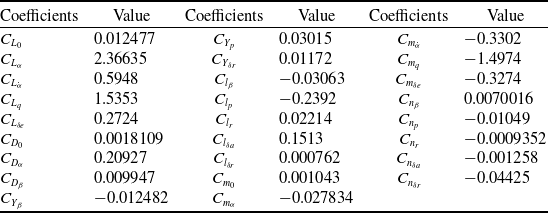
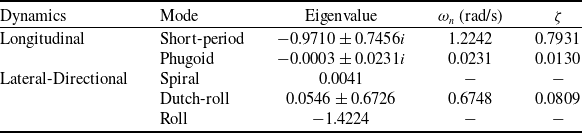

 u0


 τ
 t2
 τ
 t2
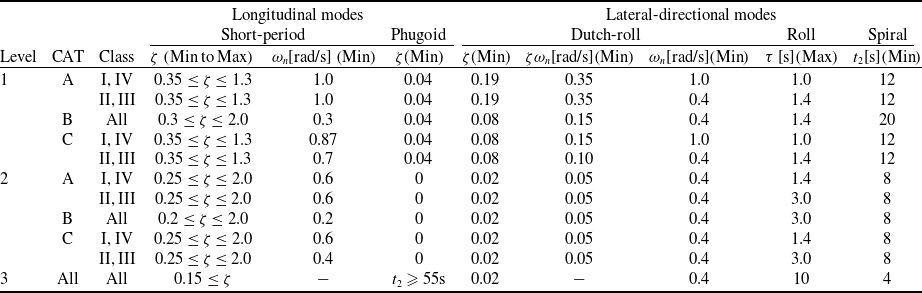


 θref

 ϕref
 ±
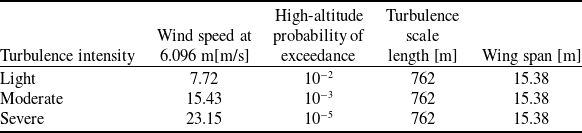


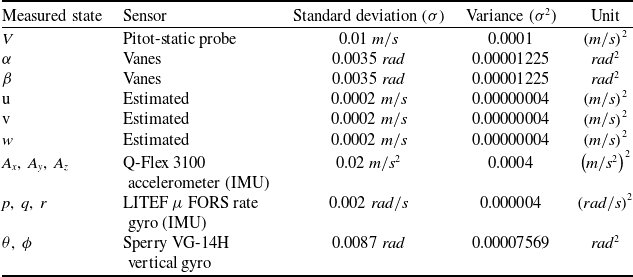

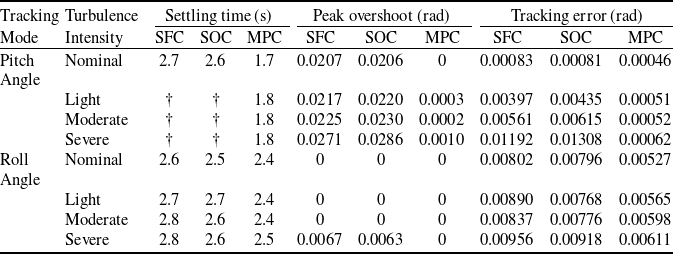
 ±

 θref

 ϕref
 ±

 θref

 ϕref
 ±

 θref

 ϕref
 ±

 θref

 ϕref
 ±
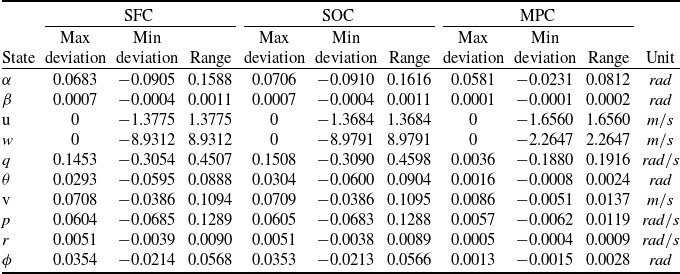

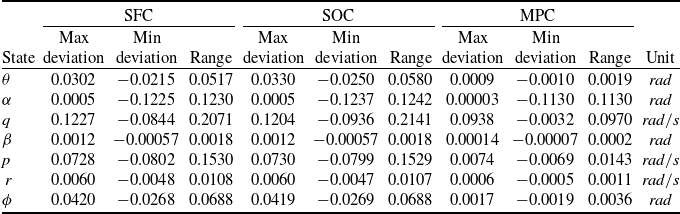
 θref



