Introduction
In 2012, enraged by the escalation of the Senkaku Islands (Diaoyu Islands) dispute between China and Japan, many Chinese people turned growing anti-Japanese sentiment into angry protests, calling for boycotts of Japanese products. In September of that year, around the anniversary of the ‘September Eighteenth Incident’, the protests escalated and turned violent in some cities. Protesters looted Japanese department stores, ransacked Japanese supermarkets, and smashed and burned Japanese cars. Such boycotts of foreign products in the name of nationalism are nothing new in China. The earliest such protest can be traced back to 1905 when the Shanghai Chamber of Commerce called for boycotts of American products to show their dissatisfaction over the Chinese Exclusion Act signed in 1882.Footnote 1 Since then boycotts of foreign products have become an important theme in the history of modern China, among which national products movements are especially notable. The movements labelled every commodity either Chinese or foreign. Chinese nationalism, as Karl Gerth suggests, became a category of consumption as ‘all social forces including state apparatuses and consumers worked to define and regulate consumerism, channelling consumption into acceptable nationalistic pleasures’.Footnote 2
James Townsend argues that the history of modern China ‘is one in which nationalism replaces culturalism as the dominant Chinese view of their identity and place in the world’.Footnote 3 Throughout the twentieth century, consumers and entrepreneurs were the backbone of the National Products movements. The well-known Chinese writer, Zhu Ziqing (1898–1948), was highly praised as a national hero at that time for refusing to eat American flour, which was cheaper and better quality than Chinese flour.Footnote 4 Chinese entrepreneurs, believing ‘business enterprises rescue the nation’—a popular political idea of the day—also vigorously promoted new national industries. The soft drinks industry was critical to these native industrial efforts. After aerated water was introduced in the late Qing dynasty, Chinese soft drinks companies soon mushroomed in the big cities. Chinese businessmen industriously advertised the merits of soft drinks, using the language of science and modernity, while also integrating nationalism into business marketing by urging the public to buy local products.
Scholars have long recognized the role of Chinese entrepreneurs in the development of modern China. For example, Sherman Cochran points out that in the early twentieth century, Chinese businessmen had already developed a number of effective marketing strategies—including nationalizing commodities—to expand their market.Footnote 5 Parks Coble argues that there was a close connection between business and government in modern China, and the flourishing of Chinese businesses in the Nationalist era was due to the weakness of the government.Footnote 6 Karl Gerth believes that Chinese nationalism—which was largely promoted by patriotic entrepreneurs—had a significant impact on consumer culture in modern China.Footnote 7 Building on this scholarship, this article delineates a business history of the soft drinks industry in modern China, examining how Chinese businessmen, who frequently organized themselves as agents of civil society, channelled beverage consumption with an implicit economic and political agenda.
Among various business strategies adopted by Chinese entrepreneurs, the nationalization of consumer culture was one of the most important. A nationalized consumer culture is often treated as a natural by-product of the creation of the nation and nation-states under the influence of imperialism.Footnote 8 The anti-Japanese boycott in 2012, for instance, was a vivid example of nationalism in contemporary China. Chinese news media praised the boycott, saying that ‘the protests were a symbol of the Chinese people's patriotism, and no one would doubt the pulses of patriotic fervour when the motherland is bullied . . ., because a country that always hides low and bides its time will always come under attack’.Footnote 9 When nationalism surged across the nation, some unofficial media provided alternative voices. On the Chinese Bulletin Board System (BBS) on the website ‘tianya.cn’, anonymous internet users pointed out that ‘the violence in the anti-Japanese protests actually revealed people's hatred toward the riches and dissatisfaction to their life’ and ‘Violent protesters were losers and hooligans who could not afford a car’.Footnote 10 Although it is hard to verify these comments, it makes us rethink the modern meaning of multiple nationalisms for the Chinese people: a nationalism that ruptures the conventional discourses on nation and nation-states, a nationalism that focuses on internal contradictions instead of external conflicts, and a nationalism that has pragmatic functions but has little to do with national pride, dignity, or identity.
The most important kind of nationalism discussed in this article could be described as ‘a mercantile nationalism, growing in commercial rivalry with the West in the treaty ports since the early nineteenth century’.Footnote 11 During that period multiple agendas were present in the National Products movements. Nationalistic consumers like Zhu Ziqing could not represent all groups. In spite of widespread nationalism, some pragmatic consumers continued to buy foreign products. How, then, did businessmen who vigorously promoted national products represent their form of nationalism? Prasenjit Duara cautions that ‘the study of nationalism should include more than overtly national movements. Its scope must be broadened so as to include nation-views and other narratives of the nation.’Footnote 12 To demonstrate a so-called ‘bifurcated history’ of Chinese nationalism, Duara presents conflicting narratives of the nationalism of repressed subjects, reformers, and statist nationalists. This article attempts to reveal one untold narrative of Chinese nationalism—the utilitarian side.
By exploring the history of Coca-Cola's business in China and Coca-Cola boycotts in the late 1940s, this study shows that nationalism became a pretext for business competition and a tool to seize the unregulated market. Similarly to the way in which the Yellow Press manipulated American passions during the Spanish–American War in the late nineteenth century, nationalism was used by Chinese businessmen to incite the Chinese people's nationalist sentiments and thus eliminate competitors. The nationalistic businessmen in the Coca-Cola boycotts were neither stooges for the Chinese state nor were they encouraged by irrational patriotic passions. They were rational and self-generated, with a very specific purpose. Here, I must point out that I do not mean that Chinese nationalists were hypocrites and the National Products movements had a hidden commercial agenda or were simply fictitious. Rather, I suggest that nationalism as an analytical mode must not be over-generalized and should be carefully scrutinized in different circumstances. Instead of a unified and singular form, this article argues that nationalism not only has ‘multiple faces’ in different dimensions but also has various interpretations and functions for different interest groups.Footnote 13
Coca-Cola business in Shanghai, 1927–1945
Coca-Cola was introduced to China in the early twentieth century. Beginning in 1927, the Coca-Cola Company opened three bottling plants: in Shanghai (the Watson's Mineral Water Company), Tianjin (the Crystal Mineral Water Company), and Qingdao (Laoshan Mineral Water Company). A large number of foreigners resided in these three coastal cities and treaty ports.Footnote 14 At first the Coca-Cola Company was optimistic about the Chinese market, but sales were initially very disappointing. For decades, Americans remained the major Coca-Cola consumers in China, as most Chinese thought the fizzy drink tasted strange because its sour flavour and dark brown colour reminded them a kind of fever syrup (sha yao shui 痧药水), an unsavoury Chinese medicine commonly used for treating summer heat.Footnote 15 Increasing competition in the soft drinks industry in Republican China in the early twentieth century further put Coca-Cola's business in jeopardy. Business competition in Shanghai, the most dynamic metropolis in China, was often fierce. Watson's Mineral Water Company, the Shanghai Coca-Cola bottling plant, suffered a severe business downturn during the 1930s because their brand was younger than Aquarius (a British-owned soft drinks brand), and Watson's price for Coca-Cola was higher than Yili (a Chinese soft drinks brand).Footnote 16 Meanwhile, the increasing popularity of orange juice produced by Meiguo and Meihua Juice companies made Watson's business even more difficult.Footnote 17 To save the company, Watson's made every effort to promote their new product, but they had successive deficits year after year: 15,628.489 yuan in 1935 and 27,000 yuan the following year. By 1936, Watson's was heavily indebted, owing the Bank of Guangdong 120,000 yuan. For these debts the company had to pay over 30,000 yuan in annual interest.Footnote 18 During the Japanese occupation of Shanghai between 1937 and 1945, Watson's Coca-Cola business was forced to shut down because of a lack of imported concentrated syrup, though less competition left more room for national brands to thrive.
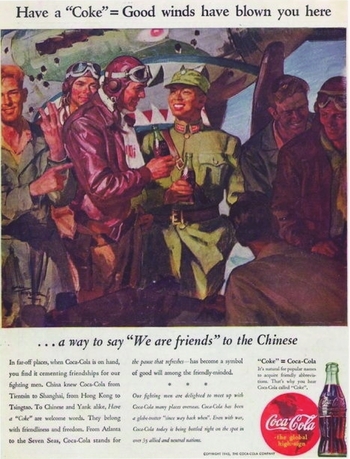
After years of recession, Watson's eventually found an opportunity for new sales during the Second World War, when Coca-Cola was listed as an important military supply to boost the morale of American soldiers overseas. In a brilliant marketing move, Robert Woodruff (1889–1985), president of the Coca-Cola Company, declared that ‘every man in uniform gets a bottle of Coca-Cola for 5 cents, wherever he is and whatever it cost’.Footnote 19 In Republican China, an ally of the United States, Watson's became the only authorized Coca-Cola supplier in the south of the country, and their business prospered as more and more American soldiers arrived. During the war the size of the American population in China expanded dramatically: from fewer than 10,000 (usually between 4,000 and 5,000) to over 100,000 in 1945.Footnote 20 The increasing numbers of Americans who were used to regularly drinking Coca-Cola soon became a sort of living and moving advertisement for the brand. In Shanghai, the visual impact was particularly powerful, since one of the largest American military bases in the Far East was located there. Between 1945 and 1949, the US Shanghai Air Force Station, No. 513 Transportation Battalion, and No. 530 Air Force Fighters all resided in Shanghai's Jiangwan Airport, which had the capacity to hold over 200 American aeroplanes.Footnote 21 American ships also anchored in Shanghai's harbour. The Xinmin Evening News, a local newspaper, observed that a Navy ship-based American mobile hospital stored hundreds of Coca-Cola boxes on-board. American sailors and soldiers drank Coca-Cola every day and the bottles were piled up like a hill on the deck.Footnote 22 Admiring both the American allies and their novel foreign products, soldiers in the Chinese armed forces tried to emulate the lifestyle of their American friends. By the late 1940s, Coca-Cola came to symbolize this friendship between allies, and it was the predominant beverage that the American armed force and the Chinese Air Force drank.Footnote 23 (See Figure 1.)
This 1943 poster depicts a Chinese military officer drinking Coca-Cola with his American friends. As the Coca-Cola empire expanded across the world during the Second World War, Coca-Cola, the military supplier of the US Army, became a political tool that represented the freedom and democracy of the United States. The poster entitled ‘Good winds have blown you here’ implies that Coca-Cola, like a cultural bridge, brought friendship, peace, freedom, and democracy to China. This advertisement was published in The Spartanburg Herald and many other newspapers in 1943.

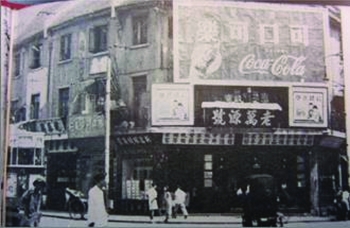
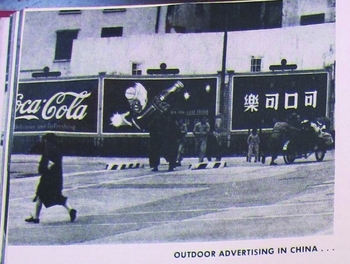
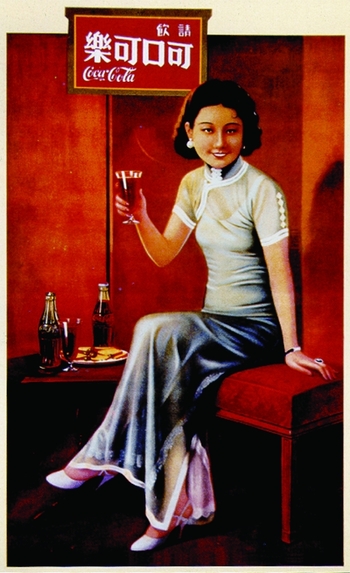
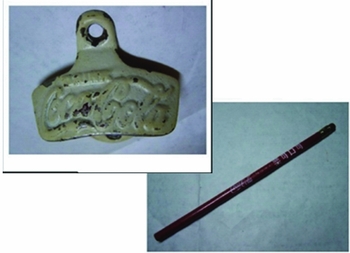
For ordinary Shanghainese, Coca-Cola was becoming a more visible part of their lives. A marketing campaign put large numbers of Coca-Cola advertisements on every street corner. Compared to others, Coca-Cola's advertisements were huge and conspicuous. A classic one was six metres long and three metres wide, several times larger than the surrounding billboards. It depicted a hand holding a bottle of Coca-Cola, surrounded by bold white Chinese and English trademarks on a bright red background (see Figure 2). Another advertisement was simpler in design but even larger in size: it comprised several same-sized billboards lined up along the street, creating a five-metre-high, red Coca-Cola wall extending as far as 17 metres (see Figure 3). Coca-Cola's indoor advertising was equally, if not even more, marvellous than the outdoor campaign. Flyers and posters featured upper-class Shanghai models demonstrating a special taste for modernity. Their hair was permed and they wore cheongsams and high heels while drinking Coca-Cola from exquisite glasses (see Figure 4). To attract more customers, the Coca-Cola Company generously gave people free souvenirs such as stationery, appliances, and posters, printed with catchy Coca-Cola trademarks (see Figure 5).
A street shot of Shanghai in the late 1940s, collected by Coca-Cola Overseas, a journal published by the Coca-Cola Export Corporation in the United States from 1948 to 1971. The Coca-Cola billboard was the largest and the most conspicuous on this street corner of Shanghai.

Another street shot of Shanghai in the late 1940s, collected by Coca-Cola Overseas. This was perhaps the longest Coca-Cola advertisement in Shanghai at that time. The left billboard features Coca-Cola's English trademark, and the Chinese translation covers the right one. The middle poster shows a ‘modern woman’ holding out a bottle of Coca-Cola to passersby.

A modern Shanghai woman is shown enjoying Coca-Cola. This popular advertising poster from the early 1940s was collected and donated by Mr Xu Baiyi 徐百益), a significant contemporary figure in the field of Chinese advertising.

Free Coca-Cola souvenirs. On the left is a bottle opener embossed with Coca-Cola's English trademark. On the right is a pencil printed with both Chinese and English Coca-Cola trademarks.

Advertising materials for Coca-Cola were highly visible and distributed in every possible public site where there was heavy traffic, like schools, bus stations, department stores, and theatres. Trains passing through Shanghai were an ideal place for advertising. Every commuter train between Zhejiang and Jiangxi province was decorated with advertising for Coca-Cola designed by Watson's. There, flyers were 12 by 12 inches, attached to both the doors of each carriage and the walls between carriages.Footnote 24 To further extend the influence of the Coca-Cola brand, Watson's actively sponsored various special events such as sports events, picnics, outings, fairs, exhibitions, and carnivals at which Coca-Cola was sold, with profits going to the sponsoring organization. One of the most remarkable events that Coca-Cola sponsored in Shanghai was the seventh national track and field games in 1948. At the venue the most conspicuous sign in the stadium was not the flaming torch or the rostrum, but four huge red Coca-Cola flags flying in the corners. Newspapers reported that ‘the flags seemed like four guardian warriors standing in a Buddhist temple’.Footnote 25 ‘They were higher than everything else in the stadium and even higher than the Guomingdang party flag and the flag of the game.’Footnote 26 During the games, Coca-Cola was the only drink served to referees and administrators. At the end of each volleyball game, the police chief kept shouting to his assistants: ‘Deliver Coca-Cola immediately!’Footnote 27 When the game was broadcast on the radio, each programme was followed by the advertising slogan ‘This programme sponsored by Coca-Cola’.Footnote 28
The increasing influence of American culture abroad, combined with extensive local marketing efforts, finally produced rewards for Chinese bottlers. By the late 1940s, Coca-Cola dominated the beverage market and became the top-selling drink in Shanghai. Its popularity not only exceeded beer and orange juice, but also beat the popular ice-cream called the ‘Beauty’, produced by Henningsen Produce Company, Ltd (海宁洋行). Within a decade, Watson's grew into the most competitive soft drinks company in the Shanghai area. Even Aquarius, one of the oldest soft drinks brands favoured by Shanghainese, could not compete with them.Footnote 29 After the war the demand for Coca-Cola in Shanghai became so large that stocks often ran out. Even though Watson's had the highest bottling capacity in the industry—36,000 bottles per day—they still could not meet local demand, as more than half of the bars, cafes, and Western-style restaurants requested to carry more stock.Footnote 30 To solve the supply problem, Watson's had to stretch their production limit to 240,000 bottles a day, and their workers joked that ‘Shanghai was becoming a huge Coca-Cola drinking pool; no matter how many drinks were produced, they would be gone immediately.’Footnote 31 By 1948 Shanghai became the first market outside the United States to post annual sales of more than one million cases of Coca-Cola.
The National Products Movement after the Second World War
The Second World War allowed Coca-Cola to seize an extraordinary opportunity in China, but the war and its aftermath also boosted American products in general in the Chinese market. After a pause to fight their common enemy during the Second Sino-Japanese War, the Nationalist Party and the Communist Party returned to ongoing hostilities in the Chinese Civil War, even though negotiations were still in progress.Footnote 32 In the name of friendship with its ally, the Nationalist Party, the United States signed a ‘Surplus Property Bulk Sale Agreement’ with China in August 1946. The agreement stated that its primary purpose was to ‘bring about the speedy turnover to China of war surplus for use by China in rehabilitating its economy, combating inflation, and acquiring foreign exchange through sales for export’.Footnote 33 With the agreement in place, hundreds of high-quality, low-cost American products, such as canned foods, nylon socks, and milk powder, poured into the Chinese market. The deluge of American products was considered not only a political threat to social peace and stability, but also a heavy blow to national industries. The Communist Party and its allies criticized America's unilateral aid to the Nationalist Party, claiming that it exacerbated internal conflicts and escalated the civil war.Footnote 34 National entrepreneurs blamed imported American products for the bankruptcy of national industries and massive post-war unemployment.Footnote 35 Beginning in 1946, half of the cigarette factories in Shanghai closed, only 30 per cent of canned food factories in the city survived, and companies like the Shanghai Socks Factory were able to maintain only three to four workings hours a day.Footnote 36 Shanghai's Xinmin Evening News of 1947 observed:
thanks to our great friend, from now on a noble child—if he has the luck—is completely fed and raised by American products. From the moment when he is born with the assistance of a midwife who wears America-made gloves to his death, he doesn't need to eat a grain of rice grown by Chinese farmers, nor wear a piece of cloth woven by Chinese peasants. What he eats are imported milk powder, fish oil, vitamin ABCD, and all kinds of canned food. What he wears are foreign wool sweaters, suits, and jackets.Footnote 37
When the full-scale civil war finally resumed after the failure of the Chongqing negotiations between the two parties in 1946, the Communist Party and its allies started a National Products Movement with the slogan ‘Use Chinese goods and boycott American products’ in 1947 to protest against the bulk sale of American surplus property. The movement was widely supported by nationalist intellectuals such as Guo Moruo (1892–1978) and Deng Chumin (1889–1981) as well as hundreds of ‘patriotic entrepreneurs’.Footnote 38 In the late 1940s commodities were labelled as either ‘foreign’ or ‘Chinese’. Phrases like ‘China made’ and ‘national’ were widely seen in patriotic advertising and demonstrations. In the soft drinks industry, where Coca-Cola had put all national brands in jeopardy, nationalistic enthusiasm was particularly strong. Chinese businessmen poured all their resources into improving their productivity and the quality of their products; they also vigorously marketed those products in the name of nationalism.
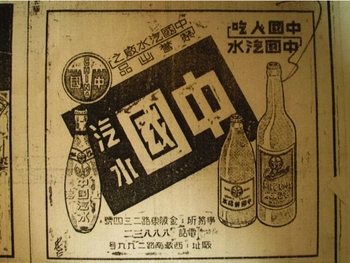
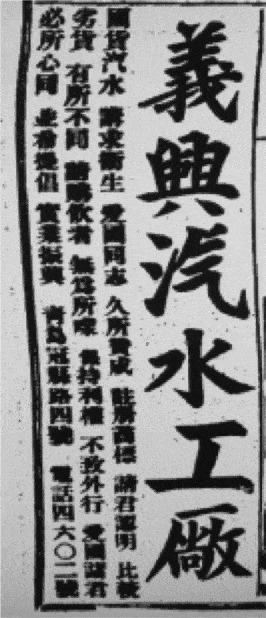
Some soft drinks companies included direct references in their products to ‘China’ or ‘Chinese’ such as Rong Hua 荣华 (China prospers), Tian Hua 天华 (Heaven China), Guo Hua国华 (China), Zhongguo 中国 (China), and Da Hua 大华 (Great China). Other companies integrated Chinese cultural elements into their brands. The Shanghai Zhongguo Soft Drink Company, for example, not only included the word ‘China’ in their brand name, but also used the image of the Great Wall as their trademark. Their advertising slogan—‘Chinese people should drink Chinese Soft Drinks’—was both persuasive and encouraging (see Figure 6). The Yixing Soft Drink Company in Qingdao, on the other hand, elaborated traditional Confucian values in their marketing. The Chinese character ‘yi’ 义 in the brand name means ‘righteousness’, which is one of the key concepts in Chinese culture; and ‘xing’ 兴 indicates prosperity and development, which was a blessing for the country as well as the company. Their advertising often reflected more politics than commerce. One campaign declared ‘China-made soft drinks supported by patriots are sanitary . . . Chinese nationalists must protect our interest and right . . .we must work with one heart and one mind to promote national industry to rejuvenate the nation’ (see Figure 7).Footnote 39
Zhongguo Soft Drink Company's advertisement during the National Products Movement. On the top left is the company's trademark—an image of the Great Wall—and Chinese and English translations of the brand name ‘Zhongguo,’ meaning ‘China’. On the top right is their advertising slogan: ‘Chinese people should drink Chinese soft drinks’.

A Yixing Soft Drink Company advertisement. On the left is the advertising slogan: ‘China-made soft drinks are sanitary, which have been long supported by Chinese patriots. Please notice our registered trademark and do not be deceived by others, because our products are different from poor-quality drinks. Chinese nationalists must work with one heart and one mind to protect our right and interest, and promote national industry to rejuvenate the nation.’

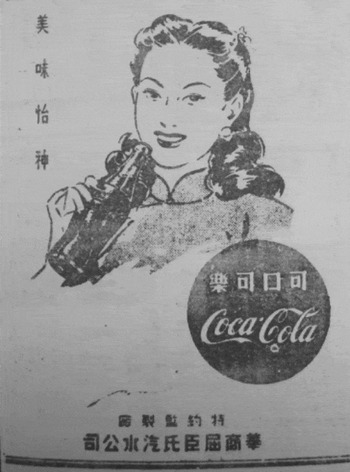
Interestingly, nationalistic elements also appeared in Coca-Cola's advertising in Shanghai. Watson's Mineral Water Company not only featured attractive Chinese women, but also highlighted the company's Chinese identity by putting the adjective ‘Chinese’ in front of the company name (see Figure 8). Perhaps people thought that the company, which fought for a share of the market during the National Products Movement, was playing the nationalistic card to disguise their foreign identity. Another example of this tactic being used has been investigated by Sherman Cochran in his study of Sino-foreign rivalry in the tobacco industry between 1890 and 1930.Footnote 40 In fact, Watson's had long been registered as a member of the Chinese Soft Drinks Association in Shanghai. Like the rest of the Chinese companies, Watson's had been an active participant in the National Products movments and was warmly welcomed by their Chinese peers. The company's name frequently appeared and was praised in magazines and journals in regard to the National Products movements, which had been founded by the government and national products associations. Society and Economy Monthly of 1936, for example, presented Watson's Mineral Water Company as an important Chinese company that had made a considerable contribution to China's soft drinks industry. The article pointed out that ‘the Company was owned by Chinese businessmen who bought it from foreigners in 1929. It produced various high-quality drinks with Coca-Cola as its specialty . . . Coca-Cola could quench thirst and refresh mind, which was regarded as one of the best soft drinks on the market; but the only drawback was that the concentrated syrup was imported.’Footnote 41
Coca-Cola advertisement in Shanghai, 1948, from Watson's Mineral Water Company, featuring a young Chinese woman enjoying a bottle of Coca-Cola. At the bottom, Watson's highlighted the fact that it was a Chinese company in bold font.

The Shanghai Coca-Cola protest, 1947–1948
As American products became the target of the National Products Movement after the Second World War, Watson's Mineral Water Company's Coca-Cola bottling business went through a hard time too. While the company successfully ascended to the number two spot in the soft drinks industry in Shanghai, largely due to the success of Coca-Cola after the war, their Chinese competitors had suffered severe economic losses; they were convinced by the National Products Movement that their failure was the result of unfair competition. These Chinese companies believed that Coca-Cola had succeeded primarily through massive advertising campaigns which had been firmly supported by foreign capital, whereas they could not make similar marketing investments. American capitalists spared no expense on advertising: they funded huge marketing campaigns, made enormous advertising posters, and gave away free souvenirs, coolers, and training videos. Watson's also imported the most advanced bottling machinery from the United States, which could produce a maximum of 120,000 bottles per day, and there was no Chinese company who had similar equipment. Therefore, Chinese competitors argued that the Chinese soft drinks business, and even the whole national economy, were doomed because only wealthy foreign capitalists were able to do business as they were able to draw on large capital investments.Footnote 42
However, the American Coca-Cola Export Corporation did not admit that they were running a business in China. They claimed that their representatives in Shanghai were not official partners with Coca-Cola and the representatives’ office did not belong to any department of the Coca-Cola Export Corporation. ‘The representatives were merely functioning in a supervisory capacity and to survey the Chinese market with a view to future prospects.’Footnote 43 Charles T. Carroll, the representative who operated a small office at 101 Hamilton House, 170 Kiangse Road (Jiangxi Road) in Shanghai, which was listed under the name of the Coca-Cola Export Corporation, emphasized in official documents as well as public media that Coca-Cola did not carry on any business, nor did they have a corporation, in China. Coca-Cola, he said: ‘kept no books and handed out no payments for merchandise, nor did they import goods for sale on the Chinese market. The bottlers bought directly from the United States, and sent payment for the merchandise directly to Coca-Cola's New York office. The Shanghai office did not intervene, in any way, in such transactions.’Footnote 44
In addition, the Shanghai office was rented in Carroll's name and he explained that it was merely used for writing letters, keeping files, and interviewing parties. Except for Carroll himself, the only office employees were a stenographer and an office boy, both of whom were hired to work directly for Carroll. The Shanghai office did not operate a bank account under the name of the Coca-Cola Export Corporation, instead ‘the bank account which was used in connection with the office was under the name of Charles T. Carroll, Jr.—Special Account, and the letters generally were signed by Charles T. Carroll, Jr. without any reference to the position’.Footnote 45
When referring to the duty of the representatives, Carroll said he did not hold power of attorney for the company. His job, in fact, was to supervise the activities of Coca-Cola's authorized bottlers in China, making sure that they followed specified standards. He did not directly import products from the American Coca-Cola Company nor did he sell any product to the bottlers. As a representative, he gave bottlers general assistance in promoting their business and technical advice regarding production matters. Carroll pointed out that he was not responsible for obtaining import licences nor securing foreign exchange terms for bottlers, nor did he provide any kind of assistance to Coca-Cola's own marketing efforts in China. Instead, ‘all advertising was designed and promoted by bottlers with an exception of occasional posters in trade magazines’.Footnote 46
As the National Products Movement escalated in 1948, the antipathy towards Coca-Cola increased to the point where the Chinese business community called for the boycott of the drink. The Shanghai City Council, a public body established in 1938 and attended mainly by representatives from industry, proposed a petition to restrict luxury imports in order to reduce foreign currency transactions and to protect national industries. The petition pointed out that importing foreign luxury drinks like Coca-Cola significantly damaged national industries; luxury production and consumption were completely opposite to the values of hard work and austerity that had long been promoted by the government.Footnote 47 The petition described Coca-Cola as an American brand that should be categorized as a luxury and, therefore, its import, especially the syrup concentration, should be severely restricted. The proposal was favoured by major Chinese soft drinks manufacturers in Shanghai, which responded in a joint letter with the following resolution:
We opened soft drink companies to produce the best beverage in Shanghai. However, recently the American Coca-Cola Company is dominating the market by virtue of massive investments. They export tons of Coca-Cola concentrated syrup, asking Watson's Mineral Water Company to bottle and sell. Coca-Cola's business has given the Chinese soft drink industry a heavy blow, resulting in the shutdown of hundreds of national companies. Our Chinese companies have been seriously threatened by the unfair competition. Since the City Council represents the interest of the Chinese public, it is urgent to forbid luxury imports and reduce foreign currency exchange to protect the economic foundation of the nation. Therefore, we strongly support the proposal.Footnote 48
Soon after, the resolution was sent to the Shanghai Municipal Government for review. But before a decision was made, Watson's Mineral Water Company wrote an open letter to the public explaining that Coca-Cola was not a wasteful luxury, but a widely known brand that was popular across the world except in the Soviet Union and its allies. The company pointed out that Coca-Cola was commonly recognized as an ordinary, daily drink throughout the world, and this was increasingly how it was consumed in Shanghai, so therefore it could not be defined as a luxury. More importantly, Watson's said, ‘raw materials’ used in other soft drinks brands were also imported from overseas. In this sense, any discrimination involving Coca-Cola was unfair and unjustified. In the letter, Watson's particularly emphasized that they made large contributions to state revenue. Because of the prosperity of their Coca-Cola business, the company paid the largest amount of commodity tax in the industry—up to 140 billion yuan in June 1948. Their partners, including distributors and retailers, also paid a considerable amount of business taxes and banquet taxes, estimated to be a total of 250 billion yuan in June 1948. As to foreign currency exchange, Watson's argued that only eight per cent of their annual income was invested in importing raw materials, such as concentrated syrup, which meant the company spent a very small amount in ‘foreign exchange’, especially when compared with the amount of taxes it paid to the government every year.Footnote 49
The major Chinese soft drinks manufacturers in Shanghai could not deny that Watson's was the biggest tax payer in the industry, but they started to play another political card, accusing the company of causing the collapse of the national soft drinks industry and the national economy. They said that Watson's Coca-Cola business significantly undermined nationalistic sentiment and weakened the National Products Movement across the country. However, Watson's believed that this accusation was completely unjustified, pointing out that although Coca-Cola was an American brand, all assets, including factory buildings, machinery, transportation facilities, coolers, bottles, and crates were investments made by Chinese shareholders. If the government banned Coca-Cola imports, Watson's argued, not only would the interests of their Chinese shareholders be hurt but industries in their supply chain, including glass, caps, sugar, coolers, and crates, would be affected and thousands of Chinese workers could become unemployed. Last, but not the least, the company argued that Coca-Cola was actually beneficial to the public's health, because the quality of drinking water in China was always a problem and the market was glutted with shoddy products.Footnote 50
Behind these issues of foreign currency exchange and Coca-Cola being classified as a luxury lay deeper concerns. The focus of the debate, in fact, was whether or not Watson's should be treated as a Chinese company, and where the boundary between national and foreign industry should be drawn. The National Products Movement as well as the concept of national products was nothing new in China. As early as the 1930s, in order to show support for the national economy, the Republican government promulgated detailed, official standards to identify products’ ‘nationality’. These standards considered four basic components of any product: capital, management, raw materials, and labour. Based on those criteria, ‘national products’ were categorized into seven official grades—from grade one, the purest—to grade seven, the least pure:
Grade 1: Chinese capital, management, materials, and labor.
Grade 2: Chinese capital, management, and labor, but including the use of small amounts of non-Chinese raw materials or a few foreign technicians.
Grade 3: Chinese investment using capital borrowed from abroad, but Chinese management, materials, and workers; or the analogous situation with foreign technicians.
Grade 4: Chinese capital, management, labor, and primarily foreign materials; or the analogous situation with foreign technicians.
Grade 5: Chinese capital borrowed from abroad, Chinese management and labor, primarily foreign materials; or the analogous situation with foreign technicians.
Grade 6: Chinese capital borrowed from abroad, Chinese management and labor, and mainly foreign raw materials; or the analogous situation with foreign technicians.
Grade 7 (added within a few years): Chinese labor, management, and workers, but all foreign materials; or the analogous situation with foreign technicians.Footnote 51
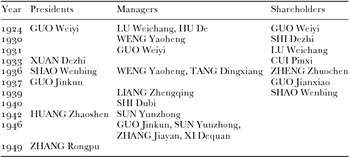
According to the seven official grades, Watson's Mineral Water Company, which was supported by Chinese capital and completely run by Chinese people, was neither the purest Chinese company nor the least pure. It was formerly British-owned and under the management of Watson & Co, A.S., a British firm in Hong Kong initially set up by chemists and druggists, wine and cigar merchants, and photo suppliers. In 1919 the company was separated from their Hong Kong connections, and four Chinese businessmen, all of whom were Cantonese, made a capital investment of $140,000 and registered it with the Chinese government.Footnote 52 By 1933 Watson's board of trustees expanded to six members. The president of the board was a 50-year-old Cantonese named Guo Weiyi 郭惟一 who had been involved in the opium trade and later made a fortune when opium prices soared after the trade was prohibited. With this money, Guo bought Shanghai Watson's Mineral Water Company from the British in 1919. He also invested in Chinese banks (钱庄) in Shanghai and became a shareholder of De Chang德昶, Hong Xiang鸿翔, and Hong Sheng鸿胜.Footnote 53
Watson's second biggest shareholder was a speculator named Shi Dezhi施德之, who once ran a photo studio, and later made a great fortune by inventing a medicine for heatstroke called ‘Shi Dezhi miracle syrup’ (施德之神功济众水). Even though the efficacy of the syrup was questionable and Shi Dezhi was widely known as a ‘slippery fellows’ in Shanghai, his invention somehow became very popular and his wealth was estimated at 1.5 million yuan. After investing in Watson's, Shi ran into legal difficulties. In 1933 he was summoned by the court because of his role in the morphine and heroin trade. His share of Company stock was said to have been transferred to Guo Weiyi. The other stockholders were Lu Weichang卢炜昌, the president of the Shanghai Jiangwu Sports Society; Cui Pinxi崔聘西, shareholder and manager of the Bank of Taihexing泰和兴银号, manager of the Heshen Cotton Mill和生纱号, and counsellor for the Wu Hua Bank of Industry and Trust五华实业信托银行; Zheng Zhuochen郑灼臣, a famous dentist in Shanghai; Guo Jianxiao郭健宵; and Shao Wenbing邵文炳.Footnote 54 Although Cui was not very wealthy, he was very competent and had a good reputation. The company's managers were all Chinese, too. For example, in 1933 the manager was a 35-year-old Cantonese named Weng Yaoheng 翁耀衡, a graduate from Shanghai Saint John's University who was both talented and competent, and had managed a cotton business earlier in his career.Footnote 55
Since the establishment of the company in Shanghai, no foreigners had either joined the board of trustees or been appointed as managers. In 1924 Guo Weiyi was the president of the board while Lu Weichang and Hu De胡德 were managers. In 1930 Wen Yaoheng became the manager. In 1933 Xuan Dezhi旋德之was elected as the president. Three years later Shao Wenbing replaced Xuan and in 1937 Guo Jinkun郭锦坤 replaced Shao, during which time Wen Yaoheng and Tang Dingxiang唐鼎祥were managers. In 1939, Liang Zhenqing 梁振卿 was appointed as the manager, to be replaced by Shi Dubi施杜毕 a year later. Throughout the 1940s, before the Communists came to power, key positions in Watson's Mineral Water Company were all taken by Chinese people, without exception. In 1942, the president was Huang Zhaoshen黄昭深 and the manager was Sun Yunzhong孙允中. In 1946, the managers were Guo Jinkun, Sun Yunzhong, Zhang Jiayan张家彦, and Xi Dequan席德权. In 1949 the president was Zhang Rongpu张荣溥.Footnote 56
Presidents, managers, and shareholders in Shanghai Watson's Mineral Water Company from 1924 to 1949.

Source: ‘The investigating report by Shanghai Municipal Government’, 25 August 1954, B163-1-135-58, the Shanghai Municipal Archives, Shanghai.
Like most Chinese soft drinks businesses, Watson's Mineral Water Company went through some very hard years at the beginning. In their struggle to survive, Guo Weiyi and his friends moved the company a couple of times. After buying the company, they relocated from the original site, Hen Bang Qian 横浜桥, to Huishan Road汇山路 in 1924. At the new site, they purchased real estate of five mu (3,333 square metres) and spent 100,000 yuan on factory buildings. In addition they rented two offices in Jiangxi Road, one of which was used as the delivery centre and hired more than ten workers. After the Japanese Army occupied Shanghai, the company moved twice more, and their Coca-Cola business struggled because of the difficulties experienced in importing concentrated syrup. They finally settled in Jiaozhou Road in 1940.Footnote 57 During the First and the Second World Wars Watson's business was very unstable. Like other Chinese soft drinks companies, they faced fierce competition from foreign businesses. Their biggest competitor was the British-owned Aquarius Mineral Water Company, whose facilities and financial strength was much greater than their Chinese counterparts. However, through hard work, Watson's business began to improve and grow. A golden time for the company came in 1929 when they entered into a contract with the American Coca-Cola Company. Except for the period of Japanese occupation, as a Coca-Cola bottler, Watson's flourished and rapidly became one of the most competitive soft drinks companies in Shanghai. Referring to this success, the company's owners and managers proclaimed it was largely due to their indigenous make-up. They said the company's Chinese identity not only stimulated the enthusiasm of factory workers but also encouraged patriotic consumers to choose national brands over foreign ones.Footnote 58
As a member of the Chinese Soft Drinks Association, Watson's actively participated in the National Products movements by improving their products and building their brand. They invested a large amount of money in new machinery, bottles, and facilities. To solve the persistent problem of the ice shortage in Shanghai in the 1930s, the company decided to open an ice-manufacturing facility in the name of ‘promoting the national industry and protecting the interests of the Chinese people’, a slogan that was vigorously used by nationalists in exhibitions, demonstrations, newspapers, and government documents. Watson's board of trustees believed that opening an ice-making company was necessary and urgent, because there was only one mechanized ice-making company in Shanghai—which hardly met the local summer demand. The other small ice-making companies, Watson's argued, had low output and were unsanitary, as their ice was made from natural ice saved from lakes in winter. Based on the established reputation of Watson's soft drinks industry in the city, the board of trustees was optimistic about the future of their ice business. Shortly afterwards, Watson's Ice Manufacturing Company was registered as a branch of Watson's with the Department of Commerce in the Republic of China. It was categorized as a national company, which only Chinese citizens in the Republic of China could invest in, as stated in the company brochure.Footnote 59 All personnel, including shareholders, managers, office staff, and labourers, were Chinese.
According to the official standards, therefore, Watson's Mineral Water Company as well as their subsidiary—Watson's Ice Manufacturing Company—was a purely Chinese company in terms of capital, management, and labour. The only controversial part of their identity was perhaps the imported machinery and raw materials, which became the main target of the petition. The major Chinese soft drinks manufacturers in Shanghai, which wrote the joint letter referred to earlier, pointed out that Watson's had three sets of aerated water processing machines, one capping machine, a pump, and one set each of syrup and filters—all of which were imported from the United States.Footnote 60 Their Coca-Cola concentrated syrup was purchased from the American Coca-Cola Company through foreign firms in Shanghai like A. F. Deer.Footnote 61 However, this was just one side of the story. The accounting books of Chinese soft drinks companies reveal that depending on foreign materials for production was very common in the 1940s when the industry was still young in China. These companies were heavily reliant on foreign imports for machinery and many raw materials such as saccharin, sodium bicarbonate, citric acid, corks, and even bottles. For example, the aerated water processing machines at Shanghai Weisheng Soft Drink Company卫生汽水厂and the Tianhe Soft Drink Company 天河汽水厂were imported from Great Britain, filters at Siwei Orange Juice Company 四维鲜橘水厂came from Japan, and machinery at the Meihua Mineral Water Company美华汽水厂 was entirely imported from Japan.Footnote 62
As Watson's vigorously fought back, the debate intensified when the Chinese soft drinks manufacturers in Shanghai accused Watson's of attempting to confuse and fool the public by overstating their Chinese national identity and contribution to the nation. Representatives of the Chinese soft drinks manufacturers in Shanghai responded:
Although the American brand Coca-Cola was one of the popular beverages of the world, it was not a necessity in China. Since Chinese companies could produce similar tasting drinks to Coca-Cola, it was unnecessary to waste a large amount currency in foreign exchange to import luxury products. As to the imported materials used by other Chinese soft drink companies, we have to point out that these were ordinary raw materials that were not typical for soft drink producing, but they were also needed in other industrial fields, so they were not a luxury and should not be criticized and prohibited. With regard to the national economy, we were confident that if Coca-Cola were to be forbidden, sales of Chinese drinks would definitely increase and thus tax payments, as well as government revenue, would not shrink. In contrast, if our government was merely interested in tax income without consideration on the drain of foreign currency exchange, it was tantamount to seeking temporary relief regardless of the severe consequences, which was, by quoting a Chinese proverb, ‘drinking poison to quench thirst’. Finally, we would like to point out that after Coca-Cola was forbidden, Watson's Mineral Water Company, as a Chinese company as they claimed, could continue to produce other kinds of beverages. Since the Ministry of Economic Affairs had decided to forbid luxury imports including cookies and candies during the economic crisis, how could Coca-Cola, a foreign soft drink, make an exception? Footnote 63
China was one of the biggest overseas markets for Coca-Cola in the late 1940s and the Shanghai Coca-Cola crisis soon caught the attention of the Americans. An American journalist criticized the petition in the Shanghai Evening Post and Mercury as ‘a hasty and ill-considered action which played directly into the hands of those who wanted to eliminate the competition of Coca-Cola through political, instead of legitimate business, means’.Footnote 64 He argued that all the concentrated flavour essences used in bottled drinks in China—including sarsaparilla, lemonade, cherry soda, and Coca-Cola—were imported, so if Coca-Cola was going to be banned as an imported luxury, all aerated waters using foreign manufactured essences must be prohibited from sale. He also pointed out that Watson's Mineral Water Company was a Chinese company and perhaps it was the company's success that caused their opponents to adopt political means to hamstring their sales. The journalist warned the Chinese government that there would be a serious impact on native Chinese industries if the proposal was approved, because, aside from Coca-Cola's concentrated syrup, Watson's used all kinds of Chinese-made products for their entire process of manufacturing, sales, and distribution. In other words, the small amount of imported ingredients was helping to create jobs and promote Chinese industries.Footnote 65
Moreover, the journalist believed that prohibiting Coca-Cola might even affect Sino-foreign business in general, for Coca-Cola was not the only commodity in China that had foreign origins. Modern industrial products such as automobiles and electric light bulbs contained certain essential parts imported from overseas. If Coca-Cola was banned, ‘all local manufacture of finished goods with imported raw materials could be banned on the ground that it was hurting some kind of native industry. In the end, China would have to slam its doors to any kind of foreign trade and go back to the wheelbarrow age.’Footnote 66 Regarding the Shanghai Coca-Cola crisis, he argued ‘the City Council would establish a dangerous precedent by the adoption of the proposal, because all Shanghai businessmen would forsake the ordinary methods of business operation and direct their most ardent appeals of salesmanship to the City Council. To eliminate competition, they would not have to think in terms of lowering costs and increasing efficiency, but they would manoeuvre for political favours from the City Council.’Footnote 67
Perhaps the United States was allied with the Nationalist government, or Watson's defence was particularly convincing, as initially the mayor of Shanghai was not very interested in the proposal raised by the Chinese soft drinks manufacturers in Shanghai. However, as calls for a boycott of Coca-Cola became overwhelming, the Shanghai Municipal Government was forced into a response: materials used in the production of Coca-Cola could be imported to China without interruption. The Government explained that the raw materials of Coca-Cola are ‘lipoid’ 油脂腊类, which belonged to one sort of mixed essences内混合香料, and Republican China had already imposed and subsequently reduced import quotas on this material. In May and June, the import quota for lipoid in the greater Shanghai area was $489,907.22, or $244,953.61 for each month. This amount was already less than one-third of the import quota in April, which had been $690,180.00. In this sense, therefore, the amount of Coca-Cola's imported concentrated syrup had already been restricted under the law and could not be separately categorized as a restricted item by itself, nor could import restrictions be compounded on one particular item. Furthermore, according to an investigation by the Shanghai Administration for Industry and Commerce, this kind of ‘mixed essence could not successfully be produced by Chinese factories at the time, so Coca-Cola's concentrated syrup was temporarily allowed to be imported’.Footnote 68
Conclusion
The Shanghai Coca-Cola protest in the late 1940s was a strong nationalist response to the threat of Western dependency, and it constituted a significant part of the National Products Movement. Nationalist movements in China have been so vigorous, and operate at such a great scale that over time they seem like a gigantic and unified power, overwhelming and irresistible. They have included splendid exhibitions of national products, sensationalist remarks supporting nationalism, and patriotic advertising slogans. These elements have been seen by historians as facilitating the construction of a national identity. However, much like the discordant voices from unofficial social media during the anti-Japanese boycott of 2012, the changing fortunes of Watson's Mineral Water Company between 1919 and 1948 remind us that Chinese nationalism was not always consistent and unified. Instead, multiple agendas made contesting demands of nationalist policies and companies found ways to work within a shifting political landscape. Therefore, the seemingly singular nationalism generated from the nation and the nation-state became multiple and layered.
When the imperative to put a stop to foreign imperialism superseded internal political conflicts, Chinese entrepreneurs like Guo Weiyi devoted themselves to nationalizing the economy. Guo bought Watson's Mineral Water Company from the British in 1919. Seven years later, in 1927, the company became the business partner of the American Coca-Cola Company in Shanghai. The efforts and clear success of Guo Weiyi and his partners were highly praised by the Chinese business community in Shanghai, which ranked Watson's as one of the top three influential soft drinks companies in the area. Before the American war surplus was sold to China, the Chinese business community barely questioned Watsons’ Coca-Cola business, since using imported machinery and raw materials was a very common practice in the soft drinks industry. Adopting the marketing strategies of foreign firms was also nothing new for Chinese companies in the early twentieth century.Footnote 69 However, when the Chinese Civil War intensified following evacuation of imperial powers after the Second World War, the formerly cohesive nationalist sentiment that had united groups of patriotic entrepreneurs became a political weapon with which to attack business competitors. When Watson's Coca-Cola business prospered and threatened other Chinese brands, their Chinese identity, which once had been widely recognized, suddenly became questionable. The Chinese soft drinks community appealed to nationalism, launching a fierce protest against Watson's, even though the Company's ownership had remained consistently Chinese. The National Products Movement and nationalism was thus mobilized for new objectives, becoming a tool for business competition.
I am not suggesting here that nationalism was fictitious or can be reduced to solely private interests. Instead, I argue that Chinese nationalism is complicated and its meaning has been reinterpreted and reconstructed over time by the Chinese business community: from nationalizing industrial production following the humiliation of the Opium War, to nationalizing consumption by restricting imports after the Second World War as China became further integrated into the global economy. When the business community's understanding of nationalism differed from the state's policies, for example, during the anti-American boycotts after the Second World War, the target was the United States as the nationalist government's key ally. At that time, Chinese businessmen organized themselves into a dynamic civil society to challenge local political authority. Although the business community's efforts were not successful in the end, their model was utilized by the Communist Party for its own political agenda. After communist China was established in 1949, the Communist Party eventually nationalized both production and consumption. Coca-Cola, criticized as a symbol of capitalism, was driven out and disappeared from the Chinese market for the next three decades.