Introduction
Hot extrusion is an important thermal mechanical processing on aluminum (Al) alloys, and it has the advantages of high flexibility, high precision, and high efficiency [Reference Chen, Zhao, Yu, Zhang and Wu1, Reference Gao, Xu, Teng and Lu2, Reference Chen, Zhao and Yu3, Reference Ma, Jia, Prashanth, Yu, Li, Zhao, Yang and Huang4]. Al profiles with a fixed cross section and excellent mechanical properties can be produced by hot extrusion process. Both work hardening and dynamic softening simultaneously occur on Al alloys during hot deformation or hot extrusion process. At the initial stage, the proliferation and movement of dislocations harden the Al alloy. The climb of edge dislocation and the cross slip of screw dislocation lead to the disappearance of positive and negative dislocations and also the rearrangement of dislocations. Then, the dislocation wall can be formed by the entanglement of dislocations. Under such condition, recrystallization may take place. The above phenomena correspond to the dynamic softening [Reference Moshkovich, Lapsker, Feldman and Rapoport5, Reference Chen, Chen, Zhao, Zhang and Cui6, Reference Li, Chen, Tang, Zhao and Zhang7]. Because Al alloys have high-level fault energy, cross slipping or climbing of dislocations is easier to be initiated, and thus, dynamic recovery (DRV) is more likely to occur. However, the addition of alloying elements such as zinc (Zn), magnesium (Mg), and silicon (Si) into Al alloys greatly reduces stacking fault energy. At a specific temperature and strain rate, dynamic recrystallization (DRX) can also take place [Reference Zhu, Bian and Liu8].
High-strength Al–Zn–Mg (7000 series) alloys are heat treatable, and they have been widely applied in manufacturing components in the fields of aerospace, weapons, transportation, and electronic devices due to the advantages of high strength, low density, and good corrosion resistance [Reference Xie, Lei, Wang, Sheng and Li9, Reference Zhou, Duszczyk and Korevaar10, Reference Alatorre, Ambriz, Amrouche, Garcia and Jaramillo11]. In comparison with the as-cast Al–Zn–Mg alloys, microstructure is refined and casting defects are avoided by hot extrusion and Al profiles with excellent mechanical properties can be achieved. It is noted that, during hot extrusion of Al–Zn–Mg alloys, the evolution of microstructure such as DRV and DRX is sensitive to deformation conditions. Both DRV and DRX play important roles on the final grain structure and the mechanical properties of extruded Al profiles.
For hot extrusion of Al alloys, the appropriate control of process parameters is important to ensure the quality and efficiency of the product. Billet temperature and extrusion speed are the main process parameters. Too high temperature easily results in overheating or overburning of the Al profile and also limits the further increase of extrusion speed. Nevertheless, if the billet temperature is low, the plasticity of Al alloy will be deteriorated and deformation resistance becomes high, leading to the increase of extrusion load and the damage of extrusion die. In addition, temperature of the material is strongly related to extrusion speed. Generally, temperature of the deformed material gradually increases during the whole extrusion because severe plastic deformation generates large amount of heat. As a result, a higher extrusion speed causes a larger temperature increase. On the contrary, if the extrusion speed is low, the hardness of the Al profile is not up to the requirement. Thus, the determination of billet temperature and extrusion speed is of great importance to the quality of Al profiles, production efficiency, and die life. Wu et al. [Reference Wu, Liao, Liu and Zhou12] studied the hot extrusion of an Al–Si–Mg alloy, and the results showed that lower temperature (temperature-induced) or higher extrusion ratio (strain-induced) caused the dynamic precipitation of Mg2Si particles. Ma et al. [Reference Ma and Qi13] reported that the billet temperature significantly affected the tensile property of an Al composite. Ragab et al. [Reference Ragab, Taha, Abbas, Al Bahkali, El-Danaf and Aly14] investigated the hot extrusion of 6061 Al chips based on Box–Behnken design and found that both the ultimate tensile strength (UTS) and elongation were obviously enhanced with the increase of billet temperature. Jahedi et al. [Reference Jahedi, Mani, Shakoorian, Pourkhorshid and Paydar15] conducted extrusion experiments using Al composite with different extrusion speeds, and the results indicated that excellent yield strength (YS) and UTS were achieved with the extrusion speed of 2.0 mm/s. Gagliardi et al. [Reference Gagliardi, Citrea, Ambrogio and Filice16] reported that extrusion speed played an important role on the superficial defects, i.e., hot shortness, speed cracking, and grain growth of 6060 Al profile. Yu et al. [Reference Yu, Zhao, Cui, Zhang and Chen17] found that hardness, tensile strength, and ductility of 6063 Al profile with longitudinal welds could be improved by the increase of billet temperature or extrusion speed.
Previous studies proved that the complex microstructure evolution occurred during the hot extrusion of Al alloys, and it was greatly affected by extrusion conditions. Till now, the extrusion process of high-strength Al–Zn–Mg alloys is seldom studied, and the effects of extrusion condition on the microstructure evolution have not been clarified. Hence, hot extrusion experiments were conducted under various billet temperatures and extrusion speeds, and the Al–Zn–Mg plates were extruded out. Grain morphology and secondary particle distribution of the extruded Al profiles were carefully examined. The main texture components and their fractions were analyzed. The hardness and tensile tests were conducted to evaluate the mechanical properties of the extruded profile. Finally, the relationship between the microstructure and mechanical properties was clarified. The main contribution of this study is to make a better understanding on the hot extrusion of Al–Zn–Mg alloy and also provide theoretical evidence on determining billet temperature and extrusion speed.
Results and discussion
Grain morphology
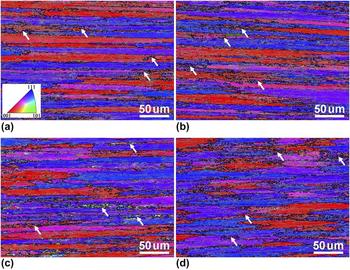
Electron backscatter diffraction (EBSD) maps of the extruded plates along extrusion direction (ED) are shown in Fig. 1, where the gray lines indicate the low-angle grain boundaries (LAGBs) and the black lines indicate the high-angle grain boundaries (HAGBs). As seen, the grains were obviously elongated along ED with a typical fiber structure. The subgrains separated by LAGBs can also be observed, indicating the occurrence of DRV. Hot extrusion is a process accompanied with the phenomena of both work hardening and dynamic softening. DRV and DRX are the main softening mechanisms, and DRV is the dominate one for Al alloy with high stacking fault energy. At the early stage of extrusion, the dislocations gradually proliferated and accumulated. Then, DRV was triggered due to the climb and cross slip of the dislocations along the slip planes and shearing bands. As a result, the number of subgrains continuously increased with the appearance of a large amount of LAGBs. DRV is usually affected by the deformation temperature and strain rate. Besides, some fine equiaxed grains separated by HAGBs can also be observed in Fig. 1, which indicates the occurrence of slight DRX. If DRV failed to eliminate the proliferative dislocations, the softening mechanism turned from DRV to DRX under certain critical deformation conditions [Reference Sakai, Miura, Goloborodko and Sitdikov18]. During the DRX process, the LAGBs were gradually transformed to HAGBs and a large number of dislocations were eliminated.
EBSD maps along the ED direction of the extruded plates (a) P1, (b) P2, (c) P3, and (d) P4. The white arrows indicated the fine DRXed grains.
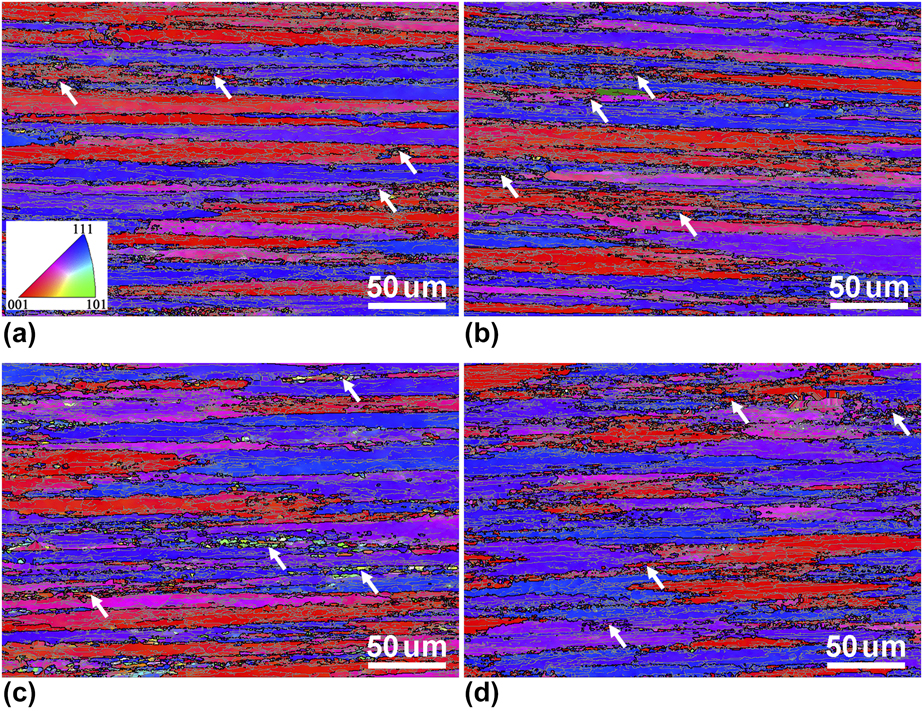
As shown in Fig. 1(a), some fine grains broken by severe deformation at low temperature extrusion were observed along the elongated grain belts. As shown in Figs. 1(b) and 1(c), with increasing billet temperature in P2 and P3, the width of elongated grains obviously increased, and the fine grains located inside or between the elongated grains, which is evidence of the continuous dynamic recrystallization (CDRX) [Reference Jamaati and Toroghinejad19]. Based on the previous studies [Reference Ning, Xie, Liang, Li, Yang and Guo20], it is considered that only DRV occurred in P1 at the low temperature of 440 °C. The dynamic softening during hot deformation could be clarified through the comparison between deformation activation energy and material self-diffusion activation energy [Reference Galiyev, Kaibyshev and Gottstein21]. For low temperature extrusion, the dislocation movement controlled by self-diffusion was close to the deformation activation energy. Hence, no sufficient energy was provided as the driving force for DRX and only DRV took place. With the increase of temperature, the characteristics of DRX are obvious with more fine equiaxed grains, such as the specimen P3 shown in Fig. 1(c). This is because that the deformation activation energy has been up to a higher level over the self-diffusion activation energy, and DRX was triggered by the nucleation of nondistortion subgrains and the directional migration of HAGBs. Comparing Figs. 1(b) with 1(d), it is found that the specimen P4 with higher extrusion speed has more fine grains, which indicates a higher degree of DRX. Higher extrusion speed causes the larger strain rate for the material. It was reported that the activation energy for hot deformation decreased with increases in temperature or strain rate [Reference Ning, Xie, Liang, Li, Yang and Guo20]. Besides, higher extrusion speed aggravates the friction conditions on the interfaces of material/container and material/die. It means that more thermal energy is generated and more pressure is required for material deformation. Hence, with the increase of extrusion speed, the grains were elongated in a short time and some of them were broken to be the nucleation sites of DRX. In addition, the higher thermal energy can facilitate the transformation from LAGBs to HAGBs.
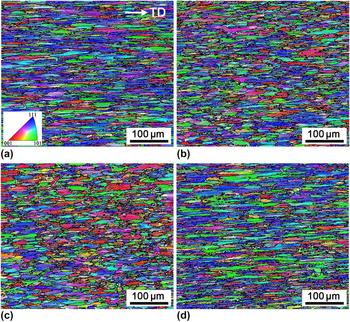
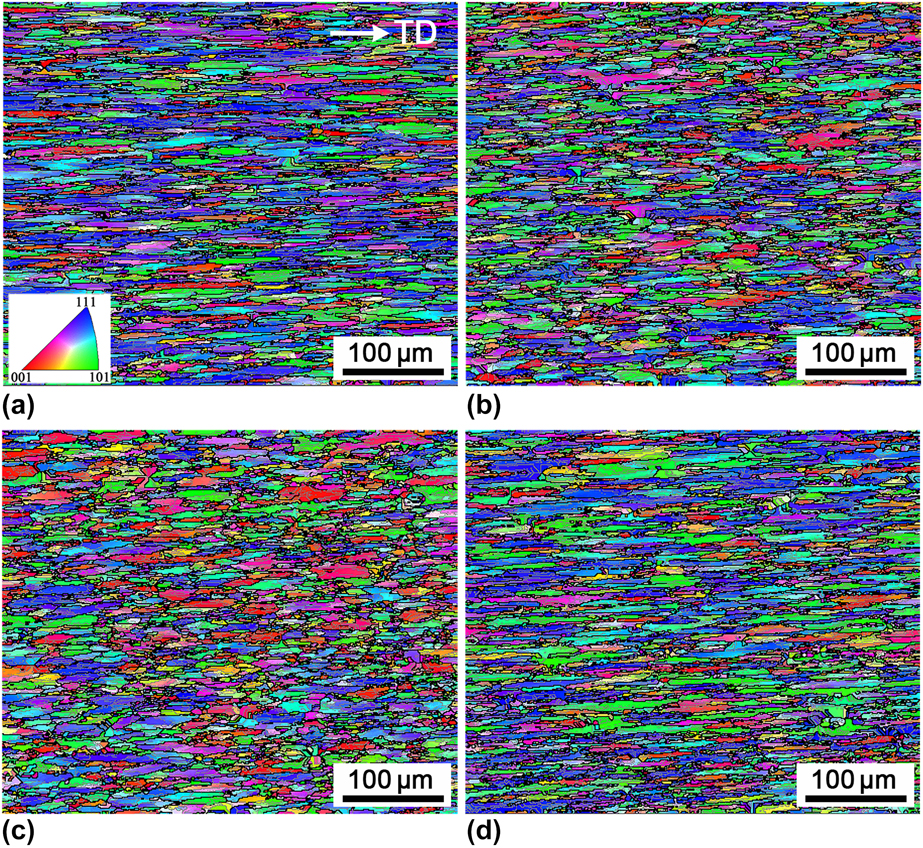
The variation of the elongated grains is more noticeable along the transverse direction (TD), as shown in Fig. 2. In order to exclude the influence of fine equiaxed grains, only the grains with size larger than 10 μm were selected for calculating the aspect ratio (length/width). The average aspect ratios from Figs. 2(a) to 2(d) are 6.19, 5.7, 5.10, and 7.22, respectively. Obviously, the aspect ratio gradually decreases with the increase of billet temperature, whereas it increases with the increase of extrusion speed. As shown in Fig. 2(a), few fine grains were broken and distributed between the elongated grains in specimen P1 due to the severe deformation at low temperature. With increasing billet temperature, the fine equiaxed grains with agglomerative phenomenon can be observed in specimens P2 and P3. It again proves that DRX occurred and its fraction was enhanced by high temperature. Similarly, comparing Figs. 2(b) with 2(d), more fine recrystallized grains appear in specimen P4. Hence, the analysis about DRV and DRX agrees well with the discussion on Fig. 1. Besides, the variation of grain morphology along normal direction (ND) is more obvious than that along TD direction. This fact is caused by the different deformation degree along ND and TD directions. Because thickness (5 mm) of the extruded Al plate is much smaller than its width (30 mm), the corresponding deformation and the compression stress along the ND direction are much higher than those along TD direction. As a result, the deformation of the grains along the ND direction is more severe.
EBSD maps along the TD direction of the extruded plates (a) P1, (b) P2, (c) P3, and (d) P4.
Misorientation and grain size
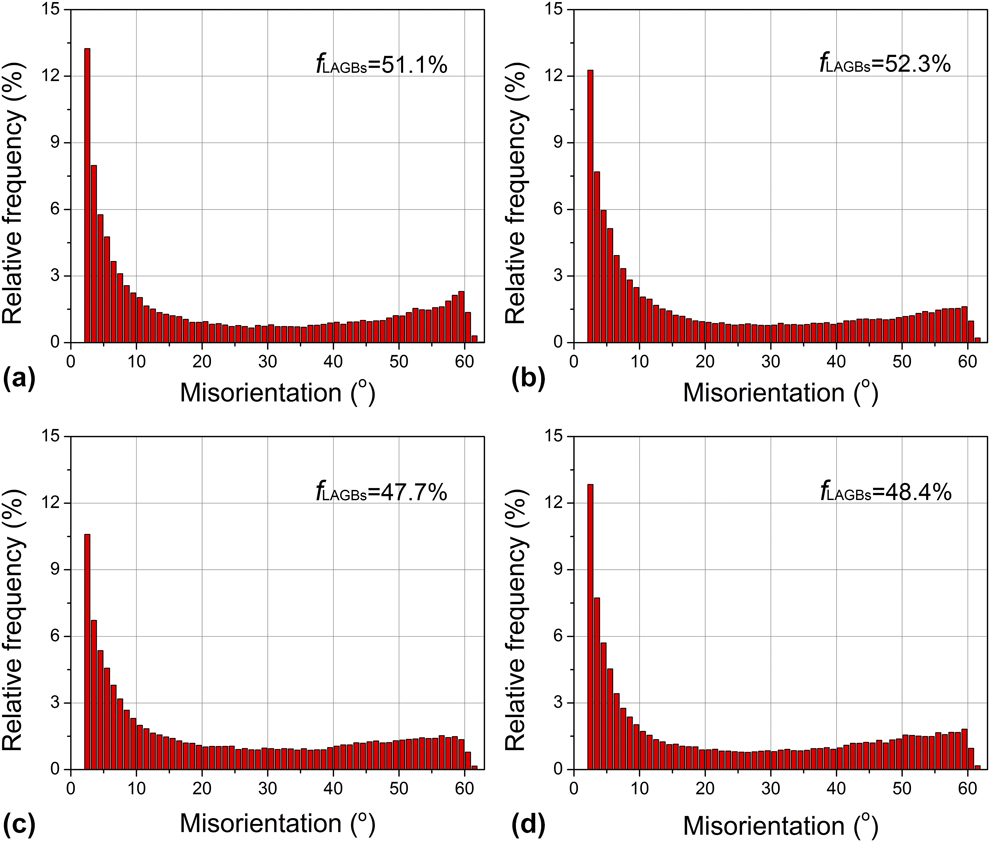
Misorientation distribution of the extruded plates is shown in Fig. 3. It is observed that the fraction of LAGBs increases slightly from P1 to P2, whereas it decreases from P2 to P3. These facts indicate that the fraction of LAGBs is affected by billet temperature. As more dislocations were generated and accumulated during DRV process, the LAGBs were introduced by slipping and rearrangement of the dislocations [Reference Ferry and Burhan22]. The higher temperature of P2 enhanced the degree of DRV, resulting in the increasing fraction of LAGBs, although few recrystallized grains were also observed. It also indicates that the dynamic softening started to transform from DRV to DRX in P2 extruded at 480 °C and 0.1 mm/s. With the further increase of billet temperature (P3) or extrusion speed (P4), the subgrains and the broken fine grains became the nucleation cores of and grew up to new DRXed grains separated by HAGBs. Hence, the DRX degree of P3 and P4 was enhanced and lower fraction of LAGBs was observed.
Distribution of misorientation of the extruded plates (a) P1, (b) P2, (c) P3, and (d) P4.
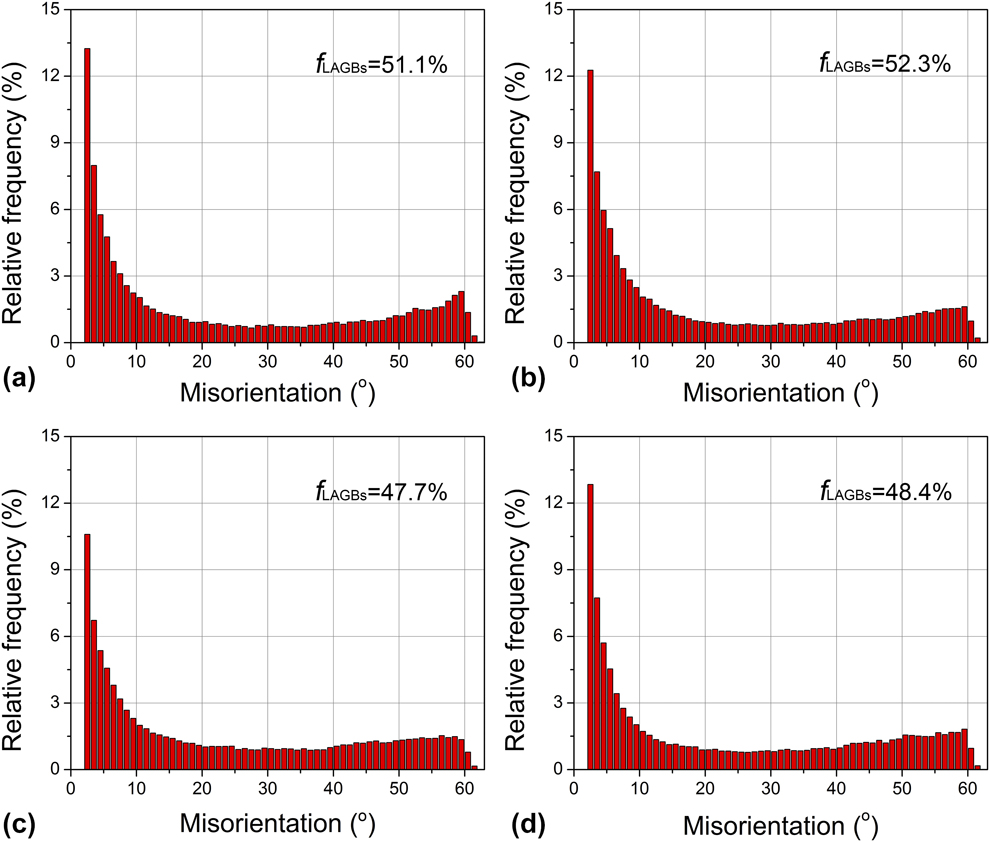
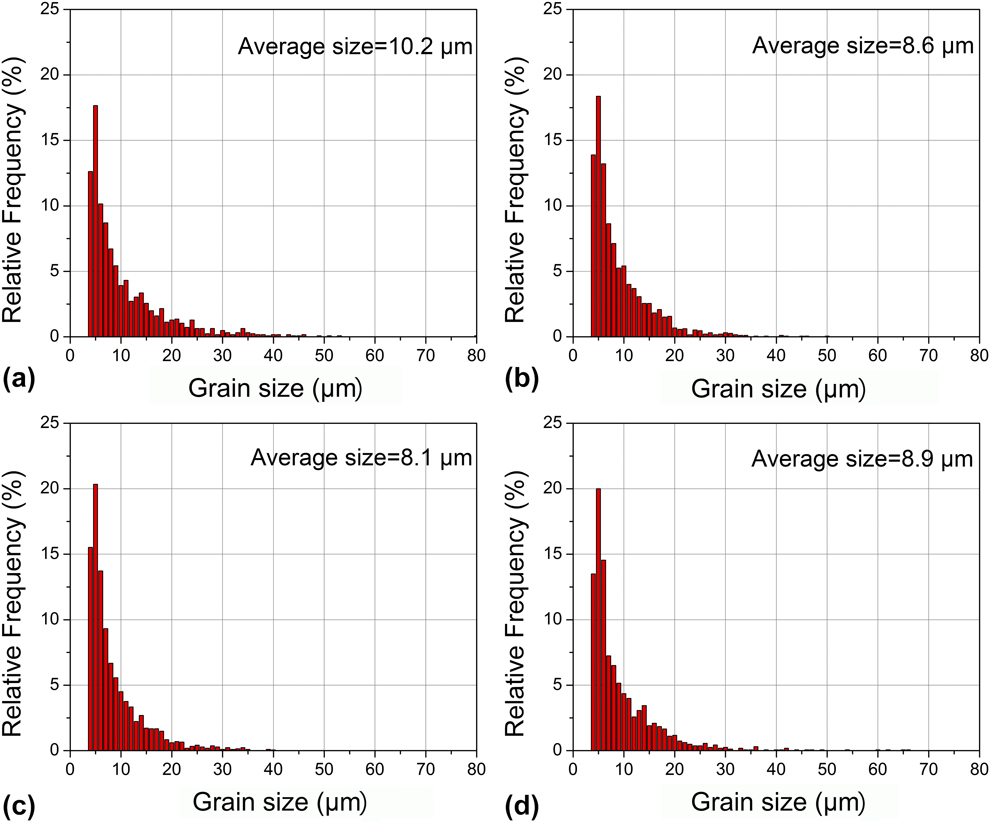
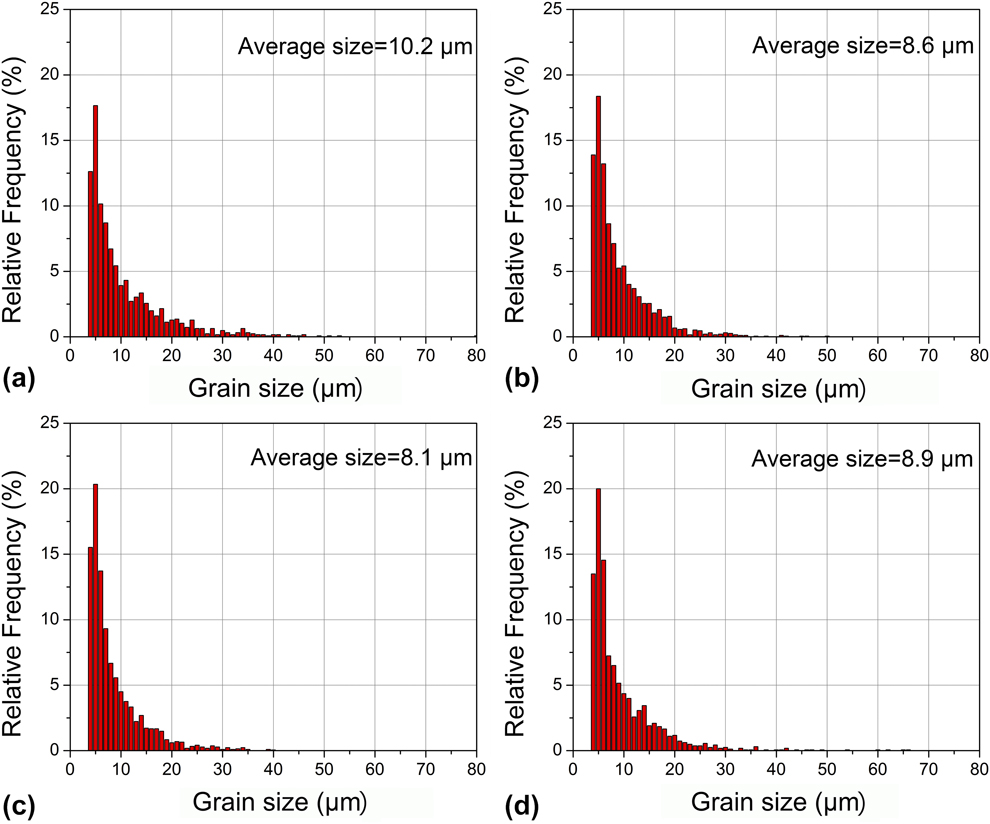
Figure 4 shows the grain size distribution counted statistically based on Fig. 2. The average grain size gradually decreases with the increase of extrusion temperature and slightly increases with the increase of extrusion speed. The previous studies have reported that the DRX induced by plastic deformation could promote grain refinement [Reference Chen, Chen, Zhao and Lu23, Reference Valiev and Langdon24, Reference Yamagata, Ohuchida, Saito and Otsuka25]. The degree of DRX increased under high billet temperature in this study. As a result, the decrease of grain size was observed. However, the average grain size is larger in P4 than that of P2, although P4 exhibits higher DRX degree. This is because large amount of heat was generated and the temperature rise was more obvious during the high speed extrusion of P4. Xu et al. [Reference Xu, Matsumoto, Kamado, Honma and Kojima26, Reference Xu, Kamado and Honma27] reported that the influence of temperature on the DRXed grain was much stronger than that of the strain rate. Therefore, it is inferred that the temperature rise due to fast extrusion speed caused the growth of DRXed grains in specimen P4.
Distribution of grains size of the extruded plates (a) P1, (b) P2, (c) P3, and (d) P4.
Secondary phases
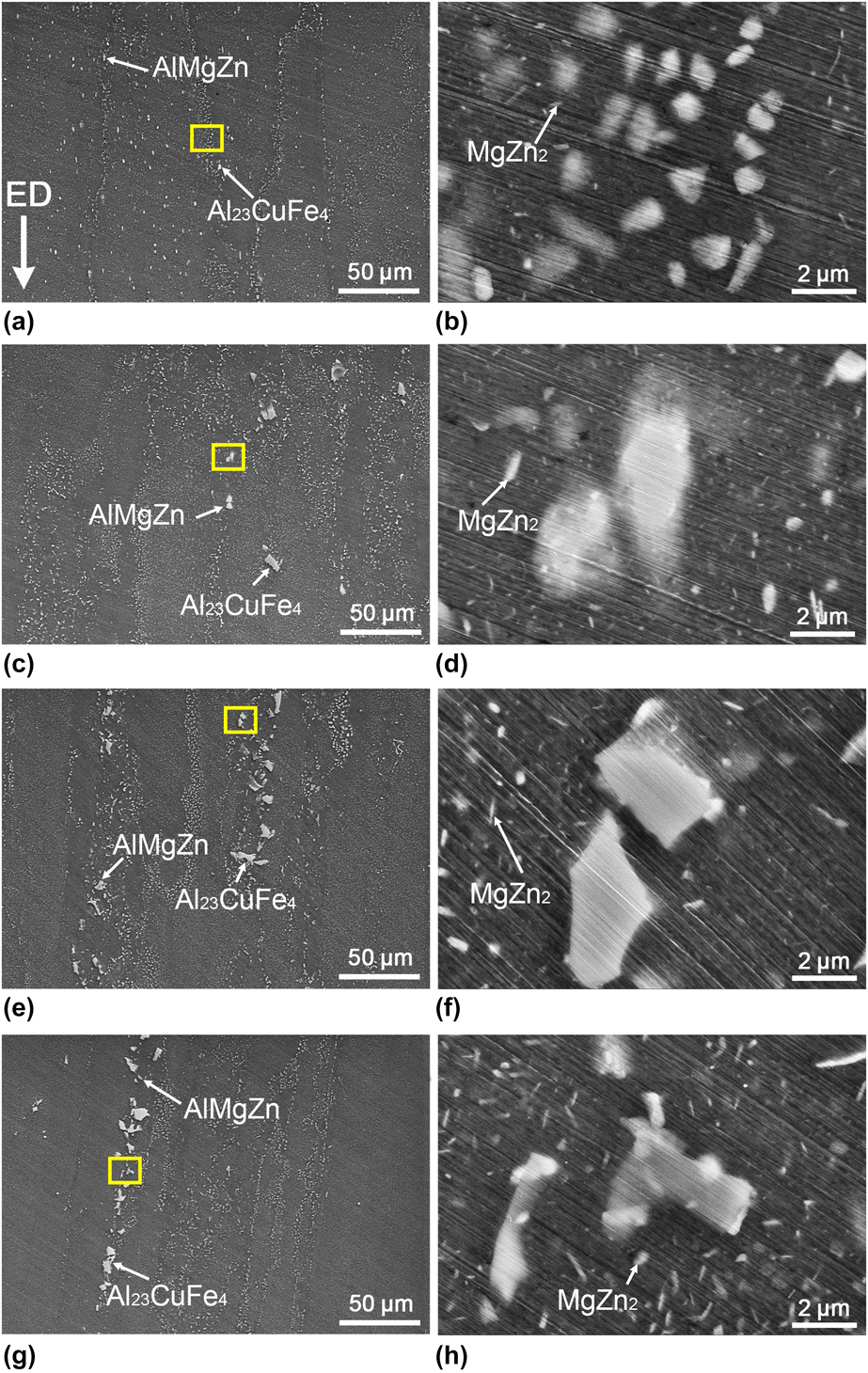
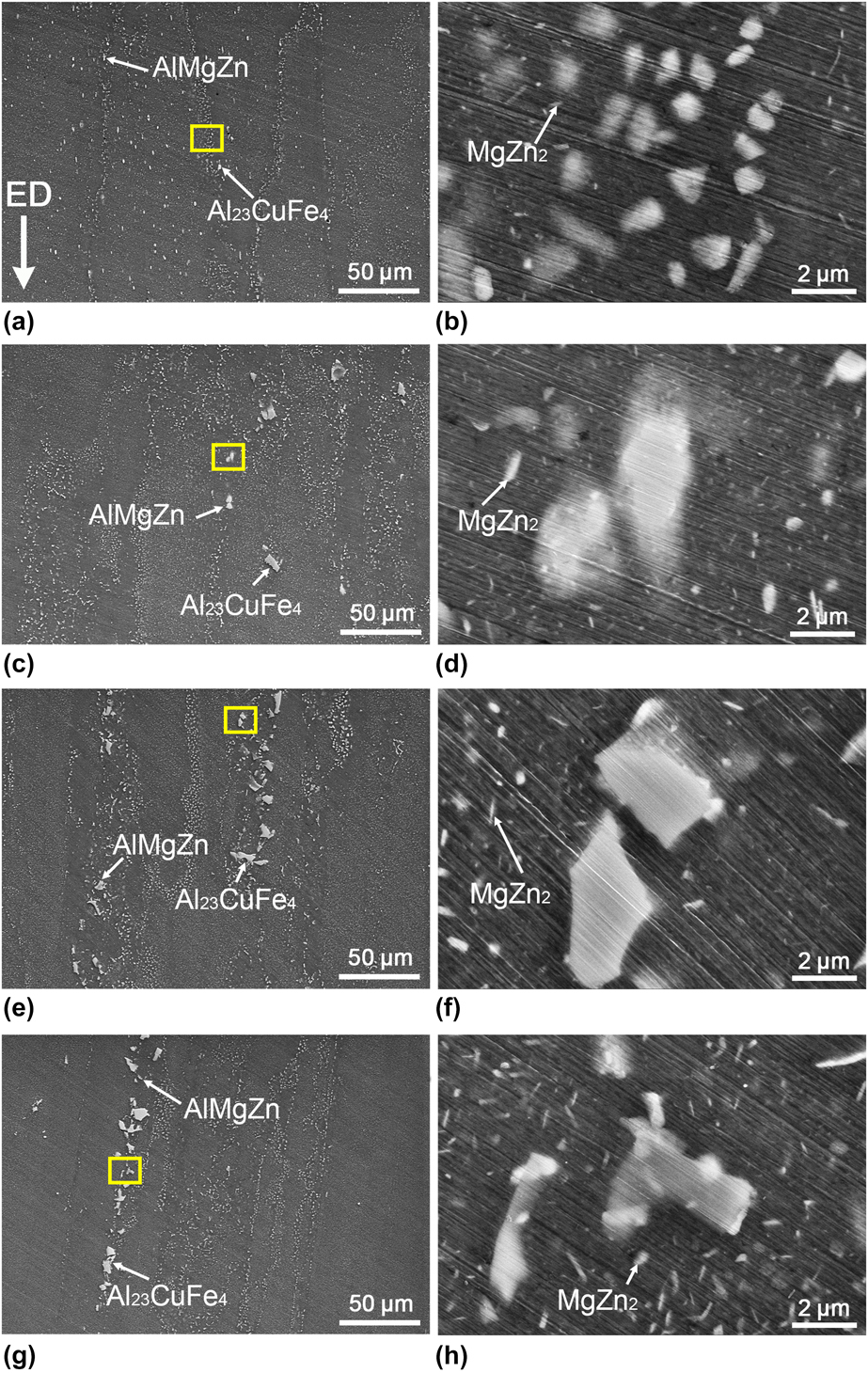
Because of the high contents of alloying elements in Al–Zn–Mg alloy, many types of secondary phases can be found, and these phases evolve significantly during the thermal and mechanical processes. For example, during hot extrusion, the secondary phases may undergo mechanically broken, dissolving, and precipitating. The scanning electron microscope (SEM) observation was conducted, and the results are shown in Fig. 5. It can be seen that large amount of secondary phases existed in all the extruded plates. According to the EDS results, the main secondary phases should be MgZn2, Al23CuFe4, and AlMgZn. For specimen P1 extruded at low temperature, it is observed from Figs. 5(a) and 5(b) that the coarse Al23CuFe4 and AlMgZn (1–3 μm) distributed inside Al matrix and the fine MgZn2 phases smaller than 1 μm distributed dispersedly. As shown in Figs. 5(c) and 5(e), more Al23CuFe4 and AlMgZn phases can be observed in P2 and P3 extruded at higher billet temperature. Moreover, the fine MgZn2 obviously grown up in P2 and P3, as shown in the magnified images of Figs. 5(d) and 5(f). On the other hand, with increasing extrusion speed, the coarse phases distributed along ED direction due to the severe deformation. Generally, redissolution and precipitation of secondary phases are associated with deformation and temperature [Reference Murayama, Horita and Hono28]. The coarse Al23CuFe4 and AlMgZn phases make the migration of dislocation and subgrain boundaries easier. Therefore, the material could be deformed without a large external force and the flow stress of the material is low, which are also the reasons that the dynamic softening becomes more obvious during high temperature extrusion. With increasing extrusion speed, more deformation heat was generated, and it caused more granular secondary phases distributed along ED direction.
Secondary phases in (a and b) P1, (c and d) P2, (e and f) P3, and (g and h) P4. The enlarged images of the right side correspond to the rectangular indicted in the images of the left side.
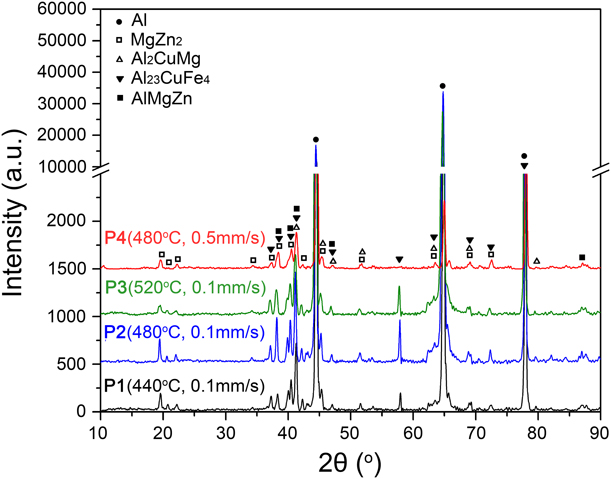
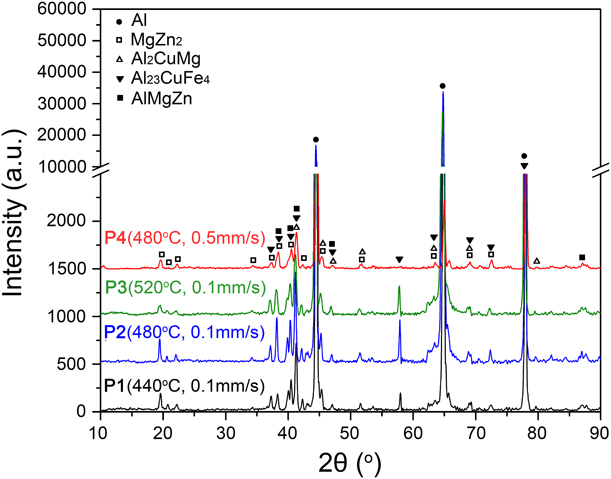
To further investigate the variation of secondary phases, the X-ray diffraction (XRD) analysis was conducted, and the results are shown in Fig. 6. Accordingly, four main secondary phases can be identified. The peak of MgZn2 phase is the highest in P2 extruded at 480 °C and 0.1 mm/s. It was reported that MgZn2 played an important role on the strengthening effect in Al–Zn–Mg alloy [Reference Rout, Ghosh and Ghosh29]. In case of P4 with higher extrusion speed, the peak of MgZn2 diminished significantly. Furthermore, the peaks of Al2CuMg, Al23CuFe4, and AlMgZn phases are also affected by the extrusion conditions. Especially for Al23CuFe4, the highest peak can be observed in P2. The large-sized Al2CuMg, Al23CuFe4, and AlMgZn have low plastic deformability, high elastic module, and high noncoherent contact with Al matrix. Therefore, proper control of these coarse, insoluble phases is important to maintain the mechanical properties of Al alloys, especially the tensile ductility. It is noted that the Al2CuMg phase was not observed in Fig. 5 due to its small size. This phenomenon has also been reported in the previous study of Ref. Reference Chen, Chen, Zhao and Zhang30.
XRD results of the extruded plates.
Microtexture
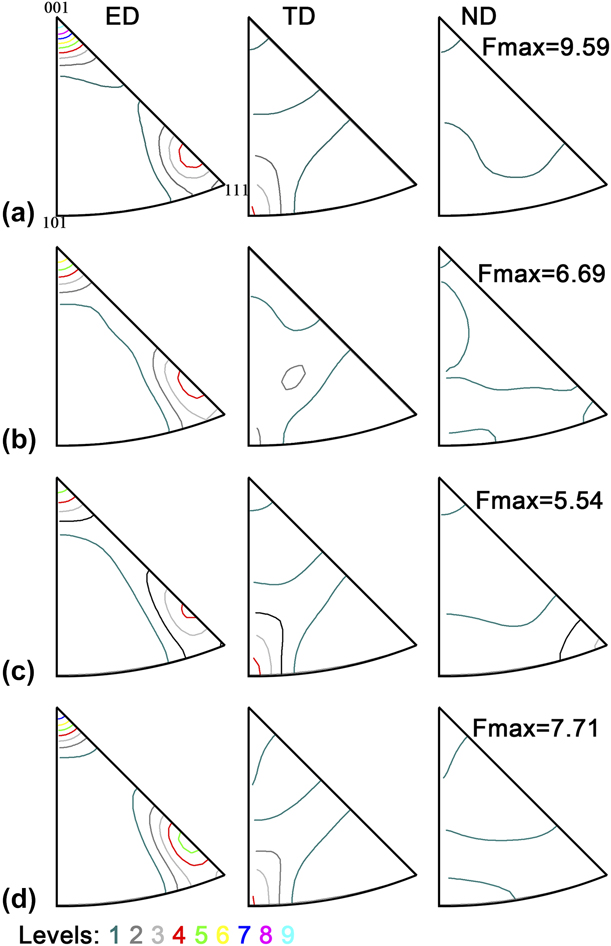
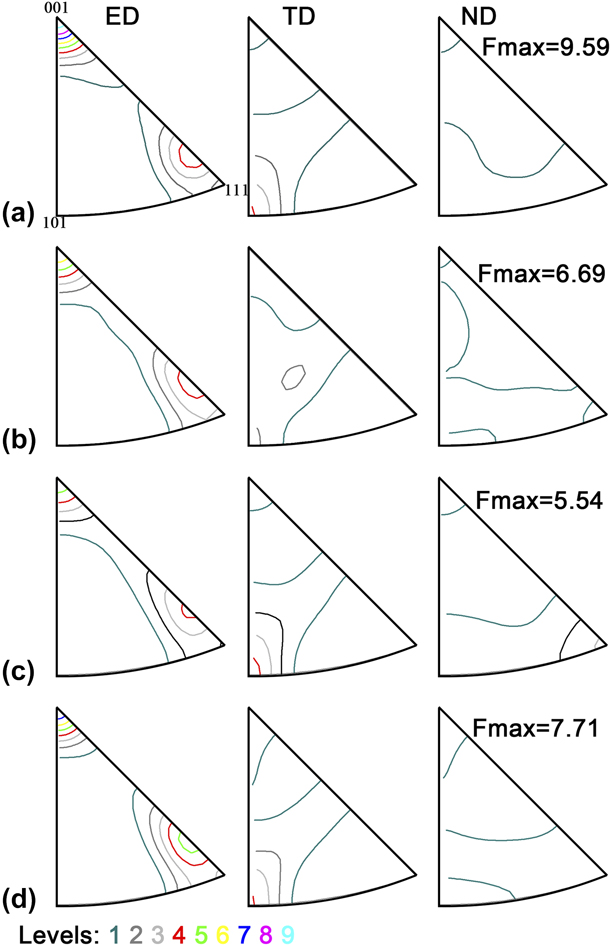
Figure 7 shows the inverse pole figures (IPF) of the extruded Al plates. The concentrated orientations of 〈001〉 on ED, 〈111〉 on ED, and 〈101〉 on TD can be observed. In this study, the material experienced tensile stress along ED direction and compression stress along TD direction, according to the structure of the extrusion die. It is well known that the 〈101〉 of FCC structure is parallel with the compression direction in compressed metals. Besides, the 〈100〉 and 〈111〉 directions tend to be parallel with tensile direction in tensile metals [Reference Wang, Wang, Chen, Xiao, Jia, Li and Wang31]. The texture intensity decreases with the increase of billet temperature because high billet temperature is helpful for the arbitrary growth and coarsening of the crushed fine grains, which leads to the change of grain orientation and the weakening of the texture orientation. Comparing Figs. 7(b) with 7(d), it is observed that the texture intensity increases obviously with increasing extrusion speed. Especially for TD direction, the 〈101〉 intensity of P4 is much higher, which indicates that the material underwent more severe compression. It was reported that the variation of texture type and strength was related to the nonuniformity of the stress and strain during hot extrusion process [Reference Chen, Zhang, Zhao, Wang and Zhang32]. The high extrusion speed not only increased the deformation stress, but also brought more deformation heat. Hence, high extrusion speed accelerated the material flow behavior. Moreover, more DRXed grains in P4 were inevitably subjected to the subsequent rapid deformation, which would result in strengthening of the fiber texture.
IPF of the extruded plates of (a) P1, (b) P2, (c) P3, and (d) P4.
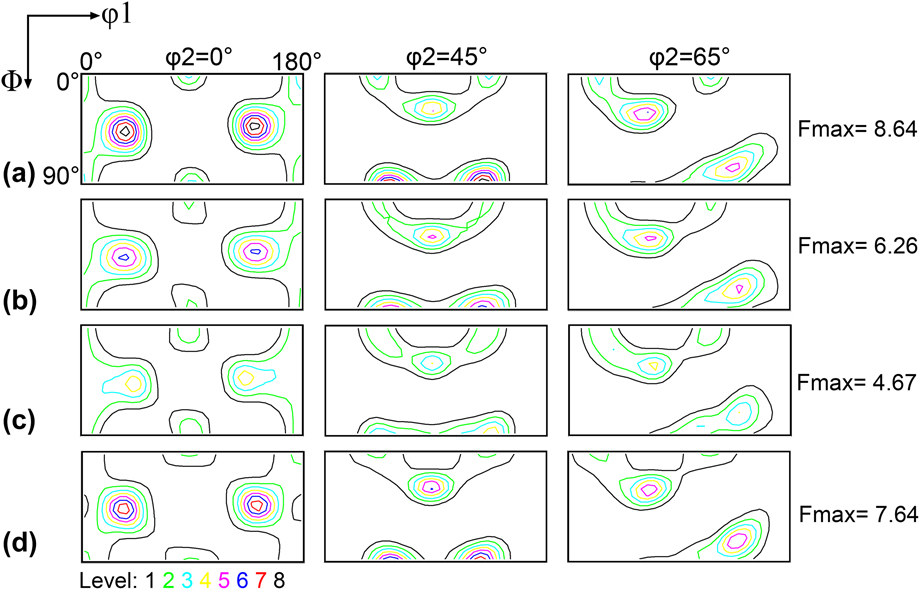
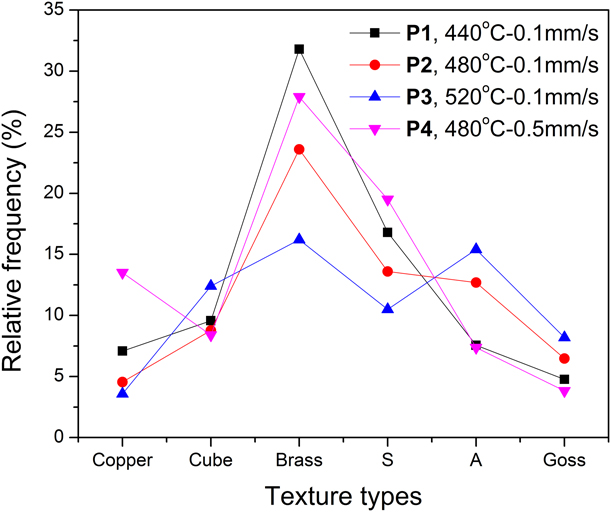
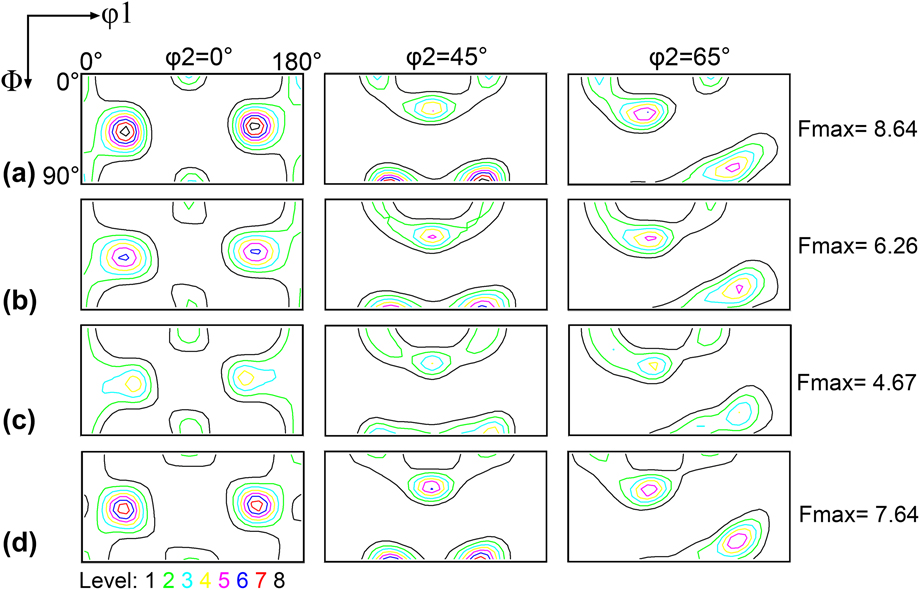
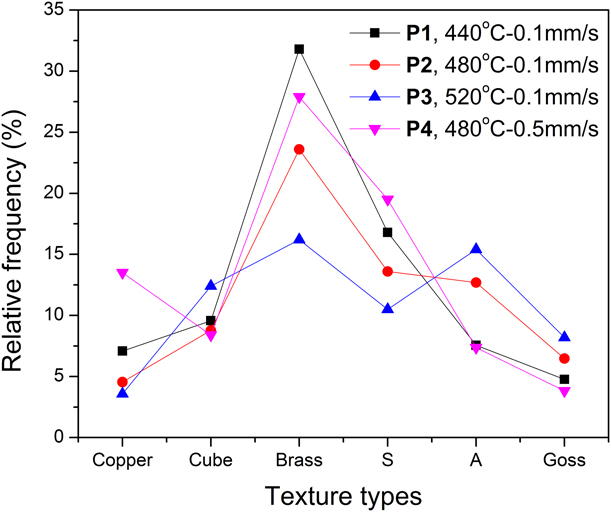
The orientation distribution function (ODF) sections of φ2 = 0°, 45°, and 65° of the extruded plates are plotted in Fig. 8. The strong {011}〈211〉 (brass), {123}〈634〉 (S) components, and some {001}〈100〉 (Cube), {011}〈111〉 (A), {112}〈111〉 (copper), and {011}〈100〉 (Goss) components can be observed in all the specimens. The texture intensity is affected by the extrusion parameters, and the variation trend is in accordance with the IPFs shown in Fig. 7. The relative frequency of main textures is shown in Fig. 9. It can be seen that the relative frequency of copper, brass, and S decreases obviously with the increase of billet temperature or extrusion speed. However, the variation trend of A and Goss is opposite with abovementioned components. Besides, the relative frequency of the recrystallized Cube component reaches the highest value in P3 extruded at the highest temperature of 520 °C. Kliauga et al. [Reference Kliauga, Bolmaro and Ferrante33] reported that during the deformation of FCC materials, α-fiber textures such as brass, S, and copper were developed and then evolved to Cube, Goss, and {011}〈233〉 (P) during the recrystallization. The typical deformed textures of brass, S, and copper were significantly weakened during the recrystallization due to the generation of HAGBs and the rotation of the recrystallized grains. Moreover, the evolution of brass and S components is also dependent on the temperature and stress fields, which affect the local deformation on the grains and the distorted high strain lattice during hot deformation. Lattice rotation of the recrystallized grains is of great importance to the formation of crystallographic texture. Liu et al. [Reference Liu, Kong, Chen, Li, Yuan and Yang34] found that the β-fiber deformed texture ran from the brass through the S to the copper. After 90° rotation around ND, the typical brass on the β fiber was transformed to A. For hot-deformed Al alloys, A component is a kind of shear texture, which can be formed under the shear action between the material and die. With the increase of billet temperature, the softening behavior contributed to the grain rotation and the variation of stress, strain of the deformed material, therefore, the deformed textures transformed gradually to the others. For high-temperature extrusion, more energy was provided for the microstructure evolution and the abnormal growth of Goss component tended to occur [Reference Kirch, Jannot, Barrales-Mora, Molodov and Gottstein35]. Goss component usually originated from the recrystallization texture, whereas the typical recrystallized Cube was associated with the softening process of deformed grains. In general, the fraction of Cube becomes higher with the increase on degree of DRX or deformation, whereas the retention of deformed texture can also be observed in case of severe deformation conditions [Reference Liu, Kong, Chen, Li, Yuan and Yang34]. In this study, the variation of Cube component is related to not only the DRX, but also the Goss and other deformed textures, such as brass, S, A, and copper.
ODF sections of the extruded plates of (a) P1, (b) P2, (c) P3, and (d) P4.
Relative frequency of the main textures of the extruded plates.
Mechanical properties
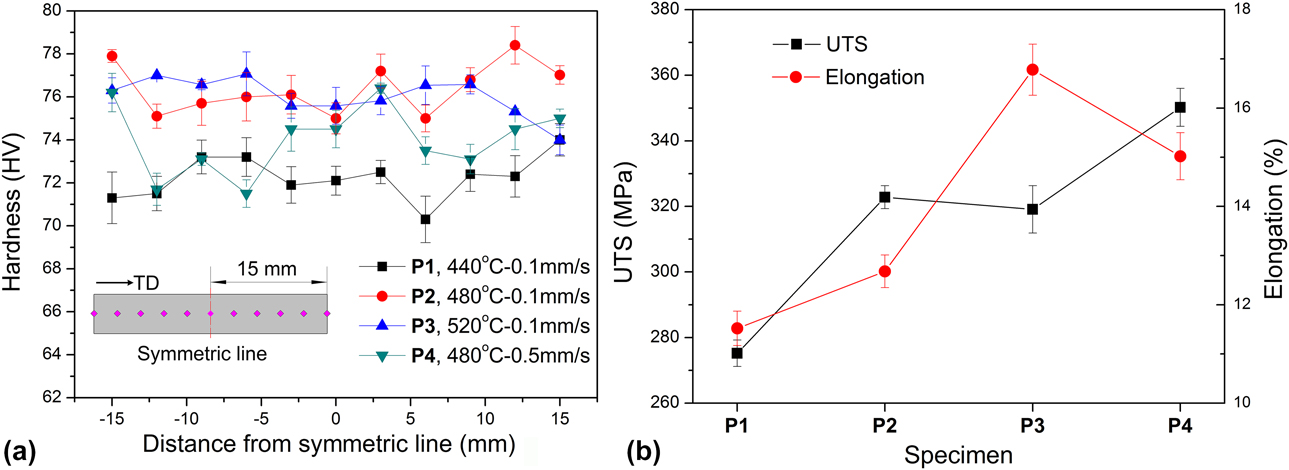
Figure 10(a) shows the results of Vickers hardness on the cross section of the extruded Al plates along TD direction. P1 extruded at low temperature of 440 °C exhibits lower hardness than that of P2 and P3. Comparing P2 with P4, it is found that increasing extrusion speed results in the lower hardness. The hardness of extruded Al alloy is related to various factors, such as the softening behavior, the secondary phase, and the microtexture. As discussed above, with the increase of billet temperature, the softening behavior of the deformed grains was transformed from DRV to DRX with the slipping and accumulating of dislocations. Besides, specimens P2 and P3 contain more fine MgZn2 phases, contributing to the enhancement of hardness. As the extrusion speed increases, the coarser grains and some coarse secondary phases slightly decrease the hardness.
(a) Vickers hardness distribution on the cross section and the (b) tensile test results of the extruded plates.
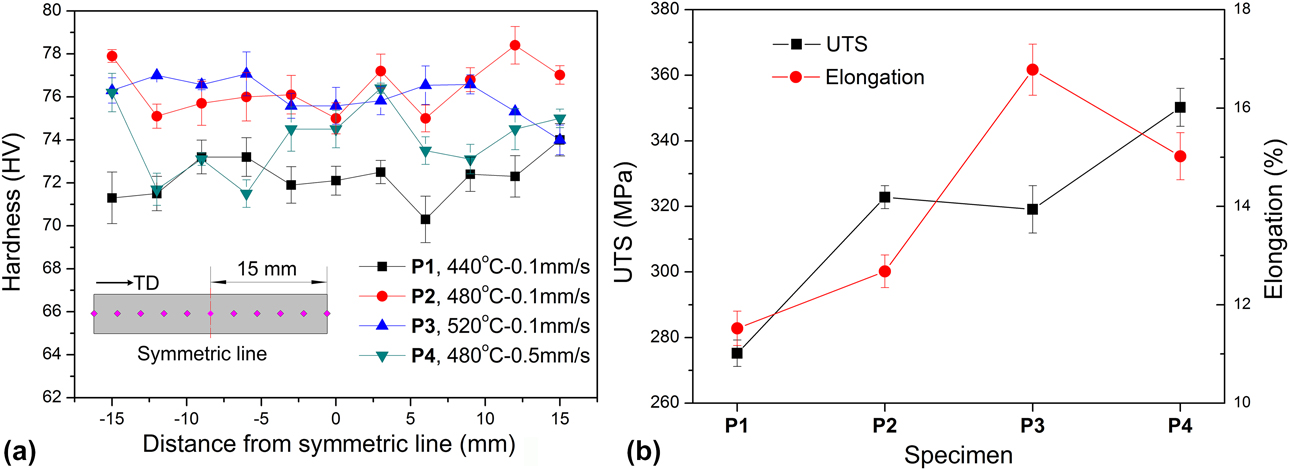
Figure 10(b) shows the tensile test results of the extruded Al plates. As it is seen, with increasing billet temperature, the UTS of the extruded plates first increased from 275.2 MPa of P1 to 322.8 MPa of P2 and then slightly decreased to 319.1 MPa of P3. The elongation gradually increased with increasing extrusion temperature, especially from 12.68% of P2 to 16.78% of P3. As it is known, the microstructure refinement contributes to the improvement of mechanical properties. In this study, with the increase of billet temperature, the grain size decreases gradually because of the occurrence of DRV and DRX. Moreover, higher billet temperature is beneficial for the rearrangement and counteraction of dislocations, which enhance the stress required for deformation, resulting in higher strength. Moreover, it was reported that the increase of texture intensity was also harmful to the ductility [Reference Wang, Jiang, Chai, Liu, Ma, Xu and Pan36]. Hence, the decreasing texture intensity should be one of the reasons that the elongation was enhanced by higher billet temperature. The Goss, brass, and copper components are helpful for achieving high strength and hardness due to the local deformation occurred on grains during the deformation process. However, the Goss and brass components lead to poor formability and ductility, and the Cube, S, copper components could result in better formability in Al alloys [Reference Narayanasamy, Ravindran, Manonmani and Satheesh37]. With increasing extrusion speed from P2 to P4, the UTS increases from 322.8 to 350.2 MPa and the elongation increases from 12.68 to 15.02%. It indicates that the extrusion speed has more significant effects on the tensile properties than that of the billet temperature. The good tensile properties of P4 might be caused by the high degree of DRX, fine secondary phases, and high fraction of S and copper components. Based on the above analysis, it is concluded that the variation of mechanical properties with extrusion parameters should be the combined response of the grain structure, texture, and secondary phase.
Conclusions
The hot extrusion experiment using Al–5.50Zn–2.35Mg–1.36Cu alloy was conducted. The variation of grain structure, texture, and mechanical properties of the extruded plate were examined. Based on the experimental results, the following conclusions can be drawn,
(1) The grains were obviously elongated along ED direction, with a typical fiber structure. Both the DRV and DRX occurred during hot extrusion, and the softening mechanism gradually changed from DRV to DRX with increasing billet temperature or extrusion speed. The average grain size became smaller at higher billet temperature.
(2) The secondary phases of Al23CuFe4, AlMgZn, Al2CuMg, and MgZn2 existed in the extruded plates. When the billet temperature is as low as 440 °C, the lowest volume fraction of Al23CuFe4 and AlMgZn phases was observed. Fine MgZn2 phase easily precipitated at the extrusion condition of 480 °C and 0.1 mm/s. When the extrusion speed was increased to 0.5 mm/s, the peak of MgZn2 in XRD results diminished significantly.
(3) The concentrated distributions of 〈001〉 and 〈111〉 along ED and 〈101〉 along TD appeared. The strong brass, S components, and some Cube, A, copper, and Goss components could be observed. With the increase of billet temperature or the decrease of extrusion speed, the texture intensity gradually decreased. The fraction of the texture components was significantly affected by the extrusion condition.
(4) The UTS of the extruded plate reached the highest value of 350.2 MPa at 480 °C and 0.5 mm/s, and the elongation reached the highest value of 16.78% at 520 °C and 0.1 mm/s. The extrusion speed exhibited more significant effects on the tensile properties than that of the billet temperature. With increasing extrusion speed, both the UTS and elongation were obviously enhanced. The hardness was significantly affected by the extrusion condition, and it reached the maximum value at 480 °C and 0.1 mm/s.
Experimental procedures
Material and experiment
The cylindrical billet of Al–5.50Zn–2.35Mg–1.36Cu (wt%) alloy was unidirectionally solidified during the semicontinuous casting process, where the pouring temperature was around 903 K and the casting speed was 3.0 mm/s. The as-cast ingot was homogenized at 803 K for 20 h and slowly cooled down to room temperature in air. The microstructure of the homogenized billet consists of coarse equiaxed grains with a mean size around 150 μm, which has been reported in our recent study [Reference Chen, Chen, Zhao and Lu23]. After that, the billet with the dimension of Φ 50 × 45 mm was machined for hot extrusion experiment. The extrusion setup mainly consisted of the components stem, ram, container, feeder, and lower die. A bearing length of 4 mm was adopted on the lower die. The plate-shaped profile with the cross section of 30 × 5 mm was extruded out and the calculated extrusion ratio was around 13.1. The billet together with the container and die was first heated to a specific temperature using a heating coil and held for 10 min to obtain a uniform temperature distribution. Then, the extrusion started and the ram velocity was maintained at a constant speed during the whole experiment. Finally, the extruded plates were cooled down in air. Four experiments were conducted with various billet temperatures and extrusion speeds, and the plates extruded with 440 °C-0.1 mm/s, 480 °C-0.1 mm/s, 520 °C-0.1 mm/s, and 480 °C-0.5 mm/s were named as P1, P2, P3, and P4, respectively.
Microstructure characterization and mechanical properties testing
The extruded Al plates were sectioned and prepared for microstructure observation, hardness, and tensile tests. The width, length, and thickness of the extruded plate were defined as TD, ED, and ND directions, respectively. The grain morphology and texture were examined through EBSD, which was carried out by using the SEM (JSM-7800F, Japan) equipped with a device of Oxford EBSD. The EBSD specimens were first grounded using 2000# SiC paper and mechanically polished. Then, the specimens were electropolished in the solution of 20 mL perchloric acid and 80 mL methyl alcohol at 30 V for 12 s. The EBSD data were analyzed by the software of Channel 5 (U.K.). The ODF sections were calculated by series expansion method using HKL Salsa module. The HGABs were defined as the misorientation angle was larger than 15°, whereas the LGABs were defined as the misorientation angle was between 2° and 15°. The distribution of secondary phase particles was examined by SEM and XRD. Vickers hardness was measured using a load of 1000 g and dwelling time of 10 s, and the successive indentations located at an interval of 100 μm along TD direction. According to the standard of ASTM E8-M-04, the tensile specimen with a gauge length of 25 mm was designed. The tensile tests were carried out with a constant stretching rate of 0.45 mm/min, which corresponded to a strain rate of 0.0003 s−1. Finally, the fracture surface was observed by SEM.
Acknowledgments
The authors would like to acknowledge the financial support from National Natural Science Foundation of China (U1708251, 51735008), Key Research and Development Program of Shandong Province (2018GGX103041), and Young Scholars Program of Shandong University (2018WLJH26).