Rock-art panels in the District of Huánuco, in the Central Andes of Peru, were often positioned in prominent places easily seen from a distance, making them an ideal medium for transmitting potent social messages (Fig. 1). The practice of marking features of the landscape with paintings and engravings took place as part of a larger Andean belief system, which held certain features of the land to be especially potent (Bray Reference Bray2015; Dubois Reference Dubois, Whitehead and Greer2013; Reference Dubois2017; Gose Reference Gose1993). These places were called wak'as, though this term could also indicate people or things considered to have particularly strong social potency (Bray Reference Bray2015). I have argued that rock-art sites, as marked, prominent landscape features, were considered wak'as in the past (Dubois Reference Dubois, Whitehead and Greer2013; Reference Dubois2017). Rock art was a vital medium of expression and agency for past peoples of Huánuco and part of the potency of this medium to local peoples was its location on landscape features (Chippindale & Nash Reference Chippindale, Nash, Chippindale and Nash2004; Dubois Reference Dubois, Whitehead and Greer2013; Reference Dubois2017; Reference Dubois2018). This medium served to integrate local people with their landscapes, establish and negotiate social relations and, more broadly, to connect local peoples with extra-local ideas and trends evident in contemporary Andean societies. Some rock art, such as the work I describe here, marked passage through the landscape and was ideally placed to transmit messages designed to influence the thinking of local actors. This type of wak'a was known as saywa, or boundary marker, whose placement maximized its ability to advertise the identity and location of the inhabitants with which it was associated.
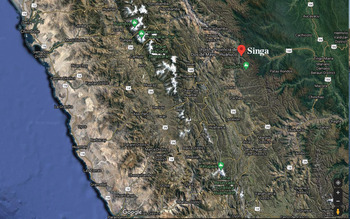
General map of the study area.

In this work, I examine Singa Transitional, an art style that was innovated by combining regional artistic trends in the medium of rock art with techniques and symbols evident in broader Andean material cultural trends in multiple media at the time of its creation. The style combined the use of a relief painting technique in its execution with the use of themes and motifs seen at Early Horizon (EH: 800–200 bc) sites throughout the Andes. The purpose of the paper is to analyse what we can learn about how broader social trends impacted local peoples living outside regional centres by studying their rock art. I do this through an examination of the emergence of the Singa Transitional style and the implications from its innovation and the choices made in its presentation at a time of great social change in the Andes.
Prior to the arrival of the Spanish in 1532, rock-art sites were known as quilcas by the Quechua- and Aymara-speaking peoples inhabiting the Andes (Dean Reference Dean2010, 4; Echevarría López Reference Echevarría López2009, 6). Quilca refers to both painting and drawing and was later used to describe the writings that the Spanish conquistadores brought with them from Europe (Echevarría López Reference Echevarría López2009, 5; Porras Barranchea Reference Porras Barranchea1963). Though Andean peoples had no writing system, they developed record keeping via the textile medium of quipus, and there is growing evidence quilcas also played a vital role in recording ideas and beliefs (Dubois 2107; Reference Dubois2018; Echevarría López Reference Echevarría López2009; Reference Echevarría López2015). Porras Barranchea (Reference Porras Barranchea1963: 112, quoted in Echevarría Reference Echevarría López2009, 5) noted that quilca were also used to refer to the surface upon which the painting, drawing or etching was rendered. This reflects an underlying Andean belief that the surface and the image are interlinked, so the vessel is included as an integral part of any message relayed. In the case of rock art, the surface is a stone landscape feature.
Painting and engraving landscape features was part of a much broader practice of Andean peoples investing those features with social, symbolic and cosmological significance and/or acknowledging that they were repositories of potent social agency. Pictographs and petroglyphs often relayed social and cosmological content and were sometimes used by their creators to impart messages with the intention of altering existing social relations (Dubois Reference Dubois2018; Helskog Reference Helskog, Blundell, Chippindale and Smith2010). In other words, the messages relayed through the medium of Andean rock art were often political and can be considered ideological. Humans do not make history in a vacuum, but in an environment structured by the practices of the people who came before them (Barrett Reference Barrett, Ashmore and Knapp1999). The process of creating and re-creating meaningful landscapes through the medium of rock art involved the appropriation and re-invention of prior practices (Barrett Reference Barrett, Ashmore and Knapp1999, 255; Jones & Riggott Reference Jones, Riggott, Jones, Freedman, O'Connor, Lamdyn-Whymark, Tipping and Watson2011). Berger (Reference Berger1972) has demonstrated that as the social relations of societies change, artistic practices change with them. From the earliest images created, animals and humans were intertwined in rupestrian art. During these early days, humans were depicted at the same scale as animals. However, as time moved forward, humans played an increasingly important role in the stories represented in rock art, becoming more common and larger than the animals depicted. At the time that the Singa Transitional paintings described here were painted, human forms had begun to eclipse animal forms in both size and prevalence.
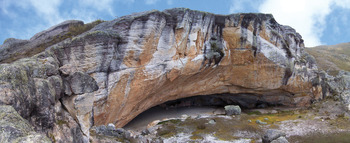
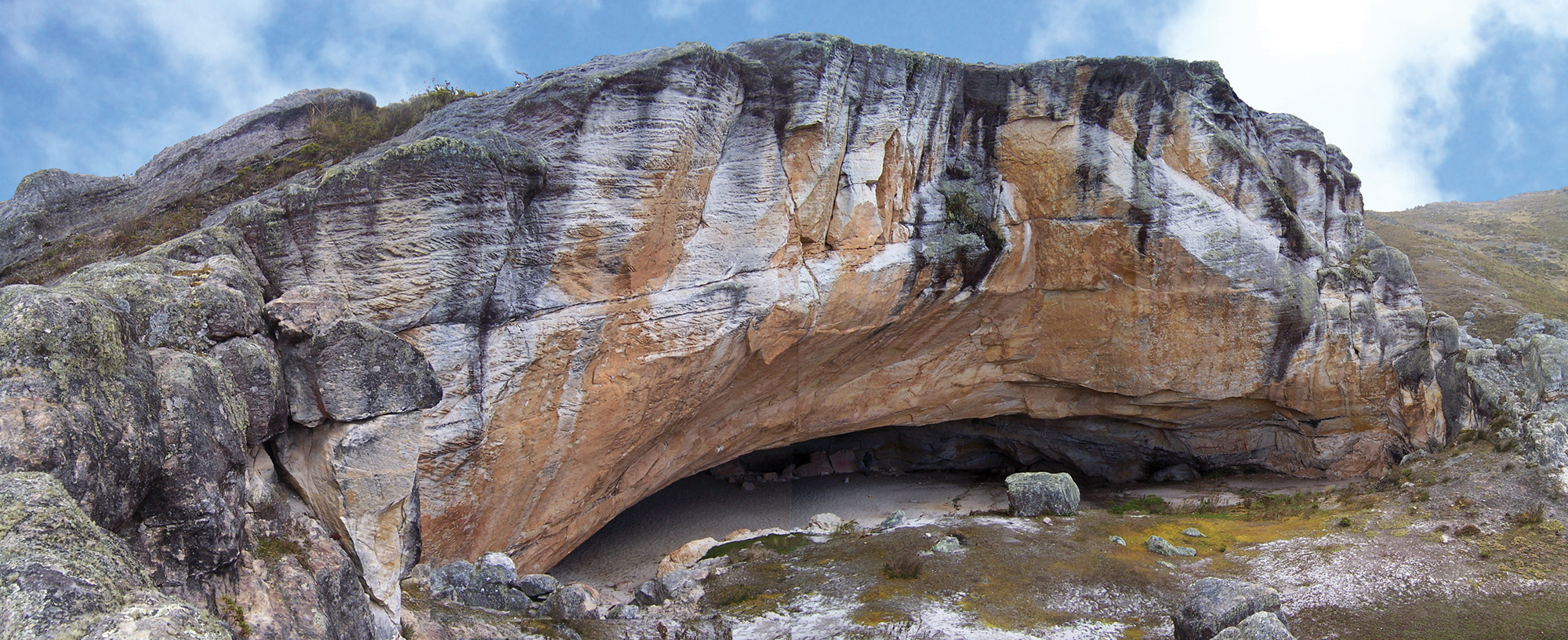
The landscape features chosen to bear pictographs and petroglyphs in Huánuco were often conspicuous, and the powerful presence of these places added potency to the messages imparted through the art. An example of one of these places will illustrate this point. The site is an enormous cave set into a cliff just beneath the peak of Cerro Angawilca, at an elevation of approximately 3780 m (Fig. 2). From the initial view of the cave from a ridge across the valley, it appears to be evident why it was chosen as a site to paint rock art. The opening is approximately 82 m long, and the rock formation that includes the cave juts out over the cliff, with a 400+ m drop to the valley floor. The site can only be accessed from the southeast, via a narrow path, and the view from the floor of the formation is as arresting as the view of the cave formation from afar. Within are 11 painted panels from multiple time periods, beginning approximately 5000 years ago and continuing until after Spanish arrival in 1532 (Dubois Reference Dubois2017).
Liuyagmachay from the entrance to the site.
In light of the Andean practice of revering wak'as, the prominence and nature of this site means that past peoples considered the place significant. Similarly prominent places have been used worldwide to connect local peoples with their land through rituals that include the modification of these places, including by painting and engraving them (Taçon Reference Taçon, Ashmore and Knapp1999). Landscape was an important component in the creation and use of this particular medium, and it must be considered when attempting to understand how rock art was used (Chippindale & Nash Reference Chippindale, Nash, Chippindale and Nash2004; Echevarría López Reference Echevarría López2009). Caves, rock-shelters and standing stones were all understood by Andean peoples to be socially significant places and often served as paqarinas, or places of the emergence of founding ancestors and their herds (Dean Reference Dean2010; Urton Reference Urton1990). The seventeenth-century people of Cajatambo would disinter their dead from Catholic cemeteries so that they could be brought into machays [Quechua: caves], where they would then be re-clothed and given offerings of chicha [corn beer], burnt coca and corn flour, and llama and cuy [guinea pig] blood during regular intervals in the agricultural cycle, as well as in times of drought and difficulty (Duviols Reference Duviols2003, 174–5, 300–305).
Stone landscape features could be a kind of wak'a called saywa, or boundary marker, which were themselves fed offerings and venerated (Dean Reference Dean2010). These stone markers of movement and transition often signalled the boundaries between places (Dean Reference Dean2010, 46). They served as the embodiment of these borderlines, commemorating the mytho-historic events that connected people to their places and bestowed them with the rights to the bounties of the land (Dean Reference Dean2010, 46–7). Dean (Reference Dean2010, 46) notes that they could ‘bear witness to past events and so sustain … histories’.
For pre-Columbian Andean peoples, the land was a social actor. It was an agentive force, illustrated by the use of Quechua words such as Camac Pacha, which means the fertile earth (Duviols Reference Duviols2003). This general agentive power also coalesced into individual landscape-based agents, as was the case with specific wak'as. Rock art, when placed in prominent places along travel routes, was an ideal medium through which to communicate the historic events that saywas embodied. Understanding the panels that bear the Singa Transitional art described below as saywas enables us to deepen our understanding not only of the function of rock art in ancient societies, but, more importantly, helps us come closer to comprehending the Andean peoples who created it.
Historical background
The Huánuco region was central to the development of early social formations in the Andes: it served as a pathway for the exchange of goods and ideas between the Amazonian lowlands and the Andean highlands. One of the best-known sites in the region is Kotosh, with evidence of ceramics entering the Andes beginning in approximately 1800 bc (Izumi & Sono Reference Izumi and Sono1963). The first examples, belonging to a style called Waira Jirca, appear fully formed and well designed. This differs from the earliest ceramics on the coast, where the first pots are eggshell-thin and poorly fired (Lanning Reference Lanning1963). Lathrap (Reference Lathrap1965; Reference Lathrap1970) noted that the Waira Jirca style bears strong similarities to Tutishcainyo ceramics from the western Amazon and surmised this was the source from which ceramics were introduced to the Andes. These interactions between the Amazonian lowlands and the Andean highlands are evident in the rock art of Huánuco beginning late in the Late Preceramic (2500–1800 bc) (Dubois Reference Dubois2017). I explore this theme more fully elsewhere, but examples of motifs shared between peoples of the western Amazon and those of Huánuco appear in the rock-art record long before Amazonian themes show up at Chavín de Huantar during the EH (Dubois Reference Dubois2017).
At this time many of the themes and motifs evident at Chavín de Huantar—segmented serpents, harpy eagles, upturned eyes, flaring eyebrows, and other elements of the Chavín style—also appear in the rock art of Huánuco. These shared features illustrate that the style was influential not only over a small number of well-informed elites whose art decorated regional temples, but also over people in the countryside. Singa Transitional is a unique style that uses Chavín imagery, implementing some of the canonical rules of art related to the site. The style uses visual confusion and metaphorical substitution, diagnostic features of the Chavín style, and was executed using a resist technique that has never before been documented in Andean rock art (Rowe Reference Rowe1962; Urton Reference Urton1996). Metaphorical substitution, also known as kenning, is the replacement of individual elements with analogous ones, such as in the frequent use of snakes to represent dangling costume elements (Rowe Reference Rowe1962).
Subjects depicted in this new style include a harpy eagle, a jaguar head and a two-faced image very similar to one found on a Cupisnique bottle (Burger Reference Burger1992, fig. 83; Dubois Reference Dubois2017, fig. 1.23). The features of the style and the subjects depicted all point to this style originating in the EH, but Singa Transitional examples can be found that incorporate elements from the Early Intermediate Period (EIP: ad 200-800). This leads to the conclusion that Singa Transitional was introduced during the period following the end of Chavín influence in the Andes.
The period immediately following the EH and preceding the EIP was characterized by unrest throughout the Andes that was marked by a number of burials containing skull fractures, stone maces and spear throwers, and by the construction of hilltop fortresses over 700 miles at middle elevations in the inland valleys along the coast (Daggett Reference Daggett, Haas, Pozorski and Pozorski1987; Patterson Reference Patterson1991; Wilson Reference Wilson, Haas, Pozorski and Pozorski1987). Patterson (Reference Patterson1991, 26–7) suggests that following the eclipse of Chavín as the preeminent Andean centre, warfare, raiding and the threat of violence were widespread. All of this preceded the formations of the Moche state on the north coast, Lima in the central coast and Recuay in neighbouring Ancash.
Little is known about the cultural processes and productions in the Huánuco region following the EH until the Inka conquest of the region during the Late Horizon (LH: 1476–1534 ad), though Salcedo Camacho (Reference Salcedo Camacho2012) and Onofre (Reference Onofre2013) do excellent work to begin to clarify. The adjoining district of Ancash, to the north and west of the study area, is far better studied and can offer a local analogue to aid the present analysis. Beginning in 500 bc, Chavín material culture begins to be eclipsed by new pottery and architectural styles (Bria Reference Bria2017; Lau Reference Lau2004; Reference Lau2011; Reference Lau2016). New feasting practices accompany this change in material culture that undergird a shift to a focus on kin-based social organization (Bria Reference Bria2017; Gero Reference Gero and Preucel1991; Lau Reference Lau2011; Reference Lau2016). The ceramic style, which features white paint on red-slipped vessels, is used to refer to the Huarás social developments (Bria Reference Bria2017; Lau Reference Lau2004; Reference Lau2016). Bria (Reference Bria2017) convincingly argues that these shifts in material culture are linked to the successful attempts by local community members to challenge the authority of Chavín and establish new, locally rooted social relations centring around local lineage founders. I posit that a similar shift happened in Huánuco at approximately the same time, and the appearance of Singa Transitional is evidence of this (see also Dubois Reference Dubois2017; Reference Dubois2018).
Recuay society in Ancash developed during the EIP, a period that saw local styles proliferate throughout the Andes. In addition to their distinctive architectural, sculptural and ceramic art styles, they produced a social formation that built upon the developments of the Huarás period (Gero Reference Gero and Preucel1991; Lau Reference Lau2011; Reference Lau2016). This social formation centred around ‘elite’ leaders who sponsored feasts at large, regionally important sites like Pashash and Huaraz (Lau Reference Lau2011). Leadership was probably attained through public declarations of connections with local lineage heads, whose remains were displayed in distinctive tombs and maintained through conspicuous displays of generosity at large sites (Lau Reference Lau2011; Reference Lau2016). While large sites like those in Ancash do not begin to appear in Huánuco until after the EIP, I maintain that parallel, though distinct, social developments were beginning to unfold and that the appearance of the Singa Transitional style is evidence of this.
Previous research
Previous rock-art research in Peru greatly advanced the understanding of and ability to preserve the sites, many of which are vulnerable to human alteration (e.g. Hostnig Reference Hostnig2003; Ravines Reference Ravines1986). The researchers catalogued the existence of pictographs and petroglyphs in the region and briefly discussed them, but they were unable to contextualize the art at a regional scale or to set them into their chronological context. Guffroy (Reference Guffroy1999) proposed a pan-regional chronology for the entire Andes that included paintings from Huánuco in the sample. Reports have also been made of individual sites that analyse the art, but they tend to be constrained by a limited knowledge of the larger chronological or cultural contexts in which the art was created (e.g. Ampudia Zarzosa Reference Ampudia Zarzosa and Matos Mendieta1978; Muelle Reference Muelle and Spinner1969; Pulgar Vidal Reference Pulgar Vidal1962). More recently, Peruvian researchers have created the Asociación Peruana de Arte Rupestre (APAR), which has dedicated itself to discussion, defence, protection and responsible publication of information about Peruvian rock art (e.g. Echevarría López & Ruiz Alba Reference López, & E and Alba2012). Ambrosino (Reference Ambrosino2017) has recently produced a typological sequence for the Fortaleza Ignimbrite geological formation in Ancash that featured the dating of deposits beneath the art. Jorge Coaquira (Reference Coaquira Pampa2008), a local secondary school teacher in Singa, self-published a book documenting some of the rock art in the mountains surrounding the modern town. However, at the time of writing of this document, little formal academic work has been done for the rock art of Huánuco.
In addition to the inventories and site reports, two books were written by Agosto Cardich that included rock art, but whose main focus was the early archaeological remains found in the caverns in the vicinity of Lake Lauricocha in Huánuco (Cardich Reference Cardich1958; Reference Cardich1964). Cardich was a native Huanuqueño archaeologist who was employed by the University of Buenos Aires in Argentina. He was also the first to attempt to set the rock art of the region into a chronological sequence (Cardich Reference Cardich1964). This preliminary chronology of rock art in Huánuco was based on superpositions observed in a handful of caves near Lauricocha Lake and a stylistic seriation of them. Unfortunately, he did not publish detailed notes regarding the features he used to arrive at his chronology, and his data were drawn from only a few sites. One of the aims of the present project has been to improve upon this chronology, which Cardich (Reference Cardich1964, 132) proposed as a preliminary hypothesis. The methodology outlined below was used to build a firmer chronological understanding of the sequence of the art without damaging or altering it.
Methodology
Episodes of painting were identified through a combination of stratigraphic analysis and assessment of the existence of stylistic relationships evident in an examination of the formal qualities of the art. Stratigraphic layers were identified by examining instances of superposition. The site of Gonga, which I discuss in detail elsewhere (Dubois Reference Dubois2017; Reference Dubois2018), contained the largest number of instances of superposition, revealing seven distinct episodes. Chronology was subsequently determined using a combination of stylistic seriation and cross-dating between sites. I then compared the styles and motifs with more securely dated art from other, more securely dated archaeological media, such as ceramics and sculpture. This combination of methods allowed me to attain a higher degree of certainty than a simple stylistic seriation, though the chronology produced is still a relative one.
I modified a methodological approach followed by John Rowe in the 1950s and ’60s and built upon by his students in the 1960s (Menzel et al. Reference Menzel, Rowe and Dawson1964; Patterson Reference Patterson1963; Reference Patterson1966; Rowe Reference Rowe1959; Reference Rowe1961). In a series of articles, Rowe set down an interconnected set of theories and methodologies for establishing a set of relative chronological sequences that to a large degree remain reliable. Their implementation allowed archaeologists employing them to arrive at chronological episodes that span a few decades, rather than centuries, as had previously been attainable (Rowe Reference Rowe1959; Reference Rowe1961).
The premise of Rowe's methodology is that in order to determine relative chronologies more precisely, archaeologists must examine individual stylistic features, using as many of them as can be determined to be chronologically significant (Rowe Reference Rowe1959; Reference Rowe1961). Style is the set of formal qualities and visual characteristics, and rules pertaining to their production, through which the worldview of a group is visible at a given time (Schapiro Reference Schapiro1994). Rowe defines a feature as ‘any characteristic or detail of an object which can be observed and isolated, whether of material or workmanship, or decoration’ (Rowe Reference Rowe1959, 320).
Chronological significance was determined by linking the sequence through association with chronometrically dated materials whenever possible (Rowe Reference Rowe1959, 321; Reference Rowe1962). The data are first analysed synchronically to establish the relevant patterns, and then diachronically to determine cultural change (Rowe Reference Rowe1962). This is the methodology Patterson (Reference Patterson1966) employed in his dissertation, and the chronological sequence he established for the central coast has stood up to subsequent carbon dating (MacKay & Santa Cruz Reference MacKay and Santa Cruz2000). Significantly to the present effort, Rowe noted that this combination of precise chronology, analysis of pattern and examination of stylistic changes allows inferences to be made as to changing cultural interests and social organization (Rowe Reference Rowe1959, 324).
Patterson (Reference Patterson1963) added to this a method of accurately cross-dating archaeological data. He noted that through the observation of similar stylistic features in samples from multiple locations, one can compare archaeological materials from different sites, sometimes even from different regions, to assess contemporaneity (Patterson Reference Patterson1963, 391). The logic is straightforward: if samples are observed to follow the same rules of stylistic patterning across multiple sites, and if the same or similar sequences of changes were followed, then the sites were contemporaneous. As in stylistic seriation, the precision of the cross-dating depends upon the number and complexity of shared features between sites (Patterson Reference Patterson1963, 391). Using this mix of straightforward methodology and a coherent logic, Rowe and his students established a cultural master sequence based on the pottery of the Ica Valley. This remains the chronological standard still used by many Andean archaeologists (Menzel et al. Reference Menzel, Rowe and Dawson1964), though there have been some recent, minor revisions (e.g. Carmichael Reference Carmichael2015).
In the four decades following Rowe's work, we have vastly increased the amount of data from sculptural, ceramic and other media, the chronology of which has been well established. Yet, because few iconographic studies have focused on Huánuco, most of the comparative examples used in my analysis were from outside the immediate study area. Because there are shared practices evident across the Andean region, those data offered a more solid grounding of the chronological sequence. This combined use of stratigraphic analysis, stylistic seriation, cross-dating and comparison with symbols, styles and sequences found in other archaeological media has enabled me to arrive at a chronological sequence that spans from as early as 7000 bc until long after the Spanish began their conquest of the Andes in ad 1532 (Dubois 2107).
The Singa Transitional style discussed below was defined in part based on the use of stylistic conventions that were defined for the sculptures at Chavín de Huantar, whose use spread to sites as far distant as the south coast of Peru. Among these were the use of metaphorical substitution, motifs and elements commonly used during this period (such as lunate and upward-looking pupils, as well as the use of animals found only in the Amazon), the use of both positive and negative space to define images and the creation of visual confusion through the use of shallow incision and multiple elements that draw the eye away from the overall design of the image (Rowe Reference Rowe1962). The use of white as the primary colour for this style during its early iterations also connects it to artistic trends that began in the Initial Period (IP: 1800–900 bc) and flourished during the EH. The switch to dark red and yellow polychrome in later examples connects it with painting styles evident in multiple regions during the subsequent EIP. Finally, the unique use of a resist technique in the execution of this style connects it with broader tendencies toward elaboration and specialization of designs during the EIP. Resist painting is a technique where multiple layers are used to define motifs in negative space. In antiquity, it was often executed using wax covering a portion of the surface of a ceramic vessel, which was dipped in a coloured slip. Upon firing, the wax melted, exposing the surface beneath the wax as a separate colour from that of the slip.
While a more in-depth discussion of how this style was defined follows, I should mention here that the methodology outlined here—a combination of defining its stylistic features, analysing them in comparison with art at other sites, and comparison with art from other media—led to the definition of this unique artistic style and a clearer understanding of its chronology.
The Quilcay complex
The Quilcay site is composed of a series of eight panels along a narrow path that ends in a rock shelf ranging from 50 to 80 m above the valley floor at an elevation of 3808 m near the modern town of Singa (Dubois Reference Dubois2017). Four panels were painted on the wall of a large cliff face facing south to southwest (Quilcay 5–8) and four are along the path that approaches the cliff face (Quilcay 1–4). Panels were painted in various styles and colours and were numbered separately when a metre or more divided one painting or group of paintings from the next.
The location of these paintings adds insight and depth to our understanding of saywas as marking not only borders between communities, but also as advertisements of community identities, and perhaps even the means to influence changes in them. The art was placed to mark the movement of viewers through a landscape that was seen as sacred. The first four panels, Quilcay 1–4, mark the path to the ledge and those that were identifiable were painted during the LIP. Two of the panels on the ledge, Quilcay 5 and 8, have layers that also date to this time. These latter panels consist of multiple episodes of painting that span from the Late Preceramic, in the case of Quilcay 8, to the Colonial period, in the case of Quilcay 5. Quilcay 6 and 7 are discussed below, as both contain examples of the Singa Transitional style. Both contain paintings from multiple time periods as well.
These rock-art saywas marked movement through space as one approached the ledge where the paintings are located. They also served to memorialize moments in time; moments that were important components of the identity and memory of the local community. The paintings along the path to the ledge were made during the LIP, a time period where there is ample architectural evidence of a division between those who led and those who followed (Onofre Reference Onofre2013; Salcedo Camacho Reference Salcedo Camacho2012). During earlier times, the divisions do not appear to be as evident. This implies that the experience of the site itself was changed over time to fit the needs of the moment, a theme to which I will return later.
The ledge and the paintings above it can also be seen from the valley floor and could have been used as a location for ceremonies in which the symbols, and the mytho-historic events they referenced, were evoked. This would have meant that the paintings would have been experienced differently by the people who had access to the ledge during ceremonies from those on the valley floor who witnessed them. A closer examination of a few of the panels will aid in clarifying and broadening our understanding of these saywas.
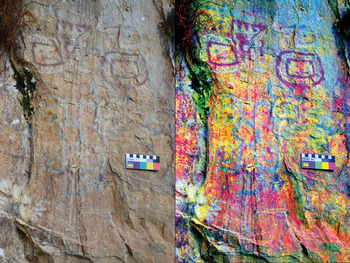
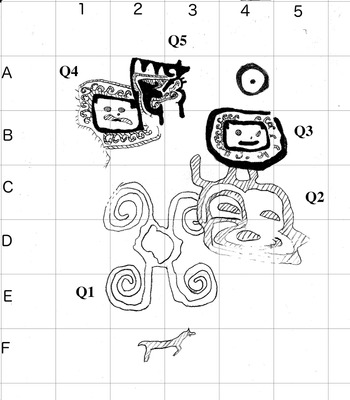
Quilcay 6 was difficult to assess in the field, as it had severely eroded and parts of the panel are difficult to see with the naked eye. Upon enhancement (using DStretch), seven different figures were revealed that originally utilized white, black and red pigments (Figs 3 & 4). Three of these figures partially overlie others, and these served as the first chronological clues. Specifically, the figure in A 2-3 (Q5) overlies the one in A/B 1-2 (Q4), the motif in B 3-5 (Q3) overlies that in C/D 3-5 (Q2), and the latter overlies another in C/D/E 2-3 (Q1). This means that Q3 was painted later than Q2, which was painted later than the Q1 motif, the earliest of these. The latter features a central circle with four inward-spiralling appendages radiating from it rendered in curving, white painted lines.
Quilcay 6. The original photograph is to the left. On the right the same photograph has been modified using DStretch to reveal eroded portions of the painting.

Quilcay 6. Scale: each square = 10 cm.

White paint was used rarely in the overall sample of paintings and was found only in examples created between the IP and EIP. However, the vast majority of the paintings from the IP are much smaller and use thin lines in their rendering. This makes the attribution of time to this painting difficult to ascertain. No painting in my sample nor that of Ambrosino (Reference Ambrosino2017) matches the stylistic characteristics of Q1 exactly. The attribution of this painting to the IP is most secure because others of its stylistic features—simplistic design, curving lines, outlining with an absence of infilling—are all consistently seen throughout the sample during this period (Dubois Reference Dubois2017).
Q2, the painting in C/D 3-5, is also outlined, with a similar round-cornered-square shape as seen elsewhere during the same period. The overall figure is of a face with lunate eyes that appear to orient upward. The design utilizes positive and negative space: the side of the face to the viewer's left has its features outlined and this outline becomes the line that defines the mouth, where on the right side the features were not outlined. This motif appears to be transitional between the IP, where outlining was used to define images, and the EH, which sometimes utilized the same line to define both positive and negative space within a single image.
Two styles are evident in Huánuco originating in the EH. The more conventional one was much more dynamic and experimental than the simple, static style of the IP. It features bright red paint, the combined use of infilling and outlining, a mixture of naturalistic and geometric representation, sometimes within single images, skilful rendering, clear line work and a freedom of experimentation with form that is not seen during other time periods.
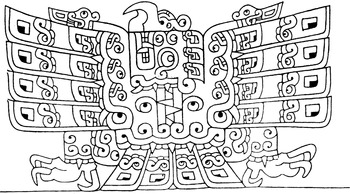
Metaphorical substitution and the creation of visual confusion are some of the hallmarks of the art seen in the sculpture of Chavín de Huantar, whose artistic canon defines the art of the EH (Burger Reference Burger1992; Rowe Reference Rowe1962). On the eastern face of the Old Temple, for example, the central body of a crested eagle is composed of multiple faces that make up different portions of the body and can be seen from different angles (Burger Reference Burger1992, fig. 138: see Fig. 5). Judging by their use of metaphorical substitution and the layering of images within and upon images, the artists painting rock art during the EH were familiar with contemporary canonical rules for creating art. They continued to use aspects of the representational approach of the previous period, but experimented with the new freedoms that were introduced through Chavín-related styles.
Drawing of a sculpture of a Harpy Eagle from the eastern face at the Old Temple of Chavín de Huantar. (After Burger Reference Burger1992, fig. 138.)

The figures Q3–Q5 all feature the use of polychrome red, white and black. The use of polychrome painting on ceramics does not appear anywhere in the Andes until late in the IP, when it is used on north coast ceramics from the Jequetepeque valley (where black, white and red are used) (Burtenshaw-Zumstein Reference Burtenshaw-Zumstein2014), at the EH site of Chavín de Huantar itself (Burger Reference Burger1992) and on the south coast at Paracas (Menzel et al. Reference Menzel, Rowe and Dawson1964). It also corresponds to polychrome rock art discussed by Guffroy (Reference Guffroy1999, 58, fig. 18) that he attributes to the EH based on its use of Chavín-related motifs such as those described here. This supports my attribution of these paintings to this time period.
Q3 and Q4 share multiple features: both use simple dots and lines for eyes and noses, mouths were formed using simple lines, a wave-like element surrounds a central rounded-square face, and both use a single line to contain these elements. These features also fit the ascription of an EH chronology, as discussed above. The Q5 motif incorporates some of the same elements from the Q3 and Q4 images and adds a number of elements that relate to Singa Transitional, though it is not clear whether this figure utilized the resist technique. The motif in Q5 features the use of visual confusion, the use of both positive and negative design elements, and depicts a similar headdress to the Quilcay 7, Episode 2 painting discussed below (Figs 6 & 7). All of these features and the overall design similarity with the latter suggest that this painting belongs to the Singa Transitional style.
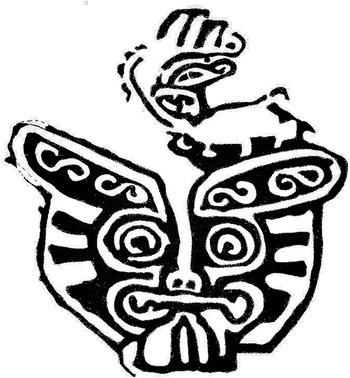
Quilcay 7 Episode 2. Scale: 85 cm high × 78 cm wide.

Quilcay 7. Episode 1 is at bottom left, Episode 2 at top centre and Episode 3 at top right.

Singa Transitional
I have called the style Transitional because its use was determined to span the late Early Horizon into the Early Intermediate Period (EIP: ad 0–700). The style features several characteristics seemingly meant to obfuscate the subject of the painting and confuse the eye of the viewer. First, the frequent choice to use white paint on a light-coloured stone surface obscures the symbolism, making it difficult to view clearly unless one is close enough to examine the painting. The red paint most often used during other periods contrasts with the natural cream to pink colour of the stone. Secondly, most of the paintings were composed using a resist technique and outline images in negative: painted areas fill what would usually be empty space, and empty space occupies what would be lines. Thirdly, the negative space is inconsecutive and sometimes contains its own shapes, which makes the compositions confounding. After some study, a viewer is able to make out both the overall design and any hidden designs.
A painting from the site of Quilcay 7 will illustrate these points (Fig. 6). The primary focus of the image is a feline head with anthropomorphic qualities. The eyes are circular and the pupils differ in size. The nose is created by negative space and the bridge opens upward into empty space. The mouth is asymmetrical and composed of both negative and positive lines, with a small fang rendered in negative on the left side and positive on the right. Scrollwork adorns the headdress element of the figure, and there is another zoomorph above the right portion of the headdress, rendered in negative. The chin of the feline is square at the bottom and composed of alternating positive and negative striped lines.
The sharp lines and infilled colour of the painting indicate the image was painted by affixing a stencil to the wall and appears to have been created using a three-step process. First, the outline was made and all areas of the painting intended to be without paint were covered in clay or mud, which was then allowed to harden in the sun. Paint was then blown over the area through a tube. Once the paint dried, the mud or clay was removed, leaving behind the existing painting. In other words, the artist/s who created this painting used a resist technique to produce this image.
This conclusion can be confidently made based upon the following criteria, which were established to determine the presence of this technique in ceramic painting (Shepard Reference Shepard1985):
a) The infilled areas are consistent in thickness of paint, as though applied in a wash rather than with a brush.
b) The fineness and delicacy of certain lines, which I list below, is consistent with the use of the resist technique in ceramics (Shepard Reference Shepard1985, 208): the lines around the ear and mouth of the upper zoomorph, the outline of the main body of the upper zoomorph, the lines surrounding the irises of the main figure, the interior borders of the ‘eyebrows,’ the exterior right border of its head, and the bottom right line which terminates the ‘chin’ or neck.
c) The shapes of the ends of the parallel lines at the side of the face of the main figure are squared off where they meet the transverse lines (in negative). The consistency with which they line up is diagnostic of resist painting in ceramics (Shepard Reference Shepard1985, 208).
d) The lower part of the body of the upper zoomorph makes an exact straight line. This is inconsistent with other forms of rock painting but can be easily explained if the resist technique were used in its creation.
e) The consistent sharpness of the edges of the lines can be diagnostic of the resist technique (Shepard Reference Shepard1985, 208).
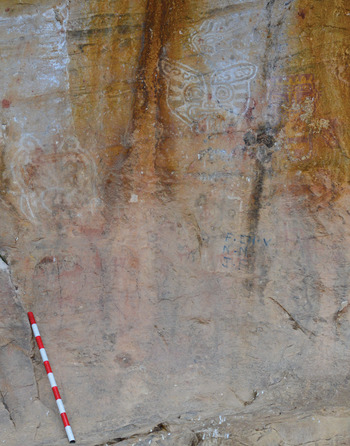
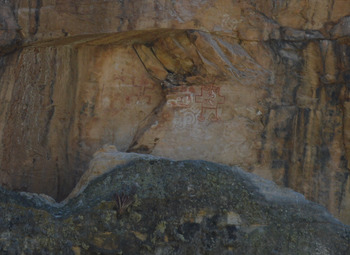
The next example is from a site called Shuyu Alto, located approximately 300 m above the floor of the Rio Huanchaca valley, also outside Singa (Figs 8, 9). This site can only be accessed by scaling the rock wall through a narrow crack, which we did not attempt when we visited in 2014. The panel can be seen and photographed from the valley floor, but only its general outline can be made out with the naked eye. It consists of three main figures, showing evidence of three different episodes as well as superposition of each layer over the earlier. Due to space limitations, I will only discuss the Singa Transitional layer, which was painted during the second episode (for a discussion of the entire panel, the reader may refer to Dubois Reference Dubois2017, 104–9).
Shuyu Alto Episode 2. Scale indeterminate.

Shuyu Alto.

This painting depicts a stylized aviform, again rendered in white paint on a lightly coloured stone surface. Here the designer used broken, smaller lines to define the overall motif. Each line segment itself is its own design and together they outline the figure, partially using negative space to do so. This painting also utilizes metaphorical substitution in the centre of the head, where the element in the area of the ear is formed by a serpent shape. The claws and beak of the bird are hooked, and there is a vertical element rising from the top of its head. This combination of elements was used at Chavín to represent a harpy eagle (Fig. 5; Burger Reference Burger1992; Roe Reference Roe and Quilter2008). The body is formed by the use of a series of interlocking curves to define its shape, while leaving portions open, again utilizing both positive and negative space in the formation of the final image. The ‘wing’ portion of the motif was composed using four lines extending from the upper back of the aviform, three of which are interconnected. Preliminary analysis of this image, based on my photograph taken from the valley floor, suggests that it, too, was painted using the same resist technique as the Quilcay 7 paintings.
While these illustrate the technical expertise required to execute the paintings, it does little to illustrate the impact the paintings might have had on their viewers. Phenomenologically, the Quilcay 7 painting is simultaneously confounding and inspiring. Initially, it was difficult to see clearly because of the use of white paint on light-coloured stone. After continued focus the subject began to become apparent and the excellent quality of the design and its execution also became clear (I should note that over time the image has eroded, but the choice to use white paint on a light-coloured stone surface would have made the painting difficult to see clearly even when it was new). With more viewing time, more details were revealed than first meet the eye. For example, only after I had looked at the drawing of the painting for several hours did it become clear the artist was playing with both positive and negative space in the mouth, the chin and the eyes, and that this duality was deliberate. While my perspective is clearly remote from that of the people the paintings were intended for, anyone viewing the paintings without knowledge of what they depict or how they were executed would likely be similarly confounded, and perhaps somewhat awed.
Weismantel (Reference Weismantel and Watt2013, 25) has recently observed that the sculptures at Chavín de Huantar require ‘an unsettling degree of bodily interaction’ to access and that it is difficult to see all of the details in the images without multiple exposures. She notes that these sculptures require slow, conscious, repeated viewing to ascertain what is being presented and that they offer an interactive experience difficult for modern viewers to appreciate (Weismantel Reference Weismantel and Watt2013, 25). Like the sculptures at Chavín de Huantar, Singa Transitional paintings were designed to compel ‘interactive, dialogic viewing’ (Weismantel Reference Weismantel and Watt2013, 33). The Quilcay and Shuyu paintings require similar action and interaction to apprehend. The viewer can see the panels from the floor of the valley, but then only faintly and without detail—it requires the viewer to get closer to them, to study them, to become intimately familiar with them through repeated viewing in order fully to apprehend them. Even then, without being informed by the ceremonial canon that existed at Chavín de Huantar at the time, the viewer would probably not fully understand the meaning being conveyed.
In addition to the use of the Singa Transitional style and the technique required to implement it, the Shuyu Alto panel adds extreme difficulty of accessibility. The painting is placed above a ledge composed by a tower of rock that extends upward an estimated 300 m from the valley floor and is separated from the rest of the cliff on which the panel was painted by less than a metre. In other words, it requires a difficult climb to reach. This would have served to limit direct access to the panel. The design style used serves to restrict comprehension of the piece, as repeated, up-close viewing is again required to appreciate fully the details of the painting. This heightens the requirement of potential viewers to exert themselves in an effort to engage with the artwork, which supports the contention by Weismantel (Reference Weismantel and Watt2013, 28) that ‘Chavín religiosity demands an active body that absorbs knowledge kinetically’. The climb required to engage with this image, in addition to the requirements of active, ongoing, intimate knowledge of the subjects depicted, strongly suggest that Singa Transitional was a style meant only for initiates to understand fully, while simultaneously being generally advertised to all passers-by.
I propose that these choices, the coupling of high visibility with physical and symbolic inaccessibility, in combination with the use of the landscape as the canvas for these depictions, would have advertised the power inherent in the art and in those associated with its creation. As wak'as, rock-art sites connected people with a landscape understood by its inhabitants to have been composed of powerful, active participants in local affairs. Taken together, these factors suggest the artists may have been involved in attempting to elevate themselves above the rest of their contemporaries. The painters appear to have been initiates into the mysteries associated with the Chavín religious programme, and also to have innovated an associated art style in a different medium from that seen at the pilgrimage site.
The Shuyu panel is located alongside the modern path that leads up to the mountain where the Quilcay complex is located. This adds another dimension to the experience of the paintings. Like the Quilcay paintings, they could be experienced as markers along routes of passage, or saywas. They prominently advertised the symbols that were painted and those associated with their creation, further amplifying their messages and perhaps the power of those associated with them. The exclusivity of access, the technique required for its creation, and the multi-layered and confounding nature of the iconography, when considered with the public advertisement of the panels, all strongly support the idea that Chavín-related traditions were used in the attempt to elevate its initiates above the rest of local society.
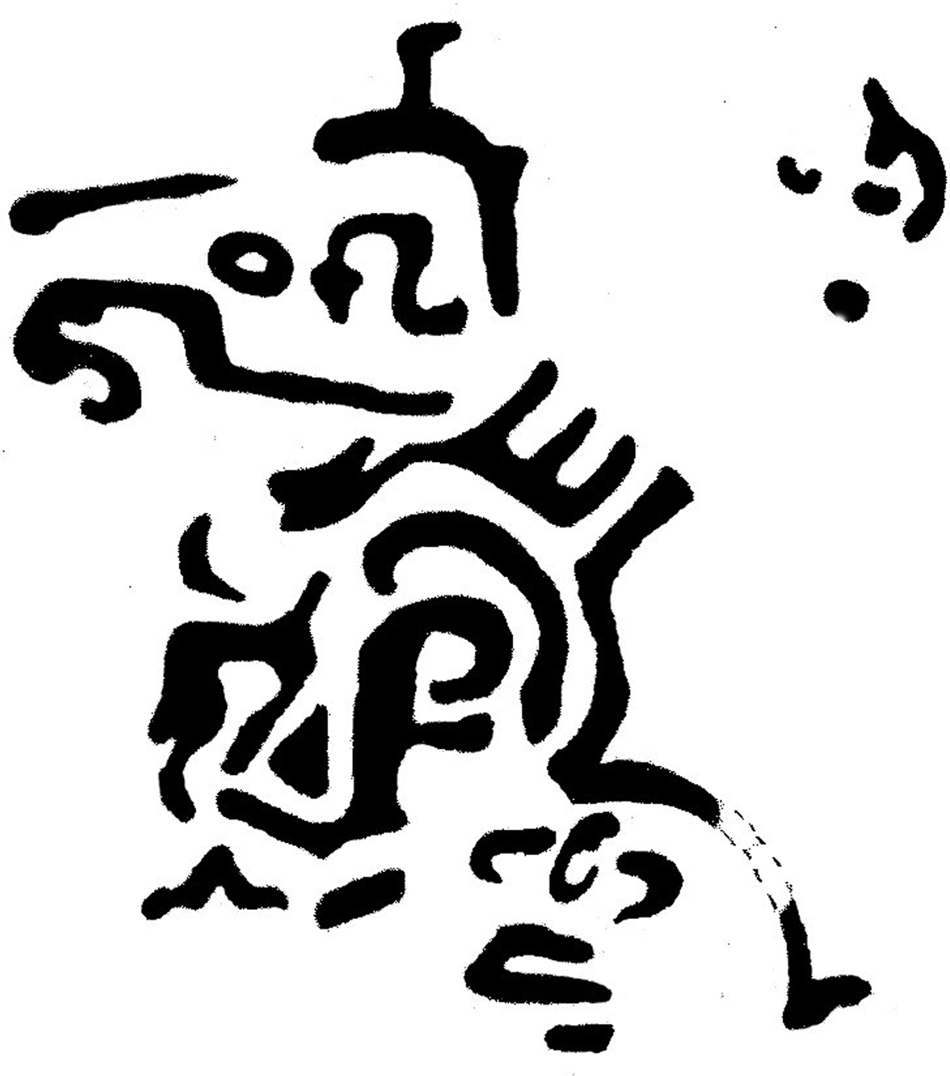
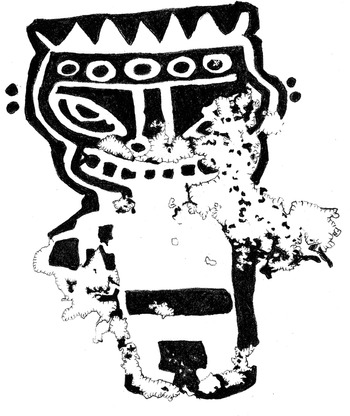
Finally, the reader will note the ascription of the style to the time period between the EH and the EIP. This deserves an explanation, as the evidence presented thus far refers exclusively to the EH. A third example of the style, from Quilcay 7 Episode 3, can be used to illustrate the changes evident during this time (Fig. 10). This example also offers us a rare glimpse into the dynamics of the social change happening during this transitional period, a time of social unrest throughout the Northern and Central Peruvian Andes.
Quilcay 7 Episode 3. Scale: 62 cm high × 45 cm wide.

This painting is found 7 cm to the right of and slightly below Quilcay 7 Episode 2, described above (Fig. 7). It was executed in bichrome, dark red and yellow. The figure is anthropomorphic and appears to have once contained head, shoulders, body and short legs. Portions of the face, shoulders and legs were pecked away in antiquity. The eyes are almond-shaped, the pupils point upward, and the bridge of the nose and nostrils were painted red. The mouth was outlined and the teeth were depicted with small squares. The headdress element is elaborate, with narrow-lined ovals adorning the headband and alternating negative and positive triangular elements along the upper part of the headdress. The narrowness of the lines—in the ovals within the headdress, in the line directly below the headdress, and within the eye/s—and the straightness of the top of the headdress are diagnostic of the use of the resist technique (Shephard 1985, 208).
The resist technique in Quilcay 7 Episode 3 has progressed to add a step that accommodated the addition of another colour. This seems to also have been the case with Quilcay 6 figures Q3 and Q4, though in that case the colours used were red and black. The deep red pigment, almond-shaped eyes, clean line work, the combined use of infilling and outlining and the increasing frequency of the appearance of anthropomorphs with status markers, both within the data sample and in the Andes generally, are diagnostic features of the EIP. The subject matter in this case depicts a personage of high status, based on the elaborate nature of the headdress. The mouth is composed of square teeth rather than fangs, suggesting a human rather than a supernatural being.
All of this suggests that the painting may have been created to elevate or aggrandize a particular person, and/or the lineage associated with that person, above the rest of a society previously shown to have few to no signs of a class structure or elaborate hierarchy. I have discussed in more depth elsewhere the use of rock art between the EIP and the LIP to document and legitimize the creation of honoured ancestors: the founders of ayllus, or lineages (Dubois Reference Dubois2018). As discussed above, the EIP was a time when diverse societies across the Andes experienced upheaval and a rearrangement of social relations. The Singa Transitional paintings were probably used not only to reflect these shifting social structures, but influence them as well.
The act of painting could be one of public memorialization of group identity, tying the group to the land through the painting of symbols that were salient to its people. Here it might be helpful to return to contemporary developments in neighboring Ancash. During the period following the EH, local communities there were reforming their identities through the ritual killing of Chavín-era temples and building new Huaras-style structures over them (Bria Reference Bria2017). This rebuilding was accompanied by increased corporate divisions evident in architecture that encouraged division, with new commensal practices including the reorganization of agriculture to feature maize more prominently (Bria Reference Bria2017). The latter, which indicates increased chicha consumption, was accompanied by evidence of large feasts (Bria Reference Bria2017). This combination has been interpreted as having been designed to fuel the rise of elites (Bria Reference Bria2017; Gero Reference Gero and Preucel1991; Lau Reference Lau2011).
Contemporary Huanuqueños were involved in a similar restructuring, as is evident in the iconographic changes discussed here, but the region lacks evidence for the feasting practices or the rise of elites evident in architectural developments. Similar emphasis on founding ancestors can be seen in the iconography of the subsequent EIP, but local social developments do not appear to have led to the same level of division as that seen among the neighbouring Recuay (Dubois Reference Dubois2017; Lau Reference Lau2011; Reference Lau2016; Onofre Reference Onofre2013; Salcedo Camacho Reference Salcedo Camacho2012). The architectural changes and burial evidence that reflect increased social divisions do not appear in Huánuco until the LIP. However, the evidence discussed here for Singa Transitional indicates that the foundations for these changes were laid during the time period following the EH. Local actors used their knowledge of the Chavín canon, along with the reputation of being associated with that powerful centre, to elevate their position in society. They advertised their association prominently by positioning the paintings where they would be seen by many, while preserving their mystery by hiding the message within the image in plain sight through the use of tools like metaphorical substitution and painting in white paint on light-coloured surfaces.
Conclusion
I have proposed that rock art in Huánuco, Peru, served to connect local people with the land and was a medium through which social changes were communicated and contested in the Andes. Panels were placed in prominent locations, adorning landscape features perceived as active agents by the people who viewed them. They served as saywas, marking movement through the landscape and advertising the message/s that the painters wanted to transmit to local inhabitants. The paintings were visible to any who passed by and tended to depict motifs and themes that would have been familiar. The artists used their knowledge of how quilcas were understood to influence viewers. Because the panels were painted and carved onto rocks that were considered wak'as and contained social messages, they served to socialize the local landscape.
In some cases, such as with the Singa Transitional examples, the panels may have been used in an attempt to influence the ideas of local actors, and even to alter the structure of society. The high degree of specialized knowledge required of both the viewers and the painters of these paintings strongly supports the idea that the panels were designed to exclude a majority of people. Conversely, the ready visibility of the panels indicates they were also meant to be seen by the general public. I have suggested here that this concurrence of a high degree of visibility and a limited degree of intelligibility supports the contention that they were designed to project power and legitimize incipient social changes.
Finally, the very existence of the Singa Transitional style, because of its placement, its content, and the manner of its execution, strongly argues that rock art was a significant medium of the transmission of social messages in the Andean past. It utilized stylistic conventions that were prominently featured at Chavín de Huantar and spread throughout the Andes in combination with a technical process developed specifically for the execution of this style. This means that the artist/s who invented it were well educated both in the Chavín style and the use of the resist technique generally understood to be intended for the production of ceramics. Such specialized knowledge tends to emerge during moments of great social change, like the one that straddled the EH into the EIP. The location of these panels executed at some distance from Chavín in the medium of rock art suggests that a choice was made to bring the messages associated with the pilgrimage site to local peoples using media that were socially impactful in those regions. The fact that the message was relayed through rock art in Huánuco demonstrates this medium was a prominent means to deliver socially potent messages. Future studies of social developments and artistic trends in the Andes can benefit from the inclusion of rock-art data into efforts to deepen current understandings of the past.