





Impact statement
This work presents a new approach to biodesign by situating our research in both the laboratory and garden. We introduce artefacts to garden contexts where they become alive, surface endemic biodiversity and stimulate photosynthetic growth. Spanning four seasons and multiple garden contexts, we describe our results through photography and deoxyribonucleic acid (DNA) analysis and propose how biodesigners can engage with urban biodiversity to support regenerative ecologies.
Introduction
Ongoing urbanisation sees both human and more-than-human life migrating into cities (Gross Reference Gross2016; Seto et al. Reference Seto, Güneralp and Hutyra2012; United Nations 2026). Many species of living organisms are rapidly adapting to the urban landscape and its diverse micro-habitats such as parks and gardens (Kowarik Reference Kowarik2011; Schilthuizen et al. Reference Schilthuizen, Santos Pimenta, Lammers, Steenbergen, Flohil, Beveridge, van Duijn, Meulblok, Sosef, van de Ven, Werring, Beentjes, Meijer, Vos, Vrieling, Gravendeel, Choi, Verpoorte, Smit and Beukeboom2016; Wu Reference Wu2014).
Within this context, we foresee unique opportunities for biodesigners to engage with urban ecology and the often-unseen biodiversity it entails. We particularly focus on living artefacts – objects in which organisms are intentionally kept alive by designers (Karana et al. Reference Karana, Barati and Giaccardi2020) – proposing their potential as open, multispecies habitats capable of interacting with surrounding living systems (Groutars et al. Reference Groutars, Kim and Karana2024). In this manner, living artefacts can enable regenerative ecologies by extending urban habitats to promote biodiversity while aligning with cyclical material and energy flows and engaging with everyday human practices in ways that foster ecological literacy (Karana et al. Reference Karana, McQuillan, Rognoli and Giaccardi2023).
While these opportunities are promising, it remains crucial to understand how living artefacts can operate within – and be meaningfully situated as part of – ecological systems, both in urban settings and beyond. This involves recognising these ecologies not as collections of individual species but as interrelated webs defined by multispecies interactions (Gilbert et al. Reference Gilbert, Sapp and Tauber2012; Margulis and Fester Reference Margulis, Fester, Margulis and Fester1991). Additionally, it requires new ways of working beyond the safe confines of the laboratory and adopting sensibilities for local and seasonal variations. There are some examples of living artefacts able to interact with local ecosystems (Loop Biotech 2023; Oers and Nova Innova Reference Oers2023; Oskam and Latour Reference Oskam and Latour2021). Yet, these are few and often lack substantiation of underlying design decisions, documentation on temporal multispecies interactions or methods to evaluate these dynamics. As a result, there exists a gap between theory and practice in the regenerative role for living artefacts in the real world.
To address this gap, we propose a novel Biodesign approach that is both nuanced and sensitive to the complexity of ecosystems, supported by documentation and evaluation methods that help designers position their work within ecological settings. As a first step toward designing living artefacts that actively participate in multispecies interactions, we proceed with caution. Deliberately, we begin with artefacts that are not yet alive, prioritising an understanding of the target ecosystem before introducing new species. With our study, we aim to equip biodesigners with practical handles for conducting longitudinal ecological studies across seasons, laying the groundwork for future living artefacts tailored to specific ecosystems. We demonstrate this through a study involving: (1) Designing artefacts that harness the habitabilities of bacterial cellulose and ceramic materials to surface livingness of endemic species and stimulate photosynthetic growth; (2) Situating these artefacts in outside garden contexts with consideration of their exposure to biotic and abiotic factors; (3) Longitudinal documentation across seasons and contexts, in which the livingness surfaced by these artefacts is evaluated through photography and DNA analysis; and (4) Multiple iterations combining controlled experimentation in design studios and microbiological laboratories with situated studies in outside contexts.
Based on our photography and DNA analysis, we identified an incredibly diverse array of living organisms interacting with our artefacts, varying across contexts and seasons. Drawing on the dimensions of multiplicity, connectivity and reciprocity introduced in our earlier framework (Groutars et al. Reference Groutars, Kim and Karana2024), we reflect on these findings to better understand how artefacts relate to and engage with the living systems around them. This multiplicity of species, on the one hand, presents a challenge, as underlying ecological roles of many microorganisms identified – including their connectivity to other species and reciprocal relationships that may emerge – remain unknown to science (Jiao et al. Reference Jiao, Liu, Hua, Fang, Zhou, Salam, Hedlund and Li2021). At the same time, this very uncertainty opens a design space: through the sort of careful, iterative approach demonstrated in this study – combining controlled experimentation in design studios and microbiological laboratories with longitudinal situated studies across seasons – biodesigners can develop an understanding of a target ecosystem before intervening with living artefacts. By tuning the habitability conditions of artefacts through involved materials and their response to biotic and abiotic factors, designers can intentionally shape conditions for multispecies interactions, building toward living artefacts capable of reintroducing biodiversity and fostering regenerative outcomes in urban ecosystems.
Related work
Biodiversity in urban gardens
The urban environment is planet earth’s fastest-growing habitat (Seto et al. Reference Seto, Güneralp and Hutyra2012), impacting humans (Gross Reference Gross2016; United Nations 2026) but other life as well. With natural habitats disappearing, a great number of species is rapidly adapting to the urban landscape (Schilthuizen Reference Schilthuizen2019; Schilthuizen et al. Reference Schilthuizen, Santos Pimenta, Lammers, Steenbergen, Flohil, Beveridge, van Duijn, Meulblok, Sosef, van de Ven, Werring, Beentjes, Meijer, Vos, Vrieling, Gravendeel, Choi, Verpoorte, Smit and Beukeboom2016; Wu Reference Wu2014). Examples include species of moths that change colour within generations as a reaction to industrial pollution (van’t Hof et al. Reference van’t Hof, Edmonds, Dalíková, Marec and Saccheri2011), birds that alter the pitch of their song to make themselves heard among loud urban soundscapes (Mockford and Marshall Reference Mockford and Marshall2009) and ants that evolved a tolerance to high temperatures, enabling them to survive and thrive in urban heat islands (Diamond et al. Reference Diamond, Chick, Perez, Strickler and Martin2017). Within this evolving urban landscape, ecologists stress the importance of biodiversity, crucial for the long-term resilience and functionality of ecosystems (Kowarik Reference Kowarik2011; Oliver et al. Reference Oliver, Heard, Isaac, Martín-Lopez and Bullock2015). Moreover, recent studies have shown the potential that residential gardens have in supporting urban biodiversity (Norton et al. Reference Norton, Ramsey and Sheffield2025), with each garden providing specific microclimates or niches that harbour unique communities of organisms (Gaston et al. Reference Gaston, Fuller, Loram, MacDonald, Power and Dempsey2007; Smith et al. Reference Smith, Thompson, Hodgson, Warren and Gaston2006).
While research in urban ecology has long discussed the relevance of residential gardens, these are still an emergent context for design research. For example, Wakkary et al. (Reference Wakkary, Oogjes, Tomico, Sakib and Kökel2025) identified the garden as a liminal space where designers can safely experiment with more-than-human presences. Outdoor spaces are increasingly recognised as contexts in which design researchers can engage with more-than-human life (Rosen et al. Reference Rosen, Normark and Wiberg2022; Smith et al. Reference Smith, Bardzell and Bardzell2017). We thus conceive of gardens as small-scale yet diverse ecologies, part of the greater patchwork that is urban ecology, in which biodiversity can be observed and shaped. Crucially, gardens also offer a relatively contained and familiar ecosystem – one that can be studied across seasons before any intentional introduction of species – making them a particularly fitting starting point for the type of careful, iterative ecological studies we propose. We build on these opportunities for biodesigners who work with living organisms to situate their designs in urban gardens.
Living artefacts for biodiversity
Recent years have seen an increase in designers working with living organisms (Myers Reference Myers2012) and integrating them in living artefacts, purposefully extending livingness of these organisms, which becomes observable through changes in colour, texture and shape over time, eliciting unique functions, expressions and interactions (Karana et al. Reference Karana, Barati and Giaccardi2020). Interactions between living entities do not occur solely within human-made systems – such as bio-digital computers and living interfaces (Kim et al. Reference Kim, Risseeuw, Groutars and Karana2023; Merritt et al. Reference Merritt, Hamidi, Alistar and DeMenezes2020; Pataranutaporn et al. Reference Pataranutaporn, Vujic, Kong, Maes and Sra2020) – but are also fundamental characteristics of natural living systems, which typically involve diverse species and complex interactions among them (Gilbert et al. Reference Gilbert, Sapp and Tauber2012; Margulis and Fester Reference Margulis, Fester, Margulis and Fester1991).
In previous work, we have described the potential of living artefacts to facilitate multispecies interactions (Groutars et al. Reference Groutars, Kim and Karana2024) that manifest both within and across the boundaries of a living artefact. Multispecies interactions, we argued, are crucial for healthy and biodiverse living systems. In this framework, interactions are described through three key dimensions: multiplicity – the number and diversity of species involved; connectivity – the occurrence and extent of interactions; and reciprocity – the degree of mutual benefit generated. Our work demonstrated that careful consideration of the multiplicity, connectivity and reciprocity of interactions allows the alignment of living artefacts with ecological systems.
There are some examples of living artefacts that facilitate multispecies interactions. For example, Living Cocoon, a coffin created out of mycelium, supports the composting process after burial, facilitating local nutrient cycles and soil health (Loop Biotech 2023). Similarly, Urban Reef, a bio-receptive habitat, is specifically tuned to become colonised by endemic living organisms to promote and highlight urban biodiversity (Oskam and Latour Reference Oskam and Latour2021). Lastly, POND is an artefact that measures and displays water quality using electricity generated by bacteria found in that same body of water, effectively providing an interface between an ecological system and human viewers (Oers and Nova Innova Reference Oers2023). These examples show the potential for living artefacts to enable regenerative ecologies through aligning with cyclical material and energy systems, fostering biodiversity, interfacing the daily lives of humans with surrounding ecologies and promoting ecological literacy and more-than-human sensibilities (Karana et al. Reference Karana, McQuillan, Rognoli and Giaccardi2023).
While these opportunities are promising, it remains crucial to understand how living artefacts can be situated in real-world contexts where they are subjected to biotic factors such as multispecies interactions, human interventions and abiotic factors such as weather conditions and seasonal change. This urges biodesigners to expand their work beyond the laboratory, into contexts that are inherently more diverse and capricious.
Bacterial cellulose-based living artefacts
In our studies, we focus on using Bacterial Cellulose (BC), the extracellular fibrous material grown by species of bacteria commonly associated with fermented Kombucha tea and the Symbiotic Culture of Bacteria and Yeast (SCOBY) found within (Villarreal-Soto et al. Reference Villarreal-Soto, Beaufort, Bouajila, Souchard and Taillandier2018). BC has been widely adopted by biodesigners due to its availability, being relatively easy to grow and its versatile material properties (Bell et al. Reference Bell, Chow, Choi and Alistar2023; Cohen et al. Reference Cohen, Sicher, Uğur Yavuz, Duarte and Rosa2022; Lee Reference Lee2024; Roussel et al. Reference Roussel, Teyssier, Haute and Dhulster2023). Furthermore, wet BC can contain up to 98% water, allowing for diffusion of liquid nutrients whilst also providing a suitable surface for microorganisms to grow onto (Caro-Astorga et al. Reference Caro-Astorga, Walker, Herrera, Lee and Ellis2021; Rebelo et al. Reference Rebelo, Archer, Chen, Liu, Yang and Liu2018; Torres et al. Reference Torres, Commeaux and Troncoso2012). As such, BC has excellent habitability, described as the ability of materials or objects to provide a habitat for living organisms (Karana et al. Reference Karana, Barati and Giaccardi2020). In the case of BC, this habitability is tuneable to provide a suitable habitat for a wide variety of living organisms (Groutars et al. Reference Groutars, Martins and Karana2025). This material has therefore been used in the realms of biotechnology as a basis for the creation of engineered living materials (Nguyen et al. Reference Nguyen, Courchesne, Duraj-Thatte, Praveschotinunt and Joshi2018). Researchers have for example grown photosynthetic microalgae (Balasubramanian et al. Reference Balasubramanian, Yu, Meyer, Karana and Aubin-Tam2021) yeast cells (Gilbert et al. Reference Gilbert, Tang, Ott, Dorr, Shaw, Sun, Lu and Ellis2021), bacteria (Liu et al. Reference Liu, Wu, Wang, Hu, Liu, Duan and Liu2022) and complex living assemblages (Karana et al. Reference Karana, Ellis, Linder and Aubin-Tam2023) both onto and into BC.
BC has been conceptualised and explored as a biocompatible material able to host a diverse array of living organisms. Yet this has thus far mainly been researched in laboratories under sterile and regulated growing conditions. The habitability of BC in ecological contexts – characterised by variable biotic and abiotic factors – as well as the ways in which its livingness evolves, thus remain underexplored.
Our approach
The goal of this research is to explore how biodesigners can situate, analyse and iteratively tune artefacts in garden ecosystems as a first step toward designing living artefacts that reintroduce biodiversity and foster regenerative multispecies environments. We propose three ways through which such artefacts can contribute to local biodiversity. Firstly, by adopting a bio-receptive design approach (Pollini et al. Reference Pollini, Contardo, Paciotti, Rognoli, Vaes and Verlinden2023), living artefacts are conceived as open habitats to enable colonisation by various endemic organisms, embracing the multiplicity of species present in the ecosystem. Secondly, through careful consideration of embedded materials, nutrients and living organisms – refined during multiple iterations which combine laboratory experimentation and situated studies across seasons – artefacts can selectively stimulate growth that favours for ecological function, such as photosynthetic microbes, shaping conditions for connectivity between species. Thirdly by surfacing the livingness of microorganisms (Kim et al. Reference Kim, Risseeuw, Groutars and Karana2023), living artefacts can enable human viewers to perceive, map and better understand the ecological networks and reciprocal relationships that constitute urban biodiversity. In doing so, this research provides biodesigners with practical methods and handles for conducting longitudinal ecological studies – developing an understanding of a target ecosystem before intervening with living artefacts – while going beyond existing microbiological monitoring techniques (Mainelis Reference Mainelis2020) by carefully situating artefacts within their ecological contexts.
To provide a point of entry into this study, we draw on our previous work on living artefacts and multispecies interactions (Karana et al. Reference Karana, Barati and Giaccardi2020; Groutars et al. Reference Groutars, Kim and Karana2024). In creating artefacts for garden contexts, we focus on the tuning of their habitabilities to invite organisms but also guide specific types of growth (see subsection: Design Intentions). The subsequent livingness or the state of being alive, of these artefacts can then be discerned, when visible, through visual analysis but also through metagenomic analysis (see subsection: Data Generation and Analysis). This allows initial interpretation of the multiplicity or the number and diversity of species involved (see subsection Distinguishing Multispecies Interactions). From this, we can speculate on occurring multispecies interactions, their inherent connectivity and reciprocity but also acknowledge that such complex and often ill-understood aspects require careful consideration when moving forward.
Through our study, we therefore adopted a reflective research-through-design approach in which iterative processes of prototyping and testing served as our mode of inquiry (Stappers and Giaccardi Reference Stappers, Giaccardi, Soegaard and Dam2017). These design processes took place across the design studio, microbiological laboratory and gardens (Figure 1). Ideas were initially conceived, drawn and discussed in the studio and subsequently tested in the lab, informing a new iteration of artefact designs. Artefacts were created in controlled lab settings before being situated in garden contexts where they become alive. The observable livingness displayed by these situated artefacts was then documented and evaluated over time, informing the next design iteration. In this way, this research relied on the creation of living artefacts as objects of inquiry to surface and explore the richness of biodiversity and multispecies interactions.
Diagram depicting our biodesign process, spanning activities in the design studio and microbiological laboratory (characteristic of a biodesign process) but also enveloping garden contexts.

Research Team
The research team consisted of a biodesign researcher with over eight years of laboratory practice (first author), a microbiologist with more than ten years of experience (second author), a more-than-human design researcher with over ten years of experience (third author) and a (bio)design researcher with more than twenty years of experience (fourth author). Also, one direct colleague provided access to their garden, from here on referred to as our collaborator participant.
The artefacts were designed by the first author, aided by discussions with the rest of the research team. The first author made the artefacts, situated them in garden contexts and periodically visited these to document results, which were subsequently discussed among the research team to inform the next iteration. This work is inherently multidisciplinary, spanning biodesign, more-than-human design, materials research, ecology and microbiology. Navigating across these fields was made possible in part by the first author’s own expertise in biological laboratory practice, enabling direct engagement with microbiological methods and materials throughout the design process. For the genomic analysis, the second author’s expertise in microbiology was essential in interpreting the DNA findings and grounding the ecological observations in rigorous scientific knowledge. As such, this project relied on transdisciplinary knowledge generation, driven by the research-through-design process of the first author while being continuously enriched by the complementary expertise of the broader research team.
Design intentions
The artefacts in this study were designed to be situated in garden contexts and subsequently become alive by inviting endemic organisms and stimulating photosynthetic growth. In doing so, these artefacts were intended to both surface the livingness of organisms already present whilst also extending and enriching their habitats, promoting biodiversity in the long term.
For this, we chose two base materials; BC for its excellent habitabilities, tuneable to provide a suitable habitat for a wide variety of living organisms (Groutars et al. Reference Groutars, Martins and Karana2025); and low-fired terracotta clay (referred to as ceramic) to provide extra rigidity and water retention to the artefacts whilst also being familiar to garden contexts and practices. As such, the shapes of the ceramic components were also inspired by objects associated with gardens, such as planters and rain catchers.
To ensure ecological safety, we avoided the introduction of potentially invasive species to natural living systems (Andersen et al. Reference Andersen, Adams, Hope and Powell2004). For this, we created artefacts out of materials that were developed and grown in the laboratory and sterilised before bringing them outside where they would subsequently become alive through endemic multispecies interactions.
Furthermore, throughout the process, we added additional nutrients to the artefacts in the form of BG11 medium, suitable for the cultivation of cyanobacteria and microalgae (Balasubramanian et al. Reference Balasubramanian, Yu, Meyer, Karana and Aubin-Tam2021). This was done to stimulate photosynthetic growth in our artefacts. Given that photosynthesis and its resultant organic compounds form the basis of most known ecological systems (Hussein Reference Hussein2025), our intention was to stimulate this primary production to enable further ecological succession in our artefacts.
In what follows, we describe the methodology, providing details of the creation of these artefacts and how they are situated in garden contexts. In the subsequent section, we show the findings, describing how each iteration informed the next.
Making the artefacts
The artefacts were created using BC as a microbial habitat and ceramic components that functioned as both a scaffold and water reservoir. These materials were produced separately, kept sterile and combined in context.
Growing and preparing bacterial cellulose
BC was grown and processed in controlled laboratory conditions (Figure 2), ensuring sterility and consistency of this material throughout the research process. Here we build upon preceding work that grows and treats BC for optimising its habitability (Balasubramanian et al. Reference Balasubramanian, Yu, Meyer, Karana and Aubin-Tam2021; Groutars et al. Reference Groutars, Martins and Karana2025).
Schematic overview of the growing and treating of the BC habitat (courtesy of Groutars et al. Reference Groutars, Martins and Karana2025). This procedure varied for artefacts A1, A2 and A3 which did not receive BG11 medium. Also, artefacts F1, F2 and F3 were pre-incubated in a Petri dish before situating the artefact (explained in later subsection: Autumn Artefacts).

Briefly, 300 ml of adapted Hestrin-Schramm medium (Costa et al. Reference Costa, Almeida, Vinhas and Sarubbo2017) was sterilised (autoclave, 12°C for 20 minutes) and then inoculated (1 ml freezer stock, OD600 = 0.173) with Komagataeibacter hansenii (obtained from Westerdijk Institute, NCCB 53013 (Westerdijk Institute 2026)) – a model organism known for its ability to produce cellulose (Li et al. Reference Li, Chen, Zhang, Wu, Zeng and Liang2019) – and incubated at 30oC under dark conditions for 10 days. During this incubation period, a BC pellicle started to form, reaching a thickness of 8 mm on day 10, when it was subsequently harvested, sterilised (autoclave, 12°C for 20 minutes) and purified by daily washing with hot tap water (70oC) over the course of 7 days. This purification ensured the removal of residues from the previous steps, rendering a relatively pure piece of BC that is able to reuptake nutrients. After this, BC was submerged in demineralised water and sterilised a final time (autoclave, 121°C for 20 minutes). Finally, 100 ml of sterile BG11 nutrient medium, suitable for the growth of photosynthetic organisms (Balasubramanian et al. Reference Balasubramanian, Yu, Meyer, Karana and Aubin-Tam2021), was added to each pellicle and allowed to infuse overnight. This material was then kept in a Petri dish sealed with Parafilm to maintain sterility and hydration until situating the artefact in different contexts (see later subsection: Situating the Artefacts).
Creating the ceramic components
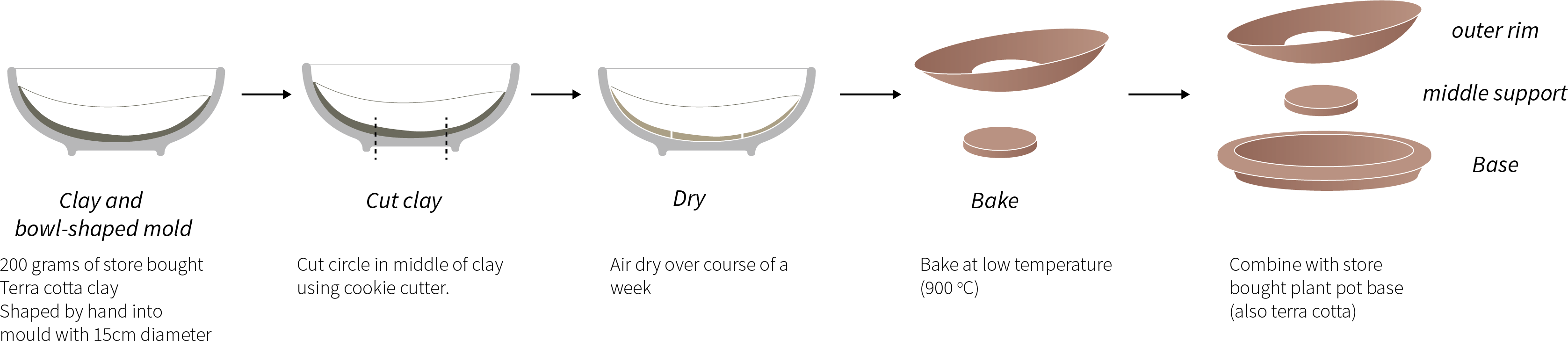
To support the BC and create a solid base able to retain water, ceramic components were made (Figure 3). For this, 200 grams of store-bought terracotta clay was shaped by hand into a concave mould of 150 mm in diameter, resulting in a circular shape approximately 120 mm across and 50 mm high with a profile thickness that ranged from 10 mm in the middle to 1 mm at the outer edges. Whilst still in the mould, a circle with a diameter of 60 mm was cut into the middle of the clay using a cookie cutter, separating the outer rim from the middle support. The clay was then allowed to air-dry over the course of 7 days. The dried clay was taken out of the mould and fired in a ceramic oven at a relatively low firing temperature, 900°C resulting in a porous ceramic material, useful for promoting the diffusion of water and nutrients as well as to create a biocompatible surface. A ready-made ceramic base of similar colour, with a diameter of 200 mm was included to act as a water reservoir. These ceramic components were autoclaved (121°C for 20 minutes) and kept in a sealed plastic bag to maintain sterility until situating the artefact (next subsection: Situating the Artefacts).
Schematic overview of the creation of the ceramic components. This procedure varied for artefact C1, which did not receive a circular cut to separate the middle support and outer rim; and G1, in which this cut was enlarged to 80 mm in diameter.

Situating the artefacts
The created artefacts were kept sterile during transport to their respective contexts, ensuring that they would become inhabited solely by the organisms specific to that context. Upon arriving, the BC and ceramic components were combined and situated in garden contexts. Here, specific placement of the artefact dictated the various factors that will influence its livingness, as illustrated in Figure 4. As such, when situating the artefact, the following considerations were taken into account: biotic factors, namely the effects resulting from interactions with other living organisms such as birds, fungi and other species; abiotic factors, referring to influences from non-living environmental conditions such as rain, sunlight and other seasonal variations; and human factors, encompassing deliberate human actions, including photographing, watering or otherwise intervening in the artefacts. We distinguish human factors from biotic factors because, in this study, humans were part of the research team, informed about the study and acting with intention. All these factors varied per context and across time.
Illustration of how the artefacts were situated in real-world contexts. On the left, the sterile components transported to the site; in the middle, components combined on site; on the right, how the research setup inevitably became more diverse and unpredictable given the interplay between the living artefact and the abiotic, biotic and human factors.

Contexts
Throughout this research process the artefacts were situated in multiple contexts in the Netherlands: (1) Delft Biodesign Lab at the faculty of Industrial Design Engineering (IDE) of TU Delft, where they were placed in a temperature-controlled incubator; (2) balcony of the first author in Rotterdam, south-facing, placed on a shelf with partial shade and partial protection from rain; (3) garden A of the fourth author in Delft, southeast-facing, placed in the undergrowth with partial shade and no protection from rain; (4) garden B of third author in Delft, southeast-facing, placed in undergrown, mostly shaded and without protection from rain; and garden C of our collaborator participant in Schiedam, north-facing, placed on a shelf, full shade and without protection from rain.
Initial exploratory artefacts (A1-3 and B1-3, conducted in 2024) were placed in a different context, namely the garden and balcony of the first author’s previous residence, where they received partial shading and no protection from rain.
A seasonal biodesign study
This research took place across four different seasons, involving longitudinal studies with nineteen living artefacts, situated in garden contexts where they remained for varying durations, ranging from 8 to 58 days (Figure 5). This section describes how these artefacts progressed across the seasons and were subsequently analysed. These methods were refined with each iteration, a process that is described in detail in the next section: Findings.
Schematic overview of the different iterations of our study and how they took place across seasons. For each group, a short explanation is given on how the artefact was designed, which is described in more detail in the following sections.

Figure 5. Long description
Panel A: Initial Explorations. This panel shows the initial phase from January to March 2024. Artefacts A1, A2, and A3 are situated on a balcony. Artefacts B1, B2, and B3 are bacterial cellulose in Petri dishes. Panel B: Spring artefacts first iteration. This panel shows the spring phase from April to May 2025. Artefact C1 is placed in Garden A with bacterial cellulose onto a ceramic scaffold. Panel C: Summer artefacts second iteration. This panel shows the summer phase from June to August 2025. Artefacts D1, D2, and D3 are placed in a lab, balcony, and Garden A respectively. Artefacts D4 and D5 are placed in Garden B and Garden C respectively, with bacterial cellulose integrated into a ceramic scaffold. Panel D: Autumn artefacts third iteration. This panel shows the autumn phase from September to October 2025. Artefacts E1, E2, and E3 are placed in a lab, balcony, and Garden C respectively, with pre-incubated bacterial cellulose integrated into a ceramic scaffold. Panel E: Winter artefact fourth iteration. This panel shows the winter phase from November to December 2025. Artefact G1 is placed in Garden C with bacterial cellulose integrated into a larger ceramic scaffold.
Artefact progression
Initial explorations took place in the fall of 2024, focused on documenting the behaviour of BC when exposed to outside contexts. These explorations informed the design of the first artefact – spring artefact – situated in a garden during April and May 2025. Resulting visual indicators of livingness were analysed, informing a redesign and making of five new artefacts – summer artefacts – that were situated in five different contexts from June to August 2025. The outcomes of these artefacts were again analysed, informing a new setup of six artefacts – autumn artefacts. While the design of the autumn artefacts remained the same, two groups were inoculated differently (see also the subsection: Autumn Artefacts) and situated in three different contexts, from September to November 2025. A last artefact – winter artefact, was designed based on the previous findings and situated in one context in December 2025 intended to remain there for a full year. Note that while these artefacts were grouped into seasons, they were not always situated on the same starting dates due to logistical constraints.
Data generation and analysis
Data was obtained in two primary ways. First, through the photographic documentation of the artefacts, the first author visited the different contexts to take photographs with a system camera (Sony A6000) equipped with a macro lens (FE 50mm F2.8). In addition, time-lapse cameras (Atli Eon) programmed to take hourly pictures and motion-triggered wild cameras (PH960W trail camera) were installed on the sites. For the summer artefacts, the fourth author and research collaborator took the initiative to take photographs with their smartphone and send updates to the first author through WhatsApp. For the subsequent autumn and winter artefacts, the research collaborator was then also specifically instructed to make regular photographs. Also, upon visiting the sites, the first author would converse with the members of the research team about their observations and impressions of the artefact.
Second, to obtain a finer-grained understanding of the multiplicity of species inhabiting the artefacts, the autumn artefacts were collected after 8 weeks and subjected to metagenomic analysis (see subsection: Metagenomic Analysis). For this, the BC part of the artefact was removed by the first author and placed in a 50 ml centrifugal tube. Additionally, any biological material on the ceramic parts was scraped off with a spatula and remaining liquids were obtained with a pipette, to be deposited in the same tube. These actions were performed wearing sterilised gloves, using sterilised tools and tubes to ensure the DNA samples would remain representative of the endemic biodiversity.
Finally, to relate our data to meteorological circumstance, we collected data on average temperature and daily rainfall from the Rotterdam Airport weather station, located within a maximum distance of ten kilometres from each research site (KNMI 2026).
Findings
This section presents our findings as twofold: first, what we learned from the particular ways in which the artefact can be situated in real-world contexts, considering its relation to temporal and spatial variations in biotic, abiotic and human factors; and second, how these factors evolved over time, how they influenced the artefact’s habitability and how this resulted in visual displays of livingness. These aspects are all analysed longitudinally, over the course of days, but at differing timescales and intervals. The duration that each artefact remained in context varied from 7 to 58 days, with some artefacts removed earlier and others intentionally left in place for longer. This variation was partly due to practical reasons (e.g., drying BC due to high temperatures) but also reflected the differing timescales associated with living organisms. We began with an initial, relatively explorative and short-term study (see next subsection: Initial Explorations), followed by the main seasonal study comprising four iterations. Each iteration – and the particular ways the artefacts were situated within specific contexts – informed the others, enabling us to progressively refine and further develop the artefacts.
Initial explorations
Conducted in the autumn of 2024, these explorations aimed to gain an initial understanding of how BC behaves when exposed to real-world conditions. These explorations were divided into two groups. Group A consisted of plain pieces of BC placed directly onto different materials such as wood, stone and soil (Figure 6). These artefacts dehydrated completely, although at different rates but did not show visual evidence of livingness.
Describes how the initial explorations, group A (A1, A2 and A3), were situated and shows their subsequent evolution through photographs. Underneath the photographs are annotations of developments taking place throughout the artefact lifetime.

This prompted the setup of group B, in which BC was exposed to outside contexts for a short period of time and then kept in a closed Petri dish in context (Figure 7). From this, visual changes indicating diverse forms of livingness were observed (Figure 7). The enclosure in a Petri dish prevented dehydration allowing for different lifeforms to take hold and grow. However, this enclosure also kept the BC partially isolated from other organisms for the remainder of its lifetime. Furthermore, the use of a Petri dish made the artefacts look like laboratory samples, appearing alien and out of place to the research team. Therefore, a new material was included in subsequent iterations to help the artefacts maintain water whilst remaining open and to make them appear more familiar and integrated within a garden context.
Describes how the initial explorations, group B (B1, B2 and B3), were situated and shows their subsequent evolution through photographs. Underneath the photographs are annotations of developments taking place throughout the artefact lifetime.

Figure 7. Long description
The image contains multiple photos and annotations. Panel B1: A sequence of photos showing bio-based material pressed onto lichen on a wall. Day 0 shows the initial contact. Day 14 shows the material staying hydrated with signs of growth. Day 28 shows intensified growth with different colors and textures. A close-up of day 28 reveals the material becoming thinner in places. Panel B2: A sequence of photos showing bio-based material placed on a patch of moss. Day 0 shows the initial contact. Day 14 shows the material staying hydrated with signs of growth. Day 28 shows intensified growth with different colors and textures. A close-up of day 28 reveals green filamentous growth and dark spots. Panel B3: A sequence of photos showing bio-based material placed in an open Petri dish exposed to rain. Day 0 shows the initial placement. Day 6 shows the material staying hydrated with yellow puddles on the surface. Day 28 shows intense green spots appearing and expanding. A close-up of day 28 reveals green filamentous growth.
Seasonal changes
Spanning the four seasons in the northern hemisphere, four consecutive versions of living artefacts were situated in garden contexts. This approach allowed for the iterative development of the artefacts while also surfacing biodiversity across seasonal changes. Based on the findings from the initial explorations, these artefacts involved both BC and a ceramic scaffolding material to provide structural support and the ability to hold extra water.
Spring artefact
The artefact consisted of BC, a ready-made ceramic base (at the bottom) and a custom-made ceramic bowl in which the BC was placed. Upon placement in garden A, this artefact attracted quite a lot of snails appearing to eat the BC, as well as plant debris and presumably microorganisms present in the environment, including those carried by the snails and the plant debris. Whilst receiving quite some rainfall in the first days, after day twelve, BC became dehydrated and detached from the base (Figure 8).
Describes how the spring artefact C1 was situated and shows its subsequent evolution through photographs. Underneath the photographs are annotations of developments taking place throughout the artefact lifetime.

Based on these findings, the following aspects were changed for subsequent iterations: the ceramic components were redesigned to better integrate the BC into the artefact and prevent detachment; the even profile of the ceramic rim was redesigned to resemble a more rugged organic shape and look less like tableware. To counter the dehydration, the next iteration included frequent watering of the artefacts by humans. Finally, given the abundant presence of snails, some of the summer artefacts were placed differently, on more elevated surfaces, making them less accessible.
Summer artefacts
These artefacts were adjusted by fitting the BC in between two ceramic components to effectively hold it in place with the weight of the ceramic rim (Figure 5). Five artefacts were placed in five different contexts (Lab, Balcony, Gardens A-C). Upon placement, these artefacts were watered using 50 ml of water obtained from a natural pond.
Due to high summer temperatures, dehydration of the BC was present in all artefacts, which seemed to impede evident livingness. In the case of D2, D3 and D5 artefacts, human watering appeared to delay dehydration; however, maintaining this consistently was challenging due to summer holidays. Still, different kinds of livingness were observed, seemingly from microorganisms, while different kinds of snails and insects were also observed to interact with the artefacts (Figure 9).
Describes how the summer artefacts D1, D2, D3, D4 and D5 were situated and shows their subsequent evolution through photographs. Underneath the photographs are annotations of developments taking place throughout the artefact lifetime.

Figure 9. Long description
Panel D1: lab. A controlled environment with an incubator set at room temperature. A fan is turned on, and 50 ml of pond water is added to the artefact. The artefact is observed on day 0, day 2, and day 7. On day 2, BC is dehydrated and 50 ml of water is added. By day 7, BC is dehydrated again with no signs of livingness. Panel D2: balcony. A semi-controlled environment on a shelf in a balcony. The artefact is sheltered from rain, exposed to wind, and receives 2 hours of direct sunlight per day. 50 ml of pond water is added. The artefact is observed on day 0, day 10, day 28, and close up on day 28. BC is watered every other day with 50 ml of sterile demi water but dehydrates quickly due to high temperatures. By day 10, BC develops signs of growth. By day 28, growth intensifies and diversifies in colors and textures. Panel D3: Garden A. An uncontrolled environment with the artefact placed in undergrowth but slightly elevated from ground level. The artefact receives 3 hours of direct sunlight per day and daily watering for the first 5 days. 50 ml of pond water is added. The artefact is observed on day 0, day 9, day 28, and close up on day 28. BC dehydrates due to high temperatures, and a slime trail from a snail appears. By day 28, heavy rainfall occurs, and holes appear where BC is eaten by snails. Panel D4: Garden B. An uncontrolled environment with the artefact placed on the ground, exposed to rain and wind, with no direct sunlight. 50 ml of pond water is added. The artefact is observed on day 0, day 26, day 40, and day 57. The artefact dehydrates on the third day. By day 26, BC turns translucent. By day 40, various snails and slugs feed on the BC. By day 57, BC appears opaque and is likely partially eaten by snails. Panel D5: Garden C. An uncontrolled environment with the artefact placed on a shelf in the garden, exposed to rain and wind, with no direct sunlight. 50 ml of pond water is added. The artefact is observed on day 0, day 14, day 28, and day 57. The artefact is watered for 10 out of the first 14 days and remains hydrated. By day 14, BC shows different signs of growth. By day 28, BC is detached from the base and likely blown away by wind. By day 57, signs of green growth appear on the edge of the ceramic rim, likely aided by rainfall across day 28-57.
The next iteration, autumn artefacts, were situated in more wet and cold conditions (inherent to seasonal change). Also, half of the artefacts were initially grown in more controlled conditions to stimulate growth.
Autumn artefacts
This iteration included two groups, E and F, each containing three artefacts that were situated in the laboratory, on the balcony and in garden C, respectively (Figure 10). Group E included artefacts designed and situated in the same way as the summer artefacts (E2, similar to D2 on the balcony, and E3, similar to D5 in garden C), with exception of the laboratory artefacts (E1 and F1), which were placed in a semi-sealed aquarium to limit evaporation that caused D1 to dehydrate (Figure 9). Group F included artefacts pre-incubated with rainwater (10ml, in a similar manner to artefact B3) and enclosed in a Petri dish situated on the balcony of the first author for 14 days (same balcony as D2) before being situated in their respective contexts. This allowed development of what appeared to be microbial growth without BC dehydrating.
Describes how the autumn artefacts E1, E2 and E3 were situated and shows their subsequent evolution through photographs. Underneath the photographs are annotations of developments taking place throughout the artefact lifetime.

Given the increased rainfall and lower temperatures typically associated with autumn, dehydration of the BC habitat was less prevalent in these artefacts, allowing more diverse types of livingness (compared to spring and summer) resembling microbial activity (Figure 10). Here, the artefacts placed in the lab (E1 and F1) remained hydrated throughout their lifetime, displaying abundant growth resembling fungi (Figures 10 and 11). The artefacts on the balcony (E2 and F2) were watered frequently with 50ml of rainwater (collected in sterile glass containers) by the first author but also experienced dehydration in between, as they were sheltered from actual rainfall. These repeated cycles of hydration and dehydration (also observed in summer artefact D2, Figure 9) triggered different types of visible livingness (Figures 10 and 11). Artefacts in the garden (E3 and F3) received so much rainfall that the BC surface remained submerged for most of the study, prompting diverse types of green growth (Figures 10 and 11). Furthermore, the pre-incubation of the artefacts in group F allowed livingness to develop prior to placement, which then continued to expand after they were situated in context. Many different forms of livingness were observed with these artefacts during the study period. In the case of E3 and F3, the author felt reluctant to remove the artefacts from their context, as they appeared to be thriving. As such, 56 days were considered too short to capture the full growth of the artefacts, so a final instalment of a winter artefact was placed to observe growth over the course of 365 days.
Describes how the autumn artefacts F1, F2 and F3 were situated and shows their subsequent evolution through photographs. Underneath the photographs are annotations of developments taking place throughout the artefact lifetime.

To obtain a more detailed understanding of the species involved, samples from all artefacts were subsequently subjected to DNA analysis (see later subsection: Metagenomic Analysis).
Winter artefact
As an iteration on the previous artefacts, the winter artefact had an enlarged BC habitat to surface livingness (Figure 12). Furthermore, the lower ready-made ceramic basin was replaced by a hand-made basin to match the ceramic rim. This artefact was placed in garden C and intended to remain situated in this context for 365 days to investigate long-term growth and the interplay of consecutive seasons on a single artefact. Here, the hand-made ceramic base was found to retain less water, causing the artefact to dehydrate. On day 71 an additional ready-made ceramic base was added to retain water. Given the dehydration and likely also the low temperatures, this artefact did not show any indication of livingness at the time of writing. Still, 294 days of the planned year-long study remain, extending beyond the temporal scope of this publication.
Describes how the winter artefact, G1 was situated and shows its subsequent evolution through photographs. Underneath the photographs are annotations of developments taking place throughout the artefact lifetime.

Distinguishing multispecies interactions
Across the iterations, different organisms interacted with the situated artefacts (Figure 13). These interactions ranged from passive (e.g., a leaf falling onto the artefact) to active (e.g., an organism digesting part of the artefact) and from transient (e.g., organisms visiting the artefacts) to more enduring (e.g., organisms inhabiting both the bacterial cellulose and ceramic parts of the artefact).
Overview of different multispecies interactions with our BC-ceramic-based living artefacts taking place across contexts and seasons. For each photograph, the relevant observations, artefact and day indications are written below.

In some cases, identifying interacting species and their ecological roles was straightforward. For example, different types of snails were observed following each other’s slime trails and grazing on the BC (artefacts C1, D3 and D4). Similarly, fungal growth – likely introduced via wind or rainwater – was observed inhabiting the artefact, where it appeared to digest bacterial cellulose and subsequently sporulate (artefact D2). However, in most cases, particularly for organisms that developed in open contexts, the identity, origin and behaviour of these organisms was much more elusive, like those that appeared to originate from a drop of rainwater (artefact B3) or the distinct green and blue dots appearing on a ceramic rim (artefact F1, day 56).
Based on photographs taken across seasons, livingness resulting from microscopic and macroscopic lifeforms could generally be distinguished. Microbial growth on the artefacts, likely comprising bacteria (and archaea), fungi and microalgae appeared as evenly distributed brown, red or yellow stains (likely bacterial), black, brown or grey spots or filamentous structures (likely fungal); and green dots (likely cyanobacterial or algal (Figure13)). For macroscopic lifeforms it was possible to identify phyla, like Molluscs, including snails and slugs, and arthropods, including spiders (Figure 13). However, becoming more specific at finer taxonomic levels based on photography alone becomes difficult, especially in the case of microorganisms. Curious to understand what was unfolding beyond visual signs of livingness, we conducted a metagenomic analysis on the Autumn artefacts (groups E and F) to quantify different communities of microorganisms present, as well as their relative abundance.
Metagenomic analysis of autumn artefacts
From the autumn artefacts (groups E: BC-ceramic artefact directly situated and F: BC pre-incubated before situating with ceramic) bacterial cellulose and associated biological materials were collected (see previous section: A Seasonal Biodesign Study) and placed in sterile containers for shipment to Macrogen Europe (Macrogen 2026). Here, DNA was extracted from all samples, and prokaryotic community composition was assessed through shotgun metagenomic sequencing (Illumina HiSeq/NovaSeq) analysed using MetaPhlAn4, while eukaryotic communities were characterised through internal transcribed spacer (ITS3-ITS4) amplicon sequencing. Detailed methods are provided in the Appendix.
Figures 14 and 15 show the taxonomic composition at both phylum and species level for groups E and F, alongside macroscopic images of the correspondent bacterial cellulose artefacts. Here, diversity for both prokaryotic and eukaryotic domains is expressed as the number of species encountered (observed species index for prokaryotes and amplicon sequence variant diversity index for eukaryotes), which varied considerably across artefacts.
Taxonomic composition of group E, showing the phyla and species distribution per artefact. In each bar plot, the phyla and species with an abundance >2% were annotated (except for the Actinobacteria phylum in E1).

Figure 14. Long description
Panel E1: Lab. One photo of a petri dish with microbial growth. One bar plot showing the relative abundance of prokaryotic phyla. The y-axis is labeled Relative abundance (percent). The phylum Proteobacteria is annotated with 99 percent. One bar plot showing the relative abundance of prokaryotic species. The y-axis is labeled Relative abundance (percent). The species Leclercia adecarboxylata is annotated with 59 percent. One bar plot showing the relative abundance of eukaryotic phyla. The y-axis is labeled Relative abundance (percent). The phylum Ascomycota is annotated with 100 percent. One bar plot showing the relative abundance of eukaryotic species. The y-axis is labeled Relative abundance (percent). The species Stachybotrys other is annotated with 42 percent. Panel E2: Balcony. One photo of a petri dish with microbial growth. One bar plot showing the relative abundance of prokaryotic phyla. The y-axis is labeled Relative abundance (percent). The phylum Proteobacteria is annotated with 70 percent. One bar plot showing the relative abundance of prokaryotic species. The y-axis is labeled Relative abundance (percent). The species Massilia sp CF038 is annotated with 16 percent. One bar plot showing the relative abundance of eukaryotic phyla. The y-axis is labeled Relative abundance (percent). The phylum Ascomycota is annotated with 86 percent. One bar plot showing the relative abundance of eukaryotic species. The y-axis is labeled Relative abundance (percent). The species Plectosphaerella cucumerina is annotated with 29 percent. Panel E3: Garden. One photo of a petri dish with microbial growth. One bar plot showing the relative abundance of prokaryotic phyla. The y-axis is labeled Relative abundance (percent). The phylum Proteobacteria is annotated with 98 percent. One bar plot showing the relative abundance of prokaryotic species. The y-axis is labeled Relative abundance (percent). The species Caulobacter sp 6021 is annotated with 18 percent. One bar plot showing the relative abundance of eukaryotic phyla. The y-axis is labeled Relative abundance (percent). The phylum Ascomycota is annotated with 96 percent. One bar plot showing the relative abundance of eukaryotic species. The y-axis is labeled Relative abundance (percent). The species Fusarium sp is annotated with 32 percent.
Taxonomic composition of group F, showing the phyla and species distribution per artefact. In each bar plot, the phyla and species with an abundance >2% were annotated.

In both groups the laboratory artefacts showed the lowest diversity across both domains, except for E1 eukaryotic diversity which was identical to the balcony sample E2 (62 species each). Balcony artefacts showed the highest prokaryotic diversity (E2, 122 species; F2, 108 species), while the garden artefacts showed the highest eukaryotic diversity (E3, 166 species; F3, 319 species).
Comparing between groups E and F, all pre-incubated artefacts in group F showed a higher number of both prokaryotic and eukaryotic species, except for the balcony artefact F2 in which less prokaryotic species were encountered (E2, 122 species vs F2, 108 species). Substantial was the high number of eukaryotic species in garden artefact F3 (319 species), indicative of biodiversity. The following subsections will discuss prokaryotic and eukaryotic diversity in more detail.
Prokaryotic diversity
Across all artefacts, Proteobacteria was the dominant phylum. In group E, the highest percentages were observed in the laboratory (E1, 99%) and garden (E3, 98%) artefacts, with a lower value in the balcony artefact (E2, 70%). In group F, the garden artefact showed the highest value (F3, 96%), followed by the balcony (F2, 78%) and laboratory (F1, 72%) artefact. In group E, Actinobacteria was the second most abundant phylum in artefacts E1 (1%) and E2 (21%), whereas Bacteroidetes was the second most abundant phylum in artefact E3 (2%), also detected in lower abundance in artefact E2 (4%). In group F, Bacteroidetes was the second most abundant phylum in artefacts F1 (27%) and F2 (16%) and was also detected in artefact F3 at a very low abundance (0.6%). In contrast, Firmicutes was the second most abundant phylum in artefact F3 (4%) while Actinobacteria were present in artefact F2 (6%). Microorganisms belonging to these phyla are ubiquitous across diverse environmental habitats, reflecting the natural microbial diversity captured in the artefacts.
In group E, (where the BC-ceramic artefacts were directly situated), the balcony and garden artefacts (E2 and E3) were dominated by plant-and water-associated genera. In E2 (balcony), Massilia sp., commonly associated with soil and plant environments (Peta et al. Reference Peta, Raths and Bücking2019) was the most abundant species (17%). In E3 (garden), Caulobacter sp., typical of aquatic systems (McGrath et al. Reference McGrath, Viollier and McAdams2004) was dominant and the genus Massillia was also present, suggesting its prevalence across different environments. Additionally, Acidovorax sp., commonly found in soil and water and occasionally associated with plants (Jariwala Reference Jariwala2025), was present in both the balcony (E2) and the garden (E3), as was Spinghomonas, a widely distributed environmental genus frequently linked to plant root systems (Balkwill et al. Reference Balkwill, Fredrickson, Romine, Dworkin, Falkow, Rosenberg, Schleifer and Stackebrandt2006). In contrast, these genera were absent from the laboratory artefact (E1), which exhibited lower overall diversity.
In group F, where BC was pre-incubated with rainwater before situating the artefact, balcony and garden artefacts (F2 and F3) were characterised by the presence of mushroom-and water-associated species. Janthinobacterium agaricidamnosum, a mushroom-associated bacterium (Lincoln et al. Reference Lincoln, Fermor and Tindall1999) was the most abundant species in both F2 (balcony, 27%) and F3 (garden, 55.6%). At this analysis level, it was not possible to observe any common species of a significant abundance among the artefacts in this group. Rhizobium metallidurans, found associated with legumes (Grison et al. Reference Grison, Jackson, Merlot, Dobson and Grison2015), and Pseudomonas rhodesiae, originally isolated from mineral water (Coroler et al. Reference Coroler, Elomari, Hoste, Gillis, Izard and Leclerc1996), were the second most abundant species in F2 and F3, respectively. When comparing groups E and F, Pseudomonas rhodesiae was detected both in E2 (balcony) and F3 (garden). Additionally, Acidovorax sp., was observed in both the balcony artefacts (E2 and F2). Cyanobacterial DNA was also detected in artefact F3, although at very low relative abundance (0.02%, not shown in Figure 15) which may correspond to some of the green growth observed although these could also be eukaryotic microalgae.
Eukaryotic diversity
Across artefacts, Ascomycota was the dominant observed phylum (E1, 100%; E2, 86%; E3, 96%; F1, 95%; F3, 95%) except for the balcony artefact F2, where unclassified fungi (incertae sedis) predominated (47%), followed by Ascomycota (28%). In artefact E2, an unidentified eukaryotic phylum (Eukaryotic incertae sedis, 3%) as well as unassigned DNA sequences (Unassigned, 9%) were also encountered. In artefact E3, Chlorophyta – green algae – was the second most dominant phylum (2%). In group F, Chlorophyta were present across the artefacts (F1, 3%; F2, 15%; F3, 8%). Additionally, an unidentified eukaryotic phylum (F2, eukaryote incertae sedis, 6%), unassigned DNA sequences (F2, unassigned, 4%) and Ciliophora – protists – (F3, 2%) were also present. Here, the dominance of Ascomycota across all artefacts reflects typical environmental fungal communities whilst the presence of Chlorophyta in group F provides initial signs of photosynthetic activity.
At the species level, artefact E2 (balcony) was dominated by Plectosphaerella cucumerina (29%) a saprophytic fungus that can survive in soil by decomposing plant material (Pétriacq et al. Reference Pétriacq, Stassen and Ton2016); followed by Alternaria s (18%) cosmopolitan organisms with a high adaptability to various environmental conditions (Vinogradova et al. Reference Vinogradova, Kiselev and Suprun2026); and Fusarium s (13%) a genus consistent of ubiquitous fungi that occur in soils, indoor and outdoor environments (Todorović et al. Reference Todorović, Moënne-Loccoz, Raičević, Jovičić-Petrović and Muller2023). Artefact E3 (garden) had a similar composition with Fusarium sp. as the most abundant (32%), followed by Alternaria sp. (15%) and Tetracladium sp. (14%). Plectosphaerella cucumerina and Fusarium species were also present in the artefact from the lab (E1).
In group F, F2 (balcony) was dominated by unclassified fungi (Fungi incertae sedis, 47%) and Articulospora sp. (18%) a globally distributed aquatic hyphomycete that plays key roles in organic matter turnover, possibly introduced through exposure to rainwater (Seena et al. Reference Seena, Duarte, Pascoal and Cássio2012). Artefact F3 (garden) showed Paraphoma sp. (17%), a saprotrophic and phytopathogenic fungi that cause various diseases in cultivated and wild plants (Lukina et al. Reference Lukina, Kazartsev, Dubovik, Gomzhina, Smirnov, Zhang, Weng and Berestetskiy2025); Phoma herbarum (16%), a widely distributed species commonly found in aquatic systems, soil and organic matter (Bennett et al. Reference Bennett, Ponder and Garcia-Diaz2018); and Fusarium sp. (15%) as the most abundant taxa. Fusarium species were also found in the artefact from the lab, although at a very low percentage (2%). This distribution pattern reflects the natural plant-microbe interactions characteristic of outdoor environments and the widespread adaptability of these common environmental fungi.
It is worth noting that, although at lower percentages, Chlorophyta was also present in all F artefacts and E3 garden, with species such as Chlorella vulgaris (4%) and Stichococcus mirabilis (4%) being detected in F2 and F3 artefacts at this analysis level, which can be related with the observable presence of green growth. The presence of these green algae in the artefacts reflects their natural occurrence in terrestrial environments. Both Chlorella and Stichococcus are simple unicellular green algae that can be dispersed through air and are commonly found across terrestrial and aquatic environments (Hodač et al. Reference Hodač, Hallmann, Spitzer, Elster, Faßhauer, Brinkmann, Lepka, Diwan and Friedl2016). Their detection alongside fungal communities indicates the microbial diversity present in outdoor environments where photosynthetic and heterotrophic microorganisms coexist.
Discussion
Through our studies, we explored the iterative design of situated artefacts, how they became living artefacts that host biodiversity and surface livingness in urban garden contexts. These were documented through photography and DNA analysis, allowing us to identify the multiplicity of organisms involved and speculate on occurring multispecies interactions. In this section we gradually expand our focus outward, highlighting both limitations and future opportunities by discussing multiplicity within our artefacts, underlying design decisions and how these can elicit multispecies interactions to support regenerative ecologies. We reflect on the methodology and broader implications of this study, highlighting future potentials of living artefacts to actively support and enhance biodiversity – through the creation of habitable niches, the facilitation of ecological relationships and enabling diverse species assemblages to emerge within specific contexts.
A garden in a garden: living artefacts for biodiversity
Through photography and DNA analysis we distinguished a large diversity of micro-and macro-organisms interacting with the artefacts. Thousands of photographs taken over the course of the studies across four seasons allowed us to identify macro-organisms based on their size, shape, colour and behaviour. With this, we identified different taxonomic phyla, classes and in some cases species, like Helix aspersa also known as the common garden snail. For microorganisms, if visible, this was done based on their colour, texture and growth patterns, allowing rough categorisation at a broad taxonomic level (e.g. bacteria or fungi). More granularity was obtained through metagenomic analysis for the autumn artefacts (E and F), revealing a staggering diversity of microbial species.
From these results, initial assessments about the biodiversity brought about by these artefacts can be made. Across all artefacts, the dominance of Proteobacteria and Ascomycota fungi as well as the presence of genera typically associated with soil, plants and water suggest that BC acted as a substrate, capturing microorganisms from its immediate surroundings. Furthermore, the presence of Chlorophyta in two thirds of the artefacts (E3, F1, F2 and F3) suggests that these artefacts, to a certain extent, did stimulate photosynthetic growth whilst also allowing coexistence with heterotrophic organisms. At the species level, artefacts situated in the laboratory (E1 and F1) showed the lowest diversity of species while balcony artefacts (E2 and F2) showed higher prokaryotic diversity and the garden artefacts (E3 and F3) excelled in eukaryotic diversity. These differences can be explained through pre-existing multispecies communities present in these different contexts but also through different habitabilities resultant from these contexts (e.g., E3 and F3 receiving a high amount of rainfall). Notably, the encountered species varied between groups E and F, with higher amounts of species encountered in group F, suggesting that the method of situating and pre-incubating artefacts exerted a stronger influence over community assembly than context alone.
The metagenomic analysis offered valuable insights into the microbial communities colonising the bacterial cellulose artefacts, though several methodological considerations should be noted. Two distinct sequencing approaches were employed: shotgun metagenomics for prokaryotic profiling and amplicon sequencing for eukaryotic characterisation. Consequently, it was not possible to estimate the relative proportions of prokaryotic versus eukaryotic organisms within the samples, as each method generates data that reflects its own sequencing design rather than true biological abundances across domains. Additionally, DNA-based sequencing identifies genetic material from both viable and non-viable organisms, meaning that the detected community may not fully correspond to the living microorganisms actively interacting with the artefacts. Certain organisms may also remain undetected due to gaps in reference databases or biases introduced during DNA extraction. In this study, molecular data was supported by macroscopic analysis, providing visual evidence of microbial colonisation. Future biodesign studies could benefit from incorporating additional methods such as microscopy and cultivation to develop a more comprehensive understanding of microbial community dynamics on bacterial cellulose substrates.
Whilst granting insights into the high multiplicity – diversity and number of species – in our artefacts, these results also reveal how little we understand complex multispecies interactions occurring among these communities and how these were influenced through our living artefacts. For most of these species, it is difficult to tell where they originated or how they interact with others. This relates to microbial dark matter, a term used by microbiologists to describe the vast majority, more than 99%, of species encountered in nature (often identified through metagenomic analysis) which cannot be cultivated in a laboratory and remain poorly understood in terms of their ecological roles (Jiao et al. Reference Jiao, Liu, Hua, Fang, Zhou, Salam, Hedlund and Li2021). This complexity can be daunting, also given that a lack of comprehension can pose serious ecological risks – especially when the aim is to design living artefacts capable of supporting specific species within ecological contexts. Our results thus warrant more in-depth studies on microbial diversity in garden contexts, including baseline measurements before the introduction of living artefacts and comparative analyses across seasons. Such methods can promote understanding of multispecies interactions and are crucial for the type of approach demonstrated in this work. By carefully analysing multiplicity, considering habitabilities and reflecting on subsequent livingness, designers of living artefacts can create novel ecological niches that blend into the fabric of the urban landscape, promoting urban biodiversity and resulting multispecies relationships.
Snails and algae: tuning multispecies interactions
Driven by the question of whether we can design for biodiversity in garden contexts and subsequently stimulate reciprocal multispecies interactions, the living artefacts developed for this study were part of an ongoing, open-ended process. Here design decisions on the shape and use of materials were informed by preceding studies on the habitabilities of bacterial cellulose (E. G. Groutars et al. Reference Groutars, Martins and Karana2025) and refined through our field studies. Importantly, this process was guided by an intent to design artefacts that provide both an inclusive habitat for urban biodiversity and a trigger for photosynthetic growth. Given that photosynthesis and its resultant organic compounds form the basis of most known ecological systems (Hussein Reference Hussein2025). As such, throughout this process, there was a tension between being inclusive towards all living organisms, including snails that would eat our habitats, and steering the habitabilities of these artefacts to favour the growth of cyanobacteria and algae to enable further ecological succession in our artefacts.
Through our considerations in designing these living artefacts, situating them in specific contexts and maintaining them during growth, we were already tuning a habitat in favour of specific species, for example, through our choice and use of materials. Bacterial cellulose proved to be a suitable material to provide a habitable surface for different organisms but also favoured the growth of organisms that digest cellulose, such as fungi and snails. Our addition of BG11 nutrient medium was intended to favour the growth of cyanobacteria and algae (Balasubramanian et al. Reference Balasubramanian, Yu, Meyer, Karana and Aubin-Tam2021), and even the inclusion of ceramics was likely either accommodating or inhibiting different species. Furthermore, upon situating the artefacts, their exposure to wind, rain and sunshine radically influenced their water content over time. The frequency and amount of watering by humans would further determine this. Habitabilities and resulting livingness of the artefacts were highly influenced by this water content, which varied from completely dry (D4), temporal cycling between wet and dry (D2, E2 and F2), permanently wet (E1 and F1) to submerged (E3 and F3). Different kinds of livingness were associated with these states of wetness and their variation. Furthermore, by adding water that was either sterilised or obtained from rain or a natural pond (in absence of rain), we were also transposing microbial communities.
In short, both deliberately and incidentally, our artefact designs were, just like any natural habitat, biased towards specific living organisms. We attempted to tune the habitabilities of BC to specifically invite photosynthetic organisms into our living artefacts. Whilst some of our artefacts seemed to do this in a rudimentary manner (see for example F3, Figure 11), they also highlight the necessity of more long-term studies to validate this. Furthermore, we also point to the potential of BC as a living material (Groutars et al. Reference Groutars, Martins and Karana2025) enriched with pre-selected, lab-cultured organisms, such as cyanobacteria, algae or presumably even symbiotic assemblages like lichens, which can be situated directly into habitats. While not addressed in our own study, we recognise that this can present significant ecological and regenerative benefits, enabling living artefacts to become active participants and reintroduce missing species in ecosystems. Still, questions remain on which types of organisms and multispecies interactions are deemed beneficial or reciprocal, necessitating a reflective understanding of ecological dynamics that is substantiated by diligent research (see for example Jiménez-González et al. Reference Jiménez-González, Machado de Lima, Chilton, Almendros and Muñoz-Rojas2022).
So, whilst much more research is needed, living artefacts hold significant potential to be both inclusive to biodiversity and tuned to specific ecological functionalities such as photosynthesis but also nutrient cycling (Loop Biotech 2023) and bioremediation (Henriques Reference Henriques2016). In our studies, we offer a preview on how biodesigners can elicit these potentials by carefully considering their material choices and situating their practice in real-world contexts.
Between the lab and garden: methodological considerations
Although we advocate for biodesign practice to be situated in garden contexts and ecologies in general, we must also acknowledge the importance of the skills and knowledge generated through controlled experimentation in laboratories. The studies illustrated in this paper would not have been possible without the first author’s experience working in a laboratory. Additionally, having access to a proper laboratory setting enabled the creation and refinement of artefacts under controlled conditions as well as the analysis of their emergent biodiversity.
Whilst having this controlled and solid research basis, we still encountered a lot of complications and unforeseen circumstances when situating living artefacts outside. Here the seasonality played a major factor in both our practice and results. In the Netherlands, changes between seasons in terms of temperature and rainfall were expected since these vary significantly when living in a temperate oceanic climate. Yet, they proved extremely challenging to manage, especially regarding the habitability of the artefacts. In the summer months, artefacts could dehydrate within 24 hours, despite regular watering. Another seasonal aspect, which was unexpected, was the cyclical change in daylight. Towards the winter solstice, the amount and duration of daylight diminished, making it difficult to get consistent photographs and requiring us to postpone the timeslots for taking them. Here our collaborator participant noted that it became impossible to photograph the artefacts outside of working hours since it would always be dark by then. Also shifting with seasons was the speed at which biological growth manifests. Situated outside, low temperatures were prevalent during autumn and winter, causing a significant decrease in growth speed (Price and Sowers Reference Price and Sowers2004) and thus lengthening the required duration of a study from days to weeks to months. As such, by situating living artefacts outside, we found ourselves compelled to attune to seasonal rhythms and changes beyond our control.
Considering this diversity and variability of biotic and abiotic factors, we highlight the necessity of an approach to designing living artefacts that is iterative and grounded in both laboratory practice and ecological knowledge. Here the design and observation of living artefacts can serve as a mode of inquiry into local multispecies interactions but also as means to guide them.
Closing reflections
This work was driven by a fascination with ecological complexity, but it also gave rise to a healthy wariness from it. Performing this research was typified by transient multispecies encounters, weather extremities and experiment setups failing due to unforeseen conditions. This inherent unpredictability often gave rise to doubts on what it was we were designing, a photosynthetic habitat, a banquet for garden snails or something in between. From an early stage this prompted us to become unassuming and abolish expectations of what these artefacts would or should become. Whilst far from finished or complete, our findings already compel us to rethink the autonomy of other lifeforms, what we would consider to be a desirable outcome and for whom that may be. We acknowledge that these questions are difficult but also crucial in designing for regenerative ecologies, requiring biodesigners to decentre their human intentions and truly embrace biodiversity.
Conclusion
To address the timely gap of demonstrating the potentials of living artefacts for urban biodiversity and regenerative ecologies, this paper proposed a novel approach to biodesign practice that combined laboratory experiments with studies situated in real-world contexts. We highlighted the importance of situating living artefacts in real-world contexts by considering variations in abiotic, biotic and human factors, characteristic of ecologies. To expand on this, we conducted an iterative study of nineteen bacterial cellulose-based living artefacts situated across different garden contexts and seasons. The livingness of these artefacts was analysed through a combination of photography and metagenomic DNA analysis, revealing a rich diversity of multispecies interactions across seasons and contexts. Through our interpretation of this data, we forwarded the challenges and opportunities of designing for biodiversity and the careful tuning of habitabilities to enable reciprocal multispecies interactions and regenerative ecologies.
Supplementary material
To view supplementary material for this article, please visit https://doi.org/10.1017/S2977905726100651.
Data availability statement
For Data available within the article or its supplementary materials: The authors confirm that the data supporting the findings of this study are available within the article [and/or its supplementary materials].
Acknowledgements
We thank the members of the Center of Design Research for Regenerative Material Ecologies (DREAM) for their feedback and support. Special thanks go out to our research collaborator Clarice Risseeuw who was kind enough to grant access, provide coffee and show extensive attention and care to the livingness in her garden.
Author contributions
Conceptualisation: Eduard Groutars, Elvin Karana. Data curation: Eduard Groutars. Formal analysis: Eduard Groutars, Joana Martins. Investigation: Eduard Groutars. Methodology: Eduard Groutars, Elvin Karana, Joana Martins, Iohanna Nicenboim. Project administration: Elvin Karana. Resources: Elvin Karana. Software: Macrogen Europe. Supervision: Elvin Karana, Joana Martins, Iohanna Nicenboim. Visualisation: Eduard Groutars. Writing original draft: Eduard Groutars. Writing review & editing: All authors.
Financial support
This research is supported by the NextSkins project, funded by the European Union’s Horizon Europe Research and Innovation Programme under grant agreement number 101071159.
Competing interests
The authors declare no competing interests.
Ethical standards
The research meets all ethical guidelines, including adherence to the legal requirements of the study country. This research involved no human or animal subjects and thus did not require ethical approval.




 Open access

