INTRODUCTION
Common bean (Phaseolus vulgaris L.) is the most important grain legume for human consumption and beans provide an important source of protein, vitamins and minerals for human diets, especially in developing countries (Beebe Reference Beebe2012). It is cultivated largely by resource-poor farmers in sub-Saharan Africa and Latin America (Beebe et al. Reference Beebe, Rao, Blair and Acosta-Gallegos2013). Drought affects >0·60 of dry bean production area worldwide (Beebe et al. Reference Beebe, Rao, Cajiao and Grajales2008). Development of drought-adapted bean varieties as a strategy could contribute not only to minimizing crop failure, but also to improving food security in bean-growing regions. The selection for drought resistance in field-grown nurseries is complicated by significant seasonal variation in the amount, duration, frequency and timing of rainfall in relation to crop growth stages, and the interaction of these with genotype (Rao Reference Rao and Pessarakli2001). The major limiting resource for productivity under drought stress is the crop's water supply, the effective use of which depends on three principal factors: (i) capturing as much water as possible; (ii) using the captured water as effectively as possible for dry matter production; and (iii) converting as much of the assimilate as possible into a harvestable form, for example, grain (Passioura Reference Passioura1996). Blum (Reference Blum2009) argued that effective use of water is a major target for yield improvement in water-limited environments since it sustains assimilate partitioning and reproductive success by way of improving plant water status. Major mechanisms identified for improved drought resistance in common bean include earliness, deep rooting, phenological plasticity and enhanced mobilization of photosynthates to grain (Assefa et al. Reference Assefa, Beebe, Rao, Cuasquer, Duque, Rivera, Battisti and Lucchin2013, Reference Assefa, Wu, Beebe, Rao, Marcomin and Claude2015; Beebe et al. Reference Beebe, Rao, Blair and Acosta-Gallegos2013, Reference Beebe, Rao, Devi and Polania2014; Rao et al. Reference Rao, Beebe, Polania, Ricaurte, Cajiao, García and Rivera2013; Amongi et al. Reference Amongi, Nkaluboi, Ochwo-Ssemakula, Gibson and Edema2014; Asfaw & Blair Reference Asfaw and Blair2014; Mukeshimana et al. Reference Mukeshimana, Butare, Kregan, Blair and Kelly2014; Rao Reference Rao and Pessarakli2014; Ambachew et al. Reference Ambachew, Mekbib, Asfaw, Beebe and Blair2015; Andrade et al. Reference Andrade, Ribeiro, Azevedo, Chiorato, Williams and Cabonell2016; Polania et al. Reference Polania, Rao, Cajiao, Rivera, Raatz and Beebe2016).
Combining the races Durango and Mesoamerica has been a consistent source of improved drought resistance for lowland tropical environments (Beebe Reference Beebe2012). In highland environments of Mexico, Pinto Villa has proven superior (Acosta-Gallegos & White Reference Acosta-Gallegos and White1995). Several drought-resistant parental genotypes (BAT 477, Apetito, SEA 5, SEA 15) have been used to improve drought resistance in different commercial grain classes (Singh et al. Reference Singh, Hayes, Robison, Dennis and Powers2001; Terán & Singh Reference Terán and Singh2002; Beebe et al. Reference Beebe, Rao, Cajiao and Grajales2008). Drought-resistant lines were earlier to mature and yielded significantly more than commercial control cultivars under drought stress in all commercial grain classes (Beebe et al. Reference Beebe, Rao, Cajiao and Grajales2008). Drought-resistant lines presented up to 36% greater yield/day in favourable environments. Use of these drought-resistant lines as parents was identified as a promising breeding approach for yield improvement of interspecific lines in both drought-stressed and favourable environments (Klaedtke et al. Reference Klaedtke, Cajiao, Grajales, Polania, Borrero, Guerrero, Rivera, Rao, Beebe and Léon2012). The physiological basis of this improved plant efficiency of these drought-resistant lines needs to be defined. The hypothesis for the current work was that an enhanced photosynthate mobilization towards pod development and seed filling would improve the performance not only under both types of drought stress (terminal and intermittent), but also under favourable conditions with adequate water supply.
The main objectives were: (i) to determine the role of photosynthate mobilization to improve drought resistance under two types of drought stress, intermittent and terminal; and (ii) to identify a few key adaptive traits that can be used in ongoing breeding programmes of common bean for developing drought-resistant genotypes.
MATERIALS AND METHODS
Germplasm
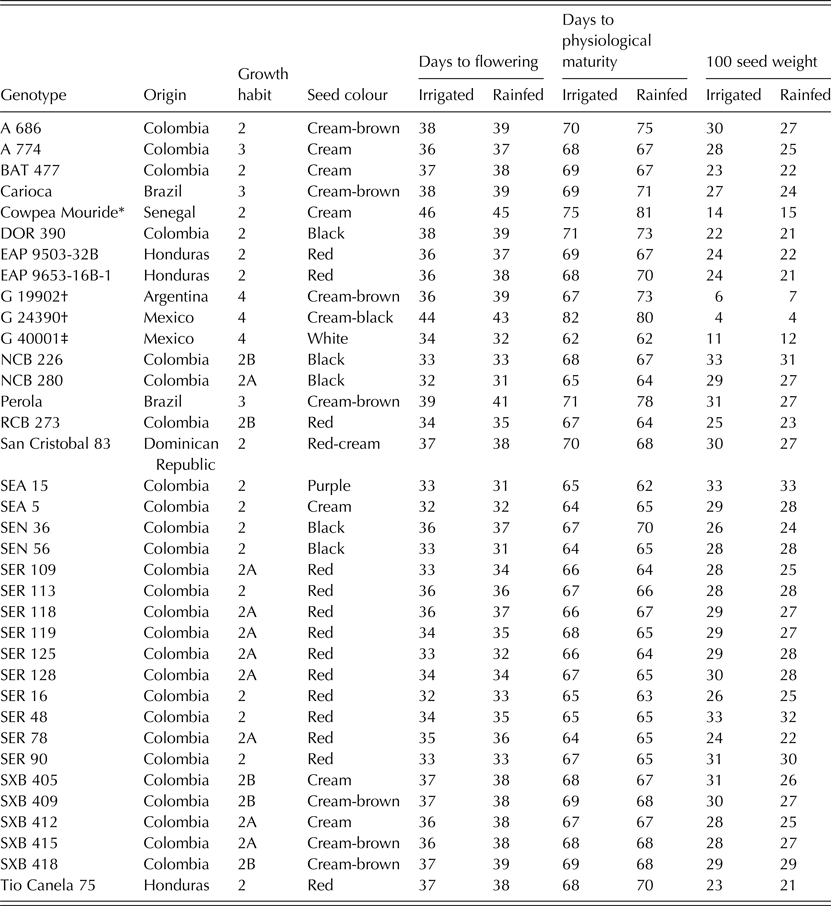
Field trials were conducted at Centro Internacional de Agricultura Tropical (CIAT)-Palmira over three seasons of 2007, 2008 and 2009 (June–September) to determine genotypic differences in tolerance to drought stress conditions. Each trial included 36 genotypes (Table 1). SEA 5 and BAT 477 were included as drought-resistant controls and Tio Canela 75 and DOR 390 were included as drought-sensitive controls based on previous evaluations (Rao et al. Reference Rao, Beebe, Polania, Ricaurte, Cajiao, García and Rivera2013). All the genotypes except cowpea cvar Mouride belong to the Mesoamerican gene pool. Cowpea cvar Mouride was included as a control to compare the level of drought resistance in common bean. Details on origin, growth habit, seed colour, days to flowering, days to physiological maturity and 100 seed weight are listed in Table 1.
Characteristics of 36 genotypes used in the field studies

* Cowpea.
† Wild common bean.
‡ Tepary bean (P. acutifolius).
Crop environment
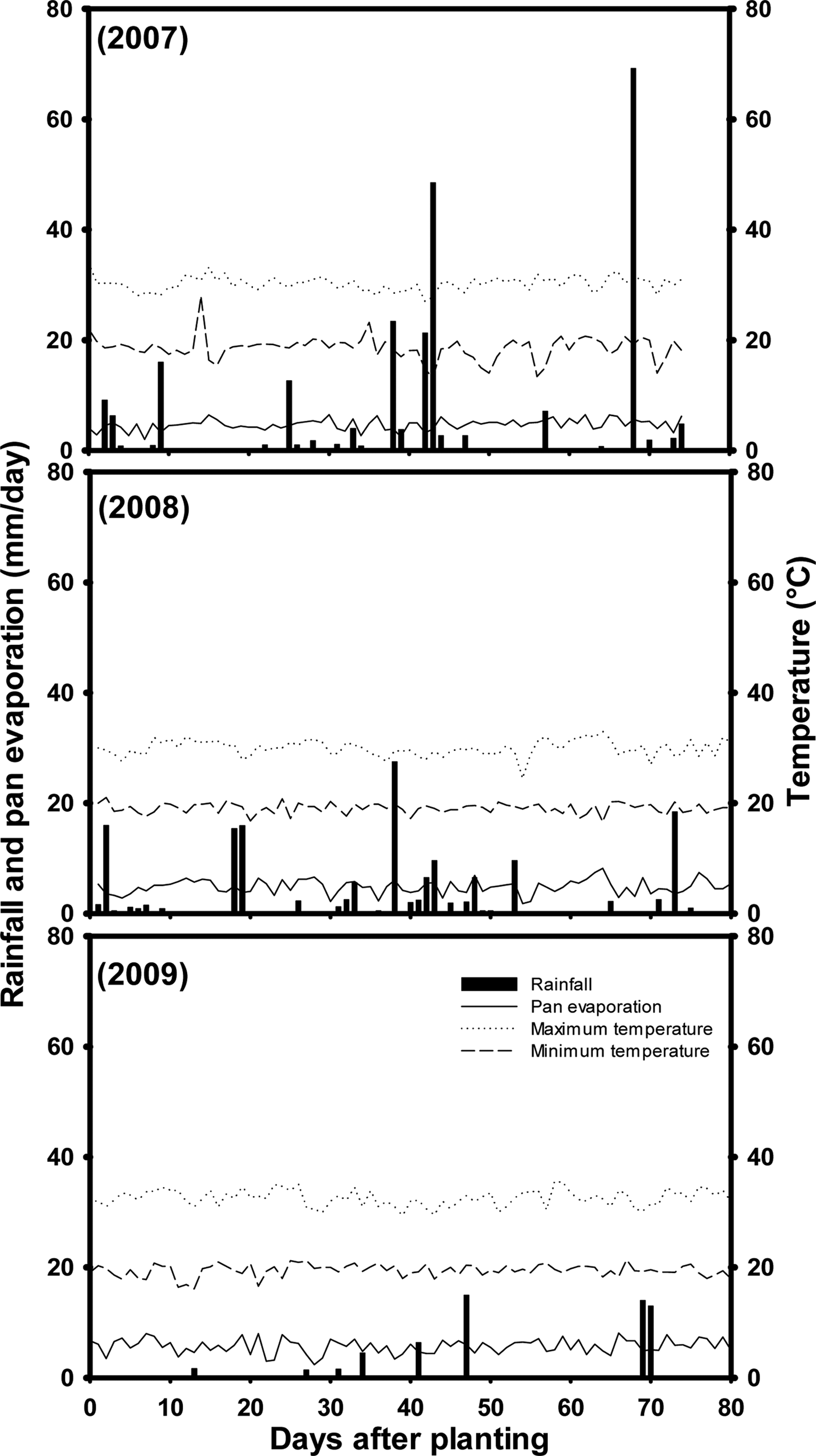
The basic characteristics of this field site (3° 29′N; 76° 21′W; 965 m asl) have already been described in Beebe et al. (Reference Beebe, Rao, Cajiao and Grajales2008). Climatic conditions including rainfall distribution, pan evaporation, maximum and minimum temperatures during the two seasons are shown in Fig. 1. The soil is a Mollisol (fine-silty, mixed, isohyperthermic Aquic Hapludoll) according to the USDA classification system (Soil Survey Staff 1999) with no major fertility problems (pH = 7·7), and is estimated to permit storage of 130 mm of available water (assuming 1·0 m of effective root growth with −0·03 MPa and −1·5 MPa as upper and lower limits for soil matric potential) (White & Castillo Reference White and Castillo1992). Soil matric potential was measured with granular matrix sensors (model Watermark 200SS, Irrometer Co., Riverside, CA) every 5 days. The Watermark sensors were positioned at different soil depths (0–10, 10–20, 20–40 and 40–60 cm) in each replication of each treatment.
Rainfall distribution, pan evaporation, maximum and minimum temperatures during crop growing period at Palmira in 2007, 2008 and 2009.

A set of 36 selected genotypes mentioned above were evaluated over three seasons using a 6 × 6 partially balanced lattice design with three replicates. Two levels of water supply (irrigated and rainfed) were applied. For the irrigated treatment, a total of four gravity irrigations (approximately 35 mm each) were applied in 2007 and 2008 and six in 2009, while for the rainfed treatment only two irrigations were applied to assure good crop establishment (one before planting and another at 24 days after planting) in 2007 and 2009 and three irrigations in 2009. Experimental units consisted of four rows of 3·72 m long × 0·6 m wide with 7 cm between plants in each row. Details on planting and management of the trial were similar to those reported previously (Beebe et al. Reference Beebe, Rao, Cajiao and Grajales2008). Trials were not fertilized but weeded and sprayed with insecticides and fungicides following standard practices to obtain normal growth. Fungicide applications included weekly applications of 1·25 g/l benomyl (methyl 1-(butylcarbomoyl) 2-benzimidazolecarbamate) at the base of plants to reduce infection of root pathogens during the first 2–3 weeks after planting. Growth habit was recorded according to Singh (Reference Singh1982) during flowering and verified at the end of physiological maturity. Days to flowering (defined as the number of days after planting until 50% of the plants have at least one open flower) and days to physiological maturity (the number of days after planting until 50% of plants have at least one pod losing its green pigmentation) were determined for each plot. The drought response index was calculated for each drought type (intermittent and terminal) as an indicator of level of drought resistance, as described previously (Vadez et al. Reference Vadez, Hash, Bidinger and Kholova2012), using values of days to flowering under irrigated conditions for every individual plot and yield potential as an arithmetic mean of grain yield under irrigated conditions across replications.
Agronomic and physiological measurements
To determine genotypic variation in drought resistance, agronomic and physiological measurements were made at mid-pod filling growth stage and also at harvest time under both rainfed and irrigated conditions, according to the protocols described by Beebe et al. (Reference Beebe, Rao, Blair and Acosta-Gallegos2013). A row length of 0·5 m (0·3 m2) from each plot was selected at mid-pod filling growth stage for destructive sampling to determinate leaf area index, canopy biomass and shoot total non-structural carbohydrate concentration. SPAD chlorophyll meter readings (SCMR), canopy temperature, and canopy temperature depression were measured on fully expanded leaves. Leaf chlorophyll content was measured using a non-destructive, hand-held chlorophyll meter (SPAD-502 Chlorophyll Meter, Minolta Camera Co., Ltd., Japan). The results were expressed as SPAD units. Canopy and ambient temperature difference was measured with a Telatemp model AG-42D infrared thermometer, which measures canopy temperature and canopy temperature depression. The measurements were taken after midday (13·00–14·00 h) on clear, sunny days with minimal wind by holding the instrument at a 45° angle at 50 cm from the canopy surface.
At harvest, a row length of 0·5 m from each plot was selected to quantify dry weights of stem biomass, pod biomass and seed biomass as well as seed number per plant, pod number per plant, pod number per unit area, seed number per unit area, and 100 seed dry weight. After discarding the end plants, the two central rows of each plot were used to determine grain yield. Stem biomass reduction (mobilization of photosynthate reserves) was determined based on the difference in stem dry weight at harvest from the stem dry weight at mid-pod filling. Harvest index (dry weight of seed at harvest/dry weight of total biomass at mid-podfill × 100) was determined. Pod partitioning index (dry weight of pods at harvest/dry weight of total biomass at mid-podfill × 100), pod harvest index (dry weight of seed at harvest/dry weight of pod at harvest × 100), grain yield per day (grain yield/days to physiological maturity), seed production efficiency (seed number per unit area/dry weight of total biomass at mid-podfill) and pod production efficiency (pod number per unit area/dry weight of total biomass at mid-podfill) were also determined.
Statistical analysis
All data were analysed using the SAS (v 9·0) general linear model (GLM) procedure. Since the shoot traits were measured in different units, the principal component analysis (PCA) was performed based on the correlation matrix using the PRINCOMP (principal components) procedure from SAS (SAS 2012). The adjusted means for each genotype and the environment (irrigated and rainfed) were obtained using the mixed models theory together with the MIXED procedure, considering the effects of replication and blocks within replications as random and genotypes as fixed. The proportion of the total sums of squares accounted for genotype × environment interaction for each trait was obtained from a combined analysis of variance conducted with the GLM procedure. The resulting data matrix for each environment was analysed by PCA. Additionally a factor analysis was conducted, using the PROC FACTOR (using PCA) procedure, to reduce the large number of traits to a limited number. Correlation coefficients were calculated by the PROC CORR.
RESULTS
Soil, temperature, rainfall and evaporation
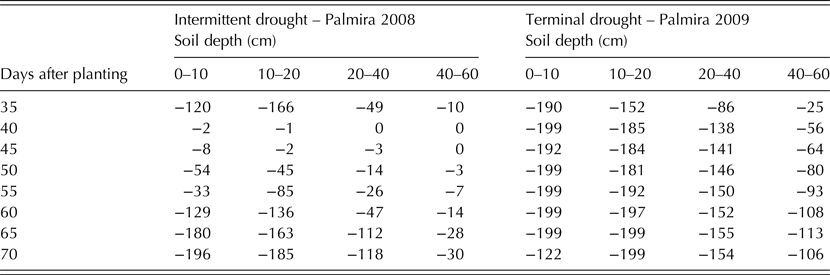
The data on total rainfall and pan evaporation together with rainfall distribution (Fig. 1) and soil matric potential (Table 2) showed that the crop suffered intermittent drought stress during active growth and development in 2007 and 2008 and terminal drought stress in 2009. During the crop-growing season, maximum and minimum air temperatures were 30·2 and 18·6 °C in 2007, 33·0 and 16·6 °C in 2008, and 35·5 and 16·1 °C in 2009, respectively (Fig. 1). Incident solar radiation ranged from 11·2 to 25·1 MJ/m2/day in 2007, 9·1 to 23·6 MJ/m2/day in 2008 and 11·7 to 25·7 MJ/m2/day in 2009. The total rainfall during the crop-growing season (from planting to harvest time) was 235·6 mm in 2007, 160·7 mm in 2008 and 58·7 mm in 2009. The pan evaporation was 316·2 mm in 2007, 390·9 mm in 2008 and 462·5 mm in 2009. Soil matric potential measurements at 65 days after planting in 2008 during intermittent drought stress reached the values of −163 kPa at 10–20 cm soil depth and −28 kPa at 40–60 cm soil depth, while in 2009 during terminal drought the values were −199 kPa at 10–20 cm and −113 kPa at 40–60 cm soil depth (Table 2). In the case of terminal drought the availability of soil water is known to decrease progressively leading to premature plant death while intermittent drought comprises finite periods of inadequate water occurring at one or more intervals during the growing season (Neumann Reference Neumann2008).
Soil matric water potential (Ψ) in kPa measured with granular matrix sensors (Watermark 200SS) under rainfed conditions in a Mollisol at Palmira

Analysis of variance
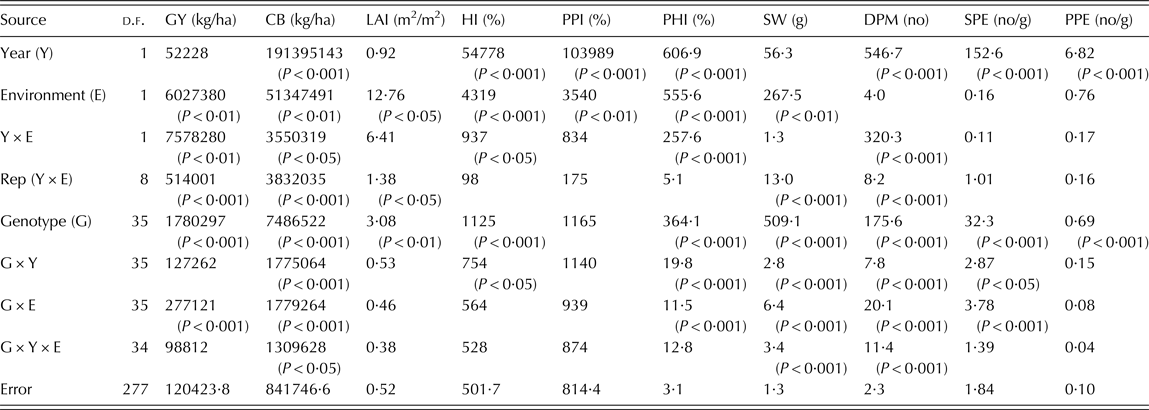
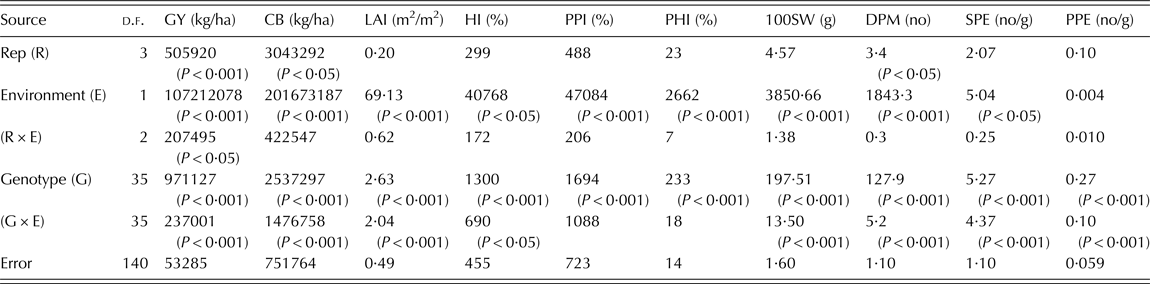
Analysis of variance (ANOVA) for all traits is shown in Tables 3 and 4 for intermittent and terminal drought stress, respectively. Grain yield was highly influenced by genotype and genotype × environment under both types of drought stress. Under intermittent drought stress, genotypic effects were detected for all traits listed except pod partitioning index, while genotype × year effects were highly significant (P < 0·001) for canopy biomass, pod harvest index, 100 seed weight and days to physiological maturity (Table 3). The genotype × year × environment interaction effects were highly significant (P < 0·001) for 100 seed weight and days to physiological maturity. Under terminal drought stress, genotypic effects were detected for all traits, while genotype × environment effects were highly significant (P < 0·001) for grain yield, canopy biomass, leaf area index, days to physiological maturity, seed production efficiency and pod production efficiency (Table 4).
Mean squares for different plant traits including grain yield (GY), canopy biomass (CB), leaf area index (LAI), harvest index (HI), pod partitioning index (PPI), pod harvest index (PHI), 100 seed weight (SW), days to physiological maturity (DPM), seed production efficiency (SPE) and pod production efficiency (PPE) of 36 genotypes grown under irrigated or rainfed (intermittent drought stress) conditions in a Mollisol at Palmira over two seasons (2007; 2008)

Mean squares for different plant traits including grain yield (GY), canopy biomass (CB), leaf area index (LAI), harvest index (HI), pod partitioning index (PPI), pod harvest index (PHI), 100 seed weight (SW), days to physiological maturity (DPM), seed production efficiency (SPE) and pod production efficiency (PPE) of 36 genotypes grown under irrigated or rainfed (terminal drought stress) conditions in a Mollisol at Palmira in one season (2009)

Grain yield
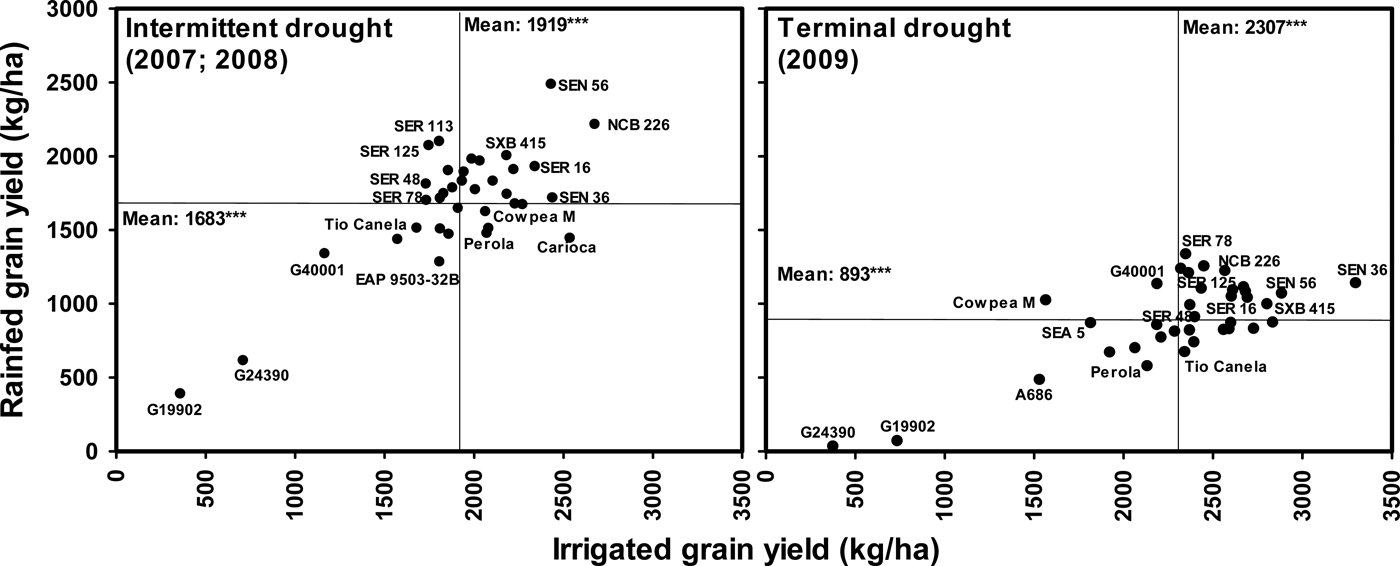
The mean grain yield under intermittent drought conditions (2007, 2008) was 1683 kg/ha compared with the mean irrigated grain yield of 1919 kg/ha, a reduction in grain yield by drought stress of 12%; and the mean grain yield under terminal drought conditions (2009) was 893 kg/ha compared with the mean irrigated grain yield of 2307 kg/ha, a reduction in grain yield by drought stress of 61% (Fig. 2). Under intermittent drought stress conditions in the field, the grain yield of 36 genotypes ranged from 385 to 2485 kg/ha; and under terminal drought conditions, the values of grain yield ranged from 28 to 1332 kg/ha. Among the lines tested, five lines (SEN 56, NCB 226, SER 113, SER 125 and SXB 415) were outstanding in their adaptation to intermittent drought conditions. Three lines (NCB 226, SXB 415 and SEN 56) were also found to be responsive to irrigation (Fig. 2). Two wild bean germplasm accessions, G 19902 (Andean wild bean germplasm accession) and G 24390 (MesoAmerican wild bean germplasm accession) were very low-yielding under both irrigated and rainfed conditions (Fig. 2). Under terminal drought conditions, five lines (SER 78, SER 128, SEA 15, NCB 280 and NCB 226) were outstanding in their values of grain yield. Three lines (NCB 226, SER 128 and SER 78) were also found to be responsive to irrigation (Fig. 2). As observed with intermittent drought stress, two wild bean germplasm accessions, G 19902 and G 24390, were very low yielding under both irrigated and rainfed conditions (Fig. 2).
The relationship between rainfed grain yield and irrigated grain yield when grown in a Mollisol at Palmira. Genotypes that yielded superior with rainfed conditions and were also responsive to irrigation were identified in the upper, right hand quadrant.

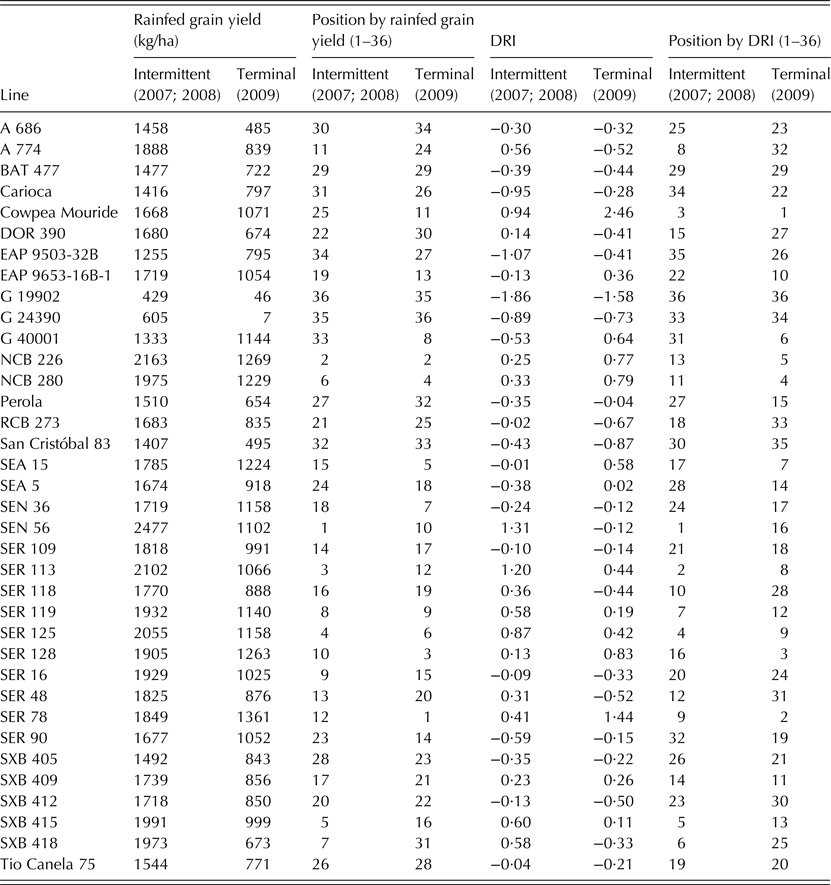
Results on the analysis of drought response index showed that the lines SER 113, SEN 56, cowpea cvar Mouride, SXB 418, SXB 415, SER 125, A 774, SER 119, SER 78 and SER 118 were resistant to intermittent drought with higher values of drought response index, while EAP 9503-32B, G 24390, Carioca and G 19902 were highly sensitive to intermittent drought with lower values of drought response index. Under terminal drought stress the lines cowpea cvar Mouride, SER 78, SER 128, NCB 226, NCB 280, SER 125, SEA 15, SER 113, SXB 409 and G 40001 were superior in their resistance to drought with higher values of drought response index, while G 24390, SXB 418, A 774, RCB 273, San Cristóbal 83 and G 19902 were highly sensitive with lower values of drought response index (Table 5).
Grain yield and drought response index (DRI) of 36 advanced lines under two types of drought in a Mollisol at Palmira

Canopy biomass and canopy temperature depression
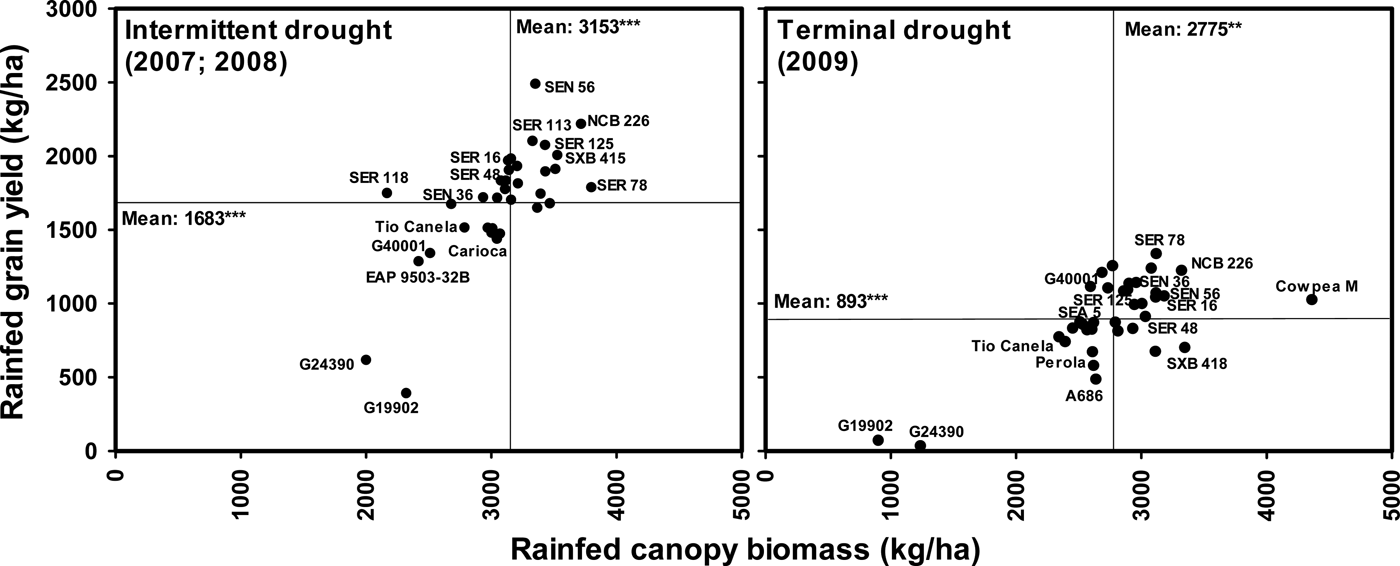
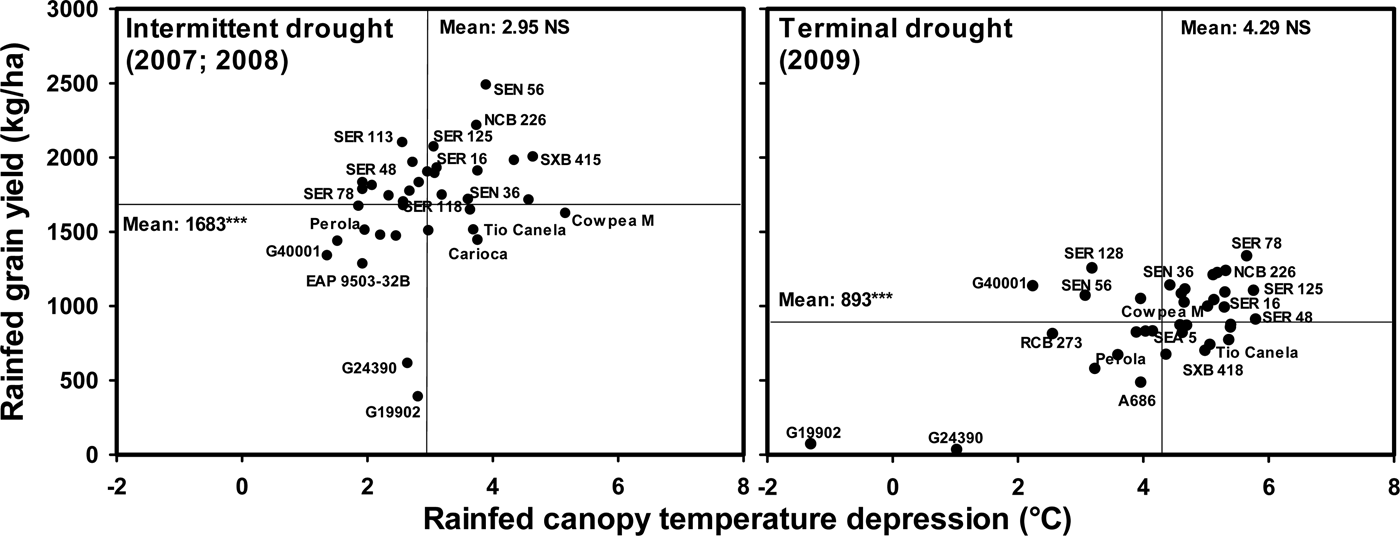
Under intermittent and terminal drought conditions, significant (P < 0·01) genotypic differences were observed in canopy biomass production at the mid-pod filling growth stage (Fig. 3). Cowpea cvar Mouride showed significantly (P < 0·05) greater shoot vigour than the common bean lines, especially under intermittent drought conditions. Among genotypes of P. vulgaris tested, NCB 226, SER 128, SER 78, SXB 412 and SXB 415 were outstanding in canopy biomass production under intermittent drought conditions (Fig. 3). Five lines, NCB 226, SEN 56, SER 113, SER 78 and SXB 418, showed greater values of canopy biomass than the other lines tested under terminal drought conditions (Fig. 3). The two wild accessions (G 19902 and G 24390) presented the lower values of canopy biomass and also grain yield under both intermittent and terminal drought conditions (Fig. 3). SEN 56 and NCB 226 combined greater values of canopy temperature depression with higher grain yield values under intermittent drought stress while SER 78 and NCB 226 did the same under terminal drought stress (Fig. 4).
The relationship between rainfed grain yield and rainfed canopy biomass when grown in a Mollisol at Palmira. Genotypes with higher values of seed yield and canopy biomass under rainfed conditions were identified in the upper, right hand quadrant.

The relationship between rainfed grain yield and rainfed canopy temperature depression when grown in a Mollisol at Palmira. Genotypes with higher values of grain yield and canopy temperature depression (CTD) were identified in the upper, right hand quadrant. NS, not significant.

Photosynthate mobilization: pod partitioning index, pod harvest index, harvest index and grain yield
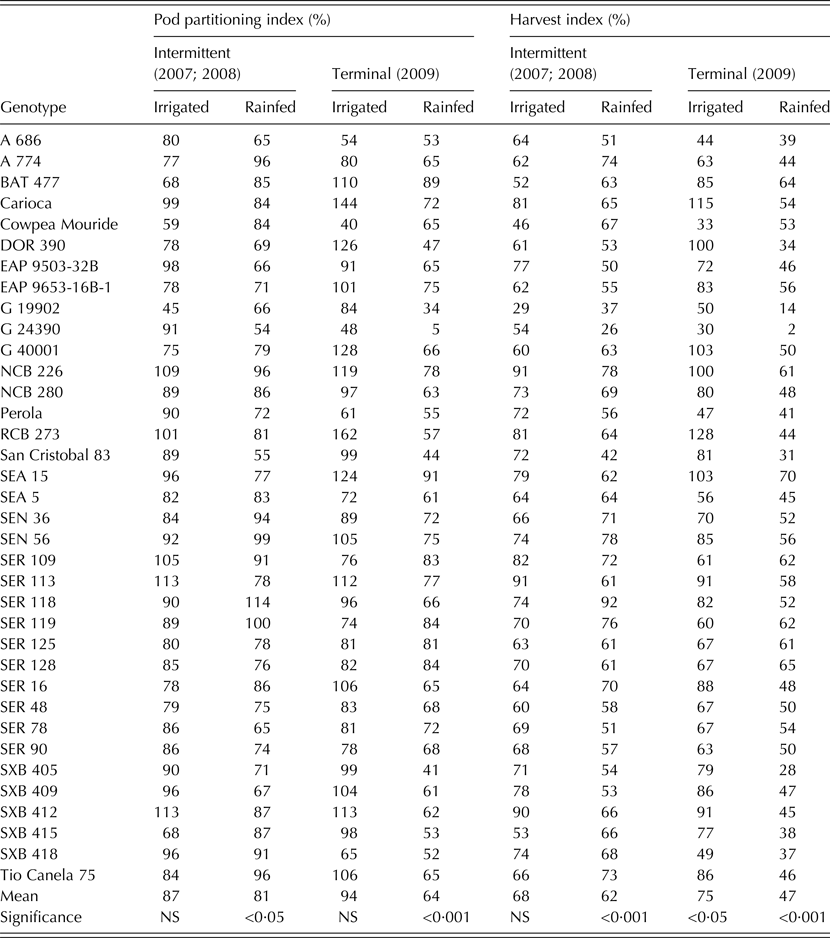
Five elite lines (SER 118, SER 119, SER 109, SEN 56 and NCB 226) that yielded well under intermittent drought conditions showed higher values of pod partitioning index (Table 6). Under intermittent drought conditions, the line SER 118 was outstanding in its pod partitioning index and harvest index values but it had lower canopy biomass production under rainfed conditions (Table 6, Fig. 3). In contrast to SER 118, cowpea cvar Mouride showed intermediate value of pod partitioning index. It is important to note that under intermittent drought conditions the pod partitioning index values may be somewhat over-estimated in this field evaluation because the canopy biomass values used were at the mid-pod filling growth stage and these values may have further increased under intermittent drought stress. This is because of possible additional vegetative growth after mid-pod filling due to rainfall. Under terminal drought conditions, seven advanced lines (NCB 226, SER 109, SER 113, SER 119, SER 125, SER 128 and SEN 56) were superior in their ability to partition photosynthetically assimilated carbon to pods, as reflected by higher values of pod partitioning index (Table 6). SEA 15 showed an exceptional ability in harvest index value under terminal drought stress (Table 6).
Differences in pod partitioning index (%) and harvest index (%) of 36 genotypes grown under two seasons of intermittent (2007; 2008) or one season of terminal (2009) drought stress conditions in a Mollisol at Palmira. NS, not significant

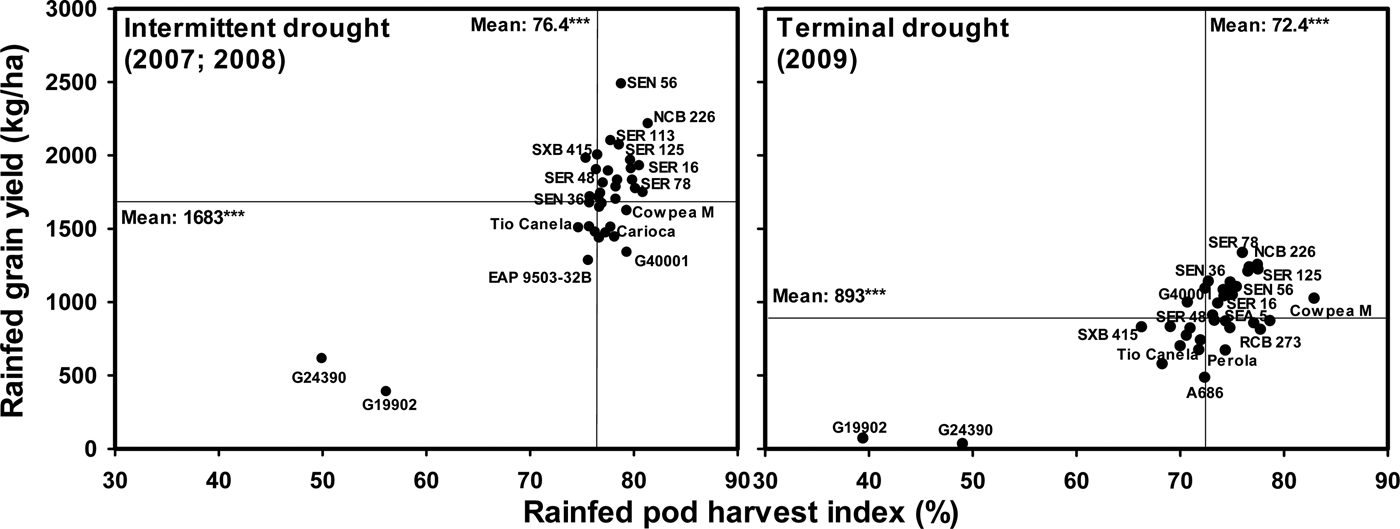
Results under intermittent drought conditions indicated that one small-seeded black line (NCB 226) and two small-seeded red lines (SER 118 and SER 128) were superior in their pod harvest index values (Fig. 5). The pod harvest index values of the two wild bean accessions (G 19902 and G 24390) were markedly lower than that of other bean genotypes under both intermittent and terminal drought stress conditions.
The relationship between rainfed grain yield and rainfed pod harvest index when grown in a Mollisol at Palmira. Genotypes with higher values of grain yield and pod harvest index under rainfed conditions were identified in the upper, right hand quadrant.

Correlations among shoot traits
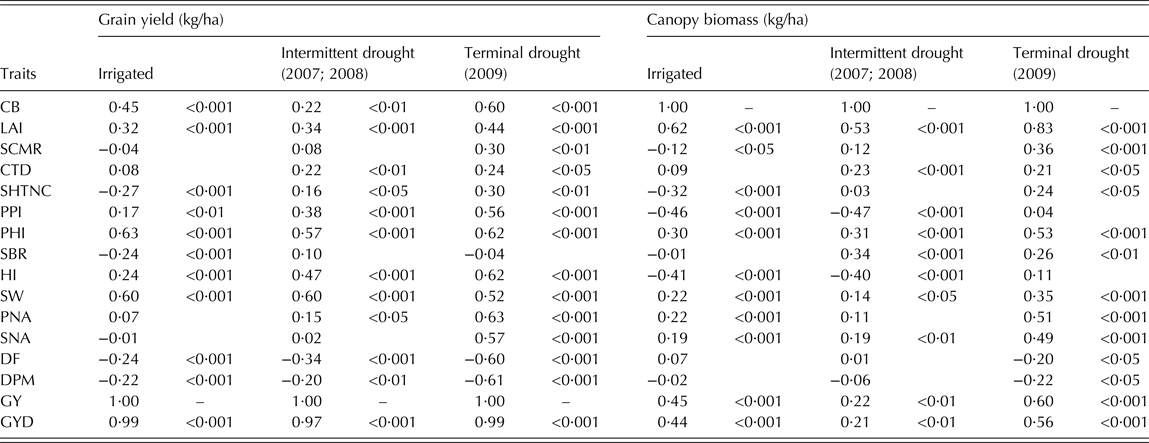
Correlation coefficients between final grain yield and other shoot traits under intermittent and terminal drought conditions showed that greater value of grain yield under terminal drought was highly and positively related to only canopy biomass, leaf area index, pod partitioning index, pod harvest index, harvest index, 100 seed weight, pod number per area and seed number per area but under intermittent drought it was highly, positively related to leaf area index, pod partitioning index, pod harvest index, harvest index and 100 seed weight (Table 7). A positive correlation was observed between shoot total non-structural carbohydrates and grain yield under terminal drought stress. Significant (P < 0·01) negative correlations were observed between rainfed grain yield and days to flowering and grain yield and days to physiological maturity under both intermittent and terminal drought conditions, but the correlations were stronger with terminal drought stress. Grain yield showed a significant (P < 0·001) correlation with leaf area index and pod harvest index under irrigated conditions (Table 7). Under terminal drought stress, canopy biomass was highly, positively related to leaf area index, pod harvest index, 100 seed weight, pod number per area, seed number per area and grain yield, while in the case of intermittent drought stress it was closely related to leaf area index, canopy temperature depression, pod partitioning index, pod harvest index and stem biomass reduction (Table 7). As expected, the relationship between grain yield and grain yield per day was highly significant (P < 0·001) under both terminal and intermittent drought stress.
Correlations of grain yield and canopy biomass with different plant attributes of 36 genotypes grown under irrigated and intermittent (2007; 2008) or terminal drought (2009) conditions in a Mollisol in Palmira

CB, canopy biomass at R8; LAI, leaf area index; SCMR, SPAD chlorophyll meter reading; CTD, canopy temperature depression; SHTNC, shoot total non-structural carbohydrates; PPI, pod partitioning index; PHI, pod harvest index; SBR, stem biomass reduction; HI, harvest index; SW, 100 seed weight; PNA, pod number per unit area; SNA, seeds number per unit area; DF, days to flowering; DPM, days to physiological maturity; GY, grain yield; GYD, grain yield per day.
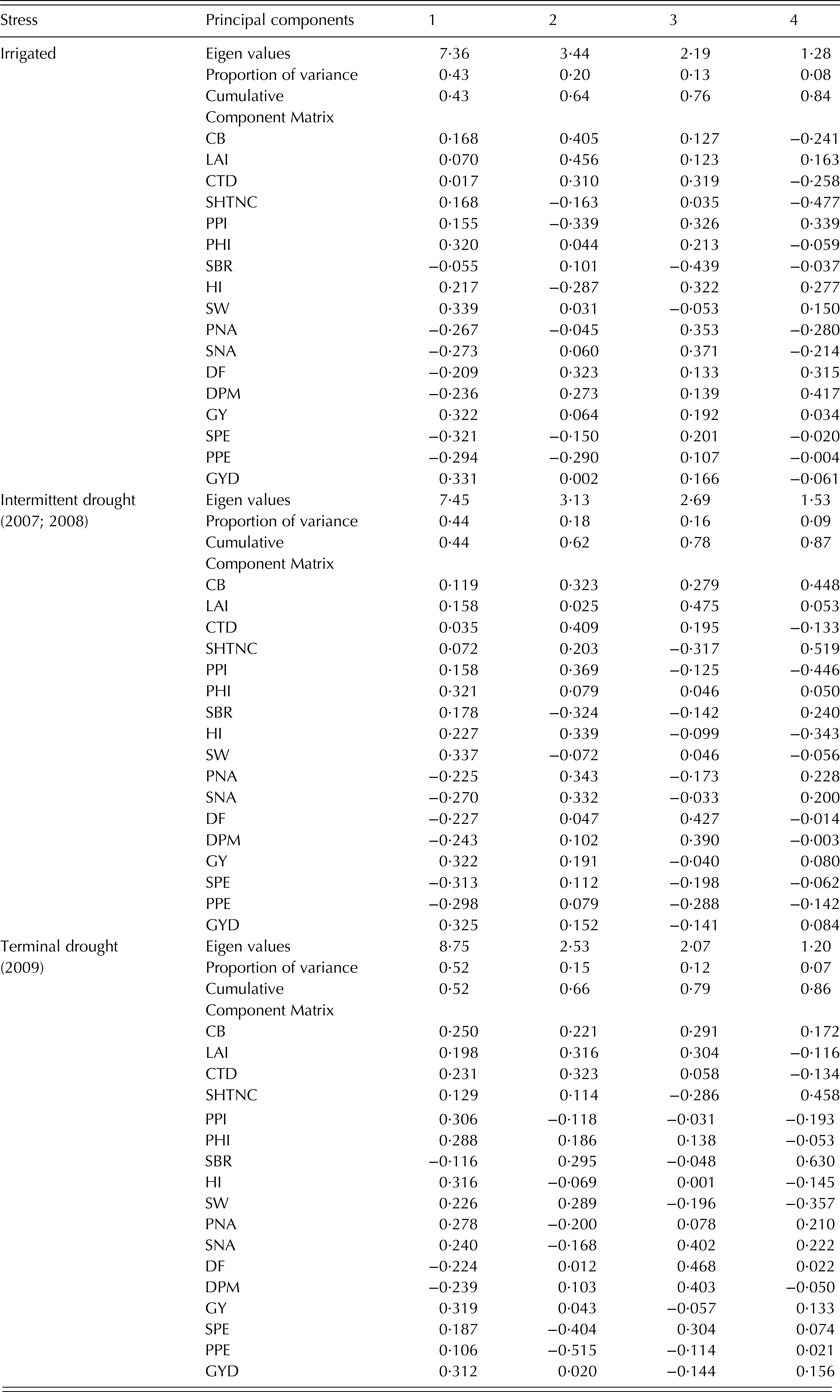
Multivariate analysis of plant traits and their association with grain yield
PCA measures the importance and contribution of each component to total variance. It can be used for measurement of independent impact of a particular trait to the total variance, whereas each coefficient of proper vectors indicates the degree of contribution of every original variable with which each principal component is associated. The higher the coefficients, regardless of the sign (positive or negative), the more effective they will be in influencing the yield. The PCA showed that under irrigated, intermittent and terminal drought conditions, grain yield was associated primarily with days to flowering, days to physiological maturity, harvest index, pod partitioning index, pod harvest index, pod number per unit area and seed number per unit area (Table 8). Grain yield was associated with stem biomass reduction under intermittent drought and with canopy biomass under terminal drought. Surprisingly, grain yield under irrigated and intermittent drought conditions was associated with lower numbers of pod and seeds per unit area. Under terminal drought conditions, grain yield was associated primarily with shorter days to flowering and days to physiological maturity, seed number per unit area, pod number per unit area, harvest index, pod partitioning index, pod harvest index, canopy temperature depression, leaf area index and canopy biomass (Table 8). Principal component analysis also showed that while earliness contributed to superior performance under rainfed conditions, the formation of pods and seeds was not the factor limiting grain yield. It was rather the ability to fill seeds as reflected by the significant positive associations between grain yield and pod harvest index.
Eigen values and per cent of total variation and component matrix for the principal component axes – irrigated and drought

CB, canopy biomass at R8; LAI, leaf area index; CTD, canopy temperature depression; SHTNC, shoot total non-structural carbohydrates; PPI, Pod partitioning index; PHI, pod harvest index; SBR, stem biomass reduction; HI, Harvest index; SW, 100 seed weight; PNA, pod number per unit area; SNA, seeds number per unit; DF, days to flowering; DPM, days to physiological maturity; GY, grain yield k ha; SPE, Seed production efficiency; PPE, Pod production efficiency; GYD, Grain yield per day.
DISCUSSION
Identification of drought-resistant elite lines
Drought-stress effects were principally of two types: terminal (occurring during the grain filling growth period) and intermittent (occurring on and off but especially around the vegetative to early reproductive period of plant development). Analysis of the physiological basis of enhanced grain yield among elite lines under drought stress is important as a guide to further breeding efforts, both from the improvements that have already occurred and other modifications still to be exploited. It also provides a basis for simulation modelling of crop response to drought stress. The identification of grain yield-related physiological selection traits (as distinct from morphological or visual ones) has been of great interest to physiologists and breeders. Adaptation to drought encompasses a diversity of mechanisms that enable plants to survive and produce in periods of dry weather (Sinclair & Purcell Reference Sinclair and Purcell2005). Many drought adaptation traits – such as phenology, root size and depth, hydraulic conductivity and the storage of reserves – are associated with plant development and structure and are constitutive rather than stress-induced (Chaves et al. Reference Chaves, Maroco and Pereira2003). Condon et al. (Reference Condon, Richards, Rebetzke and Farquhar2004) suggested that the consequences of various plant traits and environmental conditions have to be evaluated in the specific field environments in which the crop is to be grown. Blum (Reference Blum2005) indicated that an effective drought-tolerance mechanism in crop plants is stem reserve utilization for grain filling under drought stress. The present study provides evidence for genotypic differences among elite lines of common bean in the ability to remobilize photosynthate to increase yield under both intermittent and terminal drought stress. Based on the phenotypic analysis from the present study, it appears that two phenological traits (days to flowering, days to physiological maturity) and one photosynthate remobilization trait (pod harvest index) could be considered as constitutive rather than stress-induced.
Drought stress is reported to cause yield reduction in common bean ranging from 47 to 69% compared to the non-stress conditions (Urrea et al. Reference Urrea, Yonts, Lyon and Koehler2009). Results from the present study allowed comparisons of the response of 36 bean genotypes to two types of drought stress, intermittent and terminal. Marked genotypic differences were found in drought resistance and three elite lines were identified (NCB 226, SEN 56, SER 125) that are adapted to both types of stress, while one elite line (SER 113) was better adapted to intermittent type of drought stress. Genotypes that showed better adaptation under intermittent but not under terminal drought stress may still have some of the attributes of wild bean that maintain vegetative growth at the expense of grain yield (Beebe et al. Reference Beebe, Rao, Devi and Polania2014). Thus, it is important to overcome the ancestral trait of delayed seed production to improve resistance to terminal drought in common bean.
Relationship of canopy temperature depression with grain yield in elite lines
Previous research on common bean identified earliness and deep rooting as useful plant traits for drought avoidance in common bean (Beebe et al. Reference Beebe, Rao, Blair and Acosta-Gallegos2013). Relatively lower canopy temperature under drought stress could indicate a relatively better capacity for taking up soil moisture and for maintaining a relatively better plant water status. But if canopy temperature depression reflects continued transpiration, it can be a poor indicator of resistance to drought if amounts of soil-stored water are limited and are exhausted through transpiration. Under intermittent drought conditions the line SXB 415, Cowpea cvar Mouride, Tio Canela and Carioca showed higher values of canopy temperature depression indicating greater rates of transpirational water loss (Fig. 4). In the same conditions, NCB 226, SER 125 and SEN 56 combined above average values of canopy temperature depression with higher values of grain yield while Carioca and Tio Canela yielded poorly. Under terminal drought conditions, the elite lines SER 78, NCB 226, SER 125, SER 16 and SER 48 also combined higher grain yield with higher values of canopy temperature depression, while SER 128 and SEN 56 presented lower values of canopy temperature depression and good yield. Canopy temperature depression was a poor indicator of drought resistance for Tio Canela under both intermittent and terminal drought stress conditions.
Devi et al. (Reference Devi, Sinclair, Beebe and Rao2013) tested some selected bean lines and found that superior drought-resistant lines expressed more sensitive stomatal control of transpiration rate, reducing water loss at moderate levels of stress and thus conserving water for use as the severity of the drought stress increases. Several lines tested in the present study also showed only moderate levels of leaf cooling in the field as reflected in their canopy temperature depression in relation to ambient temperature, while drought-sensitive lines expressed above average values of leaf cooling. This observation is consistent with more efficient stomatal control in some drought-resistant lines such as SER 128 and SEN 56 that contributes to conserving soil moisture to cope with late season terminal drought-stress conditions. Thus it is important to identify which genotypes are resisting drought by combining mechanisms such as photosynthate mobilization with effective water use (e.g., SEN 56, SER 125), and which genotypes are using deeper roots to maintain higher values of canopy temperature depression but were not effective in using water to produce greater grain yield under rainfed conditions (e.g., Carioca, Tio Canela).
Increase in photosynthate mobilization to improve grain yield under drought
Drought is known to reduce harvest index and yield in bean plants by interfering with pod development and seed filling. Many studies in the literature on common bean highlight the role of harvest index in maintaining yield under drought (Rao Reference Rao and Pessarakli2001; Habibi Reference Habibi2011; Beebe et al. Reference Beebe, Rao, Blair and Acosta-Gallegos2013, Reference Beebe, Rao, Devi and Polania2014; Rao et al. Reference Rao, Beebe, Polania, Ricaurte, Cajiao, García and Rivera2013; Polania et al. Reference Polania, Rao, Cajiao, Rivera, Raatz and Beebe2016). Rao et al. (Reference Rao, Beebe, Polania, Ricaurte, Cajiao, García and Rivera2013) identified three plant attributes that could be associated with harvest index and that could be useful to analyse the physiological basis of drought resistance. Genotypic differences in these three traits could indicate the extent of photosynthate mobilization through sink strength (pod partitioning index), stem reserve mobilization (stem biomass reduction) and grain filling (pod harvest index) (Rao et al. Reference Rao, Beebe, Polania, Ricaurte, Cajiao, García and Rivera2013). Pod partitioning index is useful to assess the genotypic differences in sink strength. The measure of stem biomass reduction at harvest relative to stem biomass at mid-pod filling indicates the extent of stem reserve mobilization to grain filling. The measure of pod harvest index at harvest indicates the extent of photosynthate mobilization from pod walls and stems to grain and correlates with drought yield (Rao et al. Reference Rao, Beebe, Polanía, Grajales, Cajiao, García, Ricaurte and Rivera2009, Reference Rao, Beebe, Polania, Ricaurte, Cajiao, García and Rivera2013; Klaedtke et al. Reference Klaedtke, Cajiao, Grajales, Polania, Borrero, Guerrero, Rivera, Rao, Beebe and Léon2012; Polania et al. Reference Polania, Rao, Cajiao, Rivera, Raatz and Beebe2016). The role of photosynthate remobilization in improving drought resistance has been confirmed with the use of carbon isotopes (Cuellar-Ortiz et al. Reference Cuellar-Ortiz, Arrieta-Montiel, Acosta-Gallegos and Covarrubias2008). More recently, levels of several biochemical components of the grain, including starch, total soluble sugars and amino acids were shown to be strongly positively correlated with grain yield under drought and irrigated conditions (Andrade et al. Reference Andrade, Ribeiro, Azevedo, Chiorato, Williams and Cabonell2016).
Several bred lines were superior in their values for harvest index compared to the two commercial controls (Tio Canela and DOR 390). A comparison between a small black-seeded bred line (NCB 226) with the small black-seeded control (DOR 390) shows that with a similar amount of canopy biomass at mid-pod filling growth stage, NCB 226 produced more grain due to very high values of harvest index, indicating the importance of mobilization of photosynthates to grain during drought stress. Results on photosynthate partitioning indices (harvest index, pod partitioning index and pod harvest index) indicate that enhanced photosynthate mobilization contributed to greater values of grain yield under both types of drought as reflected by the significant positive associations between grain yield and harvest index, pod partitioning index, pod harvest index and 100 seed weight under drought conditions. Significant positive correlations were observed of grain yield under the drought condition with grain yield under the irrigated condition and grain yield and harvest index under drought, confirming previous reports (Szilagyi Reference Szilagyi2003; Klaedtke et al. Reference Klaedtke, Cajiao, Grajales, Polania, Borrero, Guerrero, Rivera, Rao, Beebe and Léon2012; Beebe et al. Reference Beebe, Rao, Blair and Acosta-Gallegos2013; Rao et al. Reference Rao, Beebe, Polania, Ricaurte, Cajiao, García and Rivera2013; Polania et al. Reference Polania, Rao, Cajiao, Rivera, Raatz and Beebe2016). The very low values of pod harvest index in the two wild bean accessions suggest that domestication has dramatically increased the accumulation of photosynthates in pods and grains, and that poor values of pod harvest index in some domesticated bean lines could reflect a residual influence of genes from the wild ancestor that could contribute to survival mechanisms rather than to improved drought resistance (Beebe et al. Reference Beebe, Rao, Cajiao and Grajales2008).
Genetic analysis confirmed that selection for enhanced photosynthate remobilization under drought has a correlated positive effect on unstressed yield (Assefa et al. Reference Assefa, Beebe, Rao, Cuasquer, Duque, Rivera, Battisti and Lucchin2013). Experience in breeding beans for improving adaptation to drought suggests that similar physiological mechanisms contribute to yield improvement under both stress and ‘favourable’ conditions. While many authors cite the importance of harvest index for drought resistance of beans, increasing evidence suggests that this is a reflection of fundamental physiological processes that contribute to yield improvement even under constraints of soil fertility (Beebe et al. Reference Beebe, Rao, Cajiao and Grajales2008, Reference Beebe, Rao, Devi and Polania2014).
Rapid photosynthate remobilization during drought improves yield per day in elite lines
Significant negative associations between grain yield and days to flowering and days to physiological maturity indicate that earliness has contributed to superior performance under rainfed conditions under both types of drought stress. Early maturity is the most common escape mechanism and cultivars with this strategy are favoured by many farmers, at least in part to minimize exposure to terminal drought (White & Singh Reference White and Singh1991), as with the extra early common bean cultivar ‘ICTA Ligero’ in Guatemala. However, each day of reduced growth cycle was estimated to reduce yield potential by 74 kg/ha (White & Singh Reference White and Singh1991). Earliness in some genotypes could contribute to decreases in pod number per unit area and seed number per unit area and reduction in grain filling period. However, with the current set of genotypes days to flowering and days to physiological maturity also presented a negative correlation with yield in irrigated conditions. This has been observed before with drought-selected materials (Beebe et al. Reference Beebe, Rao, Cajiao and Grajales2008; Klaedtke et al. Reference Klaedtke, Cajiao, Grajales, Polania, Borrero, Guerrero, Rivera, Rao, Beebe and Léon2012). Lines that were selected under drought yielded as much as 28% more than elite controls in favourable conditions (Beebe et al. Reference Beebe, Rao, Cajiao and Grajales2008). In unstressed conditions these lines were also earlier to mature than the control, demonstrating their greater efficiency: more yield in less time as revealed by higher values of grain yield per day.
Several drought-adapted lines in the present study showed greater values of grain yield per day compared to the commercial cultivars indicating that there was no yield penalty for earliness in these improved bean lines. The current authors suggest that this was due to greater sink strength combined with enhanced photosynthate remobilization to grain. High-yielding lines had grain yield per day values ranging from 44 to 56 kg/ha/day compared with low-yielding genotypes that ranged from 2 to 25 kg/ha/day under terminal drought, suggesting that improved physiological efficiency was an important component of early, drought-resistant genotypes. An important criterion for improving drought resistance in common bean could be matching days to physiological maturity to the environmental factors and rainfall patterns (Acosta-Gallegos & Kohashi-Shibata Reference Acosta-Gallegos and Kohashi-Shibata1989; Acosta-Gallegos & White Reference Acosta-Gallegos and White1995; Beebe et al. Reference Beebe, Rao, Devi and Polania2014).
After removing the effects of drought escape (early flowering) and yield potential (optimally irrigated yield) by estimating drought response index through analysis, a relationship was observed between genotypes with higher values of grain yield under both types of drought stress (intermittent and terminal) and higher values of drought response index. This positive relationship indicates that genotypes with higher values of grain yield under drought stress are physiologically responsive to drought stress.
Contribution of photosynthate mobilization to pod and seed development
Pod and seed development is dependent upon plant water status and supply of photoassimilates imported from source leaves through the phloem and also from the remobilization of stored assimilates in the stem tissues (Blum Reference Blum2009; Patrick & Colyvas Reference Patrick and Colyvas2014). Photoassimilate supply is shown to exert significant and positive quantitative influence on the setting of grain and pod numbers because abortion rates were shown to be positively related to seed size (Lord & Westoby Reference Lord and Westoby2011). Nuñez-Barrios et al. (Reference Nuñez-Barrios, Hoogenboom and Nesmith2005) reported reductions of 63·3% in pod number per plant, 28·9% in seed number per plant and 22·3% in 100 seed weight in common bean grown under drought. Reduction in pod number during pod formation is critical and caused a loss of 40% in seed yield under drought (Castañeda-Saucedo et al. Reference Castañeda-Saucedo, Cordova-Tellez, Gonzalez-Hernandez, Delgado-Alvarado, Santacruz-Varela and García-de los Santos2009). In the present study, several lines showed favourable genotypic values for grain yield, pod number per unit area and seed number per unit area under drought and irrigated conditions, whereas the drought-sensitive lines showed poor pod development and thus smaller number of seeds per plant as drought stress continued from pod formation to physiological maturity in terminal drought stress conditions. This suggests that the pod number per unit area, followed by seed number per unit area, are the most affected yield components under drought stress (Rao et al. Reference Rao, Beebe, Ricaurte, Cajiao, Polania and Garcia2007, Reference Rao, Beebe, Polania, Ricaurte, Cajiao, García and Rivera2013; Beebe et al. Reference Beebe, Rao, Cajiao and Grajales2008; Assefa et al. Reference Assefa, Wu, Beebe, Rao, Marcomin and Claude2015). A major challenge to improve bean yield under drought stress is to identify the physiological processes responsible for imposing limitations on photoassimilate supply to, and utilization by, pods and seeds.
CONCLUSIONS
Based on the results from the current field studies over three seasons, breeding for improved drought resistance in common bean should aim to combine high values of canopy biomass production with greater photosynthate mobilization to the seed. The current data indicate that canopy biomass at mid-pod filling, pod partitioning index, stem biomass reduction and pod harvest index are four important traits to consider for improving the efficiency of breeding programmes to select superior genotypes of common bean under terminal drought stress. Further research work is needed to test the relationships between shoot and root traits in both Mesoamerican and Andean genotypes under both drought and irrigated conditions to design a breeding strategy that combines adaptation to different types of drought with commercial characteristics preferred by smallholder bean farmers to confront climate variability and change.
The authors wish to recognize the support of the German government through two restricted core grants from BMZ-GIZ (Project No. 2002·7860·6-001·00 with Contract No. 81060499; Project No. 05·7860·9-001·00 with Contract No. 81084613) and Bill and Melinda Gates Foundation (BMGF) for the Tropical Legumes II project funded through ICRISAT, India.