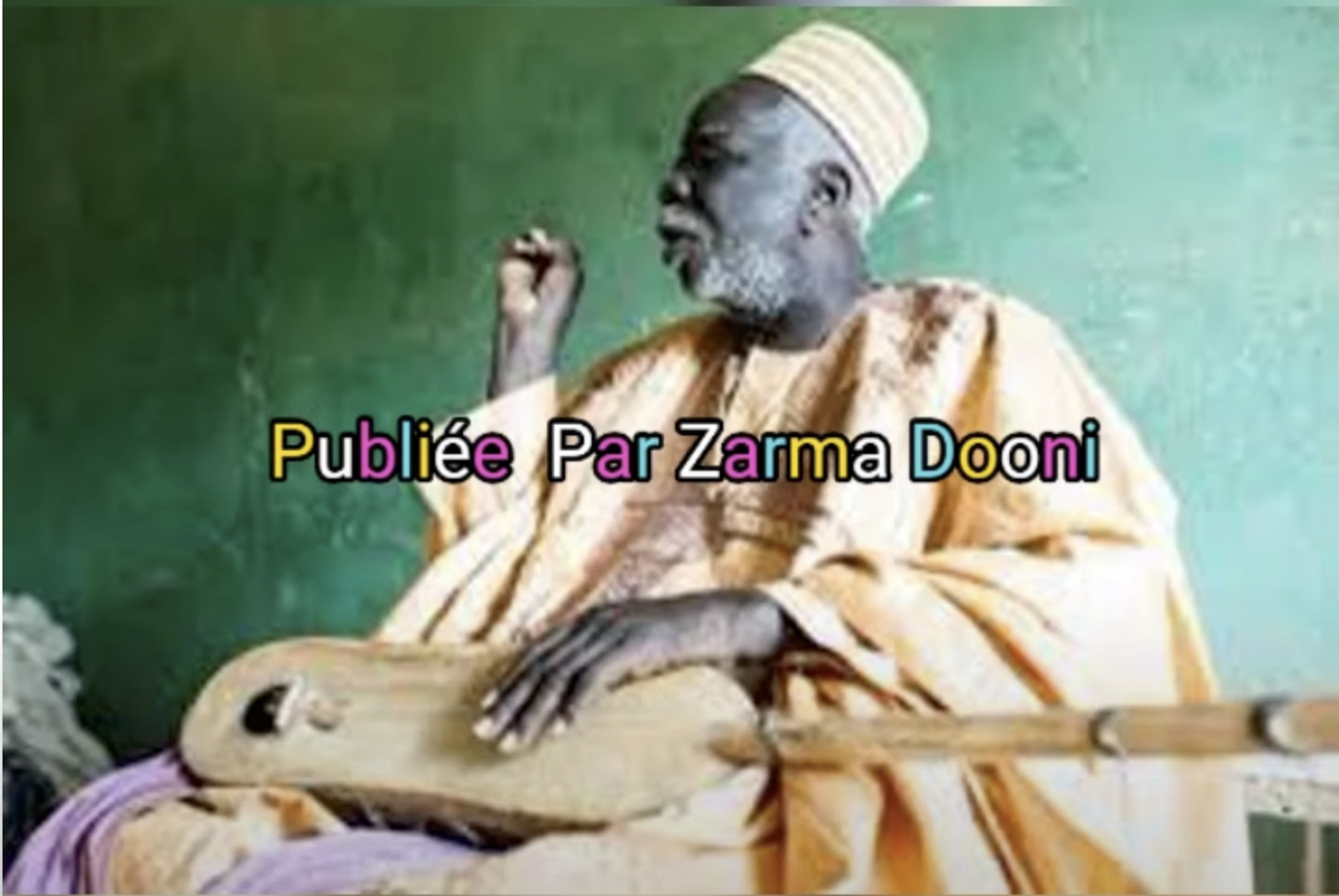
On 13 August 2022, a Nigerien artist living in France forwarded me a short video montage via WhatsApp that had been shared in a group by members of his home canton. The montage featured two photographs and a soundtrack. Despite the sped-up audio, I immediately recognized the Epic of Isa Korombe, narrated by Jibo Baaje, also known as Jeliba Baaje (Figure 1).Footnote 1 Jeliba was a renowned genealogist and historian-griot (jasare Footnote 2) from the Zarma area, with whom I collaborated from 1995 until his death in 2018. The discovery of this epic on social media was unexpected, as I was unaware of any recordings of this specific epic by Jeliba besides those I had made myself. Even more striking was the visual backdrop, which included two photographs taken by my husband during an intimate narration of this same epic, performed for a descendant of the Zarma warrior it honours. The discovery of this montage piqued my curiosity but also raised concerns: had someone shared one of my recordings, despite the promise I made to the jasare that it would remain private? I was left wondering how such material had come to circulate on social networks.
Screenshot of Marc Perret’s YouTube channel: Epic of Isa Korombe by Jeliba Baaje. Source: @ Marc Perret, 2023.

As I investigated its origins, I discovered that the full montage – fortunately not based on one of my own recordings – was first published on the Facebook page Zarma Dooni, then reposted on a popular Nigerien diaspora Facebook page, and later uploaded to a YouTube channel.Footnote 3 This situation raises significant questions about the control and management of jasare’s oral narratives in the digital age. The video’s wide reach – 65,000 views within a year of its original posting – underscores the challenges and implications of the digital dissemination of so-called traditional narratives. This montage offers a compelling example for examining how digital circulation both transforms and perpetuates jasare’s traditions. Before the advent of recording, jasare maintained strict control over their performances, tailoring narratives to a known audience and specific contexts. The strength of these performances lay in the jasare’s ability to control the reception of their narratives. The capacity to record, duplicate and share jasare’s work without their consent has undermined this control, raising questions about copyright and how to narrate without being able to manage the audience or the setting in which their stories are heard. As Ong (Reference Ong1982) suggests, this shift towards mediated orality disrupts the original relational nature of oral traditions. Since 1995, I have worked closely with jasare and I developed a long-term relationship with Jeliba, of whose archives I became the custodian. My sustained engagement with him and my role as custodian of his archives has provided me with a reflexive standpoint that enables me to engage critically with their practices and to grasp the broader logics and stakes shaping their ongoing transformations.
This article explores four key questions raised across three generations of a jasare family – a grandfather, a son, a nephew and a grandson – concerning the preservation, transformation, modification, circulation and copyright of performance. First, how can one narrate without knowing the audience? Second, which narratives are preserved, given that selection and narration depend on the interactional situation – especially the audience’s composition in ceremonial settings or during visits to aristocrats or prominent freeborn men (hereafter referred to as ‘visit context’)? Third, how can one address an undefined audience without breaching the jasare’s ethical code, which aims to avoid reigniting tensions within the Zarma community? Finally, how does copyright apply to jasare performances, particularly when these are recorded and shared beyond their original context? Aware of the differences between performances delivered in ceremonial or visit contexts and those recorded without a live audience (except for the researcher and/or a sound engineer) – but potentially listened to by anyone – the jasare have set a series of political and aesthetic strategies. These adaptative responses allow them to deal with the fixation and uncontrolled circulation of their performances, which first emerged in marketplaces and later extended to radio, television and now social media.Footnote 4 They also serve as a means of survival in a postcolonial world where relations between aristocratic familiesFootnote 5 and the jasare have gradually deteriorated – undermining their social role, symbolic authority and economic viability.
In this study, I demonstrate how each generation of a jasare family – a grandfather (Baaje BaɲɲaFootnote 6) his son (Jeliba) and his nephew (Jaado SeekuFootnote 7) – have adopted different strategies to maintain control over their repertoire by prioritizing stories featuring non-Zarma heroes. This deliberate selection allowed them to distance themselves from historical narratives while preserving their moral essence in order to maintain fragile social harmony (Bornand Reference Bornand2005; Reference Bornand2017) and ensuring their relevance in ceremonial contexts among aristocrats, who rely on jasare to assert their prerogatives over other social groups.
Jasare, memory, and patronage decline in Zarma society
Zarma societyFootnote 8 has been built on the assertion of a fundamental difference in nature between freeborn and enslaved people.Footnote 9 This distinction – still prevalent today – represents more than a difference in status: it is a deep structural dichotomy that underpins the entire social fabric, inherently legitimizing the continued dominance of freeborn groups and, among them, a few aristocratic families (Olivier de Sardan Reference Olivier de Sardan1984). Although slavery no longer exists in practice, social discrimination against descendants of enslaved people persists. This social divide remains highly prevalent in public spheres (such as the state) and private spheres (such as marriage ceremonies). However, this binary becomes a trichotomy with the inclusion of the jasare.Footnote 10 Claiming Soninke origins, they do not belong to the two primary categories. This intermediary status allows them to act, as Camara (Reference Camara1992: 178) describes for the Mandinka, as ‘arbitrators of the social game of rivalries and struggles for prestige’ and ‘eloquent publishers of everyone’s exploits’. Their position places them at the heart of Zarma society, where orality remains central, and where narratives of the past continue to justify present social hierarchy – including the ascendancy of aristocrats over commoners, and of all freeborn groups over marginal social categories.
If a jasare is born into the jasare lineage, he must undergo a lengthy and highly structured apprenticeship, typically starting as early as the age of seven. During this apprenticeship, he learns to master the three-stringed lute (moolo), a vast repertoire of memorial discourses, and the techniques for delivering these discourses in ways that produce the desired perlocutionary effects. In the precolonial era, the jasare were dedicated to preserving the historical memory of the ruling elite – specifically the aristocratic families to whom they were attached. In return, they received full support from their patrons. Their responsibilities were twofold: first, to acquire and transmit discursive and memorial skills; and second, to accompany aristocrats during public appearances and serve as tutors for their children. Memorial discourses were typically declaimed or narrated during wartime, ritual occasions such as naming ceremonies, marriages, enthronements and funerals of chiefs, as well as during visits to powerful figures or even chance encounters. This repertoire included foundation narratives, epics highlighting the heroic or extraordinary deeds of Zarma ancestors, and ‘parables’. By ‘parables’, I refer to stories that evoke themes such as friendship, love and marriage, as well as epics recounting the exploits of non-Zarma heroes. All of these promote virtuous behaviour contextualized within the Zarma or broader Nigerien framework (Bornand Reference Bornand2005; Reference Bornand2017). It is primarily these latter narratives, as we will see, that now circulate on social media platforms.
However, colonization weakened the social pact between the jasare and aristocratic families, as the latter no longer had the resources to support them. The economic and social upheavals brought about by colonial rule made it increasingly difficult for aristocratic families to maintain their traditional form of patronage. As a result, the jasare first shortened the apprenticeship process, which led to a decline in the depth and thoroughness of their knowledge transmission. Eventually, this apprenticeship was abandoned. Today, no jasare actively tell stories; only recorded versions of their predecessors’ narratives continue to circulate. Fortunately, the archiving of these recordings still allows for meaningful listening experiences.
Echoes of jasare: digital voices and the power of the visual
To better understand the growing presence of jasare narratives on social media, it is essential to consider the evolution of internet and mobile telephony in Niger. The country’s first connection was established in 1996. Over the following decade, mobile telephony emerged (Bontianti Reference Bontianti2015), and by 2019 Niger counted 11.4 million mobile phone subscribers in a population of nearly 22 million (ARCEP 2019). This led to a sharp rise in internet users, from 23,831 in 2004Footnote 11 to 5.98 million in 2023 (Kemp Reference Kemp2023). Despite this growth, only 26.2 per cent of the population has internet access. According to Kemp (Reference Kemp2023), approximately 1.8 per cent of Nigeriens are active on social media, although this figure may be affected by user duplication.Footnote 12 WhatsApp remains especially popular in both urban and rural areas due to its ease of use and its support for voice messaging in local languages – an essential feature in rural areas, where illiteracy is widespread and most children receive only primary education.
The first instance of a jasare performance shared on social media dates back to 2012, when Jaado’s only television appearance was uploaded to the NigerMix channel. In 2014, the montage I referred to at the start of the article – featuring Jeliba – was posted on the Zarma Dooni Facebook page and later on a YouTube channel administered by Marc Perret, a French-Nigerien man born in Niamey, now based in the USA. Marc is also one of the two administrators of the Facebook page and works in the field of information technology. Nearly fifteen years after leaving Niger, he began sharing various archival materials on the Zarma Dooni Facebook page,Footnote 13 and, in 2022, on his YouTube channel.
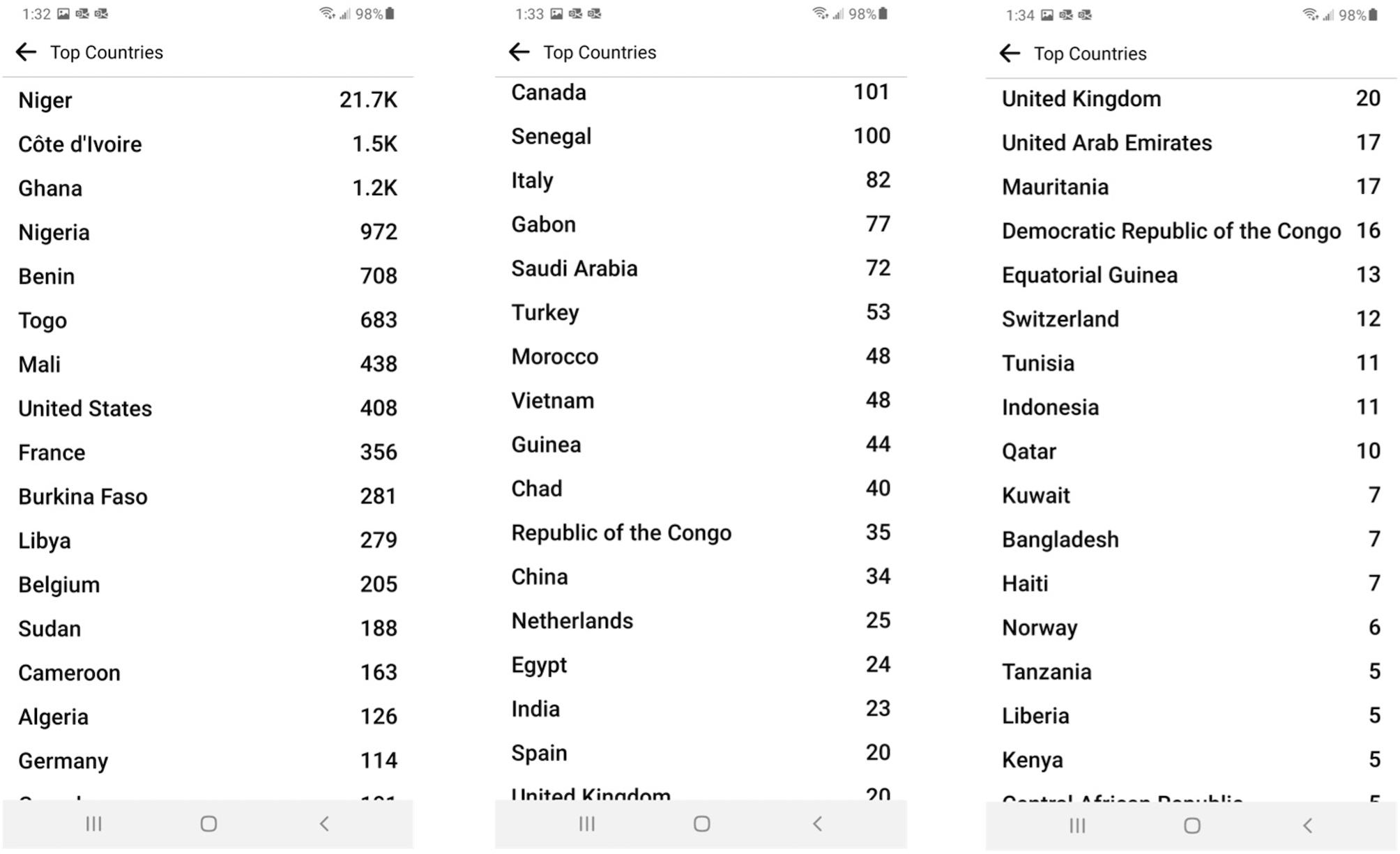
Since then, Marc has also shared several similar montages on Facebook and YouTube. Over the past five years, there has been a surge in montages featuring jasare narratives on social media platforms, particularly on YouTube channels such as NigerMix, Arewacin Kasar Hausa, Boubakar H. Kimba, Dj Mo, Donayse, Ismaël Diatté, Iwardar, and, of course, Marc Perret’s channel. These montages have circulated widely, including within WhatsApp groups of the Nigerien diaspora.Footnote 14 As shown in the screenshots below, the number of views attests to their considerable popularity (Figure 2).
Screenshot of the list of countries with the most subscribers to the page Zarma Dooni. Source: @ Marc Perret, 2022.

The issue of circulation did not begin with the advent of digital communication technologies. In the 1990s, cassettes circulated in markets, ranging from copies of radio broadcasts to recording archives from the Institute of Research in Human Sciences (IRSH). Media such as cassettes, minidiscs and videotapes enabled the reproduction and distribution of performances in various formats, including CDs and films – raising early questions about copyright and performers’ rights. Although jasare theoretically retained the right to control the publication or broadcasting of their recordings, these were often disseminated in markets without oversight. With the rise of digital technology, this loss of control has only deepened, as circulation has expanded significantly, shifting from physical to virtual platforms. Today, anyone can upload recordings to social networks, potentially placing them in contexts the performers themselves would consider inappropriate. Consequently, montages of jasare performances have spread from Facebook to YouTube, and from these platforms to WhatsApp. I have personally received such videos from Nigeriens both in the country and across the diaspora.
In the past, the circulation of cassettes involved third-party actors, including intermediaries who supplied sellers and resellers who reproduced the cassettes using available equipment. With digitalization, new intermediaries emerged – motivated more by cultural preservation than by commercial interests. Marc is one such figure. He has published various artistic genres, among which are numerous jasare narratives performed by one first-generation performer and two second-generation performers. In his commitment to promoting national culture and facilitating cultural restitution, Marc manages the page and disseminates radio or television archives, in response to the policy of the Niger Radio and Television Office (ORTN), which he criticizes for not broadcasting its archives. According to Marc, these archives constitute part of Nigerien heritage and should be accessible to all. Although he knew Jeliba personally and had a few conversations with him, Marc did not own any jasare recordings. He obtained recordings in two main ways: during his rare visits to Niger, he contacted people with access to the ORTN archives, offering them a nominal payment. Recordings and videos were transferred via USB drives, as the ORTN had already digitized its holdings.Footnote 15 In the case of the Epic of Isa Korombe, a software update had inadvertently accelerated the playback speed. After being informed, Marc reformatted the recording to match Jeliba’s usual tempo. Less frequently, subscribers to Zarma Dooni or acquaintances send Marc cassette tapes they wish to have digitized and shared, trusting in his computer expertise.Footnote 16
Marc knew that a simple audio format would not be sufficient to attract subscribers on Facebook or YouTube. He emphasized the need to ‘capture their attention’, as conveyed in one of our WhatsApp conversations. This realization led him to transform the recordings into basic video montages, typically composed of two or three illustrations synchronized with the audio. To create these montages, he sourced photographs and drawings from Google Images. In the example that inspired this article, Marc selected two photographs taken by my husband from the Jeune Afrique website, where I had contributed a tribute to Jeliba following his death on 24 April 2018.Footnote 17 Unaware that these photographs were captured during a performance of the Epic of Isa Korombe, Marc incorporated them into his montage. I also encountered some unexpected audiovisual materials, including a montage pairing an audio recording with photographs from my wedding in Niger – images that I had never shared beyond my immediate circle.Footnote 18 At times, Marc employed other strategies – such as illustrating Jaado’s narration with a photograph of Jeliba when no image of Jaado was available – to emphasize the narrator’s status as a jasare.
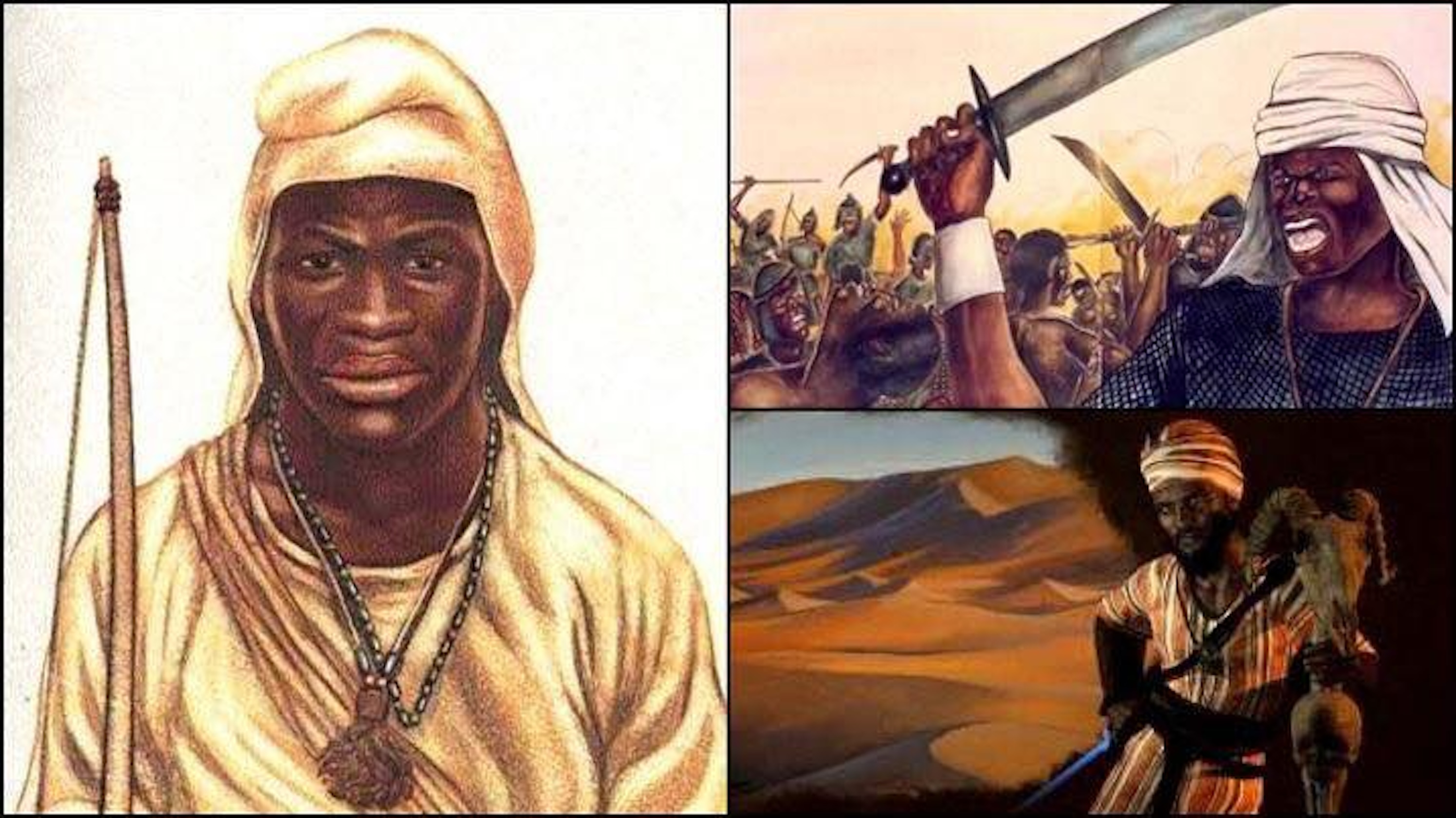
Additionally, he searched Google Images using keywords such as ‘African warrior’ to find visuals for heroes lacking representation.Footnote 19 This method resulted in more intricate montages, combining drawings and photographs of various African and Arab warriorsFootnote 20 to represent Zarma, Bambara or Fulani figures. For example, one series of four images illustrates a narration by Kulba Baaba, a first-generation jasare, recounting the exploits of a Zarma warrior named Mayaaci.Footnote 21 In this case, drawings of Sunjata Keïta, founder of the Mali empire, were used to enhance Mayaaci’s portrayal (Figure 3). This visual strategy echoes Jeliba’s musical choices: when a warrior lacked a specific musical theme beyond that of the first ancestor, he might play the tribute of a renowned Fulani hero to underscore the Zarma warrior’s importance. Each montage is signed with either the creator’s name or the Zarma Dooni Facebook page, asserting authorship and discouraging appropriation, while also crediting the jasare by including their name in the title.
Screenshot of Sunjata Keïta’s drawings illustrating the story of Mayaaci by Kulba Baaba. Source: © Marc Perret, YouTube channel, 2024.

The growing popularity of these montages reflects a renewed interest in jasare performances among young urban Nigeriens. This trend is particularly significant when contrasted with the period from the mid-1990s to the early 2000s when Jeliba’s voice was often drowned out by loud music from speakers – suggesting a paradigm shift in how his performances are perceived. The internet has played a crucial role in this transformation. Drawing on Foley (Reference Foley2012), I consider the internet not as a triumph of the written but as a paradoxical form of orality. Foley argues that digital platforms enable non-linear performance and the circulation of variants of memorial discourses, with the most striking or appreciated version prevailing. This dynamic closely resembles primary orality, characterized by a proliferation of variants. However, while Foley’s thesis is relevant in many contexts and applies to the proliferation of variants within a specific discursive genre, mediated orality via the internet and other media, in the case of the jasare, leads to an impoverishment of discursive genres when compared with performances in ceremonial or visit contexts. This decline is largely due, as we shall see, to the inherent reproducibility of secondary orality,Footnote 22 as theorized by Ong (Reference Ong1982).
Echoes of control: resistance and adaptation
The spread of audiovisual content, its success on social media and its circulation through digital tools – both in Niger and within the diaspora – raise longstanding questions. Strategies developed in response to recording technologies must be seen as part of a longer trajectory of adaptation. Even before the advent of radio, jasare were already navigating shifting patronage networks, reflecting broader social and political transformations in Nigerien society since the colonial period.
First, there is the inherently ephemeral nature of performances, which were never intended to be permanent. Second, growing awareness of the reproducibility of recordings – now digitized – has prompted jasare to adapt their performances, given the indeterminate nature of contemporary audiences. Lastly, the potential for wide circulation raises concerns about narrative control, the ownership of recordings and intellectual property.
The first generation of jasare whose performances were recorded had been born during the early colonial period and passed away in the 1970s, nearly a decade after Niger’s independence.Footnote 23 Among those whose names have endured in collective memory are Kulba BaabaFootnote 24 (c.1899–1975) and Baaje (1912–70). Both were recorded by the sound engineer of the National Centre for Research in Human Sciences (CNRSH),Footnote 25 founded by Boubou Hama – an influential intellectual and political figure during the early years of the Republic of Niger. Boubou Hama, one of the first Nigerien primary school teachers in the country, developed an interest in oral tradition as early as 1933 and later dedicated numerous studies to the subject while producing significant literary works. A key figure in the independence movement, he was a member of the Progressive Nigerien Party,Footnote 26 affiliated with the African Democratic Rally, and became the first president of the National Assembly of Niger (Fluchard Reference Fluchard1996).Footnote 27 He was also the first to actively pursue the recording of jasare performances. As Bernussou (Reference Bernussou2020: chapter IV, §31) wrote, Hama’s project, ‘involve[d] utilizing the “culturalist” bias, with history, grounded on oral traditions, as its cornerstone to engage an identity construction process aimed at the fundamental goal of building a “Nigerien Nation”’.Footnote 28
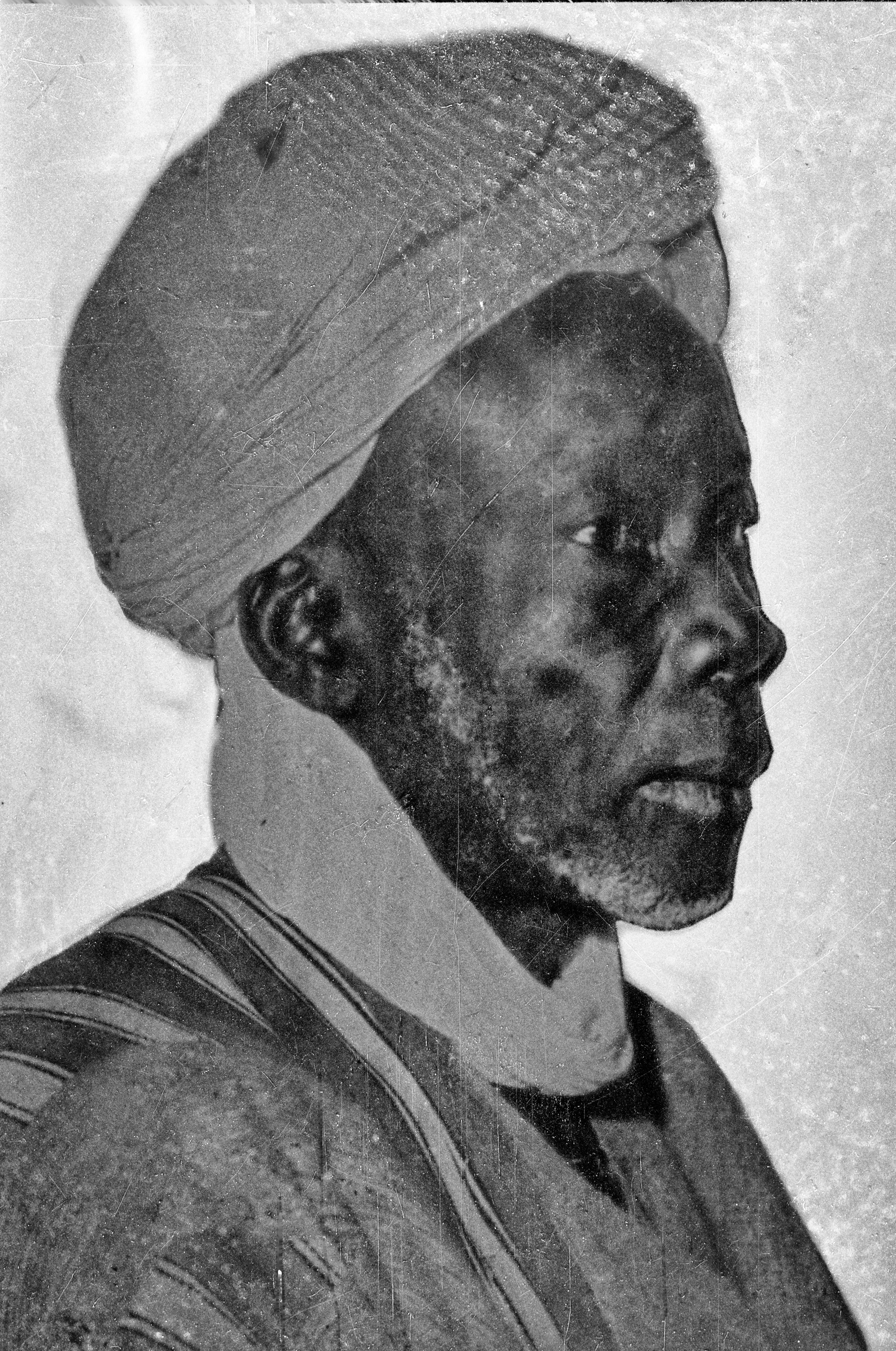
However, this initiative to record jasare performances encountered significant resistance from Baaje (Figure 4),Footnote 29 who was affiliated with the family of the chief of Liboré, a canton near the capital. Despite the political proximity between Boubou Hama and this family, Baaje repeatedly refused to be recorded, arguing that a performance could not be frozen – and perhaps feeling uneasy about performing in front of a ‘descendant of slaves’ (Decalo Reference Decalo1979: 253). In response to these refusals, Boubou Hama sent armed guards to bring him to Niamey. Under coercion, Baaje agreed, but, according to his younger brother, he often truncated his narratives.Footnote 30 The number of recordings produced remains modest, especially when compared with those I have archived from his son, who claimed to have inherited much of his repertoire.
Baaje Baɲɲa. Source: Portrait given by his son, Jeliba Baaje.

Before examining Baaje’s strategy, it is essential to detail the various discursive genres within the jasare repertoire and their associated effects. In ceremonial and visit contexts, the jasare place particular emphasis on the call to the ancestors (kaayi ceeyaŋ), which includes genealogies, praises and proverbs in Soninke – the language of initiation – as well as in Zarma. For the enthronement or death of a chief, they may perform a type of sung poetry called tilwaati. When time allows and listeners are attentive, they perform epics (wangaari deede) and ancestor narratives (kaayi deede), recounting the exploits of several prominent ancestors from the family hosting the ceremony or receiving them. If further time is available, the jasare may also narrate parables (faakaaray deede: lit. entertainment narratives). While calls to ancestors, epics, tilwaati and ancestor narratives aim to exalt descendants – often inducing an altered state of consciousness or even shaking (Bornand Reference Bornand2005) – parables differ in that they are less emotionally charged and often feature non-Zarma heroes. Therefore, when jasare are aware that their performances will be recorded or broadcast, they tend to favour parables. Ultimately, Baaje recorded seven faakaaray deede, two kaayi deede, one kaayi ceeyaŋ and one tilwaati.Footnote 31 This predominance highlights Baaje’s strategic choice, a tendency also observed among second-generation performers active in audiovisual media.
While Baaje’s recordings remained confidential at the CNRSH and were known only to researchers, the second generation – represented by his maternal nephew Jaado (1929–92) and his son Jeliba (1941–2018) – did not confine their activity to this setting. JaadoFootnote 32 and Jeliba primarily performed for the ORTN, founded in 1967, where Boubou Hama also played a crucial role.Footnote 33 These recordings took place during the regime of General Seyni Kountché, who served as president from 1974 until his death in 1987, following his overthrow of Diori Hamani, the first president of the Republic of Niger. Despite political shifts, Kountché pursued continuity in cultural policy that emphasized oral traditions, particularly those led by the jasare. In a speech delivered on 30 November 1977, at the inauguration of the conference marking the foundation of the West African Commercial Company (SCOA) in Niamey, the minister of culture warned against the temptation ‘to act like so-called countries with a written tradition, to freeze the past and make it an object of study reserved for specialists, students, and students alone’, because ‘oral tradition is not only the study of the past, it is also the present, everyday life’ (Arouna Reference Arouna1980: 6, my translation). This vision, already present under Diori, framed oral traditions as strategic tools for fostering national cohesion and legitimacy. As Bernussou (Reference Bernussou2020) notes, this approach contributed to the consolidation of broader popular support and reinforced the regime’s political authority.
A change in the jasare’s attitude occurred while Jaado and Jeliba were being trained by Baaje.Footnote 34 Like the Mande griots (Diawara Reference Diawara1996; Schultz Reference Schultz1997), they saw radio as a powerful megaphone that enhanced their prestige regionally, and even nationally, despite witnessing a decline in their social and economic conditions. Moreover, Jeliba felt the need to compete with Jaado, who was highly popular on the radio. Being twenty-two years younger, Jeliba had to assert himself in order to remain competitive. Jaado, who passed away before the first democratic elections,Footnote 35 was limited to performing for the ORTN. Jeliba, by contrast, also appeared on private radio and television stations that emerged in the mid-1990s following the advent of democracy.Footnote 36 Beyond the ceremonial context, visits to personalities and media appearances, Jeliba devised a broader range of approaches than Jaado to valorize his knowledge, expand his audience and diversify his income. He participated in a film directed by Jean Rouch, Babatou ou les trois conseils (1976);Footnote 37 recorded a CD for OCORA Radio France (1998); and performed concerts in Europe and Niger at the Franco-Nigerien Cultural Centre. At the invitation of university faculty, he also gave talks and developed an archiving system for his repertoire. Several factors drove Jeliba to seek new sources of income and professional recognition. Beyond his desire to establish himself as the indispensable jasare of his generation, he experienced – more acutely than Jaado, who died thirty years before him – the decline in status of jasare and corresponding loss of income. The steady decrease in earnings from ceremonial performances and visits led Jeliba to expand his opportunities to perform and showcase his mastery of speech.
The social status of the jasare has been steadily declining over the past few decades. The disappearance of apprenticeshipsFootnote 38 and the growing disinterest in the role among the new generation of jasare have led to confusion among the public, who often conflate them with griot-beggars (ŋwaarayko), often of enslaved status. Unlike the jasare, who possess systematic knowledge acquired through a long apprenticeship, the ŋwaarayko have fragmented knowledge obtained through imitation. During ceremonies with large audiences, they solicit money by flattering passers-by, but they may also insult those they consider too stingy. This trend worsened from the mid-1990s onwards, as Salafist organizations gained influence over the more tolerant Tijani branch of Islam. Salafists began to threaten jasare and ŋwaarayko with damnation unless they renounced all griot practices. They accused them of sinning by praising individuals other than God and the Prophet Muhammad, and by spreading falsehoods (Bornand Reference Bornand2005).
Sharing the same master, Jaado and Jeliba have several narratives in common. However, Jeliba’s repertoire for radio and television is more extensive. My investigation in late 1996, which involved cataloguing archives from the IRSH and ORTN, revealed that Jeliba had nineteen radio narratives and three television narratives, compared with Jaado’s ten radio narratives and one television narrative.Footnote 39 In the absence of an identifiable physical and genealogical audience, both jasare adjusted their performances by favouring parables over other discursive genres, following Baaje’s example. This observation partly led me to question Foley’s perspective on version diversity and the tendency for the most striking version to dominate. Aware of the challenges posed by mediated orality and its adverse effects, jasare often avoid narratives likely to arouse exaltation. Jeliba, however, made two notable exceptions. The Babatou epic, which recounts the establishment of the Zarma under Babatou’s leadership in present-day Ghana, involves wars against a foreign population and is unlikely to provoke intra-community conflicts. In contrast, the Isa Korombe epic is more sensitive. It portrays Isa Korombe in conflict not only with Fulani but also with Zarma chieftaincies allied with the Fulani.Footnote 40 This choice raises the question of whether its familiarity – from being taught in schools – or a perceived reduction in its provocative nature influenced Jeliba’s decision. Unfortunately, his death left these questions unanswered. Beyond his strategic selection of narratives suitable for broadcast, Jeliba also engaged in self-censorship. Certain episodes and events were omitted even in ceremonial contexts. For example, in a version of Isa Korombe performed at a wedding in 2015, Jeliba truncated his story and justified his choice:
He fought many Zarma, but that I will not recount to you, for it is an old dispute that awakens the new. Therefore, if you pinch someone, do not pinch him on an old wound, for the recent wound will be greater than the old one.Footnote 41
During my research on the effects of narratives recounting the exploits of ancestors or descendants of rivals, the Zarma I interviewed were aware that these memorial discourses could provoke tensions. Even Kountché urged Jeliba – then president of the Griots’ Association of Niger – to act responsibly, warning him of the risk of political instrumentalization that could threaten national unity. This form of self-censorship also allowed Jeliba to maintain control over his repertoire, a tendency that became even more pronounced in media contexts.
Despite similarities in Jaado’s and Jeliba’s radio performances and at the IRSH, notable differences emerged in both narrative devices and style.Footnote 42 While Jeliba told stories while playing the lute, Jaado consistently performed with a co-narrator, a jasare, and a musician – an effective approach for radio broadcasts. Their narrative styles also diverged: Jaado adopted a fast pace and a more humorous tone than Jeliba. This approach made him popular among young listeners and earned him frequent radio broadcasts and wide social media circulation in recent years. However, older audiences criticized his tone, preferring first-generation jasare or Jeliba, whom they believed conveyed the ‘truth’. One of Jaado’s narratives was even censored by Kountché in 1978 for perceived vulgarity. Among Zarma-speaking listeners, Jeliba is generally perceived as more grounded in tradition, while Jaado appears to break away from that tradition – particularly due to his heavy use of a co-narrator. Some informed Zarma listeners interpreted this as a strategy to mask unfamiliarity with the narratives. However, a detailed analysis of the interactions between narrator and co-narrator reveals a clever tactic by Jaado to maintain audience engagement in the absence of visual cues. This raises the question of whether criticisms of Jaado are based solely on stylistic grounds, or if they also reflect concerns about lineage and legitimacy. Unlike Jaado, Jeliba belonged patrilineally to the jasare group – his father being jasare and his mother garaasa (leather artisan). In Jaado’s case, the opposite was true. Within a patrilineal framework, Jaado was not expected to undergo jasare apprenticeship and thus lacked the traditional legitimacy to perform in this role.Footnote 43
Despite their inclination to appear in the media for financial reasons, both Jaado and Jeliba have consistently sought to maintain control over their productions. This concern stems from an ethic instilled during their apprenticeship in memorial discourses and lute playing. However, radio recordings do not allow them to discern the audience’s exact composition, preventing real-time adjustments. Furthermore, the profound societal changes of recent decades have complicated the jasare’s role in preserving social cohesion. Whereas the community to which the jasare were once accountable centred on the aristocratic lineages of their village, colonization and independence expanded this frame of reference to encompass all the Zarma chieftaincies as well as the freeborn population. This ethic also carries a strategic dimension: by adjusting their narratives to suit their audience, the jasare avoid losing their attention or provoking displeasure, thus ensuring continued opportunities to perform across various contexts. Even in ceremonial and visit contexts, the jasare exert control over their productions. They can, for instance, refuse to praise a man or recount his ancestors’ exploits if he is deemed unworthy or has shown them disrespect. The dominant ideology among aristocratic lineages holds that only they possess ancestors worthy of remembrance. Being omitted from calls to the ancestors – or excluded from association with a valorized forebear during a performance – can threaten a person’s legitimacy and symbolically associate them with commoners or formerly enslaved individuals. In response, jasare have threatened to withdraw entirely from ceremonial participation. Exerting this control, however, becomes increasingly complex, especially when many recordings – originally made at the IRSH for archival purposes – end up being commercialized as cassettes in local markets. These cassettes are often illegally resold, raising significant questions about intellectual property and performers’ rights.
Reclaiming the narrative: jasare archives and the question of ownership
Aware of the importance of preserving his memorial discourses and defending his rights, Jeliba took two key measures: he registered with the Nigerien Copyright Office (BNDA) and entrusted me with archiving his repertoire. In 1997, two years after BNDA’s establishment, he joined other Nigerien artists in a campaign pressuring radio and television stations to compensate them for the (re-)broadcasting of their work. Despite being legally recognized as a performer and his work being protected under the law, obtaining financial compensation from the media proved difficult. Receiving payments from cassette sellers in the informal sector was nearly impossible, as BNDA did not regulate or monitor that domain. As for social media, any form of control was not feasible: Jeliba was unaware of such platforms, and Hamma, his family’s representative after his death, lacked digital literacy, despite having a Facebook account, and knew even less about YouTube’s operations.
As part of a strategy to retain control over his works and ensure the survival of his memorial discourses, Jeliba entrusted me – a non-Nigerien doctoral student – with archiving his repertoire.Footnote 44 Lacking a direct successor and witnessing the decline of the jasare tradition, he sought to safeguard his cultural legacy and highlight jasare expertise. Over 300 performances were recorded, often capturing multiple versions of the same narrative. Whenever possible, recordings were made during ceremonies or visits to aristocrats or powerful commoners. However, as local audiences shifted their interest towards Nigerien or foreign singers, such occasions became rarer. Many recordings had to take place in private sessions with just Jeliba and myself. He imposed strict conditions on their dissemination to uphold jasare ethical standards and prevent the reignition of intra-Zarma conflicts. He also aimed to protect the recordings from commercial exploitation by those seeking to profit from his family’s cultural heritage. For these reasons, I could not deposit these recordings at the IRSH, where cassettes were often resold and ended up in public markets, nor at the National Archives, which he considered unsafe.Footnote 45 I therefore kept them in my home. Rejecting what Diawara (Reference Diawara2014) calls the extractive logic of the ‘colonial library’, this archive was collaboratively built under the ethical conditions defined by Jeliba himself (Figure 5).
Jeliba Baaje. Source: © Gustave Deghilage, 2013.

Some Nigerien intellectuals reacted critically to Jeliba’s effort to control his archive and claim performer rights, arguing that the discourses belonged to the aristocrats whose ancestors were being celebrated. They noted that he had already been rewarded during ceremonial contexts and questioned both his authority over the archive and, implicitly, the role he had assigned to me. At the heart of this dispute lies a deeper issue of authorship and ownership in oral traditions: do these memorial discourses belong to the jasare, who have acquired them through a long apprenticeship and mastery of performance, or to the aristocratic families, since it is their ancestors whose histories are being narrated?
As Röschenthaler and Diawara (Reference Röschenthaler and Diawara2011) observe, conflicts surrounding intangible heritage often stem from overlapping and competing norms – not only between global and local frameworks, but also within local contexts. In this case, Jeliba’s assertion of narrative sovereignty challenges both an aristocratic understanding of heritage as lineage-bound and a nationalist-intellectual framing of culture as public patrimony.
As a non-Nigerien doctoral student, this situation placed me in a delicate position of guardianship. Initially involved as a technical facilitator, I became the sole custodian of these socially sensitive and politically charged recordings. Jeliba saw my foreignness as symbolic neutrality – positioning me outside local circuits of transmission and allegiance – which, in his eyes, made me a safer guardian. Yet, the very fact that I am not a cultural heir raises enduring ethical tensions, especially within broader debates on cultural appropriation and postcolonial knowledge hierarchies, even if such concerns did not arise within Jeliba’s own family. Holding these archives without being their heir forces me to navigate complex questions around access, circulation, visibility and preservation. I remain bound by Jeliba’s protective logic while also accountable to future generations of researchers and descendants.
This was not the first time I observed differing perspectives between jasare and aristocrats. While interviewing both groups, I noticed a shared acknowledgement of the exaltation and altered state of consciousness produced during performances. However, they differed in how they interpreted the source of these effects. From the aristocrats’ perspective, exaltation was attributed to the honour of having their ancestors celebrated. The emotional intensity arose, for them, from lineage pride and historical recognition. They emphasized that the significance of the narrative derived from the identity of the ancestor being celebrated, not from the performer’s skill. From the jasare’s perspective, by contrast, the emotional response was the result of their own performative mastery. They saw themselves as responsible for producing exaltation through vocal techniques, bodily presence, rhythm and gaze. During my apprenticeship with Jeliba, he taught the art of declamation. At one point, while demonstrating how to adopt an imposing stance and appropriate gestures, he told me I was not intimidating enough. He explained that in delivering calls to ancestors, the jasare must seize control over the person being addressed – typically a chief or an aristocrat – using voice, posture and eye contact to provoke the intended effect (Bornand Reference Bornand2005). Despite their differing frameworks, neither group fully denied the contribution of the other. Aristocrats acknowledged that a jasare lacking energy fails to exalt. Conversely, jasare recognized that, if they did not anchor their narratives in the history of a specific ancestor, however masterful the delivery, their performance would fail to achieve its purpose. In this mutual recognition lies a shared understanding: speech without ancestry is powerless, and ancestry without performance is inaudible.
These tensions reveal the complexity of postcolonial dynamics surrounding jasare performances – particularly regarding control, ethics and ownership. While Baaje resisted fixation, his concerns were not about ownership; he saw recordings as materials for Boubou Hama, and did not fully anticipate their wider implications. The question of ownership only truly emerged after UNESCO’s Masterpieces of the Oral and Intangible Heritage of Humanity programme began institutionalizing copyright considerations (Jansen Reference Jansen2012). By then, the elders had already passed away, leaving Jeliba to navigate this new terrain alone. Nevertheless, the BNDA classified jasare as performers, rather than authors.
The death of Jeliba on 24 April 2018 marked a generational shift and signalled the beginning of the third generation of jasare. This generation is marked by a paradox: although they continue to carry the jasare’s status, none of its members fulfil the role, as none have undergone the traditional apprenticeship that historically authorized and equipped jasare to perform in ritual and social settings.
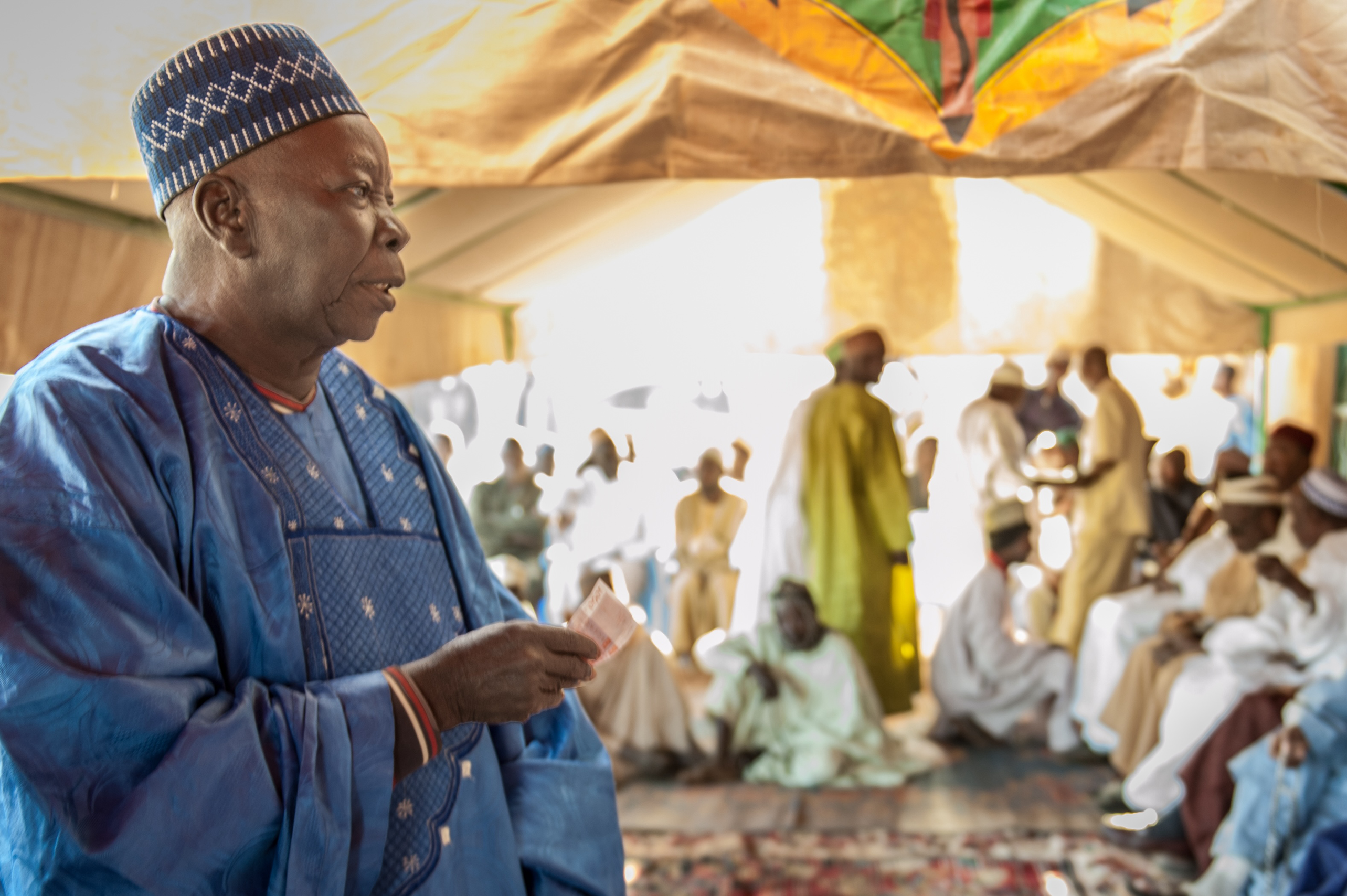
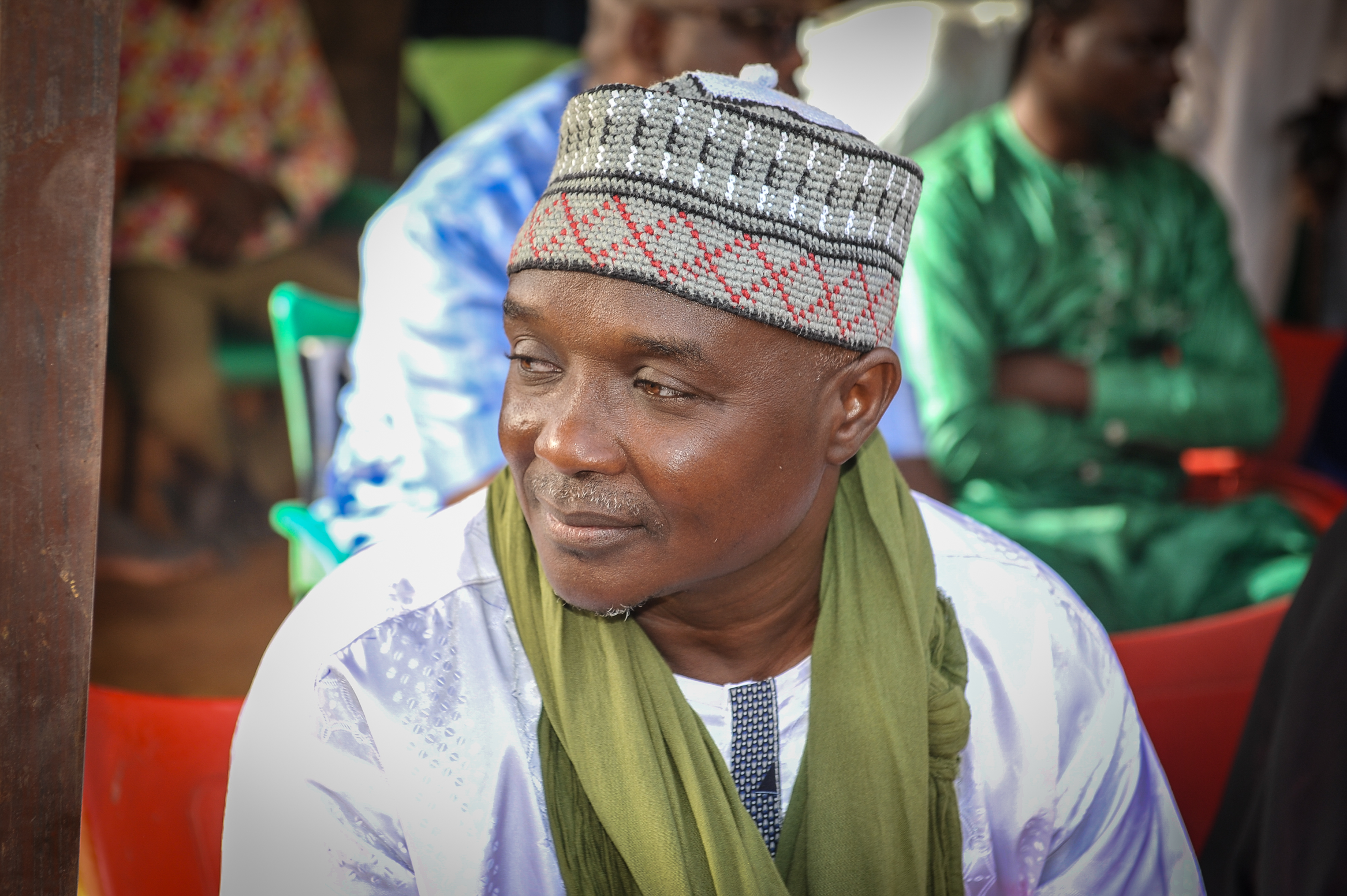
The issues at stake are embodied in the figure of Hamma (Figure 6), the family’s designated representative. He identifies as a jasare without a repertoire – a position that reflects the tensions between inherited identity and interrupted transmission. His ambiguous status raises deeper questions about legitimacy, narrative authority and the future of jasare’s practices in the digital age. In Jeliba’s family, both father and sons have offered contrasting explanations for the break in transmission, each placing responsibility on the other. Jeliba justified his decision by saying that he did not perceive genuine interest among his sons and, therefore, chose to send them to French-style schooling rather than impose a long and demanding apprenticeship. He recalled that his own father had done the same, teaching only those who showed true motivation – namely, one of his brothers and himself. Some of Jeliba’s sons, especially the older ones, now regret that their father did not encourage – or even compel – them to follow this path. Having been close to the family since 1994, I can attest to a mutual ambivalence. Jeliba saw formal schooling as a path of emancipation, especially as the social and economic prospects of the jasare were narrowing. Yet he also insisted that mastering the arts of speech and memory required a total commitment over many years. By choosing not to transmit his knowledge to even one of his sons, Jeliba knowingly contributed to the end of this practice within his lineage – and possibly to its disappearance altogether. His sons, meanwhile, found themselves torn between pride in their father’s renown and the impulse to hide their status to avoid potential marriage restrictions.Footnote 46
Hamma, general secretary of AAMCTN. Source: © Gustave Deghilage, 2024.

This interruption in transmission did not imply that their father’s recordings were beyond their control, as evidenced by the management of the archives. Since Jeliba’s directives were solely verbal, I wondered how I would handle the succession. Considering he had four wives and thirty children, the question arose whether I should continue managing the archives and, if instead they were managed by a family member, how the family member would preserve them. To address this ambiguity, I convened a family council in November 2018, bringing together the two surviving wives and children from each spouse. The objective was to remind them of the mission entrusted by Jeliba and to determine whether I would remain the sole custodian of the archives or if the family wished to obtain a copy. I reiterated the conditions set by Jeliba regarding the recordings and their circulation. I also explained that if I provided a copy of the hard drive, the family could no longer hold me responsible for any broadcast of the recordings. After discussion, the family decided to hand over a copy of the archives to the eldest son, Hamma, born in 1975, designated as the family representative. By taking back physical control of the archives, they relieved me of any responsibility for the potential dissemination of the recordings. This decision freed me from the inextricable situation I was in. I can now defer to the family.
In addition to his role as the custodian of the family archives, Hamma has held the position of secretary general of the Association of Traditional Musicians and Singers of Niger (AAMCTN) since 2020.Footnote 47 This association succeeded the Griots of Niger Association, where his father had served as president for many years. He owes this position to being both Jeliba’s son and having completed his education up to the baccalaureate level, whereas the president, a Hausa drum player, is illiterate. The choice of Hamma by the traditional artists is symbolically significant, reflecting the aristocracy of traditional artists among the Zarma people. However, appointing a jasare who did not undergo the traditional apprenticeship implicitly signifies the end of this practice. Hamma’s commitment within the AAMCTN appears to be an attempt to reconcile these different concerns – respecting his father’s wishes and promoting his work and the jasare. Hamma’s engagement with traditional artists – including those from intermediary groups, neither free nor enslaved, like the jasare, and descendants of slaves – signifies a significant shift in his approach. While he has long sought social emancipation from the precolonial framework, he now represents traditional artists to political authorities and the media, gradually embracing his status. More recently, he has begun learning calls to ancestors using my writings and audio recordings as references. His new involvement will not replace the apprenticeship but seems to be a way for Hamma to (re)appropriate a missing part of his education. During the inauguration of a library named after his father, he publicly recited the genealogy of the canton chief who was present at the event.Footnote 48
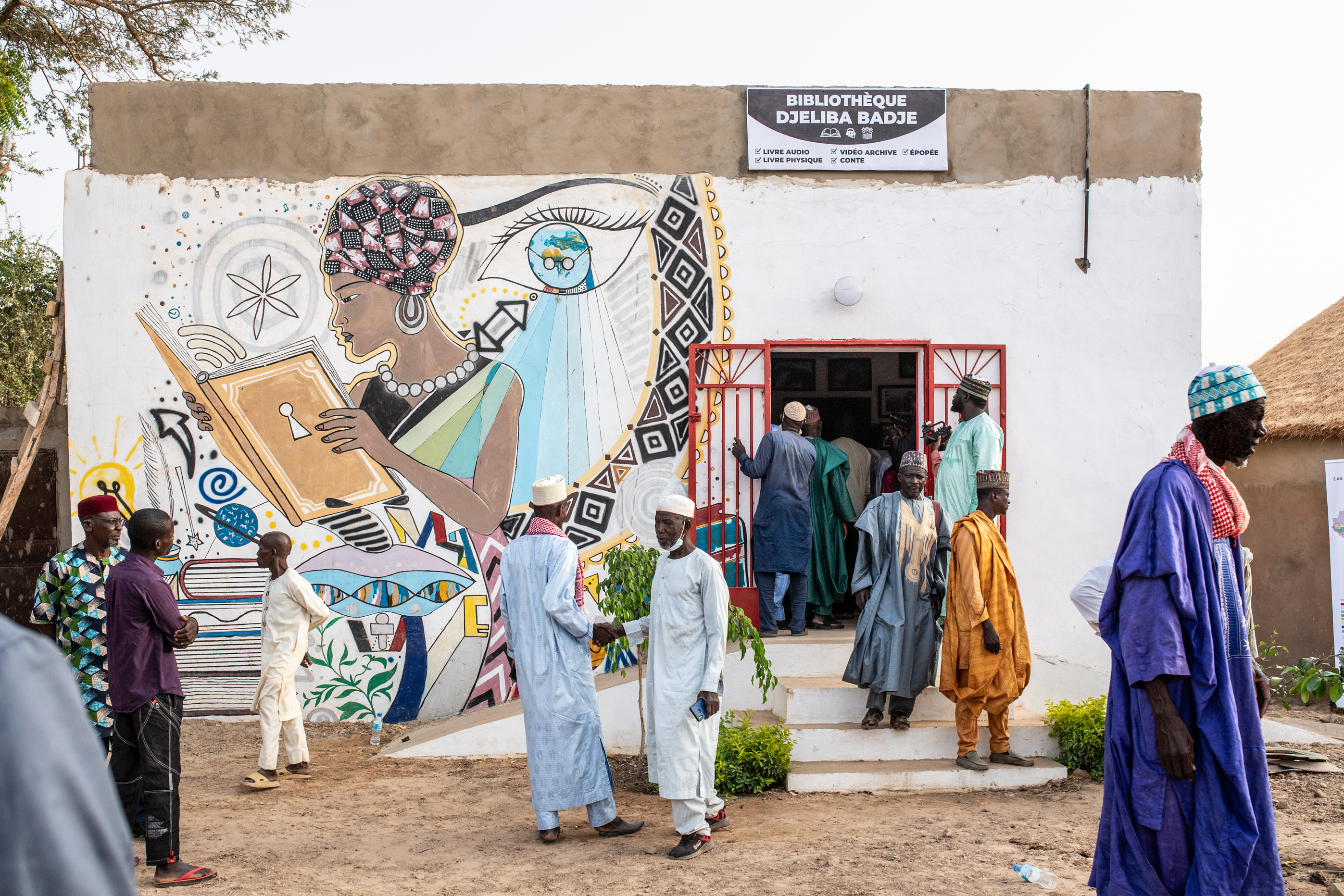
His role as secretary general of the AAMCTN also affords him direct access to leaders, enabling him, for instance, to advocate for the establishment of a cultural centre named after his father. However, this initiative has yet to materialize. On 4 March 2024, we inaugurated a private ‘Jeliba Baaje’ library in the presence of part of the family, chiefs, artists, researchers, the mayor, myself and others (Figure 7). To ensure the on-site preservation of my recordings, I deposited a series of audio and video recordings of memorial discourses under the supervision of the slam poet Jhonel, a designated guardian. In adherence to Jeliba’s recommendations and to ensure that the archives do not circulate outside the library, we implemented a strict ‘no mobile phones’ policy within the premises. Although we initially considered providing limited online access to the archives, the idea was ultimately abandoned due to the impossibility of preventing unauthorized recordings once access was granted. Thus, while Hamma’s role leads him to embrace his social status openly, it also gives him greater control over his father‘s legacy.
Library ‘Jeliba Baaje’ in the ‘House of Speech’ founded by Jhonel, Liboré. Source: © Gustave Deghilage, 2024.

Echoes without an audience: jasare narratives in the age of the algorithm
Digital technologies have profoundly altered the landscape of oral traditions. What was once a relational, situational art form – adapted to audience reactions – has become a recorded, archived and broadcast form of expression. Through social media and video platforms, oral narratives are increasingly mediated by third-party actors, transforming their modes of both dissemination and reception. This shift has significantly transformed how younger generations encounter jasare narratives. No longer transmitted through live listening in communal settings, these performances are now accessed via fragmented, visually mediated formats shaped by digital editing and algorithmic circulation. The immersive and relational experience of oral performance gives way to individualized, screen-based and decontextualized consumption. The digital realm does not eliminate orality; it redefines it. Jasare narratives, once shaped in direct response to a present audience, are now recorded, archived, broadcast and reconfigured by third-party actors. This reconfiguration – part of a broader shift towards visual and platform-driven storytelling – reshapes not only reception, but the ethics and temporality of transmission itself.
The transformation brought by recording technologies – well before the digital turn – had already challenged the situational nature of jasare performance. From the IRSH to the ORTN, the jasare had to adjust to the absence of a live audience whose social position, reactions and affiliations would once guide the narration. While these early recordings remained largely within institutional or research frameworks, they set the stage for a more profound shift in narrative circulation.
This loss of control has intensified in the digital era. Today, oral performances are not only recorded and stored but edited, disseminated and recontextualized by third-party actors across video platforms and social media. The reception of jasare narratives is now shaped by algorithmic logics and visual culture, often stripped of the ethical frameworks that once governed their delivery. The emergence of third-party actors, such as YouTubers, has introduced a new dynamic in the dissemination of these narratives. Platforms such as Zarma Dooni contribute to constructing a nationalist and decolonial cultural identity, by highlighting an idealized precolonial tradition (Bornand and Hamani Reference Bornand and Hamani2024). However, these external actors – often unaware of the social and cultural weight of certain narratives they circulate – contribute to a loss of agency for the jasare. Their performances, once rooted in situational artistry and tailored to the dynamics of live audiences, are transformed into consumable content within a digital economy dominated by visuals and algorithmic logic. What was once a performative, context-specific expression becomes a product designed for mass circulation and engagement.
This transformation raises crucial questions: how can one tell a story without knowing who is listening? Who controls the recorded word? What ethical and social responsibilities should govern its dissemination? While these concerns are intensified in the digital age, they are not new. They reflect longstanding tensions that emerged with the first analogue fixations – moments when the performance was separated from its original context. While Ong (Reference Ong1982) diagnosed the destabilizing effects of recordings on oral tradition, Foley (Reference Foley2012) invites us to see new media as enabling new forms of orality. Together, their insights allow us to grasp the ethical and epistemological transformations facing the jasare in the digital era.
This ethical negotiation becomes particularly tangible in the case of Jeliba. Like earlier generations of jasare, he asserted a moral right over his speech – the right to determine how, when and to whom it should be transmitted, grounded in the ethical codes learned during his apprenticeship. But he also went further: he engaged with international legal frameworks, registering with the BNDA to protect his status as a performer and demand compensation. His position combines traditional ethics and international legal tools, articulating a dual claim – both cultural and legal – to protect his narrative sovereignty.
This claim to control does not solely rest on legal or strategic concerns: it stems from the foundational posture of the jasare, who consider themselves the father and mother of speech. This expression, uttered by Jeliba during a public performance in 1998, illustrates how speech is not just a communication tool but a living heritage, carried, shaped and assumed. As the symbolic parents of speech, jasare claim full mastery over its content, its destination and its effects. This rare and forward-thinking stance resonates with critiques by Röschenthaler and Diawara (Reference Röschenthaler and Diawara2011; Reference Röschenthaler and Diawara2016), who argue that global copyright regimes are ill-suited to oral, embodied and contextually bound knowledge systems. In rejecting universalist models of patrimonialization, Jeliba challenged the logic of the ‘colonial library’ – the idea that oral tradition can be extracted, archived and circulated independently of the communities and ethics that produced it. Through his strategies of conditional transmission, delayed circulation and protective entrustment, he offered an alternative vision of how tradition may be preserved with respect for local values. Today, this delayed control remains central to family practices. Jaado’s children have access only to what has been broadcast via radio or uploaded to social networks. Jeliba’s descendants, by contrast, are custodians of a valuable archive, carefully assembled and safeguarded for decades. When some narratives lose their sensitive nature, they may choose to make them public – perhaps via YouTube – under conditions that reflect both their familial heritage and the ethics of jasare practice.
Perhaps, as Foley suggested, contemporary technologies will not silence orality but rather reshape the conditions of its reception and listening – provided that this space does not rely solely on the logics of access and openness, but on recognition of the social, ethical and political frameworks that have long governed oral transmission.
Sandra Bornand is a research fellow in linguistic anthropology at the CNRS (Langage, Langues et Cultures d’Afrique, LLACAN, CNRS-INALCO-EPHE) in Villejuif, France. Her work focuses on Zarma- and Songhay-speaking societies in Niger, with particular attention to jasare (Zarma genealogists and historian-griots), language practices and the politics of performance.