Optimizing infant development and minimizing risk of infant mental health issues has become a public health priority internationally (World Health Organization, 2014). Governments and institutions worldwide are directing significant capital into programs and agencies seeking to enhance children's early environments. However, to date, the bulk of the attachment-based intervention research has focused on promoting infant attachment security via enhancement in maternal sensitivity, with comparatively less focus on mitigating risk for the development of disorganized attachment. Disorganized attachment is highly prevalent in groups with known social risks. A meta-analysis by Cyr, Euser, Bakermans-Kranenburg, and van IJzendoorn (Reference Cyr, Euser, Bakermans-Kranenburg and van IJzendoorn2010) demonstrated that children living in high- versus low-risk conditions (e.g., poverty an being parented by an adolescent) are at significantly increased risk of developing disorganized attachment (d = 0.77). Further, numerous studies have demonstrated that infants and children with disorganized attachment are at particular risk for psychopathology, stress dysregulation, and poor cognitive performance early in life (Bernard & Dozier, Reference Bernard and Dozier2010; Fearon, Bakermans-Kranenburg, van IJzendoorn, Lapsley, & Roisman, Reference Fearon, Bakermans-Kranenburg, van IJzendoorn, Lapsley and Roisman2010; Hertsgaard, Gunnar, Erickson, & Nachmias, Reference Hertsgaard, Gunnar, Erickson and Nachmias1995; Luijk et al., Reference Luijk, Saridjan, Tharner, van IJzendoorn, Bakermans-Kranenburg, Jaddoe and Tiemeier2010; Lyons-Ruth & Jacobvitz, Reference Lyons-Ruth, Jacobvitz, Cassidy and Shaver2016; Madigan, Brumariu, Villani, Atkinson, & Lyons-Ruth, Reference Madigan, Brumariu, Villani, Atkinson and Lyons-Ruth2016; Spangler & Grossmann, Reference Spangler and Grossmann1993; van IJzendoorn, Schuengel, & Bakermans-Kranenburg, Reference van IJzendoorn, Schuengel and Bakermans-Kranenburg1999). Recent work also indicates that disorganized attachment is an important predictor of disturbances in later adolescent and young adult development, including borderline features, suicidality, and dissociation (Carlson, Reference Carlson1998; Lyons-Ruth, Bureau, Holmes, Easterbrooks, & Brooks, Reference Lyons-Ruth, Bureau, Holmes, Easterbrooks and Brooks2013; Obsuth, Hennighausen, Brumariu, & Lyons-Ruth, Reference Obsuth, Hennighausen, Brumariu and Lyons-Ruth2014; but see Haltigan & Roisman, Reference Haltigan and Roisman2015). As a result, there has been a growing call for the development of interventions that target reductions in the prevalence of disorganized attachment.
Several randomized controlled trials (RCTs) have been conducted to assess whether attachment-based interventions can reduce the prevalence of disorganization (Bernard et al., Reference Bernard, Dozier, Bick, Lewis-Morrarty, Lindhiem and Carlson2012; Cicchetti, Rogosch, & Toth, Reference Cicchetti, Rogosch and Toth2006; Heinicke et al., Reference Heinicke, Goorsky, Moscov, Dudley, Gordon, Schneider and Guthrie2000; Juffer, Bakermans-Kranenburg, & van IJzendoorn, Reference Juffer, Bakermans-Kranenburg and van IJzendoorn2005; Moran, Pederson, & Krupka, Reference Moran, Pederson and Krupka2005; Moss et al., Reference Moss, Dubois-Comtois, Cyr, Tarabulsy, St.-Laurent and Bernier2011; Smyke, Zeanah, Fox, Nelson, & Guthrie, Reference Smyke, Zeanah, Fox, Nelson and Guthrie2010). These intervention programs have reduced the rate of attachment disorganization among infants with a wide range of risk characteristics, including poverty, maternal depression, maltreatment, and institutional rearing. Although all of these studies were based on an intervention model in which changes in parent–infant interaction were viewed as the mechanism through which infant attachment disorganization would be reduced, few studies have extended the design to statistically assess whether change in interaction is the mechanism contributing to change in child outcome.
Some prior studies have approached the issue of mechanism of change by assessing whether there are concomitant changes in maternal sensitivity in the intervention group compared to controls, and changes in maternal sensitivity have been demonstrated (Bakermans-Kranenburg, van IJzendoorn, & Juffer, Reference Bakermans-Kranenburg, van IJzendoorn and Juffer2003; Cicchetti et al., Reference Cicchetti, Rogosch and Toth2006; Dozier et al., Reference Dozier, Peloso, Lindhiem, Gordon, Manni, Sepulveda and Levine2006; Lyons-Ruth, Connell, Grunebaum, & Botein, Reference Lyons-Ruth, Connell, Grunebaum and Botein1990; Moran et al., Reference Moran, Pederson and Krupka2005; Osofsky et al., Reference Osofsky, Kronenberg, Hammer, Lederman, Katz, Adams and Hogan2007). In their meta-analysis of attachment-based interventions, Bakermans-Kranenburg et al. (Reference Bakermans-Kranenburg, van IJzendoorn and Juffer2003) reported that the studies with the largest effect sizes demonstrating changes in maternal sensitivity on account of the intervention (d = 0.40) were also the most effective in enhancing children's attachment security (d = 0.45), suggesting that changes in maternal sensitivity may be mediating the intervention effects on infant security.
To our knowledge, however, only one RCT has statistically evaluated possible processes contributing to changes in secure attachment. Cicchetti et al. (Reference Cicchetti, Rogosch and Toth2006) conducted an RCT in maltreating families in which families were assigned to infant–parent psychotherapy (IPP; Lieberman, Weston, & Pawl, Reference Lieberman, Weston and Pawl1991), an intensive psychoeducational parenting intervention (PPI; Olds, Henderson, Tatelbaum, & Chamberlin, Reference Olds, Henderson, Tatelbaum and Chamberlin1986), or to treatment as usual via the Department of Social Services. The results revealed that children in the IPP and PPI groups evinced higher rates of secure attachment from the pre- to posttest assessments, compared to the control group. The authors examined mediators of intervention efficacy relevant to each of the interventions (i.e., IPP or PPI) to determine whether specific agents of change mediated associations between pre- and posttest assessments of attachment. For IPP, changes in maternal representations and maternal sensitivity were examined as mediators, with no significant mediation shown. For PPI, changes in parenting attitudes and social support, as well as decreases in child-rearing stress, were examined as agents of change, again with no significant mediation shown. Thus, mechanisms of change in the IPP and PPI interventions could not be identified. Cicchetti et al. (Reference Cicchetti, Rogosch and Toth2006) thus encouraged further examination of mediators of intervention efficacy among at-risk dyads, in relation to both secure and disorganized attachment, to advance our understanding of how parent-focused interventions prevent attachment disorganization.
Maternal sensitivity is a robust predictor of child attachment security (De Wolff & van IJzendoorn, Reference De Wolff and van IJzendoorn1997; Verhage et al., Reference Verhage, Schuengel, Madigan, Fearon, Oosterman, Cassibba and van IJzendoorn2016), but it is not a strong predictor of attachment disorganization. Specifically, in the large NICHD Study of Early Child Care and Youth Development (NICHD Early Child Care Research Network, 1997), the association between sensitivity and disorganization was nonsignificant (r = .06), and in a meta-analysis by van IJzendoorn et al. (Reference van IJzendoorn, Schuengel and Bakermans-Kranenburg1999), it was significant, but weak (r = .10). However, more anomalous forms of parenting, as coded by protocols for frightened, frightening, and quality, of maternal behaviour (see below), have been robustly associated with disorganized attachment (r = .34; k = 12, N = 851; Madigan, Bakermans-Kranenburg, et al., Reference Madigan, Bakermans-Kranenburg, van IJzendoorn, Moran, Pederson and Benoit2006).
Among parents who have been exposed to multiple stressors or traumatic experiences, sensitive or responsive behaviors can become mixed with indicators of fear, threat, disorientation, role confusion, and withdrawing behavior. These maternal responses have relatively low base rates in normative samples, but become much more prevalent under conditions of poverty, exposure to violence or maltreatment, or in the context of maternal psychopathology (Lyons-Ruth, Bronfman, & Parsons, Reference Lyons-Ruth, Bronfman and Parsons1999; Madigan, Moran, & Pederson, Reference Madigan, Moran and Pederson2006). Thus, assessing frightened, frightening, or disrupted maternal communication may be an important next step in evaluating mechanisms of change in at-risk samples. In addition, in the Study of Early Child Care and Youth Development and in high-risk longitudinal studies (Dutra, Bureau, Holmes, Lyubchik, & Lyons-Ruth, Reference Dutra, Bureau, Holmes, Lyubchik and Lyons-Ruth2009; NICHD Early Child Care Research Network, 2001; Shi, Bureau, Easterbrooks, Zhao, & Lyons-Ruth, Reference Shi, Bureau, Easterbrooks, Zhao and Lyons-Ruth2012; Sroufe, Egeland, Carlson, & Collins, Reference Sroufe, Egeland, Carlson and Collins2005), quality of maternal behavior has been a stronger predictor of long-term outcomes over time than infant attachment, making it critical to assess the effectiveness of intervention in changing disturbed maternal behavior as well as infant disorganized attachment.
Observations of the disturbed interactions engaged in by mothers of disorganized infants led Main and Hesse (Reference Main, Hesse, Greenberg, Cicchetti and Cummings1990) to hypothesize that parental frightened or frightening behavior (FR) was tied etiologically to infant disorganization, due to the infant's experiencing “fright without solution.” That is, the caregiver was both the source of fear and the solution to fear, leading the infant to display the odd conflict behaviors characteristic of disorganization. Subsequently, Lyons-Ruth et al. (Reference Lyons-Ruth, Bronfman and Parsons1999) advanced a somewhat broader hypothesis that infant fear not directly provoked by the parent might also lead to infant disorganization if the parent is unable to respond to the infant's need for comfort and regulation of stressful arousal. These failures to comfort and regulate can be manifest in a variety of disrupted communications. For instance, the parent can give contradictory responses to the infant's cues or give self-referential responses that focus on the parent's needs rather than the infant's needs. The parent can also withdraw from the infant's cues for contact in subtle ways by responding in a cursory or reluctant manner or by failing to respond altogether. To capture this wider range of disrupted communication associated with infant disorganization, Lyons-Ruth et al. developed the Atypical Maternal Behavior Instrument for Assessment and Classification (AMBIANCE; Bronfman, Madigan, & Lyons-Ruth, Reference Bronfman, Madigan and Lyons-Ruth1992–2009). In a meta-analysis by Madigan, Bakermans-Kranenburg, et al. (Reference Madigan, Bakermans-Kranenburg, van IJzendoorn, Moran, Pederson and Benoit2006), both the narrower FR coding system developed by Main and Hesse (1992) and the broader AMBIANCE coding system (Bronfman et al., Reference Bronfman, Madigan and Lyons-Ruth1992–2009) were equivalent in their associations with infant disorganization (r AMBIANCE = .35, r FR = .32). In the current study, the AMBIANCE system was used in part because of strong evidence of stability over time, with the meta-analytic effect size for stability of the AMBIANCE over periods ranging from 10 to 72 months being r = .56 (k = 3, N = 203; Madigan, Bakermans-Kranenburg, et al., Reference Madigan, Bakermans-Kranenburg, van IJzendoorn, Moran, Pederson and Benoit2006). The AMBIANCE also has demonstrated strong predictive validity in that disrupted maternal communication predicts behavior problems from toddlerhood to age 20 years (Dutra et al., Reference Dutra, Bureau, Holmes, Lyubchik and Lyons-Ruth2009; Madigan, Moran, Schuengel, Pederson, & Otten, Reference Madigan, Moran, Schuengel, Pederson and Otten2007; Shi et al., Reference Shi, Bureau, Easterbrooks, Zhao and Lyons-Ruth2012), as well as altered adult amygdala volumes (Lyons-Ruth, Pechtel, Yoon, Anderson, & Teicher, Reference Lyons-Ruth, Pechtel, Yoon, Anderson and Teicher2016).
To date, one nonrandomized study has examined whether disrupted maternal communication, as assessed by the AMBIANCE, changes over the course of intervention. Benoit, Madigan, Lecce, Shea, and Goldberg (Reference Benoit, Madigan, Lecce, Shea and Goldberg2001) examined whether disrupted maternal communication was reduced in a sample of parent–child dyads referred for feeding problems. Mothers received a five-session modified version of interaction guidance (McDonough, Reference McDonough2000), which included a video-feedback component. Thirteen participants received the modified interaction guidance, and reductions in disrupted communication in this intervention group (from pre- to posttest) were compared to a convenience sample of 14 parent–child dyads, also referred for feeding problems, who received training in education techniques only (feeding-focused group). The results revealed a significant reduction in disrupted maternal communication in the modified interaction guidance intervention, but not the feeding-focused group, from pre- to posttest. This study highlighted a potential mechanism of treatment change, but did not address whether the change in the caregivers’ interactions with the child mediated measurable change in children's attachment classifications.
In this paper, we assess both infant disorganization and maternal disrupted behaviors, using the AMBIANCE system, as part of a larger randomized intervention trial, the Compétences parentales et Attachement dans la Petite Enfance: Diminution des risques liés aux troubles de santé mentale et Promotion de la resilience project (CAPEDP; Tubach et al., Reference Tubach, Greacen, Saïas, Dugravier, Guedeney, Ravaud and Guedeney2012), which aimed to improve developmental outcomes among impoverished families in a large metropolitan area in France. Families meeting eligibility for the CAPEDP project were those burdened with one or more psychosocial risks, such as qualification for social welfare due to low income, single parenthood, or poor educational attainment. The central aim of the current report is to address the question of mechanism by assessing whether reductions in disrupted maternal communication contributes to any observed reductions in infant disorganized attachment.
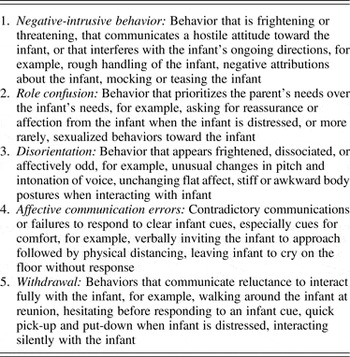
The CAPEPD intervention aimed to promote the development of secure attachment, while simultaneously reducing family contextual stress, disorganized infant attachment, and infant mental health issues. The CAPEPD study used a blended intervention model that combined rigorous home-visitation from 27 weeks of pregnancy through the child's second year of life that included routine prenatal care and well-baby care, rigorous follow-up, whole-family involvement, and health education counseling (e.g., breastfeeding, and alcohol and tobacco use; Olds et al., Reference Olds, Henderson, Tatelbaum and Chamberlin1986), with enhancement of sensitive parenting and reductions in disrupted parenting behaviors via video-feedback techniques. Approximately 367 women were enrolled in the CAPEDP study and were randomly assigned to the intervention or care as usual groups. A smaller ancillary study was developed to measure the impact of treatment on maternal and child attachment outcomes. This portion of the study involved only a subsample of those included in the larger CAPEDP project because of the labor, resource, and cost-intensive nature of attachment-based measurement tools. For the ancillary study, participants were asked in sequence to be part of this component, and the first 120 families to accept were enrolled. The objective of this substudy, known as the CAPEDP—Attachment (CAPEDP-A) study, was to assess the impact of the CAPEDP intervention in terms of increasing infant attachment security, reducing infant attachment disorganization, and reducing disrupted maternal communication. To our knowledge, the CAPEDP study is the first randomized intervention study to target the disrupted maternal communications that have been shown to be the strongest maternal predictors of infant attachment disorganization (see Table 1).
Dimensions of disrupted communication assessed by the AMBIANCE coding system

Note: Adapted from “Maternal Frightened, Frightening, or Atypical Behavior and Disorganized Infant Attachment Patterns,” by K. Lyons-Ruth, E. Bronfman, and E. Parsons, Reference Lyons-Ruth, Bronfman and Parsons1999, Monographs of the Society for Research in Child Development, 64(3, Serial No. 258), pp. 67–96. Copyright 1999 by the Society for Research in Child Development. Adapted with permission.
In their comprehensive review of studies on disorganization, Lyons-Ruth and Jacobvitz (Reference Lyons-Ruth and Jacobvitz2016) noted that a significant gap in the literature exists regarding the mechanisms through which randomized interventions bring about a reduction in disorganized attachment. Important goals of RCTs are to identify outcomes that are causally related to particular interventions and to identify potential mediating mechanisms of change related to those interventions. Although causal implications of the intervention can be evaluated through random assignment to the intervention or treatment as usual group, causality associated with potential mediators of change cannot be derived from random assignment alone, even when it is also possible to randomize participants to different levels of the potential mediators (Pearl, Reference Pearl2014). To make causal claims about the role of the mediator on the outcome, counterfactually based definitions of direct and indirect effects have been developed (Pearl, Reference Pearl2014). These definitions are called counterfactuals because they are based on counterfactual conditions such as “If A were true, would C have been true?” Statistical software has recently been developed to implement this approach (Muthén & Asparouhov, Reference Muthén and Asparouhov2015), allowing for the examination of the causal role of the mediator. These statistical advances for testing mediation in RCTs may have important implications for policy because they can help identify the active ingredients of an intervention, which may help develop more focused and possibly less expansive interventions.
A major aim of the current study is to understand one mediating pathway that may explain how disorganized attachment is reduced in an intervention trial. Specifically, we examine whether the CAPEDP intervention results in a reduction in disrupted maternal communication compared to controls, which in turn contributes to a reduction in the incidence of disorganized attachment. In sum, the current study was designed to assess the following hypotheses: (a) participation in the intervention group, but not in the control group, would reduce the likelihood of disrupted maternal communication; (b) participation in the intervention group, but not in the control group, would reduce the likelihood of disorganized attachment; and (c) the effect of intervention on reducing disorganized attachment would be mediated by reductions in disrupted maternal communication.
Method
Participants
Pregnant women in the second trimester were recruited into CAPEDP through maternity check-ups at 10 public hospitals in the Paris area from December 2006 to March 2009. The hospitals, and specifically, the doctors and nurses who worked with this population, were asked to refer women who met the following criteria: (a) under 26 years of age; (b) first-time mothers who were less than 27 weeks pregnant; (c) able to speak French fluently; (d) living in the intervention area (Paris and its inner suburbs); and (e) presenting with one or more of the following psychosocial risk factors: having less than 12 years of education; sufficiently low enough income to qualify for French social welfare health insurance (Couverture Maladie Universelle Complémentaire), that is, with an income less than or equal to 850 euros a month or, for undocumented migrants, Government Medical Aid (Aide Médicale d’État); and intending to bring the child up without the involvement or support of the father. Women who were already actively involved in sustained treatment for mental health (e.g., addictions) or physical disorders requiring long-term follow-up were excluded from the study.
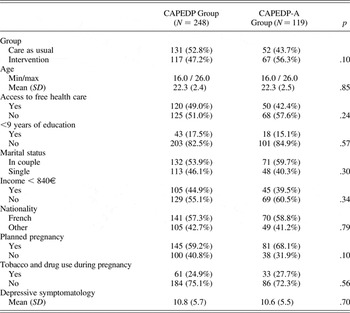
After completing baseline screening and informed consent procedures, participants were randomly assigned in a 1:1 ratio to either the CAPEDP intervention or the usual care group using a computer-generated randomization sequence, stratified by recruitment center (see Tubach et al., Reference Tubach, Greacen, Saïas, Dugravier, Guedeney, Ravaud and Guedeney2012, for additional details on randomization methods). At the maternity check-up, a total of 440 women agreed to participate in the study. Seventy-three of the 440 women (16.6% of the sample) withdrew their consent or could not be reached to schedule the baseline assessment visit.Footnote 1 When children reached 12 months of age, all families participating in the main CAPEDP intervention trial were consecutively invited to take part in the CAPEDP-A assessment. The CAPEDP-A assessment was designed specifically to examine attachment outcomes based on intervention status. After receiving information about the study, and upon agreeing to participate with their child, mothers signed an informed consent form, and an appointment was given to them for a 2-hr assessment procedure within the following fortnight. Due to the time-intensive nature of coding attachment methodology, inclusion in the CAPEDP-A assessment was terminated when the required 120 mothers had agreed to participate with their child. However, due to technical problems with videotaping Strange Situations, only 117 participants were included in the final analyses. Mothers received 50 euros as a stipend for participating in the CAPEDP-A assessment. There were no significant differences in sociodemographic factors in those who accepted versus declined and/or were not asked to participate in the CAPEP-A substudy (see Table 2). CAPEDP-A received ethical approval from the Comité de Protection des Personnes Ile de France IV, Institutional Review Board, and from the Commission Nationale de l'Informatique et des Libertés (CNIL, 907255), with Clinical Trial Registration Number: NCT00392847.
Comparison between general CAPEDP and CAPEDP-A risk factors at inclusion

Procedures
At the baseline assessment visit, during the 27th week of pregnancy, demographic and mental health data were collected. For the CAPEDP-A mothers, their mean age was 22.3 years (SD = 2.5; range = 16–26), 84.9% had less than 12 years of school education (15.1% had less than 9 years), 42.4% had sufficiently low income to be eligible for government medical aid (CMU or AME), and 24.4% participants declared they were planning to bring up their child without the support of the infant's father. In addition, 32.4% of the CAPEDP-A sample considered themselves to be poor; 40.3% were single; 31.9% had not planned their current pregnancy; 39.5% had been pregnant at least once before, but their previous pregnancies had been interrupted; and 52.1% were first-generation immigrants. No significant baseline differences were found between the intervention and care as usual groups on sociodemographic variables (for additional details, see Dugravier et al., Reference Dugravier, Tubach, Saias, Guedeney, Pasquet and Purper-Ouakil2013).
Following the initial baseline assessment, all participants engaged in a scheduled series of assessment visits that occurred when the infant was approximately 3, 6, 12, 18, and 24 months of age. Evaluators were not informed as to whether the family being evaluated was in the intervention group or the control group. When infants were between 12 and 17 months of age, all mothers who agreed to participate in the CAPEP-A study participated in a 2-hr attachment-focused assessment procedure.
Measures
AMBIANCE
The AMBIANCE (Bronfman et al., Reference Bronfman, Madigan and Lyons-Ruth1992–2009) codes disrupted caregiver behavior and communication toward the infant during videotaped caregiver–infant interactions. After a written account of all instances of disrupted maternal communication observed during the Strange Situation (Ainsworth, Blehar, Waters, & Wall, Reference Ainsworth, Blehar, Waters and Wall1978), a frequency score was derived for each of the five dimensions of the AMBIANCE scale: affective communication errors, role/boundary confusion, fearfulness/disorientation, intrusiveness/negativity, and withdrawing behavior. The AMBIANCE coding system also involves a continuous 7-point scale assessing the global level of disrupted communication in the video. The global level of disrupted communication is assigned by the coder based on the frequency and intensity of disrupted maternal communications displayed by the caregiver, where 1 = warm and sensitive communication, 3 = generally positive interaction with some evidence of disrupted communication, 5 = clear and repeated disruption in affective communication, and 7 = disrupted communication with few or no ameliorating behaviors. A binary classification is then assigned, with scores of 5 or above classified as “disrupted” and scores of less than 5 as “not-disrupted” (Bronfman et al., Reference Bronfman, Madigan and Lyons-Ruth1992–2009). For the AMBIANCE scale, four coders were trained by the AMBIANCE developers (E. Bronfman, S. Madigan, and K. Lyons-Ruth), all obtaining reliability (>80% concordance on the disrupted vs. nondisrupted classification).
Strange Situation Procedure (SSP)
The SSP (Ainsworth et al., Reference Ainsworth, Blehar, Waters and Wall1978) is a laboratory paradigm with a series of eight 3-min, increasingly stressful episodes, for 12- to 18-month-olds. The SSP is videotaped, and infant behavior is coded using four 7-point anchored scales for proximity seeking, contact maintaining, avoidance, and resistance and one 9-point scale for disorganization (Main & Solomon, Reference Main, Solomon, Greenberg, Cicchetti and Cummings1990). For the secure, avoidant, and ambivalent-resistant SSP classifications, two coders were trained by Karin Grossman and Fabienne Becker-Stoll, obtaining reliability (i.e., >85% classification concordance). Fifty percent of the SSPs were coded by a second independent rater, and intercoder reliability for the three-way classification was 85%. An expert coder who, blind to intervention group status, coded all SSPs, coded for disorganization.Footnote 2 The concordance for the disorganized versus not-disorganized classification (N = 18) between the primary coder and a second trained and reliable coder was 86.3%.
The intervention program and care as usual
In France, a national mother–child support and prevention network, the Protection Maternelle et Infantile (PMI; i.e., Maternal and Infant Protection), was implemented after World War II, parallel to the creation of free public mental health services for both adults and children across the country. At present, mothers can consult PMI centers free of charge at any point in time from pregnancy to 3 years postpartum. However, PMI nurses do not receive specific training in mental health issues for mothers and children and receive little organized psychological supervision (DASES, 2003). The absence of targeted assistance with attachment-relevant and mental health issues served as the impetus for the development of the CAPEDP study. The CAPEDP is the first large-scale French intensive home-visiting program that specifically aims to enhance the life outcomes of children and families.
The CAPEDP was developed in line with international best practice criteria (Daro, McCurdy, Falconnier, & Stojanovic, Reference Daro, McCurdy, Falconnier and Stojanovic2003; Durlak & DuPre, Reference Durlak and DuPre2008; Gomby, Reference Gomby2005; Kahn & Moore, Reference Kahn and Moore2010) and was adapted to suit the particularities of the French population. The CAPEDP program had two major features that differentiated it from most other home-visiting programs targeting mental health promotion. The first feature was that it addressed child mental health promotion in families who already have free access to one of the most extensive, comprehensive, and longstanding social and health care systems in the Western world. The second differentiating feature was that qualified psychologists conducted the entire home-visiting program.
The CAPEDP intervention (Saïas et al., Reference Saïas, Greacen, Tubach, Dugravier, Marcault and Tereno2013; Tereno et al., Reference Tereno, Guedeney, Dugravier, Greacen, Saïas, Tubach and Guédeney2013; Tubach et al., Reference Tubach, Greacen, Saïas, Dugravier, Guedeney, Ravaud and Guedeney2012) sought, where possible, to act upon the major modifiable determinants of infant mental health from the third trimester of pregnancy to the child's second birthday. Psychologists visited families an average of 6 times during the prenatal period (starting from the 27th week of pregnancy), eight times in the first 3 months of the child's life, 15 times when the child was between 4 and 12 months of age, and another 15 times during the child's second year, resulting in a total of 44 home visits during the entire intervention. Each session was approximately 60 min in duration. Additional details regarding the content of the manualized CAPEDP intervention can be found elsewhere (Saïas et al., Reference Saïas, Greacen, Tubach, Dugravier, Marcault and Tereno2013).
The CAPEDP home-visiting program used an intervention manual based on Services Intégrés pour la Périnatalité et la Petite Enfance (Integrated Services for Perinatal Health and Early Childhood), a Canadian adaptation of the Nurse Family Partnership intervention program. The manual proposes 39 different intervention brochures to be used during home visits. Each brochure addresses a specific health or mental health topic, based on a common theme of promoting quality mother–child relationships. The intervention manual also drew from Weatherston's guidelines concerning the most practical aspects of home-visiting, as well as best practice recommendations for home visiting from the Florida State University Center for Prevention and Early Intervention Policy. The manual offers a series of reference points for addressing different topics at different periods during the intervention (prenatal, 0–6 months, 6–15 months, and 15–24 months). Each intervention was based around four themes: the family and their social and cultural network; the mother's needs and health; creating a safe and stimulating environment for the baby; and the baby's development. The psychologists were instructed to adapt their interventions to the needs of each family being visited, as well as to encourage the family to make the most of available PMI centers, social services, and community resources in general.
Home-visiting psychologists were also provided with a set of items that they could discuss with the families being visited: (a) family information brochures, each addressing a specific topic and designed to facilitate discussion and to be left with the family; (b) a series of six DVDs including short films on pregnancy, childcare, and child development, which were used by the home-visiting psychologists to facilitate forming a working alliance with each family, particularly in the antenatal period; and (c) a comprehensive document, collated by the research team, on promoting infant emotional development and mother–child attachment quality. Furthermore, the home-visiting team systematically proposed, with the mothers’ approval, to film short sequences of everyday interactions between the mothers and their children: bath time, mealtime, play, changing nappies, and so on. During subsequent visits, mothers would watch the video and discuss what they saw with the home-visiting psychologist.
Specific tools were developed to support the intervention team concerning attachment issues (Tereno et al., Reference Tereno, Guedeney, Dugravier, Greacen, Saïas, Tubach and Guédeney2013). All home-visiting interveners were psychologists. Each home visitor was provided with two manuals, each aimed at structuring their interventions, with one focusing on attachment issues and the other on oppositional behavior. A brochure drafted by the research team and focusing on the emotional development of young children was also provided to intervention families with the aim of making them aware of the importance of early attachment bonds. Video feedback was used to encourage parents to reflect on their parenting practices and experiences. The overall aim was to increase maternal sensitivity (detecting infants’ signals, interpreting them appropriately, and providing adequate and rapid responses to infants’ demands) and mentalizing skills (identifying their own and their infants’ intentions and emotional states). Furthermore, the intervention sought to decrease disrupted maternal communication (detecting, preventing, and repairing disrupted maternal affective communication) and infant disorganized behavior (detecting and emotionally repairing disorganized behavior). When the attachment assessment took place at about the children's first birthday, families in the intervention group had on average received 29 home visits.
All home-visiting psychologists received specific training before the beginning of the intervention. This 6-day program involved didactical training on particular subjects as well as pedagogical activities to develop intervention skills. Principal topics addressed included (a) perinatal health and mental health, (b) the art of home visiting, (c) the specific contents of the CAPEDP intervention manual, and (d) the inclusion process. Specific training was also provided on the use of video for helping parents reflect on their parenting experiences and practices and promoting attachment security in infants from 6 to 9 months old and handling oppositional behaviors in children 12–15 months old. To ensure treatment fidelity, all home-visiting psychologists received weekly individual supervision by senior clinicians, and group supervision by the principal investigator on a fortnightly basis. A trained and highly skilled project manager supervised fidelity to the intervention manual (see Saias et al., Reference Saias, Lerner, Greacen, Simon-Vernier, Emer and Pintaux2012, for further details on fidelity).
Care as usual
On a nationwide basis, France provides community-based mother–child support and prevention services with no out-of-pocket payment, known as the Protection maternelle et infantile (PMI; Mother and Child Protection Services). In addition to having direct access to these PMI centers from the beginning of pregnancy through to their children's third birthday, families can also access free community mental health services for both parents and children. Furthermore, local government also provides family benefits aimed at helping families raise their children, on the condition that they agree to bring them in for regular health check-ups and compulsory vaccinations. PMI nurses also make home visits to families identified at the maternity hospital as being in particularly difficult circumstances, although very few families end up receiving more than one such home visit. Although PMI nurses receive little specific training on mental health prevention, they can refer families directly to local community child and adolescent mental health services, which provide home visits if deemed necessary for the child's mental health or safety.
Data analyses
Chi-square tests (categorical measures: i.e., organized vs. disorganized) were examined in Statistical Package for the Social Sciences (SPSS version 22.0) to test our hypotheses that mothers’ participation in the intervention group, but not in the control group, would reduce the likelihood of (a) the mother's displaying disrupted maternal communication and (b) the infant displaying disorganized attachment. The third mediational hypothesis was tested in MPlus 7.2 (Muthén & Muthén, Reference Muthén and Muthén1998–2012). Using counterfactual definitions, the total effect of the intervention on the outcome can be decomposed into two components (Muthén & Asparouhov, Reference Muthén and Asparouhov2015; Pearl, Reference Pearl2014). The first component is the pure natural direct effect (PNDE), which describes the effect of the intervention if it was administered but its effect on the mediator was blocked. Stated differently, it is the effect of the intervention on the outcome if the mediator is kept at the level it would have been in the absence of exposure to the intervention. Thus, the PNDE captures the effect of the intervention that is not accounted for by the mediator. The second component is the total natural indirect effect (TNIE), which describes the change in the outcome among those not exposed to the intervention that is due to the difference in the level of the mediator between those who are exposed to the intervention versus those who are not. Thus, this component indexes the effect of the intervention on the outcome that is explained by the average difference in the mediator between the control and the intervention groups.
Results
Preliminary analyses
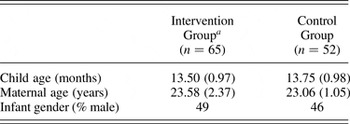
As expected due to randomization, there were no significant differences between the intervention and control groups on demographic variables, including maternal age, and child age and gender (see Table 3).
Sample demographics across intervention and control groups
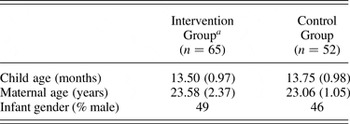
a There were no significant differences in sociodemographic variables between the intervention and care as usual groups.
Intervention effects
Disrupted maternal behavior
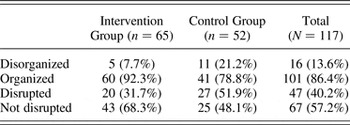
At the attachment outcome assessment at 13 months, 40% of mothers were classified as having disrupted maternal communication and 57% were classified not disrupted. There were significant differences between the intervention and the control groups on classifications of disrupted maternal communication, χ2 (1) = 4.80, p < .05; odds ratio (OR) = 0.43; 95% confidence interval (CI) [0.20, 0.92]. In the intervention group, the percentage of disrupted maternal communication was 31.7% compared to 51.9% in the control group.
Disorganized mother–child attachment
Of mother–child dyads, 13.6% dyads were classified as disorganized attachment relationships. However, there were significant differences between the intervention and the control groups on classifications of disorganized attachment, χ2 (1) = 4.44, p < .05; OR = 0.31; 95% CI [0.10, 0.96]; see Table 4. In the intervention group, the percentage of disorganized attachment was 7.7% compared to 21.2% in the control group.
Distribution of disrupted versus nondisrupted AMBIANCE classifications and disorganized versus organized Strange Situation classifications by treatment group

Mediation model
Next, we tested a mediation model through which intervention status predicted infant disorganized attachment in the SSP via disrupted maternal communication. In this analysis, we controlled for infant age and gender, as well as maternal age. There was an association between intervention status and disrupted maternal communication, as well as between disrupted maternal communication and infant attachment. We then computed the PNDE and the TNIE to allow us to make causal inferences about the role of the mediator on the outcome (Muthén & Asparouhov, Reference Muthén and Asparouhov2015). We report the odds ratio and their 95% CI, which can be used to determine their statistical significance (i.e., it is significant if the 95% CI does not include 1).
The results indicated that the CAPEDP intervention led to significantly lower odds of children showing attachment disorganization as the total effect was significant, OR = 0.32, 95% CI [–0.05, 0.69]. This total effect can be decomposed into two components: the effect of the intervention on the outcome that is not explained by the mediator (PNDE) and the effect of the intervention on the outcome that is explained by the mediator (TNIE). The PNDE was significant, OR = 0.45, 95% CI [–0.06, 0.96], Cohen d = 0.44, indicating that the intervention led to decreased odds of children having disorganized attachment via mechanisms other than disrupted maternal communication. The TNIE was also significant, OR = 0.71, 95% CI [0.44, 0.97], Cohen d = 0.63, indicating that disrupted maternal communication partially explained why the intervention led to lower attachment disorganization. A more detailed understanding of the role of disrupted maternal communication can be obtained by examining the proportion of the total effect of the intervention on the outcome (b = –0.12 before its conversion into an odds ratio) that is explained by the indirect effect of the mediator on the outcome (b = –0.03 before its conversion into an odds ratio). Specifically, this ratio indicated that disrupted maternal communication explained 25% (–0.03/–0.12) of the effect of the intervention on disorganized attachment.
Because the mediator and the outcome were measured contemporaneously, we also assessed the reverse mediation model, entering disorganization status as mediator and disrupted communication as outcome, and controlling for infant age and gender, and maternal age. As expected, the model did not show significant mediation. Specifically, in this model, the total natural indirect effect was not significant, OR = 0.79, 95% CI [0.56, 1.03]. These results demonstrate discriminant validity, further supporting the model proposed here: disrupted maternal communication partially mediates the relation between treatment and disorganization.
Discussion
The central focus of the current study was to test underlying mechanisms of change in reducing disorganized attachment. We evaluated whether intervention-related reductions in the hypothesized mediator, disrupted maternal communication, in turn influenced infant disorganized attachment status. Findings from our mediation analysis indicate that the CAPEDP intervention caused a reduction in disrupted maternal communication, which, in turn, was associated with a decrease in the prevalence of infant–caregiver disorganized attachment in the intervention group. As a mediator, disrupted maternal communication accounted for 25% of the variance in the effect of the intervention on disorganized attachment. The identification of a mediator of treatment efficacy stands in contrast to other attachment-based intervention research that has not assessed mediation. In addition, the one study that conducted careful assessment of mediation in an RCT was unsuccessful in identifying a mediator (Cicchetti et al., Reference Cicchetti, Rogosch and Toth2006). As noted earlier, Cicchetti et al. (Reference Cicchetti, Rogosch and Toth2006) assessed whether changes in either maternal sensitivity or maternal representations served as a mediator of intervention effects on secure attachment, but no significant mediation was found.
One possibility as to why a mediator of treatment efficacy was identified here is that we tested a well-established precursor of disorganized attachment as the agent of change. Previous research examining aspects of maternal interaction as a mechanism of change have, to date, focused only on maternal sensitivity. However, a large body of research has documented associations between disrupted maternal communication and disorganized attachment (Madigan, Bakermans-Kranenburg, et al., Reference Madigan, Bakermans-Kranenburg, van IJzendoorn, Moran, Pederson and Benoit2006). In addition, the assessment of forms of frightened, frightening, and other atypical behavior, as captured in the coding for disrupted communication, now has a clear body of literature supporting its reliability, its convergent validity in relation to infant disorganization, its discriminant validity in relation to maternal sensitivity, its prediction of childhood behavior problems, and its predictive power for a variety of maladaptive outcomes in adolescence and adulthood (Dutra et al., Reference Dutra, Bureau, Holmes, Lyubchik and Lyons-Ruth2009; Madigan, Bakermans-Kranenburg, et al., Reference Madigan, Bakermans-Kranenburg, van IJzendoorn, Moran, Pederson and Benoit2006; Madigan et al., Reference Madigan, Moran, Schuengel, Pederson and Otten2007; Pechtel, Woodman, & Lyons-Ruth, Reference Pechtel, Woodman and Lyons-Ruth2012; Shi et al., Reference Shi, Bureau, Easterbrooks, Zhao and Lyons-Ruth2012). Thus, the current documentation of its role as a mediator of changes in infant disorganization converges well with prior literature supporting its pivotal role in the development of disorganization.
This is the first study to demonstrate mediation of intervention-related changes in infant disorganization via systematic reductions in disrupted maternal communication. This result built, in part, on statistical advances in the assessment of mediation in RCTs. Recent advances now allow researchers to go beyond the prior Baron and Kenny (Reference Baron and Kenny1986) regression-based assessment of mediation, by allowing causal inferences about mediators. These tools now offer a more sophisticated evaluation of the underlying mechanisms of change that are set in motion by differences in intervention strategy (Muthén & Asparouhov, Reference Muthén and Asparouhov2015). Although our findings showed that the intervention was causally associated with lower odds of attachment disorganization and that this was explained by disrupted maternal communication, we also found that 75% of the effect of the intervention was not explained by disrupted maternal communication. Although explaining 25% of the variance is substantial in developmental and/or clinical science, it also suggests that measurement error, as well as other presently untested mediator variables, are important for understanding the reduction of disorganized attachment in the intervention group. Further studies are needed that both replicate the results obtained herein and also explore additional mediators of the intervention-related change in infant disorganization.
However, our mediational finding contrasts with the lack of evidence that maternal sensitivity mediates the effects of the intervention featured in the Cicchetti et al. (Reference Cicchetti, Rogosch and Toth2006) study. As we have noted earlier, high levels of maternal sensitivity have consistently been found to predict infant security of attachment, but low levels of maternal sensitivity have been only weakly been associated with infant disorganization (van IJzendoorn et al., Reference van IJzendoorn, Schuengel and Bakermans-Kranenburg1999). This is a puzzling finding as it would seem that maternal frightened, frightening, or other atypical behavior would be noted as insensitive on Ainsworth's sensitivity scale. Based on experience gained in the development of the AMBIANCE measure, we have speculated elsewhere that coders of sensitivity initially view hostile and intrusive maternal behaviors as the most insensitive behaviors, in that they are particularly notable on videotape and arouse negative feelings in the viewer, as well as in the infant (Lyons-Ruth et al., Reference Lyons-Ruth, Bronfman and Parsons1999). However, among very stressed and often traumatized mothers, the quieter behaviors coded as withdrawal, disorientation, role-confusion, and affective communication errors may be more disturbing to the infant and more damaging in the long term due to the lack of emotional connection that they represent (Hobson et al., Reference Hobson, Patrick, Hobson, Crandell, Bronfman and Lyons-Ruth2009; Lyons-Ruth, Bureau, Easterbrooks, et al., Reference Lyons-Ruth, Bureau, Easterbrooks, Obsuth, Hennighausen and Vulliez-Coady2013; Lyons-Ruth, Bureau, Holmes, et al., Reference Lyons-Ruth, Bureau, Holmes, Easterbrooks and Brooks2013; Lyons-Ruth et al., Reference Lyons-Ruth, Pechtel, Yoon, Anderson and Teicher2016). Mothers exhibiting these behaviors can appear excessively needy of the infant's attention (e.g., repeatedly asking for affection from the infant; asking “do you love mommy?”), or as emotionally disconnected (e.g., not speaking to the infant, not initiating approach when the infant is distressed; giving odd or affectless responses), or fearful (e.g., greeting the infant with a constricted, high, frightened voice). Such unusual behaviors seen in high-risk samples do not fit easily onto a single dimension of sensitivity, and may be rated as less insensitive than more emotionally direct but negative parental attributions or intrusiveness.
The findings from the current study highlight the importance of developing and evaluating preventive intervention programs that, like CAPEDP, aim specifically to reduce the caregiver's disrupted behavior in populations struggling with social and contextual adversity. When multirisk families are burdened with additional social and economic stressors, (e.g., job loss and interpartner violence), the attachment relationship may be directly influenced by parental preoccupation with external stressors that attenuates their ability to assist the child with the regulation of fearful arousal and distress (Lyons-Ruth & Jacobvitz, Reference Lyons-Ruth, Jacobvitz, Cassidy and Shaver2016). Programs such as the CAPEDP intervention are therefore of particular importance in high-risk contexts, where infants are at a substantial risk of developing disorganized attachment relationships with their caregivers.
Our results confirm that the CAPEDP perinatal home-based program significantly facilitated decreases in disrupted maternal communication by infant age 12 months. In the control group, the percentage of mothers classified as disrupted was 51.9%, whereas classification as disrupted in the intervention group was significantly lower at 31.7%. It should be noted that previous research has demonstrated that changes in disrupted maternal communication in the context of an intervention can occur rapidly. Specifically, Madigan, Hawkins, Goldberg, and Benoit (Reference Madigan, Hawkins, Goldberg and Benoit2006) demonstrated that measurable change in disrupted maternal communication occurs as early as the second treatment session over the course of a five-session video-feedback intervention. In addition, the change in disrupted maternal communication continued to persist and became more robust as the treatment sessions progressed. Thus, disrupted maternal communication is not only an important target of change but also one that can successfully be transformed into more optimal behavior over the course of treatment.
The results of the current RCT also demonstrate that there were significant differences between the intervention and the control group in terms of infant disorganization. In the control group, the percentage of disorganized attachment was 21.2%, whereas in the intervention group, it was 7.7%. The proportion of disorganized attachment in the control group was comparable to other high-risk samples (25%; van IJzendoorn, et al., Reference van IJzendoorn, Schuengel and Bakermans-Kranenburg1999). Most mothers in the current study were young and were first- or second-generation immigrants with low educational levels and relatively little income. Without intervening services, the cumulative effect of multifaceted familial and ecological risks has been shown to create repercussions for the development of the parent–child attachment relationship (Cyr et al., Reference Cyr, Euser, Bakermans-Kranenburg and van IJzendoorn2010).
There are two practical applications of the current intervention that merit further consideration. First, Bowlby (Reference Bowlby1982) maintained that, although typically quite variable in the first 5 years, early interactions with caregivers shape the quality of the parent–child attachment relationship. However, the stability of attachment in the early childhood period is weak to moderate (Fraley, Reference Fraley2002; Groh et al., Reference Groh, Roisman, Booth-LaForce, Fraley, Owen, Cox and Burchinal2014; Pinquart, Feußner, & Ahnert, Reference Pinquart, Feußner and Ahnert2012). Transformations in attachment are more likely to occur when the quality of the parent–child relationship is compromised due to changes in caregiving environment or family circumstances (Sroufe, Carlson, Levy, & Egeland, Reference Sroufe, Carlson, Levy and Egeland1999; Thompson & Raikes, Reference Thompson and Raikes2003). It has been shown, for example, that in the early years, attachment security is highly dependent on concurrent maternal sensitivity. However, the association between attachment and maternal sensitivity degrades quickly over time, and distal assessment of these two constructs is an empirically sufficient condition for small effect size (Atkinson et al., Reference Atkinson, Niccols, Paglia, Coolbear, Parker, Poulton and Sitarenios2000). Thus, although reductions in disorganized attachment were observed in the intervention group, the impact of this treatment may not be enduring without continued intervention services for these families.
Preventive intervention research supports the need for continued follow-up with multirisk families. For example, although Cicchetti et al. (Reference Cicchetti, Rogosch and Toth2006) initially found that infant attachment security increased and disorganized attachment decreased from pre- to posttest for maltreating families receiving IPP (Lieberman et al., Reference Lieberman, Weston and Pawl1991) or the home-visiting program PPI (Olds et al., Reference Olds, Henderson, Tatelbaum and Chamberlin1986), a follow-up investigation of the effectiveness of the treatment modalities suggested that only children in the IPP maintained treatment gains 12 months after the completion of the intervention. Thus, from a practical perspective, follow-up booster sessions should occur after the formal completion of a treatment protocol to increase the likelihood that treatment effects are sustained over time. The second phase of the project (CAPEDP-A II), currently under way, monitors families up to the child's fourth birthday and thus will be able to evaluate the benefits of receiving continued intervention during the early childhood period.
Second, a strength of the CAPEDP intervention is that interveners received a thorough grounding in the core tenets of attachment theory and developmental psychopathology. In addition, interveners in the CAPEDP project frequently needed to address and facilitate the reduction of maternal trauma-related symptomatology. Interveners also required extensive observational training to detect accurately the different forms that disrupted maternal communication may take. Given these multifaceted aspects of the home visitor's role, home visitors also received frequent supervision throughout the duration of the intervention (Guedeney & Tereno, Reference Guedeney and Tereno2012; Tereno et al., Reference Tereno, Guedeney, Dugravier, Greacen, Saïas, Tubach and Guédeney2013). As a result, their fidelity to the manualized intervention protocol was strong (Saias et al., Reference Saias, Lerner, Greacen, Simon-Vernier, Emer and Pintaux2012). Although there is considerable debate in the literature regarding the intervener's requisite level of expertise and education needed to effectively treat families (Clarke, King, & Prost, Reference Clarke, King and Prost2013), we concur with the recommendations by Cicchetti et al. (Reference Cicchetti, Rogosch and Toth2006), Moss et al. (Reference Moss, Dubois-Comtois, Cyr, Tarabulsy, St.-Laurent and Bernier2011), and Olds (Reference Olds2006) in emphasizing that extensive training backed up by frequent supervision are essential ingredients for intervention success.
Study limitations and conclusions
The present study has several limitations worth noting. First, the control group in our study received “care as usual,” which in France involved community-based mother–child support and prevention services (PMI). Families in France have free access to PMIs up until their child's third birthday, and this accessibility includes the provision of mental health services, if desired and requested, or recommended by a PMI nurse. It is important to note, however, that PMI nurses are not trained in screening or treating mental health issues and related stressors. Part of the PMI service also includes home visitations from public health nurses for families who are burdened by significant economic or social challenges. However, for 60% of high-risk families in Paris, the frequency of home visitations is limited to one visit per family. To draw firm conclusions regarding the magnitude of the benefits of the randomization to the CAPEDP intervention, it would have been ideal to include a community control group of similarly high-risk families who did not have access to PMI centers. Thus, current findings may underestimate the effect of a similar intervention in a context without existing maternal and child support centers.
Second, disrupted maternal communication and child attachment have often been evaluated in the same context, as was done here. However, this methodological practice does raise the possibility that common method variance may have occurred. The methodological concern is that independent coders of maternal or child behavior may inadvertently or unintentionally be influenced by the behavior of the opposing member of the dyad during interactional coding. However, despite this cautionary note, in a meta-analysis of studies that did and did not code maternal and infant behavior in the same context, Madigan, Bakermans-Kranenburg, et al. (Reference Madigan, Bakermans-Kranenburg, van IJzendoorn, Moran, Pederson and Benoit2006), the association between disrupted maternal communication and infant disorganization was weaker in studies that used the same coding venue, and stronger in studies that utilized different coding contexts. As an added control for potential common method variance contamination, in the current study, we utilized independent maternal and child behavioral coders who were naive to the other method of coding (i.e., maternal or infant behavior), as well as to all other study data.
Third, timing of assessments in the present study also poses a limitation related to causal inferences. The true causal inference is facilitated by designs that measure all constructs at all waves and include both stability and change pathways (Maxwell & Cole, Reference Maxwell and Cole2007). We were unable in the current study to meet this criterion, as the cause (i.e., disrupted maternal communication) was not formally assessed before the outcome (disorganized attachment) in temporal sequence. We were also not able to collect pre- and postassessment measurements of infant attachment, as the CAPEDP intervention began long before an assessment of infant attachment is methodologically possible. Together, this means that although we describe one variable influencing another in a causal chain, causal directions are tentative, and require further replication to draw firm conclusions on the causal pathway discussed. However, in one effort to further specify direction of effect, we also tested a reversed mediation model, that is, that intervention reduced disrupted maternal communication through reducing infant disorganization. As expected, the indirect effect of this mediation model was not significant. Thus, both conceptual considerations and empirical data support the mediation hypothesis forwarded here.
Fourth and finally, identifying which components of multifaceted interventions contribute to measurable change is a common challenge in experimental research (see van IJzendoorn, Bakermans-Kranenburg, & Juffer, Reference van IJzendoorn, Bakermans-Kranenburg, Juffer, Berlin, Ziv, Amaya-Jackson and Greenberg2005). It is important to reiterate that the CAPEDP intervention was a blend of intensive home visiting, as well as direct video feedback with caregivers to assist with reducing nonoptimal maternal behavioral patterns. In the video feedback, mothers were explicitly encouraged to recognize better their disrupted behavior toward their child, as well as their subsequent sensitive behavior. Given these multiple components, it would have been ideal to assess which components of the intervention served as mediators of the effects linked to the intervention as a whole, to determine their shared and unique variance in influencing infant disorganization. More powerful and precise statistical tools now available for assessing mediational models facilitate such assessment, and assessing more complex mediational models should be one focus of future work.
In summary, our findings highlight the importance of developing and evaluating preventive intervention programs that aim to reduce the high rates of disrupted caregiver behaviors in populations with known economic, contextual, and social risks, with the hopes of changing children's developmental trajectories. Prevention programs that target high-risk groups have the potential to make a sizable impact on parent and child well-being and to contribute substantially to the productivity and prosperity of society as a whole. Heckman has argued that the “highest rate of return in early childhood development comes from investing as early as possible, from birth through age five, in disadvantaged families” (Heckman, Reference Heckman2010, p. 1). Early expenditures in prevention and intervention programs for high-risk families have been shown to recoup initial investments costs, and the degree to which those costs are recouped continually increase into adulthood due to cost-saving reductions via decreased emergency room visits, the need for child protection, special education, and use of social services (Reynolds, Rolnick, Englund, & Temple, Reference Reynolds, Rolnick, Englund and Temple2010). Thus, there are potentially substantial individual and societal benefits of investing in high-risk families, as has been done with the CAPEDP project.