Introduction
Chronic rhinosinusitis is a highly heterogeneous clinical syndrome. In recent years, the classification of chronic rhinosinusitis has focused more on its pathogenesis than considering whether polyps are an actual clinical phenomenon. The endotypes of this disease can be divided into chronic rhinosinusitis with T helper (Th) 2 cell responses and chronic rhinosinusitis with non-Th2 cell responses.Reference Fokkens, Lund, Hopkins, Hellings, Kern and Reitsma1 Chronic rhinosinusitis with Th2 responses is characterised by increased tissue infiltration of eosinophils. Some studies have investigated the relationship between peripheral blood eosinophils and tissue eosinophils in patients with chronic rhinosinusitis with nasal polyps;Reference Bafadhel, McKenna, Terry, Mistry, Pancholi and Venge2,Reference Brescia, Barion, Zanotti, Giacomelli, Martini and Marioni3 in peripheral blood, an eosinophil percentage higher than 3.05 per centReference Hu, Cao, Liang, Cui and Liu4 or higher than 5 per centReference Tokunaga, Sakashita, Haruna, Asaka, Takeno and Ikeda5 is highly predictive for the diagnosis of eosinophilic chronic rhinosinusitis with nasal polyps. Accordingly, our previous study showed that patients with an elevated peripheral blood eosinophil level have poor post-operative outcomes.Reference Li, Xing, Yang, Liu, Geng and Wang6 Because of the invasiveness and time-consuming nature of polyp tissue biopsy examination, as well as the differences in sampling methods and manual counting standards among different medical institutions, it is necessary to use a simple and reliable eosinophil stratified evaluation method to guide the treatment of patients with different subtypes of chronic sinusitis and nasal polyps.
Glucocorticoids have diverse roles in various inflammatory diseases. These include participation in local mucosal immune responses; inhibition of neutrophil, monocyte and T lymphocyte migration; and regulation of eosinophil activity. Although the traditional comprehensive treatment with glucocorticoids plus functional endoscopic sinus surgery (FESS) generally has a positive effect, some patients with chronic rhinosinusitis with nasal polyps have unsatisfactory post-operative outcomes. Increased eosinophil infiltration in nasal polyps is closely associated with reduced clinical treatment efficacy and increased chronic rhinosinusitis recurrence.Reference Cao, Li, Wang, Wang, You and Cui7 Patients with eosinophilic chronic rhinosinusitis have a more robust response to glucocorticoids, while patients with non-eosinophilic chronic rhinosinusitis respond poorly.Reference Alatas, Baba, San and Kurcer8,Reference Wen, Liu, Zhang, Bai, Fan and Xia9 Some investigators have defined such insensitivity to glucocorticoid treatment as glucocorticoid resistance, in accordance with the terminology used to describe asthma.Reference Li, Li, Li, Yang and Zhang10 Because the pathogenesis of chronic rhinosinusitis is complex and there are many influencing factors (e.g. bacteria, fungi, viruses and bacterial biofilms),Reference Fokkens, Lund, Hopkins, Hellings, Kern and Reitsma1 there is a need to determine whether glucocorticoids with immunosuppressive effects are suitable for all patients with chronic rhinosinusitis with nasal polyps; there is also a need to determine whether peripheral blood eosinophils can be used as a biomarker to guide glucocorticoid therapy of chronic rhinosinusitis with nasal polyps.
Here, we hypothesised that assessments of peripheral blood eosinophils could be used to guide post-operative glucocorticoid therapy in patients with chronic rhinosinusitis with nasal polyps; we presumed that the overall clinical treatment efficacy could be maintained while reducing unnecessary glucocorticoid intake.
Materials and methods
Patients
Forty-four patients who had undergone unsatisfactory maximal medical therapy before bilateral FESS from July 2020 to December 2021 were recruited for this clinical trial. All patients were pathologically confirmed after surgery, in accordance with the 2020 European diagnostic criteria.Reference Fokkens, Lund, Hopkins, Hellings, Kern and Reitsma1 The diagnosis of allergic rhinitis was based on the patient's history and serum-specific immunoglobulin (Ig)E results. The diagnosis of asthma was in accordance with the Global Initiative for Asthma guideline.Reference Volbeda, Broekema, Lodewijk, Hylkema, Reddel and Timens11
Exclusion criteria were: the presence of fungal sinusitis, choanal polyps, sinus cysts, inverted papilloma, mental disease, severe liver and kidney dysfunction, and/or malignant tumour, as well as systemic glucocorticoid treatment or contraindications for glucocorticoid treatment within four weeks prior to enrolment.
This study protocol was approved by the Ethics Committee of Peking University People's Hospital (approval number: 2018PHB135). All patients provided written informed consent to participate in the trial.
Study design
This monocentre, prospective, single-blind, randomised, controlled trial was conducted by the Department of Otorhinolaryngology, Peking University People's Hospital, China (registration number: ChiCTR2000034649) in accordance with the Consolidated Standards of Reporting Trials 2010 statement.Reference Schulz, Altman, Moher and Grp12 Patients were divided into a standard treatment group and a biomarker treatment group using a computerised random number table. The surgeons and clinicians performing follow-up visits were blinded to the group allocations throughout the study. All patients were initially assessed by the same clinician to collect basic information and past medical history (e.g. allergic rhinitis and asthma status, history of smoking, previous operations and allergies). Computed tomography (CT) scans were graded using the Lund–Mackay CT scoring system; total bilateral CT scores were analysed. A portion of the follow-up communication was performed using WeChat (Tencent, Shenzhen, China) instant messaging software. No patients were treated with glucocorticoids or antibiotics before or during the operation.
Functional endoscopic sinus surgery was performed by a senior surgeon using the Messerklinger technique, as modified by Stammberger and Kennedy;Reference Stammberger13,Reference Kennedy14 the extent of surgery was determined based on the extent of sinusitis in sinus CT images as well as the surgeon's intra-operative judgement. Normal sinus mucosal preservation was attempted in all patients. Nasal polyp tissue specimens collected during surgery were stained with haematoxylin and eosin. Eosinophils in the lamina propria were counted in three randomly selected ×400 microscope fields, and the mean value of the three fields was recorded.
In the standard treatment group, patients received oral methylprednisolone (Pfizer, Italy; 0.4 mg/kg/day in the first week; 0.1 mg/kg/day reduction every 2 days from the second week until withdrawal) in the first 2 weeks and budesonide nasal spray (AstraZeneca, Sweden; 64 μg/side, twice daily) from 3 to 14 weeks after surgery. In accordance with the method used by Hu et al.,Reference Hu, Cao, Liang, Cui and Liu4 when the eosinophil percentage in peripheral blood was 3.05 per cent or higher, the patient was diagnosed with eosinophilic chronic rhinosinusitis with nasal polyps. On the basis of the eosinophil percentage in the pre-operative whole blood cell analysis, patients in the biomarker treatment group were divided into two groups: lower than 3.05 per cent and 3.05 per cent or more. The lower than 3.05 per cent group did not use any glucocorticoid after surgery; the glucocorticoid regimen used by patients in the 3.05 per cent or more group was identical to the regimen used by patients in the standard treatment group. Additionally, all patients performed nasal saline irrigation (250 ml twice daily) for 14 weeks after surgery. The total follow-up period was 14 weeks. WeChat instant messaging software was used to inform patients of the weekly medication plan and obtain feedback, and this facilitated supervision of the patients and evaluation of their medication compliance. The surgeon also modified the treatment plan (if necessary) according to each patient's visual analogue scale score and Lund–Kennedy score during in-person follow-up visits.
Outcome measures
All patients were assessed via symptom questionnaire and nasal endoscopy, as well as collection of nasal secretions and peripheral blood, immediately before FESS (baseline) and at 2, 6 and 14 weeks post-operatively. Subjective symptoms were assessed via visual analogue scaleReference Fokkens, Lund, Hopkins, Hellings, Kern and Reitsma1 and sino-nasal outcome test-22 scores.Reference Hopkins, Gillett, Slack, Lund and Browne15 The four major complaints of nasal obstruction, nasal drainage, facial pain and reduction or loss of smell were evaluated on the basis of the total visual analogue scale score (0–10). The Sino-Nasal Outcome Test-22 score ranged from 0 to 5 points; each item was scored using a scale of 0–5.
Objective assessments included the Lund–Kennedy endoscopy score, eosinophil count in peripheral blood, and interleukin (IL)-5 and eosinophil cationic protein levels in peripheral blood and nasal secretions. Lund–Kennedy endoscopy score was used to assess five specific endoscopic characteristics: polyps (0 = absence, 1 = confined to middle meatus, 2 = beyond middle meatus) and discharge (0 = none, 1 = clear and thin, 2 = thick and purulent), as well as oedema, scarring and crusting (for each: 0 = absent, 1 = mild, 2 = severe).Reference Lund and Kennedy16 For assessment of peripheral blood, 5 ml of venous blood was collected from the patient's arm; 2.5 ml was used for whole blood cell analysis using an automated haematology analyser to determine the absolute eosinophil count and the eosinophil percentage. The remaining blood was centrifuged at 2000 rpm for 15 minutes; the separated serum was stored at −80℃. For assessment of nasal secretions, a 2.5 × 8 cm brain cotton sheet was placed in the choana to prevent fluid from flowing into the pharynx; normal saline (5 ml per side) was drawn into the middle and inferior meatus for 5 minutes, and the lavage fluid was collected. The patient was asked to gently blow their nose to recover the remaining liquid. All collected liquid was centrifuged at 3000 rpm for 5 minutes; the supernatant was stored at −80°C. Supernatants of peripheral blood and nasal secretions were analysed by enzyme-linked immunosorbent assay (human IL-5 and eosinophil cationic protein enzyme-linked immunosorbent assay kits; both from Beyotime, Shanghai, China) to detect the levels of IL-5 and eosinophil cationic protein. Both assays were performed in accordance with the manufacturer's instructions.
Adverse events
Adverse events were recorded using WeChat instant messaging software throughout the study. These events included asthma exacerbation, infection, fever, headache, nausea, diarrhoea and nasal bleeding.
Statistical analysis
All data were analysed by SPSS® (version 22.0) statistical software. Continuous variables were reported as means and standard deviations. Continuous variables with normal distributions were examined using t-tests; continuous variables with non-normal distributions were examined using the Mann–Whitney U test. Categorical variables were examined using Fisher's exact test. Pearson correlation was used to assess the relationship between the eosinophil percentage in peripheral blood and the eosinophil count in nasal polyps. Receiver operating characteristic curves were established; the ability of each parameter to predict nasal polyp recurrence was expressed by the area under the curve, and the optimal cut-off value was determined using the Youden index; p-values less than 0.05 were considered statistically significant.
Results
Utility of eosinophil percentage in peripheral blood
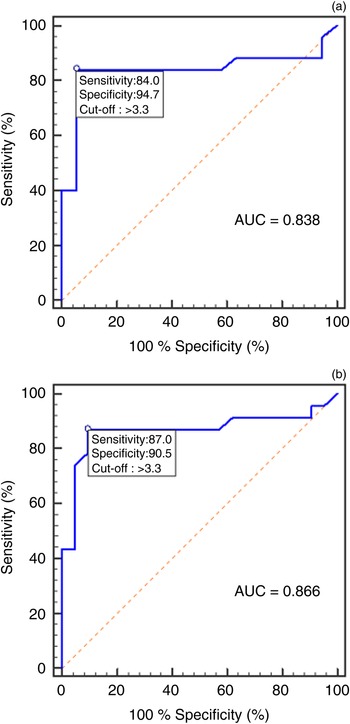
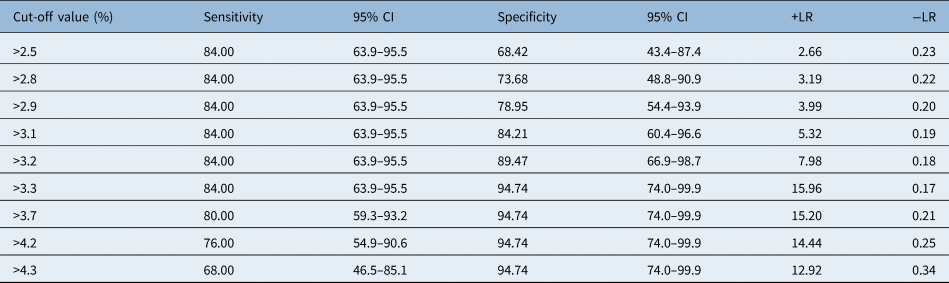
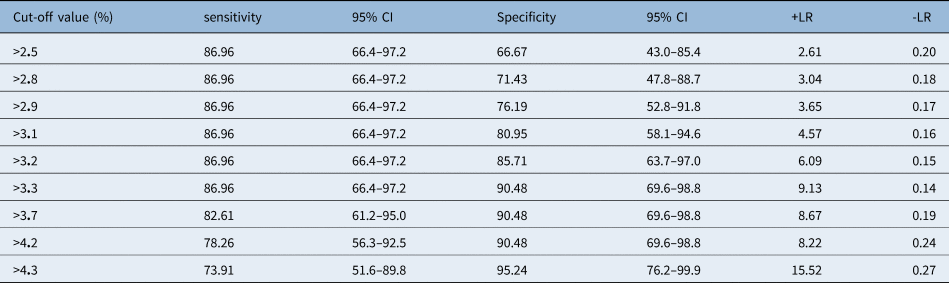
In all 44 patients, the baseline eosinophil percentage in peripheral blood was positively correlated with the eosinophil count in nasal polyps (r = 0.5039, p < 0.05) (Figure 1). When 55 eosinophils per high-power fieldReference Lou, Meng, Piao, Wang, Zhang and Bachert17 and 70 eosinophils per high-power fieldReference Tokunaga, Sakashita, Haruna, Asaka, Takeno and Ikeda5,Reference Nakayama, Yoshikawa, Asaka, Okushi, Matsuwaki and Otori18 were used as the criteria for diagnosis of eosinophilic chronic rhinosinusitis with nasal polyps, the area under the curve of eosinophils in peripheral blood was 0.838 and 0.866, respectively (Figure 2). The cut-off values were 3.3 per cent and 3.3 per cent; sensitivities were 84.0 and 87.0, and specificities were 94.7 and 90.5. The sensitivity, specificity and likelihood ratio of various eosinophil percentage cut-off values are shown in Table 1 and 2.
Correlation between tissue eosinophil count and serum eosinophil count. n = 44; r = 0.539; p = 0.0001552. HPF = high-power field

(a) Receiver operating characteristic curve of peripheral blood eosinophil percentage to predict diagnosis of CRSwNP (55 eosinophils/HPF ×400). (b) Receiver operating characteristic curve of peripheral blood eosinophil percentage to predict diagnosis of CRSwNP (70 eosinophils/HPF ×400). AUC = area under the curve; CRSwNP = chronic rhinosinusitis with nasal polyps; HPF = high-power field

Peripheral blood eosinophil percentage cut-offs with corresponding sensitivity, specificity and likelihood ratio values*

* (55/high power field ×400). CI = confidence interval; LR = likelihood ratio
Peripheral blood eosinophil percentage cut-offs with corresponding sensitivity, specificity and likelihood ratio values*

* (70/high power field ×400). CI = confidence interval; LR = likelihood ratio
Assessments comparison of standard and biomarker treatment groups
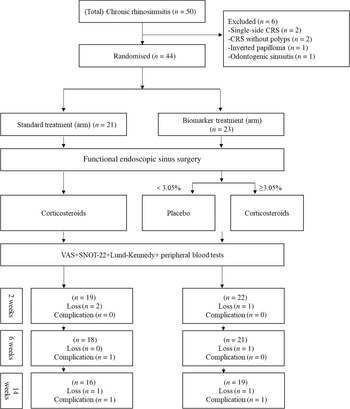
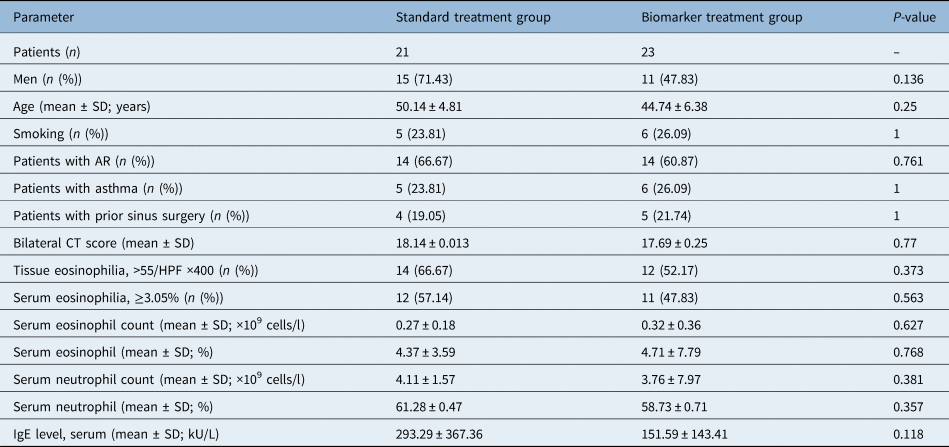
In total, 44 patients were included in the study (26 men and 18 women); they were randomly assigned to the standard treatment group (21 patients) or the biomarker treatment group (23 patients). The two groups exhibited comparable baseline and clinical characteristics (Table 3). During the study period, 5 and 4 patients in the standard treatment and biomarker treatment groups, respectively, were lost to follow up; thus, 16 and 19 patients were analysed in the respective groups. The flow chart of the study is shown in Figure 3. Seven patients in both groups underwent nasal septal deviation surgery concurrently with FESS.
Randomised, controlled trial study design and patient flow chart. CRS = chronic rhinosinusitis; VAS = Visual Analogue Scale; SNOT-22 = Sino-Nasal Outcome Test-22.

Characteristics of CRSwNP patients in standard treatment and biomarker treatment groups

CRSwNP = chronic rhinosinusitis with nasal polyps; SD = standard deviation; AR = allergic rhinitis; CT = computed tomography; HPF = high-power field; Ig = immunoglobulin
Scale and test scores
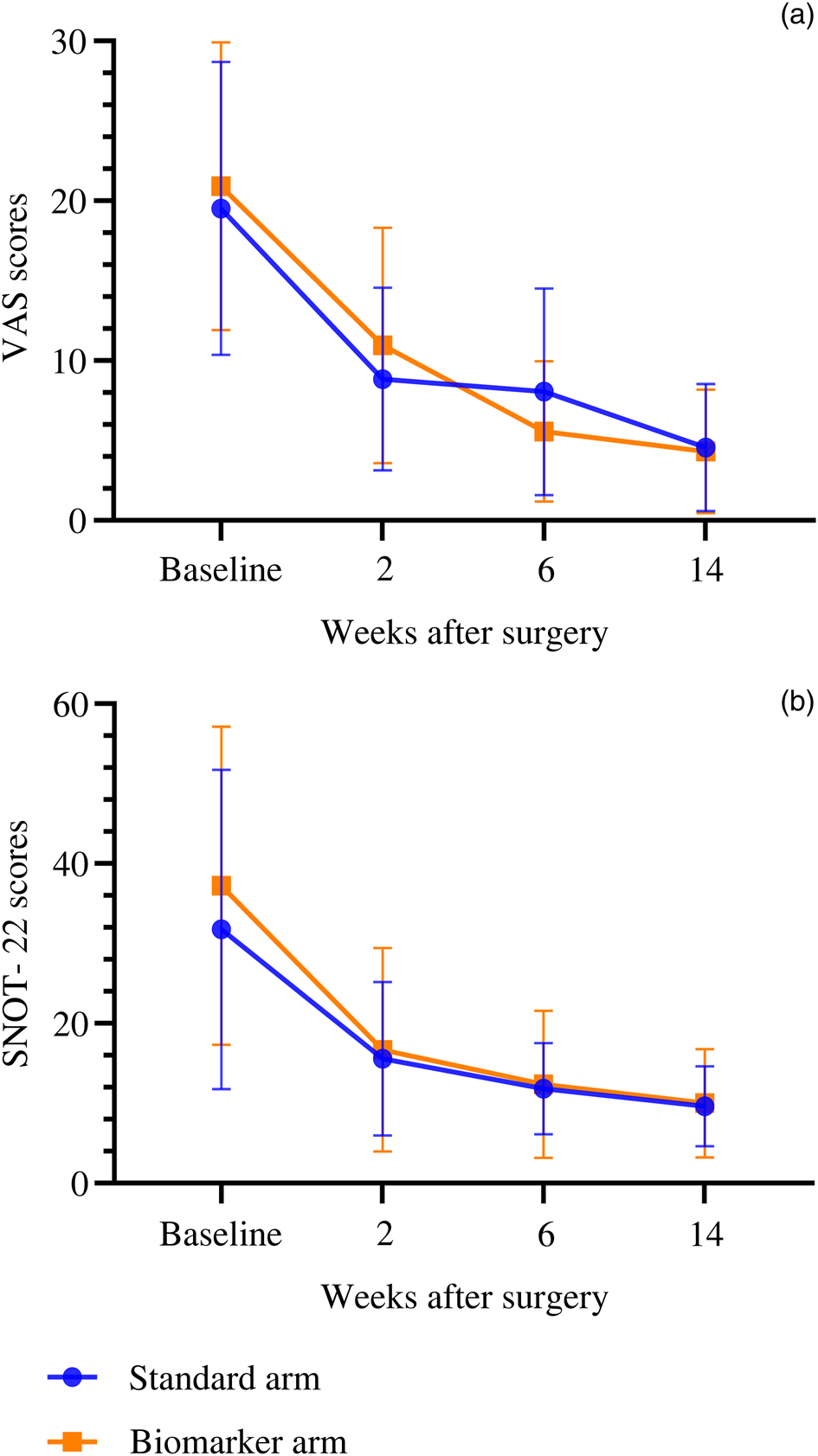
The total visual analogue scale and Sino-Nasal Outcome Test-22 scores significantly decreased in both patients with eosinophilic chronic rhinosinusitis with nasal polyps and those with non-eosinophilic chronic rhinosinusitis with nasal polyps. From baseline to 14 weeks post-operatively, visual analogue scale scores in the standard treatment and biomarker treatment groups decreased from 19.52 and 20.91 to 4.56 and 4.32, respectively; the mean reductions were 14.96 and 16.60. Sino-Nasal Outcome Test-22 scores in the standard treatment and biomarker treatment groups decreased from 31.76 and 37.22 to 9.63 and 10.00, respectively; the mean reductions were 22.14 and 27.22. At baseline and throughout the follow-up period (2, 6 and 14 weeks post-operatively), there were no significant differences in visual analogue scale scores between groups (p = 0.614, p = 0.317, p = 0.163 and p = 0.854) (Figure 4a); Sino-Nasal Outcome Test-22 scores also showed no significant differences (p = 0.370, p = 0.759, p = 0.822 and p = 0.856) (Figure 4b).
(a) Visual Analogue Scale (VAS) scores over time. (b) Sino-Nasal Outcome Test-22 (SNOT-22) scores over time.

Endoscopic assessment
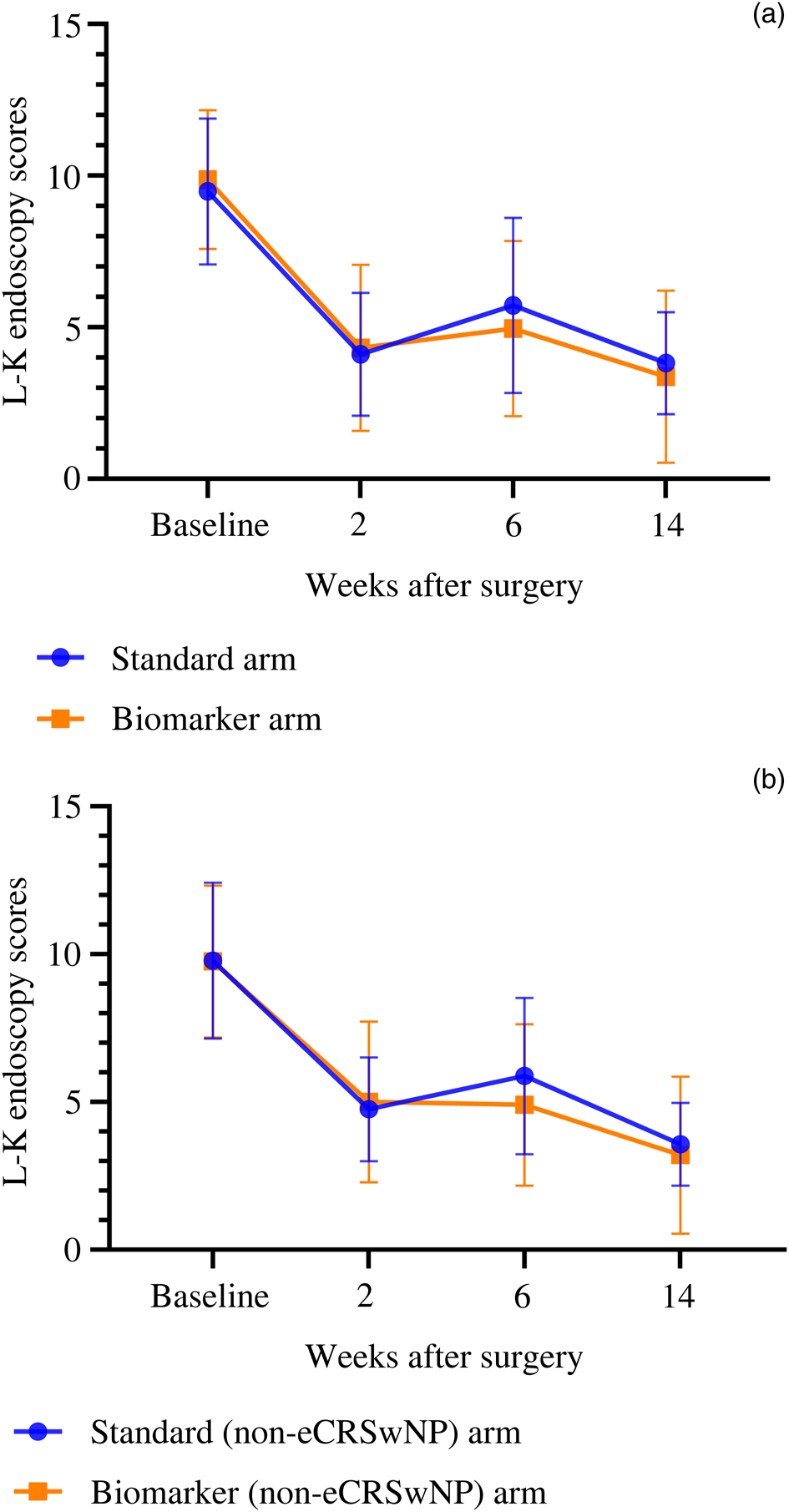
Baseline Lund–Kennedy endoscopy scores were comparable between groups: 9.48 in the standard treatment group and 9.87 in the biomarker treatment group. At 14 weeks post-operatively, the mean Lund–Kennedy endoscopy scores of the two groups had decreased by 5.57 and 6.50, respectively. There were no significant differences in Lund–Kennedy endoscopy scores between groups at 2, 6 and 14 weeks post-operatively (p = 0.781, p = 0.412 and p = 0.570) (Figure 5a). In both groups, Lund–Kennedy endoscopy scores decreased sharply from baseline at two weeks post-operatively; this trend was consistent with the changes in visual analogue scale and Sino-Nasal Outcome Test-22 scores. Lund–Kennedy endoscopy scores increased slightly from two to six weeks post-operatively and reached the maximum values (5.72 in the standard treatment group and 4.95 in the biomarker treatment group) at six weeks post-operatively; the standard treatment group exhibited a greater increase.
(a) Lund–Kennedy (L–K) endoscopy scores over time. (b) Lund–Kennedy endoscopy scores over time in the non-eosinophilic chronic rhinosinusitis with nasal polyps (eCRSwNP) subgroup analysis.

Peripheral blood eosinophil levels
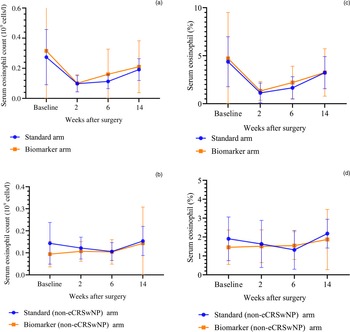
At baseline, peripheral blood eosinophil count (0.27 × 10⁹ cells/l and 0.32 × 10⁹ cells/l) and percentage (4.37 per cent and 4.71 per cent) were similar between the two groups. At two weeks post-operatively, eosinophil count (0.18 × 10⁹ cells/l and 0.22 × 10⁹ cells/l) and percentage (3.25 per cent and 3.38 per cent) were significantly lower than baseline in the standard treatment and biomarker treatment groups. From 2 to 14 weeks post-operatively, the eosinophil count and percentage tended to increase slowly in both groups, but the mean values remained lower than baseline (Figure 6a and b); there were no significant differences among time points.
(a) Serum eosinophil count over time. (b) Serum eosinophil count over time in the non-eosinophilic chronic rhinosinusitis with nasal polyps (eCRSwNP) subgroup analysis. (c) Serum eosinophil percentage over time. (d) Serum eosinophil percentage over time in the eCRSwNP subgroup analysis.

Inflammatory cytokine levels
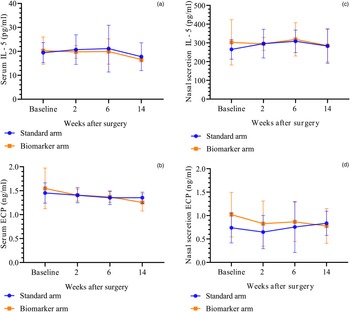
During baseline and throughout the follow-up period (2, 6 and 14 weeks post-operatively), the levels of interleukin (IL)-5 and eosinophil cationic protein in peripheral blood did not significantly differ between groups (p = 0.674, p = 0.624, p = 0.756 and p = 0.800; p = 0.485, p = 0.992, p = 0.781 and p = 0.436) (Figure 7a and b). The IL-5 and eosinophil cationic protein levels in nasal secretions showed similar results (p = 0.362, p = 0.960, p = 0.811 and p = 0.971; p = 0.084, p = 0.353, p = 0.678 and p = 0.837) (Figure 7c and d).
(a) Serum interleukin (IL)-5 levels over time. (b) Serum eosinophil cationic protein (ECP) levels over time. (c) Interleukin (IL)-5 levels in nasal secretions over time. (d) ECP levels in nasal secretions over time.

Adverse events
During the 14-week follow-up period, three surgery-related complications occurred among all patients; all three patients had received glucocorticoid treatment. Nasal septum abscess and acute rhinosinusitis occurred in the standard treatment group (n = 1 each); acute rhinosinusitis occurred in the biomarker treatment group (n = 1). We promptly performed nasal secretion microbial culture and drug susceptibility identification for all three patients and then treated the patients with appropriate antibiotics. During the follow-up period, no adverse events (e.g. asthma exacerbation, infection, fever, headache, nausea, diarrhoea or nasal bleeding) occurred in either group.
Comparison of assessments for glucocorticoid treatment regimen
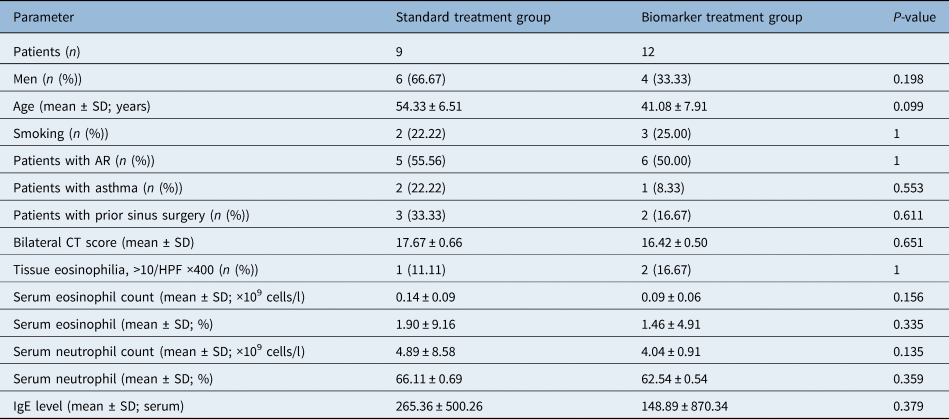
Patients with non-eosinophilic chronic rhinosinusitis with nasal polyps (eosinophil percentage lower than 3.05 per cent in peripheral blood) in both groups were included in a subgroup analysis to investigate the effect of post-operative glucocorticoids in such patients. In the standard treatment and biomarker treatment groups, 9 and 12 patients with non-eosinophilic chronic rhinosinusitis with nasal polyps were included, respectively; there were no significant differences in terms of demographic or baseline clinical characteristics between groups (Table 4). Of these patients, 7 and 10, respectively, completed all 14 weeks of follow up.
Characteristics of non-eosinophilic CRSwNP patients in standard treatment and biomarker treatment groups

CRSwNP = chronic rhinosinusitis with nasal polyps; SD = standard deviation; AR = allergic rhinitis; CT = computed tomography; HPF = high-power field; Ig = immunoglobulin
Scale and test scores
At baseline and throughout the follow-up period (2, 6 and 14 weeks post-operatively), patients with non-eosinophilic chronic rhinosinusitis with nasal polyps in the standard treatment group and patients with non-eosinophilic chronic rhinosinusitis with nasal polyps in the biomarker treatment group exhibited no significant differences in visual analogue scale scores (p = 0.943, p = 0.837, p = 0.203 and p = 0.442) (Figure 8a) or Sino-Nasal Outcome Test-22 scores (p = 0.539, p = 0.850, p = 0.524 and p = 0.870) (Figure 8b).
(a) Visual Analogue Scale (VAS) scores over time in the non-eosinophilic chronic rhinosinusitis with nasal polyps subgroup analysis. (b) Sino-Nasal Outcome Test-22 (SNOT-22) scores over time in the non-eosinophilic chronic rhinosinusitis with nasal polyps subgroup analysis (eCRSwNP).

Endoscopic assessment
In both subgroups, the Lund–Kennedy endoscopy score of patients with non-eosinophilic chronic rhinosinusitis with nasal polyps who used glucocorticoids was highest at 6 weeks post-operatively (5.88); the Lund–Kennedy endoscopy score of patients with non-eosinophilic chronic rhinosinusitis with nasal polyps who did not use glucocorticoids showed a gradual downward trend at 2, 6 and 14 weeks post-operatively (9.75, 5.00, 4.90 and 3.20) (Figure 5b). However, there were no significant differences in Lund–Kennedy endoscopy score between subgroups at any post-operative time point (p = 0.823, p = 0.456 and p = 0.714).
Comparison of eosinophil and inflammatory cytokine levels
We divided all patients who received the same glucocorticoid treatment into two subgroups: non-eosinophilic chronic rhinosinusitis with nasal polyps (peripheral blood eosinophil percentage lower than 3.05 per cent; 9 patients) and eosinophilic chronic rhinosinusitis with nasal polyps (peripheral blood eosinophil percentage 3.05 per cent or higher; 23 patients). Then, we investigated the relationship between peripheral blood eosinophil level and post-operative glucocorticoid treatment outcomes.
Peripheral blood eosinophil levels
The eosinophil counts in patients with non-eosinophilic chronic rhinosinusitis with nasal polyps and eosinophilic chronic rhinosinusitis with nasal polyps decreased by 0.04 × 10⁹ cells/l and 0.35 × 10⁹ cells/l, respectively (p = 0.008); the eosinophil percentages decreased by 0.49 per cent and 5.62 per cent, respectively (p = 0.002) (Figure 9a–d).
(a) Serum eosinophil count before (baseline) and after glucocorticoid therapy in non-eosinophilic chronic rhinosinusitis (eCRS) patients. (b) Serum eosinophil count before (baseline) and after glucocorticoid therapy in eCRS patients. (c) Serum eosinophil percentage before (baseline) and after glucocorticoid therapy in non-eCRS patients. (d) Serum eosinophil percentage before (baseline) and after glucocorticoid therapy in eCRS patients. (e) Serum interleukin (IL)-5 level before (baseline) and after glucocorticoid therapy in non-eCRS patients. (f) Serum interleukin (IL)-5 level before (baseline) and after glucocorticoid therapy in eCRS patients.

Inflammatory cytokines in peripheral blood and nasal secretions
After glucocorticoid treatment, the mean changes in peripheral blood interleukin (IL)-5 levels in patients with non-eosinophilic chronic rhinosinusitis with nasal polyps and eosinophilic chronic rhinosinusitis with nasal polyps were −2.55 pg/ml and 2.81 pg/ml, respectively (p = 0.005) (Figure 9e and f). The mean changes in peripheral blood eosinophil cationic protein levels in patients with non-eosinophilic chronic rhinosinusitis with nasal polyps and eosinophilic chronic rhinosinusitis with nasal polyps were 0.12 pg/ml and 0.00 pg/ml, respectively; these values did not significantly differ (p = 0.130). Furthermore, there were no significant differences between groups in the mean changes in IL-5 and eosinophil cationic protein levels in nasal secretions (p = 0.257 and p = 0.679).
Discussion
With increased understanding of nasal polyp pathogenesis in recent years, treatment strategies have changed to focus on immune endotypes rather than clinical phenotypes. Eosinophilic chronic rhinosinusitis with nasal polyps and non-eosinophilic chronic rhinosinusitis with nasal polyps endotypes exhibit different immunopathological responses to glucocorticoid therapy and different clinical prognoses;Reference Wen, Liu, Zhang, Bai, Fan and Xia9,Reference Ikeda, Shiozawa, Ono, Kusunoki, Hirotsu and Homma19 thus, a simple and reliable indicator is needed to distinguish the chronic rhinosinusitis with nasal polyps endotype for improved clinical management.
Currently, there is no diagnostic standard for eosinophilic chronic rhinosinusitis with nasal polyps. Some cliniciansReference Pan and Liu20 have proposed two types of classification: one type based on the patient's clinical prognosis or response to treatment (e.g. tissue eosinophil count) and the other type based on a range of biomarker levels (e.g. tissue eosinophil percentage or eosinophil markers). Because of differences in genetic and environmental factors between East Asian and Western populations, the cut-off values of eosinophil number per high-power field (×400) in nasal polyp tissue have varied among studies. Chinese and Japanese clinicians regard post-operative nasal polyp recurrence as a clinical outcome; they have concluded that diagnostic efficiency is optimal at a tissue eosinophil count of at least 55 per high-power fieldReference Lou, Meng, Piao, Wang, Zhang and Bachert17 or at least 70 per high-power field.Reference Tokunaga, Sakashita, Haruna, Asaka, Takeno and Ikeda5,Reference Nakayama, Yoshikawa, Asaka, Okushi, Matsuwaki and Otori18
Some studies have suggested that peripheral blood eosinophil level can be used to predict the recurrence of chronic rhinosinusitis with nasal polyps; those authors have advocated for using peripheral blood eosinophil level, rather than histopathology, as the ‘gold standard’ for the diagnosis of eosinophilic chronic rhinosinusitis.Reference Hu, Cao, Liang, Cui and Liu4,Reference Brescia, Alessandrini, Zanotti, Parrino, Tealdo and Torsello21 Indeed, compared with peripheral blood eosinophil count, tissue eosinophil count is more sensitive in predicting recurrence of eosinophilic chronic rhinosinusitis with nasal polyps. However, tissue eosinophil counting requires complex processes of specimen extraction, paraffin embedding, staining and counting. Peripheral blood eosinophil counting helps clinicians classify patients and develop personalised treatment plans before surgery, and its simplicity and practicality still make it a satisfactory alternative.
Here, we investigated whether the peripheral blood eosinophil percentage of 3.05 per cent could serve as the cut-off value for the diagnosis of eosinophilic chronic rhinosinusitis with nasal polyps. We analysed the relationships of peripheral blood eosinophil percentage with 55 eosinophils per high-power field and 70 eosinophils per high-power field for diagnosis of eosinophilic chronic rhinosinusitis with nasal polyps. The area under the curve was used to indicate the diagnostic accuracy of the index. Areas under the curve in our study were 0.838 and 0.866, indicating that the peripheral blood eosinophil percentage is a reliable index for predicting the efficacy of clinical treatment for eosinophilic chronic rhinosinusitis with nasal polyps. In our study, regardless of whether eosinophilic chronic rhinosinusitis with nasal polyps was diagnosed using 55 eosinophils per high-power field or 70 eosinophils per high-power field, the optimal cut-off value for peripheral blood eosinophil percentage was 3.30 per cent; this was slightly higher than the 3.05 per cent cut-off reported by Hu et al.Reference Hu, Cao, Liang, Cui and Liu4 Perhaps because the blood eosinophil level is affected by many factors in different individuals, different cut-off values can be obtained despite the use of similar diagnostic criteria.
Our findings suggest that the short-term efficacy of stratified treatment, guided by the peripheral blood eosinophil percentage, is equivalent to the efficacy of standard treatment after FESS; this approach may allow patients with non-eosinophilic chronic rhinosinusitis with nasal polyps to avoid glucocorticoid use after FESS. Furthermore, despite the reduced glucocorticoid use, our biomarker treatment group tended to have lower scores for both subjective and objective symptoms after surgery compared with the standard treatment group. Subgroup analysis of patients with non-eosinophilic chronic rhinosinusitis with nasal polyps alone demonstrated similar findings. Compared with the standard treatment group, patients with non-eosinophilic chronic rhinosinusitis with nasal polyps without glucocorticoid intake had more obvious short-term improvement in visual analogue scale and Sino-Nasal Outcome Test-22 scores after surgery. These results are consistent with the findings by Wen et al.Reference Wen, Liu, Zhang, Bai, Fan and Xia9 and Shen et al.,Reference Shen, Wang, Hsu, Hsieh, Sun and Wang22 whereby patients with non-eosinophilic chronic rhinosinusitis with nasal polyps had poor responses to corticosteroid therapy; short-term oral glucocorticoid treatment could not significantly improve the post-operative subjective and objective symptoms in those patients. Some investigators have hypothesised that the absence of sensitivity to glucocorticoid treatment in patients with chronic rhinosinusitis with nasal polyps may be mediated through a mechanism similar to glucocorticoid resistance in asthma and chronic obstructive pulmonary disease;Reference Barnes and Adcock23 contributing factors may include glucocorticoid receptor activity, changes in cytokines and transcription factors, and altered expression of mitogen-activated protein-related kinases and histone deacetylases.Reference Zhang, Lou, Wang and Zhang24
Importantly, we explored the effects of glucocorticoid treatment on local and systemic immune inflammatory responses in patients with chronic rhinosinusitis with nasal polyps with different endotypes. Although the number of eosinophils is limited by intrinsic individual characteristics, interleukin (IL)-5 and eosinophil cationic protein levels are considered more objective eosinophil-related biomarkers.Reference Thompson, Price, Huang, Min, Suh and Shintani-Smith25–Reference Tomassen, Vandeplas, Van Zele, Cardell, Arebro and Olze27 In particular, IL-5 is widely involved in eosinophil proliferation and differentiation; it can promote eosinophil activation and extend the lifespan of these cells. Additionally, eosinophil cationic protein is associated with degranulation and is a specific biomarker of eosinophil activation. Previous studies have demonstrated that IL-5 and eosinophil cationic protein are ideal biomarkers for predicting the efficacy of clinical treatment for chronic rhinosinusitis with nasal polyps;Reference Van Zele, Holtappels, Gevaert and Bachert28 furthermore, serum eosinophil cationic protein is a useful indicator for predicting the early recurrence of nasal polyps.Reference Lu, Lee, Huang, Chang, Chen and Fu29 A double-blind clinical trial confirmed that oral glucocorticoid therapy reduced the levels of IL-5 and eosinophil cationic protein in nasal secretions from patients with chronic rhinosinusitis with nasal polyps.Reference Van Zele, Gevaert, Holtappels, Beule, Wormald and Mayr30 In our study, after stratification of patients with chronic rhinosinusitis with nasal polyps according to peripheral blood eosinophil percentage, we found that the use of glucocorticoids did not significantly reduce the levels of IL-5 or eosinophil cationic protein in peripheral blood and nasal secretions from patients with non-eosinophilic chronic rhinosinusitis with nasal polyps. Indeed, glucocorticoid treatment significantly reduced the levels of eosinophils and IL-5 in peripheral blood from patients with eosinophilic chronic rhinosinusitis with nasal polyps, but the effects were minimal in patients with non-eosinophilic chronic rhinosinusitis with nasal polyps.
• This study explored the utility of the eosinophil percentage in peripheral blood for guiding glucocorticoid therapy in chronic rhinosinusitis with nasal polyps patients
• Visual Analogue Scale, Sino-Nasal Outcome Test-22 and Lund–Kennedy scores were significantly reduced in both standard treatment and biomarker treatment groups
• There were no significant differences in those indicators between two groups during the three follow-up visits
• Peripheral blood eosinophil percentage possibly offers a potential biomarker to guide post-operative glucocorticoid therapy in chronic rhinosinusitis with nasal polyps patients
While recommending nasal or oral glucocorticoids as the first-line treatment for chronic rhinosinusitis with nasal polyps, evidence-based medicine also emphasises that the short-term benefits of glucocorticoid use should be carefully weighed against their long-term control efficacy and overall safety.Reference Leung, Dinnie and Smith31 In recent years, various biological therapies targeting type 2 inflammation have been investigated for treatment of chronic rhinosinusitis with nasal polyps that either relapses after surgery or cannot be controlled with intranasal corticosteroids. These investigations have demonstrated the efficacies of monoclonal antibody therapies targeting IL-4 and IL-13 (dupilumab), IgE (omalizumab) and IL-5 (mepolizumab);Reference Desrosiers, Mannent, Amin, Canonica, Hellings and Gevaert32–Reference Hopkins, Bachert, Fokkens, Desrosiers, Wagenmann and Lee34 antibody therapies could also reduce systemic corticosteroid use and the need for surgical treatment. Thus, for patients with non-eosinophilic chronic rhinosinusitis with nasal polyps with poor glucocorticoid treatment efficacy after surgery, the identification of endotypes that correspond to biological treatment targets (according to the potential immunopathological mechanism) will be essential for precision therapy in the future.
There were several limitations to this study. First, the sample size was limited, and larger studies are needed to validate our findings. Second, we only studied the short-term effects of glucocorticoid use, within 14 weeks post-operatively. There is a need to extend the follow-up period to determine the long-term impact and final outcome of post-operative glucocorticoid treatment. Third, we used the peripheral blood eosinophil percentage of 3.05 per cent to define eosinophilic chronic rhinosinusitis with nasal polyps and non-eosinophilic chronic rhinosinusitis with nasal polyps; the use of other eosinophil cut-off values might have showed different effects on glucocorticoid treatment. Finally, this study may have included geographical and population biases that influenced sensitivity and specificity for the diagnosis and prediction of disease outcome. Nonetheless, this study is one of few randomised, controlled clinical trials concerning the efficacy of post-operative glucocorticoid treatment in patients with different endotypes of chronic rhinosinusitis with nasal polyps.
Conclusion
Guided post-operative glucocorticoid therapy for patients with chronic rhinosinusitis with nasal polyps, using the peripheral blood eosinophil percentage of 3.05 per cent, was similar to the efficacy of standard therapy. This result suggests that peripheral blood eosinophil percentage can be used as a biomarker to guide post-operative treatment. This guidance may permit safe reduction of glucocorticoid treatment in patients with specific endotypes, thus reducing the potential risks associated with glucocorticoid use. In order to improve subjective and objective symptoms, we recommend that post-operative glucocorticoid treatment should not be routinely administered to patients with chronic rhinosinusitis with nasal polyps with a peripheral blood eosinophil percentage lower than 3.05 per cent.
Acknowledgement
This work was supported by the Natural Science Foundation of Beijing Municipality (grant number: 7202215).
Competing interests
None declared