


Introduction
Psychological wellbeing practitioners (PWPs) provide low-intensity guided self-help support in Talking Therapies services for the treatment of anxiety and depression. Existing PWP literature predominantly focuses on intervention outcomes in PWP and CBT practitioner work (Firth et al., Reference Firth, Barkham, Kellett and Saxon2015; Green et al., Reference Green, Barkham, Kellett and Saxon2014), whereas emerging research explores the wellbeing of PWP trainees (Owen et al., Reference Owen, Crouch-Read, Smith and Fisher2021; Owen et al., Reference Owen, Cross, Mergia and Fisher2022), given the pressures of high-volume work and increasing case complexity facing the profession.
A report by NHS England (Health Education England, 2019) identified that the majority of PWP trainees tend to be young, white, female psychology graduates, highlighting the need to target broader populations in the profession. The main priority group identified was mature candidates (aged over 35 years), who, at the time of the report, made up 18% of PWP trainees across all courses.
Proposed benefits of widening participation were made on three key grounds. Firstly, to bring a greater diversity of life experience to the role. Jones and McConnell (Reference Jones and McConnell2022) explored the notion that mature students demonstrate greater ‘grit’ due to life experiences that support a growth mindset throughout university training. This could be beneficial for supporting the resilience required for PWPs in a challenging work field (Vivolo et al., Reference Vivolo, Owen and Fisher2023). Secondly, to support diversifying the workforce, and in doing so, to better reflect and serve client communities. Findings suggest the mean age of clients accessing Talking Therapies services is 38 years (O’Donnell et al., Reference O’Donnell, Pybis and Bacon2021), with 23% of clients identifying as older adults (aged 50 years and over). IAPT workforce guidance (British Association for Behavioural and Cognitive Psychotherapies, 2019; National Collaborating Centre for Mental Health, 2023) suggests a lack of diversity can affect engagement and uptake of treatment, with recommendations including ‘characteristics such as ethnicity, age and gender, [should be] roughly matching the preference of the person receiving treatment’ (National Collaborating Centre for Mental Health, 2023; p. 43). Therefore, an increase in mature PWPs could better serve the reflected community. Thirdly, the potential to improve retention in the PWP field. On a national level within Talking Therapies there is concern surrounding high attrition rates post-qualification (Health Education England, 2019), as PWPs leave for CBT therapist or practitioner psychologist roles. Despite funding restrictions in place for further study for up to 2 years after completion of PWP training, anecdotally, this is not a significant deterrent to graduates. This has ramifications for a workforce trying to provide mental health services at pace to meet high demand. A House of Commons report into mature higher education students in England suggested ‘Mature learners … play an important part in upskilling the workforce to help meet the future economic demands facing the country’ (Hubble and Bolton, Reference Hubble and Bolton2021; p. 12). In targeting mature candidates for PWP training, ideally from previous roles with transferable skills, there is an opportunity to support retention.
However, across higher education, mature student engagement has declined (Higher Education Statistics Agency, 2023), most significantly in over-30-year-olds, with 38% fewer mature undergraduate entrants in 2019/20 compared with 2010/11 (Hubble and Bolton, Reference Hubble and Bolton2021). Evidence suggests that mature students perform less well in higher degree awards, are more likely to withdraw, and are more likely to come from disadvantaged groups with non-traditional qualifications (Office for Students, 2018). To date, no published research has explored academic attainment among PWP trainees, nor has it specifically examined the attainment of mature trainees.
Given the aspiration to widen access for mature students into PWP training, this paper explores the current position of PWP trainees at one university training course, with respect to age profiles of those recruited into training, attainment and participation of mature and non-mature trainees during training, and future career aspirations for mature and non-mature trainees post-qualification.
Method
The study consisted of three phases: a cross-sectional survey, analysis of data held by the university and a longitudinal survey, and addressed three objectives:
-
(1) To understand the current position of PWP trainees at one university training course, with respect to the age profiles of those recruited into training (cross-sectional survey);
-
(2) To compare the attainment and participation of mature and traditional trainees at one university training course, during training (analysis of routinely collected data);
-
(3) To understand future career aspirations for mature and traditional trainees post-qualification at one university training course (longitudinal survey).
Participants
Participants were enlisted from pre-training recruitment events and a PWP training cohort studying at the University of Surrey between 2023 and 2024. Recorded attainment and withdrawal data, held by the University from PWP intakes between 2021 and 2023, were also anonymised and used in the study. Participants were categorised by age group as either mature trainees (aged over 35 years) or traditional trainees (aged under 35 years). The threshold of age 35 years was selected in keeping with the identified priority group by NHS England (Health Education England, 2019). Ethical approval for this study was sought and obtained by the University of Surrey Ethics Committee in April 2023.
Data collection and analysis
Age profiles at pre- and post-recruitment
Attendees of two pre-recruitment events, held by the University and clinical services, were invited to complete a cross-sectional survey following the event. The questionnaire contained 12 demographic questions, including items on age, sex, gender, ethnicity, disability status, carer status, parental and marital status, English as a first language status, prior job experience, and questions relating to the experience of the workshop and the likelihood of applying for PWP training thereafter. Participants consented to the use of data for the research study. Eligibility for participating in the survey included at least partial attendance at one of the two events. In total, 234 individuals were eligible to participate and were sent an email link to complete the online questionnaire via Qualtrics following the events. Thirty-one participants completed the survey. The age profile of attendees was compared with that of all trainees who successfully secured a place on the subsequent intake at the University of Surrey.
Award attainment and participation data analysis
Statistical analysis compared the attainment and participation outcomes of mature trainees with those of traditional trainees across PWP training cohorts at the University between 2021 and 2023, with a total sample of 219 records.
For the September 2023 intake, all mature trainees were offered additional study support sessions and mentoring support. Six study support sessions were offered across the training year, approximately every two months. Each session lasted approximately 90 minutes and was held online. The format included time for group check-ins, a key topic, and an open Q&A section at the end. The sessions were run by lecturers on the PWP training course, in conjunction with staff from broader University support teams, including academic skills, neurodiversity, and disability teams. The topics included:
-
• Introduction to academic support at the University
-
• Reflective writing
-
• Researching evidence
-
• Exam skills
-
• Presentation skills
-
• Preparing for portfolio
-
• Refresher of specific assignment guidance for all modules
In terms of mentoring support, mature trainees were assigned a qualified PWP who arranged to meet with them at mutually agreed intervals throughout the training year. The purpose of the mentoring support was to provide a reflective space for trainees to consider the journey of their training year and their clinical experience on placement.
Analysis of programme awards achieved, programme completion rates, and withdrawal rates of the cohort that received these interventions was compared against the broader data set of cohorts from 2021 to 2023.
Future career aspirations analysis
All 32 students recruited to the September 2023 PWP intake at the University were invited to complete a longitudinal questionnaire at three time points: the start of training, the midpoint of training (six months later), and the end of training (12 months later). Consenting participants were sent an online link to a Qualtrics survey at the three time points. The questionnaire included questions regarding future career aspirations. Specifically, two multiple-choice questions asked the trainee to select their long-term career aspiration and how long they anticipated staying in a PWP-related role. Two open-text questions asked the trainee to discuss what might lead them to stay or leave a PWP-related role; 48% of the cohort completed the first time point questionnaire, which decreased to a 33% completion rate across all three time points. The results were analysed by mature trainees compared with traditional trainees.
Results
Age profile pre- and post-recruitment results
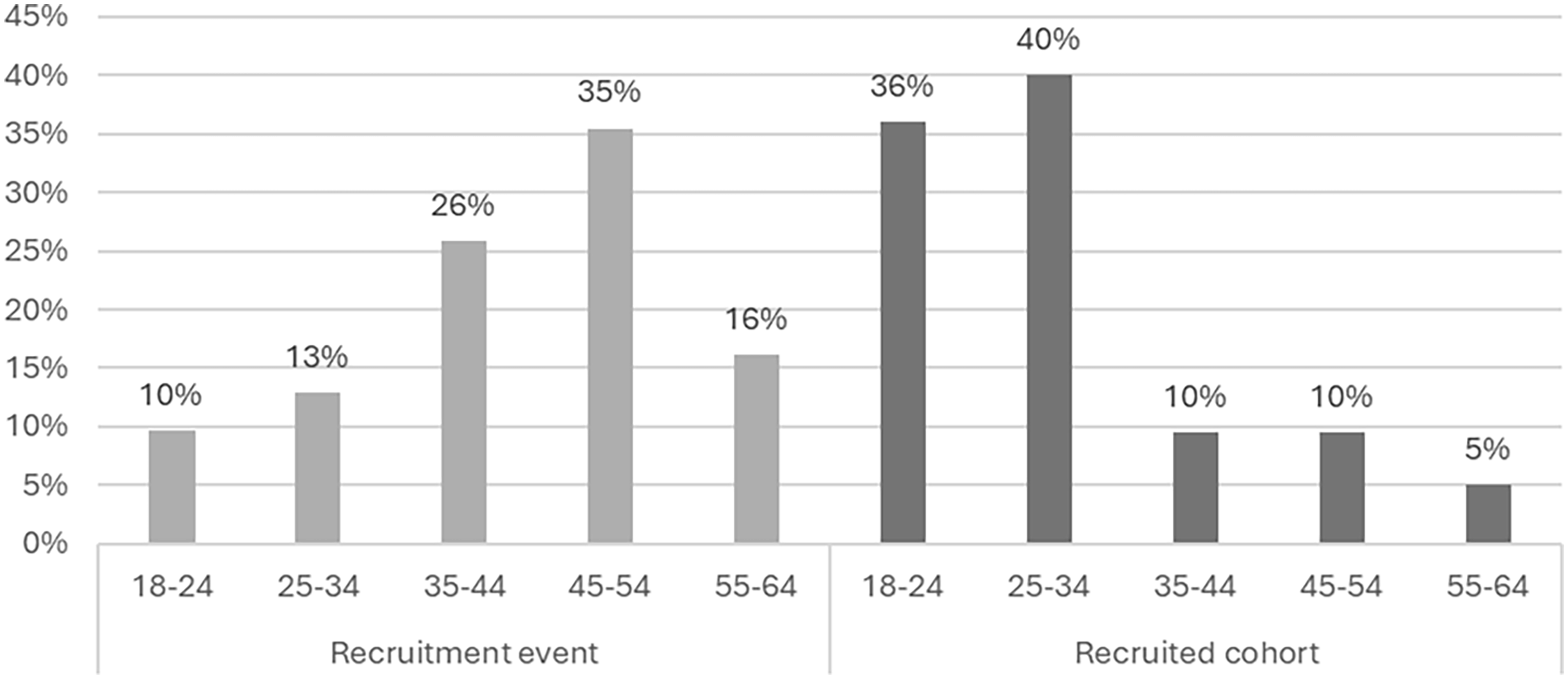
Figure 1 demonstrates the age profiles of attendees at the recruitment events and those recruited to the training intake. 77% of those who responded to the recruitment event were aged over 35 years. In contrast, only 25% of the final recruited cohort were aged 35 years or older.
Age comparison between recruitment event attendees and recruited cohort participants.

Attainment and participation results
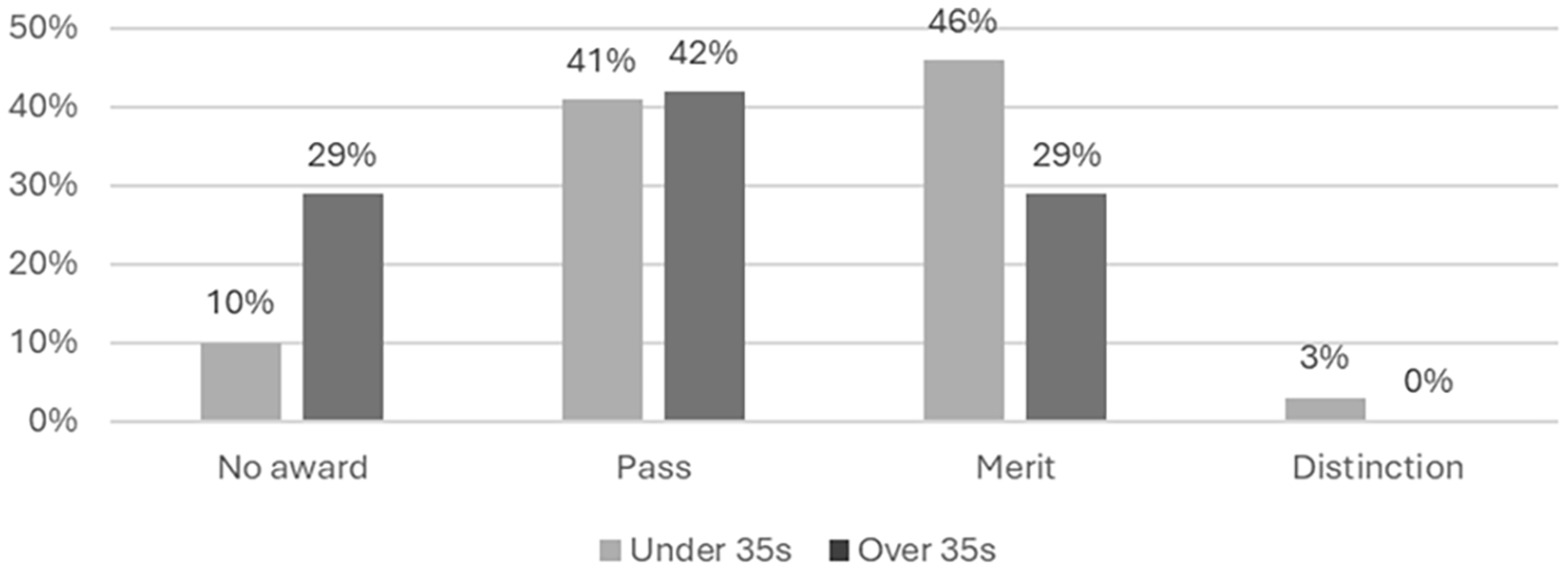
Analysis of the attainment and participation data of trainees revealed a significant relationship between age group and programme withdrawal rates. Trainees aged over 35 years were more likely to withdraw from the programme X 2 (2,N=219)=10.311, p=.006, and there was a significant relationship between age group and programme termination status X² (1,N=219)=6.277, p=.012. Trainees aged over 35 years were less likely to receive higher award passes (merits or distinctions) and more likely to achieve no award than those aged under 35 years, X² (2,N=219)=13.153, p=.001. Figure 2 illustrates the percentage of pass rates by age group across cohorts.
Cross-cohort award rates for PWP trainees on the PWP training programme between 2021 and 2023, by under- and over-35-year age groups.

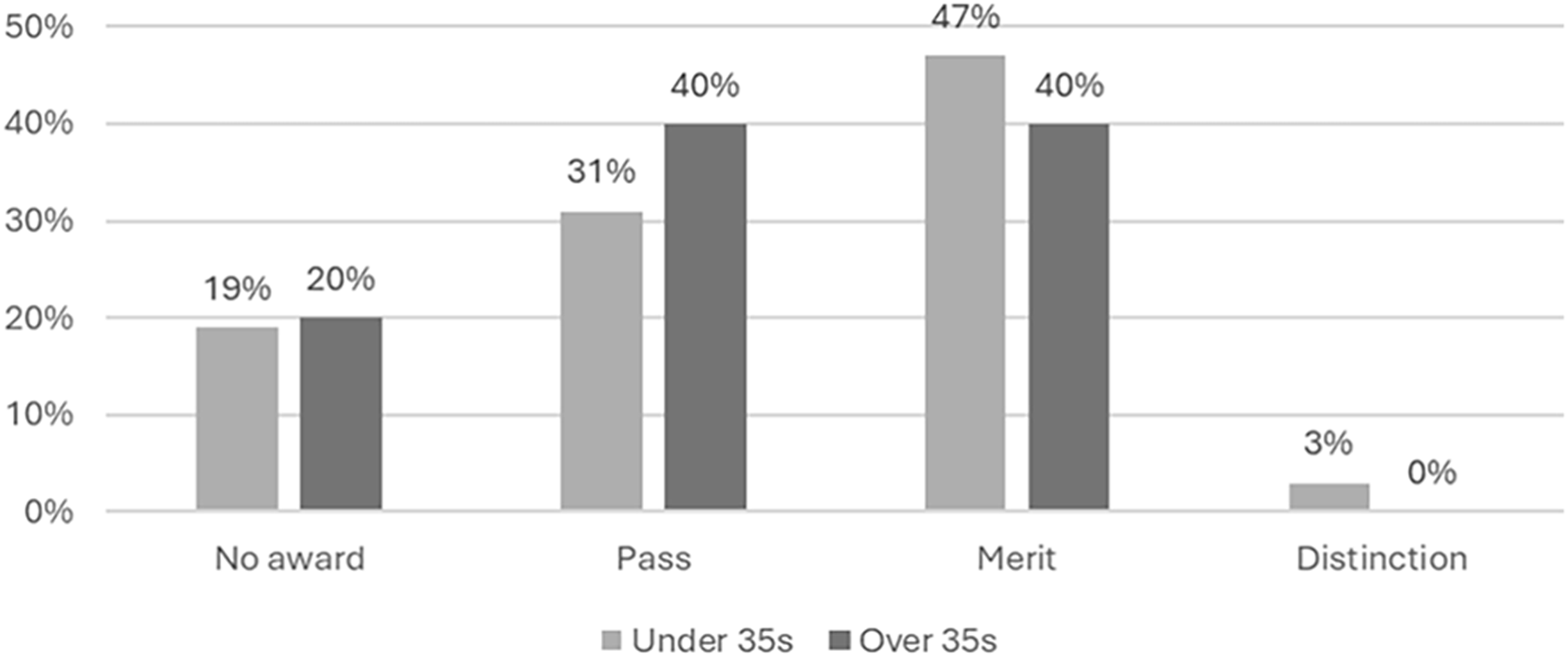
By contrast, in the intervention cohort that received study support and mentoring, there was no statistically significant difference between the groups with respect to withdrawal or termination rates, nor was there a statistically significant difference between the groups with respect to pass rates. Figure 3 illustrates the percentage of pass rates by age group within the intervention cohort.
Award rates in the intervention cohort on the PWP training programme, by under- and over-35-year age groups.

Career aspiration results
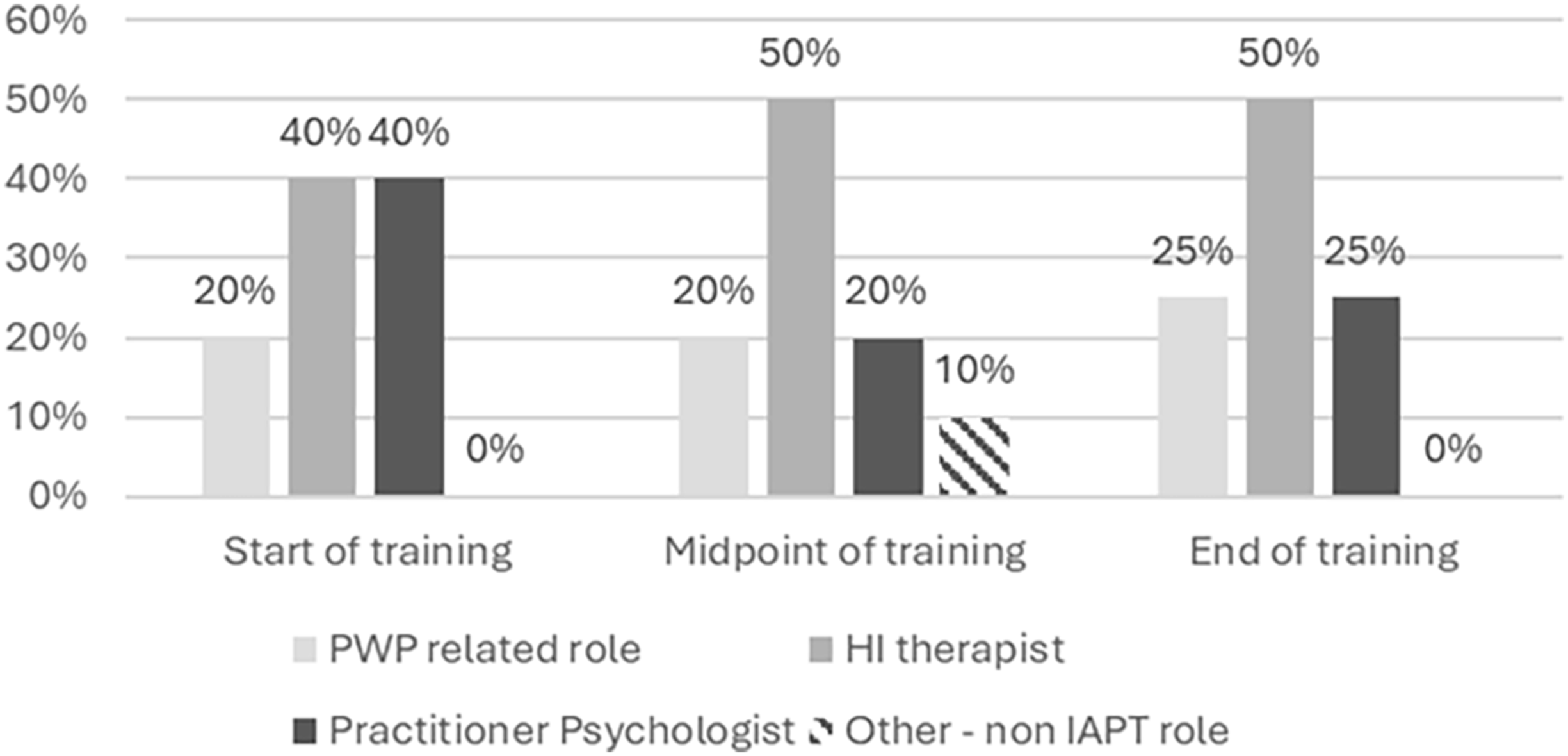
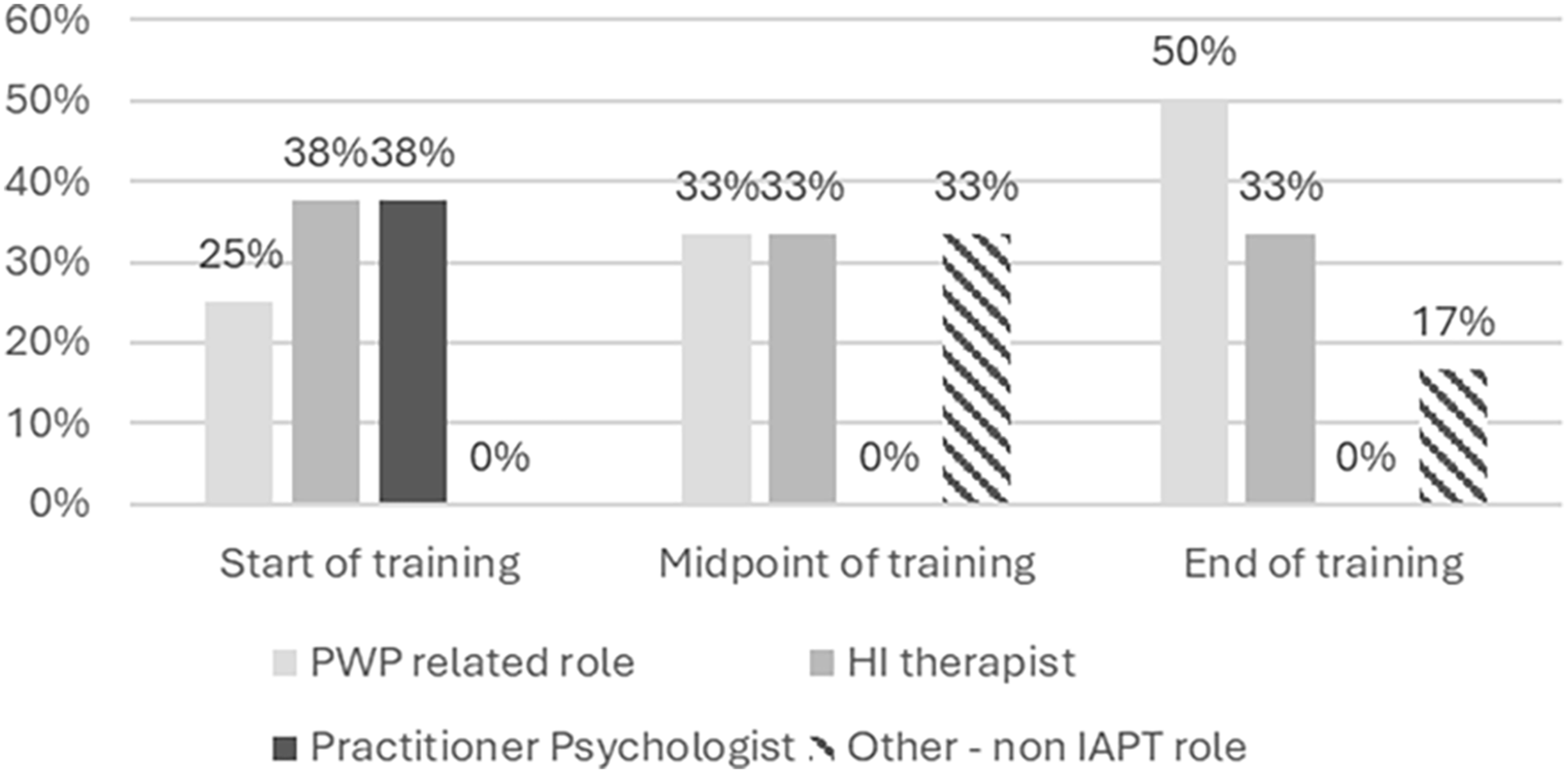
Figures 4 and 5 illustrate the long-term career aspirations of the PWP trainees surveyed at the start, middle, and end of their training year, by under-35 year and over-35 year age groups. At the start of training, both groups express an aspiration to become practitioner psychologists post-qualification. A large number of those under 35 retained this ambition throughout PWP training, while many of the over-35s appeared to change their aspirations by mid-PWP training point. In relation to high-intensity training, the proportion of under-35s who saw their future in this line of work increased from 40% to 50% between the start and end of training, whereas for the over-35s, it dropped slightly from 38% to 33%. A higher proportion of individuals in the over-35-year group wanted to stay in a PWP-related role, with 50% by the end of training.
Percentage of responses related to long-term career aspirations in the under-35-year age group.

Percentage of responses related to long-term career aspirations, in the over-35-year age group.

Content analysis of open-text questions revealed that factors such as passion for the role and a desire to help others were cited as reasons to stay in a PWP-related role, whilst the perception of a low salary, lack of career progression opportunities and anticipated high levels of stress and burnout were cited as the most common reasons to leave. These were observed amongst both age groups.
Discussion
The results suggest that while mature candidates are interested in applying for PWP training, as indicated by high numbers attending recruitment events, this does not necessarily translate to successfully securing a place. The majority of those recruited into the eventual cohort remained within the ‘typical’ age range of PWP trainees, between 18 and 34 years, consistent with findings in the widening participation report (Health Education England, 2019). Crucially, it is unknown at which stage mature candidates are being ‘lost’, i.e. at application, shortlisting, or interviewing stages of recruitment, due to the limited coordination of recruitment data across services.
With respect to attainment and participation, data from 2021 to 2023 suggested that mature candidates were less likely to gain higher awards (merits and distinctions), more likely to withdraw from the programme, and, although rare, more likely to have the programme terminated. Following a supportive pedagogical intervention for one cohort, a different pattern was demonstrated. These students demonstrated that they were able to achieve as successfully as their younger peers. This suggests there is a role for tailored interventions for mature trainees, and if advertised, could aid recruitment for those who were concerned about their ability to re-engage with academia. Lyu et al. (Reference Lyu, Nguyen and Dang2025) found that whilst support provision for mature students in UK higher education remains an under-researched area, it is supported by the ‘deficit’ model, described by Farini and Scollan (Reference Farini and Scollan2021), which advocates for a diversity of support strategies to help address academic challenges faced by mature learners. Conversely, Lyu et al. (Reference Lyu, Nguyen and Dang2025) highlight the recognition of structural inequalities and personal factors, such as caring responsibilities, as impacting factors on the educational outcomes of mature learners, and to address these in tandem with academic support.
Data suggested mature trainees show a higher interest in staying in the PWP profession post-qualification than their traditional counterparts. However, a significant proportion in both age groups intended to transition to high-intensity roles in the long term. Reasons cited for leaving the PWP workforce included poor progression opportunities, associated rates of pay and perceptions of high rates of stress and burnout associated with the role. This is consistent with previous findings (Koomson et al., Reference Koomson, Haque, Sivananthan, Jayaraajan, Hussain and Ahmad2020; Owen et al., Reference Owen, Crouch-Read, Smith and Fisher2021; Psychological Professions Network, 2018; Westwood et al., Reference Westwood, Morison, Allt and Holmes2017).
The implications of these findings help us better understand the current position of mature PWP trainees. Interest in a PWP career exists; however, more detail is needed to understand at what recruitment stages they require further support to secure a place successfully. Recruitment events offer an opportunity to address ambivalence or concerns about the role, such as outlining clearer pathways for progression and associated pay structures. Once in training, greater support is needed to reduce the inequities in attainment between mature and traditional trainees. Early indications suggest that offering additional study support and mentoring may be beneficial, as these candidates may have been out of study for a significant period and have non-traditional prior qualifications.
This local project involved small sample sizes and was based on data from one training course at the University of Surrey. This could limit the generalisability of the findings to other academic and geographical contexts. The study would benefit from replication with a larger sample size and longitudinal follow-up to further explore trainees’ intentions to remain in the profession after qualification. Response rates for survey data ranged from 13% to 48% across the respective phases of the study, which may suggest variable levels of engagement; therefore, further caution is warranted on the broader generalisability of the results. Talking Therapies services also employed trainees involved in the project during their training year; therefore, the data may be influenced by the unique service experiences regarding caseloads, clinical complexity, supervision experiences, and other factors. Finally, whilst this project has focused on the aspiration to increase access to older applicants, it is recognised that this is only one aspect of widening participation in the field. Health Education England (2019) also identified addressing the inequities in participation around gender and ethnicity; however, due to the limited scope of this project, these areas were not analysed.
This paper has examined the interest, course performance, and career aspirations of mature students in relation to PWP training at a quantitative level. However, further research to better understand the qualitative training experience of this group would be beneficial and is explored in the work of Bedford and Kaur (in preparation).
Implications for future practice
Widening participation within the PWP staff workforce is a key priority for mental health services, aiming to increase access to services and align the Department of Health’s commitment with professionals who reflect the populations they serve. Therefore, these results provide a springboard for further proposals. Firstly, ensuring services have an IT infrastructure and consistent monitoring of recruitment data across services would support a better understanding of where and why mature candidates are dropping out. Secondly, clinical services and universities could collaboratively support pre-recruitment events to appeal to mature candidates, utilising these opportunities to address concerns regarding the challenges of the role, whilst also offering clear career progression pathways and highlighting the aspects which most appeal. Thirdly, PWP training programmes should invest in tailored academic and personal development support for mature candidates to raise attainment levels and reduce withdrawal from training.
Future research opportunities could also explore the reasons for the disproportionate rates of withdrawal among mature trainees and assess the long-term retention of PWPs by demographic background. The impact of clinical placement experiences could also be considered alongside the academic experiences during training. Aspirations for widening participation within the PWP profession should also extend to other demographic groups, for example, to broaden the gender, ethnicity and disability status make-up of the training demographic. This could be supported through further initiatives at both the local and national levels.
Key practice points
-
(1) Mature candidates are interested in applying for PWP training, but are less successful in securing places on training than traditional graduate students. Talking Therapies services could develop an IT infrastructure to monitor and analyse recruitment data, and identify points for intervention.
-
(2) Lower attainment levels and higher programme withdrawal rates were observed in mature PWP trainees compared with traditional students. Offering additional study and mentoring support appeared to have a positive impact on these areas. Training course providers should consider additional support for this group.
-
(3) The intention to remain working in a PWP role post-qualification appeared to be higher among mature trainees. However, concerns regarding burnout, lack of progression, and pay prospects were consistent amongst both age groups.
-
(4) Further research is needed to understand the qualitative experience of mature trainees and to explore long-term retention trends. Additionally, attention should be given to widening participation in PWP training to other demographic groups.
Data availability statement
The data that support the findings of this study are available from the corresponding author, upon reasonable request.
Acknowledgements
We would like to thank the psychological wellbeing practitioner trainees who participated in this research, and Dr Laura Driesen and Mary John for their expertise and guidance throughout the project. The software Grammarly (v1.2.196.1758) was used on 23 September 2025 to support the editing process, in identifying grammatical and spelling errors and to improve the overall clarity of the text. The authors are entirely responsible for the scientific content of the paper, and the paper adheres to the journal’s authorship policy.
Author contributions
Manveer Kaur: Conceptualization (lead), Data curation (lead), Formal analysis (lead), Investigation (lead), Methodology (lead), Project administration (lead), Writing - original draft (lead); Laura Bedford: Data curation (supporting), Formal analysis (supporting), Investigation (supporting), Methodology (supporting), Project administration (supporting), Writing - review & editing (supporting).
Financial support
This work was sponsored by NHS England as part of ‘Widening Participation in PWP training in the South East: Development Funding 2021/22’.
Competing interests
The authors declare none.
Ethical standards
The authors confirm that they have abided by the ethical principles of psychologists as set out by the BABCP and BPS, and have adhered to relevant codes of conduct. Ethical approval, which included informed consent for participation and publication of results, for this study was sought and obtained by the University of Surrey Ethics Committee on 20 April 2023, ref: 22-23 135 EGA.

 Open access


Comments
No Comments have been published for this article.