DISCIPLINARY AND REGIONAL CONTEXT
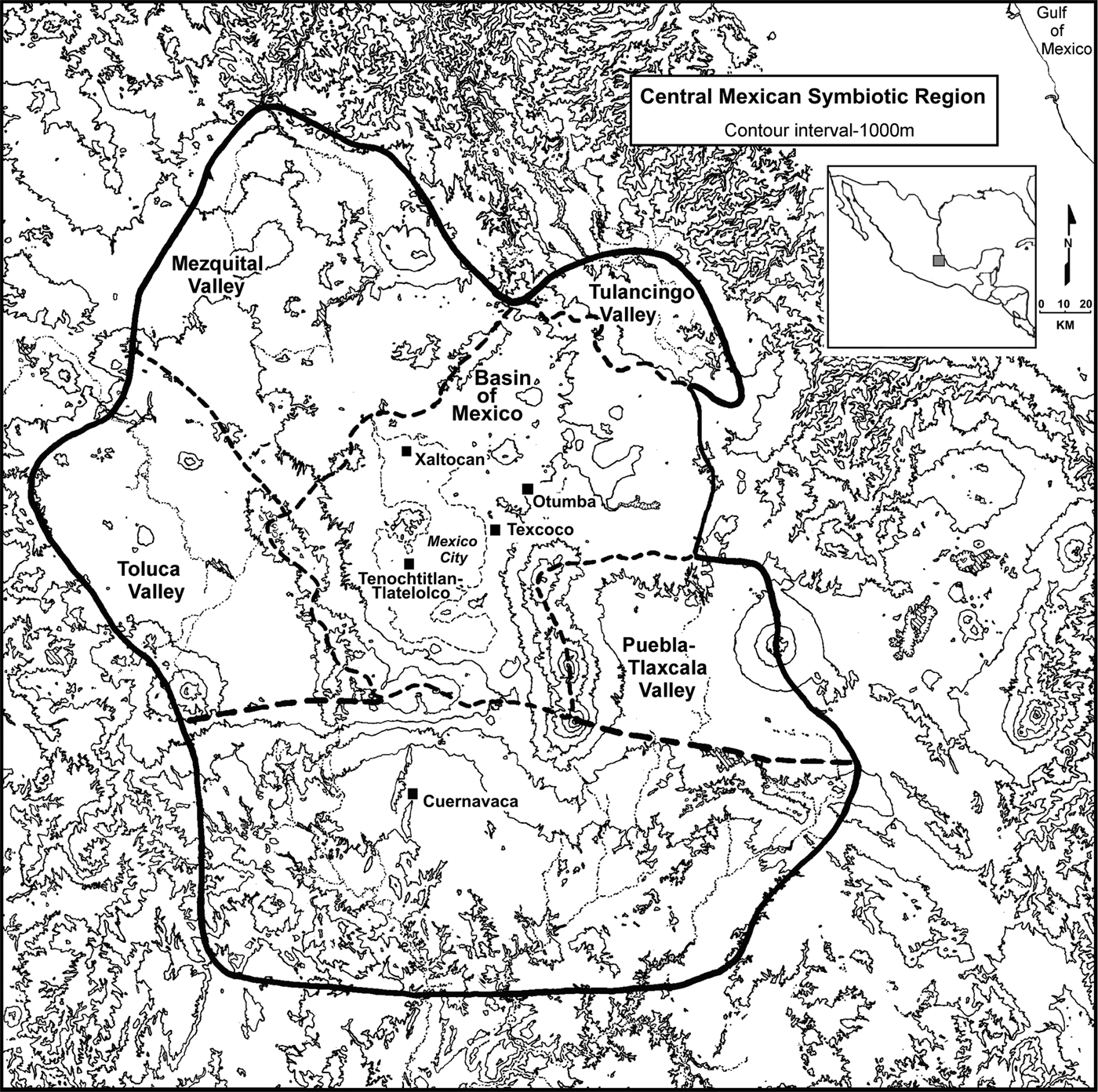
Interest in historical archaeology on a world-wide scale has been increasing in recent years. We have published three papers dealing with the development of the field in Mexico (Charlton and Fournier Reference Charlton, Fournier and Pearsall2007; Charlton et al. Reference Charlton, Fournier, Charlton, Majewski and Gaimster2009a, Reference Charlton, Fournier, Charlton, Targa and García2009b). Here we summarize briefly the development of historical archaeology, including some of the more important discoveries in recent years, and then examine its current status and future prospects in the Basin of Mexico and adjacent areas of the Central Mexican Symbiotic Region (CMSR [Sanders Reference Sanders and Willey1956:115–116]). Sanders perceived of Mesoamerica as consisting of scores of climatic and topographic subzones in very close proximity, producing a complexity of products and specializations of production that made possible a high volume of trade and the development of urbanism despite primitive transport. Symbiotic regions are parallel sub-regions of different climates and production forming mutual trading units. (Figure 1).
Map of the Central Mexican Symbiotic Region with relevant locations noted.

Scholars studying the archaeology of the Late Postclassic period in the CMSR and relating the material remains to available textual sources are in essence practicing historical archaeology (for example, Charlton Reference Charlton, Adams and MacLeod2000). However, Charles Orser (Reference Orser1996) would restrict the concept of historical archaeology to the period initiated by and continuing after European contact in the New World. Recently, Orser (Reference Orser, Symonds and Pekka-Herva2014) redefined historical archaeology as modern-world archaeology, a research field covering the topics of colonialism, capitalism, Eurocentrism, and racialization. In the case of the Basin of Mexico, historical archaeology would then begin in 1521 and would focus on the outcome of the contact process on the indigenous people, the invaders, and the descendents of both, as revealed by the results of archaeological excavations and documentary research, and the application of accepted theories and models. This overview focuses on that time period following European contact.
THE ROOTS OF HISTORICAL ARCHAEOLOGY IN THE CENTRAL MEXICAN SYMBIOTIC REGION
Historical archaeology in the CMSR developed from the confluence of several loosely related investigative trends within central Mexico and the United States. The first incipient developments included the research of scholars working in Mexico who recognized and published data on Colonial period ceramics in the Basin of Mexico, often as a by-product of their investigations into precontact cultures. They included examinations of vessels and figurines considered to date from the Colonial period (for example, Franco Reference Franco1949; Noguera Reference Noguera1934). In the mid-twentieth century, there was an awareness of and interest in post-Conquest ceramics, whether Aztec, Hispanic, or syncretic in nature, by scholars and researchers who believed that ceramics provide key insights into the past.
A second impetus to the development of historical archaeology resulted from an interest in the legacy of those parts of the Spanish empire, and later of Mexico, which through a variety of circumstances fell under American control between 1800 and 1850. Researchers in the borderlands looked south for comparative architectural and artefactual data (for example, Montgomery et al. Reference Montgomery, Smith and Brew1949). Of particular importance was John Goggin's (Reference Goggin1968) major comparative investigation of majolica, a ceramic ware of Hispanic origin and New World production that occurs in Hispanic sites in the United States as well as in the Caribbean (see also Deagan Reference Deagan1988, Reference Deagan1996). Goggin defined Colonial-period majolica types and their time frames, establishing regional majolica traditions and a wide ranging majolica horizon as the backbone of a chronology for Hispanic sites in the New World.
The continuing development of historical archaeology in the CMSR was given additional impetus by a third line of investigation. Critical to the development of historical archaeology in Mexico and the United States was an increasing concern in the United States for historic preservation, particularly in the 1960s. In Mexico before the 1960s, historic buildings—particularly religious structures including churches, missions, monasteries, and convents, as well as many grandiose palaces and residences of the elite, all owned by the federal government and dating to the Colonial and Republican periods—had been maintained and restored with little attention paid to archaeological materials encountered during these activities. In the decade of the 1960s, pioneering work in historical archaeology was carried out in Mexico City at the Metropolitan Cathedral, followed by intensive archaeological salvage or rescue projects associated with major construction activities such as the subway (for example, Fournier and Miranda Reference Fournier and Miranda1992). By 1972, Mexican law required that archaeologists be present when all such activities were being conducted so as to protect any historical remains encountered.
A fourth and final impetus to the development of historical archaeology in Mexico can be found in the development of problem-oriented archaeology with appropriate field methods by archaeologists whose primary interests were in prehispanic civilizations. Some of these archaeologists realized in the 1960s that it was no longer necessary to leave the study of the Colonial and Republican periods to the historians and ethnohistorians, as Gamio (Reference Gamio1922) had done. The field methods—especially regionally oriented intensive surface surveys and collections—worked equally well for the pre- and post-1521 periods. The same is true for excavations of strata pits, domestic and religious structures, and middens (for example, Parsons Reference Parsons1966).
An example of an early investigation focusing directly on the post-Conquest periods is Charlton's (Reference Charlton1972, Reference Charlton1973) survey and excavation project “Post-Conquest Developments in the Teotihuacan Valley,” designed to continue to the present the archaeological sequence in the Teotihuacan Valley from the Late Aztec period, the chronological terminus of Sanders' Teotihuacan Valley Project (Sanders Reference Sanders1965).
THE PRESENT STATUS OF HISTORICAL ARCHAEOLOGY IN THE BASIN OF MEXICO AND CENTRAL MEXICAN SYMBIOTIC REGION: METHODOLOGICAL ISSUES
Investigative Frameworks
Historical archaeology in the basin and CMSR is a young but extremely vital subdiscipline. As practiced today, it retains many characteristics derived from the diversity of its origins, including, in varying proportions, history, ethnohistory, cultural and historical geography, and anthropology. It does not form a monolithic structure in origin, practice, or theory. There is extreme variability in orientation to historical archaeological materials. Many such investigations are carried out as salvage or rescue archaeology coordinated by the Instituto Nacional de Antropología e Historia (INAH).
In general, documentary research is key in methodological frameworks, through the study of archival records both in Mexico (for example, the Archivo General de la Nación) and in Spain (the Archivo General de Indias), published investigations of codices, translations of documents originally in native languages, and diverse historical records (for example, Lockhart Reference Lockhart1992; Rojas Rabiela et al. Reference Rojas Rabiela, López and Lima1999; Sahagún Reference Sahagún, Anderson and Dibble1950–1982).
Salvage or Rescue Archaeology
Historical archaeology in urban zones is usually conducted as salvage or rescue projects associated with a historic building that will be adversely impacted by a present-day construction activity. Although salvage archaeology is generally working without an overt theoretical frame of reference or without specific problems to be addressed, the increased sophistication of excavation techniques has meant an enhanced value and usefulness of the materials recovered for the evaluation of post hoc generated research questions. This, of course, is contingent on collections and their associated documentation being curated adequately and not disposed of prematurely after cursory initial study (for example, Charlton and Fournier Reference Charlton, Fournier and Pearsall2007; Charlton et al. Reference Charlton, Fournier, Charlton, Targa and García2009b; Matos Moctezuma Reference Matos Moctezuma1993).
Papers based on the salvage or rescue archaeology of Colonial and Republican period structures and associated deposits in Mexico City and in smaller urban centers throughout the CMSR make up the major part of published research (Charlton and Fournier Reference Charlton, Fournier and Pearsall2007; Charlton et al. Reference Charlton, Fournier, Charlton, Majewski and Gaimster2009a, Reference Charlton, Fournier, Charlton, Targa and García2009b; Fournier and Miranda Reference Fournier and Miranda1992). These publications provide valuable information on associated architecture and artifacts, and on taxonomic and technical analyses of the recovered materials. Many of the data have been used to examine general theoretical questions of culture contact and acculturation, along with the construction of Colonial and Republican-period social systems, social identities, and meanings. Such is the case of Tlatelolco during the Early Colonial period, where the collections exhibit low frequencies of European-style ceramics attesting to the continuation of many pre-Columbian traditions by the indigenous population even in the context of colonization and acculturation. At that period, Mexico-Tenochtitlán became the seat of power and wealth, but the study of the collections shows that the farther the location of the sites excavated are from the central La Traza district, the lower the frequencies of prestige goods are in the archaeological collections. This may attest to the status of the residents of these outer areas who were indigenous people comingled with mestizos of European descent. These spatial differences in consumer behavior and abundance or scarcity of material status symbols prevailed throughout the Colonial and Republican periods, as the city became a larger urban center divided into quarters where high, middle, and low income people resided, whose participation in the power structure differed substantially. For the most part, excavations reflecting these findings are in salvage contexts and results are only available in a myriad of unpublished reports. There are a few exceptions. Within the Centro Histórico or La Traza of Mexico City the Programa de Arqueología Urbana directed by Eduardo Matos Moctezuma (Reference Matos Moctezuma1993, Reference Matos Moctezuma2003) began in 1990 as a salvage operation that has now become a research project directed toward recovery of as much information as possible from Late Aztec and Historic period structures guided by anthropologically oriented research questions (Rodríguez-Alegría Reference Rodríguez-Alegría2005:559).
In Mexico, salvage archaeology is a national priority, since this modality makes it possible to recover information that otherwise would be lost (Carballal Staedtler and Moguel Cos Reference Carballal Staedtler and Cos2007:24). Therefore, there has also been research on mixed urban context materials recovered during salvage operations from Tlatelolco (Charlton et al. Reference Charlton, Fournier and Cervantes1995; Otis Charlton Reference Otis Charlton1995), the Templo Mayor (Fournier Reference Fournier, Dávila and Serafín1998), the ex-Convento of San Jerónimo (Fournier Reference Fournier1990; Juárez Cossío Reference Juárez Cossío1989; Hernández Aranda Reference Hernández Aranda1980) (all in Mexico City), and the Palacio de Cortés and the Zócalo in Cuernavaca (Charlton et al. Reference Charlton, Fournier García, Hernández Aranda and Charlton1987; Fournier and Charlton Reference Fournier, Charlton, Fournier and Wiesheu2011), all of which show both the usefulness and the limitations of such collections, particularly for broad sweeping studies evaluating patterns of distribution and consumption through time and between different areas at the same time period (for example, Fournier Reference Fournier1990).
Regional Research Projects
The other investigative context for historical archaeology in the basin and the adjacent CMSR is the regional research project, which includes intensive surface survey with surface collections and excavations, along with a detailed ethnohistory of the region. Such projects have been feasible only in open areas outside of expanding urban centers, in such areas where some semblance of Colonial and Independence period cultural landscapes persist.
The Post-Conquest Developments in the Teotihuacan Valley project was centered within the Basin of Mexico, in the eastern Teotihuacan Valley near Otumba, an area rich in historical documentation. Aspects of contact, acculturation, demographic collapse, economics, and the development of ranchos and haciendas were included (Charlton Reference Charlton1972, Reference Charlton1973, Reference Charlton1979, Reference Charlton, Spores and Andrews1986). To help achieve an approximate chronological correlation between archaeological materials and written documentation it was necessary to do comparative studies of potentially datable materials (majolica, porcelain, white ware) using all available sources. Works such as Goggin (Reference Goggin1968) helped identify the Colonial-period majolica types. Seifert (Reference Seifert1975, Reference Seifert1977) developed a new taxonomy for the nineteenth- and twentieth-century majolica that previously had been described only briefly. These were based on excavated samples that tended to be relatively restricted in period of occupation. At the same time complexes of ceramics were defined in association with the datable majolica (Charlton Reference Charlton1980).
In the Mezquital Valley north of the basin but still in the CMSR, Fournier and her colleagues are currently conducting an integrated study on the construction of Otomí indigenous identity and resistance, using documents, regional archaeological surveys, and ethnoarchaeological studies (Fournier Reference Fournier1996, Reference Fournier2007; Fournier and Mondragón Reference Fournier and Mondragón2003). This research shows how settlement types such as Indian towns, cabeceras, ranchos, and haciendas in this region correlate with socio-cultural dynamics. During the Colonial period, the Spanish settlers formed Indian Republics as landholdings for the Otomí, depriving them of the most fertile agricultural lands. As a result, pre-Columbian economic strategies centered on agave exploitation were emphasized. In the Tula area pottery associated with pulque (fermented agave sap) production became important. Myths and rituals relate to these specializations, as well as to sacred landscapes. Pre-Hispanic religious systems also persist as a means of ethnic identity and resistance. Pilgrimages incorporate ancient Otomí religious symbols as well as Christian beliefs introduced by the conquerors.
Archaeological Data Contexts
One of the most daunting challenges to historical archaeology in the CMSR is the definition of primary archaeological contexts so that pre-Conquest materials can be clearly identified and separated from post-conquest materials. In urban and rural areas there are no clear-cut physical barriers dividing the pre-1521 from the post-1521 deposits. The challenges of conducting historical archaeological research in these diverse areas share many similarities, but there also are important differences that bear examination.
Rural Archaeological Data Contexts
In many rural areas in the CMSR, life went on with few European material culture introductions during the Early Colonial period (1521–1620) (Charlton Reference Charlton, Spores and Andrews1986). The only obvious major Hispanic cultural introductions consisted of churches, associated residential complexes, and cemeteries associated with or separate from the churches (Charlton Reference Charlton1973, Reference Charlton, Mastache, Parsons, Puche and Santley1996; Charlton and Fournier Reference Charlton, Fournier, Rogers and Wilson1993). Introduced ceramics occur in contexts that otherwise indicate a continuation of life that largely existed before the Conquest. In other cases, use of introduced ceramics may mark status distinctions and the aspiration to power by people of lesser rank than the indigenous elite in native towns (Rodríguez-Alegría Reference Rodríguez-Alegría2010).
In rural areas, contexts of the Middle (1621–1720) and Late (1721–1820) Colonial periods and the Early (1821–1920) and Contemporary (1921–present) Republican periods consist of middens alone, or are associated with rancho and hacienda ruins; subfloor deposits may exist where structures are wholly or partially preserved (Charlton Reference Charlton1973). Ranchos and haciendas still dot the landscape in the rural Basin of Mexico, but little if any salvage archaeology has been conducted at them when changes, including demolition, are planned or carried out. David Jones (Reference Jones1982) studied ranchos and haciendas in the Otumba-Apan area expanding on Charlton's surveys and excavations at ranchos and haciendas in the eastern Teotihuacan Valley (1973), but his studies were confined to historical plans and maps and surface collections. Jones found that only one of the places he studied (excavated earlier by Charlton [1972]) had occupations predating the Mexican War of Independence (1810–1821) and most dated to the latter half of the nineteenth century, reaching their peak by the time of the Mexican Revolution of 1910. This suggests a fluorescence of markets and trade following the lifting of restrictions after the war with Spain.
No rancho or hacienda excavations have been conducted in the Mezquital region to date. The Hacienda San Miguel Acocotla, located in the valley of Atlixco, Puebla, is on the southern fringe of the CMSR. Here, excavations were carried out in the workers quarters (calpanería) and an extensive midden (Newman Reference Newman2010). Most materials date to the Republican period, and particularly to the second half of the nineteenth century, much like the Basin of Mexico haciendas. Zooarchaeological analyses provide valuable information about workers' consumption during that period and suggest that they were provided with or acquired cuts of meat or whole animals from the owners of the hacienda or local markets, but that this meat was supplemented with a limited supply of animals that were either hunted or scavenged. The workers relied largely on European domesticates but were also consuming small quantities of native animals in their diet. Class status and access to resources were apparent in the formation of the patterns of the archaeological record.
Urban Archaeological Data Contexts
Urban historical archaeology is one of the most daunting types of archaeology in general. No matter where practiced, whether salvage or project-oriented, from a purely practical point of view intact sealed primary archaeological deposits of materials tend to be rare, with mixed deposits the norm. This certainly is the case in the CMSR (for example, Fournier Reference Fournier1990; Lister and Lister Reference Lister and Lister1982). Although the disturbance of deposits is endemic to urban historical sites, there are some instances in which careful excavation techniques have revealed intact primary deposits such as trash pits. Historical information about the families that dwelt in Early Colonial houses close to the main plaza in Mexico City and the results of the excavations carried out at these locations provide interesting insights into everyday life and consumer behavior. A plausible interpretation of ceramic variability and frequencies of different ceramic wares, both imported and made in the Basin of Mexico, is that the colonizers and their descendants ultimately adopted, to a certain extent, the pottery, food, and some of the eating habits of indigenous people (for example, Rodríguez-Alegría Reference Rodríguez-Alegría2005:559).
Analyses
Salvage or Rescue Archaeology
Reports and theses based on salvage archaeology in the Basin of Mexico and the surrounding CMSR provide valuable information about architecture, associated artifacts, and document-based history. Some investigators (for example, Fournier Reference Fournier1990; González Rul Reference González Rul1987; López Cervantes Reference López Cervantes and Moctezuma1982; Müller Reference Müller1981) add chronological and contextual information derived from other sources, and apply it to the materials being studied. These data are generally available for majolica (Lister and Lister Reference Lister and Lister1982), ceramics imported from China and Europe (Fournier Reference Fournier1990; López Cervantes Reference López Cervantes1976), and glass (Hernández Aranda Reference Hernández Aranda1980; López Cervantes Reference López Cervantes1979; López Reference López2000).
Research on mixed urban context materials from different sites located in Mexico City (Charlton et al. Reference Charlton, Fournier and Cervantes1995; Otis Charlton Reference Otis Charlton1995; Fournier Reference Fournier1990, Reference Fournier, Dávila and Serafín1998; Juárez Cossío Reference Juárez Cossío1989; Hernández Aranda Reference Hernández Aranda1980) and in Cuernavaca (Fournier and Charlton Reference Fournier, Charlton, Fournier and Wiesheu2011) shows both the usefulness and limitations of such collections, particularly for broad sweeping studies evaluating patterns of distribution and consumption through time and between different areas at the same period. To study activity areas at historic buildings and facilities, architectural features uncovered during the excavations are the basis for interpreting space use and changes through time. Potsherds and other artifacts recovered and analyzed are generally better suited to understanding general consumption trends than to inferring activities carried out at specific locations, areas, or rooms, given the usual poor preservation of the sites. To date we have determined that in Mexico City, as the main center of power, trade, and wealth during the Colonial and Republican periods, middle to upper class consumers had access to a wider variety of goods and used more expensive items in comparison to other cities such as Cuernavaca (Fournier and Charlton Reference Fournier, Charlton, Fournier and Wiesheu2011).
Regional Rural Research Projects
Regional studies of historical archaeology have employed analyses of surface distributions of artifacts. In the case of surface collections, analytical procedures of historical materials face the same problems as salvage archaeology in mixed urban contexts. In these cases, comparative studies of potentially datable materials (majolicas, porcelains, white wares, and glass) must be done in order to arrive at an approximate period of occupation.
In the Post-Conquest Developments in the Teotihuacan Valley Project, majolica (Seifert Reference Seifert1977) and white wares (Borg Reference Borg1975) were studied in a comparative manner using all available sources of information to establish a probable chronology. The complexes of ceramics that were defined in association with the datable majolica made it possible for Charlton (Reference Charlton1980) to determine how little the ceramic assemblage changed in the rural Teotihuacan Valley for the first 100 years following contact, and to follow the depopulation and subsequent repopulation of the valley as the population rebounded into the twentieth century. Müller (Reference Müller1981) carried out a similar procedure for the surface and excavated materials she studied in the Puebla-Tlaxcala region. Müller's research illustrated that Colonial and Republican land tenure systems, cattle raising, the introduction of European cultigens and agricultural methods, affected the region as a result of the decline of the indigenous population, with the abandonment of a large percentage of Late Postclassic towns, villages, and hamlets, particularly those located at hilltops and piedmonts. Post-Conquest settlement patterns show that these new systems resulted in the foundation of ranchos and haciendas in the valleys and close to rivers.
THE PRESENT STATUS OF HISTORICAL ARCHAEOLOGY IN THE BASIN OF MEXICO AND THE CENTRAL MEXICAN SYMBIOTIC REGION: SUBSTANTIVE ISSUES
Ceramic Complexes and Sequences
Since the 1960s, there have been substantial advances made in the study of Colonial and Republican period ceramics, contributing to their classification, chronology, and origin, and to some extent to their functions and ethnic affiliations. We have discussed these in detail for the ceramics of the Early Colonial period for both urban and rural contexts (Charlton et al. Reference Charlton, Charlton, García, Kepecs and Alexander2005, Reference Charlton, Fournier, Charlton, Carrión and Cook2007). In addition, we have described the sequence of majolica and Chinese and European wares for the sixteenth to nineteenth centuries (Charlton and Fournier Reference Charlton, Fournier, Rogers and Wilson1993; Fournier Reference Fournier1990, Reference Fournier, Dávila and Serafín1998). Here we draw on those discussions and add information regarding the most important ceramic complexes for the Middle and Late Colonial periods, and the Early and Contemporary Republican periods.
Changes in Late Postclassic Aztec ceramics following the Conquest occurred earlier in urban contexts than in rural ones, and the ceramics tended to be more elaborate than their rural counterparts. During the Early Colonial period in both urban and rural contexts, the impact of the Conquest on Aztec Orange Wares is noticeable as a subtle technological deterioration. After 1620, the Plain Orange forms, including bowls, basins, jars, and ollas, became matte finished with little burnishing. The comales also changed shape somewhat from a flat form to a concave form. Plain Orange ceramics were gradually replaced by lead-glazed ceramics in a process beginning around 1580–1650 (Charlton Reference Charlton1980).
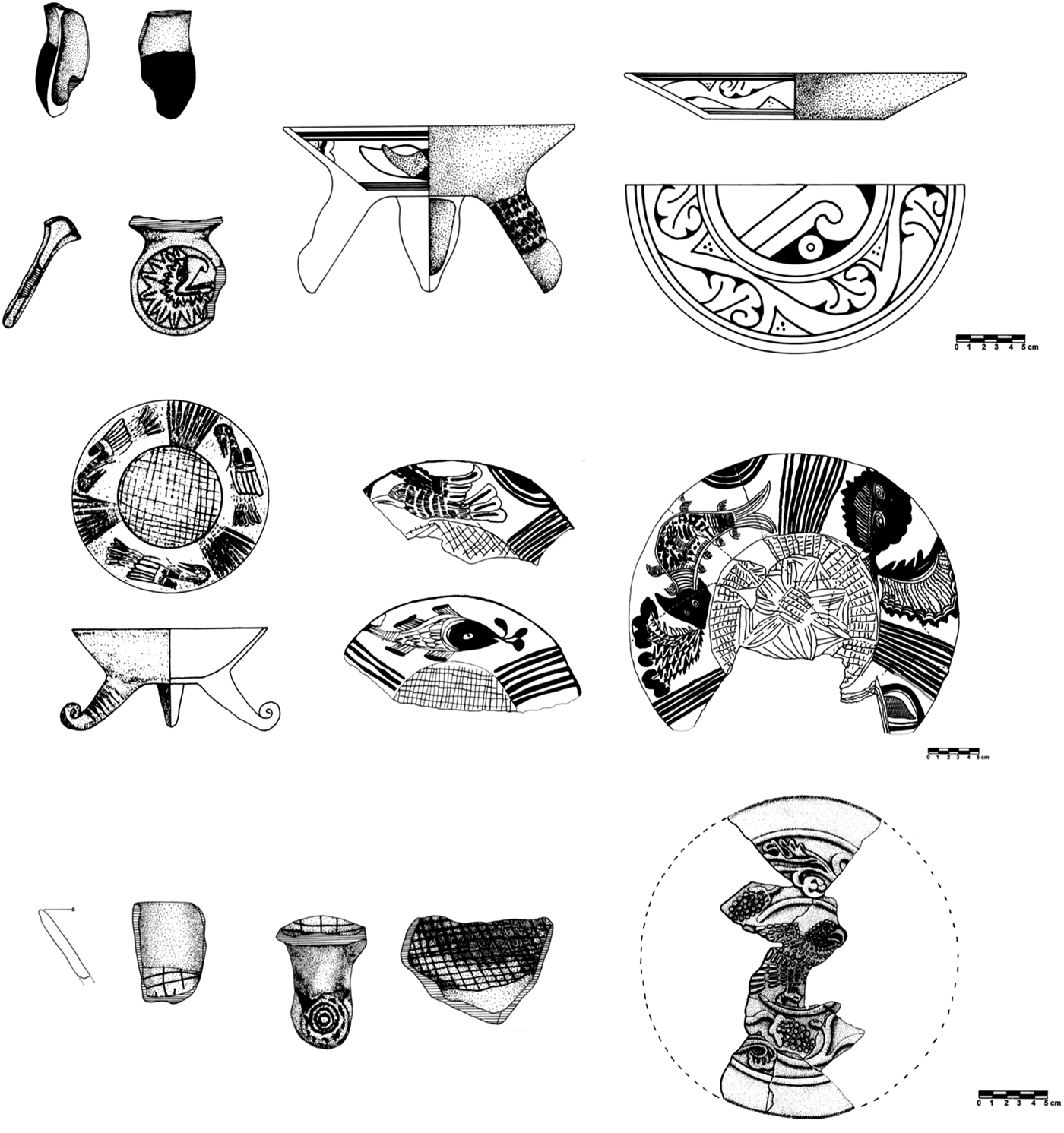
In the urban areas, Aztec III (pre-Conquest) Black-on-Orange designs disappeared, although they continued in rural contexts. In the city, Aztec IV (post-Conquest) designs replaced the Aztec III designs usually on the interior surfaces of dishes and molcajetes (grinding bowls). (Figure 2). After the destruction of Tenochtitlan in 1521, the production of Aztec Orange wares, including Aztec IV Black-on-Orange, shifts from Tenochtitlan to the east side of the lake, and uses clays from the Tetzcoco production zone, presumably as a result of damage done to the indigenous ceramic production facilities at Tenochtitlan during the Conquest (Charlton et al. Reference Charlton, Neff, Nichols, Charlton and Glascock1999).
Early Colonial period ceramics. Top to bottom: First row, Colonial Black-on-Red molded supports, tripod vessel and dish. Second row: Aztec IV Black-on-Orange molcajetes. Third row: Glazed molcajetes and stamped bowl [adapted from Charlton et al. Reference Charlton, Fournier, Charlton, Carrión and Cook2007].
In rural areas, Aztec IV designs did appear in lower frequencies and contextually are post-Conquest (for example, Charlton et al. Reference Charlton, Nichols and Charlton2000). There was a gradual loss of Black-on-Orange decorated vessels during the Early Colonial period in both urban and rural settings, with the final end of such designs occurring in the late sixteenth or early seventeenth centuries. This appears to be part of the continuing deterioration in finish of orange wares in general and in part is probably the result of a drop in demand after the crash of the indigenous population. Forms remain the same but with little surface treatment. By the mid-eighteenth century, Plain Orange wares appear to be directly replaced by glazed earthenware (Charlton Reference Charlton1980:203).
In the Late Postclassic the second most common Aztec ceramic ware is Red Ware. The most exuberant post-Conquest changes in indigenous ceramics occurred in Tenochtitlan-Tlatelolco in the Red Ware tradition (Charlton et al. Reference Charlton, Fournier and Cervantes1995, Reference Charlton, Charlton, García, Kepecs and Alexander2005, Reference Charlton, Fournier, Charlton, Carrión and Cook2007; Charlton and Fournier Reference Charlton, Fournier, Liebmann and Murphy2010). Red Ware may have appealed to Spanish aesthetic tastes since it recalled the fine bright red ceramics produced in Badajoz and Evora, on the Iberian Peninsula (for example, Charlton and Fournier Reference Charlton, Fournier, Liebmann and Murphy2010). New forms were introduced into a Black-on-Red tradition, including a Spanish soup plate, probably derived from forms found in majolica (see Figure 2). Stylistically, the designs were derived from Aztec IV Black-on-Orange designs usually found on plates, dishes, and molcajetes. During the Early Colonial period, these ceramics were present only in low frequencies in urban areas and not at all in the rural zones.
In the rural areas there was a substantially greater persistence of the pre-Conquest Red Ware ceramic tradition. Frequencies decreased during this period, probably with Red Ware disappearing between 1580 and 1650. There were two introductions at this time, possibly from the urban zone where they had developed earlier. One was the soup bowl form, the other the hemispherical bowl. This ware continues through the Late Colonial period and then ends.
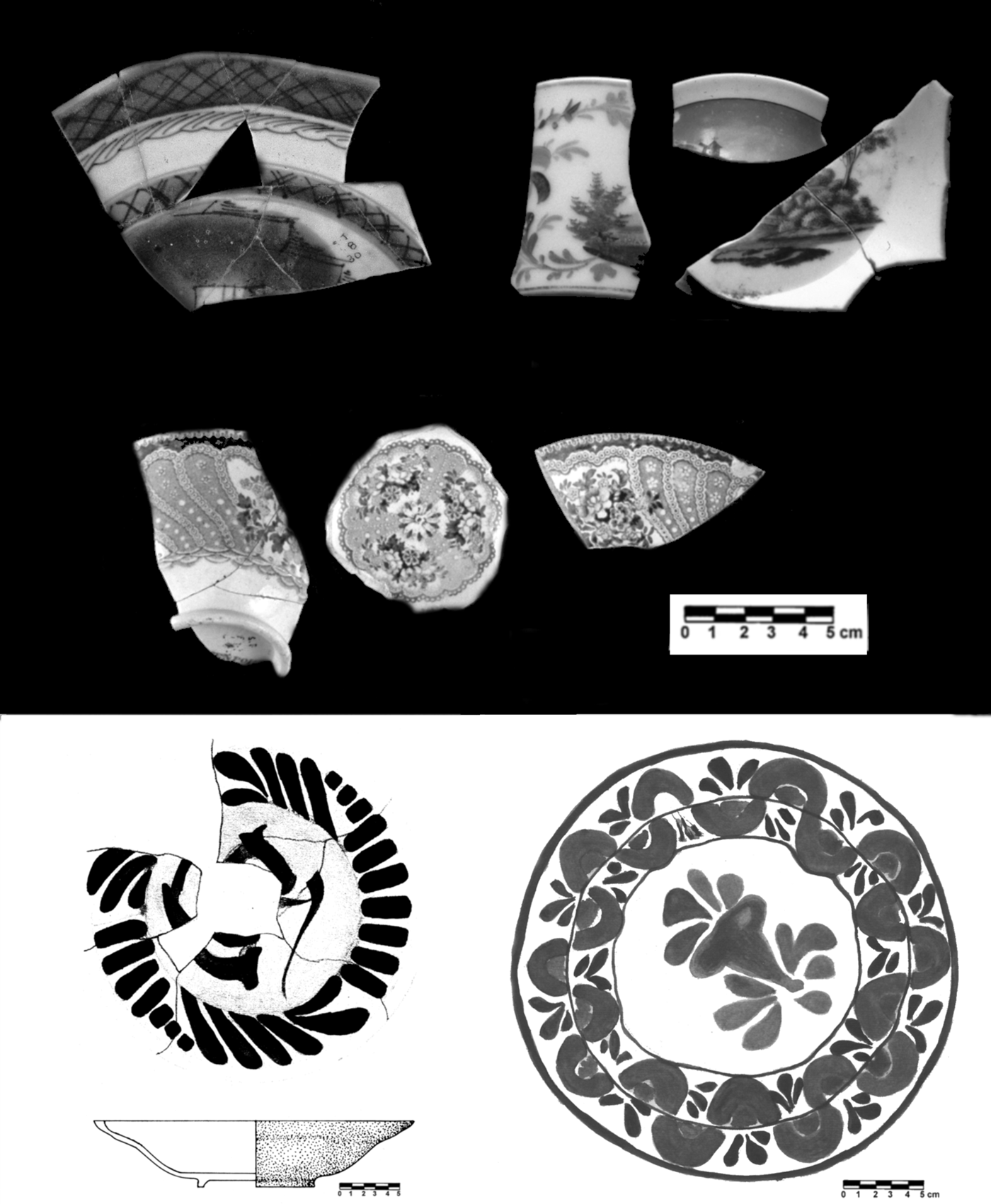
The production of simple, relatively low-cost, lead-glazed ceramics (see Figure 2) began early in the sixteenth century in Mexico City and eventually spread to indigenous pottery centers in the CMSR, where glazing technologies were previously unknown. Fragments from the sixteenth century occupation at Otumba indicate local production (Charlton et al. Reference Charlton, Neff, Nichols, Charlton and Glascock1999), as do fragments from the Colonial and Republican periods found elsewhere in the Basin of Mexico (Figure 3), Puebla, and the Mezquital Valley (Fournier and Blackman Reference Fournier and Blackman2008).
Colonial to Republican period ceramics. Top to bottom: First row, Chinese Blue-on-White porcelain (Canton pattern), polychrome French porcelain. Second row: Blue-on-White British transfer printed tea ware vessels (Davenport factory). Third row: Mexico City Green-on-Cream early seventeenth century majolica plate, nineteenth century polychrome majolica plate. Collections from Mexico City [pictures and drawings by the authors].
Associated with the Colonial Red Ware in the rural setting are minor wares that do not seem to have origins in solely Hispanic or Indigenous ceramic traditions. Slipped (with a reddish brown slip [RBB]) and Unslipped Coarse Brown Wares include thick and poorly finished jars and basins, either unslipped or covered with a RBB slip on the interior, extending at times to the exterior surface. In some cases the form is a lebrillo (pátera-cajete or bowl), often with an interior base stamped design. Lebrillos occur in Mexico City, possibly as bowls for drinking pulque, from about 1600–1650 to circa 1850 (for example, Temple Sánchez Reference Temple Sánchez, Dávila and Serafín1998), but are present only from about 1621–1820 in rural areas.
Tonalá Bruñida Ware has been produced outside of Guadalajara since the seventeenth century. This ware occurred in both the urban setting as well as in rural areas of the basin (Charlton and Reiff Katz Reference Charlton and Katz1979; López Cervantes Reference López Cervantes1976). In rural settings, it appeared early in the Middle Colonial period and continued through the Late Colonial period, with only one piece known in an Early Republican period context in Charlton's excavations.
As a result of analyses of numerous collections of majolica from two urban centers, Cuernavaca (Fournier and Charlton Reference Fournier, Charlton, Fournier and Wiesheu2011) and Mexico City (Fournier Reference Fournier, Dávila and Serafín1998; Fournier and Charlton Reference Charlton, Fournier, Rogers and Wilson1993, Reference Fournier, Charlton, Dávila and Serafín1998; Lister and Lister Reference Lister and Lister1982), it has become clear that cities possessed a wide range of majolica in terms of origins, chronology, types, and quality (see Figure 3), while rural areas possessed few types in limited quantities and not always of the highest quality, as a result of the concentration of power and wealth in urban settings and lack of access or perhaps demand in rural areas. On-going compositional analyses of the clays used to manufacture pottery vessels have included instrumental neutron activation (INAA), proton induced X-ray emission (PIXE), and for glazes, lead isotope (LA-MC-ICP-MS) analyses. The analyses of large samples of Colonial and Republican majolica, earthenware covered with an opaque glaze made of tin and lead, and pseudomajolica, a slipped and lead glazed earthenware, are contributing to an understanding of historic-period ceramic manufacturing technologies, the sequence of processes followed, and the contexts of manufacturing, distribution, and use in the CMSR (Blackman et al. Reference Blackman, Fournier and Bishop2006; Fournier and Blackman Reference Fournier and Blackman2008; Fournier et al. Reference Fournier, Blackman, Bishop, Fournier, Wiesheu and Charlton2007, Reference Fournier, Blackman and Bishop2009; Iñañez et al. Reference Iñañez, Belluci, Rodríguez-Alegría, Ash, McDonough and Speakman2010; Monroy Guzmán et al. Reference Monroy Guzmán, Fournier, Smit, Miranda, Ruvalcaba, de la Torre, López and García2005).
Chinese and French porcelains (Figure 3) are abundant in urban sites (for example, Fournier Reference Fournier1990, Reference Fournier, Dávila and Serafín1998; Fournier and Charlton Reference Fournier, Charlton, Fournier and Wiesheu2011) but virtually absent in rural sites in the CMSR. Plain and decorated British and French white wares (Figure 3) are also abundant in urban sites, but found only rarely in rural ones. On the other hand, cheaper Mexican-made tableware (for example, Barrera Cruz and Castillo Olvero Reference Barrera Cruz and Olvero2005) is found in almost all excavation sites that date to the nineteenth and twentieth centuries, both urban and rural. French and British wares became available in the late 1700s as a result of the Bourbon reforms that granted Spanish ports the rights to trade with other Spanish ports, rather than exclusively with Spain herself.
Other Materials
The introduction of metal tools and glass objects, primarily containers, occurred earliest and most intensively in urban settings in the CMSR. The rural area has few examples of items of these materials until after Independence in 1821.
Glass bottles were used to transport European spirits, liquors, and wines. Various vessels and containers imported or produced in Mexico are found in urban sites dating from the mid-sixteenth century to modern times (Fournier and Charlton Reference Fournier, Charlton, Fournier and Wiesheu2011; Hernández Aranda Reference Hernández Aranda1980; López Reference López2000). In the rural areas near Otumba, glass is quite rare until the Early Republican period when it begins to increase in frequency.
In urban sites located in Mexico City little metal was found apart from coins, table utensils, broaches, buckles, and door and window hardware (for example, Juárez Cossío Reference Juárez Cossío1989:172). That is much more, however, than the metal objects found in the rural areas from the same period. A few horseshoe nails, utensils (spoons, forks), coins, and one knife are all that were found in rural site excavations during this period. After 1820, there is a major increase in the number of metal objects in both rural and urban archaeological sites.
Obsidian was mined and processed at Sierra de Las Navajas (Pastrana Reference Pastrana1998) in the sixteenth century to provide scrapers to process cow hides to be exported to Spain. In the urban environment there are references to the use of core-blade technology during the same period of time. In the rural areas, Cressey (Reference Cressey1974) did not find any significant decline in obsidian working during the Early Colonial period. Apparently from 1621–1820 obsidian scavenged from archaeological sites was used instead of metal for cutting tools in native towns such as Xaltocan (Rodríguez-Alegría Reference Rodríguez-Alegría2008).
Greater access to some of these more “exotic” materials may be seen as a further indication of a continuation of pre-contact activities or cultural behavior in the rural areas as opposed to urban areas, but the fact that they begin to be much more abundant after Independence would suggest that they were also simply not available in any great quantity in these areas until after the lifting of trade restrictions following that war.
Architecture, Hispanic Institutions, and Settlement Patterns
Historical archaeology in urban settings in the CMSR focuses heavily on buildings that are the physical remains of Hispanic religious and secular institutions of the Colonial and Republican periods. The associated salvage archaeology has frequently, although not always, been secondary, and has dealt with ceramics, various other artifacts, construction features such as kilns and drains, and osteological remains (Charlton et al. Reference Charlton, Fournier, Charlton, Majewski and Gaimster2009a).
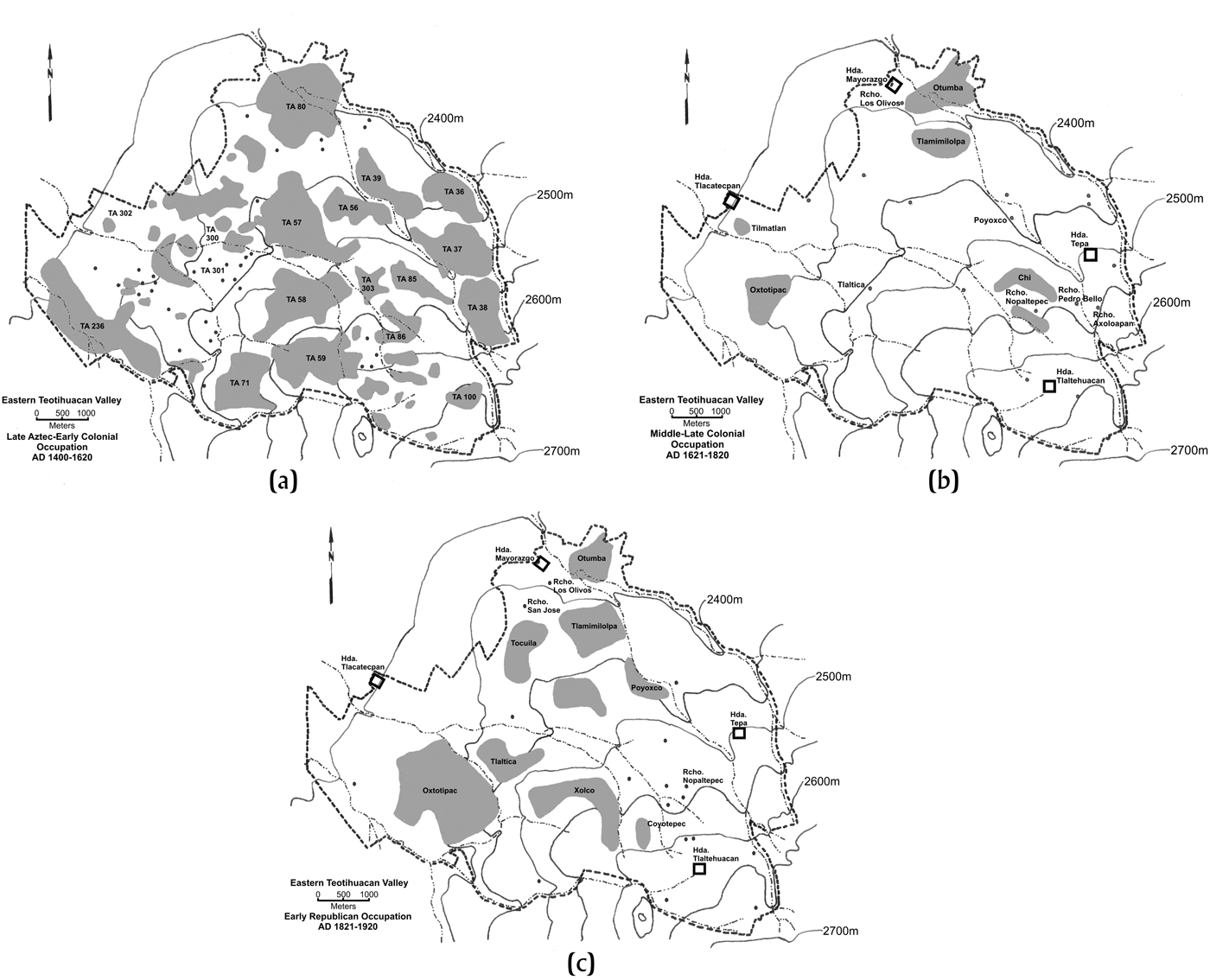
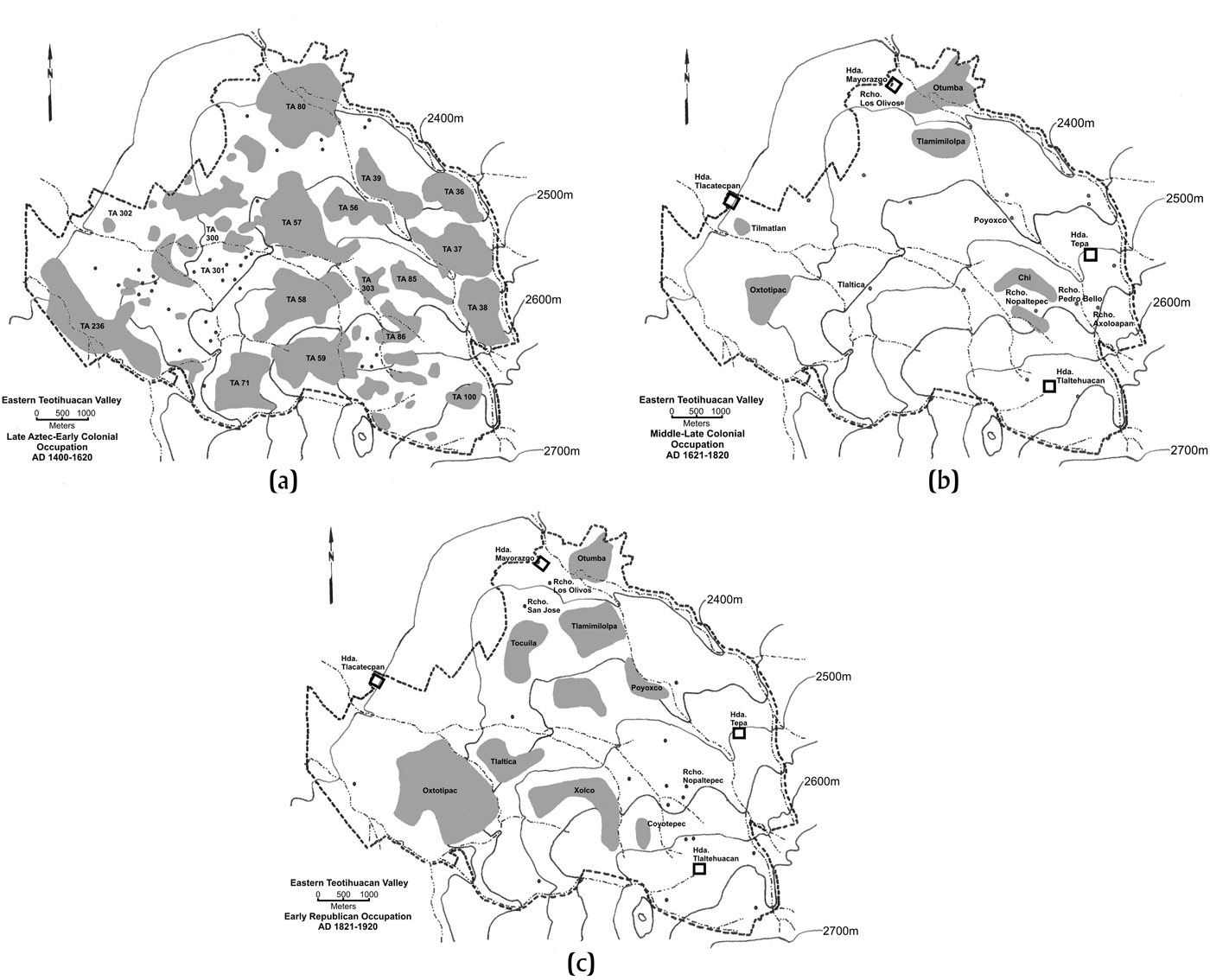
In the rural areas, settlement pattern maps with identified Colonial and Republican structures (churches, houses, ranchos, haciendas) clearly mark the population decline and its persistence at a low level during the Colonial Period, followed by an increase during the nineteenth and twentieth centuries (Charlton Reference Charlton1972, Reference Charlton, Spores and Andrews1986) (Figure 4). As was mentioned previously, Jones (Reference Jones1982) studied the plans and functions of ranchos and haciendas in the Otumba-Apan area, expanding on Charlton's surveys and excavations at ranchos and haciendas in the eastern Teotihuacan Valley (1973). Beyond these studies however, no additional archaeological work has been carried out on ranchos or haciendas in the area.
Early Colonial to Early Republican settlement patterns in the Eastern Teotihuacan Valley, Mexico [adapted from Charlton 1976]. a. Late Aztec-Early Colonial (1400–1620) b. Middle-Late Colonial (1621–1820) c. Early Republican (1821–1920)
THE PRESENT AND FUTURE STATUS OF HISTORICAL ARCHAEOLOGY IN THE BASIN OF MEXICO AND THE CENTRAL MEXICAN SYMBIOTIC REGION
Traditionally, Mexican archaeological research has been concerned mostly with the pre-Columbian past, with the study of the Colonial and Republican periods left to ethnohistorians and historians. Nevertheless, historical archaeology in the CMSR is not limited to filling gaps in post-Conquest written records that usually register misleading, biased or official narratives about specific events and empowered people, while various themes of the everyday lives of different social and ethnic groups went undocumented (for example, Palka Reference Palka2009).
Historical archaeology research provides an independent set of data with which to examine urban and rural developments with knowledge of material culture and its patterns, to construct cultural chronologies, to reconstruct lifeways, and to assess cultural processes. It focuses on the nature of the physical evidence—ceramics and various artifacts, settlement patterns, spatial distribution of architectural features, landscape, environmental transformations, and resource exploitation, among others—to infer interaction between indigenous and intrusive cultures, continuities and changes in each, including the emergence of new cultural and ethnic variants during the Colonial and Republican periods that cover nearly 500 years since the Spanish Conquest.
As we have noted, much historical archaeological investigation in the Basin of Mexico reflects the increasingly pressing need for salvage and rescue archaeology. Such an approach is by necessity heavily empirical, reflecting an immediate need to recover and describe the materials. Consequently, it does not have a strong theoretical focus. One way to encourage a greater interest in problems of a more general concern would be to develop a set of topics that could be explored profitably using historical and historical archaeological data together in the basin and CMSR. Such topics, grounded in post-1492 worldwide changes, should focus on the differential impact of the Conquest in urban and rural sites and regions, the nature of the political, social, economic, demographic, and religious relationships within each major ethnic and social sector and among those sectors, from 1521 until the present—noting, of course, evolution within each sector as well as the emergence of new areas of interest.
Despite the heavily descriptive nature of historical archaeology in this region, some investigators have attempted to evaluate these themes using available collections, generated by their field work or by that of others. The use of a variety of methods to detect trace elements in ceramics, and hence the probable place of origin of those ceramics, provides insight into the nature of the production and distribution system as well as consumption trends that characterize different social and ethnic groups (for example, Garraty Reference Garraty2007; Rodriguez-Alegría et al. Reference Rodríguez-Alegría, Neff and Glascock2003). In the case of indigenous ceramic traditions, Late Postclassic pottery production and trade systems were disrupted with the decline of the population and the establishment of markets in urban settings to supply the demand of the colonizers. To meet the demand and needs of the conquerors, in some cases indigenous potters adopted European technologies such as glazing, exploiting Postclassic clay sources in the Basin of Mexico, as shown by INAA (for example, Fournier and Blackman Reference Fournier and Blackman2011).
We have used a late culture-historical culture contact model (Wauchope Reference Wauchope1956) to evaluate the structure, content, context, and results of contact and acculturation during the early Colonial period (Charlton and Otis Charlton Reference Charlton, Charlton, Dávila and Serafín1999; Charlton et al. Reference Charlton, Charlton, García, Kepecs and Alexander2005; Charlton and Fournier Reference Charlton, Fournier, Rogers and Wilson1993). In connection with that model, we have also elaborated an economic-materialist-demographic model to account for changes in the economic systems, including the intrusion of an urban institution, the rancho/hacienda, into rural areas after 1580–1620 (Charlton Reference Charlton, Spores and Andrews1986, Reference Charlton and Harvey1991). While the demography as well as the material culture of the rural valley appeared to have changed little in the earlier part of the period, the demographic disaster that decimated nearly 90 percent of the indigenous population by the end of the period left a vacuum in the settlement of the valley as well as a shift in ownership and control of land, leaving open large tracts to be exploited by those with the wherewithal to take advantage of it. As the indigenous population gradually began to recover over the space of the next 200 years, there were no longer resources and land available to them and they became subject to those with increasingly large landholdings for their livelihood. This demographic aspect is viewed as a major factor in the early twentieth century revolution in Mexico—too much land held by too few people when the landless population had greatly increased in number.
Studies of ethnicity and class form part of more general approaches to the post-Conquest record. Although the urban context of materials recovered during salvage operations might be considered to be biased toward the Hispanic ethnicity as well as toward an upper class composed of those of Hispanic origins, information on Hispanic–Indigenous interaction as well as on the status of indigenous urban people might be forthcoming from the field and archival research accomplished.
Historical archaeology in the Basin of Mexico and the CMSR is an evolving sub-field and will become of greater importance in the future. It should be possible through urban historical archaeology to document the sequence and kinds of Hispanic institutions, the expansion of the population, the level of health of the people, and changes in urban planning, as well as to determine changes within the urban infrastructure. At the same time ethnic and social correlates of housing and ceramics should be visible.
In rural areas, where some semblance of Colonial and Independence period cultural landscapes persists, the total potential of multi-faceted historical archaeology can be exploited. The richness of the archaeological record, the historical documentation, and the presence of descendants of both indigenous and intrusive societies, in many instances mean that an enhanced study of social and cultural practices within many differing contexts can be carried out (Charlton Reference Charlton1972, Reference Charlton1973, Reference Charlton1980, Reference Charlton and Schiffer1981, Reference Charlton, Spores and Andrews1986).
There has been increasing use of available historical archaeological data to address questions about social, economic, political, and religious developments in the nearly 500 years since 1521. It is in the context of worldwide trends, such as European cultural expansion after 1492, the Industrial Revolution and Independence movements of the late eighteenth and early nineteenth centuries, and the current internationalization of the world's economies at the end of the twentieth and beginning of the twenty-first centuries, that basin and CMSR historical archaeology should be viewed and addressed.
RESUMEN
En este ensayo exponemos de manera sintética los orígenes y el desarrollo de la arqueología histórica en la región simbiótica del centro de México (RSCM), con particular énfasis a la cuenca de México. En este subcampo de la investigación arqueológica se parte del estudio de la cultura material, y, en general, de las evidencias físicas (cerámica y toda clase de artefactos, patrones de asentamiento, características arquitectónicas de inmuebles, paisaje, impacto ambiental, uso de recursos, entre otros), para lograr una aproximación al entendimiento del cambio cultural y sus dinámicas a partir de la conquista española, con un enfoque temporal que abarca hasta la actualidad.
Los datos derivados de diversas fuentes etnohistóricas e históricas, de contarse con registros documentales, son de relevancia aunque no determinan de manera necesaria la inferencia de procesos culturales pretéritos pues ésta se basa en la cultura material.
En la RSCM al igual que en otras áreas de México, las políticas y legislación gubernamentales en torno a la protección del patrimonio arqueológico han incidido en que se preste particular atención a las obras de infraestructura urbana y que se dé énfasis a la conservación de edificios de los periodos colonial y republicano, lo cual determina en cierta medida el tipo de intervenciones arqueológicas que se efectúan. De hecho, los trabajos de rescate y salvamento arqueológico predominan, sin que en los proyectos de investigación sea definitorio hacer uso de elementos teóricos y, por lo tanto, los resultados suelen ser de corte descriptivo. En contraste, los estudios en el ámbito rural muestran que en muchos casos el instrumental teórico posibilita una mejor aproximación al entendimiento de dinámicas pasadas.
De cualquier forma, la calidad de los datos incide en el proceso inferencial, considerando si se recuperan en intervenciones de superficie o en excavaciones, ya que a menudo los depósitos arqueológicos se encuentran mezclados sin que sea factible un control adecuado en su recuperación para, así, contar con marcos cronológicos precisos.
El estudio de la cerámica arqueológica ha sido de gran importancia en la arqueología histórica de la RSCM, ya que algunas lozas se han logrado ubicar con cierta precisión en el tiempo, mediante análisis químicos de las arcillas y cubiertas vidriadas de las piezas paulatinamente se cuenta con información certera acerca del lugar donde se produjeron. En consecuencia, se puede proceder a interpretaciones acerca de los mecanismos de comercialización de vasijas, tendencias de consumo y posición social o étnica de sus usuarios.
En este ensayo nos interesa hacer hincapié brevemente en las clases de cerámica, vidrio y metal diagnósticos para la construcción de secuencias cronológicas, que se encuentran en trabajos de superficie o excavación en la RSCM.
La arqueología histórica en la RSCM continúa desarrollándose y las investigaciones cubren el largo periodo de cambios y transformaciones de la sociedad virreinal y republicana en México. Apenas se vislumbran aspectos de la vida cotidiana de diversos grupos sociales y distintos procesos culturales, aunque se espera que proliferen a futuro. Así e independientemente de los sesgos de las historias escritas, este subcampo empieza a realizar aportes al conocimiento del pasado y la cultura de los periodos posteriores a la conquista española de México hasta hoy día.
ACKNOWLEDGMENTS
We would like to acknowledge and thank Ian Robertson and Larry Gorenflo for their hard work and patience putting together the original conference from which this paper originated and seeing these papers through to publication. We thank the Foundation for the Advancement of Mesoamerican Studies, Inc. (FAMSI) and the Center for Latin American Studies and the Archaeology Center at Stanford University for their funding of the original conference. We also thank an anonymous reviewer for comments and suggestions on this paper.