Introduction
There are considerable numbers of experimental studies suggesting an association between the intake of phytochemicals (plant-derived substances such as lycopene), and reduced negative effects of heat stress in poultry (Sahin et al., Reference SAHIN, ORHAN, TUZCU, SAHIN and KUCUK2008; Tuzcu et al., Reference TUZCU, SAHIN, KARATEPE, CIKIM, KILINC and SAHIN2008; Sahin et al., Reference SAHIN, ORHAN, AKDEMIR, TUZCU, IBEN and SAHIN2012). Phytochemicals have been shown to exert their positive health benefits directly, by affecting specific molecular targets such as genes, or indirectly as stabilised conjugates affecting metabolic pathways (Kelloff et al., Reference KELLOFF, CROWELL, STEELE, LUBET, MALONE, BOONE, KOPELOVICH, HAWK, LIEBERMAN, LAWRENCE, ALI, VINER and SIGMAN2000; Aggarwal and Shishodia, Reference AGGARWAL and SHISHODIA2006). The aim of most studies is to understand and formulate mechanistic pathways by which these naturally-derived substances can alter the fate of a cell. In particular, the antioxidant effects of phytochemicals have been implicated as stress-alleviation agents (Sahin et al., Reference SAHIN, ORHAN, TUZCU, SAHIN and KUCUK2008; Tuzcu et al., Reference TUZCU, SAHIN, KARATEPE, CIKIM, KILINC and SAHIN2008; Sahin et al., Reference SAHIN, ORHAN, AKDEMIR, TUZCU, ALI and SAHIN2011). In recent years, EGCG, lycopene and resveratrol have become the subject of more intensive investigations in poultry (Sahin et al., Reference SAHIN, ORHAN, TUZCU, SAHIN and KUCUK2008; Reference SAHIN, ORHAN, TUZCU, ALI, SAHIN and HAYIRLI2010; Reference SAHIN, ORHAN, AKDEMIR, TUZCU, IBEN and SAHIN2012). In a comprehensive analysis of experimental studies on the relation of tomato powder consumption and stress prevention, Sahin et al. (Reference SAHIN, ORHAN, AKDEMIR, TUZCU, ALI and SAHIN2011) reported that most of the reviewed studies have found an inverse association between tomato intake or blood lycopene level and stress. The anti-stress effects of these and other phytochemicals were found within diverse hepatic cells (Sahin et al., Reference SAHIN, ORHAN, TUZCU, ALI, SAHIN and HAYIRLI2010; Reference SAHIN, ORHAN, AKDEMIR, TUZCU, IBEN and SAHIN2012). While it has been shown that lycopene alleviates heat stress in a dose-dependent manner (Sahin et al., Reference SAHIN, ORHAN, AKDEMIR, TUZCU, ALI and SAHIN2011), the biochemical processes involved in the anti-stress effects of phytochemicals are not completely understood. In this review, we will primarily address the mechanisms proposed for the stress alleviation activity of selected phytochemicals (e.g. tomato lycopene, EGCG, resveratrol) that target multiple cellular signalling pathways. The phytochemicals, described here, do indeed show great potential for modulating multiple targets such as transcription factors [e.g., NF-κB, AP-1, Nrf2].
Molecular action of heat stress in poultry
Heat stress is one of the important obstacles in poultry operations. High ambient temperature does not only compromise welfare and health status (Mashaly et al., Reference MASHALY, HENDRICKS, KALAMA, GEHAD, ABBAS and PATTERSON2004), but adversely affects survival (Bogin et al., Reference BOGIN, AVIDAR, PECH-WAFFENSCHMIDT, DORON, ISRAELI and KEVHAYEV1996), performance (Wolfenson et al., Reference WOLFENSON, FERI, SNAPIR and BERMAN1979; Yalcin et al., Reference YALCIN, OZKAN, S, TURKMUT and SIEGEL2001), and product quality (Smith, Reference SMITH1974; Sandercock et al., Reference SANDERCOCK, HUNTER, NUTE, MITCHELL and HOCKING2001). It is well established that heat stress can lead to a reduction in the birds’ defence mechanisms (immunosuppression) (Thaxton and Siegel, Reference THAXTON and SIEGEL1970). It has been speculated that levels of serum corticosteroids increase as a result of the increased activity of the adrenal gland due to stress, which then suppresses cell proliferation factor or IL-2 (Siegel, Reference SIEGEL1995). The impact of environmental temperature depends on the degree of habituation of the bird. In addition, heat stress causes molecular changes and has been shown to elevate inflammatory markers such as interleukin-6 (IL-6), C - reactive protein (CRP), and tumour necrosis factor (TNF) (Hargreaves et al., Reference HARGREAVES, DILLO, ANGUS and FEBBRAIO1996; Etches et al., Reference ETCHES, JOHN and GIBBINS2008; Sahin et al., Reference SAHIN, SAHIN, KUCUK, HAYIRLI and PRASAD2009a). Heat stress generates reactive oxygen species (ROS), possibly by disrupting the electron transport assemblies within the membrane (Ando et al., Reference ANDO, KATAGIRI, YAMAMOTO, WAKAMATSU, KAWAHARA, ASANUMA, USUDA and SASAKI1997; Mujahid et al., Reference MUJAHID, YOSHIKI, AKIBA and TOYOMIZU2005), which could further modulate the activities of transcription factors such as the nuclear factor erythroid 2-related factor 2 (Nrf-2) (Na and Surh, Reference NA and SURH2008), and inflammatory transcription factor, nuclear factor-κB (NF-κB) (Ali and Mann, Reference ALI and MANN2004). Heat and oxidative stress adversely affects the structure and physiology of the cell, causing impairment of transcription, RNA processing, translation, oxidative metabolism, and membrane structure and function (Mager and De Kruijff, Reference MAGER and De KRUIJFF1995; Iwagami, Reference IWAGAMI1996). Hormonal and metabolic changes, secretion of inflammatory markers (Hargreaves et al., Reference HARGREAVES, DILLO, ANGUS and FEBBRAIO1996; Etches et al., Reference ETCHES, JOHN and GIBBINS2008) and a decrease in the level of vitamins and minerals have also been reported in response to stress (Sahin and Kucuk, Reference SAHIN and KUCUK2003; Sahin et al., Reference SAHIN, TUZCU, ORHAN, ONDERCI, EROKSUZ and SAHIN2009b).
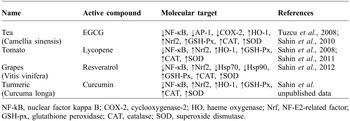
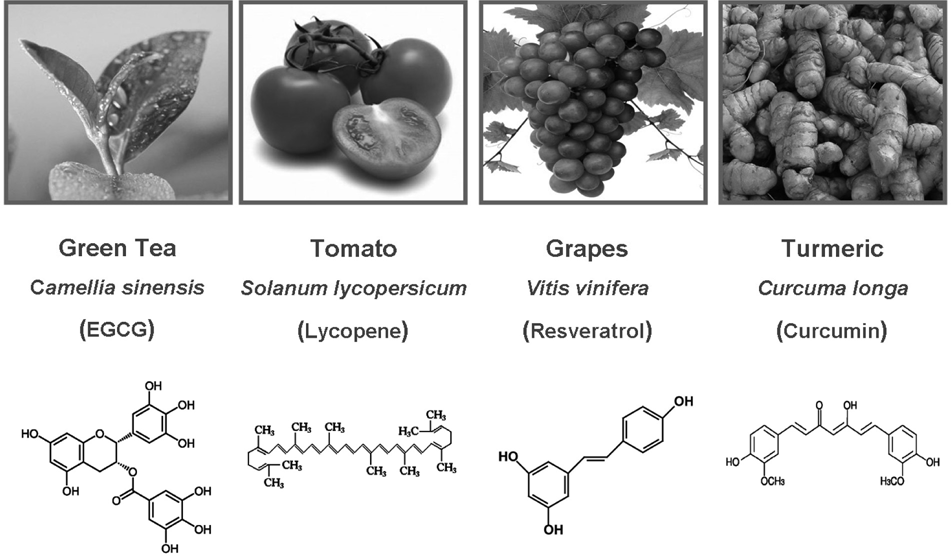
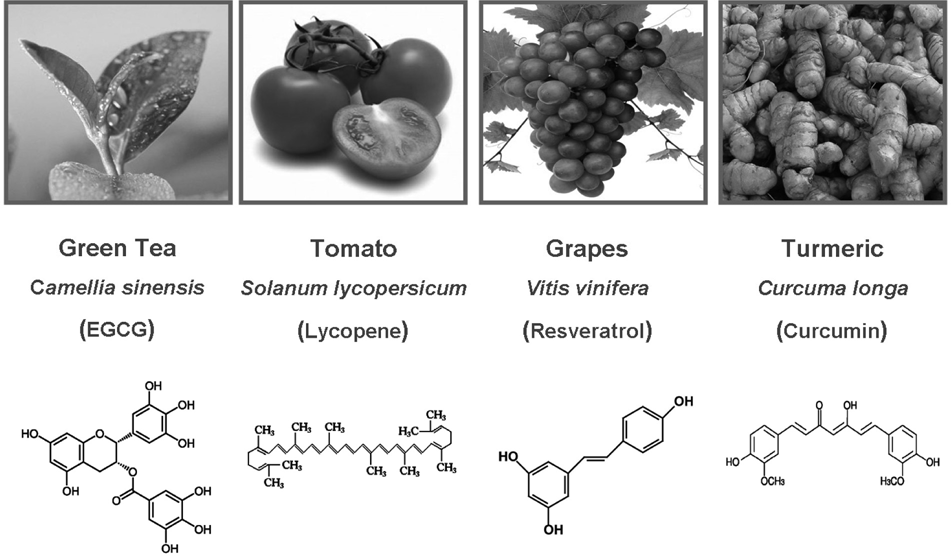
Research over the last decade has shown that several phytochemicals reduce the negative effects of stress (Table 1). The active components of dietary phytochemicals that most often appear to be protective against stress include EGCG, lycopene, resveratrol, genistein, vitamin C and vitamin E (Table 1 and Figure 1). These dietary agents are believed to suppress oxidative stress and the inflammatory processes that lead to transformation and hyperproliferation. However, stress is a multistep process that can be activated by any of various environmental factors (e.g. high or low ambient temperature, transportation). These factors are known to modulate the transcription factors (e.g., NF-κB, AP-1, Nrf2) and growth factor signalling pathways.
Molecular targets of dietary phytochemicals in heat stressed poultry.

NF-kB, nuclear factor kappa B; COX-2, cyclooxygenase-2; HO, haeme oxygenase; Nrf, NF-E2-related factor; GSH-px, glutathione peroxidase; CAT, catalase; SOD, superoxide dismutase.
Dietary phytochemicals and their chemical structures.
Molecular targets
nuclear factor-kappa B (NF-κB)
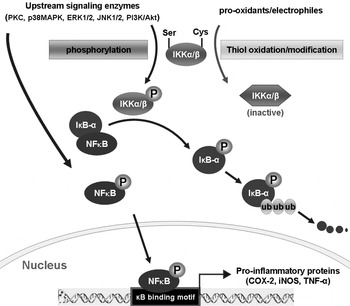
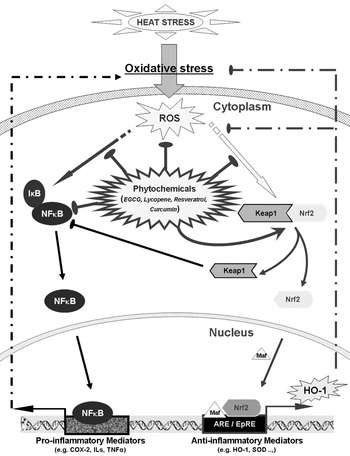
The nuclear factor kappa light-chain-enhancer of activated B cells (NF-κB) is one of the transcription factors responsible for controlling DNA transcription and is involved in cellular responses to a number of stimuli including free radicals (Gilmore, Reference GILMORE2006). Under normal conditions, NF-κB dimmers (first discovered in the nucleus by Sen and Baltimore in 1986), reside in the cytoplasm. NF-κB is activated by stress, diet, chemotherapeutic agents, free radicals, inflammatory stimuli, cytokines and the presence of carcinogens (Aggarwal and Shishodia, Reference AGGARWAL and SHISHODIA2006). Upon activation, it is translocated to the nucleus, where it induces the expression of more than 200 genes that have been shown (Figure 2) to suppress apoptosis and induce cellular transformation, proliferation, invasion, metastasis and inflammation (Aggarwal and Shishodia, Reference AGGARWAL and SHISHODIA2006; Gupta et al., Reference GUPTA, SUNDARAM, REUTER and AGGARWAL2010). The NF-κB inducers act through distinct signalling pathways that converge during the activation of an IκB kinase (IKK). This activation initiates IκB phosphorylation at specific amino-terminal serine residues followed by ubiquitination at lysine residues and subsequent degradation by 26S proteasome (Gupta et al., Reference GUPTA, SUNDARAM, REUTER and AGGARWAL2010). The activated NF-κB binds to specific sequences of DNA called response elements in nucleus. Increased expression of NF-κB in heat-stressed quails could be related to their activation (Nelson et al., Reference NELSON, IHEKWABA, ELLIOTT, JOHNSON, GIBNEY, FOREMAN, NELSON, SEE, HORTON, SPILLER, EDWARDS, MCDOWELL, UNITT, SULLIVAN, GRIMLEY, BENSON, BROOMHEAD, KELL and WHITE2004; Gilmore, Reference GILMORE2006) and translocation (Itoh et al., Reference ITOH, WAKABAYASHI, KATOH, ISHII, IGARASHI, ENGEL and YAMAMOTO1999; Yamamoto et al., Reference YAMAMOTO, SUZUKI, KOBAYASHI, WAKABAYASHI, MAHER, MOTOHASHI and YAMAMOTO2008; Nguyen et al., Reference NGUYEN, NIOI and PICKETT2009), respectively, to overcome oxidative stress caused by exposure to heat stress (Figure 2).
NF-κB as prime molecular targets for alleviation and cytoprotection with anti-inflammatory and antioxidant phytochemicals (Adapted from Surh and Na, Reference SURH and NA2008.)

Several dietary phytochemicals, such as EGCG (Sahin et al., Reference SAHIN, ORHAN, TUZCU, ALI, SAHIN and HAYIRLI2010), resveratrol (Manna et al., Reference MANNA, MUKHOPADHYAY and AGGARWAL2000; Sahin et al., Reference SAHIN, ORHAN, AKDEMIR, TUZCU, IBEN and SAHIN2012), curcumin (Singh and Aggarwal, Reference SINGH and AGGARWAL1995) and lycopene (Sahin et al., Reference SAHIN, ORHAN, AKDEMIR, TUZCU, ALI and SAHIN2011) have been found to be potent inhibitors of NF-κB. These inhibitors may block any one or more steps in the NF-κB signalling pathway, including the signals that activate the NF-κB cascade, translocation of NF-κB into the nucleus, DNA binding of the dimers, or interactions with the basal transcriptional machinery. Numerous studies from our laboratory have shown that the agents derived from plants including EGCG, lycopene, resveratrol, and curcumin exert numerous biological effects that are pertinent to human medicine. These include antioxidant, antimicrobial, antiproliferative, antimutagenic, and antiaging effects through the suppression of NF-κB (Mukthar and Ahmad, 2000; Trevisanato and Kim, Reference TREVISANATO and KIM2000). Yang et al. (Reference YANG, OZ, BARVE, DE VILLIERS, MCCLAIN and VARILEK2001) reported that EGCG suppresses NF-κB activation by inhibiting IKK activity, as do various other phytochemicals. In one study (Sahin et al., Reference SAHIN, ORHAN, TUZCU, ALI, SAHIN and HAYIRLI2010), it was reported that increasing dietary EGCG extracted from green tea, inhibited NF-κB expression by 42% in the hepatic cells of quail reared under heat stress. Decreases in NF-κB expression in response to increasing supplemental EGCG level were greater in the thermoneutral environment than under heat stress (environmental temperature x EGCG level interaction effects). It was additionally reported that hepatic MDA level was positively correlated with expression of NF-κB and activities of antioxidant enzymes were negatively correlated with expression of NF-κB (Sahin et al., Reference SAHIN, ORHAN, TUZCU, ALI, SAHIN and HAYIRLI2010). Lycopene, found in tomatoes and other red fruits and vegetables, such as carrots, watermelons and papayas, has been shown to inhibit NF-κB activity and to modulate inflammatory pathways (Gupta et al., Reference GUPTA, KUMAR and KULKARNI2011). A study from our laboratory has shown that, NF-κB p65 subunit level increased in the nuclear fraction of the liver from heat stressed quails, and tomato powder supplementation attenuated the response in a dose-dependent manner (Sahin et al., Reference SAHIN, ORHAN, AKDEMIR, TUZCU, ALI and SAHIN2011). We also reported that resveratrol can suppress the activation of several transcription factors including NF-κB, and can inhibit protein kinases including inhibitor of NF-κB (IκBα) kinase (IKK), mitogen-activated protein kinase (MAPK) and protein kinase B (Akt) (Sahin et al., Reference SAHIN, ORHAN, AKDEMIR, TUZCU, IBEN and SAHIN2012). Thus, one of the probable mechanisms by which dietary phytochemicals exercise their anti-stress properties is through the suppression of the NF-κB signalling pathway.
activator protein-1 (AP-1)
Activator protein-1 (AP-1), a redox-sensitive transcription factor, modulates gene expression responses to oxidative and electrophilic stresses presumably via sulphydryl modification of critical cysteine residues found on this protein and/or other upstream redox-sensitive molecular targets (Nair et al., Reference NAIR, LI and KONG2007; Reference NAIR, BARVE, KHOR, SHEN, LIN, CHAN, CAI and KONG2010). AP-1 is a heterodimeric protein composed of proteins complexes of members of the basic leucine zipper (bZIP) protein families, including the Jun (c-Jun, JunB, and JunD) and Fos (c-Fos, FosB, Fra-1, and Fra-2) families, Maf (c-Maf, MafB, MafA, Maf G/F/K, and Nrl) and Jun dimerisation partners (JDP1 and JDP2) (Shaulian and Karin, Reference SHAULIAN and KARIN2002; Nair et al., Reference NAIR, BARVE, KHOR, SHEN, LIN, CHAN, CAI and KONG2010). Many stimuli, including growth factors and oncoproteins, are potent inducers of AP-1 activity; and it is induced by tumour necrosis factor (TNF) and interleukin 1 (IL-1), as well as by a variety of environmental stresses, such as high ambient temperature (Aggarwal and Shishodia, Reference AGGARWAL and SHISHODIA2006). AP-1 activation is linked to growth regulation, cell transformation, inflammation, and innate immune responses (Aggarwal and Shishodia, Reference AGGARWAL and SHISHODIA2006).
Several phytochemicals, such as EGCG (Orhan et al., Reference ORHAN, TUZCU, GENCOGLU, SAHIN and SAHIN2012), resveratrol (Manna et al., Reference MANNA, MUKHOPADHYAY and AGGARWAL2000) and curcumin (Aggarwal and Shishodia, Reference AGGARWAL and SHISHODIA2006), have been shown to suppress the AP-1 activation process. Manna et al. (Reference MANNA, MUKHOPADHYAY and AGGARWAL2000) reported that resveratrol inhibited TNF-dependent AP-1 activation in U-937 cells, and that pretreatment with resveratrol strongly attenuates TNF-activated JNK and MEK kinases. A study from our laboratory has shown that increasing dietary EGCG supplementation inhibited AP-1 expression in hepatic cells from quail reared under heat stress (Orhan et al., Reference ORHAN, TUZCU, GENCOGLU, SAHIN and SAHIN2012). These studies suggest that several phytochemicals target the AP-1 signalling pathway in stressed poultry.
cyclooxygenase-2 (COX-2)
The cyclooxygenase (COX) enzymes, specifically the isozymes COX-1 and COX-2, are involved in the conversion of arachidonic acid into inflammatory prostaglandins. Prostaglandins play critical roles in numerous biologic processes, including the regulation of immune function, kidney development, reproductive biology, and gastrointestinal integrity. Whereas COX-1 is expressed in most tissues, COX-2 is increasingly expressed under inflammatory conditions (Williams et al., Reference WILLIAMS, MANN and DUBOIS1999; Gupta et al., Reference GUPTA, KUMAR and KULKARNI2011). Depending upon the stimulus and the cell type, several transcription factors including NF-κB and AP-1 can stimulate COX-2 transcription (Aggarwal and Shishodia, Reference AGGARWAL and SHISHODIA2006). Thus, all the dietary agents that can suppress these transcription factors have the potential to inhibit COX-2 expression. Numerous studies continue to report that dietary phytochemicals including EGCG (Orhan et al., Reference ORHAN, TUZCU, GENCOGLU, SAHIN and SAHIN2012), curcumin (Aggarwal and Shishodia, Reference AGGARWAL and SHISHODIA2006), and resveratrol (Subbaramaiah et al., Reference SUBBARAMAIAH, CHUNG, MICHALUART, TELANG, TANABE, INOUE, JANG, PEZZUTO and DANNENBERG1998) have been shown to suppress COX-2. Recently, it was shown that heat stress significantly increased the level of COX-2, c-Jun and c-Fos, the principal components of AP-1 protein, and that EGCG intake caused reduction in their levels thereby indicating a response to supplementation (Orhan et al., Reference ORHAN, TUZCU, GENCOGLU, SAHIN and SAHIN2012).
nuclear Factor-Erythroid 2-Related Factor 2 (Nrf2) / Haemeoxygenase-1 (HO-1) pathway
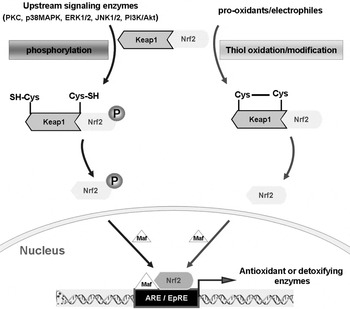
Nuclear Factor-Erythroid 2-Related Factor 2 (Nrf2) is a redox-sensitive transcription factor (Nair et al., Reference NAIR, LI and KONG2007) and plays a role in induction of phase II detoxifying/antioxidant defence mechanisms to cope with oxidative stress through enhancing the expression of a number of enzymes, such as NAD(P)H quinone oxidoreductase 1, glutamate-cysteine ligase, haeme oxygenase-1, glutathione S-transferase, and UDP-glucuronosyltransferase (Na and Surh, Reference NA and SURH2008). Nrf-2 is a key transcription factor that controls the cellular antioxidant response against oxidants. Under normal physiological conditions, a cytoskeleton binding protein called Kelch-like erythroid CNC homologue (ECH)-associated protein 1 (Keap1) binds to Nrf-2, thereby repressing its translocation into the nucleus, which is required for Nrf-2 activation. Covalent modification or oxidation of critical cysteine residues in Keap1 has been hypothesized to facilitate the dissociation of Keap1–Nrf-2 complex or increase the stability of Nrf-2 (Kobayashi et al., Reference KOBAYASHI, KANG, WATAI, TONG, SHIBATA, UCHIDA and YAMAMOTO2006; Na and Surh, Reference NA and SURH2008). The cysteine residues serve as molecular sensor for recognizing the altered intracellular redox-status triggered by electrophiles or ROS (Dinkova-Kostova et al., Reference DINKOVA-KOSTOVA, HOLTZCLAW, COLE, ITOH, WAKABAYASHI, KATOH, YAMAMOTO and TALALAY2002; Na and Surh, Reference NA and SURH2008). Beside this, post-transcriptional changes in Nrf-2 directly modulate the Nrf-2-Keap1 signalling. Phosphorylation of Nrf-2 on its serine and threonine residues by protein kinase C (PKC), phosphoinositol 3-kinase (PI3K), and mitogen activated protein kinases (MAPKs) have been reported to activate Nrf-2 (Yu et al., Reference YU, CHEN, MO, HEBBAR, OWUOR, TAN and KONG2000; Na and Surh, Reference NA and SURH2008) (Figure 3). Further, MAPK and protein kinase B (PKB, Akt) are associated with the modulation of antioxidant response element (ARE)-driven gene expression via Nrf-2 (Yu et al., Reference YU, CHEN, MO, HEBBAR, OWUOR, TAN and KONG2000; Li et al., Reference LI, ZHONG, WU and SHI2007). It has been found (Sahin et al., Reference SAHIN, ORHAN, TUZCU, ALI, SAHIN and HAYIRLI2010) that heat stress is associated with transcription factor induction, and resulted in an increase in the expression of NFκB and a decrease in the expression of Nrf2 when birds were kept at high ambient temperature (Figure 3). HO-1 is responsible for the conversion of haeme to biliverdin and carbon monoxide, and its induction is crucial in the cellular adaptive response to oxidative injury (Na and Surh, Reference NA and SURH2008). Although HO-1 has a cytoprotective function in normal cells, abnormally elevated constitutive expression of HO-1 in chronic diseases can confer growth advantage.
Nrf2 as molecular targets for alleviation and cytoprotection with anti-inflammatory and antioxidant phytochemicals (Adapted from Surh and Na, Reference SURH and NA2008).

Numerous reports indicate that dietary phytochemicals like EGCG (Na and Surh, Reference NA and SURH2008; Sahin et al., Reference SAHIN, ORHAN, TUZCU, ALI, SAHIN and HAYIRLI2010) and curcumin (Shen et al., Reference SHEN, XU, HU, JAIN, GOPALKRISHNAN, NAIR, HUANG, CHAN and KONG2006) can activate Nrf2 and induce expression of antioxidant or phase two detoxifying enzymes. Garg and Maru (Reference GARG and MARU2009) reported that curcumin increased ARE-binding of Nrf2 and induced the activity as well as expression of GST and NQO1 and their mRNA transcripts, and the liver and lung of mice treated with dietary curcumin had reduced oxidative stress and inflammation. A number of studies from our laboratory have shown that the phytochemicals derived from plants exert their anti-stress effects through the activation of Nrf2/HO-1 pathways (Figure 4). EGCG from green tea mediate its effects by regulating the transcription factor Nrf2 and Nrf2 regulated HO-1 (Na and Surh, Reference NA and SURH2008). It has been reported that increasing dietary EGCG supplementation enhanced Nrf2 expression by 59%, and these changes in Nrf2 expression due to supplemental EGCG was greater in the thermoneutral environment than under heat stress (Sahin et al., Reference SAHIN, ORHAN, TUZCU, ALI, SAHIN and HAYIRLI2010). In the same study, hepatic MDA level was negatively correlated with activities of antioxidant enzymes and expression of Nrf2 and activities of antioxidant enzymes were positively correlated with expression of Nrf2 (Sahin et al., Reference SAHIN, ORHAN, TUZCU, ALI, SAHIN and HAYIRLI2010). These data ascertain that polyphenols act as modifiers for signal transduction pathways through enhancing Keap-1 dissociation from Nrf2 that occur in response to stressors, which are accompanied by suppression of lipid peroxidation and elevation of antioxidant enzyme activities. Lycopene may increase the nuclear translocation of Nrf-2 leading to enhanced expression of several phase-II detoxifying enzymes as well as other antioxidant enzymes/proteins (Lian and Wang, Reference LIAN and WANG2008). In a study, lycopene has been reported to stimulate the release of Nrf-2 from Keap1 by forming covalently bound adducts with Keap (Ben-Dor et al., Reference BEN-DOR, STEINER, GHEBER, DANILENKO, DUBI, LINNEWIEL, ZICK, SHARONI and LEVY2005). It has been reported that Nrf-2 accumulation increased in the nuclear fraction of the liver of heat-stressed quails when using tomato powder supplementation as a lycopene source (Sahin et al., Reference SAHIN, ORHAN, AKDEMIR, TUZCU, ALI and SAHIN2011). The expression of liver Hsp70 and Hsp90 was greater, while Nrf2 expression was lower in quails exposed to high ambient temperature compared to those in a thermoneutral environment (Sahin et al., Reference SAHIN, TUZCU, ORHAN, ONDERCI, EROKSUZ and SAHIN2009b; Reference SAHIN, ORHAN, AKDEMIR, TUZCU, IBEN and SAHIN2012). Expression of Hsp70 and Hsp90 was inhibited, whereas Nrf2 expression was enhanced with increasing dietary resveratrol supplementation. Increase in Nrf2 expression in response to the increasing supplemental resveratrol level was greater in the thermoneutral environment than high ambient temperature conditions (Sahin et al., Reference SAHIN, ORHAN, AKDEMIR, TUZCU, IBEN and SAHIN2012). These authors have shown that curcumin mediates its anti-stress effects by regulating the transcription factor Nrf2 and HO-1 (Unpublished data). These results suggest that these phytochemical agents specifically targeting Nrf/HO-1 pathway could be promising agents for the alleviation of heat stress.
The Effects of heat stress phytochemicals on NF-κB and Nrf2 pathways.

Conclusions
Exposure to heat stress enhanced NF-κB expression and suppressed Nrf2 expression in hepatic cells. It is clear that numerous phytochemicals (e.g. EGCG, lycopene and resveratrol) can interfere with multiple cell-signalling pathways in stressed poultry, and that these compounds can be used in their natural form in larger doses for the alleviation of heat stress. Alterations in transcription factors occurred at a greater rate in quails subjected to heat stress than in those reared under the thermoneutral stress condition. As a result, EGCG, lycopene and resveratrol elicit antioxidant effects through inhibiting NF-κB expression and activating Nrf2 expression, which were activated and suppressed in the heat stress environment. More studies are needed to validate the usefulness of these agents either alone or in combination.