Introduction
Germination (sensu stricto) is a complex trait which is influenced by many genetic, endogenous and environmental factors (Joosen et al., Reference Joosen, Arends, Li, Willems, Keurentjes, Ligterink, Jansen and Hilhorst2013). Germination is driven by a plethora of cellular processes, including transcription, translation, cell elongation, cell cycle activation, repair mechanisms and organellar reassembly (Dure and Waters, Reference Dure and Waters1965; Bewley, Reference Bewley1997; Logan et al., Reference Logan, Millar, Sweetlove, Hill and Leaver2001; Weitbrecht et al., Reference Weitbrecht, Müller and Leubner-Metzger2011; Leymarie et al., Reference Leymarie, Vitkauskaité, Hoang, Gendreau, Chazoule, Meimoun, Corbineau, El-Maarouf-Bouteau and Bailly2012; Rajjou et al., Reference Rajjou, Duval, Gallardo, Catusse, Bally, Job and Job2012). All of these processes are supported by the initiation of central metabolism for energy generation and the production of building blocks for cellular structures and hormonal balance.
Classic metabolic studies with enzyme assays and phytohormone analysis on wild-type plants and mutant collections are recently being strengthened by increasingly efficient and sensitive approaches. Studies of global molecular changes, such as metabolite profiling, transcriptomics and proteomics, are coupled with the use of mapping populations, which enables us to elucidate the genetic basis of the regulatory mechanisms of germination (Koornneef et al., Reference Koornneef, Bentsink and Hilhorst2002; Fait et al., Reference Fait, Angelovici, Less, Ohad, Urbanczyk-Wochniak, Fernie and Galili2006; Dettmer et al., Reference Dettmer, Aronov and Hammock2007; Catusse et al., Reference Catusse, Strub, Job, Van Dorsselaer and Job2008; Angelovici et al., Reference Angelovici, Fait, Zhu, Szymanski, Feldmesser, Fernie and Galili2009; Toubiana et al., Reference Toubiana, Semel, Tohge, Beleggia, Cattivelli, Rosental, Nikoloski, Zamir, Fernie and Fait2012; Joosen et al., Reference Joosen, Arends, Li, Willems, Keurentjes, Ligterink, Jansen and Hilhorst2013).
A wealth of experimental data and extensive reviews have been published on the regulation of seed dormancy and germination (Nambara et al., Reference Nambara, Okamoto, Tatematsu, Yano, Seo and Kamiya2010; Weitbrecht et al., Reference Weitbrecht, Müller and Leubner-Metzger2011; Rajjou et al., Reference Rajjou, Duval, Gallardo, Catusse, Bally, Job and Job2012). In this review, we will focus on the central metabolic pathways, which take part in germination, with an emphasis on metabolic changes during seed imbibition and their influence on the regulation of germination processes. For clarity, the process of germination (sensu stricto) is divided into two time frames, with the first being the early response to water and the second stage spanning from the imbibed seed to radicle protrusion.
Starting point: a dry seed
In orthodox seeds, seed development ends with the period of seed desiccation, when metabolism and all cell processes enter a quiescent state (Angelovici et al., Reference Angelovici, Galili, Fernie and Fait2010). Proteins, metabolites and transcripts present at this stage are preserved in dry seeds for an undefined period, which can span a few months to centuries, depending on environmental conditions and species (Rajjou and Debeaujon, Reference Rajjou and Debeaujon2008; Sallon et al., Reference Sallon, Solowey, Cohen, Korchinsky, Egli, Woodhatch, Simchoni and Kislev2008). Upon imbibition of non-dormant seeds, these stored molecules will take part in the germination process at different levels. Some, which played a role during seed maturation and desiccation, such as late embryogenesis abundant (LEA) proteins and other abscisic acid (ABA)-induced proteins or mRNAs, are degraded during the first 24 h of imbibition, as found in rice and barley seeds (Potokina et al., Reference Potokina, Sreenivasulu, Altschmied, Michalek and Graner2002; Yang et al., Reference Yang, Li, Wang, Chen, Chen and Shen2007). Some mRNAs have been shown to be degraded for germination to proceed properly (Howell et al., Reference Howell, Narsai, Carroll, Ivanova, Lohse, Usadel, Millar and Whelan2009). Other stored metabolites, RNA and proteins appear to have a role during germination (Fait et al., Reference Fait, Angelovici, Less, Ohad, Urbanczyk-Wochniak, Fernie and Galili2006; Angelovici et al., Reference Angelovici, Galili, Fernie and Fait2010). mRNAs transcribed at desiccation and preserved in seeds are translated into proteins during germination (Dure and Waters, Reference Dure and Waters1965; Rajjou et al., Reference Rajjou, Gallardo, Debeaujon, Vandekerckhove, Job and Job2004; Sano et al., Reference Sano, Permana, Kumada, Shinozaki, Tanabata, Yamada, Hirasawa and Kanekatsu2012). The importance of stored mRNA is suggested by the evidence that inhibition of transcription does not stop germination, while inhibition of translation does (Rajjou et al., Reference Rajjou, Gallardo, Debeaujon, Vandekerckhove, Job and Job2004; He et al., Reference He, Han, Yao, Shen and Yang2011; Sano et al., Reference Sano, Permana, Kumada, Shinozaki, Tanabata, Yamada, Hirasawa and Kanekatsu2012). Nakabayashi et al. (Reference Nakabayashi, Okamoto, Koshiba, Kamiya and Nambara2005) found 12,470 types of stored mRNA in dry Arabidopsis seeds. Accordingly, ribosomal RNA and ribosomal protein mRNA are both present in dry seeds, and their expression is up-regulated starting at imbibition in Brassica oleracea (Soeda et al., Reference Soeda, Konings, Vorst, Van Houwelingen, Stoopen, Maliepaard, Kodde, Bino, Groot and van der Geest2005) and in barley (Sreenivasulu et al., Reference Sreenivasulu, Usadel, Winter, Radchuk, Scholz, Stein, Weschke, Strickert, Close, Stitt, Graner and Wobus2008) seeds. However, a delay in transcription can cause delay in germination, and transcription is necessary for seedling growth and establishment (Rajjou et al., Reference Rajjou, Gallardo, Debeaujon, Vandekerckhove, Job and Job2004; Sano et al., Reference Sano, Permana, Kumada, Shinozaki, Tanabata, Yamada, Hirasawa and Kanekatsu2012).
When investigating the functional categories of stored mRNA, Nakabayashi et al. (Reference Nakabayashi, Okamoto, Koshiba, Kamiya and Nambara2005) estimated that over 25% of them were classified as ‘metabolism-related’. Metabolism-related genes also had higher representation among genes that changed in abundance during imbibition (Nakabayashi et al., Reference Nakabayashi, Okamoto, Koshiba, Kamiya and Nambara2005). Seven out of 12 proteins encoded by the stored mRNA whose abundance increased during germination were related to energy metabolism and cell structure (cytoskeleton) (Sano et al., Reference Sano, Permana, Kumada, Shinozaki, Tanabata, Yamada, Hirasawa and Kanekatsu2012).
Unbound metabolites are present in the dry seed (Baud et al., Reference Baud, Boutin, Miquel, Lepiniec and Rochat2002; Fait et al., Reference Fait, Angelovici, Less, Ohad, Urbanczyk-Wochniak, Fernie and Galili2006; Howell et al., Reference Howell, Narsai, Carroll, Ivanova, Lohse, Usadel, Millar and Whelan2009), most likely to provide easily accessible building blocks to start the germination process. The evidence suggests that seeds are primed during seed development to promote early metabolic processes, which will be started upon exposure to water.
In support of the above notion, enzymes and other proteins or protein complexes of cellular metabolism were identified in dry seeds and found to be active. For example, mitochondria from dry seeds had all tri-carboxylic acid (TCA) cycle enzymes and were able to phosphorylate and produce ATP. PEPC (phosphoenolpyruvate carboxylase) activity and PEPC mRNA are present in dry sorghum seeds (Botha et al., Reference Botha, Potgieter and Botha1992). Proteins associated with other pathways are also present in dry seeds, including those for the glycolysis, TCA, β-oxidation, glyoxlate and pentose phosphate pathways, amino acid synthesis (specifically the methionine pathway), starch and protein mobilization, reactive oxygen species (ROS) scavenging and cell wall synthesis (Gallardo et al., Reference Gallardo, Job, Groot, Puype, Demol, Vandekerckhove and Job2001; Sheoran et al., Reference Sheoran, Olson, Ross and Sawhney2005; Chibani et al., Reference Chibani, Ali-Rachedi, Job, Job, Jullien and Grappin2006; Yang et al., Reference Yang, Li, Wang, Chen, Chen and Shen2007; Catusse et al., Reference Catusse, Strub, Job, Van Dorsselaer and Job2008). The levels of most enzymes in these pathways are elevated during germination. The presence and abundance of stored metabolic enzymes, mRNA and unbound metabolites in the dry seed suggest a fundamental role of metabolic processes to the early stages of germination.
The wake-up call: imbibition-metabolism of early germination
Imbibition of dry seeds is the starting point of seed germination. Initially, a quick and passive water uptake by seeds occurs, which is followed by a lag phase of water uptake (second phase), and then again the seeds absorb water more rapidly (Weitbrecht et al., Reference Weitbrecht, Müller and Leubner-Metzger2011). Compared to the limited changes in the transcriptome during the first hours after the start of imbibition in Arabidopsis, many changes occur in metabolite abundance (Rajjou et al., Reference Rajjou, Gallardo, Debeaujon, Vandekerckhove, Job and Job2004; Howell et al., Reference Howell, Narsai, Carroll, Ivanova, Lohse, Usadel, Millar and Whelan2009). Metabolic activity generates building blocks to sustain protein production, cell growth and division. However, a major function of fast recovery of cellular metabolism at the onset of imbibition is probably to generate a redox state (Weitbrecht et al., Reference Weitbrecht, Müller and Leubner-Metzger2011) to promote the activity of essential enzymes and produce energy to support processes essential for radicle protrusion. Achieving the proper redox state in the cells is critical for balanced activity of dehydrogenases of the TCA cycle and mitochondrial electron transport chain (Van Dongen et al., Reference Van Dongen, Gupta, Ramírez-Aguilar, Araújo, Nunes-Nesi and Fernie2011). Change in the redox level also reduces protein disulphide bonds through the activity of thioredoxin (Alkhalfioui et al., Reference Alkhalfioui, Renard, Vensel, Wong, Tanaka, Hurkman, Buchanan and Montrichard2007). This protein modification contributes to starch and protein degradation by promoting the susceptibility of protease and amylase inhibitors to proteolysis (Alkhalfioui et al., Reference Alkhalfioui, Renard, Vensel, Wong, Tanaka, Hurkman, Buchanan and Montrichard2007).
Stratification or priming treatments are sometimes applied to seeds. Since they release dormancy (stratification) or improve germination rate and uniformity (priming), the metabolic changes in seeds during these treatments can be regarded as preparation for germination. Indeed, genes that were up-regulated during osmopriming are also induced by imbibition in water, and are expressed more as germination progresses (Soeda et al., Reference Soeda, Konings, Vorst, Van Houwelingen, Stoopen, Maliepaard, Kodde, Bino, Groot and van der Geest2005; Fait et al., Reference Fait, Angelovici, Less, Ohad, Urbanczyk-Wochniak, Fernie and Galili2006). Similarly, many of the metabolic changes during stratification in Arabidopsis seeds are increased further during germination (Fait et al., Reference Fait, Angelovici, Less, Ohad, Urbanczyk-Wochniak, Fernie and Galili2006). Nevertheless, the conditions of these treatments still do not allow germination to proceed. For instance specific sets of genes are up-regulated during imbibition in water but not during osmopriming of Brassica oleracea seeds (Soeda et al., Reference Soeda, Konings, Vorst, Van Houwelingen, Stoopen, Maliepaard, Kodde, Bino, Groot and van der Geest2005).
During imbibition, seeds also take in increasing amounts of oxygen (Logan et al., Reference Logan, Millar, Sweetlove, Hill and Leaver2001). The initiation of oxygen uptake in the re-hydrated seed causes the accumulation of ROS and a shift in the redox state. Although ROS accumulation in the cells is considered harmful, recent findings suggest that ROS signalling is involved in the activation of processes that promote germination (El-Maarouf-Bouteau and Bailly, Reference El-Maarouf-Bouteau and Bailly2008; Gomes and Garcia, Reference Gomes and Garcia2013). In support of this contention, ROS accumulate in the radicle of germinable Arabidopsis seeds (Col), but not in dormant ones. Furthermore, mutants defective in ROS scavenging activities display no-dormancy phenotypes while mutants lacking NADPH oxidase have deeper dormancy than the wild type (Leymarie et al., Reference Leymarie, Vitkauskaité, Hoang, Gendreau, Chazoule, Meimoun, Corbineau, El-Maarouf-Bouteau and Bailly2012). Inhibition of NADPH oxidase activity also delays germination (Sarath et al., Reference Sarath, Hou, Baird and Mitchell2007).
In addition, specific ROS-induced carbonylation patterns are observed in storage protein (cruciferin), glycolytic enzymes, mitochondrial ATP synthase, ribulose bisphosphate carboxylase large chain, aldose reductase, methionine synthase, translation factors and several molecular chaperones in germinating Arabidopsis seeds. Job et al. (Reference Job, Rajjou, Lovigny, Belghazi and Job2005) propose that the specific pattern in protein carbonylation suggests its role in signalling and regulation of germination. ROS are also involved in endosperm weakening through cell wall degradation and programmed cell death (e.g. aleurone cells) – fundamental processes that regulate radicle protrusion. The mechanism by which ROS regulate these processes is still unclear, although ABA and gibberellic acid (GA) interaction is probably involved in this process (Leymarie et al., Reference Leymarie, Vitkauskaité, Hoang, Gendreau, Chazoule, Meimoun, Corbineau, El-Maarouf-Bouteau and Bailly2012; Gomes and Garcia, Reference Gomes and Garcia2013).
Energy metabolism
The level of ATP in imbibed seeds rises during the first 6 h (Botha et al., Reference Botha, Potgieter and Botha1992), and then reaches a plateau (Lunn and Madsen, Reference Lunn and Madsen1981). The actual levels of ATP production in seeds are possibly underestimated given its quick turnover (Perl, Reference Perl1986). The potential to produce ATP, largely reflective of metabolic activity, correlates with germination percentage and subsequent seedling growth (Lunn and Madsen, Reference Lunn and Madsen1981). Many metabolic pathways involved in ATP production have been subject to multiple studies; however, the relative contribution of each pathway to the cellular energy pool is still uncertain. Here we will address the main pathways active in the first hours of imbibition.
Respiration: glycolysis and TCA cycle
The early stage of imbibition is accompanied by an increase in oxygen uptake and CO2 release, indicating cellular respiration (Botha et al., Reference Botha, Potgieter and Botha1992). The respiration pathways include glycolysis of carbohydrates and β-oxidation of fatty acids (FA), whose products feed into the TCA cycle and provide reducing power for the mitochondrial electron transport chain, which in turn produces ATP (Van Dongen et al., Reference Van Dongen, Gupta, Ramírez-Aguilar, Araújo, Nunes-Nesi and Fernie2011). There is no evidence for increased rates of glycolysis or levels of participating enzymes (stored in dry seeds) during the first hours of imbibition. However, the level of glucose-6-phosphate increases tenfold in wild oat seeds 8 h after imbibition (HAI) (Larondelle et al., Reference Larondelle, Corbineau, Dethier, Come and Hers1987) and both glucose and fructose-6-phosphate increase several-fold during stratification of Arabidopsis seeds (Fait et al., Reference Fait, Angelovici, Less, Ohad, Urbanczyk-Wochniak, Fernie and Galili2006). Phosphorylation of glucose to glucose-6-phosphate in the energy-costly and irreversible step of glycolysis (1 mol of ATP for 1 mol of glucose) is followed by the isomerization of glucose-6-phosphate to fructose-6-phosphate by phosphoglucomutase. This is a reversible reaction, which is favoured in the forward direction by the quick consumption of fructose-6-phosphate. Further downstream, after investing another 1 mol ATP, the production of 4 mol ATP from each mol of glucose releases enough energy to pay off the initial costs (Taiz and Zeiger, 1998). It is therefore safe to hypothesize that the accumulation of glucose-6-phosphate in imbibed seeds reflects a positive energetic status of germinating seeds.
The product of glycolysis, pyruvate, and other sources of acetyl CoA, produced in the cytosol, need to be fed to the TCA cycle in the mitochondria to fully exploit their energetic potential. This can explain the high level of expression of transporter genes in the mitochondria during early germination (Weitbrecht et al., Reference Weitbrecht, Müller and Leubner-Metzger2011). However, only partially developed mitochondria exist at this stage (Logan et al., Reference Logan, Millar, Sweetlove, Hill and Leaver2001; Howell et al., Reference Howell, Millar and Whelan2006). Nevertheless, mitochondria extracted from dry seeds are already capable of oxidizing a variety of substrates, including succinate and NADH, and produce ATP (Attucci et al., Reference Attucci, Carde, Raymond, Saint-Gès, Spiteri and Pradet1991). Immediately after the start of imbibition (already after 2 h) and until radicle protrusion, mitochondria import proteins into their inner membranes, including important heat-shock proteins, the TCA cycle enzymes, electron transport chain (oxidative phosphorylation) complexes and ATP production machinery, with the cristae folds growing. Studies of mitochondrial biogenesis during seed germination in diverse plant species (Zea mays, Oryza sativa, Arachis hypogaea, Pisum sativum, Vigna mungo) revealed similar phenomena (Botha et al., Reference Botha, Potgieter and Botha1992; Logan et al., Reference Logan, Millar, Sweetlove, Hill and Leaver2001; Howell et al., Reference Howell, Millar and Whelan2006).
The increase in respiration found during the first hours of imbibition is, thus, due to the mitochondrial gain of functions and contributes to the increase of TCA cycle metabolites in the first hours of imbibition (Fig. 1) (Howell et al., Reference Howell, Narsai, Carroll, Ivanova, Lohse, Usadel, Millar and Whelan2009; Angelovici et al., Reference Angelovici, Fait, Fernie and Galili2011), including cold stratification (Fait et al., Reference Fait, Angelovici, Less, Ohad, Urbanczyk-Wochniak, Fernie and Galili2006). Concomitantly, increases in transcripts (Soeda et al., Reference Soeda, Konings, Vorst, Van Houwelingen, Stoopen, Maliepaard, Kodde, Bino, Groot and van der Geest2005; Sreenivasulu et al., Reference Sreenivasulu, Usadel, Winter, Radchuk, Scholz, Stein, Weschke, Strickert, Close, Stitt, Graner and Wobus2008) and enzyme activities (He et al., Reference He, Han, Yao, Shen and Yang2011; Weitbrecht et al., Reference Weitbrecht, Müller and Leubner-Metzger2011) associated with the TCA cycle were observed. Among the TCA cycle enzymes, malate dehydrogenase (MDH) is highly increased in activity during early germination (Morohashi et al., Reference Morohashi, Bewley and Yeung1981; Soeda et al., Reference Soeda, Konings, Vorst, Van Houwelingen, Stoopen, Maliepaard, Kodde, Bino, Groot and van der Geest2005). Apart from its role in the TCA cycle, MDH participates in gluconeogenesis and in Perl's pathway.
Schematic representation of primary metabolism during germination. Changes in either metabolites or enzymes during germination are depicted by grey or white charts, respectively. The left and right columns represent the initial and later stages of germination, respectively. Up- and down-facing triangles represent an increase and decrease in transcripts (top), proteins (middle) and enzyme activities (bottom), respectively. Changes in metabolite content are visualized by up- and down-facing encircled triangles close to the metabolite name. Open triangles represent a change found under specific conditions, such as stress. A dash stands for experimental evidence of no change. Left and right circles represent the initial and later stages of germination, respectively. A star denotes experimental evidence of a mutational effect on germination at the respective metabolic step. Multiple arrows represent multiple steps. A dashed line points to the same metabolite in different pathways.

Alternative pathways producing energy and reducing power
Many reports suggest that oxygen conditions inside seeds are sub-optimal, despite the fast water uptake and seemingly fast respiration in the first hours of imbibition (Brown, Reference Brown1940; Pesis and Ng, Reference Pesis and Ng1984; Benvenuti and Macchia, Reference Benvenuti and Macchia1995). For instance, germination is improved by scarification, suggesting that seed coat permeability to oxygen but not to water is a limiting factor (Benvenuti and Macchia, Reference Benvenuti and Macchia1995). Cereal seeds have a lower threshold of oxygen levels needed to promote germination than dicot seeds, with an exception of pea seeds, which are also starchy seeds like those of cereals (Al-Ani et al., Reference Al-Ani, Bruzau, Raymond, Saint-Ges, Leblanc and Pradet1985). In the oil seeds examined (Raphanus sativus, Brassica rapa subsp. rapa, Helianthus annuus, Lactuca sativa, Linum usitatissimum, Glycine max and B. oleracea), germination was correlated with respiration and energy charge at relatively higher oxygen pressures, with less consistent relations at lower oxygen levels, suggesting the presence of additional limiting factors influenced by the oxygen level (Al-Ani et al., Reference Al-Ani, Bruzau, Raymond, Saint-Ges, Leblanc and Pradet1985). In cereal species, germination rate was not correlated with respiration levels (measured as oxygen uptake) or adenylate energy charge (based on ATP/ADP and ATP/AMP ratios) in low oxygen, suggesting that alternative pathways (e.g. fermentation) provide energy for germination. These findings, together with the finding of underdeveloped mitochondria in imbibed seeds (Nawa and Asahi, Reference Nawa and Asahi1971; Morohashi et al., Reference Morohashi, Bewley and Yeung1981), prompted the study of the contribution of fermentation and other alternative pathways to ATP production in the first hours of germination.
Cytosolic glycolysis followed by fermentation produces readily available but low levels of ATP, only 2 mol ATP per mol of glucose. Full aerobic respiration including the TCA cycle and the electron transport chain potentially provides 38 mol of ATP from 1 mol of glucose. However, fermentation is activated in imbibed seeds when utilization of pyruvate by other pathways is limited (Al-Ani et al., Reference Al-Ani, Bruzau, Raymond, Saint-Ges, Leblanc and Pradet1985), as exemplified by increased expression of fermentation-related genes in transgenic plants in which the TCA cycle activity was down-regulated (Angelovici et al., Reference Angelovici, Fait, Fernie and Galili2011). During germination, ethanol fermentation increases in many seeds (Botha et al., Reference Botha, Potgieter and Botha1992) and alcohol dehydrogenase transcripts are up-regulated in barley and Arabidopsis seeds during early imbibition (Sreenivasulu et al., Reference Sreenivasulu, Usadel, Winter, Radchuk, Scholz, Stein, Weschke, Strickert, Close, Stitt, Graner and Wobus2008; Weitbrecht et al., Reference Weitbrecht, Müller and Leubner-Metzger2011). Nevertheless, toxicity of fermentation products can be a limiting factor for seed germination (Benvenuti and Macchia, Reference Benvenuti and Macchia1995).
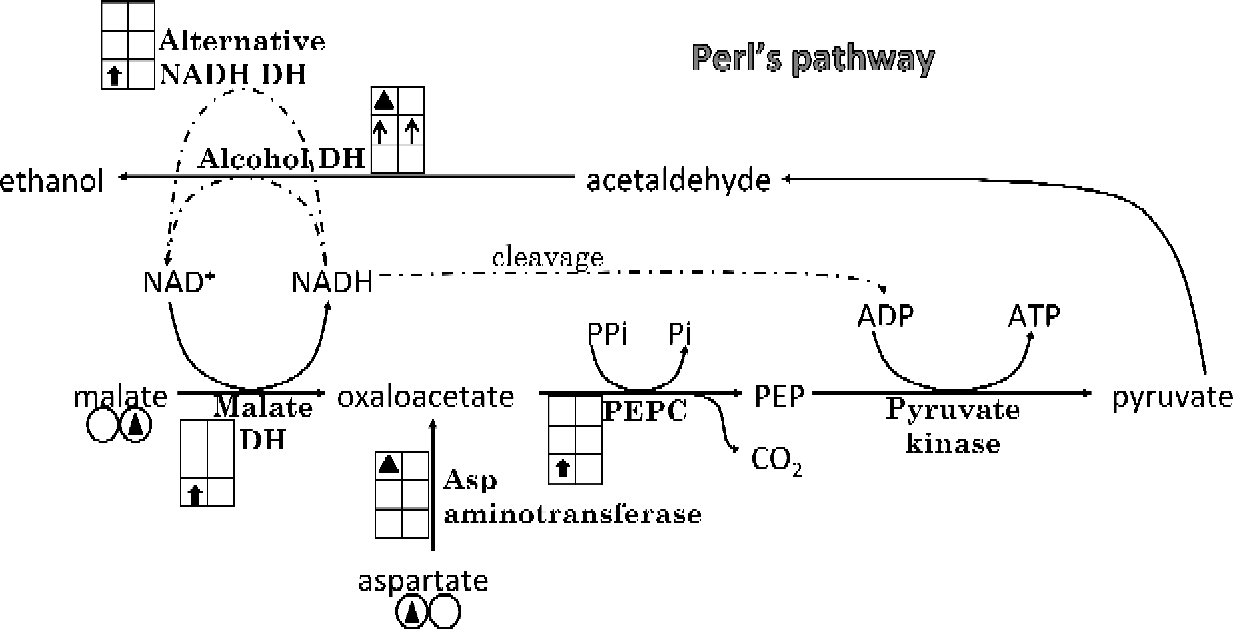
A unique pathway proposed by Perl (Reference Perl1986) (Fig. 2) provides an alternative explanation for the high ATP production capabilities found in the early stages of germinating seeds. The suggested pathway includes conversion of malate to oxaloacetate by MDH, which is then converted to phosphoenolpyruvate (PEP) by PEP carboxykinase (PEPCK), using inorganic pyrophosphate (PPi). Both enzymes increase dramatically in the first hour of imbibition and decline thereafter, suggesting a transient but significant role of these enzymes at this early stage (Perl, Reference Perl1986; Botha et al., Reference Botha, Potgieter and Botha1992; Weitbrecht et al., Reference Weitbrecht, Müller and Leubner-Metzger2011). Pyruvate kinase can then convert PEP to pyruvate, producing 2 mol ATP. ADP required for this reaction is produced by splitting NADH by NADH pyrophosphorylase. The activity of pyruvate kinase is enhanced by the presence of ATP, ADP or NADH. It is proposed that adenylate kinase is involved in producing these intermediates required to ‘spark’ the system. The level of NAD+ and the activity of pyruvate kinase are related to seed dormancy release (Perl, Reference Perl1986). This cycle requires recycling of NADH to its oxidized form, NAD+. One possible way to achieve NADH oxygenation is by alcohol dehydrogenase from pyruvate, thereby also recycling the end product of the pathway (Perl, Reference Perl1986). Another possibility emerging from more recent findings is the external mitochondrial alternative NADH dehydrogenase (Logan et al., Reference Logan, Millar, Sweetlove, Hill and Leaver2001; Howell et al., Reference Howell, Millar and Whelan2006). The alternative NADH dehydrogenase, which faces outside mitochondria and is not part of complex I of the electron transport chain, has been found in several plant species (maize, beetroot, pea, spinach). It is characteristic of undeveloped mitochondria in dry maize seeds, but its role is not yet defined (Logan et al., Reference Logan, Millar, Sweetlove, Hill and Leaver2001). In rice, it was also found to have high activity in the first hours of imbibition (Howell et al., Reference Howell, Millar and Whelan2006). Its high Km and independence from oxygen consumption (Logan et al., Reference Logan, Millar, Sweetlove, Hill and Leaver2001), might suggest a role in monitoring NADH levels, to prevent inhibition of glycolysis or feed Perl's pathway, until mitochondria are fully developed. It may also use cytosol-produced NADH for import and synthesis processes during mitochondrial biogenesis.
Perl's pathway during germination. Changes in either metabolites or enzymes during germination are depicted by grey or white charts, respectively. The left and right columns represent the initial and later stages of germination, respectively. Up- and down-facing triangles represent an increase and decrease in transcripts (top), proteins (middle) and enzyme activities (bottom), respectively. Changes in metabolite content are visualized by up- and down-facing encircled triangles close to the metabolite name. Open triangles represent a change found under specific conditions, such as stress. A dash stands for experimental evidence of no change. Left and right circles represent the initial and later stages of germination, respectively. A star denotes experimental evidence of a mutational effect on germination at the respective metabolic step. Multiple arrows represent multiple steps. A dashed line points to the same metabolite in different pathways. Dashed arrows represent suggested metabolic reactions.

Several studies have demonstrated that amino acids can provide an alternative substrate for energy production in germinating seeds (Ratajczak et al., Reference Ratajczak, Lehmann, Polcyn and Ratajczak1996; Borek et al., Reference Borek, Morkunas, Ratajczak and Ratajczak2001; Lehmann and Ratajczak, Reference Lehmann and Ratajczak2008). Pools of free amino acids are stored in dry seeds for utilization during the first hours of imbibition. The levels of most amino acids decline during stratification (Fait et al., Reference Fait, Angelovici, Less, Ohad, Urbanczyk-Wochniak, Fernie and Galili2006).
Aspartate reserves in seeds have been proposed to feed Perl's pathway by their conversion to oxaloacetate by aspartate (Asp) aminotransferase (AT) (Weitbrecht et al., Reference Weitbrecht, Müller and Leubner-Metzger2011). Several findings contribute to this hypothesis: Asp accumulates in Arabidopsis seeds during stratification (Fait et al., Reference Fait, Angelovici, Less, Ohad, Urbanczyk-Wochniak, Fernie and Galili2006; Angelovici et al., Reference Angelovici, Fait, Fernie and Galili2011) and Asp AT transcripts quickly accumulate upon imbibition (Weitbrecht et al., Reference Weitbrecht, Müller and Leubner-Metzger2011). Protein levels of cytoplasmic Asp AT are reduced by ABA (Chibani et al., Reference Chibani, Ali-Rachedi, Job, Job, Jullien and Grappin2006).
In Arabidopsis, a significant accumulation of the non-protein amino acid γ-aminobutyrate (GABA) in dry seeds was followed by its metabolism during stratification and germination (Fig. 1) (Fait et al., Reference Fait, Angelovici, Less, Ohad, Urbanczyk-Wochniak, Fernie and Galili2006). GABA was also found to be abundant in the cotyledons of chestnut and transferred to the embryo during germination (Desmaison and Tixier, Reference Desmaison and Tixier1986). This evidence suggests a significant role of this amino acid in metabolic reactivation during germination. In support, the activity and transcript levels of glutamate decarboxylase (GAD) – the entry enzyme of the GABA shunt – were shown to increase in germinating seeds (Howell et al., Reference Howell, Narsai, Carroll, Ivanova, Lohse, Usadel, Millar and Whelan2009; Yang et al., Reference Yang, Guo and Gu2013). Moreover, feeding experiments with stable isotopes indicated that GABA contributes significantly to the TCA cycle respiration in imbibed seeds (Fait et al., Reference Fait, Nesi, Angelovici, Lehmann, Pham, Song, Haslam, Napier, Galili and Fernie2011). Interestingly, hypoxic conditions contribute to GABA accumulation in early stages of germinating rice (Reggiani et al., Reference Reggiani, Cantu, Brambilla and Bertani1988; Howell et al., Reference Howell, Narsai, Carroll, Ivanova, Lohse, Usadel, Millar and Whelan2009) and fava bean (Yang et al., Reference Yang, Guo and Gu2013). Under hypoxia, fava beans also increase their polyamine and glutamate content and diamine oxidase (DAO) activity, all of which are lowered after relief of hypoxia. Polyamine degradation supplies about 30% of GABA in hypoxic conditions, as shown by DAO inhibition (Yang et al., Reference Yang, Guo and Gu2013). Taken together, the GABA pool can play an important role in imbibed seeds when energy and oxygen levels are limiting and storage reserves are not yet readily available.
The pathways in which amino acids provide alternative substrates to sugars for energy production in germinating seeds, are regulated by availability of sugars (Lehmann and Ratajczak, Reference Lehmann and Ratajczak2008; Angelovici et al., Reference Angelovici, Fait, Fernie and Galili2011). In germinating yellow lupin seeds, arginine is catabolized by AT (with α-ketoglutarate) into glutamate, which can enter the TCA cycle. Arginase and urinase, catabolic enzymes of arginine, increase during the germination of seeds of several plant species, and this pathway is induced by sugar starvation (Borek et al., Reference Borek, Morkunas, Ratajczak and Ratajczak2001). Under sugar starvation, higher levels of urea are found in these seeds, which are perhaps from an elevated rate of degradation of nitrogen compounds for use as energy and carbon substrates. The carbon skeleton from glutamate released from storage proteins in yellow lupin is utilized for respiration, and the amine group is transferred to form asparagine, which accumulates to high levels in germinating seeds (Lehmann and Ratajczak, Reference Lehmann and Ratajczak2008).
Protein metabolism
De novo protein synthesis is required for germination. However, free amino acids in dry seeds are not sufficient for protein synthesis during germination (Bewley et al., Reference Bewley, Bradford, Hilhorst and Nonogaki2013), therefore storage protein degradation starts during the first hours of imbibition. In barley, most amino acids used during early germination are from storage proteins and stored free amino acids, since amino acid biosynthesis genes are expressed only 48 HAI (Sreenivasulu et al., Reference Sreenivasulu, Usadel, Winter, Radchuk, Scholz, Stein, Weschke, Strickert, Close, Stitt, Graner and Wobus2008). Similarly, in other species, de novo biosynthesis of amino acids, except methionine, is apparently not significant during the first hours of imbibition. All enzymes of the methionine (Met) metabolic pathway are present in dry sugarbeet seeds (Catusse et al., Reference Catusse, Strub, Job, Van Dorsselaer and Job2008) and Met synthase and S-adenosyl Met (AdoMet) synthase increase dramatically prior to radicle emergence (Soeda et al., Reference Soeda, Konings, Vorst, Van Houwelingen, Stoopen, Maliepaard, Kodde, Bino, Groot and van der Geest2005). Interestingly, even higher rates of degradation of storage proteins into their subunits occur during osmopriming, as compared to that in seeds imbibed in water, in Arabidopsis, sugarbeet and peas (Gallardo et al., Reference Gallardo, Job, Groot, Puype, Demol, Vandekerckhove and Job2001; Wang et al., Reference Wang, Møller and Song2012). Proteins are first degraded in the embryo and used locally (Bewley et al., Reference Bewley, Bradford, Hilhorst and Nonogaki2013). Storage proteins are concentrated in protein storage vacuoles (PSVs) in the embryonic axis and the cotyledon cells in dicots, as well as in the endosperm and aleurone layer in cereals. A number of enzymes with different roles are involved in the PSV breakdown at different stages during germination (Bewley et al., Reference Bewley, Bradford, Hilhorst and Nonogaki2013). The peptidases, which initiate this process during the first hours, are stored in dry seeds, while additional proteases accumulate during imbibition (Yomo and Varner, Reference Yomo and Varner1973).
Starch and oligosaccharides
Although major mobilization of starch reserves starts after germination in most seeds, preparation for reserve mobilization and degradation in cereal grains is initiated during the first hours of germination. Both amylase- and lipid-degradation-associated genes are up-regulated at this stage in barley and rice (Sreenivasulu et al., Reference Sreenivasulu, Usadel, Winter, Radchuk, Scholz, Stein, Weschke, Strickert, Close, Stitt, Graner and Wobus2008; He et al., Reference He, Han, Yao, Shen and Yang2011). In barley seeds, genes coding for transporters of amino acids and oligopeptides as well as ATP-binding casette (ABC) transporters are highly expressed in the germinating embryo, ensuring the supply of nitrogen and energy compounds from the storage tissue (Sreenivasulu et al., Reference Sreenivasulu, Usadel, Winter, Radchuk, Scholz, Stein, Weschke, Strickert, Close, Stitt, Graner and Wobus2008). In peas, amylase activity increases during germination, and also in incubated excised cotyledons (Yomo and Varner, Reference Yomo and Varner1973). Storage reserve degradation is induced by GA, which is produced by the embryo and secreted to the scutellum and aleurone layer, where it induces amylases and other hydrolases. Proteinases, lipases and phytinases are also activated in the aleurone layer. These enzymes are inhibited by ABA, which suppresses germination, and by their own products. For example, sugars inhibit amylase activity (Thomas and Rodriguez, Reference Thomas and Rodriguez1994).
Raffinose family oligosaccharides are present as storage reserves in seeds of diverse species. Their degradation requires α-galactosidase and invertases. During seed development, raffinoses accumulate in the cytoplasm (Bewley et al., Reference Bewley, Bradford, Hilhorst and Nonogaki2013), while the degrading enzymes are partitioned in the protein storage vacuole (Blöchl et al., Reference Blöchl, Peterbauer, Hofmann and Richter2008). They come together during germination. Their small and soluble nature makes them a more accessible storage reserve than starch. Fifty per cent of raffinoses in pea seeds are degraded by the time of radicle emergence (Blöchl et al., Reference Blöchl, Peterbauer, Hofmann and Richter2008). In peas, impaired raffinose breakdown substantially lowers the germination rate (Blöchl et al., Reference Blöchl, Peterbauer and Richter2007), while it is not essential for germination in other species (Dierking and Bilyeu, Reference Dierking and Bilyeu2009). Genes encoding raffinose mobilizing enzymes are expressed during early germination in barley, together with related trehalose biosynthesis genes (Sreenivasulu et al., Reference Sreenivasulu, Usadel, Winter, Radchuk, Scholz, Stein, Weschke, Strickert, Close, Stitt, Graner and Wobus2008). In addition to its role as a carbohydrate reserve, raffinose, and similar compounds like trehalose, form the glassy state, or vitrification, in seeds. This effect has been suggested to avoid complete desiccation and protect cellular membranes (Lin and Huang, Reference Lin and Huang1994; Bernal-Lugo and Leopold, Reference Bernal-Lugo and Leopold1995). During imbibition, molecules like raffinose might contribute to water absorption. It is possible that the reduced storability of seeds after osmopriming is due to reduced levels of raffinose or other oligosaccharides (Wattanakulpakin et al., Reference Wattanakulpakin, Photchanachai, Miyagawa and Ratanakhanokchai2012).
Lipids
Triacylglycerol (TAG) is broken down to fatty acids and glycerol during early germination in Arabidopsis seeds (Fig. 1). Glycerol is utilized for energy via the glycerol-3-phosphate (G3P) shunt. Both lipase and G3P shunt transcripts are increased at this stage (Weitbrecht et al., Reference Weitbrecht, Müller and Leubner-Metzger2011). Several TAG lipase transcripts accumulate upon cold stratification (Weitbrecht et al., Reference Weitbrecht, Müller and Leubner-Metzger2011), preparing for storage lipid degradation. Delayed and reduced germination of mutants lacking TAG lipase and G3P shunt cannot be rescued by exogenous sucrose, an alternative energy source (Quettier et al., Reference Quettier, Shaw and Eastmond2008; Weitbrecht et al., Reference Weitbrecht, Müller and Leubner-Metzger2011). High abundance of sugar inhibits oil degradation in the first stage of germination, while sugar content no longer influences lipid degradation 3 d after imbibition (DAI) in Arabidopsis (Martin et al., Reference Martin, Oswald and Graham2002; To et al., Reference To, Reiter and Gibson2002).
The β-oxidation and glyoxylate pathways are essential for conversion of fatty acids to sucrose (Pritchard et al., Reference Pritchard, Charlton, Baker and Graham2002) and their utilization for energy via the TCA cycle. Preparations for their activities start with imbibition in some species. In barley and rice seeds, β–oxidation enzyme (and glyoxylate in rice; lipases in barley) transcripts and proteins increase during the first hours of imbibition (Sreenivasulu et al., Reference Sreenivasulu, Usadel, Winter, Radchuk, Scholz, Stein, Weschke, Strickert, Close, Stitt, Graner and Wobus2008; He et al., Reference He, Han, Yao, Shen and Yang2011). In contrast, a transcriptomic study of germinating Arabidopsis seeds showed that these pathways were not enhanced during germination sensu stricto (Weitbrecht et al., Reference Weitbrecht, Müller and Leubner-Metzger2011). The presence of all enzymes for the glyoxylate pathway and caleosin, which guides oil bodies to glyoxysomes (Catusse et al., Reference Catusse, Strub, Job, Van Dorsselaer and Job2008), in dry sugarbeet seeds suggests: (1) the importance of the glyoxylate pathway for early germination; and (2) that de novo synthesis might not be required during metabolism initiation. Nevertheless, it should be noted that mutant sugarbeet seeds deprived of caleosin are able to germinate normally (Poxleitner et al., Reference Poxleitner, Rogers, Lacey Samuels, Browse and Rogers2006). In a similar manner, seeds of wrinkled1, a low-oil mutant, exhibit reduced germination but still can germinate with external carbon sources (Focks and Benning, Reference Focks and Benning1998). It remains to be established whether the germination phenotype identified was a direct cause of the low seed oil content or was due to structural changes of the seed morphology and development.
Leading up to completion of germination (or radicle protrusion)
The common scientific term of germination sensu stricto refers to all processes leading up to radicle protrusion. The duration of imbibition needed for germination and seedling establishment varies among species, seed history and environmental conditions. For most cultivated species, median germination occurs within 48 HAI (Al-Ani et al., Reference Al-Ani, Bruzau, Raymond, Saint-Ges, Leblanc and Pradet1985). Metabolism continues to dominate cellular activity throughout the process of germination at the protein and transcript level (Sreenivasulu et al., Reference Sreenivasulu, Usadel, Winter, Radchuk, Scholz, Stein, Weschke, Strickert, Close, Stitt, Graner and Wobus2008; He et al., Reference He, Han, Yao, Shen and Yang2011; Wang et al., Reference Wang, Møller and Song2012). Many metabolic processes initiated at early germination continue. However, some initiate only later or display distinct changes compared to earlier processes. These changes are discussed in the following section.
Producing energy and reducing power toward radicle protrusion
The main difference between early and later stages of germination is in the oxygen status of the seed. On the other hand, the demand for energy increases, affecting the level of carbohydrates. For example, sucrose present in Arabidopsis seeds is consumed during 48 HAI, almost until radicle protrusion. Stored glucose levels drop in the first day and then increase (Joosen et al., Reference Joosen, Arends, Li, Willems, Keurentjes, Ligterink, Jansen and Hilhorst2013), which suggests a shift where glucose pools are being replenished. This is also suggested by the fructose levels, which are low at the beginning and gradually increase (Allen et al., Reference Allen, Moing, Ebbels, Maucourt, Tomos, Rolin and Hooks2010). Respiration pathways of glycolysis, TCA, electron transport and lipid metabolism begin to dominate transcription 20 HAI in the endosperm, but in the radicle only after testa rupture, around 38 HAI (Dekkers et al., Reference Dekkers, Pearce, van Bolderen-Veldkamp, Marshall, Widera, Gilbert, Drost, Bassel, Müller, King, Wood, Grosse, Quint, Krasnogor, Leubner-Metzger, Holdsworth and Bentsink2013).
In rice seeds, glycolytic enzymes increase during germination (Yang et al., Reference Yang, Li, Wang, Chen, Chen and Shen2007). Levels of fructose-2,6-bisphosphate also increase during germination, which favours glycolysis over gluconeogenesis (Botha et al., Reference Botha, Potgieter and Botha1992). When studying the contribution of glycolysis to carbon in the TCA cycle of imbibed lettuce embryos, it was found that 30% entered as acetyl CoA and the remaining 70% entered as oxaloacetate by PEPC reaction (Salon et al., Reference Salon, Raymond and Pradet1988). However, according to this study, glycolysis is not the main source of acetyl CoA. The authors suggest that fatty acid β-oxidation has a central role. Nevertheless, inhibition of germination of Pinus laricio seeds by phenol is correlated with inhibition of the oxidative pentose phosphate pathway (OPPP) (glucose-6-phosphate dehydrogenase; G6PDH) and glycolysis (glucose phosphate isomerase and aldolase) (Muscolo et al., Reference Muscolo, Panuccio and Sidari2001). OPPP enzymes [G6PDH and 6-phospho-gluconate dehydrogenase (6PGDH)] activities increased during Arabidopsis and rice seed germination (Fig. 1) and peaked around radicle protrusion (Hare et al., 2003). In Arabidopsis OPPP-related transcripts were overrepresented at the first hour of imbibition (Dekkers et al., Reference Dekkers, Pearce, van Bolderen-Veldkamp, Marshall, Widera, Gilbert, Drost, Bassel, Müller, King, Wood, Grosse, Quint, Krasnogor, Leubner-Metzger, Holdsworth and Bentsink2013). Increases in G6PDH and 6PGDH of the OPPP were related to seed dormancy release in a number of studies (Roberts, Reference Roberts and Heydecker1973; Gahan et al., Reference Gahan, Dawson, Black and Chapman1986; Swamy and Sandhyarani, Reference Swamy and Sandhyarani1986).
Up-regulation of oxidative phosphorylation (electron transport) in germinating barley seeds 24 HAI exemplifies well the continued mitochondrial development (Sreenivasulu et al., Reference Sreenivasulu, Usadel, Winter, Radchuk, Scholz, Stein, Weschke, Strickert, Close, Stitt, Graner and Wobus2008). Seeds of the oxidative phosphorylation-deficient mutant NADH dehydrogenase [ubiquinone] fragment S subunit 4 (ndusf4), a mutation which causes a non-functional complex I in Arabidopsis, exhibit delayed germination and seedling growth, due to limitation in fulfilling high energy demands of these processes. Germination rescue by GA, or inhibition by sucrose, suggest regulation of this pathway by GA–ABA balance (Meyer et al., Reference Meyer, Tomaz, Carroll, Estavillo, Delannoy, Tanz, Small, Pogson and Millar2009). In some species (Cicer arietinum, Latuca sativa, Glycine max [L.] Merr. and Phaseolus aureus Roxb.), the role of cytochrome oxidase in respiration during germination was demonstrated by inhibition of total respiration by cyanide. Sensitivity to this inhibitor was lowered under germination-limiting water stress, when alternative pathways maybe up-regulated (Botha et al., Reference Botha, Potgieter and Botha1992).
At a stage in seed germination when radicle protrusion is getting closer and in spite of increasingly higher levels of oxygen, fermentation continues to play a role, exemplified by lactate abundance in Arabidopsis seeds following the first day after imbibition (Allen et al., Reference Allen, Moing, Ebbels, Maucourt, Tomos, Rolin and Hooks2010). In rice seeds, the germination of which is tolerant of anoxia (Al-Ani et al., Reference Al-Ani, Bruzau, Raymond, Saint-Ges, Leblanc and Pradet1985), proteins associated with the fermentation pathways become abundant 24 HAI, when germination reaches the maximum (He et al., Reference He, Han, Yao, Shen and Yang2011). The interplay between these different pathways and their proportional input in the energy pool of the germinating seeds remains to be fully established.
Protein, amino acids and other nitrogen compounds
Approaching radicle protrusion, degradation of storage proteins, mostly stored in specialized tissues, provides more amino acids for de novo protein synthesis and cellular metabolism in the growing embryo (Sheoran et al., Reference Sheoran, Olson, Ross and Sawhney2005; Yang et al., Reference Yang, Li, Wang, Chen, Chen and Shen2007; Joosen et al., Reference Joosen, Arends, Li, Willems, Keurentjes, Ligterink, Jansen and Hilhorst2013). The importance of storage protein degradation to fulfil the germination process is well supported by the finding that ABA inhibition of germination in Arabidopsis was not due to a halt in lipid mobilization as an energy source (Penfield et al., Reference Penfield, Rylott, Gilday, Graham, Larson and Graham2004), but was rather due to prevention of storage protein degradation (Garciarrubio et al., Reference Garciarrubio, Legaria and Covarrubias1997; Weitbrecht et al., Reference Weitbrecht, Müller and Leubner-Metzger2011). This inhibitory effect can be partially relieved by supplementing seeds with simple carbon and nitrogen sources. Utilization of storage proteins and amino acids is enhanced under sugar-depletion conditions (Borek et al., Reference Borek, Kubala and Kubala2012). On the other hand, amino acid mobilization and usage are inhibited by application of exogenous sucrose (Okamoto and Minamikawa, Reference Okamoto and Minamikawa1998; Lehmann and Ratajczak, Reference Lehmann and Ratajczak2008). Amino acids, the final products of protein degradation, inhibit the degradation of protein reserves. In pea embryos, proteases are regulated by negative feedback by amino acids (Yomo and Varner, Reference Yomo and Varner1973).
To accelerate protein degradation, proteases are newly synthesized in germinating seeds (Yang et al., Reference Yang, Li, Wang, Chen, Chen and Shen2007). In Vigna mungo, cysteine endopeptidase (SH-EP), which is involved in the mobilization of storage globulin, reaches its peak 4 DAI and decreases thereafter (Okamoto and Minamikawa, Reference Okamoto and Minamikawa1998). Polyamines (putrescine, spermidine, spermine and tyramine) are high in rice seeds with low germination capacity but low in highly germinable seeds. Amine conjugates are more abundant in germinable seeds, in which their levels are rapidly reduced during germination (Bonneau et al., Reference Bonneau, Carre and Martin-Tanguy1994). They might serve as an amine reserve which can be released when needed. Unlike other species, dry sugarbeet seeds contain enzymes leading to biosynthesis of 17 amino acids, suggesting that amino acids are not derived mainly from degradation of storage proteins but newly synthesized during germination in this species (Catusse et al., Reference Catusse, Strub, Job, Van Dorsselaer and Job2008).
Lipids
It is commonly accepted that storage oil reserve mobilization commences after germination (Bewley, Reference Bewley1997; Eastmond and Graham, Reference Eastmond and Graham2001; Bewley et al., Reference Bewley, Bradford, Hilhorst and Nonogaki2013) and the reserves are not needed for its completion. However, several reports show that interference with the related pathways does affect germination negatively (Pracharoenwattana et al., Reference Pracharoenwattana, Cornah and Smith2005; Fait et al., Reference Fait, Angelovici, Less, Ohad, Urbanczyk-Wochniak, Fernie and Galili2006). It is safe to suggest that a major mobilization of oils in specialized storage tissues starts after germination sensu stricto is completed; however, utilization of oil bodies stored in the embryonic cells occurs locally during germination, similarly to storage protein degradation patterns.
Storage lipids in the form of TAGs are first hydrolysed to glycerol and free FAs. FAs are then fed to the β-oxidation and glyoxylate pathways to produce acetyl CoA, succinate and malate, which enter the TCA cycle (Pritchard et al., Reference Pritchard, Charlton, Baker and Graham2002). In lettuce seeds (oil seeds), consumption of lipids via β-oxidation provides major respiratory substrates during germination (Salon et al., Reference Salon, Raymond and Pradet1988). Endosperm oil degradation is not affected by ABA; however, ABA does inhibit utilization of stored oils within the embryo (Pritchard et al., Reference Pritchard, Charlton, Baker and Graham2002), which may start during germination.
The β-oxidation and glyoxylate pathways take place mostly in glyoxysomes, which are a specialized form of peroxisome found in seeds (PlantCyc, Karp et al., Reference Karp, Paley, Krummenacker, Latendresse, Dale, Lee, Kaipa, Gilham, Spaulding, Popescu, Altman, Paulsen, Keseler and Caspi2010). In dry seeds, they are present in a small underdeveloped form, and then during germination, grow and accumulate the essential proteins, such as malate synthase (MLS) and isocitrate lyase (ICL), which are unique to the glyoxylate cycle (Fig. 1). ICL increases during imbibition of non-dormant Arabidopsis CVi seeds but not in dormant ones, and was repressed by ABA application to non-dormant seeds (Chibani et al., Reference Chibani, Ali-Rachedi, Job, Job, Jullien and Grappin2006). There was also no accumulation of ICL in ga1 mutants. Other enzymes of the lipid degradation and utilization pathways (aconitase, malate synthase, catalase, PEPCK) accumulate prior to radicle protrusion (24 HAI) in ga1 mutant Arabidopsis seeds and also upon treatment of wild-type seeds with paclobutrazol, a GA synthesis inhibitor (Gallardo et al., Reference Gallardo, Job, Groot, Puype, Demol, Vandekerckhove and Job2002a), thus showing differential dependence of enzymes on hormonal balance in the seeds. Peroxisomal citrate synthase (CSY) catalyses the conversion of acetyl CoA to citrate in the glyoxylate pathway. This step is essential for Arabidopsis seed germination, as seeds of the double mutant of both genes of this enzyme do not germinate, probably due to the lack of energy to complete the process (Pracharoenwattana et al., Reference Pracharoenwattana, Cornah and Smith2005). Supplementation with sucrose and removal of the seed coat rescue germination, although TAG is still not degraded and seedlings do not develop.
FA synthesis starts during germination when water uptake reaches a required level for enzymes stored in dry seeds, probably for membrane repair, in pea and other species (Harwood and Stumpf, Reference Harwood and Stumpf1970). There is a general increase in lipid metabolism-associated RNAs mainly related to FA biosynthesis between 3 and 12 HAI in rice seeds (Howell et al., Reference Howell, Narsai, Carroll, Ivanova, Lohse, Usadel, Millar and Whelan2009).
Radicle protrusion: the end
Metabolic activities described above produce energy and building blocks for morphological changes needed for germination. For germination to occur, the radicle must elongate and penetrate the seed coat. It has been well demonstrated that the covering tissues, more specifically the endosperm surrounding the radicle, is an important regulator of germination in several species (Nomaguchi et al., Reference Nomaguchi, Nonogaki and Morohashi1995; Linkies et al., Reference Linkies, Muller, Morris, Tureckova, Wenk, Cadman, Corbineau, Strnad, Lynn, Finch-Savage and Leubner-Metzger2009; Muller et al., Reference Muller, Linkies, Vreeburg, Fry, Krieger-Liszkay and Leubner-Metzger2009; Iglesias-Fernandez et al., Reference Iglesias-Fernandez, Rodriguez-Gacio, Barrero-Sicilia, Carbonero and Matilla2011). The energy metabolism respiration pathways are over-represented in the endosperm of germinating Arabidopsis seeds, earlier than in the radicle (Dekkers et al., Reference Dekkers, Pearce, van Bolderen-Veldkamp, Marshall, Widera, Gilbert, Drost, Bassel, Müller, King, Wood, Grosse, Quint, Krasnogor, Leubner-Metzger, Holdsworth and Bentsink2013). In this respect, cell wall metabolism is central for both radicle cell elongation and endosperm weakening. Although some metabolic reactions start to increase at initial imbibition, most cell wall-related metabolites, transcripts and proteins accumulate during 12–24 HAI in rice seeds (Howell et al., Reference Howell, Narsai, Carroll, Ivanova, Lohse, Usadel, Millar and Whelan2009; He et al., Reference He, Han, Yao, Shen and Yang2011) and are over-represented from 12 HAI in both the radicle and the covering endoperm in Arabidopsis (Dekkers et al., Reference Dekkers, Pearce, van Bolderen-Veldkamp, Marshall, Widera, Gilbert, Drost, Bassel, Müller, King, Wood, Grosse, Quint, Krasnogor, Leubner-Metzger, Holdsworth and Bentsink2013). Cell wall hydrolytic enzymes are important factors for endosperm weakening. In tomato seeds, in which endosperm cell walls are particularly rich in mannan, endo-β-mannanase genes (MAN) are expressed in the micropylar endosperm specifically prior to radicle protrusion. Similar endosperm MAN genes were found in rice (Ren et al., Reference Ren, Bewley and Wang2008), carrot (Homrichhausen et al., 2003) and in Arabidopsis (Iglesias-Fernandez et al., Reference Iglesias-Fernandez, Rodriguez-Gacio, Barrero-Sicilia, Carbonero and Matilla2011). T-DNA insertion mutants of three of these genes in Arabidopsis exhibited substantially delayed germination. Other enzymes detected in the endosperm cap are endo-β-1,3-glucanases, xyloglucan endotransglycosylase/hydrolase and expasins (Chen and Bradford, Reference Chen and Bradford2000). An ROS found in the germinating radicle and surrounding endosperm, hydroxyl radical (·OH), is thought to reduce the mechanical resistance of the endosperm by attacking the polysaccharides of the cell wall and loosening their bonds (Muller et al., Reference Muller, Linkies, Vreeburg, Fry, Krieger-Liszkay and Leubner-Metzger2009).
Part of germination inhibition by ABA may be through down-regulation of the ATP-generating pathways that are crucial for endosperm weakening (Muller et al., Reference Muller, Job, Belghazi, Job and Leubner-Metzger2010). Other hormones involved in endosperm weakening are ethylene (Linkies et al., Reference Linkies, Muller, Morris, Tureckova, Wenk, Cadman, Corbineau, Strnad, Lynn, Finch-Savage and Leubner-Metzger2009; Martínez-Andújar et al., Reference Martínez-Andújar, Pluskota, Bassel, Asahina, Pupel, Nguyen, Takeda-Kamiya, Toubiana, Bai, Górecki, Fait, Yamaguchi and Nonogaki2012) and GA, although possibly in an indirect manner (Groot and Karssen, Reference Groot and Karssen1987; Martínez-Andújar et al., Reference Martínez-Andújar, Pluskota, Bassel, Asahina, Pupel, Nguyen, Takeda-Kamiya, Toubiana, Bai, Górecki, Fait, Yamaguchi and Nonogaki2012).
Metabolites that have a regulatory role in germination
Regulation of germination by hormones is well studied (Linkies and Leubner-Metzger, Reference Linkies and Leubner-Metzger2012; Rajjou et al., Reference Rajjou, Duval, Gallardo, Catusse, Bally, Job and Job2012) and therefore will not be addressed in this review. Gibon et al. (Reference Gibon, Usadel, Blaesing, Kamlage, Hoehne, Trethewey and Stitt2006) suggest that metabolite–transcript correlation is more likely due to metabolic regulation of expression than vice versa. This suggestion is supported by integrated studies of metabolite and transcript profiles. For example, during Arabidopsis imbibition, of the metabolites examined, sucrose was most highly correlated with gene transcript levels, with 129 significantly positive correlating genes, 44 of which are known to be sucrose responsive (Allen et al., Reference Allen, Moing, Ebbels, Maucourt, Tomos, Rolin and Hooks2010). Sugar regulation of germination has been reviewed in detail by Dekkers and Smeekens (Reference Dekkers, Smeekens, Bradford and Nonogaki2007). Here, we will address it only briefly with updated information. The effects of sugars on germination are different, depending on physiological stage, and are exerted via separate mechanisms. When glucose is included in the initial imbibition media, during stratification or germination at optimal temperatures, germination is inhibited, even at low concentrations (1%) (Dekkers et al., Reference Dekkers, Schuurmans and Smeekens2004). ABA at non-inhibitory concentrations with addition of glucose acts in synergy to delay germination. In rice, exogenous glucose leads to ABA accumulation in the seed by inhibiting its catabolism rather that inducing its synthesis (Zhu et al., Reference Zhu, Ye and Zhang2009). In Arabidopsis, ABA biosynthetic genes also have an effect in the glucose response (Price et al., Reference Price, Li, Kang, Na and Jang2003; Dekkers et al., Reference Dekkers, Schuurmans and Smeekens2004). The response to ABA in Arabidopsis includes ABI4 and CHO1 genes and causes alteration in expression of many central metabolism genes (Yamagishi et al., Reference Yamagishi, Tatematsu, Yano, Preston, Kitamura, Takahashi, McCourt, Kamiya and Nambara2009). The effect of glucose is relatively weak when applied later during imbibition (Dekkers and Smeekens, Reference Dekkers, Smeekens, Bradford and Nonogaki2007). By then ABA has already declined and perhaps crucial transcriptional changes have taken place. The application of sugars at later stages counteracts germination repression by ABA (Dekkers and Smeekens, Reference Dekkers, Smeekens, Bradford and Nonogaki2007). The mechanism behind the developmentally driven effect of the interaction between sugars and ABA on germination needs further elucidation. Amino acids might have an effect on gene transcription during germination (Allen et al., Reference Allen, Moing, Ebbels, Maucourt, Tomos, Rolin and Hooks2010; Fait et al., Reference Fait, Nesi, Angelovici, Lehmann, Pham, Song, Haslam, Napier, Galili and Fernie2011). Some specific amino acids, which possibly have regulatory roles in germination are discussed below.
Methionine biosynthetic pathway
Sulphur amino acids have many influences on germination, as reviewed in Rajjou et al. (Reference Rajjou, Duval, Gallardo, Catusse, Bally, Job and Job2012) and summarized here. Inhibition of the enzymes of the methionine synthetic pathway delays germination, which is not rescued by exogenous Met (Gallardo et al., Reference Gallardo, Job, Groot, Puype, Demol, Vandekerckhove and Job2001, Reference Gallardo, Job, Groot, Puype, Demol, Vandekerckhove and Job2002b). In addition, some attempt to increase endogenous free Met by genetic engineering resulted in decreased germination; however, this was not the case with increased Met in engineered storage proteins (Amir et al., Reference Amir, Han and Ma2011). Taken together, it is suggested that not Met, but another pathway intermediate, whose production is down-regulated by high Met, is crucial for germination.
A possible mechanism is the effect of AdoMet, a product of Met catabolism, which inhibits cystathionine γ-synthase, an enzyme in the early stages of the Met biosynthesis pathway (Chiba et al., Reference Chiba, Sakurai, Yoshino, Ominato, Ishikawa, Onouchi and Naito2003), and induces allocation of the Met precursor cysteine to the threonine biosynthesis pathways (Rajjou et al., Reference Rajjou, Duval, Gallardo, Catusse, Bally, Job and Job2012), thereby balancing the flow and tightly regulating the level of Met accumulation. AdoMet is a precursor of the phytohormone ethylene, which acts within the hormonal balance to promote germination (Linkies and Leubner-Metzger, Reference Linkies and Leubner-Metzger2012). The influence of the Met biosynthetic pathway on accumulation of ethylene was shown by overexpression of cystathionine γ-synthase, which created plants with up to 40 times more Met and 40 times more ethylene (Hesse et al., Reference Hesse, Kreft, Maimann, Zeh and Hoefgen2004). In addition, AdoMet is a precursor for biotin and the methyl donor for various methylation reactions. DNA methylation plays an important role in changing embryonic stages after germination toward seedling establishment (Tanaka et al., Reference Tanaka, Kikuchi and Kamada2008). Transmethylation also takes part in hormonal regulation, which affects germination (Li et al., Reference Li, Yu, Jiang, Shangguan, Wang and Chen2008; Rajjou et al., Reference Rajjou, Duval, Gallardo, Catusse, Bally, Job and Job2012). All of these findings exemplify the diverse roles of the Met biosynthetic pathway intermediates, and their potential involvement in germination regulation.
Lysine
The lysine level in Arabidopsis seeds was found to increase during germination (Joosen et al., Reference Joosen, Arends, Li, Willems, Keurentjes, Ligterink, Jansen and Hilhorst2013) or to have steady levels (Angelovici et al., Reference Angelovici, Fait, Fernie and Galili2011). Lysine catabolism in Arabidopsis seeds is regulated by precise sensing of its levels in the cell (Galili et al., Reference Galili, Tang, Zhu, Amir, Levanony, Shy and Herman2000). Combination of down-regulation of lysine catabolism (LKR/SDH knockout mutation) and up-regulation of synthesis (expression of bacterial DHDPS) causes lysine accumulation in the KD genotype (Zhu and Galili, Reference Zhu and Galili2003; Angelovici et al., Reference Angelovici, Fait, Zhu, Szymanski, Feldmesser, Fernie and Galili2009). The increased level of lysine led to many changes in amino acids, including a surprising increased level of free Met. The general and unexpected changes due to lysine accumulation suggest it to be part of a combined amino acid regulatory network (Zhu and Galili, Reference Zhu and Galili2003). Noticeable characteristics of the KD genotype are lower levels of TCA cycle metabolites and reduced germination (Zhu and Galili, Reference Zhu and Galili2004; Angelovici et al., Reference Angelovici, Fait, Zhu, Szymanski, Feldmesser, Fernie and Galili2009, Reference Angelovici, Fait, Fernie and Galili2011). It was proposed that inhibition of acetyl CoA synthesis by lysine degradation caused negative effects on germination. However, many additional pathways can supply acetyl CoA to the TCA cycle, suggesting that lysine accumulation affects germination not by lack of resources but as a regulatory signal. Changes in other amino acids, such as the reduction in aspartate and glutamate, may also influence germination capabilities.
Concluding remarks
In this review, we have presented and discussed the metabolic activities and other changes taking place in a germinating seed. Many studies describing extensive profiles of metabolites, metabolic genes and proteins, and their patterns of change during germination, have been published recently. These studies helped to gain insight into the dynamics of molecular events during germination, their regulation and coordination. The integration of the multiple levels of information provided by large datasets, for example via network analysis, can aid in generating hypotheses and in the identification of components such as genes, pathways or groups of metabolites with structural and (eventually) key biological roles during seed germination. Thereafter, specifically designed studies, using mutants, transgenic approaches or application of specific treatments (e.g. isotope feeding) can be used for validation. Among other remaining questions, the relative contribution of ATP from the different energy-producing pathways in various seed types remains unclear. Additionally, future work should elucidate what metabolic processes are involved directly in the hormonal inhibition or enhancement of germination; in other words, which metabolic pathway delivers the signals of GA, ABA and other phytohormones into action? Identification of central factors in the metabolism of germinating seeds can generate biomarkers or help build a prediction model of germination and seedling establishment. Finally, it should be noted that the natural variability in seed structure, physiology and metabolism in the plant kingdom requires species-specific studies.
Financial support
A.F. and H.N. are grateful to the Jacob Blaustein Center for Scientific Cooperation for supporting H.N.'s initial visit to Israel. L.R. is grateful to the Albert Katz International School for Desert Studies. This work was supported by the US–Israel Bi-national Science Foundation grant, number 2009173.
Conflicts of interest
None.