Introduction
Globally, there has been a dramatic and consistent growth in people, age 50 and over, living with the human immunodeficiency virus (HIV) (High et al. Reference High, Brennan-Ing, Clifford, Cohen, Currier, Deeks, Deren, Effors, Gebo, Goronzy, Justice, Landay, Levin, Miotti, Munk, Nass, Rinaldo, Shilpak, Tracy, Valcour, Vance, Walston and Volberging2012; UNAIDS 2013). This increase in older adults living with HIV is due to the confluence of new infections and the increasing long-term survival rates among HIV-positive adults (Heckman and Halkitis Reference Heckman and Halkitis2014; UNAIDS 2013). The UNAIDS report on the global HIV epidemic in 2013 describes that the proportion of adults aged 50 and older has not only increased across the globe but also points to the fact that in high-income countries, approximately 30 per cent of adults living with HIV are aged 50 and over (UNAIDS 2013). Efforts to make highly active anti-retroviral therapies (HAART) accessible in low- and lower-middle-income countries have led to an increase in older adults living with HIV in the Global South (UNAIDS 2011). For example, in sub-Saharan Africa, there is an estimated 3 million people living with HIV who are over the age of 50 (Hontelez et al. Reference Hontelez, de Vlas, Baltussen, Newell, Bakker, Tanser, Lurie and Bärnighausen2012; Negin and Cumming Reference Negin and Cumming2010). HIV infection is increasingly recognised as a phenomenon impacting older adults worldwide and throughout North America. Currently, 11.4 per cent of males and 8.5 per cent of females testing positive for HIV in Canada are over 50 years of age (Public Health Agency of Canada 2014).
Older adults living with HIV face complex physiological and psycho-social issues (High et al. Reference High, Brennan-Ing, Clifford, Cohen, Currier, Deeks, Deren, Effors, Gebo, Goronzy, Justice, Landay, Levin, Miotti, Munk, Nass, Rinaldo, Shilpak, Tracy, Valcour, Vance, Walston and Volberging2012) including increased mortality (Centers for Disease Control and Prevention (CDC) 2013; Lohse et al. Reference Lohse, Hansen, Pedersen, Kronborg, Gerstoft, Sorensen, Vaeth and Obel2007), delayed diagnosis (CDC 2013) and the recently identified phenomenon of ‘accelerated’ or ‘accentuated’ ageing (Pathai et al. 2013). They may experience geriatric syndromes earlier in the lifecourse (Pathai et al. 2013), as well as premature age-related comorbidities (Capeau Reference Capeau2011). Studies on social support and ageing with HIV have shown that seropositive older adults are often isolated from informal social networks due to stigma and ageism (Shippy, Cantor and Brennan Reference Shippy, Cantor and Brennan2004). Stigma is often experienced as a barrier to social support for older adults (Scrimshaw and Siegel Reference Scrimshaw and Siegel2003) and living with HIV may be doubly stigmatising as older adults in this group face HIV stigma and ageism concurrently (Emlet Reference Emlet2006a ). In addition to a fragile social support system, they can be more socially isolated than their younger counterparts (Emlet Reference Emlet2006b ) or HIV-negative peers (Fredriksen-Goldsen et al. Reference Fredriksen-Goldsen, Kim, Emlet, Muraco, Erosheva, Hoy-Ellis, Goldsen and Petry2011).
Despite the deleterious effects HIV has on older people, there is a growing interest in understanding how individuals can age successfully with HIV (High et al. Reference High, Brennan-Ing, Clifford, Cohen, Currier, Deeks, Deren, Effors, Gebo, Goronzy, Justice, Landay, Levin, Miotti, Munk, Nass, Rinaldo, Shilpak, Tracy, Valcour, Vance, Walston and Volberging2012; Moore et al. Reference Moore, Moore, Thompson, Vahia, Grant and Jeste2013), including examinations of positive psychology, resilience and hardiness. In the United States of America, the recommendations from the National Institutes of Health Working Group on HIV and Aging set a priority to study ‘the mechanisms of successful aging in older adults with HIV’ (High et al. Reference High, Brennan-Ing, Clifford, Cohen, Currier, Deeks, Deren, Effors, Gebo, Goronzy, Justice, Landay, Levin, Miotti, Munk, Nass, Rinaldo, Shilpak, Tracy, Valcour, Vance, Walston and Volberging2012: S14). The Working Group stressed that by understanding how older adults age well, we can encourage and translate those findings into useful approaches for those not ageing successfully (High et al. Reference High, Brennan-Ing, Clifford, Cohen, Currier, Deeks, Deren, Effors, Gebo, Goronzy, Justice, Landay, Levin, Miotti, Munk, Nass, Rinaldo, Shilpak, Tracy, Valcour, Vance, Walston and Volberging2012).
Successful ageing
Although the research on successful ageing with HIV is embryonic (Moore et al. Reference Moore, Moore, Thompson, Vahia, Grant and Jeste2013; Vance, Struzick and Masten Reference Vance, Struzick and Masten2008), successful ageing in gerontology has a robust history. Successful ageing can be traced back to the work of early gerontologists (Martin et al. Reference Martin, Kelly, Kahaha, Kahana, Willcox, Willcox and Poon2015), yet it was the MacArthur study conducted by Rowe and Kahn (Reference Rowe and Kahn1998) that identified successful ageing as encompassing three primary criteria: freedom from disease and disability, high cognitive functioning and active engagement in life. This framework, however, is not without criticism. Rubinstein and de Medeiros (Reference Rubinstein and de Medeiros2015) suggest the original model does not account for personal meaning, lifetime experiences and histories of personal trauma, such as suffering, and being a member of a marginalised community. In response to comments and criticisms of the MacArthur model, Rowe and Kahn (Reference Rowe and Kahn2015) recently released their conceptual expansions of successful ageing, which encourages researchers to take into account individual ageing, in combination with theory development that addresses societal ageing. In addition, they encourage scholars to adopt a lifecourse perspective and focus on human capital. In both instances the inherent value of older adults is acknowledged while society explores new roles and responsibilities for older adults. The value of human capital in successful ageing again identified that older adults have much to offer, including accrued knowledge and stability.
Successful ageing and HIV
To understand successful ageing among older adults living with HIV, we must recognise that successful ageing is a multi-dimensional construct that includes subjective criteria (Fredriksen-Goldsen et al. Reference Fredriksen-Goldsen, Kim, Shiu, Goldsen and Emlet2015) and that successful ageing models are often grounded in heteronormative conceptualisations of success (Fabbre Reference Fabbre2015). Limited research has linked the conceptual framework of successful ageing to older adults living with HIV disease.
Moore et al. (Reference Moore, Moore, Thompson, Vahia, Grant and Jeste2013) examined self-rated successful ageing (SRSA) and found SRSA was lower among older adults living with HIV than their HIV-negative counterparts. However, the two groups, matched on socio-demographic factors, did not differ on levels of optimism, personal mastery and social support. The authors identified ‘positive psychological traits’ (Moore et al. Reference Moore, Moore, Thompson, Vahia, Grant and Jeste2013: e714) such as resilience, optimism and sense of personal mastery as having stronger relationships with SRSA than duration or severity of HIV disease.
Conceptual frameworks
Two conceptual frameworks – successful ageing and resilience theory – guide our research. These two theories were identified prior to any data gathering and were used to conceptualise the study and the interview questions, and were used as sensitising concepts in the analysis. Sensitising concepts are used by qualitative researchers to focus their research on specific areas based upon a driving conceptual framework (Padgett Reference Padgett2008). Building upon conceptualisations of successful ageing among diverse and marginalised populations of older adults, we recognise that psychological wellbeing and social connectedness are important attributes to successful ageing consistent with emerging research in this area (Kahana and Kahana Reference Kahana and Kahana2001; Moore et al. Reference Moore, Moore, Thompson, Vahia, Grant and Jeste2013). We acknowledge that in the HIV population, the absence of disease is not a viable criterion for successful ageing, as other research with older adults living with chronic health conditions has acknowledged (Romo et al. Reference Romo, Wallhagen, Yourman, Yeung, Eng, Micco, Pérez-Stable and Smith2013). Consistent with our research paradigm, we posit that successful ageing needs to be considered in the context of subjective assessment (Fabbre Reference Fabbre2015; Romo et al. Reference Romo, Wallhagen, Yourman, Yeung, Eng, Micco, Pérez-Stable and Smith2013; Van Wagenen, Driskell and Bradford Reference Van Wagenen, Driskell and Bradford2013), particularly when working with marginalised populations.
The second framework guiding our research is resilience. A resilience framework (Smith and Hayslip Reference Smith and Hayslip2012) has been successfully applied to examining health, wellness and disparities in both older adults living with HIV (Emlet, Fredriksen-Goldsen and Kim Reference Emlet, Fredriksen-Goldsen and Kim2013; Emlet, Tozay and Raveis Reference Emlet, Tozay and Raveis2011) and lesbian, gay, bisexual and transgender (LGBT) older adults (Fredriksen-Goldsen et al. Reference Fredriksen-Goldsen, Emlet, Kim, Muraco, Erosheva, Goldsen and Hoy-Ellis2013, Reference Fredriksen-Goldsen, Kim, Shiu, Goldsen and Emlet2015; Masten Reference Masten2007). Resilience in later life can be seen as a pattern of positive adaptation in the context of past and present adversity that poses a substantial threat to positive adaptation (Smith and Hayslip Reference Smith and Hayslip2012). As Pruchno, Heid and Genderson (Reference Pruchno, Heid and Genderson2015) point out, however, resilience by definition requires experiences of adversity. They suggest that adversities experienced throughout the lifecourse can serve as a stimulus for resilience and may be more meaningful than a single event (such as a natural disaster). Resilience therefore is possible for older adults experiencing chronic illnesses (Stewart and Yuen Reference Stewart and Yuen2011), for older sexual minorities (Dentato et al. Reference Dentato, Orwat, Spira and Walker2014) and older adults living with HIV infection (Emlet, Tozay and Raveis Reference Emlet, Tozay and Raveis2011). What is less clear, however, is what resilience is. Some see it as a process (Greene and Conrad Reference Greene, Conrad and Greene2012), while others view it as a psychological trait or characteristic (Pruchno, Heid and Genderson Reference Pruchno, Heid and Genderson2015). Resilience is therefore defined and conceptualised somewhat inconsistently. Recently, Wild, Wiles and Allen (Reference Wild, Wiles and Allen2013), in discussing resilience as part of the ageing process, referred to it as the ability to use both internal and external resources successfully to adapt to developmental tasks. They note that resilience can be viewed as being influenced by both individual and environmental factors and resources.
The resilience framework is multi-dimensional, recognising the larger social context of one's life (Fredriksen-Goldsen et al. Reference Fredriksen-Goldsen, Kim, Shiu, Goldsen and Emlet2015). Smith and Hayslip (Reference Smith and Hayslip2012) conceptualise protective factors contributing to resilience as including individual attributes, interpersonal relations and environmental support. It is also argued that significant aspects of resilience, such as protective factors and adversity, are difficult to understand quantitatively, which has led to uncertainties in the definition of resilience in later life, especially in the face of chronic illness. Thus, our semi-structured interview questions were built upon these conceptual parameters, with the goal of exploring subjective understandings of successful ageing, while recognising the importance of intrapersonal, interpersonal and environmental resources. Using Smith and Hayslip's components of resilience as a guiding framework, we sought to qualitatively examine: (a) the resources and personal characteristics seen as promoting successful ageing with HIV among adults age 50 and over living in Ontario, Canada and (b) the identified impediments to ageing successfully in that context, including experiences of adversity.
Rationale for qualitative approach
There is a paucity of gerontological research describing how older adults live with and manage HIV infection successfully. Older adults must successfully manage their HIV infection, but in addition, manage the varied comorbid age-related conditions that typically exist in this population while coping with the various psycho-social elements of living with HIV. Specifically capturing the lived experiences of older adults who identify themselves as ageing successfully with HIV will help to describe the intrapersonal characteristics, interpersonal relationships and environmental factors for successful ageing with this disease. Understanding these processes and mechanisms may aid in determining intervention development, and assist those who are struggling with HIV management in older adulthood.
Methodology
Study setting
We interviewed participants in two different cities in the Greater Toronto area of Ontario, Canada. The first city (Toronto) is considered to be resource rich (i.e., residents have access to multiple AIDS service organisations (ASOs) and a large array of HIV-specific as well as general health and social services). For example, the first AIDS hospice in North America was founded there. Multiple large hospitals and clinics provide HIV speciality care. The second city (Hamilton) has fewer resources, particularly HIV-specific services. There is only one ASO in the city and that organisation has experienced serious organisational issues impacting their provision of services.
Recruitment and sample
Study procedures were approved by the Research Ethics Board at McMaster University. The approved informed consent procedure was reviewed with all participants prior to the interviews. Due to the sensitive nature of the topic, including HIV infection and the potential for discussing substance use and sexual histories, care was taken to assure interviews were conducted in a private setting. Participants were reminded they could refuse to answer any of the interview questions if they chose and the process for guaranteeing confidentiality, including the use of pseudonyms, was discussed. All audio files from the interviews were encrypted during the process of transcription. Participants were paid CAN $25 to help compensate them for their time, which is typical in HIV research.
Adults aged 50 years and over, living in the Greater Toronto/Hamilton Area of Ontario, Canada, were recruited using homogeneous purposive sampling strategies (Padgett Reference Padgett2008). Flyers concerning the study were placed at HIV clinics and ASOs, and notices were published in HIV consumer newsletters. Potential participants were encouraged to call the principal investigator (PI) to determine eligibility.
Procedures
After potential participants contacted the PI for the study, an initial phone screening was completed to ensure participants met inclusion criteria of being age 50 years or older, HIV-positive, living in Ontario and self-identifying as ‘ageing successfully with HIV’. Eligible participants were then invited to schedule an in-person interview. Informed consents were then signed and demographic data (see Measures section) collected. Two researchers (CAE and CF) conducted the qualitative interviews, which lasted approximately 40–120 minutes, between February and May 2013. After the interviews were completed, they were professionally transcribed. The transcripts were then returned to the PI for analysis. There were no procedural changes in the methods during the study and no participants who contacted the PI refused to participate. One interviewee was eliminated from the analysis when it was learned he did not meet the age criteria for inclusion.
Measures
Participants were asked their age, gender, sexual orientation, racial and ethnic background, time since first HIV diagnosis, living arrangements, education, marital status, income, employment status and whether they had ever been diagnosed with AIDS. We used nine semi-structured interview questions based upon the resilience framework, through a collaborative interview process whereby researchers and participants are co-constructors of knowledge (Holstein and Gubrium Reference Holstein and Gubrium1995). Participants were asked to describe their lived experience of having HIV, and the individual characteristics, interpersonal relationships and environmental resources they considered central to their experiences of ageing successfully. In addition, participants were asked to identify aspects of their environment and life characteristics that detracted from their quality of life as an older person living with HIV. Thus, the interview sought to balance successful ageing strategies with challenging life events and personal characteristics.
Analytic plan and process
The Late Life Resilience Model (Smith and Hayslip Reference Smith and Hayslip2012) was employed as a theoretical lens through which to consider our interview data, and as a sensitising concept that guided our analysis. Interview transcripts were first read by all researchers with notations made in reference to emerging categories (Luborksy 1994). Transcripts were managed using NVivo (version 10) software that facilitates qualitative data analysis and management. Four researchers trained in qualitative methods conducted the analysis using constructivist grounded theory techniques (Charmaz Reference Charmaz2014).
The research team engaged in peer debriefing and consensus building (Erlandson et al. Reference Erlandson, Harris, Skipper and Allen1993) to move from one level of coding to the next. The authors began with open coding, or coding line by line to capture ‘gerunds’ or action-based codes that described tactics for successful ageing. Through joining together as a team again, the authors examined frequent and significant open codes to develop focused codes, and then identified the most relevant focused codes to become our codebook in NVivo. The codebook was comprised of 21 codes which were collapsed into 11 code families, or ‘themes’ with definitions. After the codebook was established, two researchers separately coded all 30 interviews and conferred after all transcripts had been coded. This iterative process identified segments in which codes did not match, so that the researchers could address and edit code segments and move forward with more accurately coded material (Guest and MacQueen Reference Guest and MacQueen2008).
Through the coding process in NVivo, themes were developed by combining codes or allowing codes to stand on their own if they had ‘earned their way’ into our final model (Glaser Reference Glaser1978). Once all of the interviews were fully coded in NVivo, themes were selected that exemplified and characterised successful ageing. The authors then calculated the number of participants who spoke about each theme (see Results section). Throughout the analytic process, the authors maintained memos related to analytic decisions, consulted with other team members and discussed the relationships among codes that emerged from the data (Charmaz Reference Charmaz2014; Strauss and Corbin Reference Strauss and Corbin1998).
Results
Sample characteristics
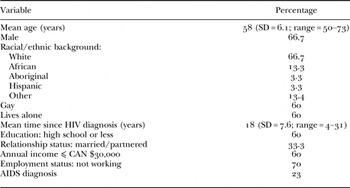
Participants ranged in age from 50 to 73 years (mean = 58, standard deviation (SD) = 6.1), were predominantly male (66.7%) and White (66.7%). Thirteen per cent were African Canadians (African Canadian is used to refer to Black people who reside in Canada) who immigrated, some of whom may come from HIV endemic countries. Sixty percent identified as gay and the mean time since the first HIV diagnosis was 18 years (range 4–30, SD = 7.6). Over half (56.6%) were diagnosed before HAART became available in 1996. Slightly less than two-thirds of participants had education that equalled high school or less and had annual incomes of CAN $30,000 or less (at the time, the average annual income in Ontario was $49,000). Seventy per cent were currently unemployed, retired or receiving disability benefits. Sixty per cent lived alone; one-third were married or in a partnered relationship. Sample characteristics are shown in Table 1.
Characteristics of study participants

Notes: N = 30. SD: standard deviation.
Findings
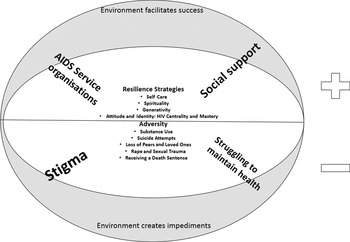
Figure 1 illustrates that ageing successfully with HIV is a balancing act in which participants recognised the positives and the negatives of their life circumstances. Through facing serious and substantial obstacles, participants developed critical personal characteristics and resilience strategies. Below, we outline five salient themes surrounding successful ageing in the context of growing older with HIV: (a) resilience strategies and challenges; (b) social support; (c) environmental context; (d) stigma; and (e) struggling to maintain health.
Successful ageing among older adults living with HIV: resilience strategies, positives and negatives of life circumstances.

Resilience strategies and challenges
Trauma as a precursor to resilience
A major theme that emerged was resilience. Participants faced significant personal challenges including mental illness, sexual trauma, suicide attempts, feelings of having been given a ‘death sentence’, and the loss of peers and loved ones. Some traumatic experiences were directly related to HIV, such as Freddy's (54 years) case where he shares, ‘We are so lucky to still be here, be kicking. And especially me because I tried to commit suicide four times over the HIV.’ For Bah (53), who emigrated from West Africa, it was sexual trauma that resulted in her HIV status. She reported,
One day I go into the city to do something and when I was coming back, there was four young men who robbed me and beat me up all night, who raped me all night, and I think I got it [HIV] from there.
For some, the adversity was associated with lifestyle. Mike (71) shared,
1988, it was one of the worst. My friends were dying by the dozens. I was still very sexually active so it was also this menacing situation of, okay, I'm still doing it but I don't want to. I know it could kill me.
Components of resilience
Mar, a 54-year-old women from Burma stated, ‘I am happy with my life, I am a positive person.’ Resilience for Mar and the other participants encompassed a variety of approaches including self-care, spirituality, attitudes and identity, mastery, HIV centrality and generativity. While each individual approached the overall concept of resilience differently, patterns consistent across participants were found in our analysis, as below.
Self-care
Participants developed personal strategies for enhancing resilience, including self-care behaviours. They were regimented and dedicated to their daily health.
Maintaining physical health was an important element of self-care and finding a healthy ‘balance’ in one's daily routine was noted as an essential aspect of ageing successfully with HIV. Participants had to become more diligent with age. Agnus (60) said: ‘It's a change. Even if I go to a party with people, I know exactly my limit. I don't go overboard like I used to do before. I just watch what I do.’
Routines involving exercise, a healthy diet, managing stress and getting enough rest were described in terms of a formula for self-care and ‘living clean’. Mike (71) explained, ‘Regular exercise, go to therapy with your issues, promote your friendships, be part of a collective, find yourself something that you're passionate about, to do.’ Participants also reported eliminating risk behaviours such as substance use and smoking. Ralup (61) reflected, ‘I used to smoke, I was never a big drinker, but smoked tobacco and at some point, you know it's not good, so you clear that out.’
Staying adherent to HIV care was an important aspect of self-care. Participants had grown more engaged with their physicians and HIV care over time and some noted that one of the benefits of ageing with HIV was having frequent contact with medical professionals. Lynn (50) shared, ‘I feel blessed because I do take a little extra care of myself because of the disease.’
Spirituality
Spirituality enhanced resilience among HIV-positive older adults. Some discussed their rejection of formalised religion due to experiences of discrimination, stigma, and judgement based on HIV and homophobia. However, the need for spiritual nurturance was deeper than religious participation. Participants sometimes turned to more individualised approaches to integrate spirituality into their lives. For example, Gregory, a 55-year-old man from Jamaica, stated: ‘I have a very personal relationship with God, who I consider my higher power. I also have been burnt by religion, and have been rejected and been criticised, the whole gamut, by religion.’
Individuals integrated spirituality as a strategy for coping and managing living with HIV. Of particular note is the various ways in which mindfulness practice has been used to help in this regard. Boulos, a 55-year-old gay man, uses mindfulness to manage his HIV-related symptoms. ‘The lipoatrophy caused me tremendous grief, and it was through mindfulness meditation that I was able to find the relief that I was seeking just to be able to be in the world.’ He continued, ‘I'm able to sit with my negative emotions, and it's in the sitting that you realise they're not so bad, so I think that's one way that I'm successful.’ A connection to some type of spiritual or religious tradition was critical to participants and suggests the importance of spiritual practices as part of successful ageing despite the challenges of living with HIV infection.
Identity and mastery
How individuals relate to and identify with HIV infection emerged as an important component of resilience. This component encompasses the extent to which HIV is central to identity. For many, HIV became a small aspect of their lives. For example, Alexander (66) stated, ‘I accept my HIV, I don't see it as a black mark on me because I consider myself being more than my HIV.’ Ed (60) takes the identity with HIV further, stating, ‘Okay, I can put it a different way. It ceases to become your self-identity.’ Another important intrapersonal characteristic of ageing successfully for these individuals involved mastery, a direct belief in their ability to accomplish what was needed for their disease management and wellbeing. Ed stated, ‘My history, my educational background, my working life are all positives, because I've had just enough knowledge that I can deal with anything that comes along.’ For some, confidence in efficacy came later and was hampered by HIV. Freddy (54) shared:
To me, getting older, I finally started to take control of my life. I think the disease had so much control of my life for so many years and now that I've started controlling my life and getting my life back together, it's great.
Generativity
Participants acknowledged that they were the first cohort to grow into older adulthood with HIV. Along with this accomplishment came a desire to nurture and guide younger people living with HIV. Many gave back through taking on leadership positions at ASOs. Bob (64) explained his mentoring role to the next generation: ‘For want of a better term, being a consultant, so that you can at least counsel and advise people that are just coming up through the ranks.’ Gregory (55) made a contribution through mentoring young, gay black men, ‘whether you're HIV positive or not, and I'm one of the mentors. So, in my giving back in that area, that has been … in a way, it's kind of providing support to me, because it keeps me busy.’
Long-term survivors often had the most lived experience when gathering with others with HIV. They used their skills and experience to contribute to younger, less-experienced members of their community. Alexander (66) shared, ‘I would say the positive aspects of living well with HIV is that I can take my experiences and volunteer in different organisations, and teach other PHAs [persons living with HIV/AIDS] about my successes in living with HIV.’
Social support
Participants were asked about the important people in their lives and how they contributed to or detracted from their successful ageing.
Appraising relationships over time
Participants often reported they suffered a staggering loss of peers and loved ones during the initial stages of the epidemic. George (73) responded, ‘Half of them are gone. They are the casualties.’ Having to reconfigure their social support system led participants to appraise their relationships over time. For example, having been hurt by past relationships, several participants demonstrated caution about whom they let into their inner social circle. Wardon (53) reflected, ‘Now I'm very careful in selecting who is going to be my friend. It's very important to me to connect with people who are going to accept me.’
Letting in the positive
Participants reported seeking social support from family, friends, lovers, the HIV community and medical staff. After determining that a relationship was worth investing in, participants opened up to people who would be healthy, optimistic influences. John (54) described the process of opening up his life to those who would contribute to his health and wellbeing, ‘The only people that I have contact with are my friends that are positive.’ Participants often spoke about investing in relationships that gave them inner strength through fortifying the self. For Gregory (55), fortifying the self meant ‘Contributing to the HIV community, using the skills and experience that I've gained over the years.’ This quote identifies instances whereby giving can serve to both support and nourish the self (internally) as well as others as in generativity.
Pruning social networks
Participants reported actively attempting to cut out relationships that detracted from their wellbeing. Ralup (61) stated that he often felt compelled to ‘put up a barrier’ and ‘protect [him]self’ when a relationship became too stressful and taxing. The majority of the respondents reported using a tactic of ‘cutting out the negativity and complaining’ or ‘getting rid of the poisons’. This decision led participants to focus on a few close, enriching relationships. Tim (59) explained,
Quantity is not high at all. Quality, because I expect a lot. And it's not that I expect a lot of other people. I expect a lot from myself, because you have to garner respect for yourself. And that means choosing the right people that you associate with.
Environmental context
Our study makes visible how the environment and infrastructure help and hinder people attempting to age well with HIV. Below we describe the dimensions of the environment which played an important role in ageing with HIV to our participants.
Financial precariousness
Some participants anticipated important changes to their financial support benefits as they age. For instance, John (54) anticipates that once he turns 65 he could lose access to his provincial disability support, and would need to apply for coverage under the Canadian Old Age Security benefit. ASOs are helping to fill the gap for some older adults transitioning to a pension from previous income supports. Bill (65) noted: ‘I had the food bank for a little while … Now with the full pension I've got enough money to buy food so I'm alright.’ Some reported struggling financially. Colton (60) presented a picture of his delicate financial situation on public disability. He reported needing to budget carefully to live on the limited income he receives that hinders his sense of freedom and independence: ‘All my life I was so independent and now I depend on insurance and this and that and subsidised housing and everything, you know … I'm not free.’
Environmental influences
Participants reported receiving supports from a variety of sources, including ASOs, social networks that included reference groups (women, ethno-racial, gay men) and spiritual communities. Some described a reciprocal relationship with the supports in their environment, through involvement and volunteering at ASOs, providing peer support themselves and participating in activism. Freddy (54) noted that involvement gives some people a sense of ‘purpose’ and opportunities. Cathy (50) describes devoting years of her life to political activism:
We were told back in ’95 that the [Canadian] government was going to end the national AIDS strategy. So, we worked hard. It was really my whole life for those two years, despite the fact that I was struggling with the side-effects of the drugs that were really very extreme back then.
Bob (64) also describes his involvement in activities rooted in reciprocity: ‘I've found, over the years, the more you put in, the more you get out.’ He continues: ‘So, how do you give back, how do you say thank you, for the good health care? Well, you contribute as much as you can in the social structure.’
Challenges and difficulties
The second purpose of this research sought to identify the impediments that individuals noted that made successful ageing difficult or were issues that needed to be overcome. Along with experiencing trauma as a precursor to resilience, our participants also faced adversity in terms of stigma and struggling to maintain their health.
Stigma
A large proportion of informants identified HIV stigma as a continuing problem. It was common to hear that the public view of HIV had improved over time; however, stigma has not vanished. DJ (53) explained: ‘Oh, it [stigma] still exists. Not as it was years ago, but you're foolish if you think it's all gone. It does exist.’ One informant talked about the transition that is occurring related to the increasing acceptance of HIV and the resulting change: ‘You still have the stigma. That's still around. But it's not as bad, with me, with all the years that I've had this, I'm finally starting to live my life now.’
Internalising the negative
Even after decades of progress, stigma continues to exist, manifesting in different forms (enacted, anticipated and internalised). For example, individuals continue to internalise stigma, which can negatively impact self-worth and successful ageing. Allen (54) noted: ‘I always felt like, because I had HIV, I could give it to anybody. I had the same stigma that everybody else did. Like, you couldn't come near me, you couldn't touch me.’
Living with and waiting for prejudice and discrimination
Enacted stigma manifests through prejudice and discrimination, while anticipated stigma is a fear of potential enacted stigma. The older adults in this study continue to experience anticipated and realised prejudice and discrimination. One participant noted:
When people know that you have HIV, oh, the whole world, then you feel like people staring at you. That, alone, can keep you up at night. You won't sleep. You won't eat well because you're wondering what do these people know.
One informant from a community of colour stated, ‘My community people, they push me away. When I come, they run away.’
What you don't know won't hurt me
Older adults in this study continue to engage in stigma management strategies and averting stigma by non-disclosure of their diagnosis. One informant shared: ‘I haven't really told very many people, and that's one way that I also leave myself out of having to deal with stigma.’ Another informant stated: ‘I've not really had to deal with stigma because I haven't told anybody.’
Struggling to maintain health
Participants spoke not only about HIV, but the task of managing other comorbidities, such as Type II diabetes and arthritis. Attending to multiple health issues was something participants noted as a normal part of ageing, but was complicated by living with HIV. For example, Mar (54) was diagnosed with HIV and tuberculosis at the same time and three months later she was diagnosed with cancer.
The struggle to maintain health created a barrier to ageing successfully and often impacted participants’ identities. Boulos (55) noted that, ‘When you've had to live with something for decades, it's like kind of a whittling away of who you are and then what you can be.’ Ralup (61) described the changes in his health status over time: ‘Your body doesn't work the same, you have to adjust how you eat, I try to be in tune with my body, to understand and work with it.’ Tim (59) shared, ‘HIV takes a serious toll on your body, both with body fat, muscle, tissue, bones, everything … Some people don't have the same coping skills that others do.’
To deal with the realities of these health concerns, participants worked hard to maintain their health. Cathy (50), a women who has struggled with adrenal crisis, pulmonary aspergillosis and pneumonia shared her strategies for dealing with the management of multiple health issues:
So, every time I've been faced with one of these problems … I feel initially upset and devastated, then immediately my reaction is, what can I do about it, and then I start researching. What are the treatments available? What are my strategies? How can I cope with this? So, I use the computer, I reach out to friends who have science backgrounds or friends who have got HIV, who have gone through this, and gather together the information, and then develop a plan or a strategy with how I'm going to deal with it.
Discussion
This study is one of the first to examine the lived experiences of successful ageing among older adults with HIV infection. As stated previously, High et al. (Reference High, Brennan-Ing, Clifford, Cohen, Currier, Deeks, Deren, Effors, Gebo, Goronzy, Justice, Landay, Levin, Miotti, Munk, Nass, Rinaldo, Shilpak, Tracy, Valcour, Vance, Walston and Volberging2012) have identified a necessity to understand better how older adults can age successfully with HIV as a research priority. Findings from this study strengthen and contribute to that understanding from the perspective of the lived experience of these individuals and conclude that older adults living with HIV experience considerable strengths and can be resilient, with positive adjustments to a variety of physical, intrapersonal and social challenges. Indeed, as High et al. (Reference High, Brennan-Ing, Clifford, Cohen, Currier, Deeks, Deren, Effors, Gebo, Goronzy, Justice, Landay, Levin, Miotti, Munk, Nass, Rinaldo, Shilpak, Tracy, Valcour, Vance, Walston and Volberging2012) point out, in examining the resilience of those who are faring well and ageing successfully, it is important to understand how supports, policies and care systems promote successful ageing. It is important to note here, however, that views of successful ageing need to be placed in the context of present and past adversity as well as personal challenges. In addition, consistent with the constructionist approach to qualitative research (Padgett Reference Padgett2008), the key concept of successful ageing was defined by the individuals in the study. Our findings reinforce those of Romo et al. (Reference Romo, Wallhagen, Yourman, Yeung, Eng, Micco, Pérez-Stable and Smith2013) who noted that older adults living with chronic illnesses do perceive themselves as ageing successfully. Our research extends that understanding to include a highly marginalised population of older adults who may experience marginalisation by age, HIV status, and real or perceived sexual orientation. In addition, we note the importance of valuing the experience of living with HIV over time, consistent with Rowe and Kahn's (Reference Rowe and Kahn2015) reconceptualisation of successful ageing to include a lifecourse perspective and the importance of generativity and reciprocity (Emlet, Tozay and Raveis Reference Emlet, Tozay and Raveis2011) in giving back to the community.
Implications for practice, research and policy
Our findings suggest that older adults living with HIV can and do rise to challenges and offer important considerations for providers, researchers and policy makers. For most of our participants, a sense of ‘resolve’ to fight HIV and live as long and as healthy a life as possible was central to their experience. Though many reported a trauma related to HIV diagnosis, most offered some ways in which self-care, mastery and generativity became critical factors for successful ageing. Practitioners can work to enhance skills of self-care when working with older adults with HIV and help develop strategies for increased self-efficacy.
Spirituality was an important source of support, even though features of traditional religion, including stigma and homophobia, created difficulty for these individuals. However, many reported seeking spiritual nurturance as an important component to living and ageing successfully with HIV. HIV was also seen by some as a challenging journey that required spiritual strength. Informants created spiritual meaning by relying on a higher power to overcome the daily struggles of living with HIV.
Further research is needed on how traditional and non-traditional spiritual practices are used as a coping strategy for promoting successful ageing (Vance et al. Reference Vance, Brennan, Enah, Smith and Kaur2011).
Many of our participants spoke of ‘pruning’ their interpersonal networks—maintaining, discriminatingly, those relationships that provided social support, and gradually ending or limiting those that drained personal resources. This study suggests that successful ageing with HIV involves an intentional formation of social networks aimed at promoting self-fortification, resilience and positivity. An important factor associated with social supports for our participants was engaging with and volunteering at ASOs. Many participants reported volunteering, providing peer support or engaging in activism related to HIV, which, for them, conferred a sense of social generativity.
The unique intersection of HIV stigma and ageing negatively impacted on the participants, particularly related to distress about disclosure. Though many felt it important to be protective of their HIV status, our sample noted decreases in their experience of stigma over time. This echoes other literature reporting that older adults with HIV note less negative influences of HIV-related stigma when compared to their younger counterparts (Emlet et al. Reference Emlet, Brennan, Brennenstuhl, Rueda, Hart and Rourke2015). Still, practitioners need to be sensitive and aware of HIV stigma as a negative force, assess for stigma and victimisation, and not assume this social construct has been eliminated with time.
These results provide important data for understanding how older adults living with HIV experience resilience, validating existing theoretical constructs on ageing successfully with HIV. Participants provided pertinent data across Smith and Hayslip's (Reference Smith and Hayslip2012) three domains including: (a) individual characteristics (e.g. self-care, adherence to medications, mastery); (b) interpersonal relationships (e.g. social supports, community engagement); and (c) environmental factors (e.g. financial precariousness, stigma). Future research can further examine the utility of this framework for older adults living with HIV.
As mentioned earlier, the criteria of successful ageing include freedom from disease and disability (Rowe and Kahn Reference Rowe and Kahn1998), a criterion not afforded to those living with chronic disease, such as HIV infection. Our results suggest successful ageing models need to consider freedom from disease and disability are not applicable to all older adults. Chronic illnesses increase with age and there are data suggesting that older adults living with HIV typically have multiple chronic age-related conditions (Capeau Reference Capeau2011; Pathai et al. Reference Pathai, Bajillan, Landay and High2014). To suggest that in order to age successfully, one must age in the absence of disease is unrealistic if not ageist, ignoring the diversity that exists in the health of older adults. Therefore, models that take into account how one ages successfully within the context of HIV or other chronic or life-threatening illnesses will be important to develop moving forward. Perhaps those living with HIV experience resilience when they are supported by health-care professionals who help in the management of HIV, along with other chronic health conditions. Research in South Africa indicated that older adults living with HIV experienced better functional ability, quality of life and overall health status when compared to a similar group of HIV-negative older adults (Nyirenda et al. Reference Nyirenda, Chatterji, Falkingham, Mutevedzi, Hosegood, Evandrou, Kowal and Newell2012). Our results match studies from other countries which found that increased access to care due to HAART treatment has led to improvements in other chronic health conditions (Negin et al. Reference Negin, Nyirenda, Seeley and Mutevedzi2013).
Our results support Rubinstein and de Medeiros' (Reference Rubinstein and de Medeiros2015) critique of successful ageing models because the participants in this study, who saw themselves as ageing successfully, reported developing meaning as a result of their HIV diagnoses, thereby stimulating renewed purpose and a commitment to healthy living. Thus, like Romo et al. (Reference Romo, Wallhagen, Yourman, Yeung, Eng, Micco, Pérez-Stable and Smith2013), our findings suggest successful ageing models may look different for those with chronic disabilities and echo the need to incorporate other factors, such as post-traumatic growth. Post-traumatic growth is said to occur when one not only returns to baseline functioning after a trauma, but experiences improvement in functioning (Murphy and Hevey Reference Murphy and Hevey2013). Murphy and Hevey have recently reported that for people living with HIV, stigma was negatively associated with post-traumatic growth – findings that are similar to ours. However, this nascent area of study has just begun to examine older adults with HIV. Thus, new research in this area is needed to understand how this experience of post-traumatic growth can manifest in older adults living with HIV. It is possible that life experience, a by-product of ageing, can positively impact resilience and be a protective factor. In a study of younger and older adults without HIV infection, Gooding et al. (Reference Gooding, Hurst, Johnson and Tarrier2012) found older adults living in the United Kingdom showed increased resilience in areas of emotional regulation and problem solving over their younger counterparts. In a small sample of older adults living with HIV in Finland, Nobre, Kylmä and Kirsi (Reference Nobre, Kylmä and Kirsi2012) found an increase in positive attitudes concerning their life over time. Finally, Emlet et al. (Reference Emlet, Brennan, Brennenstuhl, Rueda, Hart and Rourke2015) found older adults experienced less HIV stigma than their younger counterparts, most notable in internalised stigma, suggesting age as a potential protective factor.
Limitations
Our participants were older adults living with HIV who self-reported ageing successfully. How each participant interpreted successful ageing was individually constructed consistent with the post-modern approach of qualitative methods (Padgett Reference Padgett2008). Responding to the research priority of High et al. (Reference High, Brennan-Ing, Clifford, Cohen, Currier, Deeks, Deren, Effors, Gebo, Goronzy, Justice, Landay, Levin, Miotti, Munk, Nass, Rinaldo, Shilpak, Tracy, Valcour, Vance, Walston and Volberging2012), we specifically recruited individuals who could speak about successful ageing with HIV from their own experience. There may be other older adults who are living with HIV that are marginally doing well or do not perceive themselves as ageing successfully who have different narratives concerning resilience and ageing successfully. The majority of the sample were gay men and previous research in the area of stigma among older adults living with HIV has suggested that gay men fare better due to a sense of community that has been built up over the course of the epidemic that is not as true for other populations (Brennan et al. Reference Brennan, Emlet, Brennenstuhl and Rueda2013). We did, however, interview participants who varied by age, race, gender and sexual orientation. As a qualitative study, these findings are not intended to be generalisable beyond the participants. The consensus of narratives and themes in the data, however, suggests that these findings may be transferable to other older adults living with HIV. The participants also may represent some leading pioneers, or elders in the world of HIV who have been forerunners for years and have adopted ways of coping and resilience supporting their long-term status as HIV-positive. Those who are more newly diagnosed may have vastly different experiences.
Conclusion
The process of ageing successfully with HIV was positioned in the larger context of the difficulties and triumphs of having lived a long life with a challenging disease. Through resilience strategies, older adults connected the past, present and anticipated future, as exemplified by the quote ‘I'm happy in my life now, I'm a positive person.’ Resilience is a valuable resource in strength-based approaches to successful ageing in health care and gerontology, when working with older adults living with HIV/AIDS.
Acknowledgements
The authors wish to thank the 30 individuals who shared their stories and lives with us regarding successful ageing with HIV, the agencies (ASOs) and clinics who assisted in recruitment, and Michele Costa, MSW for her editorial expertise and efforts. This work was supported by a Fulbright Scholars grant from Fulbright Canada and a grant from the University of Washington Tacoma to CAE, principal investigator (PI). DJB was supported through the Ontario HIV Treatment Network Applied HIV Research Chair. During the data collection phase, the PI was a Fulbright Visiting Research Chair at McMaster University, School of Social Work, Hamilton, Ontario, Canada and Visiting Faculty at the Factor-Inwentash Faculty of Social Work, University of Toronto.