In recent years, studies and organizations around the world with a variety of viewpoints have demonstrated the importance of mental health in the elderly (Eurostat, 2014; Kessler & Üstün, Reference Kessler and Üstün2008; the ESEMeD/MHEDEA Investigators et al., Reference Alonso, Angermeyer, Bernert, Bruffaerts, Brugha and Vollebergh2004a; WHO, 2004a). Despite its importance, the available data regarding mental disorders’ prevalence in the population over 65 are scarce, inconsistent, and ambiguity and methodological concerns have complicated their interpretation (Blazer & Wu, Reference Blazer and Wu2009; Ritchie et al., Reference Ritchie, Artero, Beluche, Ancelin, Mann, Dupuy and Boulenger2004; Volkert, Schulz, Härter, Wlodarczyk, & Andreas, Reference Volkert, Schulz, Härter, Wlodarczyk and Andreas2013; Wittchen & Jacobi, Reference Wittchen and Jacobi2005). In an effort to organize the available information, Volkert et al. (Reference Volkert, Schulz, Härter, Wlodarczyk and Andreas2013) conducted a meta-analysis of research on the prevalence of mental disorders in the elderly in Western countries. Among their conclusions, the authors point out inconsistencies in the results of different studies. Those differences are especially clear when analysis is done according to type of mental disorder. In the case of mood disorders, which are among the most prevalent issues in the elderly population, Djernes (Reference Djernes2006) reported an overall prevalence of major depression and dysthymia in the elderly between 2% and 25% (Achterberg, Pot, Kerkstra, & Ribbe, Reference Achterberg, Pot, Kerkstra and Ribbe2006), finding different studies referring to higher (v.g., Gostynski, Ajdacic-Gross, Gutzwiller, Michel, & Herrmann, Reference Gostynski, Ajdacic-Gross, Gutzwiller, Michel and Herrmann2002; Mojtabai & Olfson, Reference Mojtabai and Olfson2004) or lower prevalence rates (v.g., The ESEMeD/MHEDEA Investigators et al., Reference Alonso, Angermeyer, Bernert, Bruffaerts, Brugha and Vollebergh2004b; Jeste, Blazer, & First, 2005; Saunders et al., Reference Saunders, Copeland, Dewey, Gilmore, Larkin, Phaterpekar and Scott1993). Meanwhile, using dimensional measures to assess depression, prevalence rates over 25% have sometimes been found (Castro-Costa et al., Reference Castro-Costa, Dewey, Stewart, Banerjee, Huppert, Mendonca-Lima and Prince2007; Glaesmer, Riedel-Heller, Braehler, Spangenberg, & Luppa, Reference Glaesmer, Riedel-Heller, Braehler, Spangenberg and Luppa2011; Mamplekou et al., Reference Mamplekou, Bountziouka, Psaltopoulou, Zeimbekis, Tsakoundakis, Papaerakleous and Panagiotakos2010).
As for anxiety disorders, studies have shown mixed results in prevalence rates, ranging from 2.3% to 8.9% (Jeste et al., Reference Jeste, Blazer and First2005; Lenze & Loebach-Wetherell, Reference Lenze and Loebach-Wetherell2011; Mohlman et al., Reference Mohlman, Bryant, Lenze, Stanley, Gum, Flint and Craske2012; Wolitzky-Taylor, Castriotta, Lenze, Stanley, & Craske, Reference Wolitzky-Taylor, Castriotta, Lenze, Stanley and Craske2010), the most prevalent among them being specific phobias (current prevalence: 4.52%, lifetime prevalence: 6.66%); generalized anxiety disorders (current prevalence: 2.30%, lifetime prevalence: 6.36%); and social phobias (current prevalence: 1.31%, lifetime prevalence: 5.07%). Compared to results in younger research participants, those findings seem to indicate that anxiety disorders are less prevalent in the elderly (Jeste et al., Reference Jeste, Blazer and First2005; Lenze & Loebach-Wetherell, Reference Lenze and Loebach-Wetherell2011; Mohlman et al., Reference Mohlman, Bryant, Lenze, Stanley, Gum, Flint and Craske2012; Wolitzky-Taylor et al., Reference Wolitzky-Taylor, Castriotta, Lenze, Stanley and Craske2010).
With regard to substance use and abuse in the elderly, the vast majority of data refer to alcohol use and abuse (Volkert et al., Reference Volkert, Schulz, Härter, Wlodarczyk and Andreas2013) and come from research in the general population (v.g., HSCIC, 2014; IAS, 2005; the ESEMeD/MHEDEA Investigators et al., 2004a; WHO, 2004a; b). For instance, a meta-analysis by Volkert et al. (Reference Volkert, Schulz, Härter, Wlodarczyk and Andreas2013) reported a current prevalence of an alcohol-related disorder of 0.96%, and a lifetime prevalence of 11.71%. A review of earlier studies, however, shows tremendous variability in the data about the prevalence of this type of disorder in the elderly. For instance, the data regarding the prevalence of a current alcohol-related disorder have differed, ranging from 0.10% to 2.98% (Blanco et al., Reference Blanco, Grant, Petry, Simpson, Alegria, Liu and Hasin2008; Blazer & Wu, Reference Blazer and Wu2009; Helmchen, Linden, & Wernicke, Reference Helmchen, Linden and Wernicke1996; Pirkola et al., Reference Pirkola, Isometsä, Suvisaari, Aro, Joukamaa, Poikolainen and Lönnqvist2005; the ESEMeD/MHEDEA Investigators et al., 2004a). Data regarding the lifetime prevalence of an alcohol-related disorder have been divergent as well: from 7.1% to 16.10% (Blanco et al., Reference Blanco, Grant, Petry, Simpson, Alegria, Liu and Hasin2008; Hanson, Reference Hanson1994; Kessler et al., Reference Kessler, Berglund, Demler, Jin, Merikangas and Walters2005) or 17.8% in the case of alcohol abuse and 12.5% for alcohol dependence (Hasin, Stinson, Ogburn, & Grant, Reference Hasin, Stinson, Ogburn and Grant2007). As in the case of anxiety disorders, studies of people over 65 have shown lower alcohol consumption and a lower prevalence of alcohol-related disorders than in research on younger populations (Volkert et al., Reference Volkert, Schulz, Härter, Wlodarczyk and Andreas2013).
Regarding the prevalence of psychotic disorders, Volkert et al.’s (Reference Volkert, Schulz, Härter, Wlodarczyk and Andreas2013) review concluded that the rate of current psychosis was 1.7%, and the lifetime rate 4.7%. It is hard to clearly ascertain whether the prevalence of psychosis increases in older adults, because symptoms present variably and few empirical studies have explored this. Some researchers have argued that the prevalence of psychosis could rise in the elderly because psychosis can appear in conjunction with dementia (Leroi, Voulgari, Breitner, & Lyketsos, Reference Leroi, Voulgari, Breitner and Lyketsos2003; Lyketsos et al., Reference Lyketsos, Steinberg, Breitner, Tschanz, Norton and Steffens2000), finding increased delusion symptomatology in the elderly as a result of dementia symptoms. On the other hand, psychotic symptoms could go unnoticed in studies because of differential manifestation of symptoms as a function of age (Brodaty et al., Reference Brodaty, Peters, Boyce, Hickie, Parker, Mitchell and Wilhelm1991; Reference Brodaty, Luscombe, Parker, Wilhelm, Hickie, Austin and Mitchell1997; Teper & Thomas, Reference Teper and Thomas2006).
In short, while epidemiological research on elderly mental health remains scarce and quite heterogeneous (Buys, Roberto, Miller, & Blieszner, Reference Buys, Roberto, Miller and Blieszner2008; Volkert et al., Reference Volkert, Schulz, Härter, Wlodarczyk and Andreas2013), its main results seem to indicate lower prevalence rates of the main mental disorders than in the adult or youth population.
Yet Primary Care, Mental Health, and Gerontology service providers have a very different impression. They find certain disorders more often in consultations with elderly people (v.g., depression and anxiety). Then again, simply because they have lived longer, it would stand to reason that the elderly have a higher lifetime prevalence of mental disorders than young people.
Several factors could explain this disparity. First, disorders have not always been defined in the same way. More uniform diagnosis is achieved using the diagnostic categories laid out in the DSM-IV or ICD-10. Second, sampling methods have not been adapted to this population’s particular features, so there is a risk of underestimating the elderly in global population samples and only including people in lower age ranges and with higher functioning (v.g., people under 70 years old, people who answer the phone or have a higher degree of personal autonomy). Third, diagnostic tools have varied, and those in use were developed for the general population and have not been adapted to the cognitive characteristics of the elderly (especially over 80 years old; Knäuper & Wittchen, Reference Knäuper and Wittchen1994). With that in mind, the low prevalence rates found could be the result of fatigue and/or comprehension difficulties when elderly people take a diagnostic test. Either case, fatigue or comprehension issues, could create a tendency to deny symptoms in order to simplify the instruments and shorten their completion time.
Epidemiological studies of mental disorders in the elderly are very useful because they make it possible to overcome the methodological concerns described above. It is important to include tailored sampling strategies to locate elderly participants, as well as consistent diagnostic criteria (DSM-IV-TR or ICD-10), and instruments designed or adapted to the special characteristics of the elderly in various cultural settings. These aspects were taken into consideration when designing the MentDis_ICF65+ study, which is the framework for the present study (Andreas et al., Reference Andreas, Härter, Volkert, Hausberg, Sehner, Wegscheider and Schulz2013). The MentDis65+ Project’s main objective, then, is to ascertain prevalence data for mental disorders in the European population over 65 years old (Andreas et al., Reference Andreas, Härter, Volkert, Hausberg, Sehner, Wegscheider and Schulz2013; Reference Andreas, Schulz, Volkert, Dehoust, Sehner, Suling and Härter2016) using sampling strategies that solely target people 65 to 85 years old and employing measurement and diagnostic instruments adapted to the characteristics and needs of the elderly population. The MentDis65+ study was conducted in six European and associated countries (Spain, Germany, Italy, Switzerland, United Kingdom, and Israel; Andreas et al., Reference Andreas, Härter, Volkert, Hausberg, Sehner, Wegscheider and Schulz2013), but the present study only presents prevalence data for mental disorders (criteria: DSM-IV; APA, 2000) in a population from Madrid aged 65 to 85 years old.
Method
Sample
The sample was randomly selected - and stratified according to age (65–74 and 75–85) and sex - from the population over 65 and under 85 years of age in the Community of Madrid. Twenty-one districts within the city of Madrid were included, and a random sample of towns in the province of Madrid was generated, ultimately including: Alcalá de Henares, Alcobendas, Alcorcón, Boadilla del Monte, Fuenlabrada, Galapagar, Getafe, Guadarrama, Hellín, Leganés, Majadahonda, Móstoles, Parla, Pozuelo de Alarcón, Torrejón de la Calzada, Tres Cantos, Villalba, and Villanueva de la Cañada. The sample size was ultimately N = 555.
The criteria for inclusion in the sample were as follows: a) Living in the Community of Madrid; b) Aged 65 to 85 years old; and c) Capable of providing informed consent to participate in the study.
The criteria for exclusion from the sample were the following: a) Showing severe cognitive deficit according to the Spanish adaptation (Lobo, Saz, Marcos, & Grupo de Trabajo ZARADEMP, Reference Lobo, Saz, Marcos and Grupo de2002) of the Mini-Mental State Examination (MMSE; Folstein, Folstein, & McHugh, Reference Folstein, Folstein and McHugh1975) and a cutoff point of > 27 to identify respondents who would have trouble completing the diagnostic interview; b) Not sufficiently able to communicate with language to be interviewed. Informed consent was requested, and all the study’s procedures and strategies were approved by the Ethics Committee at the Universidad Complutense de Madrid, and by the European Commission.
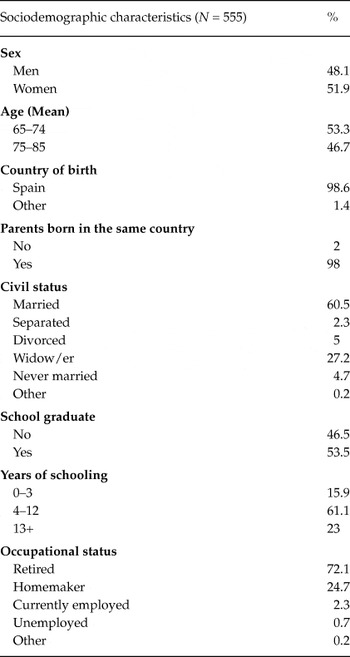
Table 1 compiles the sociodemographic characteristics of the sample. As the table shows, the distribution of men and women is consistent with census reports (48% men and 52% women; INE, 2011). Participants’ average age was 73 and a half, and the stratum of people 65–74 years old (53%) was larger than the stratum 75–85 years old (47%). Practically everyone in the sample was born in Spain and so were their parents. As for civil status, more than half the sample was married at the time they were interviewed, and widows and widowers made up a quarter of the sample. In terms of level of education, per the table, about half the sample graduated from school and more than half received between 4 and 12 years of schooling. Currently, 72% of the sample was retired, and homemakers accounted for almost a quarter.
Sociodemographic Characteristics of the Sample (N = 555)

Instruments
Given the lack of diagnostic tools suitable for the elderly, the MentDis_ICF65+ team decided to adapt the Composite International Diagnostic Interview (CIDI; Wittchen, Reference Wittchen1992) to the psychological needs of people over 65 years old. The team developed the CIDI for people over 65 (CIDI65+) with supervision from the CIDI-certified Centre of Epidemiology and Longitudinal Studies at the University of Dresden, under the direction of H.U. Wittchen (Wittchen et al., Reference Wittchen, Strehle, Gerschler, Volkert, Dehoust, Sehner and Andreas2015).
The process of adapting the interview for the elderly included strategies such as: adding new words for the sake of clarification, adding alternate questions, dividing excessively long questions into multiple shorter questions, including a detailed introduction at the beginning of each section, and including characteristics that are specific to disorders in the elderly (v.g., major depressive disorder; Wittchen et al., Reference Wittchen, Strehle, Gerschler, Volkert, Dehoust, Sehner and Andreas2015). Thus the CIDI65+ was adapted to the abilities and needs - social, cognitive, and psychological - of elderly people, and provides diagnoses consistent with the criteria outlined in the DSM-IV-TR (APA, 2000) classification system. Next, the paper-and-pencil English-language version of the instrument was translated into Spanish and then back-translated by a native Spanish-speaker who is Spanish-English bilingual. Then, the computer-assisted personal interview (CAPI) was programmed. This computerized version facilitated the interview process by enabling us to read questions directly from the electronic device to participants, and then enter their answers into it to. Afterward, a pilot study was conducted in a sample of 50 people over 65 years old from Madrid (and utilizing some Social Services resource) to examine the interview’s reliability. Generally speaking, reliability findings for the CIDI65+ were good for most diagnoses (Wittchen et al., Reference Wittchen, Strehle, Gerschler, Volkert, Dehoust, Sehner and Andreas2015).
A detailed description of the adaption and psychometric study of the CIDI65+ is reported elsewhere (Wittchen et al., Reference Wittchen, Strehle, Gerschler, Volkert, Dehoust, Sehner and Andreas2015).
Procedure
After gathering a first random sample of people who met those criteria (N = 1.343), interviewers were trained. Members of the MentDis_ICF65+ team received standardized training about how to use the CIDI65+. Said training included an explanation of interview protocol: how to contact people in the sample; what issues might arise during the interview and how to solve them; how to assess interview quality; and other concerns. We included a data-control procedure to ensure a high level of data quality at all centers participating in the study. Subsequently, we applied the protocol for contacting people selected for the sample. Each interviewer was responsible for contacting the members of the sample to which they had been assigned. The first step was to send a letter to everyone in the sample explaining the MentDis_ICF65+ study’s objectives and providing contact information for the research team in Madrid. They were told that in the coming weeks, an interviewer would be in touch to ask if they were interested in participating in the study. First, the interviewers tried contacting potential participants by phone until they received a decisive YES or NO. If there was an initial NO (for instance, a relative did not let them talk on the phone at the time, they did not understand who the interviewers were or what they were proposing, etc.), they went to visit the person at home. If the fourth time the interviewer called there was no answer, he or she visited the person to see if they actually live there (according to the doorman, neighbors). If someone in the sample did not have a telephone, they were visited at home directly.
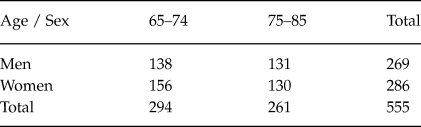
Ultimately, 41.3% of the people contacted chose to participate in the study. Generally, the reasons for declining to participate were “not being interested” or “not having time.” In total, 584 people chose to be interviewed, of which 29 were excluded for the following reasons: they changed their mind and were not longer interested, they could not be located on the appointed interview day, they were sick, they exhibited cognitive problems, or their interview was incomplete and therefore invalid. Participants provided their consent in writing prior to the interview. Interviews lasted 84 minutes on average, ranging from 24 minutes (people with no issue) to 248 minutes (people with various problems). Each participant was offered a voucher for 15 euros, redeemable at major stores. Following this procedure, a total of 555 people were interviewed. Table 2 presents the final sample’s classification.
Stratified Sample from Madrid (N = 555)

Statistical analysis
Prevalence rates and odds ratios (ORs) were calculated using sample frequencies, and analyzed according to sex and age. To do so, population data from the National Institute of Statistics (INE, 2011) was used. The results tables include a 95% confidence interval for odds ratios and a contrast for the equality of odds ratios between comparison groups. The software utilized in all analyses was the EpiTools information library (Aragon, Fay, & Wollschlaeger, Reference Aragon, Fay and Wollschlaeger2012) in the program R (R Core Team, 2014). Age strata (65–74 years old and 75–85 years old) were applied while conducting data analyses.
Results
To ease the presentation of prevalence data, we chose to distinguish among three moments in time evaluated by the CIDI65+ interview: lifetime prevalence, prevalence in the past 12 months, or in the past month (current). We do not include data about the prevalence of psychotic disorders, because no one with such a disorder was identified in this sample.
Lifetime prevalence
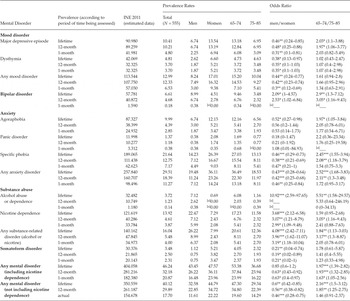
Table 3 presents prevalence rates of mental disorders. It shows that 46.24% of people evaluated over 65 exhibited some mental disorder in their lifetime (including nicotine dependence). Excluding nicotine dependence from analysis, 40.12% of people over 65 evaluated have exhibited a mental disorder in their lifetime.
Prevalence of Mental Disorders in Sample from the Community of Madrid (Lifetime: Anytime in One’s Life; 12-month: in the Past Year; 1-month: Current) (N = 555)

Note: ***p < .001, **p < .01, *p < .05; [a] Uncertain estimate due to no frequency or low frequency in the sample.
The diagnostic category with the highest prevalence rates was anxiety disorders (29.51%), followed by disorders related to substance use, especially alcohol (16.04%). Among anxiety problems, the most prevalent disorder was specific phobia (21.64%), followed by agoraphobia (9.99%) and panic disorder (1.37%). 12.99% of the sample suffered a mood disorder at some time in their life, with 10.41% having experienced a major depressive episode.
The lifetime prevalence of bipolar disorder was found to be 6.61%, and that of a somatoform disorder was 3.48%.
As Table 3 illustrates, women had a higher risk of suffering a mental disorder (not including nicotine dependence) at some time in their lives (OR men/women 0.6, CI 0.42–0.85). Analyzing disorders on an individual basis, women were found to be twice as likely as men to suffer a mood disorder (OR men/women 2.28, CI 1.3–3.8). The prevalence rate in women was 17.01%, compared to 8.24% in men. Women were, similarly, more likely than men to have suffered an anxiety disorder (OR men/women 0.43, CI 0.28–0.64), and specific phobia was the disorder for which there was the largest difference in score between men and women (OR men/women 0.46, CI 0.29–0.73).
However, women had a lower risk than men of exhibiting a disorder related to substance use or abuse in their lifetime (OR men/women 4.08, CI 2.42–7.11). That trend was especially true of alcohol abuse or dependence (OR men/women 10.92, CI 2.59–97.65).
The prevalence of every disorder examined was found to decrease with age, in the following cases significantly: major depressive episode (OR 65–74/75–85, 2.03; CI 1.1–3.88), bipolar disorder (OR 65–74/75–85, 2.9; CI 1.3–7.12), agoraphobia (OR 65–74/75–85, 1.97; CI 1.05–3.84), specific phobia (OR 65–74/75–85, 2.45; CI 1.55–3.94), any anxiety disorder (OR 65–74/75–85, 2.52; CI 1.68–3.83), alcohol abuse or dependence (OR 65–74/75–85, 5.51; CI 1.58–29.57), any substance-related disorder (OR 65–74/75–85, 1.84; CI 1.13–3.03) and any mental disorder, with and without nicotine dependence (OR 65–74/75–85, 1.97; CI 1.39–2.82 and OR 65–74/75–85, 2.16; CI 1.5–3.12, respectively) (Table 3).
Prevalence in the past 12 months
According to Table 3, 32.18% of the people over 65 evaluated presented with a mental disorder in the past year, including nicotine dependence. Not including that diagnosis, the prevalence rate drops to 29.89%. The diagnostic category with the highest prevalence rates was anxiety disorders (18.39%), followed by mood disorders (12.33%). Among anxiety problems, 12.75% of the people evaluated had experienced a specific phobia in the past year. There was a drop in the prevalence of substance-related disorders when their presence was evaluated over the past year (lifetime prevalence of 16.8%, 5.48% prevalence in the past year).
An analysis according to sex revealed that women had a higher risk of having experienced a mental disorder in the past year, whether nicotine dependence was included (OR men/women 0.63; CI 0.43–0.92) or not (OR men/women 0.56; CI 0.38–0.82). More specifically, women were more than twice as likely as men to suffer a mood disorder (OR men/women 0.42 CI; 0.23–0.74). The prevalence rate in women was 16.32%, compared to 14.53% in men. Furthermore, women were more likely than men to have had an anxiety disorder (OR men/women 0.42; CI 0.25–0.68), and among anxiety disorders, specific phobia showed the largest difference in score between men and women (OR men/women 0.38; CI 0.21–0.69).
Men were more likely to have experienced a substance-related disorder (alcohol and nicotine) in the past year (OR men/women 3.96; CI 1.62–11.07).
As in the case of lifetime prevalence, prevalence in the past 12 months of every disorder decreased with age, and significantly in the following cases: major depressive episode (OR 65–74/75–85, 1.97; CI 1.06–3.77), bipolar disorder (OR 65–74/75–85, 3.05; CI 1.16–9.43), specific phobia (OR 65–74/75–85, 2.08; CI 1.18–3.79), any anxiety disorder (OR 65–74/75–85, 2.11; CI 1.3–3.48), nicotine dependence (OR 65–74/75–85, 3.05; CI 1.16–9.43), any substance-related disorder (OR 65–74/75–85, 3.17; CI 1.3–8.87), and any mental disorder, with or without nicotine (OR 65–74/75–85, 1.93; CI 1.32–2.85 and OR 65–74/75–85, 1.85; CI 1.25–2.75, respectively) (Table 3).
Prevalence in the past month (Current)
A fifth of elderly people in the sample were currently exhibiting a mental disorder, including nicotine dependence (20.87%) (Table 3). Not including that diagnosis, we found that 17.70% of elderly people in the sample had a current mental disorder.
The diagnostic category with the highest prevalence rates in the past year was anxiety disorders (11.27%), followed by mood disorders (6.53%) and substance-related disorders (4%). Women were three times as likely as elderly men to experience a major depressive episode (OR men/women 0.31; CI 0.1–0.81). The prevalence rate in women was 6.08%, compared to 2.25% in men. Women were more likely than men to currently exhibit dysthymia (OR men/women 0.35; CI 0.1–1.03), an anxiety disorder (OR men/women 0.46; CI 0.25–0.84), or a specific phobia (OR men/women 0.47; CI 0.21–1). Conversely, men were more likely to present with a substance-related disorder (alcohol or nicotine dependence) (OR men/women 3.19; CI 1.18–10.04).
Results in consonance with age followed the same trend as lifetime prevalence versus prevalence in the past year. That is, the prevalence of every disorder decreased with age, but only significantly for the variable “any mental disorder (including nicotine dependence)” (OR 65–74/75–85, 1.63; CI 1.05–2.56) (Table 3).
Conclusions
The present study was the first to analyze the prevalence rates – across the lifespan, in the past year, and in the past month – of mental disorders in elderly people in different European countries (though this paper only presents results from the Community of Madrid) using a standardized, structured clinical interview to diagnose mental disorders, previously adapted to the characteristics of elderly people.
The main results indicate that almost one in two people over 65 years of age have suffered a mental disorder in their lifetime (including nicotine dependence), one in three has in the past year, and one in five is currently exhibiting a mental disorder. When nicotine dependence is excluded as a disorder, those percentages are lower, but still high: 40.12% of had a mental disorder at some time in their lives; 29.89% had one in the past year; and 17.70% currently suffer a mental disorder. Though this sample does not meet all criteria for generalizability to the Community of Madrid population, if we were to extrapolate these data to the total population over 65 in the Community of Madrid, according to census data from the National Statistics Institute (INE, 2011), approximately 350,559 elderly people would have suffered a mental disorder in their lifetime, 261,187 would have in the past year, and 154,678 would have had a current mental disorder at the time this study’s data were collected.
The disorders with the highest prevalence rates were anxiety disorders (we would estimate that 160,707 elderly people had one in the past year), substance-related disorders (47,845 in the past year), and mood disorders (107,750 in the past year).
The results seem to indicate that women were more than twice as likely as men to suffer a mood disorder at some point in their lives. Likewise, women were more likely than men to exhibit an anxiety disorder, specific phobia being the disorder for which the largest difference in score between men and women was found, especially when looking at lifetime prevalence and prevalence in the past year. Conversely, men were more likely to experience a substance-related disorder (alcohol or nicotine dependence). Analyzing men and women’s differential risk of suffering a mental disorder, we found that women had a higher lifetime risk of having a mental disorder (not including nicotine dependence). With age, the prevalence of all the disorders studied decreased, significantly in the following cases: major depressive episode, bipolar disorder, agoraphobia, specific phobia, alcohol abuse or dependence, and nicotine dependence. Possible interpretations include higher mortality rates in people with dependence and/or other health problems, and increased self-care among the elderly (according to doctors’ recommendations, etc.).
Compared to other epidemiological studies of the elderly (Byers et al., Reference Byers, Yaffe, Covinsky, Friedman and Bruce2010; Gum, King-Kallimanis, & Kohn, Reference Gum, King-Kallimanis and Kohn2009; Volkert et al., Reference Volkert, Schulz, Härter, Wlodarczyk and Andreas2013) and adults under 65 (Busch, Maske, Ryll, Schlack, & Hapke, Reference Busch, Maske, Ryll, Schlack and Hapke2013; Kessler et al., Reference Kessler, Birnbaum, Bromet, Hwang, Sampson and Shahly2010; The ESEMeD/MHEDEA Investigators et al., Reference Alonso, Angermeyer, Bernert, Bruffaerts, Brugha and Vollebergh2004b), the present study’s results indicate higher prevalence rates than in earlier studies that employed standardized, structured interviews like the CIDI. Similarly, this study found higher prevalence rates of current major depressive disorder (4.80% vs. 3.3% on average in past studies) and current agoraphobia (2.85% vs. 0.5%). These results might suggest that earlier epidemiological studies underestimated the prevalence rates of mental disorders in the elderly. There are different reasons that could explain these results, but it is noteworthy that the standardized, structured interview employed here to detect mental disorders was adapted to the characteristics of the elderly (CIDI65+) and is therefore equipped to provide more accurate estimates of the appearance of mental disorders in that subset of the population. Also consider the sampling strategy, which allowed us to include elderly people over 80, who were scarcely represented in previous studies.
On the other hand, this study has certain limitations that could have led to overestimating or skewing prevalence rates. The most vital have to do with the representativeness of the sample. In the present study, exclusion criteria were applied for various technical reasons, barring people with severe cognitive deficit or who could not be interviewed due to some sort of cognitive deficit, nursing home residents, the homeless, non-Spanish speakers, and people over 85 years old. We must emphasize, however, that those factors could actually lead to a higher prevalence of different disorders; those excluded groups are more vulnerable and face more social challenges that could prompt or aggravate mental health issues.
The sample size and sampling method do not allow us to generalize to the entire elderly population of the Community of Madrid, but it does provide a broad view of the situation.
Despite the aforementioned limitations, these results suggest the elderly need to receive different levels of mental healthcare services, from primary care to specialized mental healthcare to geriatric units. By the same token, it highlights the needs associated with functioning difficulties that can provoke some of the disorders studied here, which can become serious and require support to ensure elderly people’s sustained autonomous functioning and full social participation.