Exposure to political violence adversely affects children and adolescents’ development and mental health (Comer & Kendall, Reference Comer and Kendall2007; Comer et al., Reference Comer, Dantowitz, Chou, Edson, Elkins, Kerns and Green2014; Henrich & Shahar, Reference Henrich and Shahar2008; Henrich & Shahar, Reference Henrich and Shahar2013; La Greca, Reference La Greca2007). Most, if not all, extant research focuses either on a main effect of exposure to terrorism on mental health, or on protective factors buffering against the latter's adverse effects (Betancourt et al., Reference Betancourt, Abdi, Ito, Lilienthal, Agalab and Ellis2015; Dubow et al., Reference Dubow, Huesmann, Boxer, Landau, Dvir, Shikaki and Ginges2012; Henrich & Shahar, Reference Henrich and Shahar2008; Henrich & Shahar, Reference Henrich and Shahar2013; Punamäki, Palosaari, Diab, Peltonen, & Qouta, Reference Punamäki, Palosaari, Diab, Peltonen and Qouta2015; Shahar, Cohen, Grogan, Barile, & Henrich, Reference Shahar, Cohen, Grogan, Barile and Henrich2009; Shahar & Henrich, Reference Shahar and Henrich2016). More recent studies, however, have been focusing on the moderating role of exposure to political violence on the links between risk factors and development/psychopathology (Busso, McLaughin, & Sheridan, Reference Busso, McLaughlin and Sheridan2014; Farach, Mennin, Smith, & Mendelbaum, Reference Farach, Mennin, Smith and Mandelbaum2008; McLaughin et al., Reference McLaughin, Busso, Duys, Green, Alves, Way and Sheridan2014; Noyman-Veksler, Shalev, Brill, Rudich, & Shahar, Reference Noyman-Veksler, Shalev, Brill, Rudich and Shahar2017). Extending this body of research, we examined the moderating role of exposure to political violence in the links between adolescent personality vulnerability and internalizing and externalizing psychopathology.
Personality and psychopathology in adolescence
Vulnerability versus scarring models
Research on the role of personality in psychopathology abounds (Blatt, Reference Blatt2004; Shahar, Reference Shahar2015; Zuckerman, Reference Zuckerman2005). Adolescence appears to be a focal developmental phase for this line of inquiry because this is a period during which youth establish their identity in the face of notable biological, psychological, and social changes (Blatt, Reference Blatt2008; Jushner, Reference Kushner2015; Shafran, Shahar, Berant, & Gilboa-Schechtman, Reference Shafran, Shahar, Berant and Gilboa-Schechtman2016). A leading personality/psychopathology theory in the field is Blatt's polarities model (Blatt, Reference Blatt2004; Blatt, Reference Blatt2008; Blatt, Shahar, & Zuroff, Reference Blatt, Shahar and Zuroff2001; Blatt & Zuroff, Reference Blatt and Zuroff1992; Kopala-Sibley & Zuroff, Reference Kopala-Sibley and Zuroff2014; Luyten & Blatt, Reference Luyten and Blatt2013). The theory construes interpersonal-relatedness and self-definition as two central “personality vectors” that begin developing in early childhood due to parent–child relationships and continue to unfold over the life span (Blatt, Reference Blatt2008). Interpersonal-relatedness pertains to the attainment of nurturing and supportive relationships, whereas self-definition refers to securing a coherent, essentially positive, sense of self and identity. A successful development in one “vector” bolsters the other, and the integration of both underlies a healthy personality development (Blatt, Reference Blatt2008; Blatt & Zuroff, Reference Blatt and Zuroff1992; Kopala-Sibley & Zuroff, Reference Kopala-Sibley and Zuroff2014; Shahar, Henrich, Blatt, Ryan, & Little, Reference Shahar, Henrich, Blatt, Ryan and Little2003; Zuroff, Mongrain, & Santor, Reference Zuroff, Mongrain and Santor2004). In contrast, disruptions of such an integration, usually resulting from adverse parent–child relationships, lead to either anaclitic or introjective vulnerabilities. An anaclitic vulnerability reflects an emphasis on relatedness rather than self-definition, and manifests itself via depression centered on loneliness and object loss, somatization, and panic attacks. In contrast, an introjective vulnerability represents an emphasis on self-definition rather than relatedness, manifesting in self-critical depression, obsessive-compulsive and paranoid symptoms, and narcissistic personality features (Blatt, Reference Blatt2008; Kopala-Sibley & Zuroff, Reference Kopala-Sibley and Zuroff2014; Luyten & Blatt, Reference Luyten and Blatt2013; Shahar et al., Reference Shahar, Henrich, Blatt, Ryan and Little2003; Zuroff et al., Reference Zuroff, Mongrain and Santor2004).
Blatt's theory has stirred voluminous research across the life span, albeit with a particular focus on adolescence (e.g., Kopala-Sibley, Klein, Perlman, & Kotov, Reference Kopala-Sibley, Klein, Perlman and Kotov2017; Leadbeater, Kuperminc, Blatt, & Herzog, Reference Leadbeater, Kuperminc, Blatt and Hertzog1999; Shahar & Priel, Reference Shahar and Priel2003). The overarching pattern of findings emerging from this body of research is quite complex. First, although several studies confirm the vulnerability of both the anaclitic and introjective vulnerabilities to depression, findings are much more consistent with respect to the introjective, self-critical, vulnerability (Coyne & Whiffen, Reference Coyne and Whiffen1995; Shahar, Reference Shahar2015). In fact, dependency was found to also include some aspects of resilience, for instance, an ability to enlist social support and generate positive life events (Bornstein, Reference Bornstein1998; Mongrain, Reference Mongrain1998; Shahar, Reference Shahar2008; Shahar & Priel, Reference Shahar and Priel2003). Second, self-criticism was shown to be implicated in a host of other psychopathologies, including anxiety and eating disorders, depression, suicidality, and externalizing symptoms such as aggression and violence (see Enns, Cox, & Inayatulla, Reference Enns, Cox and Inayatulla2003; Shahar et al., Reference Shahar, Henrich, Blatt, Ryan and Little2003; Shahar, Reference Shahar2015). In fact, such robust, self-critical vulnerability has been demonstrated even after controlling for a host of potential confounds, including (most compellingly) neuroticism. The latter pertains to a chronic tendency to experience distress and is considered a major risk factor for psychopathology (Lahey, Reference Lahey2009). Yet, even with neuroticism as a covariate, self-criticism still predicts psychopathology, both in cross-sectional and longitudinal research (Bareket-Bojmel & Shahar, Reference Bareket-Bojmel and Shahar2011; Clara, Cox, & Enns, Reference Clara, Cox and Enns2003; Cox, Enns, & Clara, Reference Cox, Enns and Clara2004; Dunkley, Sanislow, Grilo, & McGlashan, Reference Dunkley, Sanislow, Grilo and McGlashan2009; Enns et al., Reference Enns, Cox and Inayatulla2003; Kopala-Sibley et al., Reference Kopala-Sibley, Klein, Perlman and Kotov2017). In contrast, the vulnerability of dependency, when it surfaces, appears to be confined to depression and anxiety (Blatt & Zuroff, Reference Blatt and Zuroff1992; Kopala-Sibley, Zuroff, Hankin, & Abela, Reference Kopala-Sibley, Zuroff, Hankin and Abela2015). Indeed, Kopala-Sibley, Klein, Perlman, and Kotov (Reference Kopala-Sibley, Klein, Perlman and Kotov2017) showed that dependency and self-criticism predict first-onset anxiety disorders even after controlling for neuroticism.
Third, several findings suggest that self-criticism also constitutes an outcome of, rather than a risk for, depression and related psychopathology. The impetus for testing this possibility is the scarring hypothesis, according to which psychopathology damages personality (Lewinsohn, Steinmetz, Larson, & Franklin, Reference Lewinsohn, Steinmetz, Larson and Franklin1981; Rhode, Lewinsohn, & Seeley, Reference Rhode, Lewinsohn and Seeley1994). Initial tests of the scarring hypothesis, predicated upon a binary definition of depression, yielded mostly null findings (Lewinsohn et al., Reference Lewinsohn, Steinmetz, Larson and Franklin1981; Rhode et al., Reference Rhode, Lewinsohn and Seeley1994). In contrast, recent studies based on continuous psychopathology scores rather than discrete diagnoses, and espousing a developmental perspective, demonstrated the scarring effect on a host of symptoms on the self-concept, particularly in adolescence and young adulthood (Schiller & Shahar, Reference Schiller and Shahar2016; Shahar, Blatt, Zuroff, Kuperminck, & Leadbeater, Reference Shahar, Joiner, Zuroff and Blatt2004; Shahar & Henrich, Reference Shahar and Henrich2010). Shahar et al.’s (Reference Shahar, Blatt, Zuroff, Kuperminck and Leadbeater2004) study is particularly relevant here. Analyzing data collected from American early adolescents based on two assessment waves separated by a 1-year interval (Leadbeater et al., Reference Leadbeater, Kuperminc, Blatt and Hertzog1999), these investigators compared main-effect vulnerability and scarring models of dependency/self-criticism on the one hand and depressive symptoms on the other hand. They found that among early adolescent girls (not boys), depressive symptoms and self-criticism, but not dependency, were longitudinally associated with each other over time. Shahar (Reference Shahar2015) terms this pattern the self-critical cascade, that is, a process whereby self-critical vulnerability maintains itself over time. More generally, these findings highlight the need to repeatedly compare vulnerability and scarring models in developmental psychopathology research.
Role of stress in the link between adolescent personality and psychopathology
The previously reviewed literature relies upon a main-effect description of the links between personality and psychopathology. From its inception, however, research in the field has taken into consideration the intervening role of stress in the personality/psychopathology link. The field has been particularly influenced by the stress-diathesis pattern (Monroe & Simons, Reference Monroe and Simons1991; Zubin & Spring, Reference Zubin and Spring1977), according to which a diathesis, or vulnerability, leads to psychopathology when it is activated via external stress. An even more particularized version, titled the congruency hypothesis, was formulated: Dependency was expected to lead to depression in the presence of interpersonal stressful events such as loss and separation, whereas self-criticism was posited to bring about depression in the presence of failure-related stress (for a review, see Coyne & Whiffen, Reference Coyne and Whiffen1995). Empirical findings, however, only provide support for the dependency by interpersonal stress interaction (e.g., Priel & Shahar, Reference Priel and Shahar2000; Shahar, Joiner, Zuroff, & Blatt, Reference Shahar, Joiner, Zuroff and Blatt2004), and even this empirical support is inconsistent (Shahar, Reference Shahar2015). Findings are more consistent with the general stress-diathesis model, according to which dependent and self-critical individuals, adolescents in particular, become depressed under nonspecific stressful life events (Abela, Webb, Wagner, Ho, & Adams, Reference Abela, Webb, Wagner, Ho and Adams2006; Auerbach, Ho, & Kim, Reference Auerbach, Ho and Kim2014).
A recent alternative to the stress-diathesis pattern is the dual-vulnerability pattern (Jushner, Reference Kushner2015; Moriss, Ciesla, & Garber, Reference Morris, Ciesla and Garber2008; Raine, Reference Raine2002). Whereas the stress-diathesis pattern depicts psychopathology as a confluence of vulnerability and stress, the dual-vulnerability pattern construes psychopathology as resulting from either vulnerability or stress, but not both. This means that to the extent that vulnerability (e.g., personality) leads to psychopathology, stress does not, and vice versa. In the context of biological research on aggression and violence, this pattern goes by the name of social path (Raine, Reference Raine2002) because it stipulates that biological vulnerability leads to aggression and violence only when social conditions are favorable (i.e., low levels of social stress).
There is only a little evidence to date consistent with the dual-vulnerability pattern for dependency and self-criticism. One exception is a recent study (Kopala-Sibley et al., Reference Kopala-Sibley, Klein, Perlman and Kotov2017), which assessed female adolescents three times, separated by 9-month intervals. The investigators found that Time 1 dependency and self-criticism predicted the first onset of nearly all depressive and anxiety disorders, operationalized on a binary basis and assessed using state-of-the-science semi-structured interviews. They also found that stressful events, assessed subsequent to the measurement of personality, also using an advanced semi-structured interview, moderated the prospective prediction of depressive and anxiety disorders by dependency and self-criticism. The findings were consistent with a dual-vulnerability pattern, in that dependency and self-criticism predicted depressive/anxious disorders onset under low levels of stress. The inverse was also found: Stress predicted onset under low levels of dependency and self-criticism.
Exposure to political violence as a human-ecological risk
Adding the intervening role of stress to the understanding of the vulnerability of dependency and self-criticism brings the field closer to the overarching, highly influential, ecodevelopmental perspective in developmental psychopathology (Bronfenbrenner, Reference Bronfenbrenner1979, Reference Bronfenbrenner, Gauvin and Cole1994; Cicchetti & Lynch, Reference Cicchetti and Lynch1993; Szapocznik & Coatsworth, Reference Szapocznik, Coatsworth, Glantz and Hartel1999). This perspective has illuminated the role of the social context (families, schools, neighborhoods, communities, and cultures) in adolescent development, and has been conductive in shedding light on the development of both internalizing and externalizing psychopathology. As emphasized at the beginning of this article, exposure to political violence, especially when repeated and/or chronic, appears to epitomize human-ecological risk because it cuts across cultures, societal structures, neighborhoods, schools, families, and peer relationships. Surprisingly, we were able to locate only two articles describing the intervening role of exposure to political violence in the link between dependency/self-criticism and psychopathology, both of which targeted adults (Besser & Priel, Reference Besser and Priel2009; Lassri, Soffer-Dudek, Lerman, Rudich, & Shahar, Reference Lassri, Soffer-Dudek, Lerman, Rudich and Shahar2013). Namely, in two cross-sectional studies, Besser and Priel (Reference Besser and Priel2009) demonstrated cross-sectional associations between dependency and posttraumatic stress disorder (PTSD)-severity among adults directly exposed to rocket attacks, and between self-criticism and PTSD-severity in indirectly exposed adults. In three prospective, two-way studies, Lassri et al. (Reference Lassri, Soffer-Dudek, Lerman, Rudich and Shahar2013) reported that adults’ self-criticism was longitudinally associated with an increase in psychopathological symptoms under high levels of perceived stress related to rocket attacks. Assessment of both vulnerability and scarring models, and of both stress-diathesis and dual-vulnerability patterns, focusing on adolescents rather than adults, is therefore conspicuously absent.
The present investigation
The Development Under Duress Project is an ongoing, longitudinal, multi-wave study focusing on the developmental and clinical consequences of chronic and repeated exposure to terrorism and political violence in adolescents residing in the Israeli Negev (Henrich & Shahar, Reference Henrich and Shahar2008, Reference Henrich and Shahar2013; Shahar et al., Reference Shahar, Cohen, Grogan, Barile and Henrich2009; Shahar & Henrich, Reference Shahar and Henrich2016). Initial phases in this program of research consisted of small scale, two-wave studies focusing on the effect of exposure to political violence on adolescent depressive symptoms, as well as on the potentially buffering effect of social support.
The present report constitutes an extensively upgraded, four-wave longitudinal study based on annual assessments in Sderot and the neighboring Kibbutz Sha'ar HaNegev between 2008 and 2011. Assessments included personality vulnerability (dependency and self-criticism), psychopathology (depression and anxiety as internalizing symptoms; moderate aggression and severe violence commission as externalizing symptoms), resilience (self-efficacy and social support), and minor life stress. Previous analyses of this four-wave study (Shahar et al., Reference Shahar, Cohen, Grogan, Barile and Henrich2009; Shahar & Henrich, Reference Shahar and Henrich2016) revealed that exposure to the rockets during 2009 was associated with an increase in depression, anxiety, moderate aggression (only under low levels of family support), and severe violence commission during the 2009–2010 period, shortly after the end of Operation Cast Lead (“Oferet Yetzuka”), also known as the First Gaza War. Under high levels of family social support, exposure assessed at 2009 was no longer associated with an increase in depression, aggression, or violence during 2009–2010, and actually predicted a decrease in moderate aggression. Another intriguing finding emerging from this four-wave study was that retrospectively recalled exposure to rockets prior to the beginning of the study (i.e., before 2008) was associated with an increase in severe violence commission at the fourth wave, that is, during 2011. Although this effect was robust in the face of a host of controls, including baseline violence commission in 2008, 2009, and 2010, it was based on Sha'ar HaNegev participants only, because Sderot participants were forbidden from attending the 2011 assessment due to security concerns.
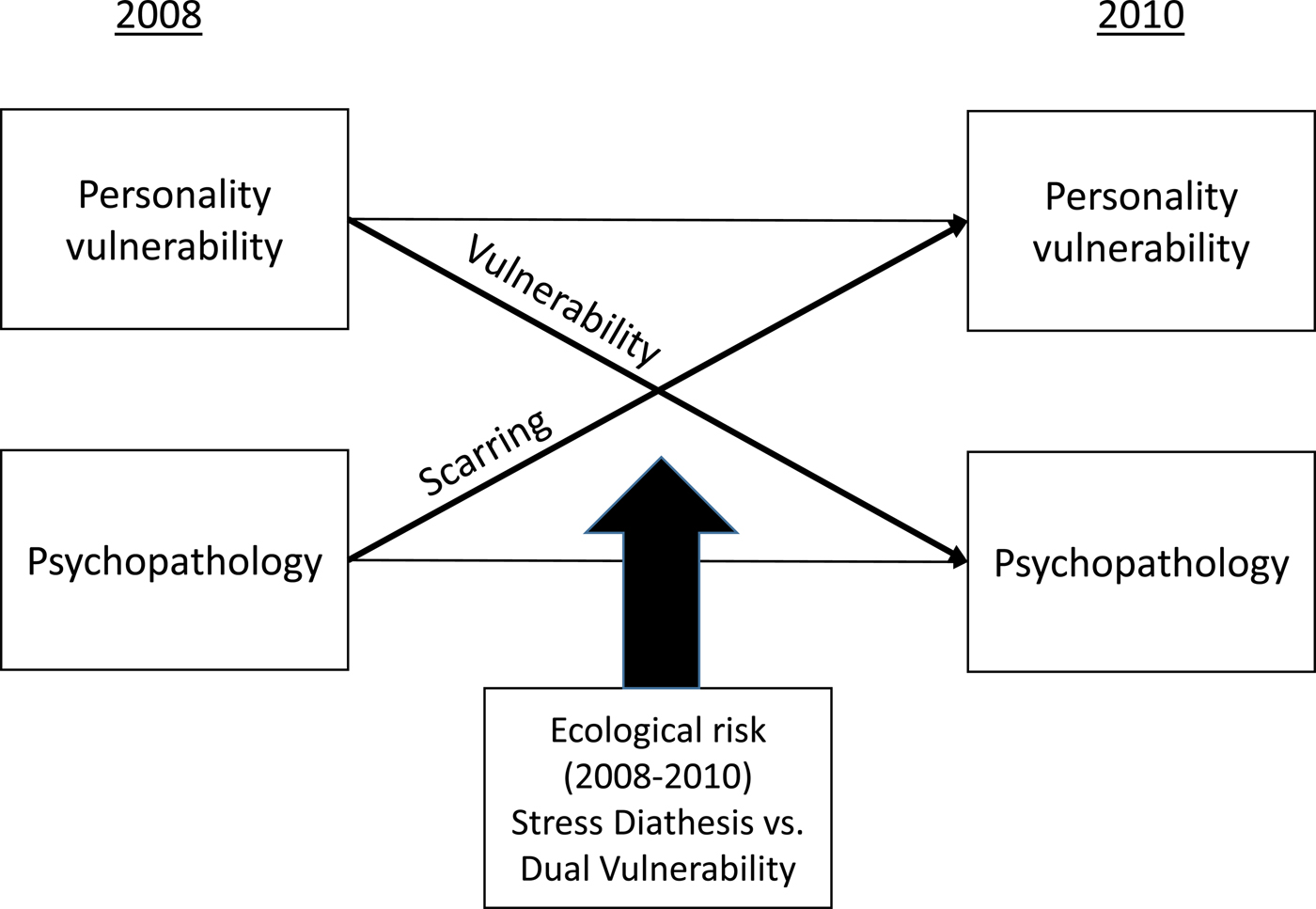
This is the third report from the previously described longitudinal study. We operationalized chronic ecological risk as the average level of exposure experienced by participants over the first three assessment waves. We did not use the fourth wave because it was based on only a subset of the original sample from one school. Our aim was to examine longitudinal links involving personality (dependency and self-criticism) and psychopathology (internalizing and externalizing symptoms) during 2008–2010, moderated by the cumulative exposure to rockets during this time period. More specifically, a vulnerability model, whereby personality leads to psychopathology, was compared with a scarring model stipulating the inverse relationship. Also, a stress-diathesis model, according to which exposure to stress, that is, rockets exposure, bolsters the links between personality and psychopathology, was compared with a dual-vulnerability model whereby either personality or stress predicts psychopathology, and either psychopathology or stress predicts personality. A conceptual model of the study design is presented in Figure 1.
Study design and hypotheses.

Method
Study sample and procedure
This study was approved by the Ethical Committee of the Department of Behavioral Sciences at Ben-Gurion University, as well as by the Chief Scientist of the Ministry of Education in Israel. Institutional review board approval was also obtained from Georgia State University. No adverse events were documented.
Recruitment was made from a school in the town of Sderot (36%) and the neighboring Kibbutz Sha'ar-HaNegev (64%). Active consent forms were signed by the participants’ parents. Participants completed an assessment battery at each wave at the school. Protocols were group-administered by trained research assistants.
Participants included 362 (54% female) Israeli adolescents from the seventh through tenth grade at the start of study (median grade = 8; median age = 14 years; age range: 12–16 years), and who participated in at least one of two assessment waves transpiring in May–June 2008, February 2009, and March 2010. The vast majority of adolescent participants were born in Israel (89.7%). Participants’ fathers were born in Israel (55.3%), Africa (16.4%), Europe (10.5%, either Eastern or Western), North or South America (6%), the Far East (0.2%), or had missing values on this variable. Participants’ mothers were born in Israel (60.5%), Africa (10.5%), Europe (12.7%, either Eastern or Western), North or South America (5.5%), the Far East (3%), or had missing values on this variable. The demographics of the sample mirrored those of the overall student bodies of the two schools.
Attrition resulted from students moving away, graduating and entering the military, or being forbidden from participating due to security concerns (e.g., Sderot participants in 2010). The sample sizes with complete data were N = 315 in 2008, N = 305 in 2009 (including 31 students who had not participated in Wave 1), and N = 263 in 2011. For the purposes of this study, assessments for most variables came from the 2008 and 2010 waves of assessment, for a two-wave cross-lagged panel model. Of the sample, 37 (10%) were missing data from 2008, and 102 (28%) were missing data from 2010. In total, 130 (36%) were missing some data across the waves. Little's missing completely at random (MCAR) test was not statistically significant, χ2 (170) = 178.39, p = .31, providing some evidence that data may be MCAR. Additional analyses conducted on predicting the likelihood of attrition in 2010 from study variables assessed in 2008 only indicated that students from Sderot were more likely to drop out of the study, odds ratio (OR) = 2.57, 95% CI [1.47, 4.49], p = .001. This variable was included as a covariate in the analyses.
Measures
Personality vulnerability
Dependency and self-criticism were assessed via the Depressive Experiences Questionnaire, Adolescent Short Form (DEQ-A) (Fichman, Koestner, & Zuroff, Reference Fichman, Koestner and Zuroff1994). Blatt and colleagues developed the original DEQ to assess personality traits implicated in depression, but which are not themselves symptoms of depression (Blatt, D'Afflitti, & Quinlan, Reference Blatt, D'Afflitti and Quinlan1976). Principal component analyses of the DEQ revealed three factors: dependency and self-criticism (per Blatt's polarities model), and personal efficacy, which reflects general resilience. Blatt and colleagues then adapted the DEQ to adolescents (Blatt, Schaffer, Bers, & Quinlan, Reference Blatt, Schaffer, Bers and Quinlan1992). However, because the DEQ and DEQ-A are quite lengthy (i.e., are based on 66 items), Fichman et al. (Reference Fichman, Koestner and Zuroff1994) identified a short DEQ-A version that consists of eight items for dependency (e.g., “I have difficulty breaking off a friendship that is making me unhappy”), eight items for self-criticism (e.g., “I often find that I fall short of what I expect of myself”), and four items for efficacy (e.g., “I am a very independent person”). Items were identified based on loadings on the three components derived from the original analyses of the DEQ-A. For instance, the eight dependency items loaded strongly on the dependency component, and low items on the other two components (self-criticism and efficacy).
The DEQ-A Short Form has been translated and back-translated to Hebrew more than a decade ago, and was used successfully in a study of Israeli adolescents, demonstrating adequate reliability and validity coefficients (Shahar & Priel, Reference Shahar and Priel2003). In the present study, we used the dependency and self-criticism subscales. The internal consistency of the self-criticism scale was α = .78 in 2008 and α = .77 in 2010. The internal consistency of the dependency scale was α = .71 in 2008 and α = .68 in 2010. The observed range of scores for dependency was 1–6.67 in 2008 and 1–6.5 in 2010. The observed range of scores for self-criticism was 1–1.63 in 2008 and 1–6 in 2010.
Psychopathology
Internalizing symptoms
Depression was assessed at each wave with the Center for Epidemiological Studies Depression Scale for Children (CES-DC) (Weissman, Orvaschel, & Pedian, Reference Weissman, Orvaschel and Pedian1980), a 20-item measure of depressive symptoms with a widely used Israeli translation. The internal consistency of the CES-DC was α = .81 in 2008 and α = .83 in 2010. The observed range of scores for CES-DC was 0–58 in 2008 and 0–51 in 2010.
Anxiety was assessed at each wave using seven items, averaged to form a composite scale, from the Hebrew version of the extensively used State Anxiety Inventory (SAI) (e.g., “I am anxious”; Spielberger, Reference Spielberger and Spielberger1972; Teichman & Melnik, Reference Teichman and Melnik1968). The internal consistency of the anxiety scale was α = .85 in 2008 and α = .89 in 2010. The observed range of scores for the abbreviated, seven-item SAI measure was 1–4 in both 2008 and 2010.
Externalizing symptoms
Aggression was assessed at each wave with the 11-item Aggression Scale (Orpinas & Frankowski, Reference Orpinas and Frankowski2001), which measures aggressive behaviors (e.g., hitting, pushing, name calling, threatening) in the past week. The frequency of each item is measured on a scale ranging from 0 to 6. The internal consistency of the aggression scale was α = .90 in 2008 and α = .88 in 2010. The observed range of score at both waves was 0–6.
Violence commission was assessed at each wave with four items from the Social and Health Assessment (SAHA), gauging commission of severe forms of community violence in the past year (Brookmeyer, Henrich, & Schwab-Stone, Reference Brookmeyer, Henrich and Schwab-Stone2005). Items included having hurt someone so badly in a physical fight that the individual had to seek medical treatment (endorsed by 9.7% of the sample at 2008), being involved in a gang fight (8.2% of the sample at Wave 1), being arrested by the police for a violent crime (6.4% of the sample at Wave 1), and having carried a weapon (8.4% of the sample at Wave 1). Versions of this measure have been used in several countries, including Israel, and all include the weapon-carrying item, which, although it does not ask about committing violence per se, loads on the same factor with the other items. Each item was scored as not endorsed/committed (score of 0) or endorsed as committed one or more times (score of 1) and summed, so scores ranged from 0 (no commission) to 4 (committed all acts at least once). The majority of adolescents reported committing no violence. Because of this, the variable was recoded into a binary variable in which 0 = no violence commission, and 1 = one or more types of violence commission.
Ecological risk (rocket exposure)
Exposure to rocket attack
The scale was adapted from previous research in Israel and was used successfully in the population sampled for this study (Kirschenbaum, Reference Kirschenbaum2006). At each wave, participants were asked six yes/no questions about whether, in the past several months, they had been physically hurt in a rocket attack, had themselves experienced property damage from a rocket attack, had friends or family physically or mentally hurt by a rocket attack, or had property damage from a rocket attack. Answers were summed together (possible and observed range of 0–6). For the present study, we averaged the exposure scores derived from each year (2008, 2009, and 2010) to form a cumulative exposure index that spanned all waves of assessment.
Controls
We controlled for gender, grade, and place of residence, that is, Sderot versus Sha'ar HaNegev.
Data analysis
After computing descriptive statistics, we tested our hypotheses using an autoregressive cross-lag model across the 2 years of assessment (2008 to 2010) with the Mplus 7.1 software. Separate models were run for each psychopathology outcome (depressive symptoms, anxiety, aggression, and violence commission). In each of these models, the specified outcome (e.g., depressive symptoms) in 2010, along with 2010 assessments of self-criticism and dependency, was regressed on the rocket attack exposure variable, gender, grade-level, 2008 measures of that outcome, the other internalizing and externalizing problems (e.g., anxiety, aggression, and violence commission), self-criticism and dependency, and product terms testing for interaction effects of rocket attack exposure with self-criticism and dependency (exposure X self-criticism, and exposure X dependency). Additionally, a product term testing for an interaction between rocket attack exposure and the specified outcome (e.g., exposure X depressive symptoms) was included when the outcomes were self-criticism and dependency. A robust maximum likelihood estimator was used, full information maximum likelihood (FIML) fitting was used to address missing data, and variables were mean-centered prior to computing product interaction terms. Results are reported here by outcome.
Statistically significant interactions were probed in two ways. First, we calculated simple slopes of one of the variables involved in the interaction, deemed as the “predictor,” at ±1 SD above/below the center mean of the other variable, deemed as the “moderator.” We then switched the “predictor” and “moderator” and recalculated simple slopes (Aiken & West, Reference Aiken and West1991). The unique advantage of this probing procedure is that it enables comparison of the effect of a predictor under conventionally high versus low levels of the moderator. Second, we conducted a regions of significance (RoS) analysis, which computes the lower and upper values of each of the variables involved in the interaction in which the simple slopes of the other variable are statistically significant (Roisman et al., Reference Roisman, Newman, Fraley, Haltigan, Groh and Haydon2012). A key advantage of the RoS analysis is that it identifies specific levels of one variable, for example, exposure to rockets, that are required to moderate another variable, for example, personality. Another advantage of this way of probing interaction is that it can ascertain that potential moderating values are indeed observed in the data, which lend more credibility to the interactions identified. The inverse also holds: When a RoS analysis identifies moderating values (e.g., 4 SD above the mean of the moderator) that are beyond the observed range, or are very infrequent in the sample, the identified interaction is suspect. Both probing procedures thus complement each other, providing a robust evaluation of the interactions identified by the analyses.
Results
Descriptive statistics
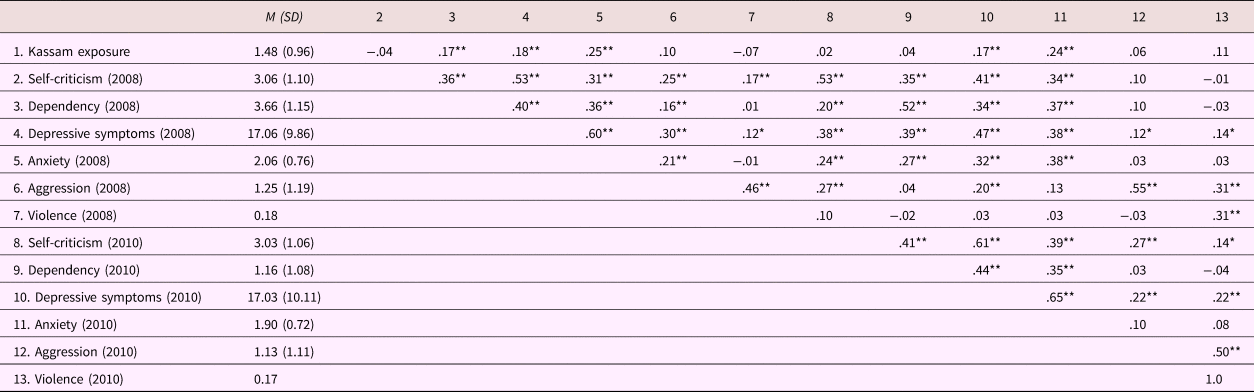
Means and standard deviations of the main variables in the study, as well as their intercorrelations, are presented in Table 1. Means and standard deviations of the study variables were placed within the context of previous research. The means and standard deviations of DEQ-self-criticism and DEQ-dependency in 2008 were very similar to means reported for these studies in Israel (e.g., Shahar & Priel, Reference Shahar and Priel2003). Self-criticism remained stable in 2010, t = 0.44, p = .66, but dependency dropped significantly, t = 2.73, p = .01. In addition, the means and standard deviations of CES-D in both 2008 and 2010 were similar to the ones reported in Israel (e.g., Shahar & Priel, Reference Shahar and Priel2003). Interestingly, these means, which were stable over time, t = 0.04, p = .97, exceed the most extensively used, albeit quite lenient, cutoff for clinical depression in the CES-D for adolescents (i.e., a score of 16; see Roberts, Andrews, Lewinsohn, & Hops, Reference Roberts, Andrews, Lewinsohn and Hops1990) but were lower than a more robust cutoff (i.e., 23; Roberts et al., Reference Roberts, Andrews, Lewinsohn and Hops1990). The means and standard deviations of SAI-anxiety, which decreased over time, t = 3.28, p < .01, could not be located in the context of previous research because our abbreviated version has not been used previously.
Means and standard deviations of study variables

*p < .05; **p < .01
Note: Means of the dichotomous violence commission variables represent the proportion of participants who reported committing violence. The correlation reported between violence variables is a phi coefficient.
Means and standard deviations of aggression in 2008 and 2010, also stable over time, t = 1.65, p = .10, were lower than those reported in the past for American adolescents (e.g., Washburn, McMahon, King, Reinecke, & Silver, Reference Washburn, McMahon, King, Reinecke and Silver2004) and adolescents in Northern Ireland (Merrilees et al., Reference Merrilees, Cairns, Taykor, Goek-Morey, Shirlow and Cummings2014). We are not aware of studies other than our own in Israel using this measure.
Finally, the proportion of adolescents in our study who committed severe violence was 18% in 2008 and 17% in 2010, with differences across time being nonsignificant (χ2 (1) = 0.96, p = .33). Because this study is the only one in which the four items from the SAHA was used to assess severe violence commission, aggregate scores could not be located in the context of previous research. However, a prevalence of severe violence commission approaching 20% of the sample is arguably high on all counts. Nevertheless, scores of specific items are comparable with Brookmeyer, Henrich, Cohen, and Shahar (Reference Brookmeyer, Henrich, Cohen and Shahar2011), who investigated adolescents in Sderot and Dimona (a town in the Eastern Negev, which is not exposed to missile attacks), using these four items as well as other violence commission items. Comparable percentages were revealed for two items: tapping hurting someone so that they needed medical treatment (9.7% vs. 11.3% in this study and Brookmeyer et al., Reference Brookmeyer, Henrich, Cohen and Shahar2011) and being involved in a gang fight (8.2% vs. 7.0%, respectively). However, for the two other items, percentages in this study were twice as high as those reported in Brookmeyer et al. (Reference Brookmeyer, Henrich, Cohen and Shahar2011), specifically, being arrested by the police for violence, 6.4% versus 3.2%, respectively; and carrying weapons, 8.4% versus 3.8%, respectively. Thus, this sample appears to be more violent than that studied by Brookmeyer et al. (Reference Brookmeyer, Henrich, Cohen and Shahar2011).
Auto-regressive correlations were not particularly high (ranging from r = .38 to r = .55), indicating a good deal of residualized change in the variables over the 2-year period. Models also included gender and grade-level as covariates. Males scored lower in dependency (r = −.26, p < .01 in 2008, and r = −.30, p < .01 in 2010), depressive symptoms (r = −.18, p < .01 in 2008, and r = −.25, p < .01 in 2010), and anxiety (r = −.22, p < .01 in 2008, and r = −.16, p < .01 in 2010). However, males also scored higher in aggression (r = .20, p < .01 in 2008, and r = .29, p < .01 in 2010) and were more likely to commit violence (phi = .28, p < .01 in 2008, and phi = .20, p < .01 in 2010). Older students had higher self-criticism scores in 2008 (r = .13, p = .03), but not in 2010. Older students also endorsed more depressive symptoms in 2008 (r = .19, p < .01), but not in 2010. At both time points, older students reported a higher dependency (r = .13, p = .03 in 2008, and r = .21, p < .01 in 2010) and more anxiety (r = .15, p = .01 in 2008, and r = .17, p = .01 in 2010).
Participants living in Sderot reported higher levels of rocket exposure (r = .18, p < .01). They also reported less self-criticism at both time points (r = −.25, p < .01 in 2010, and r = −.17, p = .01 in 2010) and less dependency in 2010 (r = −.13, p = .03). Participants living in Sderot were also somewhat more likely to commit violence in 2010 (phi = .14, p = .03).
Hypotheses testing
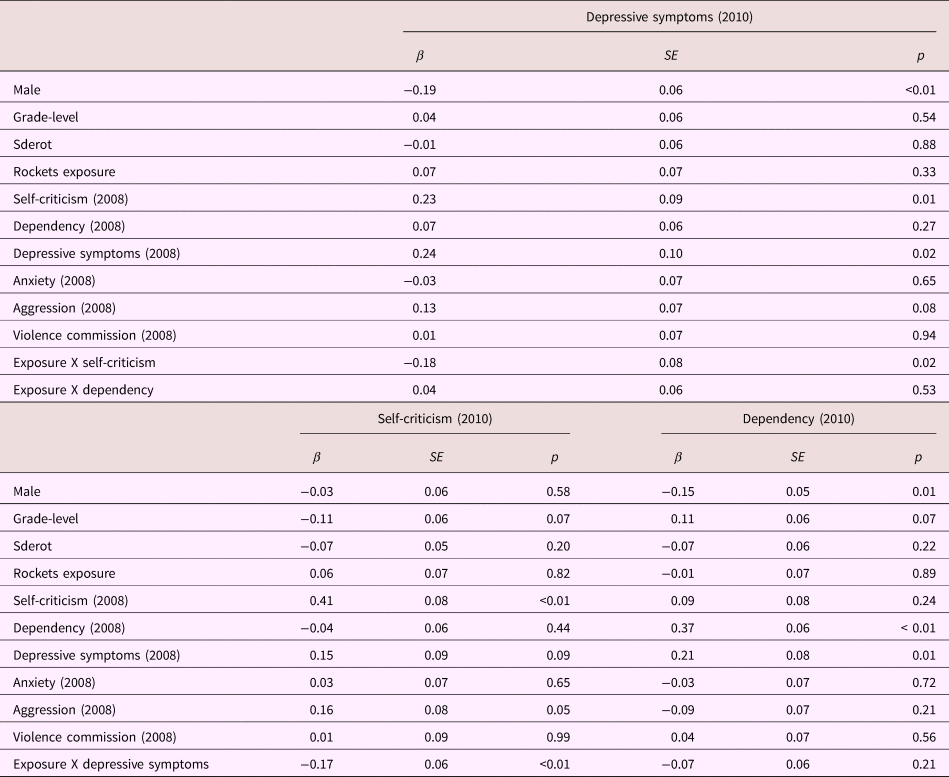
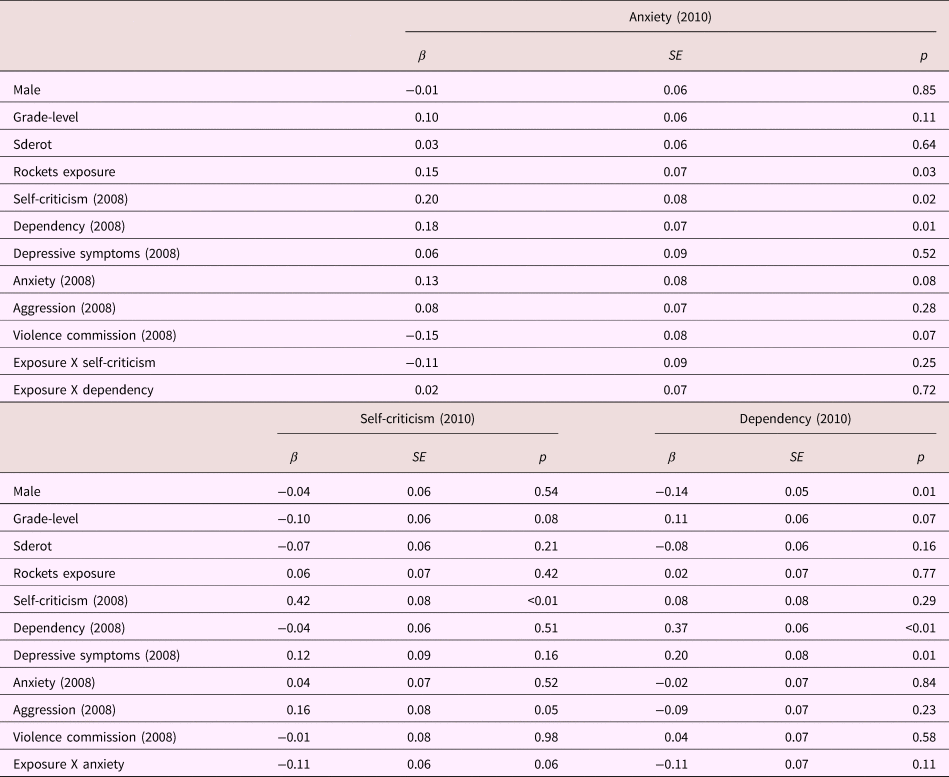
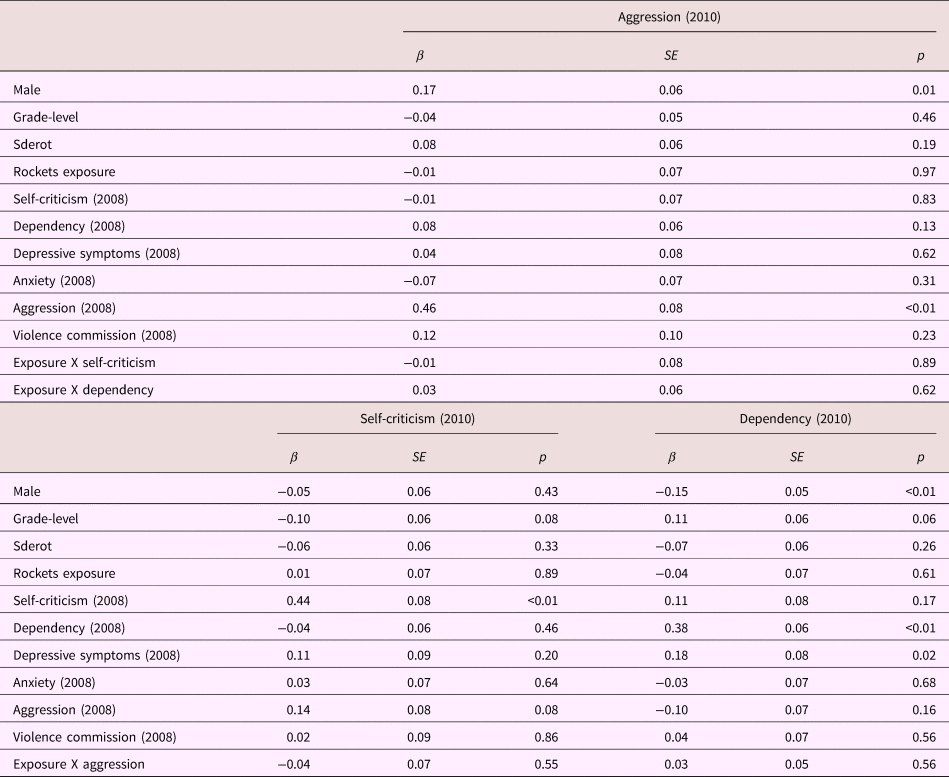
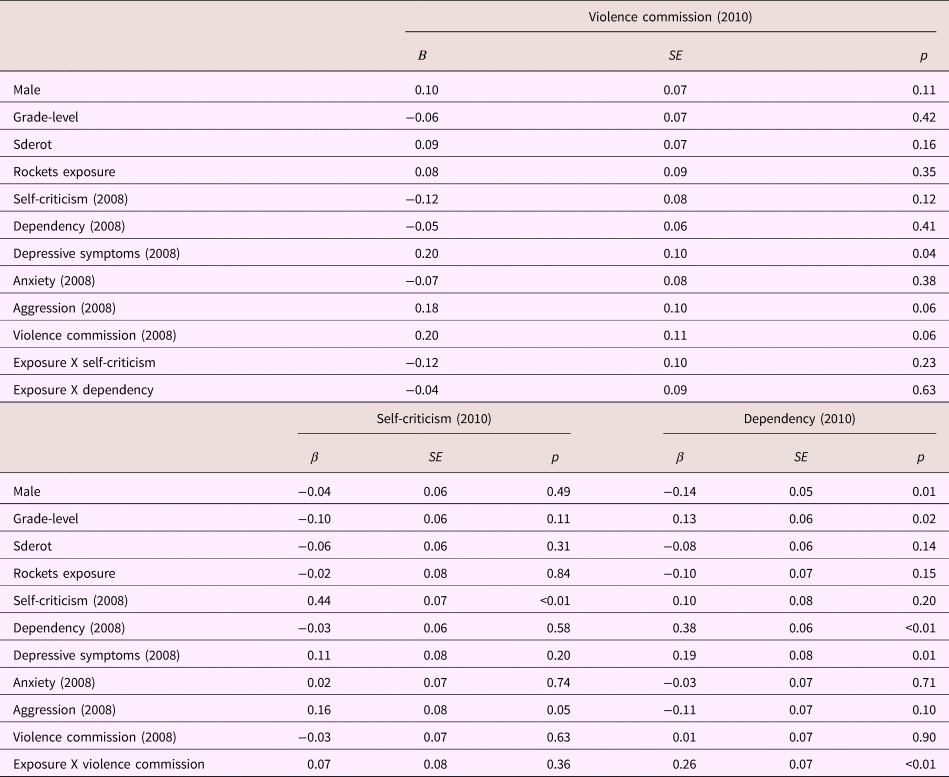
Results appear in Tables 2–5 by psychopathology outcome (depressive symptoms, anxiety, aggression, and violence commission, respectively).
Depressive symptoms

Anxiety

Aggression

Violence commission

Depressive symptoms
Prediction of depression
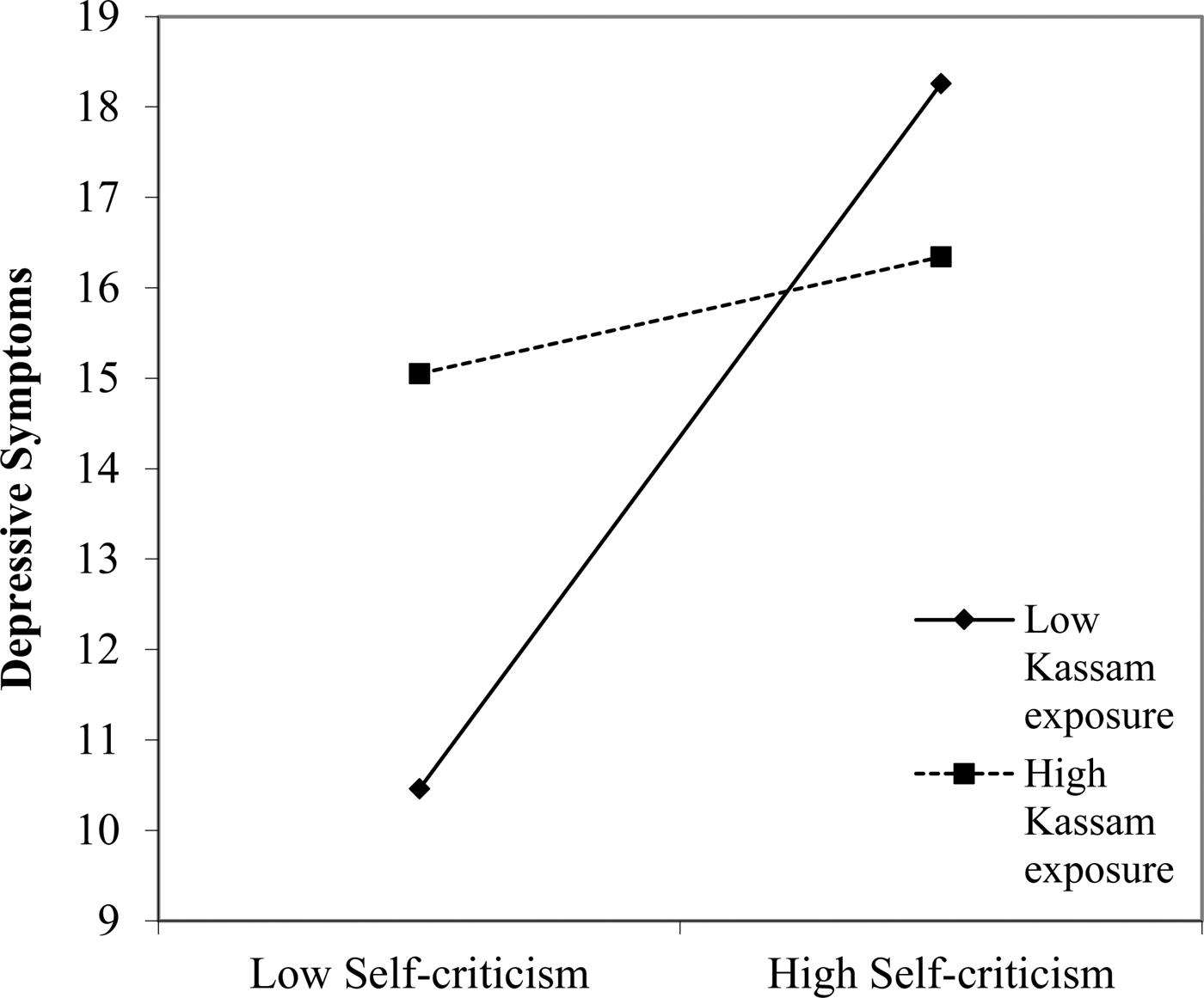
Self-criticism was longitudinally associated with increased depressive symptoms over time, although this effect was conditional upon the level of rocket exposure, as indicated by a statistically significant exposure X self-criticism interaction term, presented in Figure 2. There was no effect of dependency on depressive symptoms, and no exposure X dependency interaction was detected.
Depressive symptoms as a function of kassam exposure and self-criticism.

We first probed the previous interaction by calculating simple slopes of self-criticism at±1 SD levels of rocket exposure (Aiken & West, Reference Aiken and West1991). At low levels of rocket exposure, there was a strong longitudinal association between self-criticism and increased depressive symptoms, β = 0.39, SE = 0.11, p < .01, whereas at high levels of rocket exposure there was no association, β = 0.06, SE = 0.11, p = .55. Probed from the point of view of self-criticism as a moderator, we found that, at low levels of self-criticism, rocket exposure was associated with increased depressive symptoms, β = 0.23, SE = 0.02, p = .01, whereas, at high levels of self-criticism, there was no association, β = −.09, SE = 0.10, p = .36.
Second, we conducted an RoS analysis (Roisman et al., Reference Roisman, Newman, Fraley, Haltigan, Groh and Haydon2012) and found that self-criticism was associated with increased depression over time when rocket exposure was below 1.8, which is about a ½ SD above the mean of exposure. Also, exposure was associated with increased depression over time when self-criticism was below 2.53, which is approximately ½ SD below the mean of self-criticism. Thus, statistically significant slopes of both self-criticism and exposure reside in values that are well within the observed range of values in this sample, and below the mean of each of these variables.
Prediction of personality
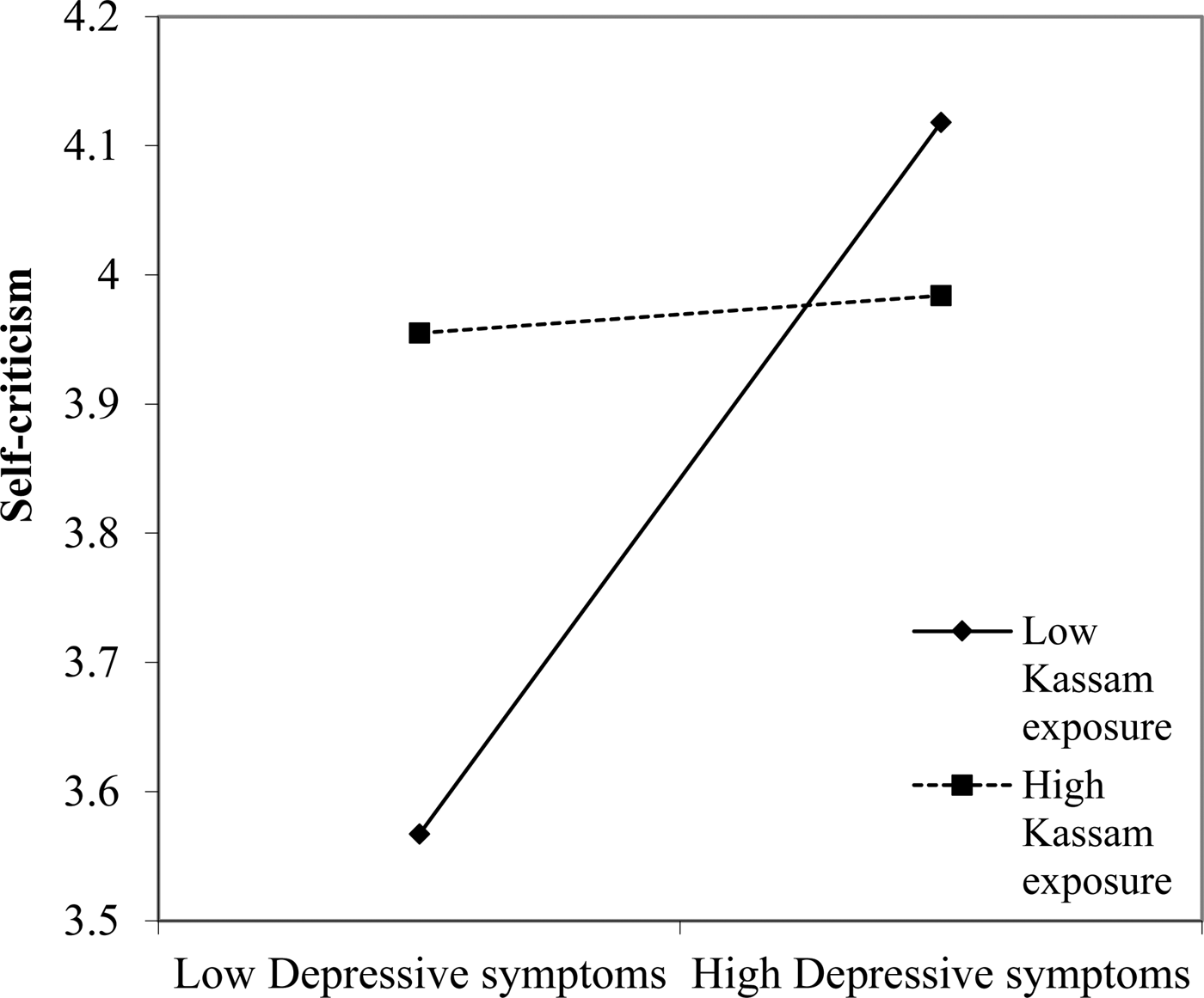
Depressive symptoms were associated with increases in dependency, and this effect was not conditional upon levels of rocket exposure. There was a statistically significant exposure X depressive symptoms interaction predicting self-criticism, which is presented in Figure 3. At low (−1 SD) levels of rocket exposure, depressive symptoms were associated with increased self-criticism over time, β = 0.28, SE = 0.11, p = .01. At high (+1 SD) levels of rocket exposure, however, depressive symptoms were not longitudinally associated with self-criticism, β = 0.02, SE = 0.09, p = .81. Also, at low levels of depressive symptoms, exposure was marginally associated with increased self-criticism, β = 0.19, SE = 0.10, p = .05. This longitudinal association was nonsignificant at high levels of depressive symptoms, β = -0.07, SE = 0.07, p = .27. RoS analysis revealed that depressive symptoms were associated with an increase in self-criticism over time when levels of exposure were below 1.27, which were less than ¼ SD below the exposure's mean. In contrast, exposure was associated with increased self-criticism over time when levels of CES-D symptoms were below 7.36, which is one half of and approximately 1 SD below the mean of depressive symptoms. Thus, similar to the prediction of depressive symptoms, conditional effects of both depressive symptoms and exposure occur in values that are well within the observed range of values in this sample. At the same time, whereas the longitudinal association between depressive symptoms and increased self-criticism ceases to be significant very close to the mean of exposure, the longitudinal association between exposure and increased self-criticism ceases to be significant at relatively low levels of depressive symptoms, that is, at half of the latter's mean.
Self-criticism as a function of kassam exposure and depressive symptoms.

Anxiety
Prediction of anxiety. Rocket exposure, self-criticism, and dependency were associated with increased anxiety over time. No interaction effects were detected.
Prediction of personality. No effects were detected over and above the autoregressive effects of personality.
Aggression
Prediction of aggression
Boys reported more aggression than girls did. No main or interactive effects of personality variables were detected.
Prediction of personality
Aggression was marginally associated with increased self-criticism over time (p = .08 in the model that included an exposure X aggression interaction term; p = .05 in the models for the other outcomes in which aggression was included as a covariate) but was unrelated to change in dependency. No interaction effect was detected.
Violence commission
Prediction of violence
Depressive symptoms assessed in 2008 were associated with increased odds of committing violence in 2010. No interaction effects were detected.
Prediction of personality
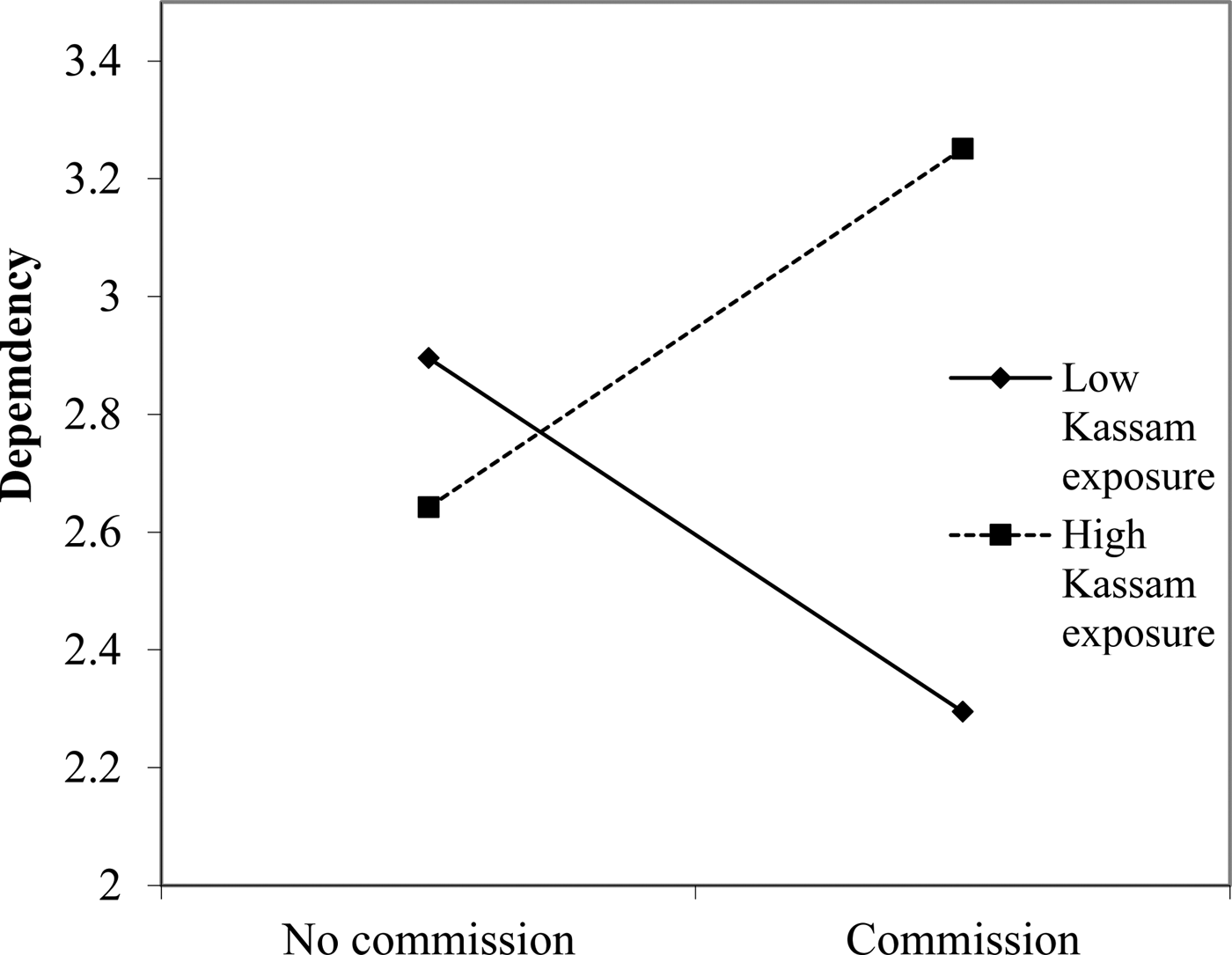
There was a positive rocket exposure X violence commission interaction predicting an increase in dependency, presented in Figure 4. Violence commission was associated with increased dependency over time at high (+1 SD) levels of rocket exposure, β = 0.24, SE = 0.11, p = .03, whereas at low (−1 SD) levels of rocket exposure, violence commission was associated with decreased dependency over time, β = −0.22, SE = 0.09, p = .02. Also, for participants who reported no violence commission in 2008, rocket exposure was not associated with dependency in 2010, β = −0.10, SE = 0.01, p = .15, whereas for participants who reported committing violence, rocket exposure was associated with increased dependency, β = 0.50, SE = 0.17, p < .01.
Dependency as a function of kassam exposure and violence commission.

RoS analyses indicated that violence commission was significantly associated with increased dependency when rocket exposure was greater than 2.23, which is about 1 SD above the mean of exposure, and was significantly associated with decreased dependency when rocket exposure was less than 0.79, which is slightly above 1 SD below the mean of exposure. This pattern suggests that, although the statistical significance of the association between violence commission and increased/decreased dependency occurs for values of rocket exposure that are well observed in the data, these values are in the extreme range of the exposure distribution. Finally, because violence commission is binary, RoS cannot be implemented when this variable is a moderator.Footnote 1
Discussion
Investigating a large sample of Israeli adolescents who were repeatedly exposed to rocket attacks during 2008–2010, we examined the links between personality (dependency and self-criticism) and psychopathology (internalizing and externalizing symptoms). Our sample exhibited characteristics similar to previously studied samples of Israeli adolescents, particularly in terms of depression, dependency, and self-criticism. Levels of aggression in this sample were somewhat lower than those reported for American and North Irish adolescents, possibly because this sample exhibited a substantial prevalence of serious violence commission. In the following sections, we summarize the findings, discuss their theoretical implications, note limitations and strengths of this study, and suggest several clinical implications.
Summary of the findings
As presented in Figure 1, we tested both vulnerability and scarring models linking adolescent personality (dependency and self-criticism) and internalizing (depression and anxiety) and externalizing (aggression and violence) psychopathology. Whereas the vulnerability model depicts personality as the cause and psychopathology as the effect, the scarring model reverses this role of personality and psychopathology. As is also depicted in Figure 1, we also tested stress-diathesis and dual-vulnerability patterns of the role of adolescent exposure to rockets in the links between personality vulnerability and psychopathology. Whereas stress-diathesis models suggest that stress (in this case, exposure to political violence) augments these links, dual-vulnerability patterns posit that stress diminishes these links. Our findings are described below as they relate to these different models.
First, we found support for both main-effect vulnerability scarring models. Thus, consistent with the personality vulnerability model, dependency and self-criticism were longitudinally associated with an increase in anxiety. In addition, consistent with the scarring model, depressive symptoms were associated with an increase in dependency over time. Aggression was associated with an increase in self-criticism over time; in some analyses, reaching conventional statistical significance and, in others, exhibiting a nonsignificant trend.
Second, when depressive symptoms served as both an outcome and a predictor, a clear pattern consistent with dual-vulnerability was found. Namely, under low levels of rocket exposure, self-criticism was longitudinally associated with an increase in depressive symptoms (consistent with personality vulnerability). Also, under low levels of rocket exposure, depressive symptoms were longitudinally associated with an increase in self-criticism (consistent with scarring).
Third, in line with the stress-diathesis pattern, violence commission was longitudinally associated with an increase in dependency under high levels of rocket exposure. However, it should be mentioned that, under low levels of exposure, violence commission was longitudinally associated with a decrease in dependency.
Theoretical implications
Overall, different findings in this study are consistent with all of the various models and patterns presented in the Introduction section and in Figure 1. Thus, the finding whereby dependency was longitudinally associated with an increase in anxiety lends support to Blatt's original polarities model (Blatt, Reference Blatt2004; Blatt, Reference Blatt2008; Kopala-Sibley & Zuroff, Reference Kopala-Sibley and Zuroff2014; Luyten & Blatt, Reference Luyten and Blatt2013; Zuroff et al., Reference Zuroff, Mongrain and Santor2004), which construes both dependency and self-criticism as serious dimensions of vulnerability. This comes at a time when researchers have questioned the relative importance of dependency compared with that of self-criticism. Specifically, intrigued by findings concerning the resilience-related nature of dependency (Bornstein, Reference Bornstein1998; Shahar, Reference Shahar2008; Shahar, Reference Shahar2015), several investigators (ourselves included) have questioned the latter vulnerability status, deeming self-criticism as the “real culprit” (Shahar, Reference Shahar2015). This conclusion might have been premature, as is gleaned from recent findings (Abela et al., Reference Abela, Webb, Wagner, Ho and Adams2006; Auerbach et al., Reference Auerbach, Ho and Kim2014; Kopala-Sibley et al., Reference Kopala-Sibley, Klein, Perlman and Kotov2017). In particular, findings of Kopala-Sibley et al. (Reference Kopala-Sibley, Klein, Perlman and Kotov2017), coupled with ours, construe dependency as a strong and robust risk factor for anxiety. Whereas Kopala-Sibley et al. (Reference Kopala-Sibley, Klein, Perlman and Kotov2017) also found main-effects of dependency on depressive disorders, we did not find this effect, and the literature is much less certain with respect to the effect of dependency on depression (Coyne & Whiffen, Reference Coyne and Whiffen1995; Shahar, Reference Shahar2015). In fact, our findings indicate that dependency might constitute a consequence, rather than an antecedent, of depression (see Table 2). Increased dependency was also associated with baseline violence commission under high levels of exposure to rockets. It is difficult to provide an integrated explanation to both findings, but a clue might be found in the cultural context within which the study was conducted. In the Israeli society, values of independence and heroism, but also of self-control and solidarity, are emphasized (Almog, Reference Almog2000; Shahar, Reference Shahar2013). In this cultural context, the manifestation of depression on the one hand and serious misconduct (severe violence) on the other hand might be strongly frowned upon, soliciting pressure upon the adolescent to conform, which might in turn translate into elevated dependency. Clearly, more research into this supposition is needed.
Our most intriguing finding concerns the reciprocal longitudinal association among self-criticism and depressive symptoms under low, but not high, levels of rocket exposure. The reciprocal relationships involving both variables were already detected previously, albeit without the moderating role of stress. The specific pattern revealed here is consistent with the ones obtained by Kopala-Sibley et al. (Reference Kopala-Sibley, Klein, Perlman and Kotov2017), who demonstrated that self-criticism predicted first onset of depressive and anxious disorders under low, but not high, levels of life stress. However, Kopala-Sibley et al. (Reference Kopala-Sibley, Klein, Perlman and Kotov2017) demonstrated this pattern for both dependency and self-criticism, and with respect to normative stressful life events rather than chronic trauma, that is, exposure to rockets. In addition, Kopala-Sibley et al. (Reference Kopala-Sibley, Klein, Perlman and Kotov2017) did not find the scarring patterns obtained here. Nevertheless, the findings of Kopala-Sibley et al. (Reference Kopala-Sibley, Klein, Perlman and Kotov2017) as well as ours suggest that the interactions between dependency/self-criticism and stress might conform to a dual-vulnerability pattern (Kushner, Reference Kushner2015; Morris et al., Reference Morris, Ciesla and Garber2008; Raine, Reference Raine2002), rather than to the extensively investigated stress-diathesis one. However, because stress-diathesis patterns involving adolescent dependency/self-criticism were also reported (e.g., Abela et al., Reference Abela, Webb, Wagner, Ho and Adams2006), the scientific jury is still out as to the exact pattern of interactions between dependency/self-criticism and stress in predicting psychopathology. Possibly, a higher-order moderator might determine under which conditions each pattern is relevant.
What might explain the dual-vulnerability pattern found in this study and in Kopala-Sibley et al.’s (2017) for self-criticism and stress in predicting depression? One possibility is that the more stress increases, the greater the likelihood that adolescents summon inner and outer resources in response to this stress, eventually escaping psychopathology and/or increased personality vulnerability. This possibility is consistent with the flatline representing no longitudinal relationships between self-criticism and depressive symptoms under high rocket exposure in Figures 2 and 3, as well as the RoS showing that the longitudinal associations among self-criticism and depressive symptoms become nonsignificant already around the mean of rocket exposure. Theoretically, for self-critical and depressed adolescents, the very existence of severe external stress may serve as an encouragement to direct attention outward, which in turn might assist in neutralizing self-critical ruminations (Schiller & Shahar, Reference Schiller and Shahar2016) and/or in enlisting social support. Indeed, increased social cohesion and a sense of meaning were found to be typical among victims of mass disaster, in turn, reducing distress (Cerdá, Reference Cerdá2014; Chen et al., Reference Chen, Lee, Yen, Chen, Chan, Chiu and Chang2016).
Another possibility for the disappearance of the reciprocal link between self-criticism and depressive symptoms at high levels of rocket exposure is the potency of either self-criticism/depression or exposure in predicting depression/self-criticism. This potency is likely to lead to a restriction of range in one of the two factors, rendering the other factor irrelevant to the prediction of the outcome.Footnote 2 Statistically, the restriction of range explanation is supported by the pattern gleaned from Figure 2, whereby under both high self-criticism and high exposure, levels of depression are already quite high (i.e., approaching or exceeding 16, which is a lenient cutoff for clinical depression). A similar pattern is revealed in Figure 3, although there are currently no cutoff scores for self-criticism within which to ground this pattern. Conceptually, the restriction of range possibility tells a very interesting tale of those adolescents who have neither vulnerability – self-criticism/depression or rocket exposure – and who are therefore free of depression and increased self-criticism (lower left corner in Figures 2 and 3). In other words, the restriction of range possibility tells the tale of (poorly understood) resilience.
Study limitations and strengths
The first limitation to be discussed is the high attrition rate identified in this study. Such a high attrition might threaten both internal and external validity. Specifically, it is possible that with fewer participants dropping out, additional findings linking personality and psychopathology under stress might have been detected (internal validity). Also, attrition potentially changed the nature of what was initially a representative sample of Israeli adolescents exposed to political violence, rendering generalizability to other high-risk populations more difficult (external validity).
Another important limitation is our exclusive reliance on self-reports. Such reliance is likely to inflate shared method variance, in turn inflating the magnitude of the associations found in this study. It is therefore crucial that future studies use informant data and and/or semi-structured interviews of personality and psychopathology in adolescents’ exposure to political violence. In addition, the SAI, although used extensively in psychopathology research, might not be the only, or even the best, measure of adolescent anxiety. In fact, we used only seven items from the SAI, which further limits generalizability. At the same time, this seven-item version did yield important findings in the present studies.
Yet another important limitation pertains to causality. Although our findings are based on a prospective-longitudinal design, the correlational nature of our design still limits causal inference. It should be noted, however, that previous research has shown that effects of self-criticism on internalizing psychopathology are robust in the face of controlling for a host of potentially confounding factors, including strong covariates such as neuroticism (for a review, see Shahar, Reference Shahar2015). This, of course, does not exempt researchers from controlling for additional confounds (e.g., temperament) in future research. Such stringent controls are essential given the ethical and logistic inability to use experimental manipulations in personality and psychopathology research.
With these limitations in mind, this study, to the best of our knowledge, is the first to provide a robust test for both the vulnerability and scarring models of adolescent personality and psychopathology, while taking into consideration the moderating role of higher-order, human-ecological risk, namely, exposure to rockets. That our multifaceted design yielded findings consistent with both personality vulnerability and scarring models, and stress-diathesis and dual-vulnerability (rival vulnerabilities) patterns, attests to the complex and dialectic nature of adolescent stress, risk, and resilience (Shahar, Elad-Strenger, & Henrich, Reference Shahar, Elad-Strenger and Henrich2012).
Clinical and public health implications
As suggested by our findings, juxtaposed against previous research, personality might both lead and stem from internalizing and externalizing symptoms. Accordingly, personality vulnerability should be routinely assessed when intervening with adolescents exposed to political violence. Another implication pertains to our finding whereby the pernicious cycle involving self-criticism and depression disappeared under high rocket exposure. It would, of course, be absurd to recommend exposure to political violence for the benefit of severing the link between adolescent self-criticism and depression. Nevertheless, as soon as adolescents are trapped within such an exposure, psychosocial and community-based interventions may use aspects of the exposure, such as the aforementioned potential of increased social cohesion and outwardly directed attention. Specifically, adolescents may be explicitly encouraged to get immersed in activities that would prevent them from ruminating, consequently diffusing the self-criticism-depression cycle. For instance, volunteer work, repeatedly demonstrated to enhance physical and mental health (Poulin, Reference Poulin2014), may constitute a promising avenue for interventions with youth afflicted by political violence. Thus, exposed adolescents may be trained to help other exposed teens in coping, thus empowering both parties, and the society at large (Rhodes & DuBois, Reference Rhodes and DuBois2008).
Acknowledgments
The authors thank the students who participated in this study and the graduate and undergraduate research assistants at Ben-Gurion University and Georgia State University who assisted in the collection, entry, and management of the data, with particular gratitude to the contributions of the project coordinator, Ms. Guina Cohen, from the Department of Psychology, Ben-Gurion University.
Financial support
This study was funded by a research grant from the US–Israel Binational Science Foundation (BSF) to Drs. Shahar (Israeli principal investigator) and Henrich (American principal investigator). The BSF had no role in the design and conduct of the study; collection, management, analysis, and interpretation of the data; and preparation, review, or approval of the manuscript.
Conflict of interest
The authors report no conflicts of interest.