Introduction
Influenza A viruses circulate worldwide and wild waterfowl are believed to be their natural hosts and reservoirs (Saif et al., Reference SAIF, FADLY, GLISSON, MCDOUGALD, NOLAN and SWAYNE2008; Umar et al., Reference UMAR, SARFRAZ, MUSHTAQ and ATTIQUE2016a). Influenza viruses in all other species of mammals and birds are derived from the wild bird reservoirs. There are 18 HA and 11 NA subtypes described as H1-H18 and N1-N11 with amino acid sequences differing by 30% or more between subtypes. Of those subtypes, 16 HA (HA1-HA16) and 9 NA (NA1-NA9) circulate in waterfowl and two of HA and NA (HA17-HA18 and NA10-NA11) have been isolated from bats (Webster et al., Reference WEBSTER, BEAN, GORMAN, CHAMBERS and KAWAOKA1992; Fouchier et al., Reference FOUCHIER, MUNSTER, WALLENSTEN, BESTEBROER, HERFST, SMITH, RIMMELZWAAN, OLSEN and OSTERHAUS2005; Tong et al., Reference TONG, ZHU, LI, SHI, ZHANG, BOURGEOIS, YANG, CHEN, RECUENCO and GOMEZ2013; Umar et al., Reference UMAR, REHMAN, ASIF, USMAN, ATIF, ALI, MUNIR, ALI, SHAHZAD and SHAH2016b). In these reservoirs, influenza viruses are considered to be in a state of evolutionary stasis and infections are usually asymptomatic. Though they are not natural hosts, different species of domestic poultry have been found to be infected with influenza viruses as a result of exposure to wild bird reservoirs or contaminated environment from these reservoirs. In most cases, low pathogenic influenza infections in domestic poultry result in mild respiratory disease, reduction in egg production, and occasionally increased mortality (Ullah et al., Reference ULLAH, RIAZ, SHAH and UMAR2013; Umar et al., Reference UMAR, REHMAN, YOUNUS, SHAHZAD, NISA, YAQOOB and SHAH2015a; Reference UMAR, YOUNUS, REHMAN, ASLAM, SHAH, MUNIR, HUSSAIN, IQBAL, FIAZ and ULLAH2015b; Umar et al., Reference UMAR, KABOUDI, BOUZOUAIA, MUNIR, YOUNUS, NISA, SHAH, YAQOOB and FIAZ2016c). Surveillance studies indicate that low pathogenic influenza infections are widespread among commercial poultry.
Among domestic bird species, infections have been most commonly reported from Galliformes and Anseriformes, which include chickens, turkeys, quails, guineafowl, pheasants, partridges, ducks, and geese. Psittaciformes (parrots, cockatoos, parakeets), Casuariiformes (emu), Struthioniformes (ostrich), and Rheiformes (rhea) have been found to be susceptible under natural conditions. Infections of certain free-living birds like starlings and sparrows have been found following their close association with infected birds on poultry farms (Saif et al., Reference SAIF, FADLY, GLISSON, MCDOUGALD, NOLAN and SWAYNE2008; Short et al., Reference SHORT, RICHARD, VERHAGEN, VAN RIEL, SCHRAUWEN, VAN DEN BRAND, MÄNZ, BODEWEGES and HERFST2015). Experimental challenges have indicated the susceptibility of different domestic bird species, including chickens, ducks, turkeys, quails, pigeons, and pheasants to influenza viral infections from different sources (Slemons and Swayne, Reference SLEMONS and SWAYNE1995; Mo et al., Reference MO, BRUGH, FLETCHER, ROWLAND and SWAYNE1997; Perkins and Swayne, Reference PERKINS and SWAYNE2001; Perez et al., Reference PEREZ, WEBBY, HOFFMANN and WEBSTER2003; Lee et al., Reference LEE, SENNE, LINARES, WOOLCOCK, STALLKNECHT, SPACKMAN, SWAYNE and SUAREZ2004; Sturm-Ramirez et al., Reference STURM-RAMIREZ, HULSE-POST, GOVORKOVA, HUMBERD, SEILER, PUTHAVATHANA, BURANATHAI, NGUYEN, CHAISINGH and LONG2005; Humberd et al., Reference HUMBERD, GUAN and WEBSTER2006; Spackman et al., Reference SPACKMAN, SWAYNE, SUAREZ, SENNE, PEDERSEN, KILLIAN, PASICK, HANDEL, PILLAI and LEE2007). In addition to lowered production, increased mortality, and accompanying economic losses, major concerns regarding infection of poultry with low pathogenic influenza viruses are the ability of these species to act as bridging hosts for influenza infections from wild bird reservoirs to other land-based poultry and mammals including humans. Additionally, there is threat of these viruses mutating to the highly pathogenic forms after many replication cycles in poultry (Webster et al., Reference WEBSTER, BEAN, GORMAN, CHAMBERS and KAWAOKA1992; Perez et al., Reference PEREZ, WEBBY, HOFFMANN and WEBSTER2003).
Among the different domestic birds that can be infected with influenza viruses, chickens and turkeys have gained importance, considering their economic and public health significance. To achieve interspecies transmission (known as a ‘host jump’), influenza A virus must change its tropism to preferentially target new host species, and both viral and host factors have been implicated in this event (Short et al., Reference SHORT, RICHARD, VERHAGEN, VAN RIEL, SCHRAUWEN, VAN DEN BRAND, MÄNZ, BODEWEGES and HERFST2015). The high mutation rate of the virus enables it to evolve rapidly and thereby overcome host barriers. All eight gene segments evolve continuously, but this evolution is most pronounced for the HA and NA glycoproteins. Evolution is achieved by two main mechanisms: genetic reassortment between different subtypes (known as antigenic shift if it occurs in either the HA or NA segments) and point mutations owing to antibody-mediated immune pressure (known as antigenic drift), including substitutions, deletions and insertions within the antibody-binding sites. This results in the generation of modified influenza virus genomes, which facilitates virus evasion of the host immune response (Shi et al., Reference SHI, WU, ZHANG, QI and GAO2014). The potential to generate novel influenza viruses has resulted in turkeys being labelled as ‘mixing vessels’. The mixing vessel theory provides one mechanism by which unique viruses can be transmitted from an avian reservoir to humans (Pillai et al., Reference PILLAI, PANTIN-JACKWOOD, YASSINE, SAIF and LEE2010).
Susceptibility of turkeys to influenza viruses
Given the worldwide interaction between humans, pigs, birds and other mammalian species, there is a high potential for cross-species transmission of influenza viruses in nature. Turkeys are an important host in influenza virus ecology since they are susceptible to infection with avian influenza A viruses, often being involved in interspecies transmission, facilitated by regular close contact with humans or birds (Pillai et al., Reference PILLAI, PANTIN-JACKWOOD, YASSINE, SAIF and LEE2010). It has been documented that multiple subtypes of influenza viruses can establish stable lineages in domestic poultry (Suarez et al., Reference SUAREZ, GARCIA, LATIMER, SENNE and PERDUE1999; Webby et al., Reference WEBBY, WOOLCOCK, KRAUSS and WEBSTER2002; Liu et al., Reference LIU, GUAN, PEIRIS, HE, WEBBY, PEREZ and WEBSTER2003).
Although the source of influenza infections for domestic bird species are believed to be wild bird reservoirs, studies have indicated that domestic poultry can be infected with influenza viruses from different sources, for example, swine influenza infections of turkeys, and avian influenza infections have been recorded from turkeys worldwide (Alexander et al., Reference ALEXANDER, ALLAN, PARSONS and PARSONS1978; Alexander, Reference ALEXANDER1982; Alexander et al., Reference ALEXANDER, PARSONS and MANVELL1986; Campitelli et al., Reference CAMPITELLI, MOGAVERO, DE MARCO, DELOGU, PUZELLI, FREZZA, FACCHINI, CHIAPPONI, FONI and CORDIOLI2004). Similarly, multiple subtypes of influenza viruses have been isolated from healthy and diseased chickens; however, it is not known whether the influenza virus was transmitted directly to chickens from aquatic birds, or if the virus acquired expanded host-range capabilities by replication in other avian species, prior to infection of chickens. Several observations show that waterfowl origin influenza virus can be more easily transmitted to domestic turkeys than chickens.
In the United States, since the mid-1960s, influenza virus infections have been seen consistently in turkeys from California and Minnesota, where they were kept free-range in concentrated numbers and on farms situated on migratory waterfowl routes (Halvorson et al., Reference HALVORSON, KELLEHER and SENNE1985; Campitelli et al., Reference CAMPITELLI, MOGAVERO, DE MARCO, DELOGU, PUZELLI, FREZZA, FACCHINI, CHIAPPONI, FONI and CORDIOLI2004) and it was the first time that the H7N3 viruses from turkeys in Italy were shown to be derived directly from influenza strains circulating in wild waterfowl. Several previous studies and field data document that turkeys may be more susceptible to wild bird influenza viruses than chickens (Halvorson et al., Reference HALVORSON, KELLEHER and SENNE1985; Spackman et al., Reference SPACKMAN, SWAYNE, SUAREZ, SENNE, PEDERSEN, KILLIAN, PASICK, HANDEL, PILLAI and LEE2007; Swayne and Slemons, Reference SWAYNE and SLEMONS2008). Studies on replication and intra-species transmission characteristics of eight low pathogenic H5 subtype wild bird isolates (one from mute swan, four from mallards, and four from ruddy turnstones) in chickens and turkeys also indicated the higher susceptibility of turkeys to mallard and ruddy turnstone viruses in comparison to chickens (Pillai et al., Reference PILLAI, PANTIN-JACKWOOD, YASSINE, SAIF and LEE2010).
Studies on the minimum infectious dose of wild bird viruses for different domestic bird species are limited. Determination of 50% infectious dose titres of wild bird viruses of H5 subtype indicated >1000 times higher dose for infection of chickens in comparison to turkeys (Spackman et al., Reference SPACKMAN, SWAYNE, SUAREZ, SENNE, PEDERSEN, KILLIAN, PASICK, HANDEL, PILLAI and LEE2007; Swayne and Slemons, Reference SWAYNE and SLEMONS2008). The mean 50% infectious dose titres for different wild bird isolates for chickens were in the range of 106.3-108.3 50% egg infectious dose (EID50), whereas for turkeys, the range was from 102.5 to 104.2 EID50. Although data from other subtypes are not available, the low minimum infectious dose suggests that turkeys can be easily infected following a low dose exposure and confirms the higher susceptibility of turkeys to influenza viruses of wild bird origin, especially the H5 subtype. Their high susceptibility also indicates that turkeys could be good sentinel hosts in influenza surveillance studies and/or better model hosts for studies on adaptation of wild bird origin influenza viruses for domestic poultry. Once domestic birds are infected, influenza viruses in them undergo rapid evolution (Garcia et al., Reference GARCIA, CRAWFORD, LATIMER, RIVERA-CRUZ and PERDUE1996; Zhou et al., Reference ZHOU, SENNE, LANDGRAF, SWENSON, ERICKSON, ROSSOW, LIU, YOON, KRAUSS and WEBSTER1999). It is possible that wild bird viruses circulating in turkeys could undergo favourable changes that permit their adaptation to chickens and other domestic poultry. Hence, the potential role of turkeys as bridging hosts for the introduction of low pathogenic waterfowl-origin influenza viruses into other domestic poultry cannot be ruled out. Although confinement rearing has become the norm in developed countries, turkeys could be significant players in supporting and transmitting influenza infections to other land-based poultry where wild birds have free access to domestic poultry.
Transmission and replication of influenza viruses in turkeys
Turkeys serve as major reservoirs of influenza viruses (H5N1, H9N2, H6N1), and the maintenance of these viruses in turkeys and the frequent introduction of viruses from other species may be important in the generation of ‘new’ strains of influenza, some of which may have the potential to transmit to other species including humans (Umar et al., Reference UMAR, SARFRAZ, MUSHTAQ and ATTIQUE2016a; Reference UMAR, REHMAN, ASIF, USMAN, ATIF, ALI, MUNIR, ALI, SHAHZAD and SHAH2016b). Though detailed experimental studies on the replication and transmission characteristics of domestic bird-origin influenza viruses in turkeys are lacking, available evidence indicates susceptibility of turkeys to low pathogenic avian influenza (LPAI) viruses isolated from commercial poultry operations and live bird markets (Ladman et al., Reference LADMAN, ROSENBERGER, ROSENBERGER, POPE and GELB2008; Swayne and Slemons, Reference SWAYNE and SLEMONS2008). Among commercial poultry operations, more LPAI outbreaks have been reported in turkeys in comparison to chickens (Tumpey et al., Reference TUMPEY, KAPCZYNSKI and SWAYNE2004).
Experimental studies with a LPAI H7N2 isolate, which caused an outbreak among commercial poultry, primarily infecting turkeys, indicated a lower 50% infectious dose titre for turkeys than chickens, and a 20-158-fold higher levels of infectious virus was recovered from turkeys in comparison to chickens (Tumpey et al., Reference TUMPEY, KAPCZYNSKI and SWAYNE2004). A similar outbreak with H7 subtype viruses in poultry in Italy in 1999 primarily affected turkey flocks (Zanella et al., Reference ZANELLA, DALL'ARA and MARTINO2001). The susceptibility of turkeys might be explained by the low minimum infectious dose (about 10-fold less viral load for infection of turkeys in comparison to chickens) required for infection. The highly poultry-adapted strain of LPAI, A/parrot/California/04, showed a lower 50% infectious dose titre of 101.4 50% EID50 /0.2 ml for turkeys in comparison to a 102.6 EID50/0.2-ml dose for chickens (Pillai et al., Reference PILLAI, PANTIN-JACKWOOD, YASSINE, SAIF and LEE2010).
It should be noted that the minimum infectious dose required may vary with virus strains as well as the genetic constitution of the birds used in the studies. Hence, caution should be undertaken when generalising the results from studies using few isolates or a particular turkey breed. Additionally, under field conditions, where secondary infections or other factors can reduce immune responses, susceptibility and clinical disease may be exacerbated. The higher susceptibility in an outbreak area may also be an indication of the higher population of turkey flocks in the outbreak area. In spite of the limitations of experimental infection studies, they are important to understand the biological properties of viruses and host ecologies. In addition to wild bird isolates as previously described, 12 low pathogenic influenza virus isolates (which includes duck, chicken, pheasant, and emu isolates) from live bird markets (LBMs) as well as chicken and turkey isolates from commercial poultry operations also revealed turkeys to be highly susceptible hosts for influenza viruses of different degrees of adaptation for domestic poultry (Corrand et al., Reference CORRAND, DELVERDIER, LUCAS, CROVILLE, FACON, BALLOY, DUCATEZ and GUERIN2012). These viruses were inoculated at a dose of 106.0 EID50/0.2 ml through choanal route to chickens and turkeys. Influenza isolates from LBMs are believed to be highly poultry adapted, as they provide favourable environment for adaptation of influenza viruses for a variety of hosts, including chickens, turkeys, pheasants, quails, and ducks, and have been implicated as the source of influenza outbreaks in commercial poultry operations as well as in humans. LBMs in developing countries have been implicated as significant sources of influenza viruses for commercial chicken and turkey operations (Panigrahy et al., Reference PANIGRAHY, SENNE and PEDERSEN2002; Senne et al., Reference SENNE, SUAREZ, STALLNECHT, PEDERSEN and PANIGRAHY2005; Umar et al., Reference UMAR, SARFRAZ, MUSHTAQ and ATTIQUE2016a). The high susceptibility of turkeys to domestic bird isolates again underscores their importance as potential bridging hosts for influenza viruses from different origins and domestic poultry.
Interspecies transmission of swine influenza viruses to turkeys
The pig has been the leading contender for the role of intermediate host for influenza A viruses. Pigs are the only mammalian species, which are domesticated, reared in abundance and are susceptible to and allow productive replication of avian influenza viruses. This susceptibility is due to the presence of both α 2,3- and α 2,6-galactose sialic acid linkages in cells lining the pig trachea which can result in modification of the receptor binding specificities of avian influenza viruses from α 2,3 to α 2,6 linkage, which is the native linkage in humans, thereby providing a potential link from birds to humans (Pillai et al., Reference PILLAI, PANTIN-JACKWOOD, YASSINE, SAIF and LEE2010; Imai and Kawaoka, Reference IMAI and KAWAOKA2012; Shi et al., Reference SHI, WU, ZHANG, QI and GAO2014).
Currently three subtypes of influenza viruses are commonly found in pigs worldwide, H1N1, H1N2, and H3N2 (Yassine et al., Reference YASSINE, LEE and SAIF2013; Deventhiran et al., Reference DEVENTHIRAN, KUMAR, RAGHUNATH, LEROITH and ELANKUMARAN2016). These viruses were found to be derived either from mammalian or avian viruses or their reassortants (Brown et al., Reference BROWN, LUDWIG, OLSEN, HANNOUN, SCHOLTISSEK, HINSHAW, HARRIS, MCCAULEY, STRONG and ALEXANDER1997; Choi et al., Reference CHOI, LEE, ERICKSON, GOYAL, JOO, WEBSTER and WEBBY2004). H1N1 influenza viruses were first isolated from pigs in the United States in 1930 (Pillai et al., Reference PILLAI, PANTIN-JACKWOOD, YASSINE, SAIF and LEE2010), and until the late 1990s, classical H1N1 lineage was the predominant influenza subtype in pigs in the USA (Olsen et al., Reference OLSEN, KARASIN, CARMAN, LI, BASTIEN, OJKIC, ALVES, CHARBONNEAU, HENNING and LOW2006). Swine influenza viruses are continuously being isolated from poultry species, especially turkeys, causing economic losses in poultry production (Yassine et al., Reference YASSINE, LEE and SAIF2013).
The first reported isolation of swine influenza viruses in turkeys was in 1980-81 (Hinshaw et al., Reference HINSHAW, WEBSTER, BEAN, DOWNIE and SENNE1983). Since then, transmission of swine H1N1 influenza viruses to turkeys has been documented several times (Pillai et al., Reference PILLAI, PANTIN-JACKWOOD, YASSINE, SAIF and LEE2010) and in the majority of the cases, the turkey flocks were housed in close proximity to swine herds (Suarez et al., Reference SUAREZ, WOOLCOCK, BERMUDEZ and SENNE2002). In 1998, triple-reassortant (TR) influenza viruses containing gene segments derived from recent human (HA, NA, and PB1), swine (NS, NP, and M), and avian (PB2, PA) viruses were first isolated from pigs and since then, have spread over much of USA swine population (Zhou et al., Reference ZHOU, SENNE, LANDGRAF, SWENSON, ERICKSON, ROSSOW, LIU, YOON, KRAUSS and WEBSTER1999; Webby et al., Reference WEBBY, WOOLCOCK, KRAUSS and WEBSTER2002). Since 2003, the swine-origin TR H3N2 viruses have been isolated from the U.S. turkey population (Choi et al., Reference CHOI, LEE, ERICKSON, GOYAL, JOO, WEBSTER and WEBBY2004; Tang et al., Reference TANG, LEE, ZHANG, SENNE, DEARTH, BYRUM, PEREZ, SUAREZ and SAIF2005). The early reports of swine TR H3N2 viruses crossing the species barrier to infect turkeys were from farms in Minnesota and North Carolina in 2003 (Choi et al., Reference CHOI, LEE, ERICKSON, GOYAL, JOO, WEBSTER and WEBBY2004). Later, the TR H3N2 viruses were isolated from turkey flocks in different parts of the United States (Tang et al., Reference TANG, LEE, ZHANG, SENNE, DEARTH, BYRUM, PEREZ, SUAREZ and SAIF2005). In 2002, Suarez et al. (Reference SUAREZ, WOOLCOCK, BERMUDEZ and SENNE2002) reported the isolation of TR H1N2 influenza virus with gene segments derived from swine, human, and avian lineages from turkey breeder hens associated with sudden drops in egg production (Suarez et al., Reference SUAREZ, WOOLCOCK, BERMUDEZ and SENNE2002). This virus was believed to have a swine source of infection and provides additional evidence of cross-species transmission of swine influenza viruses to turkeys.
Among the different domestic bird species that are susceptible to swine influenza viruses, including chickens, more field cases have been reported with turkeys, indicating that turkeys may be naturally more susceptible than chickens and other domestic poultry (Senne et al., Reference SENNE, SUAREZ, STALLNECHT, PEDERSEN and PANIGRAHY2005; Short et al., Reference SHORT, RICHARD, VERHAGEN, VAN RIEL, SCHRAUWEN, VAN DEN BRAND, MÄNZ, BODEWEGES and HERFST2015; Umar et al., Reference UMAR, REHMAN, YOUNUS, SHAHZAD, NISA, YAQOOB and SHAH2015a). Experimental infections also supported the findings that turkeys are more susceptible to influenza infections than chickens. The ability of the turkey TRs to replicate in quail, but not the swine TRs, also indicate the potential role of turkeys as bridging hosts for influenza viruses to other land-based poultry, mammals, or even humans (Choi et al., Reference CHOI, LEE, ERICKSON, GOYAL, JOO, WEBSTER and WEBBY2004). The ability of these swine-origin viruses to infect turkeys is not limited to birds of the younger age group that are usually used for experimental infection studies. Several previous reports document drops in egg production in turkeys due to H1N1, reassortant H1N2, and H3N2 viruses (Choi et al., Reference CHOI, LEE, ERICKSON, GOYAL, JOO, WEBSTER and WEBBY2004; Pillai et al., Reference PILLAI, PANTIN-JACKWOOD, YASSINE, SAIF and LEE2010). Therefore, along with the concern of introducing and establishing new influenza lineages in turkeys, interspecies transmission of swine influenza viruses to turkeys can be economically significant.
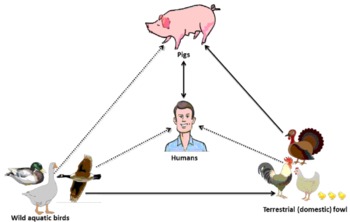
The strong staining for avian receptors and high viral titres in the oviduct and drastic declines in egg production following infection are indicators that influenza viral infections alone without any concurrent infections can result in economic losses under field conditions (Pillai et al., Reference PILLAI, PANTIN-JACKWOOD, JADHAO, SUAREZ, WANG, YASSINE, SAIF and LEE2009). A recent study reported that turkey embryos are susceptible to swine TR H3N2 influenza viruses, and continuous passage of the swine viruses have been found to result in mutations in HA similar to those found in turkey TR H3N2 viruses (Sobhana, 2008). However, although embryonated turkey eggs may serve as inexpensive tools to study the adaptation and interspecies transmission of swine influenza viruses, turkey embryos may not mimic the biology of a bird, especially in terms of immune responses and several issues including the reproducibility of the HA mutations with other swine viruses, while the changes in other gene segments should also be considered in the study (Yassine et al., Reference YASSINE, LEE and SAIF2013; Deventhiran et al., Reference DEVENTHIRAN, KUMAR, RAGHUNATH, LEROITH and ELANKUMARAN2016). Recently, Ali et al. (Reference ALI, YASSINE, AWE, IBRAHIM, SAIF and LEE2013) reported replication of swine and human influenza viruses in juvenile and layer turkey hens and suggested a possible use of turkeys as an animal model to study host tropism and pathogenesis of influenza viruses ( Figure 1 ).
The reservoir of influenza A viruses.

The receptor profile in turkeys supports their role as intermediate hosts
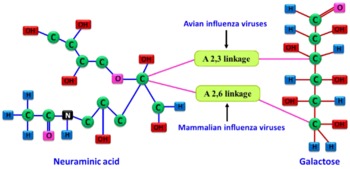
Following interspecies transmission and/or genetic reassortment, turkey influenza viruses may undergo turkey to human or turkey-to-pig transmissions because of the continual availability of susceptible hosts (pigs, human). Different sialic acid types and linkages in different species of birds and mammals are believed to be barriers for efficient interspecies transmission of influenza viruses. Influenza virus receptors on host cells are believed to be terminal sialic acid (SA) residues that are bound to glycans through an α2,3 or α2,6 linkage, mediated by sialyltransferases that are expressed in a cell and species-specific manner (Gagneux et al., Reference GAGNEUX, CHERIYAN, HURTADO-ZIOLA, VAN DER LINDEN, ANDERSON, MCCLURE, VARKI and VARKI2003; Imai and Kawaoka, Reference IMAI and KAWAOKA2012; Shi et al., Reference SHI, WU, ZHANG, QI and GAO2014). It is believed that turkey intestinal epithelial cells express α2, 3SA-galactose (gal) receptors, whereas tracheal epithelial cells of humans mainly express α2, 6SA-gal receptors ( Figure 2 ).
Overview of receptor predilection of avian and mammalian influenza viruses.

Avian viruses are believed to bind α2,3SA-gal linked receptors preferentially, and influenza viruses from humans preferentially recognise human-type receptors (Matrosovich et al., Reference MATROSOVICH, GAMBARYAN, TENEBERG, PISKAREV, YAMNIKOVA, LVOV, ROBERTSON and KARLSSON1997). Apart from the SA-gal linkages to penultimate sugars, the binding of viruses can be affected by structure of more distant parts of the oligosaccharide chain (Higa et al., Reference HIGA, ROGERS and PAULSON1985; Suzuki et al., Reference SUZUKI, SEKO, KITAJIMA, INOUE and INOUE1993; Gambaryan et al., Reference GAMBARYAN, PISKAREV, YAMSKOV, SAKHAROV, TUZIKOV, BOVIN, NIFANT'EV and MATROSOVICH1995). Plant lectins, Maackiaamurensis agglutinin (MAA) and Sambucusnigra agglutinin (SNA), that are specific to α2, 3SA-gal and α2, 6SA-gal terminated sugars are usually used to identify the type of receptors present in different tissue sections. Epithelial cells from trachea and intestines of chickens and quail have been found to have moieties that can bind SNA and MAA and to bind viruses showing human- and avian-type receptor specificity (Gambaryan et al., Reference GAMBARYAN, WEBSTER and MATROSOVICH2002; Pillai et al., Reference PILLAI, PANTIN-JACKWOOD, YASSINE, SAIF and LEE2010). Use of MAA and SNA on turkey tracheal epithelium indicated that turkeys also possess α2,3SA-gal- and α2,6SA-gal-terminated sialyloligosaccharide residues with 80%-90% and 70% of the tracheal epithelial cells, respectively, showing positive staining. The colon sections showed only the presence of α2,3SA-gal receptors (Pillai et al., Reference PILLAI, PANTIN-JACKWOOD, YASSINE, SAIF and LEE2010). Previous lectin studies have demonstrated that turkey ovaries contain both α2,3SA-gal and α2,6SA-gal receptors and support our results on the presence of both types of receptors on turkey tissues (Kapczynski et al., Reference KAPCZYNSKI, GONDER, LILJEBJELKE, LIPPERT, PETKOV and TILLEY2009). The presence of avian- and human-type receptors in turkeys explains their higher susceptibility to wild and domestic bird origin and swine viruses. Although different viral and host factors may play roles in successful viral replication, adaptation, and transmission, these findings strengthen the argument that turkeys can be infected with influenza viruses containing mammalian haemagglutinin gene segments and can act as potential intermediate hosts for interspecies transmission and spread of reassortant viruses between birds and humans (Yassine et al., Reference YASSINE, LEE and SAIF2013; Deventhiran et al., Reference DEVENTHIRAN, KUMAR, RAGHUNATH, LEROITH and ELANKUMARAN2016).
The observed viral binding mechanisms to receptors have been found to be affected by different factors other than receptor specificity. Avian influenza viruses have been found to bind more strongly to Neu5Ac receptors than to Neu5Gc-containing receptors (Higa et al., Reference HIGA, ROGERS and PAULSON1985; Matrosovich et al., Reference MATROSOVICH, GAMBARYAN, TENEBERG, PISKAREV, YAMNIKOVA, LVOV, ROBERTSON and KARLSSON1997; Ito et al., Reference ITO, SUZUKI, SUZUKI, TAKADA, HORIMOTO, WELLS, KIDA, OTSUKI, KISO and ISHIDA2000). Duck viruses have been found to bind with greater affinity to Neu5Ac(α2-3)Gal(β1-3) GalNAc-containing receptors than Neu5Ac(α2-3) Gal(β1-4) GlcNAc-containing receptors, indicating that distant parts of the oligosaccharide chains affect binding (Gambaryan et al., Reference GAMBARYAN, WEBSTER and MATROSOVICH2002). Viruses from gulls and shore birds preferentially bind to Neu2Acα2-3gal receptors similar to ducks (Gambaryan et al., Reference GAMBARYAN, YAMNIKOVA, LVOV, TUZIKOV, CHINAREV, PAZYNINA, WEBSTER, MATROSOVICH and BOVIN2005). However, H13 viruses were found to bind to 2-3 sialic acid linkages weakly and not to discriminate between β1-3 and β1-4 linkages (Gambaryan et al., Reference GAMBARYAN, YAMNIKOVA, LVOV, TUZIKOV, CHINAREV, PAZYNINA, WEBSTER, MATROSOVICH and BOVIN2005). The length of the gangliosides was found to have an effect on viral binding. Duck viruses bound to gangliosides with short sugar chains that were found to be abundant in the intestines, whereas chicken viruses bound more strongly to gangliosides with long sugar chains that were abundant in chicken intestinal tissues (Gambaryan et al., Reference GAMBARYAN, WEBSTER and MATROSOVICH2002). As expected, in accordance with the detection of SAα2,3-gal and SAα2,6-gal receptors, epithelial cells from quail and chicken intestines were found to bind both avian- and human-type viruses (Guo et al., Reference GUO, TAKAHASHI, YAGI, KATO, TAKAHASHI, YI, CHEN, ITO, OTSUKI and KIDA2007). Similar studies on epithelial cells from trachea and intestines of turkeys are necessary to confirm that they play important roles as intermediate hosts where influenza viruses of avian and human origin can be amplified and spread to susceptible hosts.
Conclusions
The determinants that contribute to the host jump of avian influenza A viruses are complex and involve several viral and host factors. The inherent susceptibility of turkeys to wild bird, domestic bird, and swine origin low-pathogenic influenza viruses signify the important role of turkeys as the domestic bird species that could act as the potential entry points and the bridging species for influenza viral entry into agricultural and commercial poultry systems. Additionally, the fact that turkeys are easily infected with aquatic bird and swine viruses and the ability of these viruses to reassort increases the probability that further reassortments and evolution of these viruses can take place in these turkey hosts.
Mixing poultry and outdoor rearing could favour adaptation of low-pathogenic influenza viruses from different sources for domestic poultry and pose serious health risks for birds and other mammals. Turkey consumption has increased during the last decade and turkey meat is one of most popular protein choices for consumers. Thus, continuous monitoring is required to control and prevent influenza infection in turkeys Moreover, viral evolution studies and periodic updates of vaccine seed strains are warranted to achieve efficient control and the eradication of avian viruses.