

Introduction
Understanding the abundance, population trends, distribution, and threats to wildlife is essential for species conservation and the development of robust conservation management plans (Marsden et al. Reference Marsden, Loqueh, Takuo, Hart, Abani and Ahon2015; Primack Reference Primack1993). Such information also underpins assessments of conservation status such as the International Union for Conservation of Nature (IUCN) Red List of threatened species (IUCN 2001; Marsden et al. Reference Marsden, Loqueh, Takuo, Hart, Abani and Ahon2015) and measuring progress towards conservation goals such as the Kunming–Montreal global targets for 2030 (Hughes and Grumbine Reference Hughes and Grumbine2023).
Globally, unsustainable capture of wild parrots for the exotic pet trade (Martin Reference Martin2017) and habitat destruction have been identified as the major threats to many parrot species (Annorbah et al. Reference Annorbah, Collar and Marsden2016; Martin et al. Reference Martin, Perrin, Boyes, Abebe, Annorbah and Asamoah2014; Vergara-Tabares et al. Reference Vergara-Tabares, Cordier, Landi, Olah and Nori2020). Parrots are sensitive to these threats because many species have a slow life history (low reproductive rates and delayed onset of reproductive maturity) and, as secondary cavity nesters, are reliant on cavities in mature trees (Nycander et al. Reference Nycander, Blanco, Holle, Del Campo, Munn, Moscoso, Abramson, Speer and Thomsen1995). Grey Parrots Psittacus erithacus are notably a species that has been subjected to intense anthropogenic pressures. The species was classified as ‘Vulnerable’ in 2012, but due to the worsening effects of threats on wild populations, its status has deteriorated and it has been classified as ‘Endangered’ since 2016 (BirdLife International 2021). Also, in recognition of the threat posed by unsustainable levels of trapping of wild populations for international trade, the bird was transferred from Appendix II to Appendix I of the Convention on International Trade in Endangered Species of Wild Fauna and Flora (CITES) (Martin Reference Martin2017). Grey Parrots are native to the lowland moist forests of West and Central Africa, stretching from south-east Côte d’Ivoire to Kenya and North Angola; their range further extends to the islands of São Tomé and Príncipe (Juniper and Parr Reference Juniper and Parr1998). In Nigeria, they are typically found in a diversity of forested habitats in southern regions, including lowland rainforest, freshwater swamp forest, and mangrove forests (McGowan Reference McGowan2001).
Previous studies in Nigeria (Eniang et al. Reference Eniang, Akpan and Eniang2008; Ezenwa et al. Reference Ezenwa, Nwani, Ulf and Rowan2019; Green et al. Reference Green, Hall and Leventis2007; McGowan Reference McGowan2001; Olmos and Turshak Reference Olmos and Turshak2009) and neighbouring countries (Cameroon – Dueker et al. Reference Dueker, Kupsch, Bobo, Heymann and Waltert2020; Reinhold et al. Reference Reinhold, Wobker, Schröder, Kemnade, Bobo and Waltert2021 and Ghana – Annorbah et al. Reference Annorbah, Collar and Marsden2016) have suggested declines in wild populations of Grey Parrots. However, there is no comprehensive and range-wide assessment of abundance and population trends of Grey Parrot in Nigeria to date. There is similarly a lack of systematically collected data on seasonal movements and patterns of habitat use, as well as the distribution of threats and their impact on wild populations (Martin et al. Reference Martin, Perrin, Boyes, Abebe, Annorbah and Asamoah2014); information that can inform the planning of conservation strategies.
In Nigeria, Grey Parrots are restricted to areas in the southern part of the country (Benson et al. Reference Benson, Denson, Stuart, Fry, Keith and Urban1988; McGowan Reference McGowan2001), primarily within what was historically a continuous, but now fragmented forest belt that extends from southern Nigeria eastward to the Sanaga River in Cameroon, often referred to as the Gulf of Guinea forests (Oates et al. Reference Oates, Bergl and Linder2004). This area falls within the Guinean forests of West Africa Biodiversity Hotspot recognised by the Critical Ecosystem Partnership Fund (CEPF) as a global conservation priority harbouring remarkable levels of biodiversity, including a number of endemic and threatened species (CEPF 2015). This project was designed to inform actions to conserve the population of Grey Parrots within this hotspot in Nigeria and support the implementation of the National Strategy to Combat Wildlife and Forest Crime in Nigeria (2022–2026) (NSWFCN 2022). A key focus was to identify sites vulnerable to trapping and hunting where community-based initiatives, such as the development of alternative or supplementary livelihood opportunities, could be targeted to address illegal and unsustainable activities. In addition, we aimed to gain insights into associations with specific habitats and, in particular, the importance of mangroves for Grey Parrots. McGowan (Reference McGowan2001) reported that local residents in the Niger Delta reported Grey Parrots roosting and nesting in mangroves and that they adjusted the use of mangrove habitat seasonally. Tamungang et al. (Reference Tamungang, Cheke, Mofor, Tamungang and Oben2014) also reported that Grey Parrots nest in mangroves in Cameroon, suggesting that this could be an important habitat during the breeding season.
We combined direct observational surveys of parrots and human activities, including logging for timber, hunting, and trapping, and interviews with members of the local communities to leverage local ecological knowledge (Lopes et al. Reference Lopes, Martin, Henriques, Monteiro, Cardoso and Tchantchalam2019; Predavec et al. Reference Predavec, Lunney, Hope, Stalenberg, Shannon and Crowther2016) and explored the current distribution, seasonal movement, and threats to Grey Parrot populations. Specifically, we set out to describe (1) the current distribution and abundance of Grey Parrots at sites across their range in Nigeria, (2) seasonal patterns of abundance in mangrove and inland forest areas, (3) regional variation in the intensity and distribution of threats, and (4) the relationship between the intensity of threats and formal protection status.
Methods
The study took place in the southern part of Nigeria within the Guinean forests of the West Africa Biodiversity Hotspot. Habitats in this area include forest fragments which are mainly secondary forest with some primary forests restricted to the interior of National Parks, agroforestry within community-managed forest sites, mangrove/swamp forests in coastal areas of the Niger Delta, and commercial oil palm and cocoa plantations. The climatic regime has two distinct seasons: a wet season (April–October) and a dry season (November–March). In this study, the dry season surveys were conducted in December 2018 and in January, February, March, and November 2019, while the rainy season surveys were carried out from June to October 2019. The study sites were selected in areas that were known to have historically supported populations of Grey Parrots based on previously published reports (Eniang et al. Reference Eniang, Akpan and Eniang2008; Green et al. Reference Green, Hall and Leventis2007; McGowan Reference McGowan2001; Olmos and Turshak Reference Olmos and Turshak2009) and expert knowledge. Eight of these sites occurred within three National Parks (NP) (Okomu NP, Cross River NP, and Gashaka Gumti NP), four within forest reserves (FR) managed by State authorities (Afi River FR, Omo FR, Queen FR, and Ngel Nyaki FR), three within oil palm plantations (OPP), and 13 others outside nationally recognised protected areas managed by surrounding communities – Community Forest (CF). ‘Sites’ were defined as circular areas approximating 10 km in diameter and separated from the next closest site by at least 18 km. Except for Obudu in Cross River NP (CRNP), Gashaka Gumti NP, and Ngel Nyaki FR, Grey Parrots have been reported at one time or another in all the other sites.
Questionnaire and line transect surveys
Surveys were conducted within 28 sites during 2018–2019 (Figure 1 and Supplementary material Table S1) using two approaches including questionnaire and line transect surveys. Line transect surveys were conducted in all the sites except Abigborodo and Andoni Island while questionnaire surveys were conducted in all sites apart from Gashaka Gumti NP, Ngel Nyaki FR, and JB Farm. We aimed to visit all sites on two occasions, once during the dry season and another during the rainy season coinciding with the parrot breeding and non-breeding season respectively. Visits during both seasons was only feasible for 16 of the sites due to challenges with accessibility during the rainy season in some areas and a volatile local security situation.
Map of the study area showing abundance of Grey Parrots in sites across the region. C1 = Afi River Forest; C2 = Abo Obisu CF; C3 = Old Ekuri CF; C4 = CRNP Erokut; C5 = CRNP Mkpot I; C6 = CRNP Ikpan; C7 = CRNP Ntebachot/Orem; C8 = JB Farm; C9 = Ekongnaku CF; C10 = CRNP Okwangwo; C11 = CRNP Obudu; C12 = Nung Ikono Ufok CF; N1 = Opupo CF; N2 = Akassa Island; N3 = Oyeregbene Island; N4 = Igbedi CF; N5 = Ikodi CF; N6 = Biseni CF; N7 = Elebele Farm; N8 = Andoni Island; W1 Okomu NP; W2 = Okomu Oil Palm Company PLC; W3 = Queen FR; W4 = Omo FR, W5 = Ise Ekiti CF; W6 = Abigborodo CF; L1 = Gashaka Gumti NP; L2 = Ngel Nyaki FR.

In total, 228 local residents were interviewed. A minimum of 10 persons were interviewed per site except for Abigborodo, Afi River Forest, Igbedi, Ikodi, CRNP Ikpan, CRNP Mkpo I, and Ekongnaku (where we had challenges in finding suitable persons disposed to be interviewed). The questionnaire was informed by pilot study conversations and adapted from similar parrot studies in the region (Annorbah et al. Reference Annorbah, Collar and Marsden2016; Lopes et al. Reference Lopes, Martin, Henriques, Monteiro, Cardoso and Tchantchalam2019). Interviews were conducted with the permission of community leaders, who helped identify knowledgeable residents, who make regular visits to forested areas and were long-term residents of the site. Additional participants were identified using snowball sampling (Babbie Reference Babbie2004). Local guides assisted with translation and trust-building where needed. The purpose of the interviews was explained, and free, prior, and informed consent was obtained. No identifying information about participants is reported
Observational field surveys were conducted by walking line transects (Sutherland et al. Reference Sutherland, Newton and Green2004) between December 2018 and November 2019. At each site, two line transects were walked over two days (06h30–10h30) at a speed of 1–2 km/hour, covering approximately 338.55 km in 331.5 hours across all but two of the sites mentioned above. The transect surveys followed existing paths, connecting villages, and were always walked in the company of local guides. The transects were selected to be in opposite directions wherever possible and always separated by at least 90° achieving a minimum distance of 10 km per site. However, this target could not be met at Abo Obisu, Opupo Forest, Akassa Island, Oyeregbene, Igbedi, Ikodi, CRNP Mkpot, CRNP Ikpan, Ekongnaku, and CRNP Obudu due to the challenges of finding accessible routes that covered this distance. Grey Parrots were detected visually and acoustically, with data recorded on group size, behaviour, location (GPS), time, and habitat type.
During the fieldwork, three overnight roost sites of Grey Parrots were identified and counts of the roosting populations were conducted. Two of these sites were approximately 19 km apart and located within Okomu NP and an OPP operated by the Okomu Oil Palm Company PLC. The third roost site was situated within the Opupo CF in the Niger Delta. Assisted by park rangers and community members, we successfully identified typical approach routes of parrots arriving at the roost and counted the parrots as they arrived at dusk at Okomu NP and Opupo CF, respectively. At the Okomu OPP, the parrots roosted on a 20-m isolated tree amid African oil palms Elaeis guineensis, and we conducted counts after the parrots settled. At Opupo CF, Okomu NP, and the Okomu OPP, we conducted roost counts across multiple days and calculated the mean and standard deviation across all days.
Spatial patterns of abundance and trends
Encounter rate was used to estimate the relative density of parrots at each site as this provides a comparable approach to that used in other studies of this species (CITES 2013; Lopes et al. Reference Lopes, Martin, Henriques, Monteiro, Cardoso and Tchantchalam2019; Marsden et al. Reference Marsden, Loqueh, Takuo, Hart, Abani and Ahon2015). Low numbers of detections of perched individuals within the study area (fewer than 40 perched groups were observed in total) precluded the use of distance sampling methods, for which a minimum of 80 encounters is recommended to generate reliable detection functions (Buckland et al. Reference Buckland, Anderson, Burnham, Laake, Borchers and Thomas2007). The encounter rates for each site were calculated as the mean number of parrot groups detected per survey hour.
We also estimated a semi-quantitative assessment of recent population trends from the responses received through the interviews with local community members. Local residents were asked for their perceptions of trends over the last 20 years. Their responses were used to determine the proportion of respondents who reported “increased”, “decreased” or “no change” in local abundance of the bird over the previous 10-year period and this site-level trend was used in subsequent analyses using Generalised Linear Models (GLMs) with a binomial error structure to explore factors associated with variation in population trends.
Parrot density at each site was categorised into three levels using a method adapted from Lopes et al. (Reference Lopes, Martin, Henriques, Monteiro, Cardoso and Tchantchalam2019): sites where both questionnaire and line transects surveys did not record parrots at the site were categorised as ‘absent’; sites on which the bird was recorded as present (either by local residents or direct observation) but encounter rates were between 0 and 1.5 groups/hour were considered as having ‘low’ density; sites with encounter rates of >1.5 groups/hour up to 4.4 groups/hour were considered ‘high’ density. Site-level densities were based on the mean encounter rate averaged across both the dry and wet seasons. For sites that we were able to visit in only one season (10 sites), it was not possible to assign sites to low or high density using this method. For these sites we assigned a two-level category of either ‘absent’ or ‘present’. Subsequent analysis, exploring factors associated with variation in densities, focused only on the subset of sites for which three-level density categories could be assigned using ordinal logistic regression (Christensen Reference Christensen2019).
Seasonal patterns of abundance
To explore seasonal trends in abundance across the sites, and specifically in relation to proximity to mangroves, local residents were asked during interviews which months they most frequently encountered parrots. Responses were assigned to wet or dry season and aggregated for each site to produce a three-category response variable which comprised “more in wet season”, “more in dry season”, and “no seasonal change”.
The distance of each site to mangrove forest was measured using the ‘measure line’ function in QGIS 3.16, and the nearest mangroves were determined from a shapefile of the study area sourced from the World Atlas of Mangroves (Spalding et al. Reference Spalding, Kainuma and Collins2010). We fitted a multinomial logistic model using the R package nnet (Liang et al. Reference Liang, Bi and Zhan2020) in R version 4.0.2 (R Core Team 2020). R was also used for all other statistical analyses. The distance of each site to mangrove was fitted as the sole explanatory variable. We report the z-statistic and associated P values of odd ratio tests. The “No seasonal change” response was fixed as a reference (baseline) category to compare other factors (wet and dry seasons).
Presence and intensity of threats
Data on hypothesised threats to parrot populations (trapping of chicks, i.e. poaching from nest, trapping of adults, hunting of adult parrots, and logging) were collected via a combination of local knowledge gathered during interviews, direct observations or ad hoc conversations with hunters. Evidence of chick and adult trapping was confirmed through direct observations of climbing equipment on trees leading to nest-sites or cavities where adults were captured using lure birds and adhesive (glue) methods. Signs of logging were identified through direct observations of active timber harvesting and tree stumps. Threats were classified as ‘high’ if over 50% of residents reported recent activity within a year, and there was additional corroborating evidence. Activities reported by fewer than 50% of residents within 1–5 years were deemed ‘low’. Absence of reports in the last five years classified threats as ‘absent’.
Association between population status and threats
We explored the associations between intensity of threats and population status (parrot density and perceived trends) by fitting GLMs with appropriate error structures (ordinal logistic regression for parrot density and binomial for perceived trends). The response variables for the models were (1) the parrot density categories, and (2) a binary classification of local perceptions of population trends as either ‘decline’ or ‘no decline’. To explore the most important explanatory variables, we compared candidate models using Akaike’s information criterion adjusted for small sample size (AICc) and the MuMIn package (Barton Reference Barton2014). The models were ranked according to their AICc values, and model averaging was performed across the top candidate models (ΔAICc <2).
Spatial variations of threats and their associations with protection status
To examine regional variation in threats and associated protection status, we categorised sites into three regions (Niger Delta Area, Cross River Forest Area, and Western Forest Area) and four protection/management types: OPP, community forest, FR, and NP. OPPs are monoculture areas of oil palm trees. Community forests are agroforests and secondary forests managed by local communities. FRs and NPs are government-designated areas for wildlife protection (National Park Service 2006). Regional variations in threats and the influence of protection status on these threats were analysed using Kruskal–Wallis tests. We report the Kruskal–Wallis chi-squared (H [chi²]) values, and associated P values.
Results
Abundance and distribution of Grey Parrots
Grey Parrots were observed at 19 of 28 survey sites visited, with 253 groups (594 individuals) recorded over 331.5 hours and a distance of approximately 338.55 km. Mean group size was 2.64 ± 0.32, and encounter rates ranged from 0 to 4.4 groups/hour (Table S1). Of the groups encountered, 38 were perched, while 88 could not be classified as perched or in flight because they were detected acoustically within dense forest canopies. The remaining 127 groups were observed in flight. Although the highest encounter rates were recorded at sites in the Cross River Forest Area, ‘high-density sites’ were identified in all regions and there was no statistical support for variation between regions (chi-square = 1.92; P = 0.38) (Figure 2a and Table S2a). At one site (CRNP Okwangwo) parrots were observed incidentally by the survey team but not detected during the transect surveys. At three sites (Omo FR, Ise Ekiti CF, and Nung Ikono Ufok CF), no sightings occurred, but local residents reported their presence. At CRNP Obudu, Gashaka Gumti NP, and Ngel Nyaki FR, neither did the survey detect nor residents report the presence of the parrots. Flock sizes varied across the sites; the highest mean flock size (6) and largest observed flock (25) were obtained at Queen FR. Other sites with relatively large mean flock sizes (≥3) included CRNP Mkpot, Ekongnaku CF, Igbedi CF, and Okomu NP.
(a) Regional encounter rates in different seasons (mean ± standard error). (b) Trends in Grey Parrot populations by regions perceived by local residents (mean ± standard error).

Of 228 residents interviewed, 118 (52%) reported seeing Grey Parrots in the past month. Most respondents (70%) perceived population declines over the previous 10 years. However, perceived population trends varied between regions, with fewer communities reporting declines in the Western Forest Area compared with the Niger Delta (log-odds ratio = 4.57, z value = 2.43; P = 0.02) and marginally fewer with the Cross River Forest Area (log-odds ratio = 0.42, z value = 1.82, P = 0.07 (Figure 2b and Table S3).
Roost counts
Counts of the number of parrots using overnight communal roosts varied from 44 individuals at Okomu NP to 450 individuals for Okomu OPP. While at the roost in Opupo CF in the Niger Delta, a mean of 34 individuals was counted across two days. We also visited three other sites, Ikodi CF, Abo Obisu CF, and Old Ekuri CF, where roosts of parrots had been reported previously, and searched for the roosts directly and interviewed local residents, but were unable to locate any roost sites, suggesting these no longer exist.
Regional variation in threats
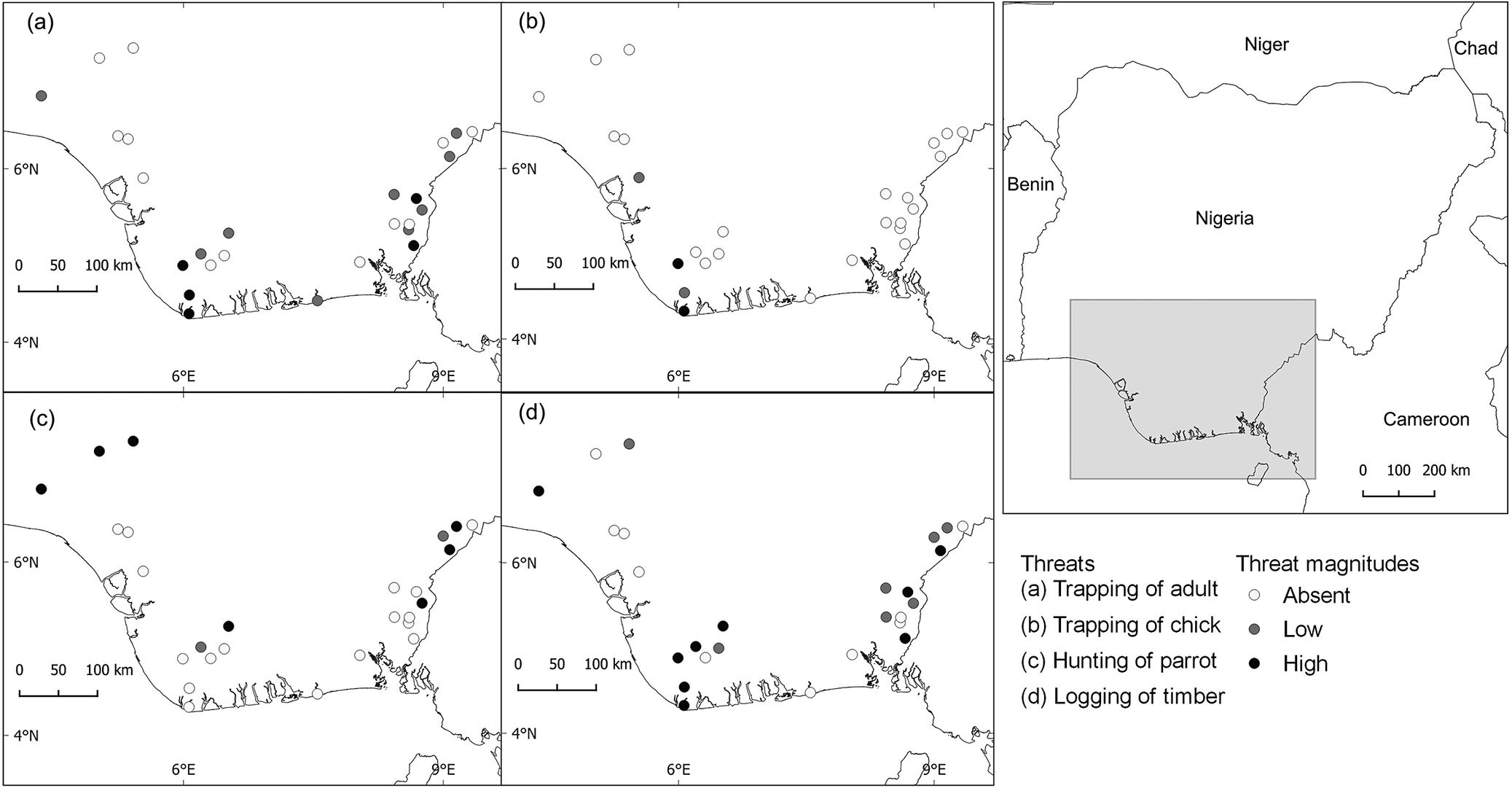
Although the threats were generally widespread across the sites, their intensity showed variation between regions (Figures 3 and 4). Our analysis found that the trapping of chicks was most intense in the Niger Delta Area compared with Cross River and Western Forest Areas (H [chi²] = 6.161; P = 0.046) (Table S4). Trapping of live adults and logging of mature trees were prevalent in the Niger Delta and Cross River Forest Areas although intensity did not vary significantly. Hunting of parrots occurred in the three regions and was particularly prevalent in the Niger Delta Area but also did not vary significantly (Table S4). The lowest level of all the threats was observed at sites in the Western Forest Area, notably in Okomu NP.
Regional comparison in the presence and intensity of threats to Grey Parrots in Nigeria (high and low show the intensity of the threats).

Presence and intensity of threats to Grey Parrots in Nigeria.

Association between threats, abundance, and trends
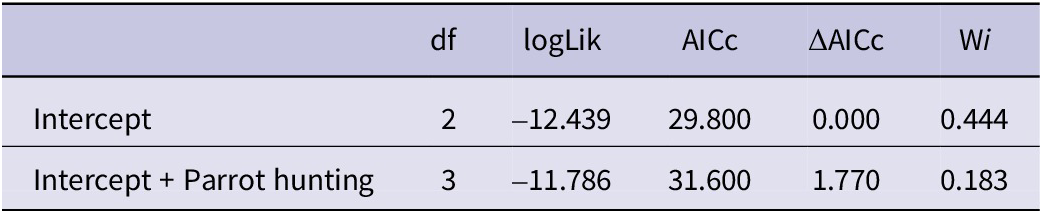
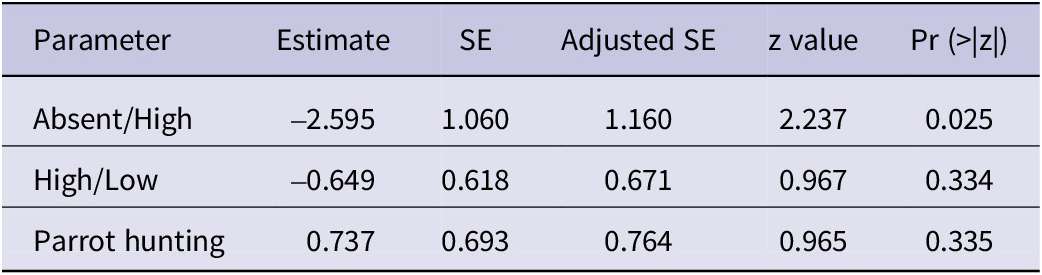
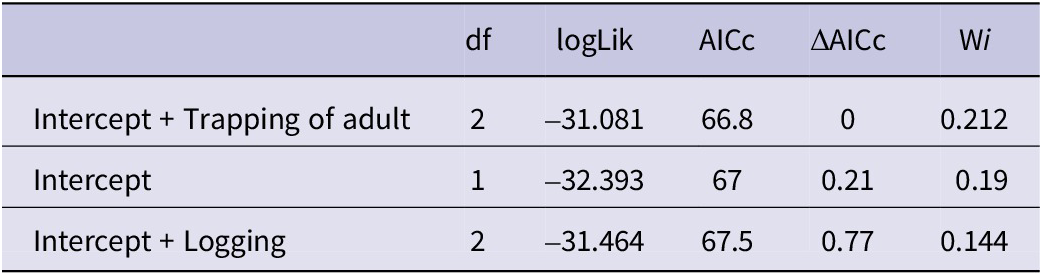
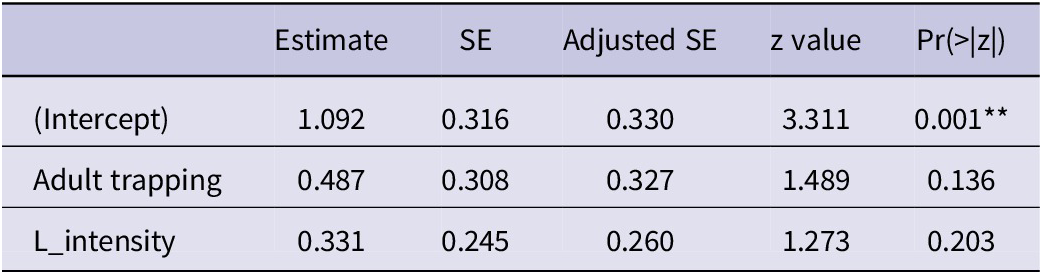
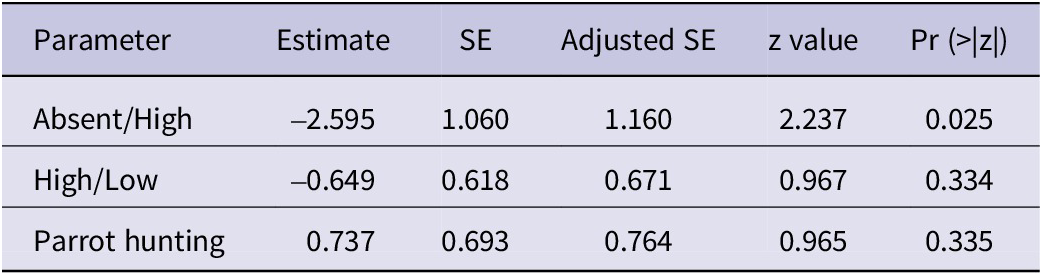
Trapping of adults and chicks was minimal in the Western Forest Area, which also had the highest parrot densities, largest roosts, and most favourable population trends reported. In the Cross River Forest Area, high parrot densities were observed at some sites despite significant threats like hunting, trapping, and logging. In contrast, high densities were rarely encountered in the Niger Delta Area, where threats were most prevalent. However, no statistical association was found between parrot density and threat intensity across the sites with the null model having greatest support (Tables 1 and 2). Concerning perceived population trends, the top candidate model included trapping of adults, however this model did not receive significantly more support than the null model (ΔAICc <2) (Tables 3 and 4).
Results from the top Generalised Linear Models (GLMs) selection (Δ AICc <2) comparing model fit for effects of measured threats on the density of Grey Parrots. df = degrees of freedom; logLik = log likelihood; ΔAICc = change in AICc in relation to the highest-ranked model; Wi = AICc weight

Estimates of parameters after model averaging (conditional average) of the top ranked models in Table 1 highlighting the effects of measured threats on the density of Grey Parrots
Results from the top candidate models (ΔAICc <2) relating perceptions of parrot population decline with threat intensity

Estimates of parameters after model averaging (conditional average) of the top ranked models in Table 3 relating perceptions of parrot population decline to threat intensity

Spatial variations of threats and their associations with protection status
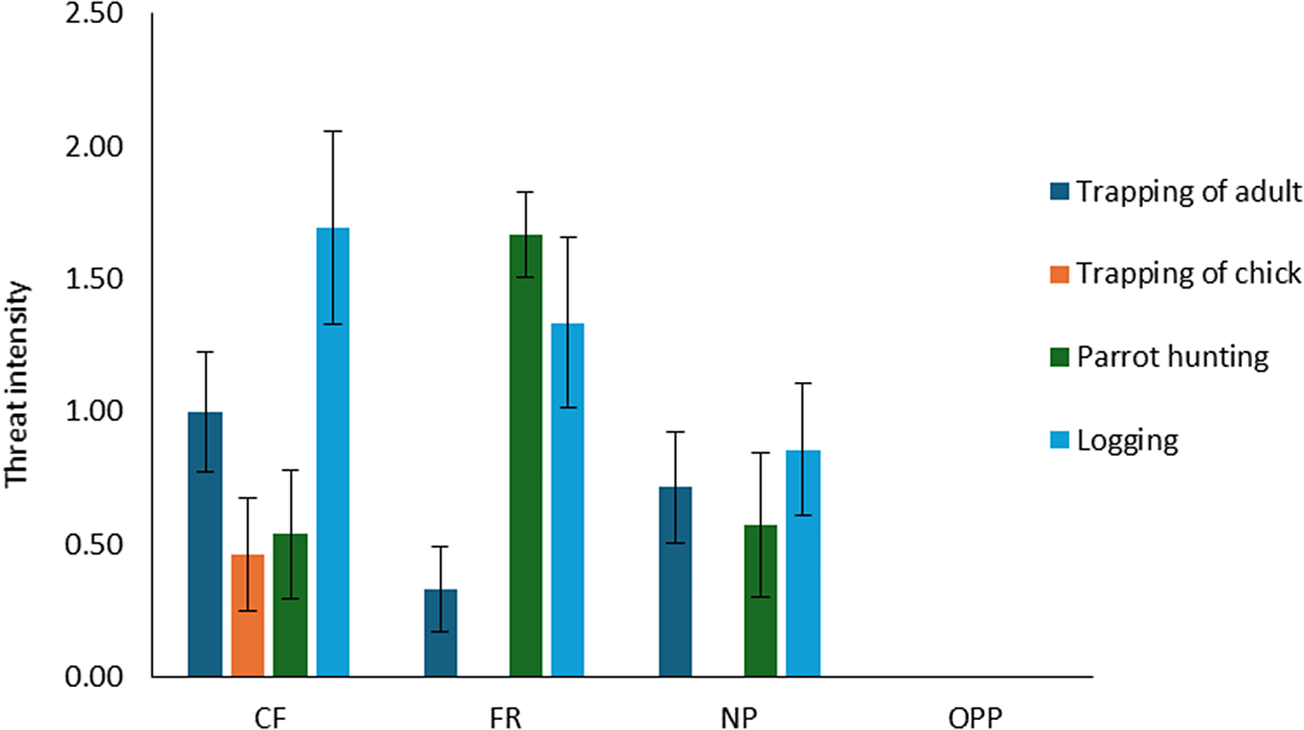
Protection status showed no strong influence on the threats (P >0.05) (Table S5). Despite being prohibited, logging and parrot trapping were detected in multiple sites within NPs. In contrast, hunting, trapping, and logging were absent in OPP, though comparisons must be made with caution due to the relatively small forest patches within plantation boundaries (Figure 5). Parrot hunting was often reported within CF, FR, and NP.
Variations in the localisation of measured threats (mean ± standard error) across various protection statutory (CF = community forest, FR = forest reserve, NP = National Park, OPP = oil palm plantation).

Seasonal trends in abundance
Parrots were more abundant in the rainy season in inland forests, while the data suggested the reverse pattern at sites close to, or within, mangrove habitats suggesting stronger seasonal patterns further from mangroves (Figure 6). Abundance during the rainy season increased with distance from mangroves (z = 2.363, P = 0.018), while an inverse but non-significant relationship was observed in the dry season (z = –0.974, P = 0.330). The proportion of respondents reporting no difference across seasons showed a modest negative but non-significant relationship with distance from mangroves.
Local abundance of Grey Parrots as perceived by local residents in relation to distance from mangrove forest. Solid lines indicate predictions from multinomial models (orange line and points = dry season, blue line and points = wet season, green line and points = no difference across seasons; line = predicted trend, points = raw data).

Discussion
Population status and trends
Our study provides the most comprehensive assessment to date of the distribution, abundance, and seasonal movement of Grey Parrots in Nigeria. Despite strong indications of population declines, Grey Parrots were found to be present in multiple sites where they were reported previously by McGowan (Reference McGowan2001), Green et al. (Reference Green, Hall and Leventis2007), Eniang et al. (Reference Eniang, Akpan and Eniang2008), and Olmos and Turshak (Reference Olmos and Turshak2009). Furthermore, we documented their presence in a number of additional sites, notably Old Ekuri CF and Andoni Island and Okomu OPP plantation, Opupo CF, Abigborodo CF, Ise Ekiti CF, Oyeregbene Island, and Queen FR where their presence had been suspected (McGowan Reference McGowan2001). Grey Parrots were rarely encountered at Omo FR, reinforcing the concerns of Olmos and Turshak (Reference Olmos and Turshak2009) of a dramatic decline in the area.
The encounter rates recorded at some of the sites (including Okomu NP and OPP, Opupo CF, Old Ekuri CF, CRNP Ntebachot/Orem and Ekongnaku CF) were comparable with the highest densities documented by Marsden et al. (Reference Marsden, Loqueh, Takuo, Hart, Abani and Ahon2015) for other mainland populations of Grey Parrots outside Nigeria. However, even at the sites where parrots were found to be most abundant, encounter rates were substantially lower than those recorded on the islands of Príncipe and João Vieira in Guinea Bissau (Lopes et al. Reference Lopes, Martin, Henriques, Monteiro, Cardoso and Tchantchalam2019; Marsden et al. Reference Marsden, Loqueh, Takuo, Hart, Abani and Ahon2015; Valle et al. Reference Valle, Collar, Harris and Marsden2017), where populations may be protected from threats by their isolation (Valle et al. Reference Valle, Collar, Melo and Marsden2020). The group encounter rates (0.12–1.97 groups/km) recorded in the Oban Division of Cross River NP were lower than those reported by Reinhold et al. (Reference Reinhold, Wobker, Schröder, Kemnade, Bobo and Waltert2021) for the adjacent Korup region in Cameroon, where surveys conducted between 2001 and 2002 yielded encounter rates of 3.13–3.59 groups/km. Nevertheless, encounter rates from the present study were, in some cases, higher than the 0.51 groups/km reported for the same region in 2016.
During the fieldwork, three active overnight communal roosts were identified. By far the largest roost was within the Okomu OPP which is, to our knowledge, the largest aggregation site for Grey Parrots in West Africa (United Nations definition). Notably this site is well protected from capture due to its presence within the fenced plantation. It also adjoins a substantial area of protected forest within Okomu NP. Discussions with site managers and workers suggested that the roosts at both Okomu NP and Okomu OPP have existed for decades. Roost counts conducted after this study using night-vision binoculars estimated the number of parrots roosting at the site in 2024 to be in range of 495–682 individuals (Ezenwa et al. Reference Ezenwa, Orakwelu, Okechukwu and Martin2025).
Concerningly, there are indications that the abundance of parrots at overnight roosts elsewhere is declining (Annorbah et al. Reference Annorbah, Collar and Marsden2016). The roost at Opopu CF was found to have substantially fewer parrots (40) than were counted by the lead author during previous fieldwork in the area (140 and 180 counted on two separate occasions during May 2017; I.M. Ezenwa, personal communication). Although the number of parrots aggregating at a roost site can be highly variable depending on local food availability and time of breeding (Dénes et al. Reference Dénes, Tella and Beissinger2017; Matuzak and Brightsmith Reference Matuzak and Brightsmith2007), the observed rapid decline was also consistent with the perceptions of local residents. Moreover, there were three locations (Old Ekuri, Abo Obisu, and Ikodi) which previously hosted large overnight communal roosts, where we could find no evidence of continued use by parrots. Local residents who were familiar with the previous roosting populations in these sites said they were unaware of any alternative roost sites nearby to which these parrots may have moved. Most notable was the Ikodi roost which, on 6 February 2001, was reported to host 700–1,200 birds on branches of palm trees by the bank of the Orashi River that passes the community (McGowan Reference McGowan2001). At all three sites, local residents attributed the loss of the roosts to parrot capture, hunting, and habitat destruction. In Ikodi, local communities had previously collected red tail feathers from beneath the roost, which were sold for belief-based use. The loss of this sustainable form of use likely has consequences for local livelihoods. The disappearance of roosts which previously contained hundreds or even thousands of Grey Parrots in Nigeria echoes the findings of Annorbah et al. (Reference Annorbah, Collar and Marsden2016) in Ghana suggesting the loss of large overnight roosts may be a widespread regional phenomenon.
Distribution of threats
Patterns of the presence of threats and regional population trends provide further indications of the negative impact of trapping on populations, particularly the trapping of adults. Getz and Haight (Reference Getz and Haight1989) highlight the crucial role of age structure in managing wildlife harvests sustainably while Valle et al. (Reference Valle, Collar, Harris and Marsden2018) demonstrate that capturing adult Grey Parrots has a more severe impact on populations compared with removing chicks from nests, as even low levels of offtake can lead to population collapse. Information gathered via interviews revealed that the taking of chicks from nests has been traditionally practised by local community members whereas the capture of adults is mostly conducted by itinerant professional trappers who in most cases were Ghanaian nationals.
We were surprised to find the hunting of parrots to be widespread and the most prevalent threat among sites in the western region. Hunting is motivated by the collection of body parts for belief-based use. As hunting targets the same life-history stage, the hunting of adults might be expected to have a similarly significant effect on local populations. Levels of offtake associated with hunting are unknown and further investigation of the impacts of demand for parrot parts for belief-based use are needed.
Logging was also found to be widespread and may also be having a far-reaching effect on parrot populations. Grey Parrots are secondary nesters, depending on existing nest cavities often in large and mature trees (Amuno et al. Reference Amuno, Massa and Okethowengo2010; Tamungang et al. Reference Tamungang, Onabid, Awa and Balinga2016). Elsewhere in their range they have been reported to show preferences for nesting in large trees, often of species such as Terminalia superba and Milicia excelsa, which are targeted for timber by loggers (Amuno et al. Reference Amuno, Massa and Okethowengo2010; Dändliker Reference Dändliker1992; Kougoum Piebeng et al. Reference Kougoum Piebeng, Tamungang and Teguia2017). The loss of nesting areas due to logging may further compound the impact of trapping for trade (Annorbah et al. Reference Annorbah, Collar and Marsden2016).
It is important to note that our field observations may underestimate the actual threats present at some sites, as local residents might have refrained from disclosing information about trapping activities due to fear of potential repercussions. For example, at Opupo CF, one of the field assistants collaborated with a parrot trapper and was hesitant to divulge information about trapping activities in the area which, together with a considerable high level of logging, caused the drastic decline of the parrots in the area.
Seasonal movements
Although parrots were reportedly present at most sites in both rainy and dry seasons, variations in seasonal abundance of Grey Parrots between inland and mangrove forest areas suggest seasonal movements within Nigeria. There are multiple potential reasons for this observed pattern. In Africa, seasonal movement of some parrot species – Poicephalus fuscicollis suahelicus and P. meyeri – is considered tied to seasonal production of food (Boyes and Perrin Reference Boyes and Perrin2010; Symes and Perrin Reference Symes and Perrin2003). As food availability differs seasonally between mangrove and inland forest areas (Adole et al. Reference Adole, Dash and Atkinson2016), seasonal movements could be tracking food availability. The high abundance of Grey Parrots at agroforest areas appeared to coincide with the ripening time of plum Dacryodes edulis, which local community members report is a preferred food for the parrots. Tamungang and Ajayi (Reference Tamungang and Ajayi2003) highlighted D. edulis in the diverse diet of Grey Parrot in Korup NP, Cameroon. Alternatively, apparent movements into mangrove areas during the dry season could be linked to the suitability of nesting sites (McReynolds Reference McReynolds2012; Valle et al. Reference Valle, Collar, Harris and Marsden2017). Valle et al. (Reference Valle, Collar, Harris and Marsden2017) showed that variation in the density of Grey Parrots on the island on Príncipe was positively associated with the presence of nest-tree species during the pre-breeding season, and the presence of food-trees in the post-breeding season. Local community members in mangrove areas also suggested that parrots move into the area during the dry season to nest in mangrove trees. It is possible that nests in mangroves may be relatively well protected from threats due to their relative inaccessibility and may act as important refuges for parrots. The taking of chicks from nests was only reported from sites in the Niger Delta area, it is unclear whether this is because it is the main breeding area for Grey Parrots or there is another reason nest poaching is not reported elsewhere. However, the former explanation would be consistent with the seasonal influx of parrots into mangrove areas for breeding. Seasonal variation of Grey Parrot abundance across habitats within their Nigerian range is primarily driven by fluctuations in food availability and nesting requirements.
Implications for conservation
Our findings are consistent with studies of similar species suggesting that the combined effects of capture for the pet trade and habitat loss are driving precipitous declines in Grey and Timneh Parrots (Annorbah et al. Reference Annorbah, Collar and Marsden2016; Dueker et al. Reference Dueker, Kupsch, Bobo, Heymann and Waltert2020; Hart et al. Reference Hart, Hart, Salumu, Bernard, Abani and Martin2016; Lopes et al. Reference Lopes, Martin, Henriques, Monteiro, Cardoso and Tchantchalam2019; Reinhold et al. Reference Reinhold, Wobker, Schröder, Kemnade, Bobo and Waltert2021) reinforcing their Endangered listing on the IUCN Red List.
Studies conducted in parallel to this indicate that live parrots captured in forest areas in Nigeria are transported to markets in major towns across Nigeria and exported to international markets. In addition, body parts are also traded in many towns and cities. These activities happen openly including online (Haysome and Martin Reference Haysome and Martin2021) and many of the actors involved in the supply chain are unaware that these activities are illegal (I.M. Ezenwa 2021, personal communication). There is clearly a need to raise awareness of the legal situation and the conservation implications of trade and to explore and pursue innovative approaches to demand reduction. In addition, law enforcement to disrupt supply chains, particularly to international trafficking networks, is needed.
The protection status of sites did not appear to have a major impact on the presence of threats, with trapping, hunting, and logging all taking place within national parks contrary to the protection status of these areas (National Park Service 2006). This highlights the importance of efforts to support the effective implementation of protected area networks, through sufficient funding, strong governance, and support for communities that live alongside these areas. The persistence of the roost site and relatively stable local population in Okomu suggests the ‘fortress’ inadvertently afforded by the Okomu OPP provides some potentially valuable conservation lessons, highlighting the important role of site protection and the complexity of conservation challenges in a region with high levels of insecurity.
In conclusion, our study describes the location of remaining strongholds for Grey Parrots in Nigeria and the geographical distribution of threats enabling a targeted regional and site-specific approach to addressing these threats. Seasonal movements of parrots between sites further highlight the importance of a coordinated landscape-scale approach to conservation. We emphasise the urgent needs for a multi-faceted conservation strategy that would integrate targeted actions to protect key sites with broader landscape-scale initiatives to enhance law enforcement, raise awareness, and strengthen community involvement and support for conservation efforts to effectively conserve Grey Parrot populations in Nigeria.
Supplementary material
The supplementary material for this article can be found at http://doi.org/10.1017/S0959270926100434.
Acknowledgements
The authors deeply appreciate the support and permission granted by the various communities visited during the surveys. We acknowledge with thanks Mr Chris Oned in Bauchor and Mr Otobot Dimie of Niger Delta University Wilberforce Island for their assistance and support, which were pivotal during surveys in Bayelsa and Cross River States, respectively. We also appreciate the support of the National Parks Service for granting permission to conduct surveys within Okomu NP, Gashaka Gumti NP, and Cross River NP. Special thanks to Babajide Agboola for his assistance and words of advice at the outset of the surveys. We owe deep appreciation to the various plantations we visited for conducting surveys, especially Okomu Oil Palm Company PLC for their efforts towards the conservation of Grey Parrots’ roosts within their premises. We are grateful for the services of many individuals who acted as guides, offered advice during fieldwork, and participated in interviews. We are also grateful to the suggestions of multiple reviewers whose suggestions considerably improved this manuscript. This work was funded through a grant from the Critical Ecosystem Partnership Fund (grant number: CEPF-109686) to the World Parrot Trust. Additional financial support was provided by the Minnesota Zoo Foundation, World Animal Protection, and the World Parrot Trust. The methods for data collection, including observational surveys along recce transects and interviews, were reviewed and approved by academics from the Department of Zoology and Environmental Biology, University of Nigeria, Nsukka, during the research proposal stage. In each community where surveys were conducted, permission was obtained from the community heads prior to commencing any activities. In all cases, the purpose of the interviews was clearly explained to local residents, and their free, prior, and informed consent was secured. To maintain confidentiality, no identifying information about the participants is reported.