





Approximately 15–30% of individuals with schizophrenia develop treatment resistance, defined as inadequate response to at least two antipsychotics of adequate doses and durations. Reference Conley and Kelly1–Reference Siskind, Orr, Sinha, Yu, Brijball and Warren3 Clozapine is the only FDA-approved medication for treatment-resistant schizophrenia (TRS) Reference Correll, Agid, Crespo-Facorro, de Bartolomeis, Fagiolini and Seppälä4 and is effective in reducing admission, Reference Masuda, Misawa, Takase, Kane and Correll5 and decreasing mortality. Reference Zhou, Luo, Tang, Honer, Bastiampillai and Zhou6,Reference Vermeulen, van Rooijen, van de Kerkhof, Sutterland, Correll and de Haan7 However, its utilisation has been hindered by concerns of life-threatening agranulocytosis (absolute neutrophil count (ANC) <0.5 × 10⁹/litre). Reference Myles, Myles, Xia, Large, Kisely and Galletly8 Consequently, hematological monitoring is mandated during clozapine treatment, involving weekly blood tests for the initial 18 weeks, followed by monthly monitoring in some regions, while other countries (e.g. the USA) require weekly monitoring for 6 months after clozapine initiation, bi-weekly for the subsequent 6 months and monthly thereafter. Reference Nielsen, Young, Ifteni, Kishimoto, Xiang and Schulte9 Although these protocols aimed to ensure patient safety, they impose considerable direct and indirect burdens on patients and healthcare, Reference Verdoux, Bittner, Hasan, Qubad, Wagner and Lepetit10,Reference Zheng, Chan and Lee11 possibly contributing to the underutilisation and delayed initiation of clozapine. Reference Zheng, Lee and Chan12
Earlier studies estimated the incidence of clozapine-induced agranulocytosis (CLIA) at approximately 0.7–0.8% in Western cohorts, Reference Lambertenghi-Deliliers13,Reference Mendelowitz, Gerson, Alvir and Lieberman14 with lower rates reported in the Asian population in China (0.21%). Reference Tang, Mao, Jiang, Chen, Wang and Cai15 Contemporary meta-analyses reported CLIA incidence between 0.4 and 0.8%, Reference Li, Zhong, Lu, Zheng, Wang and Rao16 still higher than the background rates of drug-induced agranulocytosis in the general population (1.6–15.4 cases per million person-years). Reference Ibáñez, Vidal, Ballarín and Laporte17,Reference Zimmer, Affenberger, Federici, Alt and Maloisel18 The majority of the CLIA occurred within the first 12 months of clozapine initiation, Reference Alvir, Lieberman, Safferman, Schwimmer, Schaaf and Myles19 with residual risk beyond 1 year, estimated at approximately 0.39 per 1000 person-years. Reference Schulte, Veerman, Bakker, Bogers, Jongkind and Cohen20 Recent population-based studies have advanced understanding of clozapine-associated neutropenia trajectories with a suggestion for possible revision of monitoring recommendations. Reference Northwood, Myles, Clark, Every-Palmer, Myles and Kisely21,Reference Rubio, Kane, Tanskanen, Tiihonen and Taipale22 A recent Australian study reported an incidence of clozapine-associated serious neutropenia (ANC <1.0 × 10⁹/litre) of 1.8 per 1000 person-years over 125 weeks (2.3 years), peaking at 9 weeks and declining after 2 years. Reference Northwood, Myles, Clark, Every-Palmer, Myles and Kisely21 These findings suggested weekly haematological monitoring for 18 weeks, then monthly until 2 years, might be sufficient. Reference Mena, Nachar, Crossley and González-Valderrama23 However, evidence suggesting non-clozapine second-generation antipsychotics (SGAs) also confer neutropenia risk, Reference Felin, Naveed and Chaudhary24 thus direct comparison of neutropenia trajectories between clozapine and non-clozapine use individuals would be important. Only one Finnish study provided a detailed comparison of the trajectories of agranulocytosis between clozapine and other antipsychotics. Results suggested a similar incidence of CLIA (17.3 per 10 000 person-years), consistently higher than agranulocytosis associated with other antipsychotic treatment (2.1 per 10 000 person-years). Reference Rubio, Kane, Tanskanen, Tiihonen and Taipale22 The incidence of CLIA reduced significantly over time, and after 3 years of clozapine initiation, the risk is comparable to that of non-clozapine antipsychotics over the initial 6 months of treatment. Thus, the authors suggested weekly haematological monitoring for 6 months, bi-weekly until 12 months, then monthly until 3 years and discontinue thereafter. Reference Rubio, Kane, Tanskanen, Tiihonen and Taipale22 These varied results might be due to differences in neutropenia criteria, study populations and methodologies. Therefore, further population-based studies are warranted to provide the comparative longitudinal data needed to guide evidence-based, international revisions to clozapine monitoring guidelines.
Furthermore, understanding the high-risk population of serious neutropenia might contribute to a more tailored and cost-effective blood-monitoring schedule. Currently, this evidence remains limited and inconsistent. Some studies suggested that males are more prone to blood dyscrasias and metabolic disturbances, Reference Alberich, Fernández-Sevillano, González-Ortega, Usall, Sáenz and González-Fraile25 while a recent study indicated that females may have a higher risk of clozapine-associated neutropenia. Reference Northwood, Myles, Clark, Every-Palmer, Myles and Kisely21 Increased incidence of neutropenia in older adults prescribed clozapine has been suggested, Reference Guenette, Powell, Johnston, Foussias, Agid and Hahn26 whereas other research showed that rates of neutropenia in children and adolescents are significantly higher than in adults. Reference Maher, Tan, Tossell, Weisinger, Gochman and Miller27 Minor neutropenia is common in the general population, with a point prevalence of 0.4–4.5%. Studies suggested that such minor neutropenia might not be relevant in predicting the development of CLIA, Reference Verdoux, Bittner, Hasan, Qubad, Wagner and Lepetit10,Reference Siskind, Northwood, Pillinger, Chan, Correll and Cotes28 as the longitudinal relationship between them remains poorly understood. Thus, our study aims to clarify the comparative risk of neutropenia associated with clozapine versus non-clozapine SGAs by analysing a large, population-based data-set from Hong Kong, accounting for demographic factors, including age and sex. Using a data-driven approach, our results can identify critical periods and high-risk subgroups, contributing to the development of evidence-based personalised haematological monitoring strategies for clozapine initiation to enhance patient safety, reduce healthcare burdens and improve access to clozapine for individuals with TRS.
Method
Data source
All data were extracted from the Clinical Data Analysis and Reporting System (CDARS), a centralised clinical data repository containing electronic health records from all public hospitals under the Hong Kong Hospital Authority management since 1 January 1999. Reference Chai, Luo, Man, Lau, Chan and Yip29 The Hospital Authority is the principal provider of in-patient and out-patient psychiatric services in Hong Kong, accounting for roughly 90% of psychiatric care for individuals with severe mental illness. Reference Chan, Chan, Pang, Yan, Hui and Chang30 The reliability of medication and death recording in CDARS among people with schizophrenia has been validated. Reference Zhou, Tang, Chan and Luo31 This research received approval from the Institutional Review Board of the University of Hong Kong/Hospital Authority Hong Kong West Cluster (UW 24-793), the Central Institutional Review Board (CIRB-2024-625-5) and the Joint Chinese University of Hong Kong-New Territories East Cluster Clinical Research Ethics Committee (CREC 2025.006-T).
Study design and participants
This study employed a retrospective cohort design with two study populations derived from the CDARS database. The incident clozapine users were patients diagnosed with schizophrenia (ICD-9-CM code 295) who had clozapine initiation between 1 January 2003, and 31 December 2019. The incident users of non-clozapine SGAs were patients with a schizophrenia diagnosis without a record of clozapine prescription before 31 March 2023, who initiated their first non-clozapine SGAs during the same inclusion period. The date of the first clozapine or non-clozapine SGAs prescription served as the index date for each group, respectively. Demographics (age and sex) at the index date, medication records before or at the index date and neutrophil counts from blood test records after the index date were extracted from CDARS. Illness onset was proxied by the date of antipsychotic initiation. The duration of illness before the index date was calculated as the time between the date of illness onset and the index date. The number of previous antipsychotics was defined as the count of distinct antipsychotic medications prescribed before the index date. Participants were followed until mortality or 31 March 2023, whichever occurred first.
Outcomes
The primary outcomes were neutropenic events defined based on the ANC: (a) minor neutropenia with an ANC between 1.0 and 1.5 × 10⁹ per litre; (b) serious neutropenia with an ANC less than 1.0 × 10⁹ per litre. This threshold was selected to align with the current US Food and Drug Administration (FDA) monitoring guidelines for clozapine. Reference Bastiampillai, Gupta and Allison32 A serious neutropenic event leading to cessation was defined as any serious neutropenic event resulting in the discontinuation of clozapine within 6 weeks, indicating a substantially increased risk of infection, consistent with prior research. Reference Rubio, Kane, Tanskanen, Tiihonen and Taipale22 Conversely, a serious neutropenic event unrelated to clozapine was defined as a serious neutropenic event without clozapine cessation within 6 weeks. This temporal relationship indicates a clinically significant event warranting medication cessation per local treatment protocols. This definition aligns with prior research and adheres to both local Hong Kong monitoring guidelines and international standards. To reduce bias from multiple testing, only the most severe neutropenia within a 2-week window was retained for analysis when multiple events occurred, as this also reflects the recovery trajectory of neutrophil counts. Reference Correll, Agid, Crespo-Facorro, de Bartolomeis, Fagiolini and Seppälä4 Neutropenic events occurring at intervals greater than 2 weeks are considered recurrent events. For the clozapine group, only neutropenic events during clozapine treatment were included; similar to the non-clozapine SGA group. The secondary outcomes were serious neutropenia-associated mortality, defined as death occurring within 1 week after a serious neutropenic event, and agranulocytosis, defined by ANC less than 0.5 × 10⁹ per litre Reference Mijovic and MacCabe33 during the clozapine intervention period.
Statistical analysis
Descriptive statistics summarised baseline characteristics. We calculated incidence rates (incidence rates; per 100 person-years) for neutropenic events and serious neutropenia-associated mortality, stratified by clozapine and non-clozapine SGA exposure. Time-to-event analyses evaluated the timing of events. To describe the trajectories of neutropenic events, we calculated rolling weekly averages and applied locally estimated scatterplot smoothing. Bayesian structural time-series models were employed to detect statistically significant change points in these trends.
Incidence rate ratios (IRRs) for clozapine versus non-clozapine SGAs were estimated using adjusted Poisson regression models across consecutive follow-up periods using cut-offs based on a previous study (<18 weeks, 18 weeks–1 year, 1–2 years, ≥2 years). Reference Northwood, Myles, Clark, Every-Palmer, Myles and Kisely21 Models were adjusted for characteristics at the index date (age, sex, schizophrenia duration, neutropenia history and number of prior antipsychotics). The analyses were repeated to validate the IRRs between the change points in neutropenia trajectories. For this validation, follow-up periods were defined by combining the initial 18 weeks with the subsequent time segments identified by the Bayesian model. Age (cut-off at 45 years) and sex-stratified models were applied to compare the effect differences in subgroups.
Subanalyses of clozapine-related agranulocytosis trajectories and IRRs were conducted. To avoid potential bias due to the COVID-19 pandemic, a sensitivity analysis was conducted using a shift cohort with individuals who initiated clozapine or non-clozapine SGAs between 2003 and 2016 and were followed up till 2019. To account for baseline comorbidity burden, the Charlson Comorbidity Index (CCI) Reference Quan, Li, Couris, Fushimi, Graham and Hider34 was also extracted at the index date and further adjusted in a sensitivity analysis. All analyses were performed using R statistical software (version 4.3.2), with the dplyr, tableone, ggplot2, BEAST, comorbidity and stats packages. Statistical significance was set at a two-tailed α of 0.05, with confidence intervals reported at the 95% level.
Results
Sample characteristics
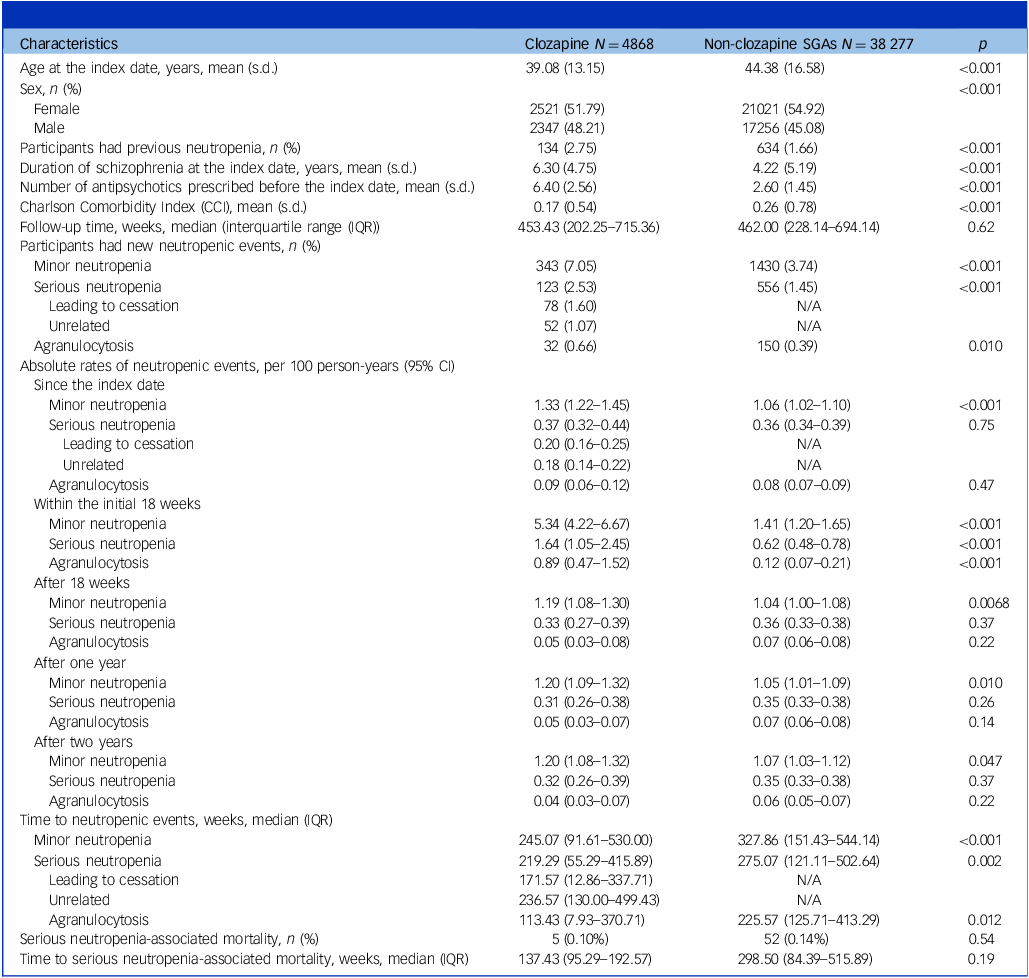
A total of 43 145 patients with schizophrenia-spectrum disorders were included, with 4868 incident clozapine users (51.79% female; mean age (s.d.): 39.08 (13.15) years) and 38 277 incident non-clozapine SGAs users (54.92% female; mean age (s.d.): 44.38 (16.58) years), with a median of 8.84 years follow-up period (Table 1).
Demographic characteristics and neutropenic events between users of clozapine and non-clozapine second-generation antipsychotics (SGAs)

Table 1 Long description
The table compares demographic characteristics and neutropenic events between users of clozapine and non-clozapine second-generation antipsychotics. It has 18 rows and 6 columns. The columns are labeled as Clozapine, Non-clozapine SGAs, and p. The rows include various demographic and event-related metrics. Row 1: Age at the index date, years, mean (s.d.), 39.08 (13.15), 44.38 (16.58), <0.001. Row 2: Sex, n (%), Female, 2521 (51.79), 21021 (54.92), <0.001. Row 3: Male, 2347 (48.21), 17256 (45.08), <0.001. Row 4: Participants had previous neutropenia, n (%), 134 (2.75), 634 (1.66), <0.001. Row 5: Duration of schizophrenia at the index date, years, mean (s.d.), 6.30 (4.75), 7.22 (5.19), <0.001. Row 6: Number of antipsychotics prescribed before the index date, mean (s.d.), 6.40 (2.56), 2.60 (1.45), <0.001. Row 7: Charlson Comorbidity Index (CCI), mean (s.d.), 0.17 (0.54), 0.26 (0.78), <0.001. Row 8: Follow-up time, weeks, median (interquartile range), 453.43 (202.25-715.36), 462.00 (228.14-694.14), 0.62. Row 9: Participants had new neutropenic events, n (%), 343 (7.05), 1430 (3.74), <0.001. Row 10: Minor neutropenia, 123 (2.53), 556 (1.45), <0.001. Row 11: Leading to cessation, 78 (1.60), /, <0.001. Row 12: Unrelated, 52 (1.07), /, <0.001. Row 13: Agranulocytosis, 32 (0.66), 150 (0.39), 0.010. Row 14: Absolute rates of neutropenic events, per 100 person-years, Since the index date, Minor neutropenia, 1.33 (1.22-1.45), 1.06 (1.02-1.10), <0.001. Row 15: Serious neutropenia, 0.37 (0.32-0.44), 0.36 (0.34-0.39), 0.75. Row 16: Leading to cessation, 0.20 (0.16-0.25), /, <0.001. Row 17: Unrelated, 0.18 (0.14-0.22), /, <0.001. Row 18: Agranulocytosis, 0.09 (0.06-0.12), 0.08 (0.07-0.09), 0.47. Row 19: Within the initial 18 weeks, Minor neutropenia, 5.34 (4.22-6.67), 1.41 (1.20-1.65), <0.001. Row 20: Serious neutropenia, 1.64 (1.05-2.45), 0.62 (0.48-0.78), <0.001. Row 21: Agranulocytosis, 0.89 (0.47-1.52), 0.12 (0.07-0.21), <0.001. Row 22: After 18 weeks, Minor neutropenia, 1.19 (1.08-1.30), 1.04 (1.00-1.08), 0.068. Row 23: Serious neutropenia, 0.33 (0.27-0.39), 0.36 (0.33-0.39), 0.37. Row 24: Agranulocytosis, 0.05 (0.03-0.08), 0.07 (0.06-0.08), 0.22. Row 25: After one year, Minor neutropenia, 1.20 (1.09-1.32), 1.05 (1.01-1.09), 0.101. Row 26: Serious neutropenia, 0.31 (0.26-0.38), 0.35 (0.33-0.38), 0.26. Row 27: Agranulocytosis, 0.05 (0.03-0.07), 0.07 (0.06-0.08), 0.14. Row 28: After two years, Minor neutropenia, 1.20 (1.08-1.32), 1.07 (1.03-1.12), 0.047. Row 29: Serious neutropenia, 0.32 (0.26-0.39), 0.35 (0.33-0.38), 0.37. Row 30: Agranulocytosis, 0.04 (0.03-0.07), 0.06 (0.05-0.07), 0.22. Row 31: Time to neutropenic events, weeks, median (IQR), Minor neutropenia, 245.07 (91.61-530.00), 327.86 (151.43-544.14), <0.001. Row 32: Serious neutropenia, 219.29 (65.29-415.89), 275.07 (121.11-502.64), 0.002. Row 33: Leading to cessation, 171.57 (12.86-337.71), /, <0.001. Row 34: Unrelated, 236.57 (130.00-499.43), /, <0.001. Row 35: Agranulocytosis, 113.43 (79.3-370.71), 225.57 (125.71-413.29), 0.012. Row 36: Serious neutropenia-associated mortality, weeks, median (IQR), 137.43 (95.29-192.57), 298.50 (84.39-515.89), 0.19.
Incidence of neutropenic events
Clozapine users had higher incidence rates of serious neutropenia (2.53%), minor neutropenia (7.05%) compared with the non-clozapine SGA group (1.45 and 3.74%, respectively), and with earlier occurrence of neutropenia events compared with non-clozapine SGA users (Table 1). After adjusting for person-years of exposure, the rate of minor neutropenia was higher among clozapine users (1.33 per 100 person-years; 95% CI, 1.22–1.45) than among non-clozapine SGA users (1.06 per 100 person-years; 95% CI, 1.02–1.10). In contrast, the rates of serious neutropenia did not differ significantly between clozapine (0.37 per 100 person-years; 95% CI, 0.32–0.44) and non-clozapine SGA users (0.36 per 100 person-years; 95% CI, 0.34–0.39). The incidence rate of serious neutropenia-associated mortality was comparable between clozapine users (0.10%, N = 5) and non-clozapine SGA users (0.14%, N = 52), with no between-group difference in time to serious neutropenia-associated mortality (Table 1). More clozapine users (N = 32, 0.66%) experienced agranulocytosis than non-clozapine SGA users (N = 150, 0.39%), with no difference in the incidence rate (Table 1). Among the 373 clozapine users who experienced minor neutropenia, only 3.31% (N = 11) developed serious neutropenia leading to cessation, and 0.29% (N = 1) developed agranulocytosis (Supplementary Fig. 1).
Trajectories of neutropenic events
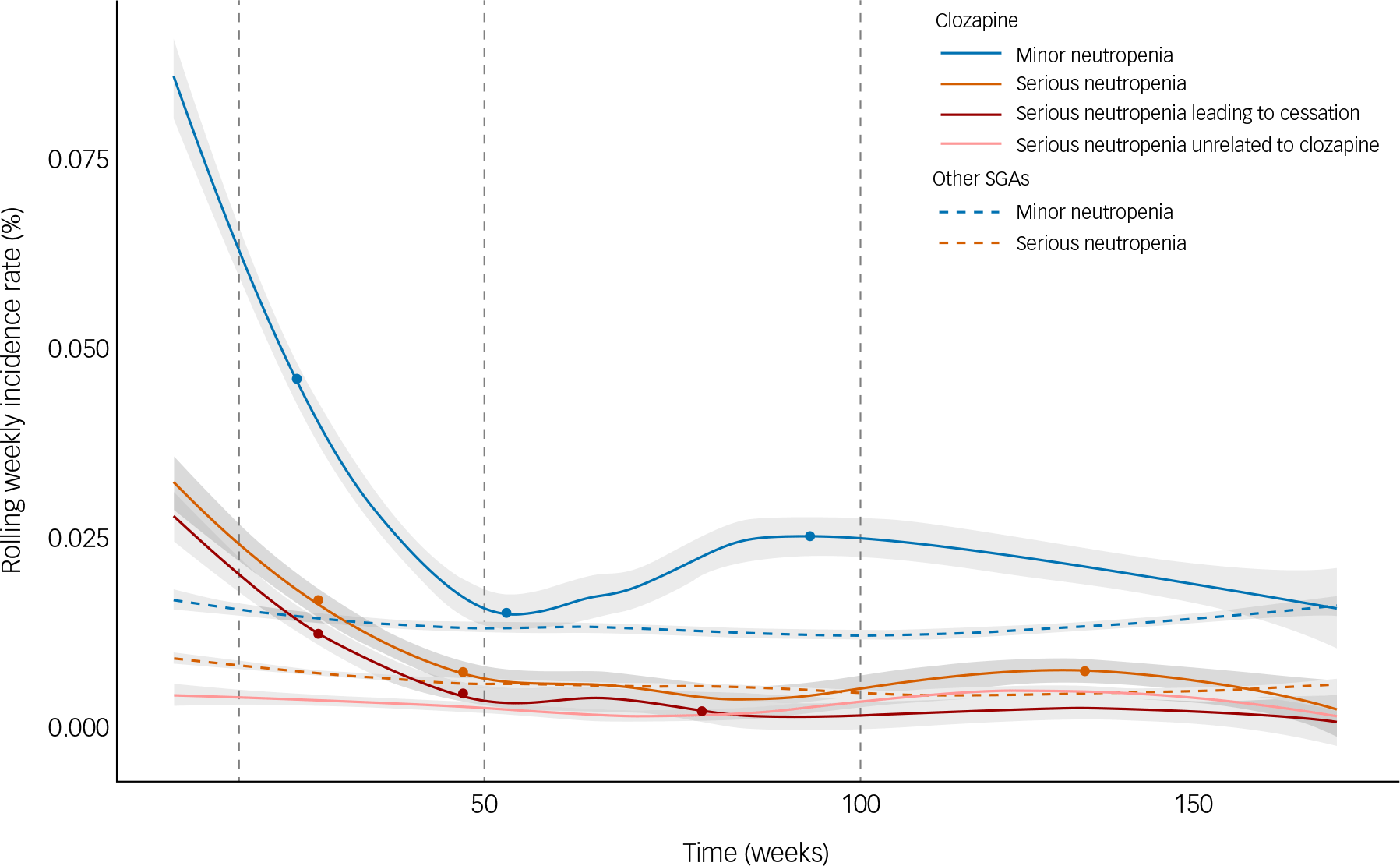
Clozapine users showed significantly higher weekly incidence rates of both serious and minor neutropenia during the first 18 weeks compared with non-clozapine SGA users, which declined to comparable levels by 1 year and stabilised thereafter (Fig. 1, Supplementary Tables 1–2). Bayesian change-point analysis identified distinct change points for clozapine-associated events: minor neutropenia (26, 56 and 97 weeks), serious neutropenia (29, 49 and 135 weeks) and serious neutropenia leading to cessation (29, 49 and 82 weeks). The trajectory of clozapine-related agranulocytosis mirrored that of serious neutropenia leading to cessation, with change points identified at 29, 50 and 81 weeks (Supplementary Fig. 2).
Rolling weekly incidence rate of neutropenic events in clozapine versus non-clozapine SGA users. Locally estimated scatterplot smoothed (span = 0.75) rolling weekly incidence rates (averaged over 9 weeks) showing: (a) minor and serious neutropenia in clozapine versus non-clozapine SGAs; (b) serious neutropenia subgroups (leading to cessation and unrelated) in clozapine users. Vertical dashed lines indicate 18 weeks, 1 year (52 weeks) and 2 years (104 weeks). Change points marked for clozapine users: minor neutropenia (26, 56, 97 weeks), serious neutropenia (29, 49, 135 weeks) and serious neutropenia leading to cessation (29, 49, 82 weeks). SGA, second-generation antipsychotic.

Incidence rate ratios
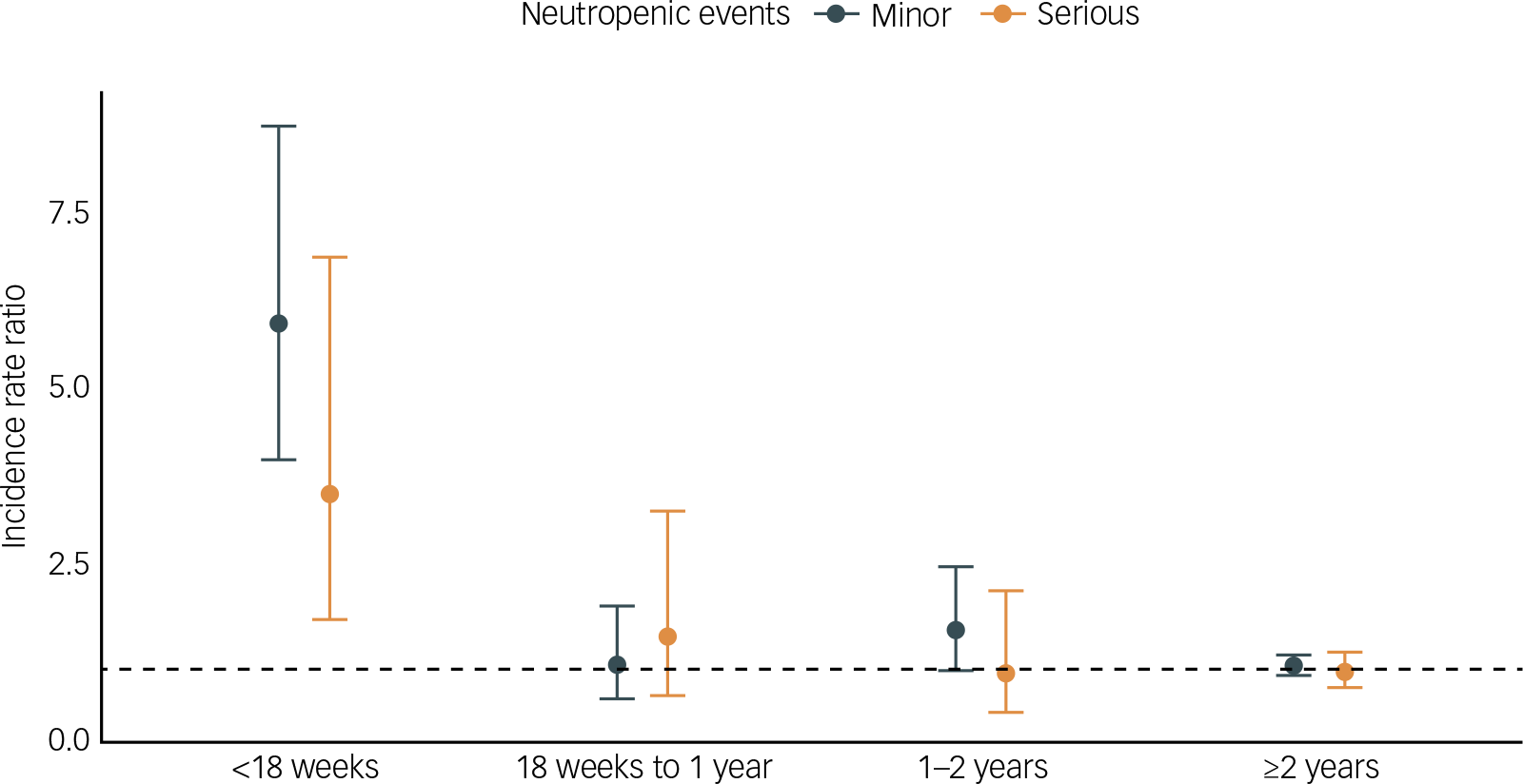
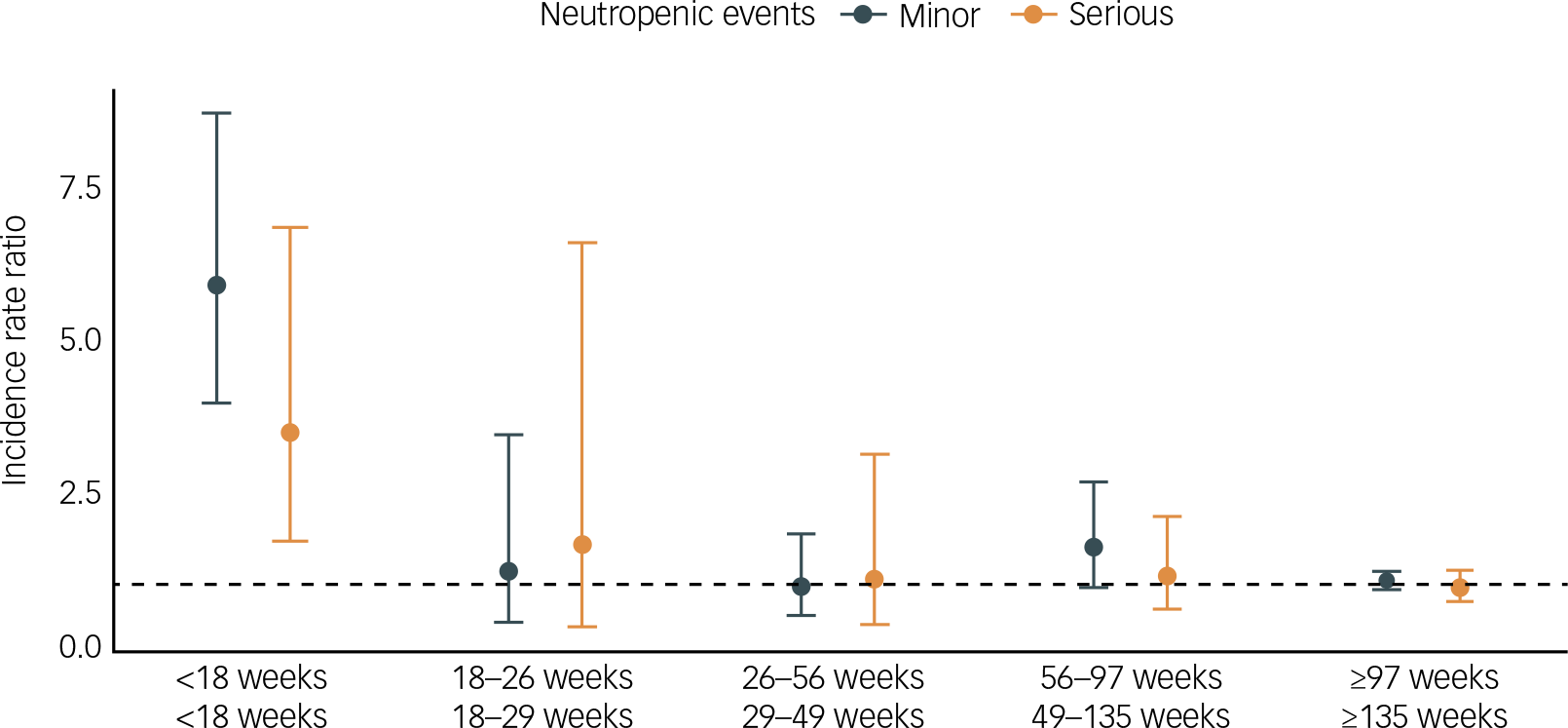
During the initial 18-week period, clozapine use was associated with significantly elevated risks for both minor neutropenia (IRR, 5.91; 95% CI, 3.96–8.70) and serious neutropenia (IRR, 3.48; 95% CI, 1.70–6.84) compared with non-clozapine SGA use, with the differences attenuated after the initial 18 weeks without statistical significance (Fig. 2, Supplementary Table 3). We redefined the follow-up periods by Bayesian-derived change points, and the IRRs across these periods revealed that the differences between clozapine and non-clozapine SGA groups were only significant during the initial 18 weeks (Fig. 3, Supplementary Table 4). Accordingly, the IRR for clozapine versus non-clozapine SGAs was highest in the initial 18 weeks for clozapine-related agranulocytosis (IRR, 22.10; 95% CI, 7.38–63.30) (Supplementary Table 6) and declined thereafter. This pattern of decline was consistent across both the pre-defined (Supplementary Fig. 3) and change-point-defined time intervals (Supplementary Fig. 4, Supplementary Table 7).
Incidence rate ratios of neutropenic events for clozapine versus non-clozapine second-generation antipsychotics (SGAs) across successive follow-up periods. Observation periods: <18 weeks, 18 weeks to 1 year, 1–2 years, ≥2 years. All models were adjusted for age, sex, schizophrenia duration at index date, neutropenia history and prior antipsychotic count.

Incidence rate ratios of neutropenic events for clozapine versus non-clozapine second-generation antipsychotics (SGAs) across successive follow-up periods with identified time points. Observation periods: minor neutropenia: <18, 18–26, 26–56, 56–97, ≥97 weeks; neutropenia periods: <18, 18–29, 29–49, 49–135, ≥135 weeks. All models were adjusted for age, sex, schizophrenia duration at index date, neutropenia history and prior antipsychotic count.

Age- and sex-stratified analyses
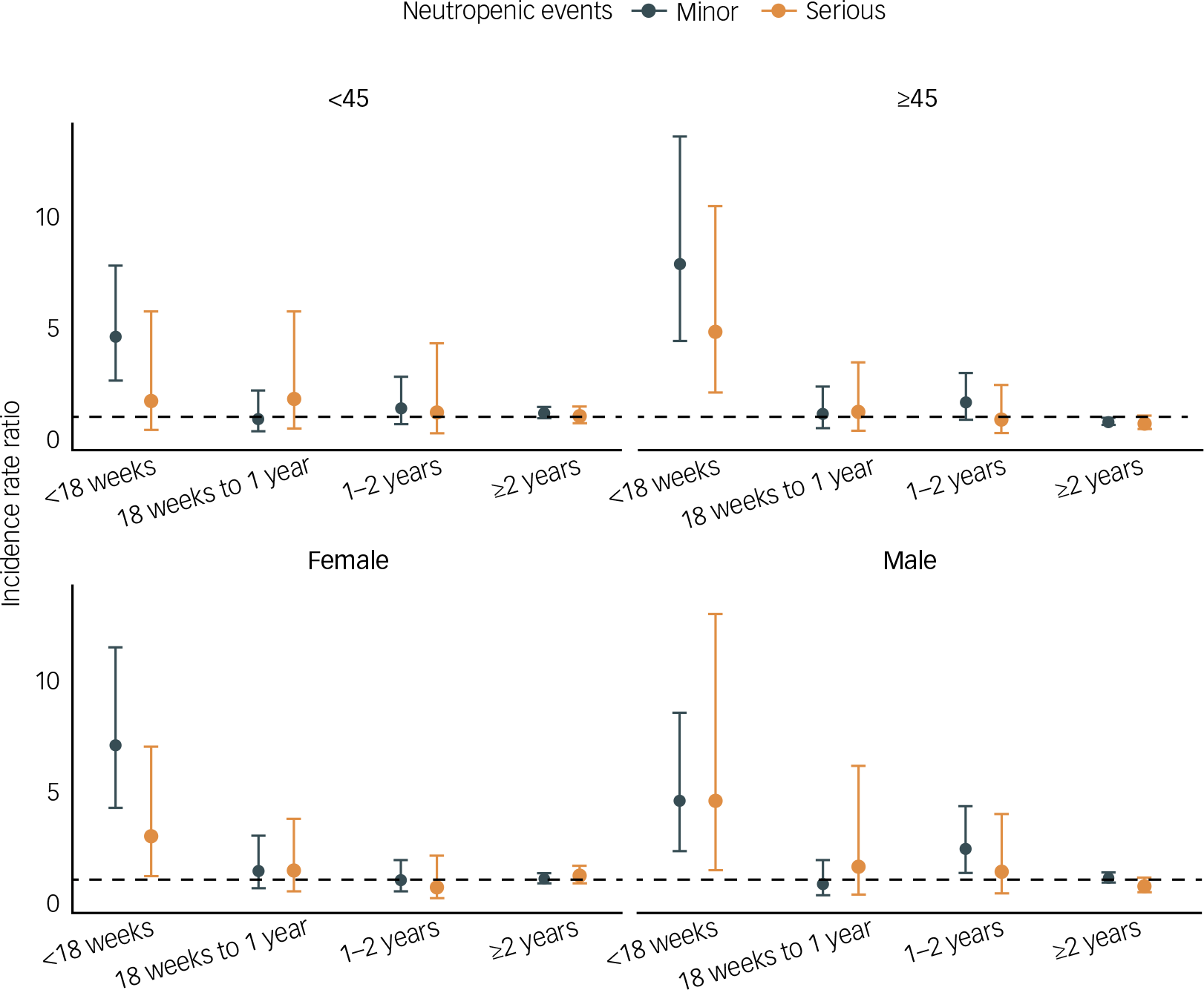
While most subgroups replicated the primary finding, two notable exceptions emerged (Fig. 4). First, whilst the older patients (≥45 years) maintained patterns consistent with the primary analyses, the younger group (<45 years) exhibited no significant clozapine-associated risk of serious neutropenia, even during the initial 18 weeks. Sex-stratified analyses further revealed that the male group had a transiently elevated risk of minor neutropenia in the 1–2 year period (IRR, 2.39; 95% CI, 1.29–4.29), while female patients showed no deviation from the primary findings (Supplementary Table 5).
Incidence rate ratios of neutropenic events for clozapine versus non-clozapine second-generation antipsychotics (SGAs) across successive follow-up periods, stratified by age (45-year cut-off) and sex groups. Observation periods: <18 weeks, 18 weeks to 1 year, 1–2 years, ≥2 years. The age-stratified models were adjusted for sex, schizophrenia duration at index date, neutropenia history and prior antipsychotic count. The sex-stratified models were adjusted for age, schizophrenia duration at index date, neutropenia history and prior antipsychotic count.

Sensitivity analyses
The robustness of the initial elevated risk period is reinforced by the sensitivity analyses with a shifted cohort, which applied an 18-week and a Bayesian model-identified 30-week risk window, both of which yielded generally consistent results (Supplementary Figs 5–8, Supplementary Tables 8–10). In sensitivity analyses further controlling for the CCI (see Supplementary Table 11 for specific items), results remained similar, except for a marginally elevated risk of minor neutropenia in the clozapine group between 1 and 2 years (Supplementary Fig. 9, Supplementary Table 12).
Discussion
This population-based cohort study compared neutropenia risk between 4868 incident clozapine users and 38 277 users of non-clozapine SGAs in Hong Kong, followed up for a median of 8.84 years. The incidence rate of serious neutropenia in the clozapine group was 0.37 per 100 person-years, compatible with that of the non-clozapine SGAs group. However, clozapine was associated with significantly higher rates of both minor and serious neutropenia during the first 18 weeks, with risks declining to levels comparable to non-clozapine SGAs thereafter. Three distinct longitudinal changing points were identified for neutropenia using Bayesian change-point analysis: (a) 26–29 weeks; (b) 49–56 weeks; (c) 82–135 weeks. Subgroup analyses highlighted important variations: older patients (≥45 years) exhibited risk patterns consistent with the overall findings, whereas younger patients (<45 years) did not experience a significant early risk of serious neutropenia. Results of sensitivity analyses removing the COVID period remained the same.
Using the same definition in the Australian study, Reference Northwood, Myles, Clark, Every-Palmer, Myles and Kisely21 this Asian population had a similar incidence rate of serious neutropenia leading to clozapine cessation (0.2 per 100 person-years). However, agranulocytosis incidence (0.09 per 100 person-years) was much lower than that of the recent Finnish study (17.3 per 10 000 person-years). Reference Rubio, Kane, Tanskanen, Tiihonen and Taipale22 Though the use of different definitions could be an explanation, this result is compatible with previous literature where the Asian population had a lower CLIA than the Western population. Reference Tang, Mao, Jiang, Chen, Wang and Cai15 The most consistent longitudinal pattern of neutropenia in our study, together with previous population-based studies, Reference Northwood, Myles, Clark, Every-Palmer, Myles and Kisely21,Reference Rubio, Kane, Tanskanen, Tiihonen and Taipale22 is the elevated risk of neutropenia and agranulocytosis in the clozapine group compared with the non-clozapine group over the first 18 weeks of medication initiation. While the incidence of neutropenia did not differ significantly between the clozapine and non-clozapine SGA groups after the initial 18 weeks, the trajectory for the clozapine group began to flatten after a second change point at 49–56 weeks (approximately 1 year), as shown in Fig. 1. The third significant change point of this trajectory was at 82–135 weeks, about 1.5 to 2.5 years, reflecting a consistent flattening of the longitudinal trajectories of the incidence rate. Furthermore, neutropenia-related mortality in the clozapine group was comparable to that in the non-clozapine SGA group and was relatively low. Thus, our results from an Asian population provide solid evidence in support of changing the current clozapine blood-monitoring schedule. This aligns with suggestions from the Australian study Reference Northwood, Myles, Clark, Every-Palmer, Myles and Kisely21 and the recent updated recommendation of the European Medical Agency, Reference Verdoux, Bittner, Hasan, Qubad, Wagner and Lepetit10,35 which advise weekly neutrophil monitoring during the first 18 weeks of clozapine initiation, then monthly till 2 years. After this period, monitoring could be integrated into annual physical examinations, akin to the practice for non-clozapine SGAs. Reference Siskind, Northwood, Pillinger, Chan, Correll and Cotes28 The FDA has also removed the Risk Evaluation and Mitigation Strategy (REMS) programme for clozapine recently, though retaining the existing ANC monitoring frequency. 36,Reference Kelly, Kane, Love and Cotes37 Though a slight rise in minor neutropenia events was observed between 50 and 100 weeks, which might be related to cumulative exposure effects or delayed idiosyncratic reactions in a small subset of susceptible individuals, the recommended continued monthly monitoring up to 2 years (104 weeks) would be sufficient to capture such clinically non-significant late-onset minor neutropenia.
Subgroup analyses emphasised age and sex effects. The more prominent risk of clozapine-related serious neutropenia in the older population may reflect the known pharmacokinetic changes in older adults that lead to higher plasma clozapine levels and the established increased prevalence of agranulocytosis with advancing age. Reference Guenette, Powell, Johnston, Foussias, Agid and Hahn26,Reference Lock, Legge, Kappel, Willcocks, Helthuis and Jansen38 Apart from a higher transient risk of minor neutropenia between 1 and 2 years of clozapine treatment in males, no major differences in longitudinal trajectories of neutropenic incidence between sexes were seen. These results echoed findings from a childhood-onset schizophrenia cohort. Reference Maher, Tan, Tossell, Weisinger, Gochman and Miller27 On the other hand, the Australia–New Zealand cohort study observed that male patients had lower odds of both minor neutropenia and severe neutropenia leading to clozapine cessation compared with females. Reference Northwood, Myles, Clark, Every-Palmer, Myles and Kisely21 These results thus suggested the presence of age and sex-specific risks, highlighting the need for tailored blood-monitoring schedules. The transiently elevated risk of minor neutropenia in males between 1 and 2 years (IRR 2.39) is an intriguing observation that warrants further investigation. It may reflect a delayed biological adaptation, but could also be influenced by surveillance bias, a statistical artefact from small event counts or residual confounding that is specific to male clozapine users.
The comparable incidence of serious neutropenia between clozapine and non-clozapine SGA users aligns with recent meta-analyses, Reference Myles, Myles, Xia, Large, Kisely and Galletly8 supporting the view that clozapine’s haematologic risk is manageable. Furthermore, the frequent detection of benign, transient neutropenia – rarely progressing to serious neutropenia – underscores that minor neutropenia may not have clinical significance in relation to severe neutropenia, supporting more nuanced management. However, the risk of serious neutropenia in patients with schizophrenia, whether taking clozapine or non-clozapine SGAs, substantially exceeds rates observed in the general population. Reference van Staa, Boulton, Cooper, Hagenbeek, Inskip and Leufkens39 The elevated risk of neutropenia in patients with schizophrenia in general may explain the findings of an elevated risk of hospital-registered infectious disease even before diagnosis, compared with the general population. Reference Pankiewicz-Dulacz, Stenager, Chen and Stenager40
Study strengths and limitations
This study has several strengths, including a large, population-based cohort that enhances generalisability and statistical power, and the use of a comparator group of users of non-clozapine SGAs to strengthen causal inference. The application of Bayesian change-point analysis provided data-driven identification of critical risk periods, and subgroup analyses offered insights for personalised monitoring. While our findings align with studies in Western populations, they provide novel data from an Asian context, increasing global relevance. Limitations include the potential for residual confounding by unmeasured clinical and lifestyle factors. Generalisability may be influenced by Hong Kong’s specific healthcare setting and population ethnicity. Medication exposure was based on prescription records without adherence verification. Furthermore, we examined SGAs as a group without considering the varied neutropenic risk of individual drugs. Finally, surveillance bias is likely, as the SGAs comparator group underwent less frequent blood monitoring, potentially underestimating neutropenia incidence in that group. Despite the potential underestimates, the IRRs of both the minor and serious neutropenia were compatible between the clozapine and SGA groups, and the overall adjusted rates of serious neutropenia were similar between the two groups. This further supports the conclusion that clozapine-specific excess risk diminishes to, or below, the background level over time. Additionally, we could not systematically exclude individuals with benign ethnic neutropenia (BEN). Though BEN is likely to be low in Chinese populations, individual-level risk stratification based on prior neutropenia history may still be an important direction for future research.
In conclusion, this study indicated that the risk of serious neutropenia was highest during the first 18 weeks of clozapine initiation compared with the non-clozapine SGAs, which decline over time. Our data-driven analysis supports the recommendation for weekly blood monitoring during the first 18 weeks, monthly till 2 years, then similar frequency as that of non-clozapine SGAs. The age- and sex-specific risk of neutropenic patterns support personalised monitoring schedules. Future research should focus on the underlying mechanisms of neutropenia in patients with schizophrenia to enable further refinement of risk-stratified monitoring guidelines.
Supplementary material
The supplementary material is available online at https://doi.org/10.1192/bjp.2026.10726
Data availability
The data are part of the registry data and cannot be made available publicly.
Author contributions
H.Z. and S.K.W.C. had full access to all of the data in the study and take responsibility for the integrity of the data and the accuracy of the data analysis. S.K.W.C. is the corresponding author. Concept and design: H.Z., H.L., D.S., S.K.W.C. Acquisition, analysis or interpretation of data: H.Z., H.L., D.S., K.N., S.K.W.C. Drafting of the manuscript: H.Z., D.S., S.K.W.C. Critical revision of the manuscript for important intellectual content: H.Z., H.L., D.S., K.N., J.Y-M.T., S.S.Y.L., E.H.M.L., S.K.W.C. Obtaining funding: H.Z. Administrative, technical or material support: J.Y-M.T., C.-K.K., C.F.T., L.T.P., S.Y.J.L., Y.C.W., J.O.Y.W., S.K.W.C. Supervision: H.L., D.S., S.K.W.C.
Funding
Health and Medical Research Fund of the Health Bureau Hong Kong to Dr H Zhou (ref: 22233251). The funders had no role in the design and conduct of the study; collection, management, analysis and interpretation of the data; preparation, review or approval of the manuscript; and decision to submit the manuscript for publication.
Declaration of interest
None.


 Open access


eLetters
No eLetters have been published for this article.