Introduction
Pest management programs in apple orchards have historically centred on use of insecticides and miticides to control arthropod pests. Shifts towards less disruptive pest control programs began in the late 1960s with the adoption of control programs that conserve mite predators (Hoyt Reference Hoyt1969), and continued with the evolution and adoption of mating disruption for managing pest Lepidoptera (summarised in Jones et al. Reference Jones, Unruh, Horton, Mills, Brunner and Beers2009). Regulatory changes in the 1990s additionally prompted a shift away from broad-spectrum insecticides to less disruptive products (Jones et al. Reference Jones, Unruh, Horton, Mills, Brunner and Beers2009). These changes have created opportunities for growers to move increasingly towards integrated pest management programs that have an emphasis on biological control of pests.
Extensive sampling in orchards has shown that the predatory arthropod community inhabiting the canopy of apple trees is highly diverse (e.g., Chant Reference Chant1956; Dondale Reference Dondale1956; Oatman et al. Reference Oatman, Legner and Brooks1964; McCaffrey and Horsburgh Reference McCaffrey and Horsburgh1980; Carroll and Hoyt Reference Carroll and Hoyt1984; Solomon et al. Reference Solomon, Cross, Fitzgerald, Campbell, Jolly and Olszak2000). Capitalising on this potentially important source of pest mortality requires information about the basic natural history of these species, including their seasonal phenology in orchards. Knowledge of seasonal phenology helps predict which specific suite of predators may be present at the appropriate time of year to attack a given pest species. Also, information on phenology is needed to allow growers the option to time insecticide applications in a manner that minimises effects on natural enemies. Although we are seeing a shift by growers from broadly toxic insecticides to selective products, these selective products may nonetheless have disruptive effects on the natural enemy community if applied when susceptible life stages are present (Jones et al. Reference Jones, Unruh, Horton, Mills, Brunner and Beers2009).
This study is part of a large, multi-state project to develop new technology (Jones et al. Reference Jones, Steffan, Wiman, Horton, Miliczky and Zhang2011) and biological information that can be used by growers to take advantage of natural enemies in fruit and nut orchards. We had two objectives. First, we surveyed apple orchards located in central and southern Washington State to determine taxonomic composition and geographic distribution of predatory arthropods inhabiting the canopy of apple trees. Our survey focused on a large subset of the total predator community, namely the spiders (Araneae), predatory true bugs (Hemiptera: Heteroptera), lacewings (Neuroptera), and ladybeetles (Coleoptera: Coccinellidae), which we know from years of sampling comprise the most common taxa of generalist predators in orchard canopy (Carroll and Hoyt Reference Carroll and Hoyt1984; Miliczky et al. Reference Miliczky, Calkins and Horton2000; Miliczky and Horton Reference Miliczky and Horton2005). Second, we determined when, seasonally, adults and the immature stages of common taxa were present in orchards, to make inferences about generation numbers, seasonal occurrence in orchards, life stages occurring in orchards, and overwintering stage.
Materials and methods
Sites and sampling methods
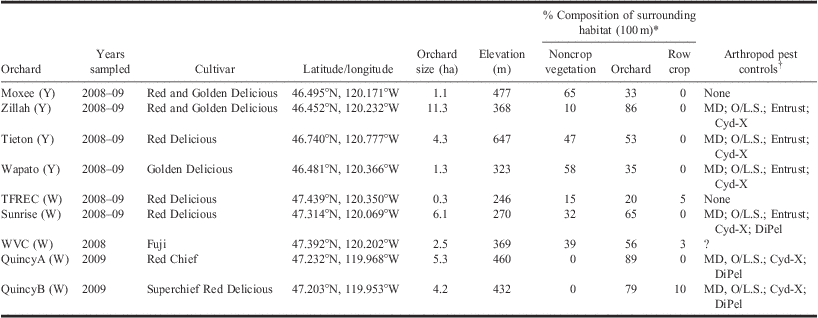
Canopy-dwelling spiders and predatory insects were collected from four orchards in south-central Washington State and from five orchards in central Washington State, hereafter referred to as the Yakima and Wenatchee sites, respectively (Table 1). Native habitat in the fruit-growing region of Yakima is composed primarily of shrub-steppe plants, dominated by sagebrush (Artemisia Linnaeus; Asteraceae) and grasses (Poaceae). The Wenatchee growing region includes more extensive stands of mixed hardwood/coniferous woodland, intermixed with shrub-steppe habitat especially eastwards from Wenatchee. Distances between orchards ranged from 3.5 to 110 km.
Location and characteristics of each orchard.

*Spatial data derived from orthographic images downloaded from the United States Department of Agriculture Geospatial Gateway (http://datagateway.nrcs.usda.gov). A layer of polygons was drawn in ArcMap (ArcGIS 9.2; ESRI, Redlands, California, United States of America) to circumscribe each orchard, using the orthophotographs as background. A 100 m buffer was created surrounding each orchard. A second layer of polygons was drawn to circumscribe the different landscape categories. Areas of each category were totalled for each orchard, with composition for each category then expressed as the proportion of the total surrounding area within the 100 m buffer.
†Cyd-X: biological insecticide (virus) directed at codling moth; DiPel: biological insecticide (derived from Bacillus thuringiensis) directed at pest Lepidoptera.
(Y), Yakima; (W), Wenatchee; TFREC, Tree Fruit Research and Extension Center; WVC, Wenatchee Valley College; MD, mating disruption; O, oil; L.S., lime sulphur.
Seven of the nine orchards were managed organically, while two orchards received no arthropod controls. The two orchards that received no arthropod controls were treated with antibiotics (for control of fire blight) and herbicides. Six of the nine orchards were sampled in both 2008 and 2009, whereas the remaining three orchards were sampled only in 2008 (Wenatchee Valley College [WVC]) or only in 2009 (QuincyA, QuincyB). Sampling at the WVC orchard was done only in 2008 because the grower shifted from organic management in 2008 to conventional management in 2009; the two Quincy sites were added in 2009 to replace the WVC site (Table 1). At all but two sites, pest control programs during the 2008–2009 study showed no changes from the controls used in the 2 years preceding the study. The only exceptions were at the Wapato site, where Entrust was added to its organic program in 2008 and 2009, and the QuincyB site, which transitioned into organic production in 2008.
Orchard size varied between 0.3 and 11.3 ha (Table 1). Trees were mature (at least 10 years in age) at all locations. Habitats surrounding orchards were generally one of three types: predominantly noncrop vegetation (largely sagebrush-steppe plants); a mix of noncrop and orchard habitats; or, other orchards. The Tree Fruit Research and Extension Center (TFREC) site is part of the Washington State University-Wenatchee Experiment Station, and is surrounded by laboratories, storage buildings, and other structures. Arthropod pest controls included mating disruption for codling moth (Cydia pomonella [Linnaeus]; Lepidoptera: Tortricidae), oil and lime sulphur, Entrust (spinosad), and biological insecticides (DiPel, Cyd-X) for pest Lepidoptera. We note that while spinosad is approved for organic use, the compound may nonetheless harm certain groups of natural enemies (Williams et al. Reference Williams, Valle and Viñuela2003). We were unable to obtain spray records for the WVC site, as the orchard was removed from production following the 2009 season.
Canopy-dwelling arthropods were collected every 3–7 days at each orchard beginning in March and extending into September or October. Arthropods were collected by jarring specimens onto beating trays and collecting all specimens into vials for later sorting to species. Samples were taken in the morning as much as possible, when cool temperatures slowed insect movement on trays. Tray sizes were 0.5 m2 (Yakima), 0.23 m2 (Wenatchee 2008), or 0.10 m2 (Wenatchee 2009). Trays were smaller at the Wenatchee sites than the Yakima sites because parasitoids were being collected at the Wenatchee sites as part of another study, and these insects are more easily recovered from small trays than larger trays. Arthropod counts were adjusted to unit tray size for the statistical analyses. We sampled either 50 (Wenatchee) or 30 (Yakima) randomly selected trees at each orchard on each sampling date. One branch was sampled per tree. We selected branches that were 1–2 m above ground, located on the perimeter of the tree canopy. Specimens at the Yakima sites were collected entirely by one person. Specimens from the Wenatchee sites were collected by five to seven people both years. One person (E.R.M.) sorted and identified all specimens. Voucher specimens have been deposited into the M.T. James Entomological Collection at Washington State University (insects) and into the Burke Museum of Natural History and Culture at the University of Washington (spiders).
Arthropods were almost always identified to species. Specimens within certain difficult species complexes (e.g., Phytocoris Fallén [Hemiptera: Miridae], larval and female Hemerobius Linnaeus [Neuroptera: Hemerobiidae]) were identified to genus. Identifications were made using several sources of information: our extensive familiarity with the insect and spider faunas in orchards of the Pacific Northwest, published keys, and rearing of immatures. The majority of specimens were identified by relying upon our familiarity with the arthropod fauna in orchards, obtained from over a decade of sampling in Washington State orchards (Horton et al. Reference Horton, Miliczky, Broers, Lewis and Calkins2001, Reference Horton, Broers, Hinojosa, Lewis, Miliczky and Lewis2002; Miliczky and Horton Reference Miliczky and Horton2005, Reference Miliczky and Horton2007; Miliczky et al. Reference Miliczky, Horton and Calkins2008). Limited rearing of immature spiders and larval Coccinellidae was done to confirm identifications of less common species or of species within some multi-species complexes. Juvenile spiders in some multi-species genera (Phidippus Koch [Salticidae], Theridion Walckenaer [Theridiidae]) were occasionally categorised to species on the basis of whether adults of the species were the sole or primary representatives of the genus at the site in question.
Data analysis
Data summaries include primarily graphical presentation of results, with only limited statistical analysis. Statistical analyses were done using the seasonal totals collected at each site for each of the 15 samples (7 sites in 2008 and 8 sites in 2009). Due to differences between the two geographical locations in size of trays and in numbers of trees sampled per orchard (50 versus 30 trees per orchard, in Wenatchee and Yakima, respectively), the counts were standardised to express numbers as totals per unit area of tray (adjusted for sample sizes). Nonmetric multidimensional scaling (NMDS) was used to assess similarity of communities among the 15 samples, with the analyses done separately for spiders and insects. The analyses included the combined counts of adult and immature specimens for each taxon except the Coccinellidae; larval Coccinellidae were pooled into a separate, single taxon. For those genera composed of complexes of species not easily separated, we used totals for the genus rather than species totals. Taxa with fewer than 10 specimens summed across all 15 samples were excluded from the analyses. The NMDS ordination was done in PC-ORD (McCune and Mefford Reference McCune and Mefford2011) using Sørensen distances. This distance measure is particularly suitable for species community data because it is less affected by zeroes (i.e., species absences) and outliers than other distance measures (McCune and Grace Reference McCune and Grace2002; Peck Reference Peck2010; McCune and Mefford Reference McCune and Mefford2011).
Samples were found by NMDS to cluster by geography, so we used indicator species analysis (Dufrêne and Legendre Reference Dufrêne and Legendre1997) to determine which taxa were commonly associated with one of the two geographic regions. The analysis calculates an index that combines information both on abundance of each taxon in a priori defined groups, with presence or absence of taxa among samples or sites within groups. Indicator values vary between 0 (no association with groups) and 100 (perfect association). Statistical significance of an indicator value was tested using a Monte Carlo test. Because our 15 samples (Table 1) were not fully independent (i.e., 6 orchards were sampled both in 2008 and 2009), we eliminated those three orchards that were sampled only in 1 year (retaining the six orchards that were sampled both years), and then blocked the indicator species analysis by year (Peck Reference Peck2010). The analyses were done using PC-ORD, again following standardisation of the count data to a unit tray area. Analyses were done separately for insects and spiders.
Results
Orchard assemblages
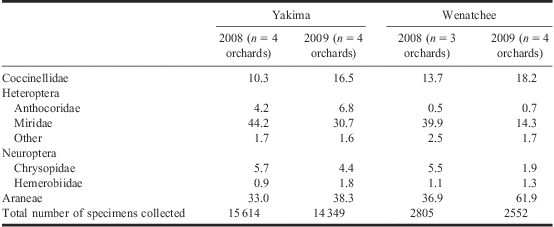
We collected over 35 000 specimens of spiders, predatory true bugs, ladybeetles, and lacewings from the nine orchards (Table 2). Spiders and predatory Miridae were collected from trays in the highest numbers, followed by ladybeetles and green lacewings (Table 2). Spider numbers increased substantially in 2009 at the Wenatchee sites due to addition of the two Quincy orchards (2009), from which very large numbers of spiders (especially Salticidae) were collected. Totals were substantially higher in the Yakima collections than the Wenatchee collections, in part due to the larger tray used at the Yakima orchards and the larger number of orchards sampled in Yakima (eight in Yakima versus seven in Wenatchee).
Percentage taxonomic composition of specimens and total number of specimens; pooled adult and immature specimens.

Note: Total specimens by orchard shown in parentheses – Moxee 2008 (4108), 2009 (6546); Zillah 2008 (2075), 2009 (1866); Tieton 2008 (4886), 2009 (2801); Wapato 2008 (4545), 2009 (3136); TFREC 2008 (921), 2009 (707); Sunrise 2008 (595), 2009 (433); WVC 2008 (1289); QuincyA 2009 (843); QuincyB 2009 (569).
TFREC, Tree Fruit Research and Extension Center; WVC, Wenatchee Valley College.
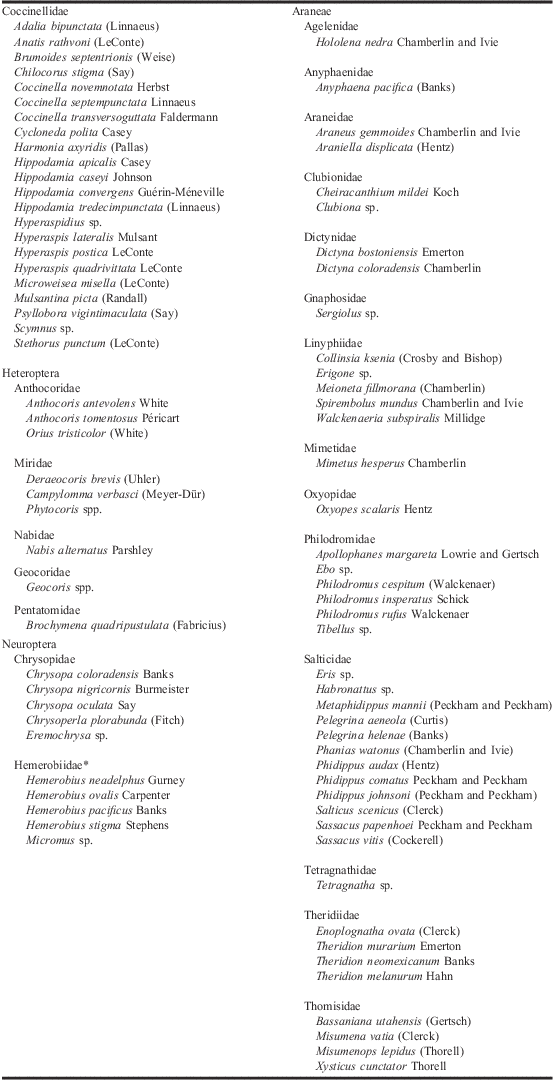
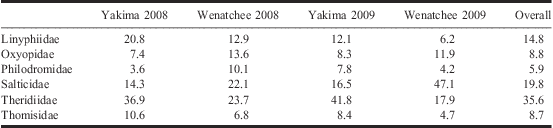
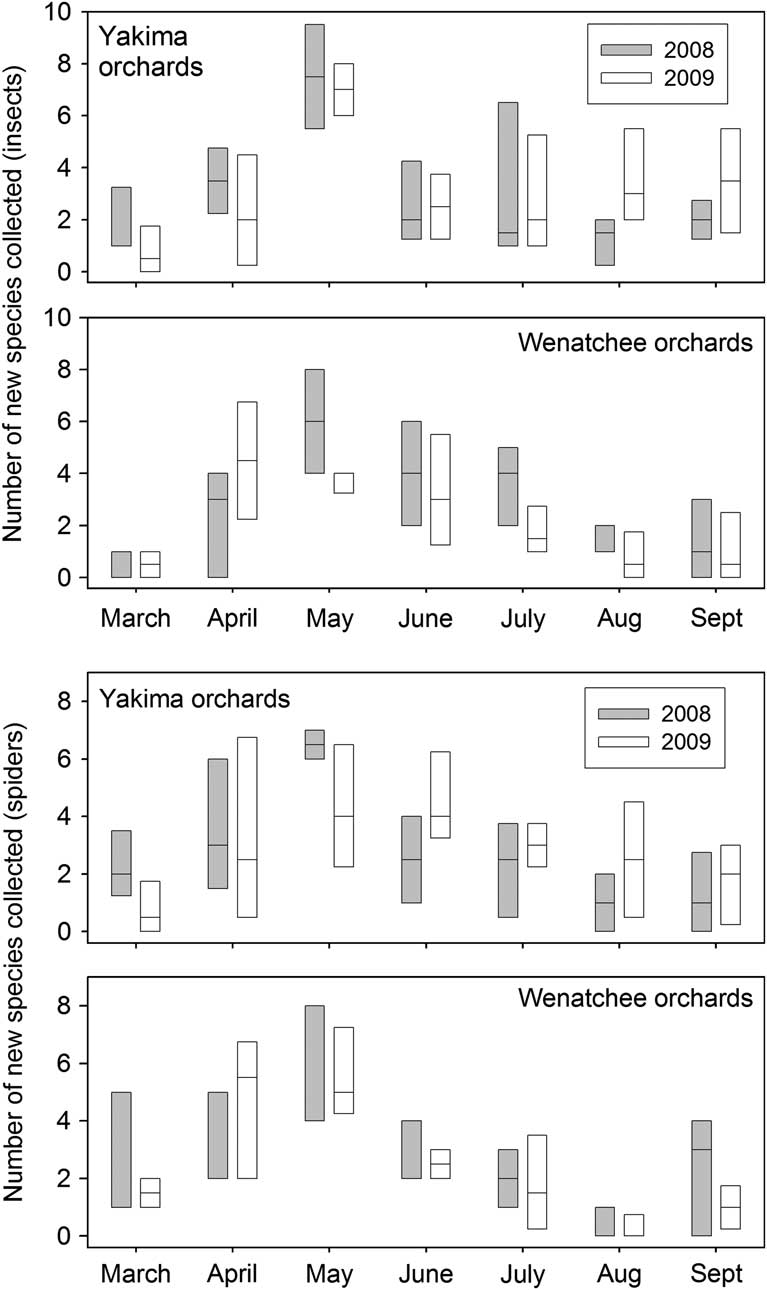
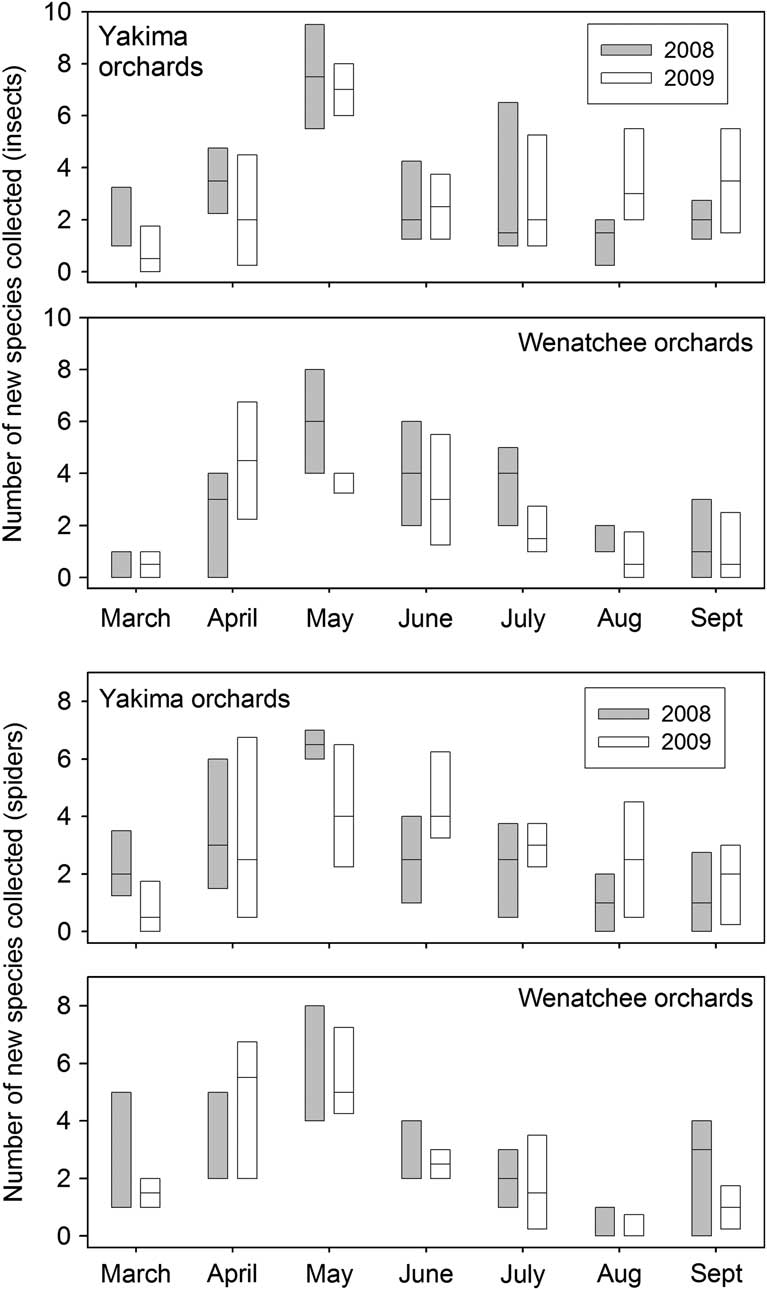
Taxonomic diversity was highest for the Araneae and Coccinellidae (Table 3). The spiders included identified representatives from 14 families. The jumping spiders (Salticidae) showed the highest diversity, and were represented by 12 species in eight genera. Theridiidae, Salticidae, and Linyphiidae were numerically the most abundant spiders in collections (Table 4). Coccinellidae included 22 identified taxa distributed among 15 genera (Table 3). The green and brown lacewings (Chrysopidae and Hemerobiidae) both included complexes of congeneric species (Chrysopa Leach: three species; Hemerobius: four identified species). Seasonal accumulation of new species (i.e., species not collected in any previous month of sampling) showed a sharp increase in May or in April and May for insects and spiders, respectively (Fig. 1). Previously uncollected species were found in samples well into September.
Genera and species of Coccinellidae, predatory Heteroptera, Neuroptera, and Araneae identified from samples taken at nine apple orchards in Central Washington State, 2008–2009.

Note: Keys or other publications consulted in identifying specimens included: Araneae – Levi (Reference Levi1957), Chamberlin and Gertsch (Reference Chamberlin and Gertsch1958), Dondale and Redner (Reference Dondale and Redner1978, Reference Dondale and Redner1982, Reference Dondale and Redner1990), Maddison (Reference Maddison1996), Dondale et al. (Reference Dondale, Redner, Paquin and Levi2003), Ubick et al. (Reference Ubick, Paquin, Cushing and Roth2005); adult Coccinellidae – Gordon (Reference Gordon1985), Acorn (Reference Acorn2007); larval Coccinellidae – Rees et al. (Reference Rees, Anderson, Bouk and Gordon1994), Rhoades (Reference Rhoades1996); adult Chrysopa – Penny et al. (Reference Penny, Tauber and DeLeon2000); larval Chrysopidae – Flint and Dreistadt (Reference Flint and Dreistadt1998); adult Hemerobiidae – Klimaszewski and Kevan (Reference Klimaszewski and Kevan1985).
*Female Hemerobius were not identified to species; identifications are for adult males only.
Percentage composition of spiders by family for most commonly collected families.

Box chart showing seasonal distribution in numbers of new species (i.e., those species not collected in any previous month of sampling) for Yakima and Wenatchee orchards. Insects: top two panels; spiders: bottom two panels. Samples sizes (number of orchards) for each box are either three (Wenatchee 2008) or four (all other samples). Each box shows median (horizontal line within box) plus 25th and 75th percentiles.
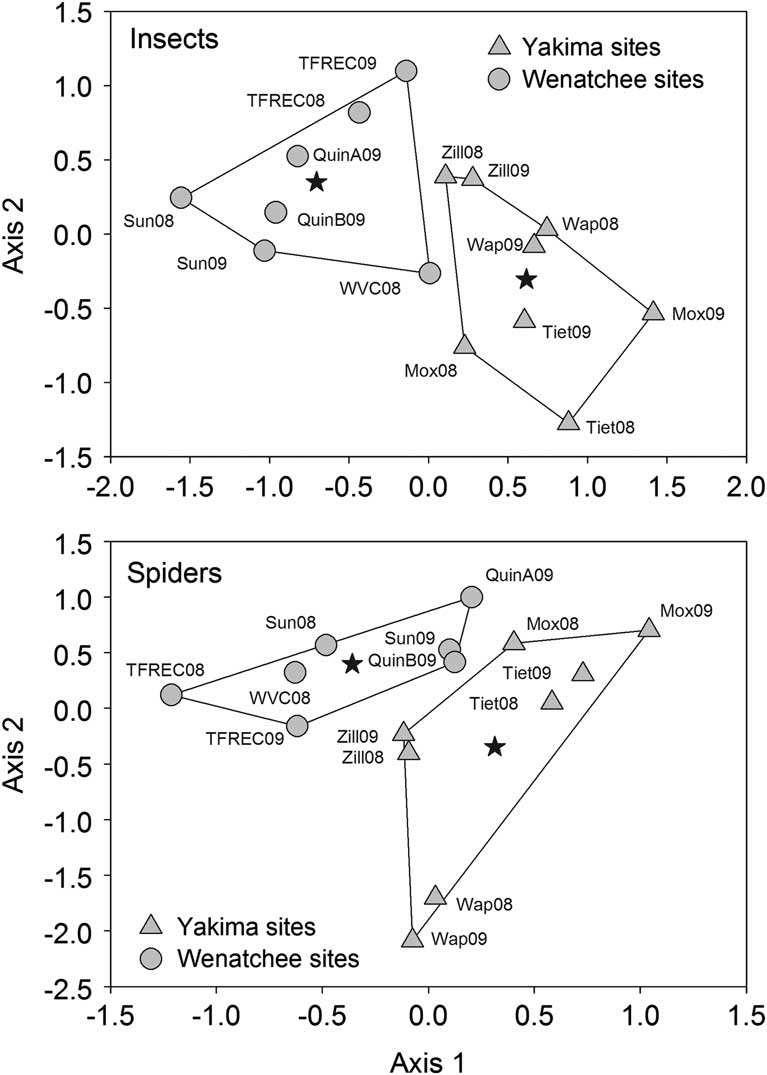
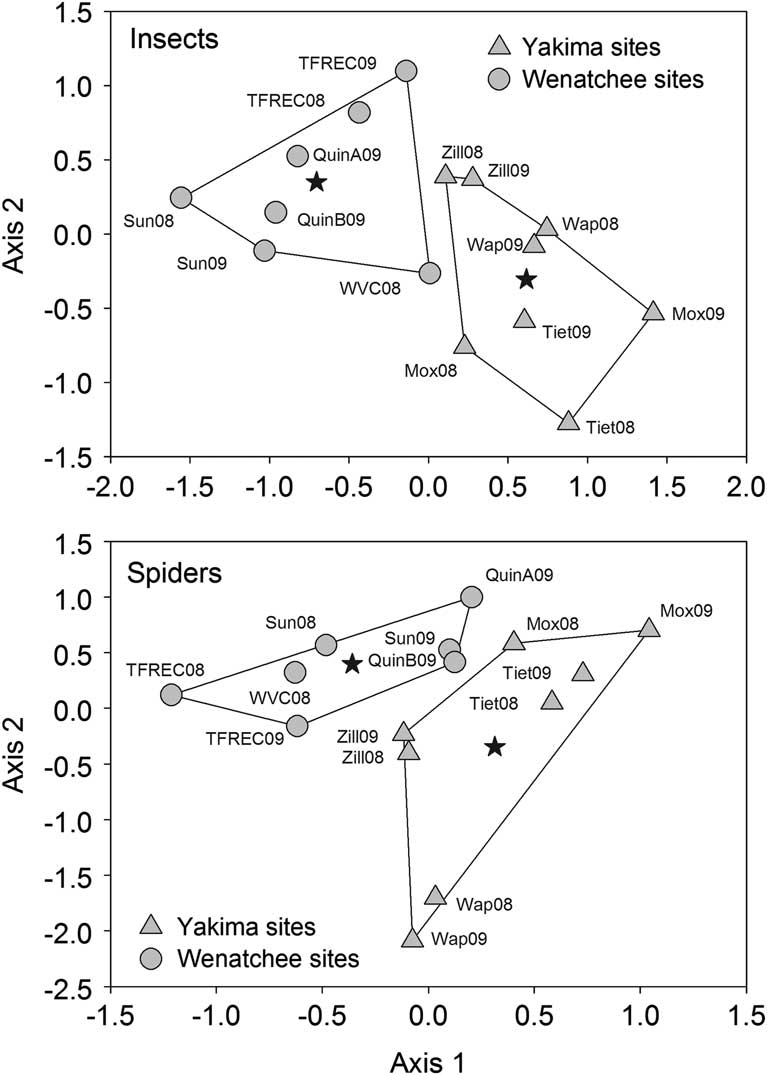
Ordination led to clustering of the 15 samples by geography (Wenatchee versus Yakima sites) for both the insects and spiders (Fig. 2); geographic groupings are shown by convex hulls, with centroids of the two groups depicted as stars. Final stress values for the two-dimensional solutions were 11.4 (insects) and 11.3 (spiders). The ordination also showed that pairs of samples collected in consecutive years at the same orchard often clustered together, suggesting that community composition was similar between years at a given site (e.g., note similarity of the insect communities at the Zillah orchard in 2008 and 2009; Fig. 2).
Nonmetric multidimensional scaling ordination of the 15 samples in taxonomic space (excludes taxa in which fewer than 10 specimens were collected). Convex hulls show grouping of samples by geographic location (Wenatchee versus Yakima); star symbols show centroids. Counts for three species complexes were included in the ordination at the genus level (Phytocoris spp., Geocoris spp., Hemerobius spp.); larval coccinellids pooled into a single category. Axis 1 and 2 explained 51% and 27% (insects), and 12% and 68% (spiders) of the variation in communities, respectively.
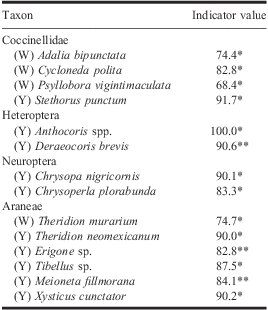
Indicator species analysis using geographic location (Wenatchee versus Yakima) as a grouping factor showed that several species were more common at one location than expected by chance (Table 5). Four taxa (three ladybeetle species and one species of spider) were significantly associated with the Wenatchee location (Table 5). The remaining 10 taxa showing significant association fell into the Yakima group. For some of these taxa, the groupings appeared to be a consequence of total numbers collected within a geographic region, rather than in absence of the taxon from one region. For example, the lacewing Chrysopa nigricornis Burmeister was collected from all but one orchard (TFREC 2009), but was substantially more abundant at the Yakima sites than the Wenatchee sites (counts adjusted to unit tray area). Other taxa, however, did exhibit noticeable geographic effects in presence/absence. Specimens of Anthocoris Fallén (Anthocoridae) were collected at all Yakima orchards, but were not collected at any Wenatchee orchard. Conversely, Adalia bipunctata (Linnaeus) (Coccinellidae) was collected at only one orchard in Yakima (two specimens), but was collected in six of the seven samples from Wenatchee.
List of species showing statistically significant indicator values.

(W) – significant association with the Wenatchee group; (Y) – significant association with the Yakima group. Indicator values vary between 0 (no association) and 100 (complete association).
*P < 0.05; **P < 0.01.
Phenology
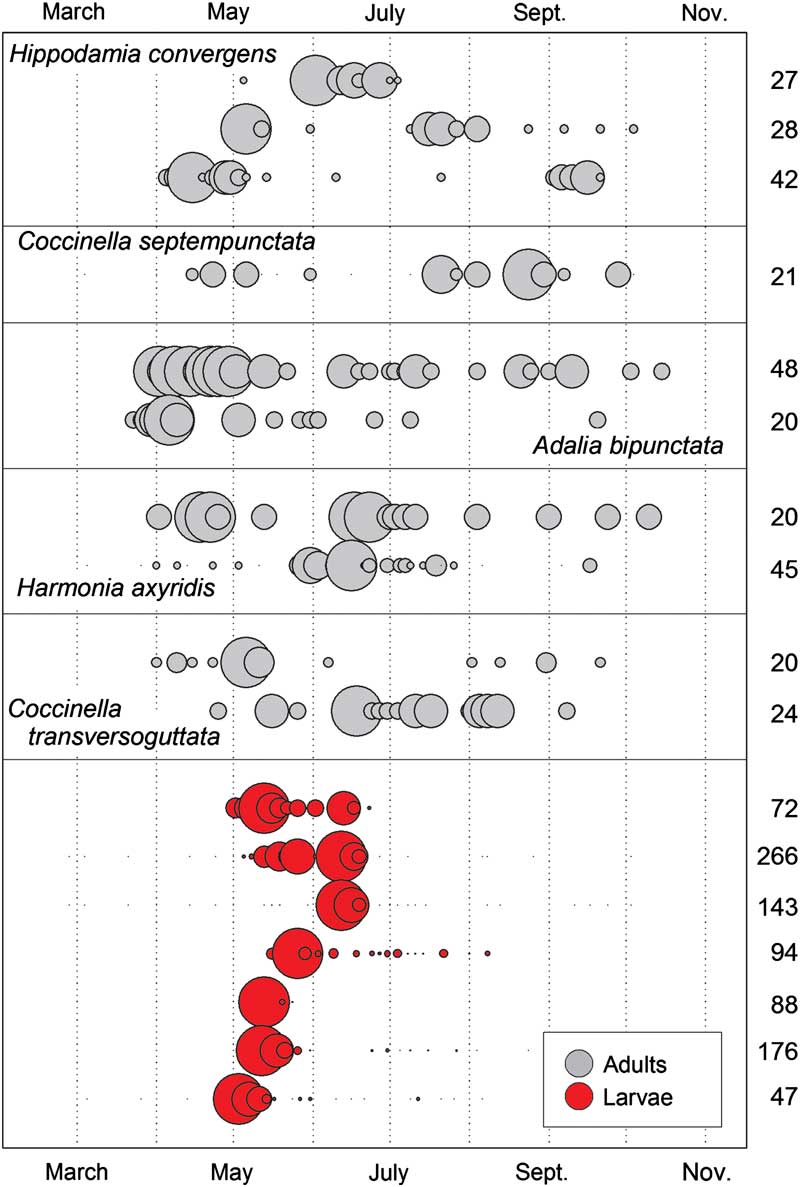
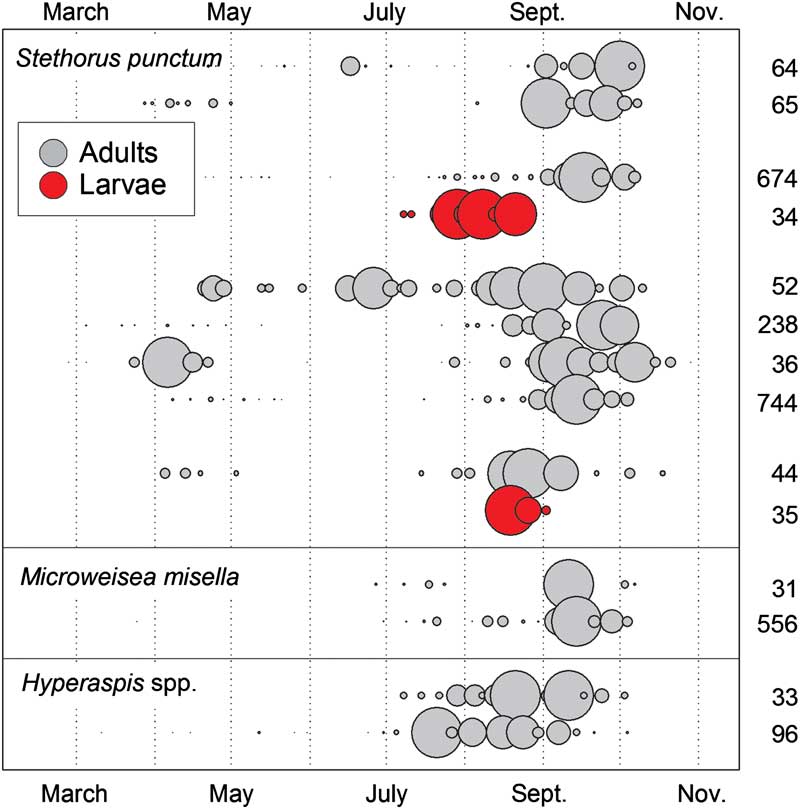
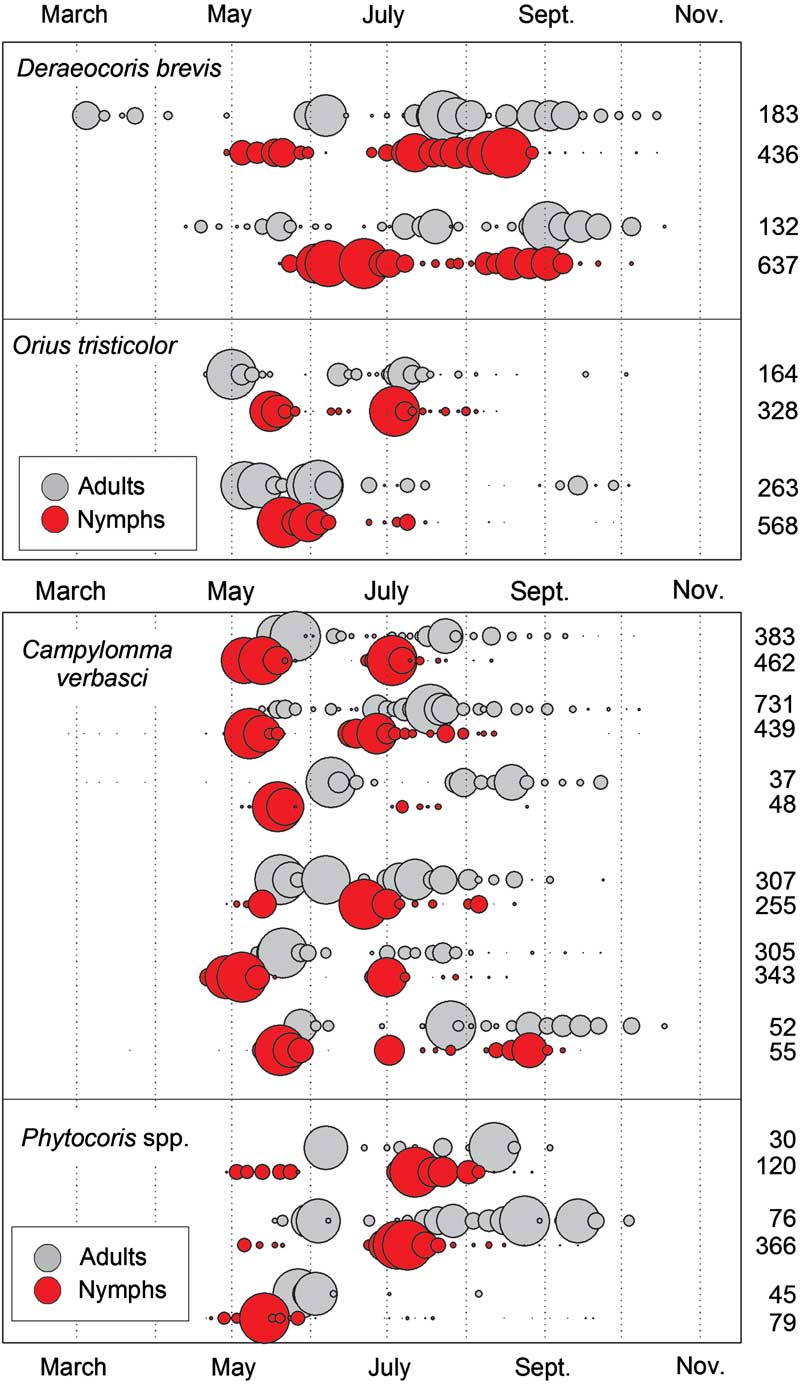
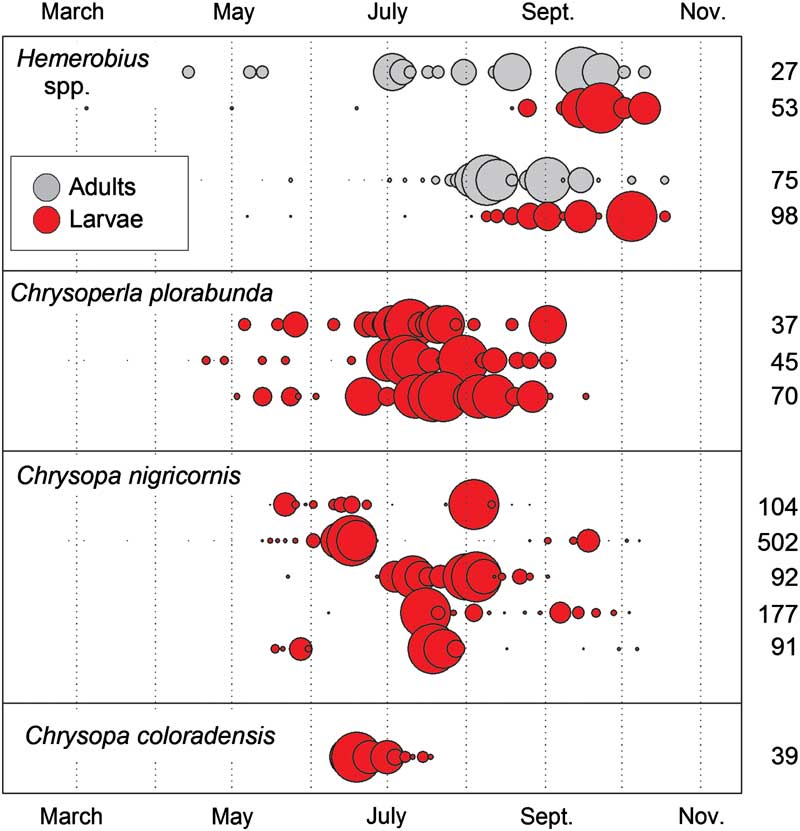
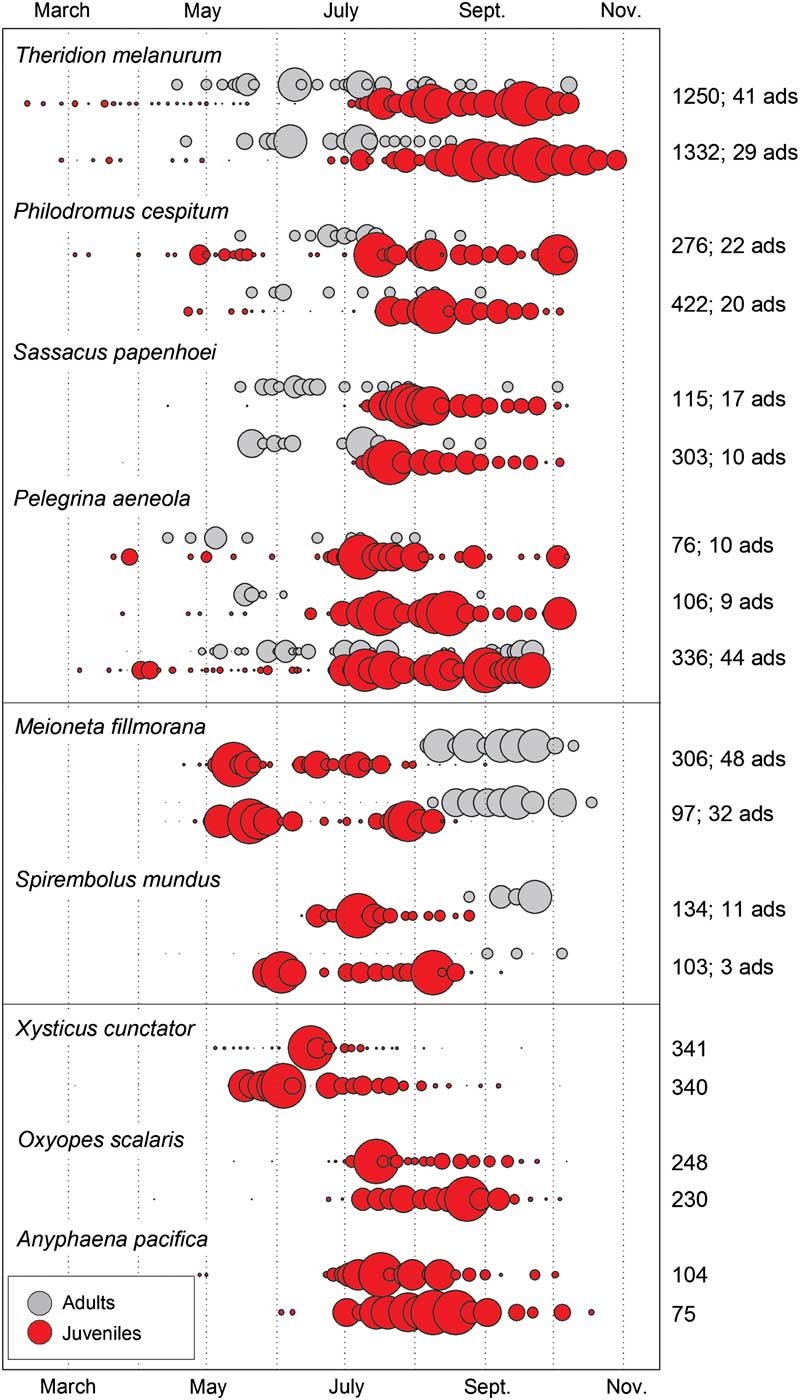
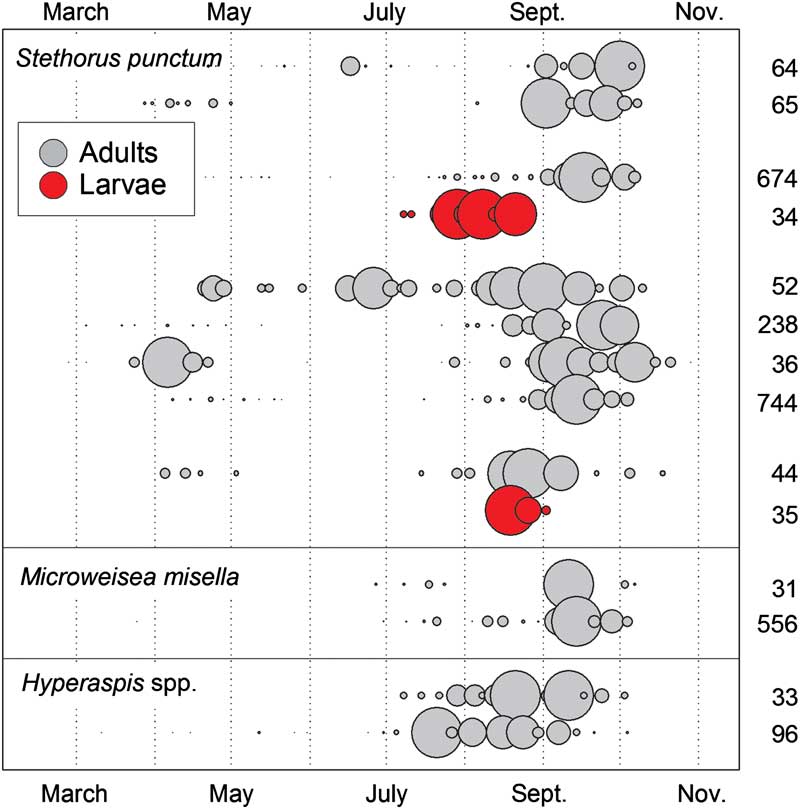
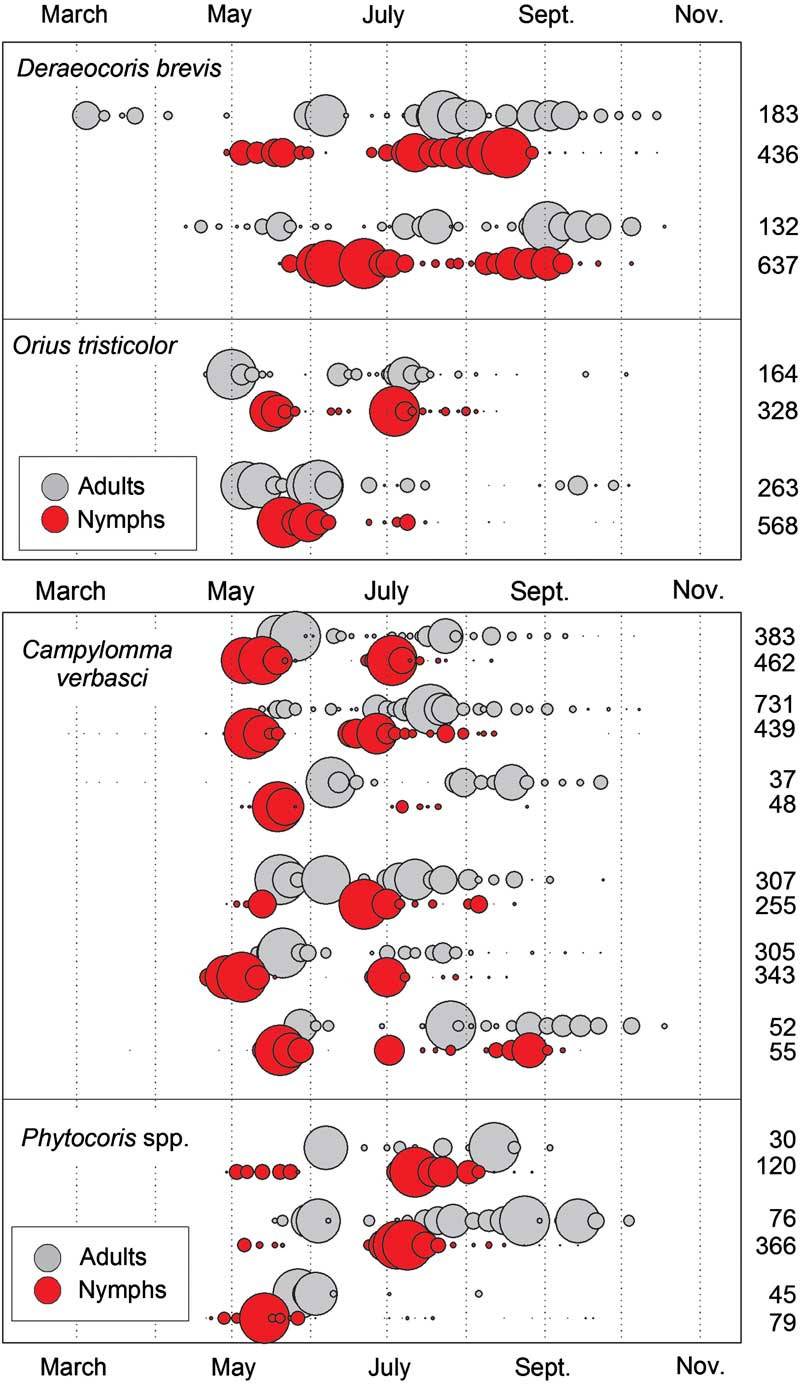
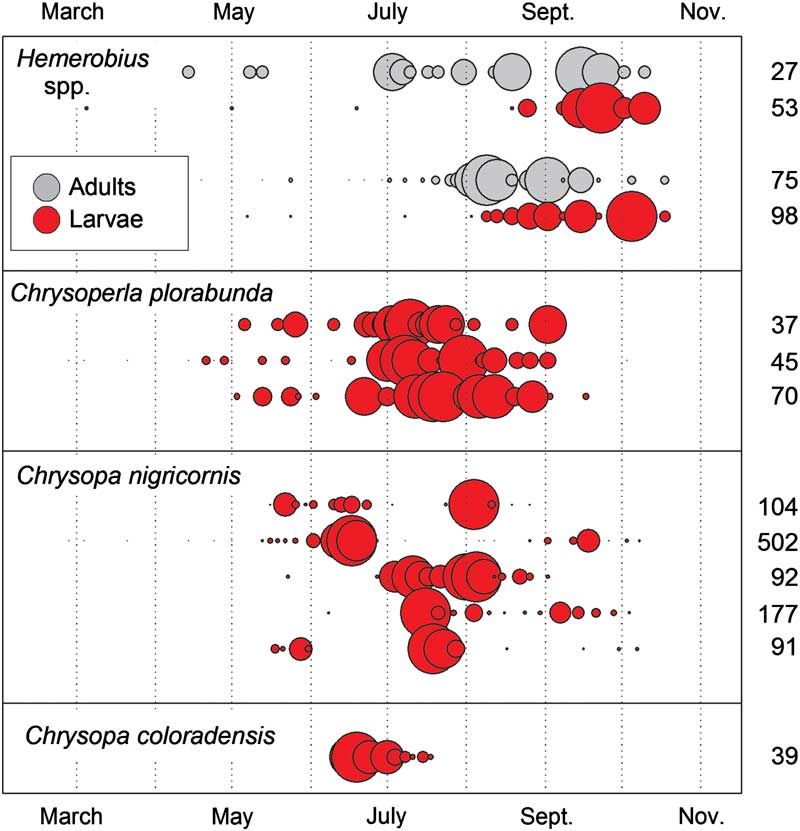
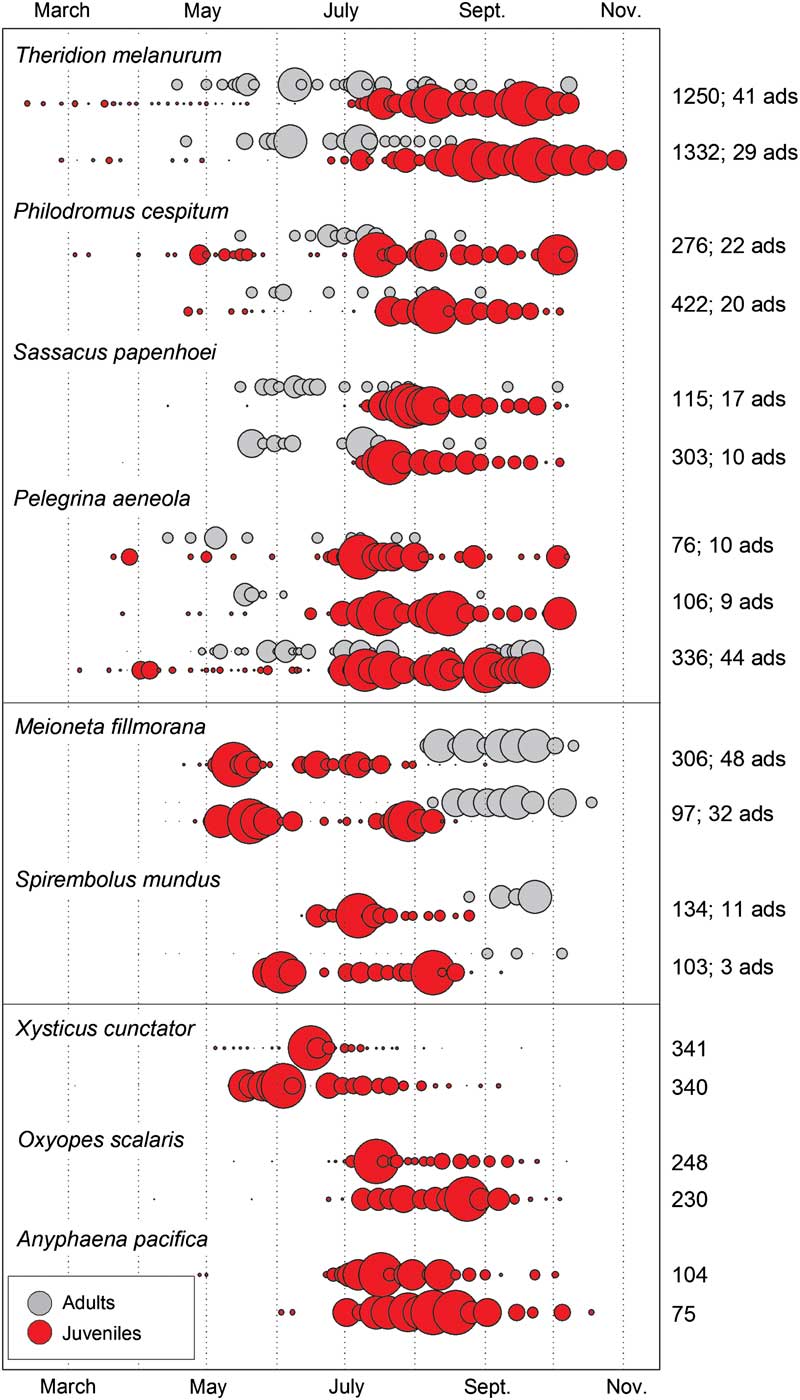
Seasonal phenology of common taxa is shown as a series of bubble charts (Figs. 3–7). For each taxon in these charts, we selected orchards at which the taxon was collected in the largest numbers. Each horizontal row of bubbles (or paired rows of bubbles when adult and immature stages are shown together) summarises data for one orchard in 1 year. Within each horizontal row, size of a bubble is proportional to numbers collected on that particular sampling date. Numbers to the right of each chart show total specimens of that taxon and life history stage collected from that particular orchard and year. Vertical dotted lines show mid-point (15th) of each calendar month.
Bubble chart showing seasonal patterns in numbers of specimens collected: aphidophagous Coccinellidae. Each horizontal row of bubbles shows results for one orchard and 1 year. Within each horizontal row, size of bubble is proportional to numbers of specimens collected on that sampling date. Numbers to right of figure show season-long totals for the taxon collected in that orchard sample. Larval results pool the species. Vertical dotted lines depict the 15th of the month.
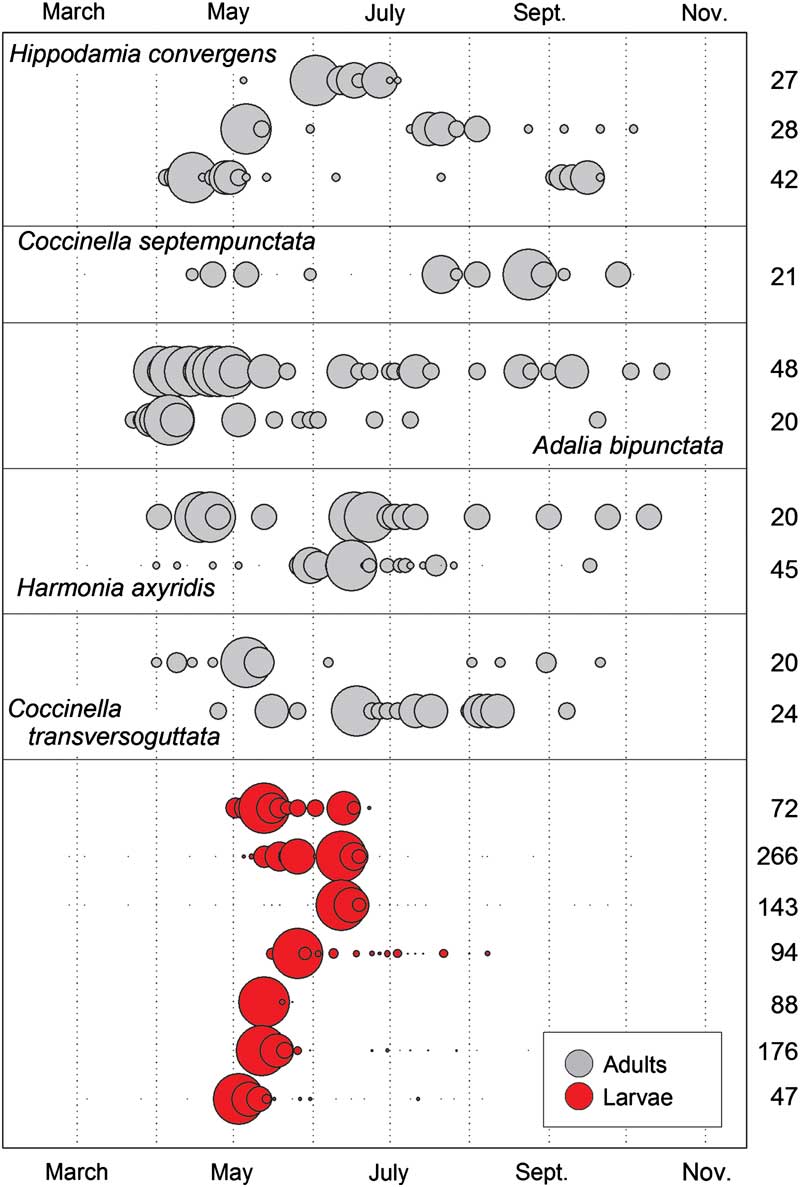
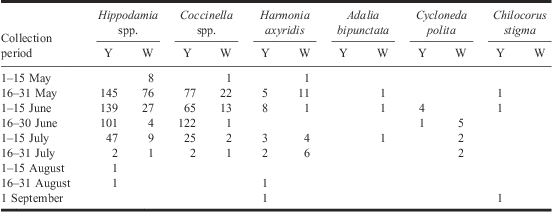
Adults of aphidophagous ladybeetles were present in orchards over much of the season beginning in mid-April (Fig. 3). Seasonal phenology of larval aphidophagous ladybeetles is shown for the pooled (taxonomically) sample. Larvae were first collected in mid-May and had virtually disappeared from samples by early July (Fig. 3). The data suggest that the aphid-feeding ladybeetles had but a single larval generation per season in the orchard canopy. The larval sample was composed primarily of specimens of Coccinella Linnaeus and Hippodamia Dejean (likely to have been mostly or entirely Hippodamia convergens Guérin-Méneville, based upon counts of adult Hippodamia spp.), with substantially fewer specimens of Harmonia axyridis (Pallas), A. bipunctata (Linnaeus), Cycloneda polita Casey, and Chilocorus stigma (Say) (Table 6). Coccinellidae that feed extensively or exclusively on mites or scale insects (Stethorus punctum [LeConte], Microweisea misella [LeConte], and Hyperaspis Dejean) were most abundant on trays late in the season (Fig. 4).
Bubble chart showing seasonal patterns in numbers of specimens collected: other Coccinellidae. Each horizontal row of bubbles or pair of rows shows results for one orchard and 1 year. Within each horizontal row, size of bubble is proportional to numbers of specimens collected on that sampling date. Numbers to right of figure show season-long totals for the taxon collected in that orchard sample. Vertical dotted lines depict the 15th of the month.
Species and genera of larval Coccinellidae collected from Y and W orchards.

Numbers show total specimens collected (pooled orchards and years).
Y, Yakima; W, Wenatchee.
Common predatory Heteroptera included two species (Deraeocoris brevis [Uhler], Orius tristicolor [White]) that overwinter in the adult stage and two taxa (Campylomma verbasci [Meyer-Dür], Phytocoris spp.) that overwinter in the egg stage (Fig. 5). All four taxa appeared to exhibit two generations of nymphs. Nymphs of the four taxa began to appear in mid-May (Fig. 5).
Bubble chart showing seasonal patterns in numbers of specimens collected: Heteroptera. Each paired horizontal row of bubbles shows results for one orchard and 1 year. Within each horizontal row, size of bubble is proportional to numbers of specimens collected on that sampling date. Numbers to right of figure show season-long totals for the taxon collected in that orchard sample. Vertical dotted lines depict the 15th of the month.
Brown lacewings (Hemerobius spp.) occurred in highest numbers late in the season (Fig. 6). Larval green lacewings were present beginning in mid to late May extending into September. No clear patterns of generations were detected for larval green lacewings (Fig. 6). Adult green lacewings are not effectively sampled using beating trays, and therefore no phenology data are shown for this life history stage. However, our pooled samples for the two most common species (Chrysoperla plorabunda [Fitch], C. nigricornis) indicated that adults of both species were present most of the season. Adults of C. plorabunda were collected seasonally earlier (first seen on trays in March and April) than adults of C. nigricornis, which first appeared in orchards beginning in mid-May. Adults of both species were collected in October.
Bubble chart showing seasonal patterns in numbers of specimens collected: brown and green lacewings. Each horizontal row of bubbles or pair of rows shows results for one orchard and 1 year. Within each horizontal row, size of bubble is proportional to numbers of specimens collected on that sampling date. Numbers to right of figure show season-long totals for the taxon collected in that orchard sample. Vertical dotted lines depict the 15th of the month.
The common taxa of spiders all appeared to have a single generation per year, although species did differ substantially in timing of maturation (Fig. 7). Three general patterns of phenology were observed. First, several species overwintered as juveniles of mixed ages, with adults present generally in mid-summer; examples include Theridion melanurum Hahn (Theridiidae), Philodromus cespitum (Walckenaer) (Philodromidae), Sassacus papenhoei Peckham and Peckham (Salticidae), and Pelegrina aeneola (Curtis) (Salticidae) (Fig. 7). At least two species (Meioneta fillmorana [Chamberlin] and Spirembolus mundus Chamberlin and Ivie [both Linyphiidae]) apparently overwintered as adults or eggs, with juveniles most abundant in mid-summer (Fig. 7). Finally, three species (Xysticus cunctator Thorell [Thomisidae], Oxyopes scalaris Hentz [Oxyopidae], Anyphaena pacifica [Banks] [Anyphaenidae]) were collected only as juveniles, suggesting that mating and egg-laying by these species occurred in habitats other than the tree canopy.
Bubble chart showing seasonal patterns in numbers of specimens collected: spiders. Each horizontal row of bubbles or pair of rows shows results for one orchard and 1 year. Within each horizontal row, size of bubble is proportional to numbers of specimens collected on that sampling date. Numbers to right of figure show season-long totals for the taxon collected in that orchard sample; first number of pair refers to juvenile specimens, while second number refers to adult specimens. Vertical dotted lines depict the 15th of the month.
Discussion
Orchard assemblages
The community of predatory arthropods inhabiting the canopy of apple trees in organic or unmanaged orchards of Washington State was highly diverse, with over 80 species of Heteroptera, Coccinellidae, Neuroptera, and Araneae identified during 2 years of sampling (Table 3). The relationship between natural enemy diversity and pest suppression is not completely understood. It is not always certain that increases in diversity of generalist predators necessarily translate into increased suppression of prey (Straub et al. Reference Straub, Finke and Snyder2008; Tylianakis and Romo Reference Tylianakis and Romo2010), because processes such as competition or intraguild predation may interfere with impact on target pests. Predator diversity is most likely to contribute to increased prey mortality under conditions in which natural enemy taxa have complementary effects on pests (Snyder Reference Snyder2009). Such complementarity may be most likely within taxonomic groups in which species exhibit differences in seasonality, prey preferences, or microhabitat use. These very traits may in fact be characteristic of taxonomic groups that are most diverse and most abundant in orchards, such as the Coccinellidae (Snyder Reference Snyder2009) and Araneae (Bogya and Mols Reference Bogya and Mols1996).
Our results are in agreement with earlier surveys conducted in apple orchards of North America, which also have documented high diversity of spiders (Dondale Reference Dondale1956; McCaffrey and Horsburgh Reference McCaffrey and Horsburgh1980; Brown et al. Reference Brown, Schmitt and Abraham2003), true bugs (Oatman et al. Reference Oatman, Legner and Brooks1964; Madsen and Madsen Reference Madsen and Madsen1982), lacewings (Szentkirályi Reference Szentkirályi2001; Horton et al. Reference Horton, Broers, Hinojosa, Lewis, Miliczky and Lewis2002), and ladybeetles (Brown and Schmitt Reference Brown and Schmitt2001). The taxonomically most diverse groups in this study were the Coccinellidae, with 22 identified species, and the Araneae, which included representatives from 14 families. Several genera were composed of multiple species (Table 3), including Hemerobius with at least four species, Hippodamia (four species), and six genera represented each by three species (Chrysopa, Coccinella, Hyperaspis, Philodromus, Phidippus, Theridion). Our results understate the true diversity of predatory arthropods in orchard canopy, because certain taxa are very poorly sampled using beat trays (e.g., adult Chrysopidae, predatory mites). Supplementing results obtained from tray samples with data collected from leaf samples or other monitoring tools (e.g., attractant traps; Jones et al. Reference Jones, Steffan, Wiman, Horton, Miliczky and Zhang2011) would provide an even fuller picture of natural enemy diversity in orchards.
The Theridiidae, Salticidae, and Linyphiidae dominated the spider fauna numerically (Table 4). The Salticidae and Theridiidae have been shown to be abundant in apple orchards in other parts of North America and in Europe (Chant Reference Chant1956; McCaffrey and Horsburgh Reference McCaffrey and Horsburgh1980; Bogya et al. Reference Bogya, Markó and Szinetár1999; Bajwa and AliNiazee Reference Bajwa and AliNiazee2001; Brown et al. Reference Brown, Schmitt and Abraham2003), and may also be among the most common spiders overwintering in orchards (Horton et al. Reference Horton, Miliczky, Broers, Lewis and Calkins2001; Miliczky et al. Reference Miliczky, Horton and Calkins2008). The diet of the spider community in orchard ecosystems is relatively poorly studied, but is likely to include pests from a range of taxonomic groups (Bogya and Mols Reference Bogya and Mols1996). Collections of predatory true bugs included primarily Miridae, as noted also in other geographic regions (Madsen and Madsen Reference Madsen and Madsen1982; Brown and Schmitt Reference Brown and Schmitt2001). Deraeocoris brevis, which was very abundant in collections, is known to be an important predator of soft-bodied Homoptera such as aphids and psyllids (McMullen and Jong Reference McMullen and Jong1967; Unruh et al. Reference Unruh, Yu, Willett, Garczynski and Horton2008), while C. verbasci (also common in samples) preys extensively on thrips, mites, and Homoptera (McMullen and Jong Reference McMullen and Jong1967; Hagley and Allen Reference Hagley and Allen1990). Aphidophagous ladybeetles were numerically dominated by species of Coccinella and Hippodamia, which is consistent with results of other studies (Carroll and Hoyt Reference Carroll and Hoyt1984). We observed noticeable late-season increases at some sites in counts of Coccinellidae that feed on mites, scale insects, or mealybugs, notably S. punctum, M. misella, and Hyperaspis spp. The most common lacewings were C. nigricornis and C. plorabunda, both species of known importance in orchards as predators of aphids or other soft-bodied arthropods (Carroll and Hoyt Reference Carroll and Hoyt1984; Szentkirályi Reference Szentkirályi2001).
We observed noticeable geographic effects in composition of spider and insect communities (Fig. 2). Indicator species analysis identified several taxa that occurred more commonly in one geographic region than the other, including taxa that were regularly collected in one location but only rarely collected in the other region. Examples include A. bipunctata, which was collected at all but one Wenatchee site, but was very rare in the Yakima collections; and, Anthocoris spp., which were not collected from the Wenatchee orchards but were found relatively consistently in the Yakima samples. The causes of these geographic associations are not known, but could include distribution of preferred prey, landscape effects, or adaptation to local climatic conditions. Geographic effects have been shown to outweigh other factors, including intensity of management practices, in affecting composition of predator communities in apple orchards (Bogya et al. Reference Bogya, Markó and Szinetár1999; Kondorosy et al. Reference Kondorosy, Markó and Cross2010).
Our ordinations also showed that communities were often similar between consecutive years at orchards that were sampled both years (Fig. 2). This constancy is not surprising. Taxa common in orchards regularly occur in nonorchard habitats adjacent to orchards (Miliczky and Horton Reference Miliczky and Horton2005, Reference Miliczky and Horton2007), thus composition of the orchard community is likely to be affected by neighbouring habitats (which should remain relatively constant between years). Also, insecticide use did not change at any of the orchards between consecutive years. It is of some interest that we observed this year-to-year similarity even at the two orchards in the Wenatchee region that were sampled both years (Sunrise and TFREC orchards; Fig. 2). Given that personnel who did the collecting at these two orchards changed between sample dates and between years, the year-to-year similarity suggests that any variation among people in how effectively or carefully that they collected specimens was largely overshadowed by variation among sites.
We also observed differences in composition of communities among orchards within geographic location (Fig. 2). Several factors may have contributed to this variation. First, orchards within each geographic location differed in pest control programs (Table 1). Type of insecticides could have affected structure of the predator communities through direct toxicity, or indirectly through effects on the prey community. Pest control programs do affect the composition of spider and predatory insect communities in orchards (Bogya et al. Reference Bogya, Markó and Szinetár1999; Miliczky et al. Reference Miliczky, Calkins and Horton2000; Markó et al. Reference Markó, Keresztes, Fountain and Cross2009; Kondorosy et al. Reference Kondorosy, Markó and Cross2010). Second, it is likely that composition of the phytophagous arthropod community affected structure of each orchard's predator community. For example, we saw late-season influxes of the mite-feeding S. punctum at some orchards, which probably is evidence of movement by pest mites into the tree canopy as herbaceous vegetation in and near orchards dried or became senescent. At one orchard (Moxee 2008 and 2009), we also regularly collected ladybeetle species that are known to feed extensively on scale insects (Hyperaspis spp., M. misella, Brumoides septentrionis [Weise], C. stigma). This orchard has a history of problems with scale insect pests (D.R.H., personal observation).
Lastly, composition of habitat adjacent to an orchard can affect community structure (e.g., Sackett et al. Reference Sackett, Buddle and Vincent2008; Markó et al. Reference Markó, Keresztes, Fountain and Cross2009; Kondorosy et al. Reference Kondorosy, Markó and Cross2010). Orchards differed extensively in type of habitat in immediate proximity (Table 1), and it is possible that this variation partially explains variation among orchards in composition of predator communities. For example, certain sage-loving species such as Hyperaspis spp. (Rathman and Brunner Reference Rathman and Brunner1988; Acorn Reference Acorn2007), Chrysopa coloradensis Banks (Carroll and Hoyt Reference Carroll and Hoyt1984), or O. scalaris (Rathman and Brunner Reference Rathman and Brunner1988; Miliczky and Horton Reference Miliczky and Horton2007) were most common at sites (Moxee, Tieton, Wapato) that were adjacent to large areas of sagebrush-steppe habitat (Table 1). It is quite likely that the sagebrush habitats were a source of these sage-loving taxa in our orchard samples.
Phenology
We observed considerable variation among taxa in seasonal phenology (Figs. 3–7). Our summaries depict patterns observed in the tree canopy of apple orchards, and cannot necessarily be extrapolated beyond the orchard canopy to other habitats. Many predatory taxa in orchards are also known to feed and reproduce extensively in habitats outside of orchards (Horton and Lewis Reference Horton and Lewis2000; Miliczky and Horton Reference Miliczky and Horton2005, Reference Miliczky and Horton2007), and these habitats are likely to compete with orchard habitat as sources of prey, refuge, and overwintering sites. For example, the late-season, single generation shown by some species (e.g., Hemerobius spp. or S. punctum) was likely caused by late-season movement into the orchard canopy from other habitats, possibly in response to population increases of preferred prey in the orchard. Earlier generations of these predators presumably occurred in habitats other than the orchard canopy. Our phenology data suggest that aphidophagous Coccinellidae produced a single larval generation in orchard canopy (Fig. 3). Voltinism of aphidophagous Coccinellidae may often be affected by availability of prey (Hagen Reference Hagen1962; Hodek Reference Hodek1973), and it is not clear whether the aphid-feeding ladybeetles in these orchards produced additional generations outside of the apple tree canopy. In summary, seasonally abrupt appearances of predatory taxa in orchards, or disappearance of taxa from orchards, may be caused by predator–prey interactions both within and outside of orchards.
How might these phenology data be used in pest control programs? Better understanding of natural enemy phenology is critical to identify intervals in which beneficial taxa would be most vulnerable to applications of insecticides (Jones et al. Reference Jones, Unruh, Horton, Mills, Brunner and Beers2009), and in predicting which predators are likely to be active in the orchard when a targeted pest is present. Phenology models are available for a number of arthropod pest species in Washington orchards (Knight Reference Knight2007; Jones et al. Reference Jones, Brunner, Grove, Petit, Tangren and Jones2010), and growers often use these models in determining appropriate timing for insecticide applications. By knowing phenology of key predators, growers may be presented with additional management options. For example, if important natural enemies of a key apple pest such as codling moth show extensive seasonal overlap with the pest, growers may choose to use highly selective control strategies against the pest (e.g., virus in conjunction with mating disruption) rather than less selective insecticides.
Finally, it would be useful to produce models of phenology that can be used by growers to predict when, seasonally, important taxa are expected to appear in apple orchards. Degree-day models are commonly used to predict seasonal appearances of pest species (Knight Reference Knight2007). We believe that a similar effort for the generalist predator community in orchards would be more challenging than the development of models for orchard pests. Seasonal appearance of a given predator taxon in orchards is likely to be affected by a number of factors other than accumulated heat units, including densities of prey within the orchard and in neighbouring habitats, and size of the population overwintering within the orchard relative to numbers overwintering outside of orchard habitat (Horton and Lewis Reference Horton and Lewis2000). Species that overwinter within orchards as a life history stage that is unlikely to disperse from the orchard upon emergence in spring might most effectively be modelled using degree-day methods. Indeed, such models are available for C. verbasci (Judd and McBrien Reference Judd and McBrien1994), a species that overwinters in the egg stage, commonly within orchards.
Acknowledgements
The authors thank Cameron Aguilar, Ivan Arroyo, Kodi Jaspers, Stacey McDonald, Tawnee Melton, and Shawn Steffan for assistance with collecting arthropods. They also thank Steve Arthurs and Shawn Steffan for reviewing an earlier version of this manuscript. This study was generously supported by grants from the United States Department of Agriculture-Cooperative State Research, Education, and Extension Service Specialty Crops Research Initiative (2008-04854) and the Washington Tree Fruit Research Commission.