INTRODUCTION
This article discusses some of the competing arguments concerning the looted and the faked, and the different perceptions of what legitimacy means for museums in the Western world. The reality facing art museums in the United States is that the era of large-scale collecting of antiquities has come to an end. Collecting unprovenanced art has been aggravated by the dependency of large museums on wealthy private donors and patrons, whose contributions often relate to their collecting interests, not to provenanced art. Now that museums have adopted rules that prevent the acquisition of many ancient objects still in private hands, following their often reluctant acceptance of the 1970 UNESCO Convention on the Means of Prohibiting and Preventing the Illicit Import, Export and Transfer of Ownership of Cultural Property (henceforth, the 1970 UNESCO Convention), they are faced with a series of competing concerns in the acquisition of ancient art. However, the latest directive from the American Association of Museums (AAM)Footnote 1 allows a degree of latitude in determining whether this is adhered to or not. Problems created with relatively recent acquisitions continue to arise: Many of the principles agreed to by the attendees, in the document produced by the meeting, known as the Athens Charter, presaged recommendations made by later conservation charters.Footnote 2 In the case of the Metropolitan Museum of Art, the latest situation arose from the thousands of ceramic sherds left by the former curator of Greek and Roman Art at the Metropolitan Museum, Dietrich von Bothmer (1918–2009), many of which proved to have been looted.
One way to circumvent these new problems in the acquisition of art is to engage source countries in long-term loans, used to good effect by the Getty Museum, where the conservators and curators are now working extensively on these loaned artefacts, for example, with the recent and highly successful exhibition of bronzes from Pompeii,Footnote 3 helping to keep the conservation and curatorial staff gainfully employed for the next exhibition.
Countries such as Italy, Greece, Turkey, and Colombia on the other hand might have to recognize that national ownership laws following the adoption of the 1970 UNESCO Convention, have often succeeded in driving the trade in art objects further into the clandestine realms, which is partly responsible for several museums, such as the Getty, the Boston Museum of Fine Arts, and the Metropolitan Museum, having to face demands for the return of ancient art that has proved to be looted, and which, in some cases, the museums knew or suspected were actually looted. In the case of the Metropolitan and the Boston Museum, acquiring looted art apparently involved no one in particular, while at the Getty, it was all the fault of Marion True.Footnote 4,Footnote 5 That is her personal tragedy, losing her curatorial position and being placed on trial in Italy—a show trial one could argue, which has now reached the statute of limitations, and has been dismissed by the Italian authorities.Footnote 6
The litigious American approach to art can itself cause serious problems, as in the case of Roxanna M. Brown, Asian art curator, who gained her PhD from my home department, Art History, at UCLA in 2004, and who died in a Seattle detention center, alone and in great pain, in 2007, guilty of a few thousand dollars of inflated art appraisal, if that, which ended up costing the federal government an $880,000 settlement to her son in 2009, some 50 times the possible amount of money originally involved. Brown had been seriously injured in Thailand some years previously, when a truck ran over her, then drove in reverse, trying to finish the accident for certain to avoid further legal problems. At that point, she was pulled to safety by a member of the public but was left in a wheelchair in continual pain, so her incarceration prevented her from accessing her drugs or medication. She was also denied telephone calls to her family, and the drug withdrawal added to her agonizing death.
THE RECONFIGURATION OF THEFT
Events over the last 15 to 20 years have seen the concept of theft as it relates to ancient art undergo a series of painful reconfigurations. In the past, many artworks could be purchased without much difficulty, such as the marble sculpture of the Lansdowne Heracles, acquired by the Getty Museum in 1970 and not subject to repatriation problems, and the acrolithic Aphrodite, which was purchased in 1988 but had to be returned in 2011.Footnote 7 The Heracles was originally owned by the Emperor Hadrian, and J. Paul Getty (1892–1976) purchased it from Lord Lansdowne (Eighth Marquess of Lansdowne, 1912–1999) for $24,000 in 1970.Footnote 8 Getty only purchased bargains, although in his canny way, he had to be satisfied that he had proper legal title, to avoid more money being spent. By contrast, the Aphrodite was purchased for $18 million dollars in 1988 and had to be returned to Italy in 2011, after a long and acrimonious battle, well recorded in the recent book, Chasing Aphrodite, by Felch and Frammolino.Footnote 9 J. Paul Getty himself was never satisfied that the famous Getty Bronze Athlete had a valid legal title, so it was not purchased until 1977 (after Getty's death in 1976) for $3.98 million, then a record price for an antiquity. But Getty was right, and valid legal title is still in contention between the Getty Museum and the Italian authorities.
The first curator of antiquities at the Getty Museum, Jiri Frel, had no such qualms. Frel's nefarious activities concerning unprovenanced art, tax fraud, looted artefacts, obfuscated museum records, cash transactions, and grossly inflated appraisals of art resulted in him fleeing from the United States in 1983, never to return. A plethora of problems with looted art at the Getty Museum can be traced back to Frel, who regarded those around him as ignorant and uneducated.
Some museums, such as the British Museum, unlike the Metropolitan or the Getty, may still be able to collect a wide range of nonlooted ancient artefacts from their own soil. The British collections are still being augmented by current excavations from Prehistoric Tumuli, Roman coin hoards, Anglo-Saxon burials, Celtic farms, and Mediaeval monastic ruins. These finds will continue to augment the collections for years to come. The British Museum can afford to repatriate Maori heads, which has been stolen or looted by the British, to New Zealand even if they had to struggle to let them go.Footnote 10,Footnote 11 Some U.S. Museums still collect, though, unimpeded by concerns about UNESCO.
THE ENCYCLOPEDISTS AND THE RETENTIONISTS
The concept of the European Enlightenment spurred the desire for the collection of materials from every culture of the world. National museums such as the Louvre were less concerned with their national past as with the great art of the Renaissance and ancient civilizations that could be brought back to France for the edification of the educated elite. These encyclopedic museums continue to serve an important function in themselves, but some see their desire for further collections, like some voracious monster, as still needing to be satisfied into the future.
One such advocate is James Cuno, the new CEO of the Getty Trust, who has launched a sustained attack on retentionist countries who wish to possess the cultural patrimony found on their own soil or to seek the return of looted art.Footnote 12,Footnote 13,Footnote 14 In so doing, Cuno seems to affirm the essentially Eurocentric concept that Western museums should continue to collect, based on their shared vision of a multicultural human fraternity; that encyclopedic museums should be established around the globe; that the concepts of ownership by nation-states have to be revisited; that one has to question the rationale of nationalistic possession of cultural patrimony; that UNESCO has failed to safeguard the looting of archaeological sites and has to be reformulated; and that nation-states and archaeologists have failed to safeguard our heritage.
Lord RenfrewFootnote 15 is remarkably restrained in his review of Cuno's book, Who Owns Antiquity?,Footnote 16 noting that the author criticized such institutions as the British Museum and the Archaeological Institute of America, which had agreed to abide by the 1970 UNESCO Convention. The “internationalist position of museums such as the Metropolitan,” writes Renfrew, “seem to deny the implications of such international conventions as UNESCO or UNIDROIT adopted in 1995.” UNIDROIT is the convention on the international return of stolen or illegally exported cultural objects, which aimed to harmonize the private law of States Parties to allow for self-funded civil lawsuits. Tubb writes that the UNIDROIT convention can be seen as
a compromise between legal systems which privilege the victims of theft over good-faith purchasers and vice versa, thus serving as a corrective to a loophole left open by the 1970 UNESCO Convention.Footnote 17
Cuno's dismissal of the effectiveness of these conventions is described by Renfrew, with British understatement, as “a shade perverse.”Footnote 18 Cuno hardly considers the issue of the protection of archaeological sites or the potentially serious loss to knowledge that ensues when antiquities are separated from their context, and about which archaeologists have been justifiably critical.Footnote 19,Footnote 20 RenfrewFootnote 18 writes that “Cuno's argument for the encyclopedic museum deserves to be considered, such as the partage system, the old agreement that excavated material be shared between the institution sponsoring the dig and the host nation,” but ends by saying, “Cuno's implication that rich institutions can be left to regulate their own affairs without clear acquisition codes and without international regulation is belied by recent evidence” However, it is not clear to the present writer that Cuno actually implies that there should be no international regulation whatever.
The current agreements between archaeologists and many host countries have greatly assisted in the preservation of excavated finds for the host country. For example, excavations cannot be conducted in Turkey at all unless there is a provision for the conservation of the finds included in the excavation proposal. Material cannot be removed from most countries at all; and if it can, export permits only apply to samples for scientific research, not to entire artefacts. These are the kinds of constraints that most archaeologists working abroad are now familiar with. Looting, of course, still continues, and many of these looted finds have made their way to Western nations over the past 200 years or so.
Cuno sees countries demanding the repatriation of looted material as embedded in a nationalistic-retentionist philosophy, which has created unrealistic expectations for the return of cultural property. Cuno has been much influenced here by the arguments presented by Merryman concerning “nationalist/retentionist” states, in which Merryman reevaluates the legitimacy of the demands of nation-states.Footnote 21 Cuno challenges the status quo of the relationship between archaeologists and nation-states, blaming the archaeological community for the continued looting of archaeological sites and concluding that this has contributed to the failure of the UNESCO conventions for the protection of that property. In undertaking this critical evaluation of the present, Cuno's books have provided a valuable service to the intellectual disputes surrounding the subject, by crystallizing the position of many critics and defenders of the current issues involved in the retention or repatriation debate concerning ancient art, and opening a dialectic that will form the basis of many future discussions of the topic.
HERITAGE CODES AND ART CONSERVATION
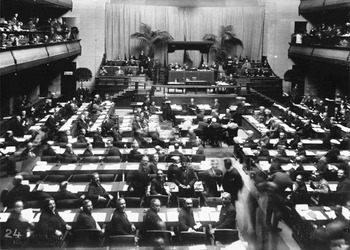
Cultural property and its preservation began to receive more attention after the ravages of the First World War. In the historic photograph from 1931 shown in Figure 1, the old guard are meeting in Athens, attempting to rationalize the possession of art and to embody the protection of humankind's heritage by establishing charters for the preservation of art and monuments.Footnote 22 This meeting, the International Conference for the Protection and Conservation of Artistic and Historical Monuments, affirmed the desire to internationalize the debate concerning the universality of preservation values and the problems of cities in crisis. Many of the principles agreed upon by the attendees in document produced by the conference, the Athens Charter, presaged recommendations made by later conservation charters. For example, Article 8 of the Athens Charter states.Footnote 23 “Items of sculpture, painting or decoration which form an integral part of a monument may only be removed from it if this is the sole means of ensuring their preservation.” This has a remarkably modern ring to it, echoed in several more recent international agreements and a tribute to what the Athens meeting attained some 80 years ago. Several nations failed to ratify the charter; the United States was one such country, an exclusion in a long line of American refusals to ratify international agreements.
The International Conference for the Protection and Conservation of Artistic and Historical Monuments in Athens, 1931.

The Athens Charter was a valiant attempt to create an international agreement to safeguard historic cities, but the destruction and looting during the Second World War (WWII) was even greater than that during the First World War (WWI). Later conservation charters would try to reformulate the concerns for preservation again, the most famous being the Venice Charter, adopted in 1964, for the protection of cultural property.Footnote 24 There have been many charters throughout the colonial and post-colonial period, some of which Western powers have refused to ratify, or if they did, such as Hague 1899 and 1907, they immediately forgot when WWI began, since the great powers had no intention of limiting the use of explosive shells to destroy historic buildings or chemical weapons to kill and maim humans, used by both sides in the WWI.Footnote 25,Footnote 26 After WWI, interest in the Hague Conventions resumed.Footnote 27,Footnote 28 Hague 1899 had been proposed by Tsar Nicholas II of Russia, while the second Hague Convention (of 1907) was called at the suggestion of President Theodore Roosevelt. These conventions helped to establish the League of Nations in 1919, which was joined by 44 nation-states. Once again, the United States refused to join.Footnote 29
The destruction of WWII resulted in the Hague conventionFootnote 30 of 1954, described by Prott as “among the great humanitarian legal instruments.”Footnote 31 Not great enough, apparently, for the United States to join. As of January 2006, there were 114 States Parties to this convention, but neither the United Kingdom nor the United States are signatories. A second protocol was drawn up in 1999, coming into force in April 2004. Once again, the United Kingdom and the United States failed to ratify the new protocols.Footnote 32 According to Hardy, the West covertly funded some of the international cultural activities after WWII, with the aim of promoting modernism, particularly abstract impressionism, as a foil to the Soviet Bloc's agenda of social realism and traditional architectural forms.Footnote 30
In a longer historical perspective, the antecedents to the League of Nations were the conception of culture as it changed from the period of the French Revolution around 1790, which established the nationalistic purview of scientific rationalism, which legitimized the collection of art from around the globe, as it made its way throughout France and the rest of old Europe to the period around 1959, when André Malraux wrote of patrimoine culturel (cultural patrimony).Footnote 33
The concept of cultural patrimony invoked the recognition that heritage had a legitimacy for all nations of the world, not just some construct to benefit Western nations. This has led us in the conservation field to the present, where the immaterial concepts of place have become recognized as integral components of heritage in the Western sense. However, the non-Western tradition encompasses cultural emplacement of art and the intangible attributes of artefacts, which are essentially championed by the conservation recommendations of the Burra Charter (1979, revised 1999).Footnote 34
One of Cuno's more controversial statements is that “Nationalist-Retentionist cultural property laws segregate the world's cultural property within the borders of modern nation-states. Most often these laws are focussed on antiquities; that is, on works of art made long before they were nations.”Footnote 35 In differentiating between ancient Greek art and claiming that modern Greeks have no especial rights of patrimony over artefacts found in Greek territory, Cuno seeks a kind of supranational freedom from what he regards as the often arbitrary demands of modern nation-states, essentially foreign to the culture of the ancient art found within their geographical confines.
Of course, in the West most of us recognize that the nationalist-retentionist philosophy that Cuno denigrates arose out of long years of colonial and imperialist views of the ownership of culture as something to be removed from certain countries and transferred to others. This is essentially the Eurocentric view of culture as an inquiry into all of mankind, as long as the artefacts are removed to South Kensington or Manhattan. Cuno argues for encyclopedic museums across the globe, as a remedy for the disproportionate holdings of museums such as the Louvre or the British Museum, but how these would be established remains a mystery.
SPOILS OF EMPIRE
In the early stages of the nineteenth century, the European powers were in competition with each other to obtain the best possible antiquities for their respective museums in the greatest quantity possible, no matter how they were obtained. Huge collections were spawned all over Europe in the colonial battle for the richest spoils of empire. One could argue therefore that the collected material has assumed an entirely different set of meanings in the intervening years. Appadurai writes of the social life of things, which has a relevance for us here.Footnote 36 Not only have “nationalist” views of cultural objects been informed by the events of the colonial era, but the life of the object itself invokes different notions of value, exclusivity, and authenticity, depending on the social context in which the work of art is viewed. Authenticity or meaning may reside in popular or public kinds of verification and confirmation, taking artefacts out of their colonial context altogether with the passage of time and conferring a new significance to them.
The British Museum can be seen as part of the story of the evolving life of things; an affirmation of how Great Britain is or was; a national treasure; and a symbolic repository of national pride of ownership, whose major antiquities are going nowhere, not even the Elgin marbles. Because of their history, the Elgin marbles are now intimately associated with their new dwelling and cannot be so easily divorced from it. Some artefacts achieve iconic status, a significance of transference, resulting in their potential repatriation being viewed as an unpalatable loss.
MacGregor, the current director of the museum, argues against the concept of return.Footnote 37 The museum trustees believe that in London they are an integral part of the story of the world's cultures. This sentiment is opposed by the revolutionary thought of Lord Bryon (1788–1824), who ridiculed Lord Elgin (1766–1841) in several satirical verses. In “The Curse of Minerva,” for example, Byron (1811) wrote:
The Byronic disdain for the theft of the authentic, aided by the state's purchase of the marbles from Lord Elgin, links the 200-year distance between him and us in which his revolutionary thought has become the accepted norm, in terms of removal of monuments from their original location. Today, we cannot regard the displacement of original monuments as an action that could be condoned or rendered legitimate; indeed, conservation or preservation charters, such as the Venice Charter (as we have seen above), have railed against this particular act for years. The conservation norm is that monuments must be conserved, in situ, and not removed from their cultural context to be displayed in another, entirely different, or alien context.
However, in another sense, to paraphrase Brandi, repatriation cannot make time reversible or abolish history.Footnote 39 To cite David Lowenthal, the past is a foreign country that we cannot recreate.Footnote 40 Lowenthal offers a harsh assessment of the current status quo, deconstructing the notions that the heritage of all humanity deserves to be preserved in toto; that cultural heritage matters above all for the information it can yield; that collecting is reprehensible and must be circumscribed if not outlawed; that nations and tribes should be regarded as enduring entities with sacred rights to time-honored legacies.Footnote 41
“All that stands in the way of everyone's reunion with all their ancestors and ancestral things,” writes Lowenthal, “is its utter impossibility.”Footnote 42 The national and local self-esteem promulgated by UNESCO is seen by Lowenthal as part of the current mania for repatriation and cultural boundary drawing.Footnote 43 “Things fluid by their very nature are ossified into factitious perpetuity” is his assessment of current demands for the endless cycle of return of art.
Lowenthal contends that “fresh creations and recognitions more than make up for what is lost through erosion, demolition, and obsolescence,”Footnote 44 but the sad remnants of shattered marble sculptures in the Kabul Museum of the Buddhist era being painstakingly reconstructed by conservators, joining jumbled bits with plaster of Paris or glue in 2005, belie Lowenthal's notion that the eroded past can necessarily be compensated for by the continuing evolution of what constitutes cultural heritage. When part of a historical reality is lost through the destruction of the material witness to its existence, it is hard to accept the conclusion that Lowenthal reaches regarding replacement by fresh creations, unrelated to the demolished ancient art that, without conservation intervention, would have been consigned to oblivion.
“When untempered by recognition of historical complexity or a willingness to compromise,” writes Brown, “the logic of heritage protection invites fantasies about returning to a mythical zero-point in which every culture is restored to a prior state.”Footnote 45 But do cultures that demand return of cultural artefacts necessarily regard repatriation as a sine qua non of recapturing a prior state? There must be a sense in which we make reparations for the destruction wrought in the past to cultures that, rather than contemplating the return to a mythical starting point, view the return of artefacts as a process of healing in which they may be incorporated in renewed or reconstituted rituals important for the cultural identity of the claimants.
Controversial issues related to antiquities and their return are epitomized by the displaced Elgin marbles in the British Museum. The changing nexus of meanings associated with art afflicts the Elgin marbles, as it does every other ancient artefact kept on soil foreign to its original existence for hundreds of years. Hamilakis discusses the various shifts in meaning that the Elgin sculptures have undergone during their existence.Footnote 46 In the fifth century ce, when the monument became an Orthodox Church, the sculptures were defaced as pagan idols. In the twelfth century ce, the sculptures coexisted with Christian wall-paintings, while in the thirteenth century, the Parthenon became a Catholic Church, and in the fifteenth, it was transformed into a Mosque. During this period, Greeks invariably regarded the works with superstition, consigning them to a time quite distinct from their own. As Hamilakis writes, the artworks of the Parthenon were
presented as evidence for the living consciousness of the population as descendants of Ancient Greeks and as custodians of their ancestral heritage. The Parthenon sculptures acquired, therefore, another meaning: they became a significant part of the national heritage, artistic masterpieces which had been misappropriated by a foreign power…Footnote 46
Hamilakis maintains that the official Hellenic position now places less emphasis on “ownership” and more on the argument of proper aesthetic appreciation of the entire monument. If that is indeed the case, then my argument in favor of copies, which will be discussed later, becomes more than viable; it becomes a real possibility for aesthetic completion. It is clear that the British Museum has no immediate plans to repatriate these icons of Greek art to Greece, for the purity of the ethical argument is now stained by time. If they had been removed last year, they would be returning home, but having been acquired 200 years ago, a whole new set of meanings surrounding them has arisen; they may remain dispossessed, despite the nationalistic banter for their return.
In defense of his criticisms of the nationalist-retentionist tendency, Cuno has some advice for archaeologists:
Archaeologists should question their support of nationalist-retentionist cultural property laws, especially those archaeologists who benefit today from working among the finds in the collections of their host university museums, collections which could not be formed now, ever since the implementation of foreign cultural property laws. And they should join museums in pressing for the return to shared ownership, the principle and practice by which so many local and encyclopedic museums were built in the past.Footnote 47
As a pragmatic basis for further discussion regarding the return to the partage system, it is hard to envisage archaeologists as being primarily concerned with the possible future needs of encyclopedic museums, or even their university museums, if they were to become antagonistic toward the demands of countries such as Egypt, Greece, Turkey, China, and Colombia, for retention of excavated material on their own soil. Despite the wording of the 1970 UNESCO Convention prohibiting the sale of unprovenanced antiquities, some countries, like Britain, had a hard time coming to terms with the new reality, and the convention was not adopted until 2002; the British were making too much money selling the stuff at Sotheby's and Christies. But it was still adopted ahead of many museums in the United States, and in some countries, it has never been adopted. As UNESCO was seen by the West as a platform for communists and third-world dictators, tensions caused the United States to resign its membership in 1984, followed obediently by Britain in 1985. It was politically expedient for the United States to rejoin UNESCO in October 2003, after a 20-year absence, but in October 2011, the United States resigned again because of the vote by 107 to 14 (nation-states) to recognize the Palestinian authority; the United Kingdom abstained. Since the United States has now resigned from UNESCO, one might argue that there is now no need for any museum in the United States to adhere to an agreement ratified by an international organization the country has withdrawn from, despite the passage of U.S. laws closely related to the UNESCO provisions in 1983.
Indeed, according to Cuno, “It is time to question whether the nation-state bias of UNESCO and its Conventions has proven to be a help or hindrance to the protection of the Worlds' cultural heritage.”Footnote 48 He also disputes the rights of indigenous people who seek ownership of the tangible and intangible heritage of their territory. “Who,” asks Cuno, “defines the culture of indigenous peoples, which are now the equal of nations with regard to cultural property?”Footnote 49 Indigenous people do, he says, implying that this definition is itself suspect in terms of the preservation of art or its proper housing and retention within a museum context in the same sense, value, or regard for cultural assignation as that accorded to nation-states. This is totally at odds with the value-driven thrust in modern conservation theory, in which stakeholders' views and the assignation of their cultural nexus are increasingly seen as integral to the conservation dialogue, which the widely adopted Burra Charter invokes.Footnote 50 Presenting a different viewpoint entirely, Lyons writes:
Archaeologists find that this line of argument presents some serious contradictions, not the least because it invokes an untenable notion of ethnic essentialism, compartmentalizing cultural and historical developments into a series of discontinuous and bounded phases. It betrays a serious misunderstanding of the ways that communities evolve, ignoring the role that shifts in the ethnic or religious composition of populations play in directing the long-term course of nation formation.Footnote 51
Both protagonists and antagonists in the cause of cultural repatriation or retention invoke the concept of “essentialism” as a fundamental error of judgment made by the other side. Those who support retention argue that their opponents see only an essentialism in the conflation of what nation-states are now culturally, compared with their past; while those in favor of return argue that their opponents are guilty of an ethnic essentialism, as Lyon argues above. Lowenthal writes, in connection with the impossibility of reuniting everyone with the artefacts of their ancestors, “It is impossible because the essentialist credo which fosters these claims flies in the face of historical reality…. All cultures are compage that amalgate reworked fragments stemming from manifold antecedents.”Footnote 52
But Cuno is not alone in his criticisms of the archaeological community. Some archaeologists are critical too: For example, in Archaeology and Capitalism, Bauer et al. write: “Archaeologists need to critically question support for cultural property claims, particularly those from nation-states.”Footnote 53
This is an intriguingly similar statement to that of Cuno, of whose work Bauer et al. seem unaware.Footnote 54 The first assumption, according to these authors, is that national control maintains the integrity of a culture and the objects belonging to it. Their second critique is the assumption that support for export controls and repatriation efforts is a restitution for past injustices and offers support to traditionally disenfranchised groups. In respect of the former, the authors maintain that one of its problems is based on an essentialist concept of culture. Is culture, they ask, “a set of specific objects and traditions that do not change, or is it dynamic, fluid, and continually developing in new ways?” Bauer et al. draw attention to the issues of repatriation and the unprovenanced nature of much of this art: “Anthropologists uniformly posit that objects taken unscientifically out of context cease to be meaningful.”Footnote 55
MEANINGS AND CONTEXTS
This general claim ignores the now widely accepted view that objects themselves have lives and values that evolve with time and develop new meanings in new contexts.Footnote 56 It is difficult to see how the views of some archaeologists regarding the perception of looted art as being “meaningless” can be sustained. Meaning-impaired or meaning-altered, perhaps. It is widely recognized that the meanings associated with different artefacts are dependent on the cultural associations that they are invested with or assigned by the societal group, colonial power, or museum curator, even if they are appropriated in ways we would not now condone.
The fact that some nation-states appropriate native cultures for their own nationalistic aims is the main point at issue here for Bauer et al., and they cite the example of Peru, where return of artefacts does little if anything for the indigenous communities who made the artefacts, but whose accomplishments become part of the new dialogue of ownership that the nation-states often impose on their various cultural groups; the disenfranchised remain disenfranchised.Footnote 57 Silverman has written on this, stating the opposite, with regard to one museum in Cusco, whose mission of outreach is very much involved with the indigenous populace, local empowerment being enhanced.Footnote 58
Cuno's argument concerning indigenous patrimony is implied, because he does not really address the issue regarding the restitution of Indian cultural material, the counterpoint to the logical positivism that envisaged archaeology as a politically neutral scientific enterprise. Where indigenous people saw archaeological artefacts as cultural heritage, archaeologists saw them as sources of scientific data. The irascible French philosopher Michel Foucault described culture as “a hierarchical organization of values, accessible to everybody, but at the same time the occasion of a mechanism of selection and exclusion”Footnote 59 Those previously excluded, the ethnographic “other” and indigenous cultures now have more access, ownership, and control over their heritage than ever before, especially following the passing in 1990 of Native American Graves Protection and Repatriation Act (NAGPRA) in the United States, but their claims do not mesh with the concept of the encyclopedic museums, who took for themselves every artefact from indigenous tribes they could, including their bones, and frequently refused to return any of them.
A small example is the return of a few hundred Zuni ceramics to Indian groups in New Mexico, excavated by the thousands in 1917 and carted away to museum storerooms at the National Museum of the American Indian, who even sold artefacts in their care to the French Surrealists in the 1940s. These ceramics now receive traditional native care and are part of the cultural life of the Zuni. Anthropologists have had to come to terms with these changes, often mediated through conservation. Others are still captive, such as Ecuadorian ceremonial stone chairs in storage at the Smithsonian Institution for the last 70 years and never published. The Ecuadorians routinely make a plea to have some back, which is routinely ignored. The current situation is rife with the prospect of a barrage of unending demands from source nations. Just recently, Turkey has begun to take concerted efforts to achieve the return of scores of artefacts in Western museums, repercussions of which include the revocation in 2012 of the excavation permit for French archaeologists at the UNESCO world heritage site of Xanthos.Footnote 60
Merryman has argued for a triad of regulatory imperatives.Footnote 61,Footnote 62 The first is preservation, that is, how can we best protect the object and its context from impairment? The second is the quest for knowledge, that is, the search for the historical, scientific, cultural, and aesthetic truth that an object can provide. The third is access, that is, how can we ensure that the artefact is optimally accessible to scholars for study and to the public. According to Cuno, Merryman's triad turns attention away from ownership to their stewardship. Does it really matter, asks Cuno, who owns a particular antiquity, whether it is a museum in the first world or a nation in the third world if stewardship rather than ownership is the criteria that should be invoked? This argument is promulgated by Cuno because it weakens the claim of nation-states to their own property.
MacGregor and Cuno argue for the cosmopolitan aspirations of encyclopedic museums, the promotion of an essential kind of cultural pluralism, or as Neil MacGregor stated during his reading of the BBC series A History of the World in 100 Objects, “Art reveals not one perpetual truth, but truth as a living, changing thing, the truth constantly remade as hierarchies are subverted, new information comes, and new understandings of societies emerge.”Footnote 63
But in describing an Ife Head from Nigeria in the British Museum, MacGregor writes, “As we discover our past, so we discover ourselves and more, to become what we want to be, we have to decide what we were. Like individuals, nations and states define and redefine themselves by revisiting their histories.”Footnote 64 How best to revisit the strands of history than to argue that many looted artefacts should be returned to their homelands, enabling those individuals and states to peruse their own history?
How about modest Roman finds from an English farm site? They are Roman, not Anglo-Saxon, so does that mean that a new encyclopedic museum in Italy can take all of this stuff, because modern Britain has no real connection with the Roman invaders, who came in the early centuries ce? Cuno's argument can cut both ways. The intimate connection to the land that the farmer possesses stretches back into the past and connects him to those who used that land, altered it, and lived on it, in ways that cannot be appreciated by Italians in Rome, which is where these Roman finds might be best legitimized, in a museum, by Cuno's argument.
For Cuno, the controversy about collecting “unprovenanced” antiquities is a distraction. The more important question is whether collecting museums should be beholden to the national prerogatives of states such as Italy, Greece, Turkey, China, and so on. Cuno, in belittling UNESCO, writes that all nations should consider ceding control of all cultural goods to some kind of “international trusteeship under the auspices of a nongovernmental agency.”Footnote 65
One could imagine a sort of antiquarian panopticon, rather like that envisaged for prisoners by the English philosopher Jeremy Bentham (1748–1832), one of the founders of utilitarianism, in which the assembled artefacts would be dispassionately viewed by a host of observers from this new nongovernmental agency, evaluating which artefacts should reside where. Of course, several of the artefacts kept in the panopticon today would be fakes, for we are currently awash with fakes of every description, which is good for us scientists, the last port of call in many disputes over the authenticity of art.Footnote 65 But the panopticon concept seems part of an authoritarian universalism at odds with the recognition of the individual cultural needs of different societies. Oddly, Cuno does not mention the subject of authenticity at all in his books.
The non-UNESCO, nongovernmental agency appears as a utopian concept from an earlier age, a prescription that would deny to nations the possible retention of their own patrimony, the elite examples of which might be judged by the new agency as deserving of international trusteeship. The extragovernmental legitimacy that Cuno envisages for such an entity represents an entirely different set of ethical problems in relation to the ownership of art, which could be viewed as inherently problematic—a grand design for a verisimilitude of impartiality that would allow encyclopedic Western museums to continue collecting, unimpeded by the restrictions of any retentionist philosophies. One might argue that there is only UNESCO, and we are offered no prescription for how such an international trusteeship would be formulated.
Some reviewers claim that Cuno's argument is based on the assumption of the legitimacy of a country's laws regarding antiquities and on the veracity of the claims it makes about its origins, rather than on a more basic principle of sovereign power. Appiah, despite his promotion of the ideas of cosmopolitan values in connection with the ownership of art, writes that “it seems to me reasonable that decisions should be made by the government in whose soil they were found,”Footnote 66 and that the authority of sovereign states to the government of the material culture found within their own borders remains the nation-state. The extent to which cosmopolitanism or, as Merryman has it, internationalist, claims on art may be limited in validity is glossed over by Cuno. Indeed, since U.S. museums have signaled their belated acquiescence to the principles of the 1970 UNESCO Convention (even though the U.S. government has resigned its membership in UNESCO), the status quo is not going to be vanquished any time soon, nor will NAGPRA, through which the restitution of many native artefacts has been made, or for which especially designated areas have been established in museum storerooms by conservators.
The view that cultural enrichment comes from free access to a multitudinous collection, which the British Museum insists upon is, in my view, an undeniable public good; it is part of the benefits of the cosmopolitanism of which Appiah writes. I benefitted from it myself as a teenager traveling down by bus or bicycle to the British Museum every month for years. It made no difference to me that some of this material was looted or lacked archaeological provenance—after all, it was the 1960s–1980s, when no one cared about these matters. But to assume that these monsters still have to be fed by yet more material from Greece, Egypt, Italy, China, and Turkey (the regions of the world still much desired by large internationalist museums) appears an untenable proposition, as is the proposal that new encyclopedic museums be established around the globe.
It is bitterly ironic then that Marion True had already begun to restrict the acquisitions policy of the Getty Museum in the mid-1990s, at a time when the Metropolitan refused to consider the return of the Euphronios crater, despite the fact that Dietrich von Bothmer knew where it had been looted from. Several U.S. museums were still happily taking in unprovenanced stuff from dealers, before the court case in Italy against True began. Some still do.
The Getty had been very desirous of magnificent works of art, not just a few potsherds or a humble fibulae. If that is the kind of art the Getty wanted, it shares or bears the ethical responsibility for its purchase, such as the magnificent and huge Aphrodite, purchased for $18 million and recently just given back. Smuggled out of Italy in pieces, hidden under piles of carrots, it had made its way to Switzerland and then to Malibu, now back to Italy where its traveling days are over. According to U.S. law, tax-exempt institutions will lose their tax-exempt status because of purchase or possession of looted art, but strangely the attorney general seems to have taken no action in this regard, one of the consequences of the vast array of U.S. legal statutes that can be ignored or invoked at any time, depending on the political climate of the era.
One of the most famous bronze sculptures in the collections of the Getty Museum is the Statue of a Victorious Youth, which was entangled in fishermen's nets off the coast of Fano in the Adriatic and brought ashore in 1964. After a labyrinthine trail in which the bronze was at different times declared to be a fake, of no particular value, and had not been produced in court so there was no way to establish if it was of any value or not, the bronze was purchased by the Getty Museum for $3.98 million, then the highest price ever paid for a bronze statue.Footnote 67 One of the many prominent players in this story is art dealer Elie Borowski, who at one point informed an Italian court that the bronze was not authentic. The itinerary of the bronze from its sea burial took it to Fano, then to Gubbio, then to an unspecified Brazilian monastery, then onwards to London, to Munich for restoration, and then finally to Malibu. Getty had been advised by Borowski to buy it but not to pay more than $2 million, but J. Paul Getty was not satisfied that Artemis, the UK-based company then classified as the owners, had legal title, so the bronze still had no buyer at the time of Getty's death. But was this sale illegal? Italy still seeks to reclaim the sculpture, but you might think that the Getty is right in this case to keep the work. Time confers a kind of legitimacy of ownership. Many artefacts have been looted throughout history and never returned, especially if the museum concerned only has one such example to show to the public.
Italy still seeks to reclaim the Victorious Youth, but by a clever Roman legal maneuver, the Italian ministry encouraged the citizens of Fano to launch a court action for theft, which effectively removed the bronze as a barrier to the negotiations between the Getty and the return of 46 other looted artworks in the museum.Footnote 68 The bronze athlete had been a major source of disagreement. Thus the infection from the bronze from Fano could be isolated: The Italians got back the other artefacts, leaving the Fano bronze stranded in Malibu; the citizens of Fano were outmaneuvered yet again.Footnote 69
There is a unique Lydian bed in the collections the Getty Museum kept in storage, and we know where in Turkey that it most probably originated.Footnote 70 The irony of the bed is that if decontextualized, it might be displayable even if looted, for many artefacts may have no fixed abode, but this does not prevent them from existing. The bed is frozen in time, neither displayable nor repatriated. It exists as a victim of its own uniqueness, presently condemned to be hidden in storage as if it itself was guilty of some transgression against its own continued presence. We did manage to publish this important artefact, in Studies in Conservation, but the Journal of Archaeological Science refused to publish the article, an understandable decision, if irritating to the authors. While I do not necessarily agree with the decision of the Journal of Archaeological Science, I also disagree with Cuno's assertion that we have not necessarily lost that much as a result of the context of the bed being disturbed, as the display, or in this case the nondisplay, of art justifies its existence as a museum art object. From the scientific studies we believe that a body once rested on the bed, and if undisturbed in the tomb, that may have provided exciting contextual knowledge. The information associated with archaeological finds is crucial for their understanding, but orphaned works such as the Lydian bed are already shorn of their context; it is now moot to deny the bed a place in the scientific literature because of its unhappy existence. The argument that publication simply encourages the further looting of archaeological sites is the politically correct view, but a view that also condemns the vast majority of pre-Columbian goldwork in museum collections, for example, to an unpublishable morass of unprovenanced material of benefit to nobody.
THE CONNOTATIONS OF THE FAKED AND THE LOOTED
Looted art and faked art are the bane of our times. Increasingly, in the realm of ancient art, what is not looted is fake and what is not fake is looted. There are many reasons for this, and it has become more prevalent as nations struggle to hold onto their own artistic heritage or try to grab back what was taken in the past. The risks associated with looting grow ever more serious, and the market for fakes grows ever more active, thanks to online trading sites such as eBay.
What is of especial interest to us here is the conflation of the looted with the faked, for the two are often inextricably linked together by their lack of a decent home address. In Peru, well-known jewelers in Lima use archaeological objects and fragments of ancient textiles to decorate artefacts, some sold as fakes—but fakes incorporating fragments of looted, authentic textiles, a pastiche becoming more prevalent today.
So how can we tell if something is looted or faked? The situation depends on the antiquities involved. In the case of ancient South American gold, for example, the situation is severe, because of masses of undocumented gold artefacts floating around the museum establishment and the art world. Many of the gold objects from Ecuador and Colombia in the National Museum of the American Indian have no documentation; the same is true in the British Museum and in many museums across the world. Not all of this material will be repatriated, shorn as it is of its archaeological context; some may have rested undisturbed in storage for years, and some others may be fake.
I have been much involved over the years with Colombian gold, especially during the late 1970s and early 1980s when I finished my PhD from the Institute of Archaeology in London, working on gold and tumbaga from the Museo del Oro, which had some provenance, and on others in the British Museum, the Louvre, and the Museum of the American Indian, which mostly had none.Footnote 71 I have been working with looted and unprovenanced art from Colombia for decades. In Colombia, tomb robbing has been a family profession for generations, for hundreds of years. It is all very well for archaeologists to bemoan the looting of sites, but the situation will not change if nothing is done for the economic development of the far-distant rural population, apart from making landing strips in the jungles for small planes for drug smuggling, which has an even higher social cost. So the looting and forging of pre-Columbian art continues unabated, although at the lower end of the market it is nearly all fake.
Before Colombian artefacts began to acquire a cultural value to the West, they were regularly sent to London to be molten down into gold bars for the Spanish Crown; looted material became a major economic stimulus for the Spanish economy. Some of this salvaged and magnificent material is illustrated in the catalogue accompanying the Royal Academy exhibition of 1979.Footnote 72 Some of the famous Quimbaya gold figurines, for example, were sent to London to be transformed into a gold bar, saved by Johnson Matthey Ltd., and purchased by the British Museum. These figurines are typical examples of gold artefacts with no provenance, representing a few of the tens of thousands of such artefacts in museum collections across the globe. Those of us interested in ancient Colombian culture are used to working with unprovenanced gold and platinum artefacts, which constitute over 95% of all known material regardless of which museum collection the gold happens to reside in. Some of this work was recently published by the author in Latin American Antiquity; perhaps the editors didn't notice the potential conflicts between the Archaeological Institute of America (AIA) directives in this case and the gold and platinum artefacts being published.Footnote 73
In 1965 the Museo del Oro, Bogotá, refused to purchase any more gold artefacts from tomb robbers, in line with a government decision to try to outlaw the practice. However, the rural poor were not given any alternative form of education, employment, or income, so tomb robbing continued, with the bulk of the gold artefacts making their way to old Europe and the United States. The Museo del Oro began to buy gold again. Recently, another more successful attempt has been made, outlawing the trade in Pre-Columbian gold from Colombia all together, which we could argue is helped by the peer pressure from the adoption of the 1970 UNESCO Convention by Britain and the United States. At the top end of the market, golden treasures still leave, but they are outnumbered by fakes.
The latest archaeological disaster in Colombia was the looting of the famous Malagana site in 1992, discovered by a farmer when his tractor fell into a tomb.Footnote 74 The farmer took out so much gold that he just abandoned the tractor. Word spread, and archaeologists and armed police protected the site, only to be confronted by thousands of local villagers marching toward them armed with buckets, spades, picks, and shovels. The authorities had no choice but to abandon the site to the looters, who almost totally destroyed the evidence of this new culture in three months of frenzied digging. Now we have a great deal of looted Malagana goldwork and even more fakes of Malagana style artefacts floating through the art establishment.
Undocumented artefacts become prey to international problems; for example, the Italian Mafia may choose to pay its debts in Etruscan goldwork, but when the unsuspecting owner then takes them to Sotheby's to recoup his money by selling them, he is told they are all fake. So who is he going to complain to? Of course, the Mafia kept the original from which they had the fake produced, selling it later and making even more money.
The great value of fakes is that they devalue the genuine. (This is what Marcel Duchamp [1887–1968] engineered by signing numerous autographed copies of his own work as originals.) Another function of fake antiquities is to depress the value of modest genuine antiquities. Only a few experts can tell the difference between the real and the faked, and even they might have to employ, as a last resort, a scientific evaluation of authenticity. Meanwhile, a New York sale of modern and contemporary art at Sotheby's in November 2011 fetched $800 million in four days. Modern Art has become the lingua franca of the international avant-garde, not antiquities or even Renaissance art.
Large numbers of ancient Costa Rican and Columbian goldwork are no longer ancient, for the ignorance of tourists is great, and the problems of distinguishing fake gold from original looted artefacts equally great. What we usually say in such cases is, if it gives you pleasure and only a handful of people in the world can tell if it is fake, does it matter? The bystander is often the genuine gold artefact, which in former days would have been the looted original. Some say that the value of eBay is to reduce the risk associated with the looting of real artefacts,Footnote 63 but there tends to be two markets, one for the average purchasers who buy things on eBay and another for the serious collectors who only buy from so-called reputable dealers, who will still charge you $12,000 for a Tang Dynasty duck-shaped terra-cotta vessel. However, the high-quality ceramic fakes that some of these workshops in China or Peru now produce are practically indistinguishable from the real, except by scientific studies of ceramic paste, elemental composition, or thermoluminescence dating techniques.
In terms of general protective value for money, the supply of the authentic is increasingly made uneconomic; the Peruvian villagers get more for their fakes than they got in the past for their looted finds.Footnote 75 So that is an economic benefit. Further up the food chain, there are still problems to be resolved. Looting and faking of antiquities have been with us for thousands of years and are not going to go away any time soon. Demand from some museums in the world, not signatories to the 1970 UNESCO Convention, continues, so there is still loss of archaeological material, but increasingly the politically correct view has permeated widely throughout the world, with happier villagers in China, Peru, Nigeria, and the like, making replicas of things. Ersatz productions may help to preserve what was once looted; tourists in Costa Rica offered ancient golden eagle pendants today are invariably purchasing replicated art, not authentic artefacts.
I have great faith in the utility of copies, for if only a few scientists could tell the difference between a copy of a Zenú gold pendant from Colombia and the original, why not make greater use of copies? Copies or fakes of earlier styles of art have been employed for thousands of years. Later Egyptian dynastic periods copied styles of art from earlier epochs. The Romans were enamored of Greek art, and many examples of Greek originals are known to us only because of the survival of Roman copies. Chinese scholars of the Tang dynasty made copies of bronze mirrors from the Warring States for study purposes. Thousands of Roman sculptures produced between 100 bce and 100 ce were copies or replicas of Greek marbles of the sixth century bce.
The Victorians were enthusiastic copiers, whose aim was to provide an enlightenment universalism of artistic forms for the benefit of artists and artisan. These copies were often taken from plaster casts of the original, and included the use of photographs, reproductions of prints or drawings, and metal replicas of original art in a variety of finishes. The use of copies in the museum environment was heralded across Europe as a noble enterprise that sought verisimilitude of admired originals that could not be possessed themselves. Appreciation of aesthetic form came via replicas, which negate the archaeological or material veracity of substance, subsumed in the Victorian sensibility of the beautiful rather than material substance.
A pan-European agreement titled Convention for Promoting Universally [the] Reproduction of Works of Art for the Benefit of Museums of All Countries was agreed to in 1867. This convention, signed at the Paris Exhibition of 1867, obligated the signatories to form their own commissions for obtaining such reproductions as they might require for their own museums. The signatories were from Great Britain and Ireland, Prussia, Hesse, Saxony, France, Russia, Sweden and Norway, Italy, Austria, and Denmark.Footnote 76 Of these countries, few formed a national collection of copies that survive today; many have not been conserved. The most well-known are the Royal Cast Collection in Copenhagen, part of the National Gallery of Denmark, founded in 1896, and the Cast Galleries of the Victoria and Albert Museum in London,Footnote 77 founded in 1873, the latter containing many copies in plaster, wood, and electrodeposited copper, known as electrotypes.
What happened to some of the other collections? The philosophical tide of art historical opinion began to turn against the view that plaster facsimiles or electrotyped copies were of any aesthetic or historical value. This denigration was also connected to the use of plaster casts in academic art teaching classes in which a stultified concept of the progress of art became ossified in the endless repetition of the same forms. Sir Kenneth Clark wrote:
I was taught drawing at school in a dismal room that contained about a dozen casts, which I was required to draw in pencil. As I drew them every week for four years I got to know them fairly well. Four of them were by Bastiani, one was the British Museum Caesar, another fake long lauded as the best bust of Caesar ever, and a bust of a female saint that was undoubtedly 19th century. There was not a single cast that was authentic, even a Donatello would have had a style upsetting to my drawing master, and the same was probably true of art schools all over the country.Footnote 78
The significance of the reference to Bastiani in this context is that Giovanni Bastiani was one of the most gifted of nineteenth-century Italian forgers, many of whose works are, in fact, in the collections of the Victoria and Albert Museum, works therefore not looted from Italy but admired fakes.
It was not just the outcry against the endless use of copies for teaching purposes and the stultifying influence of copies on original creation that caused problems for the retention of museums of replicas, it was the new art historical interpretation of the desire for the original that sought to remove obtrusive or misleading restorations from works of art in order to assess and evaluate the artistic quality of the unadorned original. The concept of the original work of art as something distinct in its totality from a replica of the original became prevalent after WWI and effectively lasted through the 1970s. On the other hand, art historians and conservators argue that the preservation of the replica of some of these works of art now allows the original to be assessed in terms of preservation of surface detail, substantially more so than the detail that some of the originals now manifest, as a consequence of 100 years of weathering, deterioration, alteration, or loss through war or neglect. In the case of the tympanum from Hildesheim, comparison with the original reveals the deterioration of the surface of the original following 120 years of environmental deterioration, suggesting the potential of historic fakes as long-term conservation monitoring devices.Footnote 79
The renewed interest today in these Victorian replicas of works of art has been established as an historical referent to an enquiry concerning the nature of the copies themselves. There is a phenomenological problem with the continued production or collection of copies vis-à-vis casts collected 130 years ago. Can copies produced this year be regarded as viable art object replicas in the same way that copies produced in 1870 are regarded today? Are modern replicas less historically authentic than those made in the Victorian period, even if the standard of their physical surface appearance may be higher in some cases than that of a cast produced in 1870? There is a Japanese museum that consists entirely of recently made, very-high-resolution copies of a variety of Western art objects, which shows that the concept of modern copies is not necessarily incompatible with the verisimilitude of artistic creation, assembled as an entire museum of copies for the benefit of the public.
The utility of copies, however, remains an unpopular option with many museum curators, having to do with the perception of the real as compared with the perception of the fake, but I think it is seriously underestimated in terms of museum utility. In utilizing the concept of displayable copies, we have to make a distinction between value as an aesthetic entity and value as a function of archaeological veracity. In terms of its museum appeal, though, there is plenty of evidence to support my view, and could be used in ameliorating the situation with regard to the Elgin marbles, as mentioned above; indeed, this has already occurred with Elgin copies displayed for political effect under barbed wire in Greece, in place of the originals.
That is a dialectic open to dispute, but my view is that copies are undervalued. As time proceeds, what will the future regard as real with the flood of fakes we have to contend with today? Will they become real antiquities from 2013 in 100 years' time? Become looted fakes? Will a fake Colombian gold pendant be just a historical referent to a real one, or will the very meaning of the authentic be subject to change in the way that paintings of Constable forged by Tom Keating are themselves now faked and sold as Tom Keating originals of a painting by Constable? We will have to revisit that question in 100 years to find out.
CONCLUSIONS
The problems of looted art are often intimately connected to the faked. In the argument for the return of cultural materials to nations and tribes, there are many issues that are still subject to disputation among the different parties involved. The contention by those in favor of the retention of art by host countries, which may be subject to claims of repatriation, that they should continue to collect unfettered by UNESCO conventions was examined critically in this article. The fact that orphaned artworks are often denied a legitimate place of publication was assessed in terms of the different meanings that artefacts can acquire over time. There is a central role for conservation in many of these concerns: Conservators negotiate with tribes and create reserved areas in storerooms for veneration of artefacts; they promote the conservation of the intangible aspects of art and are increasingly driven by values assigned to artefacts by interested groups or those with an invested interest in the art; and they conserve for future generations orphaned works of the present, some of which are increasingly hard to publish for the benefit of other scholars. The utility of copies in aid of the establishment of the new universal museum has received little attention, including the completion of some ravaged monuments or their use in preserving artefacts, the original of which may now be damaged or looted. In view of the huge number of fakes of all descriptions that we currently have to contend with, this remains an interesting area for future study and utilization, as originally envisaged for museums by the pan-European agreement of 1867.