Introduction
The Developmental Origins of Health and Disease (DOHaD) framework provides understanding of how early-life environmental exposures, extending from the preconception period, pregnancy, and initial years of life, are associated with lifelong metabolic, cardiovascular, and neurodevelopmental trajectories. Reference Gluckman and Hanson1–Reference Godfrey and Barker4 Traditionally, this field has focused on maternal biology and behaviours during pregnancy, reflecting the central role of the intrauterine environment in fetal development. Reference Barker3,Reference Godfrey and Barker4 However, pregnancy occurs within a broader household and social context, and increasing attention has been given to the influence of partners/fathers and family in shaping maternal health and health behaviours. Reference Sharp, Schellhas, Richardson and Lawlor8,Reference Tokhi, Comrie-Thomson, Davis, Portela, Chersich and Luchters16,Reference Barker, Lawrence and Skinner23
Couples living together can often share dietary practices, daily routines, and health-related behaviours, including diet, physical activity, smoking, and alcohol consumption. Reference Figueroa, Dwyer and Paul9–Reference Evenson, Brouwer and Quick12 Shared behaviours may shape the household environment in which pregnancy unfolds and within which maternal health behaviours are enacted. Partners may also provide psychosocial and practical support during pregnancy, which is part of the wider context influencing maternal wellbeing. Reference Dunkel Schetter13–15 Evidence from preconception and reproductive health research further suggests that paternal health and behaviours prior to pregnancy may be relevant to early developmental conditions, highlighting the importance of considering pregnancy within a relational and ecological framework. Reference Hanson and Gluckman5,Reference Sharp, Schellhas, Richardson and Lawlor8,Reference Donkin and Barrès24
Despite the broader contextual scope where pregnancy happens, antenatal care models and public health guidelines remain largely mother-centred, and partners are often minimally engaged during pregnancy Reference Tokhi, Comrie-Thomson, Davis, Portela, Chersich and Luchters16–Reference Peneza and Maluka18 There is limited evidence describing whether partners themselves report changes in health behaviours during pregnancy, or whether health behaviour changes occur in tandem within couples. Understanding patterns of health behaviour change among both mothers and partners during pregnancy may provide useful insights to coordinated interventions that synergistically promote the health and well-being of mothers, partners, and their children.
The Growing Up in New Zealand is a nationally generalisable birth cohort Reference Morton, Atatoa Carr and Grant25 which provides a unique opportunity to examine these patterns in a large, diverse, contemporary population. Using antenatal data from expectant mothers and their partners, this study aimed i) to describe changes in mothers’ and partners’ reported health behaviours during pregnancy and ii) to investigate whether selected healthy dietary changes were associated between mothers and partners.
Materials and methods
Study population, data collection wave, and ethics approval
This study utilised data from the antenatal wave of the Growing Up in New Zealand birth cohort, which was established to reflect the contemporary, ethnically diverse population of children and families in New Zealand. Reference Morton, Atatoa Carr and Grant25 Pregnant women residing in selected regions of the North Island were recruited between 2009 and 2010, with estimated delivery dates between March 2009 and April 2010. At birth, the cohort was broadly generalisable to NZ births that occurred from 2007 to 2010 (by socioeconomic position and the four main ethnic groups in the country). Reference Morton, Atatoa Carr and Grant25 Mothers were recruited through Lead Maternity Carers, antenatal clinics, self-referral, and direct invitation from the Growing Up in New Zealand recruitment team. Partners were defined as the mother’s current social partner at enrolment and were recruited through participating mothers, who provided partner contact details. Reference Morton, Atatoa Carr and Grant21
A total of 6822 mothers and 4401 partners completed the antenatal interview and were included in this study. Mothers completed face-to-face interviews during late pregnancy using Computer-Assisted-Personal-Interviewing, while partners completed parallel interviews or questionnaires, where available. This study used information on selected mothers’ and partners’ sociodemographic characteristics, their reported changes in physical activity, alcohol consumption, and smoking patterns during pregnancy, and their reported changes in diet.
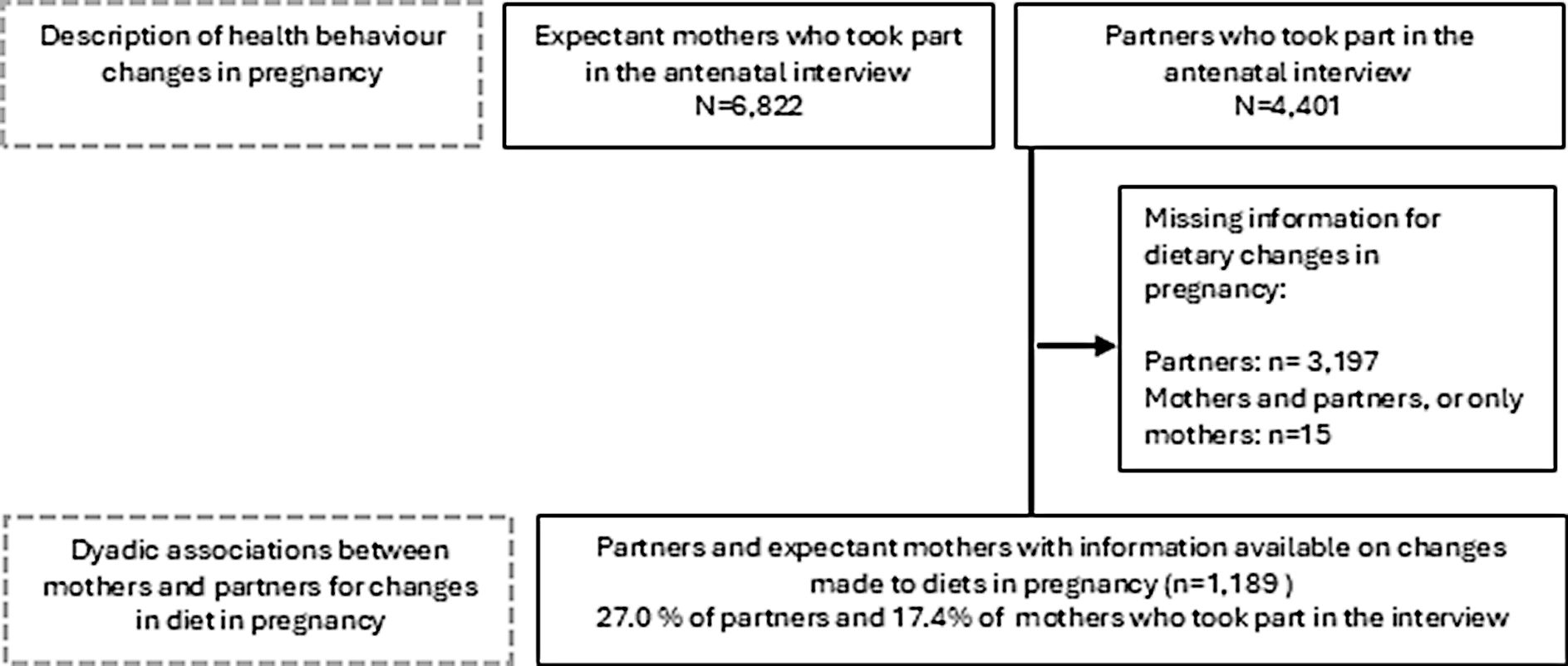
The description of changes in the health behaviours examined included all mothers (n = 6822) and all partners (n = 4401) who took part in the antenatal interviews. The examination of the associations between selected dietary changes among mothers and partners involved dyads for which information on reported diet change was available (n = 1189), representing 27.0% of the partners and 17.4% of the mothers who took part in the antenatal interview (Fig. 1 ).
Flow-chart illustrating: i) the number of expectant mothers and partners included in the description of health behaviour changes during pregnancy, and ii) the number of mother-partner dy ads included in the analyses of associations.

The cohort study was conducted in accordance with the Declaration of Helsinki, and all procedures involving human subjects were approved by the Ministry of Health’s Northern Y Regional Health and Disability Ethics Committee (NTY/08/06/055). Written informed consent was obtained from all children’s mothers/caregivers. Reference Morton, Atatoa Carr and Grant25
Mothers’ and partners’ sociodemographic characteristics
The following sociodemographic characteristics of mothers and partners included in this study were described: age, self-prioritised ethnicity, highest educational attainment, and neighbourhood deprivation. Age was categorised as <20 years, 20–34 years, or ≥35 years. Self-prioritised ethnicity was coded into Level 1 categories following the Statistics New Zealand coding criteria 15 (X): (1) European, (2) Māori, (3) Pacific Peoples, (4) Asian, (5) Middle Eastern, Latin American and African (MELAA), and (6) other, with MELAA and other then combined for analysis purposes. Educational attainment was categorised according to the highest qualification achieved (higher than bachelor’s degree, bachelor’s degree, diploma/trade certificate/National Certificate of Educational Achievement (NCEA) levels 5–6, secondary school/NCEA levels 1–4, or no secondary school qualification). Neighbourhood deprivation was assessed using the 2006 New Zealand Index of Deprivation (NZDep2006), an area-based measure of socioeconomic conditions, and grouped into deciles ranging from least deprived (1–2) to most deprived (9–10). Reference Salmond, Crampton and Atkinson26
Mothers and partners reported changes in health behaviours during pregnancy
Physical activity. For mothers, level of physical activity was estimated using the International Physical Activity Questionnaire. Participants were asked about intensity (moderate or vigorous), duration (<30, 30–60, >60 min), and frequency (days per week) of activity. Reference Craig, Marshall and Sjöström27 Mother’s physical activity was then categorised as participating in moderate or vigorous physical activity both before and during pregnancy, participating only before or only during pregnancy, or not participating at either time point. For partners, physical activity was assessed using a self-reported question about whether their usual level of physical activity had changed during their partner’s pregnancy, categorised as increased, reduced, or no change.
Alcohol use. Maternal alcohol consumption during pregnancy was assessed using three questions on the average weekly intake of beer, wine, or spirits: (i) before becoming pregnant or before awareness of pregnancy; (ii) during the first trimester; and (iii) after the first trimester. Standard show cards were provided to aid comprehension. For each time point, eleven response options were available, ranging from ‘I did not drink alcohol’ to ‘40 or more drinks per week’. Based on responses across pregnancy, maternal alcohol consumption was categorised into three groups: (1) non-drinkers, (2) any drinking during pregnancy, and (3) stopped drinking during pregnancy.
Partners’ changes in alcohol consumption during pregnancy were assessed through the question: ‘Thinking about how much alcohol you have been drinking during your partner’s pregnancy compared with before the pregnancy, are you drinking…’. Response options included: I do not drink alcohol; much less; a little less; about the same; a little more; and a lot more. For analysis, this variable was categorised as: non-drinkers, less drinking (much or a little less), about the same, and more drinking (a little or a lot more).
Smoking habits. Maternal smoking during pregnancy was assessed using two questions: “Did you smoke regularly, that is, every day, before you were aware you were pregnant?” and “Are you currently smoking?” Response options for both questions were “Yes” or “No”. Based on the combination of responses, maternal smoking status during pregnancy was categorised as: non-smokers (no to both questions), continued smoking (yes to both questions), and stopped smoking (yes before pregnancy, no during pregnancy).
Partners’ smoking behaviour during pregnancy was assessed using three questions: ‘Did you smoke regularly, that is, every day, before you were aware your partner was pregnant?’ ‘Have you changed your smoking habits during your partner’s pregnancy?’ and ‘How have you changed?’. Based on responses, this variable was categorised as: non-smokers; reduced number of cigarettes; kept smoking the same amount; or stopped smoking.
Dietary changes. Participants were asked whether they had deliberately added or avoided any foods or drinks during pregnancy. Those who answered ‘yes’ were invited to list up to five items they had added and up to five items they had avoided using open-text responses. These responses were then coded into predefined food categories aligned with the Eating and Activity Guidelines for New Zealand Adults and Pregnant Women. 48 This study focused on three key dietary markers: fruit and/or vegetables, takeaway/fast-foods, and sugar-sweetened beverages (SSBs). Healthy dietary changes during pregnancy were described as: addition of fruit and/or vegetables (categorised as: yes/no/no foods added, or no changes made to diet) and avoidance of takeaway/fast foods and avoidance of SSBs (categorised as: yes/no/no foods avoided, or no changes made to diet). As per the national guidelines, SSBs were defined as all non-alcoholic, water-based beverages containing free sugars. 48
Statistical analyses
Descriptive statistics were reported using proportions for categorical variables.
Multivariate Poisson regression models with robust variance were used to investigate the associations between the mother’s and partner’s healthy dietary change. Poisson regressions were used as an alternative to odds ratios due to the study’s cross-sectional design and the high (>10%) prevalence of the outcomes examined. In this case, the use of logistic regression for frequent outcomes can overestimate associations and is considered inadequate. Reference Barros and Hirakata49,Reference Zou50 For the multivariate analyses presented, the outcomes were healthy maternal dietary changes, which were aggregated into two categories [yes and (no; no items added or avoided; no changes made to diet)]. In each model, the corresponding partner’s dietary change was the independent variable, with the categories ‘no avoidance’ and ‘no addition’ of the selected dietary markers set as the reference categories. As parental diets are influenced by sociodemographic factors, Reference De Lauzon-Guillain, Krinitzki, Lioret and Charles40–Reference Wall, Gammon, Bandara, Grant, Atatoa Carr and Morton42 information on partners’ education level, ethnicity, age, and NZDeP were included in the models as confounding variables. The final models retained independent variables with p-Wald tests <0.05 or that altered the magnitude of associations by >10%. Findings were reported as adjusted prevalence ratios (PR) and 95% confidence intervals (95% CI). All analyses were conducted using SPSS software (version 25, IBM SPSS Statistics).
Results
Sociodemographic characteristics of mothers and partners
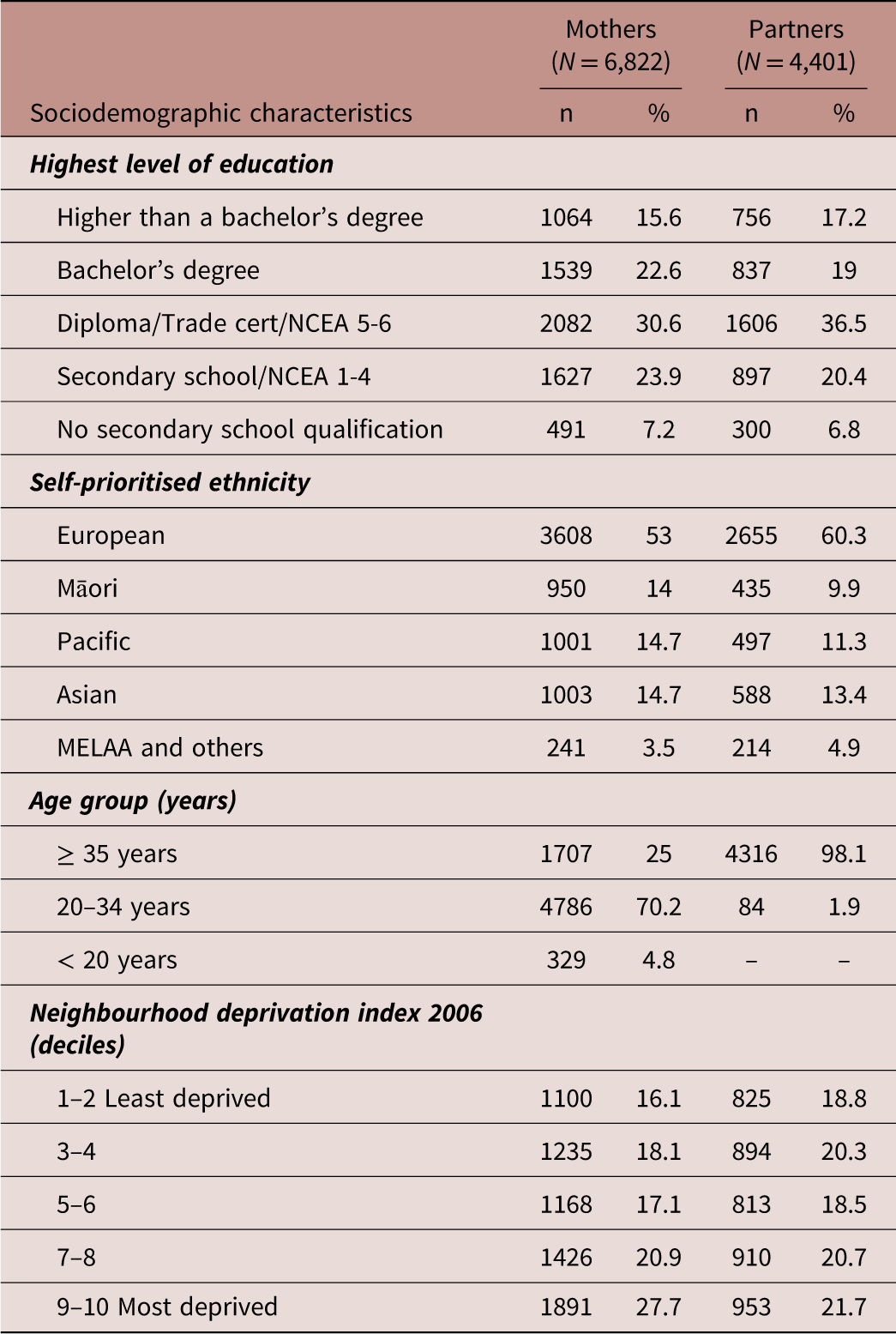
Sociodemographic characteristics of mothers and partners who completed the antenatal interviews are shown in Table 1. Most mothers were aged 20–34 years (70.2%), while the majority of partners (98.1%) were aged ≥35 years. Approximately 4 in 10 mothers and partners had a bachelor’s degree or higher, and the majority identified as Europeans. Regarding the neighbourhoods, 16.1% of mothers and 18% of partners were living in the least deprived neighbourhood deciles, while 27.7% and 21.7% of mothers and partners, respectively, were living in the most deprived deciles.
Sociodemographic characteristics of mothers and partners at the antenatal interviews

Table 1. Long description
A table comparing sociodemographic characteristics of mothers and partners. The table has 10 rows and 6 columns. Column headers are Sociodemographic characteristics, Mothers (n = 6822) n, Mothers (n = 6822) %, Partners (N = 4401) n, Partners (N = 4401) %. Row labels include Highest level of education, Self-prioritised ethnicity, Age group (years), and Neighbourhood deprivation index 2006 (deciles). Row 1: Highest level of education, Higher than a bachelor’s degree, 1064, 15.6, 756, 17.2. Row 2: Bachelor’s degree, 1539, 22.6, 837, 19.0. Row 3: Diploma/Trade cert/NCEA 5-6, 1627, 23.9, 897, 20.4. Row 4: Secondary school/NCEA 1-4, 491, 7.2, 300, 6.8. Row 5: No secondary school qualification, 2082, 30.6, 1606, 36.5. Row 6: Self-prioritised ethnicity, European, 3608, 53.0, 2655, 60.3. Row 7: Māori, 950, 14.0, 435, 9.9. Row 8: Pacific, 1003, 14.7, 497, 11.3. Row 9: Asian, 588, 8.6, 214, 4.9. Row 10: MELAA and others, 241, 3.5, 214, 4.9. Row 11: Age group (years), ≥ 35 years, 1707, 25.0, 4316, 98.1. Row 12: 20-34 years, 4786, 70.2, 84, 1.9. Row 13: < 20 years, 329, 4.8, 0, 0.0. Row 14: Neighbourhood deprivation index 2006 (deciles), 1-2 Least deprived, 1100, 16.1, 825, 18.8. Row 15: 3-4, 1235, 18.1, 894, 20.3. Row 16: 5-6, 1168, 17.1, 813, 18.5. Row 17: 7-8, 1426, 20.9, 910, 20.7. Row 18: 9-10 Most deprived, 1891, 27.7, 953, 21.7.
NCEA, National Certificate of Educational Achievement; MELAA, Middle Eastern, Latin American, and African.
Missing for mothers (n): Highest level of education (19); Self-prioritised ethnicity (19); Age group (0); Neighbourhood deprivation (¶).
Missing for partners (n): Highest level of education (¶); Self-prioritised ethnicity (12); Age group (¶); Neighbourhood deprivation (¶).
¶As per the Growing Up in New Zealand study anonymity requirement, ‘<10’ represents greater than zero and less than 10 children in the cell.
Mothers and partners reported changes in health behaviours in pregnancy
Table 2 presents the numbers and proportions of mothers and partners reporting changes in physical activity, alcohol use, smoking patterns, and diet during pregnancy. Among mothers, most reported stable physical activity patterns, with 73.7% remaining consistently active or inactive before and during pregnancy. Among partners, 43.4% reported changes in physical activity patterns (more or less active) during pregnancy. Alcohol consumption declined during pregnancy, with 43.0% of mothers reporting cessation, and 43.2% of partners reporting drinking reduction. Most mothers and partners were non-smokers. Among mothers who smoked before pregnancy, nearly half quit during pregnancy. Among smoking partners, around two-thirds reduced cigarette consumption or quit during pregnancy. During pregnancy, 22.9% of mothers reported avoiding SSBs and 30.7% avoiding fast foods, while 15.8% reported adding fruit and/or vegetables to their diet. Among partners with information on dietary changes during pregnancy, 13.2% reported avoiding SSBs, 9.9% avoiding fast food, and19.2% reported increased intake of fruit and/or vegetables.
Mothers’ and partners’ reported health behaviour changes during pregnancy (physical activity, alcohol use, smoking habits, and dietary changes)

Table 2. Long description
The table presents data on health behavior changes during pregnancy for mothers and partners. It has 10 rows and 6 columns. The columns are labeled ‘Health behaviour changes in pregnancy’, ‘Mothers (N = 6822)’, ‘n’, ‘%’, ‘Partners (N = 4401)’, ‘n’, and ‘%’. The rows are labeled with different health behaviors: physical activity pattern before and during pregnancy, physical activity pattern, alcohol use pattern, smoking pattern, avoidance of sugar-sweetened beverages, avoidance of takeaways/fast food, and addition of fruit and/or vegetables in pregnancy. Each row provides the number and percentage of mothers and partners reporting specific changes in these behaviors. Notable trends include a significant proportion of mothers maintaining stable physical activity patterns and a high percentage of both mothers and partners reducing or stopping alcohol consumption and smoking during pregnancy. Additionally, a notable percentage of both groups reported changes in diet, such as avoiding sugary beverages and fast food, and adding fruits and vegetables.
Missing for mothers’ variables (n): Physical activity (640); Alcohol use pattern (type of change) (19); Smoking pattern (type of change) (661); Diet (type of change) (15); Diet-items avoided (¶); Diet-items added (0).
Missing for partners’ variables (n): Physical activity (type of change) (247); Alcohol use pattern (type of change) (245); Smoking pattern (type of change) (266); Diet (type of change) (3206); Diet-items avoided (3206); Diet-items added (3206).
Associations between mothers’ and partners’ dietary changes
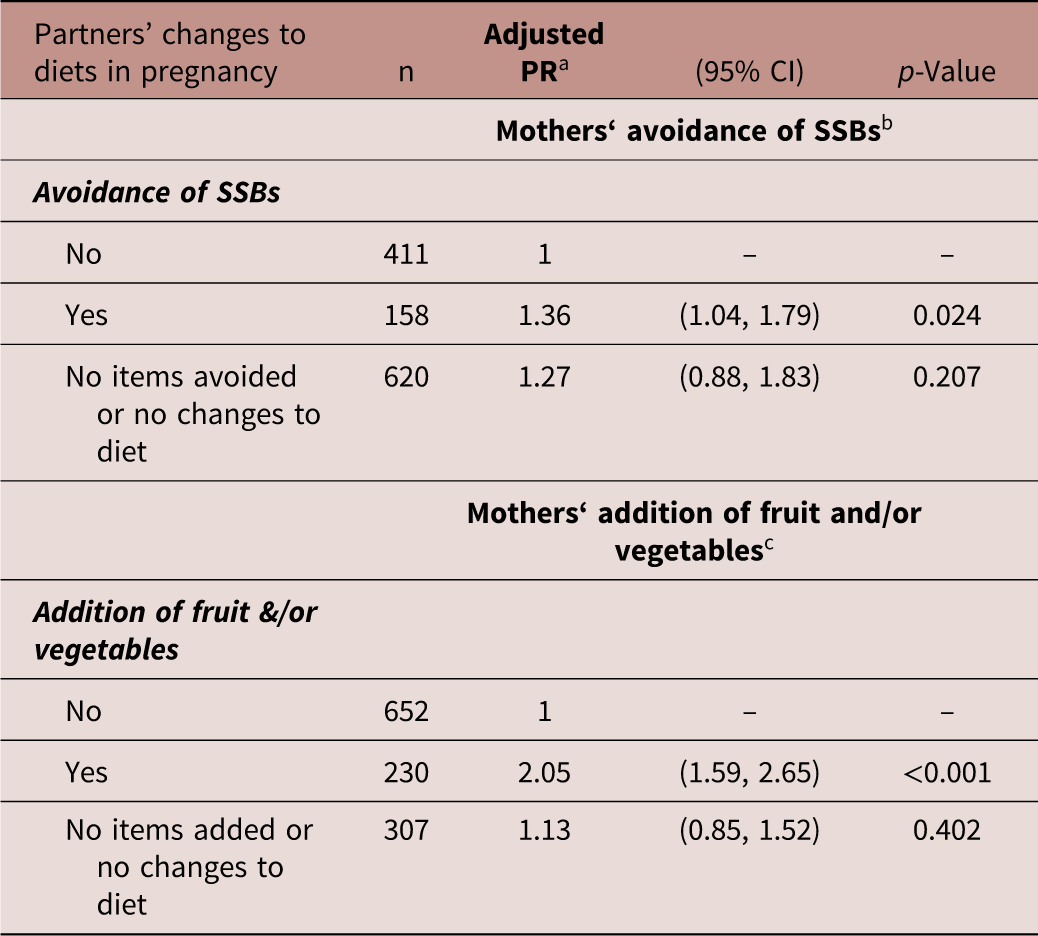
The adjusted associations between mothers’ and partners’ dietary changes during pregnancy are shown in Table 3. Significant dyadic associations were observed for avoiding SSBs and adding fruit and/or vegetables to diets. No significant associations were observed between mothers’ and partners’ avoidance of fast food (data not shown in the table).
Adjusted prevalence ratios and respective 95% confidence intervals for the associations between mothers’ and partners’ avoidance of sugar-sweetened beverages and addition of fruits and/or vegetables to diets in pregnancy

Table 3. Long description
The table presents the adjusted associations between mothers and partners dietary changes during pregnancy. It has two main sections: Mothers’ avoidance of SSBs and Mothers’ addition of fruit and/or vegetables. The first section includes three rows labeled Avoidance of SSBs with subcategories No, Yes, and No items avoided or no changes to diet. The columns are Partners’ changes to diets in pregnancy, n, Adjusted PR, 95% CI, and p-Value. The second section includes three rows labeled Addition of fruit &/or vegetables with subcategories No, Yes, and No items added or no changes to diet. The columns are the same as in the first section. Each row provides specific values for the categories listed.
a N = 1189. PR, Prevalence ratio; CI, confidence interval; SSB, Sugar-sweetened beverages.
b Coded as 1 = yes and 0 = no, changes to diet or SSBs not avoided during pregnancy. Model adjusted by partners’ antenatal age, education level, and self-prioritised ethnicity.
c Coded as 1 = yes and 0 =no changes to diets or no fruit and/or vegetables added to diets during pregnancy. Model adjusted by partners’ self-prioritised ethnicity.
Discussion
This is a descriptive study describing reported changes in health behaviours among expectant mothers and their partners during pregnancy within a nationally generalisable NZ birth cohort. Both mothers and partners reported modifying behaviours related to physical activity, alcohol use, smoking, and diet. Significant alignment in selected healthy dietary behaviours markers was observed within mother–partner dyads for avoidance of SSBs and addition of fruit and/or vegetables. These findings suggest that pregnancy may represent a shared period of health behaviour change within households.
Previous cohort studies have documented changes in health behaviours among expectant mothers and fathers across different populations. Reference De Lauzon-Guillain, Krinitzki, Lioret and Charles40,Reference Magnus, Birke and Vejrup43–Reference Peles, Shloim and Rudolf45 Part of both mothers and partners enrolled in the Growing up in New Zealand reported reductions in alcohol consumption during pregnancy and quitting or reducing smoking. Reductions in maternal smoking and alcohol use during pregnancy, alongside changes in diet quality and physical activity were also described within the Norwegian Mother and Child Cohort Study Reference Magnus, Birke and Vejrup43 (n >100,000 pregnancies). Other studies focusing on health behaviours of expectant fathers Reference De Lauzon-Guillain, Krinitzki, Lioret and Charles40-Reference Kearns, Lahdenperä, Galante, Rautava, Lagström and Reynolds41,Reference Magnus, Birke and Vejrup43–Reference Peles, Shloim and Rudolf45 reinforce the importance of partner-inclusive antenatal approaches, as pregnancy represents a shared context for health behaviour change within households.
Few existing studies have examined associations between mothers and partners changes in health behaviours during pregnancy across multiple domains. Reference Pollack, Alexander, Østbye, Lyna and Tulsky10–Reference Evenson, Brouwer and Quick12 Previous cohort studies and systematic reviews have demonstrated concordance in smoking behaviours within couples, particularly during pregnancy. Reference Homish and Leonard37–Reference Riaz, Lewis, Naughton and Ussher38 Evidence indicates that maternal smoking cessation is less likely when partners continue to smoke, highlighting the interdependent nature of smoking behaviours within couples. Reference Homish and Leonard37–Reference Riaz, Lewis, Naughton and Ussher38 Prospective study conducted in the United States with 4500 pregnant women demonstrated that partner drinking behaviour influenced similar behaviour in mothers. Reference Chang, Osterling and Brown11 Similar observations were made within the New Zealand Couples Study (n ≈ 1500 adults), which reported concordance in alcohol consumption within couples. Reference Meiklejohn, Connor and Kypri46 The French cohort (n = 18,000), which identified a significant association between fathers ‘drinking pattern preconceptionally and maternal alcohol use in early pregnancy. Reference De Lauzon-Guillain, Krinitzki, Lioret and Charles40 A prospective study of pregnant women in the United States (n ≈ 1500), has reported that partners’ emotional and practical support was associated with greater maternal participation in physical activity. Reference Evenson, Brouwer and Quick12
Given the differences in the metrics used to measure changes in physical activity, smoking, and alcohol use habits for mothers and partners during pregnancy within Growing up in New Zealand, this study could not assess dyadic associations in these behaviour changes within couples. The associations observed between mothers’ and partners’ reported behaviours of avoidance of SSBs and addition of fruit and/or vegetables during pregnancy may reflect shared household environments and interpersonal influences shaping dietary changes, Reference Barker, Lawrence and Skinner23,Reference Davison, Haines and Garcia30 In the Elfe cohort Reference De Lauzon-Guillain, Krinitzki, Lioret and Charles40 (France; n ≈ 18,000 families), maternal and paternal dietary patterns in early pregnancy were associated, with maternal scores in the Western pattern positively associated with paternal scores in the Diverse pattern. Maternal scores in the Healthy pattern were positively associated with paternal scores in the Balanced dietary pattern. Reference De Lauzon-Guillain, Krinitzki, Lioret and Charles40 Couples’ dietary synergies may represent a space for potential interventions not only to support a healthy pregnancy but also to improve nutrition outcomes for fathers. Observations from cohorts in Finland, Australia, and the United Kingdom have highlighted many expectant fathers with suboptimal diet quality. Reference Kearns, Lahdenperä, Galante, Rautava, Lagström and Reynolds41,Reference Pettigrew, Jongenelis and Cronin44–Reference Peles, Shloim and Rudolf45 Within the DOHaD framework, there is growing recognition that paternal and household environments are important contributors to early developmental programming. Reference Hanson and Gluckman5–Reference Soubry6 Father`s diet quality may influence reproductive and developmental outcomes through several pathways, including sperm epigenetic modifications, alterations in sperm quality, seminal plasma signalling, and shared household environments. Reference Soubry6–Reference Donkin and Barrès7 Findings from other previous studies have complemented that partner involvement and support during pregnancy is associated with healthier maternal dietary practices, including increased consumption of fruits and vegetables and improved overall diet quality. Reference Figueroa, Dwyer and Paul9,Reference Pollack, Alexander, Østbye, Lyna and Tulsky10 Figueroa, Dwyer, and Paul (2020) Reference Figueroa, Dwyer and Paul9 reported that partner involvement positively shaped maternal nutritional habits, while Pollack et al. (2010) Reference Pollack, Alexander, Østbye, Lyna and Tulsky10 found that partner encouragement and modelling of healthy behaviours were associated with improved maternal health practices. Other smaller, clinic-based, intervention-based, and qualitative studies suggest that partners influence maternal diet, alcohol use, and health practices through shared routines, behavioural modelling, and psychosocial support. Reference Figueroa, Dwyer and Paul9–Reference Evenson, Brouwer and Quick12 In these studies, father-inclusive antenatal interventions have been associated with improved engagement and selected positive maternal outcomes. Reference Tokhi, Comrie-Thomson, Davis, Portela, Chersich and Luchters16–Reference Peneza and Maluka18
Strengths and limitations
The study’s strengths include that observations were drawn from New Zealand`s largest, ethnically diverse, and nationally generalisable birth cohort Reference Morton, Atatoa Carr and Grant21,Reference Morton, Atatoa Carr and Grant25 with antenatal data available for both mothers and partners. Key limitations of the study include its predominantly descriptive and cross-sectional design. Thus, it does allow to establish causal inferences within the dyadic associations examined. Additionally, the changes in the diets of mothers and partners during pregnancy were not assessed by commonly used dietary intake tools, such as food frequency questionnaires. Instead, changes in diet were measured by reported information on food items added or avoided during pregnancy. This approach does not allow distinguishing, for example, mothers or partners who already had diets rich in a variety of fruits and vegetables before pregnancy and therefore did not add these items to their diets, and those who had diets low in fruit and vegetables and added fruits and vegetables during pregnancy. Finally, another limitation concerns the generalisability of the findings for the associations between mothers’ and partners’ avoidance of SSBs and addition of fruit and vegetables, as these analyses included fewer than a third of the mothers-partners dyads in the cohort.
Findings’ implications, and direction for future research
Observations from this study support expanding antenatal care and public health messaging to more actively include partners. Pregnancy appears to represent a potential window of opportunity for household-level health behaviour change. Reference Dunkel Schetter13 Partner-inclusive antenatal strategies may help normalise shared responsibility for dietary improvements, physical activity engagement, alcohol reduction, and smoking cessation. Reference Figueroa, Dwyer and Paul9–Reference Evenson, Brouwer and Quick12,Reference Tokhi, Comrie-Thomson, Davis, Portela, Chersich and Luchters16–Reference Peneza and Maluka18,Reference Davison, Haines and Garcia30 In the New Zealand context, a whānau-centred (family-centred) approach to antenatal health promotion may be particularly relevant. 47 Supporting behaviour change at the household level may reduce the burden placed solely on pregnant women to modify behaviours and may promote more sustainable lifestyle adaptations that are transmitted generationally. Reference Tokhi, Comrie-Thomson, Davis, Portela, Chersich and Luchters16–Reference Peneza and Maluka18 Future longitudinal research should examine whether behavioural alignment between mothers and partners observed during pregnancy persists into the postnatal period and whether shared parental behaviours influence child health trajectories. Reference O’Donnell and Meaney14
Conclusion
This study identified health behaviour changes during pregnancy among both mothers and partners, and that selected reported healthy dietary changes were aligned within couples. Partner-inclusive approaches may provide opportunities to support positive health behaviour change during pregnancy and future family-based interventions for health promotion.
Data availability statement
The data used in this study are available through application to the Growing Up in New Zealand data access committee, subject to ethical and governance approval.
Acknowldgements
The authors thank the participating families in the Growing Up in New Zealand cohort study for their time and for sharing the information that enabled this research. The authors also thank the interviewers and researchers who designed, collected, cleaned, and prepared the data for use.
The Growing Up in New Zealand study has been funded by: the New Zealand Ministries of Social Development, Health, Education and Justice; the former Ministry of Science Innovation and the former Department of Labour (now both part of the Ministry of Business, Innovation and Employment); the former Ministry of Pacific Island Affairs (now the Ministry for Pacific Peoples); the former Ministry of Women’s Affairs (now the Ministry for Women); the Department of Corrections; the Families Commission and the former Social Policy Evaluation and Research Unit); Te Puni Kokiri; New Zealand Police; Sport New Zealand; Housing New Zealand Corporation; and the former Mental Health Commission (now part of the Office of the Health and Disability Commissioner); and The University of Auckland and Auckland UniServices Limited. The Growing Up in New Zealand study has been designed and conducted by the Growing Up in New Zealand team, led by the University of Auckland. The authors would like to acknowledge the contributions of the original study investigators: Susan M.B. Morton, Polly E. Atatoa Carr, Cameron C. Grant, Arier C. Lee, Dinusha K. Bandara, Jatender Mohal, Jennifer M. Kinloch, Johanna M. Schmidt, Mary R. Hedges, Vivienne C. Ivory, Te Kani R. Kingi, Renee Liang, Lana M. Perese, Elizabeth Peterson, Jan E. Pryor, Elaine Reese, Elizabeth M. Robinson, Karen E. Waldie and Clare R. Wall. Other support for the study has been provided by the Health Research Council of New Zealand, Statistics New Zealand, the Office of the Children’s Commissioner and the Office of Ethnic Affairs (now the Office of Ethnic Communities).
Author contribution
TGC and CRW designed the study. AL and TGC prepared and analysed the data. BIL, TGC, CRW, and AL contributed to the interpretation of the findings. BIL and TGC drafted the manuscript. AL, CRW, and NG critically revised the manuscript. All authors reviewed and approved the final version of the manuscript.
Funding statement
This work was developed as the content of the master’s thesis of AL. This research received no specific grant from any funding agency, commercial or not-for-profit sectors. TGC received salary support from the Department of Nutrition & Dietetics (University of Auckland).
Competing interests
The authors declare no conflicts of interest. All authors confirm that they have no personal or financial relationships that could be perceived as influencing the conduct, interpretation, or reporting of this research.