Introduction
In 2015, Out of Home Care (OOHC) services in the Australian Capital Territory (ACT) joined together under the Step Up for Our Kids strategy, which aims to improve outcomes for children and young people who are unable to live with their birth families. A consortium, known collectively as ACT Together, now holds case management for all children in the ACT who have long-term orders. This has brought kinship care, foster care and residential care together, with carer support and therapeutic services.
The Therapeutic Services Team (TST) is leading the way within ACT Together to support and shape the move to trauma-informed practice providing:
Direct therapeutic support for children and young people
Direct therapeutic guidance to a child’s care team
Direct therapeutic input into residential care homes
Consultations in regard to a child or young person
Advocacy
Training and psychoeducation
Supporting the cultural shift outlined in the Step-Up document
The TST has a varied and challenging role as ACT Together makes the transition towards a fully therapeutic OOHC service. It is an element of this undertaking which I am exploring in this paper, specifically highlighting the difference between therapeutic interventions and therapy, and recognising the importance of the work that goes on outside of the counselling room in supporting children and young people to heal.
Impact of trauma
To provide a contextual grounding, the TST works from the following established facts:
Developmental trauma results when a developing brain is exposed to high levels of stress and arousal on a repeated basis.
Due to the sequential development of the brain, extended exposure to toxic stress causes the brain to develop adaptively – it becomes a ‘survival brain’.
Developmental trauma occurs in relationship, typically with a primary caregiver.
Relational templates are skewed and attachment is disrupted.
Brains can heal.
In general terms, the brain becomes wired for survival. For traumatised children, brain development in early childhood has been focused upon survival (Porges, Reference Porges2015). These children do not trust their autonomy, nor do they believe that their emotions can be survived (Van der Kolk, Reference Van der Kolk2015), and they do not feel able to rely on the adults around them for support. The survival brain is managing the tension between needing proximity and relationship with other people (i.e. with a caregiver) while also protecting itself from those people. Badenoch (Reference Badenoch2017, p. 203) suggests that ‘To stay in proximity and contact, we humans will twist ourselves into whatever shape the relationship requires, not only but especially when we are very young’.
Children experiencing abuse and neglect learn to adapt their behaviour to survive their circumstances (Cook et al., Reference Cook, Blaustein, Spinazzola and van derKolk2003). For example, when children live with domestic violence, they become vigilant for signs that their parent is becoming angry and adapt their behaviour accordingly to avoid the repercussions of upsetting them at this time. This motivation is not about pleasing adults – it is about minimising risk to self and maximising their chance of survival. It is important to hold onto this fact as it helps us understand that this behaviour is adaptive. Specifically, it allowed children to survive extreme levels of distress. Their behaviour is a communication, speaking to their adaptive strengths, and it is our job to look for the meaning beneath the behaviour to best understand and support the child to function in a less-risk intensive world.
The Step-Up document outlines the bold step the ACT is taking to improve the lives and prospects of the children and young people who are in OOHC. In doing so, there is also an emphasis upon those working within the system to make a cultural shift to a therapeutic approach. It is a change from previous pedagogy and a big challenge for those in the sector to embrace. It asks for the expectations of those involved in OOHC to change and evolve with the findings and teachings of neuroscience and interpersonal neurobiology, and this impacts most heavily upon the expectations the OOHC system has of their carers.
Therapeutic foster carers are expected to do much more than to feed, clothe and parent the child(ren) in their care. They are being asked to embrace another style of parenting – one which is more compassionate to the survival brain, recognises the communication of need underneath challenging behaviour and, most importantly, responds in a way which allows the survival brain to rewire and learn new ways of being. Traditional parenting techniques simply do not support a survival brain to flourish (Perry, Reference Perry and Webb2006).
Therapy versus therapeutic intervention
A common issue met by the TST is the lack of a clear understanding of the difference between therapeutic intervention and therapy. While the majority of carers have undertaken trauma training as part of the move to therapeutic care, the TST is regularly met with barriers in relation to how best to support the carers to respond therapeutically to adaptive behaviours. There is also a common misconception that anything ‘therapeutic’ must be the role of the TST and that the carer is not qualified to undertake this work.
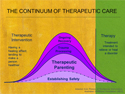
I propose that a therapeutic OOHC system requires all those involved to use a therapeutic lens when approaching their work, beginning at one end, with a healing environment, and continuing all the way to direct therapy sessions at the other end (see Figure 1). In between, we have involvement from the child’s school, care and protection workers, family and social groups – so that everyone brings the same therapeutic and healing attitude to their work with the child or young person – ideally guided by input from a suitable therapeutic specialist with a knowledge of the impact of trauma. As Perry (Reference Perry and Webb2006, p. 46) states: ‘The primary therapeutic implication is the need to increase the number of quality relational interactions and opportunities for the high-risk child’. In this way, the whole system is therapeutic and offers the opportunity for many healing interventions to occur.
The continuum of therapeutic care (O’Hara, Reference O’Hara2018).

Case Study: BainFootnote *
Bain was 6 years old upon referral to the TST, having come into care only a few months prior. Emergency action was taken following a number of reports of concern made to Care and Protection questioning his parents’ capacity to look after, and parent, Bain and his siblings. Concerns included drug abuse, extreme neglect and domestic violence. All of the children entered a crisis placement when emergency action was taken, however, due to the carers available at the time the siblings could not be placed together.
Bain and his middle sibling were placed together, while his youngest sibling was placed elsewhere. Bain and his middle sibling moved into what was hoped would be a permanent placement approximately two months afterwards. It was during this placement that the referral was made to TST to support the carers and I was allocated the case. Due to a number of factors the placement broke down and the children were moved on to another care placement, where they have currently resided for over a year.
* Bain is a fictional name used to preserve anonymity
The above case study is not an unusual story. Children enter the care system in an emergency placement, they then move into a longer-term placement. Often placements break down and the child(ren) move on to new carers. ACT Together aim to keep placement moves to a minimum to avoid causing further trauma to the child(ren) involved. In this way it is apparent that Bain and his sibling, having only moved placements twice since being removed from their parents’ care, have been well matched with their new carers. This marks the difference between the previous model of OOHC and the therapeutic model being adopted in the ACT today.
A number of factors contributed to the breakdown of Bain’s first long-term placement including, but not limited to, the following:
Enthusiastic, but inexperienced and poorly supported carers.
Carers discovered they had vastly different parenting styles causing conflict and splitting within their relationship.
Carers were able to bond easily to the younger sibling, but found it difficult to do the same with Bain.
TST was brought in too late and under the wrong pretext (i.e. therapy to ‘fix’ Bain rather than to support the carers as well).
Lack of safety for Bain, which led to dysregulation and an increase in the adaptive behaviour the carers found challenging.
The carers were blocked in their care for Bain. They had begun to view him as a ‘bad child’ who chose to behave in dreadful ways.
Similarly, their caseworker was blocked towards the carer causing further splitting within the care team, as the caseworker was ‘on the child’s side’ and not able to understand the carers’ position or have compassion for the difficulties they were experiencing.
Individual therapeutic intervention for Bain would not have been effective while relational safety did not exist. What was needed was a therapeutic system around both Bain and his carers, which supported the carers’ knowledge and understanding of Bain in the context of his survival brain and his adaptive behaviours. They needed a system which helped them to make sense of Bain’s needs (as these needs underpinned the behaviours they were seeing) and which would support them to respond therapeutically. The system needed to be one in which their caseworker was able to understand and hold the carers’ emotional wellbeing; walking alongside them, unified, for the best outcomes for Bain and his sibling. In addition, the system needed to support the development of relational safety in the home. The old model of OOHC was unsuccessful in supporting Bain and his carers well.
Definition of Blocked Care
Blocked care is a way of describing the suppression of a carer’s potential to nurture a child, especially if the child is slow to reciprocate warmth and love. It predominately plays out as irritation, frustration, despair, emotional disconnection and a lack of understanding of the child or young person’s emotional state and needs. (Australian Childhood Foundation, 2018, slide)
A cultural shift within the care system is required to improve outcomes for children and young people. The Step Up for Our Kids strategy clearly states that ‘In order to implement the strategy effectively significant cultural change is required across all parts of the sector’ (ACT Government, 2014, p. 18). While this change will affect all members of the system, a primary aspect is the responsibility placed on carers to become therapeutic parents. The safety this provides creates a foundation for counselling or therapy (with a professional counsellor or psychologist) to be undertaken. I have outlined below some of the key elements required to build this foundation as I have experienced within my own practice in the realm of OOHC.
Environment and neuroception of safety
Establishing a safe environment is a key component of the therapeutic journey. This safety refers not only to physical safety, but also to emotional safety and relational safety, both implicit and explicit. This concept is best understood from the perspective of Polyvagal Theory. Specifically, and the way in which we can support the development of a regulated nervous system, which is required to achieve experience of safety. What is apparent from Polyvagal Theory is the intrinsic link between the physiological and psychological elements of risk perception. Porges (Reference Porges2007) introduced the term ‘neuroception’ to encompass the subconscious, or implicit, identification of threat as something separate from our conscious perception of threat.
In optimal conditions, the amygdala identifies potential dangers in the environment and signals the hippocampus. The sensory information is matched against the information held in memory to determine if the risk is valid or not. Where the environment is neurocepted as ‘safe’ the limbic regions of the brain are dampened, the body feels safe and social engagement can occur. Where a situation is neurocepted as ‘unsafe’ the body prepares for survival actions and the fight, flight, freeze or flop responses are engaged depending upon the assessment of the level of danger present. However, for traumatised individuals, memory encoding has been compromised due to ongoing heightened levels of Hypothalamic Pituitary Adrenal (HPA) axis activity.
The HPA Axis
The HPA axis serves to prepare the body to respond to danger, specifically when the brain identifies that the danger will last more than a few minutes (i.e. sensory information pushes the amygdala past baseline parameters).
The amygdala sends a signal to the hypothalamus indicating the need for stress response preparing the body for action (i.e. fight, flight or freeze). The hypothalamus then sends a signal to the pituitary gland which, in turn, releases a hormone to stimulate cortisol and epinephrine (adrenaline) production.
The release of these hormones raises heart rate, increases circulating levels of glucose (to provide cells with energy) and inhibits non-priority functions such as digestion.
In optimal conditions the levels of cortisol in the blood stream also serve to inform the hypothalamus to ‘switch off’ the hormone messengers to the pituitary and adrenal glands. This ‘feedback loop’ gradually calms the system and brings it back to a state of calm (i.e. all is well, danger has passed). In sub-optimal conditions (i.e. where perpetual danger is perceived) cortisol and epinephrine levels are overproduced. The HPA axis becomes desensitised to the hormonal messages to ‘switch off’ the stress response system. The system remains active, consistently pumping out cortisol and epinephrine - the body is constantly on ‘high alert’.
The HPA response greatly interferes with the brain’s ability to process and encode events in a holistic way. When under threat, the brain’s only priority is survival, and conscious cortical functions are not accessible to fully encode events into memory. Instead, memories become fragmented and are stored without context or time. Consequently, the amygdala becomes highly sensitised to signals indicating threat and when cross-checking with information stored in the hippocampus (i.e. Is this dangerous? Have I encountered it before?), it finds many matches indicating danger. Fragments are matched to fragments (i.e. colours, smells and sounds) and the ‘alarm’ is activated – danger is neurocepted. Consequently, the physiological states supporting fight, flight or freeze are engaged unnecessarily.
Polyvagal Theory
Porges (Reference Porges2007) identified that mammals, unlike other species, have two vagal nerves comprising the parasympathetic nervous system. A distinction is made between the neuroanatomical and neurophysiological functions of the two vagal branches, and it is posited that they serve very different adaptive behavioural strategies.
The younger, myelinated ventral vagus nerve (specific to mammals) holds the primary role of vagal regulation of the heart. It functions as an active vagal brake (Porges, Doussar, Portales d-Roosevelt, & Greenspan, Reference Porges, Doussar-Roosevelt, Lourdes Portales and Greenspan1996) capable of both mobilising and calming heart rate and, by extension, the body. Normatively, it is capable of inhibiting the activity of the HPA axis (Porges, Reference Porges2001). This allows an individual to modulate physical reactions quickly in response to changes in the environment—our social engagement system.
Polyvagal Theory assumes that our stress response system is both use dependent and developmentally hierarchical. For example, if the social engagement system is successful, this will be the preferred stress response. However, if it is unsuccessful the mobilisation (fight/flight) response will become the preferred response and, if this is unsuccessful the immobilisation (freeze) response will occur.
An example of such a mismatch can be seen in traumatised children who are afraid of the dark. The child’s lived experience of night-time or dark places has left an imprint upon their bodies which can lead to hypervigilance at night and seemingly big reactions to small sounds or smells. As adults, we can feel confident that the child has nothing to fear in the dark, however, the child will have a totally different perspective. The child may physically re-experience the fear of other nights spent in the dark, at times when they were not safe, as if it is happening again, right now, in the present.
A sensory audit of the child’s environment can help to identify both potential triggers and safety cues relevant to the child. For example, a night light in their room, or having line of sight down the corridor from their room, may help a child feel safer at night. Questions to ask can include the following: Does the home feel inviting, warm and welcoming to the child? What are the rules of the house? Does the child know these rules?
To put the latter question into context, we can consider the significance of food to a traumatised child, especially one who has experienced neglect. In this situation, the child’s adaptive behaviour may have included finding their own food and food for their siblings. If this child then enters a care placement in which they must ask an adult to provide food (and they are not allowed to get their own food), this becomes a potential point of tension in their relationship. Children may not trust that the carer will give them food when they need it – why would they if their experience of adults to date is that they do not consistently provide food? A likely consequence is that children will steal food, possibly hoarding it in their room, to protect against the possibility that the adult may not provide food, and to provide comfort from the fear of hunger. Without an understanding of where this behaviour has come from and what it is communicating, it may be perceived as defiant behaviour and met with punishment or consequence. This may be perceived by the child as a threat to safety and promote an increase of the adaptive behaviour as the child will continue to need to ensure survival and continue to take food.
However, if we look beneath the behaviour and respond to the need instead – in this case I don’t trust you enough yet to feed, care and look after me so I need to do it for myself – we can approach this situation differently. For example, allowing the child to have a freely accessible snack box from which they are able to take food may overcome the need for taking food. This can be filled with healthy food snacks that will both support the child to know food is readily available and also ensure that the carer is comfortable with the type of food being eaten. It would also allow the child to enjoy full meals and may provide some additional nutrition to compensate for a poor previous diet. Initially, the snack box may need to be restocked frequently to support the child’s growing sense of food being reliably available. This approach offers the preservation of relational integrity while also responding compassionately to the child’s fear of being without food.
Case Study: Bain
When I first met Bain he had a very restricted diet. He wanted to have Mac n’ Cheese for every meal and his carers would struggle to get him to eat anything else. They also struggled to understand why he would only want the packet version and not that made with ‘real’ cheese. After getting to know Bain I found out that this was the meal his grandmother would cook for him. Bain has a close connection to his grandmother as someone who loved and cherished him. Her cooking skills appeared to have been limited, but this meal represented more than food—it represented the safety and love Bain experienced in his relationship with her. A very clear indication of his needs when seen in context.
Similarly, carers may need to become flexible around some of their own standards in response to the needs of a child. I have frequently encountered a situation where the new carer wished to wash the child’s clothes or toys from a previous placement, or those which were given to the child by the birth family. This desire by the carer is understandable as they want to provide a clean and healthy environment and want the child to experience being cared for. These items may smell bad and appear dirty or ragged, but to the child it is a little piece of home, with the smell being of particular importance, and serving as a transitional object to help them feel comfortable in their new home.
As much as professionals and adults involved can see the deficits of a child’s birth home, for the child it is their known and lived experience. I use the analogy of moving to a foreign country as a method of understanding what this experience could feel like. The language may be the same, but there are subtle differences which make the country feel strange (i.e. the food tastes different, some words do not mean the same thing). Using our understanding and compassion, We are able to bridge the gap between lived experience and new experience for the child and ease their transition into a care placement.
Therapeutic parenting
A pivotal element of the healing journey of a traumatised child is therapeutic parenting. Therapeutic parenting is connected and intentional parenting, which seeks to understand and respond to the communication underlying a child’s behaviour. It offers dis-confirming attachment experiences (Badenoch, Reference Badenoch2017) which support the formation of new relational templates. Dis-confirming attachment experiences are markedly different to that which the child has experienced before. When a child may previously have been met with often mis-attuned and inconsistent reactions from adults in their life, they now have the opportunity to experience consistent, attuned interactions that support healing (ACF, 2006, Attachment Trauma Network, 2018). As Perry (Reference Perry and Webb2006, p. 37) states: ‘Repetition, repetition, repetition: neural systems – and children – change with repetition’.
A therapeutic parent is asked to suspend their need to ‘change’ the child’s behaviour, as in attempting to change the behaviour, we lose any understanding about what this behaviour means and what need it is communicating (Cairns & Cairns, Reference Cairns and Cairns2016). Without this understanding and curiosity, our capacity to help the child to heal from their earlier stressors is limited. Indeed, the adaptive nature of these behaviours could, in fact, be celebrated as they helped the child to survive adversity, and in understanding more about how the child developed, opportunities become available to ‘fill in the gaps’ of development, which will support these behaviours to become obsolete. In ‘sitting with’ and being curious about the child’s adaptive behaviour, it is possible to gain a wealth of understanding about the child’s adaptive strategies and how best to provide support.
We intrinsically understand that an infant does not ‘choose’ to cry when hungry, tired or thirsty. Indeed, the infant does not know what need it has to begin with – that is for the parent to figure out and respond to. It is through this dependence upon the parent that an infant is able to identify hunger, thirst and lethargy as they grow into children and young adults. During this stage of development, parents are making links between the infant’s internal state and what is required to meet this need – links which the child will later come to know for themselves.
In the same way, traumatised children do not cognitively ‘choose’ their behaviour. Rather, it is an adaptive response which they do not understand. Effectively, therapeutic parents replicate elements of early parenting through the identification and ‘filling in’ of developmental and relational gaps. Just as an infant gradually grows towards interdependence and no longer requires the parent to the same degree, so will the behaviour of the traumatised child slowly change and grow. Furthermore, when it is done with compassion for, and delight in, the child and without an agenda to change the child, carers open opportunities for the child to move towards recovery. Traditional parenting techniques may in fact serve to replicate early traumatic experiences or rely on the child’s capacity to regulate or cognitively respond to the situation, which is unrealistic based on our knowledge of the survival brain (Perry, Reference Perry and Webb2006).
Therapeutic parenting also requires carers to both remain in, and widen, their own window of tolerance so they can stay regulated under stress and continue to extend their pre-frontal cortical function to the child. The window of tolerance is a term originally developed by Dan Siegal, and is a term used to describe an optimum zone of human functioning. When within the window of tolerance, a person is able to take in, process and integrate the events and stimuli they encounter (Siegal and Bryson, Reference Siegel and Bryson2012). Adaptive behaviours can be very challenging to manage, which highlights the importance of supporting carers to understand and have compassion for the child as well as supporting their own emotional well-being. This is the keystone towards healing and is considered to be the most vital element of therapeutic care.
Case Study: Bain
At the beginning of my involvement with Bain it was clear that he found physical contact challenging. When interacting with his carers Bain would often engage in rough ‘wrestling’ type behaviour; often not showing any awareness of his size or strength, or how his rough interactions could hurt the carer. When distressed this behaviour would also escalate. Bain would often become disruptive, rude and at times aggressive towards his carers. This was understandably impacting on their relationship and also on the carers’ willingness to interact physically with Bain, as there was a high chance of being hurt.
This behaviour was also seen, to a lesser extent, in Dyadic Developmental Psychotherapy (DDP) sessions with the carer and child. Bain seemed to want connection and physical proximity with his carer, but was unable to appropriately ‘cue’ for this, leading to mis-attunement. Through the DDP sessions and ongoing conversations with the carer an understanding was reached about the nature of Bain’s behaviour. With his background of chronic neglect and exposure to domestic violence his implicit understanding about intimacy and signalling his need for physical contact and proximity was skewed. He wanted closeness, but in order to be physically close to a person he had a need to protect himself, which he did by making himself big and scary.
Once we had this understanding, the carer and I worked out ways in which to propagate positive, gentler interactions in an attempt to attenuate his need to be ‘big and scary’. There was a gap in Bain’s experience. It did not appear that he had a lot of experience with gentle physical contact (i.e rocking as a baby). The carer and I worked together to find methods of filling in this gap—methods which accepted Bain’s need for self-protection, and also held empathy and understanding for his behaviour, including supporting physical contact to become ‘safe’.
I was very lucky to see this happen during a DDP session in which the carer ‘caught’ Bain as he came barreling toward her across the room. She gently swayed and rocked with him on her knee. The whole situation may have lasted two or three seconds in total, and for one of those seconds I saw Bain’s body fully relax into her arms and allow himself to be rocked. It was fleeting but it was there and was their first step together in helping Bain build a different experience of intimacy.
The relationship the child has with their carer provides regular opportunities for new attachment experiences, to make meaning of behaviour and basic needs, to provide co-regulation and scaffold the child to take steps forward towards a new way of being. All of which will happen at the child’s pace.
This further challenges the carers to be aware of their own attachment patterns, the values they hold and the imprint of their life experiences, including any potentially traumatic or stressful events therein. Having the capacity for reflection allows for the identification of potential triggers or points of stress that can compromise capacity for an individual to remain regulated. Building an understanding of potential triggers will support the therapeutic parent to remain within their window of tolerance and respond therapeutically, as well as being prepared with a back-up plan for times when they are challenged. It will further support their ability to reflect upon any non-therapeutic parenting and be able to repair any rupture to the relationship.
Therapeutic parenting is extremely challenging and emotionally draining. There is a high demand upon the parent to extend their pre-frontal functions to support the child, as well as using these resources simultaneously to support the self. Without appropriate support, it is reasonable to assume that both energy and motivation to continue parenting therapeutically will rapidly diminish. Furthermore, where a therapeutic parent perceives they are working in isolation, the neurological and physiological impact may seem insurmountable, which will increase the likelihood of the parent experiencing compassion fatigue or blocked care.
Therapeutic parenting is a marathon! Regular attendance to self-care needs and a good support network are all vital to support a therapeutic parent to work to their best ability. Brains work best when in partnership with other brains. Humans are born to be interdependent and, as recent research shows, problems are perceived to be more manageable when the individual is in a socially rich environment with high-functioning relationships.
Social baseline theory
Social Baseline Theory (SBT) (Coan & Sbarra, Reference Coan and Sbarra2015) posits that social relationship and connection is the preferred state of humans; and that the human brain expects to exist within a rich social environment with access to neurological and physical resources – an environment in which it may function interdependently. Phrases such as ‘many hands make light work’ , ‘a problem shared is a problem halved’ and ‘no man is an island’ all speak to the desire of the human brain to work with other brains rather than in isolation. As Perry (Reference Perry and Webb2006, p. 45) states: ‘We are born dependent and grow to be interdependent. We need each other, and we are neurobiologically connected to each other’.
SBT research is also beginning to demonstrate that access to rich social networks reduces the activation of the HPA axis to stressful situations (Eisenberger et al., Reference Eisenberger, Taylor, Gable, Hilmert and Lieberman2007). This is believed to be due to the perception of shared resources – both neural and experiential (Beckes & Coan, Reference Beckes and Coan2011), because the load (psychological or physical) on any one individual is less when others are involved. Furthermore, where the ‘other’ is someone with whom the relationship is healthy and high functioning, this perception is further increased.
It is from this base that I postulate that for the OOHC system to become truly trauma informed, there must be recognition of, and responses to, the needs of the humans (and their brains) to feel connected within the system. This is true for both the children and adults in this process.
Therapeutic care team
A therapeutic care team is one which is led with intention, holding the child’s best interests in the centre, while also supporting the well-being of the carer to perform their therapeutic parenting role. Under the guidance of a therapist (ideally who specialises in attachment-based therapy), the therapeutic care team provides the ‘village’ that supports the raising of a child. Goals can be set based on an understanding of the child’s unique experience and which are appropriately paced to support recovery (i.e. set at the child’s pace, not that which the adults wish it to be set). To achieve this aim, a number of factors must be present.
First, it requires all significant agencies or persons in the child’s life to be involved. A highly functional care team uses the strengths of its members to be able to collectively identify suitable strategies and goals that will support the child towards recovery. Playing to the strengths of each of the members, a therapeutic care team has the capacity to identify resolutions and strategies which no single person would have been capable of identifying alone. Similarly, agreed strategies can be replicated across the child’s experiential world, allowing the child to begin to trust the system surrounding them and establish a sense of safety in the new relational experiences (i.e. consistent responses to particular behaviours).
Second, a therapeutic care team requires appropriate information sharing, such as information about the child’s trauma history and any challenges or successes which arise along the journey. As with therapeutic parenting, there is a need to understand the child within the framework of her life experiences. Without knowledge relating to the stressors and protective factors in a child’s life, it is likely that any interventions would be crisis driven and potentially ineffectual.
Third, the therapeutic care team must be a ‘safe space’ in which people can be vulnerable, that is, a place where it is okay to admit if they are not sure where to turn next or reflect on situations which may have differed from the plan. The adults involved must set aside the defenses of ego and pride to fully reflect on, and learn from, any mistakes which are made. An environment of compassion and curiosity is needed that dispels any potential shame which would prevent such a reflection occurring.
Attachment styles must also be considered within the care team. This topic is often spoken about in relation to children; however, adults also have attachment patterns that must be recognised and supported. For example, if we know a carer has an avoidant style under stress, then the responsibility falls to the caseworker to maintain regular contact and make the effort to build a working relationship as the carer may be reluctant to do so. If the caseworker also has an avoidant attachment style, then other elements of the system around the caseworker (i.e. supervision and/or reflective practice) must take responsibility for supporting the caseworker to have regular contact with the carer and prevent the case falling into drift.
Case Study: Bain
Upon referral to the TST, Bain’s former carers did not have an active care team available and relations between the carer and caseworker were strained. As such, the focus was not upon Bain’s recovery, but was instead split in terms of mis-attuned goals and priorities.
However, in Bain’s current placement there has been an active care team in place from the beginning. Meetings are held regularly and there is a high level of contact between members of the care team between meetings. The focus is upon developing Bain’s relational capacity and supporting the carers to manage this journey. So far, with the support of the care team, including a therapeutic specialist, the carers have weathered a number of challenges in the placement as Bain’s relational capacity was growing.
Furthermore, any conflict or disagreement within the care team must also be addressed amicably and where possible relationships repaired. Any such rupture between professionals and the carer may be dysregulating for the child and increase feelings of being unsafe. The carer is building a bridge for the child, encouraging a journey across and towards healing, while the care team form the struts supporting the bridge from beneath.
Therapeutic system
Building on SBT, it is important that the system around the carers is made up of people who understand the nature of therapeutic care and who are capable of responding compassionately to the experiences of those supporting the placement (i.e. not blaming or judging). This may include things such as, appropriate supervision, clinical consultations, access to reflective practice, ongoing education and training, compassion and support.
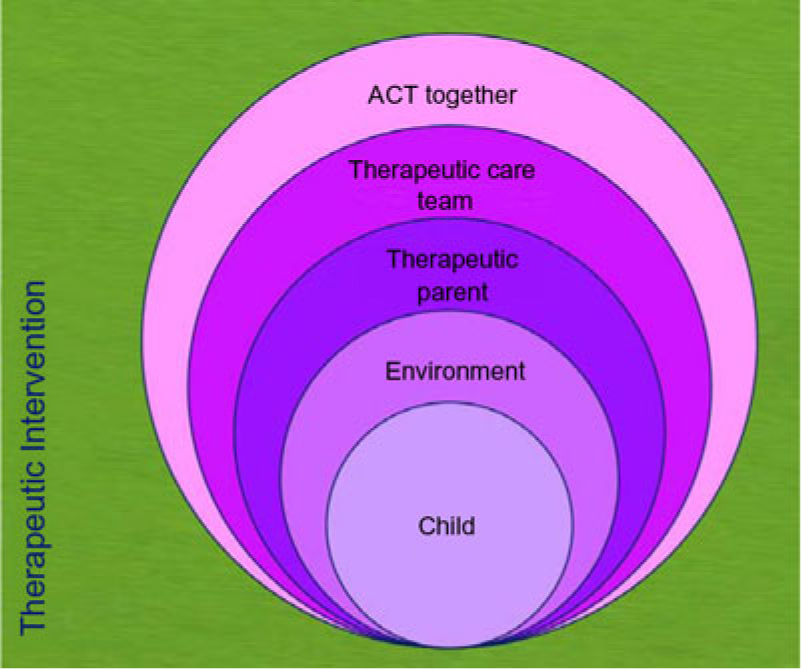
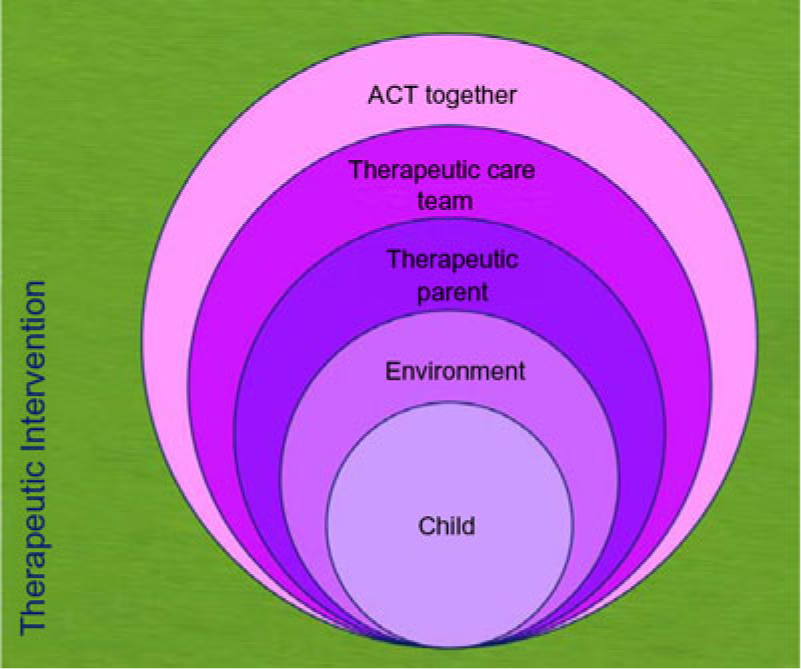
The system being referred to is the OOHC agency responsible for the child or young person, in this case ACT Together. As shown in Figure 2, the agency holds a therapeutic lens to support the workers and care teams (which will include outside agencies such as schools). The care teams and workers in turn hold a compassionate and therapeutic lens with which to support the carers (our therapeutic parents), who in turn provide a therapeutic physical, social and emotional environment that supports the child at the centre.
The layers of therapeutic interventions (O’Hara, Reference O’Hara2018).
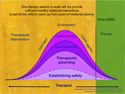
Annotated continuum of therapeutic care (O’Hara, Reference O’Hara2018).

Ultimately, this forms a continuum which flows throughout the whole OOHC system. Therapeutic intervention does not apply solely to direct therapeutic work with a child or young person. Indeed, therapeutic intervention is required throughout the whole OOHC system, from the overarching agency with responsibility for OOHC all the way through to the environment in which the child resides.
It is important to note that the child has nothing ‘to do’ in this picture. Their role is simply to make use of the therapeutic environment that they are given, physical, social and emotional, and to enjoy the benefits of the work going on around them. Each layer is ‘held’ and contained by the one around it, to allow the individuals within to build the best circumstances possible for the child to have positive and healing outcomes.
It is also important to note that none of the layers in Figure 2 are labelled ‘Therapist’ or ‘Psychologist’ or ‘Counsellor’. This is because the requirements for recovery and healing from experiences of toxic stress do not happen in one hours a week in the therapy room. Recovery and healing happen all day, every day, in the relational serve and return of the child’s life. They happen when the child experiences dis-confirming attachment events, when someone delights in them and what they have done, and when someone takes the time to be with them when they experience a difficult emotion without ‘judging’ or ‘fixing’ it, or when someone has held them in mind while they were apart.
In my experience, relational experiences are extremely meaningful to a child or young person. To know that they have been remembered from one week to the next, or a promise made to them has been upheld, demonstrates that they hold genuine value as a person, someone worth thinking about and spending time with. It is a dis-confirming attachment experience that communicates worth – one which does not require a therapist to be achieved.
The role of the therapist in the realm of OOHC is to ‘know’ the child. This means gathering and examining any information they can obtain about the child’s experience, meeting and building a relationship with the child and developing a clear understanding about who the child is and how they have survived. From this base of knowledge, the therapist is able to guide and advise the people around the child, to make meaning of behaviour and draw connections between behaviour and need, while also highlighting significant details and building compassion for the child. The therapist, in this setting, is also there to hold the carer in mind and help the care team to understand and support the carers to weather the challenges of therapeutic parenting.
Once relational safety and placement stability can be assured, the therapist can then begin the process of therapy and support the child to integrate their trauma experiences. Ideally, this process would also occur with the active involvement of the carer, ideally in the form of a dyadic approach such as DDP (Hughes, Reference Hughes2013).
Looking again at the continuum in Figure 3, it is clear that the therapist has the capacity to touch every part of the therapeutic process and support its progress. However, it is the carer who holds a primary role in giving the child the therapeutic experience that is needed, with the frequency and repetition required to really support the child to move towards recovery.
Conclusion
The OOHC sector is a challenging and crisis-driven environment. With the development of the Step Up for Our Kids strategy in the ACT, the primary aim of the strategy is to move towards creating a therapeutic system around children that will support better long-term outcomes for those who live in OOHC. As discussed, this will require a cultural shift across agencies providing OOHC, as therapeutic intervention extends from the system of care encompassing the child, and is not just confined to facilitating direct therapeutic work with an individual. The role of the therapist is much broader in the OOHC space as therapy is only a minor portion of the work required. Indeed, a key element to creating a therapeutic, trauma-informed system are the carers themselves. In particular, there is a requirement for those working in the therapeutic system to recognise the challenging role of their therapeutic carers, and to provide an optimal environment for them to thrive in their role, as creating a relationally safe environment for the carer(s) is the first step towards success. Parenting is hard. Therapeutic parenting is even harder because it carries a greater risk of compassion fatigue and blocked care. Offering a relationally safe environment which promotes trust, attunement, curiosity, understanding and empathy, will mitigate against these factors and support the carers to ‘stay the course’ even in the most difficult placements.
Case Study
Bain is now in a therapeutic placement and has been with his carers for over a year. I was able to support the transition to his new placement in a planned and appropriately paced way. The carers and I worked together to support him to get settled in the first few weeks of the move and only began DDP work when we felt Bain was ready to undertake therapeutic work. The carers and I had also established that they were committed to Bain and his sibling and were willing to keep going no matter how rough the journey may become. Over the course of the year, the carers and I have supported Bain to experience relational safety and expand his relational templates. Over the course of the year, the carers and I have witnessed Bain begin to ‘settle’ and reach a level of safety that has allowed him to begin his journey of healing. It is not easy going for the carers, but they have stuck by Bain throughout.
What is especially inspiring for me is how they accept Bain wholeheartedly for who he is. They accommodate his needs and work very hard to fill the prodigious number of developmental gaps we have encountered thus far. The carers have told me that our conversations help to reframe and reset their perspective when things get hard, and helps them to remember the boy underneath and the hurdles he has overcome, how very hard he tries and how frustrated he can become. Even in difficult times, the carers demonstrate that any frustrations they have with Bain are due to their desire for him to heal and because of their own fear that he won’t be able to make or keep friends, or when they think of how hard his life may be if he doesn’t master certain skills as a child. And I can’t argue with that – they are right! He will struggle if he doesn’t master these skills. However, I also know that he will progress on his healing journey at his own pace, he will learn skills appropriate to his level of development and then move on to the next. My role is to help the carers manage their distress and fear for Bain’s future, so they continue to be able to hold and contain the emotional tension this can cause and continue their therapeutic parenting.
Therapy is a very small part of Bain’s progress – the DDP sessions offer a conversation ground for the carers and I to reflect upon what we observed, what it may mean and how to further support him. Bain is now able to label and accept different forms of emotion, he is more able to access his carers for support and he cues for proximity without the need to protect himself by becoming big and scary. He has begun his journey of healing within the emotional, relational and physical safety of his carers’ home.