



1 Introduction
A theorem due to Radó asserts that a continuous complex-valued function on an open subset of the complex plane is holomorphic provided that it is holomorphic off its zero set.
Essentially, this theorem was proved in [Reference Radó10]. Since then, many other proofs have been proposed, e.g., [Reference Behnke and Stein2, Reference Cartan3, Reference Heinz6, Reference Kaufman7]. The articles [Reference Aupetit1, Reference Riihentaus11, Reference Stout14] give some generalizations.
Radó’s statement remains true for complex manifolds (or, more generally, for normal complex spaces) as well as in the complex plane.
In this short note, we investigate a natural extension of Radó’s theorem when the ambient space has (nonnormal) singularities.
Complex spaces, unless explicitly stated, are assumed to be reduced and countable at infinity. Let
 ${{\mathbb {N}}}=\{1,2, \ldots \}$
be the set of natural numbers.
Here, we state our main results.
Proposition 1 There is an irreducible Stein curve X and a continuous function
 $f:X \longrightarrow {{\mathbb {C}}}$
that is holomorphic off its zero set, but no power
 $f^\nu $
,
 $\nu \in {{\mathbb {N}}}$
, is globally holomorphic.
Theorem 1 Let X be a complex space and
 $\Omega \subset X$
be a relatively compact open set. Then, there is
 $\nu _\Omega \in {{\mathbb {N}}} $
such that, for every continuous function
 $f:X \longrightarrow {{\mathbb {C}}}$
that is holomorphic off its zero set, and for every integer
 $\nu \geq \nu _\Omega $
, the power function
 $f^\nu $
is holomorphic on
 $\Omega $
.
Recall the following definition [Reference Whitney15]. Let X be a complex space. A continuous, complex-valued function f defined on an open set
 $U \subset X$
is c-holomorphic if its restriction of to
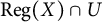 ${\textrm {Reg}}(X) \cap U$
is holomorphic, where
 ${\textrm {Reg}}(X)$
is the open set of those points of X where it is locally a manifold. The sheaf of germs of c-holomorphic functions in X is denoted by
 ${\mathcal O}^{\textrm {c}}_X$
; it is a coherent
 ${\mathcal O}_X$
-module.
Henceforth, the following remark will be used tacitly. For a complex space X, any continuous function
 $f:X \longrightarrow {{\mathbb {C}}}$
that is holomorphic off its zero set
 $f^{-1}(0)$
is c-holomorphic. (This results by the classical Radó theorem on complex manifolds.)
2 Proof of Proposition 1
The example of a Stein curve X is obtained by implanting generalized cusp singularities at the points
 $2,3, \ldots $
, of
 ${{\mathbb {C}}}$
, and then the existence of the function f is obtained via Cartan’s vanishing theorem on Stein spaces.
In order to proceed, let p and q be coprime integers
 $\geq $
2. Consider the cusp-like irreducible and locally irreducible complex curve:
 $$ \begin{align*}\Gamma=\{(z_1,z_2) \in {{\mathbb{C}}}^2 \;:\, z_1^p=z_2^q\} \subset {{\mathbb{C}}}^2.\end{align*} $$
Its normalization is
 ${{\mathbb {C}}}$
and
 $\pi :{{\mathbb {C}}} \longrightarrow \Gamma $
,
 $t \mapsto (t^q,t^p)$
, is the normalization map. Note that
 $\pi $
is a homeomorphism.
A continuous function
 $h:\Gamma \longrightarrow {{\mathbb {C}}}$
that is holomorphic off its zero set, but fails to be globally holomorphic, is produced as follows.
Select natural numbers m and n with
 $mq-np=1$
, and define
 $h:\Gamma \longrightarrow {{\mathbb {C}}}$
by setting for
 $(z_1,z_2) \in \Gamma $
,
 $$\begin{align*}h(z_1,z_2):= \left\{ \begin{array}{ll} {z_1^m}/{z_2^n} & \mbox{ if } z_2 \neq 0, \\ 0 & \mbox{ if } z_2=0. \\ \end{array} \right. \end{align*}$$
It is easily seen that h is continuous (as
 $\pi $
is a homeomorphism, the continuity of h follows from that of
 $h \circ \pi $
, which is equal to the identity mapping on
 ${{\mathbb {C}}}$
), h is holomorphic off its zero set (incidentally, here, the regular part
 ${\textrm {Reg}}(\Gamma )$
is the complement of this zero set), and h is not holomorphic about
 $(0,0)$
(use a Taylor series expansion about
 $(0,0) \in {{\mathbb {C}}}^2$
of a presumably holomorphic extension).
Furthermore,
 $h^k$
is globally holomorphic provided that
 $k \geq (p-1)(q-1)$
. (Because every integer at least
 $(p-1)(q-1)$
can be written in the form
 $\alpha p + \beta q$
with
 $\alpha ,\beta \in \{0, 1, 2, \ldots \}$
, and because
 $h^p$
and
 $h^q$
are holomorphic being the restrictions of
 $z_2$
and
 $z_1$
to
 $\Gamma $
, respectively.)
In addition,
 $z_1^a z_2^b h$
is holomorphic on
 $\Gamma $
provided that
 $ q \lfloor (m+a)/p \rfloor +b \geq n,$
where
 $\lfloor \cdot \rfloor $
is the floor function.
It is interesting to note that the stalk of germs of c-holomorphic functions
 ${\mathcal O}^{\textrm {c}}_0$
at
 $0$
is generated as an
 ${\mathcal O}_0$
-module by the germs at
 $0$
of
 $1, h, \ldots , h^{r}$
, where
 $r=\min \{p,q\}-1$
.
Now, for each integer
 $k \geq 2$
, let
 $\Gamma _k:=\{(z_1,z_2) \in {{\mathbb {C}}}^2 \;; \, z_1^k=z_2^{k+1}\}$
. As previously noted,
 $\Gamma _k$
is an irreducible curve whose normalization map is
 $\pi _k:{{\mathbb {C}}} \longrightarrow \Gamma _k, \, t \mapsto (t^{k+1},t^k)$
, and the function
 $h_k:\Gamma _k \longrightarrow {{\mathbb {C}}}$
defined for
 $(z_1,z_2) \in \Gamma _k$
by:
 $$\begin{align*}h_k(z_1,z_2):= \left\{ \begin{array}{ll} {z_1}/{z_2} & \mbox{ if } z_2 \neq 0, \\ 0 & \mbox{ if } z_2=0, \\ \end{array} \right. \end{align*}$$
has the following properties:
-
a k ) The function
 $h_k$
is c-holomorphic.
-
b k ) The power
$h_k^{k-1}$
is not holomorphic. -
c k ) The function
$z_1^{k-1}h_k$
is holomorphic, because it is the restriction of
$z_2^k$
to
$\Gamma _k$
.


Here, with these examples of singularities at hand, we change the standard complex structure of
 ${{\mathbb {C}}}$
at the discrete analytic set
 $\{2,3, \ldots \}$
by complex surgery, in order to obtain an irreducible Stein complex curve X and a discrete subset
 $\Lambda =\{x_k: k=2, 3, \ldots \}$
such that, at the level of germs,
 $(X,x_k)$
is biholomorphic to
 $(\Gamma _k,0)$
.
The surgery, that we recall for the commodity of the reader (because, in some monographs like [Reference Kaup and Kaup8], the subsequent condition
 $(\star )$
is missing), goes as follows.
Let Y and
 $U'$
be complex spaces together with analytic subsets A and
 $A'$
of Y and
 $U'$
, respectively, such that there is an open neighborhood U of A in Y and
 $\varphi :U \setminus A \longrightarrow U' \setminus A'$
that is biholomorphic.
Then, define:
 $$ \begin{align*}X:=(Y \setminus A) \sqcup_\varphi U':= (Y \setminus A) \sqcup U'/_{\sim}\end{align*} $$
by means of the equivalence relation
 $U \setminus A \ni y \sim \varphi (y) \in U' \setminus A'$
.
Then, there exists exactly one complex structure on X such that
 $U'$
and
 $Y \setminus A$
can be viewed as open subsets of X in a canonical way provided that the following condition is satisfied:
-
(⋆) For every
$y \in \partial U$
and
$a' \in A'$
, there are open neighborhoods D of y in Y,
$D \cap A=\emptyset $
, and B of
$a'$
in
$U'$
such that
$\varphi (D \cap U) \cap B \subseteq A'.$



Thus, X is formed from Y by “replacing” A with
 $A'$
.
In practice, the condition
 $(\star )$
is fulfilled if
 $\varphi ^{-1}: U' \setminus A' \longrightarrow U \setminus A$
extends to a continuous function
 $\psi :U' \longrightarrow U$
such that
 $\psi (A')=A$
. In this case, if D and V are disjoint open neighborhoods of
 $\partial U$
and A in Y, respectively, then
 $B=A' \cup \varphi (V \setminus A)$
is open in
 $U'$
, because it equals
 $\psi ^{-1}(V)$
and
 $(\star )$
follows immediately. (This process is employed, for instance, in the construction of the blowup of a point in a complex manifold!)
Coming back to the construction of the example proving Proposition 1, consider
 $Y={{\mathbb {C}}}$
,
 $A=\{2,3, \ldots \}$
, and for each
 $k=2,3, \ldots $
, let
 $\Delta (k,1/3)$
be the disk in
 ${{\mathbb {C}}}$
centered at
 $k $
of radius
 $1/3$
that is mapped holomorphically onto an open neighborhood
 $U_k$
of
 $(0,0) \in \Gamma _k$
through the holomorphic map
 $t \mapsto \pi _k(z-k)$
. Applying surgery, we get an irreducible Stein curve X and the discrete subset
 $\Lambda $
with the aforementioned properties.
It remains to produce the function f as stated. For this, we let
 ${\mathcal I} \subset {\mathcal O}_X$
be the coherent ideal sheaf with support
 $\Lambda $
and such that
 ${\mathcal I}_{x_k}= \mathfrak {m}^{k-1}_{x_k}$
for
 $k=2,3 \ldots $
, where
 $\mathfrak {m}_{x_k}$
is the maximal ideal of the analytic algebra of the stalk of
 ${\mathcal O}_X$
at
 $x_k$
.
From the exact sequence:
 $$ \begin{align*}0 \longrightarrow {\mathcal I} \longrightarrow {\mathcal O}^{\textrm{c}} \longrightarrow {\mathcal O}^{ \rm c}/{{\mathcal I}} \longrightarrow 0,\end{align*} $$
we obtain a c-holomorphic function f on X such that, for each
 $k=2,3, \ldots $
, at germs level, f equals
 $h_k$
(mod
 ${\mathcal I}_{x_k}$
).
By properties
 ${\textbf { a}}_k)$
,
 ${\textbf { b}}_k)$
, and
 ${\textbf { c}}_k)$
from above, it follows that there does exist
 $\nu \in {{\mathbb {N}}}$
such that
 $f^\nu $
becomes holomorphic on X. (For instance, if
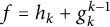 $f=h_k+g_k^{k-1}$
, for certain
 $g_k \in \mathfrak {m}_{x_k}$
, then
 $f^{k-1}$
is not holomorphic about
 $x_k$
.)
3 Proof of Theorem 1
This is divided into four steps. In Step 1, we recall, following [Reference Chirka4], the multiplicity of an analytic set at a point. Then, in Step 2, we estimate the vanishing order of a c-holomorphic function germ at a point of its zero set in terms of the multiplicity of the analytic germ where it is defined. In Step 3, we collect some useful facts about
 ${\textrm {O}}^N$
-approximability due to Spallek [Reference Spallek13] and Siu [Reference Siu12]. Eventually, the proof of theorem is achieved in the fourth step.
Step 1. Let A be a pure k-dimensional locally analytic subset of
 ${{\mathbb {C}}}^n$
. Let
 $a \in A$
and select an
 $(n-k)$
-dimensional complex subspace
 $L \subset {{\mathbb {C}}}^n$
such that a is an isolated point of the set
 $A \cap (\{a\}+L)$
. Then, as we know, there is a domain
 $U \ni a$
in
 ${{\mathbb {C}}}^n$
such that
 $A \cap U \cap (\{a\}+L)=\{a\}$
and such that the projection
 $\pi _L:A \cap U \longrightarrow U^{\prime }_L \subset L^{\perp }$
along L is a d-sheeted analytic cover, for some
 $d \in {{\mathbb {N}}}$
, where
 $L^\perp $
is the orthogonal of L with respect to the canonical scalar product in
 ${{\mathbb {C}}}^n$
.
The critical analytic set
 $\Sigma $
of this cover does not partition the domain
 $U^{\prime }_L$
and is nowhere dense in it; therefore, the number of sheets of this cover does not change when shrinking U. Furthermore, if
 $z'$
is the projection of z in
 $L^\perp $
and
 $z' \in U^{\prime }_L \setminus \Sigma $
, then,
 $$ \begin{align*}\sharp \,\, A \cap U \cap (\{z\}+L)=d,\end{align*} $$
and all d points of the fiber above
 $z'$
tend to a as
 $z' \to a'$
. This number is called the multiplicity of the projection
 $\pi _L|_A$
at a, and is denoted by
 $\mu _a(\pi _L|_A)$
.
For any point
 $x \in A$
in the above indicated small neighborhood
 $U \ni a$
, the number of sheets of the cover
 $A \cap U \longrightarrow U^{\prime }_L$
does not exceed d in a neighborhood of x (it may be less); hence, the function
 $\mu _x(\pi _L|_A)$
is upper semicontinuous on
 $A \cap U$
. See [Reference Chirka4, p. 102].
Thus, for every
 $(n-p)$
-dimensional complex plane
 $L \subset {{\mathbb {C}}}^n$
such that a is an isolated point in
 $A \cap (\{a\}+L)$
, the multiplicity of the projection
 $\mu _a(\pi _L|_A)$
is finite. The minimum of these numbers over all
 $L \in {\textrm {Gr}}(n-p,n)$
as above is denoted
 $\mu _a(A)$
and is called the multiplicity of A at a.
Furthermore, it can be shown that the multiplicity
 $\mu _a(A)$
does not depend on how A is locally embedded at a into a complex euclidean space.
Altogether, we get a function
 $A \ni x \mapsto \mu _x(A) \in {{\mathbb {N}}}$
that is upper semicontinuous. See [Reference Chirka4, p. 120].
Step 2. For the sake of simplicity, let
 $a=0$
, and for the complex subspace
 $L=\{0\} \times {{\mathbb {C}}}^{n-k}$
, the projection
 $\pi _L|_A$
realizes
 $\mu _0(A)$
, namely
 $\mu _0(\pi _L|_A)=\mu _0(A)$
.
With the necessary changes, by Step 1, we arrive at the following setup.
The set A is analytic in
 $D \times {{\mathbb {C}}}^{n-k}$
with D a domain of
 ${{\mathbb {C}}}^k$
, the map
 $\pi :A \longrightarrow D$
is induced by the first projection from
 ${{\mathbb {C}}}^k_z \times {{\mathbb {C}}}_w^{n-k}$
onto
 ${{\mathbb {C}}}^k_z$
,
 $A \ni x=(z,w) \mapsto \pi (x)=z$
, such that
 $\pi $
is a (finite) branched covering with image D, covering number
 $d:=\mu _0(A)$
, critical set
 $\Sigma $
, which is a nowhere dense analytic subset of D, and
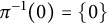 $\pi ^{-1}(0)=\{0\}$
.
Now, let
 $h:A \longrightarrow {{\mathbb {C}}}$
be any
 ${\textrm {c}}$
-holomorphic function. For every point
 $x=(z,w) \in (D \setminus \Sigma ) \times {{\mathbb {C}}}^{n-k}$
, we define the polynomial:
 $$ \begin{align*}\omega(x,t)= \prod_{\pi(x')=z} (t-h(x')) = t^d + a_1(x) t^{d-1}+ \cdots + a_d(x).\end{align*} $$
Because h is holomorphic on the regular part
 $\text {Reg}(A)$
of A and h is continuous on A, a fortiori h is bounded on any compact subset of A (in particular, on
 $\pi ^{-1}(K)$
, for every compact set K of D), the coefficients
 $a_j$
are naturally holomorphic on
 $(D \setminus \Sigma ) \times {{\mathbb {C}}}^{n-k}$
and locally bounded on
 $D \times {{\mathbb {C}}}^k$
. Thus, granting Riemann’s extension theorem, they extend holomorphically to
 $D \times {{\mathbb {C}}}^{n-k}$
(we keep the same notations for the extensions). If, furthermore,
 $h(0)=0$
, then all coefficients
 $a_j(0)=0$
, because
 $\pi $
is proper and
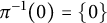 $\pi ^{-1}(0)=\{0\}$
.
Therefore, we obtain a distinguished Weierstrass polynomial of degree d,
 $W(x,t)= t^d + a_1(x) t^{d-1}+ \cdots + a_d(x)$
, which is the unique extension of
 $\omega $
to
 $D \times {{\mathbb {C}}}^{n-k}$
and such that
 $W(x,h(x))=0$
for all
 $x \in A$
.
Note that, if
 $W(x,t)=0$
, then the identity
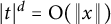 $|t|^d={\textrm {O}}(\|x\|)$
holds true as
 $(x,t) \to 0$
because
 $|a_j(x)|= {\textrm {O}}(\|x\|)$
, or equivalently:
 $$ \begin{align*}|t|={\textrm{O}}(\|x\|^{1/d}) \mbox{ as } (x,t) \to 0,\end{align*} $$
meaning that there are positive constants M and
 $\epsilon $
such that, if
 $W(x,t)=0$
and
 $\max \{|t|, \|x\|\}<\epsilon $
, then
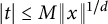 $|t| \leq M \|x\|^{1/d}$
.
To sum up, coming back to the general setting, and using that for two real numbers
 $\alpha $
and
 $\beta $
, one has
 $s^\alpha ={\textrm {O}}(s^\beta )$
as
 $(0,\infty ) \ni s \to 0$
if and only if
 $\alpha \geq \beta $
, by routine arguments, from Step 1 and the above discussion, we get the following fact.
-
(†) Let A be a locally analytic subset of
${{\mathbb {C}}}^n$
of pure dimension. Then, the multiplicity function
$\mu _x(A)$
on
$x \in A$
is upper semicontinuous. Furthermore, any point
$a \in A$
admits an open neighborhood U in A such that, for every point
$x_0 \in U$
and every nonconstant,
${\textrm {c}}$
-holomorphic germ
$h:(A,x_0) \longrightarrow ({{\mathbb {C}}},0)$
, one has, where
$$ \begin{align*}|h(x)| ={\textrm{O}}(\|x-x_0\|^\alpha) \mbox{ as } A \ni x \rightarrow x_0,\end{align*} $$
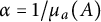
$\alpha =1/{\mu _a(A)}$
.




In general, if
 $(A,x)= \cup _j (A_j,x)$
is the decomposition of the germ
 $(A,x)$
into its finitely many irreducible components, whose number might depend on
 $x \in A$
, then we set
 $\mu _x(A)= \max _j \mu _x(A_j)$
. The multiplicity function thus defined is upper semicontinuous on A, and the above “identity” in
 $(\dagger )$
holds for the exponent
 $\alpha $
given by
 $1/\alpha =\max _j \mu _a(A_j)$
.
For the commodity of the reader, we mention that, for any complex space X, we get a natural multiplicity function
 $X \ni x \mapsto \mu _x(X) \in {{\mathbb {N}}}$
that is upper semicontinuous, although this information is not used hereafter.
Step 3. From Spallek [Reference Spallek13], we recall the following notion. Let
 $A \subset {{\mathbb {C}}}^n$
be a set and a a point of A. We say that a germ function
 $\varphi :(A,a) \longrightarrow ({{\mathbb {C}}},\varphi (a))$
is
 ${\textrm {O}}^N$
-approximable at a if there exists a polynomial
 $P(z,\bar z) $
of degree at most
 $N-1$
in the variables
 $z_j-a_j, \overline {z_j-a_j}$
,
 $j=1, \ldots , n$
, such that,
 $$ \begin{align*}|\varphi(z)-P(z,\bar z)|={\textrm{O}}(\|z-a\|^N) \mbox{ as } A \ni z \rightarrow a.\end{align*} $$
Example 1 If
 $\varphi $
is the restriction of a
 ${\mathcal C}^\infty $
-smooth, complex-valued function defined on a neighborhood of a in
 ${{\mathbb {C}}}^n$
, then using Taylor’s formula, one has that
 $\varphi $
is
 ${\textrm {O}}^N$
-approximable at a for all positive integers N.
Example 2 Let A be locally analytic at the point a, and
 $\nu , N \in {{\mathbb {N}}}$
that satisfy
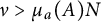 $\nu>\mu _a(A) N$
. Then, by
 $(\dagger )$
, it follows that for any germ of a c-holomorphic map
 $h:(A,a) \longrightarrow ({{\mathbb {C}}},0)$
,
 $\text {Re} \, h^\nu $
and
 ${\textrm {Im}}\, h^\nu $
are
 ${\textrm {O}}^N$
-approximable at a.
The following result due to Siu [Reference Siu12] improves onto Spallek’s similar one from [Reference Spallek13].
Proposition 2 For every compact set K of a complex space X, there exists a positive integer
 $N=N(K)$
depending on K such that, if f is a c-holomorphic function germ at
 $x \in K$
and
 $\text {Re } f$
is
 ${\textrm {O}}^N$
-approximable at any point in some neighborhood of x, then f is a holomorphic germ at x.
Step 4. To conclude the theorem, because the assertion to be proved is local, without any loss in generality, we may assume that X is an analytic subset of some open set of
 ${{\mathbb {C}}}^n$
.
Now, let K be a compact set of X. We claim that there is
 $\nu _K \in {{\mathbb {N}}}$
such that, for any
 ${\textrm {c}}$
-holomorphic function f on X that is holomorphic off its zero set
 $f^{-1}(0)$
, the power
 $f^\nu $
is holomorphic about K for all integers
 $\nu \geq \nu _K$
.
For this, consider a compact neighborhood
 $K^\ast $
of K in X. Because the function
 $X \ni x \mapsto \mu _x(X) \in {{\mathbb {N}}}$
is upper semicontinuous, there exists a natural number d such that
 $\mu _x(X) <d$
for all
 $x \in K^\ast $
.
We show that
 $\nu _K=d N$
is as desired, where N is selected according to Proposition 2 corresponding to the compact K of X.
Indeed, in order to show that
 $f^\nu $
is holomorphic about K for
 $\nu \in {{\mathbb {N}}}$
that satisfies
 $\nu \geq \nu _K$
, we apply Proposition 2, and for this, we need to check that the function
 $\text {Re} f^\nu $
is
 ${\textrm {O}}^N$
-approximable at any point
 $x \in K^\ast $
.
This follows by case analysis.
If
 $f(x) \neq 0$
, because f is holomorphic on the open set
 $X \setminus f^{-1}(0)$
of X, so that
 $\text {Re} f$
and
 ${\textrm {Im}} f$
are
 $C^\infty $
-smooth there, by Example 1, it follows that
 $\text {Re} f^\nu $
is
 ${\textrm {O}}^N$
-approximable at x.
If
 $f(x)=0$
, then by Example 1, the function
 $\text {Re} f^\nu $
is
 ${\textrm {O}}^N$
-approximable at x, because
 $\nu \geq d N=\nu _K$
.
This completes the proof of the theorem.
4 A final remark
Below we answer a question raised by Th. Peternell at the XXIV Conference on Complex Analysis and Geometry, held in Levico Terme, June 10–14, 2019. He asked whether or not a similar statement like Theorem 1 does hold for nonreduced complex spaces.
More specifically, let
 $(X,{\mathcal O}_X)$
be a not necessarily reduced complex space and
 $f:X \longrightarrow {{\mathbb {C}}}$
be continuous such that, if A denotes the zero set of f, then
 $X \setminus A$
is dense in X, and there is a section
 $\sigma \in \Gamma (X \setminus A,{\mathcal O}_X)$
whose reduction
 ${\textrm {Red}}(\sigma )$
equals
 $f|_{X \setminus A}$
.
Is it true that, for every relatively compact open subset D of X, there is a positive integer n such that
 $\sigma ^n$
extends to a section in
 $\Gamma (D,{\mathcal O}_X)$
?
We show that the answer is “No.”
In order to do this, recall that, if R is a commutative ring with unit and M is an R-module, we can endow the direct sum
 $R \oplus M$
with a ring structure with the obvious addition, and multiplication defined by:
 $$ \begin{align*}(r,m) \cdot (r',m')=(rr',rm'+r'm).\end{align*} $$
This is the Nagata ring structure from algebra [Reference Nagata9].
Now, if
 $(X,{\mathcal O}_X)$
is a complex space and
 $\mathcal F$
a coherent
 ${\mathcal O}_X$
-module, then
 ${\mathcal H}:={\mathcal O}_X \oplus {\mathcal F}$
becomes a coherent sheaf of analytic algebras and
 $(X,{\mathcal H})$
a complex space [Reference Forster5, Satz 2.3].
The example is as follows. Let
 ${}_n{\mathcal O}$
denote the structural sheaf of
 ${{\mathbb {C}}}^n$
. The above discussion produces a complex space
 $({{\mathbb {C}}},{\mathcal H})$
such that
 ${\mathcal H}={}_1{\mathcal O} \oplus {}_1{\mathcal O}$
, which can be written in a suggestive way
 ${\mathcal H}={}_1{\mathcal O}+\epsilon \cdot {}_1{\mathcal O}$
, where
 $\epsilon $
is a symbol with
 $\epsilon ^2=0$
. As a matter of fact, if we consider
 ${{\mathbb {C}}}^2$
with complex coordinates
 $(z,w)$
and the coherent ideal
 ${\mathcal I}$
generated by
 $w^2$
, then
 ${\mathcal H}$
is the analytic restriction of the quotient
 ${}_2{\mathcal O}/{{\mathcal I}}$
to
 ${{\mathbb {C}}}$
.
The reduction of
 $({{\mathbb {C}}},{\mathcal H})$
is
 $({{\mathbb {C}}},{}_1{\mathcal O})$
. A holomorphic section of
 ${\mathcal H}$
over an open set
 $U \subset {{\mathbb {C}}}$
consists of couple of ordinary holomorphic functions on U.
Now, take f the identity function
 ${\textrm {id}}$
on
 ${{\mathbb {C}}}$
, and the holomorphic section
 $\sigma \in \Gamma ({{\mathbb {C}}}^\star ,{\mathcal H})$
given by
 $\sigma = {\textrm {id}} + \epsilon g$
, where g is holomorphic on
 ${{\mathbb {C}}}^\star $
having a singularity at
 $0$
, for instance,
 $g(z)= 1/z$
.
Obviously, the reduction of
 $\sigma $
is the restriction of
 ${\textrm {id}}$
on
 ${{\mathbb {C}}}^\star $
, and no power
 $\sigma ^k$
of
 $\sigma $
extends across
 $0$
to a section in
 $\Gamma ({{\mathbb {C}}}, {\mathcal H})$
, because
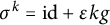 $\sigma ^k={\textrm {id}} + \epsilon kg$
and g does not extend holomorphically across
 $0 \in {{\mathbb {C}}}$
.
Acknowledgment
I would like to thank the anonymous reviewer for critical reading and suggestions that helped to improve on earlier drafts of the manuscript.


