Scholarly interest in the history of the countryside since 1900 has prospered in recent years. One element has focused on an economic analysis of the scale and nature of agricultural change in twentieth-century Britain.Footnote 1 However, socio-cultural studies focusing on the non-productive countryside, in particular on the relationship between landscape and regional, national, and most recently gendered identities, have predominated.Footnote 2 This is understandable, as Jeremy Burchardt has pointed out, given that even in the period before the 1930s, ‘many others lived, and even worked, in the countryside besides agriculturists and much else happened besides farming’.Footnote 3 But whilst the historiographical ascendancy of socio-cultural history in this area of research has produced a considerable body of important and innovative work, it has led to the marginalization of ‘traditional’ elements of rural society. Simon Miller argued over a decade ago that amidst the debate about rurality and Englishness, ‘the reality of work and life on the land has been eclipsed; it is up to historians to rescue them from such obscurity’.Footnote 4 Despite a few notable exceptions, this has not yet happened.Footnote 5 As more than three-quarters of land space was still devoted to the agricultural industry in the interwar years and agricultural employment, with its associated trades, remained an essential ingredient of village life, it is apposite to refocus the debate on the twentieth-century countryside to re-establish the importance of agricultural production and the people who earned their living from it.Footnote 6 This article aims to facilitate this process by focusing on the paid employment of women in agricultural labour in England and Wales in the interwar years.
At first glance, women's work in agriculture may not seem a particularly noteworthy issue. It is often assumed that, by the early twentieth century, this was a marginal activity, a vestige of a largely obsolete tradition, with agriculture having long ceased to be a major employer of women.Footnote 7 Evidence for this argument is not hard to find. According to the national census data, agricultural employment accounted for only 2 per cent of all occupied women in England and Wales in 1921, falling to just 1 per cent a decade later. General histories of women's work in the interwar years therefore eschew analysis of agricultural labour in favour of leading occupational categories, with domestic/personal services, textiles, light industry, office work, and the emerging professions featuring heavily.Footnote 8 Seen from a local and regional perspective, however, a tantalizing glimpse of a rather different rural scene emerges. Stephen Hussey, for example, suggests that the part-time paid work of married women, including field labour, remained an important source of household subsistence in interwar rural Essex and Buckinghamshire because of the irregular and fragile nature of the male labour markets in those localities.Footnote 9 Alun Howkins has gone further, claiming that ‘Few operations of the agriculture cycle functioned without the work of women … at any time during the inter-war years.’Footnote 10 Both Hussey and Howkins have argued that such labour, often casual and seasonal in its nature, fell beyond the remit of the census official and went largely unrecorded.Footnote 11
The apparent variance between the national and regional picture has not been fully interrogated for the interwar period and deserves critical scrutiny. The first two sections of this article therefore analyse the level of female participation in interwar agriculture and regional patterns of women's work. A number of contradictions emerge, particularly over the number of women employed in agriculture, and between the continuity of traditional forms of women's work and the growing significance of a more modern female workforce in certain agricultural sectors undergoing transformation in the 1920s and 1930s. The issue of female wage rates is examined in the next section, exposing the unequal treatment meted out to men and women under the auspices of the agricultural wages committees. This inequity elicited the intervention of various groups concerned with the position of the woman agricultural worker and the fourth section focuses on three of these: the National Federation of Women's Institutes (NFWI), the Women's Farm and Garden Association (WFGA), and the main agricultural union of the period the National Union of Agricultural Workers (NUAW). The ensuing debates reveal deep-rooted tensions and expose women's work in agriculture as a site of class and gender conflict. They cast interesting light on the representation of rural women workers by various organizations and on the different meanings and aspirations attached to women's agricultural work between the wars. These disputes were framed through the lens of broader social, economic, and cultural anxieties over the place of women in the workforce and allow some connections between the rural and urban contexts to be made.
I
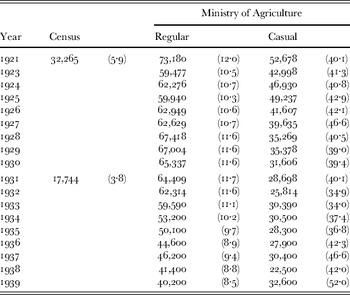
Establishing the level of female participation in agriculture in the interwar period is fraught with difficulties. The main sources of statistical information regarding women's employment are the census reports of 1921 and 1931, and the annual Ministry of Agriculture June returns, which were produced from 1921 onwards.Footnote 12 They return starkly disparate figures for the number of women workers, for the number of women as a percentage of that of men, and for the relative decline of the female workforce, as shown in Table 1. The census of 1921 recorded 32,265 female agricultural labourers and farm servants (aged twelve years and over), whereas in the same year the Ministry returned 73,180 regularly employed women and girls (all ages), and 52,678 casually employed women and girls in England and Wales. According to the census the number of female workers was 5·9 and 3·8 per cent that of men in 1921 and 1931 respectively, but the Ministry figures for the same years are substantially higher. Whilst the census indicates that the departure of women from the land was rapid over the interwar period with women agricultural workers declining by some 45 per cent between 1921 and 1931 (as compared to a 15 per cent decline in the male workforce), the Ministry figures suggest a slightly more complex picture. They record a decline of 12 per cent among regularly employed women in the same decade and a 46 per cent decline in the casually employed female workforce, but this decrease in female workers, especially regular workers, was not constant. Like men, the figures for regularly employed women dropped rapidly in the depression of the early 1920s and then stabilized and even rose until the early 1930s, when they began to decline again.Footnote 13
The number of female agricultural workers in England and Wales, and the percentage of female to male workers (in brackets)

Sources: Census of England and Wales, 1921 and 1931. These figures include agricultural labourers and farm servants; Ministry of Agricultural annual June returns, 1921–39. The returns do not include domestic servants or the occupier and his wife, but do include members of the occupier's family working on the holding. No return was made in 1922.
How can we account for the variance between the two sets of data? Both present problems and are incomparable in some respects. The census was concerned with women regularly employed in agricultural occupations, defined by an official investigation in 1927 as those engaged for forty-eight to fifty hours a week in ‘much the same way as men’.Footnote 14 However, a good deal of women's labour in agriculture did not correspond with the census characterization of an ‘occupation’. There has been much criticism of the nineteenth-century censuses for under-recording women workers in agriculture, in particular those seasonally or casually employed on the land.Footnote 15 Although it has recently been shown by Timothy Hatton and Roy Bailey that some sources of census undercounting had been ironed out by the interwar period, it is likely that women working on a part-time or casual basis were still missed, as Hussey and Howkins suggest.Footnote 16 The classification of female servants living in farmhouses also remained a source of confusion for census enumerators because of the dual employment, inside and outside the house, expected of them. This problem was recognized on numerous occasions by investigators to a 1919 government investigation into agricultural employment and wages, and although commenting on deficiencies in the 1911 census, their observations are pertinent to the whole interwar period. In Cardigan, for instance, it was noted that the census ‘does not comprise domestic servants on farms, most of who also assist in farming operations’, whilst in Staffordshire ‘Though they do not appear on the Returns, there is little doubt that a very large number of domestic servants account for a considerable amount of farm work.’Footnote 17 The report for Carmarthen is especially revealing
The Census figures do not enable us to obtain a clear view of the extent to which agricultural work is carried on in the county by females. No distinction is made between domestic servants on farms and domestic servants in private houses, and, although the percentage of women returned as being engaged in agriculture is higher in Carmarthenshire than in England and Wales as a whole, it does not represent fully the extent of the assistance rendered to farmers by women.Footnote 18
As in the nineteenth century, the inclusion of female servants on farms in the umbrella category of domestic/personal service obscures the multifarious nature of their work and may be a significant source of misreporting of rural women's work in the interwar census reports.Footnote 19 Not only does the classification of female servants on farms as ‘domestics’ minimize their contribution to agricultural production, it also over-exaggerates the pre-eminence of domestic service in the interwar economy.
The Ministry of Agriculture attempted to sidestep some of these problems by clearly differentiating between regular and causally employed workers. But even the accuracy of the Ministry figures was questioned by the NUAW, who argued that such statistics were ‘little better than guesses’ as they were made by farmers whose practices varied widely and where it was difficult to distinguish exactly between regular and casual workers.Footnote 20 This problem was officially recognized by the Proceedings of the Agricultural Wages Act for 1927, which acknowledged that categories of female agricultural labour were not mutually exclusive. The difficulties in determining whether one class of worker ‘should fall into one group or another’ were well known, it conceded, as ‘a large number of workers who are employed for say nine or ten months of the year might well be classed as whole-time regular, although some might regard them as long-period casual workers’.Footnote 21 Unfortunately, the Ministry data offer no clarification on the issue of female farm servants as servants were excluded from its returns entirely. In this respect its figures of women employed in agriculture are, if anything, an underestimate. However, the Ministry included active female members of the occupier's family, whereas these were enumerated separately in the census, numbering 15,384 in 1921 and 8,189 in 1931.
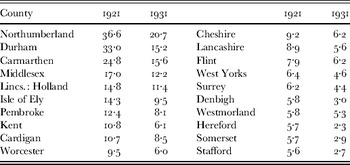
Despite the inconsistency between the available statistics, and doubts over their precision in recording the true extent of the female workforce, they provide a breakdown of how women's participation rates were structured by age, marital status, and region. According to the census, the typical female agricultural worker was young and single. In 1931, 76 per cent of women workers were single, 19 per cent married, and 5 per cent widowed. Just over half of all workers in that year were under the age of 25. The parallels between the agricultural and industrial workforce were drawn by the General Report of 1921, arguing that agriculture was ‘an occupation entered by girls on leaving school and given up on marriage, like industrial employments’, although ‘some elderly married and widowed women are also forced, probably by adverse circumstances, to take it up’.Footnote 22 The most important and continuous differentiating factor in women's labour force participation in agriculture was, however, region. Using data extracted from the census, Table 2 shows that national figures conceal distinct regional clusters where the number of female workers was statistically significant: the far north of England, the south-west of Wales, parts of eastern England (in particular the Holland division of south Lincolnshire and the Isle of Ely), and some home counties such as Middlesex and Kent. The regional pattern of women's employment in agriculture was linked to a number of circumstances and reveals both the continuity of traditional modes of women's work common in the nineteenth century and the growing significance of new forms of work patterns associated with the changing nature of agricultural production in the interwar period. These are examined further in the following section.
Counties with the highest percentage of female to male agricultural workers in 1921 and 1931 (arranged in descending order according to 1921 figures)

Source: Census of England and Wales, 1921 and 1931, county reports.
II
The regular employment of women in agriculture remained strong in remote regions where women's work had traditionally been the usual custom. The large, isolated, arable-intensive farms of the far north-east had long relied on the widespread use of female labour and this custom persisted in the 1920s and 1930s. In Northumberland, it was reported in 1927 that ‘In this county, more particularly in the northern part, large numbers of women are employed to do all kinds of agricultural work in the same way as men, except that they do not undertake work with horses’, whilst in Durham ‘A number of whole-time workers are distributed over the larger farms.’Footnote 23 The extensive employment of women in the north-east was recognized by the 1921 census as the continuation of a long tradition, not simply ‘the survival of a practice developed during the war’.Footnote 24 In contrast to these areas, the remote small-farm economy of south-west Wales did not demand extensive hired female day labour, but relied on domestic servants who undertook outdoor tasks ‘in addition to their ordinary household duties’, assisted and supervised by the farmer's wife and daughters.Footnote 25 As the last section indicated, the nature of their work was multifaceted. It was usual practice in this region of Wales, as well as in some counties of south-west and northern England, for domestic servants to spend three to four hours a day on dairy work, stock rearing, working in the yard, and assisting in field work if needed. In northern English counties, farmers insisted on engaging girls expressly for ‘general’ house and agricultural work, as the 1927 report on Cumberland and Westmorland demonstrates
It is common in the area to advertise for girls for the farm house who are capable of helping with agricultural work and ability to do so is expected of those who are engaged at the half-yearly hirings. Although it is not now quite so general as formerly for these workers to do work outside the house, their duties on most of the farms comprise all kinds of dairy work, including butter making and cleaning utensils, feeding calves, pigs and poultry, milking (frequently, however, confined to harvest time and other busy periods), helping with the hay harvest and with thinning of crops. Agricultural operations may occupy as much as half their total hours of work.Footnote 26
This practice is also confirmed by autobiographical testimony. Elizabeth Armstrong ‘got a lot of field work to do’ on the Cumberland farm where she was engaged in the immediate post-war years, in addition to milking up to thirteen cows twice a day, separating the milk, feeding the calves, cleaning the pigs out, cleaning the farmhouse, assisting with food preparation, and taking refreshments out to men in the fields.Footnote 27 Winifred Foley thought ‘it was lovely to be out’ when she was relieved of her domestic chores to assist in the hayfields on her Welsh-borders farm in the 1930s.Footnote 28 The excessive hours, lack of leisure time, and heavy laborious domestic labour in the farmhouse led to growing distaste for such work among young women and was a constant cause of comment in the 1920s and 1930s. The relative scarcity of female servants willing to be hired on farms had the effect of keeping female wages high and created competition amongst farmers keen to secure the services of women.Footnote 29
Work in the dairy and in the farmyard, particularly with poultry, was customarily perceived as part of the women's province of the farm. The scale and structure of these industries was changing during the interwar period however. Dairying was increasingly dominated by a shift to large-scale liquid milk production to cater for urban demand, but the traditional female branches of butter- and cheese-making persisted, producing high-quality produce for a niche market. Holdings where cheese was a key element of farm income were increasingly concentrated in the north-west and south-west of England, and the Welsh border counties. Although traditional farmhouse techniques and processes remained dominant in cheese- and butter-making, the dairy maid was increasingly remodelled in the interwar period as part of a more modern and scientific farm workforce. Various strands of interwar literature promoted the dairy industry as one that offered young women a potentially lucrative, skilled, rewarding, and, above all, suitable career, with the emphasis on professional education and training. Stock-management, bacteriological analysis of milk, and the marketing and delivery of produce were promoted alongside the traditional female branches of cheese- and butter-making. In 1926, it was reported as possible for women ‘to secure good posts at substantial salaries if they have received a sound, practical and scientific training’.Footnote 30 The 1927 report found maids and cheese-makers in Shropshire, hired by the year for a fifty-four-hour week, had ‘frequently had some technical training’, whilst in Cheshire assistant dairymaids ‘frequently women who have had some technical training’ were skilled in all the varying operations of the dairy, whilst a head dairymaid, who could be relied on to take ‘sole charge’ of the operation, was ‘responsible for its profitable conduct’.Footnote 31
Poultry farming remained the preserve of the small producer, capitalizing on increasing demand from towns and cities, but the industry accounted for an increasingly significant share of agricultural profits and was moving towards large-scale production in the interwar period.Footnote 32 Poultry numbers doubled in the decade between 1924 and 1934 and the poultry pages of the dominant national farming weekly paper, Farmer and Stockbreeder, detailed various experiments with breeding, housing, and hatching.Footnote 33 The poultry industry in Lancashire and Sussex was described as ‘extensive’ by 1927 and required ‘numbers of women’ to work alongside farmers' daughters and relatives in rearing birds, and preparing them for market.Footnote 34 Like dairying, poultry work, even as it expanded and training became more formalized, continued to be viewed as a particularly appropriate job for women as they were in possession of a number of essential ‘feminine’ attributes crucial to success in the industry. These included diligence, a keen sense of observation, and a natural empathy with their charges. As Farmer and Stockbreeder reported in 1934 ‘Poultry farming is a career where women excel … The baby chicks, helpless and dependent, appeal to girls, who are acknowledged to be ideal chick-rearers.’Footnote 35
Women's work in the dairy and poultry industries, whilst tradition-bound, was being transformed by modernizing elements in the interwar period. Improvements in building and machinery design, production methods, and procedures were seen to be ‘opening up further possibilities of employment for women’ in these branches.Footnote 36 A similar process was central to other forms of ‘alternative agriculture’, particularly the expanding areas of market gardening, fruit growing, and flower production. As the statistical data shows, much of this work was located in eastern and southern England. In the Isle of Ely and parts of Lincolnshire, year-round women's work was described as considerable ‘in normal times’ by county investigators in 1919. In Lincolnshire, work was concentrated in the bulb industry around Spalding and in the cultivation of potatoes in the Holland division of the county. Farmers testified to the ‘expertness’ of women working in the potato fields, ‘and declared that many of the women could set up to an acre a day well’.Footnote 37 A mixture of market gardens, fruit farms, and potato grounds also furnished a large number of women in the Isle of Ely with work ‘for practically the whole year’, the majority being ‘entirely dependent upon agriculture for their livelihood’.Footnote 38 In other counties such as parts of Bedfordshire, Essex, Hertfordshire, Gloucestershire, Herefordshire, Kent, Shropshire, Surrey, Sussex, and Worcestershire, a number of women were retained year-round in the market gardens, fruit and hop farms ‘forming the nucleus of the larger staff which is engaged for the seasonal operations’.Footnote 39 In some regions, however, market gardening was a highly structured industry by the interwar period. In the nurseries of Middlesex,
Women's work consists of such operations as disbudding, potting, bunching, and packing. In the case of tomatoes etc., it is usual for men to do the work of cultivation and the women to do the packing, grading, sorting, box-making and stencilling. The work in open market gardens is highly organised with a steady succession of crops. Women are engaged on such work as hoeing, weeding, picking, washing and bunching.Footnote 40
Thus as operations expanded and intensified, a subdivision of processes followed, resulting in a gendered division of labour in which men continued to dominate primary production whilst women were linked to the ancillary cultivation and processing tasks. The use of female labour for cleaning and preparing the land, harvesting, and packing was endorsed as it was ‘light work’ and ‘suitable’ for women. Even the 1919 report, which anticipated the day when women ‘will cease to be employed’ in agriculture, acknowledged that there were some processes in arable agriculture and market gardening, ‘where there is a quantity of light work to be done suitable for women’.Footnote 41
Market gardens, nurseries, fruit, and hop farms also created much casual labour for women. As The Land Worker noted in the mid-1920s, ‘In many parts of England where peas, fruit (especially small fruit) or hops are grown, the supply of local male labour is quite inadequate, and additional workers have to be taken on from some source or other.’Footnote 42 The source of this labour was twofold. First local women, who could be ‘long-term’ casual workers, found work on the same farm on a casual basis throughout the year, or moved from farm to farm looking for work in their neighbourhood. Such labour, mostly paid by the piece, was seen as a useful supplement to the family income and enabled women to move in and out of the local labour market according to necessity. As the investigation in Kent found in 1919, ‘Some women only come out for fruit-picking, some for hop-picking only, others work throughout the year or most of it. It depends on their domestic circumstances and the needs of their families.’Footnote 43 Farmers also continued to import migrant labour from local towns, drafted in at peak seasons as an addition to the regular workers and long-term casuals. The influx of such workers from the capital into Kent is well known, but this process was familiar in other regional centres: farmers in Hereford, for example, hired workers from Black Country and Welsh towns for hop picking in September, paying by the piece and providing free lodging in hutments and farm buildings, and in Lincolnshire women from London and Sheffield were drafted in for fruit picking and pea picking for six weeks in the summer.Footnote 44
The cultivation of certain arable root crops, notably potatoes and sugar beet, also provided considerable casual employment for women. In Lincolnshire, women found work between March and April in potato setting, beet singling, and hoeing in June, potato picking between July and November, and beet topping and lifting between October and December.Footnote 45 In Hertfordshire and Norfolk, work in the sugar beet fields was said to be expanding, with women ‘increasingly finding employment on singling sugar beet in May, and on lifting the crop from October to January’.Footnote 46 In some counties, women were still engaged on a seasonal basis at hay and corn harvest. In parts of Lincolnshire, the Isle of Ely, Northamptonshire, and the East and West Ridings of Yorkshire various versions of the ‘gang system’ were still in evidence in the 1920s.Footnote 47 Women thus remained an important casual source of labour for agriculture during the interwar period, particularly in areas where male wages were low and there was a need to supplement the family income through intermittent employment, and in areas where seasonally concentrated farm processes such as fruit and vegetable production were central. Although the Ministry of Agriculture revealed the significance of these women to the casual workforce, their presence continued to be largely overlooked by census takers.
III
How much could women expect to earn through their work on the land? Apart from a few years in the early 1920s, national minimum agricultural wages were set by the agricultural wages boards. The 1924 Agricultural Wages (Regulation) Act established a central Agricultural Wages Board and county agricultural wages committees, with main responsibility resting with the local bodies.Footnote 48 It was the role of the committees to fix minimum rates for all workers in agriculture, including overtime rates, to delineate what constituted overtime work, and to define and calculate non-cash benefits. They were also asked to secure, where possible, a weekly half-holiday for workers. It has been argued that state regulation had a considerable impact on male wage rates in the interwar period. Robin Gowers and Timothy Hatton have shown, for example, that the wage of the ordinary male agricultural labourer in England and Wales rose by about 15 per cent in the late 1920s and by more than 20 per cent in the 1930s.Footnote 49 This was accompanied by a drastic reversal in the geographical distribution of male wage rates in the 1930s, with the previously high-wage areas of northern England and south Wales losing their pre-eminence to the north-east, eastern, east midland, and south-east areas.Footnote 50 By 1937, ordinary male weekly wages were actually lower in the north and south Wales areas than they had been in 1925, whereas other regions, connected to industrial growth and intensive agricultural production, witnessed large increases.Footnote 51
On the whole, women's wages did not shift in the same way. Under the terms of the 1924 Act, no stipulation was made that male and female workers should be treated differently but it soon emerged that this was, in fact, happening. Minimum wages for women workers were almost universally set by the hour. After the first year of operation, only Hertfordshire, Middlesex, and Durham set female wages by the week or day, with Middlesex the sole county setting a rate for ‘special’ classes of women who worked as stockmen and carters. Northumberland was the only county to set a separate hourly rate for regular and casual women workers. In the decade following the 1924 Act, women's rates were only raised by six committees (Devon, Durham, Essex, Kent, Worcester, and East Yorkshire) whilst two committees (Warwick and West Riding) lowered wages. The Proceedings noted year after year that the average national hourly adult female wage remained unchanged at just over 5d an hour. More committees raised wages for adult women after 1935, but by the late 1930s the national average had only crept up to 5½d. In addition, the NUAW highlighted the plight of juvenile workers and school leavers less than eighteen years of age, who formed a large cohort of the labour force and many of whom were paid between 2d and 4d an hour. The union also questioned the effectiveness of wage controls, asserting ‘that actual wages paid’ were ‘even lower’ than the minimum rates set by the committees.Footnote 52 Surviving wages books show that this did happen on some farms, but in other cases, where women workers were in high seasonal demand, wages could actually be in excess of the legal minimum hourly rate.Footnote 53
Despite this there was no doubt that generally female wage rates remained, as the NUAW termed it, ‘pitifully low’ by the end of the interwar period.Footnote 54 Gender pay inequality, always a traditional feature of agricultural work, remained prominent, and in some areas worsened under the auspices of the interwar agricultural wages committees. Moreover, there had been only slight progress on other areas of work legislation. In the first year of the 1924 act, thirty-one committees made no attempt to secure the half-day for women, and most of these areas did not fix overtime rates for women (all committees fixed overtime rates for men). Only twenty of the thirty-six committees who identified board and lodging as a benefit applied this to the minimum female wage. Fourteen of these committees fixed rates for women at the same level as men. In effect this meant ‘that the proportion of the total wage allocated to the value of board and lodging is much higher in the case of female workers than in the case of male workers’.Footnote 55 The first Proceedings of 1925 understood that ‘the steps taken in regard to women fall short in one respect or another of the provision made for men’.Footnote 56 Progress remained difficult however. By the late 1930s, fifteen committees still had not set an overtime rate for women, whilst half had not applied the weekly half-holiday.
Why were the needs of women workers in agriculture overlooked? In many cases, it appears that wages committees did not consider women a significant enough component of the agricultural labour force to warrant attention. The 1925 Proceedings noted that many committees believed ‘that the number of women employed in agriculture in their area is entirely negligible’.Footnote 57 Committees were made up of a chair (determined by the committee), two independent members appointed by the Ministry, and equal numbers of representatives – usually between six and eight – from employers (nominated by the National Farmers Union) and workers (nominated by the NUAW and the Workers Union).Footnote 58 It appears that neither the employer nor union representatives were willing to defend the cause of women. Farmers were a group increasingly conscious of dwindling cash resources, and often regarded women workers as expensive labour, despite acknowledging them as proficient in some tasks. The experience of many farmers who had utilized ‘imported’ Land Army girls to perform routine jobs on the farm during the Great War often gave rise to this view. In Oxfordshire it was noted that ‘The imported ladies are very highly spoken of as a rule, but they are regarded as dear labour’, with one local farmer remarking that although he regarded them all as heroines ‘if he employed enough of them it would make him bankrupt’.Footnote 59 This accusation persisted in the 1920s and 1930s and made women vulnerable and expendable during periods of economic slump. The union perspective was equally discouraging for women. Regions where women's work was prominent, particularly north-east England and south-west Wales, were areas where the influence of agricultural unions in general remained weak. Moreover, in areas where union activity was strong, women were conspicuous by their absence and formal union membership remained overwhelmingly male. Clare Griffiths has recently made the link between low levels of female union involvement and the ‘relatively little interest in improving the position of those women who did work in agriculture’.Footnote 60 In Wales, the absence of women meant that local union branches ‘became an exclusively male preserve dealing mainly with matters of interest to them’ according to David Pretty.Footnote 61 Moreover with only a handful of women serving on the interwar executive of the NUAW, and just seven women present on the boards of the forty-eight wages committees in the mid-1920s, this male-dominated environment ensured that the requirements of women workers in agriculture were largely ignored or marginalized.
IV
The differential treatment of men and women under the 1924 Agricultural Wages Act elicited the concern of several groups and observers. The lack of female presence in the machinery of the system was highlighted as a major weakness by some commentators. In 1925 Margaret Wintringham, who was the only woman among the appointed members of the central Agricultural Wages Board for England and Wales, wrote an article for the feminist periodical Time and Tide, where she argued women's economic position could only be improved if they were adequately represented on every district wages committee. ‘To achieve this end’, she wrote, ‘should be the first aim of those who have at heart not only the welfare of agricultural women, but the welfare of the industry as a whole.’Footnote 62 The NFWI stressed the ‘national value’ of all women engaged in agriculture (whether as ‘independent’ paid workers or ‘co-operatively’ as members of the farm family unit) and also encouraged the participation of women in decision-making at all levels.Footnote 63 It was, however, the application of the legislation that really fired the NFWI. At their 1926 annual meeting, the NFWI passed a resolution to monitor the progress of the agricultural wages committees and raised concerns over the absence of regulation for women in regard to a guaranteed week, a weekly half-holiday, overtime payment, and special rates for board and lodging. Their deputations to the Ministry of Agriculture resulted in the 1927 investigation into the employment of women in agriculture cited in this article. Whilst this report contained material on the nature and extent of women's work, it was unsatisfactory to the NFWI as it failed to address their concerns over wages, holidays, and conditions. Consequently, the NFWI persuaded the incumbent Minister of Agriculture, Walter Guinness, to write to all chairmen of the wages committees to reinforce the ‘importance of seeing that the provisions of the Act are applied to female workers no less advantageously than to men’. His letter continued
That the number of women employed is smaller than that of men and that their work is frequently of a more specialised character is admitted, but these circumstances do not relieve the Committees of the responsibility of providing for them the same or equivalent safeguards to those which have been afforded to male workers in the Orders.Footnote 64
The NFWI drew attention to the good practice of the East Yorkshire committee, which fixed overtime rates for all work in excess of an ordinary forty-four-hour week, after twelve noon on Saturdays, and on Sundays, Good Friday, and Christmas Day, and hoped that ‘other County Wages Committees will before long follow the East Riding Committees' fine example’.Footnote 65 By 1931, the NFWI claimed notable success through its intervention. In an article of that year detailing the operation of the 1924 Act, Wintringham argued in the NFWI journal Home and Country that ‘considerable improvement’ in the conditions of the woman agricultural worker was largely ‘brought about through the co-operation of the Ministry of Agriculture and the National Federation of Women's Institutes’.Footnote 66
Although they came from a rather different perspective, the WFGA was also directly concerned with the position of the female worker in agriculture. This association aimed to unite professional land workers with those interested in outdoor work for women, help and inform those women who worked on the land, track legislation, and ‘influence public opinion in everything concerning their interests’.Footnote 67 The WFGA's employment and education committees advised and placed mainly trained, urban women who were attracted to rural life and work (including some who had served in the Land Army during the Great War) and during the interwar period they helped over 3,000 such women into horticultural and agricultural posts.Footnote 68 The WFGA attempted to dispel the image of outdoor agricultural work as unskilled and stressed that ‘a sound practical and scientific training’ was essential for any woman who wished to ‘adopt any branch of outdoor work as their profession’.Footnote 69 An article in their annual report of 1927–8 claimed that ‘the days of prejudice’ regarding the employment of women in agriculture had ‘now practically passed away’, due in large part to the support offered by ‘such efficient organisations’ as the WFGA and women involved in the rural community councils.Footnote 70
Other organizations were much more sceptical. The NUAW claimed to be the body which truly recognized and represented the interests of the woman agricultural worker. ‘The Union’, a 1939 article ran, ‘is closely concerned with the position of women on the land, and watches closely any changes occurring.’Footnote 71 The union displayed great animosity towards the NFWI and WFGA, revealing not only petty irritation at these women's organizations but also entrenched class tensions. In 1925, The Land Worker scoffed at the WFGA, labelling it a ‘London organisation’ headed by a Princess.Footnote 72 The union was unimpressed by the WFGA's claims of plentiful work for women in agriculture, condemning it for offering misleading information on work conditions, wage levels, and accommodation and suggesting that an educated woman ‘who underwent a course of training’ to take up an agricultural position ‘would be better fitted for an asylum’. The article quotes General Secretary Robert Walker:
I should like to know where the country cottage is that will make up for a week of hard work and a wage of 18s! … The princesses and duchesses behind this association should take to knitting socks. That at least would keep them from giving bad advice to poor women who are trying to find a way to get a decent living.Footnote 73
Nor was the union a great friend of the NFWI which it saw as an elitist, reactionary, and divisive organization. Only a couple of years after the foundation of the NFWI The Land Worker had warned its readers of the dangers of this movement, accusing many local institutes of being ‘practically “run” by titled or monied ladies … to teach the women there assembled the necessity of thrift, patience, and contentment with their lot’.Footnote 74 The NUAW was clearly irritated that the NFWI had the audacity to question them on matters of agricultural progress and policy at all, but more seriously, it alleged the NFWI, like the WFGA, often fundamentally misunderstood the real needs of the female agricultural labourer. With regard to the absence of wages committees fixing regulations for women workers, the union argued that the NFWI overlooked the fact that ‘in many areas women workers do not want “the guaranteed week”. They prefer casual work and piece-work rates.’ The union also opposed a special board and lodging rate for women ‘because a woman worker would cost as much to keep as a man’.Footnote 75 Neither did the union's leadership believe that wider female representation on wages committees would make any substantial difference. In 1939, the union's general secretary, Bill Holmes, wrote to the NFWI, indicating that he did not oppose the appointment of women members, but insisting that they could not improve on the efforts of existing workers' representatives who had pressed for ‘better wages and conditions of womenfolk’ on every committee since 1924, thereby preventing the further deterioration of women's conditions.Footnote 76
But whilst the NUAW outwardly professed to defend the cause of women agricultural workers, there was a strong current of resentment towards women among union leaders and members. This antipathy had its parallels in other industries in the interwar years where women were accused of ousting men from the workforce. In agriculture, such hostility actually stretched back to the inception of national agricultural unionism under Joseph Arch in the 1870s. Arch had argued that, instead of working on the land, women should have been ‘minding their houses … in domestic service, or working at some trade suited to women’.Footnote 77 This issue resurfaced particularly during times of economic distress and, during the early 1920s and again in the early 1930s, there was debate within the NUAW about whether women should be allowed to work on the land at all. In 1921, debate converged around a question posed in The Land Worker, ‘Should women work on the land?’ At the 1932 and 1934 biennial conferences, the NUAW spent time discussing resolutions protesting about the presence of women workers on farms ‘while so many men are unemployed who are capable farm workers’.Footnote 78
The union's most fundamental objection to female labour was that women were cheap labour, undercutting male wages, and displacing male workers. This criticism was levelled most strongly at married women, although juvenile workers were also targeted. The chairman of the Sibsey branch of the union in Lincolnshire drew attention to a case of a man, wife, and two daughters who were all employed in the fields, whilst several other local men with families were out of work. ‘Now, would it not be far better if those two daughters were in service as there is a great demand for domestic servants and if the wife were to stay at home and look after her own work?’ he argued. ‘It would then give the man who is out of work a chance to get a piece of bread for his wife and children.’Footnote 79 Many believed that one solution to this problem was to fight for equal pay for male and female agricultural labourers. Whilst some saw economic equality as a core socialist principle worth attaining, the majority understood that equal pay for women would effectively push them off the land. At the 1932 biennial conference, an executive committee member was not a lone voice when he insisted ‘The way to get rid of the difficulty was to declare that these women should have the same wages as the men and bring it up on the wages committees.’Footnote 80 This was endorsed by the president at the 1934 conference who declared, rather incongruously, ‘if they are employed the rate should be fixed sufficiently high to keep them out’.Footnote 81 The drive for mass union membership and the improvement of male wage rates was also seen as a solution. As one correspondent put it in 1921
The miserable pittances to the men which have for so long been a nightmare to many rural mothers are mostly to blame for women going to work … Let us continue to mass our man-membership, and let the Union use its strength, day in and day out, to so improve the husband's wage that it will not be necessary for the wife or daughter to do, at any rate, the dirty work of the farm.Footnote 82
The NUAW's aversion to women workers was closely linked to their fight for the right of the male agricultural worker to a living, family wage. Women in agriculture were a threat to this claim, as they were in other industries in the interwar period. As Sally Alexander argues, ‘Fear of cheap labour was the rational kernel in the labour movement's antagonism towards the female worker.’Footnote 83 This vision of a family wage for married men was, in fact, sanctioned by the 1924 Agricultural Wages Act, which requested that committees fix minimum rates at such a level to ‘enable a man in an ordinary case to maintain himself and his family in accordance with such standard of comfort as may be reasonable in relation to the nature of his occupation’.Footnote 84 Union leadership also approved of this position with General Secretary Holmes writing in 1939: ‘we believe that certain work on the farms is not suitable for our women, and the best type of farm worker is opposed to his wife working there. He thinks he should be able to provide for his wife and family.’Footnote 85 Here he was echoing prevailing Victorian sentiment that stressed much work on the land was simply inappropriate for women, and this was endorsed by male correspondents to The Land Worker. Some saw agricultural work as ‘hard and very unpleasant’, damaging to femininity, and capable of turning women into ‘beasts of burden’.Footnote 86 For others, it undermined family life. ‘Married women’, one correspondent confidently asserted, ‘can find constant employment seven days per week in her house’, whilst another noted that women ‘cannot be working in the fields and in the house at the same time’.Footnote 87 One commentator put it more bluntly: women should simply ‘stick to the domestic world and get out of agriculture’.Footnote 88
The debate in the pages of The Land Worker in the early 1920s elicited a number of responses from women. Female correspondents countered the physiological objections by pointing out that agricultural labour was not necessarily any more physically severe than other urban ‘female’ trades, or indeed, housework. It was argued for example that agricultural work was ‘not so unpleasant, hard and unhealthy as washing every day for a living’, whilst the work connected to many women's trades was ‘harder and more unhealthy than agriculture’.Footnote 89 Some women brought up in urban areas extended this argument and considered rural life and work on the land an attractive alternative to town life, invoking images of nature, wellbeing, fulfilment, and independence not possible in town. Leading socialist organizer, Margaretta Hicks, certain of the central role women had to play in domestic food production had moved out of London to work on the land during the First World War and gained a taste for the outdoor life, like many other middle-class town women, such as those linked to the WFGA.Footnote 90 She represented a pervasive, if not new, ‘back-to-the-land’ impulse current in interwar thinking, explaining in The Land Worker
The work tired me, but I slept and woke with the joy of the morning and could feel the ‘call’ of the fields and sky, sun, trees and all the growing things. I grew strong and loved them; and now I could not go back and live within four walls – unless I was absolutely starved to it.Footnote 91
Others were more concerned with the plight of the rural working class and recognized that forcing married women off the land would further restrict their already narrow employment opportunities. Catherine Flory, who sat on the NUAW executive in the early 1920s, implored ‘for God's sake, men, do not shut her out of our beautiful fields, and do not condemn her to go to the wash-tub or to charring for the farmers' wife to bring in some money’.Footnote 92 The economic necessity that underpinned much women's labour was also highlighted by female correspondents. Ruth Uzzell, a member of the executive committee for twenty-two years, was exasperated by the argument that women should be barred from agricultural work whilst men were unemployed. The majority of women who went out to work, she contended, ‘do not do so from the desire to shirk the duties and responsibilities of the home, but are forced out to work owing to the rotten economic condition of their lives’.Footnote 93 Despite the rise in male agricultural wages during the period, the weekly wage of ordinary workers fell short of the 41s calculated by Rowntree in 1937 as the wage a rural family with three children needed for ‘bare subsistence’, and farm workers wages still lagged well behind those in other industries.Footnote 94 Uzzell was from a family of farm workers and union members and had worked as a servant on a farm in her youth. She therefore demonstrated a genuine understanding and sympathy for the rural working-class woman whose voice is largely missing from these debates. Uzzell also alluded to the changing symbolic meaning attached to female workers during periods of national emergency and economic difficulty. ‘When the women took the men's place during the war they were called saviours of the Empire’, she continued, ‘but in peace time they are termed invaders and superfluous’.Footnote 95 Hicks put it rather more provocatively: ‘Does he mean to say that women must not work till all men are employed? Does he not know we are human, and if we do not work we starve? Are we not fellow citizens and comrades?’Footnote 96 Many male unionists were not unsympathetic to such arguments and realized they would alienate a substantial core membership of the union, and cause great distress for many families, if they pushed for a prohibition on women's work in agriculture. As Mr Craven, a delegate from Lincolnshire told the conference in 1932, excluding women from agricultural work ‘would be regarded as a deliberate effort of this Union to prevent them obtaining a livelihood’.Footnote 97 To this end the resolution discussed by the conference in the early 1930s was not passed. Such debates do, however, demonstrate the range of anxieties that women workers provoked during periods of economic uncertainty in agriculture, and offer another perspective on the national disquiet surrounding the place of women in British industry and society between the wars.
V
Although both the countryside and women's work have featured prominently in scholarly histories of the interwar period in recent years, the position of women who engaged in paid work in agriculture has been neglected. The case-study presented here however, reveals a number of parallels between female agricultural labour and the wider urban, industrial context. The distinctiveness of industrial labour markets led to important spatial variation in female labour force participation in the 1920s and 1930.Footnote 98 The same is true of agriculture, where the demand for certain types of labour associated with dairying, market gardening, and arable production led to the sometimes widespread employment of women in certain regional centres. Like other industries, this work was segregated by gender, although this had been a feature of agricultural labour for several centuries.Footnote 99 The age-profile of women workers in agriculture was also comparable to the national pattern and suggests that the need to contribute to the household economy was a compelling feature of women's entry into the rural, as well as the urban labour market. Thus young, single women under the age of twenty-five formed a majority of workers, but agriculture also employed significant numbers of older, married, and widowed women. The concentration of women workers in certain ‘female’ jobs, which were often seasonal or casual, their youth, and their domestic responsibilities, all contributed in different ways to the continued justification of low pay and poor conditions for women working in agriculture.
The interwar period, as Adrian Bingham has stressed, produced a range of complex, and often contradictory, representations of women.Footnote 100 Divisions over class and gender, fuelled by economic uncertainties, provoked a range of discourses and anxieties about women who worked in agriculture. Prejudice against paid women on the land came both from agricultural unions, echoing the concerns of the wider labour movement about women undercutting male wages, and also from farmers, worried about their own cash resources. Farmers often complained of women being expensive labour; unions objected to them as cheap labour. Some saw certain jobs on the land as being particularly suitable for women workers, especially work associated with new modes of production in dairying and market gardening, whilst others regarded agricultural work, especially ‘dirty work’ on the land, as physically and morally unsuitable for women. But, as the research by Sally Alexander, Claire Langhamer, and Selina Todd has highlighted, the interwar period was also one of changing expectations and aspirations for women themselves.Footnote 101 This was true of women who worked in agriculture. Young rural women, tired of low wages and lack of prospects in the countryside, were rejecting agricultural work, favouring shop and office work which was increasingly opening up in local towns by the 1930s.Footnote 102 But for some middle-class women, a move into countryside to work in agriculture was a positive lifestyle choice, to pursue independence and status, or to enjoy work in the open air. This often represented a widening of their opportunities and horizons, an escape from the rather narrow limits of their familial and domestic circumstances in town. They also symbolized a new ‘modernity’ in agricultural work, often trained in the expanding branches of dairying and poultry, and promoted by the rural women's organizations and sections of the national farming press as models of young, inspirational career women. The material presented in this article has shown that agricultural labour inspired very different meanings for women depending on their background, status, and family circumstances, and the presence of women workers produced a number of conflicting responses from a range of rural groups and organizations. The countryside, like the town, was a site of complex tensions over class and gender. These were connected to wider cultural and economic unease surrounding the place of women in England and Wales and can add to our understanding not only of the countryside, but of interwar society as a whole.