Introduction
Developmental origins of adult disease – fetal programming
The early life environment is now well recognized to contribute importantly to health and disease predisposition later in life. The fetal or early origins of adult disease hypothesis stated that environmental factors, particularly nutrition, act in early life to program the risks for chronic diseases in adult life. In addition to the risks of adult obesity, hypertension,Reference Barker, Eriksson and Forsen 1 and type II diabetes,Reference Eriksson, Forsen and Tuomilehto 2 , Reference Whincup, Kaye and Owen 3 infants small at birth are at increased risk of atherogenic lipid profiles,Reference Lauren, Jarvelin and Elliott 4 , Reference Davies, Smith and Ben-Shlomo 5 reduction of bone mass and possibly bone mineral content,Reference Szathmari, Vasarhelyi and Szabo 6 – Reference Hovi, Andersson and Jarvenpaa 9 differential stress responses,Reference Jones, Beda and Ward 10 , Reference Kajantie and Raikkonen 11 less elastic arteries,Reference Painter, de Rooij and Bossuyt 12 specific patterns of hormonal secretionReference de Rooij, Painter and Phillips 13 , Reference Jones, Godfrey and Wood 14 and higher incidence of depressionReference Kajantie and Raikkonen 11 , Reference Rice, Harold and Thapar 15 , Reference Thompson, Syddall and Rodin 16 in adult life. Extensive studies in animal models have confirmed that disease risk and behavior later in life can be influenced or ‘programmed’ dependent upon the fetal and early postnatal environment.
Could food preferences also be programmed?
As eating habits can be linked to the development of several of the diseases mentioned above,Reference Gross, Li and Ford 17 – Reference Layman, Boileau and Erickson 20 it could be proposed that persistent small nutrient imbalances across the life-span in people who were small at birth may explain, in part, their increased risk to develop metabolic disease later in life. In other words, fetal adversity may drive the individual to prefer specific foods during the life course, increasing their ingestion and ultimately leading to disease. As such, a better understanding of the mechanisms contributing to these imbalances is essential to address the pathogenesis of the metabolic syndrome epidemic. Although ‘hunger/appetite’ is a major determinant of caloric intake, ingestive responses are significantly mediated by hedonistic mechanisms (i.e. reward), food preferences and social behavior. In this review, we synthesize clinical and experimental evidence from independent research groups demonstrating that the fetal environment may also affect the offspring's food preferences in adulthood and that programming of these preferences may contribute to the development of metabolic disturbances later in life. Other early life events also impact food preferences in the offspring, such as early nutrition/overfeeding,Reference Plagemann, Harder and Rake 21 , Reference Bayol, Farrington and Stickland 22 maternal diet,Reference Bayol, Farrington and Stickland 22 neonatal handling,Reference Silveira, Portella and Clemente 23 etc., but the focus of this review lies on the fetal life events ability to program the offspring food preferences. Prior reviews have addressed the programming of appetite regulation.Reference Bouret and Simerly 24 – Reference Bouret 28
Physiological, cellular and molecular basis of hedonic feeding behavior
Essential to survival and homeostasis maintenance, feeding behavior is finely regulated through an intricate and complex mechanism. Basically, ingestive behavior may be divided into several phasesReference Craig 29 – Reference Berthoud 32 : in the initiation phase, the value of an available food objective or the internal state attracts the individual's attention to feeding. Once the selective attention is reached and the motivation to food ingestion is present, it begins the procurement phase, which requires planning, learning and memory, depending exclusively on cortical cognitive processes. The consummatory phase begins when the food is finally available and involves stereotypical behavioral sequences, but also is characterized by the formation of associations between the different sensorial characteristics of the food. Thereafter, satiety mechanisms lead to the meal termination, including the postabsorptive sensations and storing of this information in the form of associative memory for posterior comparison. Brain afferent systems regarding food intake include external stimuli (visual, olfactory, auditory and tactile information) and internal stimuli, which is divided into pregastric (essentially taste), gastric (distention), postgastric (or preabsorptive stimuli) and postabsorptive stimuli (gastric hormonal release; nutrient, metabolites and hormonal action at liver or brain receptors).Reference Berthoud 32 The individual response to any of these stimuli could potentially be subjected to developmental programming, as well as the learning and reinforcement/extinction of the consequences of the consummatory behavior.
Taste/olfaction
Research suggests that food preferences and behavior develop early in infancyReference Nicklaus, Boggio and Chabanet 33 , Reference Skinner, Carruth and Wendy 34 and track further on until adulthood.Reference Nicklaus, Boggio and Chabanet 33 , Reference Nicklas, Webber and Berenson 35 , Reference Devine, Wolfe and Frongillo 36 Taste bud development is observed at around 11 weeks gestation in humans.Reference Bradley and Stern 37 Using radiographic techniques on pregnant women, it was possible to demonstrate fetal swallowing as early as 12 weeks gestation.Reference Davis and Potter 38 Early studies describe that fetus can be induced to swallow amniotic fluid if saccharine is introduced into the amniotic cavityReference Windle 39 suggesting that fetal taste buds are functional. Of note, maternal hyperglycemia influences amniotic fluid glucose levels,Reference Brien, Loomis and Tranmer 40 with increased amniotic fluid glucose concentrations observed in pregnant diabetics. Interestingly, researchers showed that prenatal flavor experiences enhance the acceptance and enjoyment of similarly flavored foods during weaning in human babies.Reference Mennella, Jagnow and Beauchamp 41 Infants who had exposure to the flavor of carrots in either amniotic fluid or breast milk exhibited fewer negative facial expressions in response to that flavor than did non-exposed control infants. Hence, it seems that the sensory environment in which the fetus lives, the amniotic sac, changes as a function of the food choices of the mother as dietary flavors are transmitted and flavor the amniotic fluid.Reference Mennella, Johnson and Beauchamp 42 Therefore, the pregnant female's diet may be involved in the programming of the offspring's feeding behavior.
The development of food preferences continues when the infant is exposed to maternal milk, itself containing a variety of flavors dependent upon the foods ingested by the mother.Reference Mennella and Beauchamp 43 – Reference Mennella and Beauchamp 45 From an early age it is possible to detect an early attraction to sweet and salty tastes, which might later drive the appetite for sweet and salty foods.Reference Schwartz, Issanchou and Nicklaus 46 These varied flavor exposures during the nursing period provide the infant with opportunities to learn new flavors, which impacts on the response to similarly flavored solid foods.Reference Mennella, Jagnow and Beauchamp 41 Whether maternal food ingestion during pregnancy also influences offspring food preferences is controversial. With weaning, several factors promote the acceptance of solid foods, including introduction of a variety of solid foods,Reference Mennella, Nicklaus and Jagolino 47 , Reference Gerrish and Mennella 49 repeated exposure to the specific food and previous breastfeeding experience;Reference Sullivan and Birch 48 in particular, when the foods consumed when the child was being breastfed had the same flavor.Reference Mennella, Jagnow and Beauchamp 41 Infants exposed to a variety of solid foods accept new foods more readily than do infants exposed to a monotonous solid diet.Reference Gerrish and Mennella 49 Besides repeated exposure,Reference Liem and de Graaf 50 taste development is promoted by other mechanisms such as flavor and nutrient learning. Parental attitudes also play an important role in the development of their child's food preferences.Reference Scaglioni, Salvioni and Galimberti 51 Later on and into adulthood, food preferences are influenced by several other factors such as personal experiences, cultural adaptations and perceived health benefits.Reference Scaglioni, Salvioni and Galimberti 51
The sensory and hedonic evaluation of the majority of the food-related flavors is influenced by the olfactory perception. Odor perception is initiated in the chemosensory olfactory neurons in the nasal epithelium, where the chemical signal is converted into electrical impulses. This information is transmitted to the olfactory bulb, and decoded in the olfactory cortex, leading to the perception of distinct flavors.Reference Breer 52 Interestingly, even imagined odors can to some extent induce changes in perceived taste intensity comparable to those elicited by perceived odors.Reference Djordjevic, Zatorre and Jones-Gotman 53
Because there is no evidence for innate odor preferences, most of our food preferences are probably acquired by learning.Reference Rozin and Vollmecke 54 , Reference Bolles 55 Food odors rated as pleasant have the ability to stimulate appetite, as evidenced by increased ratings of hunger following exposure to food-related odors,Reference Rogers and Hill 56 as well as stimulate other responses such as insulin releaseReference Johnson and Wildman 57 , Reference Louissylvestre and Lemagnen 58 and gastric acid secretion.Reference Feldman and Richardson 59 At least partial olfactory, as well as taste, sensory-specific satiety does not require food to enter the gastrointestinal system, and does not depend on the ingestion of calories.Reference Rolls and Rolls 60 Although children usually eat more of the foods they like best in terms of taste,Reference Anliker, Bartoshuk and Ferris 61 , Reference Birch 62 the impact that taste factors have on the food intakes of adults is much less clear, for their taste preferences and aversions are not always direct predictors of food consumption.Reference Drewnowski, Henderson and Driscoll 63 – Reference Anderson 65 Therefore, the general assumption that taste preferences predict food preferences does not always hold true.Reference Frank and Vanderklaauw 66
Reward/pleasure
The hypothalamus is the key brain structure involved in the homeostatic food intake regulation. However, even in the absence of hunger, the pleasure and reward sensations associated to the food can also stimulate feeding behavior (hedonic food intake). Thus, the perceived pleasantness of foods can modulate food intake indirectly by influencing the preference for certain foods. Among healthy individuals, eating beyond homeostatic needs when facing caloric-rich palatable foods evidences the fact that a significant proportion of consumption is driven by pleasure, rather than energy supply. The brain extracts information about quality, intensity and hedonic value from gustatory neuronal responses; thus all of these psychological attributes must be coded by the neural activity in the taste pathways. Therefore, appetite for specific foods and nutrients is under complex neuroregulatory control. For instance, in animal studies, fat intake is increased by opioids,Reference Markskaufman and Kanarek 67 – Reference Romsos, Gosnell and Morley 69 whereas carbohydrate intake is increased by neuropeptide Y (NPY).Reference Stanley, Daniel and Chin 70
The forebrain plays a prominent role in the hedonic value that the brain attaches to gustatory activity originating from the oral cavity. The nucleus accumbens has been related to directive behaviors and appetitive instrumental learningReference Baldwin, Sadeghian and Holahan 71 , Reference Corbit, Muir and Balleine 72 and may provide an interface between motivation and behavioral action. Neuroimaging studies strongly support a role for central dopamine in food reward processes. Studies in humans reveal that food-related cues activate areas of the brain associated with the processing of information related to the pleasurable features of stimuli (i.e. the brain reward system), such as the ventral tegmental area (VTA) and substantia nigra, amygdala and orbitoprefrontal cortexReference Killgore, Young and Femia 73 , Reference Rothemund, Preuschhof and Bohner 74 ; these areas are either involved in the synthesis and release of dopamine or are targets for dopamine projections. Recent evidence suggest that dopaminergic neuronal activity in the VTA that projects to the nucleus accumbens can be modulated by peripheral energy status signals including leptin, insulin and ghrelin,Reference Abizaid, Liu and Andrews 75 – Reference Figlewicz 77 revealing the potential importance of the integration between the peripheral signaling and the central mesolimbic system in food preference regulation. Therefore, besides their well-known role in altered regulation of appetite control in the field of developmental programming when acting at the hypothalamic level,Reference Bouret and Simerly 24 , Reference Bouret 28 , Reference Plagemann 78 , Reference Ahima, Prabakaran and Flier 79 these hormones also appear to modulate the pleasure associated with the ingestion of palatable food and could be involved in the programming of feeding preferences.
As a corollary to reward-mediated ingestion, studies in humans demonstrate that emotional experience can lead to an increase in food intake, especially sweets and calorie dense foods.Reference Oliver, Wardle and Gibson 80 Periods of workload are associated with a higher consumption of calories and fat, especially in people who practice dietary restraint.Reference Mccann, Warnick and Knopp 81 – Reference Michaud, Kahn and Musse 83 Individual variation in the hypothalamus–pituitary–adrenal (HPA) stress response intensity correlates with the degree of stress influence on food choices.Reference Epel, Lapidus and McEwen 84 It has been proposed that glucocorticoids and insulin stimulate the consumption of highly dense caloric foods (‘comfort foods’), which in turn would protect the HPA axis from potential dysfunction.Reference Dallman, Pecoraro and Akana 85 Intrauterine growth restricted (IUGR) individuals are also reported to have an increased adrenal response to acute stress,Reference Kajantie and Raikkonen 11 a feature that combined with their known insulin resistance could set the stage for altered feeding behaviors, especially increased consumption of palatable, ‘comfort’ foods.
Finally, the prefrontal cortex may be involved in the conscious perception of some types of flavorsReference Bembich, Lanzara and Clarici 86 particularly in the integration of the valuation and comparison processes (coding of rewards relative to other available rewards, general and specific satiety, temporal discounting and negative valuations such as negative health consequences) that impact food selection.Reference Zald 87 Obese children react to food stimuli with increased prefrontal activation;Reference Davids, Lauffer and Thoms 88 one could propose that reduced inhibitory control may also be suggested as playing a role in excessive feeding behavior. Infants who were growth restricted have poorer executive functioning,Reference Leitner, Fattal-Valevski and Geva 89 , Reference Geva, Eshel and Leitner 90 and increased vulnerability to addictive disordersReference Franzek, Sprangers and Janssens 91 and attention deficit hyperactivity disorder,Reference Heinonen, Raikkonen and Pesonen 92 therefore, alterations on brain frontal regions could also play a role in their food choices.
Proposed mechanisms linking early life conditions to food preferences later in life
A possible mechanism by which the early environment could impact the individual's food choices permanently is the programming of the sensitivity to the reward (i.e. pleasure) associated with the ingestion of a palatable food. In adult rodents, prenatal protein malnutrition alters the response to reward.Reference Tonkiss, Shukitthale and Formica 93 In addition, both leptin and insulin are associated with a decrease in the response of the nucleus accumbens to food cues.Reference Farooqi, Bullmore and Keogh 94 , Reference Figlewicz, Bennett and Aliakbari 95 Interestingly, several studies have shown that cord leptin levels are diminished in small for gestational age (SGA) infants,Reference Koistinen, Koivisto and Andersson 96 , Reference Jaquet, Leger and Levy-Marchal 97 increase during the catch-up growthReference Jaquet, Leger and Tabone 98 and decrease again in adulthood in the context of an excess of adipose tissue when corrected for body fat mass, gender and fasting insulin,Reference Jaquet, Gaboriau and Czernichow 99 suggesting an altered adipocyte function and leptin resistance in these individuals. Low birth weight also is related to impaired insulin secretion,Reference Jensen, Storgaard and Dela 100 , Reference de Rooij, Painter and Phillips 101 decreased glucose tolerance in later lifeReference de Rooij, Painter and Phillips 13 , Reference Ravelli, van der Meulen and Michels 102 and diabetes.Reference Barker, Eriksson and Forsen 1 , Reference Forsen, Eriksson and Tuomilehto 103 Besides the potential implication of abnormal adipose/pancreatic tissue development in the long-term metabolic consequences associated with in utero undernutrition. Potentially, leptin/insulin modulation of central dopamine is altered in SGA individuals, leading to an altered reward response to food, consequent increased palatable food ingestion and the development of obesity. These alterations could make these individuals prone to ‘food addiction’, a recent concept proposed by some researchers. Although addictive behavior is generally associated with drugs, alcohol or sexual behavior, it is becoming apparent that certain food substances may cause similar physiological and psychological reactions in vulnerable people.Reference Wang, Volkow, Thanos and Fowler 104 – Reference Kenny 106 Avena et al. Reference Avena, Rada and Hoebel 107 classified sugar as an addictive substance because it follows the typical addiction pathway that consists of bingeing,Reference Colantuoni, Schwenker and McCarthy 108 withdrawal,Reference Colantuoni, Rada and McCarthy 109 cravingReference Avena, Long and Hoebel 110 and cross-sensitization.Reference Avena, Carrillo, Needham, Leibowitz and Hoebel 111 The seeking behavior is motivated and reinforced not only by a food's positive effects but also the negative state or ‘antireward’ that accompanies abstinence from its use,Reference Davis, Strachan and Berkson 112 ultimately leading to obesity and related metabolic consequences.
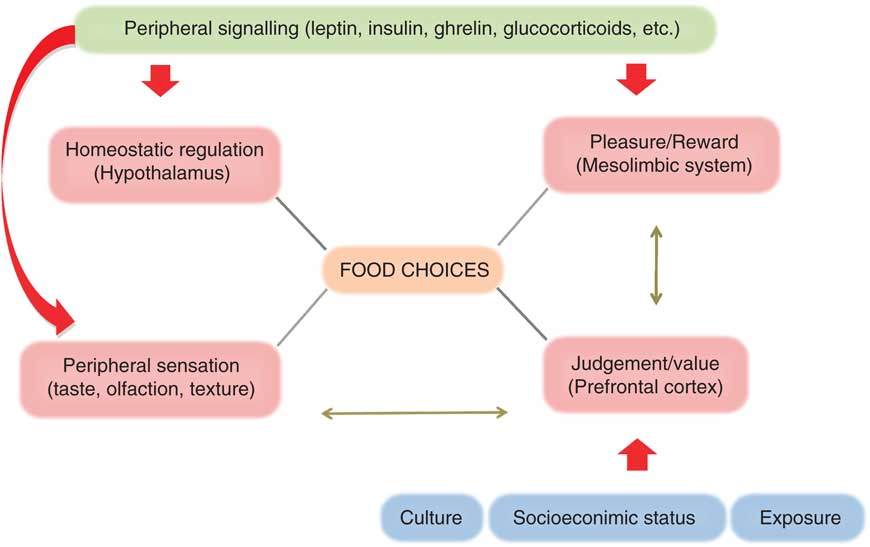
In addition, peripheral hormones, within subsets of taste cells and structures of the olfactory system, have also been proposed as modulators of olfaction/taste perception. Vasoactive intestinal peptide, cholecystokinin, leptin receptor and NPY, are found within type II taste cells, whereas glucagon-like peptide-1 is found in both type II and type III taste cells. The interplay between these systems modulates not only gustatory and olfactory function but also whole-body physiological functions, such as metabolic control and energy homeostasis.Reference Martin, Maudsley and White 113 Flavor–taste learning also involves brain dopamine signaling.Reference Touzani, Bodnar and Sclafani 114 Therefore, fetal adversities could program the functioning of such systems modulating food preferences (Fig. 1).
Brief schematic outlining the regulation of food preferences. Red – predominantly centrally mediated influences. Green – predominantly peripherally mediated (adipose tissue, pancreas, gastrointestinal tract and hypothalamus–pituitary–adrenal axis) influences. Blue – environmental influences. Fetal life adversities can affect any of the pathways, except for environmental factors (although they could be a cause of fetal adversity).

Evidences for the fetal programming of feeding behavior
Experimental (animal) studies
Animal studies have confirmed the potential for developmental programming of obesity. Low birth weight sheep have a higher relative fat mass as neonates compared with higher birth weight offspring.Reference Greenwood, Hunt and Hermanson 115 There is also evidence that a maternal protein-restricted (50%) diet during pregnancy programs offspring susceptibility to adult obesity in rats and mice, with the difference apparent already by 7 days of age.Reference Ozanne, Lewis and Jennings 116 , Reference Zambrano, Bautista and Deas 117 Moderate (50%) and severe (70%) maternal prenatal caloric restriction is also associated with greater fat deposition in offspring when presented with a hypercaloric or high-fat diet.Reference Desai, Gayle and Babu 118 , Reference Vickers, Breier and Cutfield 119 Importantly, animal studies have consistently demonstrated increased caloric intake among low birth weight offspring, a result in part of reduced anorexigenic responses, neural pathways and neuronal signaling.Reference Vickers, Breier and Cutfield 119 – Reference Desai, Gayle and Han 121
Several animal models aid in understanding the effects of early life events upon behavioral and metabolic outcomes in adulthood. A study using a low protein (LP) diet during gestation describes specific food preferences for high-fat food in both male and female adult offspring when compared with the control animals. If offered at discrete periods during gestation (early, mid and late gestation), the LP-diet programs the offspring feeding behavior in a gender-specific and timing-dependent manner, in which the females exposed to LP diet in early gestation prefer to eat more carbohydrates over the other macronutrients in adult life, as compared with controls.Reference Bellinger and Langley-Evans 122 Interestingly, the addition of high levels of folate to the LP diet during gestation prevents the LP effects on offspring food preferences, possibly a result of epigenetic effects.Reference Engeham, Haase and Langley-Evans 123 However, folate added to a normal protein diet also alters offspring's feeding behavior similarly to the LP diet exposure alone. Therefore, it seems that the role for potential folate-influenced DNA methylation in programming of food preference is likely to be gene-specific rather than genome-wide.
Manipulation of the dietary fat content during pregnancy also leads to altered offspring food preferences. Pups nursed by dams fed low fat diet during pregnancy and lactation show an increased preference for fat as compared with controls.Reference Nakashima, Tsukita and Yokoyama 124 However, if the obesogenic diet is offered to the dams before mating, it results in hyperphagia, decreased locomotor activity, increased adiposity, endothelial dysfunction and hypertension in the adult offspring.Reference Samuelsson, Matthews and Argenton 125 Hyperphagia is also a consequence of prenatal nutritional disturbance. Subjecting pregnant rats to severe food restriction (feeding 30% to 50% of ad libitum intake) promotes profound intrauterine growth retardation in their offspringReference Desai, Gayle and Babu 118 , Reference Vickers, Breier and Cutfield 119 with decreased newborn plasma leptin and increased ghrelin.Reference Desai, Gayle and Babu 118 These growth-retarded pups become hyperphagic, and when provided with a hypercaloric diet from weaning, develop pronounced central adiposity.Reference Vickers, Breier and Cutfield 119 Cross fostering the IUGR offspring to dams receiving ad libitum chow induces a rapid catch-up growth and results in increased weight, percent body fat and plasma leptin levels.Reference Desai, Gayle and Babu 118
In fetuses at term, the exposure of the pregnant rodent to chronic stress reduces body, adrenal and pancreas weight as well as plasma corticosterone and glucose levels.Reference Lesage, Del-Favero and Leonhardt 126 Long-term effects of this intervention include the induction of a rebound and basal hyperphagia when the offspring is on chow diet, with an exacerbated effect when put on a high-fat diet.Reference Lesage, Del-Favero and Leonhardt 126 , Reference Pankevich, Mueller and Brockel 127 Moreover, these animals display hyperglycemia, glucose intolerance and decreased basal leptin levels.Reference Lesage, Del-Favero and Leonhardt 126 It has not been determined whether the hyperphagia is mediated via appetite or reward mechanisms.
These combined observations suggest that early life events can lead to alterations in the feeding patterns of the adult offspring. It is intriguing to note that, although the metabolic disarrangements following these diverse interventions may be very distinct depending on the type of model used, feeding behavior (higher caloric consumption or specific food preferences) seems to be consistently found in the different protocols.
Epidemiologic and clinical observations
The epidemiologic observations that inadequate availability of nutrients to the fetus during gestation is associated with altered feeding preferences in adult life come from populations throughout the world in mainly three different settings: severe maternal undernutrition during a famine, intrauterine growth retardation and severely preterm birth.
Severe maternal undernutrition (Famine studies)
The Dutch Famine Birth Cohort has provided evidence that prenatal nutrition may affect dietary preferences later in life.Reference Lussana, Painter and Ocke 128 During the final months of the World War II, there was a period of extreme food shortage in the west of the Netherlands, known as the ‘Dutch Famine’. The Dutch famine birth cohort includes men and women who were born around the time of the Dutch famine as term singletons in one of the main hospitals of Amsterdam. In this study, periods of 16 weeks were used to differentiate between persons who were exposed in late gestation, mid-gestation and early gestation. Persons born before and persons conceived after the period of famine were used as the control group. Food frequency of intake and physical activity and detailed clinical examinations of cardiovascular and metabolic disease were made at the ages of 50 and 58. Although the mean percentage of protein, carbohydrate and fat in the diet did not differ among the exposure groups, participants exposed to famine in early gestation were more likely to consume a high-fat diet (defined as the highest quartile of fat in the diet or >39% of energy from fat). The relative risk of participants with early exposure to famine consuming a high-fat diet remained significantly higher even after adjustment for confounding factors. This finding may explain in part the finding that the group of participants exposed to famine in early gestation had more pronounced hypercholesterolemia and hypertriglyceridemia than the other groups (after exclusion of participants using lipid-lowering medication). Importantly, offspring exposed to famine in early gestation had a two-fold prevalence of coronary heart disease.
In another study,Reference Stein, Rundle and Wada 129 involving a different sample of individuals exposed to the Dutch Famine during or immediately preceding the pregnancy period was compared with a sample of births from the previous or following year (1943 and 1947) as hospital time controls and to same-sex siblings. Food frequency and physical activity data was acquired using questionnaires at a mean age of 58 years. Individuals exposed to famine in the first half of gestation (i.e. week 20) had higher reported absolute intakes of energy, fat and protein and lower reported absolute intakes of carbohydrate than did the controls. Using time controls as a comparison, gestational famine exposure was associated with higher energy intake due to higher fat density in the diet. In addition, lower levels of physical activity were found in the exposed group. In sex-stratified analyses, protein intakes were higher for exposed men and lower for exposed women compared with unexposed men and women, respectively. In a further comparison to sibling controls, gestational famine exposure was still associated with higher energy intake, higher fat density and lower physical activity score. However, using a sex-stratified analysis, energy intake was lower in exposed men and higher in exposed women compared with their unexposed siblings. Carbohydrate density was lower in individuals exposed to famine at any point in gestation compared with their siblings, and exposed and unexposed siblings did not differ in protein intake. There was no evidence for heterogeneity by sex for any macronutrient. Hence, independently of the control chosen for interpretation of the study, these results confirm that there is a specific food preference pattern associated with exposure to undernutrition during gestation, with increased caloric content mainly due to fat preference, as well as a diminished propensity to physical exercise.
Intrauterine growth restriction
In a cross-sectional evaluation of a prospective, longitudinal cohort of subjects born in the municipality of Ribeirão Preto (state of São Paulo, southeast of Brazil), it was investigated if IUGR was associated with offspring macronutrient ingestion and food preferences.Reference Barbieri, Portella and Silveira 130 Food intake was measured by a food frequency questionnaire and the data was shown in a carbohydrate to protein ratio (preference). IUGR was determined based on the birth weight ratio (BWR; the ratio between the newborn's weight and the population's sex-specific mean birth weight for each gestational age). Individuals were classified as non-restricted (BWR ⩾ 0.85), moderately restricted (BWR < 0.85 and ⩾0.75) and severely growth restricted (BWR < 0.75). At the age of 24 years, offspring women born severely growth restricted ate more carbohydrates than the women born non-growth restricted, and this finding persisted after adjustment for several confounders (maternal income, smoking and schooling at the time of delivery, and participants’ smoking, schooling, current body mass index (BMI) and physical activity). This effect was accompanied by a decreased ingestion of protein. Rather than an absolute BWR cut-off, regression analysis showed a continuous association between growth restriction and adult carbohydrate to protein ratio consumption, meaning that the more growth restricted at birth (lower BWR), the more these women prefer to eat carbohydrates over protein in adult life. The increased carbohydrate to protein consumption was distributed across different types of foods, and not associated with over or under consumption of any one food. In addition to the carbohydrate preference, women born IUGR exhibited increased waist to hip ratio (WHR), though the prevalence of risk factors for metabolic syndrome (plasma fasting insulin, glucose, high-density lipoprotein (HDL), triacylglycerol) did not differ between the groups. Using the NCEP-ATP III diagnostic criteria,Reference Cleeman, Grundy and Becker 131 there were no differences in the prevalence of metabolic syndrome between the groups. As studies were performed at 24 years of age, the increased WHR may suggest a predisposition to subsequent metabolic syndrome, which may be evident with follow-up. It is interesting to note that protein ingestion seems to be more tightly controlled than other macronutrients,Reference Simpson and Raubenheimer 132 being set to around 15% of the total calories. In this cohort, despite the fact that individuals from the different groups eat protein at that percentage, IUGR girls prefer comparatively less protein, and more carbohydrates. This probably means that the set point of the carbohydrate to protein ratio was changed to a different level in this group. As carbohydrates are more effective in releasing insulin (known for its anabolic actions), this may explain their increased central adiposity, and could be interpreted as an early sign of the thrifty phenotype.
Severely preterm birth
Another interesting model of an early adverse environment is birth at very low birth weight (VLBW; <1500 g) or very low gestational age (VLGA; <32 weeks), which comprise ∼1% to 1.5% of live births in countries with available statistics.Reference Bettiol, Rona and Chinn 133 – Reference Da Silva, Agranonik and Da Silva 134 Following birth, these infants experience a period characterized by immaturity-related neonatal illness frequently requiring neonatal intensive care, accompanied by inadequate nutrition and slow growth, sometimes referred to as ‘extrauterine growth restriction (EUGR)’. Moreover, during infancy, VLGA infants frequently suffer from eating difficulties including selective eating, which may be related to neurodevelopmental impairments. A recent study in 6-year-olds born extremely preterm suggested that feeding problems are present in those born most immature although not solely explained by neurodevelopmental delay.Reference Samara, Johnson and Lamberts 135 As young adults, VLBW/VLGA offspring exhibit increased cardiovascular risk factors such as higher blood pressure,Reference Doyle, Faber and Callanan 136 , Reference Hovi, Andersson and Räikkönen 137 impaired glucose regulationReference Hovi, Andersson and Eriksson 138 and lower rates of leisure-time physical activityReference Kajantie, Strang-Karlsson and Hovi 139 , Reference Saigal, Stoskopf and Boyle 140 as compared with their counterparts born at term with normal birth weight. A paradox is that adults born as small preterms are not more obese but, if anything, tend to have on average a lower BMI than those born at term.Reference Hovi, Andersson and Eriksson 138 , Reference Hack, Schluchter and Cartar 141 Much of this difference is attributable to lower lean body mass.Reference Hovi, Andersson and Eriksson 138 Although VLBW adults have a higher basal metabolic rate per unit lean body mass, their lower lean body mass results in a lower total basal metabolic rateReference Sipola-Leppänen, Hovi and Andersson 142 and, accordingly, lower energy intake.Reference Kaseva, Wehkalmpi and Hemiö 143 Although a preliminary report from the same cohort showed no difference in energy-adjusted macronutrient intakes, intakes of calcium and vitamin D were lower in VLBW adults. This argues for the possibility of altered food preferences, although we are unaware of any published reports on the analyses of intake and preference of specific foods in this context. In general, although VLGA infants constitute a promising model of early programming of food preferences, it remains relatively understudied.
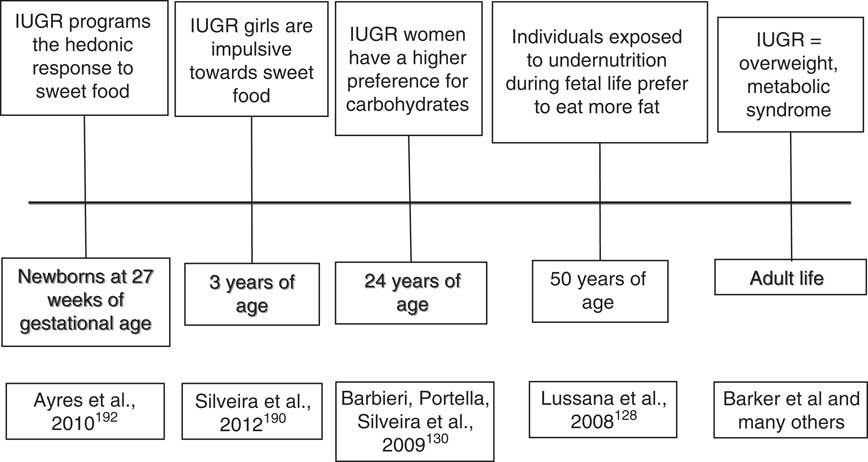
When comparing these studies, it is important to take into account several facts. Firstly, Barbieri et al. evaluated the cohort at 24 years of age, while the Dutch Famine studies evaluated middle-aged individuals. It is known that food preferences vary according to ageing,Reference Schwartz, Issanchou and Nicklaus 46 , Reference Navarro-Allende, Khataan and El-Sohemy 144 , Reference Chapman and Ogden 145 and the apparent diversity in the findings may simply reflect that these specific feeding preferences in low birth weight subjects transit from high carbohydrates to high fat as the individuals age. Moreover, although all of these studies may reflect the effects of stress exposure during fetal life, the Dutch Famine cohort was exposed to both the nutritional and environmental (war conditions) stress, while the Brazilian cohort was primarily nutritional deprivation and stress exposure. As different types of stress induce specific physiological responses,Reference Pacak and Palkovits 146 one could argue that different adverse events occurring in utero lead to particular effects on feeding behavior later in life, depending on the type of the insult (Fig. 2).
Conceptual framework depicting the fetal programming of food preferences proposal. Human evidence of feeding preferences in individuals exposed to fetal adversities suggests that the choices for specific types of foods at different times during the life course may play an important role in the increased risk for disease largely described in these subjects. IUGR, intrauterine growth restricted.

Specific food preferences may be involved in the development of later disease
To date, several studies have shown that feeding preferences during adulthood are related to physical health, impact the risk for future disease and play a role in the prevention of overweight. For example, rates of incident verified non-fatal myocardial infarction, coronary death and diabetes are lower among people following a general healthy eating pattern in midlife (high consumption of fruit and vegetables, polyunsaturated oils and high-fiber bread and breakfast cereals and a low consumption of red meats, saturated fats and refined carbohydrate foods).Reference Brunner, Mosdol and Witte 147 Large cohort studies point to the fact that a western dietary pattern is associated with a substantially increased risk for type 2 diabetes,Reference Brunner, Mosdol and Witte 147 – Reference Fung, Schulze and Manson 150 incident heart failure,Reference Nettleton, Steffen and Loehr 151 coronary heart disease,Reference Fung, Schulze and Manson 150 , Reference Hu, Rimm and Stampfer 152 stroke,Reference Varraso, Fung and Barr 153 chronic obstructive pulmonary disease,Reference Varraso, Fung and Barr 153 colon cancer,Reference Slattery, Boucher and Caan 154 , Reference Flood, Rastogi and Wirfalt 155 altered markers of inflammation and endothelial dysfunctionReference Lopez-Garcia, Schulze and Fung 156 and altered plasma biomarkers of cardiovascular disease risk and obesity.Reference Fung, Rimm and Spiegelman 157 Although the issue is still debated,Reference Barclay, Flood and Brand-Miller 158 , Reference Barclay, Petocz and McMillan-Price 159 a systematic review of 37 published cohort studies showed that low glycemic index and/or low glycemic load diets are associated with a reduced risk of chronic diseases such as type 2 diabetes, coronary heart disease, gallbladder disease and breast cancer, suggesting that higher postprandial glycemia is a mechanism for disease progression.Reference Barclay, Petocz and McMillan-Price 159
Whole-grain as well as fruits and vegetables intake have been associated with lower risk of cardiovascular disease,Reference Holmberg, Thelin and Stiernstrom 160 – Reference Joshipura, Hu and Manson 163 ischemic strokeReference Joshipura, Ascherio and Manson 164 and hypertension,Reference Steffen, Kroenke and Yu 165 improvements in glycemic control,Reference Liese, Roach and Sparks 166 , Reference Pereira, Jacobs and Pins 167 and lower levels of inflammatory biomarkers.Reference Qi, Van Dam and Liu 168 Dietary fiber may also affect fibrinolysis and coagulation,Reference Pereira and Pins 169 , Reference Jenkins, Axelsen and Kendall 170 which may be important in the setting of established atherosclerotic plaques. With regard to polyunsaturated fatty acid (PUFA) consumption, n-3 PUFAs from both seafood and plant sources may reduce cardiovascular risk,Reference Mozaffarian, Ascherio and Hu 171 whereas eating even limited quantities of fish may reduce the risk of ischemic stroke in men.Reference He, Rimm and Merchant 172
Not simply the food choices, but feeding behavior per se is also associated with human health. For instance, men eating takeaway foods twice a week or more are significantly less likely to meet the dietary recommendation for vegetables, fruits, dairy, breads and cereals, and have a higher prevalence of moderate abdominal obesity.Reference Smith, McNaughton and Gall 173 On the other hand, young adults who report frequent food preparation have less frequent fast-food use and are more likely to meet dietary objectives for different macro and micronutrients.Reference Larson, Perry and Story 174 Feeding frequency may also affect health outcomes, as a high daily eating frequency is associated with a healthy lifestyle and dietary pattern in both men and women.Reference Holmback, Ericson and Gullberg 175 Finally, there is a well-known association between television viewing and abdominal obesity in young adults, which is partially explained by food and beverage consumption while watching television.Reference Holmback, Ericson and Gullberg 175
While this review focuses on early programming of nutrient intake and preferences, it is important to keep in mind that the biological effects of specific nutrients also may be programmed early in life. Not all people are equally sensitive to health effects of specific nutrients. For example, lipid responses to dietary interventionsReference Masson, McNeill and Avenell 176 and blood pressure responses to alterations in salt intakeReference Franco and Oparil 177 vary widely between people, with genetic mechanisms explaining only a small proportion of the differences.Reference Bennet, Di Angelantonio and Ye 178 – Reference Nettleton, Volcik, Hoogeveen and Boerwinkle 180 Few human studies have explored this area, although a study from Hertfordshire, England, showed that among 59- to 71-year-old men, high intakes of total and saturated fat were associated with reduced HDL-cholesterol and HDL/LDL (low-density lipoprotein) ratio only in men with low birth weight.Reference Robinson, Batelaan and Syddall 181 A Dutch study of healthy adults showed a strong inverse correlation between birth weight and salt sensitivity of blood pressure.Reference de Boer, Ijzerman and de Jongh 182
All of the above behaviors and preferences could potentially be affected by early life events. Future studies may clarify the particular behavioral facets of individuals exposed to specific insults in order to identify their possible health risks.
Medical and public health implications
The worldwide rise in chronic diseases in children and adolescents is challenging for the health assistance, financial resources administration and biomedical research. These disorders may be a consequence of a long process of epidemiological and demographic transition, occurring during the last century. The decrease in infant mortality and longer life-span has created a new pattern of health and disease, in which chronic and degenerative disorders have overcome acute conditions and infectious diseases. In this scenario, the identification of vulnerability and proposals for chronic diseases prevention is of extreme significance and importance. Knowledge about behavioral traits that could be linked to specific health risks may alert health professionals to promote early intervention and assistance.
Education, support and long-term follow-up may be required to assist children exposed to fetal insults to make lifestyle changes essential to a healthy lifestyle, such as wise dietary choices. For instance, interventions that promote reduced amount of added sugar and increased intake of dietary fiber improve insulin action and reduce visceral adipose tissue in youth.Reference Davis, Ventura and Shaibi 183 – Reference Monzavi, Dreimane and Geffner 187 The efficacy of these interventions remains to be established for this population.
Importantly, prenatal care and preconception counseling is critical for developing preventive strategies in terms of public health. For instance, findings suggest that pre-pregnancy dietary patterns may affect womens’ risk of developing gestational diabetes mellitus.Reference Zhang, Schulze and Solomon 188 A healthy diet before and during the pregnancy promotes a better fetal environment, preventing diseases in future generations. Women of reproductive ages, especially those who are planning a pregnancy, should be counseled to consume a well-balanced diet, and may be more easily prone to engage in healthy life choices. We propose that a prudent diet style before and during pregnancy affects the newborn's food preferences in a positive way, as well as its future food choices in adulthood and is a promising new way of preventing chronic degenerative disease in future generations. This may be a transgenerational model of health programming.
Conclusions
In conclusion, evidence from experimental and clinical studies demonstrate that early life events are linked to specific feeding preferences in adulthood. Although these studies have somewhat divergent final findings, they consistently demonstrate that a metabolic or environmental stress during gestation that impacts fetal growth results in altered offspring adult feeding behavior, with a preference for highly palatable, energy dense foods (either rich in carbohydrates or fat or both). The chronic, persistent alteration in feeding preferences in these individuals likely starts in early lifeReference Silveira, Portella and Diorio 189 , Reference Ounsted and Sleigh 190 , Reference Ayres, Portella, Filion, Johnston and Silveira 192 and contributes to the development of obesity and altered lipid profile reported in this group.Reference Lussana, Painter and Ocke 128 , Reference Barbieri, Portella and Silveira 130 This seems to be another facet of the ‘thrifty phenotype’,Reference Hales and Barker 191 what could be called ‘thrifty behavior’. Future studies are warranted to understand the mechanisms by which specific insults lead to specific behavioral preferences, as well as to establish the validity of preventive measures in humans.