Introduction
Negative symptoms (blunted affect, impoverished communication, lack of motivation, and social withdrawal), an important component of psychotic disorders, tend to emerge early in the course of illness (Iyer et al. Reference Iyer, Boekestyn, Cassidy, King, Joober and Malla2008). They are significantly associated with poor quality of life (Katschnig, Reference Katschnig2000) as well as social, educational, and occupational achievement (Buchanan, Reference Buchanan2007). Up to 30% of first-episode psychosis (FEP) patients demonstrate moderate-to-severe negative symptoms that persist for at least 6 months (Malla et al. Reference Malla, Takhar, Norman, Manchanda, Cortese and Haricharan2002b; Hovington et al. Reference Hovington, Bodnar, Joober, Malla and Lepage2012). In a substantial proportion of patients, negative symptoms remain throughout the course of illness (Buchanan, Reference Buchanan2007). Antipsychotic medications, effective in treating positive symptoms, have limited impact on negative symptoms (Fusar-Poli et al. Reference Fusar-Poli, Papanastasiou, Stahl, Rocchetti, Carpenter and Shergill2015). Meta-analyses of the effectiveness of psychological and psychosocial interventions show only a modest-to-moderate effect (Fusar-Poli et al. Reference Fusar-Poli, Papanastasiou, Stahl, Rocchetti, Carpenter and Shergill2015; Lutgens et al. Reference Lutgens, Gariepy and Malla2017).
For the first couple of years following the onset of psychosis, combined medical and multiple psychosocial interventions provided within specialized early intervention (EI) services produce a superior outcome compared with regular care (Bird et al. Reference Bird, Premkumar, Kendall, Whittington, Mitchell and Kuipers2010; Marshall & Rathbone, Reference Marshall and Rathbone2011; Lutgens et al. Reference Lutgens, Gariepy and Malla2017). While an earlier study reported that the initial improvement in negative symptoms achieved in an EI service was not maintained when patients were transferred to regular care (Bertelsen et al. Reference Bertelsen, Jeppesen, Petersen, Thorup, Øhlenschlæger and le Quach2008), a Canadian study later reported that treatment in an EI service for 2 years followed by 3 years of lower intensity EI resulted in retention of earlier gains in negative symptoms (Norman et al. Reference Norman, Manchanda, Malla, Windell, Harricharan and Northcott2011). Most recently, two randomized controlled trials (RCT) of extended EI (EEI) compared with regular care, following an initial 2 years of EI service, have been conducted. One study reported no benefit of a 3-year EEI, while the other reported a significant benefit of a 1 year of EEI (Chang et al. Reference Chang, Chan, Jim, Lau, Hui and Chan2015) that was not maintained post-transfer into regular care, at 4-year follow-up (Chang et al. Reference Chang, Kwong, Lau, So, Wong and Chan2017). While studies have examined negative symptoms from EI entry to 2-year EI follow-up, and later at 5 years, following either EEI or regular care, this has not yielded a comprehensive examination into the trajectory of negative symptoms throughout this critical period of the first 5 years. Further, it is unclear whether symptoms improve further and/or differentially within EEI compared with transfer to regular care for the final 3 years of a hypothesized 5-year critical period in FEP, during which long-term outcome trajectories are most likely established (Birchwood et al. Reference Birchwood, Todd and Jackson1998; Harrison et al. Reference Harrison, Hopper, Craig, Laska, Siegel and Wanderling2001).
In the recently published report of an RCT of 3 years of EEI v. regular care following 2 years of EI service, on the primary outcome of length of total (positive and negative) symptom remission as per consensus definition (Andreasen et al. Reference Andreasen, Carpenter, Kane, Lasser, Marder and Weinberger2005), patients in the EEI had superior outcome compared with those transferred to regular care (Malla et al. Reference Malla, Joober, Iyer, Norman, Schimiz and Brown2017). While meeting criteria for remission of negative symptoms requires an almost total absence of symptoms, it does not allow an examination of change in the level of symptoms over time. Further, we did not examine the initial progress of negative symptoms over the first 2 years and whether that progress is maintained or further improved in subsequent years differentially in an EEI service or regular care. The present report, therefore, is an analysis of planned secondary outcome measures (Lutgens et al. Reference Lutgens, Iyer, Joober, Brown, Norman and Latimer2015) from the primary study (Malla et al. Reference Malla, Joober, Iyer, Norman, Schimiz and Brown2017). It is restricted to patients who participated in the RCT and for whom data from regular assessments of negative symptoms throughout the initial 2 years of EI service were available.
Our objectives, therefore, were:
1. To examine the longitudinal course of negative symptoms over an initial period of 2 years in a large sample of previously largely untreated FEP patients treated in an EI service;
2. To determine if further gains in the level of negative symptoms can be achieved over the subsequent 3 years; and if so, whether such gains are greater in EEI compared with regular care.
Given the scale of evidence for the effectiveness of EI on negative symptoms, we hypothesized that FEP patients who received 2 years of EI would show significant improvement in negative symptoms. Further, we hypothesized that those randomized to receive EEI would not only show sustained levels of negative symptoms but also additional improvements, compared with those randomized to regular care.
Methods
Subjects
This study was conducted at the Prevention and Early Intervention Program for Psychosis (PEPP-Montréal). PEPP-Montréal provides assessment and treatment for all individuals presenting with a FEP in a catchment area of 300 000 in South West Montreal, Quebec. Patients who meet the following criteria are admitted: age 14–35 years; a diagnosis of a first episode of non-affective or affective psychotic disorder; having received antipsychotic medication for no longer than 1 month; and an IQ above 70.
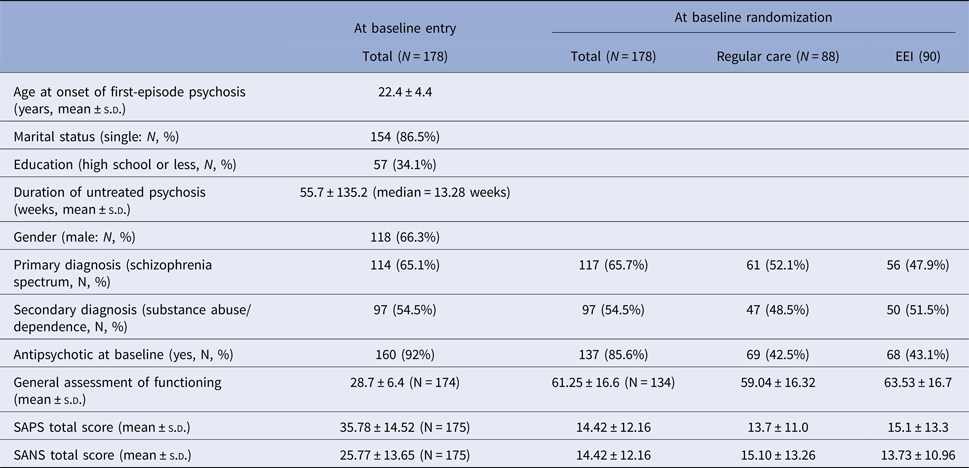
Patients were 18 years or more of age at the time of completion of 2 years of treatment for a FEP at the PEPP-Montréal site and signed consent to participate in an RCT comparing outcomes of either EEI or transfer to regular care for an additional 3 years (see Table 1). Initial consent to participate in research evaluations was obtained at the time of entry to the program to begin treatment. Hence, this secondary report is based on negative symptom data for the same cohort of PEPP-Montréal patients over two phases. Institutional ethics approval was obtained separately for the two phases.
Demographic and clinical characteristics

EEI, extension of early intervention service; SAPS, Scale for the Assessment of Positive Symptoms; SANS, Scale for the Assessment of Negative Symptoms.
Design
In the first phase, we examined the trajectory of negative symptoms in FEP within the EI program from entry to treatment end (2 years). EI service is centered around assertive case management and provides low-dose antipsychotic medication as well as psychological and psychosocial interventions aimed at recovery that includes personally set goals such as reintegration into employment and/or education, reducing hospitalization, and increasing independence. Other services include individually targeted cognitive–behavioral therapy as well as family interventions (family psycho-education, multiple group family intervention, and family support group) (Malla et al. Reference Malla, Norman, McLean, Scholten and Townsend2003; Iyer et al. Reference Iyer, Jordan, MacDonald, Joober and Malla2015).
In the second phase, we investigated whether any reduction in negative symptoms over the first 2 years was lost, maintained or enhanced over the subsequent 3 years, and if such benefit was greater in EEI than in regular care. At the end of the first phase (24 ± 3 months), patients were randomized to either continue in an EEI service or be transferred to regular care. Randomization was conducted using computerized urn randomization by a statistician not connected with the service. As sex and substance abuse may influence outcomes, these factors were pre-stratified across conditions [see earlier publication (Malla et al. Reference Malla, Joober, Iyer, Norman, Schimiz and Brown2017)]. Substance abuse was diagnosed according to the Structured Clinical Interview for DSM-IV Axis I Disorders (SCID). The extension of EI continued to comprise assertive case management and multiple psychosocial interventions, described in detail in the primary report (Malla et al. Reference Malla, Joober, Iyer, Norman, Schimiz and Brown2017). Regular care comprised of transfer either to primary care (family physician with or without additional support from other health and social service professionals) or to psychiatric clinics attached to the parent hospital.
Assessment
Negative symptoms, measured using the Scale for the Assessment of Negative Symptoms (SANS) (Andreasen, Reference Andreasen1982), were the primary outcome of interest using total item scores from the following subscales: affective flattening or blunting, alogia, avolition–apathy, anhedonia–associality.
Research staff received extensive manualized training and supervision over a period of 3 months from one of the co-authors (S.A.) prior to conducting in-person interviews at entry (baseline) and months 1, 2, 6, 9, 12, 18, and 24 for phase I. Phase II assessments were conducted starting at baseline (prior to randomization) and then every 3 months over the 3-year post-randomization period. Each assessment covered symptoms for the preceding 3-month period. For a proportion of patients (N = 53, 30%), the assessment conducted at month 24 (last assessment of year 2) overlapped with the date for the baseline pre-randomization assessment and as such was carried forward. Following randomization, all patients were assigned one of two evaluators, trained with the same training program as the pre-randomization evaluators to conduct symptom assessments but within the framework of the RCT where the evaluator was blinded to group assignment. Only one of the evaluators conducted the majority of assessments throughout the entire EI extension phase. Assessors achieved high inter-rater reliability both throughout the initial 2 years of EI and post-randomization, whenever additional assessors were utilized (range 0.75–0.92).
Statistical analyses
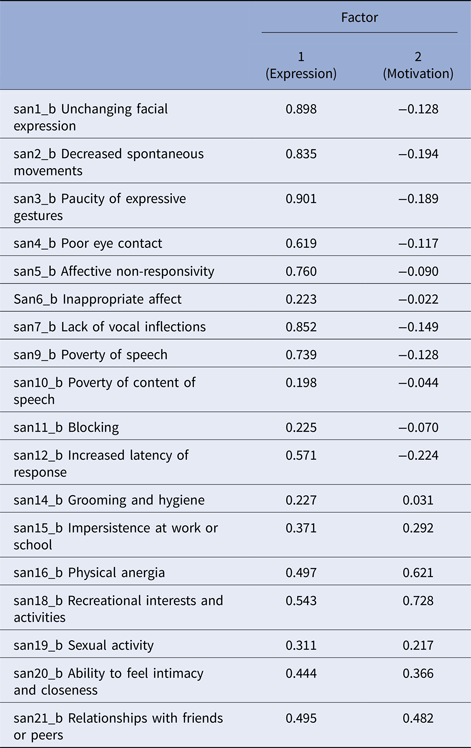
Negative symptoms may not be a homogenous dimension and likely comprise two dimensions, motivation and expressivity (Malla et al. Reference Malla, Takhar, Norman, Manchanda, Cortese and Haricharan2002b; Liemburg et al. Reference Liemburg, Castelein, Stewart, van der Gaag, Aleman and Knegtering2013). Both are associated with functional outcomes (Katschnig, Reference Katschnig2000) but there is evidence that they follow distinct trajectories over time and may be influenced by different factors (Strauss et al. Reference Strauss, Horan, Kirkpatrick, Fischer, Keller and Miski2013). We, therefore, undertook an examination of change in these two dimensions in addition to total negative symptoms as a single entity. For this purpose, we first conducted a confirmatory factor analysis (CFA), using the generalized least squares extraction method, on all SANS items using the entire sample at baseline entry to EI. Factors with an Eigen value of 1.0 or greater were retained and items with a loading of >0.5 were included in the particular factor. We forced a two-factor solution based on findings from previous studies, including those in FEP, suggesting a model of core negative symptoms contained within two dimensions (Malla et al. Reference Malla, Takhar, Norman, Manchanda, Cortese and Haricharan2002b; Liemburg et al. Reference Liemburg, Castelein, Stewart, van der Gaag, Aleman and Knegtering2013).
For outcome on negative symptoms, a repeated-measures analysis of variance (ANOVA) was conducted separately across phases I and II, first for all negative symptoms (total) and then separately for each of the two dimensions identified through factor analysis. In phase II, all subjects who had a baseline assessment followed by one post-randomization assessment were included in the analysis, as per the original protocol. All analyses were conducted using SPSS version 23.0.
Missing observations and data imputation
Empty data points, fewer within phase I and more within phase II, were due to patients missing some assessments. When an assessment was missing and symptom data were available from files, assessments were retrospectively reconstructed. For the primary analyses, all patients were included if they had a baseline and at least one post-baseline assessment at any time point. Missing data were imputed using the last observation carried forward (LOCF) until the next available assessment data or to the end of the trial when there was no subsequent data. This is considered to provide a conservative estimate of change over time (Hamer & Simpson, Reference Hamer and Simpson2009). Sensitivity analyses were then conducted across both phases, utilizing LOCF with trial completers only, such that those with more than three consecutively missing observations (a priori criterion for definition of drop out from the RCT) were excluded from the analysis.
Results
Demographic data for the cohort of 178 patients who entered the EI service (PEPP-Montreal) and who were subsequently randomized at 2 years (±3 months) to receive either EEI (n = 90) or treatment as usual (n = 88) is shown in Table 1. There were no significant differences on any measure at time of randomization.
Factor analysis
A CFA of total SANS items (excluding all attention items) conducted on the data at the time of entry to treatment revealed two factors. All items on the affective flattening subscale (except inappropriate affect) as well as the poverty of speech and increased latency of response items on the alogia subscale loaded onto factor 1. This factor likely reflects the dimension of ‘expressivity’ and explained 37.21% of variance in negative symptoms. The item of physical anergia from the avolition subscale and the item of recreation interests and activities from the social anhedonia subscale typically taken to represent the dimension of ‘motivation’ loaded onto the second factor and explained an additional 11.43% of variance for 44% of the total variance explained (Table 2). The correlation between factors was significant (p < 0.01, r = 0.40).
Factor matrix at PEPP baseline (N = 178)

Extraction method: generalized least squares.
Two factors extracted. Seven iterations required.
Two-year outcomes
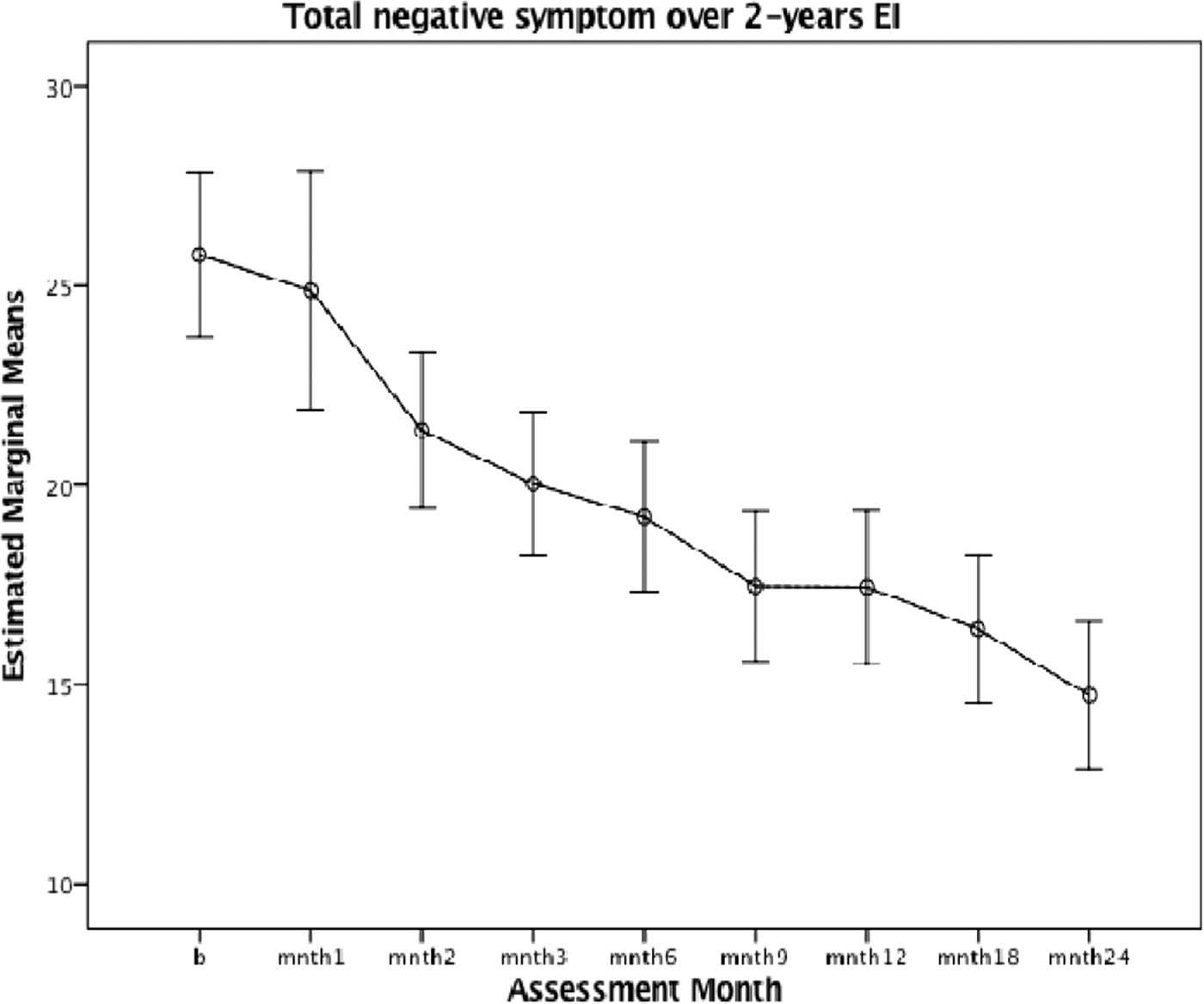
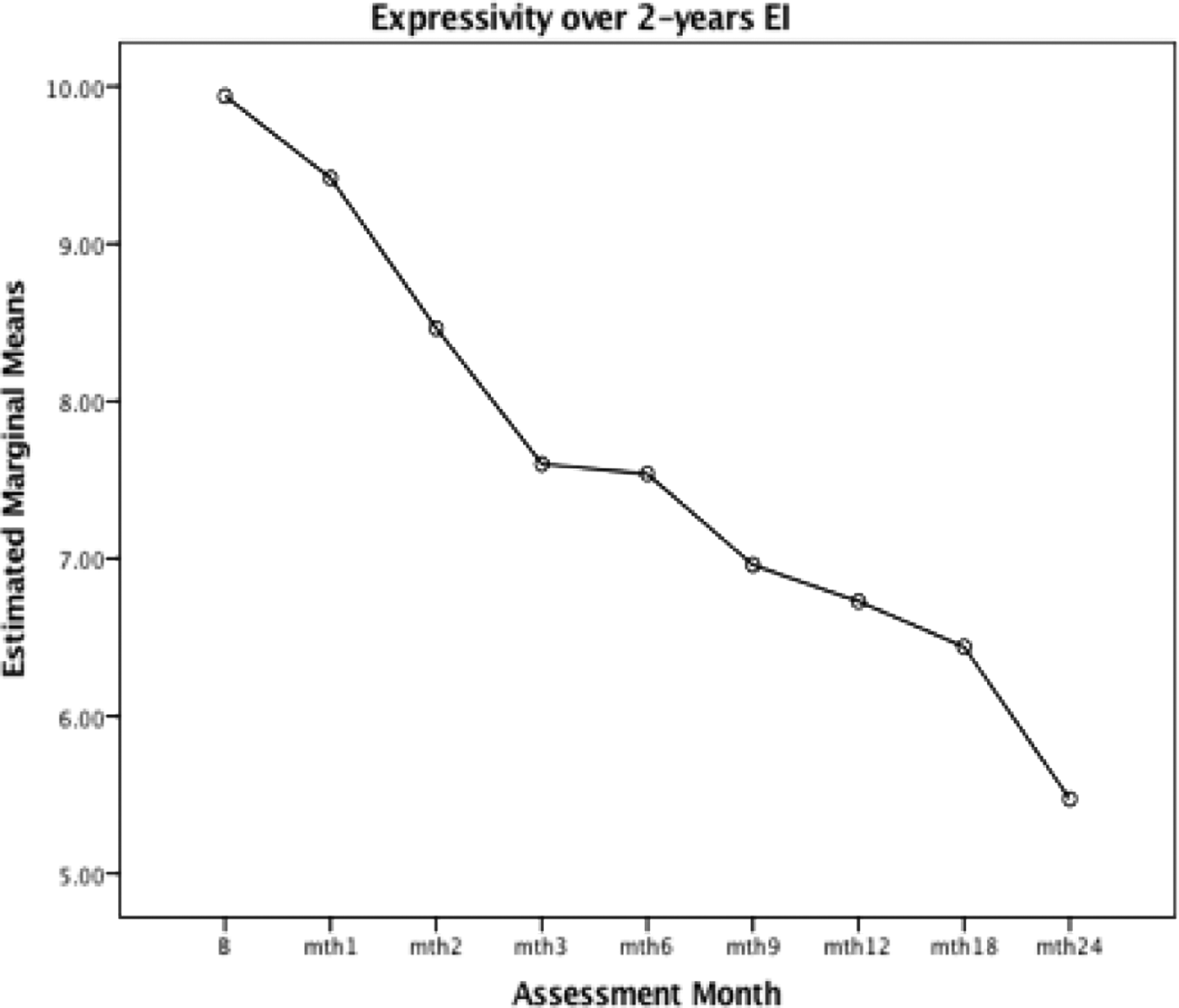
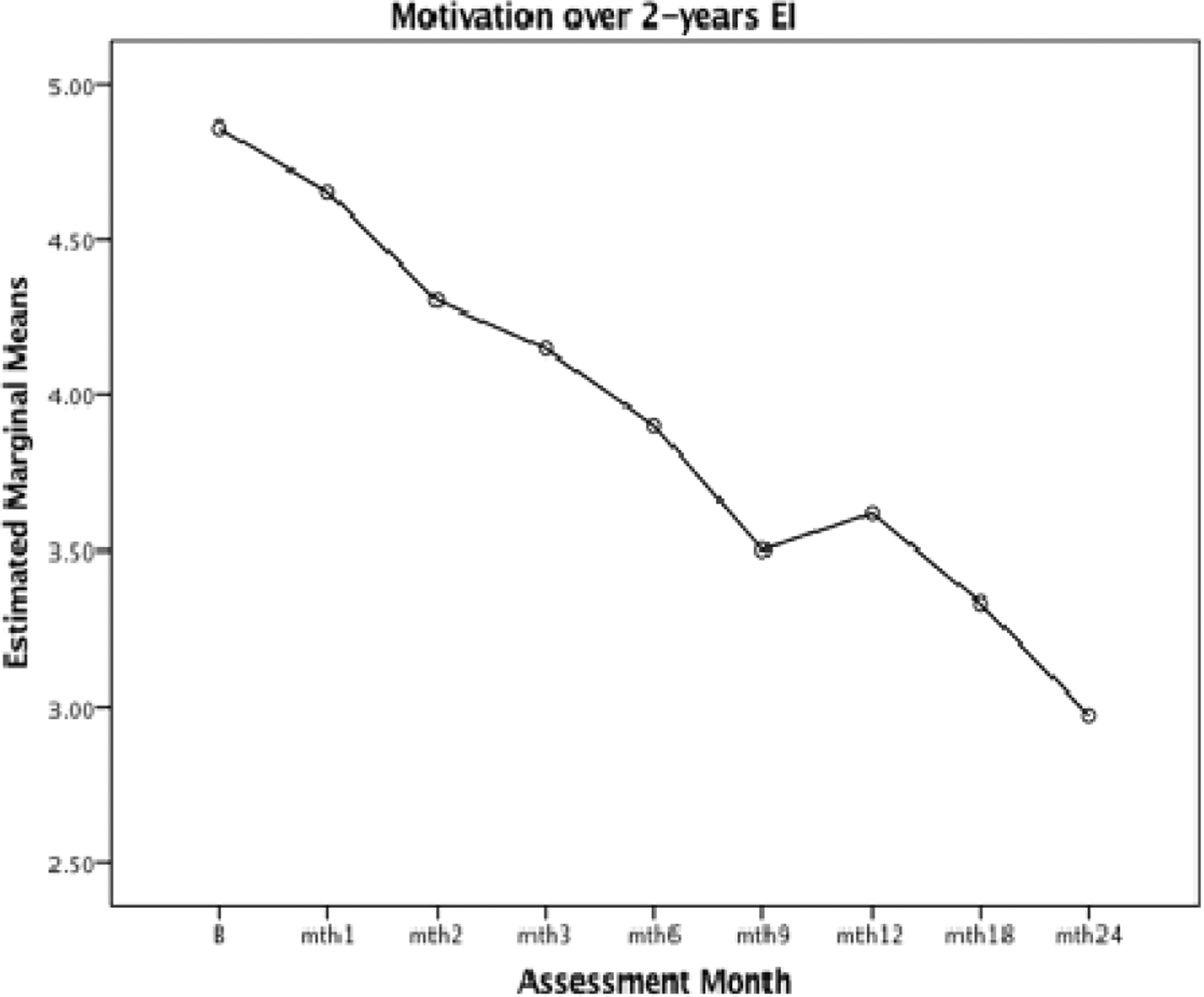
A repeated measures ANOVA with time (nine levels) as the within-subjects factor on 176 subjects revealed significant improvement over time in total negative symptoms with a Greenhouse Geisser correction F(4.595, 799.577) = 25.246, p < 0.001, partial ω 2 = 0.127 (Fig. 1). Bonferroni post hoc tests reveal significant mounting improvements among all pairwise comparisons except for a period of stability across assessment months 9, 12, and 18 (p > 0.05). An analysis conducted separately for each dimension found expressivity to have improved significantly over time using a Greenhouse Geisser correction F(5.11, 879.23) = 13.11, p < 0.01, partial ω 2 = 0.625 (see Fig. 2). There was also a significant improvement on the motivation dimension using a Greenhouse Geisser correction F(5.92, 1029.48) = 17.84, p ⩽ 0.01, partial ω 2 = 0.836 (see Fig. 3).
Total negative symptoms over 2 years of EI.

Expressivity over 2 years of EI.

Motivation over 2 years of EI.

Bonferroni post hoc tests showed no significant improvement in the expressivity dimension from baseline to month 2 (p > 0.05). Baseline was significantly higher than all measures conducted after month 2 despite no significant improvement between the second and 12th month (p > 0.05). There were no significant differences between measures conducted in the second year (p > 0.05). The last measurement at month 24 was significantly lower compared with all measures conducted prior to month 9 (p < 0.05). Bonferroni post hoc tests revealed no significant improvement in the motivation dimension from baseline to month 3 (p > 0.05) and no significant additional improvement between months 9 and 24 (p > 0.05). However, the last measurement at month 24 was significantly lower than all measures conducted over the first 6 months of EI (p < 0.05). Mean total negative symptom scores across each time point for the first 2 years of EI are available in the online Supplementary Table S1.
Outcomes from years 3 to 5
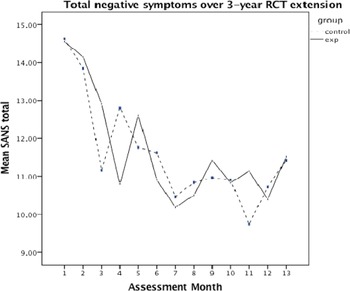
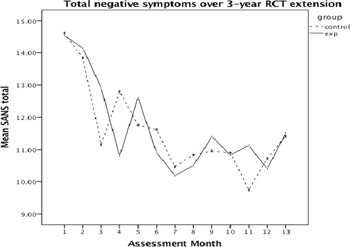
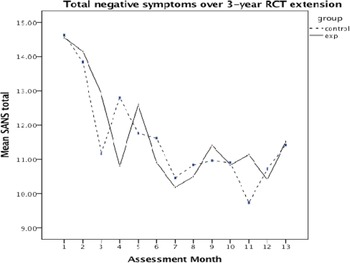
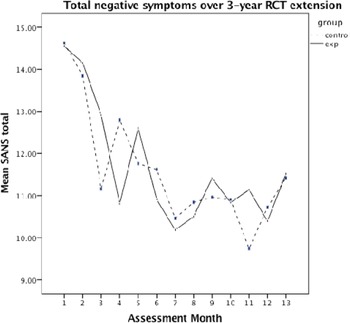
A mixed ANOVA with N = 175 revealed significant improvement in mean total negative symptoms over time for all patients in the test of within-subjects effect with a Greenhouse Geisser correction F(4.32, 759.908) = 4.182, p = 0.002, partial ω 2 = 0.023. There was no significant effect of group on total negative symptoms F(1, 176) = 0.11, p = 0.74, partial ω 2 = 0.001. The interaction effect of time (13 levels) and group (EI = 88, control = 90) was not significant F(4.318, 759.908) = 1.073, p = 0.37, partial ω 2 = 0.006 (see Fig. 4), with no difference in improvement over time between the experimental and control groups. Post hoc tests indicated that after the sixth assessment of month 15, post-randomization, there were no significant improvements among all pairwise measures (p > 0.05). Mean total negative symptom scores across each time point and for each condition of the RCT are available in the online Supplementary Table S2.
Total negative symptoms over the 3-year RCT extension.

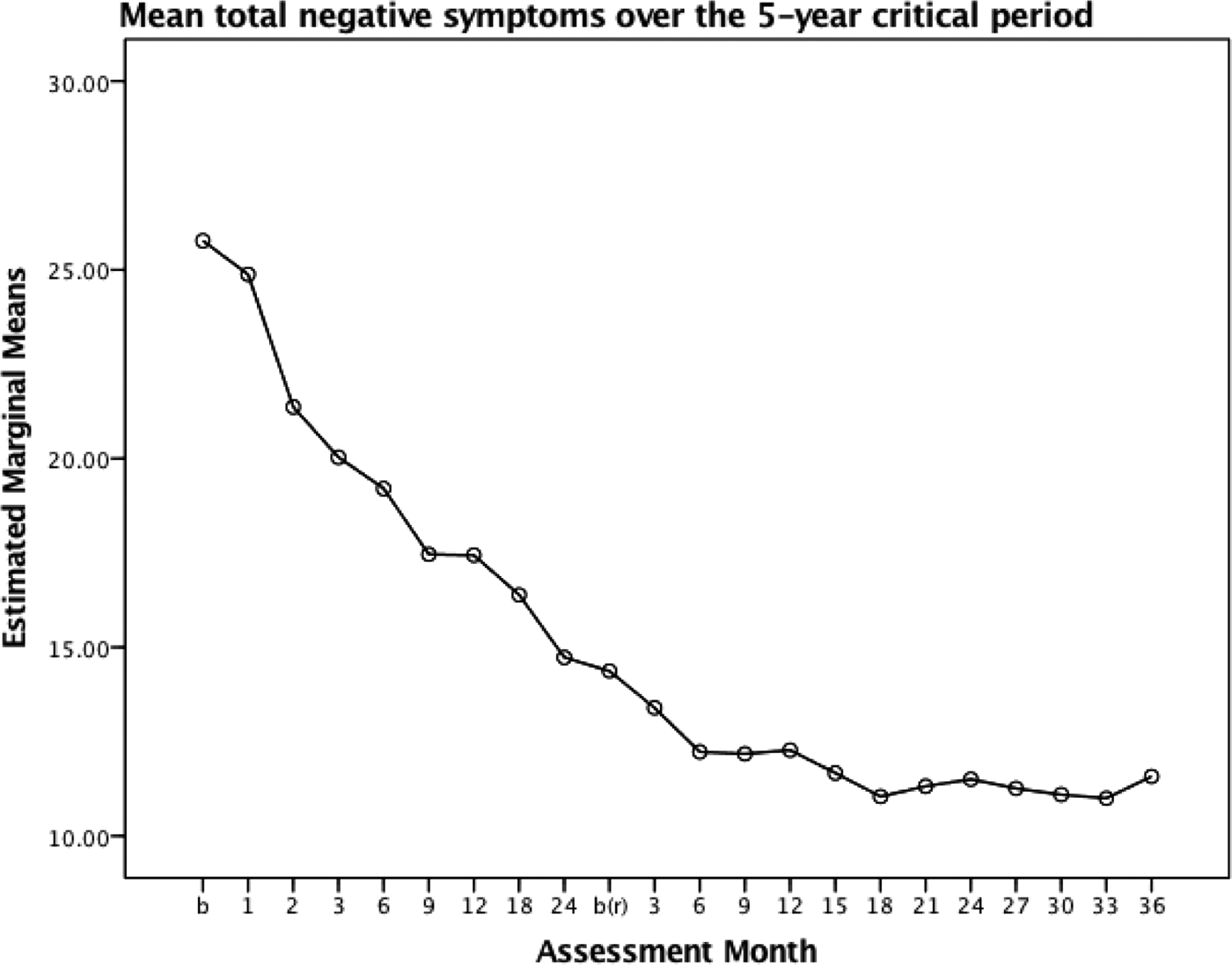
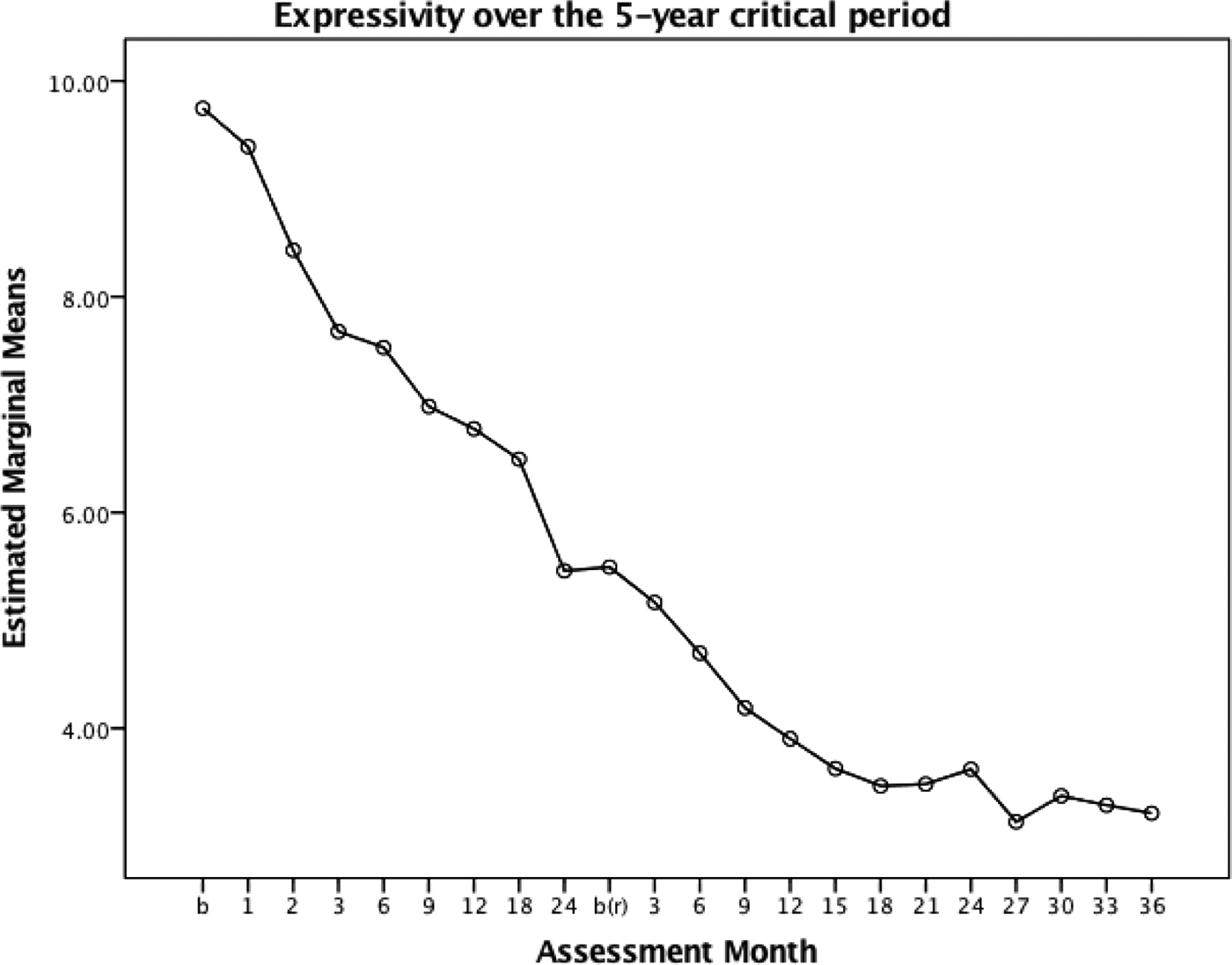
In the test of within-subjects effect with a Greenhouse Geisser correction F(4.01, 674.73) = 7.19, p < 0.01, partial ω 2 = 0.041, the expressivity dimension was found to significantly improve over time, with no significant effect of group F(1, 168) = 0.012, p = 0.91, partial ω 2 = 0.000 and no significant time x group interaction F(4.02, 674.73) = 1.03, p = 0.38, partial ω 2 = 0.006 (see Fig. 5). Bonferroni post hoc tests reveal that there were no significant changes in the expressivity dimension during the first 12-month assessment period post-randomization (year 3). However, baseline was higher than all measures conducted after the first year (p < 0.05). The first two measures (baseline and month 3) were significantly higher than all other measures conducted, although there were no further significant improvements after month 3 (p > 0.05). There was no significant effect of time on the motivation dimension as shown in the test of within-subjects effect with a Greenhouse Geisser correction F(6.58, 1112.18) = 0.95, p = 0.46, partial ω 2 = 0.006 and no significant group F(1, 169) = 0.104, p = 0.75, partial ω 2 = 0.001, nor time × group interaction F(6.58, 1112.18) = 1.46, p = 0.18, partial ω 2 = 0.009 (see Fig. 6). Total negative symptoms and change in expressivity and motivation over the entire 5-year period are shown in Figs 7–9.
Expressivity over the 3-year RCT extension.

Motivation over the 3-year RCT extension.

Mean total negative symptoms over the 5-year critical period.

Expressivity over the 5-year critical period.

Motivation over the 5-year critical period.

Missing observations and sensitivity analyses
While the median of missed data at any given time point within the first two years of EI service was comparatively low: 14% [n = 24; range: 2% (n = 3; baseline) and 19% (n = 33; month 3)], there was substantial missing data post-randomization: 51% [n = 112; range: 21% (n = 46; baseline) and 64% (n = 141; month 36)]. Post-randomization, a total of n = 98 (mean per period = 7.5, 4.2%) assessments were reconstructed across all months for the 178 patients randomized. We restricted the next series of analyses (phase II) to subjects who had completed the entire 36 months of post-randomization research protocol. We found significant improvement in mean total negative symptoms over time for all patients in the test of within-subjects effects with a Greenhouse Geisser correction F(4.723, 495.967) = 5.037, p < 0.001, partial ω 2 = 0.046. There was no difference in outcome according to group randomization F(4.723, 495.967) = 0.662, p = 0.643, partial ω 2 = 0.006.
In the test of within-subjects effect with a Greenhouse Geisser correction, there was a significant improvement over time in the expressivity dimension with F(4.09, 413.21) = 7.47, p < 0.00, partial ω 2 = 0.071 but no significant time x group interaction F(4.09, 413.21) = 0.948, p = 0.44, partial ω 2 = 0.009. There were no significant effect of time on the motivation dimension in the test of within-subjects effect with a Greenhouse Geisser correction F(7.21, 757.46) = 1.28, p = 0.25, partial ω 2 = 0.012. There was also no significant time by group interaction F(7.21, 757.46) = 1.79, p = 0.83, partial ω 2 = 0.017.
Discussion
Our aims were to trace the trajectory of negative symptoms in FEP within the first two years of initial EI service and to determine if further improvements can be made within the subsequent 3 years of the 5-year critical period and, if so, whether there is any additional benefit of EEI compared with regular care.
We confirmed previous reports of two distinct dimensions, ‘expressivity’ (flat affect/alogia) and ‘motivation’ (avolition/asociality) that comprise negative symptoms (Messinger et al. Reference Messinger, Trémeau, Antonius, Mendelsohn, Prudent and Stanford2011; Strauss et al. Reference Strauss, Horan, Kirkpatrick, Fischer, Keller and Miski2013). Our results show that total negative symptoms as well as individual dimensions of ‘expressivity’ and ‘motivation’ improve significantly within the first 2 years of EI. In the subsequent years, not only are gains in negative symptoms maintained, there are significant improvements in the level of negative symptoms that occur within the third year. However, the latter is accounted for mainly by improvement in expressivity but not in the motivation dimensions of negative symptoms. EEI does not offer any advantage in the subsequent 3 years over regular care in the magnitude of improvement.
Two-year outcomes
Our finding that negative symptoms decreased significantly over the first two years of EI is in keeping with similar studies (Bird et al. Reference Bird, Premkumar, Kendall, Whittington, Mitchell and Kuipers2010; Marshall & Rathbone, Reference Marshall and Rathbone2011) including from previous cohorts from a similar program (Malla et al. Reference Malla, Norman, Manchanda and Townsend2002a) and confirms our first hypothesis. Given that negative symptom change occurred gradually (with stability between months 9 and 18) over this 2-year period suggests that this improvement is unlikely secondary to change in positive symptoms as the latter often respond quickly to antipsychotic medication presented upon EI entry (see online Supplementary Table S1 for positive symptom change) (Malla et al. Reference Malla, Norman, Schmitz, Manchanda, Béchard-Evans and Takhar2006). Such results are noteworthy because negative symptoms are reported to remain relatively static over time for FEP patients in regular care (Petersen et al. Reference Petersen, Jeppesen, Thorup, Abel, Øhlenschlæger and Christensen2005) and few interventions are found to significantly and consistently impact negative symptoms, including interventions designed specifically to treat negative symptoms (Fusar-Poli et al. Reference Fusar-Poli, Papanastasiou, Stahl, Rocchetti, Carpenter and Shergill2015). However, intervention studies for negative symptoms tend to use older patients who may be less sensitive to treatment and whose symptoms are likely to have ‘solidified’. In comparison, our results confirm that FEP is an opportunity for negative symptom improvement when patients are treated in EI services that are phase-specific, and treatment, including modified assertive case management, is directed toward the needs of young people (Lutgens et al. Reference Lutgens, Gariepy and Malla2017).
Three-year RCT extension
We found that contrary to our second hypothesis, EEI does not impart additional benefit on the level of negative symptoms in FEP, and that both groups improved equally for an additional 15 months, despite the continuation of significant psychosocial support provided only within the EI service. This lack of additional benefit provided by EEI may reflect a need for more intensive and better targeted psychological and psychosocial interventions for negative symptoms within EEI programs (Lutgens et al. Reference Lutgens, Gariepy and Malla2017). Our finding of parity in outcomes corroborates those from OPUS (Albert et al. Reference Albert, Melau, Jensen, Emborg, Jepsen and Fagerlund2017) where both those in EEI and regular care displayed an identical course of sustained negative symptom improvement post-randomization.
Although the Hong Kong study reported a significant benefit of an additional year of EI compared with transfer into regular care, this benefit was not sustained outside of EI and both groups showed a worsening of negative symptoms at the fourth and fifth year follow-up in regular care. The discrepancy between this and our findings reported here likely represents a lower intensity of initial EI service in the Hong Kong sample. Case manager-to-patient ratio over the initial 2 years of EI in the Hong Kong study was 1 : 80 (Chang et al. Reference Chang, Chan, Jim, Lau, Hui and Chan2015), suggesting a far lower intensity of care. Thus, patients who completed 2 years of EI within the Hong Kong program had likely not received the intensity of psychosocial intervention needed to sustain further amelioration in negative symptoms.
In the original Danish OPUS study, negative symptom gains, measured at the end of 2 years of EI treatment, were reported to have been lost at 5-year follow-up after transfer to regular care for 3 years. Neither our findings reported here nor those from the OPUS follow-up (Albert et al. Reference Albert, Melau, Jensen, Emborg, Jepsen and Fagerlund2017), both utilizing rigorous RCT methodology, substantiate the original concern that the benefit of EI, at least as it relates to negative symptoms, is lost after transfer to regular care. Further negative symptom improvement reported for both groups in our Canadian sample may be at least partially contextual. Judged in light of substantial improvements over the first 3.5 years of FEP for both groups in our study, it is likely that the initial impact of EI on patients’ negative symptoms is considerable enough to propel further improvement post-randomization, which is then sustained over time.
Expressivity and motivation dimensions
We found that the expressivity dimension of negative symptoms had a different course compared with the motivation dimension. The motivation dimension showed early improvement only – from entry to EI until month 9 and from month 12 to 24, before stabilizing. The expressivity dimension meanwhile showed a gradual but significant improvement that began after the second month of PEPP entry but that then settled after 3½ years (1.5 years post-randomization). Differential trajectories of the expressivity and motivation dimensions in FEP over the critical period have not been reported previously. It is possible that while overall negative symptom improvement was largely independent of positive symptom remission, some aspects of motivation, particularly engagement, were more likely subsequent to control of delusions and hallucinations (Leucht & Lasser, Reference Leucht and Lasser2006). The lack of further improvement in motivation is concerning given evidence from previous studies that this dimension, compared with expressivity, is associated with poor social outcome (Green et al. Reference Green, Hellemann, Horan, Lee and Wynn2012). On the other hand, items on the SANS measuring this dimension are assessed largely based on self-reported involvement in work and school and social relationships, which overlap with functioning (Milev et al. Reference Milev, Ho, Arndt and Andreasen2005; Grant & Beck, Reference Grant and Beck2009). FEP patients who face barriers of social stigma are more reliant upon external factors such as vocational rehabilitation and other supports that are not always available (Blanchard et al. Reference Blanchard, Kring, Horan and Gur2010). Improvement in expressivity meanwhile likely represents improvement in core negative symptoms that are assessed based on observation during an assessment interview (flat affect and poverty of thought) and less likely to overlap with functioning or be influenced by external factors such as community resources. Although it is possible that some improvement in expressivity reflects the relationship between the patient and symptom evaluator over time, less improvement post-randomization, even over 3 years of continuity with the same evaluator, suggests minimal influence of rapport. That the dimension of expressivity showed continued improvement post-randomization supports findings from several studies of intact affective experience in FEP (Cassidy et al. Reference Cassidy, Lepage, Harvey and Malla2012; Mote et al. Reference Mote, Minzenberg, Carter and Kring2014) that may involve more internal processes including activation of the pre-frontal cortex, as recovery proceeds (Callicott et al. Reference Callicott, Bertolino, Mattay, Langheim, Duyn and Coppola2000).
Our study has many strengths: we followed a cohort of FEP patients, who had little previous exposure to treatment, from the time of entry to an EI service for treatment to the end of 2 years of treatment and then for a further 3 years, thus covering the entire critical 5-year period. This provided us with an opportunity to observe possible effects of either the continuation of EI or transfer into regular care for 3 years. This study utilized a large and representative cohort of patients and was rigorous in its design and methodology, allowing for comparisons with both Danish and Hong Kong study outcomes to map out distinct trajectories of total negative symptoms and its dimensions over time. There are, however, several limitations to this study. The first concerns the lack of a comparison control over the initial 2 years of EI. However, evidence of negative symptom remission in the first years of FEP utilizing medication alone reveal comparatively minor improvements (Pelayo-Teran et al. Reference Pelayo-Teran, Diaz, Perez-Iglesias, Suarez-Pinilla, Tabares-Seisdedos and de Leon2014) as do RCTs of regular care compared with EI (Harvey et al. Reference Harvey, Lepage and Malla2007), suggesting that improvement in the first 2 years may be related to the intensity and quality of an EI service. Further limitation is in regards to the number of missing observations at each assessment period post-randomization. On the other hand, the large number of assessments available reflects the methodological rigor of this study which allowed us to document precise changes in negative symptoms over the full 5-year critical period. All sensitivity analyses conducted according to protocol reconfirm our primary finding. Another limitation to this study was that we did not account for secondary negative symptoms that were the result of depression, positive symptoms or medication side effects. However, it has been shown that regardless of variations in the definition, persistent negative symptoms, which may include secondary negative symptoms, lasting for over 6 months post-treatment, equally predict functional outcome (Hovington et al. Reference Hovington, Bodnar, Joober, Malla and Lepage2012).
Our findings add to evidence that the first 2 years of EI service support critical negative symptom improvement in FEP. Post 2 years, additional gains in negative symptoms until month 15, driven largely by expressivity, are likely to occur irrespective of the type of care (EI v. regular care). While some minor improvements in the ‘motivation’ aspect of negative symptoms do occur later, changes are largely limited to initial EI (2 years), stressing the importance of such interventions targeting this area. Future studies may determine whether there are particular patient and caregiver characteristics associated with differential negative symptom outcomes and whether the gains achieved post 2 years of EI and then sustained at 5-year follow-up are still found in the longer term.
Supplementary material
The supplementary material for this article can be found at https://doi.org/10.1017/S003329171800048X
Acknowledgements
This study was supported by an operational grant from the Canadian Institutes of Health Research, Grant (MCT 94189; Registration CCT-NAPN-18590). The first author received doctoral funding from Fonds de recherché Sante (Quebec). The corresponding author (A.M.) is supported by the Canada Research Chairs Program. The authors also recognize the dedication and integral assistance of Marie-Christine Rondeau, Nicole Pawliuk, Aldanie Rho, and Kathleen MacDonald. The authors acknowledge all participants without whom this study would not be possible.