Over the last decade, there has been increased attention to the physiological costs of adaptation to environmental stressors. As we have discussed in prior work (Ganzel, Morris, & Wethington, Reference Ganzel, Morris and Wethington2010), the centrality of the brain in allostasis (McEwen, Reference McEwen and Schulkin2004; Sterling & Eyer, Reference Sterling, Eyer, Fisher and Reason1988) allows recent advances in human neuroscience to be used as a bridge between the relatively disparate fields of stress research in the social and life sciences. This convergence of perspectives allows the development of models of the stress process that illuminate the manifold levels of operation through which stress may impact health.
In parallel, there has been a growing concern about the role of developmental stage in the malleability of the human system and—albeit more implicit than explicit—the role of stressor timing in allostasis. Meaney's work brought this issue to the fore in finding a clear “sensitive” or “critical” period to the experience of a particular parenting style (licking, grooming, and arched-back grooming [LGABN] among rat pups (e.g., Weaver et al., Reference Weaver, Cervoni, Champagne, D'Alessio, Sharma and Seckl2004). In short, this work presents a convincing case for the sensitivity of the first week, in particular, of a rats pup's life in their sensitivity to this parenting behavior (LGABN) because of the plasticity of DNA methylation during this period of development. As Meaney argues quite cogently in that work, the first week of a rat pup's life map onto differences in maternal care as well as differences in methylation of the exon 17 glucocorticoid receptor promoter. Likewise, Gunnar's work with human children has shown the sensitivity of the early childhood period to the negative effects of early deprivation (e.g., as assessed by institutional rearing) on lower levels of glucocorticoids (Gunnar & Donzella, Reference Gunnar and Donzella2002). Against this backdrop, Nobel laureate economist James Heckman (Reference Heckman2006) has highlighted how interventions early in development may have the largest payoff in changing the developmental trajectories of low-income children. From divergent disciplinary perspectives, then, we are faced head on with the importance of developmental stage, at least with regard to the primacy of the early childhood period.
Despite this broad emphasis on the primacy of early childhood, there has been relatively little explicit and detailed attention paid to developmental stage in thinking about the allostatic process and the physiological cost of stress. At best, developmentalists have argued for “sensitive periods” (e.g., early childhood, adolescence, transitions in developmental stage) but that work has not leant itself to careful theorizing about the physiological processes that may characterize one period compared to another. For example, what does it mean to say that early childhood is a time of sensitivity to stress and later periods are not? Does this then argue for a fully plastic or allostatic model during early childhood, with largely homeostatic processes at play during later periods of development? In this paper, we discuss differing stress–physiological process–outcome models that explicitly consider the role of developmental timing. We review each against the extant (albeit relatively limited) empirical research that test for differing effects across developmental periods. The result is a set of theoretical models to guide future empirical research and hypothesis testing. As such, our work is intended to extend the research on allostasis to include a rich developmental component.
The present study builds on our prior work (Ganzel et al., Reference Ganzel, Morris and Wethington2010), which highlighted the brain as the central mediator of allostasis. Using this as our keystone concept, we integrated recent findings from human neuroscience with central elements of stress research from the life and social sciences to illustrate how environmental challenge may come to impinge on an individual's physical and mental health. In short, we developed an allostatic model of response to a current stressor that delineates the interplay between past and current stressor exposure, current context (risks and resources), regulation of internal physiology, and past and current health. By identifying the specific neural circuitry that is likely to be accumulating allostatic load in the brain, we provide a better understanding of the physiological and behavioral consequences of exposure to environmental adversity. This in turn provides greater precision in the design of intervention strategies aimed at families and children at risk.
That paper was the first stage in our development of an integrated “bioecological model” (Bronfenbrenner & Morris, Reference Bronfenbrenner, Morris, Damon and Lerner1998, Reference Bronfenbrenner, Morris, Lerner and Damon2006) of the stress process. Yet, this work only mentioned the developmental stage briefly as a topic for further study. This paper intends to begin to fill that gap.
Because the theoretical models we develop in this work are a natural extension of the work we have conducted previously, we begin this paper by summarizing our findings from that work, highlighting key concepts that we developed in that paper. Then, we briefly introduce the notion of stress-sensitive periods in human neurodevelopment and show how these may manifest themselves in terms of windows of plasticity, on the one hand, and windows of vulnerability, on the other hand. This is a central concept in considering variations in the allostatic process across development. We then discuss the cornerstone of this paper: allostatic models of developmental stress sensitivity. In this section, we present a series of models that are implied, either implicitly or explicitly, in prior stress literature. The result is a series of models that can be the basis for future empirical hypothesis testing. We end with a discussion of intervention approaches to reducing stress, and a discussion of potential implications of this theory building for future research.
One final point of note before summarizing our prior work: in this paper, our interest is in a discussion of the allostatic processes during the ontogeny of typical human neurodevelopment. However, the research on the effects of stress in the typically developing human brain is extremely limited, so we will add support and/or elaboration of key points from research in healthy animal models and from clinical research with children. Understanding allostasis in the neurotypical organism is critical, because it is here that we can uncover the effect of developmental timing on the stress process, free of the potential confounds due to pathology. However, given that stressor exposure in early childhood has been linked to a wide variety of mental disorders, understanding of the role of developmental timing in allostasis is likely to shed light on important processes through which health develops into psychopathology.
Key Conclusions From Ganzel, Morris, and Wethington and Prior Work on Allostasis
As discussed above, we used the theory of allostasis as the foundation for a new model of the ongoing stress process (Ganzel et al., Reference Ganzel, Morris and Wethington2010). The allostatic model we developed allowed us to specify the mediating mechanisms in the association between current stressor exposure (including current contextual risks and resources), the internal regulation of physiological processes, and health outcomes.
Our model builds heavily on the work of Sterling and McEwen (McEwen, Reference McEwen and Schulkin2004; Sterling & Eyer, Reference Sterling, Eyer, Fisher and Reason1988) on allostasis, a reformulation of Walter Cannon's (Reference Cannon1932) homeostatic theory. Cannon proposed that physiological processes work together in a process called homeostasis, with the goal of reestablishing initial conditions when the system is perturbed. That thinking was reformulated in the concept of allostasis, in which an organism accommodates to a current stressor by adjusting its homeostatic set points in order to maintain internal stability (McEwen, Reference McEwen and Schulkin2004; Sterling & Eyer, Reference Sterling, Eyer, Fisher and Reason1988). “Different circumstances demand different homeostatic set points” (Sapolsky, Reference Sapolsky1998, p. 7). Thus, in response to a stressor, the organism is not trying to reach homeostatic balance; instead, it is trying to find a new homeostasis that fits better with the current circumstances (McEwen, Reference McEwen1998).
We argued in our prior work for the separate consideration of “allostatic accommodation” from “allostatic load.” That is, we term the moment to moment process of establishing a new homeostatic equilibrium in the face of challenge as allostatic accommodation (Ganzel et al., Reference Ganzel, Morris and Wethington2010). This is a dynamic process. We separate that dynamic process from its physiological cost, which is the accumulating “wear and tear” that results from making adaptive shifts across a broad range of physiological systems in order to match internal functioning to environmental demand (e.g., McEwen, Reference McEwen1998; McEwen & Seeman, Reference McEwen, Seeman, Davidson, Scherer and Goldsmith2003)—that has been called allostatic load (McEwen & Stellar, Reference McEwen and Stellar1993).
In our initial model, we identified the core emotional regions of the brainFootnote 1 as the “front line” of this process of allostatic accommodation, and thus as the likely first and primary sites to show allostatic load (Ganzel et al., Reference Ganzel, Morris and Wethington2010; see also Ganzel, Casey, Glover, Voss, & Temple, Reference Ganzel, Casey, Glover, Voss and Temple2007; Ganzel, Kim, Glover, & Temple, Reference Ganzel, Kim, Glover and Temple2008). The core emotional regions of the brain serve as hubs in the neural networks that process emotional information (Honey, Kotter, Breakspear, & Sporns, Reference Honey, Kotter, Breakspear and Sporns2007; Pessoa, Reference Pessoa2008) and have executive control over local regulatory systems (Sterling, Reference Sterling and Schulkin2004; Sterling & Eyer, Reference Sterling, Eyer, Fisher and Reason1988). These neural systems are the main organizing factor in the translation of environmental stimulus into behavioral and/or physiological response. As such, they are key to understanding the outcomes of environmental adversity and potential targets of intervention efforts aimed at mitigating the risk to physical and mental health of such environmental stressors.
By identifying the core emotional systems of the brain as the primary sites for this process, we differentiate between central and peripheral allostatic accommodation to a current stressor. By doing so, we argue that the changes to the emotional systems of the brain (e.g., the amygdala and related structures) result in a series of changes in peripheral systems. This secondary set of effects on peripheral systems includes, but is not limited to, activation of the hypothalamic–pituitary–adrenal (HPA) axis and resulting production of stress hormones glucocorticoids (cortisol in humans) and catecholamines (epinephrine and norepinephrine); inhibition of the reproductive system; and alterations of metabolism, cardiovascular activity, and gastrointestinal and immune system function.
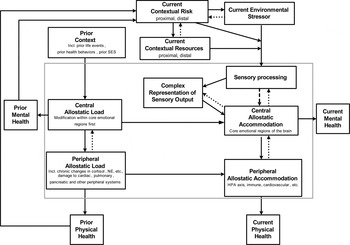
In sum, the primary model of the stress that we develop in the 2010 paper is shown in Figure 1. Starting on the right-hand side of the model, we show how the body senses current stressors, processes this information, with resulting effects on the core emotional systems of the brain (central allostatic accommodation), particularly in amygdala and extended amygdala (e.g., Armony & LeDoux, Reference Armony and LeDoux1997; Charney, Grillon, & Bremner, Reference Charney, Grillon and Bremner1998). This process, in turn, leads to alterations in peripheral systems through the executive and command functions of these central emotional systems (Panksepp, Reference Panksepp1998). Moving to the left at the top of the figure, there are two sources of input to the current stressor and its effect on sensory processing: both proximal and distal current contextual risks and resources. We do not discuss in detail our consideration of the contextual factors that produce changes in the allostatic process here, given that it is not central to the discussion of developmental timing, which is the focus of the current paper (but see Ganzel et al., Reference Ganzel, Morris and Wethington2010, for that discussion).
An allostatic model of response to a current stressor that highlights the brain as a dynamically adapting interface between ecological context and the biological self. This model shows the role of central and peripheral allostatic accommodation in predicting reported health. Dotted lines indicate active feedback. Interaction would be expected between allostatic load and major pathways of allostatic accommodation (not shown). Dashed arrow between perception and central allostatic accommodation to a current stressor (bypassing complex representation of sensory stimuli and possibly awareness) indicates that this pathway is currently under debate in the literature. Reprinted from “Allostasis and the Human Brain: Integrating Models of Stress From the Social and Life Sciences,” by B. Ganzel, P. Morris, and E. Wethington, Reference Ganzel, Morris and Wethington2010, Psychological Review, 117. Copyright 2010 by APA Press. Reprinted with permission.

The model also includes the accumulation of physiological “wear and tear” that arises from accommodation itself, termed allostatic load (McEwen & Stellar, Reference McEwen and Stellar1993). Under chronic and repeated exposure to stressors, the short-term gains of allostatic accommodation are reduced and its associated physiological adaptations become entrenched and automatic (Sterling & Eyer, Reference Sterling, Eyer, Fisher and Reason1988). Previous stressors have contributed to the need for allostatic accommodation, which, over time, can accumulate in the form of load. Acquisition of load affects the individual's ability to respond to a current stressor. In this way, the body carries with it the long-term results of prior experiences into its current responses to a stressful event. As such, we expand the allostatic model to consider the organism's current response to a stressful event. Although we discussed briefly how developmental stage might play a role in this model by increasing or decreasing the sensitivity of this allostatic process, we left a careful attention to developmental timing or stage to future research. This paper is the extension of that thinking.
Stress-Sensitive Periods in Human Neurodevelopment
The term stress-sensitive period describes a limited time span when the effects of stressor exposure are particularly strong (Knudsen, Reference Knudsen2004). The centrality of the brain in allostasis mandates the consideration of stress-sensitive periods in neurodevelopment. In this section, we discuss predictable variations in stress sensitivity during development, with a focus on the development of the core emotional regions of the brain and their neurochemical mediators and moderators. Again, the core emotional regions of the brain are of particular interest here because, together, they constitute the central mediator of allostasis and are thus a critical link between stress and health.
Windows of plasticity
The processes of development uniquely constrain physiological response, creating periods or windows of varying sensitivity to experience. The source of these windows has multiple environmental determinants (e.g., Levine, Reference Levine2000; Mead, Beauchaine, & Shannon, Reference Mead, Beauchaine and Shannon2010) and the windows themselves have multiple features (time course, timing, and level of analysis; Cicchetti & Curtis, Reference Cicchetti, Curtis, Cicchetti and Cohen2006). It has been argued that such windows arise because of system instabilities that are inherent in development or that arise in response to experience (Knudsen, Reference Knudsen2004). These have been likened to a temporary broadening of the “stability landscape” within a neural system that would otherwise be more heavily constrained and/or protected by innate programming, and thus less subject to change (Knudsen, Reference Knudsen2004; Waddington, Reference Waddington1957). Of interest to us here are those instabilities that result in increased plasticity in the stress response itself; in other words, in qualitative or quantitative changes in allostatic accommodation. This, in turn, will drive changes in all elements of the allostatic model that follow, including direct alterations in allostatic load and health. These, in turn, impact the nature of future contexts and stressors, future ability to engage allostasis in order to meet these challenges, and future health.
Windows of vulnerability
There are multiple points during brain development where these system instabilities may arise. At birth, the human brain has approximately 100 billion neurons. The central nervous system begins to form during the first few months of fetal development in humans (the first few weeks of gestation in rodents; Rice & Barrone, Reference Rice and Barone2000). Neurons develop from early precursor cells and proliferate outward following radial glial processes, undergoing differentiation, axogenesis, synaptogenesis, pruning, and mylenation in the process of forming the mature neural circuits that underlie normal physiological function and complex behavior (Caviness & Takahashi, Reference Caviness and Takahashi1995; Gumbinas, Oda, & Huttenlocher, Reference Gumbinas, Oda and Huttenlocher1974; Oda & Huttenlocher, Reference Oda and Huttenlocher1974). Windows of stressor sensitivity may arise because perturbations and/or insults to the brain are exacerbated during neural development, compared to perturbations/insults that occur before or after this window opened (Rice & Barone, Reference Rice and Barone2000). Likewise, insults that occur during development of the neurotransmitter and neurotrophin systems that protect neural function will also be exacerbated (Meade et al., 2010). Observed from other levels of analysis, stressor exposure may profoundly influence the development of experience-dependent neural circuitry (from early simple circuits to higher order neural networks; Knudsen, Reference Knudsen2004) and stress can become embedded into biology through epigenetic mechanisms that shape development (Champagne, Reference Champagne2010).
The increased plasticity that occurs during a stress-sensitive period is likely to produce adaptive accommodation under typical conditions (e.g., normal maternal care; Diorio & Meaney, Reference Diorio and Meaney2007). Conversely, accommodations made under atypical conditions are more likely to be adaptive in the short term, but maladaptive in the long term (for discussions, see Ganzel et al., Reference Ganzel, Morris and Wethington2010; McEwen, Reference McEwen2002). Extreme, negative experiences constitute “failure of the average expectable environment” (Cicchetti & Valentino, Reference Cicchetti, Valentino and Cohen2006). The additional plasticity inherent in development can heighten stress-related vulnerability, resulting in atypical physiological development and negative long-term health outcomes, as discussed below. Examples include the long-term physiological response to neglect or prolonged early separation (Levine, Reference Levine2000; Spinelli et al., Reference Spinelli, Chefer, Suomi, Higley, Barr and Stein2009; Tottenham et al., Reference Tottenham, Hare, Quinn, McCarry, Nurse and Gilhooly2009; Vazquez et al., Reference Vazquez, Bailey, Dent, Okimoto, Steffek and López2006), early maltreatment (Andersen et al. Reference Andersen, Tomada, Vincow, Valente, Polcari and Teicher2008; De Bellis, Baum, Birmaher, Keshavan, & Ryan, Reference De Bellis, Baum, Birmaher, Keshavan and Ryan1999; De Bellis et al., Reference De Bellis, Keshavan, Clark, Casey, Giedd and Boring1999), or high levels of chaos in early rearing environments (Coplan et al., Reference Coplan, Smith, Altemus, Scharf and Owens2001; Evans et al., Reference Evans, Kim, Ting, Tesher and Shannis2007; Taylor, Eisenberger, Saxbe, Lehman, & Lieberman, Reference Taylor, Eisenberger, Saxbe, Lehman and Lieberman2006).
There is an inverted U-shaped curve in the association between stressor exposure and adaptive health outcomes (for a review, see McEwen, Reference McEwen2002). At the peak of this curve, moderate amounts of stimulation and exercise are associated with enhanced neurogenesis (Rhodes et al., 2005), improved brain metabolism, and enhancements of neuronal architecture (e.g., increased dendritic arborization and synaptogenesis; Kempermann, Kuhn, & Gage, Reference Kempermann, Kuhn and Gage1998; Sirevaag & Greenough, Reference Sirevaag and Greenough1988), and improved executive function (Colcombe et al., Reference Colcombe, Kramer, Erickson, Scalf, McAuley and Cohen2003) and immune system function (Sapolsky, Romero, & Munck, Reference Sapolsky, Romero and Munck2000). However, when allostatic accommodation to a stressor is prolonged, repeated, and/or extreme, then allostatic load will increase (McEwen, Reference McEwen1998, Reference McEwen2000; McEwen & Stellar, Reference McEwen and Stellar1993). In addition, there is growing evidence that different types of stressors are processed through somewhat different neural pathways (Alleva & Santucci, Reference Alleva and Santucci2001; Pacak & Palkovits, Reference Pacak and Palkovits2001), so that the resulting allostatic load may differ in its nature and intensity. Past the “tipping point” in the inverted U-shaped curve, the adaptive benefit of allostatic accommodation begins to wane and allostatic load begins to accrue (Ganzel et al., Reference Ganzel, Morris and Wethington2010). This is the point at which a healthy challenge begins to take on the character and consequences of an unhealthy stressor. If the stressor continues or repeats, then the advantages of allostasis dwindle while the associated physiological costs mount. When stressors are extreme, this transition may happen quickly, producing load-related symptoms that may be severe or even lethal (Selye, Reference Selye1950, Reference Selye1956).
Allostatic Models of Developmental Stress Sensitivity
In considering the notion of developmental timing in allostasis, we note that there are strong implicit models that underlie current developmental stress research in both the social and life sciences. In the present paper, we set out to illustrate these models explicitly as we review the evidence for each one and discuss their implications and contributions to a developmental perspective on allostasis. The models discussed below are radically simplified in order to lay out theoretical “pivot points” in the construction of an allostatic model of the stress process that includes developmental timing.
“Early-Only” Allostasis: Allostasis Only During an Early Stress-Sensitive Period
Early-only allostasis
The primacy of early experience is perhaps the defining concept of developmental stress research. Most developmental models of stress in the social and life sciences include heightened stress sensitivity to early experience with varying levels of exclusivity (e.g., Diorio & Meaney, Reference Diorio and Meaney2007; McEwen, Reference McEwen1987; Loman & Gunnar, Reference Loman and Gunnar2010; Lupien McEwen, Gunnar, & Heim, Reference Lupien, McEwen, Gunnar and Heim2009).
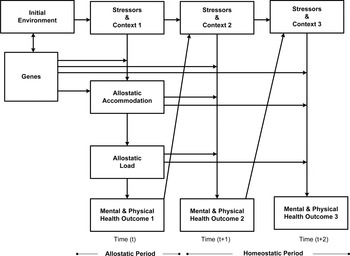
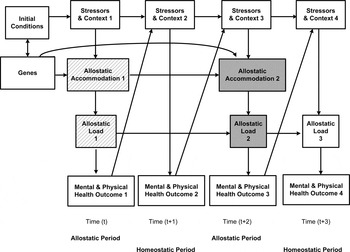
The early-only allostatic model of the stress process includes the exclusive primacy of stress sensitivity in early experience. Figure 2 illustrates our developmental allostatic model that represents this concept. The key feature of this model is an allostatic period in early development. In this period alone, the developing individual is open to achieving “stability through change” (allostatic accommodation) when confronted with a significant stressor, which may result in an increase in allostatic load.
Early-only allostasis. Stress-related changes in homeostatic set points (allostatic accommodation) and stress-related “wear and tear” (allostatic load) only occur early in life during a circumscribed allostatic period, and not thereafter. Homeostasis (the straight vertical arrow in times [t + 1] and [t + 2]) best describes physiological response to a current stressor after this period and across the rest of the life span. Genes, early allostatic accommodation, and allostatic load moderate the biological stress response throughout the life span. Arrows indicating these processes are implied in subsequent models (Figures 4–6) but are not explicitly included.

In this model, allostatic accommodation and accrual of load are confined to this one developmental period. After this window closes, this temporary plasticity (and associated vulnerability) in physiology ends and stressor exposure will no longer engender allostasis or associated increases in allostatic load. With the termination of this allostatic period, homeostatic set points become inflexible and allostasis devolves into homeostasis for the remainder of the life span.
As depicted here, early-only allostasis influences stress physiology and health across the life span in two ways. Physiological changes due to early-only allostatic accommodation and load will moderate future stress physiology, with long-term impacts on mental and physical health (e.g., Hanson & Chen, Reference Hanson and Chen2010). In addition, early-only allostasis will impact early health, which in turn will influence subsequent social context and stressor exposure.
Early stress sensitivity in neural circuits
One possible format for early-only neural plasticity is the emergence of experience-expectant sensitive periods during the development of certain neural circuits, which can serve to organize physiology and complex behavior (Greenough, Black, & Wallace, Reference Greenough, Black and Wallace1987). Well-known examples include ocular representation in the cortex (e.g., Hubel & Wiesel, Reference Hubel and Wiesle1977), imprinting (e.g., Bolhuis & Honey, Reference Bolhuis and Honey1998), and song learning in birds (e.g., Doupe, Reference Doupe1997). The concept may be applied to (re)organization of the stress response during a rat pup's first postnatal week of life, described below. We will use this as an example of “early” allostasis.
Sensitive periods of this type are properties of neural circuit development, with higher level circuits being supported by earlier developing simpler circuits (Knudsen, Reference Knudsen2004). In order for this type of sensitive-period window to open, the circuit must be well enough established so that it can be influenced as a whole. Thus, the neural circuit must be mature enough and interconnected enough to function reliably, and the circuit must have the active capacity to be plastic (i.e., to change the structure and strength of neuronal connectivity in the circuit; Knudsen, Reference Knudsen2004). Certain experiences that are specific to the circuit can engender intense neuronal firing that, in turn, drives molecular cascades that promote plasticity in the circuit (including synapse formation, axon and synapse elimination, and synapse consolidation; e.g., Zhou, Tao, & Poo, Reference Zhou, Tao and Poo2003). Experiences that occur within the sensitive period window can powerfully shape the circuit to suit the demands of the individual's environment; this flexibility decreases dramatically when the window closes, although low levels of plasticity are maintained in some mature circuits (Brainard & Knudsen, Reference Brainard and Knudsen1998).
Animal models of early stress-sensitive periods
There is clear evidence for sensitive periods in the stress response during the perinatal period in rodent models (for reviews, see Chapillon, Patin, Roy, Vincent, & Caston, Reference Chapillon, Patin, Roy, Vincent and Caston2002; Matthews, Reference Matthews2002). The best explicated of these is a window of sensitivity in the first week of a rat pup's postnatal life, in which the maturing stress response of the rat pup is hyporeactive, with low basal levels of glucocorticoidsFootnote 2 and low levels of glucocorticoid response to stimulation (termed the stress hyporeactive period; De Kloet, Rosenfeld, Van Eekelen, Sutanto, & Levine, Reference De Kloet, Rosenfeld, Van Eekelen, Sutanto and Levine1988). During this period, gradients in level of maternal care (e.g., LGABN of pups) are observed to cause changes in offspring stress physiology and behavior that extend into adulthood (for reviews, see Diorio & Meaney, Reference Diorio and Meaney2007; Levine, Reference Levine2000). For example, rat pups who receive high levels of LGABN from their mothers during the first postnatal week grow up to show lower HPA axis response and less fear of novelty as adults, relative to adult pups of low LGABN mothers (e.g., Caldji, Diorio, & Meaney, Reference Diorio and Meaney2007; Liu et al., Reference Liu, Diorio, Tannenbaum, Caldji, Francis and Freedman1997).Footnote 3 If the mother is separated from her pups for too long (12–24 hr), her caregiving becomes disrupted and LGABN decreases. Notably, these effects can be eliminated by direct pharmacological downregulation of hippocampal glucocorticoid receptor levels in the offspring (Meaney, Aitken, Viau, Sharma, & Sarrieau, Reference Meaney, Aitken, Viau and Sarrieau1989), indicating a mediating role for glucocorticoid receptor activity in the association between maternal care and offspring stress response. Although low-LGABN mothers are more fearful and have more reactive HPA axis responses (and the converse is true for high-LGABN mothers), the distinct biobehavioral traits of their pups are not a function of genomic inheritance. When the offspring of low-LGABN mothers are fostered by high-LGABN mothers, they are less fearful as adults and show lower HPA response; the opposite is true when pups of high- LGABN mothers are fostered by low-LGABN dams (Francis, Diorio, Liu, & Meaney, 1989). Together, these data provide compelling evidence that, in rodents, early maternal care within a narrow developmental window is responsible for organizing lasting differences in the offspring's stress response.
Weaver and colleagues (Reference Weaver, Cervoni, Champagne, D'Alessio, Sharma and Seckl2004) have shown that these effects carry forward to the next generation through epigenetic processes. In other words, environmental conditions (in this case maternal behavior in the form of LGABN) are “remembered” in terms of their behavioral and physiological responses in the next, subsequent, generation, through the regulation of gene expression (rather than by changes in DNA sequence; Harper, Reference Harper2005). In the case of rat pups, the DNA methylation patterns of the exon 17 glucocorticoid receptor promotor is affected by maternal care. These stable alterations in the methylation of this glucocorticoid receptor gene affect the hippocampus' ability to regulate glucocorticoid negative feedback on the HPA axis, which produce the increases in HPA axis response discussed above, for pups who experience low-LGABN maternal care (Weaver et al., Reference Weaver, Cervoni, Champagne, D'Alessio, Sharma and Seckl2004). Notably, severe food shortages during pregnancy (only) have been shown to have similar lasting effects on later health (physical growth; Susser & Stein, Reference Susser and Stein1994), suggesting that parallel processes may take place among humans. In this way, epigenetics serves as the process by which early experiences carry forward to bring lasting modifications in the individuals' response to stressors at later points in development, consistent with the model we present in Figure 2.
Early stress sensitivity in humans
There is evidence for a human homologueFootnote 4 of the rodent stress-hyporesponsive period (for reviews, see Gunnar & Cheatham, Reference Gunnar and Cheatham2003; Loman & Gunnar, Reference Loman and Gunnar2010). This phenomenon emerges in the first 6 months of human infancy and extends through the first 18 months (Gunnar & Cheatham, Reference Gunnar and Cheatham2003), with further evidence that the human HPA axis is still undergoing development at age three (Watamura, Donzella, Kertes, & Gunnar, Reference Watamura, Donzella, Kertes and Gunnar2004) and possibly later (Gunnar & Donzella, Reference Gunnar and Donzella2002). In parallel with the rodent studies discussed above, young children's basal cortisol levels and HPA reactivity vary as a function of responsive caregiving, as observed in the laboratory, at home, in day care settings, and through measurements of parent–child attachment (Fernald, Burke, & Gunnar, Reference Fernald, Burke and Gunnar2008; Gunnar & Donzella, Reference Gunnar and Donzella2002). Chronic unresponsive caregiving during early childhood has been associated with flattening of the expected daytime rhythm of cortisol production (lower morning and higher evening cortisol levels; e.g., Carlson & Earls, Reference Carlson and Earls1997) and children under the age of five appear to be significantly more vulnerable to chronic disruptions in caregiving than children in middle childhood (5–9 years old; e.g., Dettling, Gunnar, & Donzella, Reference Dettling, Gunnar and Donzella1999). This parallels findings in studies of abused children, which observe that children who are maltreated when they are younger than 5 years old are more likely to develop depression and anxiety in subsequent years, relative to children whose maltreatment started after preschool (Kaplow & Widom, Reference Kaplow and Widom2007). This effect is particularly strong in children experiencing early sexual or physical abuse, and those with high levels of symptoms show flattening of the expected diurnal curve of cortisol production, relative to children who are abused after the age of five (Cicchetti, Rogosch, Gunnar, & Toth, Reference Cicchetti, Rogosch, Gunnar and Toth2010).
It has been suggested that adverse childcare (e.g., abuse and neglect) occurring in early childhood are more damaging because this early period is a time of rapid development in the neural systems underlying emotion processing (e.g., Tottenham & Sheridan, Reference Tottenham and Sheridan2010). A compounding factor is the heightened social dependency of the younger child, which may make such experiences more overwhelming (Cicchetti et al., Reference Cicchetti, Rogosch, Gunnar and Toth2010). An early-only allostatic model effectively captures these critical elements of developmental timing in stress process. Indeed, early-only models are implicit in much of stress research in the social and life sciences. Although few stress researchers explicitly adhere to exclusive critical-period models, we note that much of developmental stress research focuses on early-life stressor exposure to the exclusion of studying effects of stress in other developmental periods (although see Andersen & Teicher, Reference Andersen and Teicher2008; Lupien et al., Reference Lupien, McEwen, Gunnar and Heim2009).
Early-Only Allostasis With Accumulating Allostatic Load
Accumulating load over the life span
In prior work, we proposed that allostatic load derives from change in allostatic accommodation:
The concept of allostatic accommodation is fundamentally related to allostatic load, but distinct. To use an analogy from physics, just as acceleration results from a change in velocity, so does allostatic load result from the physiological change required to respond and adapt to a stressor (allostatic accommodation). Under allostasis, there is no load without accommodation (Ganzel et al., Reference Ganzel, Morris and Wethington2010, p. 149).
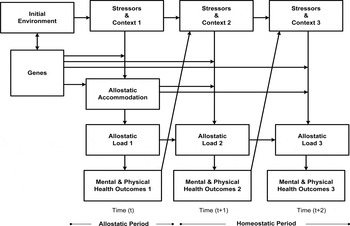
This is the simplest form of the association between accommodation and load, and we are aware of no evidence to the contrary. However, it is also possible that ongoing homeostasis will increase allostatic load in the absence of changing allostatic accommodation. In this case, allostatic load will be the sum of the physiological wear and tear resulting from both allostatic accommodation and from traditional homeostasis (i.e., from physiological response to stress with no change in set points). Under these conditions, the early-only developmental allostatic model would be represented by Figure 3. Here, resetting of homeostatic set points occurs exclusively in an early-only allostatic period. After that, however, the brain and body will continue to accumulate allostatic load despite the absence of ongoing physiological adaptation to meet environmental demand. In this model, stressors that occur during the early-only allostatic period have cascading effects on stress physiology and health across the life span by influencing the quality and/or quantity of ongoing accrual (“snowballing”) of allostatic load. This is over and above the longitudinal effects of early stressor exposure from early-only allostasis, making the overall impact of the present model more severe than the prior model.
Early-only allostasis with accumulating allostatic load. Allostatic accommodation only occurs early in life during a circumscribed “allostatic period” and not thereafter. Homeostasis (the straight vertical arrow) best describes physiological response to a current stressor after this period. Allostatic load continues to accrue across the life span. As in Figure 2, genes, early allostatic accommodation, and allostatic load moderate the biological stress response throughout the life span. Arrows indicating these processes are implied in subsequent models (Figures 4–6) but are not explicitly included.

These models are quantitatively distinguishable from one another, and each has different implications for intervention. In our first model (early-only allostasis), only early life stress would be expected to influence biomarkers of load and health. In this case, best practice for health-related policy and intervention would be to focus on countering early stress and its earliest health consequences. Our second model (early-only allostasis with accumulating load), predicts a main effect of accumulated lifetime stressor exposure on biomarkers of load and on health. This main effect of lifetime stressor exposure is moderated by early life stress, thus preserving the unique influence of early life stress in the second model. In this case, a life span approach to intervention would reduce the aggregated health costs of allostatic load, although early intervention would also play a unique role in improving health and well-being.
Research examining effects of socioeconomic status (SES) at different stages of the life course on health provides examples of both models (e.g., Pollitt, Rose, & Kaufman, Reference Pollitt, Rose and Kaufman2005). For example, “latent effects” life course models propose that there are strong “sensitive period” effects of early childhood SES on health across the life span (e.g., Power & Hertzman, Reference Power and Hertzman1997). Conversely, “accumulation of risk” models emphasize that the physiological and psychosocial impact of stressors and contextual risks/resources accumulate across the life span to impact health and mortality (e.g., Ben-Shlomo & Kuh, Reference Ben-Shlomo and Kuh2002). Both our strong early-only allostatic model (Figure 2) and the modified early-only model with accumulating load (Figure 3) could be characterized as “latent effects” models. However, the additive nature of allostatic load in the second model would add a strong life span component to this model.
Is there evidence to support either model? Research evidence of a significant independent contribution of early low SES to all-cause mortality in adulthood (e.g., Galobardes, Davey Smith, Jeffreys, & McCarron, Reference Galobardes, Davey Smith, Jeffreys and McCarron2006) could be seen as support for an early-only component of allostasis.Footnote 5 This support is strengthened by neuroimaging research identifying an independent effect of perceived early SES on amygdala reactivity to standardized stimuli (emotional faces; Gianaros et al., Reference Gianaros, Horenstein, Hariri, Sheu, Manuck and Matthews2008), even when adult perceived SES is controlled. On the other hand, there is also evidence for independent neural effects of chronic stress in healthy adults (effects include decreased gray matter volume in the hippocampus; Gianaros et al., Reference Gianaros, Jennings, Sheu, Greer, Kuller and Matthews2007). Further, epidemiological meta-analyses find consistent support for a lifecourse “accumulation of risk” model when considering the impact of low SES on adult mortality from specific causes, such as coronary heart disease and obstructive pulmonary disease (e.g., Pollitt et al., Reference Pollitt, Rose and Kaufman2005). Together, these data suggest the need to consider an expanded role of developmental timing in our allostatic model, above and beyond the presence of an allostatic period in early development.
Unmodulated Allostasis
Allostatic accommodation across the life span
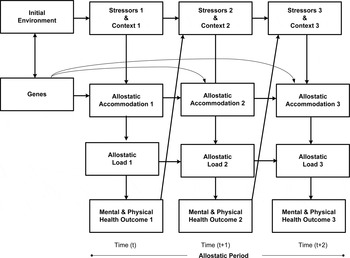
Our model of unmodulated allostasis includes ongoing allostatic accommodation to current stressors as well as ongoing accumulation of allostatic load. In Figure 4, these processes are illustrated as occurring uniformly across the life span, with no effect of developmental timing. This is similar to a model of ongoing allostasis that we presented in an earlier paper (Ganzel et al., Reference Ganzel, Morris and Wethington2010). We present it again here as something of a “straw man,” in that it illustrates an important step away from early-only models of allostasis but it clearly lacks consideration of the role of developmental timing. This model was stimulated by the accumulating evidence for long-term effects of stress on the brains of healthy adult animals and humans (e.g., Cerqeria, Mailliet, Almeida, Jay, & Sousa, Reference Cerqueira, Mailliet, Almeida, Jay and Sousa2007; Ganzel et al., Reference Ganzel, Casey, Glover, Voss and Temple2007, Reference Ganzel, Kim, Glover and Temple2008; Gianaros et al., Reference Gianaros, Jennings, Sheu, Greer, Kuller and Matthews2007, Reference Gianaros, Horenstein, Hariri, Sheu, Manuck and Matthews2008; McEwen, Reference McEwen2005; Mitra, Jadhav, McEwen, & Chattarji, Reference Mitra, Jadhav, McEwen and Chattarji2005; Vyas, Mitra, Shankaranarayana Rao, & Chattarji, Reference Vyas, Mitra, Shankaranarayana Rao and Chattarji2002). Because these effects are observed in healthy individuals, the stress-related differences in neural structure and function cannot be attributed to pathology but instead are likely to constitute the normal consequences of stressor exposure.
Unmodulated allostasis. Ongoing allostatic accommodation to current stressors and ongoing accumulation of allostatic load occurs uniformly across the life span, with no effect of developmental timing.

Allostatic accommodation and load in healthy adults
As discussed above, the amygdala, hippocampus, and prefrontal cortex (PFC) are critical elements of allostatic accommodation to a current stressor and are thus the first and most likely sites to accumulate allostatic load in the brain. For example, healthy adult rodents exposed to relatively intense single-event stressors show increases in amygdala spine density (Mitra et al., Reference Mitra, Jadhav, McEwen and Chattarji2005) and persistent amygdala hyperexcitability, which renders the amygdala and related structures more easily activated later (Adamec, Blundell, & Burton, Reference Adamec, Blundell and Burton2005; Maier & Watkins, Reference Maier and Watkins1998; Rosen & Schulkin, Reference Rosen and Schulkin1998). Subsequent amygdala hyperreactivity does not require the original triggering stimulus (it can be stimulated by mild or ambiguous stressors) and is accompanied by heightened anxiety-like behavior (Adamec et al., Reference Adamec, Blundell and Burton2005; Mitra et al., Reference Mitra, Jadhav, McEwen and Chattarji2005; Rosen & Schulkin, Reference Rosen and Schulkin1998).
Parallel examples in humans may include single-event trauma exposure, which has been associated with long-term increases in cardiovascular reactivity (Tucker et al., Reference Tucker, Pfefferbaum, North, Kent, Burgin and Parker2007) and amygdala reactivity to trauma reminders (Sharot, Martorella, Delgado, & Phelps, Reference Sharot, Martorella, Delgado and Phelps2007), as well as to standardized emotional stimuli (emotional faces; Ganzel et al., Reference Ganzel, Casey, Glover, Voss and Temple2007, Reference Ganzel, Kim, Glover and Temple2008). In animals and humans, this increased sensitization of the neural circuitry underlying anxiety and fear is arguably a biomarker of central allostatic accommodation to environmental challenge. Ongoing amygdala hyperreactivity in turn may drive decreases in gray matter volume (e.g., Ganzel et al., Reference Ganzel, Kim, Glover and Temple2008) and increased cell death resulting from excitatory neurotoxicity (McEwen, Reference McEwen2003), which bear investigation as potential biomarkers of allostatic load).
Chronic or repeated stress intensifies these effects in animal models, such that chronically stressed adult rats develop persistent increases in amygdala dendritic arborization and spine density that are accompanied by increased anxiety-like behavior (Vyas et al., Reference Vyas, Mitra, Shankaranarayana Rao and Chattarji2002). Chronic stress also increases glucocorticoid levels, which cause gray matter loss in PFC and hippocampus in rodents (e.g., Bremner et al., Reference Bremner, Randall, Scott, Bronen, Seibyl and Southwick1995; Cerqueria et al., Reference Cerqueira, Pego, Taipa, Bessa, Almeida and Sousa2005; Gurvits et al., Reference Gurvits, Shenton, Hokama, Ohta, Lasko and Gilbertson1996; Sapolsky, Reference Sapolsky1984; Sapolsky, Krew, & McEwen, Reference Sapolsky, Krew and McEwen1986; Uno, Tarara, Else, Suleman, & Sapolsky, Reference Uno, Tarara, Else, Suleman and Sapolsky1989) and cognitive deficits (Cerqueria et al., 2005, 2007). Stress-related changes are observed in other neural systems as well, including decreased neurogenesis (Gould, McEwen, Tanapat, Galea, & Fuchs, Reference Gould, McEwen, Tanapat, Galea and Fuchs1997) and chronic alterations in the neurohormones and neurotransmitters that have regulatory roles in the core emotional systems of the brain (e.g., Albeck et al., Reference Albeck, McKittrick, Blanchard, Blanchard, Nikulina and McEwen1997). Some of these effects are reversible with rest (e.g., alterations in neurogenesis Gould et al., Reference Gould, McEwen, Tanapat, Galea and Fuchs1997), medial PFC function (Liston, McEwen, & Casey, Reference Liston, McEwen and Casey2009) and hippocampal structure (Vyas et al., Reference Vyas, Mitra, Shankaranarayana Rao and Chattarji2002), which may reflect a heartening elasticity in at least some neural systems in the adult brain.
Although the literature examining the effects of stress on the brains of healthy adult humans remains limited, current findings in humans parallel the animal research. For example, in prospective studies of chronic stress in humans, adults show dysregulation in medial PFC function and impairments in long-range neural connectivity across the brain (Liston et al., Reference Liston, McEwen and Casey2009). Decreases in gray matter volume in hippocampus and orbitofrontal cortex have also been observed in women reporting increased chronic stress across a 20-year period, relative to women with lower levels of chronic stress (Gianaros et al., Reference Gianaros, Jennings, Sheu, Greer, Kuller and Matthews2007). Because biological and behavioral indicators of allostatic accommodation and load are observable across development—including in adults—this suggests that allostasis is not limited to a developmental sensitive period. This supports a more general application of the allostatic model. It also raises the question, “what is different about allostasis in early development?”
Modulated Allostasis
Including developmental timing in allostasis
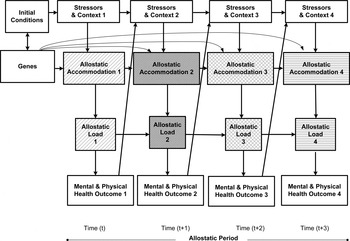
Our fourth model (modulated allostasis) also includes ongoing allostatic accommodation to current stressors and ongoing accumulation of allostatic load, but here these processes are modulated by developmental timing. As discussed for the models above, there is considerable evidence that stressor exposure during a stress-sensitive time period can have reverberating consequences for the magnitude, duration, and intensity of the stress response across the life span (also see Caldji et al., Reference Caldji, Diorio and Meaney2000; Pryce et al., Reference Pryce, Ruedi-Bettschen, Dettling, Weston, Russig and Ferger2005; Sanchez, Ladd, & Plotsky, Reference Sanchez, Ladd and Plotsky2001). Under modulated allostasis, the stress response itself is different within these time windows and thus produces different stress-related physiological and behavioral outcomes. In the language of allostasis, there are certain points in development in which the mechanisms of allostatic accommodation are uniquely constrained or expanded, or qualitatively changed. These changes may be temporary (a window) or long term (a stage). A stressor that occurs during this time period will create a qualitatively or quantitatively different pattern of physiological wear and tear than a stressor that occurs before this window opened or this stage began. In aggregate, this constellation of large and small physiological insults that comprise the additional allostatic load from this stressor will be unique to this stressor and to this developmental time period, with distinctive long-term consequences for mental and physical health.
In Figure 5, the different patterns at each time period in the model represent qualitative or quantitative differences in the physiological processes of allostatic accommodation and acquisition of load that may arise as the result of developmental timing. These differences across time are created by periods of varying stress sensitivity. The source of these stress-sensitive periods is the development (and then senescence) of the core emotional systems of the brain, the stress-sensitive peripheral systems, and the processes of plasticity themselves (e.g., neurogenesis, synaptogenesis, dendritic arborization, epigenesis; e.g., Champagne, Reference Champagne2010; Lupien et al., Reference Lupien, McEwen, Gunnar and Heim2009).
Modulated allostasis. Allostatic accommodation and accumulation of allostatic load vary as a function of changing stress sensitivity across development. The different patterns at each time period in the model represent qualitative and/or quantitative differences in the physiological processes of accommodation and acquisition of load that arise as the result of these variations. This is our most general model of allostasis across development. Figure 6 shows the relative timing of some of these modulating processes.

Stress sensitivity: A region by timing interaction
Earlier, we discussed windows of stress sensitivity that might arise out of the development of complex neural circuits. Another type of sensitive period can arise because perturbations and/or insults to the brain are exacerbated during neural development, compared to insults that occur before or after development is complete (Rice & Barone, Reference Rice and Barone2000). The processes of neural development—from cell proliferation, through migration and differentiation, to the generation of axons, synapses, and finally myelin—create system instabilities that render the developing brain vulnerable to perturbation (Knudsen, Reference Knudsen2004). Stress-related perturbations or outright insults that occur during these developmental windows are more likely disturb brain structure and function than are system challenges that occur at any other time (Rice & Barone, Reference Rice and Barone2000). Although all neurons develop through the same stages, different brain regions develop according to different time tables. In rodents, for example, development may be concluded in amygdala, yet still be ongoing in the hippocampal dentate gyrus (Bayer, Altman, Russo, & Zhang, Reference Bayer, Altman, Russo and Zhang1993; note that the reverse is true for humans; Lupien et al., Reference Lupien, McEwen, Gunnar and Heim2009). Thus, the developmental timing of an insult influences which brain regions are affected (those undergoing developmental change at the time of insult will be most vulnerable to change) and how they are affected (timing will also influence the specific development process and/or brain region that is being perturbed).
This is illustrated in neuroimaging data suggesting that there are different long-term effects of repeated childhood sexual abuse (CSA) on brain structure depending on when the abuse occurred (Andersen et al., Reference Andersen, Tomada, Vincow, Valente, Polcari and Teicher2008). A comparison of regional gray matter volume in young women with and without a history of CSA found that women who were abused between 3 and 5 years of age had the greatest reductions in hippocampal volume, relative to nonabused women and the other women with CSA. Women with CSA between 11 and 13 years of age also had significantly smaller hippocampal volumes, but the effect was not as strong as among the women with preschool CSA. By contrast, CSA between the ages of 9 and 10 was associated with reduced size of the frontmost portion of the corpus callosum (the white matter conveying information between the two hemispheres of the brain) and CSA between the ages of 14 and 16 was associated with reduced volume of the PFC. Notably, the current mental health of the young women with CSA also varied as a function of the developmental timing of their abuse. Current symptoms of depression were associated with CSA during early childhood (preschool years) and current symptoms of posttraumatic stress disorder were associated with abuse between the ages of 9 and 10 (for a discussion, see Andersen & Teicher, Reference Andersen and Teicher2008). There is a substantial body of research that examines the impact of early stress on brain structure and function, and the relationship of these systems to health and behavior. It is becoming clear, however, that there is a further need to articulate the role of developmental timing in studies of the effects of stress on brain, behavior, and health.
Sources of ongoing neuroplasticity
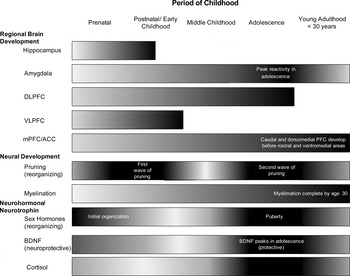
Figure 6 provides examples of the developmental time course of brain areas and processes that are likely to play a role in allostatic accommodation. These include, but are not limited to, differing developmental trajectories within the core emotional systems of the brain. For example, the human hippocampus is largely mature at birth and continues development through early childhood (Loman & Gunnar, Reference Loman and Gunnar2010). There is very little overall developmental change observed in this structure between the ages of 4 and 25 years (Gogtay et al., Reference Gogtay, Nugent, Herman, Ordonez, Greenstein and Hayashi2006). Conversely, the human amygdala continues to develop until at least young adulthood (Giedd et al., Reference Giedd, Snell, Lange, Rajapakse, Casey and Kozuch1996) and the central nucleus of the amygdala may continue to mature across much of the life span. Development in the frontal cortex is region specific, such that maturation starts in the motor area (just forward of the central sulcus) and the frontal pole (the frontmost part of the PFC) and ends with maturation of the dorsolateral PFC (DLPFC) in late adolescence or early adulthood (Gogtay et al., Reference Gogtay, Giedd, Lusk, Hayashi, Greenstein and Vaituzis2004). The DLPFC is a high-level association area that plays a critical role in planning, executive function and emotion regulation; Giedd, Reference Giedd2004).
Some contributors to ongoing plasticity in the developing brain. Darker areas indicate periods in which developmental timing is likely to increase the impact of experience on each specific brain region, process (pruning or myelination), or neurohormone/neurotrophin system. In cases where there is limited information from middle childhood (ages 5–9 years), we have interpolated smoothly between values from infancy and adolescence. DLPFC, dorsolateral prefrontal cortex; VLPFC, ventrolateral prefrontal cortex; mPFC, medial prefrontal cortex; ACC, anterior cingulate cortex; BDNF, brain-derived neurotrophic factor.

Overall, gray matter volume in the human PFC is thickest around age 10 in girls and around age 12 in boys and then declines across the life span (Giedd, Reference Giedd2004; Westlye et al., Reference Westlye, Walhovd, Dale, Bjørnerud, Due-Tønnessen and Engvig2010b). Decreases in gray matter thickness are associated with synaptic pruning in early childhood (approximately age three) and again during later adolescence (17–19 years old; e.g., Gogtay et al., Reference Gogtay, Giedd, Lusk, Hayashi, Greenstein and Vaituzis2004; Rakic, Bourgeois, & Goldman-Rakic, Reference Rakic, Bourgeois and Goldman-Rakic1994). This is hypothesized to be “streamlining” of the neural circuitry of the brain to best fit the individual to her environment and it is a time when experience may have profound long-term effects on shaping brain structure and function. During pruning, the neurons themselves are preserved but neural connections (synapses and dendrites) that are less often used are eliminated, leaving a more efficient circuit (for a discussion, see Paus, Keshavan, & Giedd, Reference Giedd2004). Brain areas associated with complex cognition, such as dorsolateral PFC and the superior temporal gyrus, are the latest to mature and the last to show the cortical gray matter thinning associated with pruning (Giedd, Reference Giedd2004). Although most developmental studies of gray matter maturation do not include adults beyond the age of 25 years, a recent large study of gray matter change across the life span suggests that the lifetime peak of gray matter maturation may be close to age 50 (Westlye et al., Reference Westlye, Walhovd, Dale, Bjørnerud, Due-Tønnessen and Engvig2010b).
Development of white matter in the brain reflects the maturation of myelin, a fatty insulation around axonal processes that speeds up the transmission of information between neurons up to 100 times that between unmyelinated neurons (Giedd, Reference Giedd2004). Speed of processing will influence neural connectivity, which is thought to be associated with increased ability for complex cognition (Giedd et al., 2006). A number of white matter tracts continue to show an increase in integrity (a marker of white matter maturity) until approximately age 30 (Giedd et al., 2006). The latest maturing of these include specific white matter tracts (the uncinate fasciculus and the dorsal and hippocampal cingulum bundles) that are thought to be critical to emotion regulation and mature decision making because they connect the core emotional regions of the brain with the PFC and anterior cingulate, which underlie planning, executive function, and behavioral inhibition (Westlye et al., Reference Westlye, Walhovd, Dale, Bjørnerud, Due-Tønnesse and Engvig2010a). Although all specific white matter tracts are largely mature by age 30, overall white matter volume does not peak for another 20 years, around age 50 (Westlye et al., Reference Westlye, Walhovd, Dale, Bjørnerud, Due-Tønnesse and Engvig2010a).
Adolescence and beyond
Earlier, in the context of introducing the model of “early only” allostasis, we discussed the properties of windows of stress sensitivity for neural circuits. Notably, the closing of a sensitive-period window for an experience-dependent neural circuit does not necessarily mean that change is impossible. Using the “stability landscape” model of neural sensitive periods, neural circuits have patterns of connectivity that are genetically preferred and thus require the least energy to accomplish (Knudsen, Reference Knudsen2004). Atypical experiences during sensitive periods can drive circuits into alternate patterns of connectivity and, if the atypical experience continues, these can become entrenched as the lower energy alternative (Knudsen, Reference Knudsen2004). However, there is evidence that robust genetically preferred circuit configurations maintain a “low spot” on the stability landscape, and these patterns can be established as a stable alternative to the atypical pattern after the end of the sensitive period (e.g., Brainard & Knudsen, Reference Brainard and Knudsen1998). This discussion is analogous of Waddington's (Reference Waddington1957) epigenetic landscape and “attractor” states; however, there is the additional suggestion of “genetically preferred” optimal states, irrespective of history (see also Cicchetti & Tucker's [Reference Cicchetti and Tucker1994] discussion of the individual as a self-organizing system).
The brain is organized in multiple parallel pathways of information processing, making it less likely that irrevocable change in a given circuit will lead to irrevocable change in complex behavior. In addition, even irrevocable change within one circuit may be compensated by changes in other circuits that may have later windows of sensitivity (Knudsen, Reference Knudsen2004). This concept has application to the well-studied stress-sensitive period during the first week of a rat pup's life. As we discussed above, decreased maternal care (LGABN) during the week of a rat pup's postnatal life causes decreased synaptogenesis in the hippocampus in adulthood, along with decreases in cognition and increased HPA axis reactivity, compared to pups of high-LGABN mothers. However, laboratory studies demonstrate that many of these deficits can be reversed by providing the pups of low-LGABN mothers with enriched environments during the periadolescent period (postnatal days 22–70; Bredy, Diorio, Grant, Chanpagne, & Meaney, Reference Bredy, Diorio, Grant, Chanpagne and Meaney2003; Bredy, Zhang, Grant, Diorio & Meaney, Reference Bredy, Zhang, Grant, Diorio and Meaney2004). In these studies, environmental enrichment consisted of placement in peer groups in large cages (eight per cage) that had interconnected tunnel systems and lots of toys that were replaced often. Standard laboratory conditions consisted of being housed in a smaller cage with a single peer and no toys. Under these conditions, environmental enrichment reversed the impact of low-LGABN maternal care on learning and memory performance on the Morris water maze task (a task that requires hippocampal-dependent learning) and on the encoding of glutamate receptor genes that contribute to hippocampal-dependent learning. The effect was observed only in the pups of low-LGABN mothers; environmental enrichment appeared to have no effect on the physiology or behavior of pups of high-LGABN mothers (Bredy et al., Reference Bredy, Zhang, Grant, Diorio and Meaney2004. In addition, periadolescent environmental enrichment attenuates many of the neural and behavioral consequences of prenatal stress (Koo et al., Reference Koo, Park, Choi, Kim, Kim and Choe2003), postnatal extended maternal separation (Lu et al., Reference Lu, Bao, Chen, Xia, Fan and Zhang2003), and early lead exposure (Guilarte, Toscano, McGlothan, & Weaver, Reference Guilarte, Toscano, McGlothan and Weaver2003), which vary in sequelae relative to the consequences of adverse maternal care discussed here.
Epigenetics across development
As noted earlier, epigenetic processes may help to explain how early experiences “carry forward” into later developmental experiences and outcomes. In addition, Champagne (Reference Champagne2010) argues that indeed ongoing plasticity is possible in later life stages through changes in the epigenome. Her work shows that pharmacological treatments can reverse the effects of both positive and negative maternal care, both in terms of methylation of hippocampal GR methylation and the behavioral response to stress (Weaver et al., Reference Weaver, Cervoni, Champagne, D'Alessio, Sharma and Seckl2004). The same kind of effects can be observed from conditioning studies, as well, such that fear conditioning has effects on DNA methylation and subsequent changes in gene expression. These findings have clear relevance to our model, in showing how new epigenetic process may “undo” prior epigenetic effects on allostatic accommodation—hence ongoing (and different) accommodation during later stages of development.
Extreme Variation
Episodic minima in allostasis
In the previous section, we presented our most general model of allostasis across development. In this model, qualitatively or quantitatively different processes of allostatic accommodation/allostatic loading may occur during different development periods. Extrapolating to an extreme, there may be one or more developmental periods in which variation in allostatic accommodation approaches zero and homeostatic set points become constrained (Figure 7). This would result in a quasihomeostatic period, a time-limited versions of the homeostatic periods in Figures 2 and 3.
Hypothetical example: modulated allostasis with stress-resistant periods. Here variation in allostatic accommodation approaches zero during middle childhood (5–7 years old) and middle adulthood (40–50 years old), so that there are quasihomeostatic periods interspersed within a general background of allostasis.

There are two forms this could take. In one case, the organism is so depleted that there is no energy left with which to fuel allostatic accommodation (this may be akin to Hans Selye's “exhaustion phase” of his general adaptation syndrome; Selye, Reference Selye1956). In this case, if there is no relief, the organism decompensates and dies. This phenomenon was well explored by Selye and we will not discuss it further here (see Selye, Reference Selye1950, Reference Selye1956).
In the second case, the organism is sufficiently robust in the face of challenge that long-term adjustments in physiology are unnecessary. This would be a period of relative resilience. Here, the organism possesses a decreased sensitivity to insult in which the mechanisms of central and peripheral allostatic accommodation would be much less likely to be engaged than in earlier or later points in development. We offer middle childhood (the period from about 5 to 9 years of age) and middle adulthood (the period from about 40–50 years of ageFootnote 6) as candidate periods for decreased sensitivity to stress, relative to the rest of childhood and adolescence. Middle childhood is a relatively unstudied period in human development (Huston & Ripke, Reference Hudson and Ripke2006) that appears to escape many of the more obvious windows of biological stress sensitivity (see Figure 6). It is a developmental period notable more for its absence in the stress literature than for its presence. Take, for example, the study by Andersen and colleagues (Reference Andersen and Teicher2008), detailed above, in which child sexual abuse between ages 6 and 9 had no specific associations with decreases in regional gray matter volume or symptoms. In the Kaplow and Widom (Reference Kaplow and Widom2007) study, children who were maltreated after the age of 5 were less likely to develop later symptoms of anxiety and depression than their younger peers. Likewise, in the Cicchetti and colleagues (Reference Cicchetti, Rogosch, Gunnar and Toth2010) study, children who were older than 5 at the time they were sexually or physically abused were less likely to exhibit dysregulation in diurnal cortisol production. It is also of interest that amygdala reactivity to standardized stimuli (emotional faces) is significantly lower in this developmental period than in adolescence (Hare et al., Reference Hare, Tottenham, Galvan, Voss, Glover and Casey2008). It remains to future research to explore the possibility of a stress-resistant period in middle childhood. We note that such a period would not render these children invulnerable to stress and trauma but rather, in most circumstances stress effects would be less likely. In Waddington's (Reference Waddington1957) epigenetic topography, this period would represent a deep valley in which it would take a relatively large perturbation to change the child's developmental trajectory.
Implications for Intervention
Many of the preschool interventions that aim to “arm” children with the resources to face their future environments are based on the assumption that brain regions need to be developing to biologically embed both stressful experiences and indeed, the benefits of intervention (Shonkoff & Phillips, Reference Schonkoff and Phillips2000). This approach makes the most sense under Figure 2, in which allostatic accommodation only occurs during an early childhood period. However, given the evidence for varying stress-sensitive periods over the course of development, there may be ongoing opportunity for intervention. To add to Heckman's (Reference Heckman2006) case, then it is not just that skill begets skills (i.e., history matters), but that allostatic accommodation in one period will serve as the foundation for accommodation in subsequent periods.
Notably, intervention research will also be critical to testing these heuristic models. Such research is crucial because it allows us to test causal mechanisms about the way in which the alteration of the environment or other aspects of the stress process might influence these neural processes, and in turn, children's behavioral and psychosocial outcomes.Footnote 7 As others have argued quite cogently (e.g., Cicchetti & Gunnar, Reference Cicchetti and Gunnar2008), including measures of physiological processes into preventive interventions is critical to advancing our understanding of the sensitivity of these systems to environmental change. In this case, it can tell us points in development in which the system is plastic and open to change.
To date, there have been only a small number of intervention studies that have included measures of biological processes as outcome measures. For example, Dozier et al. (Reference Dozier, Peloso, Levis, Laurenceau and Seymour2006) find lower cortisol levels and fewer behavioral problems from an intervention intended to target the attachment relationships of children in foster care. Fisher, Stoolmiller, Gunnar, and Burraston (Reference Fisher, Stoolmiller, Gunnar and Burraston2007) find that a family-based therapeutic program increased morning cortisol to produce typical diurnal patterns among children in foster care (who had a flattened rhythm). Cicchetti, Rogosch, Toth, and Sturge-Apple (Reference Cicchetti, Rogosch, Toth and Sturge-Apple2011) find normalizing of biological rhythms as assessed via cortisol for maltreated children having experienced a psychotherapeutic intervention relative to a community sample.
A few other studies have in addition tested for the role of genetic markers as moderators of intervention effects. Bakermans-Kranenburg, van IJzendoorn, Mesman, Alink, and Juffer (Reference Bakermans-Kranenburg, van IJzendoorn, Mesman, Alink and Juffer2008) examine the effects of a video-feedback intervention designed to promote positive parenting for parents of toddlers with high levels of externalizing problems. They find lower cortisol levels for children in the intervention group, moderated by an allelic variation in the dopamine receptor D4 polymorphism (DRD4). In contrast, Cicchetti, Rogosch, and Toth (Reference Cicchetti, Rogosch and Toth2011) do not find evidence of moderation of a successful intervention by allelic variation in serotonin transporter linked polymorphic repeat gene 5-HTTLPR and DRD4 for children with early maltreatment (although they do find that a nonmaltreated control group does show genotypic differences in attachment classification).
Together, these studies show the power of interventions that target relationship processes for individuals with prior experience of adversity. They show quite clearly how peripheral indicators of allostatic load (cortisol) are amenable to interventions at the family level. The inclusion of biomarkers of individual differences (such as genotype) further allows us to understand the heterogeneity of intervention effects.
Sterling (Reference Sterling and Schulkin2004) has argued there are two ways to think about designing interventions. On the one hand, homeostatic models may imply that interventions should target focal manipulations of homeostatic mechanisms (which Sterling [2004] calls “low-level targets”). Many pharmaceutical approaches are at this level of intervention. For example, high blood pressure might entail the use of drugs that target blood volume, the vascular tree, and cardiac output (the treatment of hypertension). The goal of these interventions is to the return the system to initial set points. On the other hand, allostasis suggests that interventions should include “higher levels” (Sterling, Reference Sterling and Schulkin2004) of allostatic accommodation.
What would these latter interventions look like? The allostatic model in Figure 1 suggests that such efforts would address the ecological context of the stressor (risks, resources), the individuals' complex cognitive representation of stressor in its context, and/or the ensuing emotional response to stressor and context. These interventions might target the macrocontext by changing the neighborhood that families reside in, or by changing their income level. These strategies attempt to reduce stress by changing the contextual precipitators of that stress process. Examples include housing policies such as those tested under the Moving to Opportunity Program (Orr et al., Reference Orr, Feins, Jacob, Beecroft, Sanbonmatsu and Katz2003) or employment-based antipoverty initiatives (Morris, Duncan, Huston, Crosby, & Bos, Reference Morris, Duncan, Huston, Crosby and Bos2001). Or interventions may target an individual's coping process through therapeutic approaches. If effective, these interventions should, over time, help the individual's system readjust homeostatic set points to reduce allostatic load and benefit mental and physical health outcomes. Some promising examples of such interventions include “mindfulness-based approaches” that target the focus of attention to reduce the experience of stress (see Burke, Reference Burke2010, for a review). Or there are even brain-training interventions that target the neural circuits that underlie complex behaviors (e.g., Klingberg, Reference Klingberg2010). All of these “higher level” interventions should alter the experience of the stress process of the individual (either by reducing stress in the first place, or an individual's response to stressors), which should, in turn, result in alterations in the underlying stress–response system.
The heuristic models we have developed here have a number of implications for intervention research. They argue that we should aim interventions at those neural circuits that are more likely to be still plastic at the time they are most amenable to change. If empirical evidence were to emerge in support of the modulated allostatic model we proposed here, we might even go so far as to surmise that “low-level” interventions could be targeted at periods when allostatic accommodation is more constrained (quasihomeostatic periods), with “higher level” interventions aimed at allostatic periods with a greater range of flexibility in homeostatic set points. Finally, we argue that interventions should be designed in such a way to destabilize atypical patterns of neural processing in favor of more adaptive patterns of processing.
Conclusion and Future Directions
Integration of developmental timing into an allostatic model of the stress process generates a number of ideas for future research. Notably, we see this paper and the ideas we present as hypothesis generating: although we have highlighted areas of consistency between the heuristic models we have developed and empirical research, we see this area of research still in its infancy (or at least its early childhood) and much remains to be gained from further study.
In our prior work, we highlighted a number of moderators of allostasis that could benefit from further study (Ganzel et al., Reference Ganzel, Morris and Wethington2010). These included the properties of the stressor (magnitude, duration, chronicity) as well as the type of stressor (e.g., social pain vs. physical threat), all of which may affect outcomes differently in part because they have differing effects on the core emotional circuits of the brain that we have highlighted as central to allostasis. These moderators remain of critical importance for future research. In this paper, we also emphasize the case for attention to the moderating role of development, to bring a nuanced understanding of stressor timing to this area of theory and research.
As we have indicated in this paper, there has been little explicit attention to date as to the specific time periods in a child's development when allostatic processes (accommodation and the accumulation of load) are at play in mediating the relations between the experience of stressful experiences and mental and physical health outcomes, and whether some periods are relatively stress resistant. Of course, these models are at best “probabilistic” in that extreme environments may result in allostatic accommodation and load even during those periods deemed typically homeostatic or resistant. That said, the model we present in Figure 7 is in dire need of specificity with regard to those precise developmental periods that are most sensitive to the stress process, and how that sensitivity may play out differently with regard to specific neural processes that are affected by stress.
First and foremost, then, future research needs to address questions of developmental timing by including developmental comparison groups (e.g., effects of similar stressors in early childhood, middle childhood, adolescence, etc). Also, these studies should compare across small enough age intervals to build, over time, a detailed developmental timeline of the stress process. Such studies of the effects of early stress in human and animal models should include appropriate comparison age groups in order to examine the unique characteristics (if any) of stressor exposure during a given developmental period.
Lupien and colleagues' (Reference Lupien, McEwen, Gunnar and Heim2009) review of findings across the life span is a critical first step in this direction. That review highlights both what we have learned and also what we have yet to learn in this area. For example, that review highlights how different areas of the brain may be differentially susceptible to stress at different periods (i.e., the hippocampus may be particularly sensitive to the effects of stress during early childhood but the frontal cortex may be sensitive during adolescence). At the same time, there is a paucity of information provided on the period of middle childhood (the discussion of postnatal stress is primarily focused on the preschool period). We argue that continued research on this age group in particular, and its potential for stress resistance, be explored. The neglect of this age period is not limited to physiological processes; indeed, developmental psychology has also suffered from this relatively lack of attention on this age group (see Huston & Ripke, 2006, for this discussion and a notable exception).
The study of a potentially stress-resistant period raises new questions for brain research. Is there evidence for developmental stress-resistant periods in animal models, as well as in humans? If yes, is this stress-resistance specific to a particular type of insult (e.g., threat to physical integrity vs. integrity of the affiliative system)? What are the biological mechanisms underlying stress-resistant periods? Answers to these questions may provide insight into the nature of these effects (e.g., how long does these effects last, how robust are they, can they be facilitated?). Would these be developmental windows in which interventions are less effective because such periods are less plastic? In other words, periods of greater plasticity may represent both an opportunity for intervention (as for adolescent rats in an enriched environment; Bredy et al., Reference Bredy, Diorio, Grant, Chanpagne and Meaney2003, Reference Bredy, Zhang, Grant, Diorio and Meaney2004) and increased risk (as in the neural imprinting of sexual abuse in human adolescents; Andersen et al., Reference Andersen, Tomada, Vincow, Valente, Polcari and Teicher2008). Conversely, stress-resistant periods would constitute periods of relative resilience to perturbation (greater canalization of the probability landscape), but likewise would not represent opportunities for change. In short, a research focus on both the “vulnerable” periods of development, as well as the more strongly “resistant” periods, will help to advance the field considerably.
Second, to be most beneficial to this area of research, studies focusing on differing developmental periods need to include measures of allostatic accommodation and allostatic load to understand whether periods represent the same or qualitatively different allostatic processes. It is critical to establish criteria by which allostatic load may be quantified in the brain (the central mediator of allostasis). Energy expenditures may define the molecular processes through which allostatic load, in particular, impacts neural and regional physiology (McEwen & Wingfield, Reference McEwen and Wingfield2003). However, these are unlikely to be the mechanisms through which central allostatic accommodation and allostatic load are measured in vivo in humans. From our model, we would predict that the core emotional regions of the brain show evidence of long-term wear and tear (load) and that these result in autonomic, endocrine, and immune function changes. Measuring these changes would do a tremendous amount to build this area of scholarship. In addition, given the interest in epigenetic processes as well, it is our hope that advancements in neuroimaging technology will allow noninvasive measurement of biomarkers of epigenesis in living humans (e.g., via magnetic resonance spectroscopy). This is likely to be a critical step in understanding the basic mechanisms underlying long-term effects of stress on the brain across the life span.
In the conclusion of Ganzel and colleagues (Reference Ganzel, Morris and Wethington2010) we cited Rutter's (Reference Rutter, Garmezy and Rutter1983) call for research on the “interplay between stressor exposure and later outcomes in the context of development” [emphasis added]. By beginning to build an allostatic model across development, we fully take on this call. Tests of the models we have presented have the potential to expand the precision by which we can understand the stress process and consider targets and timing of interventions designed to reduce the outcomes for children of living in the context of stress. Now is the time for this research, as measures of stress physiology are being collected more frequently in a number of data sets, and interdisciplinary research across the life and social sciences are increasingly common. The models we present in this paper are a first step toward a more developmentally informed understanding of the biological underpinnings of the stress process, with the potential to advance basic research and improve the design of intervention strategies aimed at families and children at risk.