Introduction
Transoral laser microsurgery is the recommended surgical treatment for early glottic malignancy (T1a) and demonstrates similar oncological outcomes in comparison with radiotherapy for T1b and T2 glottic malignancies.Reference Jones, De, Foran, Harrington and Mortimore1 As a consequence, transoral laser microsurgery is a key component of the otolaryngology surgical curriculum.2 However, transoral laser microsurgery proficiency requires the development of operative skills that are typically novel to the surgical trainee and a detailed understanding of laser application and safety. Studies have shown that there is a significant correlation between surgeons’ experience and transoral laser microsurgery overall complications.Reference Vilaseca-González, Bernal-Sprekelsen, Blanch-Alejandro and Moragas-Lluis3, Reference Bernal-Sprekelsen, Blanch, Caballero-Borrego and Vilaseca4 It is therefore essential to provide optimal training opportunities to shorten the operative learning curve and to develop proficiency in transoral laser microsurgery.
Practical simulation has been increasingly incorporated into surgical training programmes, catalysed by the change in medical environments, reduced working hours, advancement of medical and simulation technologies, an increasing emphasis on patient safety and the emergence of a digital era in surgical training.Reference Shahzad and Anwar5, Reference Evans and Schenarts6 Surgical simulation provides the opportunity to enhance surgical curricula in a safe and cost-effective manner. This need was further enhanced by the restricted operative opportunities posed by the coronavirus disease 2019 (Covid-19) pandemic.7–Reference Hope, Reilly, Griffiths, Lund and Humes9
Traditionally, laryngology surgical simulation has utilised animal models or human cadavers.Reference Chan and Lau10–Reference Hoffman, Kletzien, Dailey and McMurray13 However, use of these resources can be cost-prohibitive and requires consideration of ethical implications. Furthermore, the availability of surgical lasers and microscopes in environments equipped to allow cadaveric or animal model dissection is limited. Synthetic models bypass the ethical considerations presented by animal and/or cadaveric models and have the potential to allow in situ simulation in the operating theatre environment.
A recent systemic review described laryngeal simulators for laryngeal microsurgery but none of these were tested for laser surgery.Reference Pankhania, Pelly, Bowyer, Shanmugathas and Wali14 There is limited availability of synthetic models for laser surgery practice in the literature, with only one article, published in German, describing an interventional synthetic gelatinous laryngeal model.Reference Stasche, Quirrenbach, Bärmann, Krebs, Harrass and Friedrich15 Identifying this, the authors aimed to design a low-cost, high fidelity and easily reproducible synthetic silicone laryngeal model with three-dimensional (3D) printing to simulate laser surgery in situ in the operating theatre environment.
Methods
Model design
The initial template for model construction required a ‘negative’ of a patient’s airway. To obtain the optimal template, computed tomography neck images were reviewed in several patients, allowing identification of the ideal larynx: a normal laryngeal airway with a good glottic opening on the captured images, but with satisfactory vocal fold definition. Using a 3D printer, a ‘negative’ airway template was generated out of resin.
Silicone was chosen as the ideal ‘positive’ cast material, providing a suitably realistic texture in comparison with human mucosal tissues. Several silicone products were trialled, including Steramould (Carl-Zeiss, http://www.detax.de) and Smooth-On Dragon SkinTM 10 Medium, Fast and Very Fast (Bentley Advanced Materials, http://www.benam.co.uk). The ideal silicone was found to be Smooth-On Dragon Skin 10 Fast. Silc Pig Silicone Pigments (Bentley Advanced Materials) were used to generate a pink colour, similar to laryngeal mucosa. A 60-mm diameter cylindrical metal frame was sourced (Gerton table leg; Ikea Glasgow, UK), with the length cut to match the size of the negative airway model (95 mm). Multiple silicone casts were created, with Vaseline applied to both the ‘negative’ airway template and the metal frame to allow easy removal of the cast. The Vaseline was washed from the silicone casts prior to use with the laser.
Silicone laser safety
All silicone product designers were contacted to request a safety data sheet and to clarify the safety of their product during combustion. Smooth-on Dragon Skin was confirmed to produce no known harmful substances following combustion, and the company confirmed that they had safely performed laser cutting of the product previously.
An initial safety test was performed in situ, under the supervision of the National Health Service Greater Glasgow and Clyde Fire Safety Officer, to confirm the safety of the product with the carbon dioxide (CO2) operative laser.
Study design
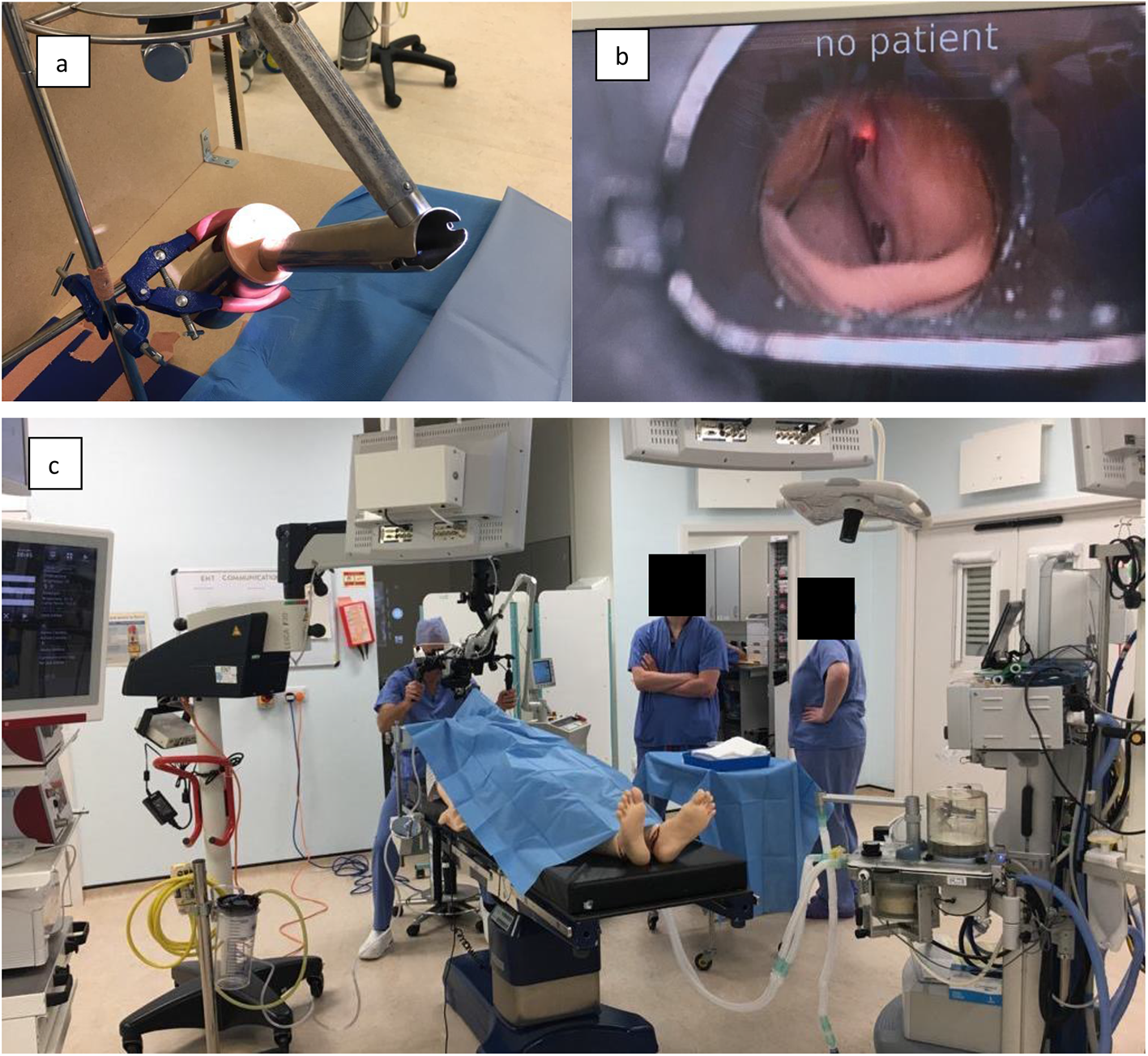
Anterior and posterior glottic ‘lesions’ were created on the superior surface of the right vocal fold on each model using a permanent marker. The models were suspended from a retort stand and an operating laryngoscope was similarly held in position. Operative drapes and wet swabs were placed around the laryngoscope, and a protective wooden shield was placed behind the model to prevent distal laser damage. A SimMan model was placed behind the protective board and an anaesthetic machine placed next to the operating table to generate realism (Figure 1a). A CO2 laser and microscope were set up in the standard fashion.
Simulation set-up including the laryngoscope in a retort frame (a), microlaryngoscopy view (b) and the operating theatre environment (c).

A total of 13 otolaryngology trainees and consultants were each provided with a model. Each participant performed resection of the two vocal fold ‘lesions’ using laryngeal microscopic instruments (Integra MicroFrance, custsvcuk@integralife.com) and the CO2 laser (Figure 1b, c). A pre-study questionnaire assessed participant grade, seniority (junior = Specialty Trainee 4 to 6, senior = Specialty Trainee 7, 8 and consultant), degree of exposure to endolaryngeal laser surgery and simulation, and level of confidence with endolaryngeal laser surgery.
Model validation
The model underwent face, content and construct validity assessment. Face and content validity were assessed with a 14-question, 5-point Likert scale questionnaire assessing the degree of agreement with statements about the model. A score of 1 was least agreeable, whilst a score of 5 was most agreeable.
Construct validity was assessed by comparing the time taken for each participant to excise each lesion and by assessing the completeness of excision of each lesion.
Face, content and construct outcome measures were assessed according to surgeon seniority, degree of exposure to endolaryngeal laser surgery and level of confidence with endolaryngeal laser surgery.
Wilcoxon signed rank tests and chi-square tests were used to assess model outcomes. Statistical analyses were conducted using R statistical software version 2.15.2 (http://www.r-project.org).
Results
Demographic data
The 13 participants comprised 7 junior otolaryngology trainees (Specialty Trainee 3 to 6), 3 senior trainees (Specialty Trainee 7 to ST8), 1 specialty senior clinical fellow and 2 consultants. They were categorised into two groups: junior (Specialty Trainee 3 to ST6) and senior (Specialty Trainee 7 to consultant) to generate comparatively sized groups. Within the junior group (n = 7), 5 individuals had no endolaryngeal laser experience, while 2 individuals reported between 10 and 20 cases; none of this group had undergone endolaryngeal laser surgery simulation. In the senior group (n = 6), all surgeons had endolaryngeal laser experience ranging from 1 to 5 cases up to more than 20 cases, and 3 participants had experience in laryngeal laser simulation.
Face validation
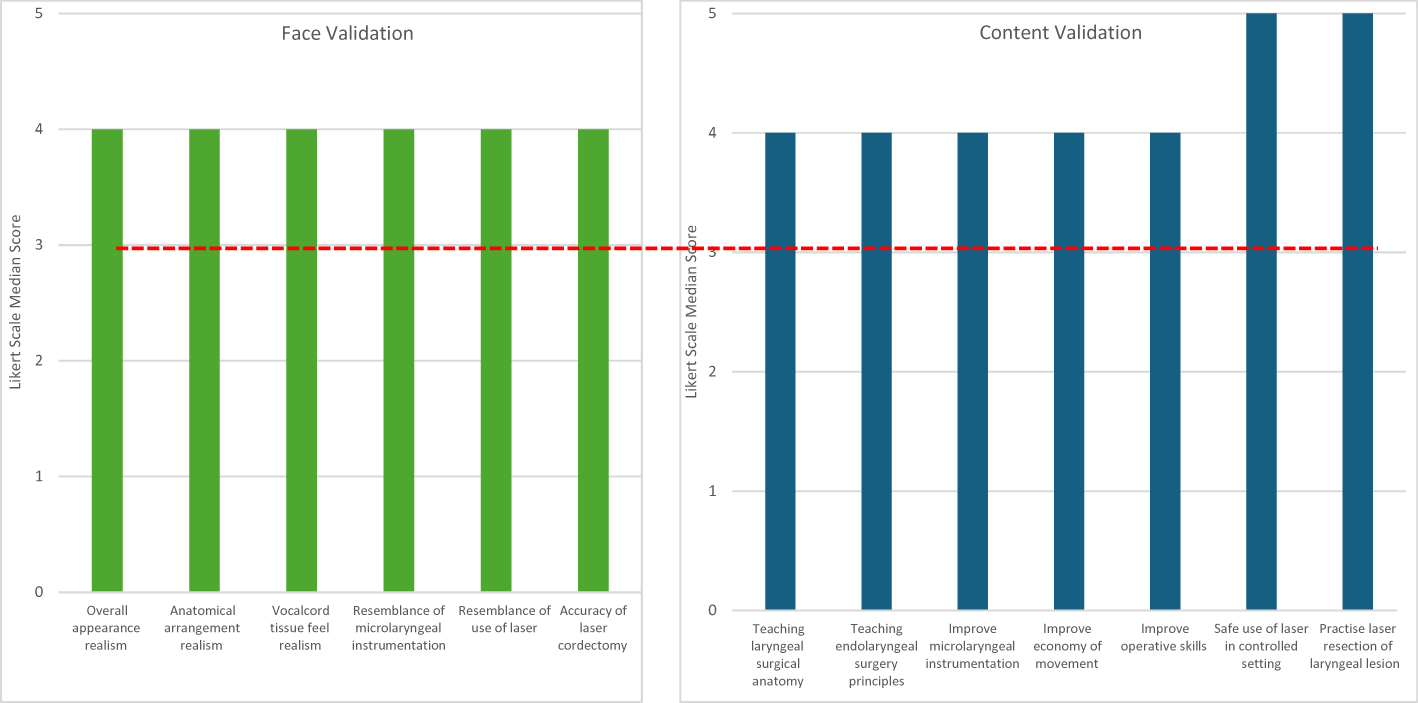
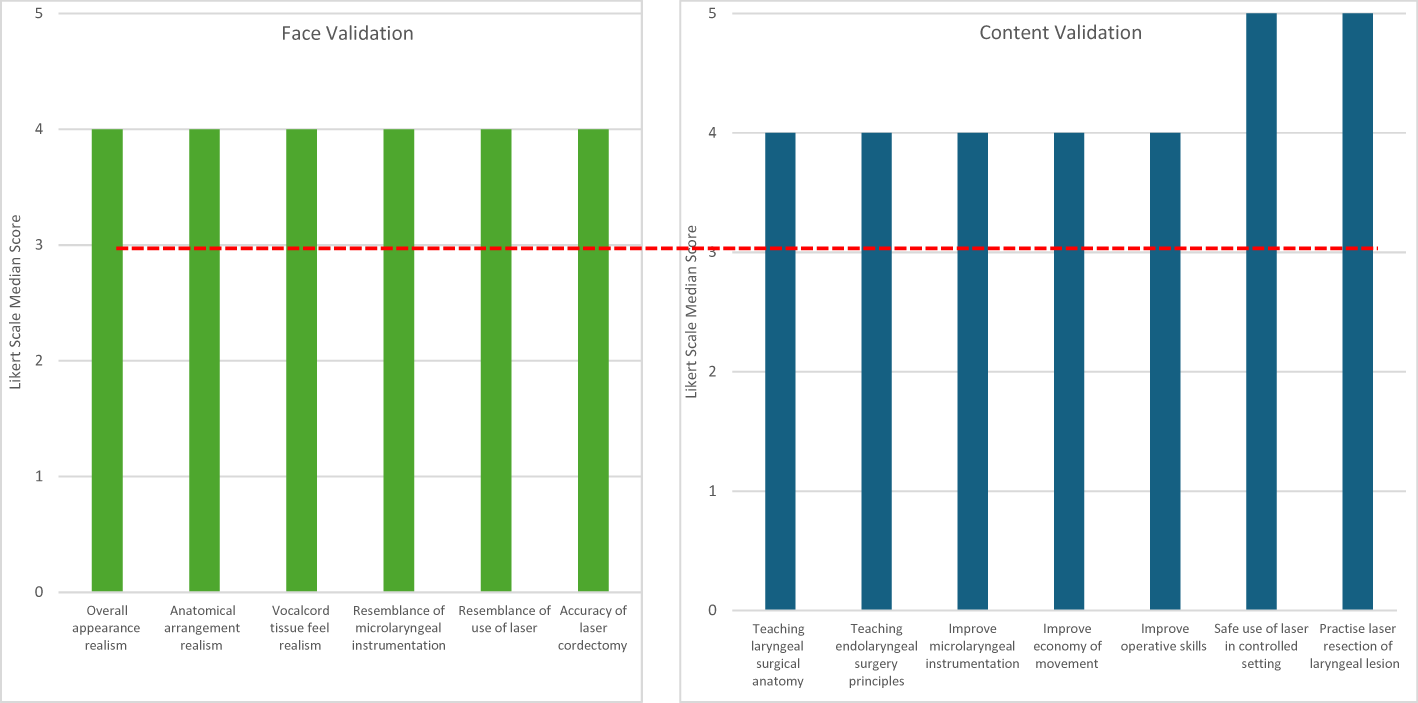
The face validation outcomes revealed hat all participants agreed or strongly agreed that the overall realism of the synthetic larynx model closely resembled endolaryngeal laser practice, achieving a median score of 4, sufficient for validation. The anatomic arrangement of the synthetic larynx, the tissue feel of the vocal folds, the resemblance to laryngeal surgery of the microlaryngeal instrumentation of the model, the use of the laser and the accuracy of laser cordectomy of this model were also assessed and achieved the pre-requisite median validation score of 4. These data are displayed in Figure 2.
Validation bar chart showing the median Likert scores for face validation questions. The validation threshold is shown as the red dashed line.
Content validation
As can be seen from Figure 2, participants all agreed or strongly agreed that the laryngeal model aided in practicing laser resection of laryngeal lesions, with an overall median score of 5 demonstrating that the model attained the required threshold for content validity. Furthermore, median scores of 4 demonstrated that the model attained content validity for components of the operation: teaching laryngeal surgical anatomy and principles of endolaryngeal surgery, improving microlaryngeal instrumentation familiarity, and improving economy of movement and operative skills. Finally, participants also strongly supported the usefulness of the model in learning how to safely use the laser in a controlled setting (median score of 5).
Construct validity
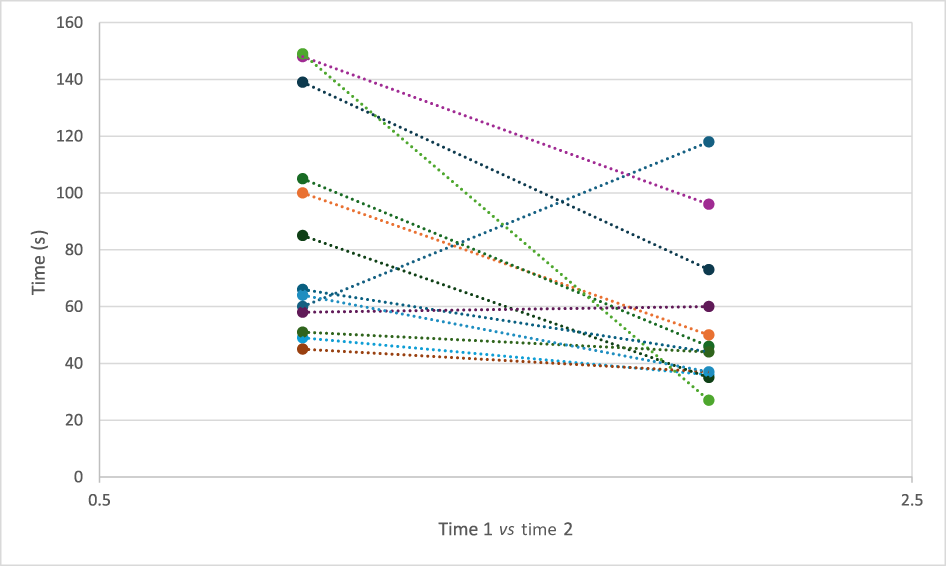
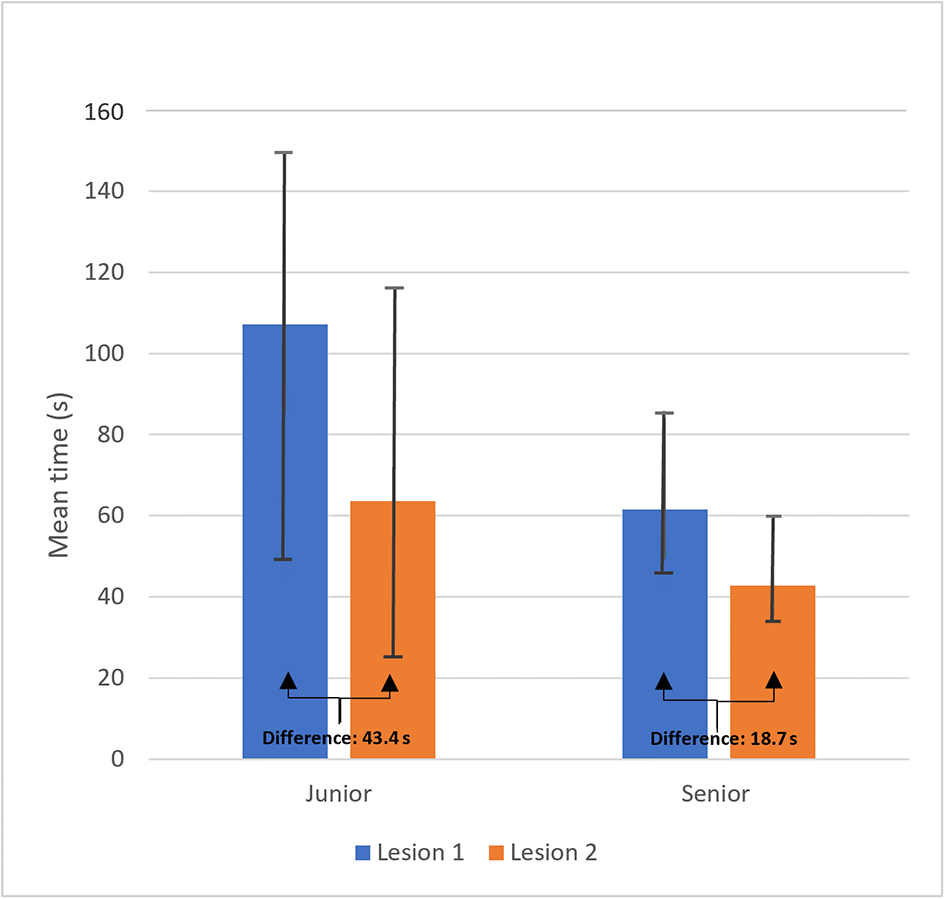
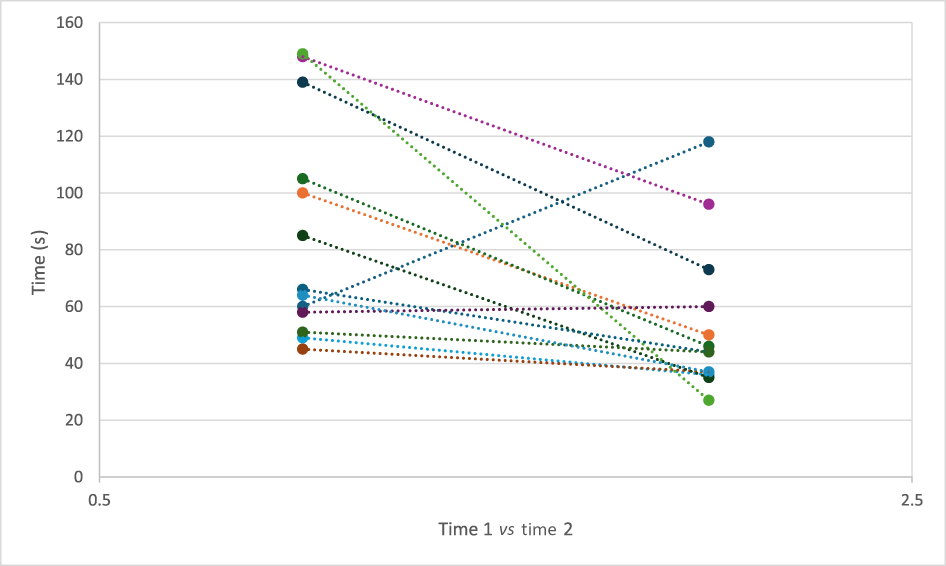
Participants were asked to dissect two vocal fold lesions. The mean time required for laser resection of the first lesion was 86 seconds (range, 45–149 seconds). The time required for the second lesion showed a significant improvement, with an average time of 54 seconds (range, 27–118 seconds) (W = 11, p = 0.017). Junior trainees demonstrated greater improvements in dissection time (mean, 43.4 seconds) compared with the senior trainees or consultants (mean, 18.7 seconds). However, this was not significant (W = 9.5, p = 0.12) (Figures 3 and 4).
Individual excision time between lesion 1 and lesion 2.
Mean dissection time, stratified by lesion and seniority.

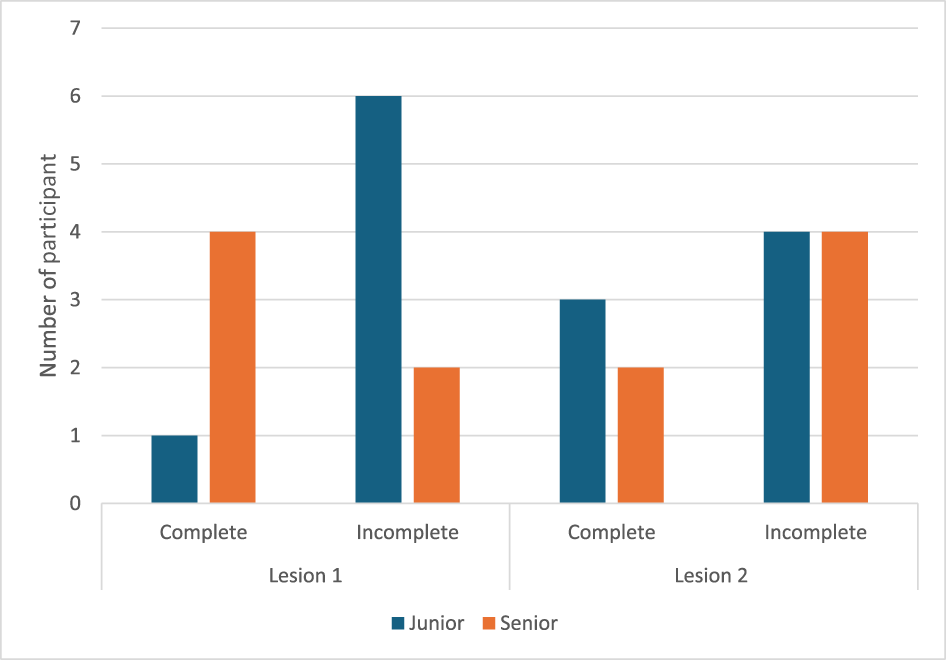
The mean time required for the senior group to complete laser resection for both lesions was 61.5 seconds (range, 45–85 seconds), while the mean time required for the junior group was 107.1 seconds (range, 49–149 seconds), representing a significant difference (W = 11, p = 0.017). In terms of excision completeness, 10 out of 26 specimens demonstrated complete excision (38.5 per cent). Comparing completeness of excision between junior and senior participants, the junior group attained a lower completeness of excision (28.6 per cent) in comparison with the senior group (50 per cent), although the data were not statistically significant (X 2 = 1.254, p = 0.263) (Figure 5).
Number of complete excisions, stratified by lesion and seniority.

Finally, when comparing the questionnaire outcomes according to seniority, laser experience and laser confidence, it was found that the tissue was deemed to be more realistic by more senior otolaryngologists and the microlaryngeal instrumentation was deemed to be more realistic amongst those with more laser experience and more confidence using the laser.
Model reception
Eleven of the 13 participants agreed or strongly agreed that the model allowed them to demonstrate their endolaryngeal surgical skills accurately, and 12 participants reported feeling more confident to perform endolaryngeal laser resection safely after using the model. All the participants agreed that the simulation model was a useful training tool and that it would help increase the confidence of trainees in performing endolaryngeal laser resection. The majority of participants (9 of 13) also felt there were not sufficient simulation models available to practice microlaryngeal surgical skills and endolaryngeal laser resection in the current training programme.
Discussion
This study describes the development of a low-cost, high-fidelity endolaryngeal laser model that has demonstrated face, content and construct validity. Participants determined that the model had sufficient verisimilitude to the human larynx, and that the steps in its operation were sufficiently similar to endolaryngeal surgery to reach the required validation threshold. In addition, there was a statistically significant difference in dissection time required between lesions one and two, demonstrating an improvement in performance through practice on the model, and the model dissection time was lower amongst more senior operators, highlighting that the model is able to delineate between experience levels in terms of operative time (construct validity). This supports the three-stage skill acquisition theory proposed by Fitts and Posner, whereby the development of psychomotor competencies is highly dependent on sustained deliberate practice over many years with regular feedback from experienced surgeons and constant self-reflection within a learner-centred learning environment.Reference Fitts and Posner16–Reference White, Rodger and Tang18
Trainees in the modern era have suffered from reduced training opportunities within their surgical training as a result of the restriction in working hours, the re-structuring of surgical training resulting in a shortened training pathway and, in more recent years, the Covid-19 pandemic.Reference Shahzad and Anwar5, Reference Evans and Schenarts6, Reference Clements, Burke, Hope, Nally, Doleman and Giwa8, Reference Hope, Reilly, Griffiths, Lund and Humes9, Reference de Montbrun and Macrae17, Reference Jones, Passos-Neto and Braghiroli19 It is therefore vital to enhance the learning environment through the use of validated simulation models, such as this endolaryngeal model, to allow trainees to progress in their acquisition of skills.
The majority of the participants agreed that there is a lack of validated laryngeal models available to practice microlaryngeal laser resection. According to the face validity assessment result, the silicone larynx simulation model showed high structural fidelity as compared with a patient’s larynx. A literature review on materials used for human skin models by Dąbrowska et al. stated that silicone has a refractive index that is similar to human skin, is easily manipulated, and has a high safety and stability profile.Reference Dąbrowska, Rotaru, Derler, Spano, Camenzind and Annaheim20 Dragon Skin was the silicone chosen for the casting of the current laryngeal model because it has a suitable mucosal texture and appearance, while having been demonstrated to be laser safe by the manufacturer. This material was also used to create a 3D model for bladder cancer in a recent study.Reference Smith, Lurie, Zlatev, Liao and Ellerbee Bowden21
It is important that surgical models allow trainees to feel that they are able to practice the key components of an operation. This study indicates that participants felt the model allowed them to develop their transoral laser microsurgery skills, with the model demonstrating content validity. This included improving manual dexterity and economy of movement when using the laser micromanipulator, an operative skill that is not mimicked in any other surgical procedure.
As the provision of endolaryngeal laser simulation models is relatively limited, with the majority of available models being cadaveric or animal models,Reference Chan and Lau10–Reference Hoffman, Kletzien, Dailey and McMurray13, Reference Stasche, Quirrenbach, Bärmann, Krebs, Harrass and Friedrich15 the ability of trainees to practice use of the laser micromanipulator is often restricted because of the cost considerations and the safety challenges of using an operative laser in a simulation environment suitable for cadavers and/or animal tissue. The suitability of this model for in situ operative simulation would allow trainees greater access to laser simulation while maintaining model fidelity.
As stated, the model demonstrated construct validity through the analysis of the mean time taken to complete the laser resection, both between lesions and between seniority cohorts. However, the study also analysed improvement in dissection time, and dissection accuracy between junior and senior trainees. While both of these analyses demonstrated trends towards improved outcomes in the senior group, neither were significant.
Because of the oncological indication of many transoral laser microsurgery procedures, it is important that any model allows an analysis of accuracy. When reviewing outcomes amongst patients with early laryngeal cancer undergoing endolaryngeal surgery, a higher number of revision surgical procedures necessitated by positive dissection margins was noted amongst surgeons with less experience.Reference Bernal-Sprekelsen, Blanch, Caballero-Borrego and Vilaseca4 While it was evident within this study that dissection accuracy was assessable through analysis of the specimen margin, further study would be required to ensure that the model is able to delineate between skill levels.
The authors acknowledge some limitations presented by the endolaryngeal model described in this study. Firstly, the synthetic model lacks the tissue planes present within the glottis, and it was not possible in this study to develop a ‘lesion’ with depth. This could be incorporated into future models, although the primary aim of this study was to develop a low-cost model that allowed sufficient fidelity to result in skill acquisition.
Due to the challenges of cadaveric laser surgery, and the lack of availability within our region, it was not possible to assess this silicone larynx model against cadaveric tissue. Cadaveric tissue is the ‘gold standard’ for surgical simulation because of its ability to simulate the authentic tissue-handling experience, providing high haptic fidelity. Of note, a recent systemic review has suggested that there is no good-quality evidence to support the use of cadaveric simulation instead of synthetic models to improve short-term skill acquisition among trainees.Reference James, Chapman, Pattison, Griffin and Fisher22 The authors therefore believe the current synthetic model is a reliable low-cost model that can replace cadaveric tissue to aid trainees in overcoming the learning curve in laser resection.
The study design also necessitated small numbers of participants due to the limitations in course space availability. Despite this common limitation of simulation studies, the model still demonstrated validity and statistical significance, suggesting adequate power.
• Transoral laser microsurgery has a steep learning curve where there is correlation between proficiency and transoral laser microsurgery complications
• Silicon provides suitable realistic tissue texture along with a good fire safety profile
• This study demonstrated that a three-dimensional printing computed tomography-derived silicon model is low cost and easily reproducible, with good face and content validity
• There was a significant reduction in resection time between lesions one and two, especially in the junior cohort, demonstrating the good construct validity of the model
• One of the limitations of the synthetic model was the lack of tissue planes present within the glottis
Conclusion
This silicone synthetic simulation model is a useful educational tool to help trainees to flatten the learning curve in transoral laser microsurgery. It is a safe and cost-effective simulation model. Further studies aim to create models with better haptic fidelity by incorporating tissue planes and in-built tumours for laser surgery simulations. The team also aim to democratise education and training opportunities by providing the current model to ENT trainees from other regions.
Acknowledgements
We thank National Health Service (NHS) Greater Glasgow and Clyde for providing operating theatre facilities and microscopic equipment. Funding for the project was obtained through the NHS Greater Glasgow and Clyde Head and Neck Surgery Endowment Fund. All patients consented to the use of their CT images for the construction of 3D ‘negative’ airway templates. Project approval was obtained from the NHS Greater Glasgow and Clyde Department of Otolaryngology, the NHS Greater Glasgow and Clyde Fire Safety Officer, and the Theatre Department at the Royal Hospital for Children, Glasgow.
Competing interests
None declared.