Introduction
Corn and soybean meal typically provide the basis for poultry diets. However, these sources are not usually available in countries that have few or no corn and soybean crops and insufficient means to import these feed sources. As a consequence, farmers have had to rely on other feed sources, some of which include animal by-products, to provide an adequate amount of protein. However, due to health issues relating to the inclusion of animal tissue in animal feed, this practice has recently been banned by the European Union resulting in the need for farmers without access to corn or soybean to turn to other plant protein sources (Farrell, Reference FARRELL2005).
In response to this shift in need to find new feed sources, there is growing interest in grain crops that grow well locally as sources of energy and protein for animal or poultry diets. Bitter vetch (Vicia ervilia) is one such grain crop that may be developed into an acceptable feed source. It is an ancient legume of the Mediterranean region that has been used for grain and hay production. It is widely distributed throughout the southern half of Europe, Western and Central Asia, and North Africa (GRIN, 2008). It has a number of favourable characteristics, such as high yield, resistance to drought and insects and good energy and protein content that make it a potentially economically useful source for poultry diets. The crop is easy to cultivate and harvest and can be grown on very shallow, alkaline soils where other grains such as corn and soybean do not grow successfully. Yields of 2 t/ha in low (350-400 mm) rainfall environments are achievable. One study from Spain reported a more than 3 t/ha grain yield (Enneking and Francis, Reference ENNEKING. D. and FRANCIS2007).
Bitter vetch is a good and inexpensive source of protein and energy (Aletor et al., Reference ALETOR, GOODCHILD and ABD EL MONEIM1994; Farran et al., Reference FARRAN, DAKESSIAN, DARWISH, UWAYJAN, DBOUK, SLEIMAN and ASHKARIAN2001b; Fernandes-Figares et al., 1993; Sadeghi et al., Reference SADEGHI, POURREZA, SAMIE and RAHMANI2008; Yalcin and Önol, Reference YALCIN and ÖNOL1994). The grains are sometimes used in ruminant feeds (Haddad, 2006) and as a source of protein in poultry diets (Farran et al., Reference FARRAN, DAKESSIAN, DARWISH, UWAYJAN, DBOUK, SLEIMAN and ASHKARIAN2001b; Fernandez-Figares et al., Reference FERNANDEZ-FIGARES, PEREZE, NIELO, AGULERA and PRIETO1993). One limitation of bitter vetch is that it contains some anti-nutritional factors that can limit its consumption. Although rumen micro-organisms appear to destroy these factors, feeding monogastric animals on diets containing raw bitter vetch has been found to produce a number of undesirable metabolic effects (Farran et al., Reference FARRAN, BARBOUR, UWAYJAN and ASHKARIAN2001a; Halaby, Reference HALABY1997; Ocio et al., Reference OCIO, VINARAS, J. and BRENES1980a,b; Sadeghi et al., Reference SADEGHI, POURREZA, SAMIE and RAHMANI2008). The adverse effects arise from the presence of certain phytochemicals, including L-canavanine, lectins, protease inhibitors, and tannins. Consequently, in order that bitter vetch might be used more extensively as poultry feed there is need to develop means to neutralize the adverse effects of the grains’ biochemical content, while retaining its potential as a good source of protein and energy.
The main purpose of this paper is to review the nutritional potential of bitter vetch as an ingredient in poultry feed and to discuss some processing techniques that could increase its optimal utilization as a protein and energy source. This review will cover the chemical composition and anti-nutritional factors of the bitter vetch grain with special attention on canavanine, its nutritional value for broiler chickens and laying hens, and the effects of selected processing methods on bitter vetch's nutritional value for poultry.
Chemical composition
proximate analysis
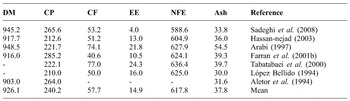
The proximate compositions of bitter vetch grain reported by several studies are summarized in Table 1. Proximal composition shows that bitter vetch grain is a good source of protein. Its protein content ranges from 210 g/kg (López Bellido, Reference LÓPEZ BELLIDO1994) to 285.2 g/kg (Farran et al., Reference FARRAN, DAKESSIAN, DARWISH, UWAYJAN, DBOUK, SLEIMAN and ASHKARIAN2001b). The average reported protein content of bitter vetch of 240.2 g/kg, which is about 2.3 times the crude protein of cereal grains such as corn, wheat, and barley.
Bitter vetch grains contain small amounts of fat (16.5 g/kg), ash (37.8 g/kg), with varying ranges of crude fibre (between 40.6 to 77.0 g/kg), acid detergent fibre (between 91.0 to 122.8 g/kg), and neutral detergent fibre (between 97.0 to 142.0 g/kg). Carbohydrate (NFE) content ranges between 588.5 and 636.4 g/kg, with an average of 617.8 g/kg (Farran et al., Reference FARRAN, DAKESSIAN, DARWISH, UWAYJAN, DBOUK, SLEIMAN and ASHKARIAN2001b; Tabatabaei et al., Reference TABATABAEI, ALIARABI, NIK-KHAH and MIRAEI-ASHTIANI2000).
Proximate composition of bitter vetch grain (g/kg).

mineral content
The mineral content of bitter vetch is similar to that found in other vetch grains. Like other grains, the bitter vetch grain is a good source of minerals, especially Fe, Cu, K, P and Cl. Bitter vetch contains 1.6, 6.1, 8.6 g/kg and 46.7 and 35 mg/kg calcium, sodium, chloride, copper and zinc, respectively (Sadeghi et al., Reference SADEGHI, POURREZA, SAMIE and RAHMANI2008).
energy content
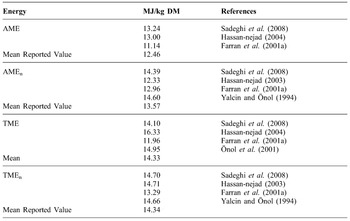
Bitter vetch grain is a good source of energy for poultry. The energy is provided mainly through non-structural carbohydrates because its fat content is quite low. Available reports of energy contents of bitter vetch are presented in Table 2. The gross energy of raw bitter vetch is 18.09 MJ/kg (Sadeghi, Reference SADEGHI2004). The average AME, AMEn, TME and TMEn values of bitter vetch grains are 12.46, 13.57, 14.33 and 14.34 MJ/kg, respectively (Table 2).
AME, AMEn, TME, and TMEn (MJ/kg DM) content of bitter vetch grains.

amino acid content and availability
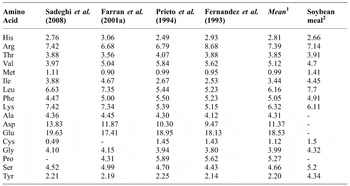
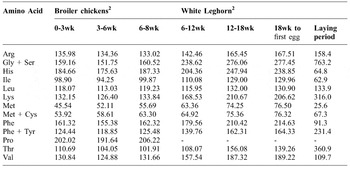
Amino acid profiles and modified limiting amino acid scores (MLAAS) of bitter vetch are shown in Tables 3 and 4, respectively. In terms of pattern and profile of amino acids and digestibility, bitter vetch is similar to other legume grains and its amino acid profile and digestibility is very close to soybean meal (Faran et al., 2001a; Perez et al., Reference PEREZ, FERNANDEZ-FIGARES, NIETO, AGULERA and PRITO1993; Sadeghi et al., Reference SADEGHI, POURREZA, SAMIE and RAHMANI2008). One important exception is the digestibility of Lys and Arg. Faran et al. (2001a) suggest that the structural similarity between canavanin and Arg may explain the lower true digestibility of Arg and Lys in bitter vetch. Like all legumes, bitter vetch is a good source of lysine, but is deficient in sulphur amino acids.
Comparison of amino acids as a percent of the protein in bitter vetch grains and soybean meal.

1 Mean of reported values
2 Grain meal solvent extracted (NRC, 1994)
Modified limiting amino acid score (LAAS1) of bitter vetch for use in broiler and laying hen diets.

1 MLAAS=
2 Required amino acid for calculations of MLAAS obtained from NRC (1994)
In addition to the component analysis of the grain, amino acids are an important determinant of bitter vetch's value as a food source. Comparison of the available amino acids contents of bitter vetch with bird requirements shows that the available amino acids are used at different rates and amounts by different types of chickens. For example, it appears that methionine is the first limiting amino acid, whereas Ile is marginal for both broiler chicken and laying hens and His and Phe are marginal for laying hens (Table 4).
anti-nutritional factors
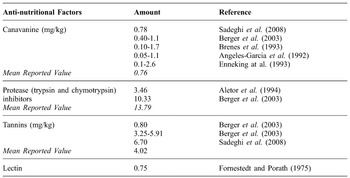
A major concern regarding the use of non-traditional feed ingredients is that they contain a number of naturally occurring substances known as anti-nutritional factors (ANFs) that depress poultry performance when ingested in high levels. Bitter vetch contains some known and perhaps unknown ANFs. The amounts of known ANF factors in bitter vetch are presented in Table 5. The main ANFs in bitter vetch are canavanine, protease (trypsin and chymotrypsin) inhibitors, lectins, and tannins.
Anti-nutritional factors in bitter vetch grain (g/kg).

L-Canavanine
The non-protein amino acid L-canavanine (2-amino-4-(guanidinoxy) butanoic acid) is a potent arginine anti-metabolite stored by many leguminous plants as part of their chemical barrier against predation and disease-causing organisms (Rosenthal, Reference ROSENTHAL2001). It is incorporated into newly synthesized proteins and resulting in the formation of non-functional proteins (Rosenthal, Reference ROSENTHAL1977). It has a toxic effect on monogastric animals, especially chickens (Sadeghi et al., Reference SADEGHI, SAMIE, POURREZA and RAHMANI2004a). The average canavanine content of bitter vetch grain is 0.76 mg/kg.
Trypsin inhibitors
Active trypsin inhibitors have been shown to have detrimental effects on the utilization of legume proteins because they inhibit trypsin and chymotrypsin activities and ‘lock in’ much of the available cysteine, which is already in short supply (Kakade et al., Reference KAKADE, ARNOLD, LIENER and WAIBEL1969). Trypsin inhibitors also interfere with normal protein digestion in the intestinal tract via inactivation of proteolytic enzymes secreted by the pancreas. These are sulphur-containing enzymes (Kakade et al., Reference KAKADE, ARNOLD, LIENER and WAIBEL1969). The average trypsin inhibitor content of bitter vetch is 13.79 mg/kg (Table 5).
Tannins
Tannins are water soluble phenolic plant compounds. They are known to inhibit the activities of digestive enzymes mainly related to their binding interactions with proteins. Reduction in feed intake, daily weight gain, and protein digestibility has been reported in feed studies involving chickens (Longstaff and McNab, Reference LONGSTAFF and MCNAB1991; Ortiz et al., Reference ORTIZ, CENTENO and TERVINO1993; Santidrian and Marzo, Reference SANTIDRIAN and MARZO1989). Bitter vetch contains 6.7 mg/kg tannin (Sadeghi et al., Reference SADEGHI, POURREZA, SAMIE and RAHMANI2008), which is in the range of other conventional legumes.
Lectins
Lectins are rich in acidic and hydroxylic amino acids. They can inhibit the growth of chickens through their ability to combine with and disrupt the absorptive surface of the intestinal mucosa (Wiryawan, Reference WIRYAWAN1997). The lectin content in the grains of bitter vetch (0.75 mg/kg) appears similar to that of concanavaline (Fornested and Porath, 1975).
Effects on feed intake and weight loss/negative growth in broilers
A number of studies have reported the negative impact on feed intake, weight gain, and growth associated with bitter vetch consumption. Ocio et al. (Reference OCIO, VINARAS, J. and BRENES1980a), for example, reported that the inclusion of 150, 250, or 350 g/kg of raw bitter vetch in the diet of broiler chickens decreased feed intake and weight gain and increased pancreas weight significantly. These effects were greatest among the chickens fed the higher bitter vetch proportioned diets. In a second study, Ocio et al. (Reference OCIO, VINARAS, TERVINO and BRENES1980b) included 70, 100, and 130 g/kg bitter vetch in starter diets of broiler chicks and again found that higher inclusion levels of bitter vetch were associated with lower feed consumption and slower weight gain. Santidrian et al. (Reference SANTIDRIAN, MARZO, LASHERAS, CENARRUZABEITIA and LARRALDE1980) tested the use of raw bitter vetch as the main source of protein (210-230 g/kg) in one-day old to 7 weeks old male white Leghorn chicks diets, and found the chickens fed bitter vetch experienced a substantially lower average daily gain of 4.6g compared with chickens fed a corn-soybean control diet (30.1 g).
In a study by Sadeghi et al. (Reference SADEGHI, SAMIE, POURREZA and RAHMANI2004a) involving broiler chickens, the investigators showed that increasing bitter vetch levels from 150 to 300 and 450 g/kg significantly reduced body weight and feed intake, increased feed conversion ratio and mortality in broiler chickens. Farran at el. (2005) fed broiler chickens either 600 g/kg raw bitter vetch grain or bitter vetch soaked in water at room temperature or at 40°C for 72 h with water changes every 12 h and compared their performance and internal organ size from 8 to 49 d. They found that broilers consuming raw bitter vetch gained less weight, used feed less efficiently, and had heavier liver, pancreas, and gall bladder weights than others.
Poor growth rates associated with bitter vetch have been primarily attributed to feed intake reduction. However, it seems that it is not the only growth inhibition factor related to bitter vetch diets. The adverse effects of raw bitter vetch on the growth performance of broiler chickens appear to be due to the presence of anti-nutritional factors in the raw grains including L-canavanine, hemaglutinine, protease inhibitors and tannins. Reduction in feed intake in birds fed bitter vetch may be the reaction to these toxic factors in the digestive tract or to some unpleasant taste effects. Canavanine, lectin, and trypsin inhibitors have been shown to have some anti-metabolic activities. Part of the mechanism for these suppression effects may be explained by a study by Lasheras et al. (Reference LASHERAS, BOLUFER, CENARRUZABEITIA, LLUCH and LARRALDE1980) who showed that oxygen consumption measured in the intestinal rings increased in chicks fed on bitter vetch diets inhibited in vitro intestinal transport of D-galactose.
Specific effects of L-Canavanine in poultry
As noted above, growth depression from feeding bitter vetch is likely to be due to more than one factor. Some growth inhibiting substances, such as canavanine, lectins, tannins and non-starch polysaccharides, in raw bitter vetch are probably the major factors responsible for impairment of chicken performance. However, special attention has been paid to the possible role of canavanine in the observed toxic effects. Canavanine has been found to exhibit potent anti-metabolic properties in organisms ranging from viruses and prokaryotes to whole animals (Shqueir et al., Reference SHQUEIR, BROWN and KLASING1989).
Michelangeli and Vargas (Reference MICHELANGELI and VARGAS1994) added canavanine (free base or sulphate salt) to a control diet in an amount equivalent to that provided by 300 g raw jack bean/kg diet and found that the supplemented diets with canavanine depressed feed intake by 30% in relation to the control diet. By contrast, Shqueir et al. (Reference SHQUEIR, BROWN and KLASING1989) found no significantly adverse effects on feed intake and growth rate after feeding chicks a diet containing 0.056gkg-1 canavanine for 2 weeks.
The toxicity of canavanine is probably due to its similarity to that of arginine (D'Mello et al., Reference D, MELLO, WALKER and NOBLE1990). However, the exact mechanism by which canavanine depresses feed intake in poultry remains to be determined. The evidence that is it interferes with metabolism comes from the finding that, in the presence of canavanine, plasma basic amino acid pattern is severely altered. Research has shown that rats and chickens fed inappropriate amounts of amino acid or fed excessive or different amounts of an individual amino acid rapidly reduce their feed intakes (Austic, Reference AUSTIC1986). In a study with broiler chickens, a diet that included a free-base canavanine caused a significant depression in concentration of plasma histidine, lysine and arginine compared with a control diet (Michelangeli and Vargas, Reference MICHELANGELI and VARGAS1994). Rueda et al. (Reference RUEDA, MICHELANGELI and GONZALEZ-MUJICA2003) reported that L-canavanine inhibited L-arginine Na+–dependent transport across the enterocyte apical membrane in highly purified intestinal brush border membrane vesicles from broiler chickens. The L-arginine uptake inhibition in BBMV by L-canavanine may reduce the intestinal absorption of basic amino acids and eventually change the pool of the cationic amino acids in chickens. Herzberg et al. (Reference HERZBERG, SHEERIN and LERNER1971) reported that L-canavanine also inhibits the transport of L-lysine and L-methionine indicating that the inhibitory effect of L-canavanine may affect not only the uptake of cationic amino acids, but also those of the neutral amino acids which share, under certain conditions, similar transport systems.
The arginine-like structure of canavanine enables it to bind many enzymes that usually interact with arginine and incorporate into polypeptide chains, resulting in structurally aberrant canavanine-containing proteins (Rosenthal, Reference ROSENTHAL1977). Canavanine may also inhibit arginine uptake in the small intestine (Grenson et al., Reference GRENSON, MOUSSET and BECHET1966). Geona et al. (Reference GEONA, MARZO, FERNANDEZ-GONZALEZ, FRUHBECK and SANTIDRIAN1989) showed that rats fed heated soya bean meal compared with ones fed a raw bitter vetch diet exhibited a significant reduction in growth and protein synthesis capacity. A significant effect of canavanine is the production of canavanyl proteins and the curtailing of RNA metabolism. DNA metabolism and overall protein production also are affected (Rosenthal, Reference ROSENTHAL1977).
D'Mello et al. (Reference D, MELLO, WALKER and NOBLE1990) hypothesized that there was a canavanine-arginine interaction in chicks fed on autoclaved jack beans (AJB), paralleling the well-established lysine-arginine antagonism. Lys-Arg antagonism leads to depression in food intake, which invariably also occurs in animals fed unbalanced amino acid diets (Austic, Reference AUSTIC1986). The mechanism responsible for this depression in feed intake has yet to be elucidated. However, it has been proposed that changes in the brain concentration of neurotransmitters, derived from essential amino acids, may be implicated in the reduction of feed intake (Li and Anderson, Reference LI and ANDERSON1983). Another possibility for action of canavanine may be associated with its inhibition of nitric oxide formation from arginine (Harbak et al., Reference HARBAK, BAJOR and TEMESI1994) and feed intake response may also be regulated by nitric oxide (D'Mello, 1990). Sadeghi et al. (Reference SADEGHI, SAMIE, POURREZA and RAHMANI2004a) showed that certain processing methods associated with improved feed intake in broiler chickens also were associated with canavanine reduction.
Use of processing for detoxification of bitter vetch
To improve the nutritional quality and to provide effective use of bitter vetch for poultry, it is essential that anti-nutritional factors be removed or reduced. However, to date the different processing methods that have been tried have had variable effects on improving the nutritional value of bitter vetch. For example, heat treatment is an effective method of inactivating lectin and trypsin and protease inhibitors (Alonso et al., Reference ALONSO, RUBIO, MUZQUIZ and MARZO2001). However, negative effects on growth performance still occur among chickens fed with heat treated grains (Farran et al., Reference FARRAN, DAKESSIAN, DARWISH, UWAYJAN, DBOUK, SLEIMAN and ASHKARIAN2001b, Sadeghi, Reference SADEGHI2004). So it is necessary to establish a processing technique(s) to insure its optimal utilization. A combination of processing methods is generally more effective than a single method in legumes (Siddhurajua et al., Reference SIDDHURAJUA, MAKKARB and BECKERA2002).
Since this indicates that heating alone is insufficient, because canavanine remains quite stable at relatively high temperatures, other means to remove or break it down have been considered. Since canavanine is soluble in water, acid, and alkali solvents, a possible treatment approach has been to use aqueous extraction with or without a suitable medium prior to heat treatment to remove canavanine from grains.
Halaby (Reference HALABY1997) reported a reduction in feed palatability and weight gain in broiler chickens fed with 600 g/kg bitter vetch over a 21 day trial, but also showed that soaking bitter vetch grains in water at 40 °C for 72 h was associated with better growth. Similarly, Hassan-nejad, (Reference HASSAN-NEJAD2003) reported that when 100, 200 and 300 g/kg of raw bitter vetch was included in broiler rations from 1-8 weeks of age, growth was inhibited. But, after heating the grain at 96 °C for 30 minutes, the growth in chicks fed 100 g/kg bitter vetch was similar to those fed with a corn-soybean control diet. However, at the higher proportions, 200 and 300 g/kg, the heat treatment did not alleviate the grain's detrimental effects on chicken production.
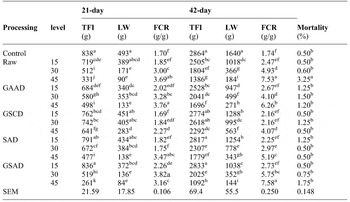
Perez et al. (Reference PEREZ, FERNANDEZ-FIGARES, NIETO, AGULERA and PRITO1993) reported that true digestibility of Lys and Arg increased as a result of soaking the grain in 1% acetic acid solution at 40°C for 24 h. In a study by Sadeghi et al. (Reference SADEGHI, SAMIE, POURREZA and RAHMANI2004a), soaking and heating the grain resulted in some reduction of bitter vetch's anti-nutritional effects. These investigators compared varying lengths of water-soaking or acetic acid soaking and different heat treatment temperature levels and found that the longer periods of soaking and higher temperature levels proved superior to the raw bitter vetch diets in terms of performance. However, the effects were still significantly lower compared to the control diets (Table 6).
Effect of feeding raw and treated bitter vetch in different levels in comparison to control on total feed intake (TFI), Live weight (LW), feed conversion ratio (FCR) and mortality in Arian broiler chickens.

a-dValues with no common following letter in each column differ significantly(p<0.05)
GAAD:coarsely ground, soaked at 1% acetic acid solution for 24h at 60 ºC and dried; GSCD: coarsely ground, soaked in water for 47 h with exchange of water every 12 h, cooked (75 min at 95 ºC) and dried; SAD: soaked in water (1:5, wt/vol) at room temperature for 12 h, then autoclaved (121ºC, 20min), and dried at room temperature and GSAD; coarsely ground, soaked in water for 24 h, autoclaved and dried.
Adapted from Sadeghi et al. (Reference SADEGHI, SAMIE, POURREZA and RAHMANI2004a)
Some researchers have tried to find a biochemical or histological indicator for the assessment of different detoxification methods of bitter vetch grains. Barbour et al. (Reference BARBOUR, KALLAS and FARRAN2001) described the use of the immune response to Newcastle disease virus (NDV) vaccine in broilers and showed that inclusion of 250 g/kg raw bitter vetch resulted in significant immunosuppression to NDV vaccination. They concluded that quantitative determination of the immune response to NDV vaccine in broilers could be used as a model in the assessment of different detoxification treatments of bitter vetch and found that grinding, soaking in water for 24 h, autoclaving and drying resulted in maximum rectification of immunosuppression to NDV vaccinations in broilers.
Sadeghi and Pourreza (Reference SADEGHI and POURREZA2007) used the serum proteins and biochemical characteristics of broiler chickens to test for nutritional performance of treated bitter vetch. They showed that chickens fed raw and treated, water soaked or acetic acid, cooked and autoclaved, bitter vetch grain had lower α1 and γ globulins than controls. Increasing the percentage of raw and treated bitter vetch grains from 15 to 30 and 45 percent decreased albumin, α1 and γ globulins and increased α2 and β globulins significantly. In chicks fed acetic acid soaked bitter vetch grain, the serum urea increased significantly, but uric acid concentration did not change. Adding raw and treated bitter vetch grain to their diets increased T4 and decreased T3 concentrations in 42 days old chicks. Feeding both raw and treated bitter vetch decreased alkaline phosphatase concentration significantly in comparison to controls (Table 7). The histological changes in broiler chickens fed raw or treated bitter vetch revealed that inclusion of raw bitter vetch grains resulted in precipitation of bile salts, fat deposition, toxic situation, and hyperemia in liver cells and lead to hyperemia, degeneration of tubular cells, acute toxemia, cell proliferation, and tubular necrosis in the kidney (unpublished data, Sadeghi et al.). In the same study of broiler chickens by Sadeghi and colleagues, it was found that methionine supplementation of finisher (35-49 d of age) diets containing 100 g/kg raw or boiled bitter vetch allowed optimal growth comparable to that of corn-soybean control diet.
Effect of raw and treated bitter vetch grains on organs weight (percentage of body weight) and serum biochemical parameters at 42 days old broilers.

a-c- Values with no common following letter in each column differ significantly (p<0.05)
† The description of these abbreviations has been shown in Table 6.
Adapted from Sadeghi and Pourreza (Reference SADEGHI and POURREZA2007).
Bitter vetch in laying hen diets
One of the first studies investigating bitter vetch for laying hens was reported by Ergun et al. (Reference ERGUN, YALCIN, COPLAN, YILDIZ and ÖNOL1993). They found reductions in body weight, egg production, egg weight, feed conversion and increase in yolk colour in 24-wk old laying hens fed a diet containing 4 to 160 g/kg bitter vetch for 6 months. Halaby (Reference HALABY1997) showed that feeding a diet containing 600 g/kg bitter vetch resulted in cessation of egg production within two weeks post feeding. Soaking in 1% acetic acid at 40°C for 24 h reduced the deleterious effects of bitter vetch on egg production, but hen performance was lower than that of the control group. Farran et al. (Reference FARRAN, HALABY, BARBOUR, UWAYJAN, SLEIMAN and ASHKARIAN2005) fed bitter vetch to laying hens and found that a 600 g/kg raw bitter vetch diet was detrimental to laying hens, but that the performance of layers was improved when the grains were soaked in water at 40°C for 72 h with a water change every 12 h. In a second experiment by these same investigators, they found that soaking the bitter vetch grains in acetic acid at 40°C for 24 h further enhanced laying hen performance. They concluded that diets of laying hens containing up to 200 g/kg bitter vetch soaked in acetic acid at 40°C for 24 h had no adverse effects on feed conversion, egg production, and egg quality. A further unpublished study of laying hens by Sadeghi and colleagues reported the inclusion of 100 g/kg boiled bitter vetch (1 h at 94°C) had no adverse effect on egg production and was associated with improved egg weight and egg output when compared with controls.
Bitter vetch as an alternative source for moult induction
Induced moulting is a management tool used to improve performance and profitability of laying hens in the second year of egg production. It has been in practice for many years and is used in more than 75% of commercial laying flocks in the United States (Bell, Reference BELL2003). Feed withdrawal (FW) is an efficient method for the induction of moult in laying hens. However, due to increased animals stress and susceptibility to Salmonella enteritidis infection associated with feed withdrawal, the suitability of this method has been seriously questioned recently. This has resulted in the commercial layer industry paying more attention to alternative methods that do not require complete removal of feed. Thus, supplementing laying hen diet with components like bitter vetch that decrease feed intake might be a viable alternative for reducing body weight and induction of force moulting. Mohammadi (Reference MOHAMMADI2007) used 300, 600, and 900 g/kg of ground bitter vetch in layer rations and showed that 900 g/kg bitter vetch diet proved to be effective in moult induction, resulting in increased post-moult egg production and improvement of some internal egg quality parameters.
Conclusions
This review showed that bitter vetch could be considered as a good source of nutrients and as an alternative feed ingredient for use in poultry diet. Use of a ration with high level of bitter vetch grain or feeding bitter vetch as a single dietary ingredient has proved to be effective in moult induction, increasing post-moult egg production, and improving internal egg quality. However, feeding the raw bitter vetch has detrimental effects on performance of broiler chickens and laying hens, with reduced feed intake being perhaps the most important part of the observed toxic effects. Some processing techniques have been found to be relatively effective in reducing the toxic or adverse effects of bitter vetch. It appears that heating, in combination with soaking in water or acetic acid, might be the best processing approach. Treated bitter vetch grain (through a combination of soaking and heat exposure) can reduce these deleterious effects and render the grain a useful source of protein. However, none of the methods tried to date provide a satisfactory means of treatment. Even after the applications of these techniques, the toxic effects of bitter vetch are not completely removed and the performance of birds fed with processed bitter vetch grain still tends to be lower than that of controls. Hence, before bitter vetch can be considered an alternative feed source for poultry, more work is necessary to establish suitable techniques for removing greater amounts of anti-nutritional factors from the grain.