Introduction
The emergence of multi-drug-resistant bacteria is becoming a serious threat to human health and global ecosystems (Mao et al., Reference Mao, Xiang, Liu, Cui, Yang, Yeung, Pan, Wang, Chu and Wu2017; Zhu et al., Reference Zhu, Xu, Wang, Chen, Gu, Chai and Wang2020). To solve this problem, materials with high-performance antibacterial activity have been developed, such as metal/metal oxide nanoparticles (Jones et al., Reference Jones, Ray, Ranjit and Manna2008; Pandiyan et al., Reference Pandiyan, Murugesan, Arumugam, Sonamuthu, Samayanan and Mahalingam2019; Ghosh et al., Reference Ghosh, Mandal, Roy, Paladhi, Mondal, Hira, Mukhopadhyay and Pradhan2021), antimicrobial peptides (Tem et al., Reference Tem, Scott, Klein and Degrado2010), and cationic polymers (Lin et al., Reference Lin, Chen, Chen, Hu, Zhou, Cai, Wang, Zheng, Zhang, Cheng, Guo and Liu2018). With large specific surface area, low toxicity to humans, and good antibacterial activity, metal (e.g. Ag, Cu, and Au) nanoparticles are the most common antibacterial materials (Huang et al., Reference Huang, Radiman, Lim, Khiew and Chia2009; Medina-Ramírez et al., Reference Medina-Ramírez, Arzate-Cardenas, Mojarro-Olmos and Romo-López2019; Samanta et al., Reference Samanta, Podder, Kumarasamy, Ghosh, Lahiri, Roy, Bhattacharjee, Ghosh and Mukhopadhyay2019). Of these metals, nanoparticles of Ag (Ag NPs) are used most often (Morones et al., Reference Morones, Elechiguerra, Camacho, Holt, Kouri, Ramírez and Yacaman2005), owing to their broad antibacterial spectrum, significant cytotoxic activities, minimal bacterial resistance, and low toxicity to humans (Murthy et al., Reference Murthy, Murali Mohan, Varaprasad, Sreedhar and Mohana Raju2008; Ukkund et al., Reference Ukkund, Ashraf, Udupa, Gangadharan, Pattiyeri, Marigowda, Patil and Puthiyllam2019). The Ag NPs suffer from easy aggregation and oxidation, however, which greatly reduces their bactericidal potential (Motshekga et al., Reference Motshekga, Ray, Onyango and Momba2013; Xia et al., Reference Xia, Xu, Cheng, Yang, Guo, Li, Fang, Zhang and Liu2018). To eliminate these drawbacks, synthetic zeolite (e.g. MCM-41) (Rodríguez-Méndez et al., Reference Rodríguez-Méndez, López-Callejas, Olguín, Valencia-Alvarado, Mercado-Cabrera, Peña-Eguiluz and Muñoz-Castro2017), carbon-based materials (e.g. carbon nanotubes and activated carbon) (Ortiz-Ibarra et al., Reference Ortiz-Ibarra, Casillas, Soto, Barcena-Soto, Torres-Vitela, de la Cruz and Gómez-Salazar2007; Yoosefi Booshehri et al., Reference Yoosefi Booshehri, Wang and Xu2013), metal-organic frameworks (Kaur et al., Reference Kaur, Kaur, Kaur, Singh, Bhatti, Umar, Baskoutas and Kansal2021; Wang et al., Reference Wang, Nian, Cheng, Yuan, Chen and Cao2021), and metal oxides (e.g. ZnO and TiO2) (Fuentes et al., Reference Fuentes, Tapia and Pozo2021; Selvinsimpson et al., Reference Selvinsimpson, Gnanamozhi, Pandiyan, Govindasamy, Habila, AlMasoud and Chen2021) have been employed as host materials to disperse and immobilize Ag NPs. Previous studies revealed that supported Ag NPs exhibited good dispersion, high stability, and excellent antibacterial performance even with a small loading amount. The biocompatibility, large cost, and complicated production process for the supports mentioned above limit their application. Recently, given their abundant reserves, low cost, and excellent physicochemical properties (e.g. large cation exchange capacity, large specific surface area, and significant thermal stability), natural clay minerals (e.g. montmorillonite, palygorskite, sepiolite, and halloysite) have been applied extensively in different fields as supports (Gómez-Avilés et al., Reference Gómez-Avilés, Darder, Aranda and Ruiz-Hitzky2010; Herrero et al., Reference Herrero, Pajares and Blanco1991; Zhu et al., Reference Zhu, Zhou, Zhu, Xi and He2015), e.g. clay supporting organic compounds as adsorbents for environmental contaminants (Chen et al., Reference Chen, Zhu, Zhu, Liu, Zhu, Ma and Chen2016; Zhu et al., Reference Zhu, Chen, Zhou, Xi, Zhu and He2016), clay supporting metal oxides as catalysts for energy storage (Chen et al., Reference Chen, Chen, Liu, Zhang, Wang, Dong, Chen, Xie, Zou, Suib and Li2020; Pérez-Carvajal et al., Reference Pérez-Carvajal, Aranda, Obregón, Colón and Ruiz-Hitzky2016), and clay supporting drugs as controlled-release, drug-delivery agents (Habibi et al., Reference Habibi, Belaroui, Bengueddach, López Galindo, Sainz Díaz and Peña2018; Ruiz Hitzky et al., Reference Ruiz Hitzky, Aranda, Álvarez, Santarén and Esteban-Cubillo2011). Clay minerals have received increasing attention as supports for antibacterial agents, in particular, and the resulting clay mineral-based antibacterial materials have shown good antibacterial activity (Lin et al., Reference Lin, Lin, Li, Lin and Hsu2013; Magaña et al., Reference Magaña, Quintanaa, Aguilar, Toledo, Ángeles-Chávez, Cortés, León, Freile-Pelegrín, López and Torres Sánchez2008).
Among the clay mineral-based antibacterial materials, the Ag/clay nanocomposites have been those studied most widely. The common strategy for the synthesis of the Ag/clay nanocomposites contained two steps, i.e. the mixing of clay minerals and Ag-containing solution and the reduction of Ag ions into Ag NPs (Roy et al., Reference Roy, Joshi, Butola and Malhotra2018). During the preparation process, the reduction methods were crucial for the formation of homogeneously dispersed, supported Ag NPs. Various methods have been developed to obtain Ag NPs by reducing Ag ions, e.g. chemical reduction (Afra & Narchin, Reference Afra and Narchin2017; Asamoah et al., Reference Asamoah, Yaya, Nbelayim, Annan and Onwona-Agyeman2020), electrochemical approach (Yuan & Golden, Reference Yuan and Golden2020), and irradiation (e.g. microwave, UV, and γ-irradiation) (Motshekga et al., Reference Motshekga, Ray, Onyango and Momba2013; Rao et al., Reference Rao, Banerjee, Datta, Das, Guin and Saha2010; Shameli et al., Reference Shameli, Bin Ahmad, Yunus, Rustaiyan, Ibrahim, Zargar and Abdollahi2010). Among these methods, chemical reduction was used widely. Although the uniform distribution of Ag NPs over raw or modified clay minerals could be obtained by these methods, the removal of reductant (e.g. sodium borohydride, glycerol, and ethyl alcohol) and surfactant (e.g. tetraethoxysilane and polyvinyl pyrrolidone) made the process complicated. On the other hand, the thermal reduction was also used usually to reduce Ag ions into Ag NPs (Abdullayev et al., Reference Abdullayev, Sakakibara, Okamoto, Wei, Ariga and Lvov2011; Roy et al., Reference Roy, Joshi, Butola and Malhotra2018). The resulting Ag NPs often exhibited large particle sizes and wide size distributions, however, leading to limited antibacterial performance and enhanced toxicity. Using an efficient and facile method to synthesize supported Ag NPs with small particle size and homogeneous dispersion over clay minerals remains a challenge, therefore.
The objective of the current study was, therefore, to synthesize Ag/palygorskite nanocomposites with small particle sizes and well dispersed Ag NPs via a facile molten salt method. Palygorskite (Plg, a typical 2:1 chain-layer clay mineral) (Warr, Reference Warr2020; Whitney & Evans, Reference Whitney and Evans2010) was selected as a support owing to the special fibrous structure and ample surface hydroxyl groups (offering numerous anchoring sites for Ag NPs). The structures and surface properties of the nanocomposites were characterized using X-ray diffraction (XRD), Transmission electron microscopy (TEM), and X-ray photoelectron spectroscopy (XPS). The antibacterial performance of the Ag/palygorskite nanocomposites relative to Escherichia coli (E. coli) were studied.
Materials and Methods
Materials
Raw palygorskite was obtained from Xuyi, Jiangsu, China. Sodium nitrate (NaNO3) was obtained from Shanghai Aladdin biochemical technology Co. (Shanghai, China). Silver nitrate (AgNO3) was purchased from Sinopharm Chemical Reagent Co., Ltd. (Shanghai, China). A bacterial strain of the gram-negative bacteria E. coli (resistant to numerous antibiotics such as erythromycin, ampicillin, and tetracycline) was obtained from Guangzhou Huankai Microbial Sci. & Tech. Co. Ltd. (Guangzhou, China). Hydrochloric acid (HCl, 37 wt.%) was obtained from Guangzhou Chemical Reagent Factory (Guangzhou, China). All the chemical agents were of analytical grade and used as received.
Preparation of Ag/Palygorskite Nanocomposites
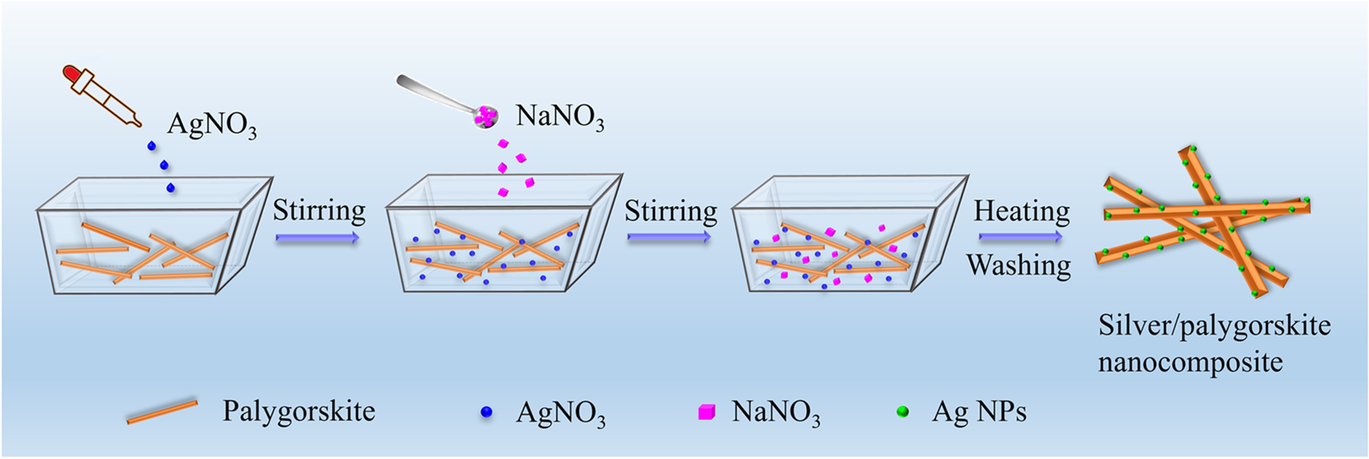
The fabrication strategy of Ag/palygorskite nanocomposite is shown in Fig. 1; the supported Ag NPs on Plg were prepared via a molten salt synthesis. Typically, a stock solution of 0.556 mmol AgNO3 in 6 mL of distilled water was first prepared, and then 1 g of Plg powder was added to form a slurry under vigorous stirring for 1 h. Subsequently, 0.5 g of NaNO3 powder was added to the slurry, followed by continuous stirring for 10 min. The mixture was transferred to a porcelain boat, and then heated to 310°C at a ramp rate of 1°C min–1 and held for 2 h. After cooling to room temperature, the final mixture was centrifuged repeatedly and washed with deionized water to remove residual NaNO3. Silver/palygorskite nanocomposites were obtained finally after freeze-drying for 24 h. The corresponding product was denoted as m% Ag/Plg-s, where m% represents the Ag weight percentage. The loading amounts of Ag NPs in Ag/Plg-s were 3, 6, and 12%, respectively. For comparison, m% Ag/Plg sample was synthesized by a similar procedure without the addition of NaNO3.
Fabrication strategy of Ag/palygorskite nanocomposites

The Preparation of Ag/Modified Palygorskite Nanocomposites
To prepare acid-activated Plg, 2 g of Plg was dispersed into 40 mL of 3 M HCl solution and mixed under vigorous stirring at 60°C for 2 h. Subsequently, the mixture was washed with distilled water and centrifuged several times at 4000 rpm (3000×g) to remove residual HCl. Finally, acid-activated Plg was obtained by drying at 80°C for 12 h; it was labeled as APlg.
Preparation of thermally activated Plg: 5 g of Plg was transferred to a porcelain boat. The porcelain boat was heated at 600°C at a rate of 5°C min–1 and held for 2 h in a furnace. After cooling to room temperature, the thermally activated Plg was collected; it was labeled as TPlg.
A stock solution of 0.556 mmol AgNO3 in 6 mL of distilled water was prepared first, and then 1 g of APlg powder was added to form a slurry under vigorous stirring for 1 h (the theoretical mass percent of Ag NPs is 6%). The other preparation steps were the same as the preparation method of Ag/palygorskite nanocomposites, and the final product was named 6% Ag/APlg-s. When the support was TPlg, the resulting product was labeled as 6% Ag/TPlg-s. For clarity, the definitions of the various abbreviations used for Ag/palygorskite nanocomposites is listed in Supplementary Information, Table S1.
Antibacterial Assessment
Microorganism Culture
Before experimenting with bacterial culture, all glassware and materials were sterilized at a temperature of 121°C and 1.03 bar of pressure for 30 min. The Luria-Bertani (LB) solution was prepared by dissolving 25 g of LB powder into 1 L of distilled water. Subsequently, the LB solution was sterilized at 121°C and 1.03 bar pressure for 30 min. After cooling to room temperature, the LB solution was inoculated with E. coli bacteria strains under laminar flow and then kept in an incubator at 37°C for 24 h.
Disk Diffusion Test
The antibacterial activities of raw Plg, Ag/Plg-s, Ag/APlg-s, and Ag/TPlg-s were evaluated using gram-negative E. coli bacteria. An LB agar medium was prepared by dissolving 25 g of LB and 15 g of agar powder into 1 L of deionized water and stirred until the powder was dissolved thoroughly, and then the solution was sterilized at 121°C and 1.03 bar pressure for 30 min. The sterilized solution was poured uniformly into petri plates and cooled to room temperature. 2 mg of antibacterial material was dispersed into 500 μL of sterilizing distilled water and then blank, drug-sensitive filter paper with a diameter of 10 mm was immersed in the above suspension for 2 h. The E. coli bacteria with a density of 1.8 × 10⁶ CFU mL–1 (colony forming units mL–1) were swabbed on the surface of the solidified agar plate using a sterilized glass spreading rod. Subsequently, the filter paper was placed on the medium and the petri dishes were inoculated at 37°C for 24 h. Finally, the clear zones around the samples were measured.
Minimal Inhibitory Concentration Test
The minimum inhibitory concentration (MIC) was measured by the lowest concentration of 3% Ag/Plg-s, 6% Ag/Plg-s, and 9% Ag/Plg-s to inhibit completely the growth of bacteria (i.e. no visible formation of colonies). The MIC of Ag/Plg-s was measured as follows: serial dilution of nanocomposites in LB medium was added into the tube. Each LB solution was inoculated with E. coli to a final concentration of 1.8×10⁶ CFU mL–1 and then shaken at 37°C, 180 rpm (64800×g) for 24 h. The E. coli bacterial solution without the addition of an antibacterial agent was set as a control. After shaking for 24 h, the optical density was determined at 600 nm using an ultraviolet-visible spectrophotometer (759S, Shanghai JingHua Instrument Co. Ltd., Shanghai, China).
Evaluation of Ag Ion-Release Behavior
To study the release profile of Ag ions, 20 mg of 6% Ag/Plg-s and 6% Ag/Plg antibacterial material were transferred into a dialysis bag (molecular weight cutoff: 1000 Da). Then, the dialysis bag was immersed in 20 mL of distilled water at room temperature and shaken at 150 rpm. After various time intervals (0.7, 1, 2, 3, 5, 7, 9, and 11 days), 2 mL of dialysis solution was collected for analysis (by inductively coupled plasma-atomic emission spectroscopy – ICP-AES) of the concentration of Ag ions released; each time 2 mL of fresh distilled water was added. The results were shown as the cumulative concentration of Ag ions released during the time period.
Characterization
X-ray diffraction (XRD) patterns of all samples were acquired using a Bruker D8 Advance X-ray diffractometer (Karlsruhe, Germany). The measurements were operated with Ni-filtered CuKα radiation at 40 kV and 40 mA at Guangzhou Institute of Geochemistry (GIG), Chinese Academy of Sciences (CAS) (Guangzhou, China). The counts over the range of 3–80°2θ were recorded with a scanning speed of 3°2θ min–1.
Transmission electron microscopy (TEM) and high-resolution TEM images were obtained using an FEI Talos F200S field-emission transmission electron microscope (Brno, Czech Republic) with an acceleration voltage of 200 kV at GIG, CAS (Guangzhou, China). The crystal lattice parameters were calculated by Fast Fourier Transform (FFT) using the TEM Image & Analysis (TIA) software. The analysis of Ag particle sizes was obtained using the Image J software.
The X-ray photoelectron spectroscopy (XPS) analysis was carried out using a Thermo Fisher K-Alpha XPS instrument (Waltham, Massachusetts, USA) at GIG, CAS (Guangzhou, China). The sample was analyzed by pressing the powders on double-sided adhesive tape to pellets. The C 1s peak at 284.8 eV arising from the adventitious carbon-based contaminant was used as the reference for correction.
The Ag element analysis was done using a Thermo Scientific ICAP 7000 ICP-AES instrument (Bremen, Germany) at Ji’nan University (Guangzhou, China).
Results and Discussion
Textural Properties of Ag/Palygorskite Nanocomposites
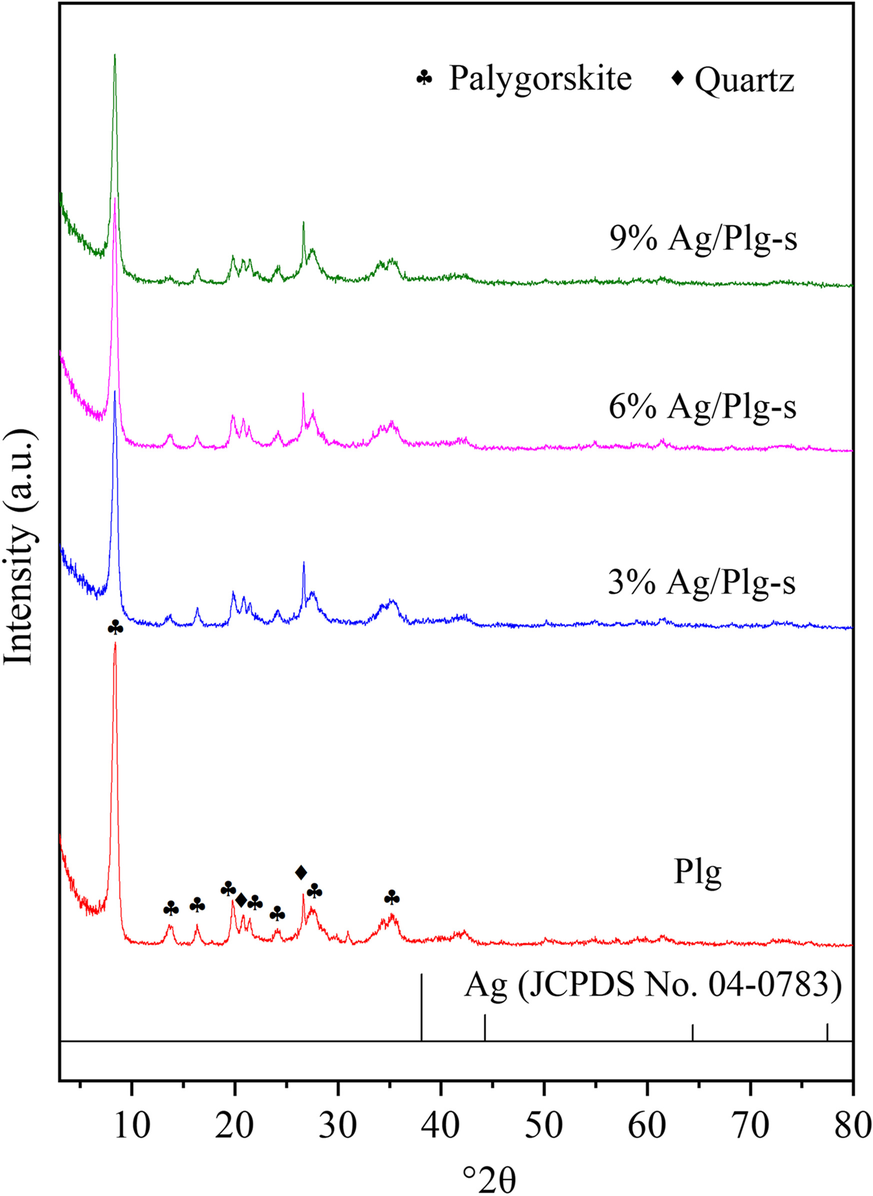
The XRD patterns of raw Plg, Ag/palygorskite nanocomposites (i.e. 3% Ag/Plg-s, 6% Ag/Plg-s, and 9% Ag/Plg-s, respectively, where the “%” was “wt.%”) prepared by the molten salt synthesis (Fig. 2) revealed that the characteristic reflections from Plg were present in all samples, suggesting that the Plg structure was preserved when it was used as the substrate. Specifically, with the increased loading amount of Ag, no reflections of metallic Ag were observed in the Ag/Plg-s nanocomposites. This result indicated that Ag NPs supported on Plg were highly dispersed. Similar phenomena were also reported in previous studies on the synthesis of the supported metallic Pt NPs (Dong et al., Reference Dong, Lei, Chen, Jiang and Zhang2019; Wang et al., Reference Wang, Xing, Zhu, Jia, Wang, Lu and Luo2019). In contrast, the Ag/palygorskite nanocomposites prepared without the introduction of molten salt revealed four distinct reflections of metallic Ag at 38.1, 44.2, 64.4, and 77.4°2θ, which corresponded to the (111), (200), (220), and (311) planes of crystalline silver (JCPDS 04-0783) (Fig. S1). With increasing loading of Ag, the intensity of characteristic reflections for Ag increased gradually (Fig. S1). The results above could be ascribed to the existence of NaNO3. During the heat-treatment process, the AgNO3 was decomposed gradually into Ag NPs, and NaNO3 acted as a dispersant to prevent the newly formed Ag NPs from agglomerating into large particles. As a result, the Ag NPs with highly dispersed and small particle sizes over Ag/Plg-s were obtained (Fig. 4). In addition, the surface hydroxyl groups of Plg acted as anchoring sites to stabilize Ag NPs, which contributed to the immobilization and dispersion of Ag NPs (verified in the text below).
XRD patterns of Ag/Plg-s nanocomposites synthesized by the molten salt method (i.e. 3% Ag/Plg-s, 6% Ag/Plg-s, and 9% Ag/Plg-s)

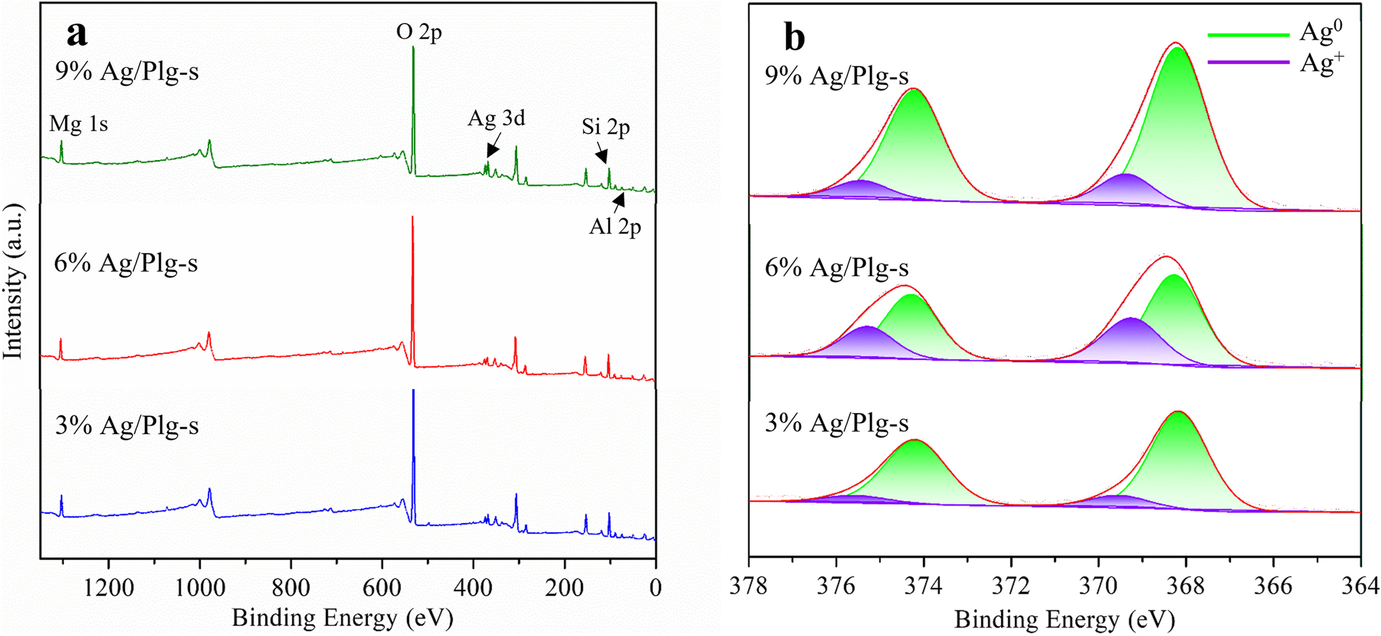
The XPS characterizations were carried out to elucidate the chemical environments of elements for 3% Ag/Plg-s, 6% Ag/Plg-s, and 9% Ag/Plg-s (Fig. 3). The survey spectra verified the existence of Mg, O, Si, Al, and Ag elements on the surface of Ag/Plg-s (Fig. 3a). The high-resolution Ag 3d XPS spectra of Ag/Plg-s samples could be fitted into four major components centered at ~368.2, ~369.4, ~374.2, and ~375.4 eV, respectively (Fig. 3b). The binding energies at ~368.2 and ~374.2 eV corresponded to metallic Ag (Zhu et al., Reference Zhu, Zhu, Yan, Fu, Xi, Zhou, Zhu, Zhu and He2018b), indicating that the Ag NPs were formed successfully. The binding energies at ~369.4 and ~375.4 eV corresponded to Ag+, which was ascribed to Ag+ ions from AgNO3 (Yang et al., Reference Yang, Chai, Guo, Jiang, Xu, Huang, Shen, Yu, Liu and Liu2021). The XPS results further confirmed the presence of metallic Ag in Ag/palygorskite nanocomposites, consistent with the XRD results.
a XPS survey spectra and b high-resolution Ag 3d XPS spectra of 3% Ag/Plg-s, 6% Ag/Plg-s, and 9% Ag/Plg-s synthesized by the molten salt method

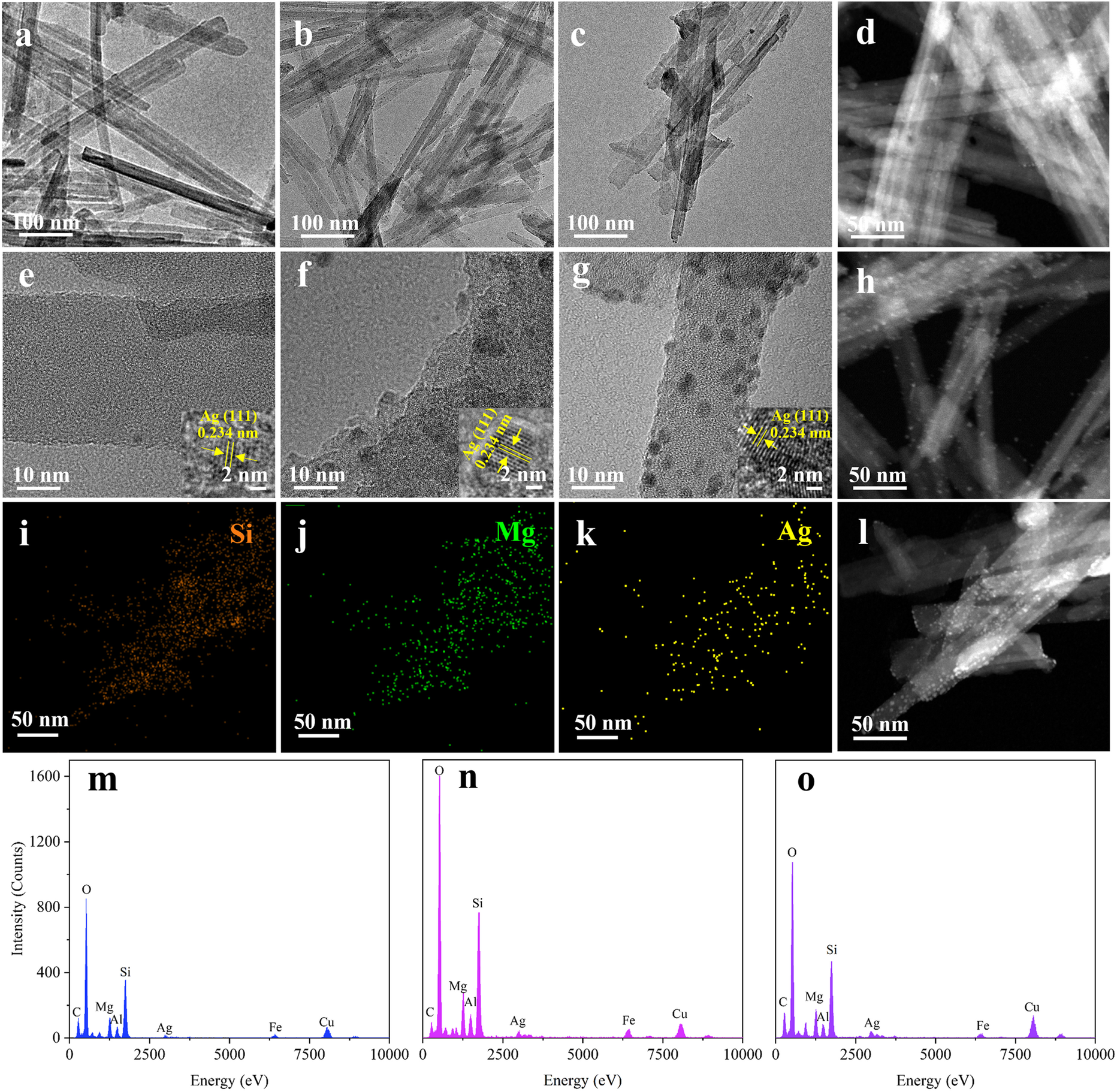
The morphologies of the Ag/palygorskite nanocomposites (i.e. 3% Ag/Plg-s, 6% Ag/Plg-s, and 9% Ag/Plg-s) were observed by the TEM and high-resolution TEM (HRTEM) images (Fig. 4). The TEM images of Ag/Plg-s indicated that Ag NPs were well-dispersed with a relatively average size on the Plg support (Fig. 4e, f, g). The good dispersion of Ag NPs was further confirmed by the homogeneous bright spots in the dark-field TEM images (Fig. 4d, h, l) and the uniform distribution of Si, Mg, and Ag on 9% Ag/Plg-s in the EDS mapping (Fig. 4i, j, k). With Ag loading amount increasing from 3% to 9%, the size of Ag NPs increased gradually (Fig. S2). The EDX spectra demonstrated the obvious signal for Ag along with other constituents – O, Mg, Al, Si, and Fe (Fig. 4m, n, o). The actual Ag loading amounts (analyzed by ICP-AES) of 3%, 6%, and 9% Ag/Plg-s were 2.65%, 5.21%, and 7.72%, respectively. The HRTEM images exhibited an interplanar spacing of 0.234 nm, corresponding to the (111) crystal plane of crystalline Ag (Liu et al., Reference Liu, Ge, Ding, Lu, Zhang and Gu2020; Parida et al., Reference Parida, Simonetti, Frison, Bulbul, Altenried, Arroyo, Balogh-Michels, Caseri, Ren, Hufenus and Gaan2020), which further verified the formation of crystalline Ag (Fig. 4e, f, g). Without the introduction of NaNO3 molten salt during the synthesis process, Ag NPs in 6% Ag/Plg aggregated into large particles (Fig. S3); the individual Ag NPs in Ag/Plg-s were separated from each other and showed no tendency to agglomerate into large Ag crystallites (Fig. 4e, f, g). This difference could be attributed to two factors: (1) the abundant surface hydroxyl groups of Plg provided anchoring sites to stabilize Ag NPs; and (2) NaNO3 molten salt served as a dispersant isolating the Ag NPs into small particles during the thermal reduction of Ag+. A similar role of molten salt during the preparation of silicon nanoparticles was also reported in the recent studies by Chen et al. (Reference Chen, Liu, Zhu, Wu, Fu, Zhu and He2018, Reference Chen, Zhu, Deng, Ma, He, Du, Fu, Zhang and Wang2019) which showed that molten salt (e.g. NaCl) acted as a dispersant to prevent newly formed silicon nanocrystals from aggregating as well as its role as a heat scavenger during the thermal reduction process. The above results indicated that Ag/palygorskite nanocomposites were synthesized successfully through the molten salt method which was expected to exhibit enhanced antibacterial activity.
TEM images of a 3% Ag/Plg-s, b 6% Ag/Plg-s, and c 9% Ag/Plg-s; HRTEM and STEM images of d and e 3% Ag/Plg-s, f and h 6% Ag/Plg-s, and g and l 9% Ag/Plg-s; EDS mapping (Fig. 4l) of i Si, j Mg, and k Ag of 9% Ag/Plg-s; and energy dispersive X-ray (EDX) spectroscopy of m 3% Ag/Plg-s, n 6% Ag/Plg-s, and o 9% Ag/Plg-s

Antibacterial Activity of Ag/Palygorskite Nanocomposites
Disk Diffusion Test
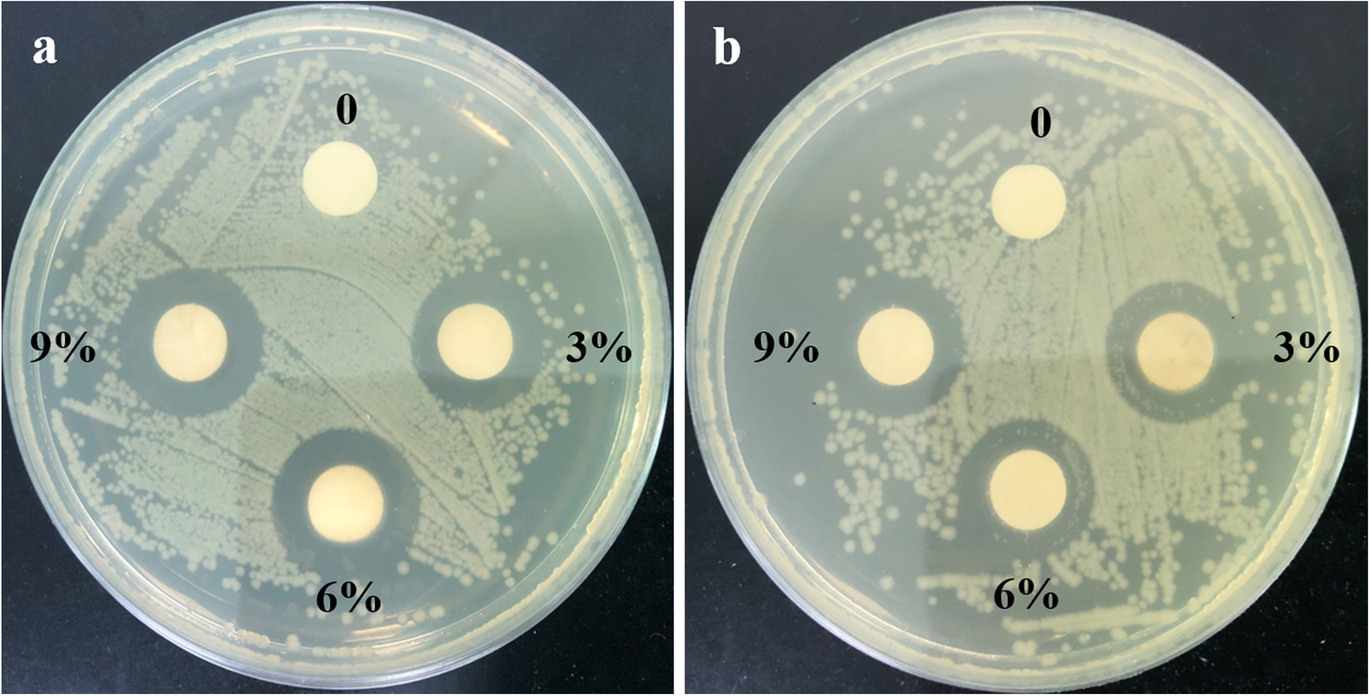
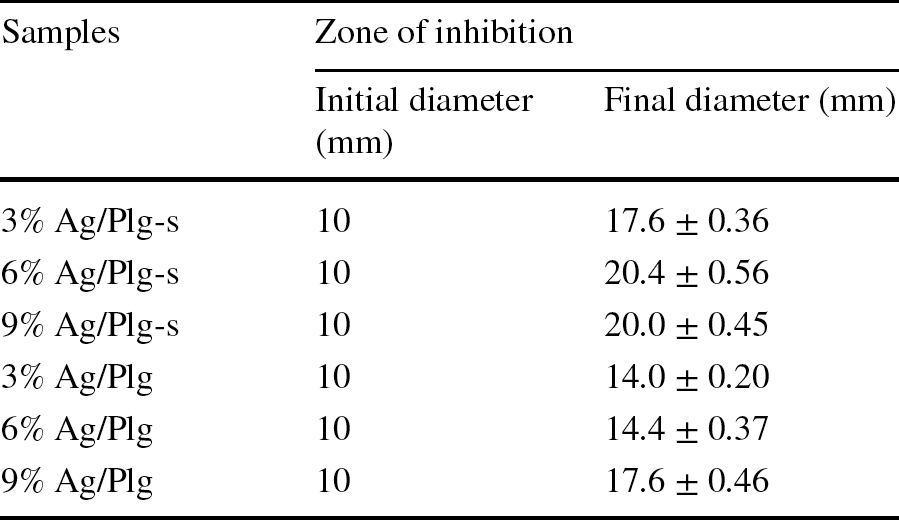
The antibacterial activities of Ag/palygorskite nanocomposites and raw Plg were determined by a paper disk method using E. coli as a model bacterial strain. The antibacterial activities of all samples are shown in Fig. 5. Raw Plg did not exhibit any antibacterial activity against E. coli. Noticeably, after incubation for 24 h, Ag/Plg-s presented evident zones of inhibition, which indicated enhanced antibacterial activity (Fig. 5a). Although the zones of inhibition appeared for Ag/Plg (Fig. 5b), they had smaller diameters than those of Ag/Plg-s and bacteria were found within the zones of inhibition, which suggested that the antibacterial performance of Ag/Plg was inferior to that of Ag/Plg-s. In particular, the zones of inhibition (diameter) of 3% Ag/Plg-s, 6% Ag/Plg-s, and 9% Ag/Plg-s (the introduction of NaNO3 molten salt during the synthesis process) were 17.6±0.36 mm, 20.4±0.56 mm, and 20.0± 0.45 mm, respectively. By contrast, the zones of inhibition of 3% Ag/Plg, 6% Ag/Plg, and 9% Ag/Plg (without the introduction of NaNO3 molten salt during the synthesis process) were 14.0 ± 0.20 mm, 14.4 ± 0.37 mm, and 17.6 ± 0.46 mm, respectively (Table 1). The Ag/Plg-s prepared by the molten salt method with a small amount of Ag loading exhibited enhanced antibacterial activity, which was attributed to the following: (1) the Ag NPs with small particle size and dispersed homogeneously could release a large amount of Ag+, which interacted with the bacterial cell membrane, causing an increase in membrane permeability (Kim et al., Reference Kim, Kuk, Yu, Kim, Park, Lee, Kim, Park and Hwang2007). In addition, the significant surface activity of Ag NPs could activate the generation of reactive oxygen species (ROS) in bacteria and eventually resulted in the death of bacteria (Motshekga et al., Reference Motshekga, Ray, Onyango and Momba2013); and (2) the even distribution and small sizes of Ag NPs led to significant utilization of the Ag element, and thus Ag/Plg-s could show an enhanced antibacterial performance under the same loading amount of Ag. Moreover, no obvious difference in terms of antibacterial activity in 6% Ag/Plg-s and 9% Ag/Plg-s was observed, which could be attributed to the large particle size of 9% Ag/Plg-s (confirmed by TEM images) (Fig. S2).
The zones of inhibition of a Ag/Plg-s nanocomposites and b Ag/Plg nanocomposites

Zones of inhibition of Ag/Plg-s nanocomposites (3% Ag/Plg-s, 6% Ag/Plg-s, and 9% Ag/Plg-s, where the “%” value was “wt.%”) and Ag/Plg nanocomposites synthesized without the introduction of molten salt (3% Ag/Plg, 6% Ag/Plg, and 9% Ag/Plg) against gram-negative Escherichia coli. The final diameter data represent mean ± standard deviation of three independent experiments run in triplicate

Minimal Inhibitory Concentration (MIC)
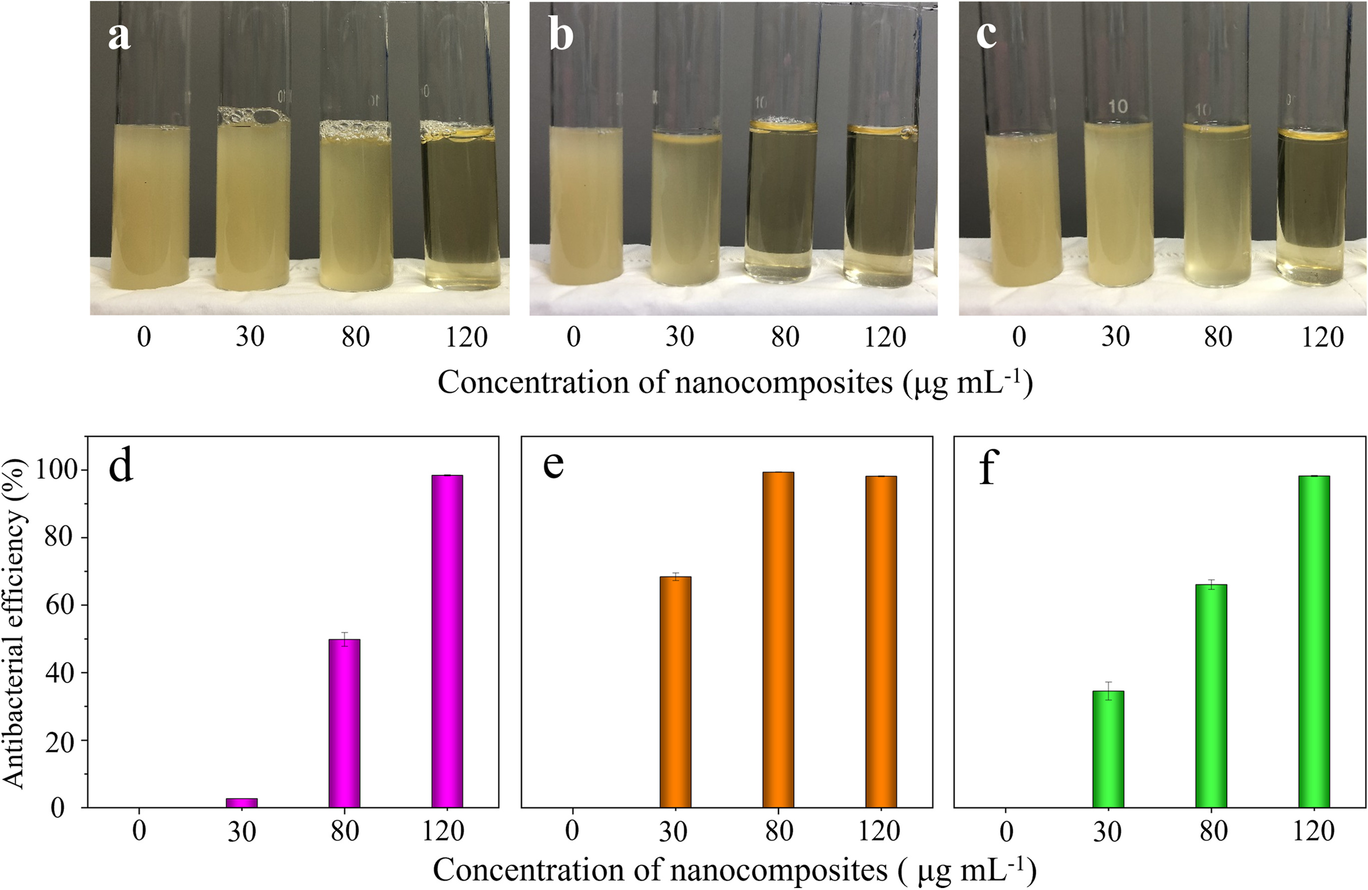
The concentration of antibacterial materials which could inhibit entirely any visible growth of bacteria after 24 h of incubation is called the “minimal inhibitory concentration” (MIC) (Lu et al., Reference Lu, Zou, Du, Wang and Zhang2014; Roy et al., Reference Roy, Butola and Joshi2017). The MIC is used commonly to assess the quantitative antibacterial activities of antibacterial materials (Zhang et al., Reference Zhang, Chen, Zhang, Zhang and Liu2013). The MIC values of Ag/Plg-s antibacterial materials were quantified (Fig. 6). The antibacterial materials (e.g. 3% Ag/Plg-s, 6% Ag/Plg-s, and 9% Ag/Plg-s) were added to an LB medium containing E. coli, and the final concentrations of LB medium were 30, 80, and 120 μg mL–1, respectively. The blank group was not added to antibacterial material. After culturing for 24 h, with the increase of the concentration for antibacterial material, the LB medium gradually became transparent, which indicated that the growth of most bacteria was inhibited. The results demonstrated that the 6% Ag/Plg-s showed the best antibacterial activity among 3% Ag/Plg-s, 6% Ag/Plg-s, and 9% Ag/Plg-s (Fig. 6a, b, c). When the concentration of 6% Ag/Plg-s was 80 μg mL–1, complete inhibition of bacteria growth was achieved. When the concentrations of 3% Ag/Plg-s and 9% Ag/Plg-s were 120 μg mL–1, bacteria growth was inhibited completely. Interestingly, the disk diffusion test results demonstrated similar antibacterial activities of 6% Ag/Plg-s and 9% Ag/Plg-s (Fig. 5), whereas the MIC test results indicated that 6% Ag/Plg-s exhibited superior antibacterial activity (Fig. 6), which could be ascribed to the faster diffusion rate of Ag nanoparticles with small particle size in the liquid LB medium of the MIC test than the solid one of the disk diffusion test in the given period.
Turbidity analysis of E. coli in liquid medium containing Ag/Plg-s nanocomposites with different Ag loading amount after culture for 24 h a 3% Ag/Plg-s, b 6% Ag/Plg-s, and c 9% Ag/Plg-s; the antibacterial efficiency of d 3% Ag/Plg-s, e 6% Ag/Plg-s, and f 9% Ag/Plg-s

Evaluation of Ag Ion-release Behavior
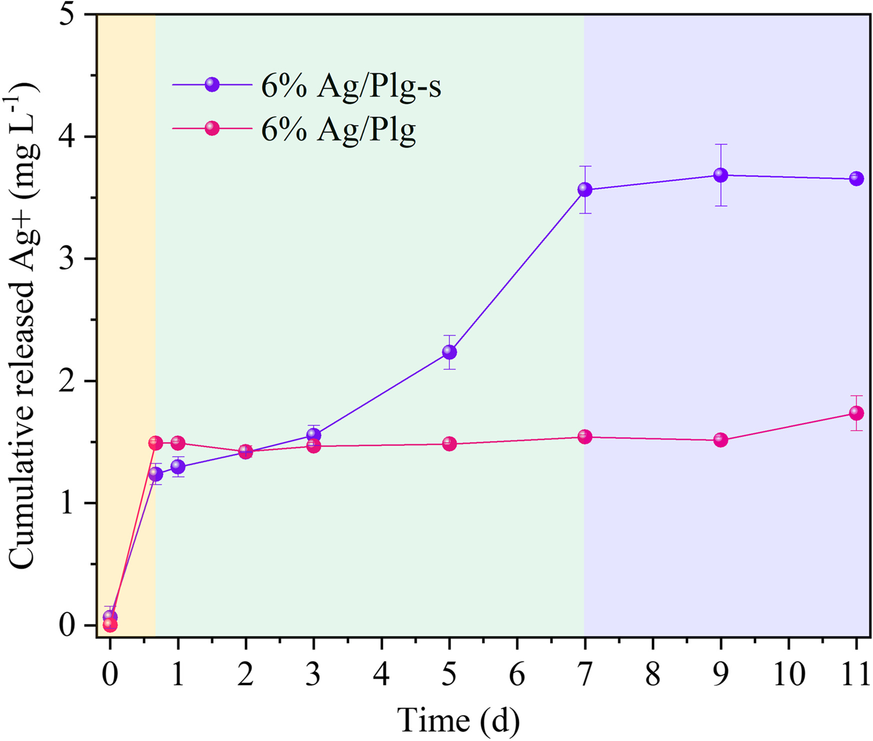
Previous studies reported that bacterial death is related to the Ag+ released (Xiu et al., Reference Xiu, Zhang, Puppala, Colvin and Alvarez2012) and the main reasons were: (1) the Ag+ released was related mainly to the sulfhydryl groups of vital proteins, causing deactivation of enzyme proteins (Holt & Bard, Reference Holt and Bard2005); (2) the Ag+ released interfaced with the bacterial cytoplasmic matrix, leading to irreversible damage to DNA and proteins (Seong & Lee, Reference Seong and Lee2017); and (3) the Ag+ released could induce the generation of ROS in the bacteria and the ROS could limit respiration and cause damage to DNA (Wang et al., Reference Wang, Pandit, Ye, Edwards, Mokkapati, Murugesan, Kuzmenko, Zhao, Westerlund, Mijakovic and Liu2017). In order to understand better the activity of antibacterial materials prepared by adding the NaNO3 molten salt, the release profiles of Ag+ from 6% Ag/Plg-s and 6% Ag/Plg were measured in water at 37°C (Fig. 7). Due to the particle-size discrepancies in Ag nanoparticles, the 6% Ag/Plg-s and 6% Ag/Plg exhibited different Ag ion-release behaviors. 6% Ag/Plg (without the introduction of NaNO3 molten salt during the synthesis process) only showed a rapid release stage (<16 h), followed by a stabilization stage (>16 h). In contrast, the Ag+ release profile of 6% Ag/Plg-s (prepared by the molten salt method) was divided into three parts: the rapid release stage (<16 h), the slow release stage (from 16 h to 7 days), and the stabilization stage (>7 days). The two former stages were attributed to the release of Ag nanoparticles of different sizes. The cumulative release concentration of Ag+ of 6% Ag/Plg-s reached 3.65 mg L–1 at 11 days, which is approximately twice that of 6% Ag/Plg (1.74 mg L–1). In comparison with previous studies, the Ag/palygorskite nanocomposites prepared by adding NaNO3 molten salt also showed a high cumulative release concentration of Ag+ in terms of similar particle sizes. For example, the cumulative release concentration of Ag+ of 6% Ag/Plg-s with an average particle size (~3.3 nm) of Ag NPs reached 3.50 mg L–1 at 7 days, which was greater than that (~2 mg L–1) of carbon nanotubes/silicon dioxide/Ag with an average particle size (~2.8 nm) of Ag NPs at 7 days) (Zhu et al., Reference Zhu, Xu, Wang, Chen, Gu, Chai and Wang2020), and than that (~0.04 mg L–1) of mesoporous silica nanoparticles-supported Ag nanoclusters with an average particle size (~2.0 nm) of Ag NPs at 7 days (Liu et al., Reference Liu, Li, Fang and Zhu2019). Therefore, the activity of antibacterial materials prepared by adding NaNO3 molten salt during the synthesis process was ascribed to the high concentration of Ag ions released.
Cumulative release profiles of Ag ions from 6% Ag/Plg-s and 6% Ag/Plg at room temperature

Structure Properties and Antibacterial Activity of Ag/Modified Palygorskite Nanocomposite
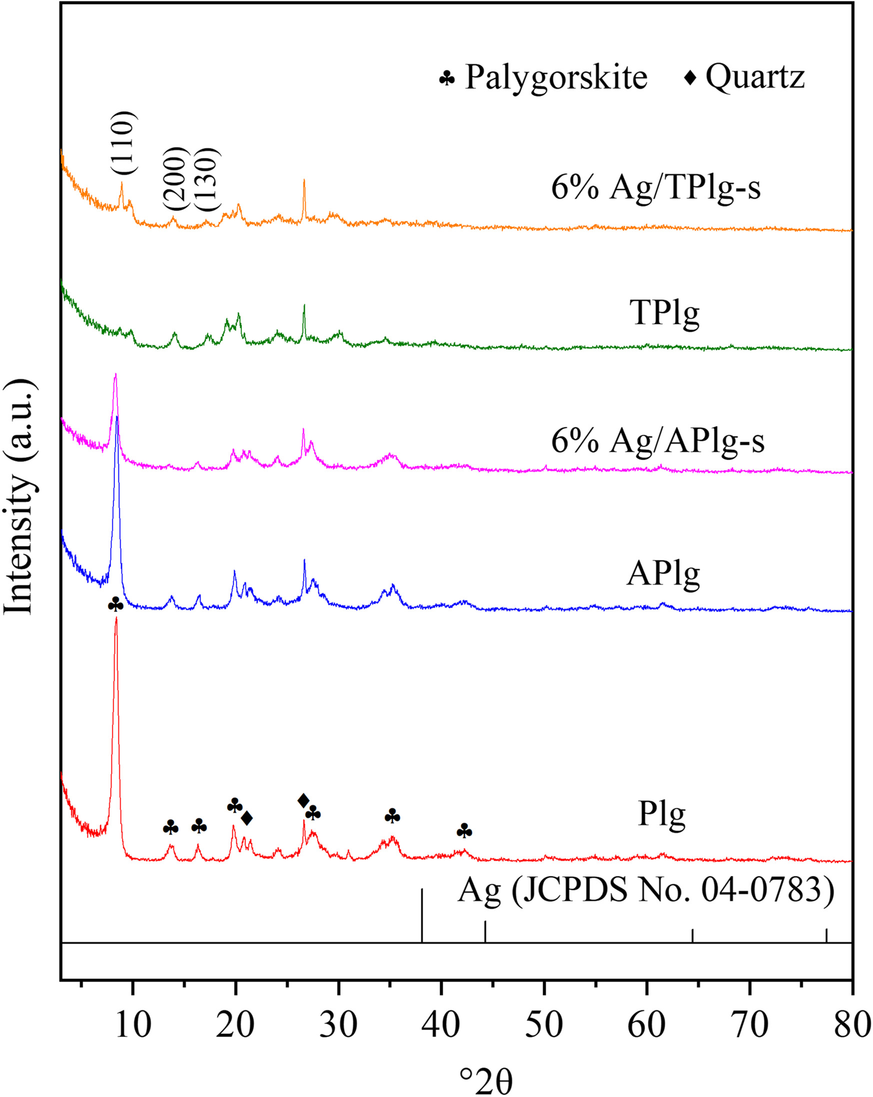
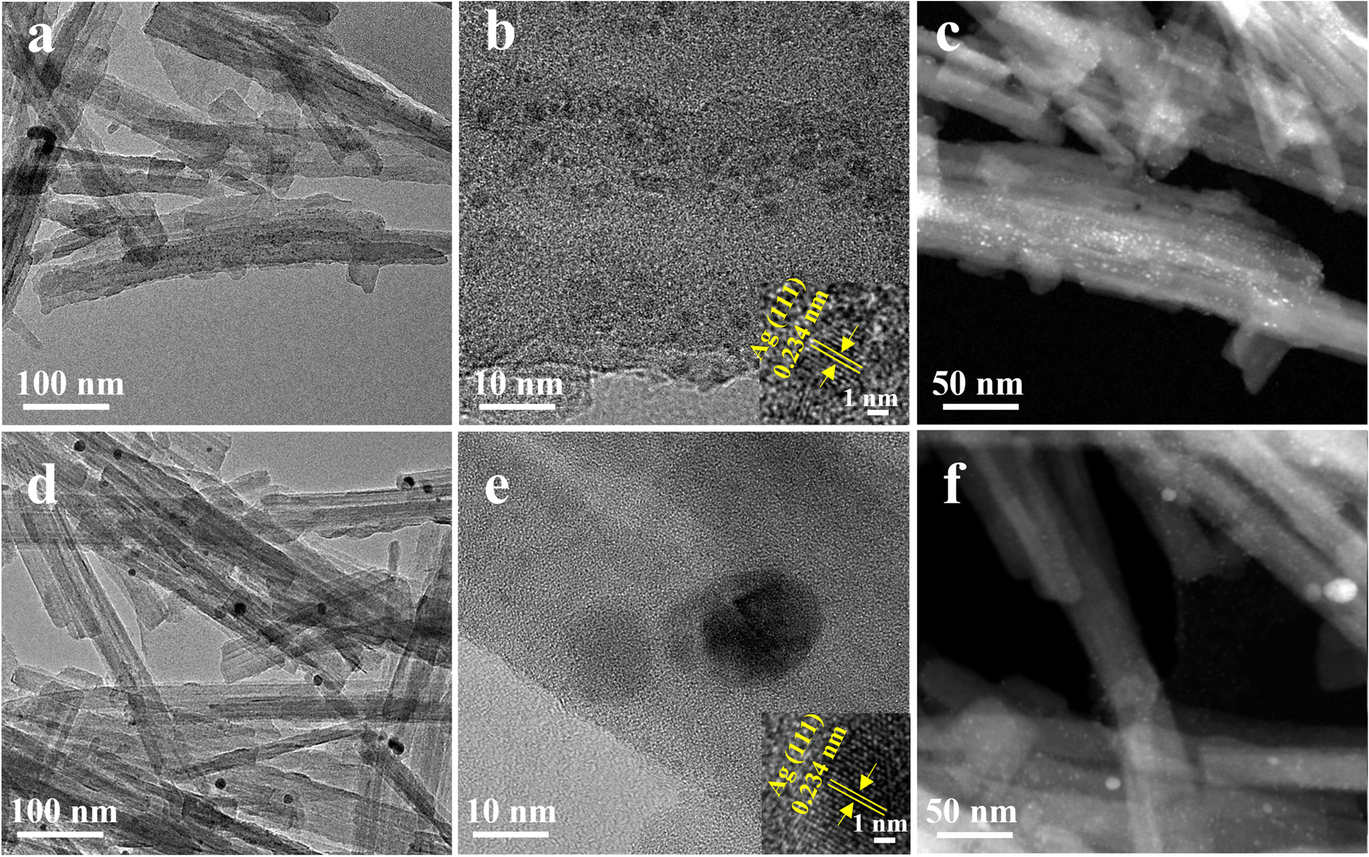
The hydroxyl groups on the surface of the carrier were regarded as the important anchoring sites for metal nanoparticles (Munnik et al., Reference Munnik, de Jongh and de Jong2015). To investigate the effect of the hydroxyl groups of Plg on the features (e.g. dispersion, particle size, and morphology) of Ag NPs, the acid activation and thermal treatment were used to change the number of surface hydroxyl groups on Plg. The acid activation of clay minerals could enhance the number of surface hydroxyl groups (Herrero et al., Reference Herrero, Pajares and Blanco1991), while the thermal treatment of clay minerals would reduce the number of surface hydroxyl groups (Kuang et al., Reference Kuang, Facey and Detellier2004). The XRD patterns of thermally treated and acid-activated Plg and Ag-modified Plg nanocomposites (i.e. TPlg, APlg, 6% Ag/TPlg-s, and 6% Ag/APlg-s) were compared (Fig. 8). After acid activation, the intensity of the characteristic reflection corresponding to the (110) crystal plane of Plg hardly altered, indicating the preservation of the Plg structure (Zhu et al., Reference Zhu, Zhang, Wang, Wen, Su, Zhu, He and Xi2018a). After thermal treatment at 600°C for 3 h, the intensity of the characteristic reflections corresponding to the (110) and (200) crystal planes of Plg became very weak and that of the characteristic reflection corresponding to the (130) crystal plane almost disappeared, which could be ascribed to the reduced order of the lamellar stacking along the c axis which arose from the decrease in the structural hydroxyl groups on Plg (Liu et al., Reference Liu, Chen, Chang, Qing, Kong, Chen, Xie and Frost2013). When the resulting acid-activated Plg and thermally treated Plg were employed as the carriers, no characteristic reflection of metallic Ag was found in the products (Fig. 8), which indicated that Ag NPs were highly dispersed in the 6% Ag/TPlg-s and 6% Ag/APlg-s. These results were further confirmed by the TEM and HRTEM images (Fig. 9). The low-magnification TEM images of 6% Ag/TPlg-s showed Ag NPs with large particle sizes and heterogeneous dispersion (Fig. 9d, f). In contrast, the Ag NPs in 6% Ag/APlg-s showed significant dispersion and uniform particle size (Fig. 9b, c), which could be attributed to a large number of surface hydroxyl groups on APlg as anchoring sites for Ag NPs. The compared results showed that the particles size of Ag NPs decreased gradually with the increase in surface hydroxyl groups of Plg (Fig. S4).
The XRD patterns of modified Plg (i.e. APlg and TPlg), 6% Ag/TPlg-s, and 6% Ag/APlg-s

TEM images of a 6% Ag/APlg-s and d 6% Ag/TPlg-s, HRTEM images of b 6% Ag/Plg-s and e 6% Ag/TPlg-s, STEM images of c 6% Ag/Plg-s, and f 6% Ag/TPlg-s

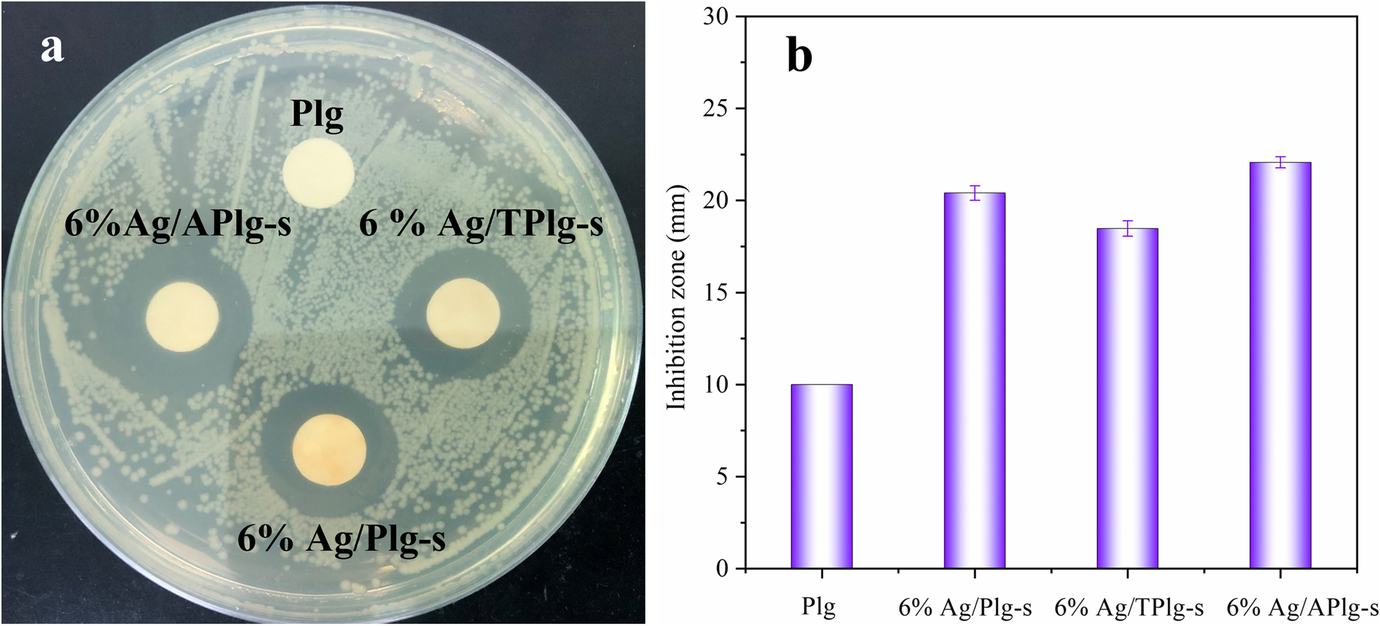
The antibacterial activity of raw Plg, 6% Ag/Plg-s, 6% Ag/APlg-s, and 6% Ag/TPlg-s was shown (Fig. 10). Compared with no zone of inhibition of raw Plg, the Ag-loaded Plg showed obvious zones of inhibition, indicating the good inhibition capacities to E. coli bacteria. The diameters of the zone of inhibition were 18.8±0.42 mm and 22.4±0.30 mm for 6% Ag/TPlg-s and 6% Ag/APlg-s, respectively. Compared with the 6% Ag/Plg-s (20.4±0.40 mm) prepared with the raw Plg, 6% Ag/APlg-s prepared with acid-activated Plg exhibited enhanced antibacterial activity. The phenomenon could be explained as follows: after acid activation, the increase in specific surface area and exposed hydroxyl groups of Plg provided more anchoring sites for Ag+. As a result, the agglomeration of Ag NPs in the subsequent thermal reduction process was prevented effectively, thus generating small Ag NPs with narrow particle-size distributions and good dispersion. Ag-loaded, thermally treated Plg exhibited less effective antibacterial activity than Ag-loaded raw Plg, however, which might be due to the wide particle-size distribution and agglomeration of Ag NPs on the support owing to the reduced number of surface hydroxyl groups after thermal treatment.
The zones of inhibition of a 6% Ag/Plg-s, 6% Ag/APlg-s, and 6% Ag/TPlg-s nanocomposites and b the histogram of the zone of inhibition for 6% Ag/Plg-s, 6% Ag/APlg-s, and 6% Ag/TPlg-s nanocomposites

Based on the results above, the supported, homogeneously dispersed Ag NPs on Plg were synthesized successfully via a molten salt strategy. The Ag/palygorskite nanocomposites exhibited small particle sizes and narrow particle size-distributions of Ag NPs and enhanced antibacterial performance. For example, an average particle size of Ag NPs on Ag/Plg-s (with Ag loading amount of ~9%) in this study was ~5.8 nm, which was smaller than that (~9.5 nm) of Ag NPs on montmorillonite (with Ag loading amount of ~10.7%) via microwave irradiation (Kesavan Pillai et al., Reference Kesavan Pillai, Sinha Ray, Scriba, Bandyopadhyay, Roux-van der Merwe and Badenhorst2013), than that (~9.0 nm) of Ag NPs on halloysite (with Ag loading amounts of 0.6%) via a chemical reduction method (Jana et al., Reference Jana, Kondakova, Shevchenko, Sheval, Gonchar, Timoshenko and Vasiliev2017), and than that (~15 nm ) of Ag NPs formed in the lumen of the halloysite via a thermal decomposition method (Abdullayev et al., Reference Abdullayev, Sakakibara, Okamoto, Wei, Ariga and Lvov2011). The highly dispersed and consistent particle sizes of Ag NPs resulted from: (1) the large specific surface area and the ample surface hydroxyl groups of Plg (offering more anchoring sites for Ag NPs) resulted in the small particle size and uniform dispersion of Ag NPs on Plg; and (2) the molten salt (e.g. NaNO3) acted as a dispersant to prevent Ag NPs from agglomerating into large particles. Moreover, the resulting Ag/palygorskite nanocomposites via the molten salt method showed enhanced antibacterial activity, in comparison with previously reported Ag/clay and Ag/carbon nanocomposites prepared by other methods (e.g. chemical reduction, photochemical reduction, and calcination) (Table S2). This method not only eliminated the time-consuming and complex process, but also removed to a significant extent the consumption of chemical reduction agents, which was beneficial for practical production and applications of Ag/clay nanocomposites.
Conclusions
In summary, the Ag/clay nanocomposites with high dispersion and small particle size Ag nanoparticles were synthesized successfully via a facile molten salt method. During the synthesis process, AgNO3 was decomposed gradually into Ag nanoparticles and the molten NaNO3 could isolate the newly formed Ag nanoparticles, which aided in the synthesis of homogeneously dispersed Ag nanoparticles (~2.3–5.8 nm) over palygorskite. As antibacterial agents, the Ag/palygorskite nanocomposites showed enhanced antibacterial activity (in terms of evident zones of inhibition against E. coli and minimal inhibitory concentration). Moreover, with the increase in surface hydroxyl groups of palygorskite, the Ag nanoparticles showed smaller particle sizes and greater dispersion, leading to better antibacterial performance. This work opened a new avenue for the synthesis of Ag/clay nanocomposites with homogeneously dispersed Ag nanoparticles without using chemical reductants or surfactants; this may well help lead to large-scale production and practical applications of Ag/clay antibacterial materials.
Supplementary Information
The online version contains supplementary material available at https://doi.org/10.1007/s42860-023-00218-8.
Acknowledgments
This work was supported financially by Youth Innovation Promotion Association CAS (2020347), CAS Interdisciplinary Innovation Team (JCTD-2019-15), and the Foundation of Key Laboratory of Clay Mineral Applied Research of Gansu Province, Lanzhou Institute of Chemical Physics, Chinese Academy of Sciences (CMAR-2017-01), Science and Technology Planning of Guangdong Province, China (2020B1212060055). This is contribution No.IS-3295 from GIGCAS.
Funding
Funding sources are listed in the Acknowledgments.
Declarations
Conflict of Interest
On the behalf of all authors, the corresponding author states that there is no conflict of interest.