“Death is difficult in any language”
(Green et al., Reference Green, Jerzmanowska and Green2018)Introduction
The World Health Organisation (WHO) defines palliative care as “an approach that improves the quality of life of patients and their families facing the problem associated with life-threatening illness, through the prevention and relief of suffering by means of early identification and impeccable assessment and treatment of pain and other problems, physical, psychosocial and spiritual” (World Health Organisation, n.d.). While often associated with end-of-life care, palliative care may be integrated into a care plan at any point after a diagnosis of life-limiting illness is made. This approach places emphasis on alleviating suffering and optimizing well-being in illness, in the dying process, and, for those surviving the deceased, in bereavement. Yet access to and quality of palliative care in many locales remains very limited, with as few as 14% of people requiring palliative care actually receiving it, mainly in Europe (Clark et al., Reference Clark, Baur and Clelland2020). Work to increase access to quality palliative care across the globe is, for many today, nested within broader efforts to advance universal and comprehensive health care.
As the movement to integrate palliative care into healthcare systems worldwide continues to grow, so have calls for its provision during humanitarian crises (Powell et al., Reference Powell, Schwartz and Nouvet2017; Smith and Aloudat, Reference Smith and Aloudat2017; Hunt et al., Reference Hunt, Chénier and Bezanson2018; Nouvet et al., Reference Nouvet, Sivaram and Bezanson2018). These crises, caused by natural disasters, epidemics, and conflict, represent widespread and acute threats to the health and well-being of people affected. Humanitarian action is guided by the imperative to “save lives, alleviate suffering and maintain human dignity during and after”Footnote 1 these crises. The 2018 SPHERE handbook (a key reference for minimum standards and best practices in humanitarian action) is perhaps the clearest testament to the shift toward inclusion of palliative care (SPHERE Association, 2018). The appropriate provision of palliative care in humanitarian crises is now defined in the sector as a basic, rather than an optional component of essential humanitarian healthcare delivery (Section 2.7). The recommendation is clear: while always respecting patient preferences, care should also be sensitive to “local values related to illness, suffering, dying and death” (p. 347). Indeed, this stipulation — that good palliative care implies provision in a manner respectful of local customs and culture — is echoed across recent literature on palliative care in humanitarian crises (Powell et al., Reference Powell, Schwartz and Nouvet2017; Hunt et al., Reference Hunt, Chénier and Bezanson2018; Nouvet et al., Reference Nouvet, Sivaram and Bezanson2018).
Culture, albeit subject to a variety of definitions, essentially refers to “the multi-level, multi-dimensional, dynamic, adaptive, and integrative biopsychosocial ecological system in which a population of people exists” (Kagawa-Singer, Reference Kagawa-Singer2011; p. S90). It is based on shared systems of “beliefs, values, and lifestyles” (Kagawa-Singer, Reference Kagawa-Singer2011; p. S90). Felt and enacted in all aspects of daily life (Kleinman and Benson, Reference Kleinman and Benson2006), culture cannot be exhaustively defined. As such, attending to culture in palliative care goes well beyond adhering to emergent legislation in different jurisdictions and regions that mandates the inclusion of culturally sensitive care. Understood to be largely unmeasurable, culturally sensitive care is seen to be critical to our humanity (Hannon et al., Reference Hannon, Zimmermann and Knaul2016), particularly for people who identify as minorities or have experienced marginalization throughout their lives. As far as quality of care is concerned, it is through the individual expression of cultural values that patients understand and approach dying and death.
This paper queries how to best operationalize the recommendation that humanitarian healthcare providers, teams, and organizations integrate palliative care into their practice in ways that are attentive to and respectful of cultural differences. It takes as its point of departure the extensive empirical literature documenting cultural diversity in palliative care. We first synthesize key ways culture has been reported as shaping expectations for, practices within, and engagements with palliative care around the world. We then discuss how cultural particularities, as defined in the literature, might be taken into account in planning for palliative care provision in humanitarian crisis settings. Our goal in this exercise is to render more tangible and thus realizable what may represent an abstract commitment to the provision of culturally sensitive palliative care for some healthcare providers and policy makers working with international humanitarian health organizations. This paper forms a part of a larger program of research investigating palliative care in humanitarian crises led by the Humanitarian Health Ethics Research Group and funded by ELRHA's Research for Health in Humanitarian Crises (R2HC) programme.
Methods
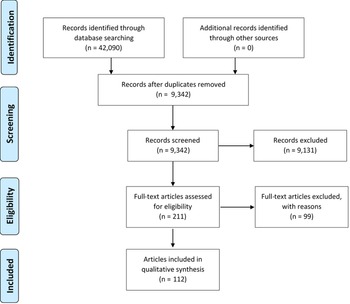
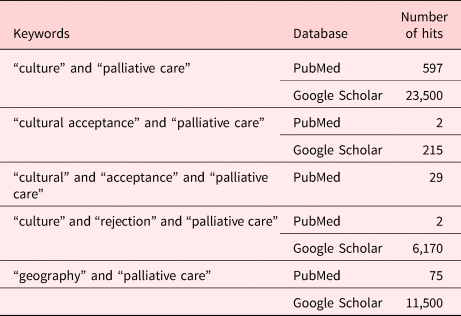
A critical interpretive synthesis (Dixon-Woods et al., Reference Dixon-Woods, Cavers and Agarwal2006) was undertaken drawing on the PRISMA framework (Moher et al., Reference Moher, Liberati and Tetzlaff2009) for the systematic review (Figure 1). Literature was constrained to peer-reviewed articles in the English language, published between 2010 and 2019. Potential articles were identified with keyword searches (Table 1) in PubMed and Google Scholar, with duplicates removed. Initial screening was by title (and abstract for clarification where necessary). At that point, articles were deemed eligible for full review if they included a focus on any of the following: (1) discussion of cultural norms, values, differences, and practices related to palliative care; (2) discussion of palliative care within the context of a dominant religious perspective (Permana, Reference Permana2015); (3) exploration of cultural differences in healthcare providers’ perceptions of palliative care practice; or (4) discussion of cultural particularities related to end-of-life cancer care, as such care often includes palliative approaches. Articles dealing with “culture of care” or “culture of work environment” were excluded, as these terms reference local institutional constructs rather than broader biopsychosocial ecological system constructs.
PRISMA representation of the systematic literature review process for culture and palliative care (after Moher et al., Reference Moher, Liberati and Tetzlaff2009).

Keywords and combinations

At the full article review stage, articles were excluded because they were not relevant (i.e., did not address the influence of some shared system of values or beliefs on palliative care, or dealt with the right to die in non-palliative care terms) (n = 60), were not a peer-reviewed article (n = 34), the language of the main article was not English (n = 2) or the journal was inaccessible through institutional libraries (n = 3).
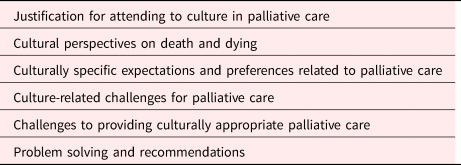
Primary identification was undertaken by a single individual, initial screening by two reviewers, and data extraction by a team of seven individuals. The data extraction template (Table 2) was designed a priori to capture relationships between culture and palliative care relevant to humanitarian crisis settings. The template was tested against three papers to allow for the identification of additional domains and for quality assurance purposes. Each data extractor assessed the three papers and then results were compared to ensure uniformity in the approach. Five members of the research team analyzed individual sections of the data extraction template, generating broad themes through an inductive review backed up with specific examples. The team reconvened to discuss these findings and, where appropriate, identify commonalities and differences across the data extraction fields.
Data extraction domains

Results
The 112 retained articles discussed palliative care in 51 countries and in relation to 9 major religions or worldviews [Buddhism (5), Christianity and branches of (14), Confucianism (2), Hinduism (3), Islam (12), Judaism (9), Indigenous (4), Taoism (1), and Voodoo (1)]. Seventy-seven were single country or subnational (69%). The majority of all articles identifying countries focused on the United States (36), the United Kingdom (14), Australia (13), and Canada (12). All of these represent high-income countries where palliative care resources and services are available, but 36 articles focused on ethnic or religious minority groups. Among low- and middle-income countries, South Africa (6) and India and Singapore (5 each) were most frequently represented. Qualitative studies (35) and literature reviews (25) were the dominant study types. Others included quantitative, mixed methods, and case studies, or combinations thereof.
Two overarching themes were identified. The first reflects explicit discussion in the literature, and our guiding research question: culture-specific engagements in palliative care. The second theme reflects a more implicit, yet consistent pattern in much of the literature on culture and palliative care. This is a tendency to equate expectations or preferences for palliative care that are provided to particular groups (ethnic, racialized, national, religious, or linguistic minorities) as “cultural” expectations and preferences. Such discursive normative framing of culturally specific palliative care expectations and needs is problematic and important to note as the humanitarian healthcare sector strives to better respond to palliative care needs.
Theme 1: Culture-specific engagement in palliative care
Several areas for the manifestation of cultural particularities in palliative care emerge as recurring and significant in the literature. These include cultural differences in expectations and behaviors related to health seeking; religious and cosmological beliefs; explanatory models for pain and suffering; preferences for location at the end of life; communication practices; and social norms. Each of these domains and their impacts on engagements with death and dying is briefly described in what follows.
Expectations and behaviors related to health seeking
Culture influences what clinical care is sought at what point in the illness trajectory or at what level of pain, and from whom. For example, an emphasis on the importance of affirming life can encourage healthcare-seeking behavior [Supplementary Table S1:95] and an emphasis on balanced lives may result in value being “placed on quality of life rather than on pursuit of a cure” [Supplementary Table S1:64,83]. Preferences for maintaining hope and prioritizing curative approaches [Supplementary Table S1:12,34,55,83,108,110] or use of traditional medicines, healers, and faith leaders [Supplementary Table S1:9,12,37,73,109] can delay clinical diagnosis and intervention, and present a barrier to the uptake of palliative care options. In some diseases, such as cancers, delays in biomedical care-seeking behavior can mean that the disease has advanced beyond biomedical curative treatment, leaving palliative care as the only option (Hiom, Reference Hiom2015).
Marginalization, stigma, and racism as historical and context-specific realities also impact health-seeking behavior and expectations. In contexts where particular populations have experienced marginalization or discrimination, trust in authority and in the healthcare system has been eroded [Supplementary Table S1:2,15,31,32,46,52,70,92]. This is further reflected in power differentials [Supplementary Table S1:21,50,66], the lack of access to “ethnically concordant physicians” [Supplementary Table S1:23], and suspicions of non-patient priorities driving decisions [Supplementary Table S1:43]. Linked to this may be a lack of awareness of services offered, where certain populations based on their wider marginalization and exclusion, may have less access to information. This “knowledge deficit” [Supplementary Table S1:7] results from ineffective outreach, low literacy, and social poverty [Supplementary Table S1:7,55,66,89,95]. As such, challenges to providing culturally sensitive palliative care may lie in people's perceptions around their access to services and breadth of choices rather than the actual provision of options [Supplementary Table S1:8,39,54,63]. Clinical recommendations and practices can also take on (non-normative) meanings for members of a population marked by a unique history. For example, historical marginalization may generate greater investment toward accessing “latest treatment” [Supplementary Table S1:32], while historical starvation may mean that access to nutrition is highly valued even at the end of life [Supplementary Table S1:72].
Religious and cosmological beliefs
Religion and cosmology play key roles in preferences for members of many cultural groups [Supplementary Table S1:93], and may be important for patients, families of patients, or providers [Supplementary Table S1:20,76,97,109,111]. Several authors noted the value of learning about particular cultural taboos and interdictions as part of wider commitments to quality palliative care, and building trust and capacity [Supplementary Table S1:49,72,107].
In some settings, for example, traditional healers and medicine connected to wider cosmological belief systems are routinely integrated into palliative care [Supplementary Table S1:53,69]. Individual definitions of good care and good end of life may involve consulting with elders and religious leaders, or the inclusion of ceremonies or religious practices [Supplementary Table S1:8,31,58,64,102,108]. Some practices may be incorporated into some clinical settings with relative ease. Such as, for instance, where a patient or family may request that the dying face the Holy Mosque [Supplementary Table S1:95]. It is not unusual for hospital policies to constrain culturally important practices [Supplementary Table S1:14,28,107]. For example, the slaughter of an animal to cleanse the family is generally not acceptable in western hospital or hospice environments, placing scientific and cultural traditions in conflict [Supplementary Table S1:35]. In these cases, preference or perceived need for rituals that are difficult to perform in hospital settings can ultimately influence patient and family preferences for the location of end-of-life care [Supplementary Table S1:98,99].
In some religions, it is inappropriate for unrelated members of the opposite sex to engage in physical contact, even for the purposes of medical examination, yet “asking permission to touch for hands-on medical care may not be the norm for western-trained physicians and nurses” [Supplementary Table S1:33]. Religion can also render some otherwise acceptable clinical practices unacceptable, such as withdrawal of nutrition or complete sedation [Supplementary Table S1:15,88], whereas in other contexts, force feeding is seen as an expression of love [Supplementary Table S1:101,107]. Fasting or refusal of pain medications to be more conscious at the end is practiced in some religious traditions [Supplementary Table S1:101]. This is compounded by the challenge of identifying when it is allowable to withdraw life-sustaining treatment, and whether this is determined morally or legally. For example, in a survey of more than 500 nephrologists across 45 countries, just over half (56%) felt that they were allowed to stop life-prolonging treatment (Van Biesen et al., Reference Van Biesen, van de Luijtgaarden and Brown2015), but less than 10% had institutional protocols on how to withdraw that treatment. In some contexts, religion is the main factor shaping decision making and preferences at the end of life [Supplementary Table S1:15,38].
Explanatory models for pain, suffering, and treatment
Culture informs explanatory models of life-ending disease, with implications for understandings and responses to pain and suffering at the end of life. Pain and suffering have moral religious connotations in some cultural contexts, with some researchers noting that these can be associated with living a bad life, a life of a sinner, or punishment [Supplementary Table S1:22,30,75,79]. Pain and suffering are understood in other contexts as providing a test of faith or strength, an opportunity for redemption, or simply part of one's lot in life to be endured [Supplementary Table S1:13,15,93,106,108,110]. In turn, this impacts upon preferences for or norms of pain relief, levels of control over pain, or how likely an individual is to discuss pain relief with healthcare professionals or others [Supplementary Table S1:52]. A requirement to be self-aware “at the EoL [end of life] in order to recite prayers” can be another reason to refuse pain relief [Supplementary Table S1:39]. Elsewhere, patients want control over pain and have preferences for no pain [Supplementary Table S1:44,86,98]. Requesting or challenging prescribed pain relief is seen to be disrespectful in some cultures [Supplementary Table S1:6], or represent a harbinger of death in the case of morphine [Supplementary Table S1:107]. In other cases, it is the cultural background and resulting judgment of the attending physician that affects pain management [Supplementary Table S1:6,34,52].
Belief in miracles or in a higher power can be perceived to supersede any need for palliative care [Supplementary Table S1:11,56,58,76,95,109]. It also frames death as a time to be accountable to or reconcile with God [Supplementary Table S1:6,7] or others [Supplementary Table S1:64,76]. Religious beliefs can certainly cast death as a time for acceptance [Supplementary Table S1:49,76]. Alternatively, where death is regarded as ultimately in the hands of a higher and divine force, providers may feel that it is their duty to do all they can for patients until that non-human force decides it is the end [Supplementary Table S1:11,26]. While it is not unusual in secular biomedical healthcare provision settings for providers to apply all treatments possible (within a broader death-denying culture), providers may feel an equally strong compulsion to try to secure the necessary resources to provide aggressive treatment to the very end for every patient based on a worldview that leaves no room for the provider to declare a patient to be dying [Supplementary Table S1:96,99,101]. As long as disease is viewed as something to be controlled, futile aggressive treatments at the end of life will continue when resources to provide such treatment are available [e.g., Supplementary Table S1:81].
Location at the end of life
Some worldviews consider it taboo to let someone die in a strange environment [Supplementary Table S1:68]. Receiving care and dying on tribal lands and homelands were identified as significant in several articles [Supplementary Table S1:12,17,20,77,91]. Some dying patients indicated that speaking and hearing their own language was a meaningful treatment measure: “Hearing your language is as good as having medicine” [Supplementary Table S1:25]. However, parallel and contradictory dominant beliefs can exist within a single cultural context with dying at home being a preference for some so that their soul will not get lost, while others see a home death as inconvenient, possibly bringing bad luck on the household, even impacting a house's resale value [Supplementary Table S1:14,41].
The distance of healthcare facilities from a patient's place of origin can limit patient and family preferences for palliative care, including those influenced by culture. In some traditions, it is customary for large numbers of people to gather when someone dies [Supplementary Table S1:5,41,64,66,85,92]. While this can be a challenge in any number of scenarios, including in the context of infectious disease as we have seen with COVID, the accompaniment of the patient by friends and relatives is more difficult for patients who have traveled away from home to receive end-of-life care. The geographic remoteness of a population can limit access to health care or specialists [Supplementary Table S1:33,66,92], and the recruitment of healthcare professionals [Supplementary Table S1:35]. This can prevent healthcare professionals from developing familiarity with local cultural preferences and norms, impede patient–provider relationships [Supplementary Table S1:35], and constrain choices over where someone can die [Supplementary Table S1:92].
Communication practices
Culture impacts how people communicate around prognoses and death. It shapes not only how patients and their families experience, think about, and engage (or not) in conversations, but also how physicians engage with patients and whether they are offering or inflicting difficult prognoses [Supplementary Table S1:19,22,87]. In many contexts, people do not want to talk about death and dying [Supplementary Table S1:27]. In some cultural contexts, this is because death and dying are thought to be precipitated by speaking of it [Supplementary Table S1:31,35,36,66,71,77,79,96,108]. Relatedly, talk of death is often seen as taboo and disrespectful [Supplementary Table S1:82,96,97,100,103,105,106], especially if death is near [Supplementary Table S1:61]. Avoiding talk of death and dying may also stem from a desire to protect loved ones [Supplementary Table S1:60,76,89,100] or not take away hope of recovery [Supplementary Table S1:12]. Others try to organize supports before telling patients [Supplementary Table S1:80]. In some contexts, non-disclosure of terminal diagnoses is acceptable [Supplementary Table S1:6,48,56,60,63] even by physicians [Supplementary Table S1:79]. Frank conversations about prognosis are prohibited in some cultures [Supplementary Table S1:47]. While not disclosing difficult prognoses might be believed to be in the patient's best interest, contradictions exist between what people desire for themselves versus for their family members [Supplementary Table S1:5,107]. Conversely, full disclosure norms reflect the acceptance of death and dying [Supplementary Table S1:74]. For example, where death is a time to reconcile with others and with God, the norm is to bring family and community together [Supplementary Table S1:28]. Whatever the reason, different norms of prognosis disclosure can complicate things in a very practical sense, such as demands for futile treatments [Supplementary Table S1:34]. An additional complication is that these (and other) norms can change when members of a cultural group migrate [Supplementary Table S1:69]: “the patient and their family's level of acculturation and stage of ethnic identity influences the extent to which these values are relevant and practiced” [Supplementary Table S1:2].
An important, yet less commonly considered element of communication are norms of social interaction and social hierarchies. This includes spoken and unspoken forms of communication, such as “metaphors or storytelling” [Supplementary Table S1:6], emotional cues [Supplementary Table S1:107], and identification of respected individuals to consult with [Supplementary Table S1:6,30]. In a similar manner to communication around pain, values placed on amiable encounters can leave questions and disagreements unexpressed and so unaddressed, while deference to authority will not challenge decision-making hierarchies [Supplementary Table S1:2].
Some authors report challenges caused by denial of illness severity and unwillingness to engage in death talk [Supplementary Table S1:58,65] in some settings. Several authors note “a lack of common understanding of terms” [Supplementary Table S1:18,21,112], and “ … a lack of cultural equivalents or negative connotations of such equivalents” [Supplementary Table S1:18,106,107] as a challenge to the provision of culturally sensitive palliative care. Additional challenges in cross-cultural interactions include differences in assessing and assuming best practices for how people receive information [Supplementary Table S1:104]. Different understandings of who is best suited or who can be involved in discussions about care further complicate matters. For example, limited resources or patient and family preferences may result in a relative acting as an interpreter and filtering information [Supplementary Table S1:12], but patients or physicians may wish to protect a young family member acting as an interpreter from the details of the prognosis [Supplementary Table S1:6]. Conversely, a professional interpreter being a member of the same community can raise concerns over privacy [Supplementary Table S1:107]. Ultimately, relationships and trust are critical foundations for effective communication and dignified dying [Supplementary Table S1:78,104].
Community and family norms
Norms of family organization and responsibility, which are culturally specific, also influence expectations and preferences for palliative care, including who is present, how decisions are taken, who is the spokesperson, and who is expected to provide care. Indeed, who is considered to be family varies across cultures. In collectivist cultures [Supplementary Table S1:107], a high value is placed on family-based decision making [Supplementary Table S1:46,48,61,67,68,69,74,76,89,93], linked to a less individualistic decision-making process [Supplementary Table S1:32,68,76,89] and decision making as a burden on the individual [Supplementary Table S1:69]. There are many context-specific complexities to these norms, but being surrounded and cared for by family is important in many contexts [Supplementary Table S1:25,28,29,30,46,61,68,91,103], sometimes emerging from broader family-centered cultural values [Supplementary Table S1:2], gender norms [Supplementary Table S1:94], or community expectations [Supplementary Table S1:107]. This can impact on the location of care when children feel that they are not fulfilling their duties if they do not care for ailing parents themselves [Supplementary Table S1:23,33,61]. Although there is often a sense of family duty [Supplementary Table S1:69,99], it can add stress to families or family members [Supplementary Table S1:48,62,68] that may be eased in clinical settings [Supplementary Table S1:48]. Conversely, failure to respect communitarian norms (i.e., community-based relationships rather than familial) can create conflict [Supplementary Table S1:68] or be seen as a sign of ingratitude [Supplementary Table S1:25].
Theme 2: Normative framing of culturally specific palliative care
In executing the review, our team was struck by the multiple dimensions and implicit rationales of culturally sensitive or culture-specific palliative care. Our own search strategy, we realized, left us open to reproduce a frequently found and rarely justified equation of cultural practices or values in palliative care with care requested by or provided to particular groups (ethnic, racialized, national, religious, or linguistic minorities). In short, culture emerges in literature on palliative care as a catch-all for labeling expectations or preferences for palliative care that are in some way “Other.” This is compounded by a lack of definition of terms and an equating of religion, race, and ethnicity with culture [Supplementary Table S1:50,59]. The equation of culturally sensitive palliative care being care for “Other” or minority groups is reinforced subtly but consistently across much of the literature. It is implicit to the groups and practices under examination in each article. Thus, for example, many articles returned in our search selected patients or families for inclusion in their study based on linguistic, racialized, ethnic minority, or religious characteristics. The authors used these demographic characteristics as criteria for assuming belonging to a “cultural” or social minority. Their engagements with palliative care become, in the subsequent interpretation, “culturally” unique engagements; engagements interpreted in the study as culturally particular and potentially generalizable to ethnic, linguistic, racialized, or religious social identity or perceived heritage. For example, the behaviors of Spanish-speaking individuals from migrant families to the United States from Central America are framed as stemming from Latino values of familialismo, machismo, and marianismo [Supplementary Table S1:17]; practices among the members of Indigenous groups in Canada are also studied and represented as shaped by the characteristics of culture, and as instructive for deepening understanding of culturally distinct and sensitive palliative care [Supplementary Table S1:21,90].
In other cases, the conflation of cultural practices with “Otherness” does not derive from the minority status of those studied. Instead, it derives from the framing of practices that are normal in a given non-western national or institutional context as significant based on their contrast to western or otherwise dominant norms of care. Thus, for example, in several articles on palliative care in Asia (e.g., Singapore, Malaysia, China), pressures of caring for loved ones at home as opposed to the hospital and “protecting” loved ones from hearing that they are dying are the norm, but are framed as exotic in the very fact of being pulled out as sufficiently interesting patterns to describe in a publication [Supplementary Table S1:14,18,34,39]. As such, it appears that a key characteristic of many articles published on the topic is to examine how the phenomenon explored or observed deviate from western expectations of practices.
Several articles [Supplementary Table S1:28,50,55,59,106,107,110] explicitly recognize the risk that attention to culture in palliative care can slip into unhelpful generalizations about the needs, preferences, and beliefs of particular groups. So it is that several authors warn against reading their research as evidence of essentialized, homogenous culturally determined practices:
“risks minimising discussions of cultural aspects of palliative and end-of-life care to lists of beliefs and practices from a range of so-called ‘cultural’ groups … that, whilst informative in regards to interpreting behaviours, symbols, rituals and other cultural practices of certain ethnic or religious groups that may be important and meaningful at the end of life, it runs the risk of encouraging generalisations about individuals and groups based on cultural identity. This in turn may then lead to the development of stereotypes, prejudices and gross misunderstandings” [Supplementary Table S1:50].
“the intention of this article is not to put all Africans into one box nor is it to promote cultural essentialism; hence, it should not be construed as such or used to stereotype Africans in Australia per se. ‘In a culturally diverse society it is as important to remember our shared humanity as well as our differences’” [Supplementary Table S1:28].
Authors aware of the risks of equating minority and racialized groups with assumed beliefs and preferences note that patient care can be compromised by such cultural stereotyping [Supplementary Table S1:3,42,55,106]. Patient autonomy may be reduced [Supplementary Table S1:69] in the shifting of care based on the stereotype, for example, assuming that ethnic food provision is culturally appropriate and thereby removing agency over food choices [Supplementary Table S1:18]. Stereotyping and misunderstanding can lead to a lack of trust; health professionals must be sensitive to diverse adherence to traditions and cultural experience even while being open to and facilitating culturally sensitive care [Supplementary Table S1:2,4,22,39,66,67]. “The process of ‘essentializing’ may contribute to further stereotypes or myths about ethnic minority groups” [Supplementary Table S1:39] and “a generalized ‘cookbook’ approach detailing traditional beliefs and practices of different cultures may actually create more harm for patients” [Supplementary Table S1:39].
While western palliative care and practices around dying remain the dominant attitudes, beliefs, and practices represented in the literature, these may not be transposable into different cultural settings [Supplementary Table S1:22,24,98]: “Assuming that beliefs and values are interchangeably valid and relevant across cultures is naive and potentially harmful” [Supplementary Table S1:24]. Authors present cultural competency as a means of responding to evidence that has shown minorities as less likely to seek comprehensive end of life or symptom management care [Supplementary Table S1:4,13,36,98]. By extension, historical trauma of mistreatment is cited as another justification for governments to take responsibility to ensure culturally responsible health care [Supplementary Table S1:5,8,11,103]. However, tensions remain as authors speak of the value of acknowledging the cultural sources of different experiences and expectations of dying and death, while also potentially re-inscribing western biomedical privilege through the emphasis on practices of patient autonomy and informed consent. Emphasis on such normative practices within healthcare ethics no doubt emerge out of sincere attempts to act ethically. Still, born from western ideals connected to values of individualism, emphasis on these practices can inadvertently erode support for practices with other cultural ideals at their core [Supplementary Table S1:72,77].
As the humanitarian healthcare sector strives to expand its provision of palliative care in humanitarian crises, the normative discursive framing of culturally specific palliative care as “Other” to the norm and inherent to the provision of care to particular populations merits highlighting. Without critical attention to such automatic equations between non-white (racialized), non-secular, and indigenous practices and culture, healthcare providers and teams in humanitarian crises might inadvertently assume preferences for particular groups. This can obscure healthcare provider attention to individual preferences and diversity within affected populations. Healthcare providers and teams may also fail to query potential additional factors that may be underlying expressions or limited expressions of needs and preferences with respect to palliative care.
Discussion: Relevance to and recommendations for palliative care in humanitarian crises
Echoing what is found elsewhere in the literature advocating for attention to palliative care needs in situations of war, disaster, epidemics, and mass displacement (e.g., Nouvet et al., Reference Nouvet, Sivaram and Bezanson2018), the updated SPHERE guidelines specify that providers of palliative care in humanitarian contexts should “be aware of and respect local ways of making medical decisions and local values related to illness, suffering, dying and death” and provide care in ways that are respectful of patient and family culture (SPHERE Association, 2018). The inclusion of this new standard on palliative care and its qualification that such care should, to the best of providers’ abilities, enact respect for local cultures, is seminal. However, there is a lack of clarification of what cultural diversity in palliative care expectations and ideas around death and dying might actually involve in specific settings. It is left up to providers and organizations active in humanitarian crises to determine how, through what actions, and with attention to what factors, they might aim to uphold this commitment to culturally respectful palliative care.
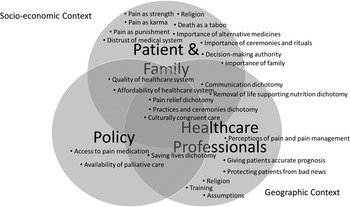
An important consideration for individuals and teams providing palliative care in humanitarian crises is that cultural beliefs, values, and norms rarely determine health-seeking behavior in isolation. As represented in Figure 2, a broad range of factors can overlap to shape possibilities and engagements with palliative care in humanitarian crises. Different structural and social determinants intersect with provider, patient, and family expectations, preferences, and practices related to palliative care in humanitarian crises. Socio-economic context [Supplementary Table S1:28], geographic distance [Supplementary Table S1:90], quality of care, and trust in the health system [Supplementary Table S1:51] are significant factors often over and above culture that inform perceptions, choices, and what patients and families value within any healthcare setting (Figure 2). For example, one case study indicated that individuals went to hospital to access food rather than treatment [Supplementary Table S1:22]. Changes in local economies can impact cultural expectations around palliative care; in another study, providing payment to family members for care evoked shame because family took care of the dying out of tradition and not because they were paid to do so [Supplementary Table S1:25]. Clinical recommendations and practices can take on (non-normative) meanings for the members of a population marked by a unique history as discussed previously.
The emergent roles of culture in dying and palliative care, with focus on humanitarian response.

Challenges and considerations related to culture for humanitarian crises contexts
Many of the challenges outlined in the general literature on palliative care and culture are expected to be exacerbated in situations of humanitarian crisis. In public health crises, as observed during the COVID-19 pandemic but also with Ebola, there may be infection control reasons for adjusting and relinquishing practices for the duration of an outbreak (WHO, 2014; Coltart et al., Reference Coltart, Lindsey and Ghinai2017; Radbruch et al., Reference Radbruch, Knaul and de Lima2020). In natural disasters, the chaos and disruption to infrastructure and services may complicate the practical realization of established norms and behaviors (Amir et al., Reference Amir, Yantzi and de Laat2020). During humanitarian crises, for individuals who have faced displacement and loss, the capacity to enact traditions or norms associated with one's past, lost home, land or family, or a persecuted and threatened social or ethnic identity, may feel particularly crucial (Dunn, Reference Dunn2012). Limited capacity to assert one's cultural identity and/or distinctiveness in contexts of humanitarian crises may increase suffering (Dunn, Reference Dunn2012).
In terms of delivering culturally sensitive care in these situations, it becomes important for care providers to recognize and understand what is willingly versus unwillingly being given up and ensure communication and local engagement to bridge understandings and expectations.
In these settings, the demand for palliative care may be very high. Patients (and local healthcare professionals) may be suffering varying degrees of psychological trauma as a result of the crisis event itself (WHO, 2018; Krakauer et al., Reference Krakauer, Daubman, Aloudat, Waldman and Glass2019). They may be separated from their support networks. In the face of displacement, destruction of infrastructure after natural disaster, loss of life, or infectious disease containment measures, access to meaningful places may be impossible or limited (Krakauer et al., Reference Krakauer, Daubman, Aloudat, Waldman and Glass2019). When the location of death is externally dictated, this can prevent the fulfillment of duty of care as well as preferences on where to die.
Where infrastructure has been damaged or destroyed, and supplies and equipment compromised and difficult to replace, there are ramifications for culturally sensitive palliative care. For example, regardless of cultural perceptions of pain and pain medication, lack of supplies may mean that needs cannot be met. At least some local medical staff will be affected by the event to the point that they are unable to work. For crises in lower-income countries, the situation tends to be exacerbated by poor initial conditions not only of healthcare access but also of overall health systems, with a lack of equipment and supplies, inaccessibility to opioids and other medicines due to laws and regulations, understaffing, lack of palliative care professionals with advanced training, and, in some cases, staff not having been paid for periods of time. Furthermore, during humanitarian crises, it is more likely that the lack of knowledge and awareness of palliative care among marginalied populations will collide with a lack of resources and therefore provision of services.
Cultural considerations and communication become particularly challenging during humanitarian response since care providers often come from outside communities or from foreign nations, based on need and availability. The application of cultural stereotypes can be exacerbated as responders will come from a variety of geographic and cultural backgrounds with different perspectives on how end-of-life care should be managed. It cannot be assumed that these perspectives can be harmonized. Rather, comprehensive attention to culture in palliative care requires an adaptable approach supportive of a negotiation of difference that keeps local customs and individual patient preferences and beliefs at the core of their response [e.g., Supplementary Table S1:2]. This flexible approach that centers on the patient is even more critical for humanitarian response. Restrictions on resources, knowledge, and time will have a limiting impact on what can be done. However, this should not be an excuse to avoid considerations around cultures; rather, it is a reality worth acknowledging and preparing for.
As we consider how a commitment to palliative care respectful of values and cultural beliefs might be enacted during humanitarian crises, the slippage between “cultural” and “Other” practices and values seems especially important to flag and critically engage. This slippage reproduces some problematic and fictional divisions between “normal” and “abnormal” expectations or preferences when it comes to palliative care. It also risks casting certain patient populations as “Other.” Ultimately, “culture shapes how people respond to and experience disease, including their beliefs about the etiology and impact of illness, their understandings of symptoms, wishes for information, what they say and their preferred communication style, and the meanings they attribute to diagnoses and experiences of care” [Supplementary Table S1:79]. Specifically, it impacts decision making and responses to symptoms [Supplementary Table S1:2,16,20,38,50,60,64,70,97,99]. All palliative care is informed by cultural values and norms. An erasure of the role of culture in discursively dominant palliative care alongside a coding of expectations or preferences for palliative care that deviate from biomedical, secular, and more mainstream western practices as “cultural” echoes colonial-era divisions between western and non-western, us and them, normal and abnormal; concerns which are particularly salient in humanitarian action due to its transnational nature. Coding diversity in palliative care preferences in this manner is not particularly helpful in terms of advancing best practices in the provision of care in culturally diverse or unfamiliar settings.
The literature we reviewed also embodies a challenge inherent to any studies of social and cultural differences: often based on small sample sizes to yield rich, nuanced, and detailed accounts for particular groups, studies of practices among those coded as “culturally” distinct always risk having their findings read by others as “rules” about how a group thinks or behaves. It should always be remembered that “cultural traditions are dynamic, never static, and cannot be generalized to all families” [Supplementary Table S1:31]. Indeed, it can be difficult and harmful to generalize, particularly given the global village in which cultures meld and new cultural values emerge. “Narrative competency” (active listening to better comprehend lived experiences of patients) [Supplementary Table S1:50] and cultural sensitivity both to culture and acculturation [Supplementary Table S1:55] are presented as strategies against stereotyping, othering, and “inattentiveness to suffering” [Supplementary Table S1:50] and need to be fundamental to humanitarian response.
All of these elements can contribute to difficulties respecting cultural preferences and should be elements of which humanitarian healthcare teams and providers are aware as they strive to optimize response to palliative care in humanitarian crises. However, perhaps more critical within the context of palliative care is the fact that humanitarian healthcare workers often feel obligated to focus on saving lives. Thinking about palliative care, let alone enacting culturally sensitive palliative care in a high stress, compromised resource setting, may not be an immediate consideration.
Emergent solutions for palliative care in humanitarian contexts
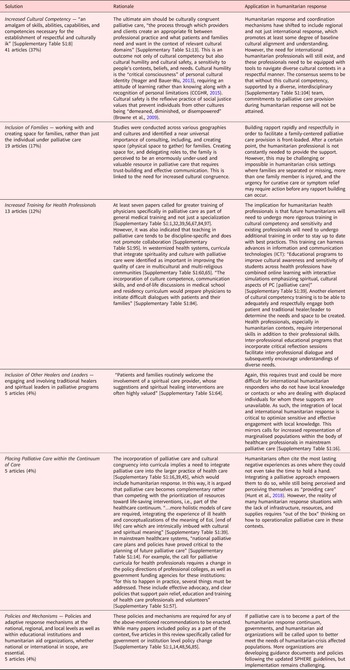
Delivering on commitments to culturally sensitive palliative care may be particularly challenging for healthcare providers working in humanitarian crises, where they might be responsible for the care of patients and families from diverse cultures, brought together under high stress conditions. Delivering on this commitment is crucial within broader humanitarian healthcare ethics commitments to alleviate suffering and ensure that care is respectful. Building on the challenges and considerations foregrounded in the broader literature on culture and palliative care, we present solutions toward the integration of palliative care provision in contexts of humanitarian crises (Table 3).
Emergent solutions and relevance to palliative care provision during humanitarian response

Limitations
As identified in many of the articles included in this paper, a major challenge when examining cultural values within a given context is the over-generalization of cultural values and the reinforcement of stereotypes that are then applied rigidly in the provision of palliative care rather than flexibly as determined through interactions with the patient. While this is a critical interpretive synthesis and steps have been taken to ensure inclusivity, articles published in languages other than English or outside the chosen date ranges may mean that some cultural perspectives are missing. Finally, this review was undertaken to deepen understanding of the influences of culture on palliative care in order to help clarify what is meant by calls for culture and culturally sensitive palliative care in humanitarian response. While we have cited many practices, norms, and beliefs represented in the literature as culturally normative or non-normative in particular contexts, an account of culturally diverse palliative care is not the goal. Rather, the intent is to draw careful attention to the need to tailor palliative care during humanitarian response, attending to unique cultural but also patient and family contexts, associated core values and principles for cultural safety, and recommendations for implementation.
Conclusions
While the unreflexive incorporation of sets of cultural values into palliative care practice can lead to harmful stereotyping or tokenistic consideration of culture, it is argued that understanding how cultural values can impact facilitators and barriers to palliative care, particularly in humanitarian crises, is important for achieving culturally sensitive palliative care. Thinking through what constitutes culturally sensitive practice when it comes to palliative care needs may be particularly challenging but also important in humanitarian crises, where healthcare providers from diverse cultures are brought together under high stress conditions. Looking at the broad cultural context within which palliative care is being delivered or established can provide critical insights to the types of questions to be asked and sensitivities to be addressed (e.g., lack of challenge to authority). In this manner, it is possible to devolve global desires and ideals to local needs and circumstance.
In humanitarian crises, advanced interventions may be out of reach due to resource (e.g., remote or low- and middle-income settings) or situational (e.g., humanitarian crises) constraints even if health professionals have the skills to utilize them. As such, people will die and ethically they should be able to die a good death, one that is comfortable, dignified, and culturally appropriate. Given the global patchwork of national palliative care and international response to humanitarian crises, it is inevitable that healthcare professionals will have varied training for and experiences with palliative care as a part of the healthcare system as well as different cultural values (from each other and from the local context). Equipping these individuals with reflexive training in culturally sensitive palliative care and ensuring that policies, resources, guidelines, and institutional protocols and examples are in place to realize this training in the field, are essential stepping stones.
Supplementary material
The supplementary material for this article can be found at https://doi.org/10.1017/S1478951521000894.
Acknowledgments
We thank the reviewers and all members of the Humanitarian Health Ethics Research Group who have been involved in this group's multi-year discussions and research on the place of palliative care in humanitarian healthcare responses. We also acknowledge the support of Erynn Monette, a global health research assistant at Western University.
Authorship
CJSW and EN conceptualized this paper; CJSW, EN, IR, GK, and SDL extracted the data; CJSW, EN, MH, LS, SDL, and GK analyzed the data; and CJSW, EN, MH, and LS interpreted the findings for humanitarian response contexts. All authors approved the version to be published and all have participated sufficiently in the work to take public responsibility for appropriate portions of the content.
Funding
The research presented in this article was supported by a grant from Elrha's Research for Health in Humanitarian Crises programme (Project #19775: Aid when there is “nothing left to offer”: A study of ethics and palliative care during international humanitarian action). The Research for Health in Humanitarian Crises (R2HC) programme aims to improve health outcomes by strengthening the evidence base for public health interventions in humanitarian crises. Visit www.elrha.org/work/r2hc for more information. The R2HC programme is funded equally by the Wellcome Trust and DFID, with Elrha overseeing the programme's execution and management. Matthew Hunt is supported by a Research Scholar Award from the Fonds de Recherche du Quebec-Santé, and Lisa Schwartz is supported by the Arnold L Johnson Chair in Health Care Ethics.
Conflict of interest
The authors declare that there is no conflict of interest.
Ethics and Consent
No human or animal subjects were involved in this research.
Data Management and Sharing
All articles included in this systematic review are referenced in a supplementary data file.