1. Introduction
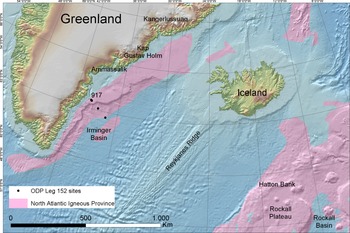
The South-East Greenland offshore area is dominated by the Palaeogene volcanic province (Fig. 1), which is associated with the opening of the North Atlantic (Larsen & Saunders, Reference Larsen, Saunders, Saunders, Larsen and Wise1998). This province was the target for the Ocean Drilling Program (ODP) Leg 152 drilling and sampling of volcanic rocks for geochronology and geochemistry to improve our knowledge of the East Greenland Large Igneous Province (Larsen & Saunders, Reference Larsen, Saunders, Saunders, Larsen and Wise1998; Tegner et al. Reference Tegner, Duncan, Bernstein, Brooks, Bird and Storey1998; Storey et al. Reference Storey, Duncan and Swisher2007). At site 917 of ODP Leg 152, ∼53.7 m of steeply dipping meta-sedimentary rocks was drilled beneath >800 m of Palaeocene basalts (Vallier et al. Reference Vallier, Calk, Stax, Demant, Saunders, Larsen and Wise1998). Ten centimetres of quartz sandstone, probably of fluvial origin, was recovered between the basalt and metamorphosed sedimentary rocks (Vallier et al. Reference Vallier, Calk, Stax, Demant, Saunders, Larsen and Wise1998).
South-East Greenland and Rockall conjugate margins (with shaded relief bathymetry/topography as background) and distribution of the North Atlantic Igneous Province (modified after Hopper et al. Reference Hopper, Funck, Stoker, Árting, Peron-Pindivic, Gaina and Doornenbal2014). The location of the ODP Leg-152 sites is also provided.

The onshore area along SE Greenland is characterized by the Archaean North Atlantic Craton orthogneisses and supracrustal rocks together with Palaeoproterozoic Nagssugtoqidian Orogen-related magmatic rocks and gneisses. In the Ammassalik area, an early Mesoproterozoic batholith is documented (Kolb, Reference Kolb2014). North of Ammassalik, the nearest known Mesozoic sediments are located at Kap Gustav Holm and further north, where Cretaceous–Palaeocene sedimentary rocks belong to the Kangerlussuaq Basin (Larsen et al. Reference Larsen, Hamberg, Olaussen, Nørgaard-Pedersen and Stemmerik1999). The basin consists of a c. 1 km thick Cretaceous to Palaeocene sedimentary succession (Larsen et al. Reference Larsen, Hamberg, Olaussen, Nørgaard-Pedersen and Stemmerik1999) onlapping Archaean basement gneisses. The sedimentary rocks belong to the Kangerlussuaq Group and the volcano-sedimentary package to the Blosseville group (Soper et al. Reference Soper, Higgins, Matthews and Brown1976; Nielsen et al. Reference Nielsen, Soper, Brooks, Faller, Higgins and Matthews1981). The basin and the inland area were covered by a thick pile of plateau basalts in the Early Eocene and overprinted by Palaeogene magmatism related to the break-up of the NE-Atlantic Ocean.
The fluvial quartz–sandstone drilled in core 917A, which unconformably overlies the meta-sedimentary package, is texturally immature and probably sourced from a deeply weathered basement terrane. Contacts between mineral grains are sharp and un-sutured, indicating that minimal recrystallization occurred. This is also supported by unaltered micas and plagioclase feldspar grains with a high calcium content, of which some show well-developed twinning (Vallier et al. Reference Vallier, Calk, Stax, Demant, Saunders, Larsen and Wise1998). By contrast, the metamorphic grade of rocks underneath the angular unconformity reached the lower end of the greenschist facies window, which is considerably higher than the metamorphism of the basalts (Demant et al. Reference Demant, Münch, Romeuf, Morata, Saunders, Larsen and Wise1998). This suggests an earlier and stronger metamorphic overprint that, in the absence of a cleavage indicating a major folding event, was interpreted by Vallier et al. (Reference Vallier, Calk, Stax, Demant, Saunders, Larsen and Wise1998) as tilting caused by rifting processes. They showed that the metasedimentary rocks were significantly deformed and overprinted compared to the quartz–sandstone, and concluded that they were metamorphosed, tilted, uplifted and eroded during the Late Cretaceous – Palaeocene before the quartz sandstone was deposited and the basalt flows emplaced. The age of the metasedimentary package was not resolved, and these rocks were assumed to be analogues to the Cretaceous–Palaeocene sediments of the Kangerlussuaq Basin (Fig. 1). In that basin the Lower Palaeocene shoreface sandstone foresets of the Klitterhorn member of the Sediment Bjerge Formation are unconformably overlaid by fluvial sandstones of the Schjelderup member of the Vandfaldsdalen Formation (Larsen & Saunders, Reference Larsen, Saunders, Saunders, Larsen and Wise1998; Larsen et al. Reference Larsen, Hamberg, Olaussen, Nørgaard-Pedersen and Stemmerik1999, Reference Larsen, Bell, Guarnieri, Vosgerau and Weibel2018). In a recent paper, Gerlings et al. (Reference Gerlings, Hopper, Fyhn, Frandsen, Péron-Pinvidic, Hopper, Stoker, Gaina, Doornenbal, Funck and Árting2017) correlated the metasedimentary sequence from Leg 152 to Aptian sediments dragged offshore Ammassalik representing the Mesozoic Ammassalik Basin, for which they estimated a thickness of c. 2 s (two-way time). The same sequence is suggested to be part of a wider area linked with the Hatton Bank – Rockall Plateau by Hitchen (Reference Hitchen2004).
In this paper we question the simple correlation between the metamorphic sequence and the Cretaceous succession, indicating that the meta-volcaniclastic rocks belong to a Neoproterozoic sedimentary cycle possibly extending the Torridon basin of the Hebridean Foreland offshore South-East Greenland.
2. Method
2.a. Core sampling
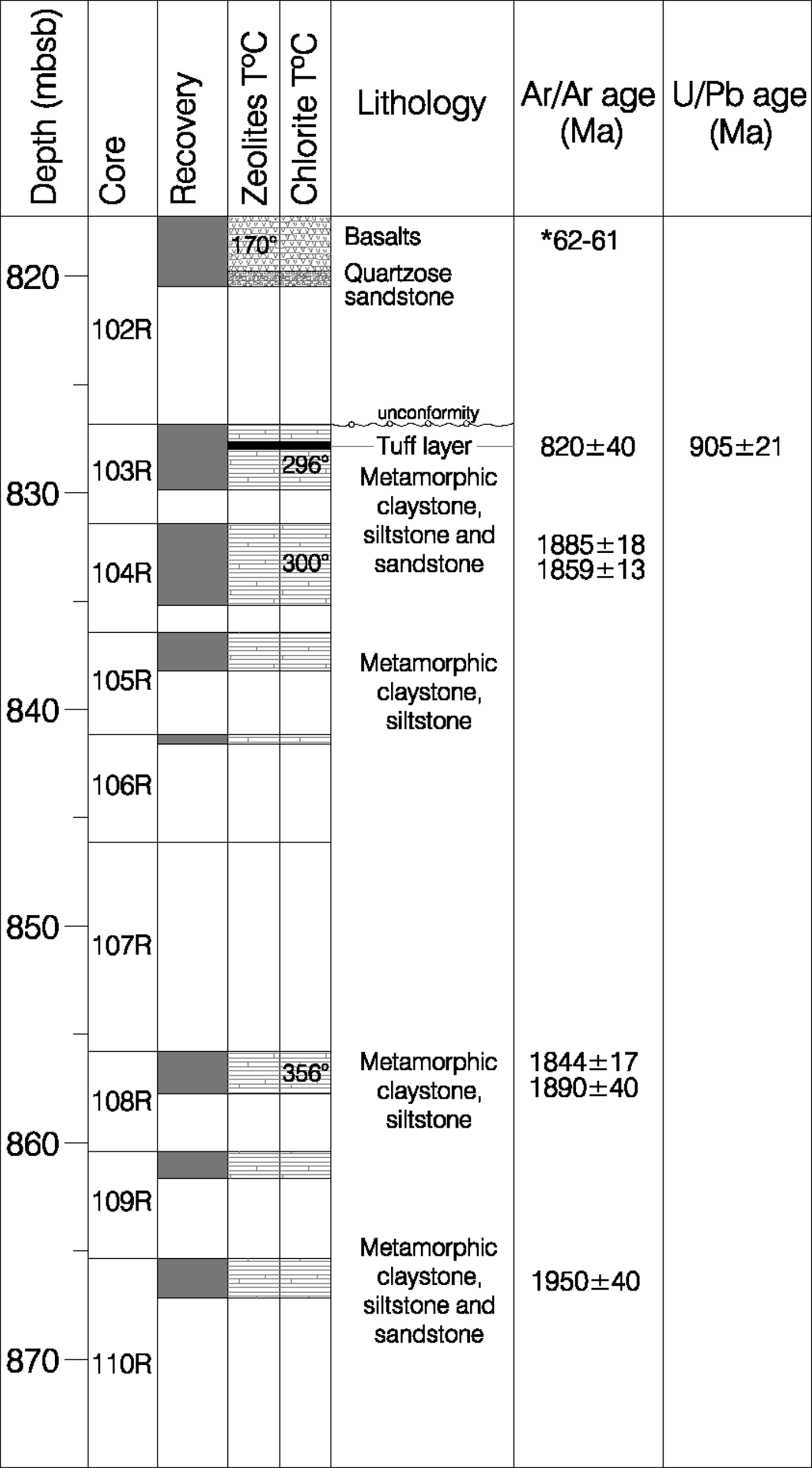
The ODP Leg 152 site 917 is located on the South-East Greenland shelf c. 50 km offshore. The drill penetrated 821 m of Palaeogene plateau basalts before reaching a thin layer (821.1 to 821.2 m below sea bottom) of coarse-grained, quartz-rich sandstone of possible fluviatile origin and of unknown age. Beneath this sandstone, steeply inclined, low-grade metamorphic rocks were encountered at 821.2 to 874.9 metres below seabed (mbsb). Core 103R corresponds to the topmost part of the metasedimentary succession reached at a depth of 826.9 down to 831.5 mbsb, while core 110R represents the bottommost part between 865.3 and 874.9 mbsb. Four samples were selected for Ar/Ar dating from core 917A and provided by the ODP repository in Bremen. These are 103R: 80–115 cm, 104R: 62–98 cm, 108R: 44–91 cm and 110R: 22–80 cm (Fig. 2). For those samples, thin-sections for petrographic analysis were also prepared because previous work by Vallier et al. (Reference Vallier, Calk, Stax, Demant, Saunders, Larsen and Wise1998) indicated the presence of volcanic glass and plagioclase minerals replaced by secondary minerals. Finally, sample 103R was selected for automated quantitative mineral mapping (SEM) to spot minerals for U/Pd dating that were too small for hand-picking.
Condensed log summary for site 917, bottom part of hole 917A (modified after Larsen et al. Reference Larsen, Saunders and Clift1994). Zeolite zonation typical of very low grade corresponds to temperatures less than 170 °C (Demant et al. Reference Demant, Münch, Romeuf, Morata, Saunders, Larsen and Wise1998). The temperature of equilibration of chlorite in the meta-sedimentary rocks of hole 917A (after Vallier et al. Reference Vallier, Calk, Stax, Demant, Saunders, Larsen and Wise1998) increases downhole. 40Ar/39Ar age of the basalts (*) after Storey et al. (Reference Storey, Duncan and Swisher2007). Biotite 40Ar/39Ar concordant ages of the meta-volcaniclastic rocks and U/Pb apatite age this study.

2.b. Automated quantitative mineral mapping (AQM)
Automated quantitative mineral mapping (AQM) of sample 103R was performed at GEUS on a ZEISS Sigma 300VP Field Emission Scanning Electron Microscope (SEM) using the ZEISS Mineralogic software platform. The analysis was carried out under low-vacuum (VP) conditions with an acceleration voltage of 15 kV, a 120 µm2 aperture, a beam current of c. 80 µA and with 0.15 s dwell time. For further details about the AQM and the set-up in ZEISS Mineralogic see Keulen et al. (Reference Keulen, Malkki and Graham2020). An area of c. 9 × 8 mm covering the location of the Ar/Ar dating spot site was selected for the analysis to characterize the bulk mineralogy of the sample and to screen for U/Pb dateable mineral phases. To increase resolution and to detect smaller grains, a step size between energy-dispersive spectrometry (EDS) analysis points of 5 µm was chosen. The AQM mineralogic results are presented in area % and not wt % as this would require more precise measurements of the phase chemistry.
2.c. U/Pb dating
U/Pb geochronology on apatite was carried out by laser ablation inductively coupled plasma mass spectrometry (LA-ICPMS) at GEUS. The U/Pb dating was performed in situ on the same polished rock chip of sample 103R as for the Ar/Ar dating. Based on the AQM screening analysis, apatite mineral grains preferably >20 um in size were selected for the LA-ICPMS dating. The location of each apatite mineral grain as identified by the AQM and Backscattered Electron Image (BSE) images was transferred to the LA-ICPMS instrument by using a linear transformation matrix from the two coordinated frames, using six reference points, and thereby matching the position between the three (AQM + BSE images and LA-ICPMS instrument). A NWR 213 frequency-quintupled solid state Nd:YAG laser system from Elemental Scientific Lasers (ESL) mounted with a standard TV2 ablation cell was coupled to an ELEMENT 2 double-focusing single-collector magnetic sector-field ICPMS from Thermo-Fisher Scientific. The mass spectrometer is equipped with a new jet interface pump system, a detector amplifier, and employed Ni jet-type sampler and standard H-type skimmer cones. Operating conditions and data acquisition parameters are listed in Appendix 1 (in the Supplementary Material available online at https://doi.org/10.1017/S0016756821001400). Prior to loading, the chip section and standards were carefully cleaned with ethanol to remove possible surface contamination. To ensure stable laser output energy, the laser was heated prior to operation, providing a stable laser power and flat ablation craters. The mass spectrometer was run for at least 1 hour before analysis, to stabilize the background signal. The ablated material was swept by the helium carrier gas and mixed with argon gas c. 0.5 m before entering the mass spectrometer. The ICP-MS was optimized for dry plasma conditions through continuous linear ablation of the GJ-1 zircon standard. The signal-to-noise ratios for the heavy mass range of interest (i.e. 202Hg to 238U), emphasizing 238U and 206Pb, were maximized, while simultaneously opting for the lowest element-oxide production level by minimizing the UO2/U ratio. To minimize instrumental drift, a standard-sample – standard-analysis protocol was followed, bracketing seven to eight samples by four standard measurements for each bracket. Standard analyses and results were validated by analyses of the natural apatite standards McClure (Schoene and Bowring, Reference Schoene and Bowring2006) and Durango (Chew et al. Reference Chew, Sylvester and Tubrett2011), and the Plešovice (Slama et al. Reference Sláma, Košler, Condon, Crowley, Gerdes, Hanchar, Horstwood, Morris, Nasdala, Norberg, Schaltegger, Schoene, Tubrett and Whitehouse2008) and GJ-1 (Jackson et al. Reference Jackson, Pearson, Griffin and Belousova2004) zircon standards. All standards demonstrated an averaged age accuracy within 3 % deviation (2σ) from reference values, and internal uncertainties of <2–3 % (2σ). Data processing was performed offline using the software Iolite v. 2.5 (Paton et al. Reference Paton, Woodhead, Hellstrom, Hergt, Greig and Maas2010, Reference Paton, Hellstrom, Paul, Woodhead and Hergt2011) with the VizualAge data reduction scheme (Petrus & Kamber, Reference Petrus and Kamber2012). Data were corrected for background, session drift and downhole isotopic fractionation by using GJ-1 as the primary reference material. Data were acquired from single spot analysis using a laser spot size for the analyses of 25 µm. A laser fluence of c. 3 J cm−2 and a pulse rate of 5 Hz were applied. The acquisition sequence included 30 s background measurement, then laser ablation on for 40 s, and finally washout for 40 s. Factory-supplied software was used for the acquisition of the transient data, obtained through automated running mode of pre-set analytical locations.
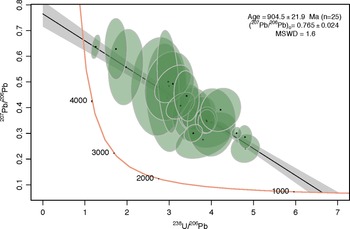
Apatite usually requires common Pb correction. However, for apatites with a high proportion of common Pb, the assumption that the common Pb ratio is invariant will mean that any error in the isotope ratios assigned to common Pb will result in a consistent, rather than a random, bias of the calculated 206Pb/238U and 207Pb/206Pb radiogenic ratios (Ludwig, Reference Ludwig1998). Thus, using a ‘SemiTotal–Pb/U isochron’ approach (Tera & Wasserburg, Reference Tera and Wasserburg1972), the background- and session-drift corrected ratios can be plotted on the Tera–Wasserburg concordia diagram without correction for common Pb. If (and only if) the true 206Pb/238U and 207Pb/206Pb radiogenic isotope ratios represent comparable dates, the non-common Pb-corrected data will be dispersed along a line whose lower intercept with the concordia curve defines the age of the episode responsible for this line (Ludwig, Reference Ludwig1998). This is the case for the apatite grains herein, and thus the lower intercept age reported here for the apatites is not corrected for common Pb, assuming that this intercept age denotes the U/Pb isotopic age of a specific geological event recorded by the apatite mineral grains. Diagrams and statistical information were produced through the software IsoplotR (Vermeesch, Reference Vermeesch2018).
2.d. 40Ar/39Ar dating
For 40Ar/39Ar age determination whole-rock mini-cores and biotite crystal separates were loaded into pits in aluminium irradiation discs. Each unknown was surrounded with the neutron flux monitor Fish Canyon sanidine (FCs) with an assigned age of 28.201 Ma (Kuiper et al. Reference Kuiper, Deino, Hilgen, Krijgsman, Renne and Wijbrans2008). The irradiation discs were then wrapped in aluminium foil and encapsulated in a heat-sealed quartz glass tube. The samples were irradiated in the cadmium-lined in-core irradiation tube (CLICIT) facility at the Oregon State University TRIGA reactor for 9 hours. Argon isotopic analyses of the gas released by laser step-heating of the whole-rock mini-cores and biotite separates (Supplementary Material, available online at https://doi.org/10.1017/S0016756821001400) were made on a fully automated, high-resolution Nu Instruments Noblesse multi-collector noble-gas mass spectrometer (Nu Instruments) at the Natural History Museum of Denmark, using previously documented instrumentation and procedures (Storey et al. Reference Storey, Duncan and Swisher2007; Rivera et al. Reference Rivera, Storey, Zeeden, Hilgen and Kuiper2011). The data are reported relative to the astronomically calibrated 40Ar/39Ar age of 28.201 Ma for the FCs monitor mineral (Kuiper et al. Reference Kuiper, Deino, Hilgen, Krijgsman, Renne and Wijbrans2008).
3. Results
3.a. Petrography of the core samples
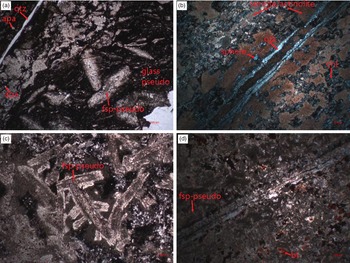
Representative optical microscopy images of thin-section for samples 103R, 104R, 108R and 110R are shown in Figure 3. As described by Vallier et al. (Reference Vallier, Calk, Stax, Demant, Saunders, Larsen and Wise1998), the mineral assemblages of all four samples are characteristic of the greenschist metamorphic facies, and the description given by Vallier et al. (Reference Vallier, Calk, Stax, Demant, Saunders, Larsen and Wise1998) is generally in accordance with our observations herein. The major mineral phases identified are chlorite that is omnipresent, white mica occurring exclusively as sericite, altered plagioclase feldspar (to chlorite, quartz, secondary feldspar, epidote and sericite), actinolite (from altered amphibole or pyroxene?), quartz, and epidote, with subordinate biotite, leucoxene, and Ti-oxides (most probably brookite or anatase). In addition, colourless, subhedral apatite (<1 modal %) was identified in sample 103R, which is also the rock sample that contains 0.51 wt % P2O5 (Vallier et al. Reference Vallier, Calk, Stax, Demant, Saunders, Larsen and Wise1998). As described by Vallier et al. (Reference Vallier, Calk, Stax, Demant, Saunders, Larsen and Wise1998), recrystallization and metamorphic alteration has destroyed the original mineralogy and most of the original features. However, pseudomorphs after plagioclase feldspar laths in what resembles ophitic texture are observed in samples 103R, 108R and 110R (Fig. 3a, c and d). In samples 103R and 108R, the laths are as large as 1 mm in length, and whereas in 108R the habitus of the laths is well defined (Fig. 3c), they appear more subhedral in sample 103R, in particular when occurring adjacent to the micro-crystalline ‘pseudomorph’ domains that most probably have replaced glass matrix (Fig. 3a). This indicates a volcanic origin for especially sample 103R (laths and glass), and thin-layered bedding dominated by quartz and subordinate feldspar and chlorite was observed in samples 104R and 110R (Fig. 3b, d). Small veins composed primarily of quartz, with subordinate albite, chlorite and anhedral epidote, were recognized in sample 103R only. Most epidote, though, appears in irregular, separate enclaves together with leucoxene and quartz. Titanite was not identified in any of the samples. Brown, pleochroic biotite occurs as a minor component (varies from <<1 % to a few modal %) in all four samples. In samples 104R and 108R, occurrences of small, spherical structures up to 200 µm in size and composed of a core of chlorite + quartz and with a rim of mainly feldspar with bluish 2nd order interferences colours are observed. Vallier et al. (Reference Vallier, Calk, Stax, Demant, Saunders, Larsen and Wise1998) interpreted these structures as the original presence of radiolarians, and thus as sedimentary structures. However, the resemblance to gas vesicles and thus micro-amygdules cannot be ruled out.
Optical microscopy images of the thin-sections investigated in this study. (a) PPL of sample 103R showing pseudo-intersertal texture with subhedral pseudomorph laths after plagioclase in a microcrystalline matrix replacing most likely the original glass matrix. Further, the typical appearance of cross-cutting quartz veins and of apatite mineral grains. (b) Crossed polarized light (XPL) image of sample 104R showing recrystallized original bedding with thin layers of mostly quartz interbedded with layers composed of predominantly chlorite, actinolite, sericite white mica, feldspar and leucoxene. (c) Plane polarized light (PPL) image of sample 108R with relatively large, anhedral pseudomorph laths after plagioclase feldspar in a metamorphic matrix composed of chlorite, actinolite, recrystallized feldspar, sericite white mica and leucoxene. (d) PPL of sample 110R showing the original bedding with a thin layer of mostly quartz as well as chlorite and feldspar surrounded by layers composed predominantly of chlorite, actinolite, sericite white mica, plagioclase feldspar pseudomorph laths, leucoxene, biotite and epidote.

3.b. Automated quantitative mineral mapping
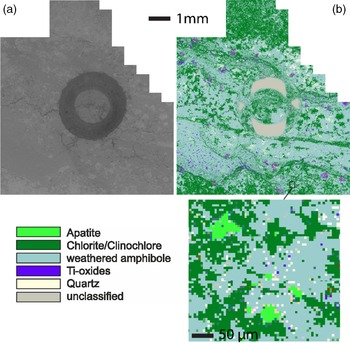
Sample 103R is dominated by two main mineral phases: chlorite/clinochlore and a phase characterized as ‘weathered amphibole’, which corresponds to actinolite + various alteration overprints. Together, these phases cover c. 88 % of the sample area of sample 103R (Fig. 4). Quartz and Ti-oxides (most probably brookite, anatase or leucoxene) cover c. 2 area %, and all other phases <0.5 area % each. Apatites makes up c. 0.4 area % of the sample, and in general vary in mineral grain size according to the location of the apatites in the irregularly developed bedding that can be identified from the AQM image.
Scanning Electron Microprobe mineral map. (a) Back-scattered electron (BSE) map; (b) AQM mineral map with detailed inset.

3.c. Apatite U/Pb dating
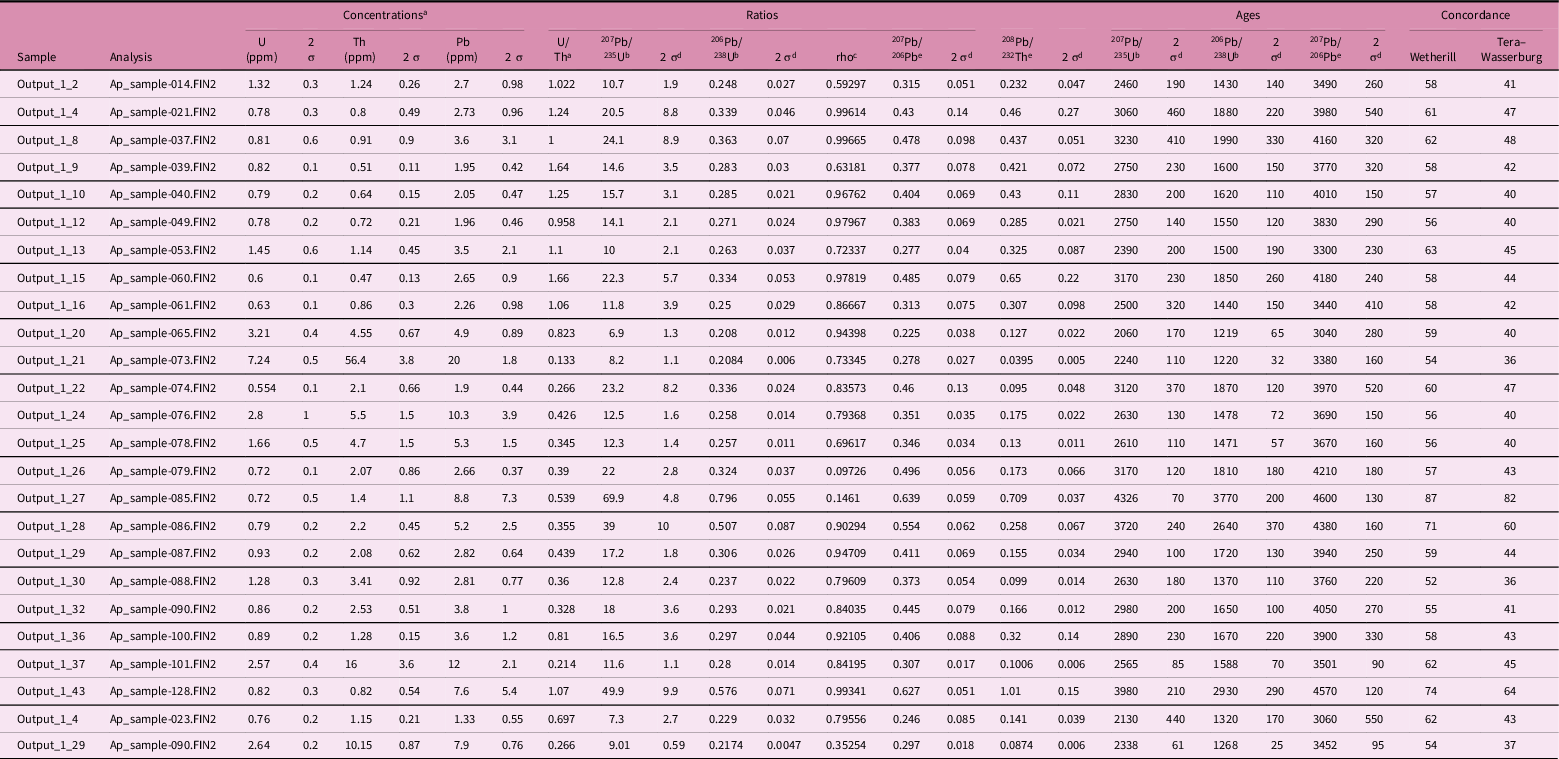
Uncertainty ellipses of the 25 individual spot analyses displayed in the Tera–Wasserburg concordia diagram (Fig. 5) are at 2σ level (Table 1). As the aim was to estimate a date for the deposition of the meta-volcaniclastic rocks, analytical procedures were optimized for single analysis of these small apatite grains. The unanchored lower intercept date of 905 ± 21 Ma is reasonably well constrained with MSWD = 1.6 due to a large spread in the radiogenic to common-Pb ratios, thus representing a robust age.
Unanchored Tera–Wasserburg concordia diagram for the apatite grains measured in this study. The regression line and corresponding uncertainty have been determined using model 2 of the IsoplotR as described in Vermeesch (Reference Vermeesch2018).

Sample 103R – apatite

a U, Th and Pb concentrations with errors (2 SE) and U/Th ratios are calculated relative to the GJ-1 reference zircon.
b Corrected for background, downhole and within-run Pb/U fractionation. Normalized to the reference zircon GJ-1 (Thermal Ionization Mass Spectrometer (TIMS)/measured values). The 207Pb/235U is calculated through: (207Pb/206Pb)/(238U/206Pb * 1/137.818).
c Rho is the error correlation defined as the quotient of the propagated errors of the 206Pb/238U and 207/235U ratios.
d Quadratic addition of within-run errors (2 SE) and the all-session reproducibility of GJ-1 (2 SE).
e Normalized to the GJ-1 reference zircon (∼0.6 per atomic mass unit).
fCommon Pb correction through measured Pb204 (corrected for Hg204 using natural abundance Hg isotopic ratios) and the model Pb composition of Stacey & Kramers (Reference Stacey and Kramers1975).
3.d. 40Ar/39Ar dating
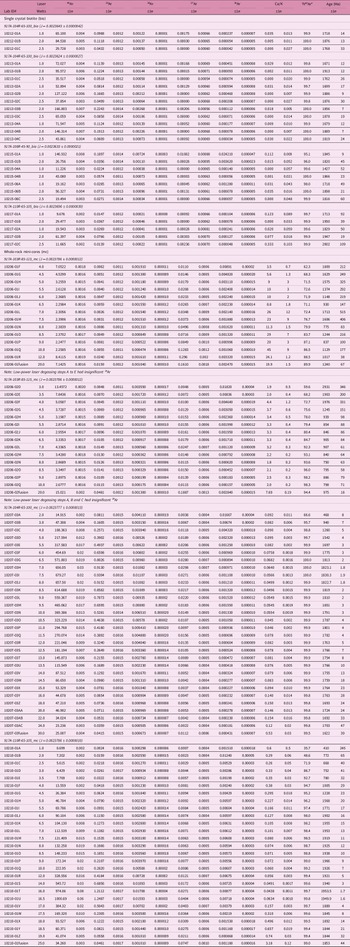
Laser step-heating 40Ar/39Ar experiments were carried out on chloritized and rare, ∼1–2 mm detrital biotite crystals found in core intervals 104R: 65–100 cm, 108R: 44–91 cm and 110R: 22–80 cm. Biotite crystals large enough for 40Ar/39Ar dating were not found in the uppermost of the four samples examined in this study (103R: 80–115 cm). In addition to the biotite analyses, 40Ar/39Ar experiments were also carried out on ∼2 mm diameter whole-rock mini-cores of all four samples obtained using a Dremmel rotary tool. Argon isotopic abundances, including the apparent ages of the individual steps and J-values, are given in Table 2, while step-heating plots are presented in Appendix 1 (in the Supplementary Material available online at https://doi.org/10.1017/S0016756821001400).
Relative isotopic abundances

Notes: Samples were irradiated for 9 hours. Sanidine from Fish Canyon Tuff was used as the neutron fluence monitor with a reference age of 28.201 Ma (Kuiper et al., Reference Kuiper, Deino, Hilgen, Krijgsman, Renne and Wijbrans2008)
Nucleogenic production ratios:
(36Ar/37Ar)Ca 2.646 ± 0.008 x 10⁻⁴
(36Ar/37Ar)Ca 6.95 ± 0.09 x 10⁻⁴
(38Ar/37Ar)Ca 0.196 ± 0.00816 x 10⁻⁴
(40Ar/39Ar)K 7.3 ± 0.92 x 10⁻⁴
(38Ar/39Ar)K 1.22 ± 0.0027 x 10⁻²
(36Ar/38Ar)Cl 3.2 x 10²
37Ar/39Ar to Ca/K 1.96
Isotopic constants and decay rates:
λ(40Kε)/yr 5.8 ± 0.07 x 10⁻¹¹
λ(40Kβ)/yr 4.884 ± 0.0495 x 10⁻¹⁰
λ(37Ar)/d 1.975 x 10⁻²
λ(39Ar)/d 7.068 x 10⁻⁶
λ(36Cl)/d 6.308 x 10⁻⁹
(40Ar/36Ar)Atm 298.56 ± 0.31
(40Ar/38Ar)Atm 1983.9 ± 2
40K/KTotal 0.01167
Biotite
Depending on the gas yield, the laser step-heating 40Ar/39Ar experiments on single-grain biotite were carried out in two to three steps, with the final step resulting in melting and complete outgassing of the grain. All the experiments gave Palaeoproterozoic ages, with the youngest ages being typically associated with the first, low-power, laser step suggesting minor loss of radiogenic argon (40Ar*) due to alteration. Of the ten single-grain experiments carried out, five yielded two-step concordant ages and these are shown in Figure 2. These less isotopically disturbed grains indicate biotite crystallization/resetting semi-quantitative ages of c. 1950 to 1850 Ma. The relatively small yield of 40Ar and low precision for these biotite analyses are indicative that they have suffered K loss by chloritization.
Whole-rock mini-cores
Detailed 40Ar/39Ar laser step heating experiments on four whole-rock mini-cores were carried out in order to investigate the provenance of the bulk meta-sediment as well as the age of the possible volcaniclastic unit represented by103R: 80–115 cm.
At lower laser power settings, the whole-rock mini-cores from 104R: 65–100 cm and 110R: 22–80 cm both yielded a staircase-shaped pattern consistent with low temperature loss of 40Ar. Increasing laser power gave Palaeoproterozic ages but failed accepted statistical tests for an age plateau. Nonetheless, the range of ages yielded by these higher temperature steps is similar to the single-crystal biotite 40Ar/39Ar data and suggests a single provenance for the bulk sediment for these samples.
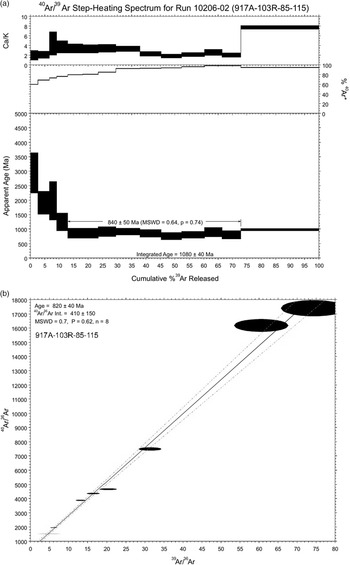
In contrast to the staircase-shaped age spectra of the mini-cores from 104R: 65–100 cm and 110R: 22–80, the laser step-heating gas release patterns for the two mini-cores of the topmost, possible volcaniclastic, sample (917A-103R-85-115) yielded distinctive U-shaped age profiles with minimum (Neoproterozoic) values for intermediate laser power steps (Fig. 6a). Both are also notable for having much higher Ca/K ratios when compared to data from the other mini-cores (Appendix 1, in the Supplementary Material available online at https://doi.org/10.1017/S0016756821001400) consistent with the presence of a compositionally distinct volcaniclastic component. The second of the two mini-cores analysed from this sample produced a robust age plateau of 840 ± 50 Ma (MSWD = 0.64, p = 0.74) comprising eight individual heating steps and 60 % of the total 39Ar released. These eight steps yield an isochron age of 820 ± 40 Ma with a 40Ar/36Ar intercept of 410 ± 150 (Fig. 6b) which is within uncertainty of the atmospheric value of 298.56 (Lee et al. Reference Lee, Marti, Severinghaus, Kawamura, Yoo, Lee and Kim2006). The isochron provides a minimum (Neoproterozoic) age for this potential meta-tuff layer in the upper part of hole 917A.
40Ar/39Ar step-heating (a) and isochron (b) plots for a mini-core from sample 103R-85-115 from ODP hole 152-917A. See text for further details.

4. Discussion and conclusion
The whole-rock mini-cores and chloritized biotite single-crystal 40Ar/39Ar ages give semi-quantitative Palaeoproterozoic ages from the lower samples and a robust Neoproterozoic isochron age from the top ones (Fig. 2). Here we explore whether the much younger age of 820 ± 40 Ma given by the mini-core from 103R-85-115 is the result of a partial reset due to the contact metamorphism of an overlying olivine-phyric basalt flow that was emplaced at c. 1180 °C in subaerial conditions. In the Kangerlussuaq Basin, which is suggested to be the analogue for core 917A (Larsen et al. Reference Larsen, Saunders and Clift1994; Vallier et al. Reference Vallier, Calk, Stax, Demant, Saunders, Larsen and Wise1998), the only contact metamorphism documented is restricted to narrow zones close to the base of the lava flows, and the diagenetic processes in the entire sedimentary basin were enhanced by deep burial due to the thick pile of basalts of the Blosseville Group (Larsen et al. 2016). Other evidences that exclude the overprint of the Palaeogene magmatism are: (1) the absence of thermal effects in the quartz-rich sandstone including unaltered micas that was recovered between the basalts and the meta-volcaniclastic rocks; (2) the chlorite geothermometer (Vallier et al. Reference Vallier, Calk, Stax, Demant, Saunders, Larsen and Wise1998) yielding average temperatures of 296 °C for the top interval 103R, 300 °C for interval 104R and 356 °C for interval 108R at the bottom, thus showing no increase in temperature toward the contact with basaltic rocks (Fig. 2); (3) the distribution and chemistry of zeolites and clay minerals in the basalts from core 917A (Demant et al. Reference Demant, Münch, Romeuf, Morata, Saunders, Larsen and Wise1998) established that the mineralogical assemblages indicate a temperature of the metamorphism below 170 °C and that the zeolites formed during hydrothermal processes as a late post-emplacement event affecting the whole volcanic pile (Fig. 2); (4) apatite fission tracks from interlava sediments of Leg 152 from sites 914 and 915 (Clift et al. Reference Clift, Carter and Hurford1996) located on the continental shelf, and site 918 that lies on oceanic crust of the Irminger Basin (Fig. 1) established that the central ages are significantly older (c. 231 Ma to 150 Ma) than sample depositional ages (42 to 22 Ma). This implies that the samples did not experience significant post-depositional annealing (i.e. T > 110 °C), and thus the temperature in the clastic rocks intercalated with the Palaeogene basalts was never above 60 °C, in agreement with the zeolites zonation.
For the above-mentioned reasons we believe that the thermal heating irradiating from the break-up-related Palaeogene magmatism is quite unlikely and thus can be excluded. The greenschist facies metamorphism should then be older, and not Cretaceous as was assumed before. The same conclusion is valid for the supposed Cretaceous age of the meta-volcaniclastic rocks offshore SE-Greenland that is now shown to be Neoproterozoic bracketed between 905 and 820 Ma. The younger whole-rock 40Ar/39Ar tuff age is consistent with low-temperature greenschist alteration of volcanic glass and secondary mineral growth (e.g. Verati and Jourdan, Reference Verati and Jourdan2014) presumably as a result of sedimentary burial in an extensional regime. The burial temperature was not sufficiently high, however, to significantly reset detrital and partly chloritized biotite from deeper in the sequence, as these consistently give, albeit semi-quantitatively, Palaeoproterozoic ages of c. 1.9 to 1.8 Ga. All samples show that they were mainly composed of plagioclase feldspar grains, now replaced by albite and/or chlorite, while other beds consist of irregular rock fragments now replaced by albite, chlorite and quartz. These beds may have been lithic tuffs, consisting originally of plagioclase, volcanic glass and volcanic rock fragments, and ovoid quartz/albite masses in some thin-sections, flattened parallel to bedding, may be replaced by vesicular volcanic glass, as also indicated by Vallier et al. (Reference Vallier, Calk, Stax, Demant, Saunders, Larsen and Wise1998). The absence of tectonic fabric together with the low-grade metamorphism could indicate that the thermal alteration is due to sedimentary burial during extensional tectonics as also suggested by Vallier et al. (Reference Vallier, Calk, Stax, Demant, Saunders, Larsen and Wise1998) at 820 ± 40 Ma, establishing the minimum age for the volcaniclastic succession.
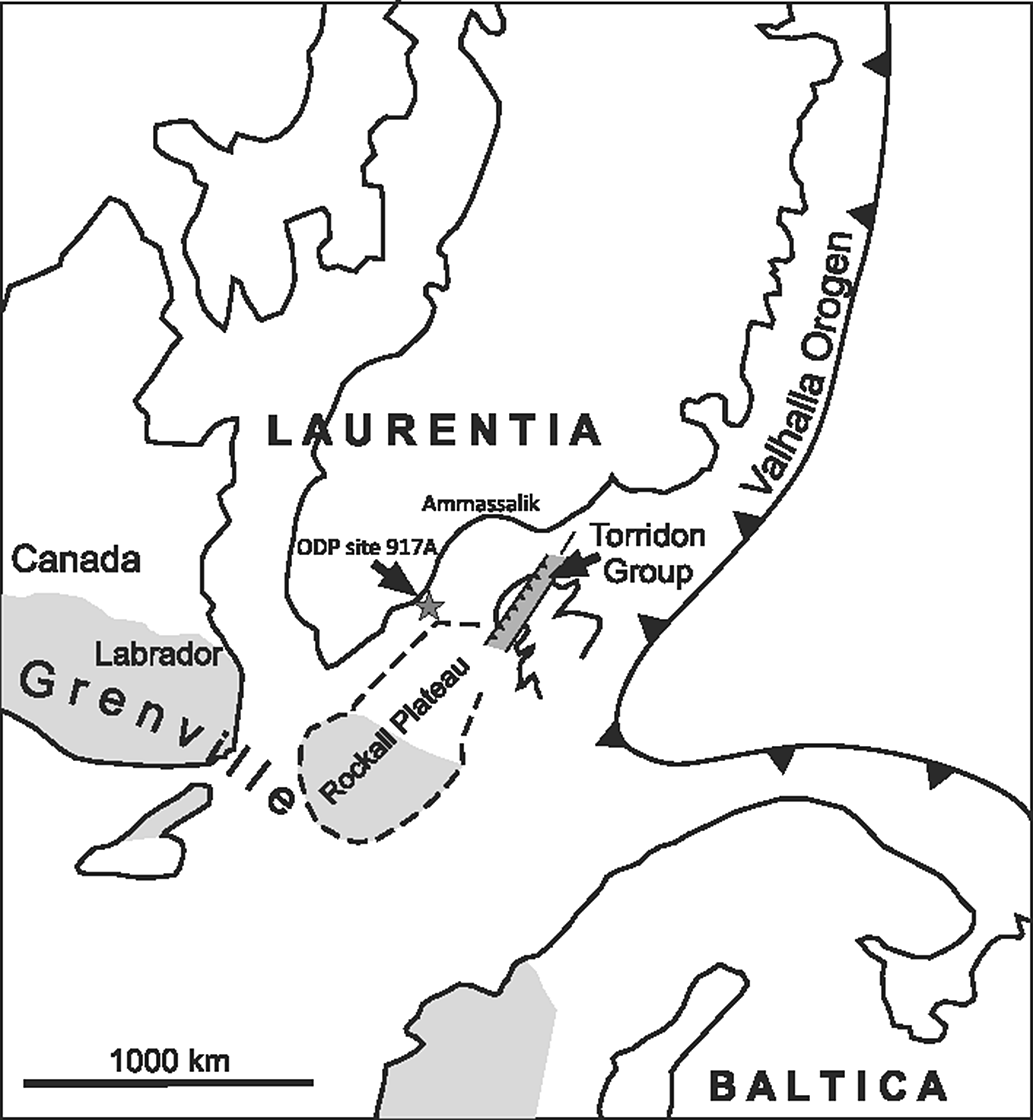
Moreover, the 905 ± 21 Ma U/Pb age obtained from apatites in the tuff layer of core 917A allows possible correlations with Neoproterozoic successions across the North Atlantic, and even though the data are limited only to this sample, this could potentially be equivalent to the Torridon Group succession in the Hebridean Foreland of the Scottish Caledonides (Fig. 7). Turnbull et al. (Reference Turnbull, Whitehouse and Moorbath1996) obtained Rb–Sr data from analyses of whole-rock shale samples for the Diabaig Formation (994 ± 48 Ma) and for the Applecross Formation (977 ± 32 Ma) and these were interpreted as the time of albitization and clay conversion. These dates, which agree well with palaeomagnetic estimates, are interpreted as the time of early diagenesis, which is probably within error of the time of deposition of the Torridon Group (Turnbull et al. Reference Turnbull, Whitehouse and Moorbath1996). Volcanic rocks of Torridonian age are rare in Scotland, and volcanic deposits known from eastern Laurentia have an older age between 1300 and1100 Ma (Batchelor, Reference Batchelor2011). The discovery of a crystal tuff in the Stoer Group (Batchelor & Prave, Reference Batchelor and Prave2010) established the earliest example so far of tholeiitic volcanic activity within the Torridonian of Scotland around 1187 ± 35 Ma (Kinnaird et al. Reference Kinnaird, Prave, Kirkland, Horstwood, Parrish and Batchelor2007).
Neoproterozoic palaeogeographic reconstruction of Laurentia and Baltica (modified after Cawood et al. Reference Cawood, Strachan, Cutts, Kinny, Hand and Pisarevsky2010; Spencer et al. Reference Spencer, Kirkland, Prave, Strachan and Pease2019) showing the position of the meta-volcaniclastic rocks of site 917A compared to the Torridon Group in the Hebridean Foreland of the Scottish Caledonides that were depocentres for sediments derived from the Grenville and Valhalla orogens.

Finally, the calc-alkaline nature of the meta-volcaniclastic rocks in core 917A (Vallier et al. Reference Vallier, Calk, Stax, Demant, Saunders, Larsen and Wise1998) and the 905 ± 21 Ma age of the tuff layer could indicate a correlative connection between the sedimentary basin offshore South-East Greenland and the 915 ± 18 Ma magmatism associated with the Renlandian event (Leslie & Nutman, Reference Leslie and Nutman2003) of the Valhalla Orogeny (Cawood et al. Reference Cawood, Strachan, Cutts, Kinny, Hand and Pisarevsky2010) or the volcanism/metamorphism in the West Highland domain of the Scottish Caledonides (Fig. 7). In any case the new data presented in this paper show for the first time the evidence for a Neoproterozoic sedimentary basin offshore South-East Greenland extending the foreland basins of the Scottish Caledonides to its conjugate margin, giving new insights for the interpretation of sedimentary basins below Tertiary basalts offshore Ammassalik and the Rockall Plateau.
Supplementary material
To view supplementary material for this article, please visit https://doi.org/10.1017/S0016756821001400
Acknowledgements
This study is part of the FINGERSEG project funded by Geocenter Denmark 2017 (principal investigator P. Guarnieri). This paper is published under the agreement of the Geological Survey of Denmark and Greenland. The authors are grateful to the reviewers, Jarek Majka and Fred Jourdan, for improving the final version of the paper with helpful comments and suggestions. We would like to thank Walter Hale from the Bremen Core Repository of the IODP for the samples provided and Daniel Wielandt for technical assistance with the 40Ar/39Ar analyses, as well as Mojgan Alaei, GEUS, for laboratory assistance. Quadlab is funded by the Villum Foundation.
Declaration of Interest
The authors have no conflict of interest.