By setting up boundaries, communities, companies and authorities allocate access to certain resources for some people while depriving others from them (for example, Barth, Reference Barth1969; Cohen, Reference Cohen1992). In Arctic mining contexts, this may be particularly crucial, as resources for everyday sustenance are volatile and yet, at the same time, extractive resources may be extremely rich. Hence, just as Arctic settlements have historically tended to be temporary due to their reliance on fluctuating resources, contemporary Arctic communities related to extractive industries continue this tradition. Conflicts may arise when mining activities are introduced or expanded in an area, as the below case of the expansion of the Swedish Aitik mine exemplifies, but conversely, the termination of mining activities may also be a driver of conflict and protracted friction, as in the case of the closing of the Greenlandic Qullissat mine. The towns of Sakajärvi and Qullissat are set in very different Arctic spaces, and the temporalities of the two cases are very different as they unfold over very different time spans. In the first case, an increase in mining activities was the challenge, while in the latter, the source of conflict was a decrease. Yet, in both cases, local communities came to face existential challenges, which led to conceptual insecurity (Schulz-Forberg, Reference Schulz-Forberg2013, p. 18), and they chose to respond to these challenges by means of strategies of communitification.
While in much everyday language “community” appears as a descriptive term, in the present contexts, people use communitification as a strategic tool in the negotiation of rights and ownership and an instrument in their quests towards certain desired futures. Accordingly, the question I will here examine is, what does the concept of community do in these cases? Through my analysis, I have come to understand that in matters of resource extraction in the Arctic, affective economies may be just as crucial as economic capital. Affects really matter, and the formation of an emotional community (Wetherell, Reference Wetherell and Wetherell2012) may imbue people with an agency that can potentially, over time, enable change. In the two present cases, people engage narratively with what Schulz-Forberg has termed uchronotopias, i.e., narratives that break with the past and envision fundamentally different, and better, futures (Schulz-Forberg, Reference Schulz-Forberg2013, p. 17). I will argue that focusing on emotions is therefore key to understanding social dynamics in relation to extractive industries in the Arctic and, in particular, to understanding the role of communities in creating desirable futures. As brought forward by Margaret Wetherell (Reference Wetherell and Wetherell2012) people include or exclude themselves or others in certain affective economies (Ahmed, Reference Ahmed, Gregg and Seigworth2010, Reference Ahmed2014 [2004]) that not only surround certain communities but also actually constitute them. Based on the two present cases, I propose to understand these developments as processes of communitification that associate certain people with certain emotional economies in order to address a desired future for the community as a whole.
I gained essential insights through fieldworks in Norbotten County, in Nuuk, and in the Disko Bay area in West Greenland, among people who were actively involved in the cases, on their periphery of or viewing them from a third perspective. I have followed the cases through the mass media, on social media and in personal communication over periods of four years (Qullissat) and one year (Sakajärvi), respectively, and have further contextualised my data through studies of archival materials and online resources. This use of multiple data sources has enabled me to analyse how affective economies surrounding the two communities dynamically change in interactions with the mining companies as well as with other significant social actors.
The imagined emotional community
Taking emotions seriously as a field of anthropological observation, as socially and culturally produced phenomena, and as something that, in turn, produces social and cultural contexts situates this study within a turn to affective practices, often termed as the emotional turn (Ahmed, Reference Ahmed, Gregg and Seigworth2010, Reference Ahmed2014 [2004]; Hirsch, Reference Hirsch2008; Scheer, Reference Scheer2012; Wetherell, Reference Wetherell and Wetherell2012). Taking affective practices as her core concept the social psychologist Margaret Wetherell has drawn attention to the fact that an “affective practice […] recruits material objects, institutions, pasts and anticipated futures. But the main thing that an affective practice folds or composes together are bodies and meaning-making” (Wetherell, Reference Wetherell and Wetherell2012, p. 20). When we share emotions with others, Wetherell explains, we tend to feel a sense of community with them. For example, she describes a demagogic politician exhausting references to feelings that he assumes to share with a group of listeners in order to rhetorically establish an “emotional community”, the good of which he promises to promote in return for their loyal votes (Wetherell, Reference Wetherell and Wetherell2012, p. 8; see also Ahmed, Reference Ahmed2014 [2004], p. 2). In the imagined emotional community, the people one imagines to share emotions with are not necessarily people one knows, or even ever meets in person. This was a central point in Benedict Anderson’s (Reference Anderson2016 [1983], p. 114) famous characteristic of nations as imagined communities, whose cohesiveness is supported and strengthened by the mass media, the educational system, administrative regulations and so forth. For example, social media have increasingly, in recent years, become instrumental in the formation of numerous such more or less stable imagined communities. Here, affects thrive and are nourished in the very circulation among the user profiles. According to Sara Ahmed, “some signs […] increase in affective value as an effect of the circulation between signs: the more they circulate, the more affective they become, and the more they appear to contain affect” (Ahmed, Reference Ahmed2004, p. 120). Like capital, affects gain value due to this collective dimension, and in fact, “feelings appear in objects, or indeed as objects with a life of their own, only by the concealment of how they are shaped by histories, including histories of production (labor and labor time), as well as circulation or exchange” (Ahmed, Reference Ahmed2004, p. 120–121). Imagined emotional communities may result from such concealed histories and borrow their sense of naturalness from processes in which homogenising traits are articulated, while divergence and variation are downplayed. I find Ahmed’s model appealing but still insist, because my approach is practice-based, that it is the human being who feels affects and who is thus also the acting subject. I therefore maintain, with Monique Scheer (Reference Scheer2012, p. 195), a dual perspective in which the human subject both manifests emotion and has emotions, as described in Pierre Bourdieu’s dialectic concept of habitus as both structured and structuring structures (Bourdieu Reference Bourdieu2003 [1977], p.90). Practice theory is thus sensitive towards agencies of both individual agents and communities and is also inextricably intertwined with the reciprocal interplays among them.
In Arctic contexts, the imagined dimensions of sociality are indeed considerable. Arctic communities are often thought of as more or less isolated groups of indigenous people, yet they often encompass ethnically mixed, highly mobile, and composite identities. It is a defining feature of social life in the Arctic that human populations are small, and habitations isolated, while distances are huge, and transportation is limited, expensive and weather-dependent. Arctic communities may therefore be geographically defined as “local”, but a closer look will always reveal this notion as being too simple and narrow. It anachronistically ignores the considerable degree of contact, communication and transportation, which defies and overcomes such restraints. Often, Arctic communities are, to a large extent, made up of individuals who live most of their lives in Copenhagen, Ottawa or New York and only go on occasional visits to Qaanaaq, Igloolik or Qullissat. They may travel frequently, as politicians for their community, as artists or businesspeople, as busy grandparents with diaspora grandchildren, or as well-organised Sami reindeer herders, who have over generations gained their right to use the land but who spend most of their time studying or working in Stockholm, Helsinki or Oslo, while their reindeers are on their grazing lands. Some communities do not even think of themselves as such but are only labelled communities by the surrounding society because they are situated in a certain locality. Others may be mining workers from all over the world who are nudged into forming a “community” by an employer who profits from their corporate loyalty. On the fringe of a definition, could we accept that a “community” includes a corporation with its managers, workers and, perhaps, the workers’ families? A temporary group, such as international tourists visiting a certain area? Consumers of a particular product? Or a global community – a notion that is sometimes proposed, for instance in climate change discourses?
Community is a core issue in social science, and conceptualisations are rich and plentiful (for example, Anderson, Reference Anderson2016 [1983]; Banister et al., Reference Banister, Leadbeater and Marshall2011; Bauman, (Reference Bauman2011 [2001]); Block, Reference Block2009; Cohen, Reference Cohen1992; Creed, Reference Creed and Creed2006; Delanty, Reference Delanty2018 [2002]; Friedrich, Reference Friedrich1959; Keller, Reference Keller2003). Several of these authors have drawn attention to the dynamic processes of the formation and dissolution of communities, yet, as Brubaker (Reference Brubaker2002) rightly points out there is, mainly in popular discourses, a “tendency to treat ethnic groups, nations and races as substantial entities to which interest and agency can be attributed […] as if they were internally homogeneous, externally bounded groups, even unitary collective actors with common purposes” (Brubaker, Reference Brubaker2002, p. 164). Thus, he warns about adopting “categories of ethno-political practice as our categories of social analysis” (Brubaker, Reference Brubaker2002, p. 166). I now, tentatively, introduce a verbalised form of the concept and examine if acts of communitification can validly be applied to describe the transformative acts of emotional communities. I understand the verb communitify as the discursive act of pulling people together into a group, articulating boundaries around them, and attributing them certain emotions, behaviours, motives or traits. I observe the uses of the concept of community, its transformations in processes of communitification, and the agencies deriving from its being articulated either from the inside out, by the group itself, or from the outside in, by authorities, politicians or other actors in the surrounding society.
I have only come across this verbalised form in a single article, on Chinese tourism studies (Shuntie, Reference Shuntie1998), and we should, as always, be sceptical of neologisms: Would not, for instance, “community formation” or “community making” achieve the same? With the concept of communitification I address multiple aspects in formation processes, including the subtle and small scale, the dynamic and rapidly changing, and the only slightly conscious or even unconscious projections onto imagined communities. The conception of agency that I employ here is not to be likened to intentionality or “hard” agency but just as often appears in a “softer” form (Ortner, Reference Ortner2006, p. 134). It is an execution of a will of which the agent may be barely conscious. The anthropologist Kirsten Hastrup provides a fine allegory as she likens agency to playing among other actors in a Shakespearean plot “of which they are only partly aware because it takes shape as they go along, and within which they become parties to each other’s fates. Individuals are, in a fundamental way, each of them playing a part within a whole” (Hastrup, Reference Hastrup2004, p. 233). Likewise, I propose communitification as a product of collective processes, whether engendered from the outside in or from the inside out. In my view, communitification better embraces subtle intentional acts, psychological aspects, and discursive nuances, and I therefore find no better term to address the agency embedded in the establishment of boundaries around and between the communities. Thus, I will analyse what the concept of “community” does in the cases I discuss or, in other words, what sort of agency the processes of communitification involve.
I observed the empirical cases that I here compare in fieldworks in Nuuk and North Greenland in March, April and August 2015 and in the Swedish county of Norbotten in September 2017, just as I followed both cases on social media and in public newsfeeds. In Arctic contexts, where communities are often dispersed, or even diasporic, social media, with their huge potential for amplifying attention, are particularly important to consider in analyses of affective economies and communitification. Former mining workers from the Greenlandic Black Angel mine, for instance, maintain a dynamic Facebook group that was brought online decades after the closing of the mine in 1990, and in several Qullissat groups, former inhabitants of this mining city and – increasingly – their descendants follow each other’s lives begin, unfold and run out. Due to the inconstancy of mining activities, the communities emerging around mines are fluid in nature, yet often quite active. Experiences related to the isolated ways of life in mining communities appear to be extraordinary, as are the emergent friendships, which are therefore often long-lasting. Facebook supports such connections, and studies of these online activities may thus form an important supplement to other observations of the productions, shapings and re-shapings of communities before and after mining in the Arctic.
Sakajärvi – Becoming a community
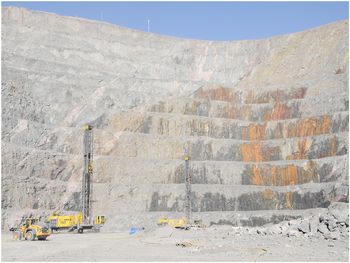
“There are so many overlapping land access interests”, the head of environmental research and stakeholder contacts, Anders Forsgren, explained to us, a group of researchers visiting the Aitik mine in Swedish Norbotten in September 2017. He nodded to his slide with the text “Managing community relations is all about building trust!” and continued, “It’s really tough, I would say, since we have to have an understanding if we are to work in an area. It is so important”. The Aitik mine is Europe’s largest open-pit mine and has been in operation since 1968. Going down into the enormous crater of the mine in minibuses, we realised that what he was talking about was indeed gigantic reorganisations of the landscape, the mine at present covering 7000 ha, or an area three times as big as Stockholm’s Arlanda Airport. Aitik produces a wide range of metals, including copper, lead, zinc, gold and rare metals. Anders expressed pride over participating in this huge industry, yet he was also deeply involved in the challenges involved, as he was the main person responsible for negotiating with local communities, Sami included, who are affected by the continuing expansions of the mine.
At present, an extension into the area east of the present pit is projected to extend 1 km on one side and 800 m on the other and to go an estimated 270 m deep, partly covering the villages of Sakajärvi and Liikavare, which have a total of around one hundred inhabitants. Immense quantities of soil are needed in Boliden’s daily production since the yield ratio is low; according to Boliden’s own information guide, it is the world’s lowest with an actual yield of only around 1% of the almost 37 million tons of ore that are excavated from the pit every year. Still, due to the high world market prices on metals, the extraction remains profitable (Rindevall, Reference Rindevall2016) (Fig. 1).
From the bottom of the Aitik open-pit copper mine. Photo by the author.

In September 2017, anxiety about Boliden’s expansion plans spreads among the residents in the village of Sakajärvi, less than 1 km from the rim of the pit. At a meeting in April 2016, they had, to their horror, been informed that many of them would have to move out of their houses before 2020. They would either be offered a new house, “key-to-key”, in another location in the Gällivare Municipality, or they would be reimbursed, somehow, for the value of their homes. It had taken almost a year before the mining company presented their time schedule and plan specifying exactly which houses were to be removed, but from March 2017 it was clear that the entire village of Sakajärvi would be demolished, so that all the approximately 25 inhabitants would have to move before 2020. Within another three years’ time, around 15 of Liikavare’s inhabitants would have to do the same. During the summer of 2017, Boliden’s consultants approached some of the homeowners and offered them a sum of money or a new house in the village of Koskullskulle, 20 km from Sakajärvi. Boliden had declared that they would expropriate the properties at the market value for a house in the area plus a 25% compensation payment or, alternatively, offer the owners a new property, matching the old one.
Six months later, in September 2017, almost nobody had accepted the offer. Seated around a coffee table in Cecilia’s riding school, the villagers complained to us, a group of researchers, who had come to hear about their experiences. Mona sighed, “I can’t say exactly how much is mine, and how much is my husband’s, but I think with his woodland and the land around the house, it’s about 20,000 square metres. If we moved to the city they would give us about 1,000. So … we lost a lot of land”. Now Cecilia took over: “And we have a riding school and a lot of horses and a lot of land also, and we don’t know where we can put all the horses or all the stuff. I work with the horses, this is my work too, and we don’t know anything. They told us from the beginning that they would solve … they call it key-to-key, you know, the same, but we can’t … we don’t understand what it’s going to be like”. Others kept sheep or had many dogs and were used to going hunting; many regularly sold timber from their woodland plots; some had a supplementary income from Bed and Breakfast operations; and they all loved the recreative space and beautiful landscapes with woodlands and a lake.
The future visions of the mining company, Boliden, and the villagers collided. From what now appeared as a rich everyday life, the villagers saw their futures dissolve, and they told us that they were in emotional stress, alternating between affects of sorrow, denial and anger. As many of the other villagers, Charlotta lived in a house that had a long family history: “My grandmother’s grandfather is the one who built the house that I live in now. So that’s nice to know. So everything I see around me, you know, it’s nice to know that an old ancestor has worked very hard on it. So, I have to take care of it. Because it’s a responsibility. But the situation as it is now, how much money will you put in, and how much time will you put in if it’s going to last for two more years? And that is the situation we have had for 20 years. Because the mine started in 1968, Aitik, and my grandmother lived here before the mine and they always said that ‘yeah, the mine is going to expand, so some day we are going to take the villages of Sakajärvi and Liikavaara,’ so we have always known that someday the mine will come. But when they said at the meeting ‘now it’s definite,’ it was a shock”. Paradoxically, the message about the expansion had come as a surprise, although they had for decades been living with the knowledge that one day they would have to move. This is an example of people losing “their claim on the future”, as expressed by the historian Hagen Schulz-Forberg (Reference Schulz-Forberg2013, p. 19), who he describes how such conceptual insecurity calls for people to reorient themselves in the world. In Sakajärvi, the news about the expansion meant a rupture of people’s conceptions of how space and time are normally ordered. They had, as a common human habit, been drawing lines of continuity into the past, relating diachronically to kin who lived here in the past, and thus defied the particular ground rules that apply to this mining area.
Many complained that they were not going to be reimbursed for the loss of inheriting a place through multiple generations, just as almost all villagers predicted that Boliden would defraud them of the added value of the natural beauty of the area. One of them was Lars-Göran, who lived with his family right beside the lake. His parents were the only ones who had accepted Boliden’s offer and had already moved 200 km away, to Kalix. “So now we don’t have a babysitter”, Lars-Göran bitterly smiled. “Boliden gave them quite good value, because they had quite a big house. The only thing that matters is if you have a big house, not if you have a cellar or a stable. Not even if you have a beach. It’s only how big the house is. Each square metre of the house. Not even if you have a very fine and new house. […] Maybe we can’t even buy an apartment. I’m going to tell them to build something for us. But we have the best place. It’s impossible to buy a house for the price we’ll get. You can buy an old house in Kalix, but there are no jobs in Kalix”. With his six-year-old daughter on his lap, Lars-Göran showed me a photo on his iPhone: the two of them, another sister and the mother in a canoe on the glassy lake surrounded by birch trees. He complained: “I have a beach, you see, that’s where we spend our free time. We go out fishing. Where can we ever find another place like that? And they don’t compensate us for that. You only get the market price of your house. And what do you think the market value is, once it’s known that the mine will expand to here?” Bitterness mixed with uncertainty about the future. The others encouraged Lars-Göran to speak now, as they said that he was good at expressing his affects in ways that resonated with their emotions of sadness, confusion, sorrow and anger. Their frustration and strivings to resist now brought them together as an emotional community. Even if the inhabitants of this little cluster of houses had always considered each other as good neighbours they had never had a particular sense of being a community, but now, as Boliden’s corporate social responsibility (CSR) agents had disturbed the peace they normally enjoyed, they had felt a need to begin to come together to discuss how to respond. However, temporal or shallow the resulting emotional community might prove to be, they were in a process of communitification.
Communitification from the outside in
Notably, none of the inhabitants in Sakajärvi were against the Aitik mine per se. Their objections were solely directed towards the expansion, which threatened their individual plots. In Gällivare Municipality, almost everybody makes their living from the Aitik mine or from the equally huge underground iron mine Malmberget (Ore Mountain). Charlotta knew that they were not going to win the fight, since “The ore is what rules our society. ‘Malmen skal fram’ (the ore has to come out), we say. I have heard some villagers, when we talk, they have talked to others. They have heard some criticism against us, like ‘you can’t stop. What if Boliden had to shut down?’ I couldn’t care less right now”. They felt that it was impossible to achieve justice in a conflict with what they perceived as opaque procedures. They all had experiences of being accused by other locals for being obstinate and stubborn, selfish and lacking understanding of the common interests. In the discourse aimed at tourists and residents, the municipal authorities maintain that the ever-changing organisation of the houses in the municipality is dynamic. It is a time-honoured and therefore basic condition in this area: “Moving houses and buildings is nothing new to us. We have been doing that in Malmberget, a part of Gällivare, for about 40 years”, tourists read in a Gällivare pamphlet. This dynamic practice of moving people around is depicted as an easy, almost playful thing in Boliden’s presentation film, which we watched at Gällivare’s visitor centre in the public railway station. The tourist pamphlet strikes a similarly unconcerned note: “We understand that you might raise your eyebrows when you encounter a house on wheels, but for all of us who live here, it is completely natural to move houses when the mine grows in size”. In anticipating that the restructurings will affect people, the municipal authorities address the emotional aspects, yet they wisely abstain from specifying what sort of emotions to expect and then proceed to preview the transformations as positive and as a path to “a new, exciting future in the small Arctic town”. Hence, a bright future awaits the citizens if they will only accept and understand that moving their houses is just a natural thing and necessary for the common good.
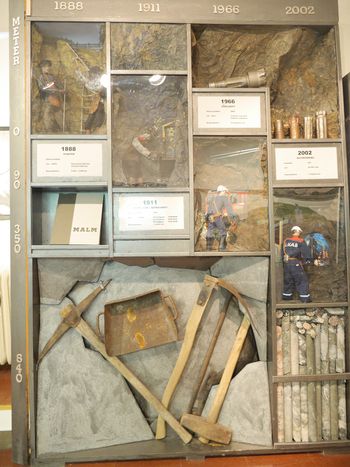
“Affect does not reside positively in the sign or commodity, but is produced only as an effect of its circulation”, writes Ahmed (Reference Ahmed2004, p. 120). The more the object or the sign circulates among other objects or signs, the more it becomes loaded with affective value. In this way, some objects, persons, or places come to be loaded with “emotional capital”, such as love, pride, compassion or hope, while other objects, persons or places devalue because they become associated with, for instance, fear, sorrow or disgust. Most of the Sakajärvi citizens were feeling anger, sorrow and insecurity, but such affects caused others to consider them as traditionalists and in opposition to the positive brand on which the economic sustainability of Gällivare Municipality rests. In the dominant discourses, these feelings were simply not acceptable. “Emotions may involve ‘being moved’ for some precisely by fixing others as ‘having’ certain characteristics. The circulation of objects of emotion involves the transformation of others into objects of feeling” Ahmed (Reference Ahmed2014 [2004], p. 11) aptly states. Being an object of negative affects is not easy in a small community where everybody knows everybody, and people in Sakajärvi experienced this unevenness of affective practices (Wetherell, Reference Wetherell and Wetherell2012, p. 17) as a subtle way of executing power. Actually, they had hitherto not been more loyal towards each other than towards others in the municipality. When I asked them about this, they did not reply with much concern for whether they would have to move to a different place. Rather than aiming to stay together as a community, they focused on obtaining a new plot for themselves, and their main concern was whether this new plot would be in recreational natural surroundings that were comparable in quality to their present plots. Thus, it seemed that it was, on the one hand, the communitification from the outside that had now pushed them together, as the rest of the municipality perceived them as a single collective, cumbersome and problematic group. On the other hand, they had also themselves now engaged in a process of communitification, as over time, frustrations had accumulated as result of repeated experiences of powerlessness and injustice, and resistance had become a matter of dignity (Fig. 2).
Documentation of the history of mining in Gällivare Municipality, going back to 1888. Photo by the author.

The transformative powers of emotional communities
Many of the villagers had been contacted by Boliden’s CSR representative, proposing them individual offers for giving up their house. This had made them increasingly suspicious of the entire procedure. “We feel that Boliden is just bluffing”, one of the women said, and “if we don’t know what they say to the others, how can we know if what we receive is a fair offer?” They insisted on meeting with Boliden as a group in order to ensure a transparent process with comparable determinations of the pricing structure. They had also begun to hold internal meetings and to exchange facts, thoughts and emotions.
Boliden’s CSR Manager seemed to have missed the point that the information procedure in itself created resistance, possibly just as much as the forced movement did. As mentioned above, Boliden had a declared goal of building trust, yet the Sakajärvi villagers shared experiences of being treated unfairly, for instance, at the very meeting where the CSR Manager announced the expansion plans only 15 min before the conclusion of the meeting, leaving no time for questions or discussion. They reported being met with an assertive “you will be happy with your new home” when they were reluctant to accept the individual offers, but felt no trust that this would be the case.
To Boliden, this seemed to be a calculated risk, as they, interestingly, addressed the affective economies by stating in their online Social Sustainability Index 2018: “The target is to reach an agreement with all the affected residents in order for them to feel they have been compensated in full financially. Residents with family properties and a strong connection to the area will probably not feel fully compensated”. In other words, the compensation negotiations concern emotional – as much as economic – capital, and just as market prices are unstable, and will invariably fall once a new mining prospect is announced, the emotional capital may rise or fall when there is a state of conceptual insecurity. To the Sakajärvi villagers, the emotional capital grows when they demonstrate their dissatisfaction and despair. In order to escape a feeling of obscurity, they had begun to collaborate with the press, and in this context, they expressed highly emotionally charged opinions. After the meeting in March 2017, Charlotta exclaimed in an interview with the Swedish public service television company Sveriges Television, SVT: “I am sad, upset, angry, furious, despairing, but now, at least, I know with certainty that we will have to move”. To us, she said that it was important that the outside world gets to know about their situation because, “They can’t change the situation. But it’s important that people know that we are here and what is happening”. Even though it was not articulated as such by either of the parties, one may speculate if Boliden and the villagers of Sakajärvi are involved in a game for affective capital that may potentially indirectly influence the monetary compensations.
In control
Charlotta presented the villagers’ engagement with the media as a matter of surviving mentally to avoid succumbing to the emotional stress of the situation. “To be passive is to be enacted upon, as a negation that is already felt as suffering”, Ahmed (Reference Ahmed2014 [2004], p. 2) points out. Being in control of one’s life is crucial, and that includes being in control of one’s emotions. According to Ahmed, linking emotional control with a higher level of civilisation is a reflection of the Darwinian concept of evolution, as some emotions were recognised as signs of cultivation, while others remained “lower” as signs of weakness. To Darwin, the story of evolution was also the story of triumph of reason, and that included the ability to control emotions, i.e., to be affected by the appropriate emotions at the appropriate time. Relations of power depend on the parties’ position and ability to endow others with value and meaning, and ever since Darwin, the field of emotions has been a powerful factor, as pointed out by Ahmed (Reference Ahmed2014 [2004], p. 4).
One way of regaining control is to create narratives which point into a future that is in accordance with one’s own wishes. Boliden stretches a narrative into an indefinite past as well as an indefinite future in which the entire population supports mining activities as a common good and lives in symbiosis with machines and extractive resources. In other words, it has become a naturalised condition that eternally “mining comes first”. Towards this strong narrative, some of the Sakajärvi villagers now argued that they had a claim on their plots because they had a family history of several generations there. They emotionally emphasised their wish for continued residence in the same houses and on the same land, and in that sense, they sought to install a different temporality than the one promoted by Boliden.
Qullissat and Qullisarmiut
The Sakajärvi villagers’ process of grouping together rhetorically, or communitifying, as I term it here, followed the announcement of the expansion of the Aitik mine. In September 2017, at the time of my fieldwork there, the process had only been going on for a few months. It appeared as if the villagers would gain some sympathy and maybe increase their compensations, yet they had seemingly resigned towards the overall decision to remove their houses. Boliden’s narrative of a society that supported mining before anything else appeared too strong for counter-narratives to really be competitive.
A much longer history, in comparison, pertained to the community formation of the former citizens, and their descendants, of the now abandoned city of Qullissat in north-west Greenland (Jørgensen, Reference Jørgensen2017). The city of Qullissat was established around a coalmine operating from 1924, and it grew to become the third biggest in Greenland, peaking in 1965 with 1407 inhabitants (Petersen et al., Reference Petersen, Ohsten and Valgren1975, p. 8). The former citizens, the Qullisarmiut, described it to me as a city unlike any other, more modern, industrial, open-minded, and vibrant than the rest of Greenland. They told me how they remembered from the 1950s the illuminated football field, a 35-mm cinema with rows of seats sloping down towards the screen “like in America or Denmark”, as they said, a hot dog stand, and a coffee bar with a jukebox and soft ice. Qullissat even had its own musical style, Vajgat, a genre inspired by American swing and country with Greenlandic texts.
Greenlandic naming practice makes an entity of everyone who comes from the same place by adding the suffix -miut, and accordingly, all former inhabitants of Qullisat may be named Qullisarmiut. Coming from a particular place may in Greenland – as in many other places – in itself involve a certain mutual loyalty. It does not necessarily mean that all Qullisarmiut, nor even the majority, associate the same meanings or emotions with Qullissat, but many stressed that in the mining city people behaved with tolerance and openness towards newcomers of all the different nationalities that came together here.
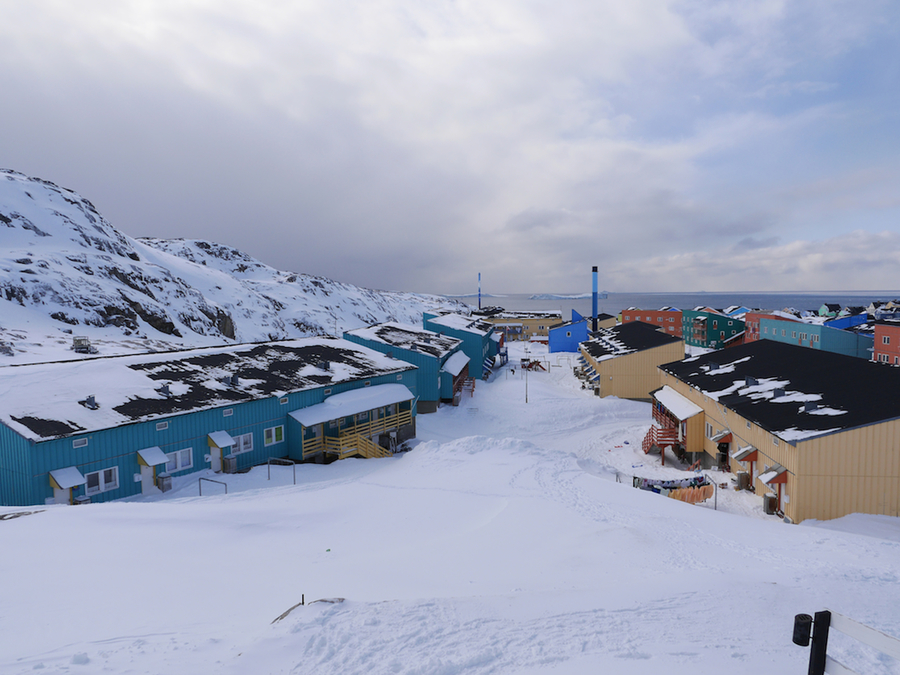
The workers in Qullissat were the first to form a workers’ union to forward their case (Sørensen, Reference Sørensen2013, p. 67). The profitability of the mine, however, was contested as early as in the 1940s, and in 1968 the colonial administration of Greenland deemed it unprofitable, and decreed the shutdown of both the mine and the city (Petersen et al., Reference Petersen, Ohsten and Valgren1975; Sørensen, Reference Sørensen2013). Over a four-year period the shops, the school, the hospital and all other institutions were closed, and in 1972, the telegraph lines and the power supply were cut as the last remaining utilities. The colonial administration now assigned the families to apartments and jobs in other towns along the Greenlandic west coast. To many, the years that followed marked a difficult, or even traumatic, transition to a new and different life (Jørgensen, Reference Jørgensen2017, pp. 164 ff). Integration in the new cities proved difficult. Qullisarmiut were often relocated to certain parts of the towns and isolated here. In some places, Qullisarmiut took over the most prestigious jobs because they were educated and used to working with modern technologies in the mine, and this caused envy. “Annangiat”, meaning “you who come from outside to be saved”, was an insult that many reported had been shouted at them in the street, even into the present day. In other cases, these newcomers failed to find new occupations or develop new networks, and not so few came to live lives marked by alcohol and drugs, violence or suicide. In some families, the loss and longing for the old life in Qullissat was traumatic that it became a taboo even to talk about it. “Qullisarmiut” took on a derogative meaning, associated with emotions of shame and inferiority (Fig. 3).
Houses built for Qullisarmiut who moved to Ilulissat in 1968–1972. Photo by the author.

The closing of the city and the forced relocation sparked political protests in wide circles, notably among those who revolted against the Danish colonial administration and fought for increased Greenlandic autonomy. Qullissat became a symbol of colonial arrogance and a vigorous movement advocating Home Rule in Greenland and in the diaspora in Copenhagen borrowed and adapted a narrative of an emotional community to their political campaign. For example, the first Greenlandic-language rock band, SUME, composed a popular hit, the lyrics of which goes: “You who remain voiceless will not count for anything. Your silent opinions are not taken into account. Qullissat, Qullissat, we must and shall return”. As in the Sakajärvi case, those who are passive, or silenced, as SUME put it, are being enacted upon and thus suffer (Ahmed, Reference Ahmed2014 [2004], p. 2). While it has been contested to what extent Greenlandic politicians were complicit in the decision to close down the Qullissat mine (for example, Jørgensen, Reference Jørgensen2017, p. 178; Sørensen, Reference Sørensen2013, p. 159), strong political narratives unequivocally blamed the Danish colonial administration, and the case has continually contributed to a wider postcolonial discourse of Danish guilt on the one hand and Greenlandic suffering and shame on the other.
A tragic object
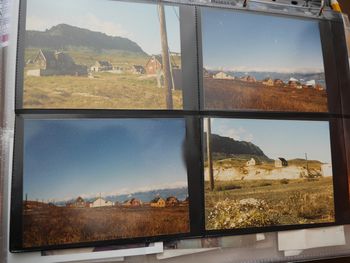
Whether being shouted at in the streets of their new hometown or being pitied as victims of Danish colonial hegemony, Qullisarmiut became objects of communitification, delimited from other Greenlanders and associated with a certain emotional capital. Qullissat became a “tragic object”. Ahmed has described how emotions tend to stick to certain objects, thus investing everything associated with the object with the same emotion. She writes, “Objects are sticky because they are already attributed as being good or bad, as being the cause of happiness or unhappiness. This is why the social bond is always sensational. Groups cohere around a shared orientation toward some things as being good, treating some things and not others as the cause of delight” (Ahmed, Reference Ahmed, Gregg and Seigworth2010, p. 35). The opposite happens when we are “out of line with an affective community” (Ahmed, Reference Ahmed, Gregg and Seigworth2010, p. 37) and not experiencing pleasure in proximity with the objects that we had previously perceived as being good. For decades, such alienation was a very common emotion among Qullisarmiut. If from the outside they were communitified, they were in fact not particularly active in grouping together. Few engaged in the political struggles during the 1970s in which their former hometown had now become such an important symbol. At the level of personal memories, I have observed diverging narratives (Jørgensen, Reference Jørgensen2017, pp. 198–199), for instance, those whose families had felt forced to leave the city told low-voiced emotional narratives of loss and sorrow, while other families or individuals lived on without regrets and with good, albeit nostalgic memories about the hometown of their childhood (Fig. 4).
Many Qullisarmiut commemorate the abandoned city with private photographs from the past as well as the present in albums or on their walls. Photo by the author.

Then, from the mid-1980s onwards, some began to sail out and gather in the abandoned city in July every year. In the beginning, they were just a few, but gradually, others joined, they restored some of the dilapidated houses and dwelled here for a week or two. An association, “Ilulissani Qulissat Ikinngutai” (IQI), or “Friends of Qullissat in Ilulissat”, was formed and began to organise activities and raise money for common purposes. Over the years, the summer camps grew and came to include second-generation Qullisarmiut, their partners and other newcomers. Many of the former inhabitants described these camps in the former town as a space for comfort, recovery, healing and even catharsis, resulting from dwelling in the wonderful nature, with people with whom they share a history, and in houses and streets that echo the beloved past (Jørgensen, Reference Jørgensen2017, pp. 182 ff). Some of the most active persons in this movement had therapy in order to overcome abuses or violent behaviour and to unleash their difficult memories, and they brought the idea of mental recovery and healing with them into the IQI association. In 2002, on its 30th anniversary, IQI encouraged former Qullisarmiut to stand up in the crowd in the community hall and recount their difficult memories of alienation, abuse, sorrow and regrets. A number of people stood up and confessed their sins and hardships, even on camera as the Kalaallit Nunaata Radioa (Greenlandic Broadcasting Corporation)(KNR), produced a three-part reportage for broadcasting and thus made the memory work of the Qullisarmiut available to the entire Greenlandic population. In the years that followed, quite a few people were helped by such confessional events, now outside the limelight of the media, to overcome their shame, sorrow and anger and find their way back to happier memories of the time when Qullissat was a living, modern, industrial society with an international outlook. They described their overcoming of traumas and shame as being able to “pass on to the other side” and make peace with the past. Former Qullisarmiut and their descendants began to promote narratives about the abandoned town in which they themselves were active agents, and the legacy of the town was increasingly liberated from the “sticky” negative effects. These memory works have over time succeeded in turning Qullissat from a “tragic object” into an emotional community that people like to associate with, often even with pride. In other words, if the affective capital is strong, emotional memory works may potentially execute agencies that are sufficiently significant to change the narrative into a uchronotopia (Schulz-Forberg, Reference Schulz-Forberg2013, p. 20) that not only recounts the past but points towards possible better futures. “Ultimately, it is always the future that makes the past. The future as it is wished for, as it should be or as it is expected to be, that is” Schulz-Forberg (Reference Schulz-Forberg2013, p. 21) argued. With the concept of chronotopoi, Bakhtin (in Schulz-Forberg, Reference Schulz-Forberg2013, p. 20) addressed the ways in which we narratively organise time and place and by adding a “u-” Schulz-Forberg now added a future orientation. Uchronotopia was his term for this powerful narrative strategy where historical discourses and themes create a complete break with the past by claiming a “Stunde Null” (in German), or “Zero Hour” (Schulz-Forberg, Reference Schulz-Forberg2013, p. 17) from where everything will change and a utopian vision can materialise as a radically different future.
In 2012, at the 40th anniversary of the relocation from Qullissat, the Qullisarmiut had mobilised more people than ever. The organisers managed to inspire a number of museums to set up exhibitions, the Greenlandic National Theatre to set up a musical about the city, and the band SUME to come and play their hit “Qullissat” for the first time in the city it was about. A married couple was the main driving force behind the impressive anniversary celebrations. They were “second-generation” Qullisarmiut, who now frequented the abandoned town several times every summer. Sara, the wife, was also the one to conceive a new slogan for the event: “Let us move forward with joy”. I asked her why she felt that this slogan was apposite and whether she thought everybody would embrace it, and she replied, “No, not the elders. But the young people among us. Well, for those who have a social heritage, which they are passing on to their descendants, that thing is still there. But we can make a cut here and say. ‘No, there is nothing to do about it now.’ Now we are grown-ups. Now we are the ones who can do something about it. Then … it is closed now. We cannot go back and open it. WE cannot. We must either move on and accept it and then …” Her husband interjected: “Or we will live in sorrow until we die. That’s not how we want to live”, and Sara concluded, “One should live and be happy and grateful for the fact that Qullissat existed. We cannot change the past”.
Following Bakhtin’s concept of chronotopoi and, further, the understanding of historicity put forward by Wilhelm Dilthey in Schulz-Forberg (Reference Schulz-Forberg2013, p. 19; see also Assmann, Reference Assmann2011), history is not an already given unilinear unfolding of events but rather to be conceived as a part of contemporary and dynamic meaning-making. Actors narrate and select the facts that go into creating history from a reservoir of ever-changing possibilities, temporalising them according to their interests, their interpretations and the investigative perspectives that exist. In that sense, Sara and the other Qullisarmiut are, truly, not able to change the events of the past, but are consciously aiming to change the future by expanding the spaces of possibility for themselves as for all other Qullisarmiut. The implication of Bakhtin’s and Dilthey’s reasonings is that this dynamic unfolds globally, over and over again, in ever new historical reinterpretations.
The anniversary event represented a remarkable attempt to change perceptions of the emotional community of the Qullissarmiut, from one that was sad and tragic to one that re-emerged as a joyful, proud, even “happy” object (Ahmed, Reference Ahmed, Gregg and Seigworth2010). A slogan may thus be instrumental in changing the ways in which the past can be used, and the future created. The anthropologist Monique Scheer describes how the emotional practice of naming feelings “is part and parcel of experiencing them” (Scheer, Reference Scheer2012, p. 212). When, for instance, I say “I am angry”, the act of articulation nourishes that particular affect and makes it grow. Importantly, this only happens if the body is already predisposed, i.e., if the given emotion already dwells in the habitus. Recalling that habitus is both structured and structuring structures (Bourdieu Reference Bourdieu2003 [1977], p.90), we can now understand the affective potential of launching the new slogan. When people first hear it, it may give them pause, yet over time, and perhaps in company with others who are also subject to being affected, their habitus may gradually change. Emotional practices are imbued with a certain sluggishness inertia or resistance to change that resists radical ruptures in memory works. Remarkably, it is thus the post-generation (Hirsch, Reference Hirsch2012, p. 10), the descendants of those who lived through the primary experience and were marked by it, i.e., who are finally capable of changing the narratives and liberating the emotional community so that it may now be associated with pride.
Communities and future-making after Qullissat and Sakajärvi
In the Qullissat case, with the new slogan, Sara sought to draw a line in time to mark a new beginning so that the Qullisarmiut could begin to focus on the future with joyful expectations. This effort stood in sharp contrast to the therapeutic focus on narratives of past hardships that was common 10 years earlier around the time of the 30th anniversary. It also signalled a new generation seizing the power to author the narratives by which Qullissat will take shape in the future. The Sakajärvi inhabitants too, yet less successfully, attempted to bring forth a uchronotopia that would break with the strong chronotopoi of an eternal precedence of mining activities. They started acting as an affective community and hereby gained some media attention.
Both the two cases of Qullissat and Sakajärvi demonstrate that the boundaries as well as the values, meanings, and ideas of communities dynamically appear, change, and disintegrate, and that these transitional movements are dependent on the emotions associated with the given community at the given point in time. Community may take the form of a dense social organisation in which, to each individual, membership is strategically useful social capital that “may also be socially instituted or guaranteed by the application of a common name (the name of a family, a class, or a tribe or of a school, a party, etc.) and by a whole set of instituting acts designed simultaneously to form and inform those who undergo them; in this case, they are more or less really enacted and so maintained and reinforced, in exchanges” (Bourdieu, Reference Bourdieu and Richardson1986, p. 51). Thus, in order for the community to be able to draw on the social capital as a resource, the community’s boundaries must be continually affirmed and reaffirmed in exchanges. In Sakajärvi, the local inhabitants who faced a coercive movement only came to focus on boundaries between them and the rest of the municipality they were living in because they entered into a conflict of interest with them. They performed the boundaries when talking to the press and expressing their dissatisfaction, knowing full well that people with whom they interacted in their daily lives would thus come to perceive them as an obstinate, stubborn and selfish community. To them, it was emotionally important not to stay passive. Even if this was only a matter of dignity, at first sight, it may also be interpreted as a game over affective capital, potentially influencing the economic capital that the mining company will have to offer to compensate them for their lost properties.
In the Qullisat case, the boundaries of the community were first established mainly from the outside by people using “Qullisarmiut” as a derogative term, yet over the decades following the forced relocation from Qullissat the former inhabitants and their descendants increasingly identified with the community in a positive spirit. Here too, it was crucial that the difficult emotional memories over time became known to the surrounding world through the musical Qullisara, which was staged at the 40th anniversary, the music performed by the band SUME, a popular documentary film that was later produced about SUME (Peronard & Høegh, Reference Peronard and Høegh2014), in the literature about the former mine and the city (Petersen et al., Reference Petersen, Ohsten and Valgren1975; Sørensen, Reference Sørensen2013) and in repeated broadcasts on the national television station, KNR. The emotional community is strengthened by virtue of its history becoming known, as a cultural heritage that solidifies its boundaries. It has transformed the community into a positive, if not outright happy, object, boosting the value of the community as a resource of social capital for the Qullisarmiut. Internet availability has also contributed considerably to such abilities to attract attention, and Qullisarmiut and friends may now subscribe to several, fairly active Facebook groups. These groups have facilitated growing activity levels in the summer camps in Qullissat as well as in groups that now not only socialise in several Greenlandic towns but also in Copenhagen.
The reward is considerable, since “To start with, community is a ‘warm’ place, a cosy and comfortable place. It is like a roof under which we shelter in heavy rain, like a fireplace at which we warm our hands on a frosty day”, as Zygmunt Bauman (Reference Bauman2011 [2001], p. 1) writes. Gerald Creed also notes the positive associations sticking to the concept of community and how “All references, then, may conjure to some degree qualities of harmony, homogeneity, autonomy, immediacy, locality, morality, solidarity, and identity, as well as the idea of shared knowledge, interests, and meanings” (Creed, Reference Creed and Creed2006, p. 5). Bauman has poignantly pointed out how community “feels good because of the meanings the word ‘community’ conveys – all of them promising pleasures, and more often than not the kinds of pleasures we would like to experience but seem to miss” (Bauman, Reference Bauman2011 [2001], p. 1). Community is something we strive for, yet, Bauman prudently elaborates, “community” stands for a world that is imagined (Bauman, Reference Bauman2011 [2001]) rather than stable, and it is always entangled in positive emotions: “Company or society can be bad; but not the community. Community, we feel, is always a good thing” (Bauman, Reference Bauman2011 [2001], p. 1). Bauman’s characterisation may sound familiar, yet the cases of Sakajärvi and Qullissat illustrate that this is mainly the case when community is defined from the inside out. The exact opposite often pertains to cases where someone imposes the concept of community onto others from the outside in, by labelling, declaring or stigmatising in acts that restrain or deprive the members of the community of resources or possibilities. The same distinction is often drawn between groups and categories, as the anthropologist Richard Jenkins rightly points out (Reference Jenkins1994, p. 200), and my analysis demonstrates that when people are categorised from the outside in, they tend to reply to this by communitifying in a group, albeit one associated with different values and meanings. My cases also demonstrate that such processes of internal group formation and external categorisations alternate. Various actors, who are engaged in the same processes with diverging purposes and who compete to install their respective temporalities and narratives in processes of communitification, may therefore use these temporalities and narratives strategically at different stages in the process.
Conclusion
Mining activities in the Arctic strongly influence the people who live there and the sustainability of their communities. Although sustainable community policies are compulsory for mining companies operating today, it is, unfortunately, not rare to see the enormous economic potentials of resource extraction overrule the economic and emotional capital of Arctic communities in the decision-making processes. This was indeed experienced by the community members in the two cases that I have described here, in Qullissat and in Sakajärvi. Their subsequent responses were both affective and resilient.
In neither of the cases were the strategies from the outset purposefully, or even consciously, articulated, but took form in the process. The establishment of boundaries grew in response to conceptual insecurities following changes in people’s living conditions at a very basic level. In both cases, most people initially reacted with introvert emotions, such as sorrow, uncertainty, inferiority and shame, and while some of the Qullisarmiut and their families remain stuck in these emotions to this day, others have broken the silence, healed – sometimes through therapy, sometimes by speaking up – encouraged others, and gradually transformed the emotional community into one associated with pride and hope for the future. Likewise, individual agencies lead the protests in Sakajärvi, and while that process has still to reach a conclusion, the references to community have so far, at least, attracted the attention of the news media. Such communitification might further support their struggles for fair negotiations with the mining company, Boliden, and their aspirations for a satisfying future.
The two cases demonstrate that active future-making is a possibility and that it may be worth the effort for a vulnerable group, even when taking the investment of resources into consideration, to actively engage with affective economies in order to enhance the group’s emotional capital. The potential benefits of such communitifications are considerable, in so far as the successful demonstration of boundaries may come to demarcate who is to be allocated what resources. It became clear that the agency ascribed to and performed by the two designated communities depended to a large extent on the intensity of the emotions that surrounded the communities. Furthermore, although in both cases the emotional practices of quite a few individuals actually diverged from those of the majority, it was exactly by appearing to the outside as uniform emotional communities (Rosenwein, Reference Rosenwein2006; Wetherell, Reference Wetherell and Wetherell2012) that the communities came to embody transformative powers.
Based on this analysis and discussion, I conclude that we may gain a better understanding of the social contexts of Arctic extractive industries if we consider the emotions that are tied to the concept of community as symbolic capital ((Bourdieu Reference Bourdieu2003 [1977], p. 183; Bourdieu, Reference Bourdieu and Richardson1986) and take them as seriously as we do the economic capital that derives from the material resources being pulled out of the ground and, potentially, regard the two forms of capital as interchangeable. Furthermore, just as extractive resources are unstable, in the sense that their market value will fluctuate over time, we can also perceive the emotional community as an unstable resource that is produced, shaped and reshaped in accordance with alternating intensities of emotions. Emotions are key to understanding these social dynamics; they frame what uchronotopias can be narrated, and they may, therefore, impact heavily on the communities’ abilities to create desirable futures for themselves.
Acknowledgements
I am indebted to numerous Qullisarmiut in the Disko Bay area, to the villagers of Sakajärvi, and to all the other people in Greenland and in Norbotten, Sweden, who made this research possible. In this article, I have changed the names of individuals in order to make immediate identification less likely. I am indebted to all the other contributors and, in particular, to the editors of this issue for challenging my arguments, just as I wish to thank the two anonymous peer reviewers for providing constructive feedback. I also wish to acknowledge the stimulating exchange of knowledge with my fellow researchers at the REXSAC Center of Excellence, in particular Dag Avango and the cross-disciplinary group of PhD candidates with whom I shared an extraordinary visit to Norbotten in September 2017.
Financial Support
This article is based on PhD research supported by the Greenland Research Council and the Independent Research Fund Denmark and on the post-doc research financed by NordForsk through the Resource Extraction and Sustainable Communities Center of Excellence.