Postural orthostatic tachycardia syndrome is a clinical syndrome of orthostatic intolerance characterised in children by a heart rate increase of 40 beats per minute or more within the first 10 minutes of standing or during head-up tilt table testing, without orthostatic hypotension (defined as a decrease in systolic blood pressure of 20 mmHg and/or diastolic blood pressure of 10 mmHg or more).Reference Freeman, Wieling and Axelrod1,Reference Sheldon, Grubb and Olshansky2 It is one of the most common conditions leading to orthostatic intolerance in young patients, but the prevalence estimates are imprecise, ranging between 0.1 and 1%.Reference Sheldon, Grubb and Olshansky2–Reference Low, Sandroni, Joyner and Shen4 While the aetiology remains unclear, the incidence of the condition appears to be increasing, perhaps in part due to better awareness of the disorder. These patients often present with complaints of syncope, palpitations, lightheadedness, tremor, generalised weakness, blurred vision, exercise intolerance, sleep disturbances, migraine headaches, and fatigue.Reference Carew, Connor and Cooke5,Reference Boris and Bernadzikowski6
The treatment of postural orthostatic tachycardia syndrome is often challenging and requires a multidisciplinary approach. Based on the 2015 Heart Rhythm Society recommendations, management is based on therapeutic and lifestyle changes as well as pharmacological treatment.Reference Sheldon, Grubb and Olshansky2 There is no single treatment modality that has uniformly proven to be more effective than others, and quite often, patients are tried on several medications before an adequate therapeutic response is obtained.Reference Boris and Bernadzikowski7
Ivabradine is a selective and specific inhibitor of the inward funny current in the sinoatrial node and atrioventricular node. The inward funny current is responsible for the spontaneous electrical pacemaker activity in the sinoatrial node. Ivabradine has been used in adult patients with postural orthostatic tachycardia syndrome, showing good results in improving symptoms, but there is paucity of data regarding its efficacy in the paediatric population.Reference McDonald, Frith and Newton8–Reference Ruzieh, Sirianni and Ammari10 Donne et al. published a study looking at 22 children with postural orthostatic tachycardia syndrome treated with ivabradine and showed an improvement in symptoms in 68% of patients.Reference Delle Donne, Roses Noguer, Till, Salukhe, Prasad and Daubeney11 Our study was a retrospective study designed to further evaluate the use of ivabradine in paediatric population.
Methods
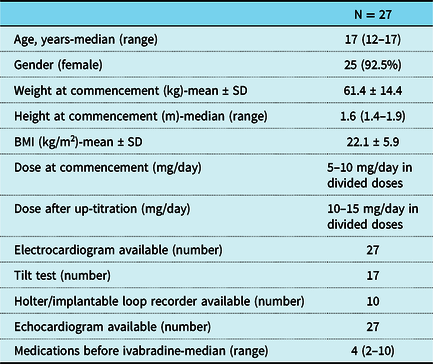
The study was carried out after approval by the Institutional Review Board of the University of Toledo Medical Center. Informed consent was waived due to the retrospective nature of the study. The patient data were extracted from our electronic medical record from January 2015 to February 2019. All patients were less than 18 years of age and had been seen in the Syncope and Autonomic Disorders Clinic. Each patient had been diagnosed with postural orthostatic tachycardia syndrome for which ivabradine had been prescribed. Postural orthostatic tachycardia syndrome was defined as a clinical syndrome of orthostatic intolerance lasting for at least 6 months characterised by an increase in heat rate ≥ 40 beats per minute within 5–10 minutes of quiet standing or upright tilt, with the absence of orthostatic hypotension (>20 mmHg drop in systolic blood pressure) and accompanied by frequent symptoms that occur with standing such as syncope, presyncope, lightheadedness, palpitations, dyspnea, and fatigue.Reference Freeman, Wieling and Axelrod1,Reference Sheldon, Grubb and Olshansky2,Reference Bryarly, Phillips, Fu, Vernino and Levine12 The baseline data gathered included gender, weight, height, body mass index, and age at initiation of ivabradine. Also recorded was the starting dose of ivabradine, the dose it was titrated to, and any reason for its discontinuation. Beta blockers and calcium channel blockers were discontinued before starting ivabradine to avoid excessive bradycardia. Midodrine, fludrocortisone, and selective serotonin reuptake inhibitors were continued as combination therapy along with ivabradine. The baseline characteristics of the patients are illustrated in Table 1.
Baseline characteristics of patients in the study

Orthostatic vital signs (heart rate and blood pressure), as well as any change in symptoms, were determined before and after starting therapy with ivabradine. The symptoms were quantified subjectively, and results reported in a binary manner. The results were based on symptom severity and frequency before and after taking the medication. A positive response to ivabradine entailed a decrease in symptom severity and or frequency. No change or an adverse reaction was considered negative.
SPSS 25.0 software (IBM Corp., Armonk, NY, United States of America) was used to perform descriptive statistical analysis. Normally distributed data were described with mean and standard deviation, whereas non-parametric data were described with median and range. A McNemar’s test was done to compare symptoms before and after ivabradine. A paired sample t-test was applied to compare heart rate and blood pressure responses before and after starting ivabradine on sitting and standing. Analysis of covariance test was done to compare the change in heart rate before and after starting ivabradine on sitting and standing in responders and non-responders. Due to the small sample size, a log transformation of the data was done to satisfy the assumption of normality. A two tailed p-value <0.05 was considered as statistically significant.
Results
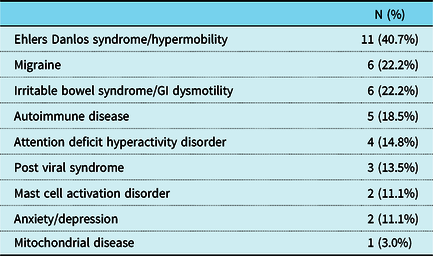
The majority of patients in our study were female (92.5%). The median age was 17 years (interquartile range of 12–17 years). The most common condition associated with the diagnosis of postural orthostatic tachycardia syndrome was found to be hypermobile Ehlers Danlos syndrome and was present in 11 patients (40.7%). Other common associated disorders were migraine (22%), gastrointestinal disorders (22%), and underlying autoimmune disease (18%). The diagnosis of migraine was based on clinical data. Central nervous system imaging was performed to rule out an organic cause. In those patients having gastrointestinal symptoms, organic causes were ruled out by extensive gastrointestinal evaluation, including esophagogastroduodenoscopy and colonoscopy. A gastric emptying study was performed to evaluate gastrointestinal dysmotility. The co-existing autoimmune diseases reported included systemic lupus, Hashimoto’s disease, Sjogren’s syndrome, and celiac disease. These conditions were diagnosed based on the elevation of autoimmune markers like antinuclear antibodies, anti-double-stranded deoxyribonucleic acid antibodies, and positive rheumatoid factor. Attention deficit hyperactivity disorder was listed as a separate diagnosis and was based on symptoms like persistent pattern of inattention and/or hyperactivity–impulsivity. A preceding viral infection was found to precipitate postural orthostatic tachycardia syndrome in a subset of patients. Table 2 delineates the frequency of commonly associated conditions in our study.
Comorbidities associated with POTS

GI = Gastrointestinal; POTS=postural orthostatic tachycardia syndrome.
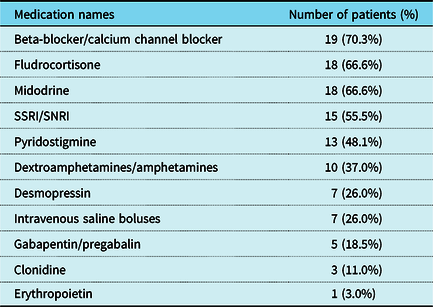
Patients were started on 2.5–5 mg of ivabradine in two divided doses initially, and the dosage was up-titrated according to the therapeutic response. The maintenance dose was 5 mg twice daily in 22 patients and 7.5 mg twice daily in 4 patients. The maximum dose of ivabradine was kept at 7.5 mg twice daily as per the United States Food and Drug Administration recommendations.13 The dose was decreased from 5 to 2.5 mg twice daily due to excessive bradycardia in one patient. Every patient included in the study had adopted non-pharmacological measures (raising the head of the bed, liberal hydration, graded exercise, and compression garments) and at least one other medication before being prescribed ivabradine (Table 3). All 27 patients also had an echocardiogram to assess for underlying structural cardiac abnormalities. Seventeen patients had a tilt table test to confirm the diagnosis. In the remaining patients, the diagnosis was based on clinical history and examination, which included a 10-minute standing test. Ten patients included in the final analysis had implantable loop/holter monitoring that demonstrated sinus tachycardia.
Medications taken by patients before starting ivabradine

SNRI = selective norepinephrine reuptake inhibitors; SSRI=selective serotonin reuptake inhibitors.
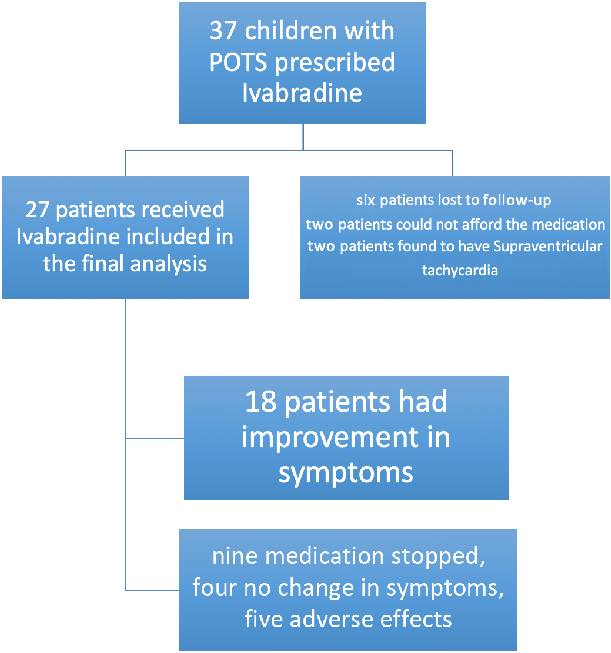
Ivabradine had been prescribed to 37 patients less than 18 years of age with a diagnosis of postural orthostatic tachycardia syndrome. Ten patients were not included in the final data analysis; six patients were lost to follow-up, two patients were found to have supraventricular tachycardia, and two patients could not afford the medication (Fig 1). Follow-up time ranged from 3 to 12 months.
Study outline.

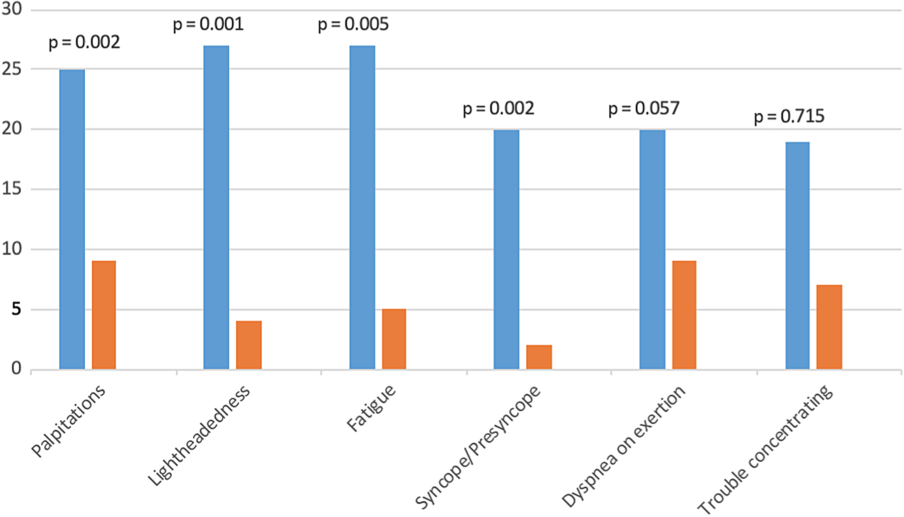
The follow-up data showed an improvement in the symptoms in 18 out of 27 patients (67%). The most troubling symptom for patients which had the best response rate was syncope/presyncope (90%). In addition, patients reported a significant improvement in other debilitating symptoms, such as lightheadedness (85%), fatigue (81%), and palpitations (64%) (Fig 2). The medication was stopped by four patients (14.8%) due to no effect on their symptoms. The medication was discontinued in five patients (18.5%) due to side effects. Two patients had visual disturbances (luminous phenomena). Severe bradycardia and excessive flushing were seen in two patients, respectively. Another one patient reported joint pain and fatigue. A low threshold for stopping the medication was kept because of the limited data regarding the adverse effect profile of ivabradine in children. There were no changes in other therapies during the follow-up period. This was done to prevent negating any benefit from the synergistic effect of other therapies with ivabradine. A follow-up electrocardiogram was available in 13 patients. None of them had an abnormal QTc interval while on ivabradine.
Number of patients reporting symptoms before (blue) and after treatment (red).

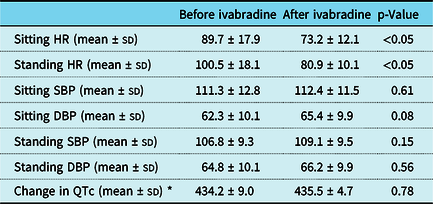
The vital signs of the patients following ivabradine treatment demonstrated a significant lowering of the heart rate during sitting (89.7 ± 17.9 versus 73.2 ± 12.1; p-value <0.05) and standing (100.5 ± 18.1 versus 80.9 ± 10.1; p-value <0.05) without a significant change in the blood pressure (Table 4). In patients with no clinical efficacy from ivabradine, the decrease in heart rate was less compared to their counterparts. However, this did not reach statistical significance (p-value >0.05), Table 5.
Vital signs and QTc of patients before and after starting ivabradine
DBP=diastolic blood pressure; SBP=systolic blood pressure; sd=standard deviation.
* Follow up QTc was available on 13 patients only.
Heart rate on sitting and standing in responders and non-responders

Discussion
This study represents the largest retrospective analysis of paediatric postural orthostatic tachycardia syndrome patients receiving ivabradine thus far reported. The results of our study showed that there was an improvement in symptoms in 67% patients treated with ivabradine. These results are in keeping with the earlier study done by Donne et al, reporting clinical improvements of around 68% in children with postural orthostatic tachycardia syndrome.Reference Delle Donne, Roses Noguer, Till, Salukhe, Prasad and Daubeney11 Ivabradine is a selective inhibitor of the inward funny current that contributes to sinus node automaticity. Our knowledge of the inward funny current channel, located in the sino-atrial node, is primarily based on animal studies. In these studies, the sympathovagal balance was not altered by ivabradine, despite a significant slowing of the heart rate. Therefore ivabradine has a heart rate slowing effect without affecting blood pressure.Reference Bucchi, Baruscotti and DiFrancesco14 As a result, it has potential advantages over other pharmacological therapies used in postural orthostatic tachycardia syndrome.Reference Boris and Bernadzikowski7 It does not cause unwanted decreases in blood pressure or supine hypertension (common problems with traditional therapy). In our study, the medication produced a significant improvement in debilitating symptoms associated with postural orthostatic tachycardia syndrome (Fig 2). A selective sub-analysis showed a lesser decrease in heart rate in patients who did not experience improvement in symptoms (Table 5). The absolute change in our study was variable, and a heart rate cut-off, which can point to a favourable therapeutic response, is therefore not very reliable.
Palpitations and tachycardia are common complaints in postural orthostatic tachycardia syndrome for which beta blockers have traditionally been used as one of the principal therapies. The common side effects of beta blocker therapy include hypotension, exercise intolerance, and fatigue.Reference Barzilai and Jacob15 Each of the symptoms mentioned earlier can be a part of postural orthostatic tachycardia syndrome and therefore aggravated with beta blockers. Another medication that has sometimes been used as a rate-lowering agent is pyridostigmine, but cholinergic side effects like abdominal cramping and diarrhoea can limit its use.Reference Kanjwal, Karabin and Sheikh16 Therefore, ivabradine is a very promising medication in these patients. Eighteen (66%) patients in our study took ivabradine in conjunction with midodrine or fludrocortisone. Fludrocortisone and midodrine have beneficial effects in postural orthostatic tachycardia syndrome by increasing intravascular volume and peripheral vasoconstriction, respectively. A combination of these drugs with ivabradine can offer benefits in addition to heart rate control. Anecdotal reports from postural orthostatic tachycardia syndrome patients have postulated that they respond better to low doses of multiple medications rather than higher doses of a single agent.Reference Boris and Bernadzikowski7,Reference Thieben, Sandroni and Sletten17
There are scarce data about the role of ivabradine in the paediatric population in general versus adults, where it has been approved for the treatment of congestive heart failure. Bonnet et al, performed a randomised, double blinded, placebo-controlled trial of 116 children evaluating the role of ivabradine in children with dilated cardiomyopathy with the primary endpoint of a ≥ 20% reduction in heart rate from baseline. In this study, over 1-year follow-up, there was a 6.6% net improvement in ejection fraction in patients with ivabradine versus controls.Reference Bonnet, Berger, Jokinen, Kantor and Daubeney18 In keeping up with the results of this study and encouraging response in adults, the United States Food and Drug Administration has recently approved ivabradine for the treatment of heart failure in children with dilated cardiomyopathy. There have also been case reports where it was useful to treat junctional ectopic tachycardiaReference Al-Ghamdi, Al-Fayyadh and Hamilton19 and heart failure induced by inappropriate sinus tachycardia.Reference Romeo, Grimaldi and Sarubbi20
In clinical trials, transient enhanced brightness in a limited area of the visual field (phosphenes), excessive bradycardia, dizziness, and excessive fatigue are common side effects associated with ivabradine.Reference McDonald, Frith and Newton8,Reference Sutton, Salukhe, Franzen-McManus, Collins, Lim and Francis9,Reference Delle Donne, Roses Noguer, Till, Salukhe, Prasad and Daubeney11,Reference Cervetto, Demontis and Gargini21 All patients were counselled in advance about these potential adverse effects. In our study, two uncommon side effects, excessive flushing, and joint pain/fatigue, were responsible for discontinuation of the medication in two patients. Prolongation of QTc has been reported with malignant ventricular arrhythmias in patients who take ivabradine along with other medications known for prolonging QTc interval.Reference Cocco and Jerie22 None of our patients in whom a follow-up electrocardiogram was available had a prolonged QTc.
Limitations
This is a single centre, observational, retrospective study of a small children population prescribed ivabradine for postural orthostatic tachycardia syndrome. The medication was used on an off-label basis as there currently is no medication approved by the United States Food and Drug Administration to specifically treat postural orthostatic tachycardia syndrome. It is a purely descriptive study and thus limited by the lack of a control group. A small sample size also limits the study. Therefore, a difference in heart rate and symptomatology might be underestimated. A scale was not used to numerically quantify the degree of improvement in symptoms with therapy. This would have helped to better assess the efficacy of treatment.
These limitations notwithstanding, the present study supports a growing body of evidence that ivabradine may be a useful medication in children suffering from postural orthostatic tachycardia syndrome. Further studies, including randomised, placebo-controlled trials, will be necessary to better define the role of ivabradine in the management of postural orthostatic tachycardia syndrome in children.
Conclusions
Postural orthostatic tachycardia syndrome is a challenging disease to treat in children because of the limited effective treatment options. For patients who have symptomatic tachycardia and borderline or low blood pressures or side effects from other heart slowing agents, treatment with ivabradine can be very efficacious. It is generally well tolerated and in our study was shown to lead to symptom improvement in 67% of patients. A well-designed randomised control trial could provide the necessary conclusive evidence in establishing ivabradine as an effective therapeutic modality in postural orthostatic tachycardia syndrome.
Acknowledgements
The authors thank Sadik A. Khuder (Department of Medicine and Public Health, University of Toledo) for contribution in statistical analysis.
Financial Support
The research received no specific grant from any funding agency or from commercial or not-for-profit sectors.
Conflicts of Interest
None.
Ethical Standards
The authors assert that all procedures contributing to this work comply with the ethical standards of the relevant national guidelines on human experimentation, per the United States Department of Health and Human Services, as well as the Food and Drug Administration, and with the Helsinki Declaration of 1975, as revised in 2008, and has been approved by the institutional committee of the University of Toledo.