It’s hard to recall a revolution that has swept biology more swiftly than CRISPR. Reference Lander1
Norwegian salmon is a good product itself, but also a wonderful trademark of Norway. Footnote *
—Norwegian prime minister Erna Solberg, March 23, 2015
Biotechnology, genetics, and genome-editing research has come a long way in a short time. Boosted by venture capitalists and major international corporations (e.g., DuPont, Monsanto, and Bayer), thousands of new products, many of which are fruits and vegetables, are being “improved” by gene editing. Some of the companies behind these innovative products are directed by scientists from universities, many of whom first published their gene-editing results and then started companies to bring the science to promising industry products. The gene-editing industry is thus on a strong growth trajectory.
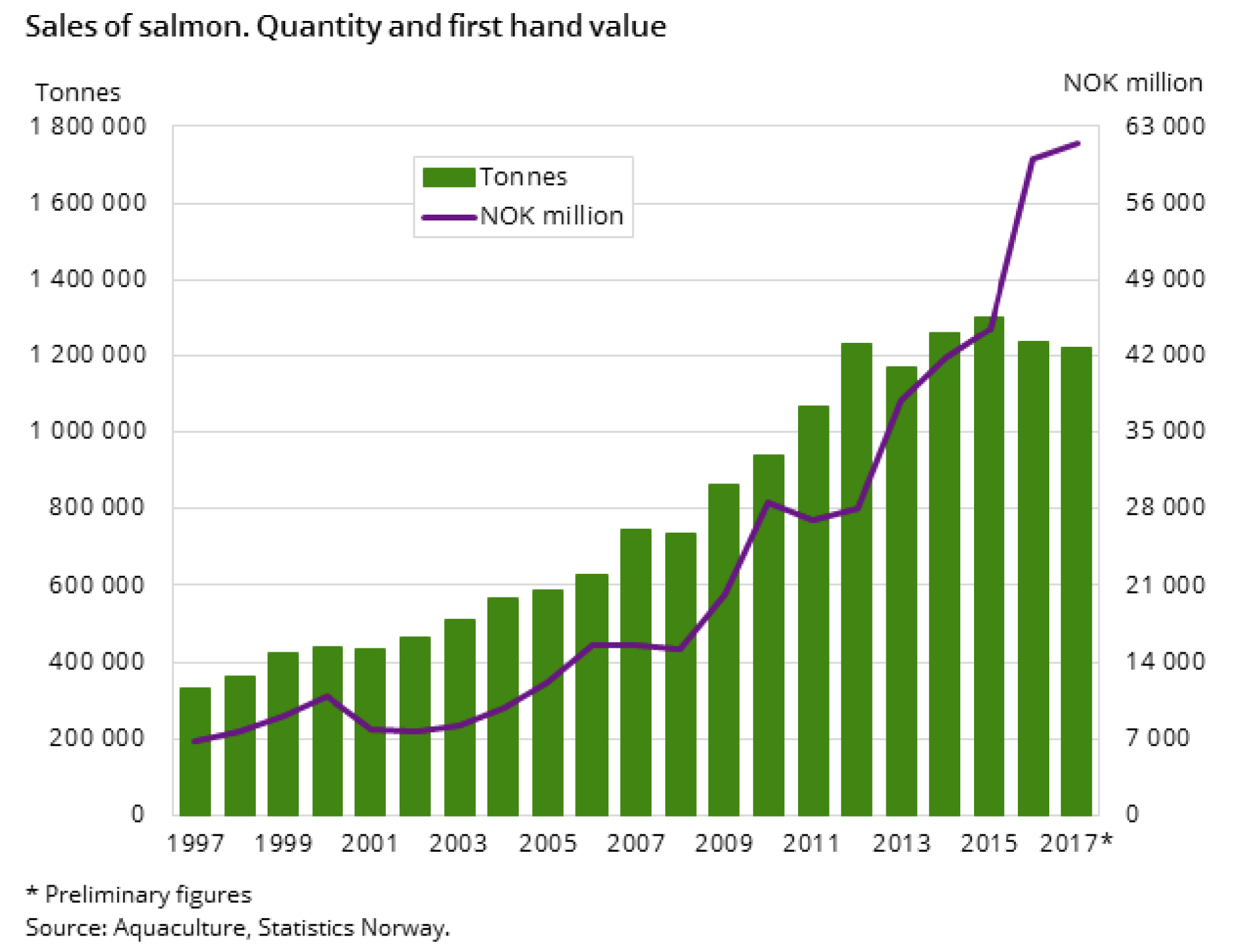
The Norwegian salmon farming industry is on a similar growth trajectory, with all-time high production and profits in 2017 (more than 60 billion Norwegian crowns [NOK]). The demand and prices for Atlantic salmon are high, which is driving the current high production and appetite for further expansion along the Norwegian fjords and offshore. Farmed salmon escapees, though, are one of the major threats to the growth of this industry because of the potential for genetic ingress with the protected wild Atlantic salmon populations that spawn in Norwegian rivers. Land-based aquaculture in Norway is not compatible with large-scale growth of the industry, for logistic (where would you put all the salmon?) and economic (how would you pay for a new massive infrastructure?) reasons. Could the industry solve the genetic introgression problem through biotechnology? Could genetic modification aid in a reliable and cost-effective way to produce sterile farmed salmon?
This article is a combination of an ethnographic narrative of how gene editing, specifically the CRISPR-Cas9 method, was first conceived of in a science-industry collaborative project in Norway, and a critical analysis of the first CRISPR genetically sterile salmon. This account describes the novel combination of cutting-edge biotechnology with Norwegian nature, thus changing how we represent natural products in a three-pronged coproduction of science, industry, and nature.
CRISPR: A new way to edit the genome
In the 1970s, propelled by the discovery of the double helix structure of DNA in 1953, scientists began new ventures in recombinant DNA technologies. These methods made it possible to modify and create novel genetic sequences that do not occur in nature. The advent of the polymerase chain reaction (PCR) made it possible to amplify pieces of DNA, thereby supporting directed research of sequences of DNA. Gene-editing methodologies are dependent on two components: a specific DNA sequence domain and a nuclease that can induce a double break of the DNA strand in a specific place. Reference Gaj, Gersbach and Barbas2 Nucleases such as transcription activator-like effector (TALE) proteins Reference Miller, Tan, Qiao, Barlow, Wang, Xia and Meng3,Reference Zhang, Cong, Lodato, Kosuri, Church and Arlotta4 and zinc fingers Reference Urnov, Rebar, Holmes, Zhang and Gregory5 were very promising and increasing in functionality, but in many instances, they have been outcompeted by a simpler, cheaper, and more efficient gene-editing methodology known as CRISPR, which enables rewriting of the genetic code.
CRISPR is shorthand for clustered regularly interspaced short palindromic repeats, which are part of the prokaryotic immune system. Reference Cong, Ran, Cox, Lin, Barretto, Habib and Hsu6 Scientists who first studied these sections of DNA Reference Ishino, Shinagawa, Makino, Amemura and Nakata7 did not immediately recognize the function of the observed DNA repeats. But later, many scientists began to understand and describe how these sequences confer adaptive immunity against viruses, the ancient way in which single-celled organisms fought off disease through CRISPR and CRISPR-associated proteins (Cas). Reference Lander1,Reference Mojica and Montoliu8,Reference Ratner, Sampson and Weiss9,Reference Barrangou, Fremaux, Deveau, Richards, Boyaval, Moineau, Romero and Horvath10 Along with “spacer DNA” that marks the beginning and end of CRISPRs, the whole CRISPR system is nature’s platform for self-correcting and evolution of simple immune systems. Reference Mojica and Montoliu8 When scientists realized the built-in potential to leverage CRISPRs through the CRISPR-associated protein-9 nuclease, Reference Cong, Ran, Cox, Lin, Barretto, Habib and Hsu6,Reference Barrangou, Fremaux, Deveau, Richards, Boyaval, Moineau, Romero and Horvath10,Reference Garneau, Dupuis, Villion, Romero, Barrangou, Boyaval and Fremaux11,Reference Jinek, Chylinski, Fonfara, Hauer, Doudna and Charpentier12 the CRISPR-Cas9 breakthrough for biotechnology and genome editing was born.
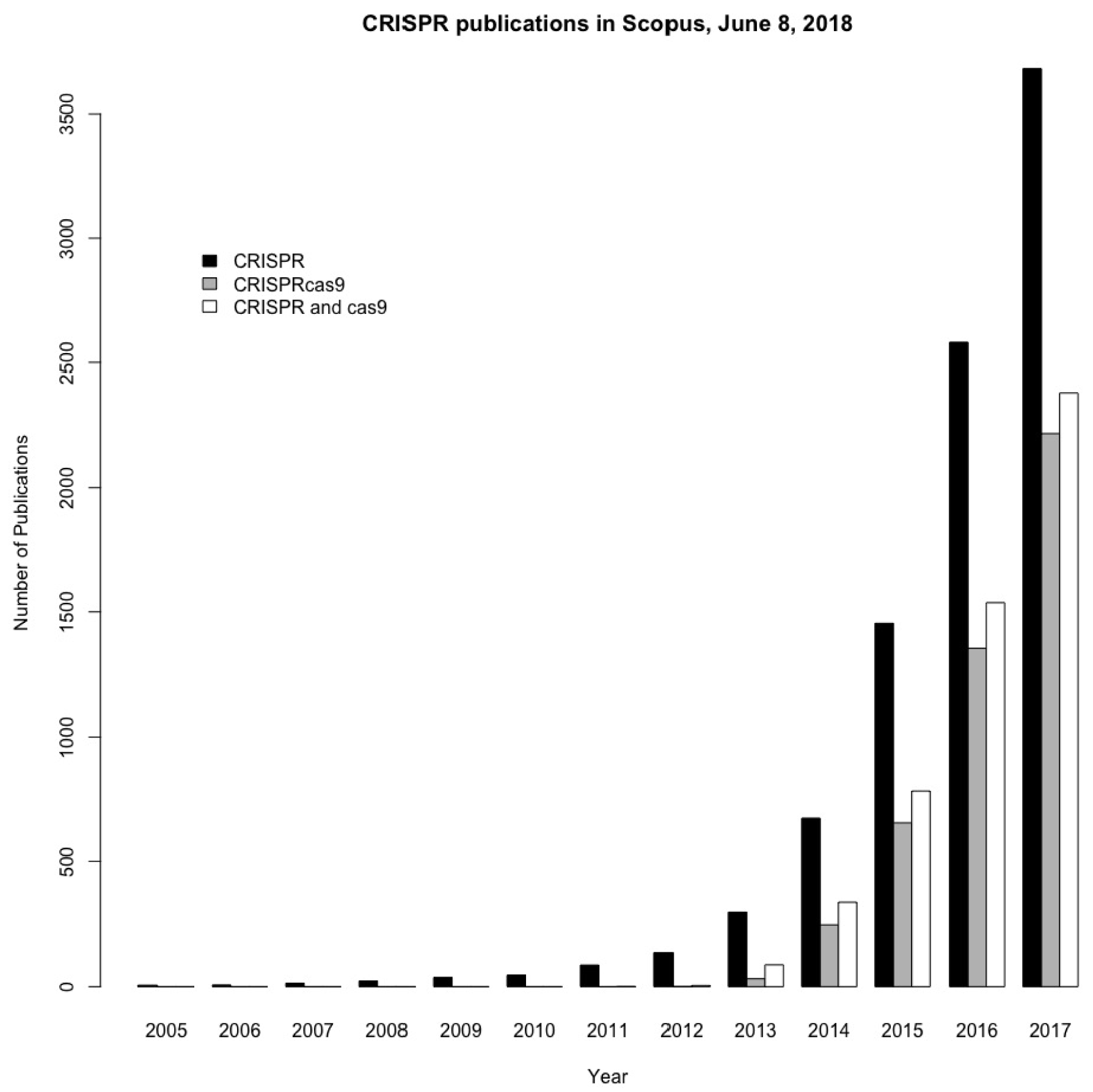
Gene-editing practioners attest that the elegant simplicity of CRISPR is not its only forte; CRISPR is also far more cost-effective than any other precise gene-editing technique currently available. Kits for zinc fingers can cost at least $5,000, while CRISPR kits start at $30. Reference Ledford13 The reliability, affordability, and generic applicability (scientists say that CRISPR works in about every organism in which it has been applied) has propelled the use of CRISPR technology to all corners of the world. Eric Lander, founding director of the prestigious Broad Institute, put it this way: “If there are molecular biologists left who have not heard of CRISPR, I have not met them.” Reference Lander1 Figure 1 shows an immense increase in publications mentioning CRISPR.
Frequency of publications in the Scopus database of peer-reviewed literature called by the three search terms: “CRISPR,” “CRISPR cas9,” and “CRISPR” and “cas9.” There was one paper in years 1993, 2002, and 2003. The search includes the title, abstract and keywords of papers in the database. Data retrieved June 8, 2018.

In fact, the verbal use of the acronym CRISPR in the lab is proof of its omnipresence: today scientists use the term as an adjective (“This is CRISPR’ed DNA,” “This is a CRISPR’ed mouse,” “We are going to do the CRISPR injections today”) but also as a verb (“We are going to CRISPR the mouse”) and as a noun (“We applied CRISPR to knock out gene X,” “The CRISPR works!”). However the term is used, the scientific community generally knows what is happening: certain genes or regulatory elements are targeted and either knocked out totally, knocked down functionally, or inserted new; even single nucleotides in the DNA are substituted.
“The world’s foremost seafood nation”
The fjords of the western coast of Norway currently host the largest concentration of farmed Atlantic salmon (Salmo salar) in the world. The production of farmed salmon has increased steadily since the 1980s, to 1.22 million metric tons in 2017, with a firsthand value of 61.4 billion NOK (Figure 2). 14 Total employment for 2017 for salmon and rainbow trout (of which the share of salmon is 94.4%) in Norway was 7,376 persons.
Time series of sales of salmon originating from Norway. Quantity (metric tons) and firsthand value (in NOK). Source: Statistics Norway 2018, https://www.ssb.no/en/jord-skog-jakt-og-fiskeri/artikler-og-publikasjoner/record-high-first-hand-value-of-salmon.

The marked increase in salmon production and revenue follows the Norwegian government’s vision of increased seafood production, as stated in the government’s strategy for the ocean. 15 The report claims Norway to be among the world’s foremost seafood nations today, and for the future. It is estimated that the annual production of salmon in Norway has the potential to increase five times over current production by 2050. To attain this growth in a sustainable manner, major challenges need to be addressed, including the persistence and spreading of salmon disease and salmon lice, a sustainable feed supply, and genetic introgression (hybridization) of wild salmon stocks by farmed salmon escapees. All of these bottlenecks are currently being researched by various science-industry collaborations. This article focuses on the last issue: the genetic introgression of farmed salmon DNA into the wild population of Salmo salar and a specific science-industry project superimposed on the new wave of CRISPR technology.
Objectives
This article presents a reflective study on the unique science-industry partnership at the cutting edge of genome-editing research. The context here is a five-year (2012–17) biotechnology project funded by the Research Council of Norway, titled “SALMOSTERILE: Sterile salmon by targeting factors involved in germ cell survival: novel vaccination strategies for sustainable fish farming.”
In this article, I will examine the interplay of biotechnical advances with the social, ecological, and commercial needs of the salmon industry. The objective is to critically analyze the science-industry nexus for this case, as well as to reflect on the coproduction of science and society, or how science forms and informs society and vice versa, in terms of genetically modified organisms (GMOs) and its societal debate in Norway.
Methods
This article is informed by literature and media reviews; ethnographic research in the lab, including one-on-one interviews; two workshops (June 2015 and January 2016); and two questionnaires (January 2015 and March 2016). The study period lasted two years between October 2014 and October 2016. I highlight the process phases of CRISPR from in-lab observation and workshops and formal and informal interviews.
Ethnography: Literature and media reviews, lab observation
Ethnographic research is a social science method that examines the processes and practices of a community or culture by means of recording events observed and perceived through, for example, shadowing and interviews. Reference Bernard16 Ethical, legal, and social aspects (ELSA) of science is an interdisciplinary field designed to critically examine scientific research from social science and humanities perspectives in order to give substance to these aspects relating to science and society. The purpose of this ethnography is to describe and critically examine the practice of “doing CRISPR” in a specific place and time, namely, the Salmosterile project.
Credibility, legitimacy, saliency
Scientific institutions have a central role in developed countries, where technological innovations are expected to drive sustainable economic progress and growth. However, the increasing complexity of scientific assessments, knowledge systems, and methods underlying technological advancement could cause a loss of effectiveness in producing governance actions if they are not deemed credible, legitimate, or salient. Reference Cash, Clark, Alcock, Dickson, Eckley, Guston, Jäger and Mitchell17 In this article, I apply the lens proposed by Cash et al. to examine the credibility, legitimacy, and saliency status of the Salmosterile project.
Interviews
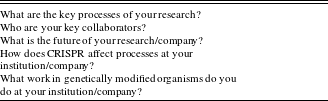
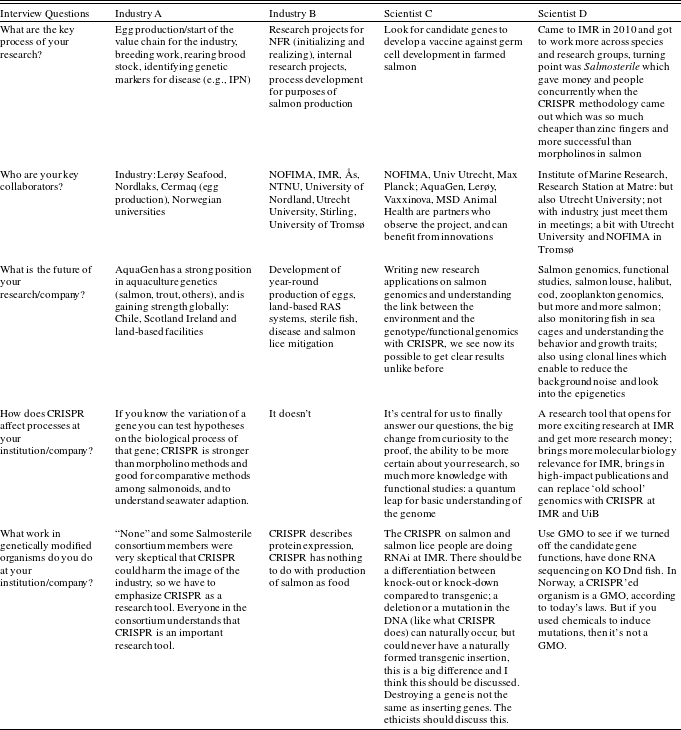
During my methodological setup, I identified specific institutions and persons involved in different aspects of the CRISPR methodology as applied to farmed Atlantic salmon in the Salmosterile project. I consulted these people for permission to observe them working in their labs for the purpose of ethnographic study. I outlined five questions (see Table 1) related to their work and used these questions in semistructured interviews. The questions were designed to establish the role of each person in the Salmosterile project scientifically (Table 1, Question 1) and socially (Table 1, Question 2). The interviewee’s opinion on the future trajectory for the interviewee’s institution or company was posed in Question 3 (Table 1). Questions 4 and 5 (Table 1) were designed to establish the role of CRISPR and gene editing in the interviewee’s institution or company from the perspective of the interviewee. Taken together, these questions are designed to analyze the science perspectives and industry perspectives of how CRISPR is perceived and applied in the Salmosterile project. These questions also provide a snapshot in time that documents how CRISPR as a method for Norwegian aquaculture research was first thought of and applied in Atlantic salmon.
Interview questions used in this article.

Integrated ELSA
While previous analyses of Norwegian salmon farming and GMO salmon have relied on traditional ethnography or literature review, I used a more hybrid and iterative approach within the Salmosterile project with specific members of the consortium that were concerned with the CRISPR methodology. The combined analysis of the methods described here is what I term an “integrated ELSA” (ethical, legal, and social aspects) approach. I consider this toolbox of methods “integrated ELSA” since the results are dependent on interaction and active participation from both the humanities side and the natural sciences side inside and outside the wet lab. In this approach, I apply ethnographic and in-lab observation to understand the scientific and social role of the project partners concerned with the CRISPR methodology, as well as workshops to challenge and discuss ethical, social, legal, and political aspects of CRISPR within the consortium. I then observe how these workshops and ELSA discussions feed back into the practices of CRISPR and analyze the evolution of the state-of-the-art in preparation for future science-technology-industry-society interactions as a result of the CRISPR methodology.
Salmon is Norway’s IKEA. Footnote 1
—Norwegian prime minister Erna Solberg, March 23, 2015
The Norwegian salmon science-industry symbiosis
Salmon eggs are raised in freshwater tanks on land until they reach about one year old. Subsequently, the Norwegian salmon farming industry uses submerged nets in the saline fjords of western Norway to grow salmon from smolt (saline water adapted, about one year old) to adult—thus the health of the industry is dependent on the health of the coastal marine ecosystems. Today, scientists are continuously mapping the ecological impacts of high-intensity aquaculture of salmon and have a developed a suite of indicators for monitoring purposes as part of the annual risk assessment Reference Taranger, Karlsen, Bannister, Glover, Husa, Karlsbakk and Kvamme18 conducted by the Institute of Marine Research (IMR) in Norway. These biological indicators act as a means to regulate undesired effects such as escapees, salmon louse and disease outbreaks, and nutrient overflow into the sea and fjords.
Currently, one of the largest ecological risks to salmon farming in Norway is the interbreeding of farmed salmon with wild salmon and the resulting genetic introgression of farmed salmon in native populations. Reference Heino, Svåsand, Wennevik and Glover19,Reference Glover, Quintela, Wennevik, Besnier, Sørvik and Skaala20 This occurs after farmed salmon escape from their containment. Although many technological advances have been employed to physically prevent salmon from escaping, escapees are still a reoccurring event, especially after storms. A different strategy to mitigate introgression has been proposed: farmed salmon sterilization, which, if successful, would neutralize the threat of genetic introgression.
A variety of methods exist for sterilization in aquaculture, which is an increasingly important topic for many different species. Reference Wong and Zohar21 Sterilization can be induced in Atlantic salmon in different ways. For example, sterile salmon can occur by manipulating the usual diploid (two homologous sets of chromosomes, one from each parent) salmon egg to triploid salmon (three sets of chromosomes) by exposing the fertilized eggs to high pressure. Reference Cotter, O’Donovan, O’Maoiléidigh, Rogan, Roche and Wilkins22 However, triploid salmon are not yet an optimal replacement for diploid salmon (see Fraser et al. Reference Fraser, Hansen, Skjæraasen, Mayer, Sambraus and Fjelldal23 and A. Wargelius, personal communication, October 28, 2016). Sterilization via vaccination—that is, discovering an antigen to “turn off” a protein necessary for germ cell (egg and sperm) survival—could yield better results in regard to growth potential and welfare of the farmed salmon. But research in this field was lacking and was a motivation behind the Salmosterile research project.
Concurrently with the increasing aquaculture production of salmon and the aspiration of substantial growth, the social and ethical aspects of salmon farming—consumer acceptability and preferences, animal welfare, and environmental impact—are affected. These social and ethical aspects can have tremendous impact on analyzing the final result of salmon farming, but they also can be proactively examined “upstream” by describing and assessing the research communities that promote and carry out the science that underpins the salmon industry. Therefore, the research questions that this ethnography will probe are as follows: Who produces the scientific “facts” that govern the Norwegian aquaculture industry? How do these scientific communities work together? What are the societal impacts of this science?
In order to address these so-called soft impacts of salmon farming, the Research Council of Norway made ELSA research a mandatory part of all proposals under the umbrella of the BIOTEK2021 biotechnology program. This decision came from an internal white paper prepared by the Research Council of Norway for the Norwegian government in November 2010. The European Commission’s Horizon 2020 research framework, in which RRI (Responsible Research and Innovation) was made a mandatory crosscutting issue, was launched in 2013; it is part of the same development of integrated and mandatory social science and humanities research in biotechnology programs.
Bottlenecks
The United Nations Sustainable Development Goals outline the need for congruency among environmental, economic, and social aspects of growth and development. Likewise, the goal of sustainability has always been at the forefront of the aquaculture discourse in Norway, mainly focused on the ecosystem impacts. There are different drivers for further development of salmon aquaculture in Norway. The Norwegian government has identified aquaculture as an industry to grow in order to supplement the decline in the oil industry—it is part of what is known as the “After Oil” economy. The social aspects of aquaculture growth, such as employment in rural areas of Norway, are less visible in the popular discourse in Norway. It is estimated that the annual production of Atlantic salmon in Norway has the potential to increase to five million tons by 2050—five times the current production.
Today, the major bottlenecks to further development of aquaculture in Norway are exclusively environmentally related: the mitigation of the salmon louse parasite, water and sediment quality around the salmon farms, and prevention and mitigation of diseases. The focus of the science-industry partnership studied in this article is the prevention of genetic introgression, or hybridization, of the wild salmon and farmed salmon genotypes, which his currently considered the most severe long-term negative ecological effect of aquaculture.
Similarly, technological and knowledge-based advances have boosted the aquaculture of Atlantic salmon. Today, Atlantic salmon is a global seafood commodity, trading on NASDAQ. Norway is the leading Atlantic salmon exporter in the world, with approximately 1.3 million metric tons of salmon per year. At the annual conference for her political party on March 23, 2015, the prime minister of Norway, Erna Solberg, said that “Norwegian salmon is Norway’s IKEA…Seafood is becoming our biggest and most important industry. Knowledge is the key to further growth.”Footnote 2
Salmosterile project
In 2012, the Research Council of Norway funded the Salmosterile project as part of the BIOTEK2021 research program. The research goal for Salmosterile is to identify proteins in the salmon genome that affect maturation and then develop a vaccine that can target one or more of these proteins and induce sterility in farmed salmon. In the original project proposal, the CRISPR-Cas9 methodology was not named as a potential methodology. It was not until the first annual meeting, in January 2013, that the scientists realized the potential of applying CRISPR gene editing to salmon. The history of applying CRISPR-Cas9 method to Atlantic salmon began at this meeting.
Many things were happening at the same time. Before that [funding for Salmosterile] we were trying to get money to do zinc fingers, like hundreds of thousands of kroner for one construct, and also we knew that the success rate was much lower. So when we saw this technology came up [CRISPR-Cas9], it was very easy for us to say “THIS is what we have to try.” Cheap and fast and reliable. We had gained a lot of experience in injecting [constructs] and I felt like everything around us [methodological competencies] was there, we just lacked the technology part, the CRISPR part. So that was a milestone, I’d say. (IMR Scientist D)
The publication of a seminal paper in which eukaryotic cells were successfully manipulated using CRISPR Reference Cong, Ran, Cox, Lin, Barretto, Habib and Hsu6 Footnote 3 launched a revolution in biotechnology. Now potentially any organisms could be genetically altered more easily. Could CRISPR work in salmon?
Consortium
The Salmosterile consortium is led by principle investigator Dr. Anna Wargelius of the IMR in Bergen, Norway. The additional research institutions are the University of Utrecht and the Max Planck Institute as well as four industrial partners: AquaGen, Lerøy Seafood, Vaxxinova, and MSD Animal Health Innovation. The official title of the project is “SALMOSTERILE: Sterile salmon by targeting factors involved in germ cell survival: novel vaccination strategies for sustainable fish farming.” The Salmosterile project lasted four years (2013–17), with a budget of 38 million NOK.
CRISPR comes to salmon
Clustered regularly interspaced short palindromic repeats (known as CRISPRs, pronounced “crisper”) have always been in existence. For millions of years, CRISPRs found in bacterial DNA have been working with Cas nucleases to alter DNA to design immune responses. But only recently has the editing power of CRISPR-Cas systems been scientifically (and commercially) harvested for genome researchers. Now, CRISPR is applied all over the world as the cheapest, fastest, and most robust genome-editing tool currently known.
The power of CRISPR can be illustrated by a simple analogy: if your car will not start, there are a limited number of things you can do to troubleshoot without lifting the hood of the car to reveal the engine. To really understand the system, you need access to all the parts and wiring to give you an understanding of the underlying engine system. By applying CRISPR to methodologically and precisely cut out certain genes, or even nucleotide base pairs, scientists can test previous hypotheses on gene function and genomics of any sentient organism.
As CRISPR lifts the hood on the basic scientific understanding of genomics across species, medical and other commercial applications of CRISPR gene editing are increasingly growing. Reference Reardon24 Atlantic salmon is just one example of many species of flora and fauna that are being “CRISPR-ized” today. This fact, along with the observation of an ever-growing do-it-yourself and biohacking culture, Reference Delgado25,Reference Delgado and Callén26 underscores the relevance of a larger public discourse of facile genome editing in our backyards.
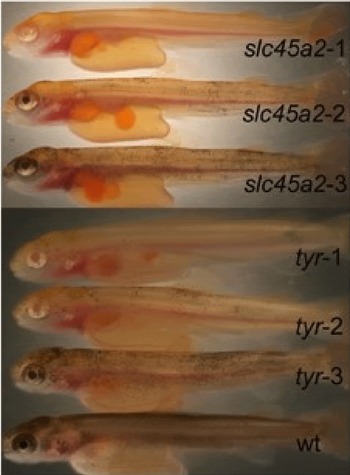
The Salmosterile consortium decided to try to knock out candidate genes for sterility in salmon in 2013. But a first proof of the CRISPR-Cas9 system in Atlantic salmon was needed. CRISPR worked as expected in Atlantic salmon. Edvardsen et al. Reference Edvardsen, Leininger, Kleppe, Skaftnesmo and Wargelius27 showed the first positive results of CRISPR applied to Atlantic salmon, in which two genes that produce skin pigment were deleted using CRISPR-Cas9 (see Figure 3).
Graded levels of phenotypes induced by CRISPRslc45a2/Cas9 (slc45a2-1 to slc45a2-3) and CRISPRtyr/Cas9 (tyr-1 to tyr-3). Modified and used by permission from Edvardsen et al. (2014). © 2014 Edvardsen et al. This is an open-access article distributed under the terms of the Creative Commons Attribution License, which permits unrestricted use, distribution, and reproduction in any medium, provided the original author and source are credited.

This genetically CRISPR-modified salmon in the lab provided much-needed scientific leverage for the IMR molecular biologists to gain more credibility inside their own institution, whose leaders had previously expressed doubt as to the relevancy of a costly molecular biology laboratory.
CRISPR-Cas9 opens up for us to get more research money at IMR…The more projects, publications, the more accepted a methodology becomes. Now IMR has more acceptance of molecular biology at IMR, particularly sequencing that can replace more “old style” methods we use. (IMR Scientist D)
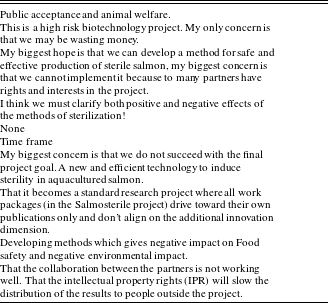
Seven months before Edvardsen et al.’s paper was formally published, I conducted a survey among all consortium partners of the Salmosterile project as part of my research for the ELSA work package. One of the questions was, “If any, what are your biggest concerns with the Salmosterile project?” (see Table 2). The responses varied from no concerns to a concern that the project would not be able to achieve its ultimate goal. Two respondents in Table 2 pointed to the consortium friction over intellectual property rights (respondents 3, 10), and two pointed to concerns about the lack of consortium connectivity (8, 10).
The start of the Salmosterile project was indeed affected by the lengthy consortium contract that was negotiated, especially on important points regarding the intellectual property rights of potential scientific breakthroughs during the project duration.
Volunteered responses to the posed question: “If any, what are your biggest concerns with the Salmosterile project?” from participants in the Salmosterile consortium, February 11–20, 2014.

Doing CRISPR in Atlantic Salmon
At the start of the Salmosterile project in 2012, CRISPR was not broadly known or even considered as a method to fulfill the goals of the project. But by the end of the Salmosterile project, it was very clear how CRISPR had launched many publications and positive results for the consortium and how the development of the method in Atlantic salmon had spawned a whole new way of looking at the organism and the commodity. A precursor to this success was the early availability of sequences from the salmon genome project. Reference Davidson, Koop, Jones, Iturra, Vidal, Maass and Jonassen28 In April 2016, Lien et al. Reference Lien, Koop, Sandve, Miller, Kent, Nome and Hvidsten29 built on this knowledge by providing a draft of the road map for CRISPR genome editing. In January 2017, the Wargelius lab, part of the Salmosterile consortium, received funding from the Research Council of Norway to develop a hypothesized technology to commercialize the CRISPR technique in a novel way for use in the aquaculture industry. To show how the science has come to the point where it is today, I outline the steps that the Wargelius lab took and analyze these steps within an RRI framework.
Steps
How did the Salmosterile partners do CRISPR in salmon? There are different, coordinated actions that come together to conduct a scientific experiment that includes CRISPR. Even though the Salmosterile consortium consists of five research institutions and five industry members (see Table 1), only IMR (science) and AquaGen (industry) collaborated for the CRISPR experiments.
Here I outline and discuss the steps of the CRISPR-Cas9 experiments in the Salmosterile project:
1. Scoping the genome: As a prelude to the CRISPR experiment, scientists needed some knowledge of which part of the genome they wanted to “knock out” (totally disrupt the gene) or “knock down” (reduce the level of gene expression). Since whole-genome sequences are available for many organisms, and recently for Atlantic salmon, a literature search and/or a genome library search could be sufficient for this purpose. In the Salmosterile case, however, the laboratory led by Wargelius at the IMR already had much experience with the identification of some candidate genes.
2. Design the CRISPR-Cas9 construct: When the scientists know which part of the genome they want to target with the Cas9 enzyme, they can construct the CRISPR target region. There is an ever-increasing amount of websites and databases that aid in this construction. For example, one of the scientists in the Salmosterile project used a database from the Massachusetts Institute of Technology. The design for one single gene takes less than three days.
3. Preparation of the gametes and fertilization: Highest-quality oocytes and spermatozoa are needed to aid a successful experiment. For the Salmosterile project, the partner AquaGen provided most of the eggs and sperm. Fertilization is induced in the lab by a simple combination of thousands of eggs with billions of sperm in a beaker (glass or plastic) and stirred by gentle shaking.
4. Injection of the CRISPR-Cas9 RNA constructs: When the CRISPR constructs are complete, they are ready to be injected into the organism. The two constructs combined in the single injection are the Cas9 RNA and the guide RNA (which is the complementary sequence to the place where the scientists want the Cas9). For this salmon case, injections into the salmon egg started at three hours after fertilization. The injection is the most critical craft of this experiment, and it is difficult to perfect. To overcome the inexactness of the injections, many replicates are added as a buffer to human error.
5. Incubation: After all of the fertilized eggs are injected with the CRISPR-Cas9 construct, which is designed to knock out a maturation gene to produce sterility, they are replaced in the lab for an incubation period.
6. Validation: It takes approximately one month before the first assessment can be taken; this is the point at which the eggs are “eyed” (black pigmentation creates a black dot in the egg) and it is possible to visually select for embryos that are albino (lack pigmentation). The albino knock-out is an easily read control: a pigmentation gene is concurrently knocked out in the same CRISPR construct, as performed by Edvardsen et al. At one month after injection, the scientists are able to get an initial indication, by viewing the number of albino salmon fry (juveniles), whether the CRISPR injection was successful. It is then possible to take a sample of albino embryos, amplify the target gene, sequence the target gene, and verify whether there is a deletion or insertion at the CRISPR target site. This indicates that the CRISPR knock-out was successful. For the final validation after one year, selected salmon are dissected for the purpose of gonad histology, including germ cell marker qPCR to confirm the presence or absence to germ cells (if the scientists suspect that they are absent) and measuring hormone levels to determine maturation status. The histological examination classifies whether the organism has developed gonads (ovaries or testes) normally or abnormally. In the case of the former, the CRISPR construct either did not insert itself properly, or the gene that was knocked out was not essential for normal gonad development. If the gonads are abnormally developed and the fish otherwise grow and look normal and healthy, this is a positive result that likely means that the CRISPR insertion did work or did produce an interesting phenotype for that gene—that is, the candidate gene that was knocked out is indeed essential for gonad development. The experiment ends after 12 months.
Interviews
I recorded the interviews with participants in the Salmosterile project—two scientists and two industry members—about midway through the ethnographic research. The responses are summarized in Table 3. The two scientists interviewed actually performed the CRISPR-Cas9 methodology, but the industry members were also well informed of the gene-editing method as a result of the Salmosterile project collaboration. Both industry interviewees acknowledged CRISPR as a basic science tool, but not as a tool that industry would apply directly to products. Both scientists saw a clear future for CRISPR in their methodologies of future research. Scientist D acknowledged the role of CRISPR for high-impact publications, which has been beneficial for his or her research institution. Scientist C called on the role of ethicists to help differentiate gene-editing techniques for regulators, by discussing the difference between transgenic (inserting non-naturally occurring genes, such as from another species) and knock-out/knock-down editing (removing or decreasing the expression of a gene) performed by CRISPR methods.
Interview questions from Table 1 and summarized responses from four persons (A, B, C, D, two scientists and two members of industry) in the Salmosterile project.

Discussion
The initiation of ELSA work in the Salmosterile project was a product of a forced marriage; the Research Council of Norway made it a prerequisite for biotechnology projects to have a social science and ethical reflection activities in each project. Therefore, a large first hurdle was the creation of mutual agreement and understanding of new interdisciplinary spaces for new ways of working. This first step was essential for ELSA feedback to the Salmosterile consortium. The speed at which hypotheses are created, methods conducted, and results interpreted has an effect on the socio-scientific product. The tempo of work in the wet lab is much faster than the tempo of work in the humanities “lab.” The temporal pace of the techno-scientific product can immediately exclude the reflective, slow pace of the social-ethical attributes of the same product. I have shown how an integrated ELSA approach, based on hybrid methods and double competencies (fisheries biology combined with social and philosophical competencies characteristic of ELSA approaches) fills a gap in research methods rooted singularly in one research discipline, which provides a larger scope for mutual reflection of scientific and societal relevance of the project.
An essential quality of ELSA work and research that I have noticed (and of work in RRI) is the credibility and legitimacy that the ELSA or RRI researcher has to “slow the science down” for ethical and social reflection. The Salmosterile ELSA workshop in January 2016 was an effective way to build credibility and legitimacy within the consortium, as the ELSA work package team provided ample time and expertise from the Centre for the Study of the Sciences and the Humanities (University of Bergen) to guide the rest of the consortium through a reflection and discussion of technology assessment and techno-moral vignettes.
The next sections are additional reflections on the ELSA integration in the Salmosterile project that place the CRISPR salmon innovation in a larger societal and political scope.
Credibility, Legitimacy, Saliency
Credibility is everything for science, and it is built over time in both obvious and subtle ways. It is how we interact with colleagues and collaborators…. Without credibility, others can’t/won’t build on our work, and as a result, the pace of scientific advance is slowed. Most importantly, science contaminated with a lack of credibility is a house with crumbling walls that engenders little trust and provides minimal value to our global society, present and future. Reference Marcus30
This quote from the editor of Cell underscores why a focus on the issue of credibility is relevant in this ethnographical research of “doing CRISPR.” This is especially important in the case of the close science-industry relationship in the Norwegian aquaculture industry. Since the 1970s, the IMR has actively communicated and engaged with the aquaculture industry.
The issue of the legitimacy of the genome-editing science enters the Salmosterile project in two stages: first through the composition of the consortium at the proposal stage, and second through the mandatory reporting to the Research Council of Norway. Interviewee Scientist A explained legitimacy in the creation of the consortium:
They [MSD Animal Health and Vaxxinova] are interested in possibilities and new products [vaccines], but then we also need them in the industrial development part, this is what the Research Council [of Norway] wants. (Scientist A)
Therefore, the legitimacy of “doing CRISPR” is accepted by the Research Council of Norway when aquaculture and vaccine industry companies are partners in scientific projects. In Norway, a very stable social democracy, there is generally high trust in its national institutions among the public. 31 Therefore, a high rating of credibility and legitimacy of the salmon science-industry collaboration by the Research Council of Norway is likely to have high regard in the majority of Norwegian society.
I now turn to the issue of the saliency, or relevancy, of CRISPR to society. “Society” here can be meant broadly, to encompass citizens and consumers. One of the main constructivist arguments in the original Salmosterile proposal was the promise of laying the foundation for a sterile farmed salmon for ecological reasons; a sterile farm-raised salmon could not interbreed or compete for mating with the endangered wild Atlantic salmon. Consumer aspects of sterile salmon include the quality of the salmon meat if the fish is sterile and the price of purchase.
An industry argument in favor of sterile fish is improved growth trajectories; it has been shown that fish, in general, grow faster when they are not sexually mature. Salmon that never mature could take significantly less time to reach the 5- to 6-kilogram harvest weight. In addition, the lack of sexual maturity will likely show an increase in animal welfare since males often fight and injure each other when sexually mature. In addition, sexually mature fish are more susceptible to disease. These last statements are both industrial and ethical arguments.
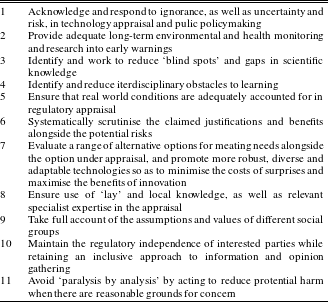
However, the impact of negative effects of this technology could erase the positive effects. The European Environmental Agency’s report “Late Lessons from Early Warnings” Volumes I and II Reference Harremoës, Gee, MacGarvin, Stirling, Keys, Wynne and Guedes Vaz32,Reference Gee, Grandjean, Hansen, van den Hove, MacGarvin, Martin and Nielsen33 collects examples of anthropogenic pushes led by technological advances and resulting economic gains that have gone wrong. In some cases, public engagement and consultations could have mitigated the uptake of early warnings of crises before critical tipping points were reached. The summary in Table 4 points to topics that were discussed in the ELSA workshop and in public debates of CRISPR’ed organism food production in Norway in a radio programFootnote 4 (September 15, 2016), and one debate in Oslo, hosted by the Biotechnology Council of Norway (October 18, 2016Footnote 5 ).
Summary of points from the European Environmental Agency’s “Late lessons from early warnings”. Reference Harremoës, Gee, MacGarvin, Stirling, Keys, Wynne and Guedes Vaz32

Source: EEA, 2001, Later lessons from early warnings: the precautionary principle 1986–2000, Environmental issues report No 22, European Environment Agency.
Another salient ethical aspect is the manipulation of the genome of living organisms. Under what conditions does the industry have to privately support research using GMOs? Does industry get a “free ride” in this ethical question when the Research Council lauds science-industry partnerships?
In their analysis, Asche, Guttormsen and Tveterås Reference Asche, Guttormsen and Tveterås34 note the role of the Norwegian government in sponsoring research and development. The environmental issue of introgression due to escapees is widespread in Norway and an example of an issue not likely to be internalized in the private sector. Along this line of reasoning, the Salmosterile project is a case in which “the government has an important role in offsetting market failures in R&D to ensure a socially desirable level of innovative activities in areas which the industry is unlikely to internalize to a sufficient extent.” Reference Asche, Guttormsen and Tveterås34
From cocreation to acknowledging coproduction
The Salmosterile project is a cocreation among different research institutes and salmon industries to produce a product of mutual benefit. However, this cocreation can also be analyzed at a deeper critical level as a coproduction between nature and culture. Jasanoff Reference Jasanoff35 describes the idiom of “coproduction” of knowledge by combinations of ontologies and norms. The ELSA researcher may be interested in both the phenomenon of cocreation (multi-, cross-, or interdisciplinary work with or without laypeople) and of coproduction, as well as how these two types are able or not able to overlap. I identify two layers: First, can our idea of what a farmed salmon is as an ontological definition affect our societal understanding of what a farmed salmon ought to be? And second, how has the radical interdisciplinarity (natural and life scientists together with sociologists, humanists, and philosophers of science) that was a forced element of the Salmosterile design contributed to this reflexive inquiry of CRISPR as performed in the Salmosterile consortium?
Evolution of a discourse: From basic science to CRISPR-modified filets
Communication of what CRISPR in salmon is and is not has been a central theme for the ELSA work package in the Salmosterile project. This is partly a result of the controversy surrounding indiscriminate and unethical use of CRISPR Reference Lanphier, Urnov, Haecker, Werner and Smolenski36,Reference Cyranoski and Reardon37,Reference Baltimore, Berg, Botchan, Carroll, Charo, Church and Corn38 and cries from concerned and involved scientists that CRISPR is a powerful tool that can be misused. But mostly, the consortium did not want Norwegian consumers to make an association between GMOs in the lab and genetically modified fish on the plate. Since no animal GMOs are currently approved for market introduction in Europe, an incorrect association of CRISPR’ed salmon swimming around in the fjord ecosystem (all the gene-edited salmon in the project are strictly restricted to land-based tanks) could wreak havoc on the Norwegian farmed salmon image and export value. At the same time, the value of CRISPR as a basic scientific method to study the genome functionality of Atlantic salmon was a major breakthrough for the consortium, which was communicated in the Norwegian popular media. Reference Grønli39,Reference Fletcher40,Reference Edvardsen and Wargelius41,Reference Time42
In January 2016, the Salmosterile consortium was invited to a two-day Technology Assessment Workshop as part of the ELSA work package of the Salmosterile project. The central theme was to reflect on the salient societal points of the Salmosterile technology development, including the CRISPR application to induce sterility in farmed salmon. One important topic that was raised had to do with the genetic containment of the CRISPR-modified salmon: how do the scientists know that the salmon is 100% sterile? Is sterility a definition that could be coproduced by scientists and industry? Biologically, an organism is sterile if there are no functional sex organs (ovaries or testes) and thus no germ cells present. The Salmosterile CRISPR’ed salmon at the time of the workshop were not free from sex organs, but the resulting testes and ovaries were not functional because they were completely void of germ cells.
Another societal relevant area that was discussed in the workshop and was raised by members of the public at an open seminar during the Society for Social Studies of Science annual meeting in Bergen, Norway, in October 2016 was the potential for off-target effects, or consequences of the CRISPR gene editing other places in the genome that could cause phenotypic consequences (disease, deformities, change in growth, etc.). All expressed genes (transcriptome) in the CRISPR’ed salmon have been sequences in the Salmosterile project, but scientists have not been able to detect any off-target effect in expressed genes. As such, this is a positive answer, and the lack of noticeable off-target effects agrees with what other studies has shown. Such transcriptome analyses are also important to communicate in a variety of ways to address public and scientific concerns about the application of CRISPR to produce sterile salmon through a vaccine approach (the original goal of the project) or directly. Can a socially accepted definition of “safe” GM-initiated sterility be coproduced if scientists negotiate with society and/or regulators about a protocol to screen for off-target effects?
As of now, the gene-edited sterile salmon produced by Wargelius et al. Reference Wargelius, Leininger, Skaftnesmo, Kleppe, Andersson, Taranger, Schulz and Edvardsen43 is considered a GMO within Norway because of the strict definition of GMOs in the current Norwegian legislature. The Gene Technology Act of 1993 defines a genetically modified organism as “a microorganism, plant or animal in which the genetic material has been altered by means of gene or cell technology.”Footnote 6 However, in Norway, the European Union, and the rest of the world, there is a current discussion around the CRISPR knock-out or knock-down type of genetic modification, which in some cases is replicating the type of mutations that can occur naturally. In Norway’s neighboring country Sweden, for example, the Swedish Board of Agriculture recently decided that this type of modification is not a legally defined GMO,Footnote 7 therefore increasing the likeliness that the mutation created in this project may not be considered a GMO in the future.
Attitudes toward genetically modified salmon may be changing since the approval of the AquaBounty GM salmon in the United States in November 2015.Footnote 8 From a scientific perspective, and some will thus argue also from a regulatory perspective, one cannot equate the trans-genic AquaBounty salmon, in which DNA from another species is added, to the Wargelius lab’s CRISPR dnd knock-out salmon, in which a gene is simply mutated to “loss of function.” Another difference between these two approaches is the final product: while AquaBounty was designed to produce a faster-growing fish, the Wargelius CRISPR’ed salmon is designed to be sterile and therefore genetically contained, with additional effects of improved fish welfare as an unintended bonus. The AquaBounty salmon, because of its GMO transgenic status, could never be used in fjord systems, where the risk of escapement and genetic introgression is too high for regulators and society.
Many research groups around the world are currently conducting functional studies of lucrative commodities such as salmon. As a result, there will undoubtedly be further insights into the salmon genome, including mechanistic understandings of the salmon immune system and disease resistance. This research will likely erase many of the current bottlenecks to salmon aquaculture growth. For example, the current goal of the Norwegian government to increase salmon exports fivefold is utterly dependent on methods to contain salmon lice, disease, and genetic introgression, such that the Research Council of Norway will likely continue to finance genome-based mitigation research. The question will be, then, will bottlenecks to industrial aquaculture growth be bypassed with or without genetically modified salmon on the market? Or will legislation, in Norway and elsewhere, adapt so that some CRISPR animals are considered GMOs and some non-GMOs? Under what conditions will future GM regulation be cocreated with society? Currently, the Norwegian Biotechnology Advisory Board (Bioteknologirådet) is preparing a statement for the Norwegian government regarding new insights affecting the current Biotechnology Act. In public debates hosted by the Advisory Board in 2015, some propose to update the act to exclude CRISPR’ed organisms whose genetic editing cannot be discerned from any normal mutation.
In the spring of 2015, rumors began to swarm of a Chinese lab that had used CRISPR to genetically modify human embryos. Months later, the rumors proved to be true, Reference Cyranoski and Reardon37,Reference Scott44 and an international summit was called in Washington, D.C., hosted by the American Association for the Advancement of Science in December 2015. Reference Reardon45 In Sweden, there is now a lab applying CRISPR-Cas9 to viable, healthy human embryos in order to learn more of the basic science of early embryonic development, with a goal to learn more about the causes of infertility. But ethical concerns were also raised in a report by National Public RadioFootnote 9 as to the threat of designer babies, or producing intended or unintended errors in the gene pool. Whether future regulations in Norway will open CRISPR research to viable human embryos, as in Sweden, Reference Callaway46 or to CRISPR-modified crops, as in the United States, Reference Waltz47 remains to be seen.
The significance of the results of the Salmosterile project has opened a new door in how the consortium could and should engage with the public. For example, now that the transgenic AquaBounty salmon has cleared all major hurdles in the United States, will Europe follow suit? Now that the Swedish Board of Agriculture has cleared CRISPR-modified plants, will Norway follow suit? Is there a European or Asian market for genetically modified salmon? Remembering public backlash experiences in GM crops debates Reference Heller48,Reference Tait49 and nanotechnology, Reference Delgado, Kjølberg and Wickson50 it seems high time to start an informed and inclusive process of public deliberation of GM salmon in Norway.
Conclusion
There is a wide consensus that the facile CRISPR-Cas9 genome editing is revolutionizing molecular biology, genetics, and biomedical and pharmaceutical applications. Reference Lander1,Reference Lanphier, Urnov, Haecker, Werner and Smolenski36,Reference Baltimore, Berg, Botchan, Carroll, Charo, Church and Corn38 Today, we continue to experience the “CRISPR craze,” Reference Pennisi51 and virtually all major molecular biology laboratories are applying this cheap, robust, and reliable gene-editing technique to test hypotheses of functionality in the genomes of hundreds of species.
The chain of events from applying a new gene-editing method called CRISPR to eukaryotic cells Reference Cong, Ran, Cox, Lin, Barretto, Habib and Hsu6 to a global discussion of major ethical implications Reference Reardon45 was very fast. The CRISPR wildfire is yet another example of regulatory bodies and governance, as well as the humanities, having to keep pace with the ever-changing scientific scene. Similarly, from the experience within the Salmosterile consortium, there was a very fast shift in the discussion from the world’s first application of CRISPR to salmon Reference Edvardsen, Leininger, Kleppe, Skaftnesmo and Wargelius27 to the world’s first sterile salmon by CRISPR. Reference Wargelius, Leininger, Skaftnesmo, Kleppe, Andersson, Taranger, Schulz and Edvardsen43 But the consortium in the Salmosterile project was also able to navigate reflective speed-bumps along the way, to somewhat slow down the pace for more societal and ethical reflections. As a consortium, I believe we are just beginning to realize the importance of integrated ELSA and RRI in discussing societal views and voices in real time in the lab, while and where our technological futures are being made.
In this ethnography, I have focused on a science-industry collaborative project that was the first to apply CRISPR gene technology to Atlantic salmon for basic research. The scientific success is leading to more visibility of the CRISPR technology in the Norwegian public, albeit in a very limited scope. From my observations and interview material, there is a very clear future for continued CRISPR work within salmon research in Norway, but it is not likely that industry will play a role in the immediate future, for two main reasons. First and foremost, current Norwegian law, reflected also in general public sentiment, strictly forbids genetically modified foods, thereby eliminating the ability for industry to reap short-term direct benefits from CRISPR’ed salmon. Second, the path of patenting is becoming clearer, with novel applications of CRISPR and the possibility to protect genetic material. In Norwegian science-industry collaborations, the industry partners usually receive the right to commercialize results in a project in which they are partners. The Norwegian National Strategy for Biotechnology (2011–20) states, “Efforts to create a better basis for greater use of biotechnological tools in existing companies and industries must be supplemented by activities to stimulate the establishment of new companies based on biotechnology.” This could be read as an incentive for “new companies” triggered by spin-offs to conduct basic scientific research without the partnership of industry in the project phase. This would mean a shift from the science-industry collaborative research scheme from the 1970s to a certain increase of science-only projects with entrepreneurial benefits to the Norwegian economy. This would also appease some of the respondents in Table 2 in the Salmosterile consortium who already in 2014 expressed concerns that industry partners and intellectual property rights negatively affected the science-industry collaborative project.
If so, this could mean that research on salmon genetics in Norway will be able to keep pace with the “CRISPR craze,” with expected novel, and probably patentable, findings that would benefit an ever-growing salmon farming industry. In response to the research questions that this article initially put forth, research institutions in Norway are the gatekeepers of the scientific knowledge, but in the future, industry may not have the low-hanging fruit of commercialization of research findings from the inside of a publicly funded project. One of the societal impacts of this arrangement would be a potential for economic growth in biotechnology and increased production for aquaculture. But according to Norwegian law, a public engagement and consultation process must be put into effect before any genetically modified food could be approved for the market. In the Salmosterile case outlined here, the science has made a firm case of a positive application of the CRISPR-Cas9 method to produce a sterile salmon. But the examples of the multitude of applications of the CRISPR-Cas9 technology, from human embryos to food organisms, also represent a major challenge for future public engagement exercises to give advice on regulatory frameworks for such an agile method.
Acknowledgements
The author is grateful for constructive comments from Professor Jeroen van der Sluijs as well as the participants in the internal seminar series at the Centre for the Study of the Sciences and the Humanities at the University of Bergen and the consortium of the Salmosterile project. This research was funded by the Research Council of Norway BIOTEK2021 project SALMOSTERILE (221648).