





Since the collapse of President Soeharto’s authoritarian New Order in 1998 and its replacement by an aspirational, but fragile, democratic model, blasphemy prosecutions in Indonesia have increased dramatically. After just ten cases in the period from 1965, when the first blasphemy law was issued, to 1998, there were well over two hundred in the following two and a half decades.Footnote 1 Scholars have offered a range of explanations for the far more active enforcement of religious-based laws and regulations, including the blasphemy laws, after the emergence of a democratic system in Indonesia. Most emphasize the weakness of democratic state institutions, increasing Islamic conservatism, or cultural traditions of deference to religious authorities.Footnote 2 While these theories certainly explain much about the phenomenon, they often tend to understate the political benefits of blasphemy allegations for elites in a highly contested political system. Indeed, our analysis of the common but highly problematic use of influential Muslim leaders as expert witnesses in these cases reveals how religious authority, especially that of Islam, Indonesia’s majority faith, has shaped the political nature of blasphemy cases, thus enabling the mobilization of religious identity politics around blasphemy prosecutions.
A study by the Lembaga Kajian dan Advokasi Independensi Peradilan, or LeIP (Indonesian Institute for Independent Judiciary), an Indonesian nongovernmental organization that advocates for an independent judiciary, has examined the use of expert witnesses on religion in twenty-seven blasphemy cases that took place between 2006 and 2016 in Indonesia. The study found the qualifications and expertise of the experts identified to be, at best, not clear.Footnote 3 Moreover, according to the study, judges frequently accepted “expert” testimony that was “little more than the personal opinions, biases and prejudices based on their own religious experience rather than scientific, evidence-based opinions.”Footnote 4 However, while the findings are clear enough, the study offers no explanation for why this happens and what its implications are for the outcomes of blasphemy trials. We offer this article to fill this gap.
Simon Butt and Andreas Nathaniel have analyzed the role of legal academics as experts in other types of criminal cases, particularly those related to controversial aspects of Indonesia’s Law 20 of 2001 on the Eradication of Criminal Acts of Corruption.Footnote 5 In this type of case, it is legal academics providing testimony about the substance of law who are most commonly called by all parties, including judges. However, Butt and Nathaniel found that testimony on the substance of law rarely influenced the judicial decision-making process, writing, “judges appear reluctant to cite that evidence, let alone openly interrogate it.”Footnote 6 This is in stark contrast to the way judges respond to expert witnesses in blasphemy cases, which is our focus here. In blasphemy cases, the role of experts from a range of disciplines is not only prevalent but much more influential than in other criminal cases. The most authoritative experts called in blasphemy cases are religious experts, and this is true regardless of the fact that they are often far from objective and have obvious conflicts of interest. In many cases, religious experts called by the prosecution are representatives of the same conservative religious groups involved in the anti-blasphemy mobilizations that created the public pressure to prosecute in the first case. These experts may even have filed the initial report to police that generated initial investigations, and then supported the police investigation before being asked to give expert testimony.
We surveyed the use of expert witnesses in 106 blasphemy-related cases decided between 2011 and 2022, which were located and compiled by the first author. These cases show that the selection of these experts by police and prosecutors, the nature of their testimony, and their influence on judicial decision-making are the result of the innately political nature of blasphemy in Indonesia. The vagueness and broad nature of Indonesia’s blasphemy law, coupled with a lack of rigor and detail in the law applicable to expert witnesses, mean that the politics that so often drive mobilizations of the public against alleged blasphemers can flow through into criminal investigations, prosecutions, and trials, determining their outcomes. By mobilization against blasphemy, we refer to any large mass gathering, mostly organized by conservative religious groups, in response to the so-called blasphemous statements or actions, typically calling for the prosecution and punishment of the alleged blasphemer.
In examining the blasphemy cases, we found that, while expert witnesses called by police during investigations and prosecutors at trial include academic witnesses and government officials, they are dominated by ulama (Muslim religious scholars). These are usually from conservative Islamic organizations connected to members of the political elite, and are very often members of Majelis Ulama Indonesia, or MUI (Indonesia Ulama Council). The ulama, mostly called by the police and prosecutors, consistently express views congruent with the interests of those elites, often including the elite figures who used the allegations of blasphemy to support mobilization of the public against the accused, thus triggering police involvement in the first place. The views of the ulama, regardless of their lack of objectivity, are rarely seriously contested. Moreover, by contrast with expert witnesses in corruption cases, the views of the ulama in blasphemy cases seem to be routinely adopted by the judges, meaning that in almost every case, a verdict of guilt is handed down. While the opinions of experts are not binding on judges under Indonesian law,Footnote 7 the fact that police and prosecutors routinely seek such testimony shows it plays an important role in supporting blasphemy investigations and prosecutions. Our research shows that in their decisions in blasphemy cases, judges treat expert evidence by ulama as establishing a so-called scientific justification, regardless of the ulama’s objectivity or, in most cases, lack of it.
Blasphemy in Indonesia has been constructed as a threat to public order. This is a notion that, as we explain below, is reflected in the blasphemy laws themselves, but which is used mainly to refer to narratives used by the Muslim majority groups. While this is typically seen as broadly favoring the Sunni Muslim majority over minority faiths, various smaller special interest groups, ranging from religious organizations to contending political elites, can also benefit from the linkage between blasphemy and public order. The resulting politicization of these cases, facilitated by weaknesses in the laws regulating blasphemy and expert evidence, is what undermines the quality of the expert testimony offered to the court and, thus, taints the judgments made in blasphemy cases. It does so to the cost of accused persons, who, as mentioned, frequently face conviction regardless of the merits of the case against them.
Religious Identity Politics in Indonesia
The democratic system that emerged in Indonesia after the fall of Soeharto focused scholars’ attention on identity politics,Footnote 8 defined here as the politicization of cultural identity in power contests. As the religion of at least 80 percent of the population,Footnote 9 Islam provides a potent cultural source of mobilization, including in electoral contests. As Dian Shah has noted, religious identity in countries like Indonesia, Sri Lanka, and Malaysia is “a significant social marker” that can be politicized to mobilize support in elections.Footnote 10 It makes the existence of laws that favor certain cultural and religious identities instrumental, as in the case of India, with its Hindu populism, and Pakistan, with its Sunni Islamist groups.Footnote 11 Reflecting on the case of Pakistan, Saeed demonstrates that “social actors routinely seek to make their religious sentiments legible and authoritative within the institutional apparatus of the modern state, most often although not exclusively through the domain of law, in a bid to universalize them.”Footnote 12 It is therefore not surprising that religious identity politics facilitated by law are among the strategies commonly used by political actors in power contests.
In the Indonesian democratic context, that is, in the period from 1998 to 2022 (when the fieldwork on which this paper is based was completed), identity politics has been used by political actors from both religion-based parties and secular parties to achieve a range of objectives. These range from attacking their religious and political foes to maintaining a politico-legal system that benefits them. Beside political elites, religious authorities also play a significant role in channeling ideological aspirations by internalizing religious norms in the public sphere and gathering support for religious issues, including in response to blasphemy accusations. Of course, religious authorities may play such a role for religious or ideological purposes, but this is not always the case.
In fact, religious leaders in Indonesia have a long history of establishing mutual alliances with ruling elites. Under the Japanese occupation (1942–1945), for example, Islamic groups obtained a range of concessions from the Japanese authorities in the public sphere.Footnote 13 This was seen by the occupiers as a useful strategy to support their wider war effort. Japan exploited Islamic narratives not only for propaganda purposes, to build an image of benevolent Japanese Pan-Asianism, but also to form armed militias ready for war against the resurgent Allies.Footnote 14 Likewise, under the authoritarian New Order regime (1966–1998), alliances between Islamists and President Soeharto began to develop in the 1990s, after decades of repression of Islamist political leaders. This happened after Soeharto’s main source of political support, the military, became less reliable due to fissures among army leaders.Footnote 15 To capture support from the Islamists, Soeharto backed the establishment of initiatives including the Indonesian Islamic Scholars Association, the Muamalat Islamic bank, and the Islamic-leaning Republika newspaper.Footnote 16 Importantly, he also lifted some restrictions on Islamic expression such as the ban on Muslim women wearing veils at school.Footnote 17
In the post-Soeharto era, from 1998, identity politics began to become more prevalent under President Susilo Bambang Yudhoyono’s administration (2004–2014). This period was marked by a dramatic increase in religious-based regulations such as perda (peraturan daerah, regional regulations and local by-laws) based on Islamic norms, fatwas (Islamic legal opinions), and surat keputusan bersama menteri (joint ministerial decisions)—all favoring conservative Islamic majoritarianism. At the same time, blasphemy accusations that attracted public attention began to appear.Footnote 18 This trend continued under the next president, Joko Widodo (known as Jokowi), and reached its peak with the high-profile blasphemy conviction of the Christian governor of Jakarta and close ally of Jokowi, Basuki Tjahaja Purnama (known as Ahok) in 2017. This case, which we discuss in more detail below, attracted global attention.Footnote 19 It also triggered a dramatic increase in identity politics in Indonesia, with elite figures seeking to exploit the religious polarization created by Ahok’s trial in local and national election campaigns, as can be observed from the North Sumatra local government elections in 2018 and the 2019 presidential election.Footnote 20 This meant blasphemy prosecutions attracted even more public and political attention than in the past, and their numbers continued to increase.Footnote 21
These events eventually led to a push-back by Jokowi’s government against the Islamist groups that had mobilized huge crowds demanding Ahok’s prosecution and, at one point, even marched on the presidential palace calling for Jokowi’s removal.Footnote 22 The government eventually responded by banning two Islamist groups, but it also co-opted leaders of other Muslim organizations to support Jokowi’s governing coalition. Ma’ruf Amin, a prominent leader of the MUI, had supported Ahok’s prosecution, but he was chosen to be vice-president during Jokowi’s second term (2019 to 2024) to neutralize Islamist opposition by establishing the regime’s religious credentials.Footnote 23
Indonesia’s Blasphemy Laws
There was no regulation that formally prohibited blasphemy in Indonesia when it was under the colonial rule of the Netherlands (1816–1942) or when occupied by Japan (1942–1945). However, twenty years after independence, President Sukarno issued Presidential Determination 1 of 1965 on the Prevention of Religious Abuse and/or Defamation, prohibiting permusuhan (hostility), penyalahgunaan (abuse) and penodaan (dishonoring or defaming) of certain religions. In 1969, this was reenacted as a statute (undang-undang) to become Law 1/PNPS/1965, now commonly called the blasphemy law.
Article 4 of this law had the effect that its substance was inserted as article 156a of the Criminal Code, in section 5, “Crimes against Public Order,” and it is this provision that is commonly used to prosecute acts of blasphemy. It provides that anyone who intentionally, and in public, expresses sentiments or carries out acts that
-
a. are principally of a nature of enmity toward, misuse of or dishonoring (penodaan)Footnote 24 of a religion adhered to in Indonesia;
-
b. are intended to stop a person believing in any religion that is based on an Almighty God (Ketuhanan Yang Maha Esa)
will be sentenced to imprisonment for a maximum of five years.
This provision was added to the Criminal Code sequentially after article 156, which prohibits hate speech directed at specific groups of people. Specifically, article 156 states that anyone who “publicly gives expression to feelings of hostility, hatred or contempt”Footnote 25 (permusuhan, kebencian atau penghinaan) directed at a “group of the population of Indonesia” will be liable to a maximum sentence of four years or a fine. It defines group broadly to mean “race, country of origin, religion, place of origin, ethnic descent, ethnicity or position (emphasis added).”Footnote 26
One obvious difficulty created by these two provisions is that they provide no definition of many of the key terms on which they rely, such as the penodaan (dishonoring). The result is that law enforcement officials are left to decide for themselves what religious practices are prohibited by articles 156 and 156a for the purposes of decisions to arrest or prosecute. It is largely for this reason that police and prosecutors often seek expert advice and then testimony from academics and ulama.
The ITE Law
In 2018, a new trend to prosecute those accused of blasphemy using hate speech provisions began to emerge, using Law 19 of 2016 on the Amendment of Law 11 of 2008 on Electronic Information and Transactions (Informasi dan Transaksi Elektronik), popularly known as the ITE Law. This law has been widely labeled draconian because it has been so often used to silence criticism of government and politicians.Footnote 27 Article 28(2) prohibits “Any person intentionally and without right spreading information intended to result in hatred or enmity toward individuals or groups in society based on ethnicity, religion, race, and intergroup relations.Footnote 28 Article 45A(2) of the ITE Law sets the sentence for this offense as imprisonment for a maximum of six years and/or a maximum fine of Rp 1 billion.
Although scholars generally make clear distinctions between notions of blasphemy and hate speech,Footnote 29 this understanding does not always apply in practice in Indonesia or, at any rate, there is much overlap in how they are understood. Our analysis of court decisions and our interviews with representatives of criminal justice institutions show that the ITE Law has been applied to almost any kind of blasphemy-related case, provided the perpetrator’s statement, expression, or action is seen as related in some way to religion and was distributed electronically, typically through social media.
At the end of 2023, the House of Representatives (Dewan Perwakilan Rakyat), which is the national legislature, passed Law 1 of 2024 on the Second Amendment of the ITE Law. It added a new clause to article 28, prohibiting fake news. Article 28(3) of the amended law now imposes six years jail on “any person who intentionally distributes electronic information and/or electronic documents which he or she knows contain fake news that causes unrest in society.” Although this new offense is ostensibly intended to prevent the spreading of hoaxes, there is no guarantee it will be applied in this way, given that the ITE Law has so often been used by members of the political elite to silence criticsFootnote 30 and because berita bohong (fake news) is left undefined.
Article 28 can also easily be used to prosecute individuals accused of blasphemy who are seen as potentially causing social disturbance, as many have been,Footnote 31 as long as the alleged blasphemous statements or actions have circulated online. Cause and effect are reversed, with the alleged blasphemers accused of causing the kekacauan (unrest) that their accusers have mobilized against them. This is usually done by the accusers, typically religious leaders, constructing statements or actions by the accused as blaspheming religion, threatening public order, and thus triggering state intervention. This narrative of public order being inherently threatened by blasphemy has been routinely reinforced in judicial decisions in blasphemy decisions for many years, as we show below, including by the Constitutional Court through its Decision No 140/PUU/VII/2009.Footnote 32 It has now become a standard part of public perceptions of blasphemy in Indonesia.
The New Criminal Code
In 2009, a coalition of civil society organizations, high-profile religious figures, and scholars submitted a petition to Indonesia’s Constitutional Court, which has exclusive jurisdiction to hear challenges to the constitutionality of statutes produced by the national legislature.Footnote 33 They demanded the repeal of Law 1/PNPS/1965, in particular, article 4 (and, thus, article 156a of the Criminal Code), as unconstitutional. The court rejected this petition,Footnote 34 and, in the following years, other similar petitions related to this law were also rejected.Footnote 35 During the hearing of the 2009 petition, the government argued for constitutionality of the blasphemy provisions in the Criminal Code, but also accepted that they should be revised. However, it was not until early 2023 that the revision was implemented, with the passing of a new Criminal Code as Law 1 of 2023. Yet under article 624 of this law, the new code did not come into force until three years after its promulgation, in early 2026. The three-year grace period was intended to give law enforcers and others time to become familiar with the new provisions before they were applied.
Article 300 of the new code reformulates the previous blasphemy provisions into a concept more akin to hate speech:
Any person who publicly:
-
a. commits hostile acts;
-
b. expresses hatred or hostility; or
-
c. incites [a person] to perform hostility or to discriminate, [or to do] violence, against [a] religion, others’ belief, class or group based on religion or belief in Indonesia, shall be punished with maximum imprisonment of three years or a maximum fine of category IV.
Article 301(1) prohibits the electronic broadcast or distribution of the content prohibited in article 300 and is similar to the formulation of hate speech under article 28(2) of the ITE Law, but with a lower maximum term of imprisonment:
-
(1) Any person who broadcasts, displays, attaches writing or an image, or plays a recording, including disseminating it through any means of information technology with any content related to a criminal act as stipulated in Article 300, with the intention that the contents of the writing, image or recording become known or better known to the public, shall be punished with maximum imprisonment of 5 (five) years or a maximum fine of category V.
-
(2) If any person, as mentioned in paragraph (1) of this article, commits the crime in relation to his/her profession, and [if the crime is conducted] within two years after a criminal conviction in relation to the same crime, then s/he may be sentenced to an additional sentence in the form of revocation of rights as intended in Article 86 letter f.Footnote 36
Article 302 stipulates the crime of inciting a person to not embrace any religion, a provision similar to Article 156a(b) of the current Criminal Code:
-
(1) Any person who publicly incites someone with the intention to make him/her not hold a religion or belief that is adhered to in Indonesia, shall be punished with a maximum imprisonment of two years or a maximum fine of category III.
-
(2) Any person who, by violence or threats of violence, forces someone to have no religion or belief or to change a religion or belief adhered in Indonesia, shall be punished with a maximum imprisonment of four years or a maximum fine of category IV.
The then deputy minister of law and human rights, Edward Omar Sharif Hiariej, claimed the government accommodated civil society proposals in making these revisions to the Criminal Code.Footnote 37 Certainly, the government and the national legislature seem to incorporate suggestions made by a coalition of civil society groups, the National Alliance for Criminal Code Reform (Aliansi Nasional Reformasi KUHP), consisting of at least forty-one nongovernmental organizations that have consistently called for reforms based on a human rights perspective, and some activists do agree that the new blasphemy provisions deliver some important changes.Footnote 38 These include the deletion of the vague and undefined terms penodaan and penyalahgunaan; the reduction of the maximum jail sentence for the offenses against religion in articles 300 and 302 from five to three or two years, respectively (or four if violence is involved); and the inclusion of a new option of simply imposing a fine and avoiding imprisonment altogether. However, there are others who see the new code as doing little more than expanding the offense of blasphemy,Footnote 39 and Zainal Bagir argues that the new code is, at best, “[h]alf-hearted progress” on religious freedom.Footnote 40 In our view, the new blasphemy provisions remain sufficiently broad to be interpreted and deployed in the same oppressive way as in the past. This is evident, for example, in the new code’s treatment of minority faiths. This a complex legal issue, as we explain below.
Deviant Beliefs
A major change delivered by articles 300 and 302 of the new Criminal Code is the extension of protection against blasphemy, which, under the existing code, had been exclusively the preserve of agama (religions), to include kepercayaan (beliefs). However, in our view, in practice, this protection may be very limited. The official understanding of faith in Indonesia is very different from the conceptualization developed in international instruments, such as the International Covenant on Civil and Political Rights, which generally defines faiths in a broad sense that includes “theistic,” “non-theistic” and even “atheistic” beliefs.Footnote 41 Instead, the elucidation (penjelasan or explanatory memorandum) to Law 1/PNPS/1965 on the Prevention of Religious Abuse and/or Defamation categorizes faiths in Indonesia as being either “beliefs” or “religions.”Footnote 42
Beliefs are differentiated from religions by formal state recognition of the latter that is based mainly on identifying the elements associated with Abrahamic religious traditions. In Indonesia, faith can be categorized as a religion if, for example, it can be said to have a single God, a founder, and holy scriptures.Footnote 43 State recognition is acknowledged in the Elucidation to Law 1/PNPS/1965 for just six religions: Islam, Protestant Christianity (Kristen), Roman Catholic Christianity (Katolik), Hinduism (Hindu), Buddhism (Buddha), and Confucianism (Khonghucu).Footnote 44 In its Blasphemy Law decision, the Constitutional Court confirmed that these are the only faiths formally recognized in Indonesia as “religions,”Footnote 45 although considerable distortion of some of their key beliefs is required to force the latter three faiths into the Abrahamic mold.Footnote 46 In any case, all faiths other than these six state-recognized religions are categorized simply as beliefs. In general, beliefs include indigenous or ancestral faiths, as well as other traditional rituals, practices, and aliran (mystical streams), and can also include modern cults and sects.
This categorization is hierarchical because, as mentioned, official recognition is given only to the six religions listed above. This has meant that the followers of the other, non-recognized faiths ranked as beliefs have not previously had the protection against blasphemy enjoyed by the recognized religions, and have historically been marginalized, receiving little support, let alone protection, from the state.Footnote 47 In particular, beliefs have run the risk of being prosecuted under articles 1 to 3 of Law PNPS/1965. These provisions prohibit sesat (deviant) forms of the official religions and, unlike article 4 of that law (that is, article 156a of the current Criminal Code), articles 1 to 3 were not repealed by the new Criminal Code. They remain in force, even though they have been the cause of significant discrimination over many years, particularly against unorthodox and non-mainstream faiths.Footnote 48 This is because a belief that includes elements of an official, state-recognized religion, for example, belief in the angel Gabriel or a new prophet of Islam, maybe liable to criminal prosecution for religious deviancy or even for blasphemy (as the deviancy inherent in the belief can, itself, be considered blasphemous of an orthodox religion). In other words, the protection against being blasphemed now granted to beliefs will not necessarily protect them from being themselves considered blasphemous of a state-recognized religion in certain circumstances, for example, where they share some similar ideas or practices. Those who follow beliefs that reflect aspects of official religions may, therefore, still be liable to prosecution for either or both of deviancy or blasphemy. This is, of course, a major threat to members of schismatic or unorthodox versions of official religions.
For all these reasons, while the reforms delivered to the blasphemy laws by the new Criminal Code are welcome, they are unlikely to address the flow of blasphemy prosecutions nor do they prevent allegations of deviancy or blasphemy against minority beliefs. Moreover, the reforms do not alter the provisions on religious hate speech in the ITE law, which are frequently applied to blasphemy related cases, and will continue to be available to law enforcers.
How the blasphemy provisions of the current Criminal Code and the ITE Law are applied by law enforcers is seen in the role of expert evidence in investigations and prosecutions and offers insights into the political nature of these cases.
Indonesian Law and Expert Witnesses
The Indonesian Criminal Procedure Code (Kitab Undang-undang Hukum Pidana, or KUHAP, Law 8 of 1981) deals with expert witnesses in article 1(28) of its General Regulation chapter: “expert evidence is information given by a person who has special expertise in the things necessary to shed light on a criminal offense for the purpose of investigation.”Footnote 49
It adds that the expert evidence may be used during the investigation process and in court. Article 120 (1) deals with investigations, and allows an investigator to consult experts: “at any time an investigator considers necessary, he or she can ask the opinion of an expert or a person who has special skills.”Footnote 50 Article 120(2) requires that this evidence be given under an oath made before investigators, indicating that the expert will provide the “best possible explanation … unless [prevented by] honor or dignity, or employment or office that requires maintaining confidentiality, in which case [he or she] can refuse to give the statement.” However, it is article 184 of the KUHAP that establishes expert testimony (keterangan ahli) as valid evidence (alat bukti yang sah) that can be used in a criminal examination, that is, at trial.Footnote 51
Article 1(28) of the KUHAP defines expert testimony as “a statement given by a person who has special expertise about something that is needed to clarify [something] in a criminal case for the purpose of the examination.” However, article 186 does say that “expert statements are what an expert says in court.” The apparent inconsistency of these provisions—or, at any rate, their ambiguity—means there is a debate about the evidentiary strength of written statements made by experts who do not attend the trial. In their detailed account of the use of expert witnesses in corruption cases Butt and Nathaniel say that, despite this controversy, “many Indonesian judges seem content to treat written statements alone as valid ‘expert explanations’” regardless of whether the expert appears in court.Footnote 52
The KUHAP expressly allows judges and defendants to call expert witnesses. Article 180(1) states that a presiding judge can request expert evidence to “clarify an issue that arises during proceedings.” Article 65 adds that a defendant has a right to put forward witnesses or people with special expertise to provide explanations that are advantageous to him or her. Although the KUHAP does not explicitly grant prosecutors the right to also call experts at trial, they nonetheless “routinely exercise” such a right,Footnote 53 including in blasphemy cases.
Beyond these provisions, there is very little regulation on the conduct of expert witnesses in the KUHAP or any other regulation. Butt and Nathaniel point out that there are, for example, “no rules requiring the exclusion of evidence, including expert evidence, even where the reliability of the evidence or the expertise of the expert might be questionable.”Footnote 54 They also say they could not locate a case where a criminal court has “excluded expert evidence for falling outside the claimed expertise of the expert” or where “experts have been prosecuted for giving deliberately false or misleading evidence.” Moreover, “experts in Indonesia have no formal obligations or overriding duties to the court, and there is no law on contempt of court. Experts do not even appear to have a legal obligation to provide impartial evidence. Academic experts face no consequences for providing incorrect or inconsistent expert evidence, unlike prosecutors, advocates, and judges, who may be held to account for violating ethical standards.”Footnote 55
A consequence of the absence of clear regulatory guidelines on the conduct of expert witnesses in Indonesia is that there is little to prevent the parties from using witnesses in whatever way suits their case—even to argue the case as a whole or instruct judges in understanding or interpreting the law. One reason for this is article 183 of the KUHAP, which states that a judge cannot convict unless he or she has at least two pieces of valid evidence that convince him or her “an offense had really occurred, and the defendant was found guilty of committing it.” As mentioned, expert evidence constitutes valid evidence and so can be an easy way to shore up a weak case. In any case, the use of experts has now become widespread—even routine—in Indonesian trials and is largely unrestrained by the courts. In fact, rigorous cross-examination of expert witnesses is virtually unknown in criminal cases.
Finally, a key argument made by Butt and Nathaniel is that although the use of expert witnesses, particularly legal academics, “is now an entrenched practice in Indonesia in many types of case, if not all types,” they doubt “the utility of legal expert evidence, at least for judicial decision-making. Judges appear reluctant to cite that evidence, let alone openly interrogate it. There is little to suggest that judges are influenced by it, at least overtly, even if provided by a well-respected expert.”Footnote 56
Butt and Nathaniel make a convincing argument, and they extensively cite criminal and constitutional cases to support their position regarding legal academic witnesses. However, we suggest that the role of expert witnesses in blasphemy cases—particularly those presented as religious experts—is an exception. Expert witnesses do seem to significantly influence judicial decision-making in these sorts of cases.
Expert Testimony in Blasphemy Investigations
Expert testimony is commonly used by the police in blasphemy investigations as a way of providing scientific justification, thus seeking to avoid debate about contested interpretations of blasphemy provisions. Expert testimony during an investigation can influence the rest of the criminal process through to trial. As Butt and Nathaniel say, “Since most police are not legal experts, they will often invite an expert to explain, in written form, the basic elements of any relevant offence, and whether on the collected evidence there is any prospect of conviction at trial … Police will then ordinarily include such statements in the brief of evidence they pass on to prosecutors who, if they decide to proceed to trial, will include them in the brief they submit to court.”Footnote 57 Investigation of a blasphemy case can involve various experts, but religious and criminal law experts are those most frequently encountered. Police frequently rely on them to provide clarity on the elements of religion alleged to have been blasphemed and to ensure that all elements of the offense are present. In high-profile cases, police may summon more than one expert in a particular field, but who they then select to make their case against the accused is entirely at their discretion. Different criminal law and religious experts may have different understandings of the applicable principles, particularly the formal elements of blasphemy offenses, and police will naturally select those most favorable to a prosecution.
Cases of blasphemy against orthodox Sunni Islam are the most common in Indonesia because, as mentioned, that is the religion of more than 80 percent of the population. This means that Sunni leaders are an important potential source of political support, allowing the establishment of loose alliances between political and religious elites, a phenomenon that has been commonplace in Indonesia.Footnote 58 As we found in our analysis of cases, in these investigations, police most often rely on the opinions of ulama or fatwa issued by the MUI, an institution that consists of ulama, scholars and zu’ama (leaders) who represent a wide range of Indonesian Muslim organizations. While nominally a nongovernment organization, it is commonly seen as a quasi-state body, or at least one that now often partners with government or is endorsed by it.Footnote 59
It is at this point, that is, when the opinions of ulama are sought, that blasphemy investigations typically begin to formally involve high-profile individuals associated with the MUI who are members of, or linked to, the political elite. The 2017 case of Ahok is an example of this. This was the most high-profile blasphemy case in Indonesian history, and one that, as mentioned, garnered global attention. The basis of his conviction was a twenty-nine-second video of a speech he gave to a group of fishermen while campaigning to retain his position as governor of Jakarta in upcoming elections. This video went viral after a version was posted on Facebook, edited in way that made it appear he had said his listeners could be misled by a Qur’anic verse, surah Al-Maidah 51. Members of a high-profile Indonesian Islamist vigilante organization, the Front Pembela Islam, or FPI (Islamic Defenders’ Front), including its notorious leader, Rizieq Shihab, reported Ahok to the police. On October 11, 2016, the MUI issued a statement, “Pendapat dan Sikap Keagamaan” (Religious opinion and stance),Footnote 60 which condemned Ahok and declared his comments blasphemous and hateful. Huge demonstrations then followed, leading to the massive and violent Aksi 411 (411 Action) demonstration on November 4, 2016, which involved 150,000 to 250,000 people in the streets of the capital, Jakarta, with one dying and a Chinese-owned business burned.Footnote 61 On November 16, Ahok was declared a blasphemy suspect and arrested.
A credible source from the Attorney General’s Office (Kejaksaan Agung, Kejagung) acknowledged that it was “the signature of the now Vice President (Ma’ruf Amin),Footnote 62 then a senior leader of both MUI and Nahdlatul Ulama, Indonesia’s largest mainstream mass Muslim organization, that was the source of the police decision to name Ahok as a suspect.” The source was referring to the fact that it was Amin who signed the MUI’s statement of religious opinion and stance, formally adding that institution’s weight to the attack on Ahok.Footnote 63
The police also obtained testimony from Rizieq Shihab as an expert, despite the fact that he was one of those who originally reported Ahok and then played a leading role in mobilizing large demonstrations. Shihab was also later called to give evidence as an expert at Ahok’s trial. An Islamist alim (religious scholar) whom his followers refer to by the honorific Habib, Shihab is the founder of the FPI. He served jail sentences in 2003 and 2008 for violent attacks by the FPI on, among others, nightclubs and demonstrators marching for religious tolerance. In 2014, he pledged allegiance to the self-styled Islamic State. After a fatal shoot-out between his bodyguards and police in December 2020, he was arrested again and eventually convicted of violating COVID-19 social distancing laws.Footnote 64
When police investigators were about to publicly name Ahok as formally “suspected” of blasphemy (loosely equivalent to charging a person with that offense in British tradition common law legal systems),Footnote 65 they also invited several academic experts who are well known for testifying in criminal cases and are often hired by various parties. These included Edward Omar Sharif Hiariej of Gadjah Mada University (later deputy minister for law and human rights at the time of the passing of the new Criminal Code); Indriyanto Seno Adji and Eva Achjani Zulfa of Universitas Indonesia; and MudzakkirFootnote 66 of Universitas Islam Indonesia. Although these legal experts all had slightly different interpretations of the blasphemy provisions of the Criminal Code, they did not, in general, oppose them. However, in the end, the police referred mainly to Mudzakkir’s testimony, preferring it to other experts.Footnote 67 Mudzakkir, who was later asked by the FPI to testify at Ahok’s trial, argued firmly that all the elements of blasphemy were fulfilled by Ahok’s conduct.Footnote 68
The early involvement of experts by police can color the rest of the proceedings because once their testimonies are included in the police file (berita acara pemeriksaan), they become a key source for the prosecutors in the subsequent stages of the proceeding, and thus for the judges, as was the case with FPI’s Rizieq Shihab. This seems to be well understood by police when they decide which expert to select. As Butt and Nathaniel say:
[I]n Indonesia, the expert usually prepares a written report that then itself becomes a further piece of valid evidence, even though it adds nothing to the weight of evidence against a suspect or defendant. Because police pay these experts—and sometimes use the same experts repeatedly—one can expect that these experts will almost inevitably opine that the evidence, however slim, indicates that a crime has occurred and that the suspect police have identified perpetrated it. Critically, the expert will probably have no contrary evidence (from the defense, for example) to consider when producing this statement, yet the statement can have full evidentiary weight—equivalent to that of uncontested witness testimony given in court … this is police-manufactured evidence and is unfair to defendants.Footnote 69
Expert Testimony in Blasphemy Prosecutions
Similar patterns can also be seen in the way prosecutors use expert witnesses in blasphemy trials. Many studies show that prosecution institutions, whether in civil or common law traditions, play an important role as an intermediary that facilitates the transition from one stage of a criminal law proceeding to another.Footnote 70 In the Dutch legal system (which is frequently the main reference in Indonesian legal discourse), public prosecutors play the role of dominus litis or master of the proceedings.Footnote 71 David Sklansky has identified bridges provided by prosecutors that include “between law and politics, rules and discretion, courts and police, advocacy and objectivity.”Footnote 72 Referring to various responsibilities held by the prosecutors, Michael Tonry claims that this institution is made up of “potentially the most powerful figures in any country’s criminal justice system.”Footnote 73 Certainly, the central role of prosecutors in prosecuting crimes and recommending criminal sentences has repeatedly led political actors in Indonesia to involve this institution in their contests over power.
In fact, the political nature of the prosecution system in Indonesia is enshrined in law. Under Law 11 of 2021 on the Amendment of Law 16 of 2004 on Prosecution, the prosecution service (kejaksaan) is defined as “a governmental body that functions in relation to the judicial authority that conducts state power in the prosecution and other authority under law.” This law states that the prosecution is to have independence in carrying out its functions in prosecution,Footnote 74 however, it also maintains the tradition that the role of chief prosecutor is held by the attorney general. The prosecution service, therefore, consists of the attorney general’s office based in the national capital, as well as the Provincial Prosecution Service (Kejaksaan Tinggi, Kejati) based in provincial capitals, and the District Prosecution Service (Kejaksaan Negeri, Kejari) in the regions or cities, and their branches (Cabang Kejaksaan Negeri). The work of these institutions is strictly hierarchical, with the attorney general, who is not elected, but appointed by the president and sits in cabinet, wielding central and overarching authority over all prosecutions.
Because the Indonesian prosecution service is, by law, a direct extension of executive power, prosecutors’ work is heavily influenced by government interests. Hence, overlapping interests between the attorney general’s office and the ruling elites are inevitable, as the head of the prosecution service, who is also the attorney general, is directly responsible and subordinate to the president as the head of state. The most recent Prosecution Law (Law 11 of 2021, which deals with the prosecutorial office’s organizational structure and working procedures, replacing Law 16 of 2004), in fact, extends the president’s power over this institution. For example, article 6 of Law 11, simply refers these matters for direct regulation by presidential regulation (peraturan presiden). It also allows the president to dismiss the attorney general from office in the same way as he would any other cabinet member (article 22(1)(d) and (e)), that is, the tenure of the attorney general and chief prosecutor is entirely at his discretion. The effect is that the president has control over the prosecution system—both formally and in practice—and prosecutorial partisanship is therefore unavoidable.
Strictly hierarchical mechanisms in handling criminal cases have contributed to this partisanship. The Guidelines of the Attorney General of the Republic of Indonesia No. 3 of 2019 on the Prosecution of General Crime Cases structure the supervision of prosecutors handling an perkara penting, or PK.Ting (important case) by reference to a mechanism called a rencana tuntutan, or rentut (prosecution plan).Footnote 75 Under this, prosecutions of important cases at the regional level are supervised by the head of the Kepala Kejaksaan Tinggi (Provincial Prosecution Service). Meanwhile, “important cases at the national level” are directly supervised by the attorney general him or herself. Important cases are defined as cases whose perpetrators or victims are “a central government official, a religious figure, a public figure, or anyone who attracts the attention of the national mass media or the wider community, or who attracts the attention of partner countries.”Footnote 76 The term important case also applies to any “criminal case against state security or public order that has a large impact or causes concern in the community.”Footnote 77 A blasphemy-related case that attracts mass mobilization, as many do, will therefore usually be categorized as a PK.Ting, that is, an important case.
Certainly, this mechanism was applied to the blasphemy prosecution of Ahok, which was classified as an important case at the national level. The prosecution was, therefore, handled by a special team consisting of thirteen prosecutors, led by Ali Mukartono, director of Crimes against Persons and Property in the Office of the Deputy Attorney General for General Crimes. Every stage of the team’s work, from receiving case files to executing the sentence, was reported directly to the then attorney general, H. M. Prasetyo. A member of the prosecution team, Deddy Sunanda, explained that this case was categorized as important because, first, Ahok, as governor of Jakarta, was an important public figure; and, second, the blasphemy allegations were of a sensitive character that “caused an excess of mass [mobilization].”Footnote 78 He also said the work of preparing the indictment for Ahok was “way faster than standard operating procedure” and forced him to work over the weekend.Footnote 79 In less than a week—an unusually short period of time for a process that can often take many months—this team had prepared an indictment that relied on the blasphemy law (article 156a of the former Criminal Code) and, in the alternative, the hate-speech provisions (article 156 of that code).
In doing so, the team followed standard practice. Our survey of cases considered the choices made by prosecutors about the provisions they used in the 106 blasphemy indictments we compiled. We focused on cases from 2011 to 2022 that resulted in two kinds of convictions: under article 156a of the former Criminal Code, and under article 28(2) of the ITE law. As chart 1 shows, article 156a was applied in almost all cases but was combined, alternatively or cumulatively, with the hate speech offenses in articles 156 or 157 of the Criminal Code, or articles 28(2) and 45(A) of the ITE law. Additional provisions that appeared in this category of cases but were less commonly rarely used as alternatives to article 156a were provisions related to religious interests, for example articles 406 (destruction of a place of worship) and 177(2) of the code (insulting/disrespecting objects dedicated to divine worship), as shown in chart 1.
Provisions used to indict in Article 156a cases from 2011 to 2022.

Chart 1. Long description
The horizontal axis represents the count of cases from 0 to 60. The vertical axis lists legal provisions.
* Art. 156a Criminal Code: 52 cases (98.1%)
* Art. 27(3) jo Art. 45(3) ITE Law: 0 cases (0%)
* Art. 28(2) jo Art. 45A(2) ITE Law: 4 cases (7.5%)
* Art. 156 Criminal Code: 5 cases (9.4%)
* Art. 406(1) Criminal Code: 4 cases (7.5%)
* Art. 59(2) Ormas Law: 0 cases (0%)
* Art. 177(1) Criminal Code: 1 case (1.9%)
* Art. 177(2) Criminal Code: 3 cases (5.7%)
* Art. 335(1) para 1 Criminal Code: 3 cases (5.7%)
* Art. 157 Criminal Code: 2 cases (3.8%)
* Art. 156a letter b Criminal Code: 2 cases (3.8%)
* Art. 105 Criminal Code: 1 case (1.9%)
* Art. 156a jo Art. 55(1)1 Criminal Code: 1 case (1.9%)
* Art. 107(1) Criminal Code: 1 case (1.9%)
* N/A: 1 case (1.9%)
In the second category, blasphemy-related cases that ended with convictions under the ITE law, the same hate-speech and defamation provisions were commonly used in the alternative. As chart 2 shows, the principal charge was usually article 28 (2) of the ITE law, with article 156a as an alternative, or other provisions such as article 27 (3) of the ITE law (which prohibits defamation or insult using an electronic medium) and article 16 of Law No. 40 of 2008 on the Elimination of Racial and Ethnic Discrimination.
Provisions used to indict in ITE law cases from 2011 to 2022.

Chart 2. Long description
The horizontal bar chart lists 16 legal provisions on the vertical axis and frequency counts from 0 to 50 on the horizontal axis.
* Art. 156a Criminal Code: 29 (54.7%)
* Art. 27(3) jo Art. 45(3) ITE Law: 5 (9.4%)
* Art. 28(2) jo Art. 45A(2) ITE Law: 50 (94.3%)
* Art. 156 Criminal Code: 3 (5.7%)
* Art. 406(1) Criminal Code: 0 (0%)
* Art. 59(2) Ormas Law: 0 (0%)
* Art. 177(1) Criminal Code: 0 (0%)
* Art. 177(2) Criminal Code: 0 (0%)
* Art. 16 jo Art. 4b(1) Law 40/2008: 5 (9.4%)
* Art. 157 Criminal Code: 6 (11.3%)
* Art. 30 jo. Art. 46(1) or Art. 32 jo. Art. 48(1) ITE Law: 1 (1.9%)
* Art. 207 Criminal Code: 1 (1.9%)
* Art 310 (2) Criminal Code: 1 (1.9%)
* Art. 14(1) & (2) Law 1/1946: 1 (1.9%)
* Art. 27(1) jo Art. 45(1) ITE Law: 1 (1.9%)
* Art. 156a letter b Criminal Code: 1 (1.9%)
As do police in the investigation process, prosecutors also use expert testimony to ensure that indictments convincingly address all elements of the relevant offense. With their resources and access, law enforcers often benefit from expert testimonies more than defendants, especially those who are not high-profile and the many who are not able to obtain legal representation. High-profile cases, where the defendant has wider support from the community or political groups, and the defendant’s lawyer is likely to be more skilled and take the case more seriously, are different. In the Ahok case, for example, both the prosecution and the defense presented a range of expert testimony, mostly from religious and criminal law experts. As they did during Ahok’s trial, prosecutors in blasphemy cases typically invite religious experts, including legal academics and ulama who represent conservative factions of religious groups that support the blasphemy laws or were even involved in mobilizations against the accused, such as MUI. In fact, in most of the cases we studied, prosecutors called leaders of mass religious organizations as experts, typically those chosen by police during the investigation phase, presenting them as religious experts. In the Ahok case, for example, the prosecutors, as mentioned, called Rizieq Shihab of FPI, and, in their indictment and “sentence demand” documents (surat dakwaan dan tuntutan) repeatedly said that their analysis was “in line with MUI’s religious stance and opinion.”Footnote 80 A member of the prosecution team in this case, Ardito Muwardi, explained that they did this because the MUI is “institutionally more acceptable” to the government than other religious groups.Footnote 81 Certainly, the MUI has, in recent years, come to be seen as more authoritative than most other Muslim organizations in Indonesia because of the frequent fatwas they produce on controversial public issues (including blasphemy) and the common perception, mentioned above, that they are a quasi-state or government endorsed organization.
Chart 3 shows that 71.1 percent of expert evidence in cases in which a person was convicted under article 156a of the code was given by religious experts who support the blasphemy laws, followed by criminal law experts (39.6 percent), with religious experts who opposed the laws at just 18.9 percent.
Expert testimony in Art. 156a cases from 2011 to 2022.

Chart 3. Long description
The horizontal bar chart lists eight categories on the Y-axis with numerical values and percentages on the X-axis ranging from 0 to 40.
* Religious expert pro blasphemy laws has the longest bar at 38 or 71.7 percent.
* Religious expert con blasphemy laws is at 10 or 18.9 percent.
* Criminal law expert is at 21 or 39.6 percent.
* Language expert is at 7 or 13.2 percent.
* Tech expert is at 3 or 5.7 percent.
* Psychologist or psychiatrist is at 3 or 5.7 percent.
* N/A (not available) is at 9 or 17 percent.
* Anthropologist is at 5 or 9.4 percent.
By contrast, in blasphemy-related cases under ITE law (chart 4), expert testimony came predominantly from experts in the field of information and technology (71.7 percent of the cases), followed by language (64.2 percent) and religion (62.3 percent), with criminal law experts well behind (37.7 percent). Most of the technology experts used by prosecutors in these ITE cases were staff from the national or regional offices of the Ministry of Communication and Information Technology. Although they are considered technological experts, the actual subject matter of their testimonies varied. They not only examined technical aspects of the information technology system in regard to content distribution, but sometimes also offered interpretations of the legal meaning of regulations related to information technology.
Expert testimony in ITE Law cases from 2011 to 2022.

Chart 4. Long description
The horizontal bar chart lists nine categories of experts on the vertical axis with their corresponding counts and percentages on the horizontal axis. The data is as follows from top to bottom.
* Religious expert pro blasphemy laws: 33 or 62.3 percent.
* Religious expert contra blasphemy laws: 3 5 or 7 percent.
* Criminal law expert: 20 or 37.7 percent.
* Language expert: 34 or 64.2 percent.
* Tech expert: 38 or 71.7 percent.
* Psychologist or psychiatrist: 2 or 3.8 percent.
* Sociologist: 2 or 3.8 percent.
* Criminologist: 1 or 1.9 percent.
* N/A: 1 or 1.9 percent.
The horizontal axis is scaled from 0 to 60 in increments of 10. Tech experts represent the highest frequency, while criminologists and N/A categories represent the lowest.
The involvement of technological experts in these cases is not surprising. To win a conviction under the ITE Law, prosecutors must prove that information is spread electronically and there are hate speech elements (that is, these cases intersected with blasphemy). This means that the information and technology and language experts are generally required in addition to religious experts, but not in place of them. This explains why, across all the ITE cases we reviewed, there were only five more technology experts than religious experts who gave evidence. In other words, even in ITE cases, religious experts were a core part of prosecution strategies.
The centralized nature of authority in the prosecution system, as illustrated by the rentut and the hierarchical system of command, means it is a versatile area where pragmatic political interests interfere with criminal justice institutions. The embedded partisanship of the prosecution service means it is not a state institution autonomous of socio-political interests. Instead, it is the locus of power contests that often facilitate the interests of the ruling elites, which include the president as the institutional superior of prosecutors, but are certainly not limited to him or her. In his final speech as the attorney general for the period 2014 to 2019, H. M. Prasetyo claimed, for example, that there has never been an attorney general in Indonesia who did not rely on support from political parties. He further said that, as the official representing a political position, “like it or not, we [prosecutors] must at least have political communications.”Footnote 82 There are many cases that illustrate how this plays out in practice, with prosecutors often not seriously following up, or indefinitely stalling, cases of serious human rights violations involving powerful figures and institutions.Footnote 83
According to Fachrizal Afandi, the Indonesian prosecution system was designed to “serve the regime in retaining its power.”Footnote 84 Certainly, the executive power represented by the president does have authoritative power to appoint the leaders of the prosecution service, but defining the prosecution as only the servant of the regime presumes that it is under the absolute control of those in power. While Afandi describes the prosecution system as lacking autonomy, in reality, because the prosecution controls the flow of criminal cases, this institution has very significant bargaining power, for example, in corruption and human rights violation cases involving contending political elites.Footnote 85 The autonomy of the prosecution institution is, therefore, characteristically relative. As one of us has stated elsewhere, “it is not fully autonomous nor fully non-autonomous; rather, its varying degree of autonomy is determined by power struggles involving conflicting social and political interests.”Footnote 86 Because blasphemy cases are commonly manipulated or exploited by political figures to mobilize support, it follows that the way prosecutors deal with these cases, and how they engage with expert witnesses, will also vary. However, it is almost always the case that they will want religious experts, and preferably well-known MUI members, to play a key role in anchoring their case.
Expert Witnesses and Judges
When a blasphemy case comes to trial, wider aspects of power relations are tested. Theoretically, courts that conduct trials are a stage for various legal interests contested, or “where the meaning of laws, the powers and functions of private and public institutions, and the nature and extent of rights should be determined.”Footnote 87 In practice, however, this stage also allows the facilitation of other than legal interests. In Indonesia, judges tend to fall in line with religious majority groups, especially Muslim Sunni groups, and these almost always demand a guilty decision in a blasphemy case, and severe punishment of the offender. The legal rationale for doing so is of secondary importance.
This is less problematic for Indonesian judges than might be expected, because, in any case, they generally rarely provide conceptual understanding or interpretation of blasphemy offenses to strengthen their judgments, let alone adequate reasoning. As we show below, of the 106 decisions we analyzed, just three provided any sort of conceptual understanding of the offense.Footnote 88 Insufficient reasoning is not unusual in Indonesian court decisions, as there is no specific requirement to provide comprehensive legal reasoning in Indonesian court tradition or the laws that govern judicial conduct. However, its almost total absence in blasphemy decisions is notable.Footnote 89 While this can indicate a lack of judicial competence, blasphemy cases must also be understood in their political contexts, where identity politics is predominant and convictions are increasing. Judges are, of course, expected to be independent in resolving criminal cases. However, it is not clear how this can be accomplished in blasphemy cases, where influential alliances of religious and political elites have vested interests in upholding blasphemy laws and endorsing their enforcement to assert their own religious credentials and power. These elite groups are, moreover, often involved in mobilizing public demonstrations and protests, including outside the courthouse during trial, and sometimes within it too. In this context, the verdict is often politically inevitable, and legal reasoning can even be irrelevant or even unhelpful, for example, where it is by no means clear that the person convicted has, in fact, committed the offense.
In Indonesia, judicial power is structurally regarded as an independent state power, but this has rarely been the case in practice, even after the end of authoritarian rule in 1998. It is true that the laws regulating judicial power evolved as a result of reformasi, as the law reforms introduced after the fall of Soeharto in 1998 are known).Footnote 90 Changes introduced included the addition of a constitutional guarantee of judicial independence through the third amendment to the 1945 constitution in 2001, and a formal separation of power between judicial, legislative, and executive institutions. Before that, the judiciary was formally part of the Department of Judicial Affairs (kehakiman), that is, part of the executive branch.Footnote 91 But even after court institutions were moved out from under the executive, their independence remained debatable. In the 2017 judicial recruitment process, for instance, the Supreme Court involved the government in selecting judge candidates (calon hakim) in the “civil servant way,”Footnote 92 with a process that paid little attention to determining the required competencies of judge candidates.
On paper, judges are referred to as state officials (pejabat negara), not civil servants, and their work system differs from that of civil servants. Article 31 (1) of Law 48 of 2009 on Judicial Power stipulates, for example, that a judge in a court under the supervision of the Supreme Court (that is, all courts but the Constitutional Court) is a “state official who conducts the judicial power.” However, many aspects of their career pathways still follow civil servant mechanisms. For example, candidates who have obtained permanent or full civil servant status are eligible to take the judicial candidates’ examination (tes calon hakim) and, if successful, enter judicial training and, ultimately, become judges. Once appointed, judges receive a civil servant registration number listed with the Badan Kepegawaian Negara (the national civil service agency), which conducts civil servant supervision and management, putting them under its authority.
Another challenge to efforts to reform judicial institutions relates to their success in avoiding external monitoring. The Supreme Court, for example, has rejected the involvement of the Komisi Yudisial (judicial commission)—an independent state institution tasked with monitoring judicial institutions—in the judicial recruitment process.Footnote 93 In 2006, Supreme Court judges even convinced the Constitutional Court to accept their petition strike down the statutory powers of the judicial commission to review the performance of judges.Footnote 94 As Butt and Lindsey explain, this “[reflects] a siege mentality and high sensitivity to criticism that has emerged as the Supreme Court struggles with its post-Soeharto role as an autonomous state institution.”Footnote 95
Still other concerns about the Indonesian judicial institution relate to how judges manage their role in criminal proceedings and maintain integrity in delivering justice. In the Indonesian model, there are no juries, and a panel of three judges examines the case to decide whether an offense occurred and whether the accused is guilty or not guilty, based on the judges’ belief or conviction (keyakinan hakim). The role of judges is, therefore, predominant, especially because of the virtually unfettered levels of discretion they enjoy as to whether to accept or reject evidence because Indonesia lacks clear formal rules regarding the exclusion of evidence.Footnote 96 This has obviously affected the quality of decisions, as can be observed from many, sometimes extreme, inconsistencies and disparities in Indonesian judgments. The absence of a formal system of precedent also likely contributes to such inconsistencies and the unpredictability of judges’ decisions.Footnote 97
The second issue is deep-seated and chronic problems of corruption within the courts, usually described by the popular term judicial mafia. This developed under the profoundly corrupt New Order but has persisted long after reforms began after Soeharto left office.Footnote 98 From 2004 to 2022, for instance, the Komisi Pemberantasan Korupsi (corruption eradication commission) secured the conviction of more than twenty judges for corruption.Footnote 99 This number includes high-profile corruption cases in the Supreme Court that involve various levels of judges and high-ranking court officials.Footnote 100 Even the Constitutional Court is not immune, with one of its former chief justices, Akil Mochtar serving a life sentence for accepting huge bribes in election dispute cases, and another judge, Patrialis Akbar, jailed for eight years for corruption involving a judicial review case.Footnote 101
Judicial Decision-Making in the Cases Studied
In summary, the Indonesian judiciary enjoys wide discretion in decision-making, suffers from embedded corruption, remains influenced by government bureaucracy, and is not subject to any real oversight. In this context, it is hardly surprising that judicial treatment of blasphemy cases is problematic. More specifically, our investigation of 106 cases reveals three central concerns. First, almost all blasphemy cases result in guilty verdicts, regardless of the merits of the case. Second, there is less than sufficient legal reasoning provided by the judges in all these decisions, despite the fact that clear and specific justification for punishments imposed is obviously desirable given the vague and broad blasphemy provisions of the Criminal Code and the ITE law. Third, the judges are far more likely to cite expert testimonies of partisan witnesses, such as ulama organizations like the MUI, than those of any other expert.
Turning to the first of these concerns, we found, as mentioned, that almost every one of the 106 cases brought to the courts between 2011 and 2022 ended with a guilty decision at first instance. The range of penalties for convictions under Article 156a was varied, but usually did not exceed three years (see chart 5).Footnote 102 We found that 24.5 percent of the cases under article 156a resulted in more than (>) two years and up to (≤) three years imprisonment, 37.7 percent were more than one year and up to two years imprisonment, while 26.4 percent were equal to or below one year of imprisonment.
Range of criminal penalties in Art. 156a cases from 2011 to 2022.

Chart 5. Long description
The pie chart is divided into eight segments. Clockwise from the bottom, the data points are as follows.
* Dark green segment at the bottom: 38 percent, representing sentences greater than 1 year and less than or equal to 2 years.
* Light blue segment on the left: 24 percent, representing sentences greater than 2 years and less than or equal to 3 years.
* Purple segment: 6 percent, representing sentences greater than 3 years and less than or equal to 4 years.
* Dark blue thin segment: 2 percent, representing sentences greater than 5 years.
* Brown thin segment: 2 percent, representing N/ A.
* Teal thin segment: 2 percent, representing Dismissal of the charge (ontslag van rechtsvervolging).
* Orange segment on the right: 26 percent, representing sentences less than or equal to 1 year.
A legend on the right side of the chart provides the color-coded categories for these values, including a category for sentences greater than 4 years and less than or equal to 5 years which is not visible as a labeled percentage in the main chart.
Of all the cases selected, only one, that of a Catholic woman who entered a mosque wearing shoes and accompanied by her dog,Footnote 103 led to dismissal of charges, as she was found to be suffering from schizophrenia. At the end of the trial, conducted in the Cibinong District Court in 2019, judges decided that the accused “had been proven legally and convincingly guilty of committing an offense of blasphemy” but could not be sentenced because she was mentally ill, and so, under Article 44(1) of the Criminal Code, could not be held responsible.Footnote 104 This type of dismissal is extremely rare, but she had garnered huge public sympathy online after the footage of her actions went viral.Footnote 105 By contrast, Saleh, a man with mental illness, was jailed for blasphemy in Situbondo District Court, East Java in 1996. Unlike the 2019 blasphemy case, judges in the 1996 case found the accused guilty and sentenced him to five years in prison, the maximum penalty, which was demanded by mobs that staged large-scale riots in Situbondo.Footnote 106 In both cases, public pressure appears to have been the decisive factor driving the outcomes, not the substance of the law.
As are convictions under article 156a of the Criminal Code, the range of penalties in cases under the ITE law is also dominated by less than three years imprisonment (see chart 6). However, fines are added to jail sentences in cases under this Law. As can be seen in chart 7, the maximum fine of Rp 1 billion or AUD 100,000 (1 AUD = Rp 10,000) was imposed in 15.1 percent of cases.
Range of criminal penalties in ITE Law cases from 2011 to 2022.

Chart 6. Long description
The pie chart is divided into seven segments representing different penalty outcomes. Moving clockwise from the top:
* Probation sentence: 4 percent (orange segment).
* Less than or equal to 1 year: 34 percent (dark green segment).
* Greater than 1 year and less than or equal to 2 years: 28 percent (light blue segment).
* Greater than 2 years and less than or equal to 3 years: 19 percent (purple segment).
* Greater than 3 years and less than or equal to 4 years: 9 percent (light green segment).
* Greater than 4 years and less than or equal to 5 years: 6 percent (dark blue segment).
* Greater than 5 years: 0 percent.
* Dismissal of the charge (ontslag van rechtsvervolging): 0 percent.
Range of fines imposed in ITE Law cases from 2011 to 2022.

Chart 7. Long description
The pie chart is divided into six segments with the following percentage values and corresponding legend categories.
* Dark blue segment at the top right: 28 percent. Legend: less than or equal to Rp 10 million fine or an additional imprisonment (less than or equal to 6 month).
* Orange segment at the bottom right: 6 percent. Legend: greater than Rp 10 million and less than or equal to Rp 50 million fine or an additional imprisonment (less than or equal to 6 month).
* Dark green segment at the bottom: 19 percent. Legend: greater than Rp 50 million and less than or equal to Rp 100 million fine or an additional imprisonment (less than or equal to 6 month).
* Light blue segment at the bottom left: 4 percent. Legend: greater than Rp 100 million and less than Rp 1 billion fine or an additional imprisonment (less than or equal to 6 month).
* Purple segment at the left: 15 percent. Legend: Rp 1 billion fine or an additional imprisonment (less than or equal to 6 month).
* Light green segment at the top left: 28 percent. Legend: N/ A.
The currency Rp refers to Indonesian Rupiah.
In terms of judicial reasoning, most judges tended to find defendants guilty by loosely connecting the elements of the offense to the facts without providing any conceptual rationale to explain their decision at all. As illustrated by charts 8 and 9, decisions that include details of conceptual understandings and judicial interpretation are extremely rare.
Judges’ legal reasoning in Art 156a cases from 2011 to 2022.

Judges’ legal reasoning in ITE law cases from 2011 to 2022.

In cases under article 156a of the Criminal Code, judges do sometimes provide legal reasoning to establish the elements of “intentionally, in public, expresses feelings or behavior which principally have the character of hostility, abuse or defamation of a religion adhered to in Indonesia.” However, this is usually done in a barebones fashion, restating the facts, occasionally adding selected quotations from, or summaries of, testimony of experts called by the prosecution, and then simply stating blankly that the elements have been proven and thus fulfilled (unsur telah terpenuhi).
Similar problems also appear in cases under the ITE Law (see chart 9). When it came to proving the offense’s elements of “intentionally and without authority disseminate information aimed at instilling hatred or hostility in individuals and/or specific community groups based on ethnic groups, religions, races, and inter-group [relations],” the judges frequently simply referred vaguely to “legal facts revealed during the trial” and nothing else.
The third tendency in blasphemy cases is for judges to accommodate the testimony of religious experts from conservative groups in order to justify guilty verdicts. As mentioned, these experts are usually called by the prosecution. It is, therefore, unsurprising that this type of testimony usually reflects the understood purpose of the blasphemy laws, which, as mentioned, is to support orthodox versions of the six recognized religions and Islam in particular. While the use of experts in this way does not breach criminal procedure law, since judges are almost completely free to weigh expert testimony,Footnote 107 the preferences of judges are obvious. In attempting to justify the element of “defaming or blaspheming religion,” religious experts presented by the prosecutors are usually the main reference, even though there is usually little or no testing of their evidence through cross-examination by the defense or the judges.
For cases related to Islam (which is, as mentioned, the religion of more than 80 percent of Indonesians and the one most often alleged to be insulted), judges usually simply reference MUI ulama. For example, in its judgment in the Ahok case, the court was at pains to state that “the opinion of the court is in line and in accordance with the opinions of the experts produced by the general prosecutor … and also in accordance with MUI Religious Opinion and Stance Kep-981-a /MUI/X/2016, 11 October 2016, all of which, in principle, declare that the statement of the accused is of a blasphemous nature.”Footnote 108 In a similar fashion, in the (far fewer) cases of blasphemy against Catholicism in the East Nusa Tenggara (Nusa Tenggara Timur), where there are large Christian communities, it is priests from local archdioceses who frequently act as religious experts,Footnote 109 and whose views are routinely adopted without question by the judges.
In some cases, religious figures from the same mass organizations that filed the original report of blasphemy accusation with the police are, as mentioned, also presented in the trial as expert witnesses for the prosecution, despite their obvious conflict of interest, if not even outright bias. In the Ahok case, for example, prosecutors used FPI leader Rizieq Shihab as an expert, even though, as mentioned, it was he who made the initial complaint that triggered the police investigation and then led mass demonstrations calling for Ahok to be punished.Footnote 110 Supreme Court spokesperson Andi Samsan Nganro explained that expert competence is important to help judges find the truth, but it is up to the judges themselves to make a decision, since expert testimony is nonbinding evidence. However, the fact that judges almost always uphold the testimony of ulama called by prosecutors suggests their evidence does seem to have a de facto binding quality in these cases.Footnote 111
These trends in blasphemy cases reflect how the criminal justice system is not isolated from power contests and is influenced by those who can influence or lead public discourse, including by constructing blasphemy accusations as a threat to public order. In the Indonesian context, religious groups tend to be the main reference in defining what or who is the public. While the majority of Indonesian regions are dominated by Sunni Muslims, an exception applies to regions where Catholicism and Protestantism were majority religions adhered to by the population, such as Papua and parts of East Nusa Tenggara.Footnote 112 In these regions, the conservative factions of Christian religious authorities dominate the religious discourse, serve as the main reference for expert testimony in blasphemy cases, and are treated in much the same way as ulama in the more numerous Muslim-majority regions.
In many cases, the courts themselves become targets of the religious groups who mobilize masses demanding severe punishment for blasphemers. These groups often call on protestors to attend blasphemy trials or demonstrate outside court buildings. The court decisions analyzed in this research show that there is a relatively small group of organizations that most often mobilize mass protests, and they are the same ones who report alleged blasphemers to the police and provide expert testimony for police and prosecutors. Among these are local branches of Nahdlatul Ulama and Muhammadiyah, Indonesia’s largest mainstream Muslim mass organizations, along with the Himpunan Mahasiswa Islam (Islamic Students Society); Ansor; Al Washliyah; and Forum Jihad Islam. Although the FPI was banned in 2020, its members still participate in blasphemy case mobilizations, despite the smaller scale of the crowds they now gather and the different affiliations they use to avoid being identified as members of FPI.Footnote 113
Judges may claim that mass pressure has no direct influence on their decisions and we found no written acknowledgement in any of the cases selected for study of a direct connection between mass protests and judicial decisions in blasphemy cases. However, because judges and ruling elites frequently share the same stance on blasphemy cases, it is difficult to avoid making connections. The vast majority of the 106 decisions examined for this research reveal that judges seem to accommodate the interests of the Islamist conservative groups that mobilize mass demonstrations, with a consistent pattern of use at trial of expert testimony by their members that reflects these groups’ views and is routinely accepted by judges. In almost every case, a guilty verdict is the inevitable outcome.
Conclusion
Expert witnesses have a central role in blasphemy cases, from the first stage of police investigation through to the decision to prosecute, trial and sentencing. The more public attention is given to a blasphemy case and the greater the number of experts presented by the prosecution, the more likely it is that a conviction will be handed down.
There are various kinds of expert testimony needed in blasphemy cases, ranging from religion and language to information technology and law. However, religious experts are the center of attention, as their testimony is used by police, prosecutors, and judges from initial investigation through to prosecution and conviction to measure how blasphemous a statement or action is in the perception of religious groups and, thus, the public. Of these, the most influential is the MUI, the quasi-state umbrella organization for ulama that is dominated by conservative Muslim groups. With its “institutionalized link” to the government,Footnote 114 which provides it with funding support, personal connections to senior government officials, such as the vice president, for example, and fatwas that it regularly issues on matters of public controversy, the MUI has great public legitimacy. Its members are thus preferred by police and judges over religious experts who are not affiliated with it.
However, this preference is not simply an illustration of the power of a religious authority dominated by conservative groups. We found that a combination of the factors, including the interests of conservative groups, state narratives of public order, and the selection of expert witnesses and their influence on judicial decision-making reflect the innately political nature of blasphemy in Indonesia. With identity politics at play, contending political elites are aware of the benefits of linkage with blasphemy prosecutions. The resulting inevitable politicization of these cases, facilitated by weaknesses in the laws regulating blasphemy and expert evidence, is why those who face trial for blasphemy in Indonesia are nearly always found guilty. In other words, our survey of 106 cases shows that, in Indonesia, a public allegation of blasphemy made by one of the religious groups just mentioned will consistently pave the way for a trial and subsequent conviction, regardless of the merits of the case.
Acknowledgments and Citation Guide
The authors have no competing interests to declare. Citations in this article follow the Chicago Manual of Style, 17th edition. Citations to Indonesian legal sources follow the simplified format common to Indonesian legal scholarship. Unless otherwise indicated, translations are those of the authors.
Appendix: 106 Blasphemy-Related Cases 2011–2022
Court Decisions of 53 Article 156a Cases
-
1. Atambua District Court Decision No. 15/Pid.Sus/2019/PN Atb
-
2. Atambua District Court Decision No. 2/Pid.B/2022/PN Atb
-
3. Atambua District Court Decision No. 56/Pid.Sus/2019/PN Atb
-
4. Atambua District Court Decision No. 71/Pid.Sus/2018/PN Atb
-
5. Bajawa District Court Decision No. 33/Pid.B/2016/PN.Bjw
-
6. Banda Aceh District Court Decision No. 80/Pid.B/2015/PN Bna
-
7. Banda Aceh District Court Decision No. 81/Pid.B/2015/PN Bna
-
8. Banda Aceh District Court Decision No. 82/Pid.B/2015/PN Bna
-
9. Banda Aceh District Court Decision No. 83/Pid.B/2015/PN Bna
-
10. Banda Aceh District Court Decision No. 84/Pid.B/2015/PN Bna
-
11. Banda Aceh District Court Decision No. 85/Pid.B/2015/PN Bna
-
12. Bangko District Court Decision No. 26/Pid.B/2018/PN.Bko
-
13. Baturaja District Court Decision No. 391/Pid.Sus/2020/PN BTA
-
14. Biak District Court Decision No. 64/Pid.Sus/2021/PN Bik
-
15. Bintuhan District Court Decision No. 77/Pid.B/2018/PN.Bhn
-
16. Blitar District Court Decision No. 197 / Pid.B / 2011 / PN.Blt.
-
17. Cibinong District Court Decision No. 465/Pid.B/2019/PN Cbi
-
18. Denpasar District Court Decision No. 132 / Pid. B / 2013 / PN.Dps
-
19. Dompu District Court Decision No. 73 / PID.B / 2012 /PN. Dom
-
20. Ende District Court Decision No. 14/Pid.B/2020/PN End.
-
21. Ende District Court Decision No. 55 / Pid.B / 2012 / PN.End.
-
22. Ende District Court Decision No. 84/Pid.B/2012/PN.END
-
23. Garut District Court Decision No. 177/Pid.Sus/2019/PN.Grt.
-
24. Garut District Court Decision No. 216/Pid.B/2017/PN.Grt
-
25. Klaten District Court Decision No. 187/Pid.Sus/2017/PN Kln
-
26. Klaten District Court Decision No.164/Pid.Sus/2017/PN Kln.
-
27. Kuala Kapuas District Court Decision No. 178/Pid.Sus/2018/PN Klk
-
28. Kuala Kapuas District Court Decision No. 98/Pid.B/2020/PN Klk
-
29. Kuala Simpang District Court Decision No. 83/Pid.B /2017/PN Ksp
-
30. Kuala Tungkal District Court Decision No. 157/Pid.B/2019/PN.Klt.
-
31. Kuala Tungkal District Court Decision No. 3/Pid.B/2012/PN. Klt.
-
32. Limboto District Court Decision No. 175/Pid.B/2019/PN.LBO
-
33. Lubuk Pakam District Court Decision No. 1192/Pid.B/2013/PN.LP
-
34. Makale District Court Decision No. 31/Pid.Sus/2020/PN Mak
-
35. Medan District Court Decision No. 1231/Pid.B/2020/PN Mdn
-
36. Medan District Court Decision No. 1596/PID.B/2020/PN.Mdn
-
37. Medan District Court Decision No. 1612/Pid.B/2018/PN Mdn.
-
38. North Jakarta District Court Decision No. 1537/Pid.B/2016/PN.Jkt Utr.
-
39. Pangkalpinang District Court Decision No. 417/Pid.Sus/2018/PN Pgp
-
40. Pasaman Barat District Court Decision No. 71/Pid.Sus/2020/PN Psb
-
41. Pasaman Barat District Court Decision No. 72/Pid.Sus/2020/PN Psb
-
42. Rote Ndao District Court Decision No. 33/PID.B/2011/PN.Rno
-
43. Sampang District Court Decision No. 69/Pid.B/2012/PN.Spg
-
44. Sanana District Court Decision No. 20/Pid.B/2020/PNSnn
-
45. Sengkang District Court Decision No. 31/Pid.B/2016/PN Skg
-
46. Singaraja District Court Decision No. 66/Pid.B/2021/PN Sgr
-
47. Sleman District Court Decision No. 194/Pid.B/2018/PN Smn
-
48. Sleman District Court Decision No. 300/Pid.B/2018/PN Smn
-
49. Sleman District Court Decision No. 352/Pid.B/2019/PN Smn
-
50. Soe District Court Decision No. 75 / Pid.Sus / 2019 / PN Soe
-
51. Tanjung Karang District Court Decision No. 1496/Pid.B/2020/PN Tjk
-
52. Tasikmalaya District Court Decision No. 246/Pid.B/2020/PN Tsm
-
53. Tembiahan District Court Decision No. 252/Pid.B/2018/PN Tbh
Court Decisions of 53 ITE Law Cases
-
1. Bandung District Court Decision No. 910/Pid.Sus/2020/PN Bdg
-
2. Bangkalan District Court Decision No. 289/Pid.B/2020/PN Bkl
-
3. Batam District Court Decision No. 589/Pid.Sus/2018/PN Btm
-
4. Batam District Court Decision No. 635/Pid.Sus/2018/PN Btm
-
5. Bengkalis District Court Decision No. 161/Pid.Sus/2019/PN Bls
-
6. Blora District Court Decision No. 121/Pid.Sus/2020/PN Bla
-
7. Dompu District Court Decision No. 33/PID.B/2014/PN.DPU
-
8. Jambi District Court Decision No. 360/Pid.Sus/2018/PN.Jmb.
-
9. Kaimana District Court Decision No. 50/Pid.Sus/2020/PN Kmn
-
10. Kalabahi District Court Decision No. 39/Pid.Sus/2018/PN Klb
-
11. Kalabahi District Court Decision No. 40/Pid.Sus/2018/PN Klb
-
12. Kalianda District Court Decision No. 391/Pid.Sus/2016/PN Kla
-
13. Kisaran District Court Decision No. 1091/Pid.Sus/2018/PN Kis
-
14. Kraksaan District Court Decision No. 182/Pid.Sus/2020/PN Krs
-
15. Lubuk Linggau District Court Decision No. 513/Pid.Sus/2018/PN Llg
-
16. Lumajang District Court Decision No. 80/Pid.Sus/2020/PN Lmj
-
17. Marisa District Court Decision No. 17/Pid.Sus/2019/PN Mar.
-
18. Mataram District Court Decision No. 690/Pid.Sus/2020/PN Mtr
-
19. Mataram District Court Decision No.13/Pid.Sus-Anak/2019/PN Mtr
-
20. Medan District Court Decision No. 2032/Pid.Sus/2020/PN Mdn
-
21. Medan District Court Decision No. 3617/Pid.Sus/2018/PN Mdn
-
22. Medan District Court Decision No. 931/Pid.Sus/2019/PN.Mdn
-
23. Mentok District Court Decision No. 113/Pid.Sus/2019/PN Mtk
-
24. Muaro District Court Decision No. 45 /PID.B/2012/PN.MR
-
25. Negara District Court Decision No. 73/Pid.Sus/2021/PN Nga
-
26. North Jakarta District Court Decision No. 1145/Pid.Sus/2020/PN Jkt.Utr
-
27. North Jakarta District Court Decision No. 949/Pid.Sus/2020/PN.Jkt.Utr.
-
28. Palangka Raya District Court Decision No. 235/Pid.Sus/2019/PN Plk
-
29. Palangka Raya District Court Decision No. 533/Pid.Sus/2017/PN Plk
-
30. Palangkaraya District Court Decision No. 492/Pid.Sus/2018/PN Plk
-
31. Pamekasan District Court Decision No. 43/Pid.Sus/2020/PN Pmk
-
32. Pandeglang District Court Decision No. 28/Pid.Sus/2018/PN Pdl
-
33. Pangkalpinang District Court Decision No. 98/Pid.B/2016/PN.Pgp
-
34. Pati District Court Decision No. 10/Pid.Sus/2013/PN.Pt.
-
35. Pekanbaru District Court Decision No. 394/Pid.Sus/2018/PN Pbr
-
36. Pekanbaru District Court Decision No. 465/Pid.Sus/2017/PN.Pbr
-
37. Rantauprapat District Court Decision No. 702/Pid.Sus/2016/PN.RAP
-
38. Rengat District Court Decision No. 293/Pid.Sus/2020/PN.Rgt
-
39. Sigli District Court Decision No. 218/Pid.Sus/2018/PN.Sgi
-
40. Simalungun District Court Decision No. 372/Pid.Sus/2020/PN Sim
-
41. Singkawang District Court Decision No. 71/Pid.Sus/2021/PN Skw
-
42. Singkil District Court Decision No. 13/Pid.Sus/2017/PN Skl
-
43. Sintang District Court Decision No. 181/Pid.Sus/2020/PN Stg
-
44. South Jakarta District Court Decision No. 370/Pid.Sus/2018/PN Jkt.Sel
-
45. Sragen District Court Decision No. 204/Pid.Sus/2017/PN Sgn
-
46. Sumbawa Besar District Court Decision No. 282/Pid.Sus/2020/PN Sbw
-
47. Tangerang District Court Decision No. 301/Pid.Sus/2018/PN Tng
-
48. Tanjung Jabung Timur District Court Decision No. 44/Pid.Sus/2020/PN Tjt
-
49. Tanjung Redeb District Court Decision No. 1/Pid.Sus/2017/PN.Tnr
-
50. Tanjung Selor District Court Decision No. 102/Pid.Sus/2021/PN Tjs
-
51. Tanjungpandan District Court Decision No. 164/Pid.Sus/2019/PN Tdn
-
52. Tanjungpinang District Court Decision No. 148/Pid.Sus/2018/PN.Tpg
-
53. Ungaran District Court Decision No. 30/Pid. Sus/2018/PN Unr


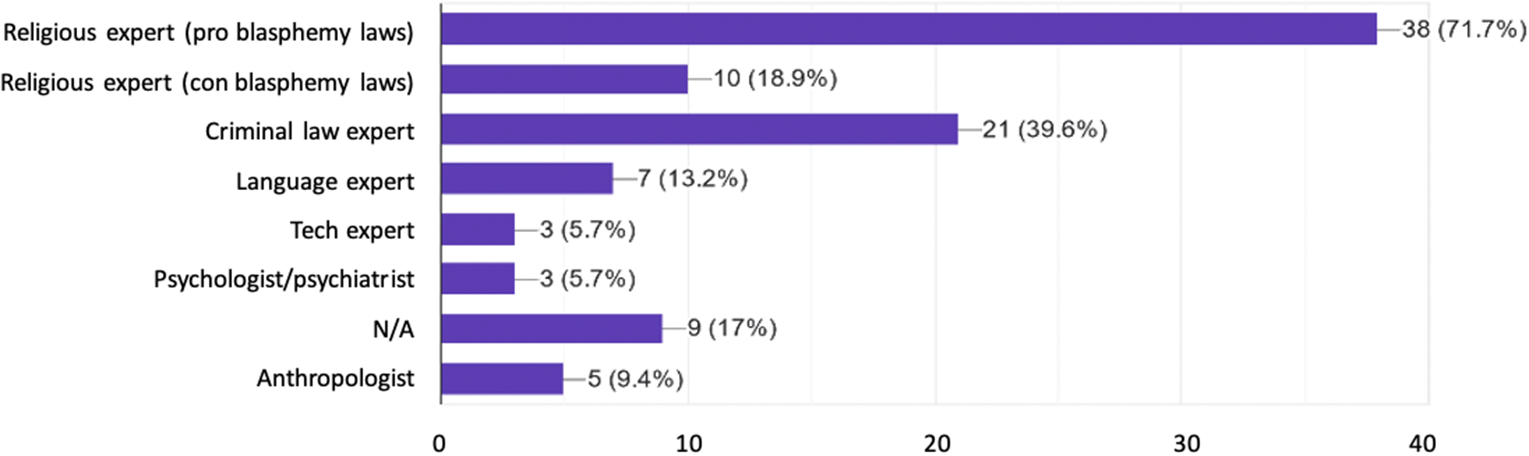
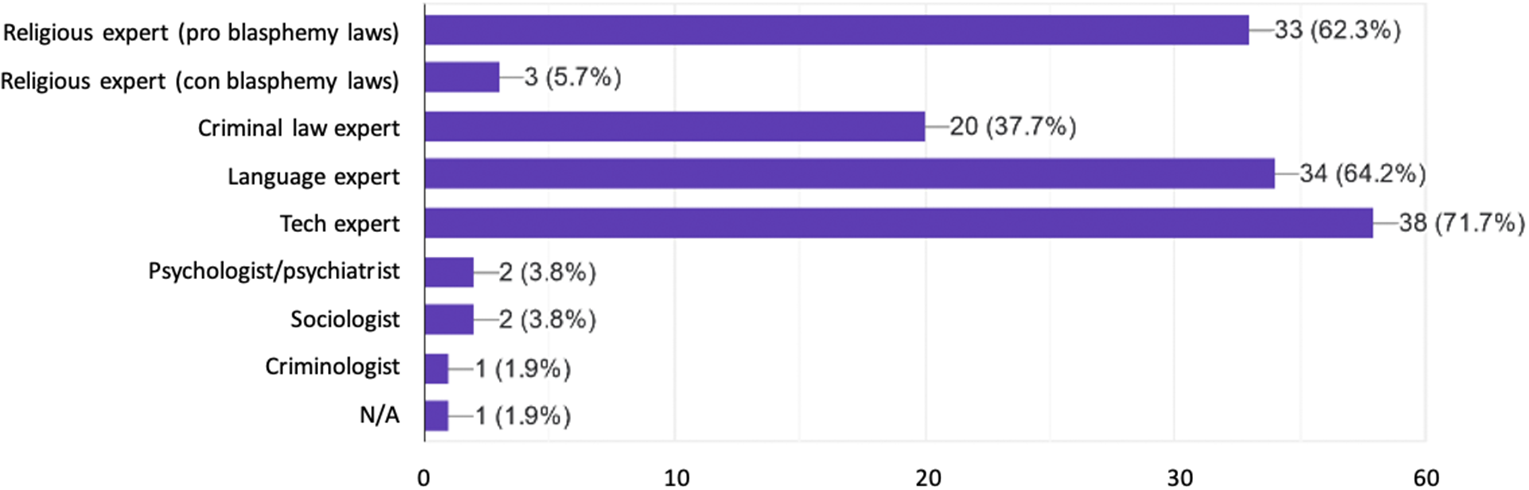
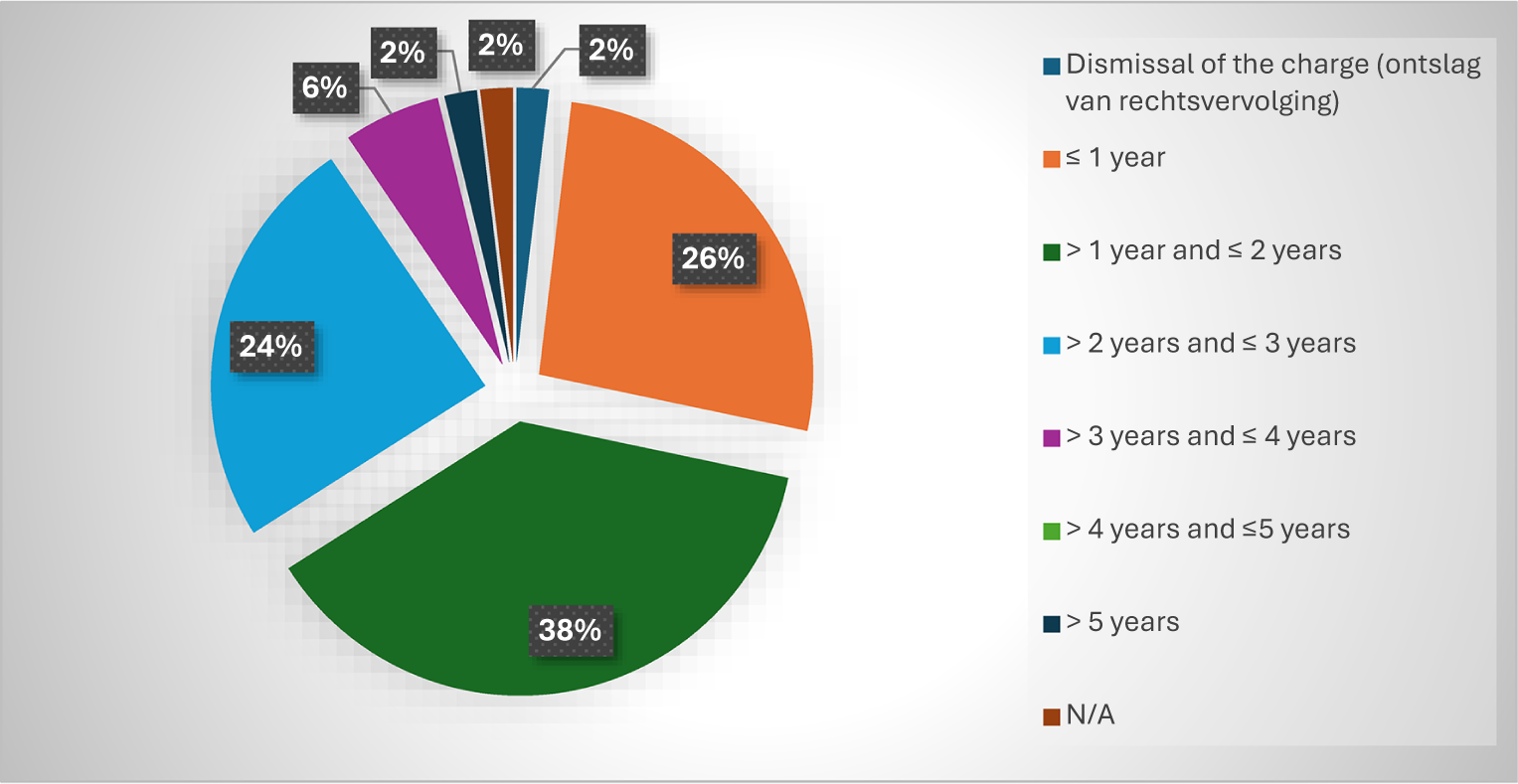
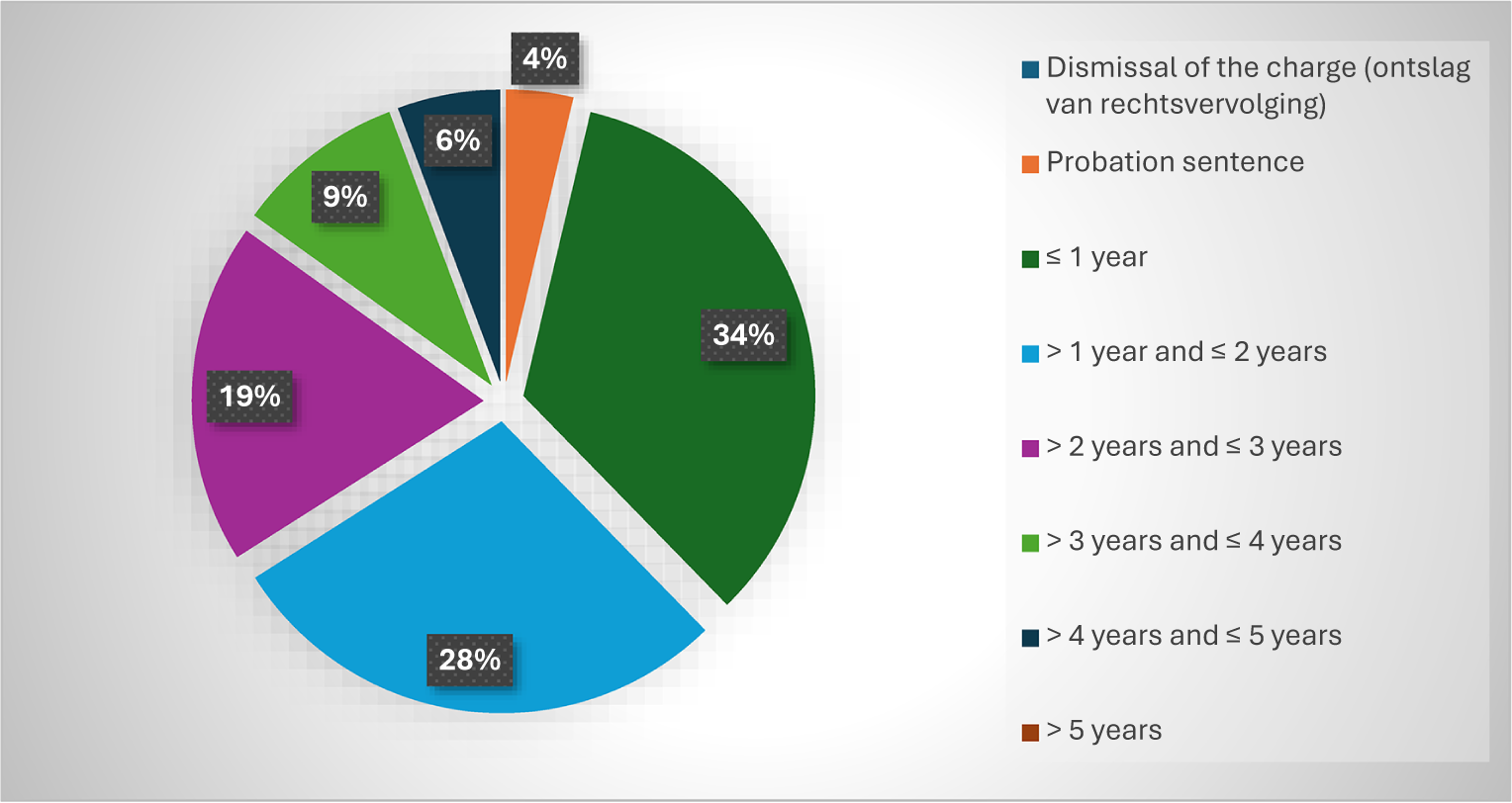

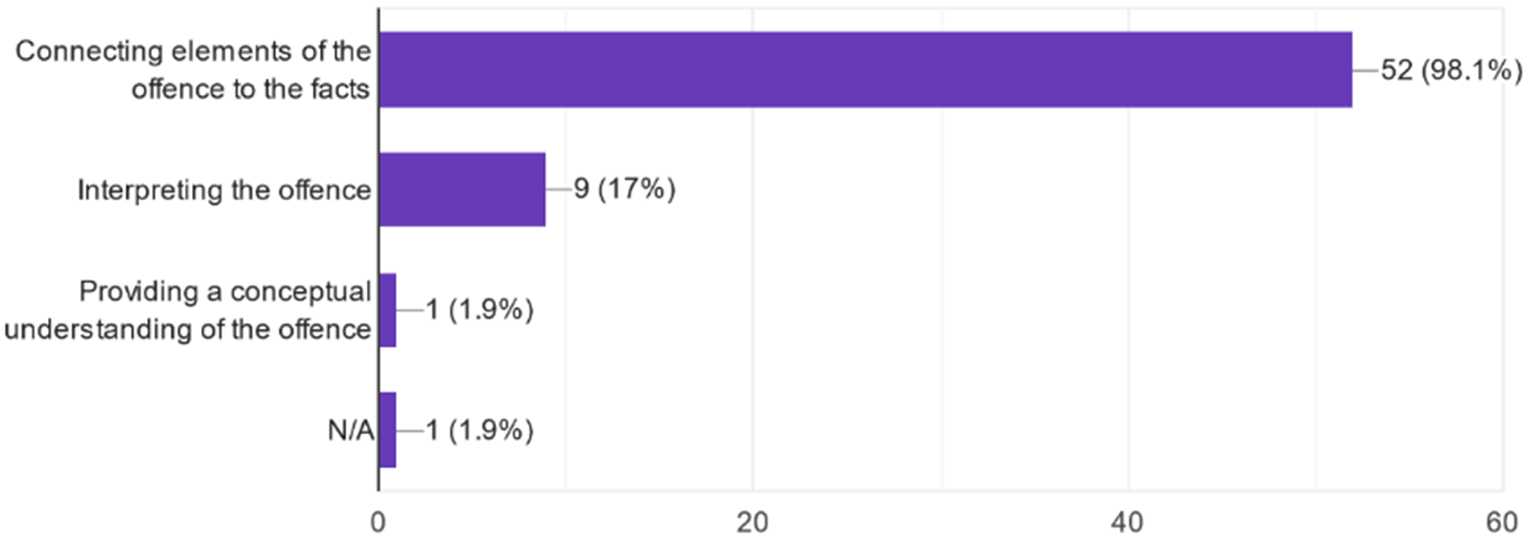
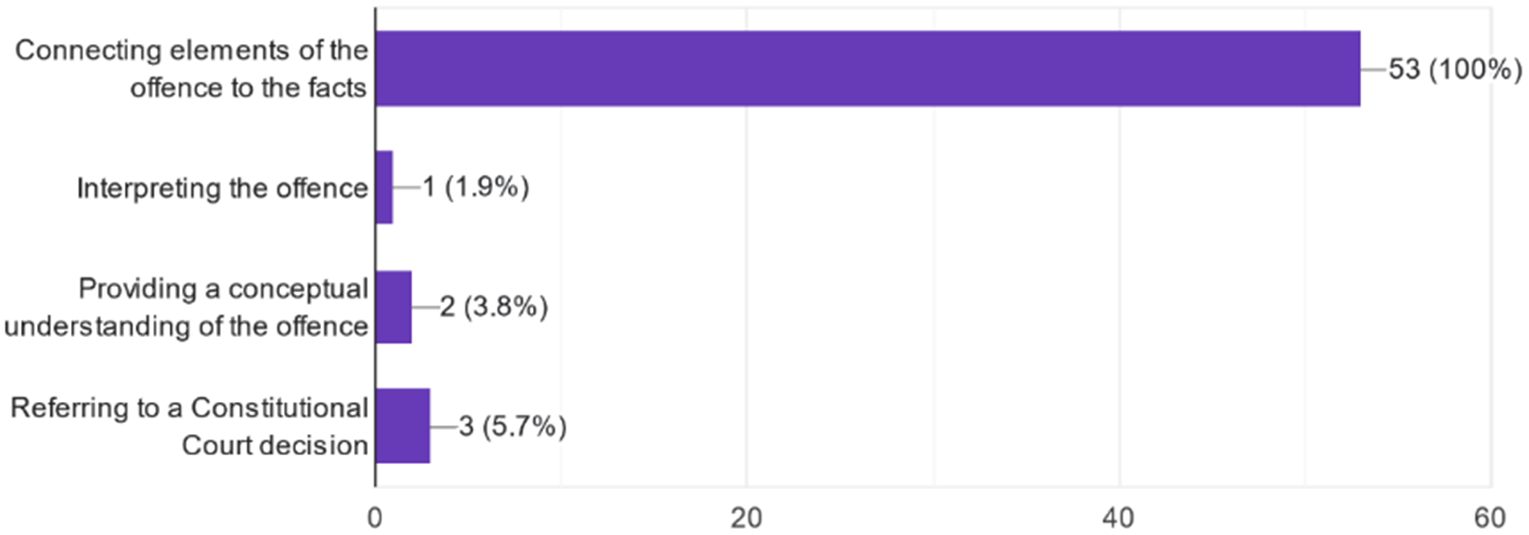

 Open access

