Introduction
Acute heart failure (AHF) is defined as the rapid appearance or modification of symptoms or signs secondary to a structural or functional heart abnormality, requiring immediate medical care due to a potential threat to life.Reference Nieminen and Harjola1, Reference Llorens, Miró, Martín Sánchez, Herrero Puente, Rodríguez and Gil2 AHF is a disease of high prevalence (1–3% in the general population, 5–10% at 65–79 years and 10–20% in patients over the age of 80), which has increased in recent decades due to population ageing and greater survival from diseases (ischaemic heart disease and arterial hypertension) that cause this síndrome.Reference Kannel and Belanger3–Reference Lloyd-Jones, Adams, Brown, Carnethon, Dai and De Simone6 It is calculated that the condition affects more than 23 million people throughout the world, and approximately 15 million in Europe.Reference Go, Mozaffarian, Roger, Benjamin, Berry and Borden7 It is one of the most frequent reasons for visits to the emergency department and of hospital admission among the elderly population.Reference Rodríguez-Artalejo, Banegas and Guallar-Castillón4, Reference Anguita Sánchez, Crespo Leiro, de Teresa Galván, Jiménez Navarro, Alonso-Pulpón and Muñiz García8, Reference Martín, Herrero, Llorens Soriano and Gil9 The age at first episode has increased by 15 years in the last four decades and 70% of the episodes of AHF requiring hospital admission occur in patients over 70 years of age.Reference Anguita Sánchez, Crespo Leiro, de Teresa Galván, Jiménez Navarro, Alonso-Pulpón and Muñiz García8, Reference Bleumink, Knetsch, Sturkenboom, Straus, Hofman and Deckers10 It is a geriatric syndrome associated with a high mortality (intrahospital mortality of 2–7%, 60–90-day mortality of 5–14% and 4-year mortality of 50%), morbidity (readmission of 30% at 60–90 days) and acute functional impact and, therefore, immediate management may have an impact on survival and functional short-term prognosis.Reference Gheorghiade, Abraham, Albert, Greenberg, O’Connor and She11
In recent years there has been increasing interest in the management of AHF in elderly patients in the emergency department, despite few studies on the specific management of this syndrome in these patients. This review discusses aspects of the diagnosis and immediate treatment in older people, as well as making recommendations for management in hospital emergency departments.
The diagnosis of AHF in older people
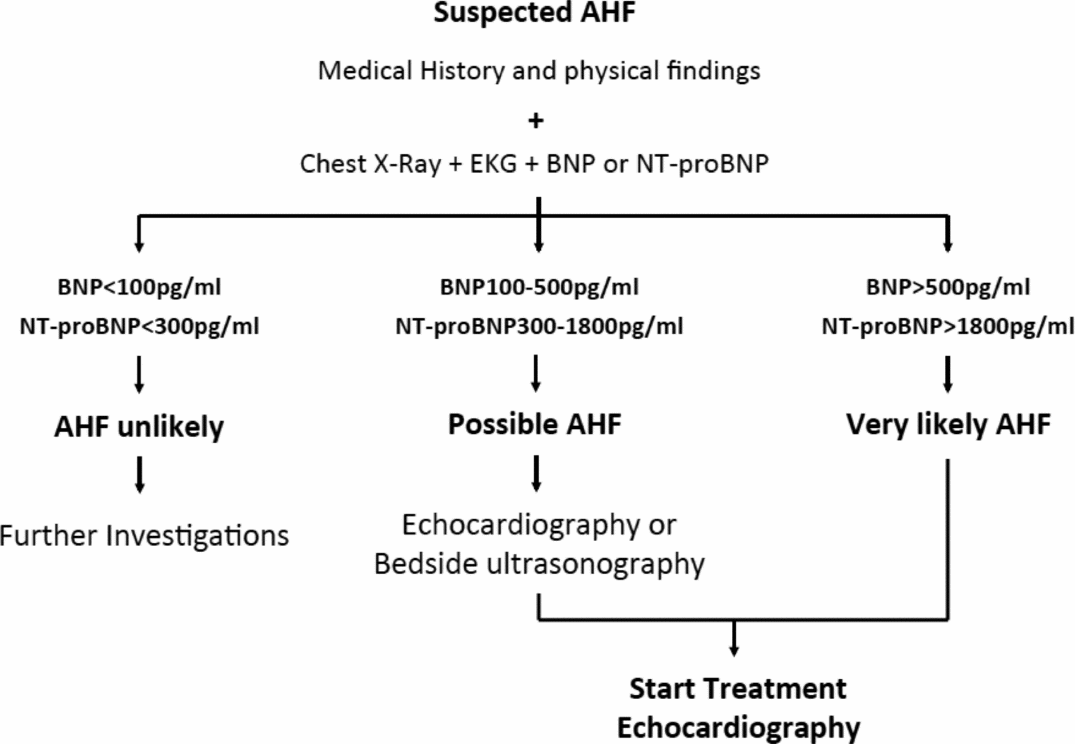
The diagnosis of AHF is based on the presence of symptoms and signs of pulmonary and systemic congestion, compatible findings on chest X-ray, electrocardiogram and type B natriuretic peptides, and confirmation with echocardiogram (Fig. 1).
Algorithm for the diagnosis of acute heart failure.

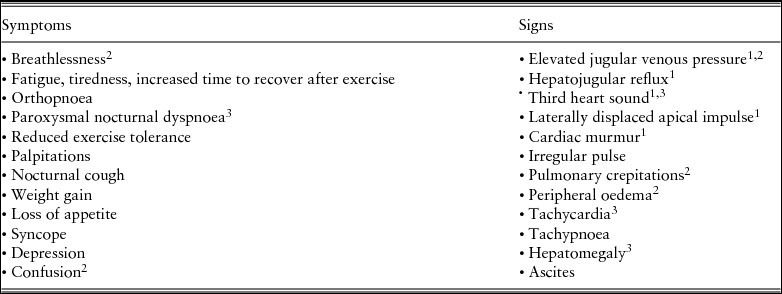
Recognition of AHF in old people is not easy as many of the symptoms and signs are not specific (Table 1). In addition, there is a greater probability of detecting less specific (i.e. oedemas) and reproducible (i.e. elevated jugular venous pressure) signs and less probability of typical (i.e. paroxysmal nocturnal dyspnoea) and specific (i.e. third heart sound) signs.Reference Martín-Sánchez, Marino-Genicio, Rodríguez-Adrada, Jacob, Herrero and Miró12 Thus the diagnosis of AHF in this population is even more complex since the physiological modifications associated with ageing and the presence of certain co-morbidities makes poor history more common (i.e. due to cognitive impairment) and clinical interpretation difficult (i.e. due to chronic pulmonary disease), and favours the presence of atypical manifestations (i.e. functional impairment, confusional picture, syncope or repeated falls).
Typical symptoms and signs of acute heart failure
1More specific; 2more frequent in elderly than younger patients; 3more frequent in younger than elderly patients.
With regard to tests to be immediately performed in the emergency department, it is recommended to request a full blood count, blood biochemistry including electrolytes, renal and liver function tests, thyroid hormones and cardiac enzymes, chest X-ray and a 12-lead electrocardiogram. These data are of value for the diagnosis (i.e. hypothyroidism, etc.), the prognosis (i.e. hyponatremia, renal insufficiency, etc.), or both (i.e. anaemia, elevation of cardiac enzymes, etc.). Troponin is a marker of myocardial damage which may be useful for the aetiological diagnosis, but is particularly of value in the short-term prognostic stratification of AHF.Reference Jacob, Martín-Sanchez, Herrero, Miró and Llorens13 Chest X-ray is useful to rule out the presence of other pulmonary diseases (i.e. pneumonia or cancer) although, on certain occasions, it also provides elements to support the diagnosis of HF (i.e. cardiomegaly, signs of pulmonary congestion, etc.).Reference Llorens, Miró, Martín Sánchez, Herrero Puente, Rodríguez and Gil2 The 12-lead electrocardiogram detects alterations that have important implications in treatment planning and prognosis (i.e. atrial fibrillation or flutter, bradycardia and atrioventricular conduction disturbances, ventricular arrythmias, signs of myocardial ischaemia, etc.).Reference Llorens, Miró, Martín Sánchez, Herrero Puente, Rodríguez and Gil2
Type B natriuretic peptides (BNP and NT-proBNP) are of great help in the diagnosis and prognosis of AHF in emergency departments,Reference Januzzi, Chen-Tournoux and Moe14 being recommended in elderly patients attending with dyspnoea in the emergency department when there are diagnostic doubts and for prognostic purposes. It is known that these values rise with age, sex, renal function, nutritional state and in other associated acute conditions (atrial fibrillation, pulmonary thromboembolism, sepsis, anaemia, ischaemic heart disease and cardiomyopathies, etc.).Reference Gaggin and Januzzi15 In general, it is considered that BNP < 100 pg ml−1 and NT-proBNp < 300 pg ml−1 almost certainly rule out the diagnosis of AHF. From a diagnostic point of view, different cut-offs of NT-proBNP have been described based on the age group (<50 years: 450 pg ml−1, 50–75 years: 900 pg ml−1, >75 years: 1800 pg ml−1).Reference Januzzi, Chen-Tournoux and Moe14 With regard to its prognostic value, it is known that a cut-off of ≥5180 pg ml−1 is associated with 30-day mortality in the elderly population with AHF in hospital emergency departments, regardless of the presence of other factors that influence interpretation such as the severity of the acute episode or a reduction in glomerular filtration.Reference Martín Sánchez, Covarrubias, Terán, Llorens, Herrero and Jacob16
Echocardiography helps to confirm the diagnosis of AHF, identifies the possible cardiac aetiology and assesses the grade of systolic and/or diastolic dysfunction of the left ventricle.Reference Llorens, Miró, Martín Sánchez, Herrero Puente, Rodríguez and Gil2 It is recommended to perform an echocardiography as soon as possible and urgently only in cases of shock or haemodynamic instability. In more than half of the patients attending with AHF in the emergency department, ventricular function is unknown, and almost two-thirds of these patients are geriatric patients.Reference Herrero-Puente, Martín-Sánchez, Fernández-Fernández, Jacob, Llorens, Miró and Alvarez17 Thus, increasingly, more authors are supporting the use of bed-side echocardiography by non-cardiologists with the aim of improving diagnosis at the time of the initial presentation in the emergency departmentReference Prosen, Klemen, Štrnad and Grmec18 and for modifying the therapeutic approach based on the function of the left ventricle, although this may not modify the short-term prognosis.Reference Jacob Rodríguez, Herrero Puente, Martín Sánchez, Llorens, Miró and Perelló19 This technique allows quantification of pulmonary B lines, the degree of vena cava collapse, qualitative assessment of the left ventricular ejection fraction, pericardial effusion, dilatation of the right ventricle, approximate mitral regurgitation, myocardial thickness and the size of the left atrium.Reference Garcia Fernandez20 Indeed, some authors have proposed new alternative algorithms for the diagnostic approach to AHF, especially in cases in which the natriuretic peptides provide diagnostic uncertainty and in which differential diagnosis with pulmonary disease is difficult.Reference Prosen, Klemen, Štrnad and Grmec18, Reference Delerme, Chenevier-Gobeaux, Doumenc and Ray21, Reference Kajimoto, Madeen, Nakayama, Tsudo, Kuroda and Abe22
Diagnosis of the aetiology and precipitating factors of AHF
In the acute phase, after confirming the diagnosis of AHF in the emergency department, it is fundamental to identify the precipitating factor and the aetiology, though this may not be straightforward. Indeed, it is identified in only one out of two cases, with the most frequent causes being infections, arrhythmias, uncontrolled arterial hypertension, lack of treatment adherence, anaemia and coronary ischaemia.Reference Aguirre Tejedo, Miró, Jacob Rodríguez, Herrero Puente, Martín-Sánchez and Alemany23 Infections are the most frequent cause of decompensation in elderly people,Reference Herrero-Puente, Martín-Sánchez, Fernández-Fernández, Jacob, Llorens, Miró and Alvarez17 with the presence of several associated triggers also being frequent.Reference Formiga, Chivite, Manito, Casas, Riera and Pujol24
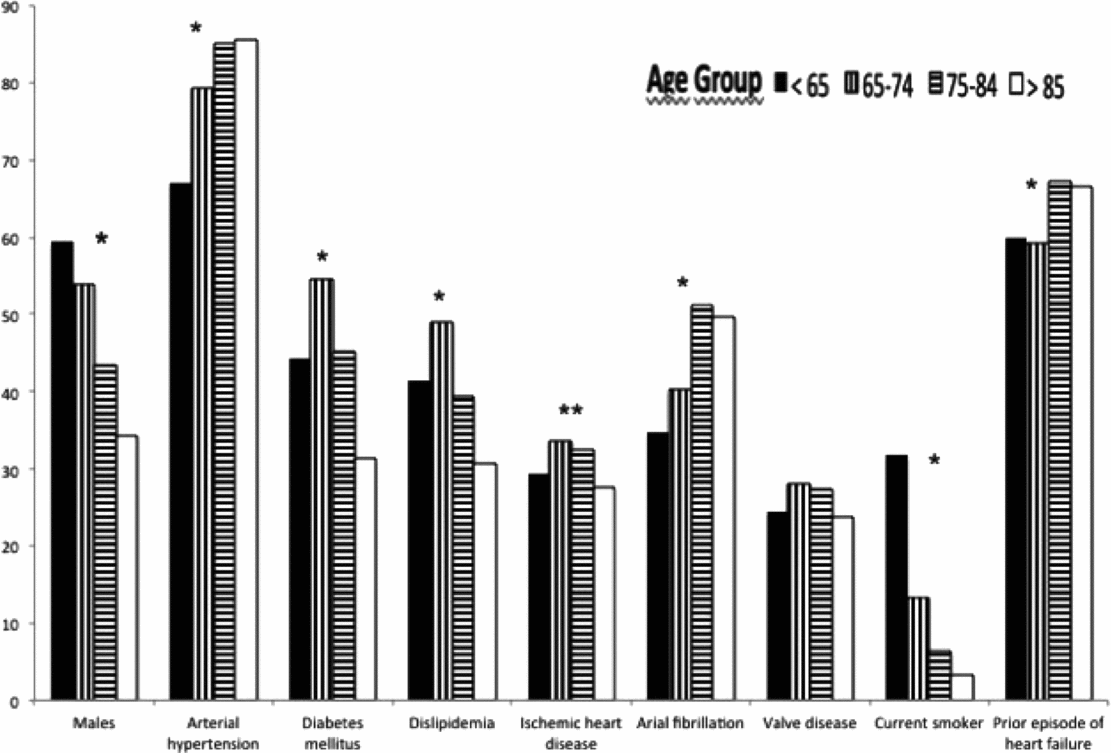
With regard to the aetiology, two major pathophysiological mechanisms that may lead to AHF in the elderly population can be defined. In the oldest age groups, AHF may be the consequence of a series of physiological modifications associated with ageing which facilitate the onset of decompensation with increasing fewer stimuli due to loss of functional reserve. In the younger elderly population AHF may be secondary to non-heart-favouring lifestyles. Thus in these patients, a greater frequency of ischaemic heart disease and cardiovascular risk factors may be observed, while in the older group in which the aetiology is possibly multifactorial, systolic arterial hypertension, atrial fibrillation and AHF with preserved systolic function is seenReference Martín-Sánchez, Marino-Genicio, Rodríguez-Adrada, Jacob, Herrero and Miró12 (Fig. 2).
Cardiovascular risk factors of patients with acute heart failure by age group. *P for linear trend < 0.001; **P for linear trend < 0.05.
Algorithm for treatment of AHF
The initial management of AHF includes the identification of the patient at high risk, respiratory and haemodynamic stabilization and maintenance of organ perfusion, treatment of the clinical manifestations of congestion and the precipitating factors which require immediate intervention, the stratification of patient risk and care planning.
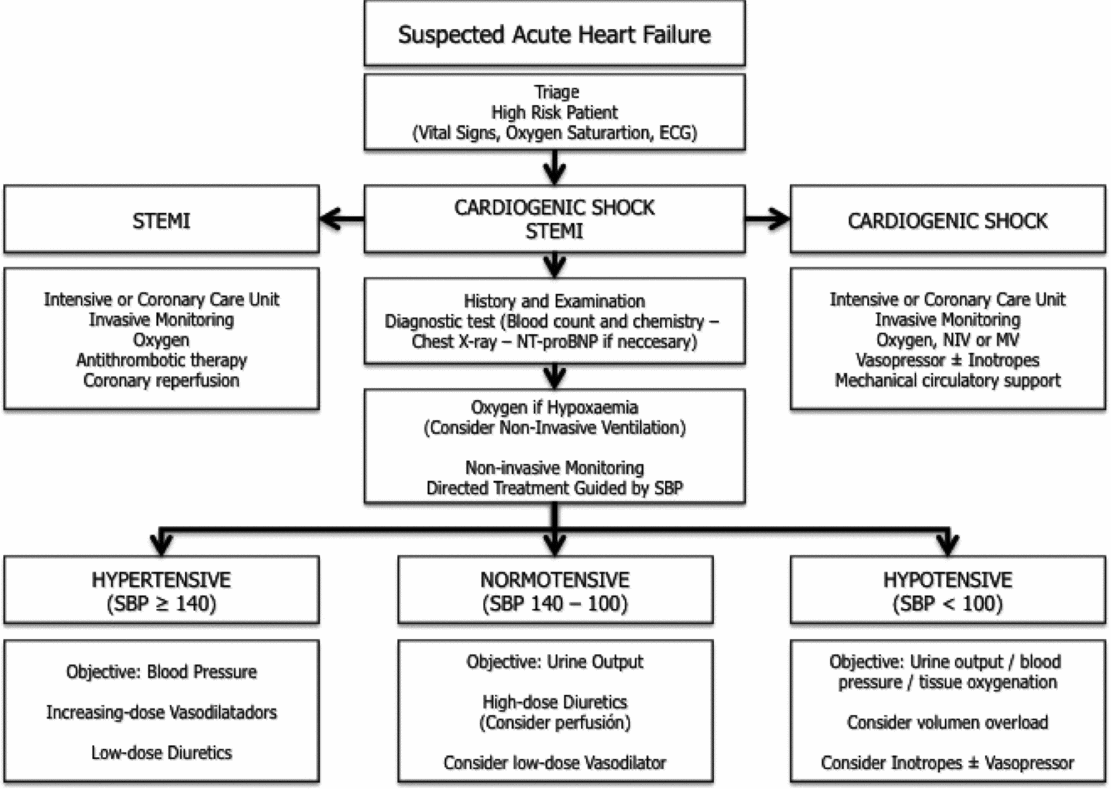
From a practical point of view, it is first recommended to identify patients at high risk, i.e. with symptoms and signs of imminent respiratory failure, haemodynamic instability, systemic hypoperfusion, or with an elevation of ST in the electrocardiogram, since these patients are potential candidates for respiratory and haemodynamic support, coronary reperfusion and invasive monitoring in a coronary or critical care unit. Next, after ruling out the need for critical care, hypoxaemia should be treated with oxygen therapy, a bolus of intravenous diuretic should be administered and appropriate investigations requested. The patient should then be monitored non-invasively, and treatment implemented according to systolic blood pressure and assessment of need for non-invasive mechanical ventilation. The presumed diagnosis of AHF should be confirmed, the aetiology identified and the possible precipitating factors treated. If necessary, re-evaluate the clinical situation and response to initial treamtent with a view to use of second-line treatments (inotropic and vasoactive drugs, mechanical circulatory support, or ultrafiltration). Lastly, the risk of the patient should be stratified and and the design of an individualized care plan should be undertaken (Fig. 3).
Treatment algorithm for acute heart failure in elderly patients. ECG, electrocardiogram; SBP, systolic blood pressure; STEMI, myocardial infarcation with ST-segment elevation; NIV, non-invasive ventilation; MV, mechanical ventilation.
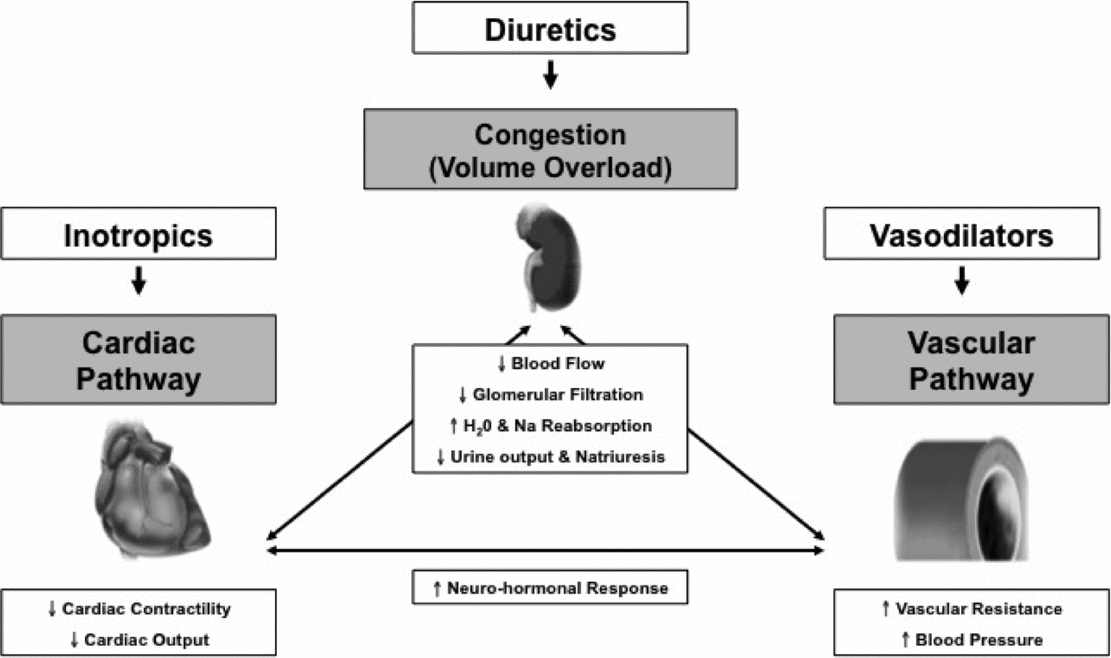
Treatment by scenarios arises in an attempt to carry out treatment based on the fundamental pathophysiological mechanism, i.e. pump failure or an alteration of systemic vascular resistance, since this influences the dose of diuretic and vasodilator treatment to be implemented (Fig. 4). To do this we can obtain help from the values of systolic blood pressure, previous ventricular function and pulmonary and systemic congestive symptoms. In patients with primarily alteration in vascular resistance and thus with the need for high doses of vasodilators, the clinical presentation is more sudden, with elevated systolic blood pressure, an alteration of diastolic function and predominant symptoms of pulmonary congestion (scenario of hypertensive AHF or acute pulmonary oedema). By contrast, in patients with pump failure and thus with the need for high doses of diuretics, the clinical presentation is more progressive, with blood pressure values within the normal range, systolic dysfunction and predominant symptoms of systemic congestion (scenario of normotensive AHF or hypotensive AHF with signs of systemic hypoperfusion).
Directed treatment based on pathophysiological mechanisms.
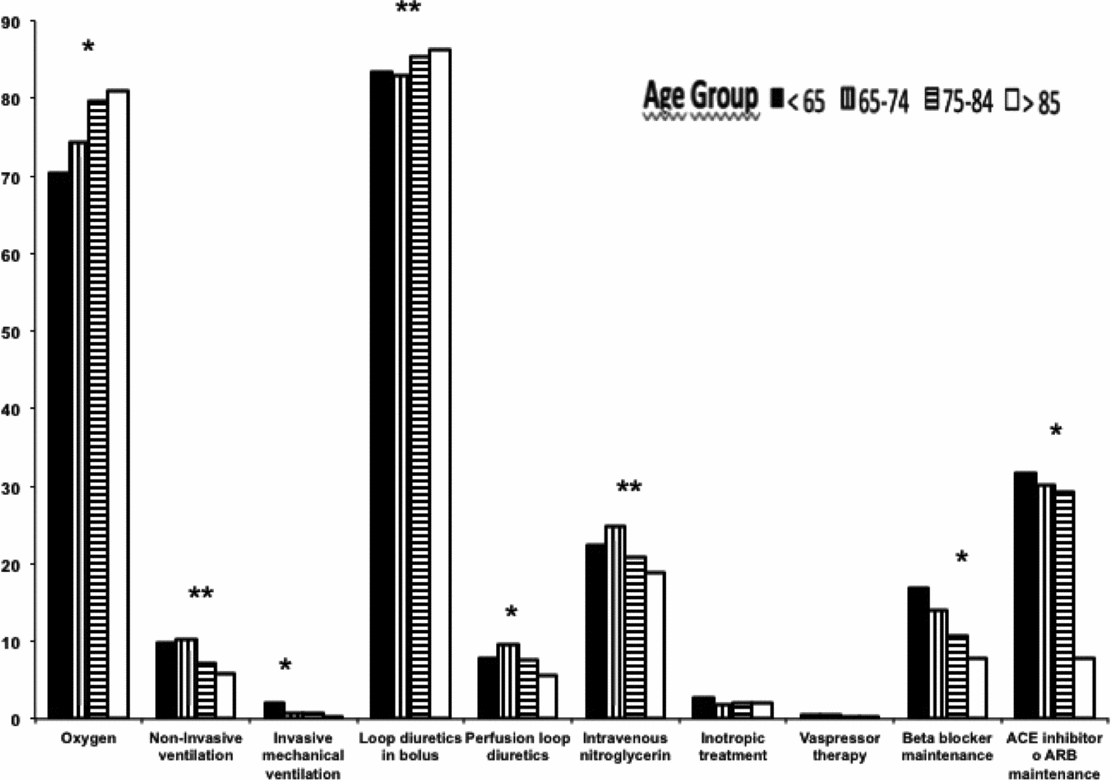
At this point it is necessary to reflect upon the lack of evidence for the treatment of AHF in elderly people. With respect to immediate treatment, the clinical guidelines are aimed at purely cardiac aspects based on clinical trials with little representation of very elderly patients and/or those with high co-morbidity. Nevertheless, this should not justify different approaches or worse quality of treatment than in younger patients.Reference Sales, Tipton, Levine, Houston, Kim and Allison25 Age continues to be an independent factor associated with underuse of treatments that have been demonstrated to reduce mortality.Reference Forman, Cannon, Hernandez, Liang, Yancy and Fonarow26 In this regard, one study including 5819 elderly patients with AHF in 29 hospital emergency departments showed that, with increase in patient age, the use of continuous perfusion of loop diuretics, intravenous nitroglycerine, inotropics and non-invasive and invasive mechanical ventilation as well as the maintenance of treatment with beta blockers and angiotension converting enzyme inhibitors (IECA) and aldosterone receptor antagonists (ARA) were limited (Fig. 5). These results underline how advanced age is associated with less use of pharmacological and non-pharmacological measures recommended by clinical guidelines when these guidelines do not explicitly mention the age of the patient and may influence the short-term results.Reference Martín-Sánchez, Marino-Genicio, Rodríguez-Adrada, Jacob, Herrero and Miró12
Immediate treatment of patients with acute heart failure by age group. *P for linear trend < 0.001; **P for linear trend < 0.05.
Non-invasive mechanical ventilation
Non-invasive mechanical ventilation devices are the modality of continuous positive airway pressure (CPAP) and ventilation with intermittent positive pressure (NIPPV). Both methods have demonstrated early improvement in clinical and pathophysiological parameters and the need for intubation, without increasing complications in patients with acute pulmonary oedema regardless of the age of the patient.Reference Gray, Goodacre, Newby, Masson, Sampson and Nicholl27–Reference Vital, Ladeira and Atallah30 A recent meta-analysis demonstrated that both techniques reduce mortality.Reference Mariani, Macchia, Belziti, Deabreu, Gagliardi and Doval31
From a practical point of view, it is recommended to initially evaluate non-invasive mechanical ventilation in patients with respiratory difficulty secondary to acute pulmonary oedema. Because of its easy managment it is preferable to initiate oxygenation with CPAP. NIPPV is indicated when there is associated hypercapnia, severe dyspnoea or CPAP failure. It is contraindicated in the case of low levels of consciousness, risk of aspiration, haemodynamic instability or facial deformity incompatible with the use of the mask.Reference Llorens, Miró, Martín Sánchez, Herrero Puente, Rodríguez and Gil2 As a general rule, the need for intubation and mechanical ventilation contraindicates non-invasive mechanical ventilation, although in certain elderly patients in whom there is true uncertainty as to the appropriateness of aggressive measures, it may be a good initial non-pharmacological treatment alternative.Reference Llorens, Miró, Martín Sánchez, Herrero Puente, Rodríguez and Gil2
Diuretics
Intravenous loop diuretics have been shown to improve dyspnoea and the symptoms of congestion. There is no clear evidence as to the dose (high or low) and the best method of treatment (bolus versus perfusion). One study on the efficacy and safety of loop diuretics based on the administration route showed that high doses are associated with a greater improvement in the symptoms and signs, but with a greater risk of transitory worsening in renal function.Reference Felker, Lee, Bull, Redfield, Stevenson and Goldsmith32 Nonetheless, there are increasingly more data pointing to the greater safety of perfusion diuretics.Reference Leto, Aspromonte and Feola33 This should be taken into account in the segment of the population in whom glomerular filtration progressively deteriorates and there is a greater prevalence of chronic renal insufficiency and resistance to diuretics.
In practice, an initial dose of 20–40 mg of an intravenous bolus of furosemide is recommended based on the clinical and haemodynamic situation of the patient, and the dose and the regimen of administration is titrated individually based on the clinical scenario, the initial response and the chronic dose of the loop diuretic (2- to 2.5-fold the previous oral dose). In patients with resistance to diuretics (and always after having ruled out the possibility that the reduction in diuresis is secondary to acute urine retention), increase the dose of loop diuretic, add a second diuretic, high dose dopamine and, in very selected cases, perform ultrafiltration.Reference Llorens, Miró, Martín Sánchez, Herrero Puente, Rodríguez and Gil2, Reference McMurray, Adamopoulos, Anker, Auricchio, Böhm and Dickstein34
Vasodilators
Intravenous nitroglycerine has positive haemodynamic properties, reducing the rate of proceduresReference Levy, Compton, Welch, Delgado, Jennett and Penugonda35 and diminishing the need for furosemide,Reference Cotter, Metzkor, Kaluski, Faigenberg, Miller and Simovitz36 which thereby reduces the probability of secondary effects related to the diuretics, especially in vulnerable elderly patients. In general, vasodilator treatment with nitroglycerine is mainly useful within the scenario of hypertensive AHF and acute pulmonary oedema, i.e. in which an alteration in vascular resistance is observed. This treatment is initially recommended at systolic blood pressure values of 110 mmHg and the dose is titrated based on the grade of arterial systolic hypertension. It is contraindicated in the case of aortic stenosis and significant mitral insufficiency and this should therefore be taken into account at the time of prescription given the prevalence of valvular disease in elderly patients.Reference Llorens, Miró, Martín Sánchez, Herrero Puente, Rodríguez and Gil2, Reference McMurray, Adamopoulos, Anker, Auricchio, Böhm and Dickstein34
Treatment following stablization
After initial stabilization in patients with AHF with systolic dysfunction, treatment with IECA (or ARA) and beta blockers should be initiated as soon as possible after diagnosis, provided that renal function, potassium levels, blood pressure and the heart rate allow this treatment.Reference Llorens, Miró, Martín Sánchez, Herrero Puente, Rodríguez and Gil2, Reference McMurray, Adamopoulos, Anker, Auricchio, Böhm and Dickstein34 Withdrawal of chronic treatment with IECA (or ARA) or beta blockers during the acute phase is not always justified and may carry long-term prognostic implications.Reference Jondeau, Neuder, Eicher, Jourdain, Fauveau and Galinier37 The management of beta blockers in the acute phase continues to be problematic in patients with AHF, especially in the older patient. It has been reported that in almost 70% of patients with chronic beta blocker treatment, this treatment is suspended during the acute phaseReference Llorens Soriano, Miró, Martín and Herrero38 despite evidence,Reference Metra, Torp-Pedersen, Cleland, Di Lenarda, Komajda and Remme39 while the current recommendations indicate that beta blocker treatment may be continued in patients with haemodynamic stability without secondary effects or contraindications related to the same.Reference Llorens, Miró, Martín Sánchez, Herrero Puente, Rodríguez and Gil2
On the other hand, patients of 65 years of age or more are especially susceptible to adverse reactions to medications due to a greater probability of polypharmacy and the presence of other conditioners such as pharmacokinetic and pharmacodynamic modifications due to ageing, associated diseases (such as cognitive impairment or reduction in visual acuity), self-medication and, sometimes, complex therapeutic regimens. Previous studies have shown that adverse reactions to medications in elderly patients are the cause of 10% of visits to the emergency department, with anticoagulants, antidiabetics, diuretics, beta blockers, calcium antagonists and narrow range therapeutic drugs such as digoxin being among the drugs most frequently implicated.Reference Hohl, Dankoff, Colacone and Afilalo40, Reference Martín-Sánchez, Martínez Agüero, Fernández Alonso, González del Castillo and Jorge González Armengol41
Management of co-morbidity
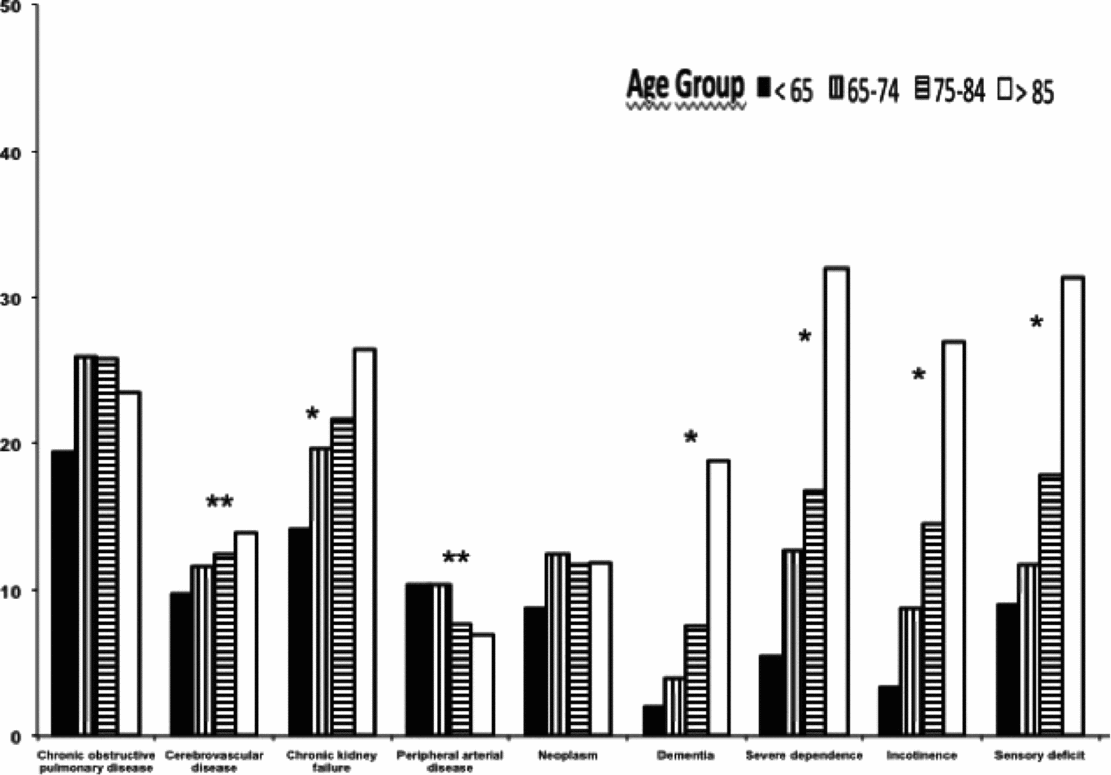
According to the age of patients with AHF, the grade of co-morbidity increases as does the frequency of certain associated diseases such as atrial fibrillation, chronic renal insufficiency, cerebrovascular disease and markers of frailty such as dementia, incontinence, sensory deficit and severe functional dependency, particularly in the population of 85 years or more (Fig. 6).Reference Martín-Sánchez, Marino-Genicio, Rodríguez-Adrada, Jacob, Herrero and Miró12 Consequently, these factors may be even more important in predicting the outcome of AHF than the heart disease itself and may determine the short-term results.Reference Formiga, Chivite, Casas, Manito and Pujol42–Reference Ahluwalia, Gross, Chaudhry, Leo-Summers, Van Ness and Fried44
Co-morbidity of patients with acute heart failure by age group. *P for linear trend < 0.001; **P for linear trend < 0.05.
The diagnosis and treatment of certain co-morbidities frequent in the elderly AHF population, such as anaemia and depression, are especially important. It is necessary to avoid treatment with calcium antagonists (verapamil or diltiazem) in the management of arterial hypertension, atrial fibrillation and ischaemic heart disease, avoid beta blockers in the case of asthma and prescribe selective beta-1 antagonists in chronic obstructive pulmonary disease without bronchial hyper-reactivity, avoid non-steroidal anti-inflammatories and Cox-2 inhibitors in the treatment of arthritis, and avoid oral antidiabetics in diabetes mellitus and use insulin schedules to maintain glycaemia values between 140 and 180 mg dl−1.Reference Llorens, Miró, Martín Sánchez, Herrero Puente, Rodríguez and Gil2, Reference McMurray, Adamopoulos, Anker, Auricchio, Böhm and Dickstein34 In atrial fibrillation, do not rush into the implementation of specific treatment to control elevated ventricular rate since, in most cases, it is an adaptative response, which improves with specific treatment of AHF. Prophylaxis of arterial embolism should be instigated. In the case of the need for control of ventricular rate the drugs of choice are digoxin, intravenous amiodarone and beta blockers in very selected cases.Reference Llorens, Miró, Martín Sánchez, Herrero Puente, Rodríguez and Gil2.
Stratification of risk
Elderly patients with AHF are a very vulnerable population that is associated with a high morbidity and mortality.Reference Mahjoub, Rusinaru, Soulière, Durier, Peltier and Tribouilloy45, Reference Komajda, Hanon, Hochadel, Lopez-Sendon, Follath and Ponikowski46 In the registry of elderly subjects attending for AHF in Spanish hospital emergency departments, the mortality rate during admission was 4.5–8.8% at 30 days, with 18% having revisited the emergency department at 30 days. There was a significant linear trend between age and the probability of death both during admission and at 30 days of follow-up.Reference Martín-Sánchez, Marino-Genicio, Rodríguez-Adrada, Jacob, Herrero and Miró12
The principal factors for poor prognosis in older people with AHF are the severity of the episode (NYHA III–IV), the presence of arterial hypotension (systolic blood pressure < 100 mmHg) and hyponatremia (< 135 mequiv l−1) during the episode and the baseline functional dependency (Barthel index < 60).Reference Miró, Llorens, Martín-Sánchez, Herrero, Pavón and Pérez-Durá43 Other studies have also demonstrated that functional dependency in patients admitted with AHF is a factor influencing in-hospital and short-term mortality.Reference Formiga, Chivite, Manito, Casas, Riera and Pujol24, Reference Formiga, Chivite, Casas, Manito and Pujol42, Reference Miró, Llorens, Martín-Sánchez, Herrero, Pavón and Pérez-Durá43, Reference Biagi, Gussoni, Iori, Nardi, Mathieu and Mazzone47 As mentioned previously, troponinReference Jacob, Martín-Sanchez, Herrero, Miró and Llorens13 and NT-proBNP levelsReference Martín Sánchez, Covarrubias, Terán, Llorens, Herrero and Jacob16 are associated with short = term mortality in the elderly population treated for AHF.
Risk stratification scales
In the last decade several models of stratification of risk of hospital mortality have been developed, such as the ADHERE scale which refers to hospital and early mortality, the OPTIMIZE scale of readmission at 60–90 days, and the Heart Failure Risk Scoring System (HFRSS) of the Enhanced Feedback for Effective Cardiac Treatment (EFFECT) study of 30-day and 1-year mortality. These allow the classification of patients with cardiac insufficiency into different categories of risk and may be of great help to clinicians at the time of decision making, such as in relation to deciding the discharge destination of the patient.Reference Gheorghiade, Abraham, Albert, Greenberg, O’Connor and She11, Reference Aaronson, Schwartz, Chen, Wong, Goin and Mancini48–Reference Pocock, Wang, Pfeffer, Yusuf, McMurray and Swedberg53 The HFRSS is one of the most widely used models applicable in the hospitalized elderly population,Reference Lee, Austin, Rouleau, Liu, Naimark and Tu49, Reference Nutter, Tanawuttiwat and Silver54, Reference Chivite, Formiga and Pujol55 since it includes data not only of the acute episode, but also of age and co-morbidity.Reference Nutter, Tanawuttiwat and Silver54, Reference Chivite, Formiga and Pujol55 One study demonstrated that the HFRSS scale could be applied to the elderly population attending for AHF in Spanish emergency departments and the predictive capacity was found to improve on including baseline functional dependency, quantified using a Barthel index (less than 60).Reference Martín-Sánchez, Gil, Llorens, Herrero, Jacob and Fernández56
Other authors have proposed new models based on comprehensive geriatric assesssment, such as the Multidimensional Prognostic Index. However, these require an interdisciplinary team and consume a lot of resources and time, making them difficult to apply in hospital emergency departments.Reference Pilotto, Addante, Franceschi, Leandro, Rengo and D’Ambrosio57, Reference Rodríguez-Pascual, Vilches-Moraga, Paredes-Galán, Ferrero-Marinez, Torrente-Carballido and Rodríguez-Artalejo58 Hence there is a need to develop a geriatric evaluation adapted to the emergency department, which allows identification of elderly patients with AHF at high risk, through a series of brief scales of easy application which detect associated non-cardiac diseases and the psychological, functional and social factors that may influence the results.Reference Martín-Sánchez, Fernández Alonso and Gil Gregorio59
Criteria for admission and place of care
One of the principal challenges in the care of elderly patients with AHF is the decision of whether to directly discharge home or to arrange admission and placement. The recommendations of the clinical guidelines on these aspects are limited.Reference McMurray, Adamopoulos, Anker, Auricchio, Böhm and Dickstein34 Considering that the risk which may be assumed for out-patient management of an episode of AHF should be less than 1–2% of death or major complications at 30 days, any patient classified as intermediate or high risk should always be admitted.Reference Llorens, Miró, Martín Sánchez, Herrero Puente, Rodríguez and Gil2 It is known that almost a quarter of elderly subjects attending for AHF are discharged directly homeReference Martín-Sánchez, Marino-Genicio, Rodríguez-Adrada, Jacob, Herrero and Miró12 and that the percentage of revisits within 30 days is approximately 30%.Reference Ezekowitz, Bakal, Kaul, Westerhout and Armstrong60, Reference Miró, Llorens, Martín-Sánchez, Herrero, Jacob and Pérez-Durá61 The variable most frequently associated with early revisits is severe functional dependency.Reference Miró, Llorens, Martín-Sánchez, Herrero, Jacob and Pérez-Durá61 Thus the plan of care should always be individualized and take into account functional, mental and social aspects of the patient, which will favour therapeutic compliance and out-patient follow-up.
Alternatives to conventional hospitalization
Different units have currently emerged as an alternative to conventional hospitalizaton, such as observation units (OU), short stay units (SSU) and home hospitalization units (HHU).Reference Sánchez, Salgado and Miró62 The OU and the SSU, which allow a maximum stay of 24 and 72 h, respectively, are generally linked to the hospital emergency departments in which elderly patients with chronic decompensated HF are admitted for treatment of congestive symptoms, the performance of investigations, the stratification of risk, patient education and the design of a discharge plan. These units have clearly written protocols of admission, referral and dischargeReference Peacock, Remer, Aponte, Moffa, Emerman and Albert63 and have demonstrated the avoidance of unnecessary admissions.Reference Sánchez, Salgado and Miró62 The ideal candidates are those elderly patients with AHF with non-severe precipitating factors, who are stable from a respiratory and haemodynamic point of view, with at least partial response to immediate treatment and who do not require complex diagnostic or therapeutic procedures and will probably recover within a short period of time. That is, schematically we can say that the OU provides prolonged emergency care with the main aim of stratification of risk and the SSU provides briefer hospitalization with the essential objective of reducing the length of hospital stay and avoiding complications associated with hospital admission.Reference Llorens, Miró, Martín Sánchez, Herrero Puente, Rodríguez and Gil2 It has been observed that patients with AHF who most benefit from admission in the SSU are those with hypertensive crises as the triggering factor of the episode and that certain co-morbidities such as chronic obstructive pulmonary disease and anaemia may prolong the stay in the SSU more than 3 days.Reference Martín-Sánchez, Carbajosa, Llorens, Herrero, Jacob and Pérez-Dura64
Home hospitalization is an alternative that allows a series of therapeutic procedures similar to conventional hospitalization to be performed and has been demonstrated to reduce the percentage of short-term readmissions and cost, as well as increasing patient and care-giver satisfaction.Reference Caplan, Sulaiman, Mangin, Aimonino Ricauda, Wilson and Barclay65
Considerations at discharge
The main variables related to treatment success after discharge are compliance with recommendations of disease-modifying treatment, adherence to treatment, dietetic restrictions, performance of exercise and out-patient follow-up.Reference Esteve Arríen, Domínguez de Pablos and Minaya Saiz66, Reference Fonarow, Albert, Curtis, Stough, Gheorghiade and Heywood67 Therefore, at the time of assessing discharge home, the patient should have improved in both the symptoms and signs of congestion and achieved certain objectives such as the identification and treatment of the reasons for the decompensation, the transition from intravenous to oral diuretics, the establishment of a pharmacological and non-pharmacological disease-modifying treatment plan, programming of a strategy of functional recovery if necessary, patient and family education and a follow-up visit programme at 7–10 days with the aim of improving the long-term prognosis and avoiding early readmission.Reference Llorens, Miró, Martín Sánchez, Herrero Puente, Rodríguez and Gil2, Reference Peacock, Young, Collins, Diercks and Emerman68, Reference Peacock, Fonarow, Ander, Maisel and Hollander69 Education about the condition is key and consists of instructing the patient and carers in recognizing the symptoms and signs of the disease, diet, pharmacological treatment, smoking cessation, moderate alcohol intake, regular practice of exercise, influenza and pneumococcal vaccination and social support. In addition, co-ordination between the different specialties involved in care is very important, avoiding any prejudice related to age. This will ensure care continuity following discharge from the emergency department.
Conflicts of interest
None